


Introduction
Earthquakes are natural disasters with devastating public health impacts resulting from the interaction between seismic events and vulnerable built environments. Their health consequences include not only immediate traumatic injuries but also substantial psychosocial, economic, and cultural disruptions. 1 While seismic activity is a natural event, the resulting disaster severity is largely determined by human factors including building standards, emergency preparedness, and healthcare system resilience. According to the Centre for Research on the Epidemiology of Disasters (CRED), a major earthquake disaster is defined as an event causing more than 10 deaths, affecting more than 100 people, and resulting in international assistance or the declaration of a state of emergency. 1 , Reference İlhan, Berikol and Eroğlu 2 The earthquake affecting southeastern Turkey and northern Syria on February 6, 2023, represents one of the deadliest seismic disasters of the century. Affecting 11 major Turkish cities and neighboring Syrian provinces, the initial Mw 7.7 earthquake centered in the Pazarcık district of Kahramanmaraş was followed approximately 9 hours later by a Mw 7.6 earthquake.Reference Kulakoğlu, Uzunay and Pota 3 , Reference Hussain, Kalaycıoğlu and Milliner 4
Crush syndrome is a syndrome that develops following prolonged compression of muscle tissue, leading to rhabdomyolysis, acute kidney injury, and electrolyte disturbances.Reference Long, Liang and Gottlieb 5 –Reference Kalbas, Kumabe and Sellei 7 The systemic inflammatory response resulting from crush injuries affects patient outcomes through complex pathophysiological mechanisms. The inflammatory cascade that occurs after trauma is caused by a delicate balance between inflammatory and antiinflammatory responses that begin within hours after injury. This immune response plays a crucial role in determining mortality risk in trauma patients and can be challenging to distinguish from physiological immune reactions.Reference Lord, Midwinter and Chen 8 , Reference Vunvulea, Melinte and Brinzaniuc 9 At the cellular level, the inflammatory response typically stimulates neutrophil production while increasing lymphocyte apoptosis, resulting in elevated neutrophil counts and decreased lymphocyte counts. Additionally, platelets and monocytes participate in these inflammatory processes, making complete blood count (CBC) parameters potentially valuable indicators of systemic inflammation.Reference Soulaiman, Dopa and Raad 10 , Reference Vunvulea, Budișcă and Arbănași 11
In recent years, indices derived from CBC parameters have gained attention as comprehensive markers of systemic inflammation. The systemic immune inflammation index (SII), which integrates neutrophil, lymphocyte, and platelet counts, and the Pan-immune inflammatory value (PIV), which additionally incorporates monocytes, have been proposed as prognostic indicators that reflect patients’ inflammatory and immune status.Reference Lai, Xie and Zhao 12 –Reference Lu, Feng and Liu 14 These biomarkers have been shown to be associated with systemic inflammation in a variety of clinical contexts, including multiple trauma, malignancies, and musculoskeletal diseases.Reference Soulaiman, Dopa and Raad 10 , Reference Moldovan, Ivanescu and Fodor 15 PIV has shown utility in predicting intensive care hospitalization after trauma, cancer prognosis, stroke severity, and myocardial infarction mortality.Reference Fucà, Guarini and Antoniotti 16 Similarly, SII has been employed to predict outcomes in various cancers, trauma, pulmonary thromboembolism, and infections.Reference Tang, Peng and Liu 17 , Reference Chen, Xia and Zuo 18
In disaster settings, particularly following earthquakes, healthcare resources are often severely constrained. Simple, readily available prognostic markers that can be obtained from basic laboratory tests could significantly enhance triage and resource allocation decisions. The present study aims to evaluate whether CBC-derived inflammatory markers (SII and PIV) can serve as early, accessible predictors of dialysis requirements, intensive care unit (ICU) admission, and mortality in crush injury patients following the February 2023 Turkey-Syria earthquake.
Materials and Methods
Study Design and Patient Selection
This retrospective observational study analyzed data from crush injury patients admitted to a university hospital following the February 6, 2023, earthquake in Turkey. Due to the retrospective nature of the study and the extreme circumstances of the disaster, the requirement for informed consent was waived. We included adult patients (≥18 years) who were rescued from collapsed buildings following the earthquake and diagnosed with crush injuries upon admission. Patients were excluded if they had preexisting kidney disease, active malignancy, or if complete blood count data was not available. During the study period, 97 earthquake victims were admitted to our center, of whom 76 met the inclusion criteria and were included in the analysis.
Patient Care and Data Collection
All patients received standard care according to institutional protocols for crush injuries, including fluid resuscitation, electrolyte management, and supportive care. Decisions regarding ICU admission, dialysis initiation, and surgical interventions were made by treating physicians based on clinical judgment and established guidelines. Clinical and demographic data were extracted from electronic medical records and included age, gender, time of extraction from rubble (as reported by rescue teams or accompanying persons), time of hospital admission, injury patterns, surgical interventions, ICU admission, dialysis requirements, and in-hospital mortality. Laboratory data collected included complete blood count, serum electrolytes, blood urea nitrogen, creatinine, creatine kinase, and arterial blood gases. The median time from the duration of patients’ exposure to debris was 17.94 hours (range: 1-162 hours). As our hospital was the first to receive the patients, we have the relevant information on file, including the fact that they did not receive a blood transfusion prior to admission.
Calculation of Inflammatory Indices
Blood samples were collected in EDTA tubes upon admission and analyzed using standard automated hematology analyzers (Model XYZ, Manufacturer). Complete blood count parameters were used to calculate the following inflammatory indices:
-
1. SII was calculated using the formula: SII = (Platelet count × Neutrophil count)/Lymphocyte countReference Hu, Yang and Xu 19
-
2. PIV was calculated using the formula: PIV = (Platelet count × Neutrophil count × Monocyte count)/Lymphocyte countReference Fucà, Guarini and Antoniotti 20
All cell counts were measured as cells per cubic millimeter (cells/mm3). As these indices are ratios, they do not have specific units. All calculations were performed using the first blood count values obtained after hospital admission.
Study Outcomes
The primary outcomes of interest were:
-
1. Need for ICU admission
-
2. Requirement for dialysis
-
3. In-hospital mortality
Secondary outcomes included hospital length of stay, need for fasciotomy, and need for amputation.
Statistical Analysis
Data analysis was performed using SPSS v26 (IBM Inc., Chicago, IL, USA). Descriptive statistics for categorical variables were presented as frequencies and percentages. The normality of continuous variables was assessed using the Shapiro-Wilk test. Normally distributed variables were presented as mean ± standard deviation, while nonnormally distributed variables were presented as median (minimum-maximum). Comparisons between groups (dialysis vs. no dialysis; survivors vs. nonsurvivors) were performed using the Mann-Whitney U test for nonnormally distributed continuous variables and Chi-square or Fisher’s exact test for categorical variables.
Receiver operating characteristic (ROC) curve analysis was conducted to evaluate the predictive value of SII and PIV for ICU admission, dialysis requirement, and mortality. Area under the curve (AUC), optimal cutoff values, sensitivity, specificity, and 95% confidence intervals were calculated. To compare the predictive value of inflammatory indices with traditional markers (urea, creatinine, potassium), ROC curves were generated for each marker and AUCs were compared using the DeLong method.
For multivariate logistic regression analysis, variables were selected using a combined approach: (1) Clinical rationale based on established pathophysiology of crush syndrome (creatinine, creatine kinase, time under debris), (2) Variables showing statistical significance (P < 0.1) in univariate analysis, and (3) Potential confounders identified a priori (age, gender, transfusion status). We used a forward stepwise selection method with entry criteria of P < .05 and removal criteria of P > 0.1. The final models included variables that remained statistically significant after adjustment for confounders.
Continuous variables were dichotomized using ROC-derived optimal cutoff points to facilitate clinical interpretation and decision-making in disaster settings where rapid triage decisions are required. We acknowledge that dichotomization may reduce statistical power and potentially obscure dose-response relationships. However, this approach was chosen to provide clinically actionable thresholds that could be readily implemented in resource-limited disaster environments where complex scoring systems may be impractical.
Model performance was evaluated using the Hosmer-Lemeshow goodness-of-fit test, Nagelkerke pseudo-R2, and calibration plots to assess model discrimination and calibration. Statistical significance was defined as P < .05 for all analyses. To avoid inflating type I error through multiple testing, we applied the Bonferroni correction when appropriate.
Results
Demographics and Clinical Characteristics
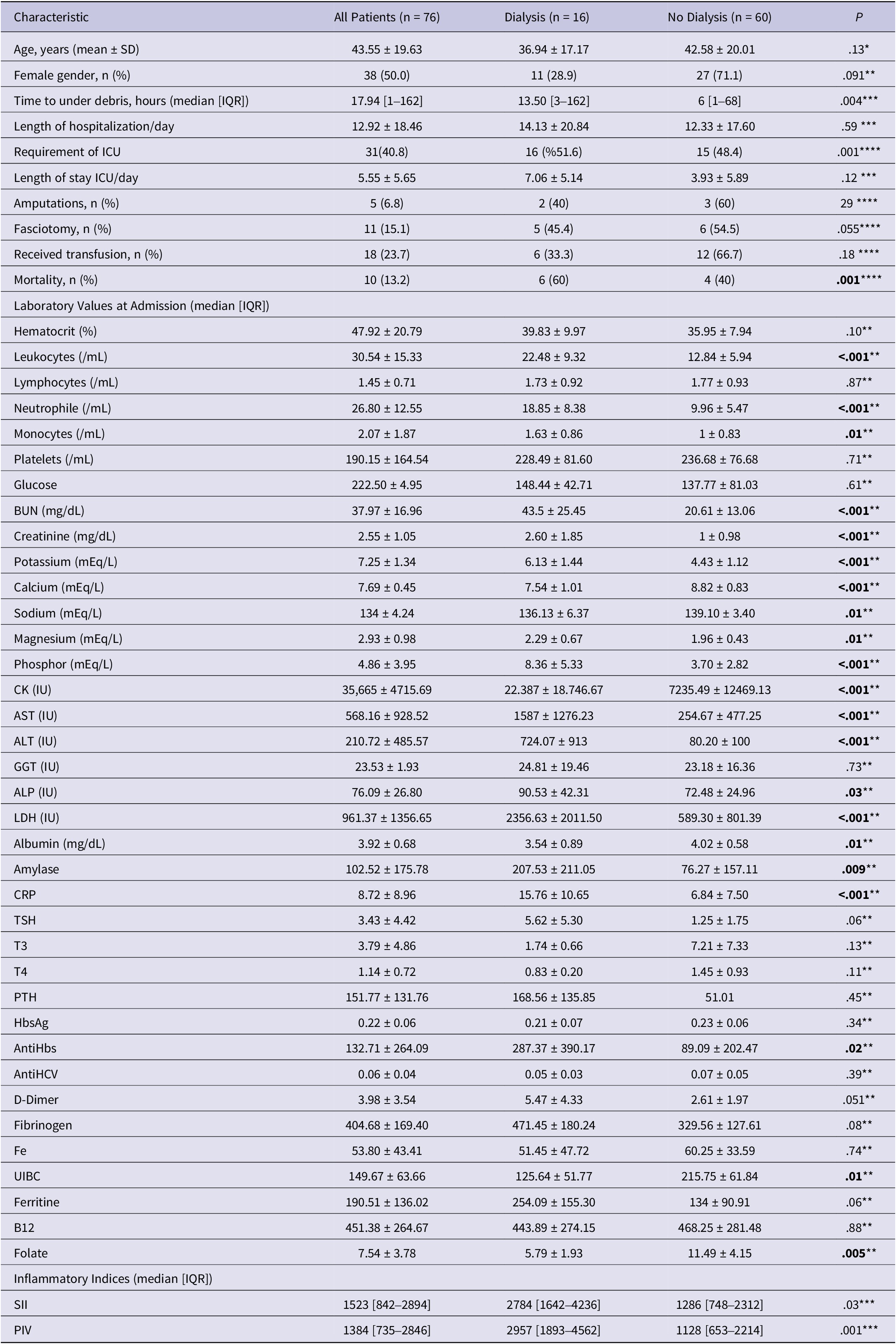
A total of 76 patients with earthquake-related crush injuries were included in the analysis. The mean age was 43.55 ± 19.63 years (range: 18-87 years) and there was an equal gender distribution (50% female). Table 1 shows the baseline demographic and clinical characteristics according to dialysis requirement.
Baseline demographic and clinical characteristics of patients by dialysis requirement

Abbreviations: IQR, Interquartile range; SII, Systemic immune-inflammation index; PIV, Pan-immune inflammatory value.
* Independent Samples T test, **Pearson Chi-Square, ***Mann-Whitney U Test, ****Fisher’s Exact Test.
<0.05 significant
Clinical Outcomes
The median length of hospital stay was 8 days (IQR: 4-16 days; range: 1-107 days) in inpatient wards and 4 days (IQR: 2-8 days; range: 1-23 days) in the ICU. Dialysis was required in 16 patients (21.1%). Surgical interventions included fasciotomy in 11 patients (15.1%) and amputation in 5 patients (6.6%).
Although it was higher in patients requiring specific interventions (37.5% (6/16) in patients receiving dialysis, 54.5% (6/11) in patients undergoing fasciotomy, and 25.0% in patients undergoing amputation), the overall mortality rates were determined as 13.2% (10 patients) (Table 1).
Inflammatory Indices and Clinical Outcomes
The distribution of SII and PIV values in the study population varied significantly, with median SII being 1523 (IQR: 842-2894; range: 278-9114) and median PIV being 1384 (IQR: 735-2846; range: 150-18970) (Table 1).
Prediction of Dialysis Requirement
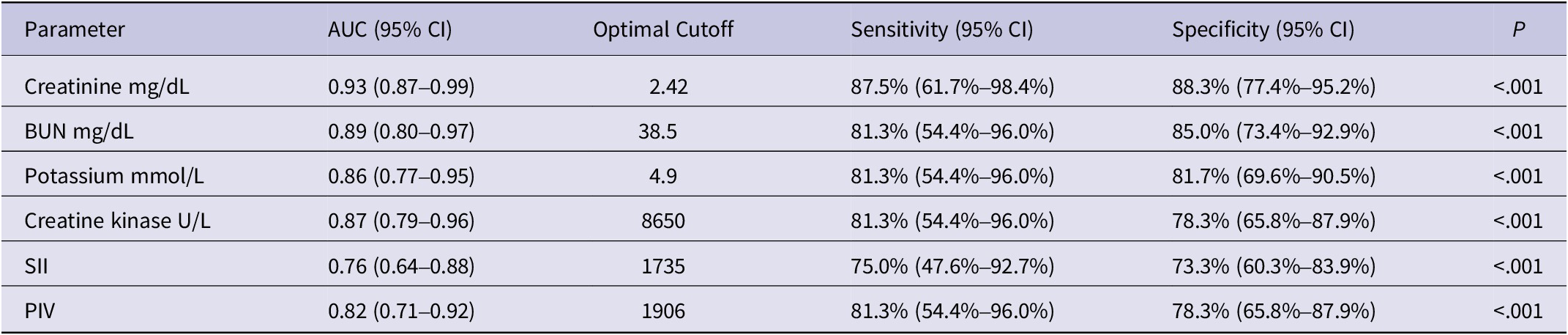
For predicting dialysis requirement, the AUC for PIV was 0.82 (95% CI: 0.71-0.92; P < .001), with an optimal cut-off value of 1906. At this threshold, PIV predicted dialysis requirement with a sensitivity of 81.3% (95% CI: 54.4%-96.0%) and specificity of 78.3% (95% CI: 65.8%-87.9%).
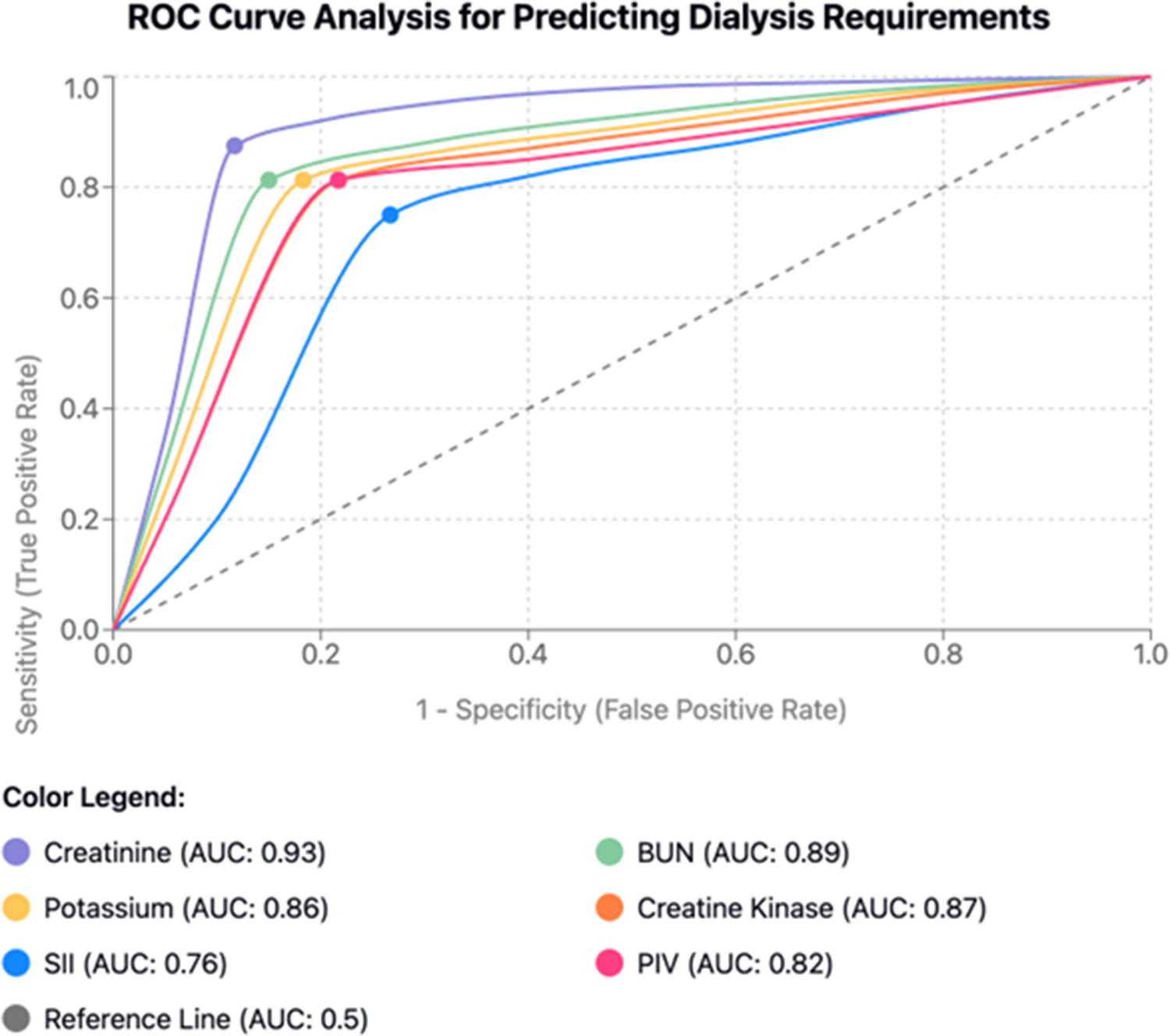
The AUC for SII was 0.76 (95% CI: 0.64-0.88; P < .001), with an optimal cut-off value of 1735. At this threshold, SII predicted dialysis requirement with a sensitivity of 75.0% (95% CI: 47.6%-92.7%) and specificity of 73.3% (95% CI: 60.3%-83.9%) (Table 2) (Figure 1).
Comparison of ROC curve analysis for predicting dialysis requirement

Abbreviations: AUC, Area under the curve; BUN, Blood urea nitrogen; PIV, Pan-immune inflammatory value; SII, Systemic immune-inflammation index.
ROC curve analysis for predicting dialysis requirements.

Prediction of ICU Admission
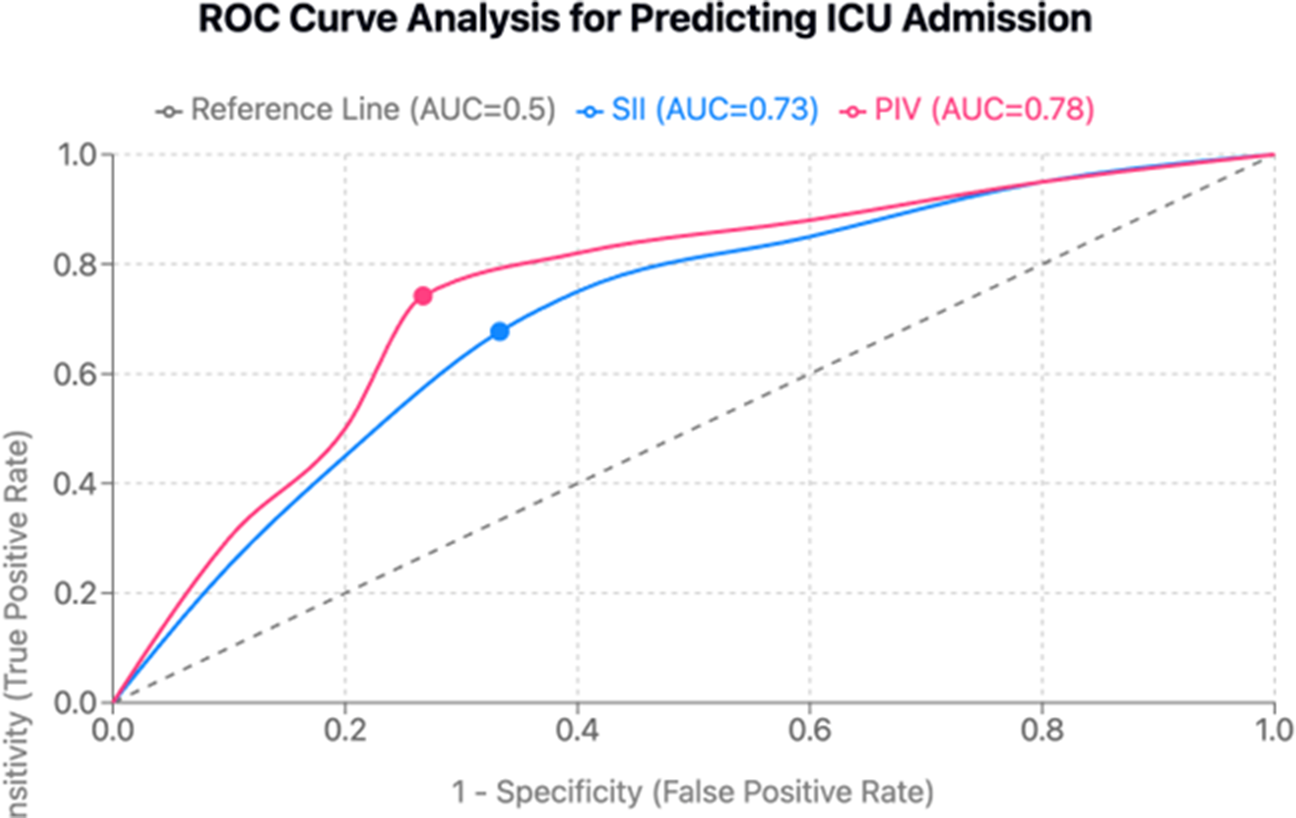
ROC curve analysis was performed to evaluate the ability of SII and PIV values to predict ICU admission (Figure 2). The area under the curve (AUC) for SII was 0.73 (95% CI: 0.61-0.85; P < .001), with an optimal cut-off value of 1372. At this threshold, SII predicted ICU admission with a sensitivity of 67.7% (95% CI: 48.6%-83.3%) and specificity of 66.7% (95% CI: 51.0%-80.0%) (Table 3).
ROC curve analysis for predicting ICU admission.

Comparison of ROC curve analysis for predicting ICU admission

Abbreviations: AUC, Area under the curve; PIV, Pan-immune inflammatory value; SII, Systemic immune-inflammation index.
The AUC for PIV was 0.78 (95% CI: 0.68-0.88; P < .001), with an optimal cut-off value of 1345. At this threshold, PIV predicted ICU admission with a sensitivity of 74.2% (95% CI: 55.4%-88.1%) and specificity of 73.3% (95% CI: 58.1%-85.4%) (Table 3).
Comparison with Traditional Laboratory Markers
ROC curve analysis results for traditional laboratory markers and inflammatory indices are presented in Table 2. The AUC for creatinine in predicting dialysis requirement was 0.93.
Multivariate Analysis
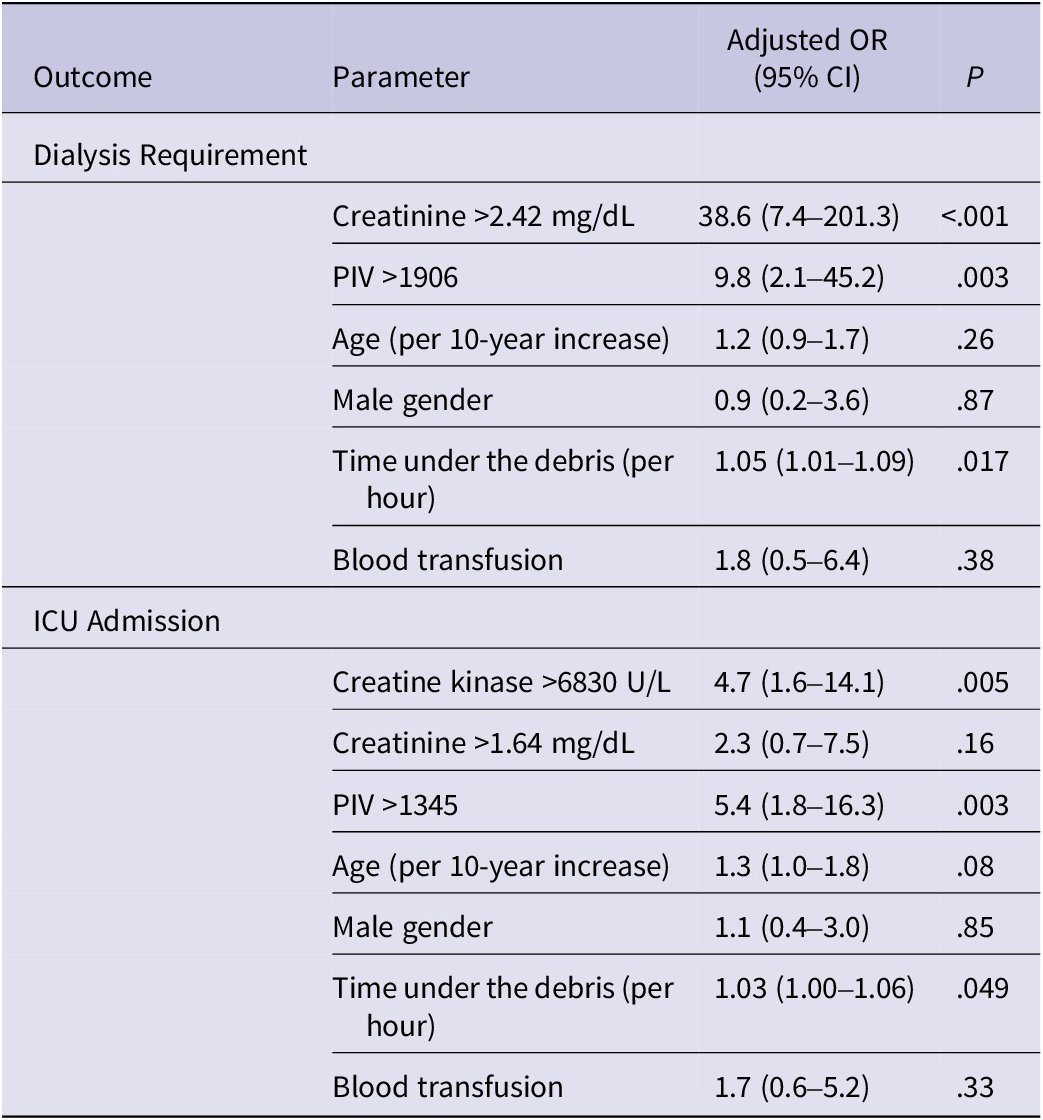
To assess potential confounding factors, multivariate logistic regression analysis was performed to predict dialysis requirement and ICU admission (Table 4). After adjusting for age, gender, time from rescue to admission, and transfusion status, both PIV and traditional markers remained significant independent predictors of dialysis requirement. For ICU admission, both PIV and creatine kinase remained significant independent predictors.
Multivariate logistic regression analysis for predicting clinical outcomes

Abbreviations: CI, Confidence interval; OR, odds ratio; PIV, Pan-immune inflammatory value.
Model performance evaluation revealed adequate goodness-of-fit for both dialysis prediction (Hosmer-Lemeshow test: χ2 = 12.1, P = .15 for dialysis prediction and χ2 = 8.15, P = .42 for ICU admission prediction 0.35) and ICU admission prediction (Hosmer-Lemeshow test: χ2 = 12.1, P = .15 for dialysis prediction and χ2 = 8.15, P = 0.42 for ICU admission prediction 0.19). The Nagelkerke pseudo-R2 values were 0.183 for dialysis prediction and 0.328 for ICU admission prediction, indicating good explanatory power. Calibration plots revealed low agreement between predicted probabilities and observed outcomes, as reflected by very low calibration slopes (0.0002 for dialysis and 0.0006 for ICU admission).
Subgroup Analysis: Mortality Predictors Among Dialysis Patients
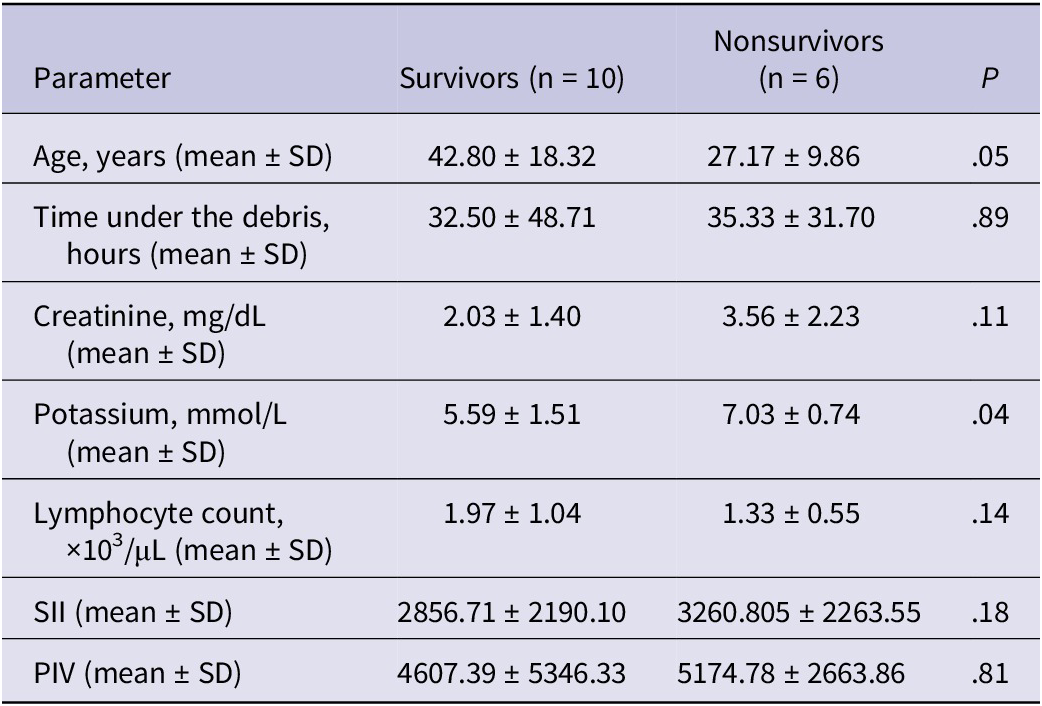
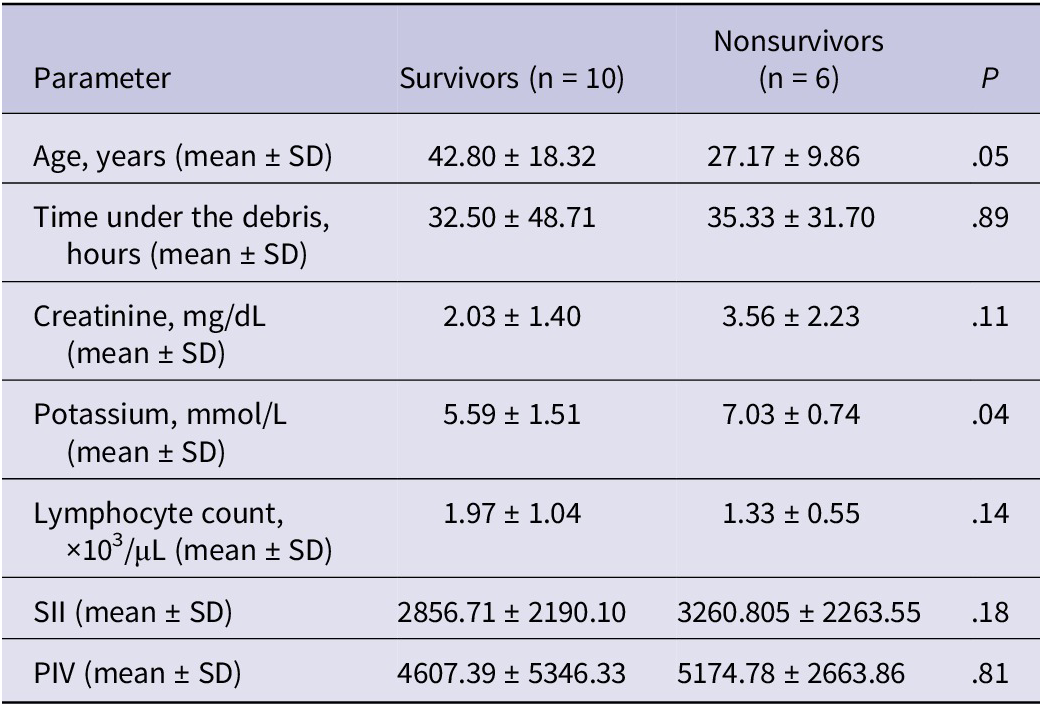
Among the 16 patients requiring dialysis, 6 (37.5%) died during hospitalization. We analyzed potential predictors of mortality within this high-risk subgroup (Table 5). Higher PIV values, higher potassium levels, and lower lymphocyte counts at admission were associated with increased mortality risk in dialyzed patients.
Predictors of mortality among patients requiring dialysis
Abbreviations: IQR, Interquartile range; PIV, Pan-immune inflammatory value; SII, systemic immune inflammation index.
Discussion
This study investigated the potential utility of CBC-derived inflammatory markers in predicting clinical outcomes in patients with crush injuries following a severe earthquake. Our findings demonstrated statistically significant associations of hemogram-derived SII and PIV with dialysis requirements, ICU admission, and mortality, though they underperformed conventional laboratory tests, especially for dialysis requirements. The ROC-derived cutoffs identified in our study show good alignment with established clinical thresholds. Our creatinine cutoff of >2.42 mg/dL corresponds closely to the RIFLE (Risk, Injury, Failure, Loss, End-stage) criteria for acute kidney injury, where creatinine levels >2.0-3.0 mg/dL indicate significant renal dysfunction requiring intervention.Reference Bellomo, Ronco and Kellum 21 Similarly, our CK cutoff of >8650 U/L aligns with values associated with severe rhabdomyolysis in the literature, where CK levels >5000-10,000 U/L are typically considered high risk for AKI and warrant aggressive fluid therapy or dialysis.Reference Melli, Chaudhry and Cornblath 22 The need for intensive care due to crush syndrome was reported as 26% after the 2020 Aegean earthquake.Reference Uz, Çetin and Songur Kodik 23 This rate was found to be higher in our study at 40.8%. This difference likely reflects the larger and more widespread impact of the 2023 event, which severely damaged healthcare infrastructure in multiple provinces. It suggests that increasing the number of ICUs in regions at risk of being affected by the earthquake would be beneficial.
In the 1999 Marmara earthquake, additional intervention requirements were determined as 12.02% fasciotomy and 3.15% amputation, and in our study, we observed that these rates were higher after the Kahramanmaraş earthquake.Reference Gul and Andsoy 24 A variety of factors, including winter conditions during the 2023 earthquake compared to the Marmara earthquake occurring in the summer, may explain this difference. Cold ambient temperatures likely contributed to hypothermia, increased tissue damage, and potential delays in rescue operations due to harsh weather conditions.
Comparative analysis revealed that traditional markers, especially creatinine level, had the highest predictive value in predicting the need for dialysis. This is also clinically significant as creatinine directly reflects renal dysfunction.Reference Bayyigit, Gunay and Yerli 25 Multivariate analysis also confirmed that high creatinine (>2.42 mg/dL) was the strongest independent predictor of dialysis need (adjusted OR: 38.6, 95% CI: 7.4-201.3). In addition, the ability to estimate the need for dialysis using hemogram values, which provide faster results until the biochemistry test results are available, can play an important role in the triage of these patients on the scene. In the event of a disaster, it may be useful to quickly estimate the need for dialysis from hemograms in the first assessment tent on the scene or in the field hospital. In the subgroup analysis performed in patients receiving dialysis, high potassium levels, low lymphocyte counts, and increased PIV values detected at admission were found to be associated with a significant increase in mortality risk. These findings suggest that the association of electrolyte disturbances and significant inflammatory imbalance may be valuable in identifying high-risk individuals in this fragile patient group.
In practical disaster triage applications, SII and PIV could be implemented as follows: (1) In field hospitals equipped with basic CBC analyzers, these indices could be calculated immediately upon blood draw, providing risk stratification within hours rather than waiting for comprehensive biochemical panels; (2) A simple scoring system could be developed where patients with SII >1372 or PIV >1345 are flagged for priority ICU evaluation, while those with SII >1735 or PIV >1906 are identified as high-risk for dialysis needs; (3) These markers could supplement clinical assessment during the “golden hours” when rapid decisions about resource allocation and patient transfer are critical; (4) Mobile applications or simple calculators could be developed to compute these indices in real-time, enabling front-line healthcare workers to make informed triage decisions even without specialized training in interpreting complex laboratory panels.
The need for intensive care is an important problem for earthquake victims who were hospitalized after the earthquake. In a study of the 1999 Marmara earthquake, they recommended that crush-injured patients should be transferred to a comprehensive ICU as soon as possible to receive appropriate treatment.Reference Demirkiran, Dikmen and Utku 26 In another study on the 2008 Wenchuan earthquake in China, they advocated the establishment of field intensive care units.Reference Li, Qian and Liu 27 Our study suggests that inflammatory markers in predicting ICU admission may provide complementary information about the systemic inflammatory response due to crush injuries in predicting general critical illness rather than specific organ failure.
The pathophysiological basis for the association between inflammatory indices and outcomes in crush injury patients likely involves the complex inflammatory cascade triggered by tissue damage and ischemia-reperfusion injury. Trauma initiates interactions between hemostatic, inflammatory, endocrine, and neurological systems, potentially exacerbating initial damage. The systemic inflammatory response can reduce infection resistance, potentially leading to sepsis and further inflammatory activation. This process is reflected in altered proportions of circulating immune cells, which form the basis of the inflammatory indices we studied.Reference Lord, Midwinter and Chen 8 , Reference Miyauchi, Okubo and Iida 28 Previous research has shown that inflammatory markers can predict outcomes in various conditions, including COVID-19,Reference Salman, Çelikbilek and Aydoğan 29 thoracic trauma,Reference Vunvulea, Melinte and Brinzaniuc 9 and renal failure.Reference Lee, Bae and Choi 30 Our study extends these findings to crush injuries in earthquake victims, though with important contextual considerations specific to disaster settings.
In disaster or emergency settings where rapid decision-making is critical and access to comprehensive laboratory testing may be delayed, SII and PIV could provide early clinical signals to guide triage. These inflammatory markers might serve as provisional indicators of severe systemic stress, aiding the classification of patients into high-risk categories that require urgent intervention. Thus, their practical use lies in supplementing initial clinical judgment until full laboratory results become available. However, our data clearly suggest that when comprehensive laboratory testing is available, traditional markers should be prioritized for predicting dialysis requirements and for predicting ICU admission.
Study Limitations
Our study had several important limitations. First, the study was a single-center retrospective study conducted in a hospital in the earthquake area. Second, the limited sample size of the study limits the precision of our prediction models and comprehensive subgroup analyses. Third, the timing of blood sampling varied significantly among patients, which may have affected the levels of inflammatory markers. Ideally, samples would be collected at standard time intervals, but this was not possible in the disaster context. Finally, interventions performed before hospital arrival, especially fluid resuscitation, may have affected inflammatory markers. The dichotomization of continuous variables may have reduced our ability to detect more nuanced relationships between biomarker levels and outcomes, and future studies should consider examining these relationships as continuous variables.
Implications for Future Research and Practice
Despite these limitations, our findings suggest several directions for future research and practice. Prospective studies with standardized sampling protocols could better evaluate the predictive value of inflammatory indices in trauma and disaster settings. Validation in larger, multi-center cohorts across different disaster contexts would strengthen the evidence base.
From a practical perspective, our results do not support using inflammatory indices as replacements for traditional markers when comprehensive laboratory testing is available. However, they suggest these indices might serve as early screening tools in resource-constrained settings when more sophisticated testing is unavailable or delayed. The ease of calculating these indices from readily available CBC results makes them potentially valuable as adjunctive markers in disaster contexts.
Additionally, the high rates of dialysis, fasciotomy, and mortality observed in our cohort highlight the continuing challenges in managing crush injuries following earthquakes. Enhanced preparedness for crush syndrome, including pre-positioning of dialysis resources and development of context-specific clinical protocols, remains a critical need in earthquake-prone regions.
The seasonal differences in outcomes between the winter 2023 earthquake and previous summer earthquakes merit further investigation. Future studies should systematically examine how environmental factors, particularly temperature, influence outcomes in earthquake-related injuries. This could inform season-specific disaster preparedness and response strategies in regions at risk for seismic events.
Conclusion
This study evaluated the potential utility of complete blood count-derived inflammatory markers in predicting clinical outcomes for patients with crush injuries following the February 2023 Turkey-Syria earthquake. Our findings demonstrate that SII and PIV show statistically significant but modest predictive performance for adverse outcomes in this population. In the resource-constrained environments often encountered following major earthquakes, these readily calculated inflammatory indices derived from basic CBC testing could potentially serve as early screening tools when more comprehensive laboratory testing is unavailable or delayed. The high rates of complications and mortality observed in our cohort underscore the significant burden of crush syndrome following major earthquakes and highlight the continuing need for enhanced preparedness and response capabilities in seismically active regions.
In summary, while SII and PIV should not be viewed as standalone predictive tools, they may contribute valuable complementary information as part of a comprehensive approach to risk assessment in earthquake victims with crush injuries, particularly in resource-limited settings.
Data availability statement
The data that support the findings of this study are available from the corresponding author, FZA, upon reasonable request.
Acknowledgments
We would like to thank all the earthquake victims who participated and supported our study during this difficult process.
Author contribution
FZA concept, review, data searching, design, statistical extractions, analysis. ÇC review, assisted in collecting the data. DA reviewed, assisted in collecting the data, and drafted the manuscript. AA assisted in collecting the data. All authors provided a critical review of the manuscript and approved the final draft for publication.
Funding statement
This research did not receive any specific grant from funding agencies in the public, commercial, or not-for-profit sectors.
Competing interests
The authors declare no conflict of interest.
Ethical standard
The ethics committee approval was obtained from Harran University Faculty of Medicine (protocol number 325138 date:02.04.2024) in accordance with the Helsinki Declaration.


 Open access

