


Background
Floods are one of the most common and deadliest disasters globally. According to the Centre for Research on the Epidemiology of Disasters report, with 176 events, floods dominated all catastrophic events reported in 2022, globally (CRED, 2023). Flooding claimed lives; for instance, worldwide, 7954 lives succumbed to floods in 2022, and in India alone, 2035 lives were lost due to flooding (CRED, 2023). Besides destroying lives and properties, many health effects are associated with flooding (Ahern et al., Reference Ahern, Kovats, Wilkinson, Few and Matthies2005). Flooding leads to the deterioration of mental health (Stanke et al., Reference Stanke, Murray, Amlot, Nurse and Williams2012). Studies show that among flood victims, the prevalence of psychological morbidities such as post-traumatic stress disorder (PTSD), anxiety, and depression is higher than among non-exposed people (Fernandez et al., Reference Fernandez, Black, Jones, Wilson, Salvador-Carulla, Astell-Burt and Black2015; Stanke et al., Reference Stanke, Murray, Amlot, Nurse and Williams2012).
Additionally, exposure to disasters always results in comorbid PTSD and other psychological disorders (Dai et al., Reference Dai, Kaminga, Tan, Wang, Lai, Wu, Xiong, Deng and Liu2017). For example, 6.5 per cent of participants satisfied the criterion for comorbid PTSD and anxiety 18 years after the Dongting Lake flood in China (Dai et al., Reference Dai, Kaminga, Tan, Wang, Lai, Wu and Liu2017a, Reference Dai, Kaminga, Tan, Wang, Lai, Wu, Xiong, Deng and Liu2017b). Psychiatric comorbidity is significantly correlated with flood exposure among Pakistani flood victims (Man Cheung et al., Reference Man Cheung, Jalal and Ullah Khan2014). These studies offer evidence that PTSD can co-occur with a variety of diseases, including anxiety and depression, which may manifest in response to or as a consequence of PTSD (McMillen et al., Reference McMillen, North, Mosley and Smith2002). Given the high frequency and destructiveness of flood events, there are fewer studies to quantify the mental health effects of flooding, especially among low-and middle-income countries (Ahern et al., Reference Ahern, Kovats, Wilkinson, Few and Matthies2005).
Several parts of India regularly experience floods due to brief and intense monsoon rains. Extreme precipitation events and other factors associated with catchment characteristics cause frequent flooding in the Indian subcontinent, and the trend will likely continue under a warming climate in India (Ali et al., Reference Ali, Modi and Mishra2019). Increased frequency of flooding widens the knowledge gap already present regarding the consequences of flooding on mental health. A limited number of studies conducted in India show increased adverse mental health effects after the flood events. For example, one year after the Uttarakhand flooding, a 70.9 per cent prevalence of post-traumatic stress disorder was reported (Srivastava et al., Reference Srivastava, Goel, Semwal, Gupta and Dhyani2015). The prevalence of depression and anxiety reported was 33 per cent and 31 per cent, respectively, six months after the Kodagu flood (Thomas et al., Reference Thomas, B, Kulkarni and MurthyMR2021). Among the plethora of psychological health outcomes, PTSD is the most common outcome reported in prior studies from India (Ashok et al., Reference Ashok, Premaranjan, Philip Rajkumar and Nanda Naik2019; Jose & Fenn, Reference Jose and Fenn2021; Mathew et al., Reference Mathew, Varghese, Sabu and Joseph2021; Patel et al., Reference Patel, Oswal and Mehta2015; Srivastava et al., Reference Srivastava, Goel, Semwal, Gupta and Dhyani2015).
Assam state in northeastern India experiences recurring fluvial floods due to the Brahmaputra River and its tributaries, which overflow and engulf a significant basin area (Government of India, 1980). According to the National Commission on Floods (1980), the state has around 3.105 million hectares of flood-prone land area out of 7.8 million hectares (Government of India, 1980). Flooding caused by the breach of the River Aie embankments, a Brahmaputra tributary, devastated several villages in the Bongaigaon Districts of Assam on August 14, 2021. Two more waves of floods of lesser severity hit the same area in 2021.
Studies conducted by various scholars observed that the prevalence of psychological morbidity is very high in various parts of India among the flood-affected population (Jose & Fenn, Reference Jose and Fenn2021; MN & Sekar, Reference MN and Sekar2012; Srivastava et al., Reference Srivastava, Goel, Semwal, Gupta and Dhyani2015). Most studies in India lack a control population for comparison, except for a few (JoyJ et al., Reference JoyJ, Ramachandran and George2021; Wind et al., Reference Wind, Joshi, Kleber and Komproe2013). Following these observations, a recent review article noted that a methodological flaw in most of the studies on this subject from low-and middle-income countries is the absence of an unexposed group for comparison (Sharpe & Davison, Reference Sharpe and Davison2021). The present study addresses this gap.
The known risk factors are socio-economic and demographic characteristics of the study population that are associated with adverse mental health outcomes after flooding, such as educational attainment, employment, income, current marital status, gender, underlying health conditions, and age (Paranjothy et al., Reference Paranjothy, Gallacher, Amlot, James Rubin, Page, Baxter, Wight, Kirrage, McNaught and SR2011; Dai et al., Reference Dai, Wang, Kaminga, Chen, Tan, Lai, Deng and Liu2016; Yoda et al., Reference Yoda, Yokoyama, Suzuki and Hirao2017; Ashok et al., Reference Ashok, Premaranjan, Philip Rajkumar and Nanda Naik2019; Norberg et al., Reference Norberg, Toohey and Hogan2021). Although mentioned in the literature, the variables related to the details of flood-related losses are not adequately reflected in previous models (Lebowitz et al., Reference Lebowitz, Tachikawa, Aiba, Okamoto, Takahashi, Nemoto and Arai2019; Cherry et al., Reference Cherry, De Vito, Calamia, Elliott, Yu, Sampson, Galea, Mansoor, McKneely and Nguyen2021). Losses sustained may have less of an impact on people’s mental health due to the availability of flood insurance in high income countries, where the majority of the literature on the topic originates, which may account for why they receive less attention in discussions. The details of financial loss are shown in four categories. Loss of work days is commonly reported among flood-affected participants. Due to water logging, local businesses are impacted, which raises unemployment (Peek-Asa et al., Reference Peek-Asa, Ramirez, Young and Cao2012). Water logging causes livestock loss, and water logging combined with flood-induced sand deposition causes crop loss. Prolonged contact with floodwater dampens the walls and floors; in the absence of insurance, the cost of rebuilding and restructuring falls on the already vulnerable population. Losses incurred therefore can put added stress on mental health. Factors related to preparedness and flood control in the pre-impact phase, such as flood warning and flood-related displacement in the post-impact phase, are found to be significantly associated with symptoms of depression, anxiety, and post-traumatic stress disorder (Paranjothy et al., Reference Paranjothy, Gallacher, Amlot, James Rubin, Page, Baxter, Wight, Kirrage, McNaught and SR2011; Foudi et al., Reference Foudi, Oses-Eraso and Galarraga2017; Tong, Reference Tong2017). Receiving early warning of a flood is a protective factor, and displacement during a flood is a risk factor for the development of mental health conditions (Munro et al., Reference Munro, Kovarts, James Rubin, David Waite, Bone and Armstrong2017).
This study is designed to quantify the mental health effects of flooding and investigate the impacts of flooding and several risk factors. The purpose of this study is to determine the prevalence of possible PTSD, anxiety, and depression in flood-affected people and compare it to non-flooded people. The study furthermore estimates the prevalence of comorbid PTSD, anxiety, and depression and investigates their risk factors. The study’s findings will contribute to three strands of literature: the prevalence of psychiatric morbidity and comorbidity symptoms in flood victims, the effects of repeat flooding on mental health, and the risk and protective factors of psychiatric health in a resource-constrained study setting. The applicability of such studies in formulating policy on the healthcare needs of flood-affected people is tremendous. Estimating the risk of flooding on mental health and identifying the risk factors can help manage future risks.
Research method and techniques
Study design
The study utilized a cross-sectional design with a controlled population. A field survey was conducted in February and March 2022, about six to seven months after the August 2021 flood.
Setting
Flooding is a recurring phenomenon in the Aie River basin. Bongaigaon District is predominantly rural, with just 13.8 percent of the population as per Census 2011 living in urban areas. The ever-changing braided nature of rivers draining the region is the primary cause of recurring floods. Additionally, the sudden release of dam water from the upstream areas in Bhutan causes floods in Bongaigaon. The rural characteristic of the population, reliance on farming and limited opportunities for diversification to other occupations expose them to risks. Even though most people’s income comes from agriculture, 66 percent of all landowners possess less than one hectare of cultivable land (Government of Assam, 2022).
On August 14, 2021, flooding hit several villages in Bongaigaon District in the western part of Assam. Two more waves, but of lesser severity, arrived, the last one in November. The flood-affected villages are located in Srijangram and Manikpur Development Blocks. Balajani Chechapani, Hura Mara I, Hura Mara II, Nachankuri No. III and Hapachora are five flood-affected villages chosen at random for study. Donkinamari, Thakurani Khora Para, Kaimari Lohra Para, and Fouzdar Dewan Para are the four non-flooded villages chosen as the control group. A field visit was done on the second week of September 2021 to identify the flood-affected and non-flooded villages. Data collection started six months after the August flood, in February and March 2022. It was a one-shot data collection, and no follow-up was carried out. The researcher conducted face-to-face interviews along with two other field investigators who belong to the area and are fluent in the local dialect. All three interviewers’ mother tongue is Assamese.
Participants
To select participants, two-stage cluster random sampling is used for greater precision. Five villages (Primary Sampling Units) from Bongaigaon District’s Srijangram Development Block and Manikpur Development Block were chosen in the first round. Among the flood-affected villages, five villages were chosen randomly as ‘exposed’ villages and four nearby non-flooded villages were chosen as ‘control’ villages. In the second stage, two lists of sample households are identified from the primary sampling units: one for exposed villages and one for the control villages. The number of sample households from exposure categories is determined using the probability proportion to size (PPS) method, which is based on data from the 2011 Primary Census Abstract. No attempts have been made to re-visit a household if it was found empty on the first visit; instead, a neighbouring household was visited for data collection. Besides, information was collected only among those participants who were present during the time of the survey. The criteria for inclusion of participants from sampled households are: a) being above 18 years of age; b) consenting to participate. Total participants constitute 37.72 per cent of the sample population (N).
Variables
Three outcome variables are included in the study: PTSD, anxiety, and depression. Three validated instruments were used to assess the presence or absence of probable PTSD, anxiety, and depression in the participants. Prior research used the Patient Health Questionnaire (PHQ-4) for depression and anxiety and the Post-Traumatic Stress Disorder Checklist (PCL-5) for PTSD (Munro et al., Reference Munro, Kovarts, James Rubin, David Waite, Bone and Armstrong2017; Cherry et al., Reference Cherry, De Vito, Calamia, Elliott, Yu, Sampson, Galea, Mansoor, McKneely and Nguyen2021; Mahmood et al., Reference Mahmood, Ibrahim, Ismail and Neuner2022). The PHQ-4 includes a two-item depression scale and a two-item Generalized Anxiety Disorder (GAD-2) scale to measure depression and anxiety. ‘Not at all’, ‘several days’, ‘more than half the days’ and ‘almost every day’ are the four alternatives on the scale, which range from 0 to 3. The four-item abridged version of PCL-5 assesses four Diagnostic and Statistical Manual of Mental Disorders-V (DSM-V) symptoms of PTSD. PCL-5 provides five alternatives ranging from ‘not at all’ to ‘very’, ranging from 0 to 4. The validated cut-off scores for PHQ-2 and GAD-2 are ≥3 and for PCL-5 (four-item) is ≥10 (Price et al., Reference Price, Szafranski, Stolk-Cooke and Gros2016; Munro et al., Reference Munro, Kovarts, James Rubin, David Waite, Bone and Armstrong2017). Probable anxiety, depression, and PTSD are diagnosed based on the validated cut-off score. Therefore, the dependent variable is a binary variable coded with 1 if the participant has the condition and with 0 if not. Because the tools are screening instruments rather than clinical diagnoses, cases of PTSD, anxiety, and depression are referred to as ‘probable’ cases of PTSD, anxiety, and depression (Tempest et al., Reference Tempest, Carter and James Rubin2017). The questionnaires were translated into Assamese (Assamese language) by following the standard procedure. The Assamese versions of the questionnaires were used on the ground. Field investigators completed mental health questionnaires based on information supplied by participants.
A thorough review of the literature on the impact of flooding on mental health and risk factors from 2010 to 2021 served as the foundation for selecting independent variables for each of the four mental health problems. The characteristics of independent variables are presented in Table 1.
Description and Characteristics of Explanatory Variables Used in the Analysis to Find Out Risk and Protective Factors of Mental Health Outcomes
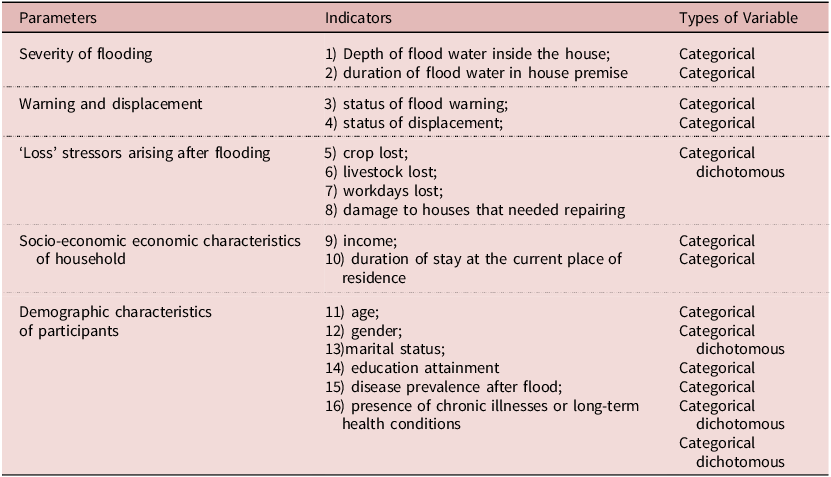
Individuals’ physical health and underlying health conditions were also found to influence their mental health after flooding (Ashok et al., Reference Ashok, Premaranjan, Philip Rajkumar and Nanda Naik2019; Mason et al., Reference Mason, Andrews and Upton2010). The prevalence of these health conditions was reported during the household survey, they are- fractured hand and leg; person rescued from drowning but the water went into the windpipe; cuts and injury; body pain; weakness; gastrointestinal symptoms (upset stomach, vomiting, nausea); diarrhoea/dysentery/loose stools; jaundice; typhoid; malaria; other skin infection and irritation (not tinea pedis); eye infection. Chronic and long-term health conditions identified among the participants are- hypertension, asthma, low blood pressure, diabetes, heart condition, paralysis, TB, liver problems, blindness, epilepsy, birth deformity, cancer, chest pain, and nerve problems.
‘Displacement’ is another possible risk factor; ‘displacement’ in the context means displacement and evacuation during flooding to relief camps, higher ground such as embankments or roads, and relatives’ houses, most of whom return to their homes post-floods. A few of these displaced people who incurred damage to houses or other severe losses had to relocate for an extended period (or permanently) even after the floodwater receded, which can be captured in their stay at their current residence. It is logical to think that those who stayed less than one year at their current residence have recently relocated due to the 2021 flooding. This is the logic behind using ‘displacement’ and ‘duration of stay at current place of residence’ as two separate independent variables. ‘Duration of stay at current place of residence’ is captured at the household level; for example, even if someone is 30 years old, if the household has been at that location for 50 years, 50 years is taken irrespective of the participant’s age. Therefore, there is a discrepancy in the participant’s ages and the years of their stay at their current place.
Although continuous, the variables related to age, income, and the duration of stay in the current place of residence are converted into categories because the association with the dependent variable may not be linear. Duration of current place of residence less than one can also be used as a proxy for relocation after flooding.
Data sources
Information on outcome variables was collected by using three screening tools, and information on independent variables was collected using a semi-structured questionnaire. The same screening tools and questionnaires were used for both the ‘exposed’ and ‘controlled’ populations, except information relevant in the context of flood was not collected from the ‘controlled’ population.
Study size
A sample size of 362 people is calculated with an anticipated prevalence rate of flood-related psychological morbidity of 50 per cent and a margin of error of 5 per cent; the total population is 6406 in the five exposed villages. Cochran’s formula for finite population calculates the sample size (Cochran, Reference Cochran1977). After accounting for the household response rate of 90 per cent, the required sample size for the exposed population is worked out to be 400. After considering the same sample size for the control group, the total sample size was estimated to be 800.
Statistical methods
The prevalence of the three mental health outcomes is calculated as a percentage, separately for both the exposed and control populations. The internal reliability of the variables in the three scales is calculated using Cronbach’s alpha values. The correlation matrix was constructed to understand the correlation between the items of the three scales. Since the dependent variables are dichotomous, logistic regression to determine the odds ratios are calculated and adjusted for potential confounders. Two separate logistic regression analyses were performed: Model I included all controlled and exposed participants. To check the robustness of flood exposure and its effects on mental health, Model II includes only flood-exposed participants; thus, in Model II, variables indicating the severity of flooding and various secondary stressors that are only relevant in the context of a flood are included. All logistic regression analysis is performed in STATA IC 16 (StataCorp, College Station, TX).
Results
Internal reliability and validity of the screening tools
The internal reliability of the variables in the three scales is calculated. The PCL-5 scale, two-item anxiety scale, and two-item depression scale had Cronbach’s alpha values of 0.88, 0.649, and 0.544, respectively. The correlation matrix was constructed to understand the correlation between the items of the three scales; the inter-item correlation of PCL-5 items ranged from 0.58 to 0.76 (all correlations were significant at a .01 level). Similarly, for the two-item depression scale and GAD-2, the inter-item correlation is 0.48 and 0.38, respectively (significant at the .01 level). Descriptive statistical analysis on individuals’ demographic, social and economic background characteristics and mental health outcomes such as probable anxiety, depression, and PTSD is conducted separately for the control and exposed populations to assess the mental health impact of flooding. Categorical variables are presented as frequencies and corresponding percentages. The association of all three outcome variables with explanatory factors is tested using the chi-square test, p < 0.05 is considered statistically significant.
Characteristics of study participants
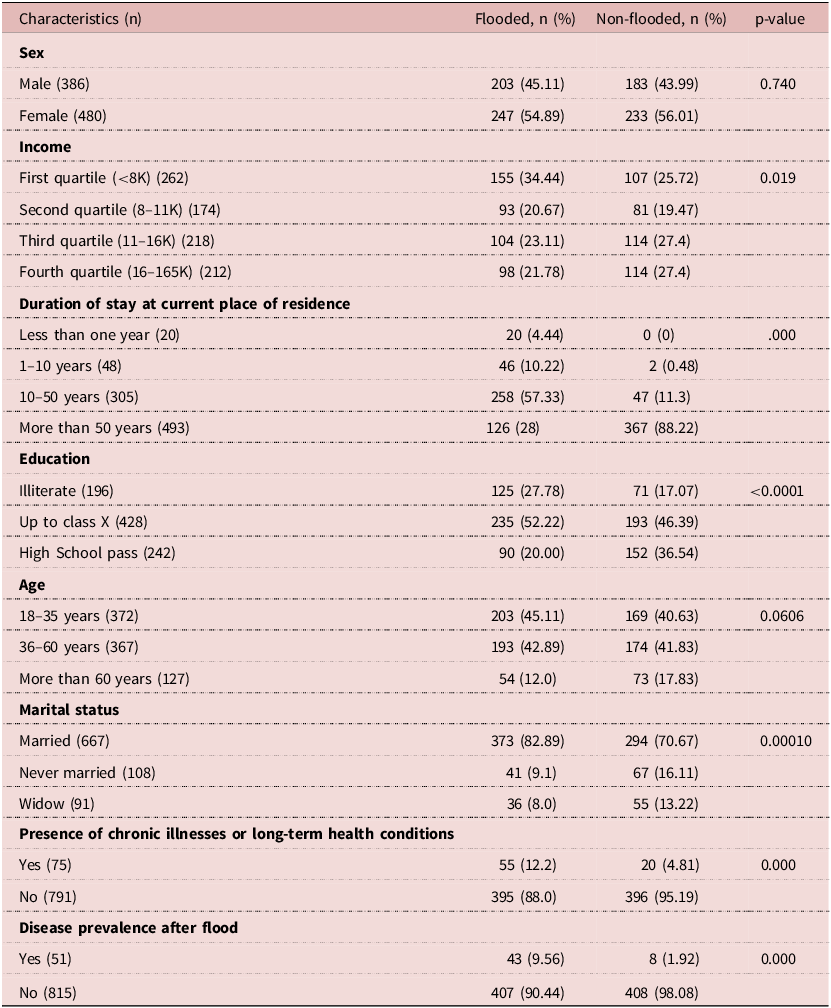
A total of 866 people participated in the mental health survey. Out of the total, 450 participants were from flood-affected households and 416 from non-flooded households. Total participants constitute 37.72 per cent of the sample population (N). Table 2 presents the socio-economic and demographic characteristics of the exposed and controlled participants separately. A higher proportion of participants are females in exposed (54.89 per cent) and controlled (56.01 per cent) categories. Most of the controlled participants (88.22 percent) belong to households that have stayed in their current place of residence for more than 50 years, while a higher proportion of the exposed participants (57.33 percent) come from households that have stayed for 10 to 50 years. A large share of the participants is illiterate among exposed participants (27.78). The majority of the exposed participants are aged between 18 and 35 years (45.11 per cent) and married (82.89 per cent). Among exposed participants, 12.2 per cent have reported chronic illness and long-term health conditions, which is significantly higher than controlled participants. The prevalence of chronic conditions among controlled participants is 4.81 per cent. About 9.56 per cent of the exposed participants experienced at least one of these health conditions after flooding: fractured hand and leg; person rescued from drowning but water went into the windpipe; cuts and injury; body pain; weakness; gastrointestinal symptoms (upset stomach, vomiting, nausea); diarrhoea/dysentery/loose stools; jaundice; typhoid; malaria; other skin infection and irritation (other than tinea pedis); and eye infection. A significantly lesser share (1.92 per cent) of controlled participants reported these conditions.
Demographic and Socioeconomic Characteristics of Study Population, by Exposure Categories, Bongaigaon District Assam, 2022
Source: Primary survey, February-March, 2022
Prevalence of psychological morbidity by explanatory variables
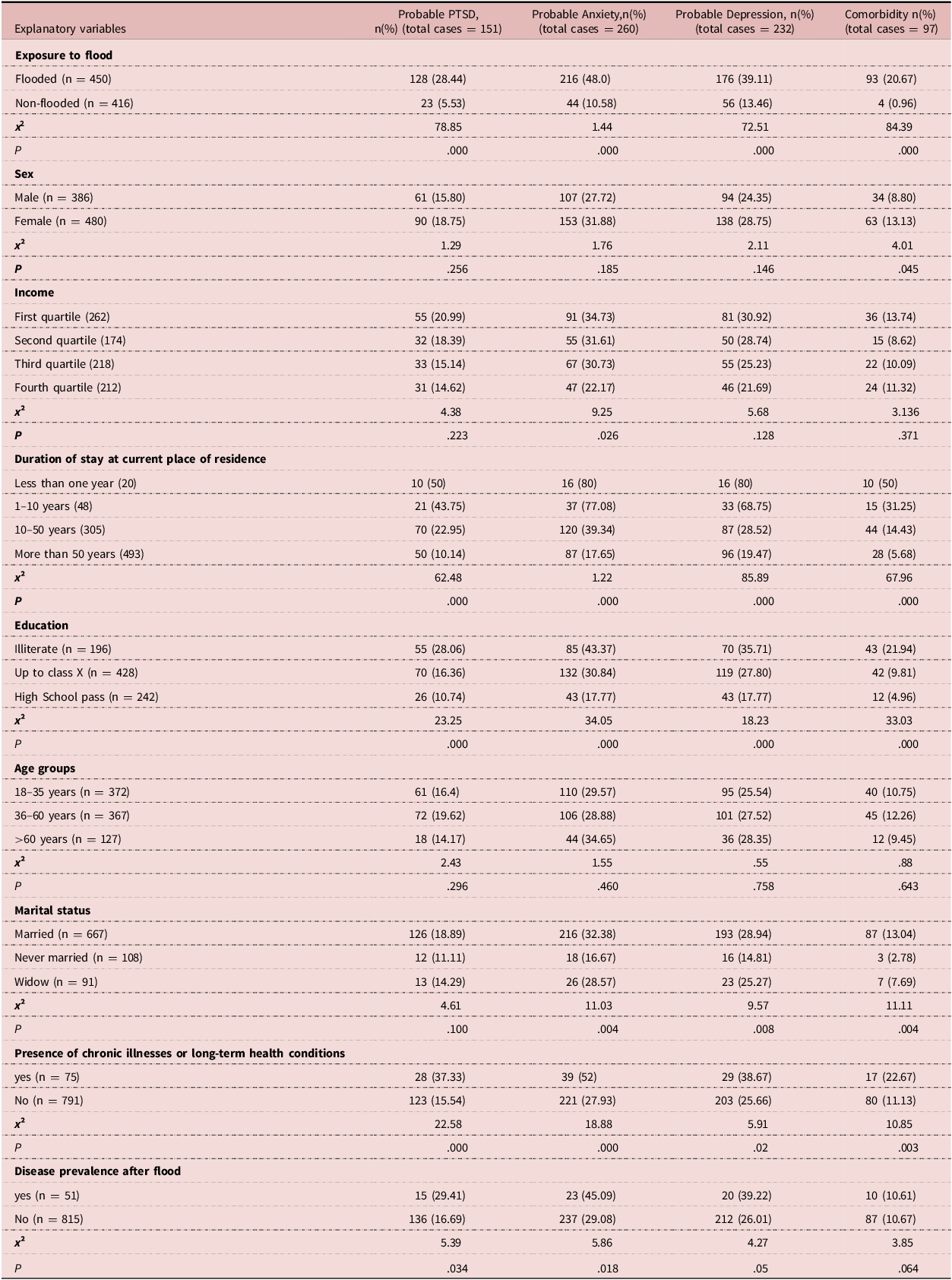
The crude prevalence of all four psychological morbidity conditions is significantly higher among the flood-affected participants (Table 3); probable PTSD (28.44 vs 5.53 per cent; p < .001), probable anxiety (48 vs 10.58 per cent; p < .001), probable depression (39.11 vs 13.46 per cent; p < .001), and probable PTSD, anxiety and depression (20.67 vs 0.96; p < .001). Participants with a long history of staying at their current place of residence have a higher prevalence rate of all four mental health conditions (p < .001). Among the participants’ socio-demographic conditions, illiterate and married participants reported a higher prevalence of all four conditions (p < .001). Crude prevalence rates of mental health conditions are also higher among participants reporting the presence of chronic illness (p < .05) and various infectious diseases after flood (p < .05).
Prevalence of Psychological Morbidity among all Participants by Explanatory Variables
Source: Calculated by researcher based on primary survey, February-March 2022
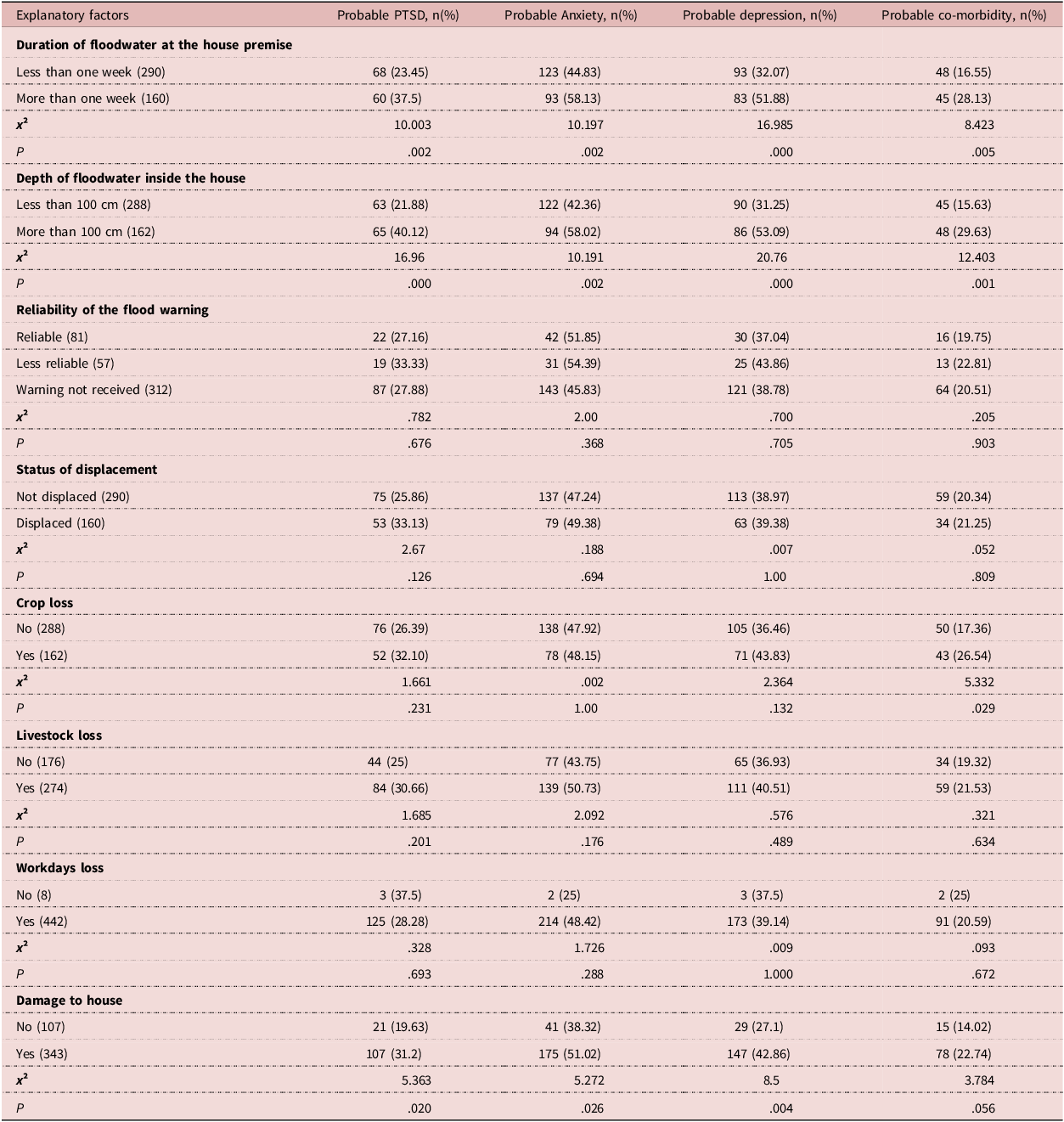
Among the flood-exposed participants, the crude prevalence rates of all four mental health conditions are higher among those reporting more than one-week duration of floodwater inside the house premise (PTSD, p = .002; anxiety, p = .002 depression, p=.000; comorbidity, p=.005), participants reporting more than 100 cm of floodwater inside the house (PTSD, p = .000; anxiety, p = .002 depression, p = .000; comorbidity, p = .001) (Table 4), participants reporting damage to houses by flooding (PTSD, p = .02; anxiety, p =.026 depression, p = .004). There is no significant difference in the crude prevalence rates between participants reporting crop, livestock, and workday loss and those who did not experience any of these losses. There is no significant difference in prevalence rates among participants who did not receive any early warning, participants who received a reliable warning and who received an unreliable warning before flooding. Table 4 shows that there is no significant difference in the prevalence of the four health conditions between participants who were displaced and those who were not.
Mental Health Outcomes among Flood-Affected Participants by Severity of Flooding, Displacement Status and Status of Warning Received
Source: Primary survey, February-March 2022
Risk factors
Risk and protective factors among exposed and controlled groups (Model I)
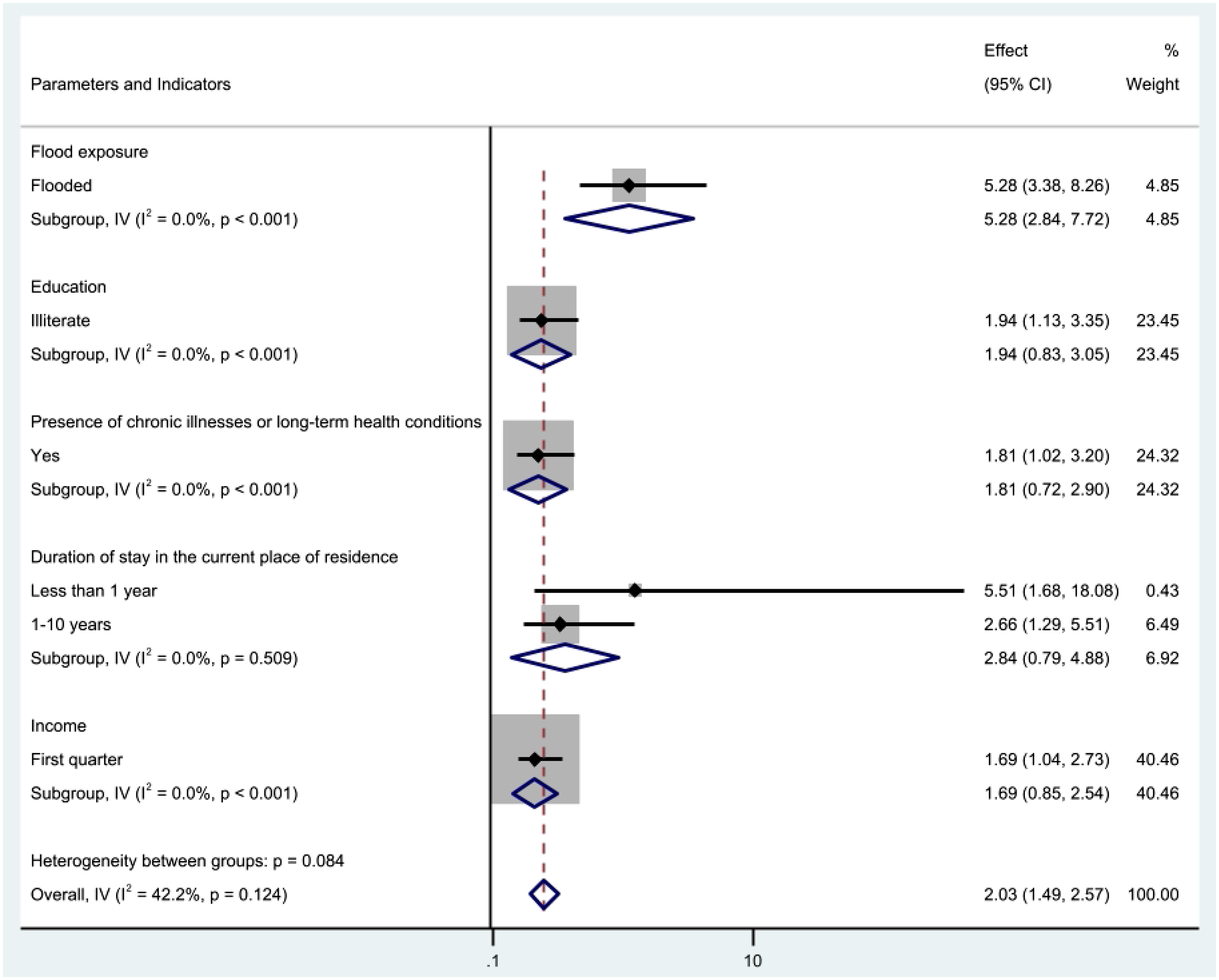
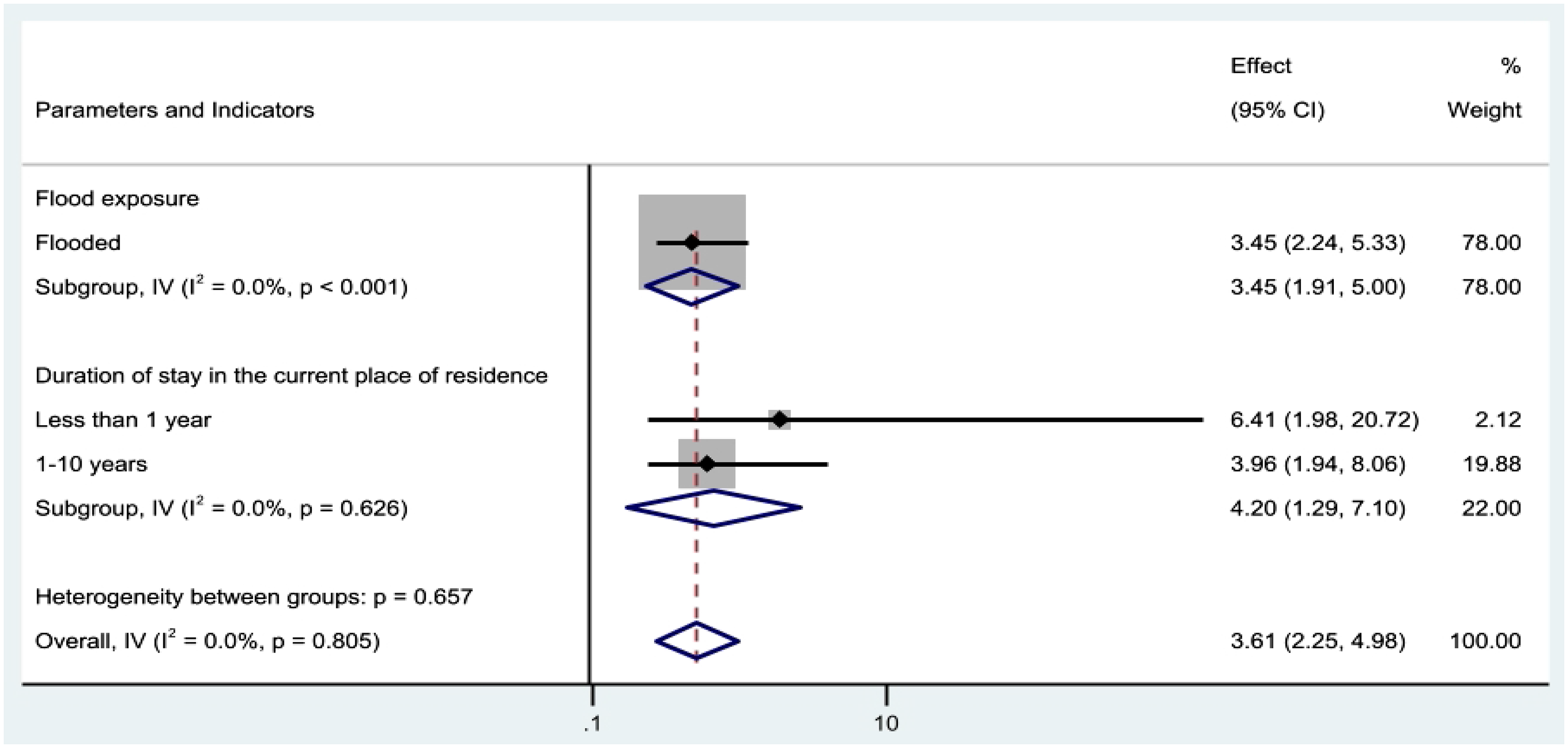
Being flooded is strongly and adversely associated with each of these mental health outcomes; PTSD, anxiety, and depression are two to five times higher, and the presence of psychiatric comorbidity is 21 times higher in flood-affected areas compared to non-flooded areas (Figure 1a, b, c, and d). After adjusting for the potential confounders, the strength of the relationships is reduced to four times (adjusted OR 4.62 [95% CI 2.63–8.1]; p < 0.01) for PTSD, five times (adjusted OR 5.28[95% CI 3.38–8.26]; p < 0.01) for anxiety, and three times (adjusted OR 3.45[95% CI 2.24–5.33]; p < 0.01) for depression. Flood-affected people are more likely to develop comorbid PTSD, anxiety, and depression (adjusted OR 21.68[95% CI 7.38–63.74]; p < 0.01).
Association between PTSD and Selected Socio-Demographic Variables and Flood Exposure Categories.

Association between Anxiety and Selected Socio-Demographic Variables and Flood Exposure Categories.
Association between Depression and Selected Socio-Demographic Variables and Flood Exposure Categories.
Association between Co-morbid PTSD, anxiety, and depression and Selected Socio-Demographic Variables and Flood Exposure Categories.
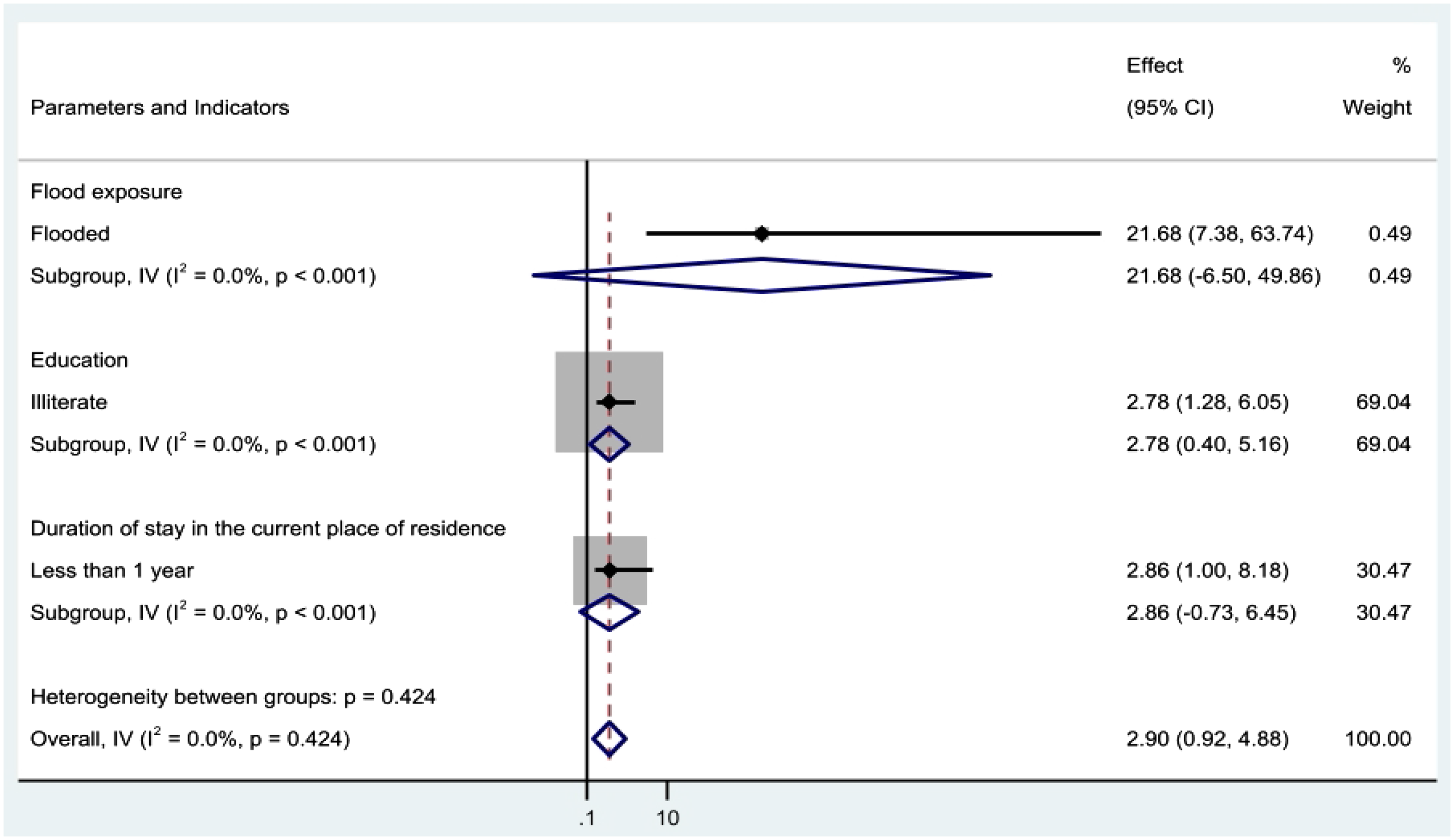
Among the socioeconomic variables, education has a significant association with PTSD, anxiety, and comorbidity; the illiterate participants have higher odds of developing PTSD (adjusted OR 2[95% CI 1.08-3.7]; p < 0.05), anxiety (adjusted OR 1.94[95% CI 1.13–3.35]; p < 0.05), and comorbidity (adjusted OR 2.78[95% CI 1.28–6.05]; p < 0.05). Poor participants have higher odds of developing anxiety; the association is significant for participants belonging to the first quartile (adjusted OR 1.69[95% CI 1.04–2.73]; p < 0.05). Duration of stay at current place of residence is significantly associated with all four mental health conditions. Compared to participants who have stayed in the current place of residence for more than 50 years, the odds of developing anxiety (adjusted OR 5.51[95% CI 1.68–18.08]; p < 0.01), depression (adjusted OR 6.41[95% CI 1.98–20.92]; p < 0.01) and comorbidity (adjusted OR 2.86[95% CI 1–8.18]; p < 0.05) is higher among those who have stayed for less than one year. Participants reporting one to 10 years of staying at the current place of residence have two times higher odds of developing PTSD (adjusted OR 2.66[95% CI 1.29–5.51]; p < 0.01, five times higher odds of developing anxiety (adjusted OR 5.6[95% CI 2.57–12.17]; p < 0.01, and three times higher odds of developing depression (adjusted OR 3.96[95% CI 1.94–8.06]; p < 0.01, compared to those who have stayed for more than 50 years (Appendix Table 1).
The presence of chronic diseases increases the odds of developing PTSD (adjusted OR 2.45[95% CI 1.37–4.4]; p < 0.01) and anxiety (adjusted OR 1.81[95% CI 1.02–3.2]; p < 0.05).
Risk and protective factors among flood-affected participants (Model II)
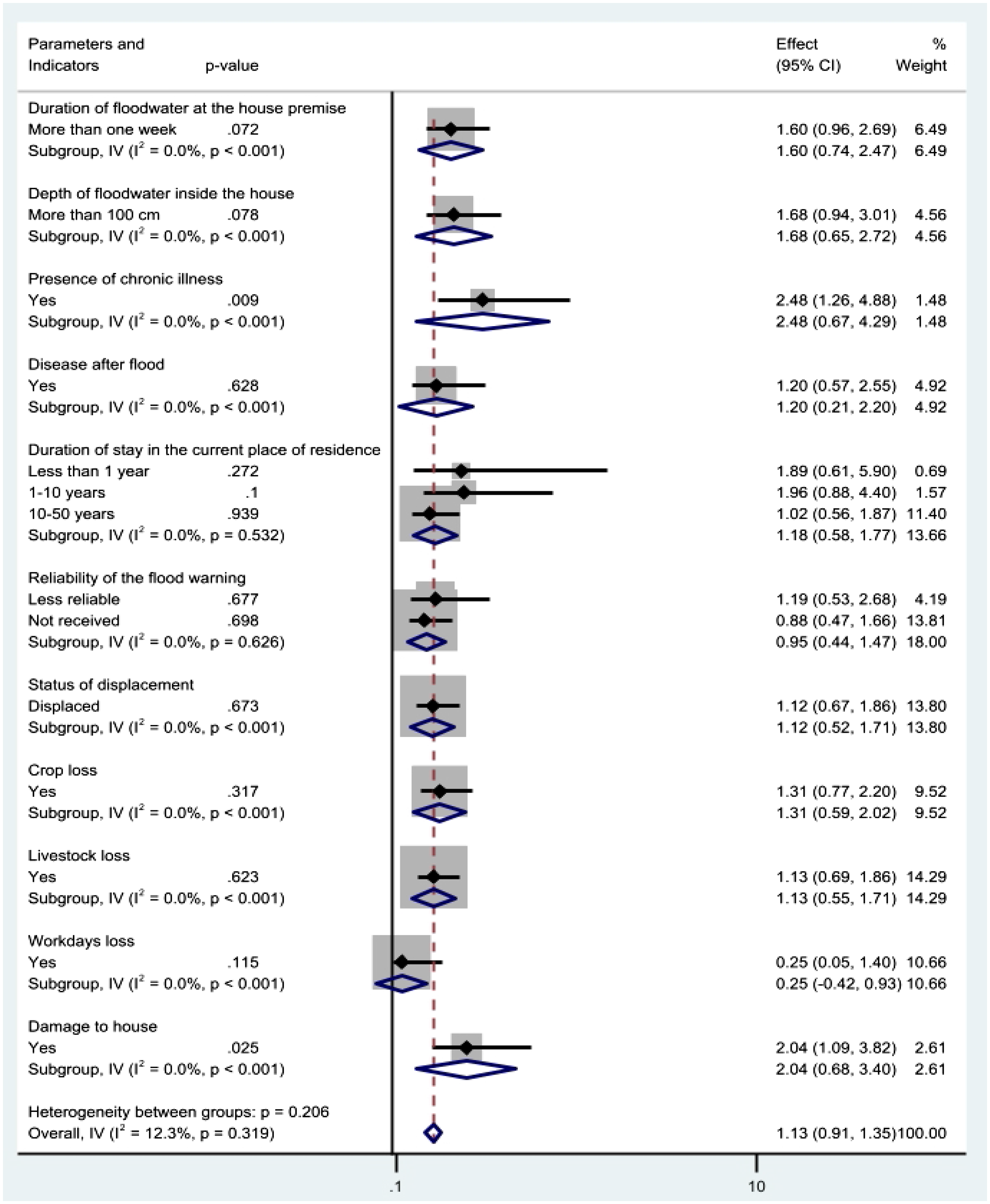
After adjusting for all potential confounders, the severity of flooding is significantly associated with anxiety and depression (Figure 2a, b, c, and d). Longer duration of floodwater in the house premise increases the odds of developing anxiety (adjusted OR 1.69[95% CI 1.04–2.75]; p < 0.05) and depression (adjusted OR 1.9[95% CI 1.15–3.12]; p < 0.05). Similarly, deeper floodwater inside the house increases the odds of depression (adjusted OR 1.87[95% CI 1.07–3.28]; p < 0.05).
Association between PTSD and Socio-Demographic Variables among the Flood Exposed Population.
Association between Anxiety and Socio-Demographic Variables among the Flood Exposed Population.
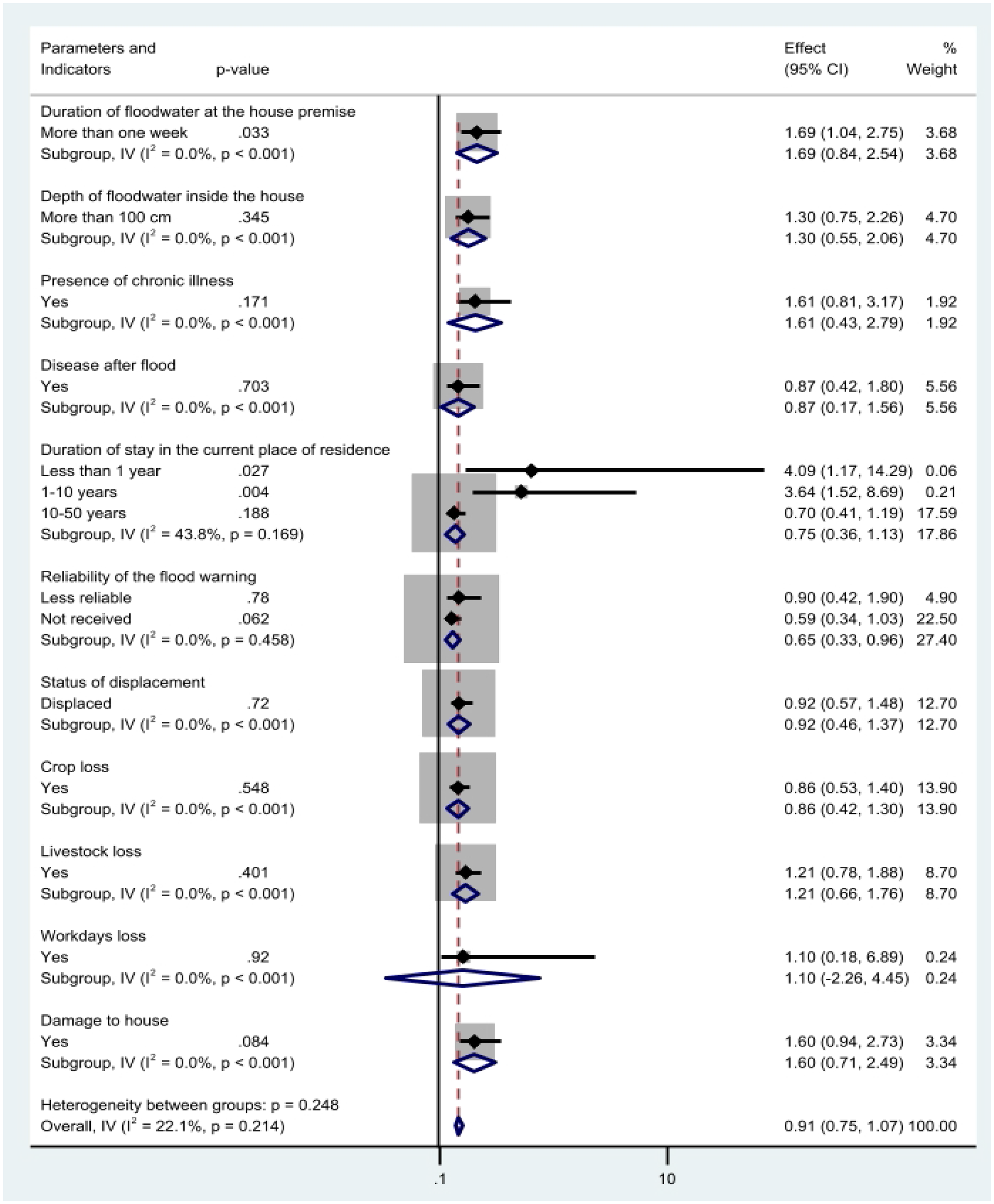
Association between Depression and Socio-Demographic Variables among the Flood Exposed Population.
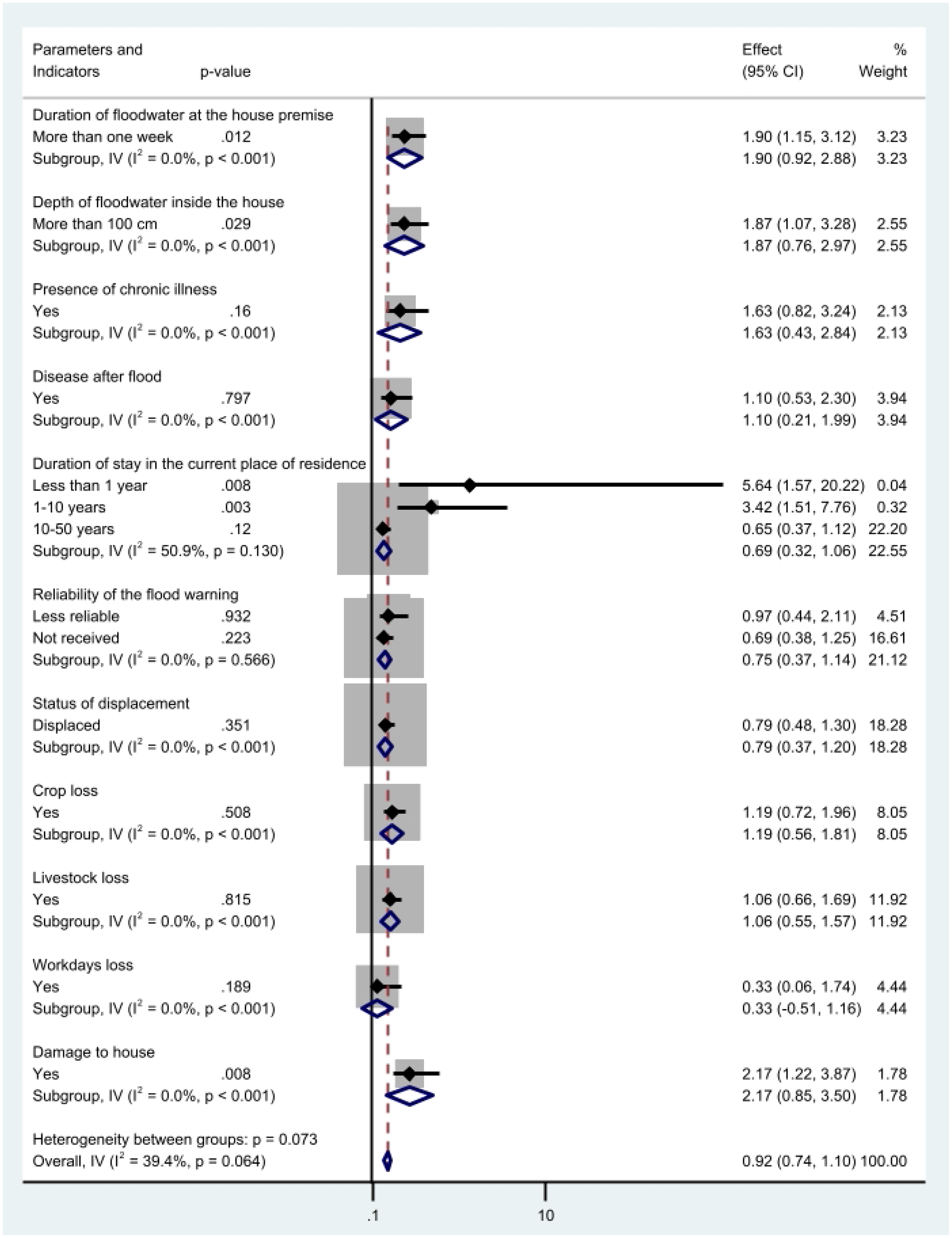
Association between Co-morbid PTSD, anxiety, and depression and Socio-Demographic Variables among the Flood Exposed Population.
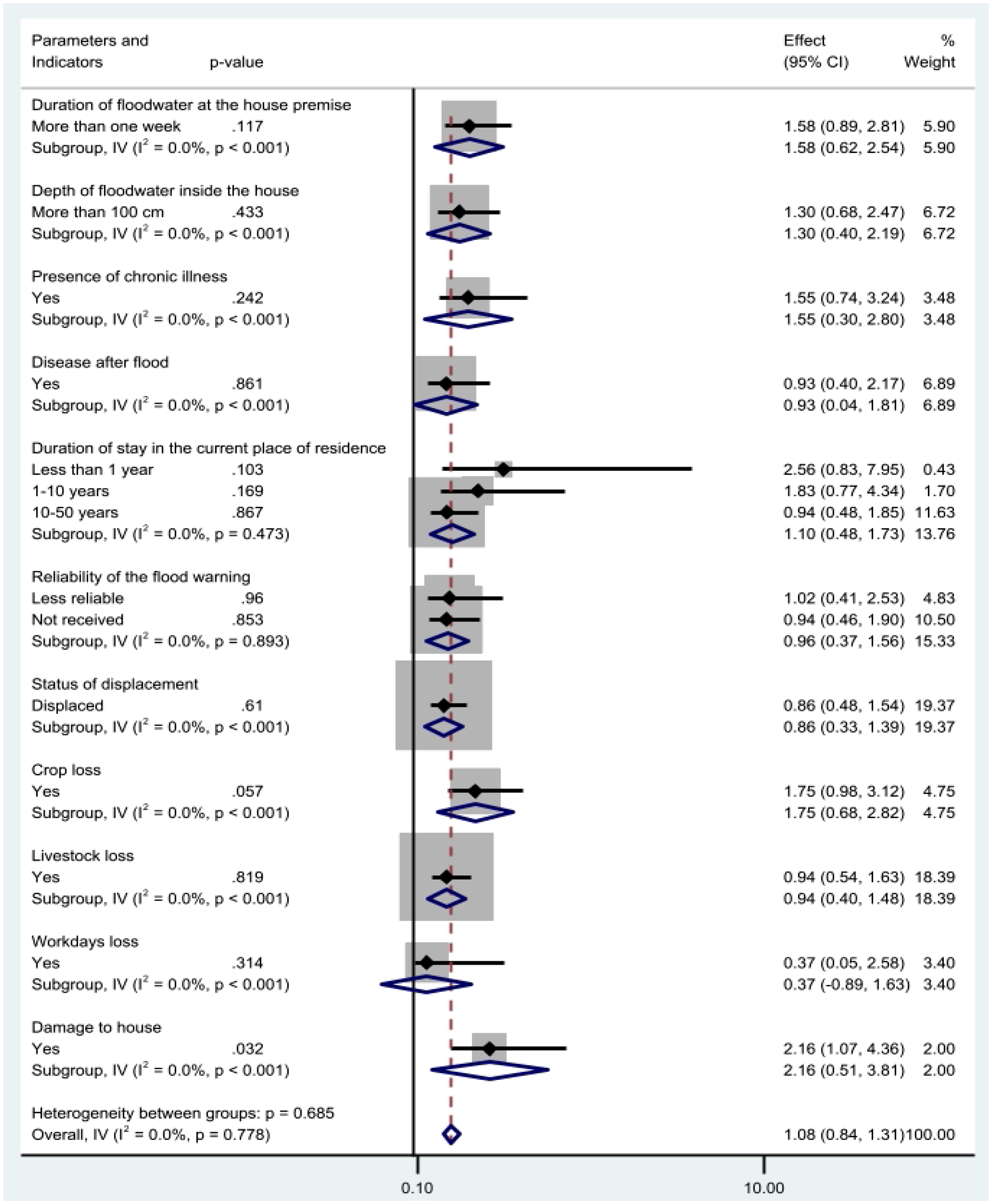
Among socioeconomic and demographic variables identified and tested, the association between education, gender, presence of chronic diseases, length of stay at current place of stay and any one or more of the four mental health outcomes are found to be significant. Females are more likely to develop PTSD (adjusted OR 1.75[95% CI 1.07–2.88]; p < 0.05) and anxiety (adjusted OR 1.69[95% CI 1.07–2.65]; p < 0.05). Illiterate participants have higher odds of developing anxiety (adjusted OR 2.09[95% CI 1.07–4.1]; p < 0.05) and comorbidity (adjusted OR 2.44[95% CI 1.07–5.59]; p < 0.05). The presence of chronic diseases increases the odds of developing PTSD by two times (adjusted OR 2.48[95% CI 1.26–4.88]; p < 0.01). Duration of stay at current place of stay for less than one year increases odds of developing anxiety (adjusted OR 4.09[95% CI 1.17–14.29]; p < 0.05) and depression (adjusted OR 5.64[95% CI 1.57–20.22]; p < 0.01) by four and five times, compared to those whose length of stay is more than 50 years (Appendix Table 2).
Among all the ‘loss’ stressors, damage to houses and the cost of repairing is significantly associated with PTSD (adjusted OR 2.04[95% CI 1.09–3.82]; p < 0.05), depression (adjusted OR 2.17[95% CI 1.22–3.87]; p < 0.01) and comorbid PTSD, anxiety and depression (adjusted OR 2.16[95% CI 1.07–4.36]; p < 0.05).
Discussion
In order to address the threat that climate change poses to human health, the National Action Plan for Climate Change and Human Health (NAPCCHH) was prepared in 2018. The National Programme on Climate Change and Human Health (NPCCHH) was approved by the Ministry of Health and Family Welfare a year later. NPCCHH has created a comprehensive health action plan that helps states plan and carry out health actions to minimise health impacts, including mental health impacts (Government of India, 2019). The major components of the plan include identifying the hotspot areas of extreme weather events and the vulnerable groups that need attention. Information, Education, and communication (IEC) is an important component of NPCCHH that can be addressed by Accredited Social Health Activists (ASHA) workers and local non-governmental organizations, but such initiatives were found absent during the field survey. NPCCHH also recognizes the need for a surveillance system that can help predict the trend of psychological issues arising out of climate change. The mental health of disaster-affected people is neglected in disaster management plans in India (Thomas et al., Reference Thomas, B, Kulkarni and MurthyMR2021), which is arguably due to the absence of academic discourse on the topic. In order to address mental health issues both during and after catastrophes, the Assam State Disaster Management Plan 2022 includes community outreach initiatives and readily available psychological support services. To assist the impacted community, the Assam State Disaster Management Authority (ASDMA) launched the MANOJNA-Psychosocial Tele Counselling Service program. State actions should be reflected in District Disaster Management Plans and updated in accordance with state guidelines. On the ground level, stigma around mental health should be addressed to encourage people to seek treatment when necessary. New evidence suggests that individuals’ mental health impacts their ability to prepare for upcoming calamities (James et al., Reference James, Welton-Mitchell, Noel and James2020). Therefore, public health intervention to take care of mental health among the chronically flood-affected people can help accomplish two goals simultaneously i.e., improving mental health and better disaster preparation among the chronically flood-affected population to avoid compounding impacts.
The condition of comorbidity after flood exposure is not adequately addressed in the Indian context. This study makes a humble attempt to fill that gap. Although many of the findings are consistent with the previous research, it is crucial to re-establish the facts found in the other study settings. Depression, stress, and anxiety after a flood don’t very often develop into chronic illnesses. Notwithstanding, evidence from India and other parts of the World also suggests that symptoms of psychological morbidity can extend longer (Srivastava et al., Reference Srivastava, Goel, Semwal, Gupta and Dhyani2015; Dai et al., Reference Dai, Kaminga, Tan, Wang, Lai, Wu, Xiong, Deng and Liu2017; Zhong et al., Reference Zhong, Yang, Taloo, Wang, Tong, Sun, Crompton, FitzGerald and Huang2018). Moreover, the mental health impacts of recurring flood events are found to be more severe (Wind et al., Reference Wind, Joshi, Kleber and Komproe2013).
The findings of this paper show that about six to seven months after flooding, one-fifth of the research participants from the flood-affected areas exhibit comorbid PTSD, anxiety, and depression; this percentage is negligible in the non-flooded areas. Compared to anxiety and depression, PTSD is less common in both exposed and control groups. Evidence from earlier studies suggests that new disorders can develop after trauma, with or without PTSD, and that PTSD raises the likelihood of developing other disorders (McMillen et al., Reference McMillen, North, Mosley and Smith2002). Anxiety symptoms and depression may occur with or without PTSD, for instance: in a study based in Canada five months after flooding, the prevalence of anxiety was higher than that of PTSD (Hetherington et al., Reference Hetherington, McDonalad, Wu and Tough2018). In another study based in the UK, the prevalence of probable depression was found to be higher than PTSD and anxiety (Mason et al., Reference Mason, Andrews and Upton2010). The prevalence of anxiety and PTSD among the participants of this study is comparable to that of research conducted three to six months after the United Kingdom floods of 2007 (Paranjothy et al., Reference Paranjothy, Gallacher, Amlot, James Rubin, Page, Baxter, Wight, Kirrage, McNaught and SR2011). The prevalence of PTSD is lower than those of other studies carried out eight to 12 months after flooding in Uttarakhand, Tamil Nadu, and among adolescents after the 2018 Kerala floods (Ashok et al., Reference Ashok, Premaranjan, Philip Rajkumar and Nanda Naik2019; Srivastava et al., Reference Srivastava, Goel, Semwal, Gupta and Dhyani2015) but higher than those reported one month after the 2015 Karnataka flood (Bandla et al., Reference Bandla, Nappinnai and Gopalasamy2019). However, the severity of the flood events, as well as the screening tools used, is different, making all these studies incomparable. Additionally, the out-migration and resettlement of flood-affected residents in other places may cause a lower prevalence of PTSD compared to other studies.
The findings revealed that flooding elevates the risk of developing adverse mental health outcomes. The risks of developing psychological morbidity are two to five times higher among the flood-affected than among non-flooded participants. The findings are consistent with earlier studies. Previous studies conducted four to six months following a flood indicated that flood victims had two to fourteen times higher chances of getting PTSD than non-flooded victims (Fontalba-Navas et al., Reference Fontalba-Navas, Lucas-Borja, Gil-Aguilar, Arrebola, Pena-Andreu and Perez2017; French et al., Reference French, Waite, Armstrong, Rubin, Beck and Oliver2019; Hetherington et al., Reference Hetherington, McDonalad, Wu and Tough2018), two to eight times higher risks of developing depression (French et al., Reference French, Waite, Armstrong, Rubin, Beck and Oliver2019; Hetherington et al., Reference Hetherington, McDonalad, Wu and Tough2018), and two to four times higher risks of developing anxiety (French et al., Reference French, Waite, Armstrong, Rubin, Beck and Oliver2019; Hetherington et al., Reference Hetherington, McDonalad, Wu and Tough2018). The findings of this study also suggest that the risks of developing psychiatric comorbidity are 21 times higher among the flood-affected participants. The collection of data was carried out six to seven months after a severe flood in parts of the Bongaigaon District of Assam, which was followed by two more waves of non-severe floods that arrived in September and November and lasted for less than 24 hours, each. The exposed villages experienced all three waves of flooding.
Among the explanatory factors identified and tested, the duration of stay in the current place of residence, the presence of chronic illnesses or long-term health conditions, income, and level of education are found to have significant associations with one or more than one of the four psychological morbidity conditions. When compared to those who belong to households staying in the current place of residence for more than fifty years, the odds of developing PTSD, anxiety and depression are two, five, and three times higher in participants who are newer to the area (belong to households staying in their current place of residence for one to ten years). The odds of developing anxiety, depression and comorbidity are five, six and two times higher in participants who have moved to their current place of residence in less than one year compared to the participants who belong to households those have been in their current place for more than fifty years, respectively. Flood-related displacement causes residents to relocate, affecting their mental health. The recent flood forced the displacement of more than a dozen households from the Hura Mara I and Hura Mara II villages, who were residing on the river embankment at the time of the survey. They were included in the flooded population. The possible mechanisms by which floods affect mental health have been extensively researched. Displacement in the aftermath of flooding has been found to be a risk factor in earlier studies (Dar et al., Reference Dar, Iqbal, Prakash and Altaf Paul2018; Lamond et al., Reference Lamond, Joseph and Proverbs2015; Mason et al., Reference Mason, Andrews and Upton2010; Paranjothy et al., Reference Paranjothy, Gallacher, Amlot, James Rubin, Page, Baxter, Wight, Kirrage, McNaught and SR2011). Such displacement may also be induced by damage to houses, another risk factor for developing psychological morbidity (Lebowitz et al., Reference Lebowitz, Tachikawa, Aiba, Okamoto, Takahashi, Nemoto and Arai2019; Woodhall-Melnik & Grogan, Reference Woodhall-Melnik and Grogan2019).
Chronic illnesses or long-term health conditions significantly increase the odds of developing PTSD and anxiety, not depression. Previous research has reported a strong association between concerns about health after flooding with PTSD and depression (Paranjothy et al., Reference Paranjothy, Gallacher, Amlot, James Rubin, Page, Baxter, Wight, Kirrage, McNaught and SR2011; Dai et al., Reference Dai, Kaminga, Tan, Wang, Lai, Wu, Xiong, Deng and Liu2017); the association is stronger for PTSD (Dai et al., Reference Dai, Kaminga, Tan, Wang, Lai, Wu, Xiong, Deng and Liu2017). Association between underlying health issues and the development of mental illnesses is established in earlier studies (Alderman et al., Reference Alderman, Turner and Tong2013; Yoda et al., Reference Yoda, Yokoyama, Suzuki and Hirao2017). Education and income are proxy for socioeconomic development; findings show that illiterate people are more likely to develop PTSD, anxiety and comorbidity compared to those with a high school pass degree. Participants belonging to the first income quartile have higher odds of developing anxiety.
In Model II for flood-exposed populations, variables associated with the severity of flooding, and secondary stressors arising after flooding are included; the effects of these variables were controlled to make the findings more robust. Two of the variables associated with the severity of flooding, duration and depth of floodwater, are found significant, a slightly higher odds of developing anxiety and depression was observed with increased duration of floodwater inside the house premise and slightly higher odds of depression were observed with increased depth of floodwater inside the house. After controlling for the severity of flooding and other secondary stressors, a shorter duration of stay at the current place of residence (less than one year) has the highest impact on anxiety and depression. Displacement and relocations can induce ‘relocation stress’ (Parker, Reference Parker1977; Munro et al., Reference Munro, Kovarts, James Rubin, David Waite, Bone and Armstrong2017). Besides the ones who are displaced are usually the ones who face severe flooding may be because of their location near the river or near the broken embankment, therefore has had the highest impact. The presence of chronic illness increases the odds of developing PTSD, thus, they have to bear the twin burden of physical and mental morbidity as a result of the stress induced by flooding. Among the four types of ‘losses’, damage to houses is associated with three of the mental health conditions. Damage to houses is associated with the financial burden of repairing as well as the physical burden of cleaning it; both can take a toll on individuals’ mental health. The effects of flooding on mental health are not gender-neutral; it is observed that women have slight but significantly higher odds of developing PTSD and anxiety. The study is carried out in a rural setting where women perform most household chores including taking care of children and cleaning and rearranging houses after flood-related destruction. Previous studies have attributed females’ vulnerabilities to inequitable power relations within households apart from biological and physiological differences between genders (Sadia et al., Reference Sadia, Iqbal, Ahmed, Ali and Ahmed2016).
This study has numerous limitations. First, the data only includes those family members who were present during the survey. Residents who went to work are potentially excluded from the survey. The second limitation is related to the cross-sectional study design and timing of the survey. While the findings are accessible for a single time point six to seven months after the flood, it is not known how many cases existed prior to the flood and how many developed into chronic cases. Third, floods occur frequently in the study area, which is situated in the Aie River basin. Three flood waves occurred in the year 2021, with the final one arriving in early November. The remaining two waves were less severe and lingered for a shorter period than the initial wave that arrived in August. Poor mental health outcomes can be a cumulative result of multiple waves of flooding. The fourth limitation is related to the baseline differences themselves. A great deal of difference between the control and exposed populations in terms of their income and education levels was observed. The baseline differences could arise because of selective migration from the study area. Outmigration is a long-term strategy of adaptation to flooding in the area. Out of the 255 flood-affected households surveyed, 40 (15.6 per cent) are all-time migrant households where one or more than one individual migrated out at some point in the past; of the 40 households, 27 had at least one member of their household migrate out recently in the year 2021. The number of all-time migrating and recent migrating households is considerably low (10 and 4 per cent, respectively) in the non-flooded areas. A chi-square test of independence was performed to assess the relationship between recent migrations and flood exposure categories. There is a significant relationship between the two variables, x² (1, N=505) =8.07, p=.005). Migration from flood-affected areas may explain some of the baseline differences in characteristics of the population such as income and education levels, between the flooded and non-flooded villages. The baseline differences were not controlled in the study. Despite its flaws, the study gives valuable evidence from a resource-constrained study area where fluvial floods are recurring in nature.
Conclusion
Floods have significant adverse impacts on mental health in the study area. While Assam is a place of recurrent floods, limited studies address the impacts of flooding on mental health. About six to seven months after the flood, the elevated risks of PTSD, anxiety, and depression among flood-affected participants are two to five times higher compared to the non-flooded ones, and for comorbid PTSD, anxiety, and depression, the risks are 21 times higher, suggesting that mental health implications linger for a long time. It bears repeating that flooding is recurring in nature in the flooded areas and that over one-fourth of flood-affected participants show symptoms of PTSD, more than one-third show symptoms of depression, and nearly half of the flood-affected participants reveal symptoms of anxiety, highlighting the need for attention in planning and risk mitigation, particularly during the recovery phase. One outcome-based indicator of disaster risk reduction that the SENDAI framework promotes is measurable vulnerability reduction (Raju & Costa, Reference Raju and de Costa2018). Incurring loss can reduce resilience and increase vulnerability, more so when such losses are recurring in nature and the onus for rebuilding falls on those affected. While efforts should be made to address vulnerable groups such as females, people with chronic illnesses, and people whose houses were damaged, in the meantime, the provision of community support and psychological first aid, particularly among the displaced, is essential for reducing the mental health effects of flooding. How the burden of mental health is transformed into healthcare-seeking behaviour is not known. Future studies can also deliberate on such issues.
Declarations
Acknowledgements
We would like to record our appreciation for the participants of the study for taking their time out and participating in the study. We are grateful to Dr. Shyamanta Das, Uddip Talukdar and team for translation of PHQ 4 under an ICMR funded research project, and Uddip Talukdar for translation of PCL-5. Special thanks are due to field investigators Prahlad Borman and Ankur Borman from Bongaigaon for helping with field work.
Funding statement
This study is not funded.
Competing interests
The authors declare that they have no competing interests.
Ethical standard
Participants are all above 18 years of age. All participants were informed about the purpose of the study and made aware of the voluntary participation. Prior consent of participation was taken from the participants and an informed participation consent form was signed. The study was approved by the Institutional Ethical Review Committee at Jawaharlal Nehru University, New Delhi (Ref. No. 2021/PhD Student/275).
Association between Mental Health Outcomes and Socio-Demographic Variables and Flood Exposure Categories (Relative Risks And 95% CI. Adjusted ORs are adjusted for all Potential Confounders)
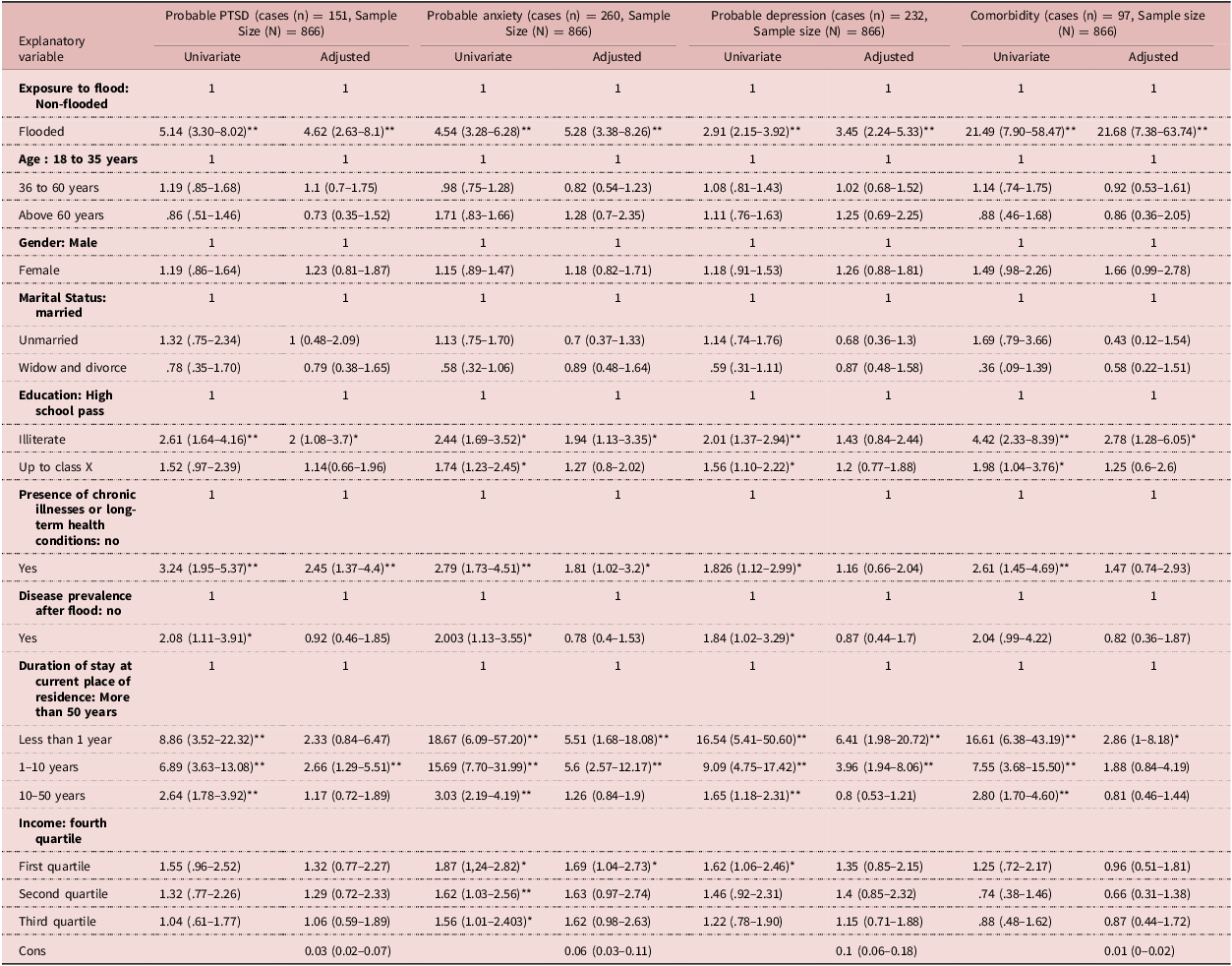
Adjusted for age groups, sex, marital status, education level, household income, presence serious disease after flood, presence of chronic illnesses or long-term health conditions, duration of residence at the current place, and flood exposure
***significant at 1 per cent; **significant at 5 per cent; *significant at 10 per cent
Association between Mental Health Outcomes and Socio-Demographic Variables, Severity of Flooding, Status of Early Warning, Status of Displacement, and Various Types of ‘Losses’ Incurred (Odds Ratio and 95% CI. Adjusted ORs are adjusted for all Potential Confounders)
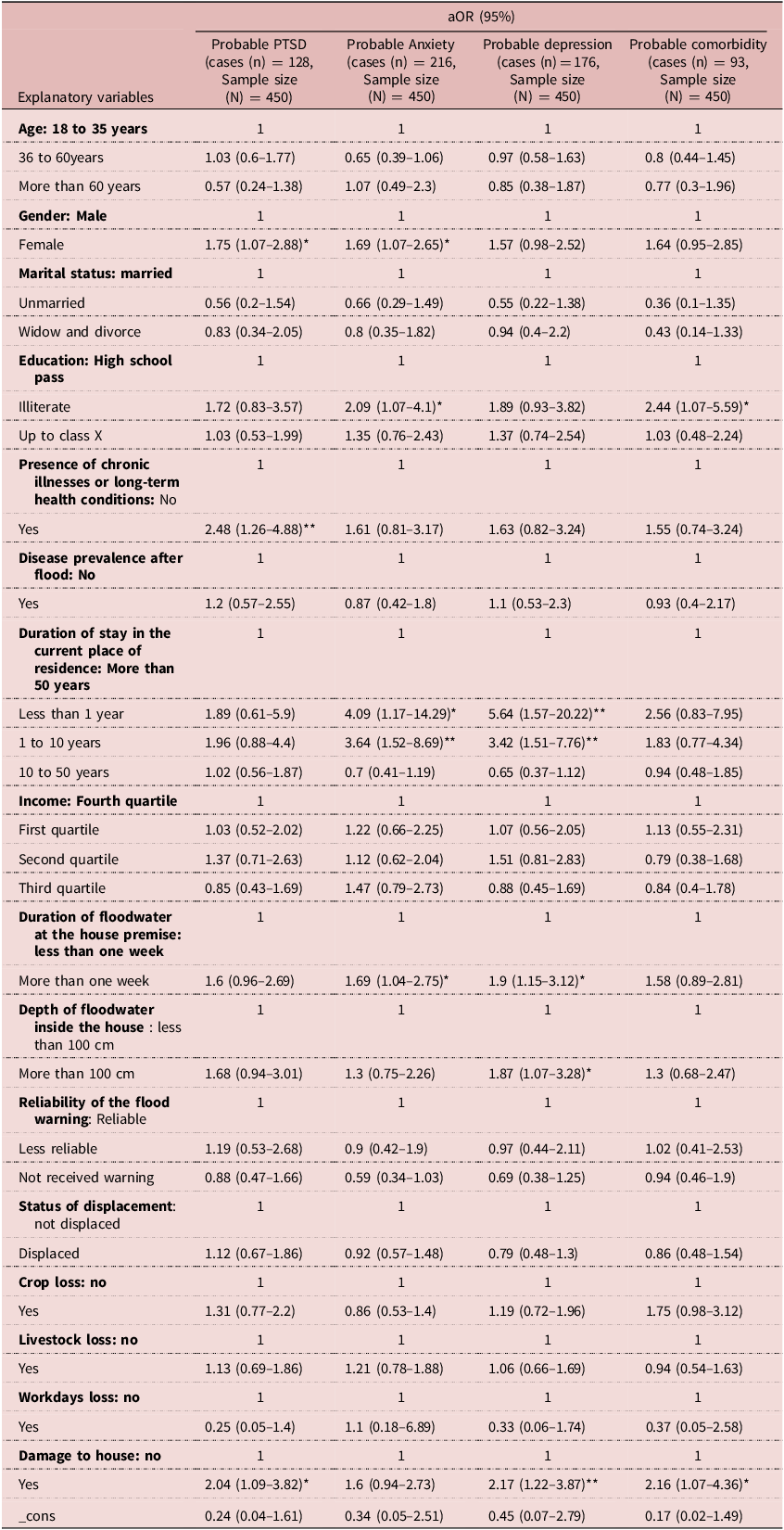
** Significant at .01 percent; *significant at .05 percent
Source: Calculated by the researcher based on household survey data, February-March 2022


 Open access

