



Introduction
Physical activity referrals (PARs) have been introduced in primary health care (PHC) as a tool to compensate for the fact that fewer of us actively include regular physical activity in our lives. Despite extensive knowledge about the positive mental and physical health effects that regular physical activities can result in (Warburton et al., Reference Warburton, Nicol and Bredin2006a; Aittasalo, Reference Aittasalo2008), two-thirds of the population of the European Union (EU) do not reach their daily recommended levels of physical activity [World Health Organisation (WHO), 2006]. In addition, one-fifth of EU citizens do not engage in any regular physical activities at all. In the wake of physical inactivity follows illness, such as myocardial infarction and stroke, which are estimated to represent 5–10% of total mortality within the EU (WHO, 2006). The PHC context has the requirements necessary to become the major arena promoting physical activity at a population level (cf. Stevens et al., Reference Stevens, Barlow, Kendrick, Masud, Skelton, Dinan-Young and Iliffe2014). Therefore, PHC nurses (hereinafter referred to as ‘nurses’) seem particularly suited to leading the quest for a more physically active and healthy population.
Review of the literature
Physical activities have been defined as all bodily movements resulting in energy turnover. Brisk walks, bicycling, heavy housework and gardening fit in well under the term ‘physical activity’ (Caspersen et al., Reference Caspersen, Powell and Christensen1985; Shephard and Balady, Reference Shephard and Balady1999). PAR, as a concept, was originally developed in the United Kingdom and has since been introduced worldwide: in North America as PACE, in New Zealand as Green Prescription, in Australia as Active Practice and in Denmark as ‘Motion på Recept’ (Aittasalo, Reference Aittasalo2008; Leijon et al., Reference Leijon, Bendtsen, Ståhle, Ekberg, Festin and Nilsen2010). In Sweden, it was introduced as ‘Fysisk Aktivitet på Recept’ following a government commission in 2001. Its introduction sought to raise public awareness of the importance of regular physical activity (Leijon et al., Reference Leijon, Bendtsen, Ståhle, Ekberg, Festin and Nilsen2010). PARs were also introduced as an innovative tool for PHC centres to tackle the increase in ill health caused by the modern sedentary lifestyle. The PAR is now a well-known concept within PHC (Crone et al., Reference Crone, Johnstone and Grant2004; Kallings, Reference Kallings2010). Registered healthcare staff (eg, medical doctors and nurses) can prescribe PARs, and they should, according to Swedish act regulations, be recorded in the patient’s journal [Svensk Författnings Samling (SFS), 2008: 355]. Patient-centred consultations focusing on health conditions, medical diagnoses and what the individual him/herself considers to be reasonable physical activity are recommended to form the basis of the PAR. PAR prescriptions should include the recommended activity, the intensity of the activity and the treatment time (Leijon and Jacobson, Reference Leijon and Jacobson2006; Kallings et al., Reference Melillo, Houde, Williamson and Futrell2008).
What about scientific evidence for the PAR as a PHC intervention? It appears that, thus far, the research community has concentrated mainly on investigating (i) the adherence and sustainability of PARs, (ii) the effect of PARs on individual health and (iii) PAR cost-effectiveness. Several recent systematic reviews focusing on the PAR (Eakin et al., Reference Eakin, Glasgow and Riley2000; Lawlor and Hanrattay, Reference Lawlor and Hanratty2001; Hillsdon et al., Reference Hillsdon, Foster, Cavill, Crombie and Naidoo2005; Sörensen et al., Reference Sörensen, Kragstrup, Skovgaard and Puggaard2006) are also available.
Research, logically, indicates that individuals who have been physically active on a regular basis tend to adhere better to PARs than individuals who have not (Morgan, Reference Morgan2005; Leijon et al., Reference Leijon, Bendtsen, Ståhle, Ekberg, Festin and Nilsen2010). We know from previous studies (Warburton et al., Reference Warburton, Nicol and Bredin2006b; Leijon et al., Reference Leijon, Bendtsen, Ståhle, Ekberg, Festin and Nilsen2010) that levels of long-term adherence are more likely to occur if the prescribed physical activities can take place, literally, on the individual’s doorstep. Brisk walks and light running are more easily incorporated into everyday routines than going to the gym. Hence, PARs should not be issued in an overly complicated fashion. Instead, they should focus on different types of daily activities that are easy and can be performed regularly in the normal pace of life, especially as Kallings et al. (Reference Kallings, Leijon, Kowalski, Hellénius and Ståhle2009) have already shown that even a limited increase in physical activity has a positive influence on an individual. Other researchers (Swinburn et al., Reference Swinburn, Walter, Arroll, Tilyard and Russell1998; Elley et al., Reference Elley, Kerse, Arroll and Robinson2003) support this finding and indicate that PARs can lead to positive and sustainable health effects, an increased quality of life and more cost-effective health care. Garett et al. (Reference Garrett, Elley, Rose, O’Dea, Lawton and Dowell2011) found that PARs prescribed by nurses were, indeed, cost-effective. However, Hagberg and Lindholm (Reference Kallings, Leijon, Hellenius and Ståhle2006) present contradictory findings and raise concerns about the cost-effectiveness of PARs as preventive interventions for sedentary lifestyles. Lawlor and Hanrattay (2001) found that the PAR was a cost-effective secondary intervention targeting ill health; however, more in-depth study is warranted.
Despite PARs being available as a possible intervention for more than a decade, there are discerning reports suggesting that PARs have not taken off as expected (cf. Kallings, Reference Kallings2010). This is significant, since ∼70% of the 9.7 million Swedes consult healthcare providers at PHC centres each year [National Board of Health and Welfare (NBHW), 2004). Considering the prominent positions of nurses at PHC centres (ie, independently providing primary and secondary preventative activities to different patient groups), they should be particularly well suited to strategically assess those deemed likely to benefit from PARs. Some studies focusing on the perspective of nurses exist (Melillo et al., Reference Melillo, Houde, Williamson and Futrell2000; Buchholz and Purath, Reference Buchholz and Purath2007; Horsley Tompkins et al., Reference Horsley Tompkins, Belza and Brown2009; Lamarche and Vallance, Reference Lamarche and Vallance2013). In a study by Buchholz and Purath (Reference Buchholz and Purath2007), findings showed that the most common method for nurses to assess physical activity was to simply ask about it (94%) and that the most common strategy for counselling was discussion (95%). Another survey by Lamarche and Vallance (2013) showed that competence in prescribing physical activity and whether a nurse perceived an intervention as important were positively correlated with the frequency of prescribing. Douglas et al. (Reference Douglas, Van Teijlingen, Torrance, Fearn, Kerr and Meloni2006) found that nurses readily gave advice about regular physical activities, most commonly brisk walks. However, they seldom worked in a routine or systematic way (ie, with systematic assessments or consultations) to target physical activities (Douglas et al., Reference Douglas, Van Teijlingen, Torrance, Fearn, Kerr and Meloni2006). Aittasalo (Reference Aittasalo2008) found that the knowledge among professionals concerning PAR recommendations was insufficient and, therefore, worked as a barrier. It is worth noting that the majority of published studies so far have been conducted with a quantitative design. It is thus reasonable to assume that nurses’ thoughts and views regarding PARs will influence whether and how they use the intervention to guide and support patients in pursuing more physically active lifestyles. According to Douglas et al. (Reference Douglas, Van Teijlingen, Torrance, Fearn, Kerr and Meloni2006), published studies focusing on these issues are still sparse. This study, therefore, aimed to illuminate nurses’ experiences of PARs.
Design
This study had a descriptive, qualitative design. The data were collected through semi-structured interviews (Polit and Beck, Reference Polit and Beck2012), with analyses as described by Burnard (Reference Burnard1996).
Sample
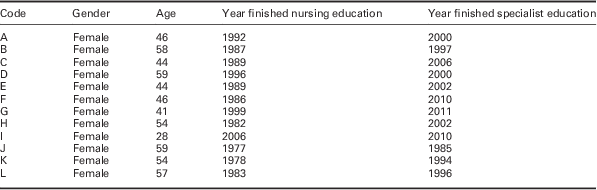
A purposive sample (Polit and Beck, Reference Polit and Beck2012), consisting of 12 nurses from seven different PHC centres situated in the south-eastern part of Sweden, was used with the intention of obtaining as many perspectives of the phenomenon as possible. The nurses were recruited with the help of each centre’s nurse manager. The first author (L.M.) contacted the nurses and informed them about the study, both verbally and in writing. Possible respondents were then contacted by phone, when they were again informed about the study and decided on a time and place for the interview. The respondents’ mean age was 49.2 years (range: 28–59 years), and their work experience ranged from six months to 30 years (Table 1).
Characteristics of the respondents
Data collection
Semi-structured interviews were used to collect the data (Polit and Beck, Reference Polit and Beck2012). An interview guide was developed based on the literature and on discussions between the authors. The interviews began with generic questions, which became more specific as the interviews proceeded (Box 1). Whenever clarification was needed during the interviews, general probing was used (Polit and Beck, Reference Polit and Beck2012). The interviews lasted ∼30–40 min and were tape-recorded and transcribed.
Examples of some of the interview questions
-
∙ What are your thoughts and experiences of preventative work within your primary care practice?
-
∙ In your daily practice, which is the most common nursing intervention you would use?
-
∙ Prescribing physical activity is one type of intervention that can be used both as a primary and secondary prevention, what are your thoughts and experiences concerning this?
-
∙ When are you prompted to use physical activity referrals?
-
∙ Can you tell me how you go about it (ie, routine, praxis) when you decide to prescribe physical activity?
-
∙ Is there anything you think I have forgotten to ask you, that is, is there something else you would like to tell me?
Data analysis
The transcribed interviews were analysed based on the study by Burnard (Reference Burnard1996). This method uses the inductive process of a four-step content analysis, in which the investigator identifies, codes and categorises important meanings and predominant themes from the text (Burnard, Reference Burnard1991; Reference Burnard1996). In the first step, the transcribed texts were read to obtain an overall understanding of the interview. The texts were then read in greater depth, and the researchers highlighted parts of the texts that were interpreted as relating to the aim. In the second step, the highlighted parts were condensed while still preserving the central meaning. During this step, the following questions were asked with respect to the text (Janlöv et al., Reference Janlöv, Rahm-Hallberg and Petersson2006): What is this about? What is going on? What does it represent? What other parts are similar and/or dissimilar? What does it mean? The third step involved the creation of codes. In the fourth step, the codes were read and then compared and contrasted with the text (again) to ensure credibility (Burnard, Reference Burnard1991; Reference Burnard1996). In this final stage, sub-categories consisting of several similar codes were created, and these sub-categories were interpreted to represent two predominating categories: PARs, an important nursing intervention, and PARs, the necessity of organisational support mirroring nurses’ experiences and views of the PAR (Table 2).
Overview process of analysis
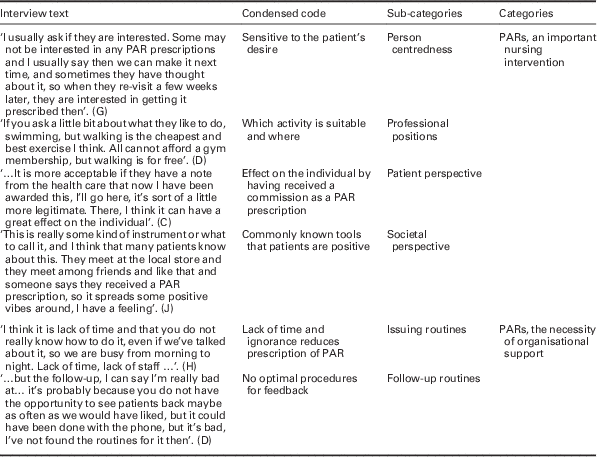
PARs=physical activity referrals.
Ethical consideration
This study was conducted in compliance with the ethical guidelines of the Declaration of Helsinki. Under the Swedish Ethical Review Act (SFS, 2003: 460), this study did not require ethical clearance; even so, we applied for ethical guidance from the ethical advisory board in south-eastern Sweden (No. 134–2012).
Findings
PARs, an important nursing intervention
The category ‘PARs, an important nursing intervention’ mirrored how the nurses experienced PARs as important tools in supporting health and well-being. In addition, this category described how a nurse’s decision to issue a PAR was preceded by several professional positions and took into account societal and individual perspectives.
Overall, the nurses perceived PARs as important interventions in promoting a healthy community. Their view was that physical activity is fundamental for individual patients’ well-being. Thus, working to motivate regular physical activity was viewed as an essential part of their everyday practice. To be able to identify those in need of support in changing their lifestyles, the nurses suggested that all consultations needed to address this type of issue. In addition, the nurses also experienced that work aiming at motivating physical activities had gained a more prominent position, and was nowadays viewed as an important part of their clinical praxis. Especially after that the NBHW had released guidelines on disease prevention methods. In consultations, the nurse’s targeted diet, exercise, alcohol and smoking with respect to a healthy lifestyle. Patients interested in and requiring change were issued PARs, and the nurses used techniques of highlighting the health gains, with regular physical activity as a motivator.
You meet a lot of patients who may not use any prescribed medication, and one may have measured some high blood pressure, and they might be overweight. Then, you do try to spur them on as much as possible to change their lifestyle and to become more physically active.
(G)
The informants talked about the importance of the methods by which information was provided about physical activities and PARs to increase patient motivation. The degree of motivation was vital in a nurse’s decision to issue a PAR or not. Their experience was that adherence to PARs was strongly correlated to motivational factors. If motivation was lacking, the nurse postponed issuing a PAR and, instead, offered a new appointment. The need to be intuitively responsive to patients’ wishes and to not issue PARs to reluctant patients was stressed.
We should not do it just because we should; it must lead to a gain – a health gain. When I think that a health gain can be achieved, then I do [issue a PAR].
(D)
Various health problems and illnesses were provided as the main reasons for issuing PARs. None of the nurses could recall having issued PARs as a primary preventative measure. This was explained by the fact that PHC centres mainly treat people who are already suffering from health issues. The informants had noticed, however, an increased demand for PARs from the public. The nurses observed that PARs had the ability to become a major tool in primary preventative work, which was the kind of work they thought their practice should entail: that is, preventing illness and harm in the community.
The dream is to work with primary preventions, but we have not done so and are not doing so in PHC. It is more secondary preventive… My dream is to work with the public and to catch up primary prevention patients.
(L)
The issuing of PARs was preceded by various professional positions. In consultations, health problems were identified, and the decision to issue a PAR was made in collaboration with the patient. To individualise the PAR in accordance with the patient’s wishes, the nurses strived to discuss choices of activities in a sensitive manner. Including the patient as a part of the intervention was experienced as essential, together with the fact that the nurses also needed to restrain their own attitudes to prevent influencing the consultations.
Oh, and then you will hear a bit about what they themselves think. It has to be relevant, and you cannot remove their quality of life. You do have different views on what quality of life is.
(L)
The nurses highlighted that an understanding and knowledge of the PAR was a basic condition for achieving lasting health effects. Being able to combine both verbal and written information was perceived as an advantage. The more knowledge bestowed on the patient, the more engaged he/she became, and the more likely it was that the patient would adhere to the PAR. Issuing PARs was viewed as reminding patients to engage in physical activities on a regular basis.
I turn the computer screen around so we can issue the PARs together, and then I print it out, put it in a plastic sleeve and say: ‘Stick this on the fridge. This is your homework. Tick when you have exercised and bring it with you the next time we meet so I can have a look at it.
(L)
Nurses experienced that it could be challenging to find the right physical activity for a patient. Some of the nurses regularly used the recommended guidelines based on afflictions, whereas others routinely prescribed brisk walks, as a walk was viewed as an easily accessible and ‘free’ activity. Brisk walks were also considered (as opposed to group activities or the gym) to be a physical activity that could quickly become a normal everyday routine. The nurses expressed that they could not visualise any barriers for issuing a PAR, regardless of the patient’s condition, as long as the activity was geared towards the patient. The issue of cost was reflected as another important position. Not all patients could afford all types of activities, which needed to be dealt with sensitively before issuing a PAR.
Those in the community that are worse off, they have less money and they cannot afford it even if they get issued a PAR. It is rather expensive to attend these different physical activities, and then it feels wrong [to issue a PAR].
(H)
The category ‘PARs, an important nursing intervention’ also reflected the nurses’ experiences of how the issuing of PARs could be viewed as an advantage from both patient and societal perspectives. By this, the nurses meant that, from the patient’s perspective, PARs were an important and significant tool to fight unhealthy lifestyles. Parallels between medical treatments and physical activity treatments were drawn, and PARs were viewed as a great source of support to the patients. The respondents suggested that the PARs had been introduced to raise awareness and to motivate patients to engage in regular physical activities, and the PARs’ obvious message was that physical activities are a matter serious enough to engage in.
If one cannot find time for physical activities now, then one has to find the time to be on sick leave later.
(I)
By this response, the nurses meant that the positive effects of PARs came down to the fact that the patients had actual and precisely defined activities to engage in. Thus, PARs worked as a constant reminder, positively influencing motivation. It was also highlighted that some activities were subsidised by the Primary Care Trust (PCT) and that making patients aware of this subsidisation was important. This information could, at times, increase a patient’s curiosity about and interest in trying out some of the subsidised activities. The nurses wished to be able to reach out to larger groups as a means of reducing costs for patients. Ideas about leading Nordic walking groups (ie, a full-body exercise based on using specially designed walking poles in a way that harnesses the power of the upper body), for example, were suggested as a way to achieve this. The nurses perceived that this kind of idea was, however, not at all prioritised by the organisation or by the nurse managers.
One of the PHC’s most important tasks was considered to be preventive and health promotional work in the community. Even though the respondents thought that there was an increased interest in PARs from a societal perspective, they felt that PARs needed to be talked about publicly to a greater extent. They perceived that promoting PARs more loudly and clearly could possibly change negative attitudes towards physical activity in the community. Another idea, concerned with reaching adolescents in the community, involved using mobile apps to share information about physical activities.
The respondents highlighted the downside that the form used for PARs had changed colour. Where it used to be light yellow (ie, the same colour as medical prescriptions), it was now plain white. The nurses suggested that this change had caused the PAR to lose some of its effectiveness, as it was no longer considered to be on par with established medical prescriptions. The nurses also thought that PARs should be one of their responsibilities, as they, to a larger extent than the other professionals, worked centrally with the patients. This gave them an advantage in quickly detecting and reaching those patients that would benefit most from regular physical activity. Despite this view, the nurses also emphasised the importance of shared responsibility for the preventative work in the PHC, including issuing PARs.
PARs, the necessity of organisational support
The category ‘PARs, the necessity of organisational support’ reflected the nurses’ experiences of the PHC centres’ lack of routines concerning issuing and following up on PARs as a major stumbling block. Working in an organisation without any set rules or guidelines concerning PARs was given as the main reason for why PARs were not issued more often or on a regular basis. Respondents that had gained experiences in PARs revealed that this had helped them create personal standards for dealing with the interventions and that these standards supported them in issuing PARs. A generally positive view towards PARs was reflected, but some nurses also expressed that they did not prioritise PARs owing to a lack of time and experience with them. It also became evident that not all nurses had positive attitudes towards changing their ways of working. For example, the computerised system used to issue PARs was described as unnecessarily complicated, and the forms needed to issue PARs were not yet standard in the organisational system. This resulted in the nurses experiencing the issuing of PARs as a particularly time-consuming activity.
The respondents stressed that all of them should be able to issue PARs in their consultation services, but they revealed that very few of the nurses bestowed the knowledge about how to issue PARs in an accurate and efficient way. Insecurity concerning the choice of physical activities and the intensity of those activities was revealed. This was given as a factor, in addition to the lack of routine, in the low level of PARs actually issued. Other factors mentioned were stress and lack of time, despite the fact that the nurses wished to view the PARs as a standard, routine intervention. They called for clearer guiding principles for issuing PARs.
I feel that we have not had time to do this properly. We are supposed to do it a bit with our left hand in a way, when it should be prioritised much more.
(H)
A general perception was that the interest in PARs was low among colleagues and that the nurses, therefore, had no interest in learning more about them. The nurses with easy access to information about PARs had their own convictions, which reflected their approach towards PARs as a standard intervention. The respondents suggested that collegial support, as well as managerial and organisational support, was needed to change negative perceptions. Such support could help nurses transition from their old ways of working. Issuing PARs should be done for the sake of the patient; thus, keeping subjective and perhaps negative attitudes under control was viewed as very important among the nurses.
At the same time, it is for the patient, not because we are supposed to earn brownie points, neither in heaven or anywhere else. No, if it strikes you it is for the sake of the patient, when it suits, then each one of us should bear it in mind.
(D)
The analysis of the interviews revealed that the nurses also experienced a lack of obvious local organisational routines or guidelines for following up on PARs. The follow-up routines used were based on their own experiences of what worked and what did not. Follow-up was viewed as a vital component influencing the degree of adherence to the PARs; however, finding time for it was hard, especially without guidance and with a rigid administrative system that limited the possibilities for waiting lists. If a patient had been issued a PAR owing to illness, then the illness was followed up, but not the patient’s adherence to the PAR. Follow-ups also tended to get lost in the large patient book, so the need for a reminder system was highlighted. The respondents experienced this as a deficiency in the system, though some nurses were ambivalent to the need for greater organisation. The influence of organisation was reflected, as the allowed number of consultations and the time spent in consultation were experienced as hindrances to the individualisation of PARs and follow-ups.
I had a bloke seeing me on a regular basis, then it came from the top that it is one consultation and possibly one contact by the phone – that’s it. Then I had to tell him, hmm, you cannot see me anymore, but if you want to proceed, it is PARs and physiotherapy that’s on offer….
(A)
Discussion
Our findings imply that the nurses experienced PARs as a complex nursing intervention (cf. Richards and Borglin, Reference Richards and Borglin2011). This, taken together with individual (ie, lack of experience and knowledge) and organisational (ie, limited amount of time, complicated systems, lack of routines and guidelines) barriers, might offer an explanation as to why PARs have not taken off as expected within PHC. The nurses felt that intervention per se was both important and useful in supporting individuals’ health; however, this seemingly straightforward intervention was found to be preceded by a complex decision-making process including, among other things: sensitive listening; engaging the individual; taking into account individual circumstances, such as finances, motivation and likeliness to adhere; types of physical activities; and possible individual and societal benefits. Suhonen et al. (Reference Suhonen, Välimäki and Leino-Kilpi2008) are in favour of and have demonstrated that individualised nursing interventions are more efficient than standardised directed interventions. It is, however, important to note that the evidence base with regard to this claim is still limited. We believe that nursing is, thus, an increasingly complicated activity, and the principles behind any intervention nurses engage in must reach positive nursing care results. According to Whittmore and Grey (Reference Whittemore and Grey2002), nursing interventions must be developed to fit daily clinical practice, while taking into account human complexity. The challenge of fitting PARs into daily practice and the importance of working in accordance with the professional core competency of ‘person-centred care’ (Cronenwett et al., Reference Cronenwett, Sherwood, Barnsteiner, Disch, Johnson, Mitchell, Sullivan and Warren2007) stood out in our study. The latter is always the right approach, but it seems even more important when it comes to influencing individuals’ lifestyle habits. Targeting lifestyle issues is likely to be a sensitive task, as the need for change might be interpreted as an implication that the patient is not adhering to societal norms (eg, being slim, not smoking and being physically active), and how the nurse individualises the intervention therefore seems essential. Our findings also imply that the nurses were both aware of and acknowledged that their decisions during consultations could have important implications for patient outcomes with regard to the PARs.
All types of activities or interventions that strive for change demand underpinnings based on knowledge and following guidelines. Consequently, the lack of clear local standards or general guidelines for issuing and following up with PARs that was noted by the nurses stood out as an especially troublesome barrier. This, together with the top-down directives limiting available resources (ie, time and number of consultations), severely hampered the nurses’ engagement in using PARs as an effective intervention. To be successful in referral schemes, such as PARs, the establishment of an efficient infrastructure is paramount (Crone et al., Reference Crone, Johnstone and Grant2004). Follow-ups ‘to be or not to be’ were raised by Kallings (Reference Kallings2010) and by Aittasala (Reference Aittasalo2008), who found that major barriers working against the PAR were insufficient time and lack of routines for follow-up. This issue still must be resolved, and futher studies investigating the effectiveness of follow-ups are needed.
Our findings concerning nurses’ experiences of PAR suggest that there might be a substantial benefit for the PCT to more readily engage nurses in developing their services. Physical activities, such as the Nordic walking scheme, based in primary care and run by the nurses, were suggested as preventative interventions and as means to meet the needs of patients with financial constraints. Research into such walking schemes suggests that they can be applied to individuals’ healthy lifestyles, as well as to their social interactions (Ashley and Bartlett, Reference Ashley and Bartlett2001). Improving outreach through innovative e-health was also suggested as a method of addressing physical activities and as a means to reach younger people in the community. A systematic literature review investigating the impacts of communication technology on health outcomes showed that the use of mobile phone systems could lead to significant improvements in physical training (Krishna et al., Reference Krishna, Austin Boren and Balas2009). In addition, Hurling et al. (Reference Hurling, Catt, De Boni, Fairley, Hurst, Murray, Richardson and Sodhi2007) suggested that an automatic, internet-based system creating flexible solutions for physical activities successfully increased participants’ activity levels.
Finally, it may also be beneficial for both the PCTs and the community to support nurses in targeting preventative work, rather than focusing mainly on ‘firefighting’ (ie, secondary preventions). Our findings imply that the nurses viewed the PAR as an especially useful tool in preventative work. This is, however, in opposition to our initial review of the literature, which indicated that the evidence base concerning this claim is inconsistent (cf. Lawlor and Hanrattay, Reference Lawlor and Hanratty2001; Hagberg and Lindholm, Reference Hagberg and Lindholm2006). Interestingly, none of the nurses could recall ever having used a PAR as a preventative measure. Even so, the nurses clearly had a desire to engage in more preventative work; but, as others have already noted (Besner, Reference Besner2004), it seems difficult to enable nurses within PHC to go beyond ‘firefighting’, as long as society and healthcare systems focus mainly on treatment rather than on prevention.
Methodological considerations
An evaluation of the trustworthiness of this study could be performed within the framework of its credibility (Guba, Reference Guba1981). To accomplish this and enable a transparency of analysis, direct quotes from the interviews are presented. To reduce the risk of subjectivity (Hutchinson and Wilson, Reference Hutchinson and Wilson1994), the authors regularly worked together throughout the content analysis (Burnard, Reference Burnard1991; Reference Burnard1996) to strengthen the interpretations, not by achieving consensus or arriving at identical formulations in interpretations, but by supplementing and contesting each other’s readings. The authors had limited experiences of the primary care setting, ensuring that no preconceptions interfered with the questions developed (Box 1) or the analysis. On the other hand, the limited exposure might also have caused us to miss some aspect of importance. A limitation of this study may be that the result is based on a small number of respondents (ie, 12). However, this number was considered to be sufficient, as we received guidance on the notion of response saturation (Morse, Reference Morse2000) after nine interviews, after which no new information emerged. Although the sampling was conducted purposively, it was homogeneous with regard to gender (female); even so, it was considered to be representative of the nursing profession in Sweden (in which only about 17% of nurses are male). The sample was also homogeneous with regard to age; however, the nurses de facto mirrored the general age in the nurse population in primary care. Thus, this, together with the respondents’ heterogeneous education and work experiences, can be seen as an advantage in the transferability of our findings to similar contexts.
Conclusion
Our findings suggest that viewing the PAR as a complex intervention, with all that this entails, might be one approach to increasing the number of PARs issued. Simpler organisational and administrative systems, more time and the potential to test the effectiveness of follow-ups could be ways of acknowledging the complex decision-making process the nurses seem to go through before issuing a PAR. These steps, together with the development of clear guidelines and/or pathways for issuing PARs, could help to increase the number of referrals for physical activity in PHC.
Acknowledgements
The authors would like to acknowledge the primary healthcare nurses for their help with this study. L.M. and G.B. designed the study, and L.M. collected the data. L.M., G.B. and D.M.B. analysed the data and drafted the manuscript. All authors contributed to editing the final manuscript and approved the submitted version.
Financial Support
L.M. was supported by the Primary Health Care Trust in the County Council of Karlshamn. D.M.B. was supported by the Faculty of Health Science, Department of Health, Blekinge Institute of Technology, Karlskrona, Sweden. G.B. was supported by the Department of Care Science Health Science, Malmö University, Sweden.
Conflicts of Interest
None.



