


Increasingly, governments are seeking to mitigate the long-term societal cost of adolescent problem behaviours (Beddington et al., Reference Beddington, Cooper, Field, Goswami, Huppert, Jenkins, Thomas and Cooper2013). These behaviours, which include substance use, violence, crime, and persistent rule violations cause acute physical damage to individuals, their property, and broader society through the cost of mental health and criminal justice interventions (Beardslee, Chien, & Bell, Reference Beardslee, Chien and Bell2011; Hemphill, Reference Hemphill1996). The prevalence of these problem behaviours is concerning, with studies showing between 10% and 20% of adolescents from traditionally English-speaking countries such as Australia, England, and the United States have mental health problems (Kessler et al., Reference Kessler, Avenevoli, Costello, Georgiades, Green, Gruber and Petukhova2012; Lawrence et al., Reference Lawrence, Johnson, Hafekost, Boterhoven de Haan, Sawyer, Ainley and Zubrick2015) and engage in violent and antisocial behaviour (Hemphill et al., Reference Hemphill, Smith, Toumbourou, Herrenkohl, Catalano, McMorris and Romaniuk2009; World Health Organization, 2018).
The long-term effects associated with problem behaviours originating in childhood and adolescence can be seen to have negative impacts at both a societal and an individual level. Diminished mental capital (an individual’s cognitive and emotional potential to contribute to society) is a considerable societal burden due to reduced workforce participation, greater reliance on welfare, and increased pressure on healthcare systems (Beddington et al., Reference Beddington, Cooper, Field, Goswami, Huppert, Jenkins, Thomas and Cooper2013). At the individual level, lost mental capital contributes to lower living standards, reduced earning capacity, and lower educational attainment (Beddington et al., Reference Beddington, Cooper, Field, Goswami, Huppert, Jenkins, Thomas and Cooper2013; Gibb, Fergusson, & Horwood, Reference Gibb, Fergusson and Horwood2010; Lansford, Dodge, Pettit, & Bates, Reference Lansford, Dodge, Pettit and Bates2016).
Effective prevention and early intervention aims to reduce risk factors and increase protective factors. Risk factors increase the likelihood an individual will develop a problem behaviour or undesirable outcome (Arthur, Hawkins, Pollard, Catalano, & Baglioni, Reference Arthur, Hawkins, Pollard, Catalano and Baglioni2002; Jessor, Van Den Bos, Vanderryn, Costa, & Turbin, Reference Jessor, Van Den Bos, Vanderryn, Costa and Turbin1995). Protective or health enhancing factors decrease the likelihood of problematic behaviours and undesirable outcomes (Jessor, Turbin, & Costa, Reference Jessor, Turbin and Costa1998). These risk and protective factors can be categorised into the domains of family, school, community peer groups, and individual (Arthur et al., Reference Arthur, Hawkins, Pollard, Catalano and Baglioni2002), and consequently give guidance for areas of focus for prevention and early intervention.
School engagement is an influential protective factor in which a student’s emotional commitment and active engagement in school can influence the student to adopt the prosocial behaviours and attitudes of the school (Chase, Warren, & Lerner, Reference Chase, Warren, Lerner, Bowers, Geldhof, Johnson, Hilliard, Hershberg, Lerner and Lerner2015). Alternatively, the school’s response to problem behaviours can lead to alienation and exacerbate pre-existing problems with origins outside of the school (Hemphill, Plenty, Herrenkohl, Toumbourou, & Catalano, Reference Hemphill, Plenty, Herrenkohl, Toumbourou and Catalano2014). While there is some level of uncertainty regarding the causal relationship between school engagement and problem behaviours (Wang & Fredricks, Reference Wang and Fredricks2013), a strong association is consistently found between low school engagement and antisocial behaviour, academic failure, and reduced mental health (Hemphill, Toumbourou, Herrenkohl, McMorris, & Catalano, Reference Hemphill, Toumbourou, Herrenkohl, McMorris and Catalano2006; Kang-Yi et al., Reference Kang-Yi, Wolk, Locke, Beidas, Lareef, Pisciella and Mandell2018; Kearney & Hendron, Reference Kearney and Hendron2016).
An engaging school environment includes students’ positive relationships with teachers and peers, a perceived relevant and achievable curriculum, and opportunities for involvement and belonging in school (Fredricks, Blumenfeld, & Paris, Reference Fredricks, Blumenfeld and Paris2004; Fredricks, Filsecker, & Lawson, Reference Fredricks, Filsecker and Lawson2016). The challenge for schools is in establishing and maintaining an engaging climate, not just for students that exhibit predominately positive behaviours, but also for those who are displaying problem behaviours and are at risk of becoming disengaged from school. Research has demonstrated that teachers with effective behaviour management strategies, engaging instructional techniques, high expectations of students, and expectations of parental involvement in school can act as a protective factor for students from low socio-economic backgrounds (Berkowitz, Moore, Astor, & Benbenishty, Reference Berkowitz, Moore, Astor and Benbenishty2017).
Student classroom misbehaviour is of concern due to the potential for the loss of time dedicated to academic tuition (Little, Reference Little2005). Within Australia, England and the United States, out-of-school or external suspension (temporary removal of the student from school for a fixed period) is a common disciplinary response to students who display disruptive behaviour (Department for Education, 2015; Graham, Reference Graham2018; Noltemeyer, Ward, & McLoughlin, Reference Noltemeyer, Ward and McLoughlin2015). Proponents of school suspension argue that the suspension of a student sends a clear message to the school community that student misbehaviour will not be tolerated and acts as a deterrent and punishment (American Academy of Pediatrics, 2003).
Longitudinal research has shown that school suspension can increase the likelihood of future suspensions and have a negative impact upon the likelihood of graduation (Noltemeyer et al., Reference Noltemeyer, Ward and McLoughlin2015). Other academic outcomes such as reading achievement are negatively associated with school suspension rates (Arcia, Reference Arcia2006). In addition, school suspension has been shown to increase the likelihood of future antisocial behaviour, as well as tobacco use and violence (Hemphill, Heerde, Herrenkohl, Toumbourou, & Catalano, Reference Hemphill, Heerde, Herrenkohl, Toumbourou and Catalano2011; Hemphill et al., Reference Hemphill, Toumbourou, Herrenkohl, McMorris and Catalano2006). Of particular concern is the potential for adverse school events such as suspension to contribute to the ‘school to prison pipeline’ (Mallett, Reference Mallett2016)
Students with emotional disorders are over-represented among suspended students (Goran & Gage, Reference Goran and Gage2011; Sullivan, Van Norman, & Klingbeil, Reference Sullivan, Van Norman and Klingbeil2014). Further to these student factors, multilevel analysis has demonstrated that school-level factors predict the likelihood of a student being suspended (Hemphill et al., Reference Hemphill, Plenty, Herrenkohl, Toumbourou and Catalano2014; Theriot, Craun, & Dupper, Reference Theriot, Craun and Dupper2010). In Australia, Hemphill et al. (Reference Hemphill, Toumbourou, Smith, Kendall, Rowland, Freiberg and Williams2010) demonstrated that schools in low socio-economic status area are more likely to suspend students, even when analyses controlled for individual and family factors.
A small number of studies have sought students’ perceptions of school suspension (Costenbader & Markson, Reference Costenbader and Markson1998; Quin & Hemphill, Reference Quin and Hemphill2014) and have directly compared suspended and non-suspended students on a range of measures of mental health and school, family, and peer group risk and protective factors. It is only by further exploring the factors that contribute to discipline outcomes such as suspension that schools can attempt to provide the engaging environment so essential for the wellbeing of all students. The current study aims to addresses this knowledge gap by measuring the extent to which external school suspension is associated with mental health problems and heightened levels of risk factors and diminished protective factors in the domains of school, family, and peer group.
When comparing previously suspended students to their never suspended peers, two predictions were made. First, students who have been suspended would report higher levels of problem behaviours and emotional problems than their peers who have never been suspended. Second, that school engagement would be diminished among previously suspended students relative to their non-suspended peers. Additionally, by comparing family and peer group risk and protective factors between suspended and non-suspended students, the potential implications of school suspension for suspended students can be discussed.
Method
Participants
Sixteen schools in southern Australia were approached to participate in the study. The five schools (31%) whose principals agreed to participate included a metropolitan Catholic school with a majority (69%) of students identifying as Asian, an inner metropolitan state school, an outer metropolitan state school, a rural independent school and an alternative campus, a rural Catholic school. The alternative campus specifically caters for students who have often been suspended or excluded from mainstreams schools. In total, 430 students were eligible for participation, with 309 (72%) students having gained parental consent and provided assent for their own participation.
Instruments
The measurement tool consisted of two sections. The second section asked participants to report on their experiences of suspension and was reported upon elsewhere (Quin & Hemphill, Reference Quin and Hemphill2014). The current article pertains to the measures reported upon below.
Suspension
Participants were required to answer the question: ‘How many times have you been externally suspended from school (i.e., asked not to attend school for a period of time)?’ This definition was also clarified verbally. Response options included never, 1–3, or more than 3.
Problem behaviours and emotional problems
Participants completed a self-report behavioural screening tool, the Strengths and Difficulties Questionnaire (SDQ) version for 11- to 16-year-olds (Goodman, Reference Goodman2001; Goodman, Meltzer, & Bailey, Reference Goodman, Meltzer and Bailey1998). The SDQ has been shown to have good reliability and validity (Goodman, Reference Goodman2001), and within Australian samples has been shown to have Cronbach alphas above .70 (Maybery, Reupert, Goodyear, Ritchie, & Brann, Reference Maybery, Reupert, Goodyear, Ritchie and Brann2009). The SDQ was used to measure problem behaviours, emotional symptoms, and prosocial behaviours. This measurement tool contains 25 items scored on a 3-point scale: not true = 0, somewhat true = 1 and certainly true = 2; for example, ‘I worry a lot’, ‘I am kind to younger children’ and ‘I think before I do things’. A ‘total difficulties score’ is obtained from 20 of the items and the remaining 5 items total to form a ‘prosocial behaviour score’. Each score was dichotomised at the recommended separation between ‘normal’ and ‘borderline’ (Goodman et al., Reference Goodman, Meltzer and Bailey1998).
Risk and protective factors
The eight risk and protective factors were drawn from the Communities that Care (CTC) survey (Arthur et al., Reference Arthur, Hawkins, Pollard, Catalano and Baglioni2002; Glaser, Horn, Arthur, Hawkins, & Catalano, Reference Glaser, Horn, Arthur, Hawkins and Catalano2005). Previous Australian and international studies have calculated the average Cronbach alphas for the scales used here as above .70 (Bond, Thomas, Toumbourou, Patton, & Catalano, Reference Bond, Thomas, Toumbourou, Patton and Catalano2000). The risk factors ‘poor family management’ (e.g., ‘The rules in my family are clear’) and ‘family conflict’ (e.g., ‘People in my family have serious arguments’) and the protective factor ‘opportunities for prosocial involvement’ (e.g. ‘My parents give me lots of chances to do fun things with them’) from the family domain were included. Each of these were scored on a 4-point scale, ranging from definitely no to definitely yes. Items for the community risk factor ‘transitions and mobility’ had a Yes or No response option (e.g., ‘Have you changed homes in the past year?’). In the school domain ‘low commitment to school’ (e.g., ‘How interesting are most of your school subjects to you?’), a risk factor, contained items coded to have a 5-point range indicating the frequency with which a behaviour or attitude occurred. Two school protective factors, ‘supportive teacher relationships’ (e.g., ‘My teachers are fair in dealing with students’) and ‘belonging/acceptance’ (e.g., ‘I can really be myself at this school’) were measured on a 4-point scale, ranging from definitely no to definitely yes. The risk factor ‘interaction with antisocial peers’ (e.g., ‘In the past year, how many of your friends have been suspended from school?’) was rated on a 5-point scale ranging from none of my friends to 4 of my friends. The score for each risk and protective factor was dichotomised at the mid-point of its respective range.
Dichotomisation was appropriate for the measures utilised, as consistent with previous research into problem behaviours and risk factors the distribution of scores revealed few participants reporting high levels of problem behaviours or risk factors (Farrington & Loeber, Reference Farrington and Loeber2000). Dichotomisation also has the added benefit of improving the interpretation of results for a wide audience without causing a decrease in the measured associations (Farrington & Loeber, Reference Farrington and Loeber2000).
Procedure
Ethics approval to conduct the research was granted by the Australian Catholic University Human Research Ethics Committee. Approval to approach principals to request permission to conduct research in their schools was provided by the Department of Education and Early Childhood and the Catholic Education Office Melbourne.
The schools approached to participate were a convenience sample, chosen because the researchers had a prior relationship with a staff member at the school or they were in close proximity to the researchers’ workplace. The principals who declined to participate cited time constraints for non-participation.
The principal (or their delegate) identified a single year level between Year 7 and Year 10 for participation. Intact classes that were timetabled in a traditional classroom and could be surveyed in one day were invited to participate. Students in these classes were given an information letter and consent form to request written parental permission to participate in the study.
Questionnaires were administered in August and September 2011 by the principal investigator. Participants completed the questionnaire in their regular timetabled school class of 40–50 minutes’ duration, with the teacher present at the side of the classroom.
Data Analysis
Of the 309 students eligible for participation, five were excluded from the study due to irregular patterns of answers on the questionnaire. A summary of the demographics of the included participants is shown in Table 1.
Participant Demographics
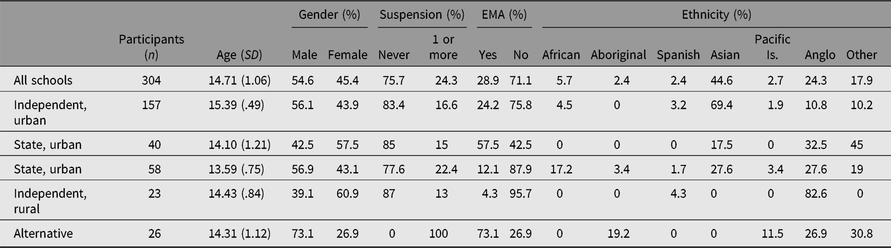
Note. Is = Islander; EMA = Educational Maintenance Allowance (financial assistance provided to students from low income families)
Missing data for each individual item in the questionnaire was less than 2%. At the individual case level, when a CTC or SDQ variable had not more than 33% (Arthur et al., Reference Arthur, Hawkins, Pollard, Catalano and Baglioni2002) or 40% (Goodman, Reference Goodman2011) respectively of missing data a mean value for each case was calculated. This had no impact on statistical results.
First, Pearson’s chi-square analyses were conducted to test the association between being suspended from school or not with the 10 variables measured. Due to the multiple comparisons made, a Bonferroni adjustment was applied, α = .005. As a measure of effect size, the odds ratio was calculated when a statistically significant association was found. Second, two separate unadjusted logistic regression analyses were conducted to examine the associations between the 10 independent variables and school suspension. All statistical analysis was performed with the software package SPSS (IBM Corp, 2013).
Results
All students attending the alternative school had been previously suspended (Table 1). These students reported higher levels of problem behaviours and emotions and risk factors, and lower levels of protective factors (Table 2). Due to the potential for the students attending the alternative school to skew the hypothesised associations with suspension, two separate analyses were conducted: the first with all participants in the study and the second excluding the 26 students attending the alternative school.
Mean (SD) Levels of Problem Behaviours and Emotions and Risk and Protective Factors by School and Suspension Group
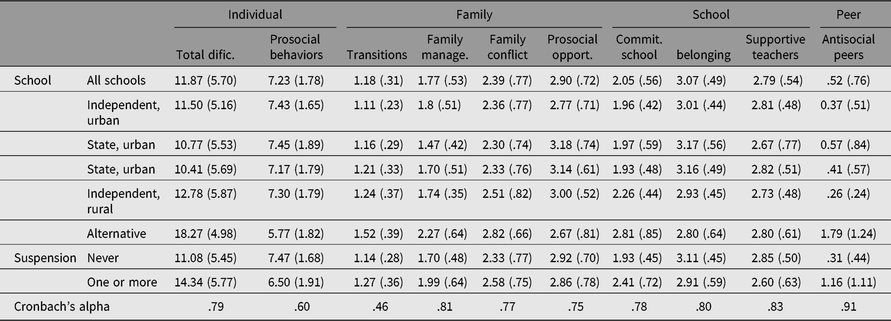
Note. diffic = difficulties; manage = management; opport = opportunities; commit = commitment.
Age and gender
Boys were more likely to report having been suspended. The percentage of boys in the sample was 55% and this figure increased to 80% of the suspended students. Chi-square analysis showed that gender had a statistically significant relationship with suspension status, χ2(1) = 24.91, p < .001. An independent samples t test indicated that there was no significant age difference between those students who had been suspended and the students who had not been suspended, t(302) = .70, p = .48.
Problem behaviours and emotional problems
The percentage of students in the never suspended group with a score on the SDQ that fell below the cut point of ‘borderline’ was 19%. This proportion increased to 39% in the group of students who have been suspended. Chi-square analysis showed a statistically significant relationship between the total difficulties score and whether or not a student was suspended, χ2(1) = 12.35, p < .001. The odds ratio indicated the odds of a student having been suspended were 2.72 times higher if they reported problem behaviours and emotional problems, as measured by the SDQ (Table 3). This association was only statistically significant when the students from the alternative school were included in the analysis.
Associations Between School Suspension and Problem Behaviours and Emotions and Risk and Protective Factors
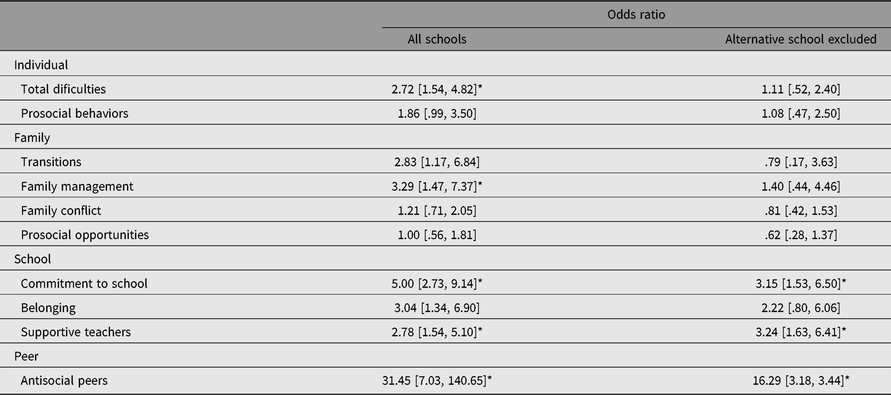
Note: Protective factors prosocial opportunities, belonging and supportive teachers transformed to risk factors for ease of interpretation.
* significant at .005 level. 95% confidence intervals shown in square brackets.
Risk and protective factors
There was a statistically significant relationship between poor family management practices and whether a student had been suspended or not, χ2(1) = 9.12, p = .003. Poor family management practices were present in 18% of the previously suspended students and 6% of the never suspended group. The odds of a student having being suspended were 3.29 times greater if they had poor family management practices. Further analysis demonstrated this association to be not statistically significant when the students attending the alternative school were excluded.
Commitment to school had a statistically significant relationship with whether a student had been suspended or not, χ2(1) = 30.31, p < .001. Of the previously suspended students, 42% reported a low commitment to school. In contrast, 13% of students who had never been suspended reported a low commitment to school. The odds ratio indicated that the odds of being suspended increased by 5.00 if a student has low commitment to school. The odds ratio decreased to 3.15 when the students attending the alternative school were excluded; however, the association remained statistically significant.
Also in the school domain, supportive teacher relationships had a statistically significant relationship with the suspension group, χ2(1) = 11.92, p = .001. A higher percentage of never suspended students (84%) reported supportive teacher relationships than previously suspended students (64%). The odds ratio shows that if a student reports lower levels of support from their teacher, they are 2.78 times more likely to have been suspended. This association remained statistically significant when the students attending the alternative school were removed from the analysis.
Only 1% of the never suspended group reported regular interactions with antisocial friends. This figure increased to 22% among previously suspended students. The 2 × 2 contingency table for interaction with antisocial peers expected the previously suspended group to have a frequency of less than five. Therefore, Fisher’s exact test (two-sided) was conducted to assess the relationship between the suspension group and interaction with antisocial peers. A statistically significant association between being suspended or not and level of interaction with antisocial peers was found, p < .001. The odds ratio shows that if a student interacts with antisocial peers, they are 31.45 times more likely to have been suspended. The odds ratio decreased to 16.29 when the students attending the alternative school were excluded from the analysis; however, it remained statistically significant.
Multivariate associations with school suspension
The results of the two logistic regression analyses to ascertain the effects of the two problem behaviours and problem emotions variables, and eight risk and protective factors on school suspension are shown in Table 4. In the analysis of all 304 students in the sample, only the students’ reported commitment to school and interaction with antisocial peers had statistically significant associations with school suspension. The analysis, which excluded the students attending the alternative school interaction with antisocial peers, was again associated with school suspension. Commitment to school was no longer related statistically significantly to school suspension, but student report of supportive teachers was statistically significant for the students attending the four mainstream schools.
Multivariate Associations With Suspension
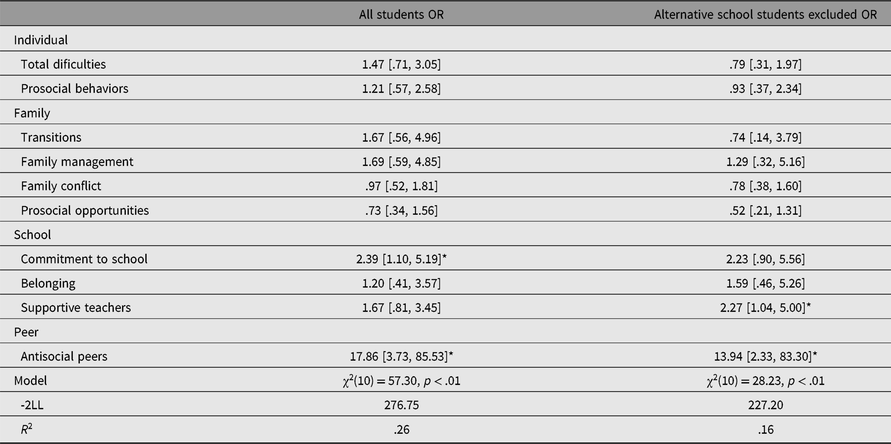
Note: Protective factors prosocial opportunities, belonging and supportive teachers transformed to risk factors for ease of interpretation.
* p < .05. 95% confidence intervals shown in square brackets.
Discussion
This study is unique to Australia in that it utilised student self-report of problem behaviours and emotions and risk and protective factors in relation to an experience unique to school, school suspension. The main findings were that previously suspended students, relative to non-suspended students, were more likely to be male, reported more problem behaviours and experienced more negative emotions, were less committed to school, and reported less supportive teacher relationships. Further, suspended students experienced more poor family management practices and reported having a greater number of antisocial friends than their never suspended peers.
The demonstrated association between suspension and problem behaviours and negative emotions is consistent with research in the United States (Goran & Gage, Reference Goran and Gage2011; Sullivan et al., Reference Sullivan, Van Norman and Klingbeil2014). While this association was not replicated when the students attending the alternative school were excluded from the analysis, the relationship gives rise to two potential explanations. First, that students with pre-existing problem behaviours commensurate with emotional and behavioural disorders are more likely to be suspended. Second, that suspension increases the likelihood of problem behaviours and emotional problems. Within Australia there is a lack of knowledge regarding the backgrounds of students enrolled in alternative school settings (Van Bergen, Graham, Sweller, & Dodd, Reference Van Bergen, Graham, Sweller and Dodd2015).
This study is cross-sectional and cannot demonstrate causation. However, it has been previously shown that one of the factors that reduces the likelihood of antisocial behaviour is an ability to control emotions in difficult situations (Hemphill et al., Reference Hemphill, Toumbourou, Herrenkohl, McMorris and Catalano2006). In this context, with an awareness of adolescent mental health prevalence and its perceived impact on school activities (Lawrence et al., Reference Lawrence, Johnson, Hafekost, Boterhoven de Haan, Sawyer, Ainley and Zubrick2015), it appears that if a student is unable to self-regulate their behaviours and emotions to that of the level expected in the classroom, then a common intervention strategy is suspension. Intervention in this manner can be framed as positive disciplinary intervention intended to achieve behaviour change in the student. Or, as has been acknowledged, suspension can be employed in a systematic way to remove and punish disruptive or low achieving students.
The finding that suspension is associated with student-reported low commitment to school and lower levels of supportive teacher relationships is consistent with research demonstrating that good school connectedness is associated with both positive school outcomes and good mental health (Salle Tamika, George Heather, Betsy, Polk, & Evanovich, Reference Salle Tamika, George Heather, Betsy, Polk and Evanovich2018; Walker & Graham, Reference Walker and Graham2019). Furthermore, being male, academic failure and exclusionary practices such as suspension have been identified as crucial components in the ‘school to prison pipeline’, with the majority of adolescents involved in the court system being exposed to these school-level risk factors (Hemphill et al., Reference Hemphill, Plenty, Herrenkohl, Toumbourou and Catalano2014; Mallett, Reference Mallett2016). It should be acknowledged that a student who completes set classwork, responds to teacher instruction, and conforms to the implicit and explicit social norms of the school environment is less likely to be suspended (Arcia, Reference Arcia2006). However, the first effect of suspension is loss of instruction time and the potential positive normative effects of the classroom environment and the school as a protective factor against problem behaviours. The ability of the teacher to form a positive relationship and respond to not only the curriculum requirements but also the socio-emotional needs of the student is an acknowledged key factor in academic success (Quin, Reference Quin2017). Suspension can also result in suspended students experiencing a negative stigma from the school environment (Costenbader & Markson, Reference Costenbader and Markson1998; Quin & Hemphill, Reference Quin and Hemphill2014), further diminishing school engagement.
The current study found that students who have been suspended are more likely to report poor family management practices. Thus, schools with well-established discipline policies and procedures are attempting to elicit parental support from families that lack the same clear expectations (Hemphill et al., Reference Hemphill, Heerde, Herrenkohl, Toumbourou and Catalano2011; Herrenkohl et al., Reference Herrenkohl, Maguin, Hill, Hawkins, Abbott and Catalano2000). Ideally, the parental response to any problem behaviour resulting in suspension would be authoritative. Authoritative parenting, a parenting style that is warm and accepting, clear in behavioural supervision and democratic, has been shown to predict parental involvement in school and adolescent school achievement (Steinberg, Lamborn, Dornbusch, & Darling, Reference Steinberg, Lamborn, Dornbusch and Darling1992). If school as a protective factor against problem behaviours is diminished via suspension, through either loss of classroom contact or reduced school engagement, then the role of the family, peers, and community become even more influential. The demonstrated association between suspension and poor family management suggests that an authoritative parental response to suspension is unlikely.
The finding that students who have been suspended report having a greater number of interactions with antisocial friends is informative when seeking to explain why school suspension exacerbates antisocial behaviour (Hemphill et al., Reference Hemphill, Toumbourou, Herrenkohl, McMorris and Catalano2006). It is possible that suspension provides the opportunity for antisocial interaction on the day of suspension, and increasingly, evidence suggests that public policy interventions that segregate antisocial peers are inadvertently harmful (Gifford-Smith, Dodge, Dishion, & McCord, Reference Gifford-Smith, Dodge, Dishion and McCord2005). Alternatively, it has been proposed that suspension may contribute to students further rebelling and seeking out like-minded antisocial peers for socialisation (Hemphill et al., Reference Hemphill, Heerde, Herrenkohl, Toumbourou and Catalano2011).
Strengths and Limitations of the Study
A major strength of this study is that it is one of the first to concurrently measure student report of school experiences on established measures of mental health and risk and protective factors in a sample of suspended and non-suspended students. Even though future research would benefit from a larger sample of schools, the inclusion of students from an alternative school in the sample is a further strength. The requirement for entry into the alternative school could be broadly classed as ‘disengaged’; however, the current study provides direction for more detailed analysis. A larger sample could explore in individual schools the management of disruptive behaviours and the application of suspension. Schools exercise considerable discretion in this regard.
This study was cross-sectional. Thus, it cannot be concluded that suspension contributes to the demonstrated levels of problem behaviours and negative emotions, diminished school engagement, increased family management problems, and a greater number of antisocial friends or vice versa. The potential for school suspension to contribute to mental health problems, in particular, in the way that suspension has been demonstrated to be a predictor of future antisocial behaviour (Hemphill et al., Reference Hemphill, Heerde, Herrenkohl, Toumbourou and Catalano2011; Hemphill et al., Reference Hemphill, Toumbourou, Herrenkohl, McMorris and Catalano2006) should be explored in longitudinal studies.
Generally for adolescent problem behaviours that are not readily observable, self-report data is considered reliable and the most appropriate way to measure these behaviours (Goodman et al., Reference Goodman, Meltzer and Bailey1998; Jolliffe et al., Reference Jolliffe, Farrington, Hawkins, Catalano, Hill and Kosterman2003). Within Australia, official school data such as suspension numbers are not readily available to researchers. Future research in this area would benefit from including both student self-report and external data sources such as official school data and parent and teacher report.
Only external suspension and its presence or absence was recorded, and no time frame was specified regarding the recency of the suspension received. To the best of the author’s knowledge, the implications of potential cumulative effects or time effects of suspensions are yet to be explored in other studies. Similarly, it has been recommended that future research should explore the outcomes of alternative programs such as internal suspension and restorative practices (Skiba et al., Reference Skiba, Reynolds, Graham, Sheras, Conoley and Garcia-Vazquez2008).
Conclusions
Suspension has an intuitive appeal for the maintenance of school discipline by providing prompt relief to teachers, school leadership, and students engaged in academic learning. This study viewed suspension from the perspective of suspended students and presented a different picture. The current practice of school suspension may not be recognising that a minority of students lack the social and emotional skills to consistently regulate their behaviour to the level expected in the classroom. These students who have the most to gain from being engaged in school are being exposed to known risk factors for antisocial behaviour and academic failure via the application of suspension.
Author ORCIDs
Daniel Quin 0000-0001-6393-1732
Acknowledgments
The author acknowledges Professor Sheryl Hemphill’s assistance in the preparation of this manuscript. This research would not have been possible without the support of the respective schools’ staff and students who participated in the research.
Financial Support
The author is grateful for the financial support of the Faculty of Arts and Sciences, Australian Catholic University for the Student Research Grant.
Conflicts of Interest
None.
Ethical Standards
Ethics approval to conduct the research was provided by the Australian Catholic University Human Research and Ethics Committee. HREC Register number: V2011 42.



