


Introduction
This article investigates the correlates of the timing of transition into motherhood among adolescent girls in two informal settlements or slums – Korogocho and Viwandani – in Nairobi city, Kenya. Entry into motherhood is an important marker of the transition to adulthood. Other markers include leaving school, entering the labour force, leaving one's natal home and getting married. However, adolescent fertility has been viewed as both a social and policy challenge in many countries in sub-Saharan Africa (World Health Organization, 2011; United Nations Children's Fund, 2012a; National Research Council & Institute of Medicine, 2005). To effectively address this challenge, there is a need to understand the factors driving adolescent childbearing, especially in resource-poor settings such as informal settlements.
In many sub-Saharan African countries, the contribution of adolescents' fertility to total fertility rates remains higher than in other parts of the world. Recent data indicate that 18% of adolescent girls aged 15–19 in eastern/southern Africa and 21% in western/central Africa had initiated childbearing (National Research Council & Institute of Medicine, 2005). Other estimates show that, on average, more than 25% of women aged 20–24 in sub-Saharan Africa have given birth before age 18, with great disparities between countries in the region (United Nations Children's Fund, 2012b). In fact, much of the high fertility in sub-Saharan Africa can be attributed to first birth occurring at very young ages. The timing of the first birth is usually an indicator of future fertility patterns, largely because it determines the length of a woman's childbearing window. In the absence of contraception, a longer window is more likely to result in larger completed family size – one of the long-term demographic effects of adolescent fertility (Wulf & Singh, Reference Wulf and Singh1991).
Although childbearing is a key marker of the transition to adulthood and carries parental responsibilities, giving birth during adolescence is likely to lead to poor health outcomes for the young mother and her child. For instance, the risk of maternal and child morbidity and mortality is known to be higher among adolescent mothers. Furthermore, younger mothers have a higher likelihood of having clandestine induced abortions and acquiring HIV and other sexually transmitted infections (Mensch et al., Reference Mensch, Singh, Casterline, Lloyd, Behrman, Stromquist and Cohen2005). Patton and colleagues (Reference Patton, Coffey, Sawyer, Viner, Haller and Bose2009) show that maternal mortality accounts for nearly 26% of the increased number of deaths in females aged 10–24 years in the African region. The incidence of low birth weight, prematurity, stillbirth and neonatal mortality are known to be higher among children whose mothers are adolescents. Early childbearing is also known to negatively impact on educational and employment prospects, and hence lead to a greater likelihood of poverty (Singh, Reference Singh1998; Gupta & Mahy, Reference Gupta and Mahy2003b). In many instances, pregnant females are forced to drop out of school, while for those who are able to continue schooling, the very possible conflict between school and child care responsibilities, which women primarily bear, results in poor academic performance. Other consequences of early parenthood include marital instability, single parenthood, social ostracism and an increased risk of getting into poverty.
Accordingly, adolescents' fertility has become a source of social and policy concern for many governments and non-governmental organizations in sub-Saharan Africa (National Research Council & Institute of Medicine, 2005; World Health Organization, 2011; United Nations Children's Fund, 2012a). Indeed, the 1994 International Conference on Population and Development (ICPD) paved the way for highlighting the concerns of adolescents' fertility by prioritizing adolescents' reproductive health issues. Since then, there have been an increasing number of studies addressing reproductive health and behaviour challenges among adolescents in sub-Saharan Africa. Although sexual and reproductive health was excluded from the Millennium Development Goals (MDGs), universal access to reproductive health by 2015 was later set as a goal by governments at the World Summit in 2005 since it was clear that achievement of MDGs largely depended on addressing sexual and reproductive health challenges, especially in high-fertility regions (Glasier et al., Reference Glasier, Gülmezoglu, Schmid, Moreno and Van Look2006). Beyond the achievement of the objective of providing reproductive health services for the youth, a better understanding of adolescents' childbearing is of great importance for policymakers involved in helping the continent to achieve its desirable fertility levels.
In Kenya, where the fertility decline is stalling, the proportion of teenagers initiating childbearing was 18% in 2008, with teenagers from poorer households (24%) being more likely to have begun childbearing than those from wealthier households (16%) (Kenya National Bureau of Statistics (KNBS) & ICF Macro, 2010). These figures also show considerable differences across educational level (with education versus no education), residence (urban versus rural) and regional divides. Recent research also shows growing gaps in the disparities between the poor versus non-poor within urban areas. However, little attention has been paid to understanding the dimensions and factors driving the fertility patterns among adolescents living in resource-poor urban settings and in particular in informal settlements or slums. In fact, despite the significant proportion of adolescents making up the slum population, little attention has been paid to the challenges they face during their transition to adulthood.
Adolescents living in Nairobi slums grow up in a very poor environment characterized by lack of basic social infrastructure and services, high rates of unemployment, crime and substance abuse, poor schooling facilities and lack of recreational facilities, and so on (African Population and Health Research Center, 2002; Mugisha & Zulu, Reference Mugisha and Zulu2004; Fotso et al., Reference Fotso, Ezeh, Madise, Ziraba and Ogollah2008a, Reference Fotso, Ezeh and Oronjeb). Also, they are known to engage in riskier sexual behaviours, including early sexual debut, transactional sex and multiple sexual partnerships than those in the non-slums parts of the city (African Population and Health Research Center, 2002; Zulu et al., Reference Zulu, Dodoo and Ezeh2002, Reference Zulu, Dodoo and Ezeh2007; Kabiru et al., Reference Kabiru, Beguy, Undie, Zulu and Ezeh2010). Actually, early entry into childbearing among young slum dwellers is a sign of early involvement in unprotected sexual intercourse, which exposes these youth to sexually transmitted infections, including HIV, given the relatively high prevalence of HIV/AIDS in slum settlements. They live in an environment where knowledge about contraception is inadequate, and access to contraceptive methods is limited (Ezeh et al., Reference Ezeh, Kodzi and Emina2010). In these conditions, early sexual debut automatically lengthens the period of exposure to the risk of pregnancy and childbearing. These constitute social barriers that may impinge on adolescents' ability to have control over their reproductive life or decide on the timing of childbearing, and thus have key implications for the well-being and welfare of adolescents. Indeed, previous studies show that 16% of female adolescents in slums become parents by age 18, meaning that a considerable number are exposed to the risks of teenage pregnancy and delivery because they have not reached physical maturity or physiological development (Beguy et al., 2009b). Consequently, early parenthood becomes a health threat, not only for the young women but also for their children. These challenges are further compounded by the lack of basic health facilities and the high cost of care, which impede access to obstetric services within slum settings (Izugbara et al., Reference Izugbara, Kabiru and Zulu2009).
It is paramount to help prevent early childbearing, which is often unintended, and its adverse health consequences. In addition, averting early childbearing among adolescent girls living in urban slums could also contribute to slowing rates of urban growth, which is substantially brought about by natural increase in sub-Saharan Africa (Chen et al., Reference Chen, Valente, Zlotnik and Bilsborrow1998). The mushrooming of informal settlements in urban areas in sub-Saharan Africa is one of the tangible manifestations of the rapid urban growth in this region over the past 20 years (UN-Habitat, 2008a, 2008b, 2010). In Kenya, UN-Habitat estimates suggest that between 60 and 70% of the Nairobi city residents live in slum settlements or slum-like conditions (African Population and Health Research Center, 2002; UN-Habitat, 2008a). Understanding and identifying ways to address the unique reproductive and health outcomes among slum adolescents, who constitute a substantial part of urban residents, is central to the attainment of development goals such as the MDGs. It is apparent that the well-being of the urban poor will increasingly drive national development indicators, including health and poverty indicators, in Kenya. The findings could help understand the circumstances and factors surrounding early childbearing among young people in order to design and implement appropriate intervention programmes.
Theoretical framework
This study examines predictors of entry into motherhood among adolescents living in the two slum settlements using the Problem Behaviour Theory (PBT) framework (Jessor et al., Reference Jessor, Turbin and Costa1998, Reference Jessor, Turbin, Costa, Dong, Zhang and Wang2003; Costa et al., Reference Costa, Jessor, Turbin, Dong, Zhang and Wang2005). This was developed in the US by Jessor and colleagues to explain adolescent problem behaviours such as early sexual initiation, substance abuse and deviant behaviour (Jessor et al., Reference Jessor, Turbin, Costa, Dong, Zhang and Wang2003). This stems from the fact that many event markers of the transition to adulthood that are age-graded are considered as problem behaviours if they are experienced at a socially proscribed age (e.g. at earlier age). The PBT framework posits that problem behaviours are driven by common psychosocial root causes, including contextual attributes and individual characteristics conceptualized as three protective (models protection, controls protection and support protection) and three risk factors (models risk, opportunity risk and vulnerability risk). Models protection refers to models for positive or prosocial behaviour from adults, peers, etc.; controls protection is related to social regulations against problem behaviour and sanctions for social contraventions; and support protection refers to a supportive environment to promote conventional behaviour. With respect to controls protection, a distinction could be made between social controls protection, which is captured at the social environment level, and individual controls protection, measured at the individual level. Models risk relates to models for unconventional behaviour; opportunity risk operates through exposure to contextual elements or situations that could lead to engaging in antisocial behaviour; and vulnerability has to do with individual attributes that increase the risks of engaging in socially proscribed behaviour.
Protective factors are negatively associated with problem behaviour while risk factors increase the likelihood of engaging in problem behaviour (Jessor, Reference Jessor, Turbin and Costa1998, Reference Jessor, Costa and Turbin2002, Reference Jessor, Turbin, Costa, Dong, Zhang and Wang2003; Jessor, Reference Jessor2008). The PBT framework has been used in various contexts in and outside the US to explain various problem behaviours (Vazsonyi et al., Reference Vazsonyi, Chen, Young, Jenkins, Browder and Kahumoku2008; Kabiru et al., Reference Kabiru, Beguy, Undie, Zulu and Ezeh2010; Ndugwa et al., Reference Ndugwa, Kabiru, Cleland, Beguy, Egondi, Zulu and Jessor2010).
In this paper, the PBT framework is used to explain early childbearing among adolescent girls aged 15–19 in two informal settlements in Nairobi city. Early childbearing is considered a problem behaviour because of its attendant adverse health, social and economic consequences for the adolescent girls living in such resource-constrained settings. An adolescent's entry into motherhood is therefore expected to be negatively associated with protective factors, and positively associated with risk factors.
In addition to psychosocial factors, socio-demographic factors are known to be associated with adolescent fertility in different regions of the world. In her global review of adolescent childbearing, Singh (Reference Singh1998) points out that factors associated with adolescent fertility include, among others, cultural practices of early marriage, especially in Africa and Asia, as well as cultural tolerance of premarital sexual relationships to prove one's fertility before marriage. Further, socioeconomic factors such as level of urbanization and level of education have been shown to have an effect on adolescent childbearing in many countries. Adolescents residing in urban areas and those with higher levels of education are likely to delay their childbearing due to known conflicts between schooling, work and childrearing (Singh, Reference Singh1998; Gupta & Mahy, Reference Gupta and Mahy2003a). However, some studies show that education can also be a risk factor for childbearing through its weakening of parental controls, especially where young people spend considerable periods of time in school (Zabin & Kiragu, Reference Zabin and Kiragu1998). Parental education is also an important determinant of adolescent childbearing, with daughters of more educated parents being more likely to delay their entry into motherhood (Tambashe & Shapiro, Reference Tambashe and Shapiro1996; Lee, Reference Lee2001).
Family structure is an important determinant of adolescent fertility, with adolescents raised in polygamous households being more likely to initiate sexual activity early compared with those in monogamous households (Tambashe & Shapiro, Reference Tambashe and Shapiro1996). Parental survival status is also associated with early childbearing, with orphans being more likely to begin childbearing early (Tambashe & Shapiro, Reference Tambashe and Shapiro1996; Cavazos-Rehg et al., Reference Cavazos-Rehg, Spitznagel, Krauss, Schootman, Bucholz, Cottler and Bierut2010). Parent–child communication is an important protective factor against early sex and pregnancy. In a study conducted in Kenya, Magadi et al. (Reference Magadi and Agwanda2009b) found that adolescents who discussed sexual issues with their boyfriends as opposed to their parents or peers began childbearing earlier. They also noted that adolescents who made autonomous reproductive health decisions had a higher likelihood of childbearing during adolescence, as were those who had strong gender bias.
In general, major factors associated with early adolescent childbearing in developing countries include low education level, unstable family structure, absence of a father figure, low self-esteem, low socioeconomic status, early sexual debut and experience of physical abuse (Baumgartner et al., Reference Baumgartner, Geary, Tucker and Wedderburn2009; Lion et al., Reference Lion, Prata and Stewart2009). This paper investigates whether these factors are also correlated with adolescent entry into motherhood in two slum settlements in Nairobi, Kenya.
Methods
Study design, participants and procedures
This paper draws on data collected under the Transition to Adulthood (TTA) component of the Urbanization, Poverty and Health Dynamics (UPHD) project that the African Population and Health Research Center (APHRC) conducted between 2007 and 2010 in two informal settlements, Korogocho and Viwandani, in Nairobi city. The UPHD is nested in the Nairobi Urban Health and Demographic Surveillance System (NUHDSS), which has been implemented by APHRC in the two slums since 2002. Nearly 72,000 people in about 28,000 households are annually covered in the two slum settlements. Every 4 months, fieldworkers visit all households within the Demographic Surveillance Area (DSA) to collect information on births, deaths, migrations, health, childhood vaccination, health-seeking behaviour, education, household possessions and amenities, livelihood sources, and so on. The TTA is a 3-year prospective study that aims to identify protective and risk factors in the lives of adolescents growing up in the two informal settlements, and examine how these factors influence key markers of the transition to adulthood (transitions to secondary school, sexual intercourse, marriage, parenthood, independent housing). The specific aims are to: (a) identify sexual, reproductive health, livelihood, educational and other key concerns and aspirations of young people as they grow up in urban informal settlements; (b) determine both protective and risk factors (including coercion) that influence young people's transition to secondary school, employment, independent housing, sexual and marital partnerships and parenthood and the sequencing of these transitions; and (c) investigate the implications of childbearing aspirations for HIV/STI prevention and vice versa, with particular focus on dual-protection strategies.
Existing instruments developed and used in various settings were adapted to develop the TTA questionnaire (e.g. National Study of Youth and Religion, 2002; Jessor et al., Reference Jessor, Costa and Turbin2002), which was piloted and tested in areas outside the DSA. The questionnaire was translated and administered in Swahili, Kenya's national language. However, to ensure comparability, the English and Swahili versions of the questionnaires were reviewed. During fieldwork activities, proper and close supervision of fieldworkers was ensured by the field supervisors and some of the senior researchers within the team. Spot checks and quality controls during data entry and cleaning were done by the team. Interviewers underwent rigorous training to ensure that all had a uniform understanding of the questions.
The NUHDSS database of residents for the year 2007 was used to randomly select adolescents aged 12–22 years in the study areas (Beguy et al., 2009a, b; Kabiru et al., Reference Kabiru, Beguy, Undie, Zulu and Ezeh2010). During the first wave (November 2007–June 2008), 4058 randomly selected young people aged 12–22 years were interviewed at their homes (50% males). Refusal rate was less than 5% of young people who were requested to be respondents in the study.
Although age definitions of adolescence vary from one culture to another, it is defined in this study as the age group 15–19 years. Individuals aged 20–22 years are considered to be in their early adulthood. To generate the analytical sample of 15- to 19-year-old girls for this paper, 114 observations were first omitted from the 4058 successfully interviewed youth because of inconsistent or missing data on age, date of birth and/or age at first event (child, sex, marriage, housing), leaving 3944 (1957 females) individuals with valid data. Finally, all males and females aged 12–14 and 20–22 years were excluded from the sample. Adolescents aged 12–14 years are considered to be in their early adolescence and were not included in the analysis on entry into motherhood. The final analytical sample therefore comprised 897 female adolescents aged 15–19 years.
Ethical approval for the study was granted by the Kenya Medical Research Institute's ethical review board. In addition, signed or verbal consent was obtained from all respondents. Parental consent was also sought for respondents aged 12–17 years.
Measures
Outcome variable
The outcome variable was based on answers to the following three questions: ‘Have you ever given birth?’ and if so, ‘In what month and year did you have your first child’, ‘How old were you when you had your first child?’ The outcome variable was the age at which a person makes the transition to first motherhood (uncensored individuals) or age at interview if the event had not occurred as at the time of the survey (censored individuals). A dichotomous variable (coded 1 if the first birth occurred and 0 if not) was used to define the censoring status.
Explanatory variables
Differences in the timing of entry into motherhood may be explained by socio-demographic and psychosocial factors, and other markers of the transition to adulthood, whose measures were included as explanatory factors in the regression models.
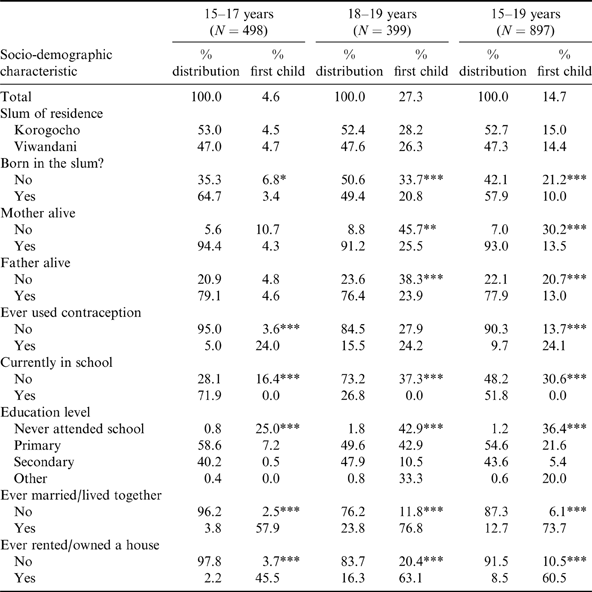
Socio-demographic characteristics (Table 2) used in the multivariate analysis included study site (Korogocho vs Viwandani), age in years, educational level, ethnic group, religion, place of birth (born in slum vs born outside), mother's survival status (mother alive or not), father's survival status (father alive or not), schooling status (in school vs out of school). Educational attainment was divided into three categories: no education, primary education, secondary education or higher. Also, a variable indicating whether the respondent has ever used contraception was included in the analysis (yes vs no). Two key markers of the transition to adulthood, namely marital status and independent housing, were also included as part of the explanatory variables. Both marital status and independent housing were considered as time-varying variables. Marital status was coded 1 if the individual was married or living together with a partner and 0 otherwise. Similarly, independent housing was coded 1 if an individual owned or rented her house and 0 otherwise. An index computed based on responses to six items measuring attitudes towards contraceptives was also used as an explanatory variable.
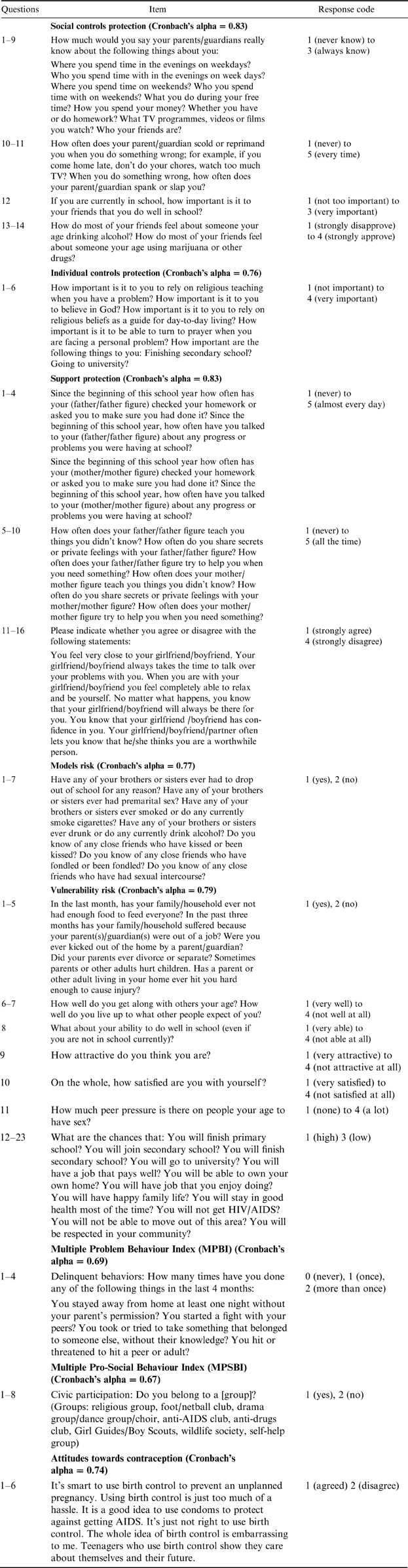
Protective and risk factors, as categorized by Jessor in the PBT framework, were generated using composite scores derived from standardized values of individual items. Cronbach's alpha was used to assess internal consistency of scores for each composite measure (Crocker & Algina, Reference Crocker and Algina1986). The alpha reliabilities of the composite measures were acceptable (Cronbach's alpha >0.6) (see Table 1).
Description of items used to measure protective and risk factors

In this paper, protective factors included social controls protection, individual controls protection and support protection. The social controls protection index was measured using fourteen items related to parental monitoring and perceived peer attitudes towards antisocial behaviours. The individual controls protection included six items related to religiosity, positive attitude towards schooling, resistance to peer pressure and traditional attitudes towards sexual behaviour. Support protection refers to the presence of a supportive environment and was measured using sixteen items. The Multiple Pro-Social Behaviour Index (MPSBI) is a composite eight-item index constructed measuring involvement in community activities (eight items).
Risk factors include models risk and vulnerability risk. The models risk index was measured using seven items measuring models for risk behaviour in family, peers and school context. On the other hand, 23 items related to low self-esteem, low perceived life chances, adverse life experiences and perceived peer pressure to engage in sex were used to measure vulnerability risk. The Multiple Problem Behaviour Index (MPBI) is a composite index constructed measuring engagement in delinquent behaviours (four items).
Analytic approach
All analyses were conducted using Stata 10.1. Event History Analysis (EHA) techniques were employed for analysis, with Kaplan–Meier estimates being used to examine the timing of first motherhood and Cox regression models to investigate the influence of various factors on entry into motherhood (Allison, Reference Allison1991; Cleves et al., Reference Cleves, Gould, Gutierrez and Marchenko2008). To allow age at first motherhood to be censored, it was considered as time-to-event data. Some individuals may not have given birth by the time of survey. Individuals were considered to be at risk from birth until they first become mothers or censored at the time of the survey for those who were still childless. For girls who had yet to reach a particular age and who had not experienced first motherhood, the risk of having a first child at that age was assumed to be the same as that for individuals who had reached that age.
Cox's proportional hazards models were used for the multivariate analysis, since they do not need specification of the form of the distribution of the baseline hazard rate (Cox, Reference Cox1972; Cox & Oakes, Reference Cox and Oakes1984; Blossfeld et al., Reference Blossfeld, Hamerle and Mayer1989). These models also allow for use of time-varying covariates: that is, characteristics whose status may change over time. When the hazard ratio is greater than one, it means a higher risk of first child in the corresponding category, as compared with the reference category. Conversely, the risk of having first child is lower when the hazard ratio is less than one. The hazard rate in the Cox model is computed as:
 $$h(t/z_j)=h_0(t).exp(\beta_{j} z_j(t))$$
, where the regression coefficients are to be estimated from the data. The term h 0(t) is the baseline hazard function (the hazard when z=0), zj(t) is the individual covariates vector and βj is a vector of the regression parameters that indicates the effects of these covariates, some of them varying with t (hence the term time-varying covariate). The relative hazards are given by exp(z j(t)β).
Variations in the timing of entry into motherhood were examined in two age cohorts: 15–17 years (younger cohort) and 18–19 years (older cohort). Actually, being an ‘early’ mother among 15- to 17-year-olds could be a different phenomenon than being an ‘early’ mother among 18- to 19-year-olds. Indeed, the explanatory factors are likely to play a very different role in the younger cohort than in the older cohort. In other words, what are the correlates of ‘earliness’ of entry into motherhood among the 15- to 17-year-olds as against those of the 18- to 19-year-olds?
Results
Descriptive analyses
Descriptive characteristics for the 897 female participants in the analytic sample are displayed in Table 2. About 15% of the 15–19 year female adolescents reported having had a child, with older adolescents being more likely than the younger ones to have done so (27% vs 5%). About 47% of adolescents were living in Korogocho and 53% in Viwandani; the same distribution is observed within the two age groups. Fifty-eight per cent of all adolescents were born in the slum areas; this percentage is higher among the younger cohort (65% vs 49%). Most of the adolescents reported having their parents alive: 93% for mother and 78% for father. Similar percentages are observed for the two age groups. Overall, only 1% never attended school (1% for younger cohort and 2% for older cohort), 55% of the respondents have attained primary level of education (59% for younger cohort vs 50% for older cohort) and 44% have at least secondary level education (40% for younger cohort and 48% for older cohort). At the time of the survey, 52% of the 15–19 year female adolescents were attending school, with those from the younger cohort being more likely to do so (72% vs 27%). About 13% of the participants reported having ever been married (4% of younger adolescents vs 24% of older ones) and 9% had ever owned or rented their residential unit (2% of younger adolescents vs 16% of older ones).
Overall, most of the individual adolescent characteristics are significantly associated with first motherhood, as shown in Table 2. The proportion of adolescents who are primiparous is higher among adolescents born outside of the slums (p<0.01), not enrolled in school (p<0.01), ever married (p<0.01), ever been residentially independent (p<0.01), without religion (p<0.01) and those who had ever used contraception (p<0.01). The proportion of adolescents who had a child was lowest among those with at least secondary education level (p<0.01). In the younger cohort, all these associations are also statistically significant, except for that between mother's survival, father's survival and first child. In the older cohort, it is only the association between contraceptive use and first child that is not significant. Among the older cohort, contrary to what was observed in the overall sample, the proportion of primiparous adolescents is higher among those who have never used contraception, although the association is not statistically significant.
Descriptive characteristics of the sample of 15- to 19-year-old female adolescents by age cohort, Nairobi informal settlements, 2007
*p<0.1; **p<0.05; ***p<0.001.
In the following section, the results of the event history analysis enable the timing of entry into motherhood to be examined, as well as its associations with possible predictors, while controlling for the effects of other important factors, using Kaplan–Meier estimates and Cox regression models.
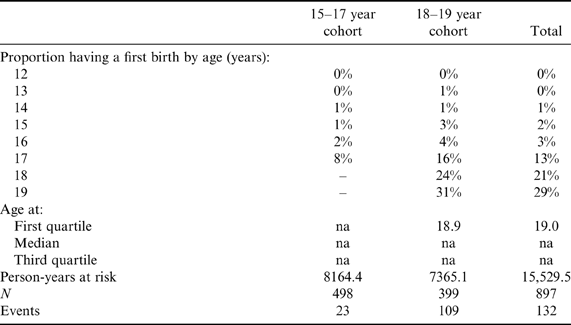
Descriptive statistics on first birth among the participants are shown in Table 3. The median age cannot be calculated for the whole sample as it had not yet been attained. A quarter of adolescents had their first child by age 18.9. By age 15, 1% of adolescents aged 15–17 and 3% of those aged 18–19 had had their first child. By age 18, 21% of the whole sample and 34% of those aged 18–19 were already mothers.
Descriptive statistics of age at first birth by age cohort, female adolescents, Nairobi informal settlements, 2007
na=not attained.
Multivariate analysis
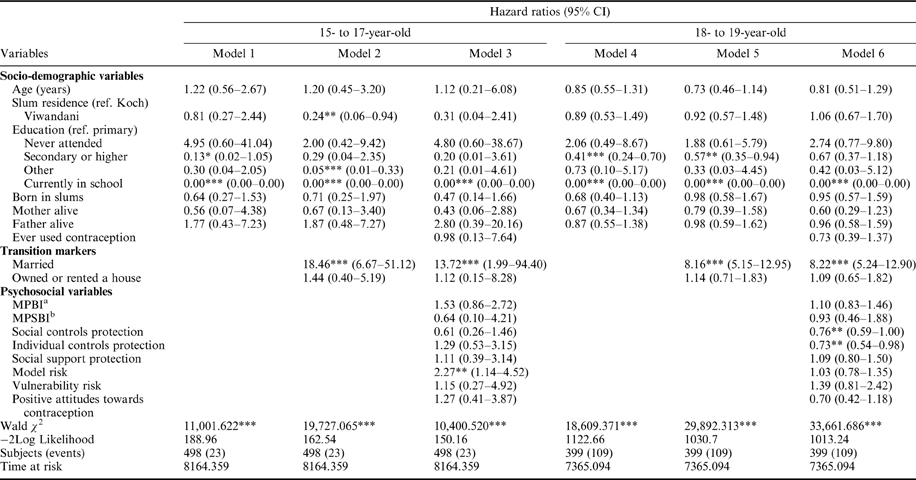
Results from the Cox models are presented in Table 4, by age cohort. Models 1 and 4 include only the socio-demographic variables. In Models 2 and 5, the two other key markers of transition to adulthood are controlled for, in addition to the socio-demographic variables. All the variables are controlled for in Models 3 and 6.
Hazard ratios of having first birth among female adolescents by birth cohort (Cox model), Nairobi informal settlements, 2007
*p<0.1; **p<0.05; ***p<0.01. Models controlled for ethnicity, religion.
a Multiple Problem Behaviour Index.
b Multiple Pro-Social Behaviour Index.
Among adolescents aged 15–17 years, none of the socio-demographic characteristics, with the exception of current school attendance, significantly affected the timing of entry into motherhood after controlling for other factors. Hazard ratios (HRs) from the full Model 3 indicate that adolescents currently attending school are significantly more likely (the HR is almost equal to zero) to delay childbearing. Adolescents without education enter into motherhood earlier, while those with at least secondary level of education do so at a later age, although the ratios are not significant at the 5% level. The significant and negative effective of secondary education only disappears when marriage and residential independence are controlled for in the models.
There is no significant difference in the timing of childbearing based on adolescents' lifetime contraceptive use, although the findings show that adolescents aged 15–17 years who have ever used contraception were more likely to delay childbearing.
As expected, marriage is significantly associated with entry into motherhood. Results from Model 3 suggest that married adolescents are more than 13 times more likely to have their first child earlier that the non-married adolescents. Although those who are residentially independent are also more likely to give birth earlier, the HR is not statistically significant. These effects were also observed in Model 2, which includes only those two variables and the socio-demographic characteristics.
As for protective factors, the findings from Model 3 indicate that although all the HRs corresponding to the protective factors are in the expected direction, i.e. less than 1, none of them is significantly associated with the timing of making the transition into motherhood. In a model where only the psychosocial variables were controlled for (results not shown here), MPSBI and support protection are significantly associated with entry into motherhood, with both higher scores on these two indices associated with a delay in the timing of first birth. With regard to risk factors, the results suggest that having negative models is associated with the outcome of interest; adolescents with a high level of model risk are more likely to enter into motherhood earlier. Although only marginally significant at 10%, in a model that only controls for psychosocial variables, increasing vulnerability risk is associated with earlier entry into motherhood. There is no significant difference in the timing of entry into motherhood based on attitudes towards contraception.
For adolescents aged 18–19 years, the findings indicate similar associations when it comes to socio-demographic characteristics and transition markers. School attendance considerably delays entry into motherhood, while marriage hastens it. As with the 15- to 17-years-olds, older adolescents with at least a secondary level of education delay their entry into motherhood, although the corresponding hazard ratio is not significant at the 5% level. The negative effect of secondary education became insignificant after the introduction of psychosocial variables in the full model (they were highly significant in previous models). No significant difference was observed with regard to the other socio-demographic characteristics.
Among the protective factors, social and individual controls protection are significantly associated with timing of entry into motherhood. Adolescents with high levels of these two factors are likely to delay their entry into motherhood (chances are reduced by 24% and 27% for social controls and individual controls, respectively). None of the risk factors is significantly associated with timing of entry into motherhood in the older cohort, although in a model that only controls for psychosocial variables, adolescents with high vulnerability risk are likely to enter into motherhood earlier. As with the younger cohort, there is no significant difference in the timing of childbearing based on attitudes towards contraception.
Discussion
This paper is based on data collected from 15- to 19-year-old adolescents in two resource-poor settings in Nairobi to investigate patterns and determinants of the timing of entry into motherhood. The focus is on the association between the timing of childbearing and other key transitions to adult roles, socio-demographic characteristics and psychosocial variables. This study adds to the growing body of evidence on transition to adult roles among young people in urban informal settlements in sub-Saharan Africa.
The findings suggest that some female adolescents become mothers at very young ages; 21% of the whole sample and 34% of those aged 18–19 are already mothers by age 18. Given their incomplete physical maturity, these young females are likely to face special risks during pregnancy and delivery, especially in such resource-poor settings characterized by lack of basic health facilities and relatively high cost of health care (Izugbara et al., Reference Izugbara, Kabiru and Zulu2009). In addition, in a context where educational and employment opportunities are scarce, younger mothers are more likely to drop out of school and hence have reduced opportunities for gainful employment. Previous evidence has shown that living in resource-constrained settings predisposes adolescents to increased risk of negative social outcomes, including risky sexual behaviour, substance use, delinquency and violence (Blum et al., Reference Blum, Beuhring, Shew, Bearinger, Sieving and Resnick2000; Mugisha et al., Reference Mugisha, Arinaitwe-Mugisha and Hagembe2003; Ngom et al., Reference Ngom, Magadi and Owuor2003; Dodoo et al., Reference Dodoo, Zulu and Ezeh2007). Consequently, programmes aiming to reduce risky sexual behaviours that could lead to childbearing among adolescents should be made in tandem with initiatives to enhance livelihood prospects for those in lower income brackets. Further, these programmes must be introduced very early, and before the onset of sexual activity.
As expected, marriage has a strong relationship with the timing of first birth for both younger and older cohorts, with adolescents who are married or living together with their partners entering into motherhood significantly earlier than those who are not. This is consistent with previous evidence that shows that marriage is a key driver of fertility in sub-Saharan Africa, although out-of-wedlock childbearing is becoming increasingly common in the region (Tambashe & Shapiro, Reference Tambashe and Shapiro1996). It is apparent that union increases the frequency of fertile sexual intercourse. Consequently, efforts to reduce early childbearing must include initiatives to discourage girls from marrying early. Early childbearing, which often stems from early marriage, entails potential health risks for the young mother and the child (Zabin & Kiragu, Reference Zabin and Kiragu1998). Early marriage may also limit educational opportunities and may occur when the young person is not fully prepared to take over marital and parental responsibilities (Singh & Samara, Reference Singh and Samara1996). In many cases, early marriage is associated with higher chances of divorce or separation, which may leave the young mother bearing the sole responsibility of raising the child, without any social or family support, either emotionally or financially.
Education was found to be a strong predictor of the timing of childbearing. Specifically, being in school was associated with a delay in the timing of childbearing. Although the observed association between school enrolment or educational level may be misleading because some girls who are not in school at the time of the survey could have dropped out of school because of pregnancy-related reasons, previous studies do show that in-school youth tend to delay sexual activity (Ajayi et al., Reference Ajayi, Marangu, Miller and Paxman1991; Kabiru et al., Reference Kabiru, Beguy, Undie, Zulu and Ezeh2010). This suggests that even within impoverished communities like slum settlements, education is an important pathway for reducing early childbearing and associated negative reproductive health and socioeconomic outcomes. This needs to be further enlightened through, for instance, exploration of the association between school curricula, including sexual and reproductive health education, and reproductive outcomes among girls living in such poor settings. Other studies have also found that adolescents with at least secondary education are less likely to give birth or get pregnant than those with no or little formal education (Mboup & Saha, Reference Mboup and Saha1998; Quamrun & Hosik, Reference Quamrun and Hosik2008; Magadi & Agwanda, Reference Magadi and Agwanda2009a). In their analysis of DHS data in eight countries in sub-Saharan Africa, Gupta & Mahy (Reference Gupta and Mahy2003a) found a strong negative influence of education on the probability of childbearing in all countries. In particular, they concluded that ensuring that adolescent girls receive at least a secondary level of education is the optimal way of delaying childbearing. Our analyses somehow support this argument: adolescents with at least secondary education level enter into motherhood later. It may be not only important to enrol girls in school, but also necessary to retain them in the education system until they complete secondary school. Consequently, policies and programmes such as universal primary education should be extended to ensure increased access to, and completion of, secondary education. However, this may not be done in isolation as the poor job prospects in poor settings such as slums may lower the motivation among adolescent girls to complete secondary school.
Although the hazard ratios are not statistically significant, being residentially independent appears to hasten entry into motherhood for both age cohorts. Given the space constraints that typify the slum settlements in Nairobi, young adults are almost forced to leave their parental home, leaving them highly exposed to risky sexual behaviours that lead to increased risks of early childbearing, especially in an environment where contraceptive use is low (Amuyunzu-Nyamongo & Magadi, Reference Amuyunzu-Nyamongo and Magadi2006; Dodoo et al., Reference Dodoo, Zulu and Ezeh2007). Further investigations are needed to understand the consequences of home-leaving among adolescents living is such poor settings.
Overall, the findings provide some support for the theoretical concepts of ‘models’ (both protection and risk), controls (both individual and social), supports and vulnerability in the PBT framework. Among 15- to 17-year-old adolescents, models risk (the presence of models for problem or anti-social behaviours, including early sexual activity) is significantly associated with entry into motherhood, with those having high models risk being more likely to have a first child earlier. This indicates the vulnerability of younger girls in an environment where indulgence in problem behaviours is common practice. In a recent study, Ndugwa and others (Reference Ndugwa, Kabiru, Cleland, Beguy, Egondi, Zulu and Jessor2010) found that models risk is a strong predictor of involvement in problem behaviour among 12- to 19-year-old adolescents living in Korogocho and Viwandani slum settlements in Nairobi. In contexts typified by early childbearing, young parenthood may become normative, meaning that adolescent girls become pregnant because many of their peers and family members also begin childbearing early.
Social controls protection, such as parental monitoring and perceived peer disapproval of antisocial behaviours, reduces the likelihood of early entry into motherhood for 18- to 19-year-old female adolescents living in slum settlements. This is consistent with other evidence that shows that parental monitoring often prevents young people from engaging in risky sexual behaviours that could trigger early childbearing (Babalola et al., Reference Babalola, Tambashe and Vondrasek2005; Kumi-Kyereme et al., Reference Kumi-Kyereme, Awusabo-Asare, Biddlecom and Tanle2007). Previous findings from Nairobi slums show that it is the father's presence, in particular, that is associated with lower risk of engaging in sexual activity and, hence, lower risk of pregnancy (Ngom et al., Reference Ngom, Magadi and Owuor2003). Also, adolescents often identify themselves with peer groups while growing up, allowing the latter to serve as models for appropriate behaviour. Adolescents' sexual behaviour has been found to be associated with peers' attitudes and behaviours in slum and non-slum communities in Nairobi (Kabiru et al., Reference Kabiru, Beguy, Undie, Zulu and Ezeh2010). In addition, 18- to 19-year-old adolescent girls with strong individual controls protection, such high religiosity and positive orientation towards school, are likely to delay their first birth. It is possible that highly religious adolescent girls are frequently exposed to moral messages against early sexual debut and pregnancy; they are also likely to commit to stand by such teachings given their stronger religious engagement. Moreover, they may often interact within a network of religious peers who serve as models for conventional behaviours. This finding also suggests that adolescents with high educational expectations might choose to delay sexual experience and childbearing to meet those expectations.
The study findings should be interpreted in light of several limitations. First, the analysis is based on self-reported information and thus is subject to self-report bias. For example, there is possible under-reporting of children who died shortly after birth. Also, retrospective recording of timing of first birth, marriage and independent housing may affect the accuracy of reporting. This means that the true magnitude of adolescent childbearing in the sample could be higher than that observed. Second, most of the independent variables are time-invariant, thus limiting the possibility of inferring causality. As a result, most of the findings do not infer causation, apart from those related to marriage and independent housing. They rather denote association between the independent variables and entry into motherhood. Further, another marker of the transition to adulthood, i.e. entry into income-generating activity, cannot be used in analysis as the related data were not collected during Wave 1 of the Transition to Adulthood (TTA) questionnaire used in this paper. Also, qualitative information was not available to enlighten the quantitative findings.
These limitations notwithstanding, the findings highlight some key factors that are likely to be important drivers of early entry into motherhood among the two age groups of adolescents living in urban Nairobi slums. These findings support the need for programmes or policies that enhance controls protection, buffer or moderate the exposure to models that support unconventional behaviour, keep girls in school and improve livelihood opportunities among adolescents at high risk of early childbearing.
Acknowledgments
The Transitions-To-Adulthood (TTA) study was part of a larger project on Urbanization, Poverty and Health Dynamics, implemented by APHRC between 2006 and 2010 and funded by the Wellcome Trust (Grant GR 07830M). This project was nested in the Nairobi Urban Health and Demographic Surveillance System (NUHDSS), which is part of the INDEPTH Network. Analysis and writing time is supported by funding from the Wellcome Trust (Grant Number GR 07830M), the William and Flora Hewlett Foundation (Grant Number 2006-8376), the Rockefeller Foundation (Grant Number 2008 AR 001), the Bill and Melinda Gates Foundation, which funded the Measurement, Learning and Evaluation project (Grant 52037) and the Urban Health project (Grant OPP1021893), and the UK Department for International Development (Grant SR1109D-6), which funded the Strengthening Evidence for Programming on Unintended Pregnancy (STEP UP) research programme consortium. The authors are grateful to the youth in Korogocho and Viwandani for their participation in the TTA study and to the fieldworkers who worked tirelessly to collect these data. Contributions from Richard Jessor, John Cleland and colleagues at APHRC are also gratefully acknowledged.

 Open access

