





1. Introduction
For decades, economists, particularly game theorists, have played a crucial role in assisting legislators, regulators, lawyers, and judges in designing markets. They have been instrumental in developing complex markets in the classical theory of auctions (Vickrey, Reference Vickrey1961; Milgrom & Weber, Reference Milgrom and Weber1982a, Reference Milgrom and Weber1982b), in labor clearing houses for American doctors obtaining their first jobs (Roth & Peranson, Reference Roth and Peranson1999), and markets for electric power (Wilson, Reference Wilson2002; Cramton, Reference Cramton2017) to name but a few. Additionally, they have proposed allocation procedures for markets that do not use prices, such as coalition formation (Kahan & Rapoport, Reference Kahan and Rapoport2014), school choice (Roth, Reference Roth1985), live-donor kidney transplantation (Roth et al., Reference Roth, Sönmez and Ünver2004, Reference Roth, Sönmez and Ünver2007), and the job market for new economists (Coles et al., Reference Coles, Cawley, Levine, Niederle, Roth and Siegfried2010). The common and well-established vision in the literature is that “design is important because markets don’t always grow like weeds–some of them are hothouse orchids” (Roth, Reference Roth2002, p. 1373). Without external intervention, in fact, markets naturally struggle to provide desirable properties such as thickness, efficiency, safety, and simplicity.
Bargaining is one of the most ubiquitous and effective forms of market interaction between potentially conflicting or cooperating agents and is the basis of many of the situations listed above. Thus, bargaining interactions, among others, may particularly benefit from the potential welfare gains of well-designed procedures. As such, the importance of bargaining research for enhancing the efficiency – and the many other desirable properties – of these interactions has been widely emphasized (e.g., Crawford, Reference Crawford1982).
Over the years, experimental economics has become a natural complement to theoretical work, aiding in understanding market failures and testing new solutions before proposing them to policymakers (Kagel & Levin, Reference Kagel and Levin1986; Kagel & Roth, Reference Kagel and Roth2000). Then, the goals achieved through extensive theoretical research on mechanism design – including bargaining procedures design – have been well supported and documented by a substantial body of experimental literature (Smith, Reference Smith1967; Cox et al., Reference Cox, Smith and Walker1988; Denton et al., Reference Denton, Rassenti and Smith2001; Brosig et al., Reference Brosig, Weimann and Yang2003; Chen & Sönmez, Reference Chen and Sönmez2006) and numerous field applications (Dickerson et al., Reference Dickerson, Procaccia and Sandholm2012). However, there is a field in which experiments have shown a certain fragility in validating the proposed theoretical mechanisms and their appealing results: coalition formation theory (Okada & Riedl, Reference Okada and Riedl2005; Abe et al., Reference Abe, Funaki and Shinoda2021).
Coalitions are means-oriented, and frequently temporary, alliances among individuals or groups who may have different initial goals. In many situations, forming a coalition is advantageous to both individuals and groups. Coalition formation behavior is a pervasive aspect of social life (Gamson, Reference Gamson1961) and thus a crucial matter in economics (Konishi & Ray, Reference Konishi and Ray2003; Kahan & Rapoport, Reference Kahan and Rapoport2014). Theories of coalition formation have been developed in many models from different disciplines, such as mathematics in the theory of cooperative games, then widely adopted not only in economics and political science (Holler, Reference Holler1982) but also in models in management (Stevenson et al., Reference Stevenson, Pearce and Porter1985), social psychology (Komorita & Kravitz, Reference Komorita, Kravitz and Paulus1983), and computer science (Dang et al., Reference Dang, Dash, Rogers and Jennings2006).
In this paper, we focus on coalition formation from the classical perspective of game theorists, with cooperative game theory serving as the means we use in our investigation. This theory emerged alongside noncooperative game theory after the foundational paper by John von Neumann (Reference von Neumann1928). Then, the active collaboration of John von Neumann and Oskar Morgenstern culminated in the renowned book Theory of Games and Economic Behavior (von Neumann & Morgenstern, Reference von Neumann and Morgenstern1944). Despite a common origin founded on the well-established assumption of the rationality of individuals, noncooperative game theory and cooperative game theory have advanced for decades on two different paths, with the gap between the two becoming more and more apparent over the years.
However, there has been a significant effort to bridge these two branches of game theory. This strand of literature is known as the Nash (Reference Nash1953) program. This agenda aims to provide non-cooperative mechanisms to implement cooperative interactions (Serrano, Reference Serrano2005, Reference Serrano, Durlauf and Blume2008, Reference Serrano2014, Reference Serrano2021, for surveys). The theory predicts that at equilibrium, individuals, guided by the proposed strategic mechanisms in their interactions, will manage to cooperate efficiently and share the proceeds according to well-known cooperative solutions, such as the Shapley value. These mechanisms reconcile and integrate the two approaches by enabling players, within a specific allocation context, to engage in constrained bargaining processes and reach a stable outcome without requiring an external intermediary. The rationale behind this design is that if the same outcome can be reached through different paths, the solution is likely to be more robust. While many authors have contributed to the development of the Nash program, so in line with the previously illustrated common opinion on the importance of investing in research in bargaining, experimental investigations in the specific context of the Nash program have been scarce.
To address this gap in the literature, Chessa et al. (Reference Chessa, Hanaki, Lardon and Yamada2022, Reference Chessa, Hanaki, Lardon and Yamada2023a, Reference Chessa, Hanaki, Lardon and Yamada2023b) have conducted a series of experiments comparing different mechanisms that are theoretically expected to implement full cooperation in games where rationality would lead individuals to choose cooperative strategies and share the proceeds according to the Shapley value, the most well-known cooperative solution (Shapley, Reference Shapley, Kuhn and Tucker1953). Even if motivated by different research questions, the common pattern in all these experiments is that despite the implementation of structured bargaining procedures promising cooperation, the experimental results show that in many cases, individuals fail to cooperate. These results are in line with other experimental investigations of theoretical models for coalition formation (Kahan & Rapoport, Reference Kahan and Rapoport1980a; Rapoport & Kahan, Reference Rapoport and Kahan1984).
A closer look at the structure of these bargaining procedures in the context of the Nash program suggests that this failure may be attributed to two factors. First, many of these mechanisms are expected to provide a fair allocation a priori, but in practice, the proposed divisions depend heavily on the specific implementation of the mechanism in a given scenario. This includes the order in which individuals participate in the mechanism, to the detriment of those who intervene last, with the first mover often being selected simply through a random choice (Chessa et al., Reference Chessa, Hanaki, Lardon and Yamada2023a, Reference Chessa, Hanaki, Lardon and Yamada2023b). This feature then results in expected final shares that are clearly unfair to those individuals who are not lucky enough to be selected as first movers. Second, individuals explicitly retain the ability to reject a given final allocation even after agreeing to participate in a mechanism. This issue becomes even more evident in cases of unfair allocations, which are then rejected by one or more individuals, thus excluding any possibility of a complete future agreement.
In the present study, we aim to shed light on whether reducing the structural constraints in bargaining procedures can lead to higher levels of cooperation among individuals. More freedom in bargaining would grant individuals greater flexibility to adjust the proposed divisions and achieve a broader consensus. Indeed, previous studies have already highlighted the importance of shifting the focus toward more unstructured bargaining experiments and advocate for their revival as a future direction in experimental research (Güth, Reference Güth, Croson and Bolton2012; Karagözoğlu, Reference Karagözoğlu, Laslier, Moulin, Sanver and Zwicker2019).
It is, however, difficult to design an “unstructured” computerized bargaining experiment because the very design of a computer interface necessarily imposes some structure on the bargaining procedure. For example, Shinoda & Funaki (Reference Shinoda and Funaki2019) conducted what they call a computerized “unstructured” three-player bargaining experiment. Participants could freely propose a coalition and an associated allocation that was feasible among the members of the proposed coalition. Participants were also free to modify their proposal anytime during the negotiation, and to agree on the proposal made by another participant. A coalition was formed if all its members agreed. They also considered a treatment in which participants could freely send chat messages to others. Similarly, in three-player games that model negotiable conflicts involving two weak players and one strong player, Kahan & Rapoport (Reference Kahan and Rapoport1980a) considered two communication conditions: A condition where subjects could exchange messages, and a condition where subjects were not allowed to send messages and were unaware that they had been denied this option. While these procedures are much less structured than those considered in Chessa et al. (Reference Chessa, Hanaki, Lardon and Yamada2022, Reference Chessa, Hanaki, Lardon and Yamada2023a, Reference Chessa, Hanaki, Lardon and Yamada2023b), there remain some constraints in what participants could do and how the coalition was formed.
We therefore consider both an offer-based and a demand-based (an alternative procedure where participants, instead of freely proposing a coalition with an associated allocation among its members, freely make their demand for them to join a coalition) “semi-structured” bargaining experiment. We call these experiments semi-structured (Duffy et al., Reference Duffy, Lebeau and Puzzello2025) because, as noted above, while they are much less structured compared to the structured bargaining experiments considered by Chessa et al. (Reference Chessa, Hanaki, Lardon and Yamada2022, Reference Chessa, Hanaki, Lardon and Yamada2023a, Reference Chessa, Hanaki, Lardon and Yamada2023b), there remains some structure in the bargaining procedures.
More specifically, we vary (a) whether or not participants can communicate freely via online chat during the negotiation. This dimension is motivated by Shinoda & Funaki (Reference Shinoda and Funaki2019), who found that the grand coalition is more likely to be formed with than without a possibility of free-form communication among players through a chat window. We also vary (b) whether the negotiation is offer-based or demand-based. This second dimension is motivated by Chessa et al. (Reference Chessa, Hanaki, Lardon and Yamada2023b), who found that demand-based and offer-based mechanisms can result in outcomes satisfying very different properties. Then, we contrast (c) the results of these semi-structured experiments with the results of structured experiments of Chessa et al. (Reference Chessa, Hanaki, Lardon and Yamada2023b), and this represents the third and key motivation for our analysis.
We find that semi-structured experiments, both offer-based and demand-based, result in a higher frequency of grand coalition formation and more efficiency than structured ones. Unlike Chessa et al. (Reference Chessa, Hanaki, Lardon and Yamada2023b), who find significant differences in the outcomes of offer- versus demand-based procedures, we do not find significant differences between the two, regardless of the possibility of free-form communication. The latter result suggests that the exact procedure may have little impact on outcomes.
We further analyze the negotiation dynamics of offers and demands, first using two examples from semi-structured experiments to demonstrate that agents tend to converge toward efficient outcomes, as well as the Shapley value and equal division, during the negotiation process. We then show that this tendency arises primarily from the flexibility to repeatedly adjust offers and demands over time, a feature absent in structured mechanisms.
The rest of the paper is organized as follows. Section 2 illustrates the theoretical background, including the presentation of the structured mechanisms by Winter (Reference Winter1994) and Hart & Mas-Colell (Reference Hart and Mas-Colell1996) previously experimentally investigated in Chessa et al. (Reference Chessa, Hanaki, Lardon and Yamada2023b). Section 3 presents the design of our new experiments and the newly defined semi-structured bargaining procedures. The results of our new experiments, with a comparison with our previous experiments, are presented and discussed in Section 4, while Section 5 concludes.
2. Theoretical background
In Section 2.1, we provide some theoretical definitions. Then, in Section 2.2, we present the two structured mechanisms that we analyzed in our previous experimental study (Chessa et al., Reference Chessa, Hanaki, Lardon and Yamada2023b) and that we question and compare with similar but semi-structured mechanisms in this paper.
2.1. Cooperative transferable utility games and solutions
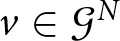
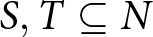
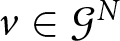
Let  $N=\{1,\ldots ,n\}$ be a finite set of players. Each subset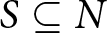 $S\subseteq N$ is referred to as a coalition, with N called the grand coalition. A cooperative transferable utility (TU) game is defined as a pair (N, v), where N is the set of players and $v:2^N \rightarrow \mathbb R$, with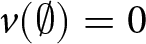 $v(\emptyset)=0$, is the characteristic function. This function assigns a worth v(S) to each coalition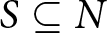 $S\subseteq N$, representing the worth that members of S can achieve through cooperation. When the set of players N is fixed, we denote the game by v instead of (N, v). The set of all games with player set N is denoted by $\mathcal G^N$. A player i is a null player in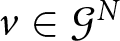 $v\in \mathcal G^N$ if $v(S)=v(S\setminus \{i\})$ for all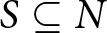 $S\subseteq N$. A null player is a player who contributes nothing to any coalition.
The most famous solution concept for cooperative TU games, the Shapley value, fairly distributes the total contribution of all players in a system by averaging their marginal contributions across all possible participation orders. It is defined as follows:
 \begin{equation*}
\phi_i(v)=\sum_{S\subseteq N, i \in S}\frac{(|S|-1)!(|N|-|S|)!}{|N|!}(v(S)-v(S\setminus \{i\})) \ \forall i \in N.
\end{equation*}
\begin{equation*}
\phi_i(v)=\sum_{S\subseteq N, i \in S}\frac{(|S|-1)!(|N|-|S|)!}{|N|!}(v(S)-v(S\setminus \{i\})) \ \forall i \in N.
\end{equation*}In our analysis, we also consider a simpler solution concept, the Equal Division solution, which distributes the worth v(N) equally among all players. It is defined as follows:
 \begin{equation*}
ED_i(v)=\frac{v(N)}{n} \ \forall i \in N.
\end{equation*}
\begin{equation*}
ED_i(v)=\frac{v(N)}{n} \ \forall i \in N.
\end{equation*}This solution has been investigated as a compelling option for cooperative players when the worth of coalitions is not a primary consideration.
2.2. Winter and Hart and Mas-Colell mechanisms
Winter (Reference Winter1994) introduced a bargaining procedure based on sequential demands within strictly convex cooperative games.Footnote 1 In these games, cooperation becomes increasingly attractive, generating a snowball effect that leads to the formation of the grand coalition. In this model, players take turns publicly announcing their demands. Essentially, each player declares, “I am willing to join any coalition that offers me ...” and then waits for these demands to be satisfied by other players. The bargaining procedure begins with a randomly selected player from the set N; say player i. This player publicly states her demand di and then selects a second player, who must also declare her demand. The game continues in this manner, with each player presenting a demand and then selecting another player to take their turn. If at any point a compatible demand is made – meaning there exists a coalition 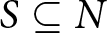 $S\subseteq N$ for which the total demand of the players in S does not exceed v(S) – the first player to make such a demand selects the compatible coalition S. The players in S then receive their demands and exit the game, while the remaining players continue bargaining under the same rules applied to v restricted to $N\setminus S$. In a T-period implementation, where T > 1 and T is finite, if any players are left with unmet demands after the first period, the bargaining procedure is repeated in the second period with this subset of players. Their previous demands are canceled, and they incur a fixed delay cost. This process continues until T periods have been completed. In Chessa et al. (Reference Chessa, Hanaki, Lardon and Yamada2023b), we considered a one-period implementation in which players with unmet demands at the end of the first period receive their individual value.Footnote 2
Winter (Reference Winter1994) demonstrated that this mechanism has a unique subgame perfect equilibrium that assigns equal probabilities according to the principle of indifference. At this equilibrium, the grand coalition forms, and the a priori expected equilibrium payoff aligns with the Shapley value.
Hart & Mas-Colell (Reference Hart and Mas-Colell1996) introduced a bargaining procedure designed for monotonic cooperative games,Footnote 3 which is a less stringent condition than the strict convexity required by Winter mechanism. In the following, we present a simplified version of the mechanism as implemented in Chessa et al. (Reference Chessa, Hanaki, Lardon and Yamada2023b). In this mechanism, the bargaining procedure begins with a randomly selected proposer making an offer to the other players, framed as, “If you wish to form a coalition with me, I will give you ...” The other players, acting sequentially, may choose to either accept or reject the offer. Unanimity is required for the proposal to be accepted. A critical aspect of the model is determining what happens if no agreement is reached, leading the game to progress to the next stage. The more general mechanism proposed by Hart & Mas-Colell (Reference Hart and Mas-Colell1996) allows the proposer, even after a rejection, to remain in the game and continue to the next stage with a certain probability. In our analysis, we consider the special case where this probability is zero. If the proposal is rejected, the proposer exits the game with her individual value, and bargaining continues among the remaining players, with a new proposer randomly selected.
Hart & Mas-Colell (Reference Hart and Mas-Colell1996) demonstrated that this game has a unique subgame perfect equilibrium. At this equilibrium, the grand coalition forms, and the a priori expected equilibrium payoff corresponds to the Shapley value.
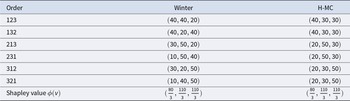
We illustrate the two mechanisms using the strictly convex three-player game presented in Table 1. This game represents a meaningful example, as it is very similar to the games implemented in our experimental studies. This game satisfies the conditions required by both the Winter and Hart & Mas-Colell (H-MC) mechanisms. The Shapley value for this game is represented by the vector  $\phi(v)=\left( \frac{80}{3},\frac{110}{3},\frac{110}{3}\right) \approx (26.67, 36.67, 36.67)$, which corresponds to the a priori equilibrium payoff for both mechanisms.
A three-player game

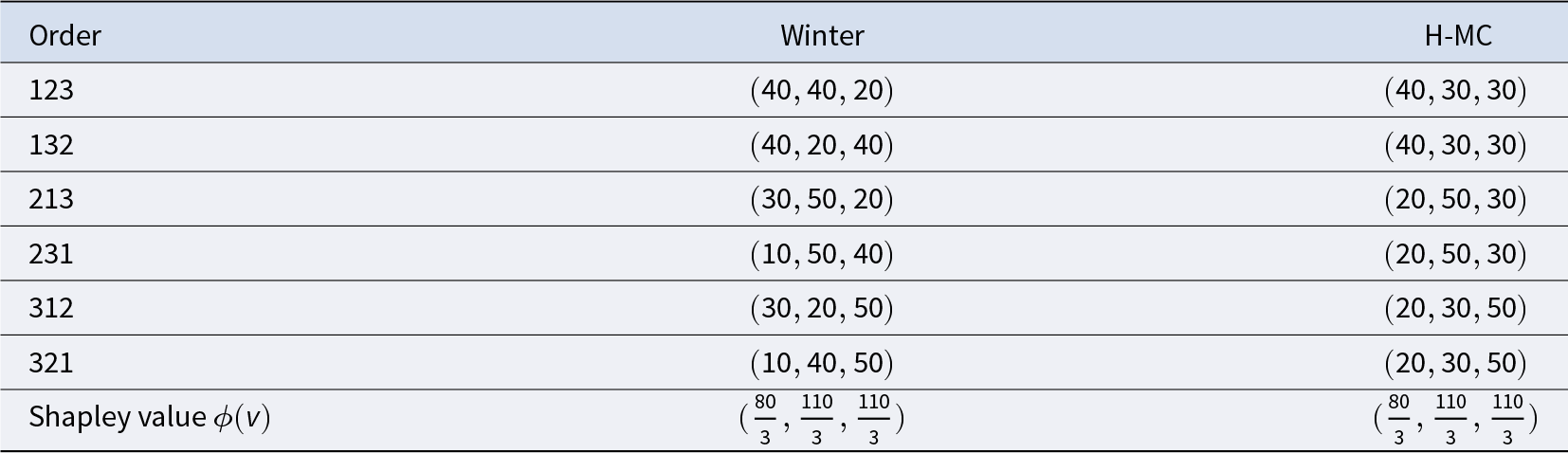
Now, let us assume that player 1 is randomly selected as the first proposer in both mechanisms. Regardless of the subsequent order of players in the Winter mechanism, the proposer will receive an a posteriori equilibrium payoff of 40 in both mechanisms, which equals their marginal contribution to the grand coalition; that is,  $v(N)-v(N\setminus \{1\})$. Suppose further that the order of players in the Winter mechanism is 1, 2, and 3. In this case, the a posteriori equilibrium payoff for the Winter mechanism is given by the vector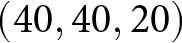 $(40,40,20)$, where player 2 demands her marginal contribution $v(\{2,3\})-v(\{3\})$, and player 3 claims her individual value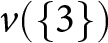 $v(\{3\})$. Conversely, in the case of the H-MC mechanism, the proposer offers the Shapley value of the reduced game to players 2 and 3. Consequently, the a posteriori equilibrium payoff is given by the vector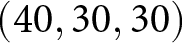 $(40,30,30)$. Repeating the above argument for every order, we obtain the a posteriori equilibrium payoffs summarized in Table 2.
A posteriori equilibrium payoffs
We can observe how the payoff shares are strongly affected by the order in which players are asked to make their demand or offer. In particular, the player who moves first has a significant advantage in the corresponding a posteriori equilibrium, and this represents a clear drawback of these structured mechanisms. To stress this anomaly in an even more extreme case, consider the following three-player glove game (Shapley & Shubik, Reference Shapley and Shubik1969), where players 1 and 2 each own a left-handed glove, and player 3 owns a right-handed glove. Only a matched pair is worth one unit of value, such that  $v(\{1,3\})=v(\{2,3\})=v(\{1,2,3\})=1$ and zero otherwise. The a posteriori and the a priori – coinciding with the Shapley value – equilibrium payoffs are summarized in Table 3.
A posteriori and a priori equilibrium payoffs in the glove game
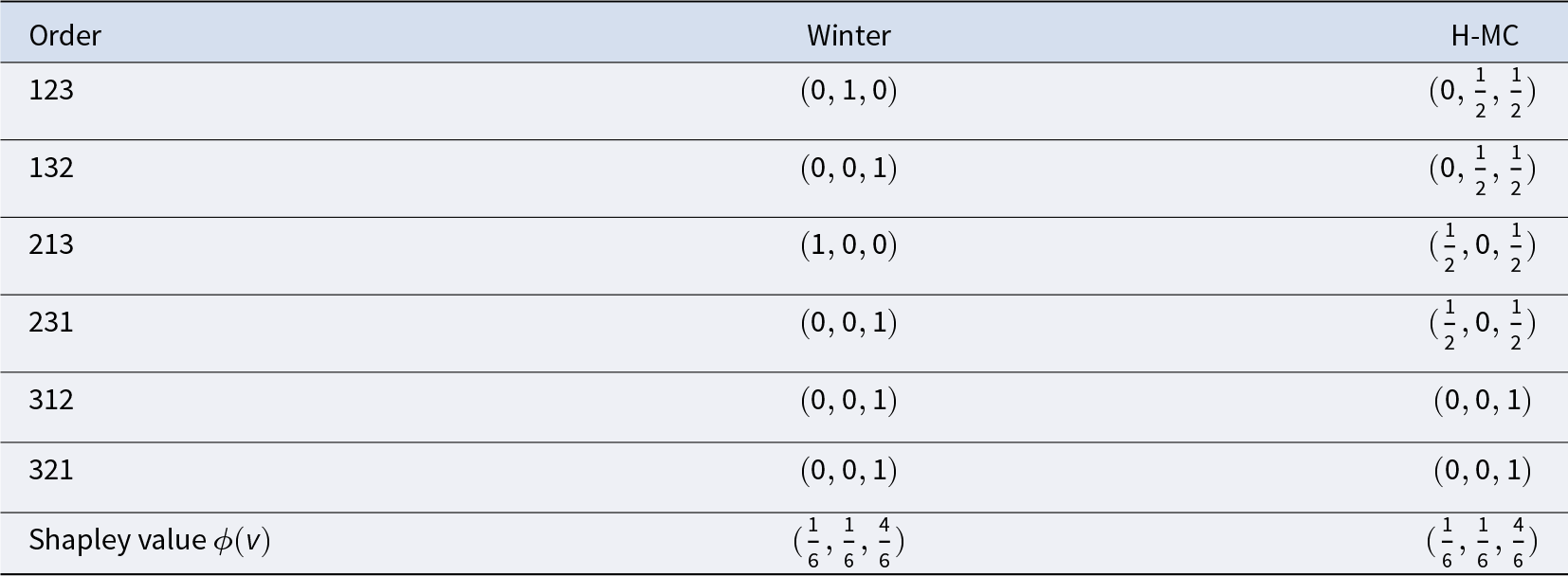
Thus, under the Winter mechanism, for every player order, we observe that the last player is always expected to receive and accept a payoff of zero. This also happens when the last player is player 3, who has a central role in our glove game as she is the only one necessary for the formation of a coalition of nonzero worth.
In this paper, we posit that this could be one reason for the limited success in experimental implementation of structured mechanisms, as observed in Chessa et al. (Reference Chessa, Hanaki, Lardon and Yamada2023b).
3. The experimental design
We first describe in Section 3.1 the four-player bargaining games we consider in our experiment. We then explain our four treatments in Section 3.2, based on our newly defined semi-structured bargaining procedures, which are presented in Section 3.3 and in Section 3.4. At each step, we systematically provide a comparison with the experimental design of the previous experiments in Chessa et al. (Reference Chessa, Hanaki, Lardon and Yamada2023b).
3.1. The games
We consider the four four-player games shown in Table 4. These games are the same as those considered in Chessa et al. (Reference Chessa, Hanaki, Lardon and Yamada2022, Reference Chessa, Hanaki, Lardon and Yamada2023a, Reference Chessa, Hanaki, Lardon and Yamada2023b). This is to allow a direct comparison of the results in Chessa et al. (Reference Chessa, Hanaki, Lardon and Yamada2023b). The Shapley values of the four games are presented in Table 5. The equal division solution is simply equal to  $ED(v_k)=(25,25,25,25)$ when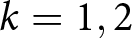 $k=1,2$ and $ED(v_k)=(50,50,50,50)$ when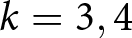 $k=3,4$.
The games

The Shapley value of games 1, 2, 3, and 4

Following Chessa et al. (Reference Chessa, Hanaki, Lardon and Yamada2022, Reference Chessa, Hanaki, Lardon and Yamada2023a, Reference Chessa, Hanaki, Lardon and Yamada2023b), each participant played all four games twice. The order of games was counterbalanced across sessions. That is, participants played these four games in one of the following four orders: 1234, 2143, 3412, and 4321. At the beginning of a new round, participants were randomly rematched into groups of four players, and their roles were randomly reassigned within the newly created groups.Footnote 4
3.2. Treatments
In our 2×2 between-subjects design, we vary (a) whether participants communicate freely via online chat during the negotiation and (b) whether the negotiation is offer-based or demand-based. Then, (c) we contrast the results of these four semi-structured bargaining procedures with the results of the structured offer-based and demand-based experiment in Chessa et al. (Reference Chessa, Hanaki, Lardon and Yamada2023b). In total, we thus present analyses related to comparisons of the results of six different treatments corresponding to six different bargaining procedures.
In the two semi-structured bargaining procedures with free-form communication, participants could freely send chat messages (except for messages that could identify them and those that could insult others). Messages could be seen by everyone in the same group and could be sent at any time during gameplay.
In all four semi-structured bargaining procedures, the total maximum duration of a negotiation was randomly determined to be between 300 and 360 seconds. Participants were informed that a negotiation could continue for at least 300 seconds, but its end would terminate at a randomly chosen moment during the 60 seconds following the 60-second mark. The negotiation could end earlier if a grand coalition was formed, or when only one player remained who was not in any coalition. By contrast, in the structured bargaining procedures in Chessa et al. (Reference Chessa, Hanaki, Lardon and Yamada2023b) an overall time limit was not set, but one was established for each step of the negotiation. A time limit of 60 seconds was set for making a demand (Winter) or an offer (H-MC), and 30 seconds were allocated for choosing a coalition (Winter) or deciding whether to approve or reject a proposal (H-MC).
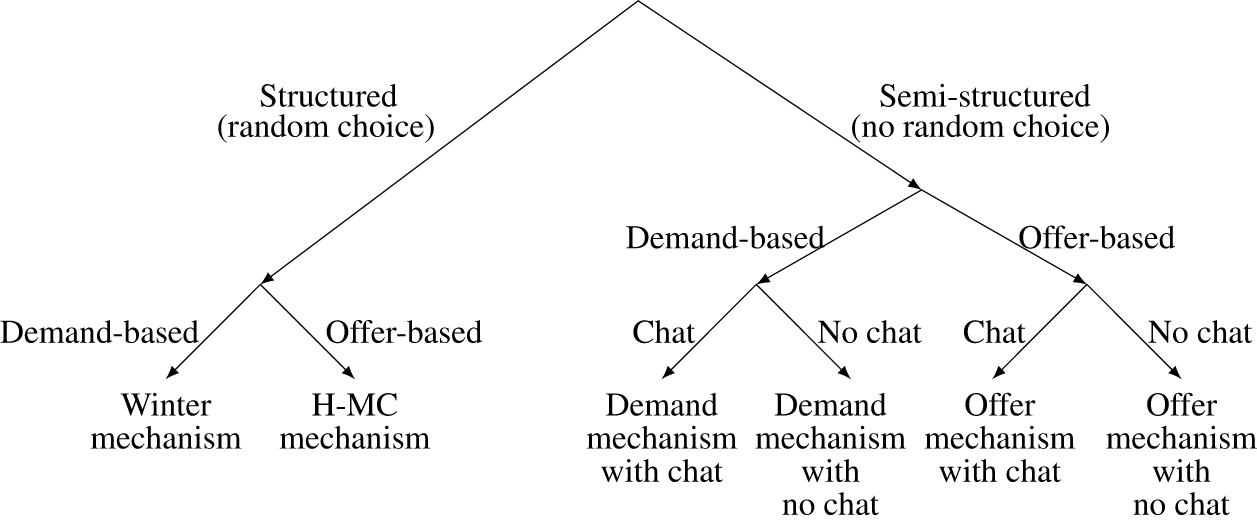
Figure 1 represents the six bargaining procedures implemented in the six different treatments and analyzed in this paper, highlighting their main features and differences. On the left of the tree, we present the two structured mechanisms, Winter and H-MC. On the right are the four semi-structured mechanisms, described in greater detail in Sections 3.3 and 3.4. A key difference between structured and semi-structured mechanisms is highlighted here. In a structured mechanism, the bargaining is started by the individual who has been selected as first mover, randomly and by the algorithm. In semi-structured mechanisms, by contrast, any individual can decide to be the first mover.
Representation of the six treatments based on the six different bargaining mechanisms.

We now describe the demand-based and offer-based bargaining procedures of our semi-structured mechanisms in detail. These procedures represent the unstructured version of the Winter and the H-MC mechanisms, respectively, presented in Section 2.2 and the object of the previous study by Chessa et al. (Reference Chessa, Hanaki, Lardon and Yamada2023b).
3.3. Demand-based bargaining procedure
In this procedure, at any point during a negotiation, players are free to demand points they want to obtain. Note that in doing so, players are not proposing a coalition. Instead, they are expressing the points they want to receive for joining a coalition. Each player can make at most one demand at any time during the negotiation, but players are free to modify their demands at any time during a negotiation.
A coalition can be formed if the sum of the demands made by its members is no greater than its worth. When there is such a coalition for a player, the player is free to agree to form it. We exclude a single-player coalition because it is the default outcome for the player when she ends the game without belonging to any coalition. Each player can agree to form at most one coalition at any time during the negotiation. Thus, if players want to form a different coalition than the one she is currently agreeing to form, they need to withdraw from their current agreement before agreeing to form a new coalition.
A coalition is formed if all its members agree to form it. Once a coalition is formed, its members exit the negotiation and receive the points they have demanded. The negotiation continues with the remaining players. If only one player remains, the negotiation ends. A player without an agreed coalition at the end of the negotiation (either because of the time limit or because she is the only player left) obtains the singleton value.
3.4. Offer-based bargaining procedure
This procedure is similar to the one that Shinoda & Funaki (Reference Shinoda and Funaki2019) call an “unstructured bargaining” protocol. That is, at any time during a negotiation, each player is free to propose or approve a coalition that includes her among players who remain in the game and an associated allocation within the coalition. Below, let proposing or approving a coalition mean both proposing or approving members of that coalition and the associated allocation among them. For example, at the beginning of a negotiation when all four players remain in the game, player 1 can propose {1,2}, {1,3}, {1,4}, {1,2,3}, {1,2,4}, {1,3,4}, or {1,2,3,4}. Note that a single-player coalition is not considered here, as it is the default outcome for the player when she ends the game without belonging to any coalition. Instead of proposing a coalition, a player can also approve a coalition that includes her and has been proposed by another player.
In our experiment, each player can propose or approve at most one coalition at any point in time. Thus, if a player has proposed a coalition but would like to approve the one proposed by another player, the player has to withdraw her proposal. Similarly, if a player has approved a coalition proposed by another player but would like to propose a new one, the player has to first withdraw her approval.
If all the members of a proposed coalition approve it, the coalition is formed, and all its members exit the negotiation and receive the allocated points. The negotiation continues with the remaining players. If only one player remains, the negotiation ends. Players without an agreed coalition at the end of the negotiation (either because of the time limit or because she is the only player left) obtain the singleton value.
4. Results
The new experiments on semi-structured mechanisms were conducted at the Institute of Social and Economic Research (ISER), Osaka University, in May and June 2021 (offer-based) and May and June 2022 (demand-based). A total of 344 students, who had not previously participated in similar experiments were recruited as subjects. The experiment was computerized with z-Tree (Fischbacher, Reference Fischbacher2007), and participants were recruited using ORSEE (Greiner, Reference Greiner2015). The previous experiments on structured mechanisms presented in Chessa et al. (Reference Chessa, Hanaki, Lardon and Yamada2023b) were conducted under identical conditions in January and February 2019 (Winter mechanism) and January and February 2022 (H-MC mechanism). They involved a total of 176 students. See Table 6 for the number of participants and the mean duration and mean payment in each treatment.
The number of participants, the mean duration, and the mean payment in four semi-structured treatments and Winter and H-MC from Chessa et al. (Reference Chessa, Hanaki, Lardon and Yamada2023b).
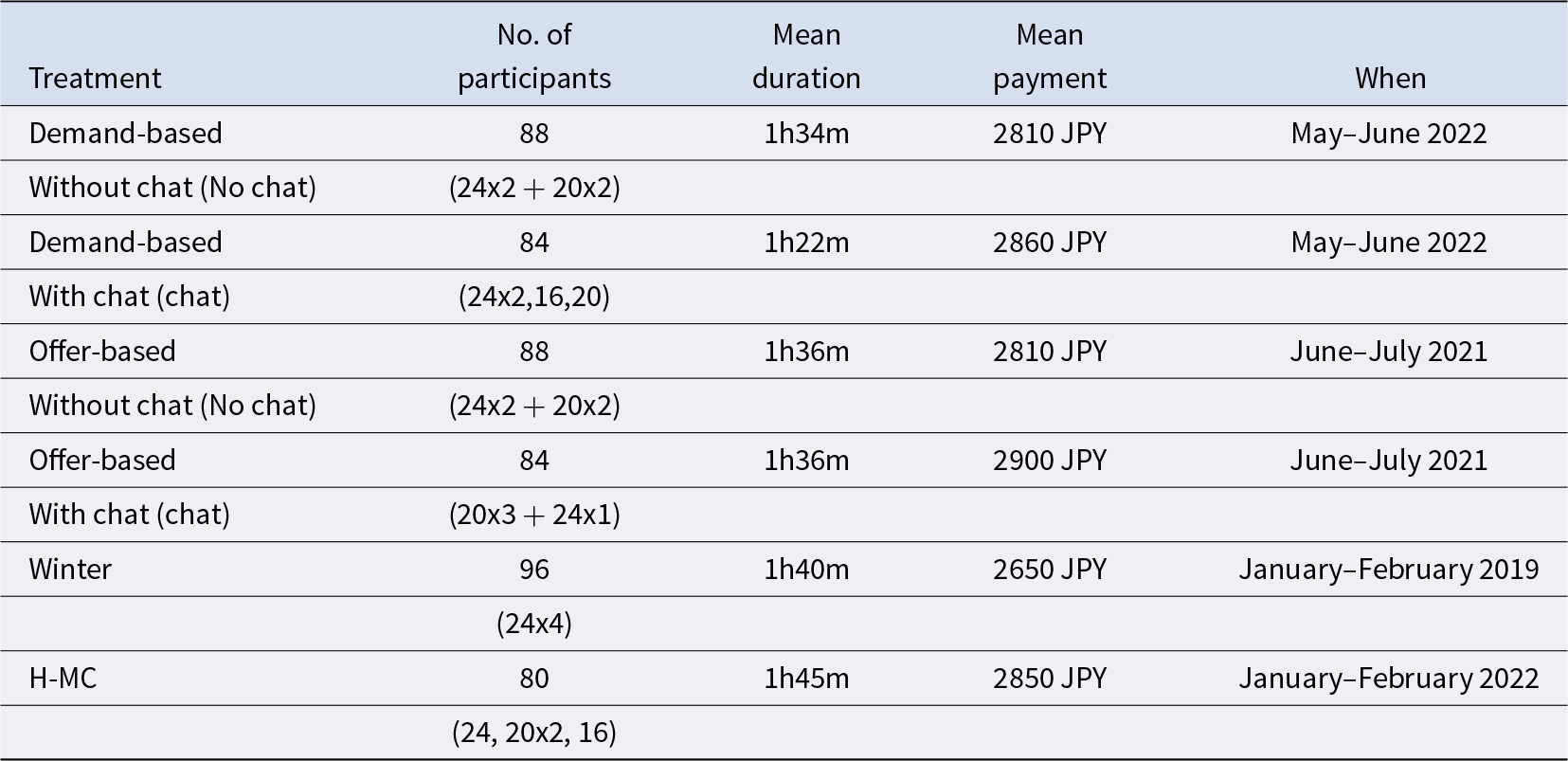
In both the structured and the semi-structured bargaining procedures, at the end of each experiment, two rounds (one from the first four rounds and another from the last four rounds) were randomly selected for payments. Participants received cash rewards based on the points they earned in these two selected rounds at an exchange rate of 20 JPY = 1 point, in addition to the 1,500 JPY participation fee. The experiments lasted on average around 90 minutes for semi-structured mechanisms and around 100 to 105 minutes for structured mechanisms, including the instructions, comprehension quiz, and payment. Participants received a copy of the instruction slides, and a pre-recorded instruction video was played. The comprehension quiz was given on the computer screen after the explanation of the game. The user interface was explained during the practice rounds and referred to the handout about the computer screen. See Online Appendix A for English translations of the instruction materials and the comprehension quiz for both experiments.
Table 7 summarizes the duration of a negotiation, the frequency of complete breakdown (no coalition being formed), the number of offers or demands made within a negotiation, the number of messages sent during a negotiation (in treatments with chat), and the time until the first coalition was formed in the semi-structured experiments.Footnote 5 Equivalent results for structured experiments are not reported here because they are not relevant, given the limited freedom for negotiation.
Summary statistics of semi-structured bargaining experiments
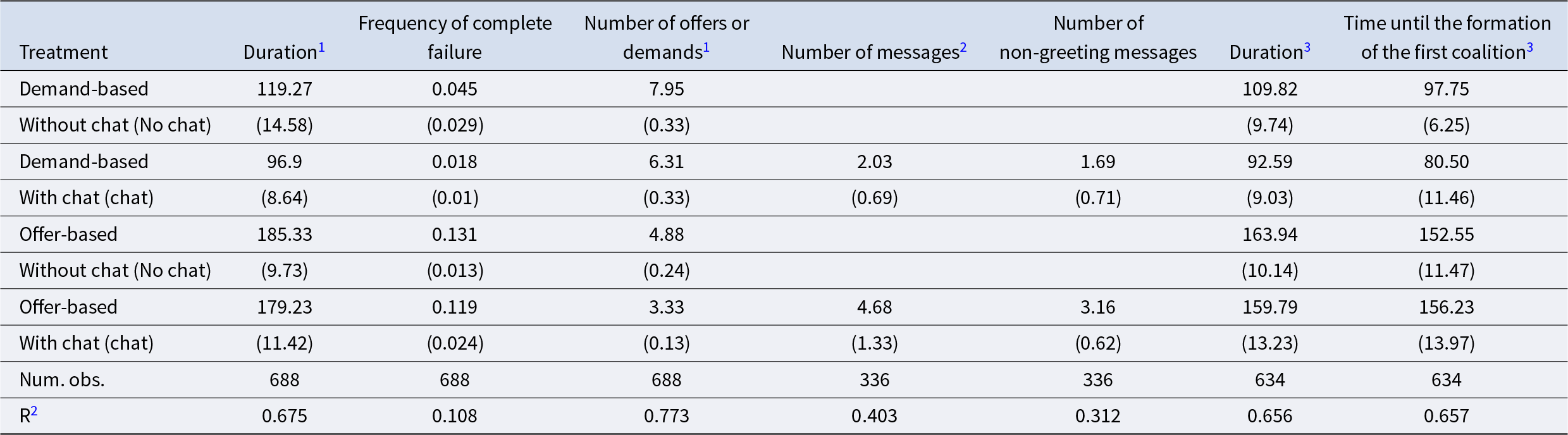
Note: Standard errors are corrected for session-level clustering effects and shown in parentheses.
1 : Includes those groups that did not form any coalition and were thus terminated upon reaching the maximum duration.
2 : Includes greeting messages.
3 : Does not include groups that did not form any coalitions.
Observe that the average duration of a negotiation is significantly longer in the offer-based than in the demand-based bargaining procedures.Footnote 6 The possibility of chat does not significantly affect the duration of the negotiation.Footnote 7 Note that while more messages are sent under the offer-based than the demand-based bargaining procedures when chat is possible, the difference is not statistically significant.Footnote 8 The complete failure of the negotiation is more frequently observed under the offer-based than the demand-based bargaining procedures,Footnote 9 while the possibility of chat does not significantly affect the failure rate.Footnote 10
The longer duration of a negotiation under the offer-based bargaining procedure is not just because there are more groups in which negotiation failed completely. Even among those groups where a coalition was formed, the negotiation took longer under the offer-based than the demand-based bargaining procedures.Footnote 11 The same is true for the time that elapsed before the first coalition was formed.Footnote 12
The number of proposals made under the offer-based bargaining procedures is significantly smaller than the number of demands made under the demand-based bargaining procedures.Footnote 13 The possibility of chat significantly reduces the number of offers or demands made.Footnote 14 The number of both demands and offers is, however, larger than what was allowed under Winter and H-MC (with a maximum of four) considered in Chessa et al. (Reference Chessa, Hanaki, Lardon and Yamada2023b). It is not unexpected that this difference in the number of demands or offers between the structured and semi-structured bargaining procedures would affect the outcomes.
We now turn to analyzing the outcomes of our experiments. Section 4.1 focuses on grand coalition formation and the efficiency of the final outcome. Section 4.2 delves into the negotiation dynamics; that is, whether demands and offers evolved during the negotiation and whether and how they affected the final outcome.Footnote 15
4.1. Grand coalition formation and efficiency
For our four games, the structured mechanisms theoretically predict that the grand coalition will form and that full efficiency will be reached. Then, we first compare the frequency of cooperation and the level of efficiency across our four semi-structured mechanisms treatments, after which we compare these outcomes with the results from the experiments on the structured bargaining mechanisms reported in Chessa et al. (Reference Chessa, Hanaki, Lardon and Yamada2023b).
4.1.1. Grand coalition formation
Table 8 shows the frequencies of various coalitions being formed, focusing on the grand coalition and coalitions with three members. Our analysis thus centers on those groups that reached full cooperation or those groups that did not succeed in doing that but showed a high level of cooperation.
Frequencies of coalitions being formed
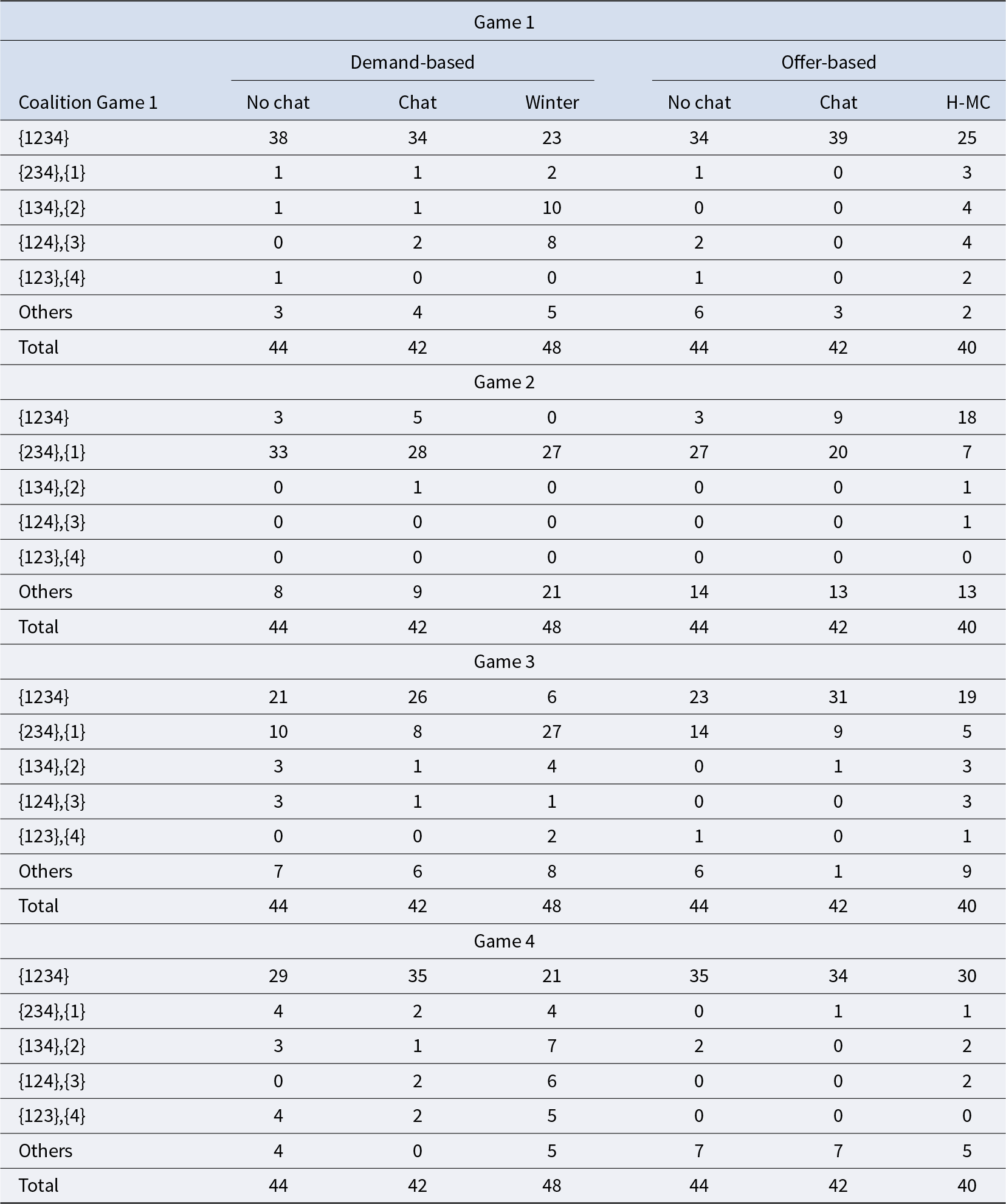
On one hand, in games 1, 3, and 4, the grand coalition is the most frequently formed under semi-structured bargaining procedures, regardless of whether it is demand-based or offer-based and with or without chat. That is also the case under structured Winter and H-MC mechanisms, except for the Winter mechanism in game 3, where the coalition 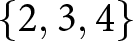 $\{2,3,4\}$ is the most frequently formed coalition. In game 2, on the other hand, instead of the grand coalition, the three-player coalition that excludes the null player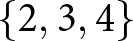 $\{2,3,4\}$ is the most frequently formed coalition, except under the H-MC mechanism. Chessa et al. (Reference Chessa, Hanaki, Lardon and Yamada2023b) noted that the proposers do not exclude the null player in game 2 to avoid the risk of the proposal being rejected and receiving a singleton payoff under H-MC. This result shows that such a risk imposed by an offer-based structured mechanism is eliminated under the offer-based semi-structured bargaining procedures.
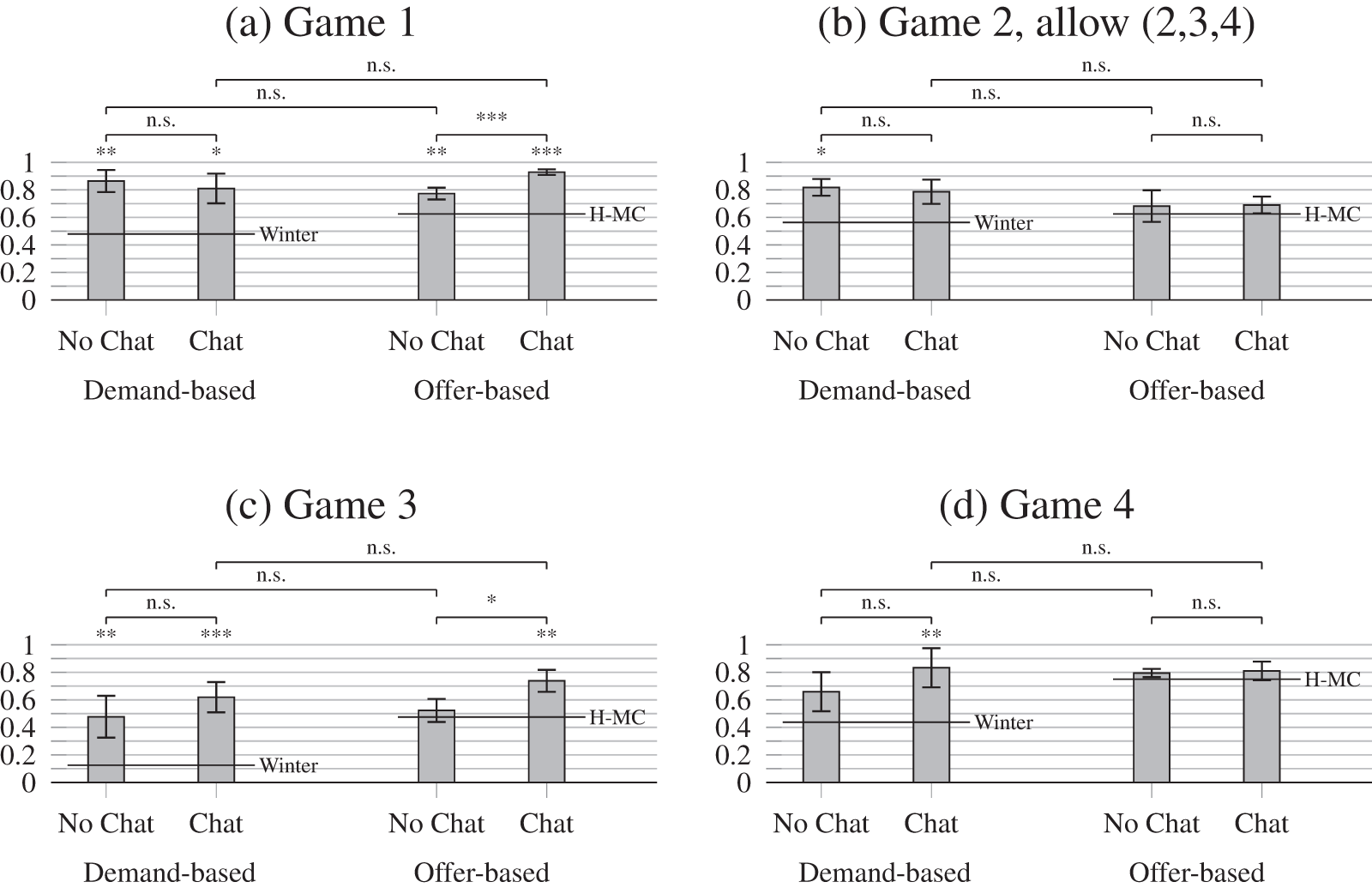
In Figure 2, we show the results of comparisons across treatments of the frequencies of the grand coalition formation. To take into account the existence of the null player, we include the three-player coalition without the null player in game 2 ({2,3,4}) as a grand coalition. The horizontal lines with indications of Winter and H-MC are the experimental results of these two structured procedures reported in Chessa et al. (Reference Chessa, Hanaki, Lardon and Yamada2023b).Footnote 16
Proportion of times the grand coalition formed

We observe that the grand coalition is formed more frequently under the semi-structured bargaining procedures than under the structured bargaining procedures, for both demand-based and offer-based bargaining procedures, regardless of the existence of chat in game 1 and when chat is allowed for game 3. In games 2 and 4, there is no significant difference between the semi-structured and structured offer-based bargaining procedures. For the demand-based procedures, the grand coalition is more frequently formed under the semi-structured ones than the structured approach, significantly so when chat is not allowed in game 2 and when chat is allowed in game 4. Among semi-structured bargaining procedures, there are cases where chat significantly facilitates the formation of the grand coalition (games 1 and 3 for the offer-based procedure). Conditional on whether free from chat is possible, we do not observe significant differences between the demand-based and the offer-based semi-structured bargaining procedures in any of the four games.
4.1.2. Efficiency
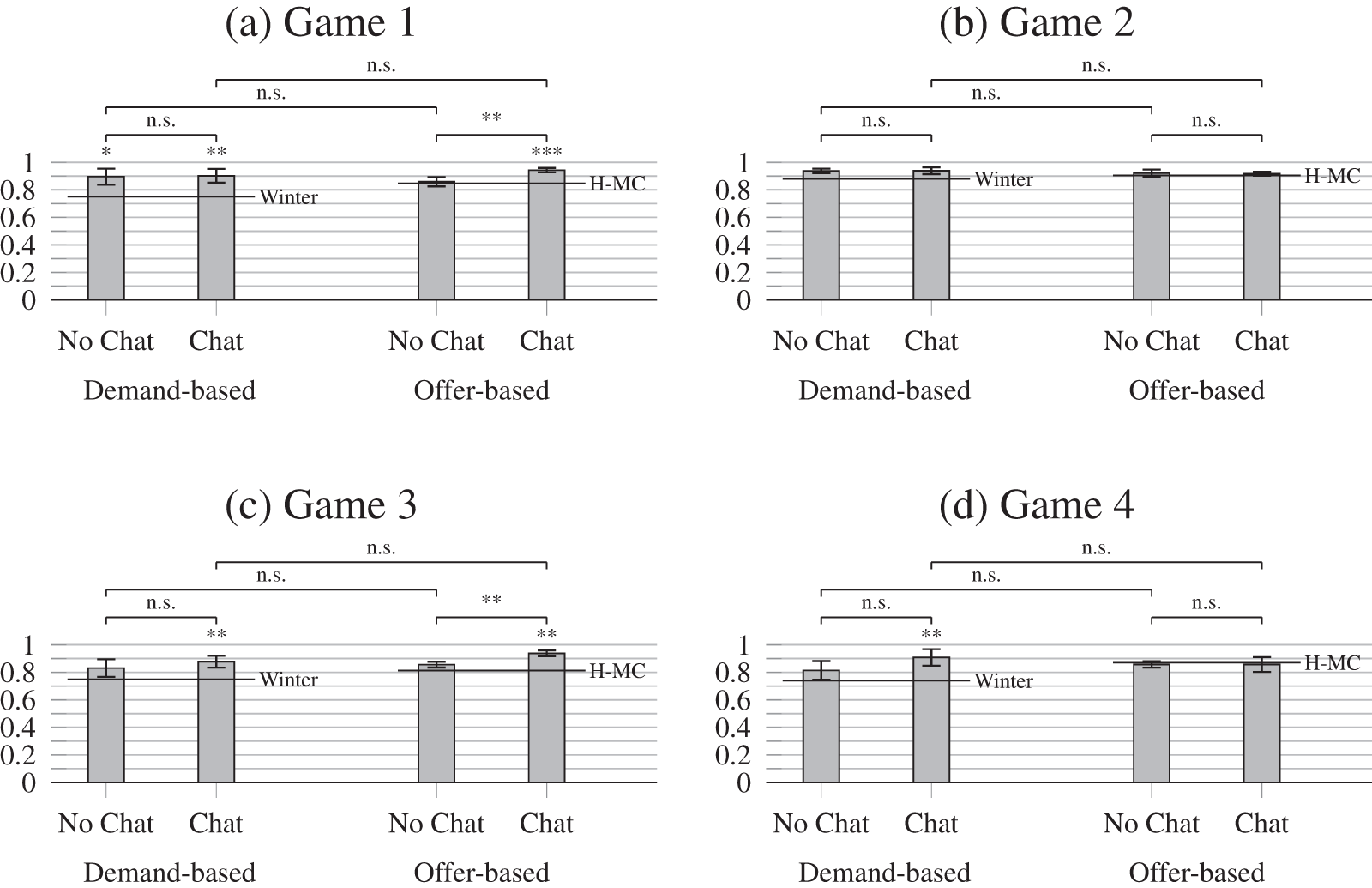
Figure 3 shows the efficiency across treatments in each game. Efficiency is computed as the share of the sum of the points obtained by four players relative to the worth of the grand coalition.Footnote 17
Efficiency
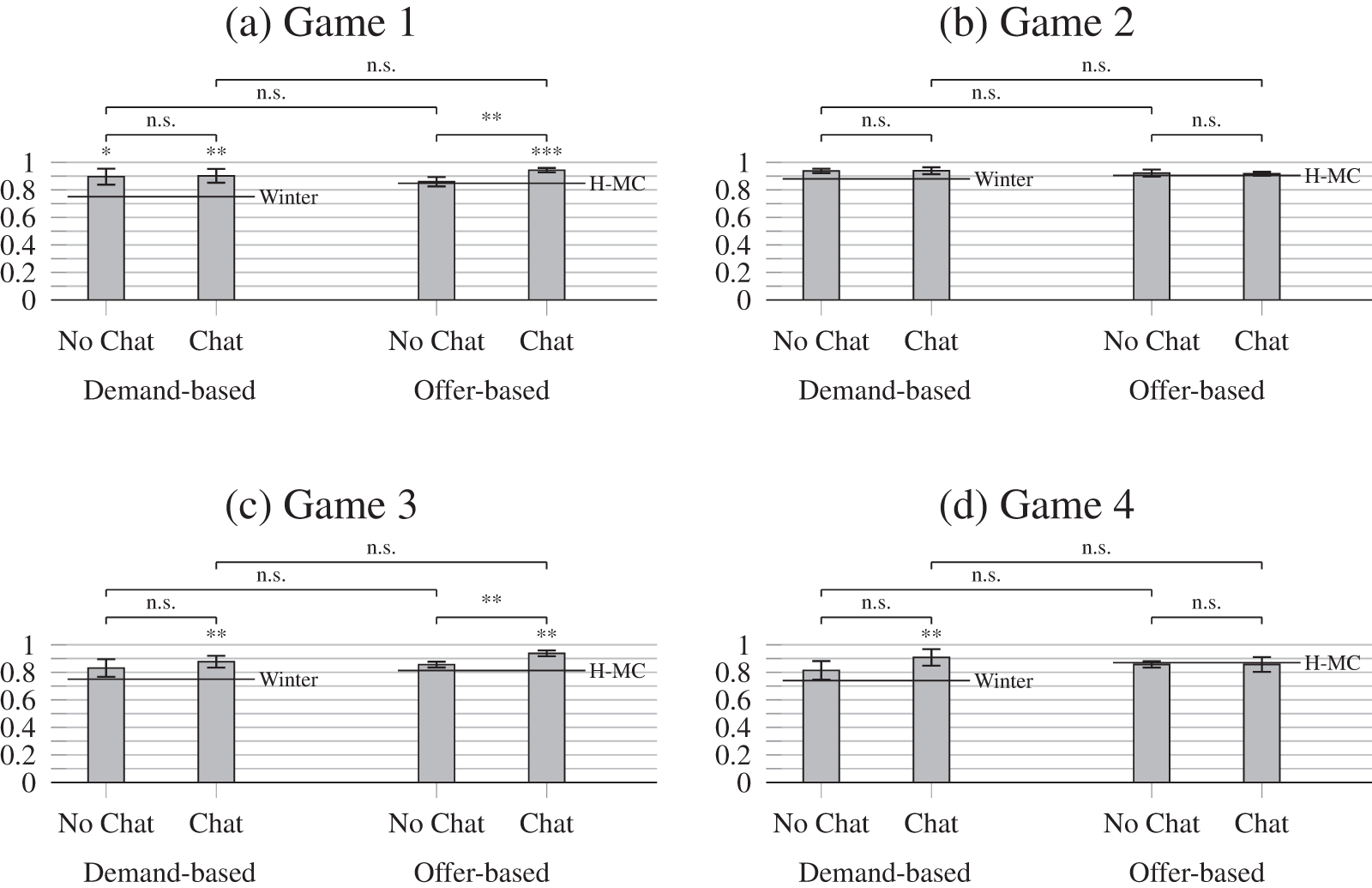
Because efficiency is higher when the grand coalition is formed more frequently, the results are similar to the frequencies of the grand coalition formation discussed above. However, it is important to note that even when the grand coalition is formed, the resulting share can still be inefficient. Thus, this additional analysis is of interest. In our results, efficiency is significantly higher for both demand- and offer-based approaches, under the semi-structured bargaining procedure with chat than under the structured bargaining procedure in games 1 and 3. For games 2 and 4, while the efficiency is not significantly different between structured and semi-structured offer-based bargaining procedures, in case of the demand-based bargaining procedure, it is higher under semi-structured than the structured bargaining procedure with chat in game 4.
We summarize the results of this section by stating that our experiments confirm the overall superior performance in terms of grand coalition formation and efficiency of semi-structured mechanisms than their structured counterparts.
4.2. Negotiation dynamics
We have already noted that the number of offers and demands made in the semi-structured bargaining procedures are larger than were permitted by construction in the Winter and H-MC mechanisms. In this subsection, we analyze the content of these offers and demands to better understand how they evolved during the negotiation and whether and how they affected the final outcome.Footnote 18
4.2.1. Two examples of negotiation dynamics
We start by providing two specific examples of negotiation dynamics in semi-structured mechanisms, one for offer-based and the other for demand-based bargaining procedure without chat. These examples may help identify the possible advantage of semi-structured mechanisms over structured ones.
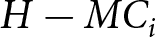
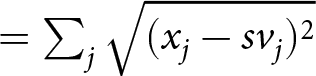
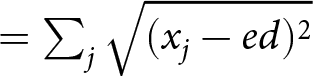
Table 9 shows an example of the dynamics of the proposals made in game 1 of the offer-based semi-structured bargaining procedure without chat. “Time” and “Player” represent when and by whom an offer was made; “Coali.” and “xj” ( $j \in \{1, 2, 3, 4\}$) correspond to the proposed coalition and the allocation within it; “Dist.SV”, “Dist.ED”, and “Eff.” are the distance of the proposed allocation from the Shapley value, the distance from the equal division, and the efficiency of the offer, respectively.Footnote 19 “Outcome” and “Out.time” show the eventual outcome and the timing of the offer.
An example of the dynamics of negotiation in game 1 of the offer-based semi-structured bargaining procedure without chat

In this group, all the offers involved the grand coalition, but the allocation within the coalition differed. First, player 4 made an offer giving themselves slightly higher payoff than the others while reducing the payoff of player 3. Later, player 3 made a counteroffer by reducing player 1’s payoff while increasing their own as well as player 4’s payoff compared to the proposal by the player 4. This counteroffer was closer to the Shapley value and further away from the equal division than the offer made by player 4. Seeing this counteroffer, player 4 canceled their offer. Later, player 2 made a counteroffer to that of player 3 by reducing the payoff for player 4 while increasing their own and player 1’s payoff and maintaining the payoff for player 3. This offer was further away from the Shapley value than player 3’s existing offer while the distance from the equal division was the same. Eventually, player 2 canceled this offer and made an offer that split the pie equally among four players. This offer was eventually approved by everyone.
Table 10 shows an example of the dynamics of the demands made in game 1 of the demand-based semi-structured bargaining procedure without chat. The columns are similar to those in Table 9. “No.Act.” and “No.Dem.” represent the number of active players and the number of demands submitted at the time, respectively; “Dist.SV”, “Dist.ED”, and “Eff.” are computed only when four demands are submitted; “Outcome” shows the coalition being formed. The specific demands made by the players are shown in bold. The cancellation of an existing demand is recorded as demanding 0.
An example of the dynamics of negotiation in game 1 of the demand-based semi-structured bargaining procedure without chat

In this group that eventually formed the grand coalition, there were three instances where four demands were all on the table. Among these instances, we observe increasing efficiency and a corresponding decline in the distance to the Shapley value and the equal division over time. In the end, although it was possible for some players to demand a few more points, they decided to stop the negotiation.
In these two examples, in many instances, some improvements, in terms of either the efficiency or the distance from the Shapley value or the equal division, were observed during the negotiation. Note that in the corresponding structured bargaining procedures, such within-negotiation improvements are not possible by design.
We now analyze the differences across treatments more systematically by first looking at the properties of the first offers (the offer-based case) or the first instances in which the demands from all four players are on the table (the demand-based case) and their likelihood of approval. We then complement these analyses by investigating the relationships between properties of all the offers or the set of four demands and their likelihood of resulting in the grand coalition formation.
4.2.2. First offers and demands versus all offers and demands and the grand coalition formation
Tables B.1 and B.2 in Online Appendix B report the average (and standard deviation) of the characteristics of the first set of four demands (for demand-based bargaining procedures) and the offers (for offer-based bargaining procedures) in our four games.
From a careful observation of these tables, we can highlight the two key results of this analysis (which we do not report in full here for simplicity). Focusing on offer-based mechanisms, we observe that the grand coalition is formed less frequently based on the first offer in semi-structured bargaining procedures when compared to H-MC. As a result, efficiency is also lower. Similarly, for demand-based mechanisms, the likelihood that the grand coalition is formed based on the first instance in which all players made their demand is lower in semi-structured bargaining procedures than in Winter (except for game 3).
These results confirm what was previously hypothesized, namely that the better performance of semi-structured mechanisms is a consequence of the ability to adjust offers and demands. In fact, this improved performance is not observed at the very beginning but only at the end of the negotiation. To conclude, we now ask in which direction these offers and demands should be adjusted by investigating which characteristics of the proposed allocations more easily lead to an agreement.
Table 11 shows the results of linear regressions where the dependent variable is whether the grand coalition (including 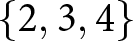 $\{2,3,4\}$ in game 2) is formed (= 1) or not (= 0), and independent variables are the characteristics of the set of demands or offers. We focus only on those sets of demands or offers where the formation of the grand coalition is possible (that is, it involves all the members of the grand coalition and is feasible).
Characteristics of the sets of demands (for demand-based procedures) and the offers (for offer-based procedures) and grand coalition formation
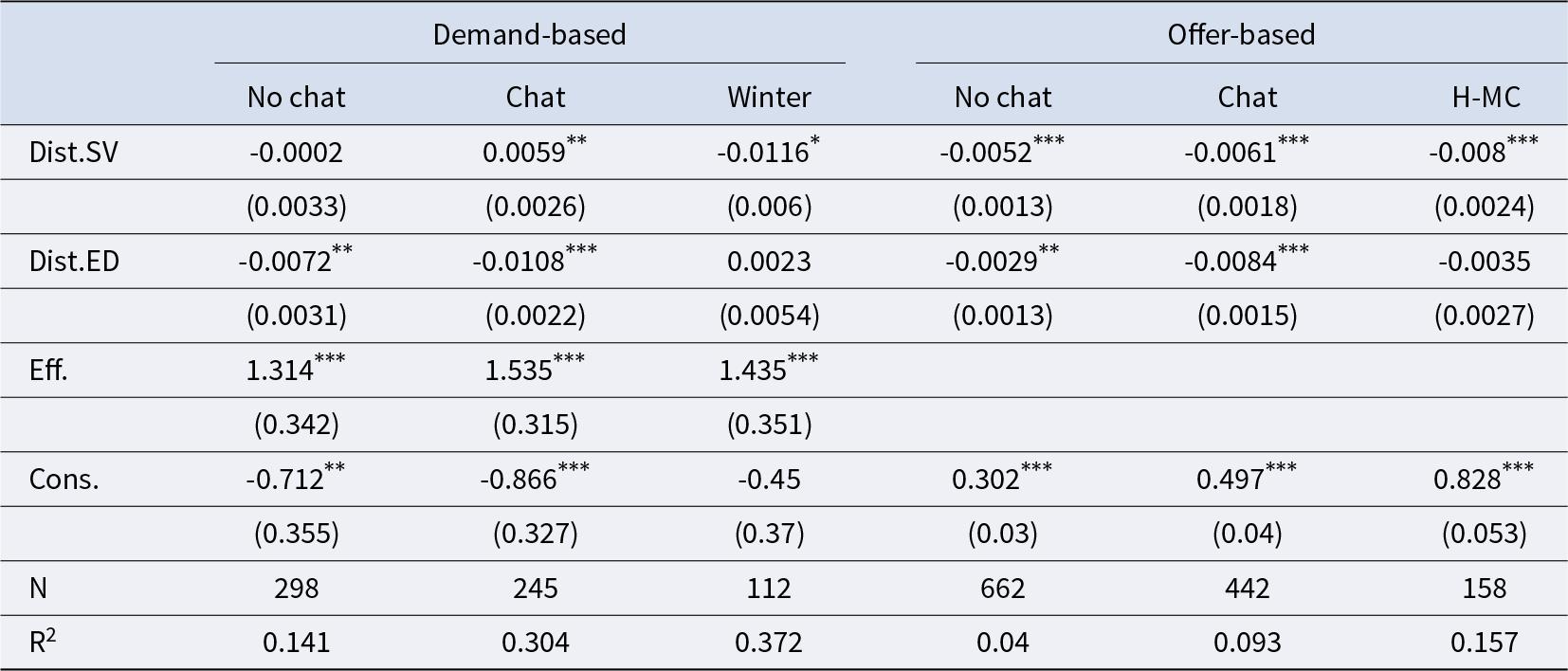
Note. Dependent variable is whether the grand coalition is formed (= 1) or not (= 0); linear probability model pooling data from the games; standard errors are clustered at the group (negotiation) level and reported in parentheses. *, **, and *** show statistical significance at the 10%, 5%, and 1% levels, respectively.
We see that the “Dist.ED” (the distance to the equal division solution) is negatively correlated with grand coalition formation in both demand-based and offer-based semi-structured bargaining procedures. This suggests, as we have seen above through examples, that the dynamics of negotiation tend to favor allocations that are closer to the equal division under semi-structured bargaining. “Dist.SV” (the distance to the Shapley value) is also negatively correlated with the formation of the grand coalition in both Winter and H-MC, as well as in the two offer-based semi-structured bargaining procedures. In the demand-based semi-structured approach with chat, “Dist.SV” is instead positively correlated with the formation of the grand coalition. However, its magnitude is only about half of the effect of “Dist.ED”. Finally, efficiency is positively correlated with the formation of the grand coalition in all the demand-based bargaining procedures.
To summarize these results, we observe that proposals closer to equal division, closer to the Shapley value, and with greater efficiency are more likely to be accepted, thus facilitating the formation of the grand coalition. By design, semi-structured mechanisms provide more opportunities to adjust proposals in this direction, leading to better final outcomes in terms of coalition formation and overall efficiency.
5. Concluding remarks
Unstructured, or, in our case, semi-structured bargaining experiments, have been argued to more closely resemble real-world bargaining situations, suggesting that after many decades, it is time for a revival of unstructured bargaining experiments (Karagözoğlu, Reference Karagözoğlu, Laslier, Moulin, Sanver and Zwicker2019). The present study seeks to contribute to this body of literature by experimentally comparing the outcomes of structured versus semi-structured bargaining procedures in the context of coalition formation. Specifically, it contrasts the experimental results of two mechanisms that implement the Shapley value (Shapley, Reference Shapley, Kuhn and Tucker1953) as an ex ante equilibrium outcome, as considered in Chessa et al. (Reference Chessa, Hanaki, Lardon and Yamada2023b): simplified versions of the demand-based mechanism proposed by Winter (Reference Winter1994) and the offer-based mechanism proposed by Hart & Mas-Colell (Reference Hart and Mas-Colell1996), with the outcomes of two corresponding but much less structured bargaining procedures. In doing so, this paper also contributes to the literature on the Nash program (Nash, Reference Nash1953).
We found that semi-structured bargaining procedures led to a significantly higher frequency of grand coalition formation and greater efficiency than did structured procedures. This outcome occurs because participants in the former could explore a wider range of proposals and demands during negotiations, allowing them to adjust their offers toward proposals that are more likely to be accepted. A deeper analysis reveals that semi-structured bargaining procedures do not necessarily yield better outcomes when considering only the initial set of offers and demands. Instead, their advantage over structured bargaining procedures becomes evident toward the end of the negotiation process. Structured bargaining procedures, while theoretically predicted to lead to the formation of the grand coalition, result instead in an a posteriori expected payoff distribution that heavily favors randomly selected first movers at the expense of players who intervene later. These unfair proposals are often rejected, and structured mechanisms do not allow for adjustments, ultimately limiting their effectiveness.
Unlike the sharp differences between the outcomes of the demand-based and the offer-based structured bargaining reported by Chessa et al. (Reference Chessa, Hanaki, Lardon and Yamada2023b) in terms of the frequency of grand coalition formation and efficiency, no significant differences between the demand-based and offer-based semi-structured bargaining procedures arose in these dimensions. In terms of the design of bargaining experiments, this result is encouraging because it suggests that when the participants are less constrained in terms of when and how often they can act, the outcomes of the negotiations become similar regardless of whether the bargaining procedure is an offer-based or a demand-based one. Even though the possibility of communicating through free-form chat does not play a substantial role, it has been shown in some cases to facilitate better outcomes.
Our findings suggest that one should carefully consider the potential effects of various restrictions imposed by different mechanisms – such as who can act and when – while also accounting for behavioral biases and cognitive limitations. When it comes to bargaining and coalition formation, in fact, not having various restrictions imposed by different mechanisms and having the possibility of freely adjusting during the negotiation may lead to more desirable outcomes. More broadly, our results align with the extensive literature supporting Adam Smith’s “invisible hand” (Rothschild, Reference Rothschild1994) and the possibility of cooperation without coercion (Friedman, Reference Friedman, Blaug and Schwarzmantel2016).
The directions for future research are many and challenging. First, in our experiment we used only the four games considered by Chessa et al. (Reference Chessa, Hanaki, Lardon and Yamada2022, Reference Chessa, Hanaki, Lardon and Yamada2023a, Reference Chessa, Hanaki, Lardon and Yamada2023b) in order to make a direct comparison with previous experimental investigations. As an initial step, future studies should consider more varieties of games (non-superadditive, non-convex, those with more than four players, or more general games such as partition function games (Thrall & Lucas, Reference Thrall and Lucas1963)) to better understand the possible impacts of various behavioral biases, such as fairness consideration and loss aversion, in advancing the Nash program while incorporating the fruits of advances in behavioral and experimental economics. Testing our unstructured and semi-structured mechanisms for a wider range of games can confirm or call into question the results of this paper.
But we believe that the most challenging direction for future investigations is to explore whether alternative structured mechanisms can be designed to outperform semi-structured mechanisms, as observed in many other markets (see the numerous examples presented in the Introduction). It is in fact important to stress that in many situations, rigorous structured mechanisms may be especially useful or even necessary. This is the case, for example, when unstructured or semi-structured bargaining is not feasible, either because players are dispersed or because they do not even know whom they are playing against, as for example in financial markets.
A natural approach would be to define and/or test mechanisms whose theoretical predictions lead to a fairer payoff distribution, not only a priori but also a posteriori, that is, given the specific implementation of the game. In this regard, it is important to note that Chessa et al. (Reference Chessa, Hanaki, Lardon and Yamada2022) experimentally tested the bargaining mechanism proposed by Pérez-Castrillo & Wettstein (Reference Pérez-Castrillo and Wettstein2001). This mechanism, despite predicting exactly the Shapley value at equilibrium, was found to perform even worse than H-MC, further amplifying the first-mover advantage. But this negative result was likely due to the complexity of the mechanism, and to the difficulty of the experimental subjects in understanding its dynamics. An alternative and simpler way to test a different algorithm would be to implement a mechanism à la Winter, where players are required to play following all possible orders, or à la H-MC, where all players take turns acting as the first mover. However, while this approach could be promising, it would lead to a much longer experiment in which additional factors would need to be carefully controlled, such as the order of the different sequences itself.
Supplementary material
The supplementary material for this article can be found at https://doi.org/10.1017/eec.2025.10032.
Replication Packages
The replication material for the study is available at https://doi.org/10.17605/OSF.IO/KQW6N.
Acknowledgments
The experiments reported in this paper were approved by the IRB of Institute of Social and Economic Research (ISER), Osaka University. We gratefully acknowledge financial support from the Joint Usage/Research Center at ISER, Osaka University, and Grants-in-Aid for Scientific Research, Japan Society for the Promotion of Science (15K01180, 18K19954, 20H05631, 23H00055). Comments and suggestions from seminar participants at University of Technology Sydney, Monash, UC Davis, Nice, participants of 2021 ESA global Around-the-Clock Virtual Conference (virtual), 2022 annual meeting of French Experimental Economic Association (Lyon), 2022 Conference on Mechanism and Institution Design (virtual), 2022 Experimental Social Science Conference (Matsumoto), 2022 Summer Workshop on Economic Theory (Otaru), 2024 East Asian Game Theory Conference (Jeju), 2024 Meeting on Game Theory (Besançon) and workshops at Osaka and Ritsumeikan, as well as the guest editor and anonymous reviewers are gratefully acknowledged. Yuki Hamada, Hiroko Shibata, and Manami Tsuruta have provided valuable assistance in conducting the experiments.














 Open access

