


INTRODUCTION
Human papillomavirus (HPV) vaccination to prevent cervical cancer has been approved in many countries. The Department of Health in the UK introduced routine vaccination of 12-year-old girls in September 2008, together with a catch-up programme for older teenagers. The current vaccines are expected to protect against HPV 16 and HPV 18 which are responsible for 70% of the cases of cervical cancer [Reference Rambout1], but high coverage is required for maximum impact [Reference Kohli2].
In England, inequalities in immunization uptake are persistent [3]. Previous research has shown that single parenthood, residence in ethnic or disadvantaged wards, high birth order or family size as well as maternal smoking, were associated with lower uptake of childhood vaccination [Reference Middleton and Baker4–Reference Samad6]. Poorer children, or those in households with low uptake rates are at increased risk of developing vaccine-preventable diseases [Reference Heyderman7], including cervical cancer [Reference Parikh, Brennan and Boffetta8]. Persistent ethnic inequalities in health, extending between generations, have been reported in the UK [Reference Smith, Kelly and Nazroo9]. Irrespective of socio-economic status, negative attitudes to vaccination against a sexually transmitted infection, which may be differentially distributed between and within ethnic minority groups, could reduce HPV vaccine acceptance [Reference Marlow, Wardle and Waller10].
In 2007–2008 we undertook a feasibility study offering bivalent HPV vaccination (Cervarix®; GlaxoSmithKline, Belgium) to all year-8 schoolgirls (aged 12 or 13 years) in two primary-care trust (PCT) areas in Greater Manchester, UK [Reference Brabin11, Reference Stretch12]. In this school-based programme, uptake was 71% at the first dose with 68% receiving the full three-dose course [Reference Brabin13]. In this paper we describe associations between HPV vaccine uptake and deprivation, ethnicity and other childhood immunizations. To our knowledge, no previous research has examined the relationship between social deprivation and adolescent vaccination coverage.
METHODS
This study was approved by the North Manchester National Health Service Research Ethics Committee. This analysis is based on the total population of girls (aged 12–13 years) invited for vaccination in two PCTs. The method for delivering the vaccine has been previously described [Reference Brabin11]. Briefly, letters of invitation were sent by the PCTs to the parents of all female pupils in the relevant age group, along with information leaflets. Information evenings were also run for parents and pupils in each school. The vaccine was delivered in school, with catch-up sessions for those absent or late consenting. At least one reminder was sent to non-responders.
Lower layer Super Output Areas (SOAs) (Office for National Statistics, Fareham, UK) and corresponding Index of Deprivation 2007 (ID) [Reference Noble14] were obtained from the UK National Statistics Postcode Directory using Geoconvert (http://geoconvert.mimas.ac.uk). Indices of deprivation range nationally from 0·4 to 86 in England, with higher ID values representing more deprived areas. Missing postcodes (2·6%) were singly imputed using a hotdeck procedure, drawing from the records of pupils in the same school and with the same vaccination status. Ethnicity, based on UK census classifications, was obtained from ethnic monitoring forms distributed with the vaccination invitation and were returned by 62% of those invited (79% of vaccinated and 19% of unvaccinated). Missing data were multiply imputed using data from the Local Education Authorities' (LEA) census, which provides aggregated ethnic composition for year-8 girls in each school. A total of 100 imputed ethnicity datasets were created as follows: the LEA data were used to infer the numbers of each ethnic group that were missing, and then these ethnic designations were randomly allocated among the missing girls. This constrained the ethnicity of the sample to be consistent with the known ethnic composition. The independent schools not included in the LEA dataset were assumed to have an ethnic composition proportional to the observed data, but there were far fewer missing data in these schools.
To assess the relationship between HPV and childhood vaccination status, we used anonymized data from the child health systems of the two PCTs and selected girls who were born between 1 September 1994 and 31 August 1995 and thus eligible for HPV vaccination. Due to population movements, data were incomplete for a proportion of children who were born outside the PCT boundaries, and these girls' records were excluded. As the child health dataset was anonymized, it could not be linked to the HPV vaccination database. However, HPV vaccination was independently recorded in the child health systems allowing direct comparison of uptake between HPV and childhood vaccinations.
HPV vaccination uptake was defined as having received at least one dose of the vaccine. Vaccine refusal was defined either as (i) the return of a negative consent form (active refusal) or (ii) non-return of a consent form (non-response). Ethnicity was grouped into four broad categories for analysis. We used logistic regression to assess the associations between HPV vaccine uptake and deprivation or ethnic group. Where ethnicity data were imputed, standard multiple imputation methods were used to derive parameter estimates from the analyses of each realization, along with their associated standard errors, 95% confidence interval and statistical significance. Associations between HPV vaccination and childhood vaccinations are summarized by an odds ratio with a Fisher's exact test for inference. All computations were performed using the R language and statistical environment [15].
RESULTS
There were 2817 girls invited for HPV vaccination, 91% of whom were classified as White, with 5% Asian, 1% Black, 3% Mixed and 1% from other ethnic groups. The median ID score was 18·1 (range 2·3–77·3).
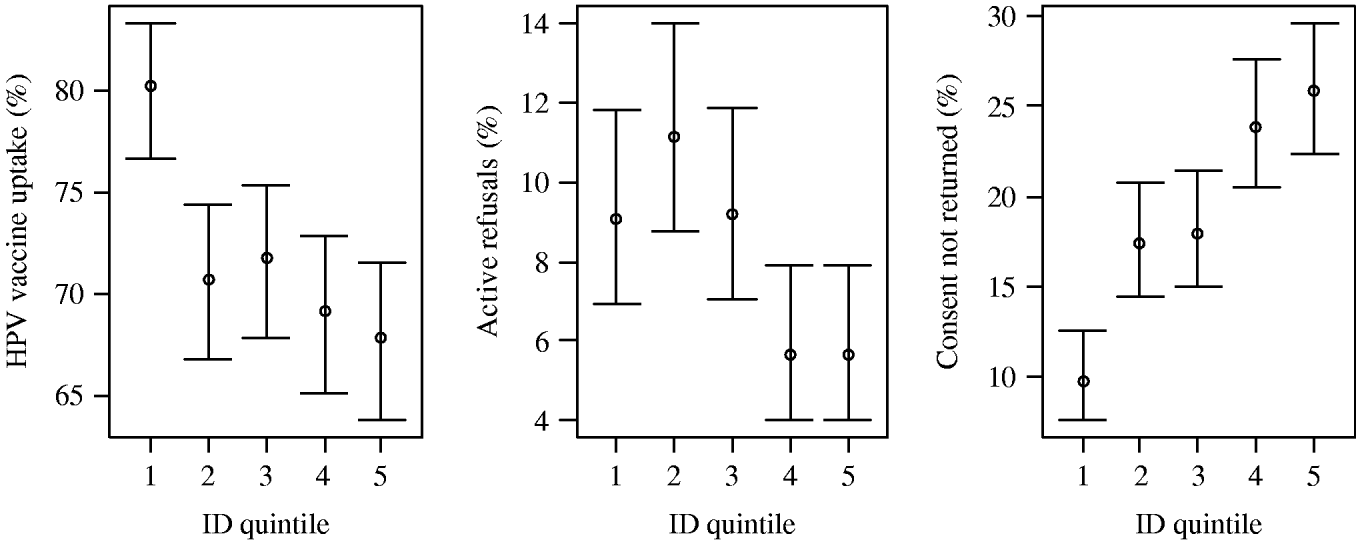
HPV vaccine uptake was highest in the least deprived SOAs (Fig. 1) with a significant association between poorer uptake and deprivation (Table 1). Those who had actively refused HPV vaccination were more likely to be in the lower ID quintiles whereas non-response was higher in the more deprived areas, with both these relationships showing statistical significance.
Association between HPV vaccine uptake and deprivation score. Proportions with 95% binomial confidence intervals are given, grouped by quintiles of the index of deprivation (ID) scores in the sample. The first quintile represents the least (ID 2·3–9) and the 5th quintile the most deprived (33·3–77·3).
Association between HPV vaccine uptake and index of deprivation score and ethnicity in univariate analyses (odds ratios and significance level from logistic regression)
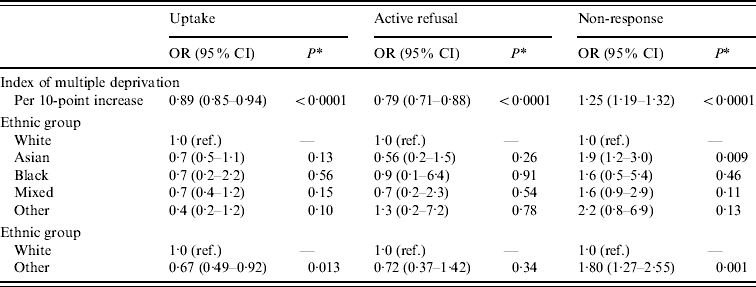
OR, Odds ratio; CI, confidence interval; ref., reference group.
* Logistic regression, adjusted for imputation.
Non-White girls were less likely to be vaccinated than White girls (P=0·013) (Table 1), but there was insufficient data to demonstrate significant associations for specific ethnic groups. Active refusal was less common in most non-White groups, but this also did not reach statistical significance. Non-response was higher in all ethnic minority groups, and particularly in the Asian population (P=0·009). The relationships with ID score remained significant after adjustment for ethnicity, and the relationships with ethic minority status similarly remained after adjustment for ID score (Table 2).
Association between HPV vaccine uptake and index of deprivation score and ethnicity (odds ratios and significance level from logistic regression)
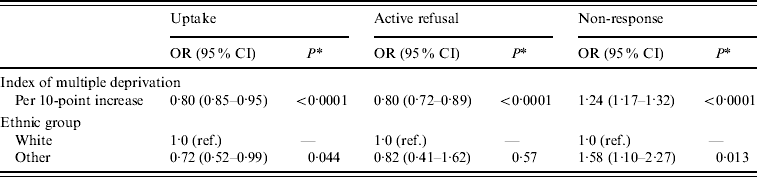
OR, Odds ratio; CI, confidence interval; ref., reference group.
* Logistic regression, adjusted for imputation and other variables in model.
Childhood vaccination records were available for 2415 girls. Uptake for all childhood vaccinations was high (Table 3) and well above 95% for the infant vaccines. The lowest uptake was 87% for the pre-school MMR booster. Girls who been vaccinated against HPV were significantly more likely to have received a previous MMR immunization, but no link to other vaccinations was demonstrated.
Associations between HPV vaccination and other scheduled childhood vaccinations
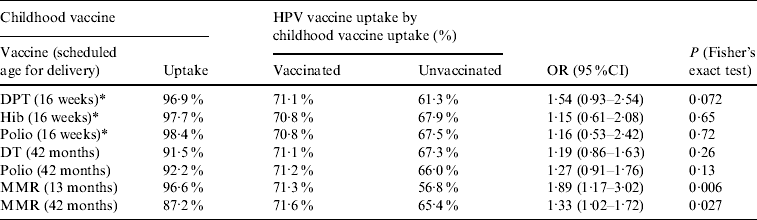
OR, Odds ratio; CI, confidence interval; DPT, Diphtheria, pertussis, tetanus; DT, diphtheria, tetanus; MMR, measles, mumps, rubella.
* Final dose of three-dose course.
DISCUSSION
HPV vaccine uptake was significantly lower in more deprived areas (as defined by the SOA) and in ethnic minority girls. The relatively small proportion of parents who actively refused vaccination by returning a negative consent form were, however, more likely to come from less deprived areas. Girls who did not receive HPV vaccination were less likely to have received all their childhood MMR vaccination doses. This probably reflects similar socio-economic and attitudinal processes driving the vaccine decision in both instances.
Strength and weaknesses of the study
The data presented here arise from a feasibility study ahead of the national vaccination programme. It is conceivable that the associations with deprivation will differ in the context of a well-publicized national programme. Ethnicity was not routinely recorded in the child health systems by the two participating PCTs. Although we asked parents to state their ethnicity, there was still a high proportion of missing data, resulting in reliance on imputation techniques. In particular ethnicity was not available for the non-responders. This reduced the precision of the estimates of the effects of ethnicity, almost certainly underestimating any effect. The ethnicity effects are also imprecise due to the relatively small numbers of minorities in the study population, and should be interpreted with caution. As the national vaccination programme is rolled out it will be important to record ethnicity on child health systems. At PCT level missing data may remain a problem as some parents are reluctant to disclose ethnicity, but regional or national data would provide a larger dataset and allow ethnicity to be categorized more meaningfully [Reference Nazroo16]. A novelty of this study was the ability to distinguish active and passive refusers as well as vaccine acceptors. This allowed us to detect qualitative differences between consent categories.
Comparison with other studies
Cervical screening rates are lower in deprived populations [Reference Webb, Richardson and Pickles17]. In a prospective study of factors associated with MMR uptake, children who dropped out between two follow-up visits were more likely to be from an ethnic minority or a disadvantaged household [Reference Webb, Richardson and Pickles17], confirming these as socio-demographic indicators of non-engagement. MMR has declined more in parents living in relatively affluent areas [Reference Middleton and Baker4] and is lower in well educated parents [Reference Pearce18], suggesting, perhaps, that some active refusers have safety concerns about vaccinations and are prepared to question health recommendations [Reference Hak19]. It is reported that children who remain unimmunized with primary vaccines are more likely not to receive MMR [Reference Pearce5]. Our results suggest that this extends to adolescent HPV vaccination.
Ethnic minority groups were less likely to receive the vaccine, but it is not possible to reliably determine from this data whether this is an effect of deprivation or relates to issues specific to particular cultural or ethnic groups. Several studies demonstrated higher coverage for childhood vaccinations in Asian populations than in Black Caribbean and White populations [Reference Hawker20–Reference Srinivasan22]. No such associations were seen in this study, but there was very limited power to detect such effects. Higher coverage in Asian populations has been attributed to non-use of English media and to the influence of grandparents and health professionals [Reference Mixer, Jamrozik and Newsom21]. Similarly, although earlier studies found a lower reported cervical screening uptake rate in South Asian women, a study that adjusted for area and general practice greatly reduced this discrepancy [Reference Webb23]. Stronger social networks in areas of high South Asian concentration or higher deprivation in White women were possible explanations. Similar differences within and between population groups would be expected for HPV vaccination, Hence, interventions to increase uptake would need to be finely tuned to local area characteristics. More work is also needed to determine specific cultural or religious barriers to HPV vaccination in parents who do not respond to the invitation.
CONCLUSION
This analysis provides some evidence that different approaches may be needed to maximize HPV vaccine uptake in actively refusing and non-responding parents, including ethnic-specific approaches for non-responders. Extra efforts might be made to follow-up girls whose parents do not respond to an HPV vaccine invitation, and if they agree to HPV vaccination, to also check their vaccine records with a view to offering missing childhood vaccinations. Data on ethnicity should be routinely recorded in child health systems to allow monitoring.
ACKNOWLEDGEMENTS
We thank staff at the two PCTs for delivering the vaccine and providing the data and the education departments of the two councils for providing school census data. This study was sponsored by the University of Manchester and supported by the NIHR Manchester Biomedical Research Centre. Vaccine delivery was the responsibility of the primary-care trusts. GlaxoSmithKline funded the research and implementation costs and provided the vaccine. Cervarix is a trade mark of the GlaxoSmithKline group of companies. The authors' work was independent of the funders, who played no role in the conduct of the research or vaccine delivery. L.B. is funded by the Max Elstein Foundation.
DECLARATION OF INTEREST
L.B. and H.K. have received research funds from GSK. L.B. has received conference fees, and honorariums for speaking at meetings sponsored by GSK and Sanofi Pasteur.



