Introduction
Chronic rhinosinusitis is an inflammation of the mucosa of the nasal cavity and sinuses. It is one of the most common conditions encountered in the ENT clinic, and affects approximately 16 per cent of the total population.Reference Blackwell, Collins and Coles1 The symptoms of chronic rhinosinusitis significantly decrease patients’ quality of life (QoL) and result in a large financial burden on society.
Both medical treatment and functional endoscopic sinus surgery (FESS) have been recommended for the management of moderate to severe chronic rhinosinusitis in adults.Reference Fokkens, Lund, Mullol, Bachert, Alobid and Baroody2 Generally, patients with chronic rhinosinusitis who are unresponsive to medical treatment are recommended FESS.
Although various evaluation methods have been proposed to establish the efficacy of chronic rhinosinusitis treatment, such as the Lund–Kennedy endoscopic scoring system, the Lund–Mackay staging system, the Sino-Nasal Outcome Test 20 (‘SNOT-20’ – a health-related QoL measure for rhinosinusitis) and visual analogue scales, a fully formed consensus as to the most appropriate method does not exist. Multiple studies have demonstrated that patients’ symptoms are not consistent with endoscopic and computed tomography findings. Therefore, a combined subjective and objective method has been proposed for the evaluation of the therapeutic effect of FESS on chronic rhinosinusitis. Patients’ self-reports may be the most important evaluation method as patients are primarily concerned about the impact of symptoms on QoL.
In this study, we assessed the effects of FESS in patients with chronic rhinosinusitis who were unresponsive to medical treatment, using the Sino-Nasal Outcome Test 20 questionnaire (a subjective measure of patient QoL) and via endoscopy (an objective measure).
Materials and methods
This study was approved by the Institutional Ethical Committee of the Third Xiangya Hospital, Central South University, China.
Patients
A total of 232 chronic rhinosinusitis patients who had not been previously operated on were selected between 1 April and 30 October 2011. Of the 232 patients, 146 patients had chronic rhinosinusitis without nasal polyps and 86 had chronic rhinosinusitis with nasal polyps; none of the patients suffered from asthma or acetylsalicylic acid intolerance. All patients were dissatisfied with the results of previous medical treatment, which was a combination of steroid nasal spray and saline irrigation administered for at least one year, and their symptoms significantly affected their QoL.
The 232 patients were divided into 2 groups: a FESS group and a conservative therapy group. Specifically, a doctor discussed the two treatment options (FESS or conservative treatment) with the patients, and patients then selected one of the two treatments. Of the 232 patients, 162 patients chose surgery and 70 chose conservative treatment.
The final follow-up examinations took place on or before 30 October 2012. In total, 214 patients were followed up for longer than 12 months: 152 patients in the FESS group and 62 in the conservative therapy group. Eighteen patients were lost during the follow-up period because of changes in telephone numbers and residences. The patient data are summarised in Table I.
Patient data

*Total n=214. †Group comprised patients who underwent FESS (n = 152). ‡Group comprised patients treated with a combination of steroid nasal spray, low-dose macrolide antibiotics and saline irrigation for three months (n = 62). Pt = patient; SD = standard deviation; CRS = chronic rhinosinusitis; CRSsNP = chronic rhinosinusitis without nasal polyps; CRSwNP = chronic rhinosinusitis with nasal polyps; FESS = functional endoscopic sinus surgery; χ2 = chi-square
Surgical treatments
Functional endoscopic sinus surgery was carried out via image guidance using a wide-angle endoscope (0°, 4 mm), as described previously.Reference Tan, Sun and Chen3 Septoplasty and/or partial inferior turbinectomy were also conducted on those patients with septal deviation and/or hypertrophied inferior turbinates. Post-operative management included oral antibiotics, steroid nasal spray and saline irrigation for three months.
Conservative treatment
Macrolides are antibiotic drugs that are commonly used in clinics because of their superior antibacterial effect on Gram-positive bacteria, Gram-negative bacteria and some anaerobic bacteria. In recent years, several studies have confirmed that macrolides have anti-inflammatory and immunoregulatory functions, in addition to their antibacterial effects. Clarithromycin, a 14-membered macrolide, has the advantages of better bioavailability, a moderate half-life period and less gastrointestinal irritation than other macrolides.
The patients in the conservative therapy group were treated with a combination of steroid nasal spray, oral macrolide antibiotics (clarithromycin, 0.5 g once a day) and saline irrigation for three months.
Follow up
All patients were recalled for clinical reviews at 3, 6 and 12 months after undergoing the initial selected treatment. To improve patient follow-up rates, specialty nurses regularly conducted telephone interviews with all patients.
During the follow-up visits, the examiner assessed sinusitis signs with an endoscope according to the Lund–Kennedy scale.Reference Lund and Kennedy4 In addition, each patient was asked to complete a Sino-Nasal Outcome Test 20 questionnaire to evaluate his or her QoL.Reference Piccirillo, Merritt and Richards5 To reduce experimenter bias, the nurses were blinded to the patients’ group memberships during patients’ completion of the Sino-Nasal Outcome Test 20 questionnaire.
At the end of the follow-up period, in October 2012, patients were asked to subjectively assess symptom improvement, 12 months after the initial treatment (as described previouslyReference Tan, Ma, Li, Li and Wang6). The degree of long-term improvement in symptoms was assessed in terms of the following three categories: ‘much improved’, ‘improved’ and ‘not improved’. ‘Much improved’ indicated that the patient was asymptomatic, or had mild symptoms after treatment with no impact on normal daily life; ‘improved’ indicated that the symptoms were significantly improved, but normal daily life was still affected; and ‘not improved’ indicated that the symptoms had only slightly improved or had worsened, and his or her QoL was seriously affected.
Statistical analysis
Data were analysed using the Statistical Package for the Social Sciences software, version 17.0 (SPSS, Chicago, Illinois, USA). Independent sample t-tests were used for the comparative analysis of scores. The overall degree of symptom improvement was analysed using a Mann–Whitney U test. Statistical significance was set at p < 0.05.
Results
Treatment group comparison
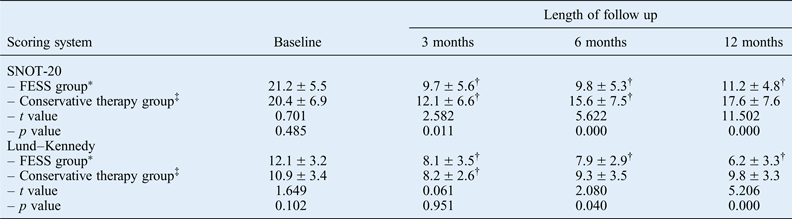
The Lund–Kennedy endoscopic scale and Sino-Nasal Outcome Test 20 QoL questionnaire were completed for all patients during the initial assessment (baseline) and at each follow-up visit (3, 6 and 12 months post-treatment). Of the 232 patients, 214 completed the 12-month follow up. Table II summarises the average Lund–Kennedy and Sino-Nasal Outcome Test 20 scores for both groups before the initial treatment. No significant differences were noted between groups. However, the follow-up data showed dynamic changes in both sets of scores post-treatment.
Changes in endoscopic and SNOT-20 scores following treatment
Data represent mean scores ± standard deviation unless stated otherwise. *Group comprised patients who underwent FESS (n=152). †Compared with baseline, p < 0.05. ‡Group comprised patients treated with a combination of steroid nasal spray, low-dose macrolide antibiotics and saline irrigation for three months (n = 62). SNOT-20 = Sino-Nasal Outcome Test; FESS = functional endoscopic sinus surgery
Compared with initial scores, the Lund–Kennedy and Sino-Nasal Outcome Test 20 scores in the FESS group were significantly lower (i.e. signs and symptoms were improved) at 3, 6 and 12 months post-operation (p < 0.001, Table II). Both sets of scores were also significantly lower in the conservative therapy group at 3 months following medical treatment (p < 0.001), but not at 12 months (Table II, p > 0.05).
The Lund–Kennedy and Sino-Nasal Outcome Test 20 scores at 6 and 12 months post-treatment were significantly lower in the FESS group than in the conservative therapy group (Table II, p < 0.05). This finding indicates that FESS can significantly improve the QoL and endoscopic outcome in patients with chronic rhinosinusitis who fail to respond to medication.
With regard to changes in QoL, the Sino-Nasal Outcome Test 20 scores were slightly higher in the FESS group (p > 0.05) and significantly higher in the conservative therapy group (p < 0.05) at 6 and 12 months, when compared with the scores at 3 months post-treatment. These findings indicate that FESS has a longer period of efficacy for chronic rhinosinusitis patients unresponsive to medication, whereas medical therapy only has short-term efficacy.
When compared with initial scores, the Lund–Kennedy scores slightly decreased (p > 0.05, Table II) and the Sino-Nasal Outcome Test 20 scores significantly decreased (p < 0.05) in the conservative therapy group at six months, indicating disparity between the subjective and objective measures.
Chronic rhinosinusitis with or without polyps
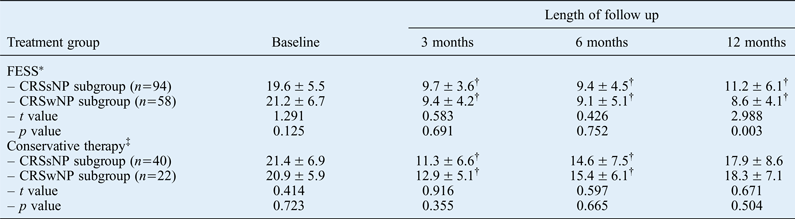
Table III shows the change in Sino-Nasal Outcome Test 20 scores for the chronic rhinosinusitis without nasal polyps and chronic rhinosinusitis with nasal polyps subgroups. No significant differences between subgroups were noted at baseline, or at three or six months post-treatment. However, these scores were significantly lower in the chronic rhinosinusitis with nasal polyps subgroup than in the chronic rhinosinusitis without nasal polyps subgroup 12 months after FESS (p < 0.05) (Table III).
Changes in SNOT-20 scores for CRS patients with or without polyps following treatment
Data represent mean scores ± standard deviation unless stated otherwise. *Group comprised patients who underwent FESS (n=152). †Compared with baseline, p < 0.05. ‡Group comprised patients treated with a combination of steroid nasal spray, low-dose macrolide antibiotics and saline irrigation for three months (n = 62). SNOT-20 = Sino-Nasal Outcome Test; FESS = functional endoscopic sinus surgery; CRSsNP = chronic rhinosinusitis without nasal polyps; CRSwNP = chronic rhinosinusitis with nasal polyps
Patient-reported symptom improvement
At the end of the follow-up period, all patients were asked to make subjective judgements regarding symptom improvement following their chosen treatment for chronic rhinosinusitis. The results showed that the percentages of ‘much improved’ and ‘improved’ responses were 56.6 per cent (86 out of 152) and 32.9 per cent (50 out of 152) in the FESS group, and 9.7 per cent (6 out of 62) and 41.9 per cent (26 out of 62) in the conservative therapy group, respectively. The percentage of ‘not improved’ responses was 10.5 per cent (16 out of 152) in the FESS group and 48.4 per cent (30 out of 62) in the conservative therapy group.
A Mann–Whitney U test was used for the comparative analysis. The results demonstrated that symptom improvement was significantly better in the surgical treatment group than in the medication group (z = −5.077, p < 0.001) (Table IV).
Patient-Rated symptom improvements
*Group comprised patients who underwent FESS (n=152). †Group comprised patients treated with a combination of steroid nasal spray, low-dose macrolide antibiotics and saline irrigation for three months (n = 62). FESS = functional endoscopic sinus surgery
Discussion
It is known that medication is effective for chronic rhinosinusitis. Systemic reviews have demonstrated that systemic corticosteroid use improves subjective and objective outcomes for chronic rhinosinusitis patients with or without nasal polyps.Reference Lal and Hwang7–Reference Lal, Scianna and Stankiewicz9 Many studies have demonstrated the significant benefits of topical steroids in treating symptoms, reducing polyp size and improving nasal airflow in chronic rhinosinusitis patients. The overall response rate of long-term, low-dose macrolide treatment has been reported as between 44 and 67 per cent, compared with a 22–28 per cent response rate in placebo groups.Reference Wallwork, Coman, Mackay-Sim, Greiff and Cervin10, Reference Videler, Badia, Harvey, Gane, Georgalas and van der Meulen11 Our data showed 56.6 per cent improvement in QoL for chronic rhinosinusitis patients previously unresponsive to medical treatments who were retreated using regular medical therapy. This therapy consisted of steroid nasal spray, macrolides and saline irrigation. Chronic rhinosinusitis patients without nasal polyps had similar outcomes to those with nasal polyps. These results are consistent with the above reports. This means that medical management is still a good choice for controlling the symptoms of chronic rhinosinusitis with or without nasal polyps, even if patients with chronic rhinosinusitis express dissatisfaction with medical treatments. Oral steroids were not used in this study because the Chinese patients were especially worried about the side effects of steroid use. In addition, steroids were not approved by the Institutional Ethical Committee.
Although FESS has been available as a chronic rhinosinusitis treatment for more than 30 years, the efficacy of FESS is still controversial. Data from three randomised, controlled trials of chronic rhinosinusitis treatment demonstrated no differences in cure rate or total symptom scores between the medication group and the FESS group.Reference Khalil and Nunez12 However, a prospective study of sinus surgery involving 3128 patients with chronic rhinosinusitis demonstrated higher patient satisfaction after surgery, and significant improvements in Sino-Nasal Outcome Test 20 scores after 3, 12 and 36 months.Reference Hopkins, Browne, Slack, Lund, Topham and Reeves13 Despite the number of case series, case–control and cohort studies that have been conducted, there is still no consensus regarding the efficacy of FESS.
In the present study, patients with chronic rhinosinusitis who were unresponsive to medical treatments were prospectively enrolled in the FESS group and conservative therapy group, and patients were assessed at follow-up visits 3, 6 and 12 months post-treatment. The Sino-Nasal Outcome Test 20 scores significantly improved in those who underwent FESS, compared with patients treated with steroid nasal spray, oral macrolide antibiotics and saline irrigation for three months. This indicates that FESS is more effective for patients in whom previous medical treatments have failed. Interestingly, Sino-Nasal Outcome Test 20 scores were significantly lower in chronic rhinosinusitis patients with nasal polyps than in those without nasal polyps at 12 months post-FESS. The long-term efficacy of this treatment needs to be confirmed in future studies.
Clinically, the chronic rhinosinusitis patients were concerned most about their subjectively experienced symptoms and QoL. Some patients were diagnosed with nasal polyps without any chronic sinusitis symptoms, and their QoL was not affected. In contrast, some patients had the typical symptoms of chronic rhinosinusitis, such as frontal pain, but radiological and endoscopic examination findings were negative. Our data demonstrated that, compared with initial scores, Lund–Kennedy endoscopy scores only slightly decreased and the Sino-Nasal Outcome Test 20 symptom scores significantly decreased in the conservative therapy group at six months (Table II). These findings indicate that the changes in Sino-Nasal Outcome Test 20 scores were not always consistent with those in Lund–Kennedy scores. Therefore, measurements of symptoms and QoL could be more important than radiological and endoscopic evaluations for assessing treatment efficacy.
Patient-reported outcome measures are increasingly being used to assess the overall efficacy of various chronic rhinosinusitis interventions.Reference Fokkens, Lund, Mullol, Bachert, Alobid and Baroody2 These measures include several validated questionnaires, such as the Sino-Nasal Outcome Test 20 and Short Form 36 (‘SF-36’) questionnaires, but in some cases a visual analogue scale or a grading system can be used. We developed a grading system that asked patients to report the overall improvement in their symptoms at the end of the follow-up period.Reference Tan, Ma, Li, Li and Wang6 The percentages for the responses ‘much improved’ and ‘improved’ were 56.6 per cent and 32.9 per cent in chronic rhinosinusitis patients who underwent FESS, and 9.7 per cent and 41.9 per cent in those retreated with medical therapy, respectively. This clearly indicates that the efficacy of FESS was better than that of medical treatments in chronic rhinosinusitis patients who were dissatisfied with previous medical treatments.
• This study investigated the efficacy of functional endoscopic sinus surgery versus conservative therapy in chronic rhinosinusitis patients previously unresponsive to medical treatment
• The Lund–Kennedy endoscopic scoring system and Sino-Nasal Outcome Test 20 quality of life questionnaire were utilised, along with patient reports of symptom improvement
• The efficacy of medical therapy for controlling symptoms was short-term only
• Functional endoscopic sinus surgery had better efficacy over a longer period
One limitation of this study is that patients were permitted to choose which therapy they received and, thus, group assignment was not randomised. Nevertheless, the results of this study suggest that FESS is more effective in chronic rhinosinusitis patients in whom medical management has previously failed.
Conclusion
These findings suggest that FESS has better efficacy over a longer period for patients in whom previous medical therapy has failed; however, medical management is still an acceptable choice for controlling chronic rhinosinusitis symptoms over a short-term period.
Acknowledgements
We would like to thank Prof Chen Zhaohuo (Department of Statistics, Central South University, China), for the statistical analysis of all the data. This study was supported by funds from The Hunan Scientific Plan, China (number S2013F1023).