




Introduction
Grazed herbage provides a highly nutritious, low-cost protein and energy supply for ruminants in temperate regions (Dillon et al., Reference Dillon, Roche, Shalloo and Horan2005), while converting a human inedible feed source (pasture) into a human edible form, particularly protein based sources in the form of meat and milk (Hennessy et al., Reference Hennessy, Delaby, Van Den Pol-Van Dasselaar and Shalloo2020). Pasture-based systems have been reported to pose lower risks for animal health issues such as subclinical and clinical mastitis, metritis and mortality compared to confinement-based systems (Mee and Boyle, Reference Mee and Boyle2020). Cows at pasture still face some environmental risks including heat stress and wet conditions (Daros et al., Reference Daros, Weary and Von Keyserlingk2022). In contrast, cows housed indoors often face reduced space allowance per animal, leading to social stress related to access to resources such as feed (Burow et al., Reference Burow, Rousing, Thomsen, Otten and Sørensen2013). However, in general across Europe, the proportion of grazed pasture within dairy production systems is declining as production systems intensify (van den Pol et al., Reference Van Den Pol, Vellinga, Johansen and Kennedy2005; Van den Pol-van Dasselaar et al., Reference Van Den Pol-Van Dasselaar, Becker, Botana, Hennessy and Peratoner2018).
With the abolition of milk quotas in 2015, dairy farms across the EU were given the opportunity to grow their dairy herds (Groeneveld et al., Reference Groeneveld, Peerlings, Bakker and Heijman2016; Klopčič et al., Reference Klopčič, Kuipers, Malak-Rawlikowska, Stalgiene, Ule and Erjavec2019). However, many EU member states saw dairy herd sizes decline due to lower milk prices (Läpple et al., Reference Läpple, Carter and Buckley2022). Two European countries that have intensified their production systems with alternative strategies are Ireland and the Netherlands. The Netherlands focused on increasing milk production through purchased inputs (Van den Pol et al., Reference Van den Pol, De Vliegher, Hennessy, Isselstein and Peyraud2015), while Ireland focused on increasing milk production through a grazing pasture-based system (Läpple and Sirr, Reference Läpple and Sirr2019), both expansion strategies required capital investment to accommodate increased animal numbers. The gross investment in dairy farms in the Netherlands is four times higher than that of Irish dairy farms. This is mainly due to the implementation of intensive pasture-based systems in Ireland, which require lower capital investment to expand, where cows spend up to nine months of the year grazing pasture (Läpple et al., Reference Läpple, Hennessy and O’Donovan2012). Nonetheless, in pasture-based systems, capital expenditure is still required, particularly for investing in grazing infrastructure (fencing, farm roadways and a water supply) (Clarke, Reference Clarke2016) to optimise the utilisation of the grazing area (Roche et al., Reference Roche, Berry, Bryant, Burke, Butler, Dillon, Donaghy, Horan, MacDonald and MacMillan2017a; Goliński et al., Reference Goliński, Sobolewska, Stefańska and Golińska2022; Maher et al., Reference Maher, Egan, Murphy and Tuohy2023a).
Increasing annual pasture utilised (t DM/ha) is critical in pasture-based systems, as in temperate regions grazing pasture is the most cost-effective feed source (Finneran et al., Reference Finneran, Crosson, O’Kiely, Shalloo, Forristal and Wallace2012; Peyraud and Delagarde, Reference Peyraud and Delagarde2013; Hennessy et al., Reference Hennessy, Delaby, Van Den Pol-Van Dasselaar and Shalloo2020). Grazing infrastructure has evolved over time without an in-depth review of developments in this area. Previous studies have assessed animal performance from varying herbage allowances (HA) (McEvoy et al., Reference McEvoy, O’Donovan, Kennedy, Murphy, Delaby and Boland2009; Curran et al., Reference Curran, Delaby, Kennedy, Murphy, Boland and O’Donovan2010; Pollock et al., Reference Pollock, Gordon, Huson and McConnell2020). However, these studies did not account for impacts of grazing severity on regrowth potential of the sward (Donaghy and Fulkerson, Reference Donaghy and Fulkerson1998) or the reality that pasture allocation on commercial farms are dictated largely by the size of the paddocks on those farms which can be limited by farm configuration (Maher et al., Reference Maher, Egan, Murphy and Tuohy2023a). While roadway networks have developed to better connect all paddocks on the grazing platform to the milking parlour (Maher et al., Reference Maher, Egan, Murphy and Tuohy2023a), there is yet to be a review of the development of these roadway networks for the efficient movement of animals, or a review of the factors which impact the time taken to move the dairy herd on farm roadways.
Farm roadways on commercial farms require constant maintenance to reduce any potential incidents of lameness within the dairy herd (Chesterton et al., Reference Chesterton, Pfeiffer, Morris and Tanner1989). However, there has only been a limited review of factors that affect roadway surface condition on commercial farms. This is critical for developing guidelines for future roadway networks that are suitable for animal movement.
This review aims to investigate grazing management strategies in pastoral dairy systems, the role of grazing infrastructure on commercial dairy farms and to identify areas for future research. The main objective of this review is to provide 1) An assessment of grassland management techniques that ensure adequate grazing conditions to optimise animal pasture intake without hindering sward quality or plant regrowth potential for commercial dairy farms and 2) a review of the impact that both walking distance and farm roadway quality have on the movement of the dairy herd on farm roadways.
Grassland management
Rotational grazing systems
In intensive rotationally managed pasture-based systems, return on investment of grazing infrastructure can only be established with increased stocking rate (SR) (McMeekan and Walshe, Reference McMeekan and Walshe1963; Macdonald et al, Reference Macdonald, Beca, Penno, Lancaster and Roche2011; McCarthy et al., Reference McCarthy, Pierce, Delaby, Brennan, Fleming and Horan2013). The SR dictates the area of grassland available per cow, over a period of time (Allen et al., Reference Allen, Batello, Berretta, Hodgson, Kothmann, Li, Mcivor, Milne, Morris, Peeters, Sanderson, Forage and Committee2011). Challenges still remain with adopting rotational grazing across parts of the world. Including capital expenditure on grazing infrastructure, labour requirements and water source constraints (Hyland et al., Reference Hyland, Heanue, McKillop and Micha2018a; Wang et al., Reference Wang, Jin, Kreuter, Feng, Hennessy, Teague and Che2020; Jordon et al., Reference Jordon, Winter and Petrokofsky2023).
Requirement for grazing infrastructure on pastoral farms
Optimal grazing infrastructure is required to efficiently carry a higher SR on commercial grassland farms to increase output per Ha. Grazing infrastructure is a term that encompasses all materials required for pasture-based farming, categorised into two main sections: pasture allocation frequency (PAF) (through optimally sized paddocks to meet herd demands (Pollock et al., Reference Pollock, Gordon, Huson and McConnell2020) and adequate roadway networks (Maher et al., Reference Maher, Egan, Murphy and Tuohy2023a; Maher et al., Reference Maher, Murphy, Egan and Tuohy2023b). Herbage allowance is a term to describe the kg of dry matter (DM) of pasture allocated to an animal over a given time period (McEvoy et al., Reference McEvoy, O’Donovan, Kennedy, Murphy, Delaby and Boland2009). In pasture-based dairy farms, where rotational grazing is practiced, HA for a herd is defined by the size of the grazing paddocks on the farm (Pollock et al., Reference Pollock, Gordon, Huson and McConnell2020; Maher et al., Reference Maher, Egan, Murphy and Tuohy2023a). The herd is retained within these paddocks using electrified fence wire, which sends out an aversive stimuli where animals come into contact with the wire (Markus et al., Reference Markus, Bailey and Jensen2014). Pasture allocation frequency defines how often the animals are allocated fresh pasture (Pollock et al., Reference Pollock, Gordon, Huson and McConnell2020). This is generally split into three periods of time on Irish farms, where one allocation is defined as a 12-hour allocation, the time between successive milkings. While two allocations represents a 24-hour period and three allocations represents a 36-hour period spent in an individual paddock (Fallon et al., Reference Fallon, Tuohy and Maher2023), where the HA per cow is equal to a peak daily dry matter intake (DMI) of 17.7 kg DM/cow (Walsh et al., Reference Walsh, Delaby, Kennedy, Galvin, McKay and Egan2024). Increasing the grazing time of a paddock over 36 hours can impact the regrowth potential of the grazed plant (Fulkerson and Slack, Reference Fulkerson and Slack1995). Pollock et al. (Reference Pollock, Gordon, Huson and McConnell2020) reported where grazing allocations were reduced to 12-hour allocations per paddock, milk production reduced when compared to 24- or 36-hour allocations per paddock where low post grazing sward heights (PoGSH) of 4 cm were achieved (Table 1).
Review of intensive rotational grassland management practices
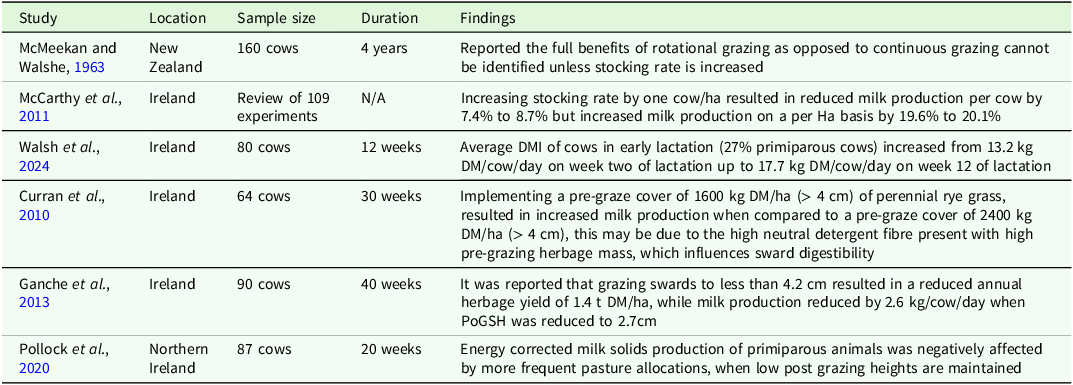
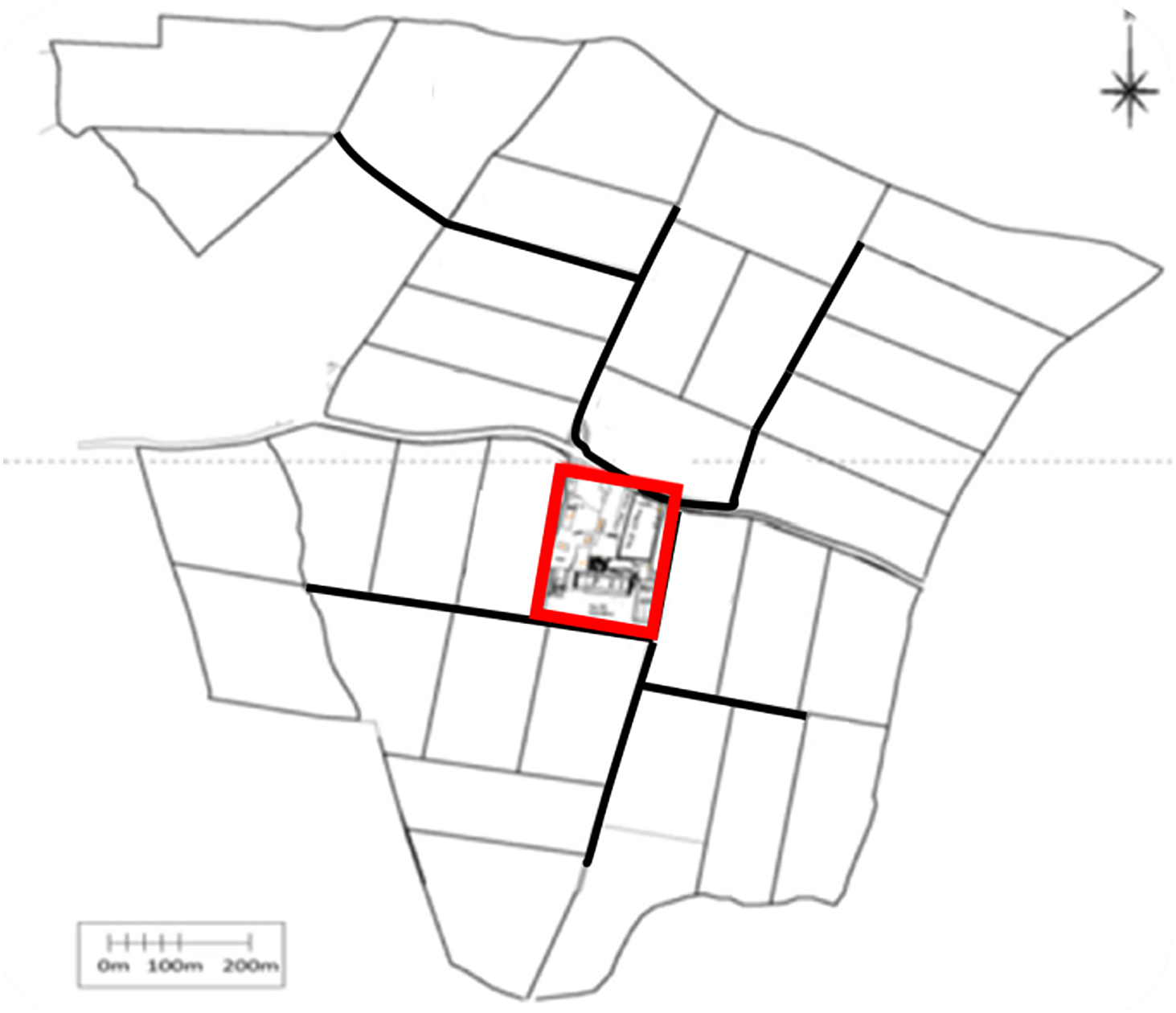
Roadway networks on dairy farms are a key tool for moving animals to grazing paddocks to access fresh pasture, roadway networks enable access to the milking shed (Figure 1) (Roche et al., Reference Roche, Washburn, Berry, Donaghy and Horan2017b; Fenton et al., Reference Fenton, Tuohy, Daly, Moloney, Rice and Murnane2021; Maher et al., Reference Maher, Egan, Murphy and Tuohy2023a). Sufficient roadway networks are essential to achieving a greater number of grazing days per year, through increasing accessibility to pasture in during inclement conditions (Undersander et al., Reference Undersander, Albert, Cosgrove, Johnson and Peterson2002; Clarke, Reference Clarke2016). Achieving grazing for even for two short periods (3–4.5 hours) per day resulted in no difference in milk production relative to a herd at pasture full time during unfavourable climatic conditions for grazing (Kennedy et al., Reference Kennedy, McEvoy, Murphy and O’Donovan2009). This short-term strategy during wet conditions reduces poaching damage while maintaining pasture in the diet of the animal. Hanrahan et al. (Reference Hanrahan, Tuohy, Mchugh, O’Loughlin, Moran, Dillon, Breen, Wallace and Shalloo2019) reported that farms on heavy soils can achieve high net profit per kg of milk solids sold, through the adoption of grassland management practices (Hanrahan et al., Reference Hanrahan, Geoghegan, O’Donovan, Griffith, Ruelle, Wallace and Shalloo2017) and the implementation of adequate drainage and optimal grazing infrastructure with multiple access points to grazing paddocks to allow access to all areas of the farm are considered essential for grazing in heavy soils. Fenger et al. (Reference Fenger, Casey, Holden and Humphreys2022) reported that increasing time at pasture in suboptimal grazing conditions increased soil surface deformation; however, it did not affect annual pasture production (DM/ha); however, there was an increase in milk solids production per cow (due to increased protein concentration of the milk). It has been reported, where excessive treading damage occurs, it can negatively impact on DM yield per ha by up to 30% (Menneer et al., Reference Menneer, Ledgard, Mclay and Silvester2005; Tuñon et al., Reference Tuñon, O’Donovan, Lopez Villalobos, Hennessy, Kemp and Kennedy2014), increase bulk density of the soil and diminish proportions of large (air-filled) soil pores (Phelan et al., Reference Phelan, Keogh, Casey, Necpalova and Humphreys2013a; Herbin et al., Reference Herbin, Hennessy, Richards, Piwowarczyk, Murphy and Holden2011).
A layout of a pasture based dairy farm. An integrated farm roadway network and the farmyard location within the grazing platform. Red box: farmyard location. Figure sourced from Maher et al. (Reference Maher, Egan, Murphy and Tuohy2023a).
Despite these potential challenges with grazing in suboptimal grazing conditions, it is still recommended where possible, to allow dairy cows access to pasture. Due to the potential increase in net profit of €1.85 per cow/day for every additional day at pasture achieved (Hanrahan et al., Reference Hanrahan, McHugh, Hennessy, Moran, Kearney, Wallace and Shalloo2018). A study by Hyland et al. (Reference Hyland, Heanue, McKillop and Micha2018b) reported that grazing management practices as a major issue to the implementation of the spring rotation planer on dairy farms, with farmers not creating sub-divisions of paddocks for early spring grazing.
Recent work carried out by Teagasc on dairy farms classified as part of the ‘Teagasc Heavy Soils Programme’ has highlighted strategies to improve accessibility in suboptimal conditions (Teagasc, 2021). Spur roadways were identified as a key tool to access areas of pasture from farm roadways while reducing treading damage to the paddock. This involves the creation of narrow roadways (1–2 m wide) to allow the herd to access the furthest points of grazing paddocks without causing damage to areas already grazed. It has also been recommended that the furthest point from a roadway to the back of a paddock is no more than 250 m on dry land and 50–100 m on heavier soil types (Teagasc, 2021). Adding additional entry/exit points to paddocks reduces treading damage of a single entry/exit point which deteriorates the quality of the surface. This has been associated with increased lameness on pasture-based farms (Browne et al., Reference Browne, Hudson, Crossley, Sugrue, Kennedy, Huxley and Conneely2022a).
Maher et al. (Reference Maher, Egan, Murphy and Tuohy2023a) reported that the milking parlour location within the grazing platform was the most critical factor affecting the distance walked between pasture and the milking parlour, agreeing with previous work by Tucker et al. (Reference Tucker, Verkerk, Small, Tarbottom and Webster2005). Figure 1 displays the typical layout of a modern pasture-based rotationally grazed dairy farm (Maher et al., Reference Maher, Egan, Murphy and Tuohy2023a). These systems do not require high capital expenditure when compared to confinement systems of similar herd sizes (Roche et al., Reference Roche, Washburn, Berry, Donaghy and Horan2017b).
Impact of grazing strategies on animal and farm performance
Herbage allowance
Herbage allowance is controlled by the positioning of electric fences (Roche et al., Reference Roche, Berry, Bryant, Burke, Butler, Dillon, Donaghy, Horan, MacDonald and MacMillan2017a), which are in fixed positions on commercial farms (Maher et al., Reference Maher, Egan, Murphy and Tuohy2023a) or by virtual fences (McSweeney et al., Reference McSweeney, O’Brien, Coughlan, Férard, Ivanov, Halton and Umstatter2020; Colusso et al., Reference Colusso, Clark, Green and Lomax2021; Goliński et al., Reference Goliński, Sobolewska, Stefańska and Golińska2022). Increasing HA through larger paddock sizes or increased pre-grazing herbage mass will result in an increase in DMI. However, at very high pre-grazing herbage mass (PGHM) (5,000 kg DM/ha), DMI may decrease due to a greater proportion of pseudostem per kg of DM available compared to lower PGHM (2,200 kg DM/ha) (Muñoz et al., Reference Muñoz, Letelier, Ungerfeld, Morales, Hube and Pérez-Prieto2016). Increasing HA by 1 kg of DM/cow/day increased milk production by 1.01 kg/cow/day (Curran et al., Reference Curran, Delaby, Kennedy, Murphy, Boland and O’Donovan2010; Kennedy et al., Reference Kennedy, Curran, Mayes, McEvoy, Murphy and O’Donovan2011; Claffey et al., Reference Claffey, Delaby, Boland and Egan2020). These studies also observed a reduction in pasture utilisation with increased HA (P< 0.001). The reduction in pasture utilisation highlighted in these studies may significantly affect profitability on pasture-based dairy farms (Hanrahan et al., Reference Hanrahan, McHugh, Hennessy, Moran, Kearney, Wallace and Shalloo2018; Palma-Molina et al., Reference Palma-Molina, Hennessy, Dillon, Onakuse, Moran and Shalloo2023).
A study by Walsh et al. (Reference Walsh, Delaby, Kennedy, Galvin, McKay and Egan2024) reported a total DMI of 17.7 kg/cow/day, where HA was adjusted to maintain a PoGSH of 4 cm. Mayne et al. (Reference Mayne, Newberry, Woodcock and Wilkins1987) reported that low grazing pressure significantly reduced the organic matter digestibility of swards from mid-June onwards, while Lee et al. (Reference Lee, Donaghy and Roche2008) determined a low PoGSH of 4 cm ensured grass organic dry matter digestibility was higher than in swards that did not achieve a low post-grazing sward height (Macdonald et al., Reference Macdonald, Glassey, Kay and Wims2018). It is imperative in all pasture-based systems that HA for the purpose of increasing milk production per cow must be balanced with pasture utilisation to maintain profitability.
Pre-grazing herbage mass
Adjusting the PGHM of the pasture offered is one such strategy that may be deployed to adjust HA per livestock unit (LU) in a rotational grazing system with fixed paddock sizes (McEvoy et al., Reference McEvoy, O’Donovan, Kennedy, Murphy, Delaby and Boland2009; Fernández et al., Reference Fernández, O’Donovan, Curran and Rodríguez2011; Doyle et al., Reference Doyle, McGee, Moloney, Kelly and O’Riordan2023). Herbage mass significantly affects pasture digestibility as herbage mass, sward structure and density and pasture organic matter digestibility are all interrelated (Stakelum and Dillon, Reference Stakelum and Dillon2004). Pre-grazing herbage mass has been described as a major determinant of pasture DMI (Combellas and Hodgson, Reference Combellas and Hodgson1979). Both Curran et al. (Reference Curran, Delaby, Kennedy, Murphy, Boland and O’Donovan2010) and Tuñon et al. (Reference Tuñon, Lopez-Villalobos, Kemp, Kennedy, Hennessy and O’Donovan2011) reported cows grazing swards with a low PGHM had greater milk production compared to those grazing swards with a high PGHM, due to an increased leaf material proportion with lower PGHM (Wims et al., Reference Wims, Delaby, Boland and O’Donovan2014).
Wims et al. (Reference Wims, Delaby, Boland and O’Donovan2014) reported increased body condition score of cows grazing a PGHM of 1400 kg DM/ha (9.6 cm), compared to either 1150 kg DM/ha (8 cm) or 2000 kg DM/ha (12 cm). It is therefore recommended to keep the PGHM equal to 1400 kg DM/ha (9.6 cm) across the grazing season in rotational grazing systems (Wims et al., Reference Wims, Delaby, Boland and O’Donovan2014). While Doyle et al. (Reference Doyle, McGee, Moloney, Kelly and O’Riordan2023) reported an increase in live weight gain from pasture at a lower PGHM (1500 kg DM/ha (9.9 cm)), compared to a higher PGHM (2500 kg DM/ha (13.9 cm)) in rotationally grazed suckler beef systems.
Post grazing sward height
Previous studies have shown increasing grazing severity through higher SR leads to high nutritive value of the sward (Michell et al., Reference Michell, Fulkerson and Michell1987; Hoogendoorn et al., Reference Hoogendoorn, Holmes and Chu1992; Lee et al., Reference Lee, Donaghy and Roche2007) and increased annual DM production (Macdonald et al., Reference Macdonald, Penno, Lancaster and Roche2008; Phelan et al., Reference Phelan, Casey and Humphreys2013b). However, Ganche et al. (Reference Ganche, Delaby, O’Donovan, Boland, Galvin and Kennedy2013) and Donaghy and Fulkerson (Reference Donaghy and Fulkerson1998) observed a reduction in annual DM production as PoGSH decreased below 4.2 cm, due to reduced stem water-soluble carbohydrate content and extended regrowth periods (Table 1).
A reduction in milk production and DMI with increased grazing severity has also been widely reported (Le Du et al., Reference Le Du, Combellas, Hodgson and Baker1979; Mayne et al., Reference Mayne, Newberry, Woodcock and Wilkins1987; Ganche et al., Reference Ganche, Delaby, O’Donovan, Boland, Galvin and Kennedy2013; Menegazzi et al., Reference Menegazzi, Giles, Oborsky, Fast, Mattiauda, Genro and Chilibroste2021). The optimal PoGSH for intensively managed pasture-based dairy systems to balance animal DMI and sward utilisation is reported to be 4–5 cm (Ganche et al., Reference Ganche, Delaby, O’Donovan, Boland, Galvin and Kennedy2013; Wilkinson et al., Reference Wilkinson, Lee, Rivero and Chamberlain2020; Donaghy et al., Reference Donaghy, Bryant, Cranston, Egan, Griffiths, Kay, Pembleton and Tozer2021). It is imperative that this PoGSH is achieved within a short period of time following the first allocation of new pasture to the herd. This ensures the new tiller growths are not consumed where only a single leaf present, which can limit plant growth and increases the time taken to replenish water soluble concentrates (Donaghy and Fulkerson, Reference Donaghy and Fulkerson1998). Therefore, creating optimally sized paddocks for a dairy herd should allow for allocations that both provide optimal PGHM (1400 kg DM/ha, (9.6 cm)) (Wims et al,. Reference Wims, Delaby, Boland and O’Donovan2014)), with a HA per LU of 17.7 kg DM/LU (Walsh et al., Reference Walsh, Delaby, Kennedy, Galvin, McKay and Egan2024) and ensure target PoGSH (4 cm) is achieved to provide nutritious herbage at subsequent grazings.
Regrowth interval
Regrowth interval (or rotation length) refers to the number of days between successive grazings of the same paddock (Allen et al., Reference Allen, Batello, Berretta, Hodgson, Kothmann, Li, Mcivor, Milne, Morris, Peeters, Sanderson, Forage and Committee2011). Fulkerson and Slack (Reference Fulkerson and Slack1995) highlighted that defoliating perennial ryegrass plants at the one-leaf stage, as opposed to three fully expanded leaves, can negatively impact the replenishment of water-soluble carbohydrates in the stubble of the plant (14 vs 364 mg water-soluble carbohydrates) and the tillering capability of the plant. Fulkerson and Donaghy (Reference Fulkerson and Donaghy2001) reported that water-soluble carbohydrates replenishment only occurs in the plant when the third leaf appears on the plant, after this point the first leaf beings to senescence and herbage nutritive value declines. The ryegrass plant follows a sigmodal growth curve Brougham (Reference Brougham1955), with the three leaf stage closely aligned with the maximum growth potential of the plant (Chapman et al., Reference Chapman, Tharmaraj, Agnusdei and Hill2012). Failure to allow the plant to build up energy reserves through frequent defoliation at the one leaf stage increases plant mortality. In one study, 70% of plants died when perennial ryegrass was defoliated at a height of 2 cm, 3 days and 6 days after initial defoliation (Fulkerson, Reference Fulkerson1994).
The creation of individual paddocks on commercial farms allows for plants within that paddock to rebuild water-soluble carbohydrate reserves before the next grazing. The division of a farm into optimally sized paddocks for grazings (Maher et al., Reference Maher, Egan, Murphy and Tuohy2023a) allows the farmer to control the rotation length to prevent redefoliation of perennial ryegrass plant, as re-defoliation 72 hours after initial defoliation can impact regrowth potential of the plant by 55% (Fulkerson, Reference Fulkerson1994). While controlling rotation length allows the plant to achieve the optimal PGHM with the use of supplementary feed where pasture growth is below the demand of the herd (Claffey et al., Reference Claffey, Delaby, Galvin, Boland and Egan2019).
Effect of frequency of feed delivery
The impact of feed delivery frequency has been a subject of study in both confinement and pasture-based systems. Farmers aim to enhance DMI and milk production in the dairy herd, emphasizing the importance of efficient feed utilisation. In confinement systems, this is dictated by the frequency with which the operator introduces fresh feed at the feed barrier. In contrast, pasture-based systems rely on factors such as the movement of a strip wire (restricting pasture access) or the herd’s transition to a new paddock to regulate feed availability.
On commercial pasture-based dairy farms, the size of paddocks is significant as it determines the number of grazings that can be accomplished in each paddock between milkings, as reported by Maher et al. (Reference Maher, Egan, Murphy and Tuohy2023a). This practice is used to create short-term variations in pasture availability and inter animal competition for resources, potentially impacting grazing behaviour and herbage DMI (Pollock et al., Reference Pollock, Gordon, Huson and McConnell2020).
Benchaar and Hassanat (Reference Benchaar and Hassanat2020) reported no effect on DMI or milk production with increasing feeding rate above once per day in confinement systems. While another study documented animals in confinement systems became restless and had a decreased lying time with increased feeds per day (Mäntysaari et al., Reference Mäntysaari, Khalili and Sariola2006). When feeding frequency was reduced to alternative days, Phillips and Rind (Reference Phillips and Rind2002) reported that milk production increased and there was less aggression shown between animals, indicating a more relaxed environment.
Pasture-based studies have also assessed increasing allocation above once per day to improve output per cow. Allocations on commercial pasture-based farms are routinely allocated every 12, 24 or 36 hours (Pollock et al., Reference Pollock, Gordon, Huson and McConnell2020; Maher et al., Reference Maher, Egan, Murphy and Tuohy2023a). Both Dalley et al. (Reference Dalley, Roche, Moate and Grainger2001) and Granzin (Reference Granzin2003) observed no improvement in milk production on pasture-based systems when feeding allocation was increased above once per day. Verdon et al. (Reference Verdon, Rawnsley, Raedts and Freeman2018) reported a reduction in fat and protein corrected milk (–0.9 kg cow–1 day–1) where fresh allocations per day increased. Importantly neither study by Dalley et al. (Reference Dalley, Roche, Moate and Grainger2001) nor Verdon et al. (Reference Verdon, Rawnsley, Raedts and Freeman2018) included primiparous animals. Pollock et al. (Reference Pollock, Gordon, Huson and McConnell2020) saw a reduction in milk solids production in primiparous animals of between 5% and 8% when PAF was increased from every 36 hours to every 12 hours. An interaction between PAF and milk energy output was observed in primiparous animals, as reported by Pollock et al. (Reference Pollock, Gordon, Huson and McConnell2020). This phenomenon could be attributed to the broader distribution of daily grazing activity associated with 36-hour allocations in contrast to those on 12-hour allocations. This variance is thought to arise from decreased competition for available feeds, especially considering the subordinate classification of primiparous animals within the herd (Pollock et al., Reference Pollock, Gordon, Huson and McConnell2022).
It is reported that on farms with large herd sizes (≤ 250 cows), 46% of paddocks available for grazing are only suitable for 12-hour allocations (Maher et al., Reference Maher, Egan, Murphy and Tuohy2023a). The implementation of 12-hour allocations may restrict pasture DMI, with increased grazing bite frequency where HA is restricted due to inaccurate allocations (Werner et al., Reference Werner, Umstatter, Kennedy, Grant, Leso, Geoghegan, Shalloo, Schick and O’Brien2019), placing greater competition on primiparous animals for feed resource in short supply. In contrast to 36-hour allocations, where animals may only have to compete for herbage during the last grazing per paddock (Pollock et al., Reference Pollock, Gordon, Huson and McConnell2022). These studies may help to alleviate issues on commercial farms with regard suboptimal PAF (Maher et al., Reference Maher, Egan, Murphy and Tuohy2023a) and improve performance of primiparous animals.
Social dominance among the grazing herd
Social dominance within the herd is positively correlated with age (r = 0.35–0.93, P < 0.05), body weight (r = 0.47–0.87, P < 0.01) (Schein and Fohrman, Reference Schein and Fohrman1955; Phillips and Rind (Reference Phillips and Rind2002) and milk production (Hussein et al., Reference Hussein, Al-Marashdeh, Bryant and Edwards2016), leaving primiparous animals classified as sub ordinate animals. Studies have assessed the benefit of separating primiparous animals from the rest of the herd (Krohn and Konggaard, Reference Krohn and Konggaard1979; Phelps and Drew, Reference Phelps and Drew1992), with Hussein (Reference Hussein2019) reporting lower body weight gain and DMI reducing by 0.99 kg DM/day due to competition from more dominant cows. There is limited practical value in these studies for pasture-based systems in countries with smaller herd sizes such as Ireland (C.S.O., 2020; ICBF, 2021) relative to countries such as Australia (Dairy Australia, 2023) or New Zealand (DairyNZ, Reference Dairy2023).
Multiparous animals can consume 34–50% greater feed compared to primiparous animals following fresh allocations of feed (Hart et al., Reference Hart, McBride, Duffield and Devries2014; Walsh et al., Reference Walsh, Delaby, Kennedy, Galvin, McKay and Egan2024). In pasture-based systems, this may result in dominant animals seizing the most favourable grazing sites at the expense of primiparous animals within the pasture (Pollock et al., Reference Pollock, Gordon, Huson and McConnell2022), particularly where HA is restricted to ensure optimal PoGSH. Stressful social interactions between dominant and submissive animals can generate conditions that impact milk production (Sottysiak and Nogalski, Reference Sottysiak and Nogalski2010) and DMI (Werner et al., Reference Werner, Umstatter, Kennedy, Grant, Leso, Geoghegan, Shalloo, Schick and O’Brien2019) in submissive animals.
Grazing time was significantly longer for primiparous animals relative to multiparous animals with 12-hour allocations, while for the 36-hour allocation there was a distinct difference with a shorter grazing for primiparous animals relative to multiparous animals (Pollock et al. Reference Pollock, Gordon, Huson and McConnell2022). The observed reduction in grazing time during 36-hour allocations may be attributed to diminished competition, facilitated by larger pasture quantities in the initial two allocations. This availability of ample pasture in the early allocations allows primiparous animals’ access to high-quality swards, with reduced competition for a resource in restricted supply.
Roadway infrastructure
Roadway infrastructure on commercial dairy farms
To access pasture and utilise it effectively, high-quality roadway infrastructure is required to allow animals to move efficiently from each paddock to the milking parlour and vice versa (Clarke, Reference Clarke2016; Roche et al., Reference Roche, Berry, Bryant, Burke, Butler, Dillon, Donaghy, Horan, MacDonald and MacMillan2017a). However, this may not always be the case, as often roadway networks are developed over time as new paddocks are included on the grazing platform. This can result in inefficient layouts on commercial farms, where new paddocks are added to the periphery of the grazing platform, causing cows to walk further than the projected distance for a given herd size (Maher et al., Reference Maher, Egan, Murphy and Tuohy2023a).
Walking distance on pasture-based dairy farms
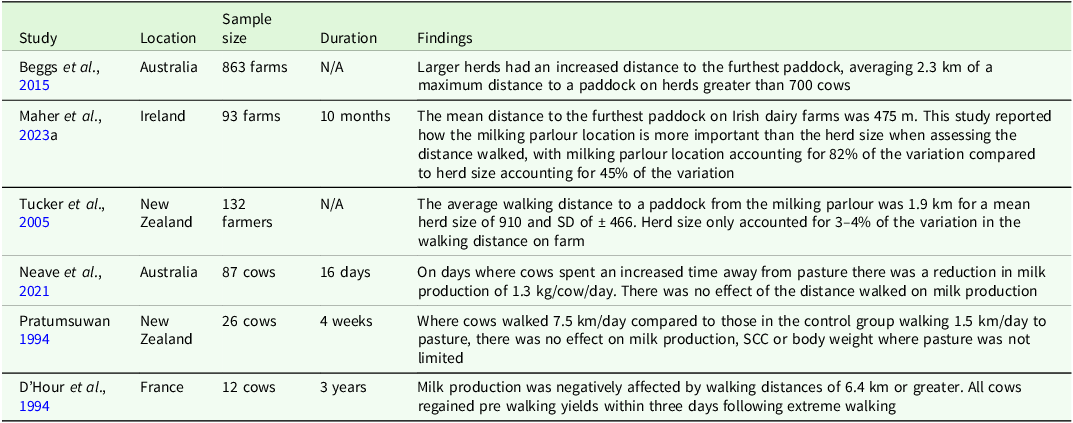
As farmers aim to achieve a long grazing season, increase pasture in the animals’ diet and improve profitability (Hanrahan et al., Reference Hanrahan, McHugh, Hennessy, Moran, Kearney, Wallace and Shalloo2018), there will likely be increased distance walked on farm roadways to and from pasture for milking (Hund et al., Reference Hund, Logroño, Ollhoff and Kofler2019). Although it is widely accepted that dairy cows may have to walk several kilometres to and from pasture daily (Beggs et al., Reference Beggs, Fisher, Jongman and Hemsworth2015; Maher et al., Reference Maher, Egan, Murphy and Tuohy2023a), there are very few metrics to quantify the distance dairy herds walk per year on commercial farms. Hall et al. (Reference Hall, Bryant, Kuhn-Sherlock and Edwards2023) reported steps taken per hour reduced when cows were milked either once per day or three times in two days compared to traditional two milkings per day. Interestingly, farm size (hectares farmed) is reported to account for 3–4 to 49% of the variation in walking distance, while farm shape, topography and location of milking parlour are key metrics that effect the distance walked (Tucker et al., Reference Tucker, Verkerk, Small, Tarbottom and Webster2005; Maher et al., Reference Maher, Egan, Murphy and Tuohy2023a). Furthermore, Maher et al. (Reference Maher, Egan, Murphy and Tuohy2023a) highlighted the maximum distance to a paddock to be a significant influencing factor on the total distance walked for the dairy herd on farm roadways (R2 = 0.64), while the mean distance provided the greatest insight to the distance walked yearly (Table 2).
Review of walking distance by dairy herds to pasture and impact on milk production
However, herd size still influenced the distance walked on roadways, with herds ≥ 250 cows walking 718 km per year on farm roadways, which was almost twice that of herds of less than 100 cows. Greater distance walked on roadways has previously been suggested as a risk factor for lameness in dairy cows (Hund et al., Reference Hund, Logroño, Ollhoff and Kofler2019).
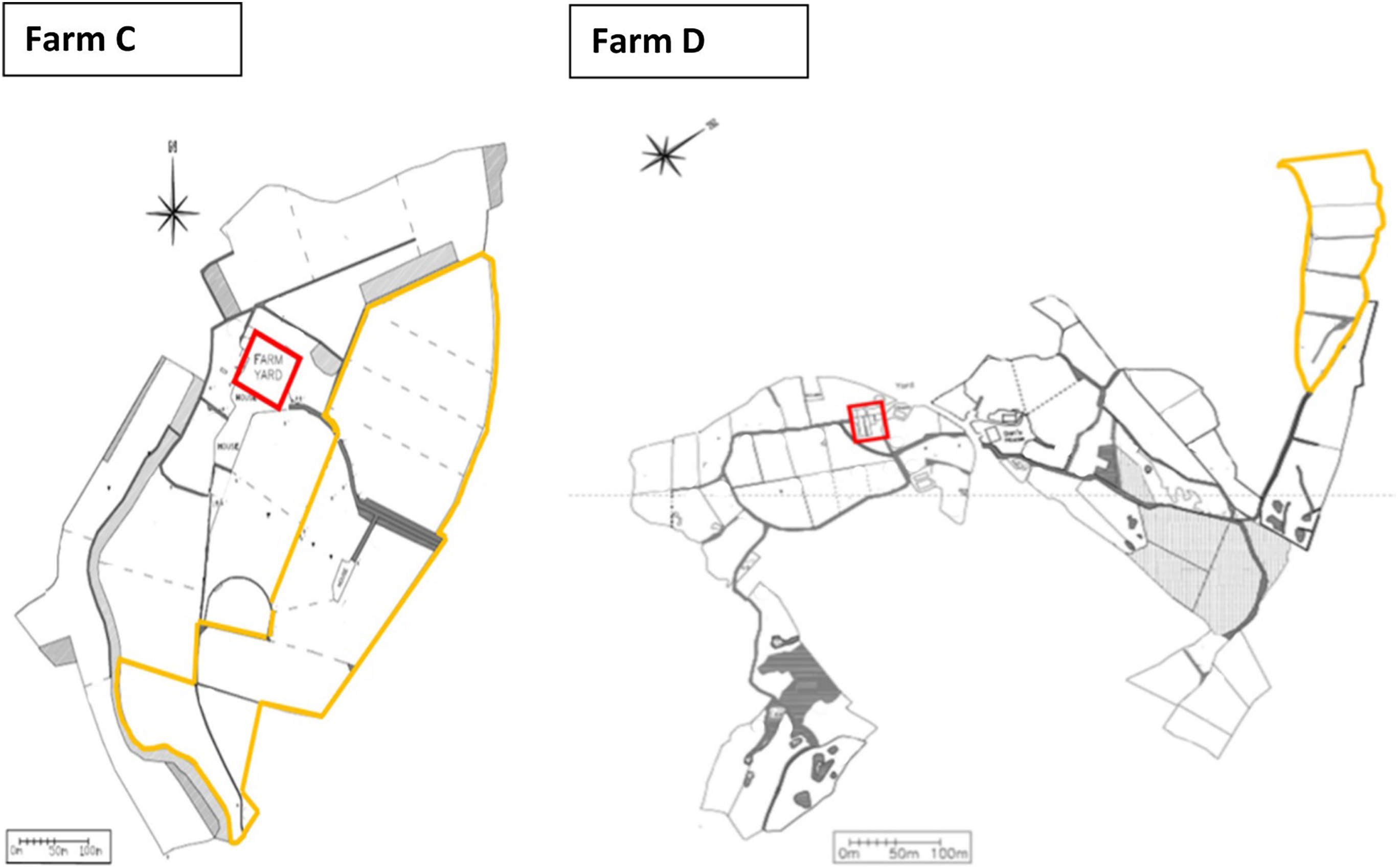
One factor often overlooked while reviewing the distance walked by the dairy herd on farms is the efficiency of the roadway infrastructure for the movement of the dairy herd. Where farms have expanded their herd sizes post milk quota abolition (Kelly et al., Reference Kelly, Shalloo, Wallace and Dillon2020), the efficiency of the roadway infrastructure for animal movement has significantly improved on some farms while remaining static on others. Maher et al. (Reference Maher, Egan, Murphy and Tuohy2023a) described how the location of additional grazing land accessed beside the grazing platform greatly affects the efficiency of the dairy herd movement on farm roadways. This is reported as the distance from a paddock to the milking parlour relative to the size of the grazing platform, this metric allows farms of various herd sizes to be compared again one another. In figure 2, Farm C reduced the relative mean distance from grazing paddocks to the milking parlour by 40 %, while Farm D only reduced the relative mean distance from grazing paddocks to the milking parlour by 0.34 %. It is advisable that future research utilises this metric for benchmarking farm roadway efficiency.
Farm maps displaying the farmyard location and new paddocks accessed within the grazing platform for Farm C and D. Red box: farmyard location within the grazing platform. Yellow box: new paddocks added to grazing platform (Open source). Figure sourced from Maher et al. (Reference Maher, Egan, Murphy and Tuohy2023a).
Effect of walking distance on milk production
Available literature has showed conflicting data regarding the effect of walking distance on milk production (Thomson and Barnes, Reference Thomson and Barnes1993; D’Hour et al., Reference D’Hour, Hauwuy, Coulon and Garel1994; Pratumsuwan, Reference Pratumsuwan1994; Coulon et al., Reference Coulon, Pradel, Cochard and Poutrel1998; Neave et al., Reference Neave, Edwards, Thoday, Saunders, Zobel and Webster2021) (Table 2).
Results from these studies have identified that only distances above 6.4 km/day caused reductions in milk production of 1.2–1.9 kg/cow/day, increasing to 2.5 kg/cow/day where walking increased to 9.6 km/cow/day, while the concentration of milk fat and milk protein both increased with greater distance walked. Interestingly, the difference in milk production was predicted to be 5.7 kg/cow/day due to lower energy supply and increased energy requirements. It is hypothesised that cows call on body reserves to limit this difference in milk production, as reported with higher nonesterified fatty acids following walking. There was also a significant increase in milk somatic cell count (115,000 cell/ml), for cows that experienced walking for 9.6 km/day compared to those that remained in the barn (Coulon et al., Reference Coulon, Pradel, Cochard and Poutrel1998). Some commercial herds may experience a reduction in milk yield due to excessive walking, with herds walking greater than the 6.4 km/day threshold outlined in this review (Beggs et al., Reference Beggs, Fisher, Jongman and Hemsworth2015; Maher et al., Reference Maher, Egan, Murphy and Tuohy2023a).
In contrast, some researchers highlighted that milk production was not reduced with increased walking distance. Pratumsuwan (Reference Pratumsuwan1994) saw no significant effect on milk production or the production of any constituents, where cows were grazed on the same pasture but a subgroup of the herd walked 7.5 km/day compared to 1.5 km/day for the control group. Although the distance walked was greater than the threshold of 6.4 km, there was no slope effect in the study by Pratumsuwan (Reference Pratumsuwan1994), which was reported to be one of the main factors influencing energy expenditure while walking (Ribeiro et al., Reference Ribeiro, Brockway and Webster1977).
Larger herd sizes may spend more time away from pasture due to longer milking times and longer walking times to the milking parlour from pasture (Beggs et al., Reference Beggs, Jongman, Hemsworth and Fisher2018). This longer time away from pasture has been associated with a reduction in lying time and milk production (– 0.3–1.3 kg/cow/day off pasture, P < 0.05) (Jung et al Reference Jung, Yngvesson and Jensen2002; Neave et al., Reference Neave, Edwards, Thoday, Saunders, Zobel and Webster2021; Beggs et al., Reference Beggs, Fisher, Jongman and Hemsworth2015). Lying time is an indicator of animal welfare with reduced lying time being a sign of inadequate time allocation for normal animal behaviour (Tucker et al., Reference Tucker, Verkerk, Small, Tarbottom and Webster2005). Relocating the milking parlour to a more central location on large farms may alleviate some of these potential issues (Maher et al., Reference Maher, Egan, Murphy and Tuohy2023a) or improvement of roadway surfaces to increase cow throughput (Maher et al., Reference Maher, Murphy, Egan and Tuohy2023b). Nonetheless, there are currently no data that may identify potential labour savings if these upgrades were carried out or indeed the potential cost of upgrading such roadway networks.
Energy cost of walking
Literature has reported the energy cost of walking cows above maintenance is 2.0 J NE1/kg body weight/m for horizontal movement and 26.0 – 28.0 J NE1/kg body weight/m for vertical movement (Ribeiro et al., Reference Ribeiro, Brockway and Webster1977). Metabolic cost increases linearly with speed of walking (R2 = 0.52) (Yousef, Reference Yousef1985; Lawrence and Stibbards, Reference Lawrence and Stibbards1990; Di Marco and Aello, Reference Di Marco and Aello1998). It has been reported every 1 km walked per day between pasture and the milking parlour requires an additional 1,882 J NE1/kg body weight/day, this is an additional 5% of maintenance requirements (NRC, 2001), equating to 2.15 MJ of NE1 for a 600 kg dairy cow walking the mean distance per day (1,902 m) from the herds studied by Maher et al. (Reference Maher, Egan, Murphy and Tuohy2023a). Neave et al. (Reference Neave, Edwards, Thoday, Saunders, Zobel and Webster2021) suggested that the increased DMI and decreased rumination time on days where cows walk further were a result of increased energy requirement. However, this additional energy demand is predicted to be only 0.14 kg DM per km walked (Rattray et al., Reference Rattray, Brooks and Nicol2007).
A topic that remains difficult to quantify the energy requirements of grazing dairy cows walking on hills due to variances in slope. It has been highlighted however that cows walking of vertical distance of 200 m required a 50% increase in maintenance requirements (NRC, 2001). While Brosh et al. (Reference Brosh, Henkin, Ungar, Dolev, Shabtay, Orlov, Yehuda and Aharoni2010) reported vertical walking to be eight times more energy intensive than horizontal walking in beef cows.
Options to reduce the energy demand associated with walking include reducing milking frequency from twice a day milking to once a day milking or three milkings in two days, which would reduce the distance walked per day (Hall et al., Reference Hall, Bryant, Kuhn-Sherlock and Edwards2023). Future research in this area should further investigate the effect varying slopes on roadways have on the energy expenditure of dairy cows walking between pasture and the milking parlour.
Effect of walking distance to pasture and herbage intake
Studies have described where walking distance increased to over 6 km/day there was no impact on herbage intake where pasture was not restricted (Pratumsuswan, Reference Pratumsuwan1994; Thomson and Barnes, Reference Thomson and Barnes1993; Matthewman, Reference Matthewman1989). However, Coulon and Pradel (Reference Coulon and Pradel1997) did experience a reduction in DMI (–1.1 kg DM/cow/day) where animals had to walk extreme distances of 12.8 km/day. This may be due to the significant increase in body temperature imposed by strenuous exercise and the animals’ efforts to decrease their heat load by reducing feed intake (Yousef, Reference Yousef1985). In a study be Neave et al. (Reference Neave, Edwards, Thoday, Saunders, Zobel and Webster2021), days where cows walked greater distances (up to 4 km) to pasture, grazing time increased by 14 minutes per cow/day. This may be due to the increased energy demands from animals walking (Ribeiro et al., Reference Ribeiro, Brockway and Webster1977, Kaufmann et al., Reference Kaufmann, Münger, Rérat, Junghans, Görs, Metges and Dohme-Meier2011). While Neave et al. (Reference Neave, Edwards, Thoday, Saunders, Zobel and Webster2021) also remarked that increase in grazing time is more than adequate to meet the additional energy demands (0.14 kg DM/km) for walking (Rattray et al., Reference Rattray, Brooks and Nicol2007).
Road surface quality
The primary objective of a roadway network is to enable efficient movement of the herd from pasture to the milking parlour and back to pasture after milking (Roche et al., Reference Roche, Berry, Bryant, Burke, Butler, Dillon, Donaghy, Horan, MacDonald and MacMillan2017a), dairy herds on pasture-based farms make up to 600 trips per year on farm roadways (Clarke, Reference Clarke2016). Farm roadways closer to the farmyard tend to be better developed, while those on the extremities are less developed (Maher et al., Reference Maher, Murphy, Egan and Tuohy2023b). As farms have expanded their herd sizes since milk quota abolition (45% increase between 2012 and 2022 (Dillon et al., Reference Dillon, Donnellan, Moran and Lennon2023)), a patch work of roadways has been developed on many farms to access additional land areas creating a series of different surfaces animals must travel across (Fenton et al., Reference Fenton, Tuohy, Daly, Moloney, Rice and Murnane2021). Stock movement can be hindered by a number of factors including uneven/damaged surfaces, potholes, build-up of grass at margins, loose stones and excessive dirt on roadways (Clarke, Reference Clarke2016). The evaluation of suitable surfaces for animal movement has been explored in the literature (Berry et al., Reference Berry, Stoddart and Broughan2008; Ranjbar et al., Reference Ranjbar, Rabiee, Gunn and House2016; Hund et al., Reference Hund, Logroño, Ollhoff and Kofler2019), assessing lameness on farms. While some studies assessed speed of movement on different surfaces (Maher et al., Reference Maher, Murphy, Egan and Tuohy2023b; Rushen and de Passillé, Reference Rushen and De Passillé2006; Chapinal et al., Reference Chapinal, De Passillé, Pastell, Hänninen, Munksgaard and Rushen2011; Buijs et al., Reference Buijs, Scoley and McConnell2019), where smoother surfaces had improved locomotion of cows. Many of these studies only assessed one cow or two cows walking at a time in a single file, there has only been one study to assess the impact of floor surface type on cow throughput at a herd scale (Maher et al., Reference Maher, Murphy, Egan and Tuohy2023b).
Impact on speed of movement of dairy animals
As herd size increases, the distance walked to pasture tends to increase (Beggs et al., Reference Beggs, Fisher, Jongman and Hemsworth2015; Maher et al., Reference Maher, Egan, Murphy and Tuohy2023a). There is evidence that the diverse roadway surfaces on which cows walk to and from pasture can affect the pace at which they move (Maher et al., Reference Maher, Murphy, Egan and Tuohy2023b). Telezhenko and Bergsten (Reference Telezhenko and Bergsten2005) reported a disparity in walking speeds of cows on different floor surfaces. Cows exhibited significantly higher speeds on solid concrete floors (1.08 m/s) in comparison to solid rubber floors (1.01 m/s; P < 0.05). Conversely studies by Flower et al. (Reference Flower, De Passillé, Weary, Sanderson and Rushen2007), Chapinal et al. (Reference Chapinal, De Passillé, Pastell, Hänninen, Munksgaard and Rushen2011) and Rushen and de Passillé (Reference Rushen and De Passillé2006) have reported that cows walked faster on softer surfaces as opposed to concrete, with walking speed increasing by 4–6%. This trend was consistently observed in a study by Buijs et al. (Reference Buijs, Scoley and McConnell2019), where artificial grass was placed over a stone roadway with a dust covering resulted in enhanced walking speeds.
Increasing the abrasiveness of the floor type has shown to increase stride length but in doing so, reduced the speed of walking, it is thought this increase in stride length is due to the animals’ attempt to limit their interaction with the uncomfortable floor type (Phillips and Morris, Reference Phillips and Morris2001). Furthermore, Maher et al. (Reference Maher, Murphy, Egan and Tuohy2023b) observed, in a herd of cows, that smoother surfaces contributed to increased cow throughput on farm roadways. This suggests that the type of flooring or surface material can significantly impact the walking behaviour and speed of cows, with implications for the overall efficiency and management of farm operations.
However, the benefits of upgrading surfaces to increase walking speed and reduce the total labour input to move the dairy herd have yet to be quantified. The study by Maher et al. (Reference Maher, Murphy, Egan and Tuohy2023b) did report the potential increase in cow throughput with improvements in roadway floor surface; however, it did not investigate labour savings for the movement of the herd to the milking parlour or indeed the costs required to carry out such upgrades. Previous technical literature has reported the cost of creating new roadways on farms but did not delve into the costs associated with upgrading infrastructure (Teagasc, 2021).
There has been very limited research assessing the impact roadway widths have on dairy herd movement, with the exception of a study by Maher et al. (Reference Maher, Murphy, Egan and Tuohy2023b), which has reported a strong correlation (R2 = 0.95) between roadway width and dairy herd movement (Maher et al., Reference Maher, Murphy, Egan and Tuohy2023b). Therefore, increasing roadway width may reduce the overall time taken to move the dairy herd to the milking parlour. However, the impact of wider roadways is hindered by poor quality roadway surfaces. It has been highlighted across Irish dairy farms that roadway widths are suboptimal for herd sizes present (Browne et al., Reference Browne, Hudson, Crossley, Sugrue, Kennedy, Huxley and Conneely2022b; Maher et al., Reference Maher, Murphy, Egan and Tuohy2023b).
Impact on animal lameness
Lameness is one of the most important animal welfare issues (Flower and Weary, Reference Flower and Weary2009; Crossley et al., Reference Crossley, Bokkers, Browne, Sugrue, Kennedy, De Boer and Conneely2021) and has been shown to affect walking speed (Alsaaod et al., Reference Alsaaod, Huber, Beer, Kohler, Schüpbach-Regula and Steiner2017). Lameness is an issue that is more associated with cows within confinement systems as opposed to pasture-based systems due to the softer surface material in the form of pasture (Olmos et al., Reference Olmos, Boyle, Hanlon, Patton, Murphy and Mee2009; Alsaaod et al., Reference Alsaaod, Huber, Beer, Kohler, Schüpbach-Regula and Steiner2017). While a lower animal stocking density at pasture and a reduced exposoure to manure-contaminated enviroments are also associated with lower proportion of lameness amongst animals at pasture (Roche et al., Reference Roche, Renaud, Saraceni, Kelton and DeVries2023). Despite this, the annual incidence of lameness on pasture-based systems was 19% (Ranjbar et al., Reference Ranjbar, Rabiee, Ingenhoff and House2020) and ranges from 5 to 45% (Harris et al., Reference Harris, Hibburt, Anderson, Younis, Fitspatrick, Dunn, Parsons and Mcbeath1988; Tranter and Morris, Reference Tranter and Morris1991; Browne et al., Reference Browne, Hudson, Crossley, Sugrue, Kennedy, Huxley and Conneely2022b), which is similar to that described in confinement systems (von Keyserlingk et al., Reference Von Keyserlingk, Barrientos, Ito, Galo and Weary2012; Adams et al., Reference Adams, Lombard, Fossler, Román-Muñiz and Kopral2017).
Some of the key causes of lameness on pasture-based farms are poor roadway surfaces, long walking distances to the milking parlour and poor herding skills (Arkins, Reference Arkins1981; Chesterton et al., Reference Chesterton, Pfeiffer, Morris and Tanner1989; Chesterton, Reference Chesterton2015; Ranjbar et al., Reference Ranjbar, Rabiee, Gunn and House2016; Hund et al., Reference Hund, Logroño, Ollhoff and Kofler2019). Chesterton (Reference Chesterton2011) reported the walking distance to and from pasture for milking directly affected the lameness of the herd due to excessive wear on the sole of the hoof. It was proposed that reducing milking to once per day as opposed to traditionally twice per day reduced lameness due to lower walking distance and reducing time spent on concrete. Similar findings were reported by Edwards et al. (Reference Edwards, McMillan, Bryant and Kuhn-Sherlock2022), whereby reducing milking frequency to three milking’s in two days reduced lameness in the herd. Interestingly, Chesterton (Reference Chesterton2011) suggested the use of a day and night paddock where cows were walking large distances to pasture allowing a shorter walk to a paddock at night. However, this practice may be of limited use if farmers choose their paddocks based on the amount of herbage available within each paddock (Pasturebase Ireland; Hanrahan et al., Reference Hanrahan, Geoghegan, O’Donovan, Griffith, Ruelle, Wallace and Shalloo2017), while this practice may also affect the milk production of first lactation animals (Pollock et al., Reference Pollock, Gordon, Huson and McConnell2020).
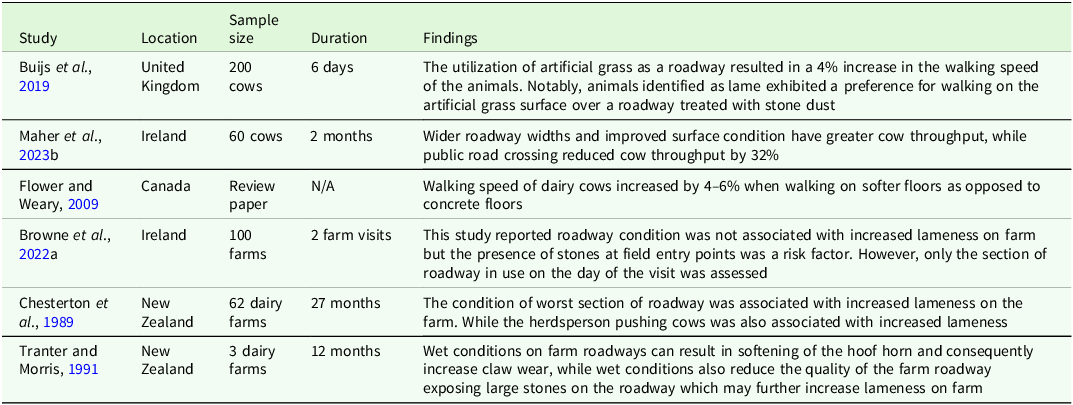
Increasing loose stone content of roadways is known to increase the incidence of lameness on pasture-based farms (Chesterton et al., Reference Chesterton, Pfeiffer, Morris and Tanner1989; Bran et al., Reference Bran, Daros, Von Keyserlingk, Leblanc and Hötzel2018). Chesterton et al. (Reference Chesterton, Pfeiffer, Morris and Tanner1989) also reported that the patience of the farmer herding the cows and poorer sections of farm roadways were associated with an increased risk of lameness on the farm. The presence of small stones on the roadway particularly where the roadway is a concrete surface was also a major cause of traumatic lameness on commercial farms (Chesterton, Reference Chesterton2011). Wet conditions on roadways can also lead to increased lameness on farms in France (Faye and Lescourret, Reference Faye and Lescourret1989) and New Zealand (Tranter and Morris, Reference Tranter and Morris1991) (Table 3). Wet conditions can also soften the hoof horn and consequently increase claw wear, while also increasing erosion of the roadway exposing stones and sharp, rocky material, creating an abrasive surface (Tranter and Morris, Reference Tranter and Morris1991; Browne et al., Reference Browne, Hudson, Crossley, Sugrue, Kennedy, Huxley and Conneely2022a). However, there have been other studies that have not associated lameness in dairy cows with roadway condition. O’Connor et al. (Reference O’Connor, Bokkers, De Boer, Hogeveen, Sayers, Byrne, Ruelle, Engel and Shalloo2020) and Browne et al. (Reference Browne, Hudson, Crossley, Sugrue, Kennedy, Huxley and Conneely2022a) reported roadway condition was not associated as a risk factor for lameness (Table 3), this may be due to the fact only 50 m of each roadway closest to the milking parlour was assessed, with the exception of the roadway in use on the day of the visit. However, the study by Browne et al. (Reference Browne, Hudson, Crossley, Sugrue, Kennedy, Huxley and Conneely2022a) did report loose stones in paddock entrances as a risk factor.
Review of the impact roadway surfaces have on animal movement and lameness within the herd
Roadways with increased traffic and repeated faecal depositions from the herd create a muddy appearance which were recorded as having a high contamination of Streptococcus uberis (mastitis causing pathogen) (Lopez-Benavides et al., Reference Lopez-Benavides, Williamson, Pullinger, Lacy-Hulbert, Cursons and Leigh2007) and may lead to increased SCC on commercial farms (O’Brien et al., Reference O’Brien, Berry, Kelly, Meaney and O’Callaghan2009). White et al. (Reference White, Sheffield, Washburn, King and Green2001) observed that the quantity of defecations was shown to be connected with the amount of time animals remained static in a certain location, with the largest densities seen around water troughs and farm roadways. Reducing congestion points on roadways through avoidance of bottlenecks was noted to be associated with improved roadway conditions for animal movement (Maher et al., Reference Maher, Murphy, Egan and Tuohy2023b, Fenton et al., Reference Fenton, Tuohy, Daly, Moloney, Rice and Murnane2021). Another potential strategy to remove faecal depositions or reduce muddy conditions on farm roadways is to improve water runoff, which will also allow faecal depositions on roadways to be washed onto adjoining paddocks. Maher et al. (Reference Maher, Murphy, Egan and Tuohy2023b) observed on commercial farms an improved roadway surface condition where water runoff into adjoining pasture could freely occur, indicating faecal material may have been washed off the road surface.
Soiled water on farm roadways
Rice et al. (Reference Rice, Daly, Tuohy, Murnane, Nag and Fenton2022) described farm roadways as a risk factor for nutrient loss, while Ledgard et al. (Reference Ledgard, Penno and Sprosen1999) demonstrated in New Zealand approximately 15% of nitrogen is deposited on farm roadways and the milking parlour. Farm roadways are also reported to have elevated concentration of phosphorous content present when compared to fresh stone roadway aggregates and surrounding fields (Fenton et al., Reference Fenton, Rice, Murnane, Tuohy and Daly2022). While roadways that are in frequent use (100 m from the farmyard) experience higher frequency of excreta depositions than those on the periphery on the farm (Monaghan and Smith, Reference Monaghan and Smith2012). This increased occurrence necessitates heightened attention to prevent runoff from these areas entering water courses. Efforts to manage and mitigate potential environmental impacts should be particularly focused on these more frequented roadways to ensure responsible agricultural practices and water quality preservation.
It is the case that roadway runoff is already being redirected and discharged from the majority of farm roadways for maintenance purposes to provide a smooth walking surfaces for cows, worryingly 12% of farm roadways reported to have discharge entering water courses (Maher et al., Reference Maher, Murphy, Egan and Tuohy2023b), as a result, the starting point is not neutral from a pollution perspective (Monaghan and Smith, Reference Monaghan and Smith2012; Fenton et al., Reference Fenton, Tuohy, Daly, Moloney, Rice and Murnane2021). A detailed review of the potential strategies to prevent roadway runoff from entering water courses has been highlighted by Fenton et al. (Reference Fenton, Tuohy, Daly, Moloney, Rice and Murnane2021). Recommendations included the use of grade breaks (creation of a reverse gradient) to direct water to adjoining pasture or the implementation of a resurfaced camber to direct water away from a water course (Figure 3).
Farm roadway redesigned to direct roadway runoff away from stream onto pasture with a resurfaced camber (all units are in mm). Figure sourced from (DAFM, 2021).
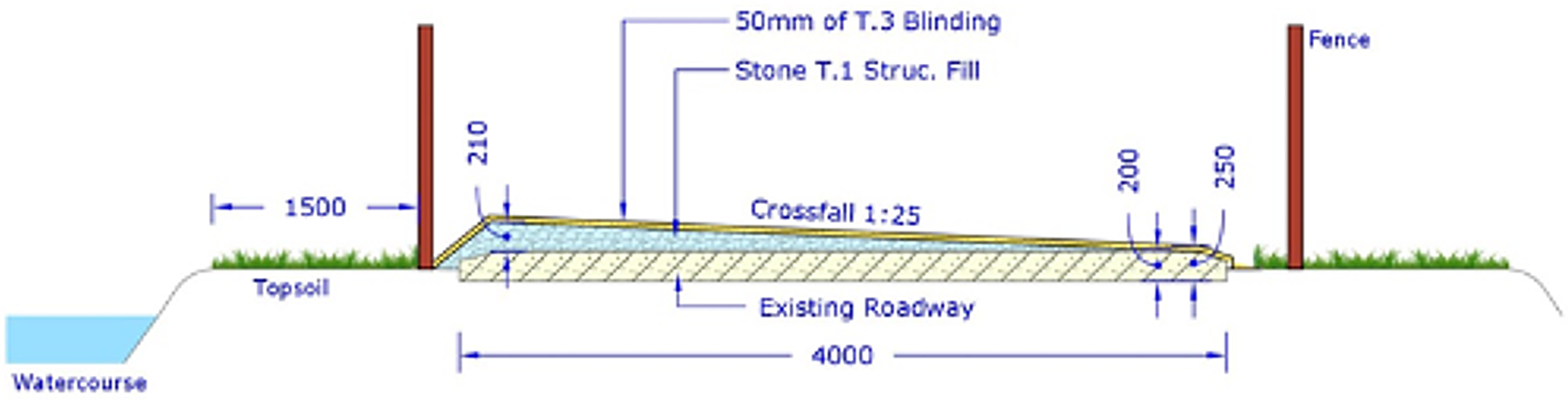
Nevertheless, not every roadway can be remedied through camber adjustment, especially considering variations in soil type or topography of the landscape. In instances where the farm roadway is positioned below that of the surrounding area, it may be necessary to elevate the profile of the roadway in relation to the adjoining pasture (Bloser and Sheetz, Reference Bloser and Sheetz2012).
Other strategies to reduce roadway runoff are the reduction of time spent on farm roadways (Fenton et al., Reference Fenton, Tuohy, Daly, Moloney, Rice and Murnane2021). This can be improved by using optimal roadway surfaces and roadway widths, which can improve cow throughput (Telezhenko and Bergsten, Reference Telezhenko and Bergsten2005; Buijs et al., Reference Buijs, Scoley and McConnell2019; Maher et al., Reference Maher, Murphy, Egan and Tuohy2023b).
Conclusion
The development of rotational grazing has significantly impacted product output per hectare in pasture-based systems. However, effective management of pastures within these rotational grazing systems also plays a crucial role in influencing production per hectare. Studies highlighted in this review emphasise the pivotal role of HA in enhancing milk production per cow. Managing pasture swards to achieve optimal PGHM is equally vital, with swards ranging between 1200 and 1500 kg DM/ha (> 4 cm) exhibiting a higher leaf proportion compared to those with higher PGHM.
In rotational grazing systems, an additional critical metric alongside PGHM is the PoGSH. Failure to attain optimal PoGSH not only diminishes pasture utilisation but also compromises pasture quality for subsequent grazings, subsequently impacting farm profitability. Determining the correct paddock size for 24- to 36-hour allocations per paddock and achieving optimal PGHM are key considerations to ensure adequate intake for all animals, particularly primiparous animals.
The literature reviewed also delves into the factors influencing walking distance on dairy farms. While previous studies primarily measured the distance to the furthest paddock, recent research has investigated the impact of milking parlour location and the incorporation of new lands into the grazing platform on the efficiency of animal movement between pasture and the milking parlour. A centrally located milking parlour within the grazing platform has been associated with increased farm roadway network efficiency. The studies further assessed the influence of different roadway surfaces and widths on dairy herd movement, revealing that smoother surfaces and wider roadways enhance cow throughput. However, there remains a notable gap in research regarding the impact of roadway camber and slopes on cow throughput on farm roadways. This research needs to be approached from a herd-scale perspective, as herds are typically moved as cohesive groups to the milking parlour. Additionally, studies should focus on the total time required for the dairy herd to transverse from pasture to the milking parlour via farm roadways, coupled with an exploration of potential capital expenditures for necessary upgrades.
Data availability
No data were used for the research described in the manuscript.
Author contributions
The primary author gathered the information from published manuscripts. The primary author wrote the initial draft of the manuscript. While the second, third and fourth author played an integral role in improving the comprehensibility and enhancing the content of the manuscript.
Funding statement
The authors’ wish to acknowledge the financial support of the Irish Dairy Research Levy and the Teagasc Walsh Scholarship Programme, without such funding this review would not have been possible.
Competing interests
All authors declare no conflicts of interest with the subject matter or materials discussed in this manuscript
Ethical standards
Not applicable.


 Open access

