




On the tenth anniversary of Czechoslovak independence, 28 October 1928, President Tomáš Garrigue Masaryk addressed the Czechoslovak parliament in a speech broadcast on national radio. He reviewed the state’s decade of accomplishments and ongoing challenges, paying particular attention to “the great modern task of public health policy.” Masaryk expounded: “The population in all countries is increasing; the important question, however, is not the birthrate as much as the number who survive. We desire descendants who are healthy and physically and mentally strong.” He called upon the Czechoslovak Ministry of Public Health to increase its visibility and intensify its activities.
A curious aspect of Masaryk’s speech was his emphasis on America’s role in Czechoslovakia’s public health initiatives. In fact, he referenced the United States eight times, more than any country besides his own, proclaiming:
I am happy to use this opportunity to thank the Rockefeller Foundation for its donation to the State Institute of Hygiene and the American nurses who have taught us … the importance of nursing the sick …. I commend the peace work of the Red Cross, and I gratefully acknowledge American assistance in this matter.Footnote 1
Masaryk further explained that the Czechoslovak medical establishment benefited from embracing the healthcare strategies of the United States and Britain, telling the audience: “Our medical men excel at diagnosis but pay little attention to therapeutics. In England and America, it is the opposite.” He called on a “new generation of doctors [to] combine diagnosis with therapeutics. This will humanize all medical science and will enable professionals to support and carry out hygienic and preventive measures.”Footnote 2 Masaryk encouraged creativity and hard work as the country continued to implement political and social policy transformation, and he reminded the audience how to approach such reforms: “We have a suitable slogan: ‘De-Austrianize’” (Odrakouštět se).Footnote 3 Masaryk and other state leaders appealed for “de-Austrianization” without fully defining the concept. Rather than describing a set of practices and policies, the term functioned as a rhetorical strategy that distanced the new country from any association with the old monarchy.Footnote 4 Masaryk’s tenth anniversary address affirmed the central place of public health in the republic’s de-Austrianization campaign. On a practical level, the young country’s leaders sought to bolster citizens’ health and well-being by stemming the spread of communicable diseases and reducing malnutrition and dysgenic living conditions. Symbolically, emphasizing population health and medical science asserted Czechoslovakia’s commitment to modernity, progressive values, and democracy.
This article argues that Czechoslovakia’s early leaders promoted public health reform within a framework of American progressivism and de-Austrianization to portray their country as forward-looking, democratic, and rational, yet their strategy obscured key continuities with the Habsburg era. Czechoslovak leaders embraced reform methods adopted from the American Progressive movement, while simultaneously maintaining the stable and familiar centralized structure inherited from the Austro-Hungarian Empire.
Czechoslovakia’s pro-American rhetoric attracted the financial and practical support of the United States and its Western allies. American Progressive organizations like the Rockefeller Foundation, the Young Women’s Christian Association (YWCA), and the American Red Cross shaped aspects of interwar Czechoslovakia’s public health sector. These organizations provided grants and personnel to implement research projects rooted in American sociology, training programs modeled on American curricula, and new state institutions. In return for aid and support, Czechoslovakia’s own experts had to navigate the American attitudes of condescension and superiority that accompanied financial aid and expertise.
Czechoslovakia’s public healthcare system developed within a centralized bureaucratic structure inherited from Austria. The new state retained the imperial legal code, state ministries, and personnel, and Czechoslovakia resembled Austria more than proponents of de-Austrianization wanted to admit. In his work on the Rockefeller Foundation’s contributions to European healthcare, historian Paul Weindling argued that the Czechoslovak “model was—in contrast to the foundation’s models favored in Western Europe and the United States—a highly centralized one …. The Czechoslovak scheme envisaged a single model. Central state institutes, with provincial branch institutes, were to be responsible for administration, monitoring health conditions, teaching, and research.”Footnote 5 Scholars of the late Habsburg era have suggested that centralization policies transformed Austria-Hungary’s successor states into multi-national “mini empires,” managed by the largest ethno-linguistic group.Footnote 6 In Czechoslovakia’s public health sphere, this meant that Prague functioned as the epicenter of knowledge production and healthcare policies, and Czech speakers dominated the discourse and decision-making processes.
This article draws on archival and printed sources from the United States and the Czech Republic to evaluate healthcare and social welfare reform in early First Republic Czechoslovakia. American influence on Czechoslovakia’s public health reforms occurred within an established imperial bureaucracy. The first section discusses Czech nationalism’s relationship with American progressivism before the foundation of Czechoslovakia. While these transatlantic connections involved only a small number of people, they greatly influenced the direction of the future republic’s public health sector. The second section analyzes the question of Austrian continuity within Czechoslovakia’s health system during the first years of the state’s existence. The third part examines the partnership between American and Czechoslovak researchers and practitioners in the republic’s early years. One major undertaking of this era was The Social Survey of Prague, a comprehensive sociological study of the capital city, modeled on studies in U.S. urban centers such as Chicago, New York, and Pittsburgh. The survey’s findings influenced Czechoslovak priorities in the realm of public health, including standardizing infant care, combating sexually transmitted diseases, establishing professional training programs, and founding research institutes. The article’s conclusion evaluates the legacy of American progressivism and Austrian centralization in Czechoslovakia.
Czech Nationalists and the United States before the First World War
Czech nationalists’ interest in American progressive ideas predated the First Republic. In 1848, following the Prague Uprising, the Czech nationalist and journalist Vojtěch Náprstek fled to Milwaukee, Wisconsin. He founded a Czech newspaper there and obtained U.S. citizenship before returning to Bohemia in 1857. Inspired by the American suffrage movement, he helped found the American Ladies’ Club of Prague. Eliška Krásnohorská, a Czech nationalist and feminist, recalled in 1881, “Every Sunday, instructive lectures are given in its rooms, and during the first years the subjects were principally drawn from the brilliant examples set by the United States in this question of women’s emancipation.”Footnote 7 Later in the century, many Czech feminists looked to American progressivism, an umbrella term for various social and political movements that gained traction in the United States beginning in the 1890s. Progressives advocated for the eradication of poverty, workers’ safety, improved housing, anti-corruption measures, education, and public health. According to American historian Daniel T. Rodgers, left-leaning Europeans, including Social Democrats and labor activists, exchanged ideas with American progressives in a transatlantic relationship characterized by “international patterns of admiration, appropriation, rivalry, publicity, and exchange that left so distinct a mark on the new social politics.”Footnote 8 On both sides of the Atlantic, progressive movements viewed public health efforts as essential to addressing the modern crises that arose from rapid industrialization and urbanization.
Late nineteenth-century exchanges between American progressives and Czech female activists set the stage for future collaboration. In 1893, Karla Machová, a Czech Social Democratic member of the American Ladies’ Club in Prague, attended the World Congress of Representative Women, which coincided with the Chicago World’s Fair. More than five hundred female leaders from twenty-seven countries attended the conference, which featured speeches by the American suffragists Susan B. Anthony and Elizabeth Cady Stanton, as well as Jane Addams, the leading voice of Chicago’s progressive movement. Machová’s lecture, “The Bohemian Woman as a Factor in Industry and Economy,” linked poor public health outcomes to working women’s low wages and long hours. She contended, “Men profit by underpaying women…. Women are ruining themselves physically, especially mothers deprived of the necessities of life, for, according to statistics in Bohemia, one child out of thirty-six is still-born.”Footnote 9 While in Chicago, Machová met likeminded women such as the Czech-American activist Josefa Humpal-Zeman and forged a connection to Chicago’s settlement house movement.Footnote 10 Some Czech-American activists, such as Humpal-Zeman and Chicago labor leader Gustav Habrman, returned to Bohemia later in life, and brought their experiences with American progressive strategies home.
The future first family of Czechoslovakia had strong ties to the United States. Tomáš G. Masaryk’s wife, the American Charlotte Garrigue Masaryková, influenced her husband and children’s commitment to women’s rights, and she became an active member of the American Ladies’ Club when she moved to Prague in 1881. A professor in the Czech faculty of Charles-Ferdinand University, Tomáš Masaryk was a visiting lecturer at the University of Chicago in 1902 and 1907. His daughter Alice lived at the University of Chicago Settlement house, a residence for middle-class aid workers near the city’s stockyards, for eighteen months in 1904 and 1905. Masaryková held a doctorate in history from the University of Berlin but wanted to engage more directly with the new social sciences. She designed a sociological research project to gather the experiences of Slavic immigrants working in Chicago’s meatpacking industry and met with progressive leaders, including Sinclair Lewis and Jane Addams. Masaryková later recalled that Addams’ call for a “shift from the dominant ideology of individualism toward a society based on cooperation and fellowship”Footnote 11 inspired her vocation toward public health. In turn, the Czech woman made a strong impression on her fellow settlement house residents, who remembered that Masaryková “cleaned alleys and even learned to cook [and] to make her shirtwaists” despite a busy agenda of conducting interviews and collecting data.Footnote 12 Upon her return to Prague, Masaryková continued to read widely on American progressive thought and founded Prague’s “Sociology Section,” a group of likeminded Czechs who discussed international developments in the social sciences.
A decade later, during World War I, Tomáš G. Masaryk campaigned for Czechoslovak statehood while in exile abroad. He leaned on his Chicago friends to aid his nation’s cause and to help his daughter Alice, who was imprisoned in Vienna for allegedly hiding her father’s papers. Masaryková’s American colleagues campaigned for her release. Mary McDowell, the director of the University of Chicago Settlement house, implored “American women individually and collectively [to] at once send through our State Department a plea for leniency toward Miss Masaryk.”Footnote 13 During her incarceration, Masaryková continued her study of American sociology, writing to her mother, “When I received [Addams’s] Life of the Poor, I had a great desire to leave my cell and go to work. It was the one thing that interested me.”Footnote 14 Masaryková was released in 1916 and secretly worked to establish the Higher School of Social Work for Young Women, based on a curriculum developed at the University of Chicago. The school opened in Prague in September 1918, but the persistent Austrian surveillance on the Masaryk family forced Alice to hide her role until the empire collapsed.Footnote 15
An Austrian Inheritance: Continuity and Complexity
On 28 October 1918, the Czechoslovak National Committee, a coalition of Czech and Slovak politicians, announced the birth of independent Czechoslovakia and issued the country’s first law (Law 11/1918): “All existing provincial and imperial laws and decrees remain provisionally in force.”Footnote 16 This provisional law, designed to prevent chaos and anarchy, became a permanent feature of interwar Czechoslovakia. Similarly, Czechoslovakia maintained the bureaucratic structure of the empire. Czech and Slovak politicians assumed responsibility for fourteen Austrian state ministries, including the two newest: the Ministry of Social Welfare and the Ministry of Public Health and Physical Education. In late 1917, Emperor Charles I—confronted with rampant malnutrition and disease in the military and throughout the empire—approved the establishment of these two ministries, acts that historian Ke-Chin Hsia has called a “last-ditch effort to save the Monarchy.”Footnote 17 Ironically, because of Austria’s wartime initiative, Czechoslovakia had national health and welfare ministries before Britain, France, or the United States.
The question of continuity between Austria and its successor states has preoccupied scholars of the late Habsburg era for the past few decades. As the Czech legal scholar Václav Dvorský has remarked,
One would expect that [Czechoslovakia] would seek to create a new legal order for itself by closely observing developments in other European states and adopting some of the solutions devised by them. However … this was not the case. … The Czechoslovak state sought to develop the law that it inherited from the Austrian part of the Austro-Hungarian Empire rather than to rely on contemporary developments.Footnote 18
Historian Václav Šmidrkal makes a similar argument, focusing especially on Czechoslovakia’s bureaucratic structure: “The new state was built on a fundamental contradiction: it was born out of the victory over Austria-Hungary and the state overthrow discursively did away with the old regime, but, at the same time, the new state sought stabilisation through continuity with the previous order.”Footnote 19 Research by Pieter Judson and other historians demonstrates the stability of state personnel: “The men and women who led the institutions of the new successor states were often seasoned politicians from the Empire.”Footnote 20 From the highest levels of office to the part-time civil servants in regional and local bureaus, most Czech-speaking government employees had begun their careers and training in the Austrian state.
Historian Hugh Agnew has taken arguments regarding continuity a step further, maintaining that despite their anti-Austrian rhetoric, Czechoslovak politicians felt ownership, even pride, over Austrian laws and governmental bureaus, which they helped forge on the regional, provincial, and imperial levels. Members of the National Committee “viewed much of the political and institutional structure developed under the Habsburgs not as alien relics of a doomed state, expressing only the interests of their exploiters and oppressors, but as their own, suitable for application in the new, Czechoslovak state.” As Agnew concluded: “To de-Austrianize (odrakouštět se) … would not prove so easy.”Footnote 21
Another legacy of the Habsburg era, which only became more complicated in the new state, was the relationship between nationalism and population health. In a country of 13.6 million citizens, there was no clear majority group. Czech speakers represented roughly half of the population, and Slovaks made up only 15 percent. To argue for national self-determination, the founders convinced the international community that “Czechoslovaks” represented a single national community. The country’s 3 million German speakers—23 percent of the citizenry—outnumbered Slovaks by about a million individuals. The remaining 11 percent of the population comprised Hungarians, Poles, Ruthenians, self-identified Jews, and other minorities.
In late nineteenth-century Bohemia, amid rising tensions between Czech and German speakers, nationalists embraced the slogan “Each nation only cares for its own.”Footnote 22 Charity organizations operated along linguistic lines, and the Prague University split into separate Czech and German divisions in 1883. The renamed Charles-Ferdinand University maintained separate medical schools with distinct teaching faculties, research agendas, and student organizations. Prague’s university hospitals, among the largest and most prestigious in Europe, divided their facilities following the 1883 reorganization. For example, the General University Hospital on Prague’s Charles Square had separate entrances and nursing staffs for German and Czech speakers. The Provincial Maternity Hospital in New Town Prague, the largest such facility in Europe, and the University Psychiatric Clinic erected walls that bisected the existing buildings into Czech and German wings.Footnote 23 Medical institutions did not turn away patients who came from other linguistic groups, but people usually sought out medical professionals who spoke their language.
In the empire, medical institutions fell under the jurisdiction of district offices that reported to the Bohemian provincial headquarters in Prague.Footnote 24 In turn, Vienna oversaw the provincial branches of government. The Austrian Health Act of 1870 established regulations for the medical civil service, health recordkeeping practices, and vaccinations. While comprehensive, its structure was bureaucratic and complex: several bureaus, including the Ministry of Trade, the Ministry of Railways, and the Ministry of the Interior, had jurisdiction over aspects of healthcare. The Austrian state police enforced public health regulations, a practice that fueled resentment among some citizens.
After the foundation of the republic, Czechoslovak leaders had to unify two separate healthcare systems. In 1867, the monarchy had forged the Ausgleich (Agreement) that divided the empire into Austrian and Hungarian regions, each responsible for its own domestic laws and policies. Czechoslovakia’s eastern provinces of Slovakia and Ruthenia had been under the Hungarian (Transleithanian) jurisdiction, whereas Bohemia, Moravia, and Silesia were part of the Austrian (Cisleithanian) half of the monarchy. This meant that Czechoslovakia inherited two distinct medical bureaucracies, each with separate record-keeping methods, educational standards, and policies. Moreover, although Hungary adopted modernized health legislation in 1876, its Magyarization policies banned non-Hungarian speakers from holding civil service posts, a category that included regional doctors. This greatly restricted access to healthcare in the eastern regions. One study funded by the Rockefeller Foundation estimated that out of one thousand doctors in the Hungarian territories, only twenty to thirty were native Slovak speakers.Footnote 25 Ruthenia, the poor mountainous region east of Slovakia, had even fewer modern medical facilities or personnel.Footnote 26
In 1920, the Czechoslovak Ministry of Public Health, headquartered in Prague, assumed administrative and supervisory power over the entire country’s medical network. In a comprehensive report to the League of Nations, Professor of Medicine Hynek Pelc described the continuity between imperial and Czechoslovak healthcare:
The only difference … was the substitution of the Czechoslovak Ministry of Health for the Austrian Ministry of Health … and the Hungarian Ministry of the Interior as the supreme authority in health questions. The Public Health service in the provinces formerly belonging to Hungary, Slovakia and Ruthenia, had been so much neglected that it was necessary to establish special departments there.
Pelc further described the principle of centralization: “This law was based on the idea that the health services throughout the entire country should form a continuous chain from the rural to the municipal medical officer up to the Ministry of Health. This object could only be attained by bringing all health services under State control.”Footnote 27 Czech nationalist politicians, who once criticized Vienna’s dominance in Austria, now concentrated power and policymaking in Prague.
American Interventions
While trying to establish legal and bureaucratic stability, the National Committee inherited several public health crises, including epidemic levels of Spanish Flu, dysentery, tuberculosis, and sexually transmitted diseases. The long war depleted Bohemian resources of grain and other foodstuffs, and rates of malnutrition were high. The steady influx of exhausted imperial soldiers and prisoners of war from the Eastern Front exacerbated these trends. According to historian Claire Morelon, “The food riots, which had become an almost weekly occurrence in 1917 and 1918, continued throughout 1919, with the crowd sometimes directly plundering shops or requiring merchants to reduce prices.”Footnote 28 Czechoslovakia’s leaders knew that before they could implement long-term changes, they must meet the citizenry’s most basic needs: nourishment, health, and housing. Unable to solve this crisis on its own, the new state leadership turned to the United States, whose agencies provided over 80 percent of food aid on the continent.Footnote 29 Philanthropical work became the first step in the partnership between Czechoslovak and American public health sectors. Historian Dagmar Hajková argues that after the armistice, humanitarian aid “soon became an integral part of the life of the successor states.”Footnote 30 Czechoslovakia’s leaders sought to demonstrate that their country “deserved [aid] due to its high moral standing.” Hajková notes that following Bolshevik uprisings in Budapest, Munich, and Berlin, “Czechoslovak leaders employed humanitarian aid, especially from the United States, as a means of promoting the state and demonstrating the country’s foreign policy orientation.”Footnote 31
In turn, U.S. agencies had political motivations for their involvement in the successor states. Historian Julia Irwin has argued that American voluntary associations’ postwar activities abroad “held profound political significance. … By projecting a positive image of the United States, relief served as propaganda.”Footnote 32 At a time when American political leaders increasingly advocated isolationism and blocked entry into the League of Nations, representatives of voluntary organizations like the Red Cross “typically imagined their efforts as having the potential to accomplish something larger than the relief of suffering and improvement of health. Through their aid, they believed, they could nurture a solid commitment to democratic governance and engineer more advanced, enlightened postwar societies.”Footnote 33 These organizations found a receptive audience in Czechoslovakia, where leaders wanted to demonstrate their competence and sophistication as well as their commitment to democracy.
In the first months of the republic, the Czechoslovak state took over imperial institutions such as clinics and orphanages. Bohemia already had a robust network of care homes for children, but after independence, leaders framed responsibility toward children as a national duty. The magazine Ochrana mládeže (Care of the Youth) had run a full-page obituary in 1916 praising the deceased emperor Franz Joseph for his support of poor and fatherless children.Footnote 34 Two years later, in November 1918, Ochrana mládeže’s editorial board proclaimed “a new era.” In a patriotic tone, the journal implied that prioritizing children’s needs was something new: “In the democratic, social atmosphere that has penetrated the Republic, care for the Youth will be the most important civic responsibility.” The article compared the public’s duty to all children with a nuclear family’s care for its offspring: “Fathers do not speak of good deeds; they merely take care of and provide for their children.… [The public] should not think of caring for the nation’s youth as a ‘good deed’ but as a responsibility.”Footnote 35 Czech-speaking medical leaders also embraced the celebratory national rhetoric. Jan Brdlík, an esteemed professor of pediatrics at the Czech medical faculty in Prague, dedicated his 1919 book, Zdraví a dítě (Health and the Child), “To all Czechoslovak mothers [who] care for the entire nation, both in body and in spirit.”Footnote 36 The image of the state as a responsible parent pervaded interwar Czechoslovakia, and President Masaryk enthusiastically embodied the role of its benevolent father.
Among the most important public health organizations in the interwar era was the Czechoslovak Red Cross, founded in February 1919. While there had been a Czech division of the Austrian Red Cross, the rebranded organization took on greater significance when the president appointed his daughter Alice Masaryková as its director, a post she would hold for nearly two decades. Masaryková never viewed her role as ceremonial and dedicated her career to building public health and social welfare systems. She called the Czechoslovak Red Cross a “democratic and social institution [whose] work must be methodical, for this is the only way to assure a lasting success of its efforts.”Footnote 37 Her emphasis on “methodical” practices reflected her devotion to the social-science research techniques she first encountered in Chicago. Masaryková viewed social welfare and public health as intrinsically linked: “The [Czechoslovak] Red Cross wants to increase the standard of health of the people. This will call for close collaboration between the public-health services and social work. Health care alone will not suffice, for insufficiently nourished human beings are indifferent to the concerns of hygiene.”Footnote 38 She argued that once the food crisis abated, the country should turn to broader hygienic concerns including disease prevention, fitness and exercise, housing, and sanitation.Footnote 39
The director of the Czechoslovak Red Cross was a political appointment, and the organization’s programs received both state and private funding. Masaryková’s leadership of the Red Cross, her close relationship with her father, and her work as First Lady of Czechoslovakia following the illness and death of her mother in 1923 gave her unique power in the new state. As historian Sara Silverstein argues, “Alice Masaryková helped ensure that humanitarian projects were part of core state policy. Masaryková early undertook to reform social welfare within the new republic.”Footnote 40 She worked closely with international humanitarian organizations but insisted that the state should gradually assume full responsibility for welfare initiatives developed through international partnerships.
Masaryková traveled to Paris in April 1919 in her capacity as head of the Red Cross. There she met with Herbert Hoover, director of the U.S. Food Administration, and Selskar Gunn from the Rockefeller Foundation, one of the wealthiest philanthropic institutions in the world. Not only did she secure more direct food aid, but she also convinced the Rockefeller Foundation to award its first-ever European grant to Czechoslovakia to support professional training and sociological research in the new state. The Rockefeller Foundation’s mission shift toward funding long-term projects in European states reflected its leaders’ conviction that a partnership with Czechoslovakia would increase stability in Central Europe. As the historian of social medicine Paul Weindling has noted, the Rockefeller Foundation leadership considered Czechoslovakia the first “favorable terrain for a major initiative in public health, [noting its] ‘stable government’ [and] ‘people intelligent and industrious.’”Footnote 41 When Rockefeller Foundation officers in New York expressed concern that the popular communist uprisings in Eastern and Central Europe could spread to Czechoslovakia, foundation officer Gunn, who worked in Prague from 1920 to 1922, assured his superiors: “The Czecho-Slovak state offers no favorable soil for the seeds of Bolshevism.” The director of the foundation’s International Health Bureau, Wicliffe Rose, concurred, arguing that supporting Czechoslovakia “offered the best defense against ‘the wreckage of monarchies and the fermenting mass of communistic chaos’ in Central Europe.”Footnote 42 Like President Masaryk, who promoted rational, scientific thought as the cornerstone of state policy, the Rockefeller Foundation officers believed that their support of Czechoslovak public health would prevent the new country from embracing ideologies like monarchism and bolshevism.
The Social Survey of Greater Prague
In the imperial era, religious and private charities carried out a large portion of humanitarian work, but Masaryková believed that the Czechoslovak state should implement and oversee health and welfare services. She wrote, “the Revolution [founding of Czechoslovakia] form[ed] the boundary line between the period of philanthropy and of social politics founded on sociology.”Footnote 43 As director of the Red Cross, Masaryková proposed that the Ministry of Social Welfare sponsor a social survey of Prague, modeled on Jane Addams and Florence Kelley’s studies of Chicago.Footnote 44 To launch the Social Survey project, Masaryková turned to Mary McDowell, the director of the University of Chicago Settlement House, who recommended a partnership with the YWCA. With funding from the War Work Council of the YWCA, the American social worker Ruth Crawford, who had studied at Vassar and Washington University in St. Louis, came to Prague in 1919. Crawford lived in Czechoslovakia for over two years and directed a Czechoslovak-American research team that designed surveys, collected and analyzed data on Prague, and wrote up its findings. Crawford’s time in Prague marked the beginning of a life-long friendship with Masaryková, whose biography she compiled later in the century. The Prague survey team comprised thirty-five Czechoslovak researchers and eight highly educated American social workers, including Mary E. Hurlbutt, Alpha Buse, Ann Rylance Smith, and Fjeril Hess. In addition, the director of the American Relief Agency, Herbert Hoover, dispatched Philip S. Pratt to Prague. A Yale-educated American public health specialist and veteran of the American Red Cross and the U.S. Army Sanitary Corps in Europe, Platt worked closely with the Ministry of Social Welfare to analyze Prague’s public-health landscape.
For Masaryková and other Czech scientists, Prague represented what the historian Hana Mašová has called “a laboratory for scientific inquiry.”Footnote 45 Czechoslovakia’s only two medical schools were in Prague—the separate German and Czech medical faculties of Charles-Ferdinand University—and Bohemia had one of the densest hospital systems in the empire. Prague’s overwhelmingly Czech-speaking population added to the appeal of focusing on the capital.Footnote 46 Masaryková designated four areas that “require[ed] special intensive work: public health, social welfare, the social aspect of education, and the condition of women in industry.”Footnote 47 She asked the Czechoslovak Ministry of Social Welfare to oversee the survey, with input from the Ministry of Public Health and Physical Education and the Ministry of Education.Footnote 48 The newly appointed Minister of Social Welfare, the Social Democrat Gustav Habrman, shared the Masaryks’ faith in American progressive approaches to social policy, having lived in Chicago where he was a leader in labor organizing.
The Americans who came to Prague through the Red Cross, the YWCA, the Rockefeller Foundation, and other agencies received exaggerated stories of the oppressive empire, and they adopted the Czech nationalist characterization of German speakers as “foreign.” Political scientist Ondřej Slačálek has explained that these narratives reflected “the need to odrakouštět (de-Austrianize), to overcome the mentality connected with second-rate citizenship and old-school hierarchical Austro-Hungarian society.” The representatives of American voluntary associations admired Czechoslovakia’s “modernizing democratic ethos and [its] strong accent on the mythologized Hussite and Protestant legacy”Footnote 49 and saw themselves as releasing the new nation from the so-called “Völkerkerker” (Prisonhouse of Nations). Mary Hurlbutt poetically retold the story of stagnation and isolation that her Czech colleagues had shared:
Hitherto the Czech people have been largely cut off from participating in this community of ideas. One Czech friend described the situation by saying that Austrian domination had built a wall around the country and that only now had great windows been knocked in. The natural result is an eager exchange of ideas with other countries like friends who meet after a long separation.”Footnote 50
Ladislav Prokop Procházka, the chief health officer of Prague and Minister of Public Health and Physical Education, explained the historical significance of the Prague survey project as a deliberate retreat from German-Austrian influence:
This survey marks for us, the Czech hygienists, a certain epoch. Our contact with the outside world moved through German channels; our methods of public health research and analysis were German; and because our methods, after the German manner, followed almost entirely the line of scientific research, inadequate consideration was given to the needs of practical life, and practical hygiene suffered.Footnote 51
Czech public health professionals did not often specify what they meant by “German methods.” As Tara Zahra has argued, Czech “activists … depicted German opposition to Czech nationalist programs as a threat to democracy itself.”Footnote 52 The United States’ recent participation in the war against Germany predisposed the Americans in Prague to accept Czech claims of oppression. Masaryková justified her exclusion of Germans from the survey’s research teams, contending, “They [Germans] seek, by habit, to dominate and the Czechs, by habit, to yield.”Footnote 53 The survey researchers focused their efforts on Czech working-class neighborhoods, and Ruth Crawford found it “staggering [that a] group of graduates from the ranking German universities” complained that German speakers were not included in the Prague survey.Footnote 54 In contrast to the predominant anti-German sentiments, Sesklar Gunn considered the German medical faculty members in Prague more competent than their Czech counterparts, and he suggested that the Rockefeller Foundation only fund the German medical school if its board agreed to train to Czech doctors.
The Czech professionals strove to demonstrate their aptitude for leadership. Masaryková was determined to retain control of the project, directing the American researchers not to “tack down an American pattern, but only to put American experience and technique into the hands of Czecho-Slovaks.”Footnote 55 Her grant applications and correspondence with funders asserted the high education levels of her fellow citizens, and she promised that within a few years Czechoslovak public health would be self-sustaining. In a 1921 message written for the American social work journal The Survey, Masaryková pledged, “Three more years of incessant work and then we hope to be out of the period where we need help. We will come then to you and you will feel that you have done a good work; that you have helped a people who with their whole heart wish to help themselves.”Footnote 56
Private correspondence among the American experts reveals the condescending attitudes Masaryková sensed. For example, in a letter to The Survey’s associate editor Bruno Lasker, Mary Hurlbutt complained, “You can imagine what the social situation [in Prague] is—a welter of futile charity … a perfect dump heap of bureaucratic machinery of the old empire not yet cleaned up.” She continued her critique:
Imagine this plus a fluid state of mind; that is, a desire to remodel and rebuild … but a complete ignorance of methods used in other countries. … Feverish activity … bursts forth continually in new programs, institutions, and societies. Almost anyone with a new idea is hailed as a prophet and a crowd gathers at his feet. To be a prophet here is the easiest thing in the world.Footnote 57
Gunn conveyed a similar assessment to his supervisors at the Rockefeller Foundation. He called the Czechoslovak medical officials he met “amateurish in their knowledge of public health … They are not imaginative.”Footnote 58 He and his colleagues also disparaged the country’s slow, complex bureaucracy and its wide regional disparities. The Americans also bemoaned the ethnic tensions in the country. Ruth Crawford described Prague’s atmosphere in early 1919 as “ecstatically Czech” but expressed concern that the country’s “German-speaking minority was still wavering between post-revolution antagonism and acceptance of the government’s stated policy of recognizing minority groups.”Footnote 59 Following a visit to a German-speaking region in Moravia, Crawford wrote, “Miss Hurlbutt and I came away with but one conviction—that some outside help, which can see racial relationships from a neutral standpoint, must be given, or there will never be peace in this country.”Footnote 60
Moreover, the complex Czech-Slovak relations increasingly frustrated the American philanthropists and health professionals. Historian Benjamin Page argued that the Rockefeller Foundation leaders initially “accept[ed] without question the idealized picture presented by President Masaryk and others.”Footnote 61 In their 1920 Rockefeller Foundation report, Gunn and Rose emphasized the “oneness” of the Czechoslovak people: “The Republic is a strong ethnological and geographic unit. In people, in language, and in culture, it is Czech,” and the peoples have been “bound together … by their struggles for national unity and independence.” By 1922, Gunn and Rose had changed their minds: “The government has not been wise at all times in its policy toward Slovakia; the men sent out to the province in government have not at all times been well chosen; the Bohemians and the Slovaks do not like one another.”Footnote 62 The Americans considered Czechoslovakia’s lack of national cohesiveness among the greatest obstacles to meaningful development.
Despite the various frustrations expressed by the social workers and health professionals, the Americans still regarded Czechoslovakia as worth the investment of time and funding.Footnote 63 Motivated by a commitment to global health as well as their somewhat smug belief in American know-how, they sought to leave a lasting impact on Czechoslovakia’s health and welfare sectors. They viewed their obligation as extending beyond data collection and encouraged U.S. agencies to establish permanent research institutes and educational, professional-training, and leisure programs. Fjeril Hess and Anne Rylance Smith, the authors of Volume 4, Social Aspects of the Schools in Prague, and Volume 5, Report on the Recreation Facilities of Prague, respectively, founded several youth camps and sporting facilities for girls, adolescents, orphans, or working-class childrenFootnote 64 (See Figure 1).
The American social worker Fjeril Hess posing in 1930 with teenage girls at a YWCA summer camp at the Castle of Přerově nad Labem near Nymburk. Following her return to the United States in 1922, Hess frequently went back to Czechoslovakia to visit the summer camps she helped establish. Public domain, via Wikimedia Commons.

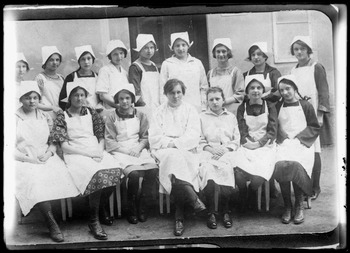
Mary Hurlbutt paused her work on the social survey to establish the Czech-American Summer Training School in Prague. Its six-week certificate program introduced university students, teachers, and nurses to American sociological theory and methods. Hurlbutt co-led the summer school with Dr. Anna Berkovcová, the Czechoslovak director of the Higher School of Social Work in Prague. Together, Hurlbutt and Berkovcová established a small library and commissioned Czech translations of American social work literature. Hurlbutt explained, “We want to give them at least a glimpse of what ‘case work’ means. Finally, we hope to give them, in the simplest way, a few fundamental working methods, such as the need of investigation, record keeping, and co-operation.” The Prague training program emphasized “case work,” a British-American social-work practice in which professionals collect clients’ unique experiences and personal histories in order to determine the most appropriate interventions.Footnote 65 Hurlbutt recognized that this method may not work in certain cultural settings, especially where women were reticent to reveal information about their physical, emotional, or sexual health. She recommended that the summer school establish a “conference approach” to teaching and learning. This tactic would allow the school’s leaders to “work out joint Czech-American conclusions that were more adaptable to Czech conditions than undiluted American ideas would be”Footnote 66 (See Figure 2). In her introduction to Volume 3 of the survey, Hurlbutt extolled this Czech-American collaboration: “Through international conferences, through exchange professors and foreign students, through societies which cut across national boundaries, and above all as a result of the war, a community of ideas and methods is emerging.”Footnote 67 As with so many such statements by the Americans, Hurlbutt did not identify these new ideas or admit to learning anything from her Czechoslovak collaborators.
Class picture from a training course offered by the Junior Red Cross in Prague, 1923. Teenage girls studied home hygiene and care of the sick from a translation of an American Red Cross textbook. American National Red Cross photograph collection LC-DIG-anrc-15121, Library of Congress Prints and Photographs Division Washington, D.C.

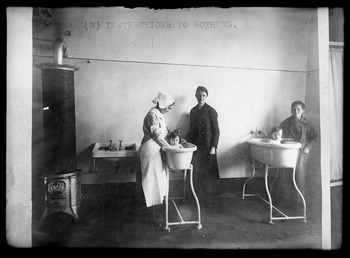
While Hurlbutt discussed educational programs, other American social workers in Prague modeled research methods through survey design and implementation. Alpha Buse taught the casework model to twenty-six Czech female researchers, who went door-to-door in Prague neighborhoods to interview residents about their lives, work, and family health. They gathered data on family income, caloric consumption, and childhood diseases; measured cubic air space in family apartments; and determined the availability of fresh milk and sanitary drinking water in Prague’s residential neighborhoods. The team’s statistical reports and district maps led to the establishment of milk banks, water filtration stations, and state-sponsored “garden cities” in the Prague outskirts. In addition, the Ministry of Public Health and Physical Education, with support from the American Red Cross, co-founded twenty-two children’s health clinics throughout Bohemia and Moravia, mostly in industrial areas. Doctors and nurses instructed mothers on “infant health standardization” and proper feeding, bathing, and diapering techniques (See Figure 3).Footnote 68 Research and implementation often created uneven power dynamics and disdain for poorer citizens. While the Našim dětem (Our Children) clinics were founded to provide support to working-class and rural families, some Czech and American doctors, nurses, and social workers criticized their clients as “ignorant and greedy” women, who only visited the clinics for milk vouchers, medicine, and supplies. The Czech physician and public health expert Hynek Pelc pushed back on this characterization of poor mothers. “Advice is insufficiently attractive,”Footnote 69 he argued, and material support represented the first stage in establishing a relationship among citizens, health professionals, and the state. Alpha Buse also reminded colleagues that women living in industrial neighborhoods faced significant challenges that interfered with their ability to parent, including higher rates of poverty, tuberculosis, nervous exhaustion, and malnutrition than working-class men. She recommended that Czechoslovak women establish separate female labor unions that could advocate for their particular needs.Footnote 70
The American Red Cross, in cooperation with the Ministry of Public Health and Ministry of Social Welfare, established twenty-one Child Health Centers, known as Naším Dětem (To Our Children), in Czechoslovakia. In Žižkov, a working-class district in Prague, a nurse shows mothers how to bathe their babies, 1921. American National Red Cross photograph collection LC-DIG-anrc-14698, Library of Congress Prints and Photographs Division, Washington, D.C.

In its commitment to women’s well-being, the survey team highlighted sexually transmitted disease as a formidable threat to the new nation. Returning soldiers infected their wives and other sexual partners in great numbers, creating another health crisis in a city already fighting tuberculosis, influenza, and malnutrition. Data from the Social Survey estimated that cases of gonorrhea and syphilis were three to four times higher than their prewar levels.Footnote 71 Hurlbutt wrote that the public health organizations in Czechoslovakia needed to prioritize sexual health. Modern education and frank discussions, she argued, must “take the place of old-time self-conscious prudishness on the part of women, the conscienceless flippancy on the part of men, and the stupid and dangerous secrecy and ignorance on the part of everybody.”Footnote 72 Philip S. Platt led the research on sexually transmitted diseases in Prague and wrote the survey’s volume on public health. Although Platt admired the Czechoslovaks’ commitment to teach hygiene, root out tuberculosis, and combat infant mortality, he, like Hurlbutt, bemoaned the “conspiracy of silence” around sexually transmitted diseases. In a report to the Rockefeller Foundation, Platt wrote, “The most elementary information [about sexually transmitted diseases] is lacking. The diseases are not recognized by the health department as reportable diseases, and no means are taken by the department to prevent or control their prevalence.”Footnote 73 Platt opposed the Habsburg-era practice of controlling disease by regulating prostitution. He reported to the Rockefeller Foundation that the state police maintained “partial control of 22 brothels and of some 534 registered prostitutes,” which involved subjecting female sex workers to compulsory medical exams. Yet this practice, he explained, did nothing to deter street prostitution and clandestine brothels. Furthermore, Platt complained that the Austrian state had not kept statistical data to test whether regulation deterred the spread of disease.Footnote 74
With the support of American funding agencies, the Czechoslovak government took on the fight against sexually transmitted diseases. Rather than considering prostitution and solicitation criminal offenses, the Czechoslovak government treated the issue as a public health concern. Like Platt, President Masaryk and Alice Masaryková disapproved of state regulation, which policed female sex workers instead of their male clients and ignored the broader social issues that led to prostitution. As advocates of women’s rights who had adopted the Huguenot-Calvinist ascetism of their American Garrigue family, the Masaryks viewed prostitution through a moral framework. Their views aligned with many of the American progressives who were living and working in Prague: Men needed to practice self-restraint, and society must support women who, they believed, would only resort to prostitution in dire economic distress.
Czech physicians like Hynek Pelc took a more scientific approach to the issue of sexually transmitted diseases, arguing that the medical establishment was better equipped to combat disease than the Ministry of the Interior and its state-police apparatus. The Ministry of Public Health and Physical Education, with financial and administrative support of the Rockefeller Foundation, oversaw a study of venereal diseases in Czechoslovakia that became the basis of the 1922 Law for the Control of Venereal Diseases. The legislation abolished the regulation of brothels by state police, and the Czechoslovak Red Cross established counseling clinics where citizens could get tested and treated for sexually transmitted diseases without fear of punishment. The 1922 law obliged citizens to seek treatment for sexual diseases, and doctors had to report patients who did not agree to the therapeutic protocols. Noncompliance resulted in compulsory examinations or hospitalization, and only the intentional spread of a sexually transmitted disease was considered a criminal offense.
Like other public-health initiatives, the abolition campaign became associated with the country’s self-image as a progressive, modern nation-state that was committed to de-Austrianization. Pelc remarked on his country’s influence on similar legislation proposed in neighboring states: “Czechoslovakia is apparently paving the way to a new idea by the abolition of regulation.”Footnote 75 Czechoslovakia’s public health officials congratulated themselves that they, unlike their Austrian predecessors, could “replac[e] police surveillance with medical surveillance.”Footnote 76 Following the passage of the 1922 law, Pelc continued to work with the Rockefeller Foundation to research the efficacy of the legislation. This would “preserve a picture for the future which perhaps will be capable of serving as a basis for estimating and appreciating the results of the operation of the law.”Footnote 77 Even after the new legislation, Czechoslovak health professionals had to navigate the complex legal heritage of the Dual Monarchy as well as the variety of social customs, religious beliefs, educational levels, and languages. For Pelc, the solution was more centralization. He suggested that the Ministry of Health promote educational activities that were “less local and more national in character.”Footnote 78 Pelc’s advocacy of centralization exposed the fundamental difference between Czechoslovak and American approaches to public health. In the United States, health campaigns were organized at the local level through public-private partnerships, but Czechoslovakia maintained the Austrian approach. Centralized bureaus made decisions that were carried out by regional offices throughout the country. State-produced pamphlets, documentary and feature films, and even children’s puppet shows provided lessons on hygiene, disease control, and physical education. This creative approach to hygienic education tackled widespread domestic resistance to health reforms while responding to pressure from international funding agencies to implement change.Footnote 79
American-sponsored research projects provided statistics and evidence that supported Czechoslovak medical professionals’ goals to modernize the nation’s health sector and to implement new programs. However, the support from American organizations often came with American moral and religious evangelism. The most outspoken critic of this approach was Pelc, who resented this American cultural imperialism. In an article about Czechoslovakia’s war against sexually transmitted diseases, Pelc contended that religious-affiliated charitable activity “has been much criticized by the public, largely on account of the methods of public propaganda.” The Salvation Army had built and funded a “home for debased girls” in Prague, but the organization’s theatrics on Prague’s streets offended public sensibilities. Pelc explained, “While the Czechs have either no religion or a very deep and very delicate one, the religion of an Anglo-Saxon is more shallow and formal. The services held in the street by the Salvation Army therefore seem ridiculous to the one and trivial to the other.” The Salvation Army’s marching band music “must hurt the feelings of a musically endowed people.”Footnote 80 Not only did Pelc’s example offer an amusing anecdote, but it also revealed Czechoslovak professionals’ puzzlement and even resentment that American progressive social-scientific methodology operated within a framework of Anglo-American Christian missionary zeal.
Conclusion: A Window to the West?
In 1924, the Czechoslovak Ministry of Social Welfare released the Social Survey of Greater Prague as a five-volume set in the Czech language, which Masaryková described as a “carefully prepared working plan, based on sociology.”Footnote 81 The lead American social workers and physicians composed the five book-length studies in English; the translated and published Czech edition included short summaries in German, English, and French. The choice not to publish a full German version highlighted the Czech domination of the project and the related ministries, the de-Austrianization campaign, and the American influence on the new state.
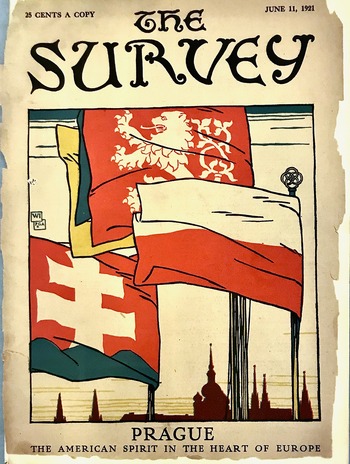
Social work and medical organizations in the United States closely followed developments in Czechoslovakia, and professional journals such as the Journal of the American Medical Association and The Survey, a premier publication for American social workers, provided regular updates on joint projects. In 1921, The Survey devoted an entire issue to the Social Survey of Greater Prague. The cover featured Czech and Slovak flags against a silhouette of Prague Castle with the words “Prague: The American Spirit in the Heart of Europe” printed beneath the illustration (See Figure 4). The feature article, “Prague’s Window to the West: The Survey of Greater Prague,” emphasized the contributions of American experts to a grateful nation. Ruth Crawford, the director of the project, provided a comprehensive overview of the survey process, and the American authors of the five survey volumes contributed short summaries of their work.
The Survey, a leading American social work journal, devoted its 11 June 1921 edition to the Social Survey of Greater Prague. Mitchell mss., Lilly Library, Indiana University, Bloomington, Indiana. (Box 4, Folder: Printed Czechoslovakia II, 1920–1939.)

The journal’s editor, Bruno Lasker, likened Czechoslovakia to “an eager lad just from college” ready to “begin his new life.”Footnote 82 Lasker praised the young country’s willingness to look to more advanced nations for guidance:
A nation has to be both young and enthusiastic for social progress to invite such scrutiny. … Its Ministry of Social Welfare invited an American survey … not because it lacked confidence in the expertness or impartiality of local witnesses … but because it felt that a nation just emerging from centuries of oppression cannot afford to neglect the contributions to social practice made by a sister republic with similar general political aims.Footnote 83
Lasker further asserted that after “centuries of oppression and five years of war, the old capital Prague knew little of its human needs and resources.… Prague leaped over its lost years [thanks to] an American social survey.” The American professionals had absorbed the Czech nationalist narrative of oppression and stagnation under Austria, but they extrapolated a self-serving conclusion that Czechoslovaks wanted to be just like Americans. For example, in a letter to his Rockefeller Foundation supervisors in New York, Sesklar Gunn asserted, “They want to make their country a small United States and are looking in our direction.”Footnote 84 These types of statements, ubiquitous in the writings of the American public health professionals, affirm historian Julia Irwin’s characterization of American aid in Eastern Europe: “The avowed commitment to cooperation coexisted uneasily with a belief in the superiority of American methods and ideas.”Footnote 85 Yet, Masaryková’s frequent assertions that American aid was a temporary measure and Pelc’s frustration with the American aid workers’ missionary zeal are among many examples of Czechoslovak leaders’ wariness of American cultural and social imperialism.
While pleased to receive American funding for projects such as the Prague social survey and the National Institute for Public Hygiene, which opened in Prague in 1925, Czechoslovakia’s public health leaders maintained the Austrian-style centralized structure of the former empire. President Masaryk advocated centralization and rejected the United States’ assortment of local, state, public, and private healthcare models. Historians of international public health, such as David Brian Robertson, have long argued that the United States’ decentralized healthcare system stood in sharp contrast with Europe’s centralized, state-run models: “During the Progressive Era … the gap between the American and European welfare states widened significantly enough for contemporaries to acknowledge it.”Footnote 86 While the American professionals liked to pat themselves on the back for their contributions to Czechoslovakia, their influence was limited to specific areas of development rather than an overhaul of Czechoslovakia’s public health infrastructure.
How, then, do we evaluate the claims of Americanization, de-Austrianization, continuity, and rupture in Czechoslovakia’s public health and social welfare infrastructures? Hana Mašová, one of the leading historians of Czechoslovak healthcare in the twentieth century, argued, “It is nearly impossible to overestimate the assistance of the American Red Cross, YMCA, YWCA, and other American organizations in the post-war destitution.”Footnote 87 Mašová particularly cites the Rockefeller Foundation fellowships for Czechoslovak students and professionals to study in the United States as having a lasting impact on science and healthcare. “This American experience led to great emphasis on research, focused on statistics and synthesized methods of the biological and social sciences.”Footnote 88 In particular, the case-study model in which professionals collected individual stories and extrapolated data from these accounts represented a new approach, but the Habsburg Austrian state certainly invested in public health research, data analysis, and recordkeeping. The main difference was the empire’s emphasis on official reporting to the state by civil servants in the health and police sectors. Given Charles I’s 1917 reforms to the medical bureaucracy, however, it is plausible that a reconstituted postwar empire would have followed the same trajectory as Czechoslovakia. Certainly, postwar Austria implemented numerous reforms to public health, hygiene education, housing, and social welfare during the Red Vienna period, including more emphasis on individual families’ needs.Footnote 89
Other historians have stressed the discontinuity between Czechoslovakia and Austria, but not because of Americanization. Instead, they have argued, increased centralization set Czechoslovakia apart from bifurcated Austria-Hungary. In an important study of the legal reforms in the realm of public health, Lukáš Novotný, Andrej Tóth, and Valérie Tóthová concluded:
It can be said, then, that within healthcare there was more discontinuity than continuity between the Habsburg Monarchy and the First Czechoslovak Republic. Despite problems in healthcare in both parts of the republic, healthcare issues were successfully centralised under one department, the role of the state was strengthened at the expense of municipalities, and an extensive network of medical and investigative institutions were constructed.Footnote 90
In the end, then, Czechoslovakia’s public health leaders took elements from American and Austrian healthcare models and rejected others. The United States’ decentralized healthcare system did not appeal to Masaryk, Masaryková, Pelc, or other Czechoslovak political and medical leaders, but the United States’ emphasis on sociology and science—as well as its agencies’ deep pockets—met the country’s early needs. Czechoslovakia did not replicate the bifurcation of the late Habsburg monarchy, thus limiting Slovakia and Ruthenia’s autonomy in public health. Instead, Czechoslovakia’s centralized, hierarchical state structure imposed Cisleithania’s Viennese model on the whole country. Prague replaced, and even exceeded, Vienna’s former role as the arbiter of health and welfare policies and practices. Hindsight enables us to recognize the danger of centralization, which asserted Prague’s dominance over state policies and resources. At the time, Czech medical experts viewed centralization as a way to spread knowledge beyond Prague but rarely reflected on their own imperial cultural practices.
In addition to exposing the domination of Prague in the fields of public health and social work, this study offers insight into the limitations of American humanitarian relief in the first half twentieth century. Toward the end of her life, even Ruth Crawford confessed her unease with the American approach to international aid and the survey project she led. The American experts and their Czech counterparts believed that U.S. funding, research, and training would transform societies. In her personal notes for her book about Alice Garrigue Masaryk, Crawford admitted that her recollections of her work in Czechoslovakia “would be deeply embarrassing if they were not so typical of the naïve self-assurance of young Americans at the turn of the Century and the equally naïve confidence of the Central Europeans in the American ‘mystique.’”Footnote 91 Both the Americans and Czechoslovaks who launched the Social Survey of Greater Prague held onto a fervent belief that reason, science, and a commitment to progress could solve any problem. For all their good intentions, however, American aid workers and Czech social reformers often lacked the humility needed to access the most intimate aspects of people’s lives: the health of their bodies.
Acknowledgments
Thank you to Melissa Feinberg, Maureen Healy, Robert Nemes, Daniel Unowsky, Nancy M. Wingfield, and the anonymous readers whose extensive and erudite advice transformed this article. Any errors or omissions are mine.


 Open access

