

Introduction
On March 25, 1994, the Boston Police Department (BPD) executed a “no-knock” raid that would end in tragedy. Acting on the beer soaked word of an informant, a thirteen-member SWAT team stormed into what they thought was the apartment of a suspected drug dealer in Dorchester (Miller Reference Miller1994c, Reference Miller1994b; New York Times 1996). Instead, they smashed through the door of Reverend Accelyne Williams, a seventy-five year-old retired Black Caribbean minister, known for his quiet devotion to scripture and guest-ministry in local churches. Within an hour of this encounter, Williams was dead (Haygood Reference Haygood1996; Jackson Reference Jackson1994). At about 3 p.m. that day, police sledgehammered through Williams’ front door. Terrified, Williams fled to his bedroom and slammed the door shut. Police then forced their way in, shouting orders at the panicked Reverend while he was likely still reeling from the initial shock. As multiple officers attempted to forcibly arrest Williams, despite his cries that he felt sick, he had a stress-induced heart attack and would die later that day in the hospital (Martin Reference Martin1994, Miller Reference Miller1994a, Murphy and Locy, Reference Murphy and Locy1994).
Police brutality cases involving Black male victims have emerged as key historical turning points in the ongoing struggle among Black political and ministerial groups for justice and accountability in policing. By the 1990s, BPD would become notorious for its brutal and corrupt officers and earn one of the worst reputations in the country (Braga Reference Braga2008; Burkel Reference Burkel2020; Hehir Reference Hehir2023). The Williams case crystallized Black Boston’s long-standing grievances against structural racism, police brutality, and lax accountability, and the city’s responses fell short of the deeper structural change that many demanded at the time (Miller Reference Miller1995).
This paper situates the Black community’s sustained public calls for greater controls over policing in Boston within the broader history of Black freedom movements in the United States. We conducted a controlled case comparison of three notable historical cases between the 1930s and 1990s to deepen our understanding of the social, political, and institutional contexts surrounding police civil rights violations and the emergence of popular resistance movements against them. In this study, we address the following questions: How does the Williams killing fit within the larger context of Black Boston’s freedom struggle against police civil rights violations? How do incidents like this highlight Boston’s history of racial inequality and segregation? What does a close study these cases tell us about the larger U.S. movement to “police the police”?
We find that police civil rights violations have been central to Black Boston’s freedom struggle, as there is clear evidence that major movements have formed in direct response to police abuses. From the early twentieth century onward, police violence and neglect have been central catalysts for Black political mobilization in the city. The killing of George Borden in the early 1930s, the emergence of Freedom House as the “Black Pentagon” in the 1940s, the rise of militant organizing in the 1960s and 1970s, and the coalitions of Black clergy in the 1980s and 1990s each reveal how police civil rights violations both injured and galvanized Black Boston. These episodes show that activist demands to “police the police” were not episodic reactions, but a historical thread, shaping generations of organizing, legal advocacy, and reform campaigns. In charting these struggles, our findings underscore that racialized policing is a persistent civil rights issue, the limits of internal accountability measures, and the recurring need for external oversight and community-driven reform.
In the next sections, we briefly compare the various movements over the last hundred years to “police the police” and discuss the socioeconomic contexts of Black Boston, then review the city’s history, putting archival findings into conversation with existing literature. We end this article with a discussion of key historical breaks, continuities, and paradoxes that emerge from our analysis.
Police Brutality and the Movements for Black Humanity
The demand to “police the police” has deep roots in the Black freedom struggle, where state violence has long been a catalyst for community mobilization. During the Civil Rights Movement (CRM), activists repeatedly exposed police brutality as both a local reality and a national democratic crisis. Bruce Dierenfield (Reference Dierenfield2021) documents how confrontations with law enforcement, ranging from the televised images of police unleashing dogs and firehoses on children in Birmingham in 1963 which shocked a national audience, to the 1965 assault on marchers in Selma on “Bloody Sunday,” which forced federal lawmakers to act, ultimately precipitating the Voting Rights Act, and became central to the movement’s visibility and success. Frederick Harris (Reference Harris2015) underscores that civil rights leaders reframed police violence as an assault on Black citizenship and democratic participation, insisting that accountability for law enforcement was as urgent as dismantling segregation. In this sense, the CRM institutionalized the principle that police could and should be subject to oversight, establishing precedents that would echo through later generations of Black protest.
At the same time, scholars emphasize that the legacy of the CRM is more complicated than a straightforward story of reform and progress. While activists achieved landmark legal victories, many of the reforms simultaneously provided new tools to stabilize carceral power, leaving deeper structures of racial domination intact. For instance, Naomi Murakawa (Reference Murakawa2014) shows how “fairness” reforms, such as standardized sentencing and procedural rationalization, paradoxically expanded mass incarceration by bureaucratizing punishment under the guise of neutrality. So, we might say that the CRM bequeathed to Black Lives Matter (BLM) both a model for mobilizing against police violence through demands for the defense of Black humanity and a cautionary tale about the limits of reformist victories (Harris Reference Harris2015).
Black Lives Matter, which emerged after the 2013 acquittal of George Zimmerman and grew into a global movement following the killings of Michael Brown, Breonna Taylor, and George Floyd, both inherits and transforms this genealogy. Like earlier oversight campaigns, BLM seeks to document, publicize, and contest police misconduct. It has extended the tactics of earlier cop-watch patrols and civilian review efforts into the digital age, using social media, livestreaming, and viral video to amplify public exposure of state violence (Clayton Reference Clayton2018).
Despite the powerful resonance of BLM’s mobilizing tactics, scholars also show that it may be just as limited in achieving its legal and political aims as the CRM has proven over time. Reforms passed in response to the 2020 George Floyd uprisings included policy changes such as increased use of body-worn cameras, revised use-of-force standards, civilian oversight boards, and federal consent decrees in cities like Ferguson, Baltimore, and Chicago. Yet as Murakawa (Reference Murakawa2022) points out, many of these reforms, such as jailhouse surveillance, no-knock warrant regulations, and chokehold bans, worked less to dismantle policing and rather preserved police power and authority even in legislation named after police victims, namely the Sandra Bland Act, Breonna’s Law, and the George Floyd Act. Margaret A. Burnham (Reference Burnham2022) deepens this critique of procedural changes by pointing out how the many legal defenses written into the Black Codes and in Jim Crow statutes are mirrored in contemporary legislation that shields officers from accountability, including prosecutorial discretion and “objective reasonableness” tests in police shooting cases, demonstrating how reforms in the interest of equality can frequently reproduce a culture of impunity and maintain racial domination.
Much of this literature privileges national or southern contexts, often sidelining northern cities where struggles over policing took distinctive forms. Boston provides a test case that exposes these gaps. Unlike the southern strongholds of civil rights scholarship, Black Boston confronted racialized policing in a northern liberal city that still prides itself on its progressivism. This internal tension has produced a different repertoire of resistance, from clergy-led coalitions to militant youth organizing, but remains marginal in academic discussions of police violence and civil rights. Without new archival research into cities like Boston, the history of civil rights organizing in the urban North may be forgotten. This study is essential for building a fuller understanding of the long fight to “police the police.”
Freedom Struggles in the Black Boomerang
This study focuses on a collection of neighborhoods southwest of downtown Boston called the “Black Boomerang,” which today roughly corresponds to the shape of Mission Hill, Roxbury, Dorchester, and Mattapan on the map. Today, each of these communities are among the most densely populated in the city, and are composed largely of Black, Latino, and migrant groups, with a growing White residential population, according to recent estimates (City of Boston 2025). However, in the 1930s and 1940s, Roxbury and the surrounding areas were racially integrated, including a sizable Jewish population, but the proportion of Blacks in the city has historically been relatively small, so the degree to which they have been spatially confined may be easy for historians to overlook. By the 1950s, Boston, like many other U.S. cities, observed a period of “White Flight,” where large numbers of Jews left Roxbury for the suburbs of Brookline and Newton during a period of intense antisemitic street violence, increasing pressure from real estate agents who encouraged panic selling and blockbusting, rising crime, and rapid racial and demographic change in surrounding areas. The Jewish exodus from Roxbury only quickened the racial demographic shift that had begun decades earlier (Bridgewater et al., Reference Bridgewater, Peterson, McDevitt, Hemenway, Bass, Bothwell and Everdell2011).
In the late 1940s, millions of Blacks moved to northern cities like Boston escaping the conditions of the Jim Crow South from the early- to mid-Twentieth Century during the “Great Migration.” They were middle class, but in Roxbury they moved into the newly built housing projects that were part of the city’s postwar building boom (Lehr Reference Lehr2009). Throughout the Twentieth Century, in-migrating Black populations from various regions of the diaspora have largely been confined to the city center. Almost the entirety of the city’s Black population then occupied only fifteen of the city’s nearly one hundred and sixty census tracts, all in one contiguous and geographically confined area that curved around Franklin Park. Organizers of the housing rights group, the Urban League, named this area the “Black boomerang,” which was then composed of the South End, Roxbury, and North Dorchester. Landlords outside of the Boomerang at that time considered “Negro” tenants “unacceptable,” and refused to rent to them (Drinan Reference Drinan1963). City policies reinforced the de facto segregation of redlining and blockbusting that prevented Black families from buying homes in other neighborhoods (Kantrowitz Reference Kantrowitz1979). In the year 1960, Boston neighborhoods were deeply segregated by race, with a disproportionate distribution of Whites in the suburbs and Blacks in the city center. Less than thirteen percent of Whites, for instance, lived in the city and more than thirty five percent lived in the suburbs, whereas fifty-six percent of the Black population lived in the city and only twelve percent lived in the suburbs (Drinan Reference Drinan1963). Today, apartment hunters report that landlords do not return prospective tenants’ emails once they declare their racial/ethnic background (Johnson Reference Johnson2017).
Boston’s Civil Rights Movement was at its height in 1965. That year, the National Association for the Advancement of Colored People’s Boston branch (NAACP) won its lawsuit against the city for its segregated and woefully under resourced school system, which eventually led to court-mandated busing nine years later. Beyond that, Martin Luther King, Jr. led a march in 1965 from the Carter Playground in Roxbury to the Boston Common downtown (Lehr Reference Lehr2009). Black Boston’s fight for equal schools is perhaps one of its longest running, dating to the mid-Nineteenth Century, and most challenging battles. Now, it’s difficult to separate civil rights in Boston from the widespread racial violence surrounding the city’s attempts to desegregate neighborhood schools during the 1970s (Delmont Reference Delmont2016). Today, public high schools in Boston are still racially imbalanced, as White students have progressively left the public school system in the city center for private schools in the suburbs (Billingham Reference Billingham2019). Elite colleges today recruit Black students at only slightly better rates than they did thirty years ago and only thirty percent of this population has earned a four-year college degree (Johnson Reference Johnson2017).
Far beyond housing and schooling, however, Black Bostonians now and historically have endured inequalities in nearly every domain of life. For Black political organizers, fair employment has also been a consistent civil rights battle dating back to the early Twentieth Century (Carden Reference Carden2023). Jobs for newly in-migrating Blacks throughout the midcentury were scarce (Bridgewater et al. Reference Bridgewater, Peterson, McDevitt, Hemenway, Bass, Bothwell and Everdell2011). And while Black political organizing made significant headway through increasing direct action, such as rallies, strikes, and boycotts (Vrabel Reference Vrabel2014), today, there is almost no middle class, and instead most Blacks in the Boomerang are either poor or working-class. The racial wealth and income gap between Blacks and Latinos, and Whites is staggering. For instance, while in 2015 the net worth of white households in Greater Boston was close to a quarter million dollars, it was less six thousand dollars for Latino households and less than ten dollars for Black households (Muñoz et al., Reference Muñoz, Kim, Chang, Jackson, Hamilton and Darity2015).
Since midcentury, crime has become an increasingly salient problem in the Black Boomerang. The wave of organized crime that swept over Roxbury in the 1950s grew with increasing intensity over the next two decades. Street crimes, such as robbery and assault, as well as burglary and theft, became more commonplace. Beginning in the late 1960s and early 1970s, drug related crime became an increasingly common concern amongst residents for the next decade plus (Brady Reference Brady1983). By the late 1980s, however, Boston had a serious problem with drug-selling gangs and territorial violence. Boston was experiencing a rise of youth violence from ages twenty-four and under. The homicide rate nearly doubled, from forty homicides in 1989 to seventy in 1990 (Braga Reference Braga2008). Today, Whites remain fearful of Black neighborhoods and of Blacks moving into historically White communities. For instance, the Henry Louis Gates, Jr. incident in which the Harvard professor was arrested for jumping into a side window of his own Cambridge home is perhaps the most visible recent example (Johnson Reference Johnson2017).
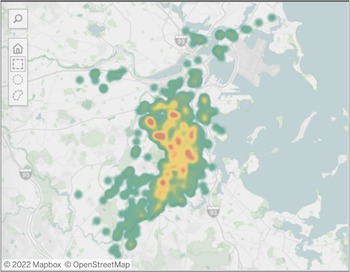
The City of Boston’s Office of Police Accountability and Transparency (OPAT) has shown that the Boston Police Department disproportionately stops and arrests young Black and Latino men, particularly in neighborhoods like the Black Boomerang, on charges related to violence, drugs, and firearms (see Figure 1 above; Sabir Reference Sabir2022). While homicide and other violent crime in Boston do disproportionately involve people of color as either victims or suspects, scholars emphasize that this pattern reflects structural conditions such as segregation, poverty, and concentrated disadvantage rather than inherent criminality (Bloch Reference Bloch2021; Çankaya Reference Çankaya2020; Gaynor et al., Williams Reference Gaynor, Kang and Williams2021). In this context, the neighboring city of Cambridge offers a useful contrast. It is Whiter, wealthier, and experiences lower rates of violent crime and differing policing practices. This shows how the intensity of police enforcement often maps onto racial and class-based geography rather than onto the emergence of crime itself (for more on this, see Brown and Barganier, Reference Brown and Barganier2018; Lally Reference Lally2022).
Heat Map of Boston Police Department Arrests (Sabir Reference Sabir2022).

Figure 1. Long description
This is a heat map superimposed on a street map of Boston. The highest arrest density is shown by red and yellow clusters, concentrated in the central and southern sections of the city, especially south of the intersection of Interstate 93 and Interstate 95. These clusters fade to green as they move outward, indicating lower arrest densities in the northern, eastern, and western neighborhoods. The map background includes major roads, water bodies, and urban features, but only the heat map overlay is color-coded. The densest regions are surrounded by progressively lighter green and yellow zones, with sparse activity at the city’s periphery.
The Movement to Police Boston’s Police
After examining the historical records, we found that Boston’s movement to police the police unfolded in three waves, each spearheaded by an evolving cast of advocates, including labor union organizers to lawyers and clergymen, among others. Below we report on these successive movements in chronological order.
Formation of the Black Pentagon, 1930s-1950s
Excessive police force was a central concern among many civil rights groups during the early Twentieth Century, and one case served to catalyze Boston’s larger movement. On July 8, 1934, George Borden, a Black janitor from Roxbury, was eating dinner on a Sunday with his wife, three young children, and a friend, when they heard a knock at the front door. Borden opened the door and found city motor vehicle inspector, Everett Gardner, and police patrolman, William Harmon, standing at the door, armed but in civilian clothing. They presented Borden with an arrest warrant for “driving without a license” and summoned him to the Dudley Police Station (Miller Reference Miller2000). Borden asked to make a phone call from an upstairs neighbor’s apartment, and the officers granted his request but insisted on accompanying him. Inspector Gardner held onto his sidearm while Borden knocked on the friend’s door but there was no answer. Fearing that these men would kill him, Borden panicked and attempted to flee through a neighbor’s cellar and Patrolman Harmon chased him. Inspector Gardner then cornered Borden in a nearby alleyway as he emerged from a side window, and fired his sidearm, hitting Borden three times on the left side, wrist, and ankle. Borden lingered in the city hospital for five days but eventually died due to his injuries (Miletsky Reference Miletsky2022).
After the shooting, local authorities moved quickly to absolve Gardner and Everett. BPD’s internal investigation, for instance, lasted only a few hours. Investigators determined that, given the evidence, shooting Borden was reasonable and necessary in those circumstances. During the trial, the officers gave false testimony, claiming that Borden had threatened them with a revolver, which investigators never recovered at the scene (Miletsky Reference Miletsky2022). Officers’ testimonies also conflicted with two eyewitness accounts, who both said that Borden was “trying to escape a holdup.” Further, certain evidence such as Borden’s bedside interrogation in which he denied ever owning a gun, was excluded from the court record. Even though Gardner had the dubious distinction as the first transportation officer to discharge a weapon during an arrest, Judge Alpert Hayden ultimately acquitted Gardner of all charges (Miller Reference Miller2000).
But civil rights groups were determined to hold Gardner accountable and demanded justice for Borden’s death. The NAACP, the Urban League, the League of Struggle for Negro Rights (LSNR), the International Labor Defense (IDL), and the Scottsboro Defense League, rallied in response to Borden’s death and Gardner’s acquittal. On July 17, 1934, the LSNR and IDL staged a public funeral for Borden as a form of peaceful protest (Boston Globe 1934a, 1934b). Local press, including the Boston Traveler, the Boston Post, and the Chronicle, were outraged at the use of a gun by a motor vehicle inspector, the murder of George Borden, and the department’s and court’s failures to hold Gardner accountable. The Chronicle, specifically, criticized the Urban League and the local NAACP for their inaction, and demanded its readers revolt against systematic police brutality on Black people (Miller Reference Miller2000).
In response to this pressure, the NAACP formed committees to demand immediate justice. The National Civil Defense League conducted its own private investigation of the shooting and demanded a public hearing. The LSNR also pursued legal action, and on October 30, 1934, Borden’s family brought charges against Everett Gardner for manslaughter. Judge Hayden issued an arrest warrant and let Gardner go on a thousand-dollar bond, but under intense pressure from civil rights groups, the Registry of Motor Vehicles suspended Gardner. A petit jury convened at Suffolk County Superior Court found Gardner guilty of assault and battery against Borden, but the court abruptly and inexplicably declared a mistrial. The next day, a new jury found Gardner not guilty, and he walked free (Miller Reference Miller2000). Two years later, then city mayor, James Curley, reluctantly awarded Borden’s widow a thousand dollars compensation for her loss (Boston Globe 1936).
While civil rights groups were unsuccessful in securing a conviction in their case against Gardner, they did spur the city’s civil rights movement through the War Years. Over the next decade, new civil rights figures and groups would carry the cause of Black freedom forward. In 1949, for instance, two Black social workers, Muriel and Otto Snowden, founded the Freedom House in the Grove Hall section of Roxbury. Their goal was to improve the living conditions of the Black community, and host social, educational, and political events to promote the expansion of a Black middle-class and serve as a base of operations for Black organizers. Prominent Black activists who would later become crucial in the city’s school desegregation and affordable housing fights, including Ruth Batson, Hubie Jones, Ellen Jackson, and later Mel King, all came through the Freedom House.
Given its position in the community, residents and organizers referred to the Freedom House as the “Black Pentagon” (Vrabel Reference Vrabel2014). Archival evidence shows that the Freedom House indeed became a “focal point” of Black civil rights organizing (Boston Herald 1950), and throughout its early years, denial of police protection was a central concern. At the time of its founding, Muriel Snowden and later another important Black organizer of that time, Lucy Mitchell, argued that denial of police protection was a civil rights issue in the Black community, and along with other rights and privileges, protection from street crime was a common good that the community ought to be afforded (Mitchell Reference Mitchelln.d.; Snowden Reference Snowdenn.d.). Muriel Snowden, Ellen Jackson, and Melnea Cass recalled encountering police at protest rallies as defenders of the White power structure (Cass Reference Cassn.d.; Jackson Reference Jacksonn.d.), namely the Irish American controlled Boston School Committee, outside whose office they regularly picketed. While Cass recalled that police commanders were more respectful with her than others at these rallies, police at that time were rarely seen as defenders of the Black community. In one case, for instance, a crowd of angry Black residents remonstrated with Captain Burton Murray of the Metropolitan District Police, who stood by and watched as sixteen-year-old Donald Newton of Roxbury drowned in the Charles River and then refused to resuscitate him afterward (Boston Globe 1938).
Over the next decade and a half, organizers in New York were becoming increasingly aware of the deeply rooted culture of brutality among urban police. In his 1948 address to the Cambridge Civic Unity Committee (CCUC), Dan Dodson, executive Director of the New York Unity Committee, spoke on the condition of police-Black urban community relations. At that time, mutual antagonisms between police and the Black community were palpable. He argued that police officers simply lacked sufficient training. At least in New York, this partly explained the department’s penchant for brutality. Even well-meaning officers, he reflected, succumbed to this culture because their trainers and departmental leadership favored a hard-nosed approach. Like what Mrs. Snowden and other organizers fought previously, police generally failed to sufficiently protect members of the Black community, and lacked concern for their problems, especially when they had been victimized in White racist attacks (Dodson Reference Dodson1948).
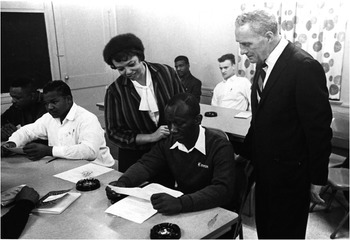
Within five years, Freedom House organizers began pointing to similar conditions locally and proposing police reform measures. In a Youth Council meeting, an organizer argued that police paid Black teenagers undo attention compared to White teens and stressed that Boston was not a “gang town,” and that officers should strive to be friendlier. For instance, when Harvard students organized “panty raids,” a disturbing national trend at the time wherein large packs of White college boys would break into the residences of young women to steal their panties as trophies, police treated them with kid gloves and excused their behavior as “letting off steam.” But when police confronted Black teenagers engaging in far less serious misbehavior, police were rude, aggressive, and punished them harshly (Falek Reference Falek1953). For example, a young man named Jackie Washington filed a complaint with the Freedom House after police manhandled and insulted him. On the night of October 24, 1953, Washington stepped out of a movie theater to smoke a cigarette in the lobby of the Roxbury Theatre, when an officer confronted him for attempting to smoke indoors. Washington took exception to the officer’s tone, and soon a second officer joined the conversation and forced Washington out of the lobby, onto the sidewalk, and then against an outer wall before knocking him to the ground. Amidst the scuffle, the second officer said, “You n****** are all alike. As if we didn’t have enough trouble…” (Washington Reference Washington1953). While the department had a long history as a predominantly White force in the early part of the Twentieth Century (Stathee Photo 1937), diversifying the police force would become one of Mrs. Snowden’s key agendas for decades to come (see Figure 2 above; Freedom House Records 1967).
Muriel Snowden (center) with City Mayor Kevin White and unidentified individual at a police recruitment class (Freedom House Records 1967).

Figure 2. Long description
In the foreground, several men are seated at a rectangular table, each with papers and ashtrays in front of them. At the center, Muriel Snowden stands leaning over a seated recruit, wearing a striped jacket and white blouse. To her right, City Mayor Kevin White stands in a dark suit and tie, observing the session. Other recruits are seated in the background, some facing forward and others turned toward the center. The classroom features a chalkboard on the left wall and patterned curtains on the right. The overall arrangement suggests an instructional or evaluative setting, with Snowden and White engaging directly with the participants.
Rise of the Black Militants, 1960s and 1970s
The so-called “Roxbury Riot”, during a period of widespread urban rebellions around the country, provoked local organizers to embrace Black Power, cultural nationalism, and militant strategies to combat excessive force. On Friday, June 2, 1967, Mothers for Adequate Welfare (MAW) staged a protest at the Grove Hall Welfare Office on Blue Hill Avenue in Roxbury to call attention to the denial of public services and caseworkers’ punitive and discriminatory treatment (de Chantal Reference de Chantal2016). MAW became the catalyst for a historic police riot during this initially non-violent protest for welfare reform when police began brutally beating and forcibly removing MAW members from the welfare office (Vrabel Reference Vrabel2014). MAW protesters entered the building demanding a meeting with administrators and locked employees and themselves inside using bike chains. To disperse the crowd, thirty police officers wielding billy clubs and wearing riot gear broke through the protest lines and stormed the building (Miletsky Reference Miletsky2017). Upon learning of the violence inside, the crowd outside began throwing projectiles at police and engaging them in street skirmishes. Eventually, the crowd’s anger turned destructive. The situation exploded into a full-scale riot, consuming fourteen city blocks, resulting in sixty-eight people injured, fifty arrests, and millions of dollars in property damage (Vrabel Reference Vrabel2014).
Doris Bland, a Black welfare recipient and single mother of Roxbury, formed MAW in 1963 with a group of other mothers in reaction to White case workers’ demeaning, dehumanizing, and insulting treatment of their Black clients and a host of other inadequacies in the city and state welfare systems. In the years leading up to the riot, the Mothers targeted the Grove Hall Welfare Office for picketing and protests because it held by far the largest case load in the city and its case workers were particularly abusive. The Mothers called it a “snake pit.” Seeking services there was daunting because the office was often busy, the waiting room would be filled with hundreds of clients who lingered for hours before seeing their case workers, and normally a policeman loomed over welfare recipients in the waiting area. Once inside, case workers’ offices were little more than cubicles in a cramped room, so there was little privacy when clients met with their case workers. During these meetings, case workers asked personal and invasive questions about their clients’ dating and sex lives, for instance, and if policemen were not sitting in on these meetings, they were usually within earshot (Vrabel Reference Vrabel2014).
Archival footage shows that in the days after the disturbances, MAW leaders spoke to the press, trying to clarify the group’s intentions. Bland appeared on WHDH-TV and read MAW’s list of demands aloud:
Our demands are: 1) no checks cut off on hearsay or malicious gossip, 2) to remove all police officers from the local welfare office, 3) case workers should be at the office every day in order for their clients to see them, 4) social workers should be polite and respectable to recipients, they must stop abusing and using insulting treatment, and 5) the most important one: the dismissal of [Welfare Commissioner] Daniel Cronin, to be replaced by someone we choose and approve of (WHDH-TV 1967c).
Bryan Rollins, Chairman of Operation Exodus, a Black parent-led school desegregation initiative in Roxbury, had also been with the Mothers during the protest. Speaking with WHDH-TV reporters, Rollins explained that this was one of several protests that had taken place at the Grove Hall Welfare Office in the preceding days. “The original issue was that welfare parents…are treated as criminals, as derelicts, they’re insulted, and they’re degraded by welfare workers, and there are specific demands being made, but that’s the general tenor of the complaints that the welfare mothers are making,” he said (WHDH-TV 1967a).
MAW organizers and city leaders had opposing views on what initially sparked the riot. Chaining the doors and locking people inside was an act of peaceful protest, Rollins thought, to make the parents’ point clear that they wanted to meet with Commissioner Cronin, and they would not leave until they did. Once Cronin refused to speak with protesters, the police threatened to carry people out of the office right before they started beating people indiscriminately. Rollins suffered an injured shoulder under a policeman’s billy club inside the welfare office. For Rollins, that was the moment when things got out of hand:
[T]he police just reacted in an incredible way. They simply—a lot them were hysterical, went crazy, when they were presented with a lot of Negros demonstrating for what was really a very small, reasonable request by a group of welfare parents. And this, of course, is within the pattern of the way that riots have started in other parts of the country (WHDH-TV 1967a).
It was only after seeing their aggression that young people in the community began to retaliate against police, pelting them with rocks, bottles, eggs, and tomatoes, Rollins insisted. Police officers repeatedly broke ranks and chased kids down the street. “Kids reacted, increasing the pelting of members of the police department and more police came and the thing grew and grew and threatened to really break out into something much broader,” he told reporters. To Rollins, the explanation for the entire scenario was clear, “I can’t help but think that there’s a strong element of racism running through the whites [at the Grove Hall office] and the police department, which is almost all white.” And he asked that city leaders hold police to account for the violence that broke out at what was an otherwise peaceful protest (WHDH-TV 1967a).
Mayor John Collins, who in 1967 was nearing the end of his second term in office, took a completely different tack on the “unpleasantness in Roxbury” when he spoke with WHDH-TV. “The police there are doing whatever is necessary to maintain law and order,” Mayor Collins stressed. Collins pointed at the protesters chaining themselves in the building as the final spark that set off the riot and he saw police actions in that moment as reasonable:
[T]here’s bound to be—in a state of chaos precipitated by people who did an illegal act by restraining the liberty of municipal employees, chaining them into the building—this is the kind of triggering mechanism which leads to disorder. And in disorder, people become occasionally injured.
Collins had several responses planned and was hopeful that these would help keep the peace. He was in the process, for instance, of appointing a fact-finding committee that would further investigate the disturbances, and planned to hold public hearings with Cronin, MAW, and other interested parties to discuss concrete suggestions for improving the welfare system. He celebrated the lines of communication between police and members of the Roxbury community that opened once his office “placed” Black clergymen and lawyers inside three Roxbury police stations, and an officer within Operation Exodus, all this to “ensure instant communication.” And, he went on, “generally speaking, I think that the degree of cooperation with the responsible elements of the community has been good” (WHDH-TV 1967b).
It’s unclear how long these lines of communication remained open, or how long these “placements” lasted, but what is clear is that police further saturated Roxbury over the next year as tensions simmered. Increased police presence led to more explosive conflicts, tensions, and escalations in violence (Bay State Banner 1967). Local antagonisms were only part of the story, however. News from around the country of political assassinations of civil rights leaders had a tremendous effect on organizers, some of whom were distraught and angered by the scenes. Malcolm X was shot and killed in 1965 and then Martin Luther King, Jr. in 1968, both of whom had lived in Boston and maintained close personal ties to the city (Miletsky Reference Miletsky2022). Organizers and young people held rallies, marches, and protests during this period to bring attention to the number of systemic abuses they endured, and these sometimes devolved into street skirmishes with police (Booras Reference Booras1968).
These simmering tensions were a sign that Black organizers, and indeed young people in Roxbury more broadly, were becoming increasingly militant and legalistic in their reaction to systemic racism. By this point, there were numerous organizations within the Black community with varying degrees of politicization, and focused on a wide range of social problems, from schooling to housing to welfare and others. One key turning point in local organizing, however, was the visit from the then newly appointed Prime Minister of the national Black Panther Party for Self-Defense (BPP), Stokely Carmichael, who spoke to a packed crowd at the Roxbury YMCA in December 1967. In that speech, Carmichael observed that there was at that point much infighting amongst Black led organizations around the country and said that he hoped they could put their differences aside and form “united fronts” in the fight for civil rights.
Days after that speech, the leaders of dozens of Black led organizations in Boston met and agreed to form the “Black Boston United Front,” a militant, activist, and legalistic coalition, and one of their primary goals was to hold police officers accountable for the shootings of unarmed Black men. The “Front’s” member organizations included the local chapters of the BPP and NAACP, the Massachusetts Commission Against Discrimination, and the Massachusetts Welfare Rights Organization, among many others. Led by local activists, including Chuck Turner and Leonard Durant, the Front organized four major actions from 1970 to 1972 in response to instances of police shootings. Two of the shooting victims survived but suffered permanent physical and psychological trauma and two died in direct result of their injuries. In each of these cases, there was credible evidence and eye-witness testimony that directly contradicted official statements. But the mayor’s office, police commission, and municipal courts only granted the Front one favorable outcome in all these cases. Otherwise, the city’s power structure was either indifferent or hostile toward the Front’s protests (Sikowitz Reference Sikowitz2021). Among their most significant achievements during this time were the dismissal of patrolman Anthony Giorgi, who was implicated in the attempted murder of Derek Culbert (African World 1971), and the convening of a “community trial” for a patrolman in a separate incident. In the case of Black People v. Walter Duggan (1970), more than seven hundred people watched as a community led jury found the officer guilty of the murder of Franklin Lynch, and the judge sentenced Duggan to public shaming for his offense. They called the punishment “Poster Day,” and for the next several months, flyers appeared all over the city displaying Duggan’s image, charges, and home address (see Figure 3 above; Curwood Reference Curwood1970).
The Front’s poster used in Officer Duggan’s “Poster Day” sentence (Curwood Reference Curwood1970).

Umbrella of the Black Ministers, 1980s and 1990s
By the late Twentieth century, police saturations had sowed much antagonism throughout the Black Boomerang, but unlike organizers in previous decades, Black activist clergy banded together to inspire public trust in the police who were struggling to control unprecedented levels of drug crime and youth violence. This period is perhaps most defined by a racially charged false accusation and arrest case. On October 23, 1989, a White man named Chuck Stuart murdered his pregnant wife, Carol DiMaiti Stuart, to collect insurance money and then falsely accused an unknown Black man of the crime. Mayor Raymond Flynn held a news conference and took a firm stance in response, saying, “I instructed the police commissioner of the city of Boston and the police department to be as aggressive as they ever have been before” (Boeri Reference Boeri1989). Over the next four days, there were more than a hundred and fifty daily stop-and-frisk encounters in Mission Hill (Scalese and Sargent, Reference Scalese and Sargent2014). Police tactics resulted in violent and sexual abuses. Young Black men and boys described being forcibly strip searched and cavity searched in full public view, and repeatedly interrogated (Civil Rights Division 1990). One Black male teenager told WGBH reporter Rebecca Rollins:
This used to happen every day. Cop cars pull up and [cops] search us. Once I had my pants pulled down and cars are passing by, people I know are watching… And a few times a couple of my friends got their money taken because cops take their money. That’s why people don’t like that stop-and-search, because cops harass (Rollins Reference Rollins1990).
Police eventually falsely accused and jailed two men, including William Bennett, and the District Attorney eventually charged Bennett in connection with the Stuart murder. But during Bennett’s trial the truth came to light. In January 1990, Chuck Stuart left a suicide note in his home, abandoned his car on the Tobin Bridge, and jumped to his death into the Mystic River. Stuart’s brother Matthew then came forward after Chuck’s death and admitted to covering up his brother’s crimes (Boeri Reference Boeri1990). Charges against Bennett were eventually dropped, but the damage had been done. His family was tormented and his life upended. Later that year Mayor Raymond Flynn apologized to the Bennett family in a brief home visit (Scalese and Sargent, Reference Scalese and Sargent2014).
Under increasing pressure for his own role in provoking police actions in the immediate aftermath of Carol Stuart’s murder, Mayor Flynn empaneled an eight-member commission, headed by local attorney James St. Clair, to investigate the BPD (Wintersmith Reference Wintersmith2022). The St. Clair Commission found that between 1981 and 1990, civilian complaints against the BPD officers nearly tripled from 171 to 472. Police assault complaints rose from twenty-five to thirty-eight percent between 1989 and 1990, and this was the most common complaint for both years. Black civilians filed half of all the complaints that BPD received, but at the time made up just over a quarter of the city’s total population. And most complaints came from Roxbury, Dorchester, and Mattapan. Commissioners reported that BPD did little with these complaints. Most files were incomplete, missing signatures, key dates, and witness contact information. Further, half of the complaints in the Commission’s sample were filed against officers who had more than three, or as many as twenty, complaints against them. Of the police misconduct allegations that the Internal Affairs Division (IAD) did sustain, a disproportionate number came from the department itself rather than from the community, which belied the department’s unwillingness to pursue civilian complaints (St. Clair Reference St. Clair1990).
Despite special investigations at both the municipal and state level into BPD’s affairs throughout this period, neither Willie Bennett nor Mission Hill residents saw justice for the abuses they endured. The St. Clair Commission recommended several reforms, beginning with the dismissal of Police Commissioner Francis Roache, but also included reforming IAD, and creating structures for external review via a panel of state and federal lawyers who would review officer involved shootings, and a civilian review board who would scrutinize less serious misconduct. However, Commissioner Roache resisted being pushed out and stayed on another year. And although the city did establish a civilian review board decades later, it lacked any substantive power to conduct internal investigations and reprimand officers, so it was effectively toothless (Wintersmith Reference Wintersmith2022). Soon after the St. Clair Commission published their recommendations, Mayor Flynn disbanded the group and resigned soon afterward. The Massachusetts Attorney General’s office conducted their own investigation of BPD shortly after the Bennett saga and found clear evidence of unconstitutional and abusive stop-and-frisk tactics, witness intimidation, and coercion, but refused to take legal action against them (Civil Rights Division 1990). In the years after Bennett’s arrest, the Lawyers for Civil Rights, a legal aid organization established in 1968, filed a class action lawsuit on behalf of the Bennett family and several other Mission Hill residents against the city alleging that “its police commissioner and five police officers—coerced two teenagers into giving false statements implicating Bennett and thereafter wrongfully used such statements to obtain search warrants and for other investigative purposes” (Bennett v City of Boston, p.1), however in 1995 a Federal jury rejected their claim (Scalese and Sargent, Reference Scalese and Sargent2014).
Historically high rates of serious crime and violence in the years leading up to this provoked a group of Black ministers to band together. In May 1992, as the Morning Star Baptist Church held a memorial service for a young Black man killed in a recent gang-related drive-by shooting, a dozen hooded gang members broke in and interrupted the service. They singled out one mourner, threw chairs at him, and stabbed him eight times. Two more mourners suffered stab wounds and several gunshots were discharged inside the church as the melee spilled into the street (Jones Reference Jones1990). The brazenness of the attack and total lack of respect for the house of worship finally stirred ministers into collective action, and three reverends, Eugene Rivers, Raymond Hammond, and Jeffrey Brown, came together and formed a group called the Ten Point Coalition (TPC). The ministers were motivated to reduce rampant violence, create a safer environment for young people, and improve neighborhood living conditions. However, it was not until Black gang leader Jeffrey Buy shot White Assistant Attorney General Paul McLaughlin in the head in the West Roxbury commuter train station’s parking lot on September 25, 1995, killing him instantly, that the TPC initiated their formal relationship with BPD (Winship and Berrien, Reference Winship and Berrien1999).
The ministers helped mobilize their own and other congregations, community organizations, police departments, and residents all in one large, coordinated effort aimed at addressing urban youth crime and violence. In all, the TPC performed four key functions: 1) building close, personal relationships with youth, and being a friendly face and counselor, 2) shaping and representing the views of the community in multi-agency collaborations, 3) brokering and connecting high-risk youth and their families with welfare and social services, and 4) taking a strong moral stance against crime in partnership with local government agencies.
One key strategy the ministers employed was to mobilize the clergy to conduct monthly “clergy patrols” in the neighborhoods with the highest rates of crime, where they would pray and sing inspirational hymns, and invite residents to join them. This put them in direct contact with gang members, drug dealers, and the homeless, the populations they most aimed to reach. The ministers proselytized in the street, which enabled them to get to know young people and their neighborhood conflicts, so they could intervene when problems between young people threatened to turn violent. Operation Homefront Initiative was one key partnership in which Boston police and school officials and TPC clergy conducted weekly home visits with at-risk youth who had poor behavior or performances in school and connected them and their parents with a variety of resources to address problems at home. The clergy’s relationship building eventually inspired many more youth centered initiatives (Pegram et al., Reference Pegram, Brunson and Braga2016).
Despite previously being among the department’s loudest critics, these Black ministers created an “umbrella of legitimacy” under which the BPD could operate (Berrien and Winship, Reference Berrien and Winship1999). Black ministers in Boston have long been part of the Civil Rights Movement. Churches in the city’s Black sections have served as centers for civil rights organizing going back to the early Twentieth Century (Miller Reference Miller2000). And there’s much archival evidence of Black ministers speaking alongside activists and organizers during key moments of the Civil Rights Movement, such the school desegregation movement (Glinski Reference Glinski1988) and the urban rioting (WHDH-TV 1967d). But after the Carol Stuart saga, Black ministers were among the department’s loudest critics. During a community gathering at Muhammed’s Mosque No. 11 in Grove Hall, religious leaders charged the media, the mayor, and the police with ignoring crucial evidence in the Stuart case. Reverend Graylan Ellis-Hagler of the Church of the United Community, for instance, compared Mayor Flynn’s actions to that of the Ku Klux Klan, “This time, however, the night-riding was not the action of white robbed bigots, but instead the actions of Mayor Raymond Flynn who so quickly jumped to conclusions” (von Mehren Reference von Mehren1990). However, when confronted with the reality of violence at that time, such as when the African Peoples Pentecostal Church and Reverend Rivers’ nearby home were caught in the crossfire of a gang shooting (Jones Reference Jones1990), the ministers saw the benefits of partnering with police. Although some members of the community branded them as “snitches,” and refused to participate in church-led initiatives, the ministers valued sharing information with criminal legal actors and advocating for system-involved young people (Pegram et al., Reference Pegram, Brunson and Braga2016).
The TPC helped to cool public sentiment when controversies over police abuses materialized. The ministers valued the ability to address officer misconduct directly with police leaders. While they could not themselves formally sanction police officials, there remained an ever-present threat that if or when officers did abuse the law, the ministers could take the story to the press and publicly pressure the leadership into taking disciplinary action. Working with ministers was also beneficial to the police. There was no better way for police to earn public legitimacy than through religious ministers; they are expected to be fair and protect the poor and neighborhood welfare. The ministers served as a key community intermediary and public relations tool that helped to shield police from community backlash. In the face of Black crime, the TPC ministers would hold a press conference, publicly condemn the violence, express sympathy for the victims, and call for a fair but aggressive police investigation. In their public statements in 1995, the clergy reaffirmed the stance that BPD had come a long way since 1989 and could conduct a “professional investigation” (Winship and Berrien, Reference Winship and Berrien1999).
Meanwhile, BPD shored up its internal gang violence enforcement structures. In 1993, Mayor Flynn resigned, and William Bratton took over as Police Commissioner once Roache stepped down. The City-Wide Anti-Crime Unit (CWACU), a gang suppression unit assigned to the most violent city districts, had operated under a state of exception during the Stuart murder investigation. CWACU officers were responsible for the mass stop-and-frisk operation in Mission Hill. One police captain reported that they were told to “go in, kick butts, and crack heads,” which led to indiscriminate and brutal tactics. But BPD disbanded the CWACU in 1990 after receiving tremendous community backlash and replaced it with the Anti-Gang Violence Unit (AGVU), which was would eventually be replaced by the Youth Violence Strike Force, both of which served in a similar capacity as the CWACU, as roving, intelligence-gathering, specialized enforcement units assigned to the most violent districts.
Thereafter, BPD went on to spearhead various multi-agency and deterrence-focused task forces aimed at intervening in and facilitating the surveillance and criminalization of gang members, drug users and dealers, and violent offenders. The seven-year period in which the TPC rose to prominence, from 1992 to 1999, saw BPD develop numerous strategies under the banner of collaborative and community-involved policing to address youth violence. Until the end of the decade, BPD led, for instance, Operation Night, wherein police and probation officers patrolled the community together contacting youths in violation of their probation, and Operation Scrap Iron, wherein police conducted large scale “area warrant sweeps” in high crime housing projects, searching for and arresting gun traffickers, and then deployed street and youth workers afterward to link families with social services. In the Boston Gun Project, BPD partnered with the federal Bureau of Alcohol, Tobacco, and Firearms, probation, and the district attorney’s office to crack down on gun sellers and possessors. Finally, with Operation Ceasefire the department fully institutionalized interagency collaborations between probation, youth services, street workers, clergy groups, and others to address youth violence (see Figure 4 above). By that point, researchers were hailing BPD’s and TPC’s collective strategies as a victory, and a miracle (Winship Reference Winship and Smith2004; Winship and Berrien, Reference Winship and Berrien1999).
A Boston probation officer, street outreach worker, and police officer meet with a group of teens at a Roxbury high school to discuss gang crime and youth violence as part of Operation Ceasefire (U.S. Department of Justice 2025).

Figure 4. Long description
In the foreground, several teens are seated at desks facing forward. At the front of the classroom, three adults—a man in a suit and tie, a man in a casual jacket seated on the desk, and a man in a sweatshirt—stand or sit facing the students. Behind them, a large chalkboard spans the width of the room. The chalkboard is divided into sections with handwritten vocabulary words such as ‘Prevention,’ ‘Intervention,’ ‘Escalate,’ and phrases like ‘chill, take it easy.’ Additional notes include ‘Conflict,’ ‘Decisions,’ and ‘Ms. Grego October.’ The upper border of the chalkboard displays faded block letters reading ‘LIFESTYLES... NUTRITION... PARENTING.’ The classroom has wooden floors and standard student desks. The adults appear to be leading a discussion or intervention session focused on youth violence and gang crime prevention.
Conclusion
While the TPC’s Black ministers shielded BPD under their umbrella, the department failed to properly investigate internal misconduct and supervise its own officers. Internal police and city-empaneled investigations in the months after Williams’ death revealed many glaring supervisory and procedural failures. For instance, officers overlooked that multiple apartments shared the same floor, relied on a single intoxicated informant’s sketchy description, ignored contradictory evidence, and skipped basic confirmatory steps, like engaging in a controlled drug buy. Suffolk County District Attorney Ralph Martin investigated the incident and interviewed the officers involved, except for two who refused, and found no basis for criminal charges, though his report did fault supervisors’ negligence, and one detective for lying to investigators (Martin Reference Martin1994).
Commissioner Paul Evans was at a loss for how to respond, so he called Reverand Rivers and asked him what to do. Rivers advised him to hold a press conference and take responsibility for what happened, and Evans did just that. Afterward, there were multiple BPD-sponsored community meetings with the Black ministers standing alongside then-city mayor Thomas Menino and police commissioner Paul Evans who apologized publicly and promised reforms, such as tighter controls on informants, revised warrant procedures, and greater accountability up the department’s ranks (Winship Reference Winship and Smith2004). Ultimately, however, only six of the original thirteen officers involved faced disciplinary action for internal rule violations, but their punishments were limited to reassignments and reprimands (Cullen Reference Cullen1994; Dowdy Reference Dowdy1995; Murphy and Locy, Reference Murphy and Locy1994).
After Williams’ death, it was difficult to overlook the profound limits of public apologies or even financial settlements as remedies for racialized police violence in Boston. When Mary Williams, the minister’s widow, refused to accept the city’s initial low-ball offer, and pursued a two-year-long wrongful death suit, eventually winning a million-dollar settlement, the largest in Boston’s history, she exposed both the human cost of reckless policing and the innumerable value of human life (Pawloski Reference Pawloski1996; Thorpe Reference Thorpe1995). Although officials framed the payout as closure, many Black Bostonians denounced BPD’s “cowboy behavior” and warned that, without structural reforms such as independent civilian oversight, cycles of police violence, official denial, and symbolic gestures would persist (Miller Reference Miller1994c, Reference Miller1995; Wong Reference Wong1995).
The cases of Reverend Accelyne Williams, George Borden, Franklin Lynch, and Willie Bennett illuminate the enduring contradictions at the heart of policing and the struggle for racial justice in the United States. Each case, though rooted in their respective social and political contexts, speaks to national dynamics that scholars of policing, protest, and racial inequality have identified across decades. These stories reveal an iterative historical pattern in which the state deploys violence or racial scapegoating; public outcry billowing into a wave of demands for accountability; and city leaders responding with limited reforms that preserve police legitimacy while skirting structural change. This cycle both exhausts and radicalizes communities of color, compelling them to articulate alternative visions of safety and justice beyond the confines of reform. This cycle rests on long-standing legal, cultural, and political arrangements that gave law enforcers impunity and normalized state violence in Black communities (Burnham Reference Burnham2022).
Reverend Williams’ botched no-knock killing that presaged the same reckless tactics that resulted in the killing of Breonna Taylor decades later is a clear example of this paradoxical cycle. City officials responded with a settlement to Williams’ widow but resisted meaningful structural oversight over operations in specialized BPD units. George Borden’s story highlights another dimension of state violence, which is that when officials have cause to treat Black men as threats, it creates a powerful narrative that justifies their criminalization, and police use of force. The Borden case exemplifies how the presumption of Black criminality structures police discretion, resulting in lethal police action that has a long-lasting effect on community perceptions of legitimacy. Franklin Lynch’s killing similarly speaks to the racialized and wantonly lethal nature of policing in Black communities. His death became rallying cry that stirred activist groups to not only demand reform but also to question the legitimacy of the entire legal system. Finally, the case of Willie Bennett reveals another layer of this history about the structural affinity that exists between police and city leaders, the media, and the White public. Just as earlier civil rights struggles confronted both violence and distorted public narratives, the Bennett case demonstrates how state and media and public institutions conspire to produce an atmosphere of crisis and racialized suspicion, legitimizing aggressive police actions while undermining Black peoples’ civil rights (Harris Reference Harris2015).
The histories of Williams, Borden, Lynch, and Bennett can teach us a few things yet. First, while informal accountability through community partnerships is still a common practice—most notably through weekly Youth Violence Strike Force meetings—formal accountability measures are sorely lacking. When the minsters’ umbrella is open it shields the department from rain, or criticism, but when closed it shields BPD from nothing. We can only speculate why Commissioner Evans called Reverand Rivers after Williams’ killing and then agreed to go on a local apology tour. Perhaps after the racial witch hunt that netted William Bennett BPD leaders realized that the department was not impervious to strong public criticism, whether the ministers’ umbrella was open or not. More recently, city leadership has learned a similar lesson. For instance, the city has received much recent criticism for the seeming ineffectiveness of the Office of Police Accountability and Transparency and the state’s Police Officer Standards and Training (P.O.S.T.) Commission. Even when these bodies recommend disciplinary actions for police misconduct and crimes, both Commissioner Michael Cox and Mayor Michelle Wu have been known to undermine them by either quietly softening disciplinary actions or ignoring the recommendations entirely (Boston Globe 2026; WBUR News 2025a, 2025b, 2025c).
Second, these four cases demonstrate that Boston is not an outlier when compared to the racial dynamics in police violence cases throughout the United States; it is a microcosm. They uncover the persistence of what Murakawa (Reference Murakawa2022) calls “reformist reform,” or institutional responses that absorb critique while fortifying police power. The struggles we confront today are part of much a longer history of the challenge to collectively reign in systemic racism and state violence (Harris Reference Harris2015). Contemporary police violence cannot be neatly disentangled from the Jim Crow era impunity that in effect made police in Black communities “legal executioners” (Burnham Reference Burnham2022). Without confronting this historical continuity, even the most well-intentioned reforms run the risk of reproducing existing structures of racial control.
Finally, what history has shown is that settlements, commissions, and procedural change will never uproot the racial structures from which policing emerged in the United States. The path forward requires us to both tell the truth about the history of police violence and promote reparative measures that seek to acknowledge and redress systemic harm (Burnham Reference Burnham2022). Both local and national contexts figure into this picture when you see how Boston’s history resonates with others across the country, anticipating tragedies from Ferguson to Louisville and Minneapolis. Today’s BLM movement, in contrast to the CRM, whose ideologies guided the responses to these cases, is characterized by an abolitionist stance that regards police violence not as aberrational but as one example of many enduring racial structures (Harris Reference Harris2015). So, to honor the lives we have lost and recognize how much communities have suffered, scholars and activists must press beyond reformist cycles and envision new policy alternatives. BLM organizers might urge Boston to consider abolition through structural divestment. While public opinion polls suggest that Black communities want better not less policing (Gallup News 2023). Whatever the new direction, in order for the Black community to feel safe around police and to trust that their governments will hold violent police to account, city leaders must center the Black community’s experience when looking to reshape municipal policy.
Acknowledgements
Many people contributed to the development of this project—there are too many to list here. But we would like to name a few of the most notable contributors, including our collaborators in the Racial Justice Laboratory, Joaniris “J” Baez and Melanie Matossian, whose early work helped build the foundations of this article. Next, we are grateful to the UMass Boston community who supported the Lab’s data collection, analyses, and writing from 2022 to 2024, especially professors Reef Youngreen, the Sociology and Criminology Department Chair, Pratima Prasad, the College of Liberal Arts Dean, and Steve Striffler and Nicholas Juravich, the Labor Resource Center Co-Chairs. Finally, we would like to thank the Du Bois Review editors and reviewers for their feedback and support.


 Open access

