

Introduction
Within social psychology and, in general, the social sciences, it has been demonstrated that conceptions of the past play a fundamental role in individuals’ and groups’ development of their positions regarding present situations and issues, and even the future (e.g., Arnoso et al. Reference Arnoso, Arnoso and Pérez2012; Jovchelovitch Reference Jovchelovitch2012; Manzi et al. Reference Manzi, Ruiz, Krause, Meneses, Haye and Kronmüller2004; Sibley and Liu Reference Sibley and Liu2012). However, in some instances, there is no widely shared conception of the past within a society. Whether due to ideological or identity-based reasons, different interpretations of the past can emerge, leading to divergent and deeply entrenched viewpoints that may result in intergroup conflicts (de Saint-Laurent and Obradović Reference de Saint-Laurent and Obradović2019; Obradović Reference Obradović2016).
Therefore, unfolding the social representations of the past within a community that is unclear about what has happened should be a starting point for intervening or preventing such inter-group conflicts. As is well known, past events are transmitted from generation to generation (i.e. communicative memory) and through various institutionalized practices (i.e. cultural memory) (Assmann Reference Assmann2011) and represented in different ways over time (Halbwachs Reference Halbwachs1992 [1950]; Rimé et al. Reference Rimé, Bouchat, Klein and Licata2015). Understanding how those who have been influenced by both cultural and communicative memories construct social representations of a past without a shared narrative is crucial for reflecting on the current state of a society in terms of its past and its current and future conflicts.
Subsequently, in this article, we will explore the social representations of university students regarding two periods in Spain’s recent past: the Second Republic (which was abolished by a dictatorial regime, called Francoism, after a civil war) and the Transition (which marked the genesis of the current democratic regime and occurred after the dictator’s death). The Spanish Transition (1975–1982) and the Second Republic (1931–1939) share as historical periods the attempt to transform Spain into a democracy. Both periods were marked by significant political and social reforms, such as the drafting of new constitutions that sought to guarantee fundamental rights and freedoms. The Second Republic promoted agrarian, labour and educational reforms, while the Transition pursued the consolidation of civil and political rights after Franco’s dictatorship. Moreover, both periods took place in contexts of strong political polarization.
Certainly, as will be observed in the historicity of the phenomenon, Spain’s recent past has been anchored in a debate since the beginning of the twenty-first century, with positions strongly rooted in ideology and the coexisting national identities within the country (Yusta Reference Yusta2014). This ongoing debate has yet to reach a common ground between those who accept it as historical revisionism and those who reject it, arguing that the current hegemonic narrative is the most suitable for the country’s coexistence (Boyd Reference Boyd2008). Focusing specifically on these two historical periods, we are dealing with two historical stages referred to as ‘democratic’ within the social imaginary of Spain, which, as Ryan (Reference Ryan2017) pointed out, are opposed to each other, causing a certain part of the population to consider one ‘true democracy’ as opposed to the other. Focusing on university students’ social representations gives us the opportunity of understanding the way social representations of the past of controversial times are constructed within the public sphere by those who have been influenced by the institutions, but also by their context. Therefore, in this section, we will first explain the processes of constructing social representations and the role that ideological positioning and national identities play in them. Second, we will provide a brief overview of the historical context of Spain’s recent past.
The Processes of Constructing Social Representations and the Role of National Identity and Ideological Positioning in their Development
The theory of social representations is a widely used theoretical framework to understand how ideological positions and identities are related to different constructions of the past (e.g. Arnoso-Martínez et al. Reference Arnoso-Martínez, Arnoso-Martínez and Pérez-Sales2012; de Saint-Laurent and Obradović Reference de Saint-Laurent and Obradović2019; Hilton and Liu Reference Hilton and Liu2017). From this perspective, conceptions of the past are considered as a social representation, i.e. a social object constructed through the interaction among members of a community within a specific space and time (Moscovici Reference Moscovici, Farr and Moscovici1984). The aim of these representations is to make sense of the unknown, creating frameworks for action within individuals and groups (Moscovici Reference Moscovici1988).
On one hand, and in the case of national identities, social representations of the past and national identities are simultaneously constructed, as these identities are grounded on the idea of the common past of a group of people that give a sense and meaning to their belonging (Andreouli and Chryssochoou Reference Andreouli, Chryssochoou, Sammut, Andreouli, Gaskell and Valsiner2015; Sainz de la Maza et al. Reference Sainz de la Maza, Gil de Montes and Idoiaga2023). This leads to conceptions of the past being used as symbolic sources to constitute national identity, community and provide them with an orientation in space and time (Smith Reference Smith1986). This parallel and simultaneous construction means that the social representations of the past are strongly tied to the needs of national identities (Liu and Hilton Reference Liu and Hilton2005).
On the other hand, ideology, as conceptualized by Denzau and North (Reference Denzau, North, Lupia, McCubbins and Popkin2000 [1994]), is defined as a ‘shared framework of mental models held by groups of individuals that provide both an interpretation of the environment and a prescription for how that environment should be structured’ (Denzau and North Reference Denzau, North, Lupia, McCubbins and Popkin2000 [1994]: 24). This suggests that the social representations are grounded according to their ideological affiliations.
Additionally, apart from being influenced by a national identity and one’s ideological affiliation, social representations arise from social interaction in context (Jovchelovitch Reference Jovchelovitch2006). This suggests that national identity and ideological affiliation of individuals converge with other representations that co-occur in the contexts in which we are immersed. In order to comprehend the manner in which these concepts interact with each other in the construction of social representations of the past, it is necessary to examine the processes of construction of social representations, i.e. anchoring and objectification.
In the context of anchoring, Doise et al. (Reference Doise, Clémence, Lorenzi-Cioldi and Kaneko1993: 56) propose that social representations of the past are anchored in the shared knowledge and values of diverse groups, including the political left- and right-wing, or different national identities, which generate varying degrees of anchoring. In this analysis, we understand anchoring as a multilevel analytical structure, as proposed by Doise, that operates across individual, inter-individual, and sociological dimensions.
The primary level of anchoring, termed the ‘collective level’, pertains to the utilization of shared reference points for the construction of social representations, which are characteristic of the entire community and frequently devoid of specific significance. Within the context under consideration, the collective reference points would encompass the notion that the Second Republic and the Transition represent periods of twentieth-century Spain.
The subsequent level of anchoring, designated as the ‘individual level’, involves the anchoring process at the individual level. At this level, common reference points are related to beliefs, values, and attitudes, leading to an individual judgement process (Moscovici Reference Moscovici, Farr and Moscovici1984). However, to complete the construction of social representations, social interaction is necessary (Moscovici Reference Moscovici, Farr and Moscovici1984).
Social interaction creates the third level of anchoring, i.e. sociological anchoring, where different individual representations are identified and shaped according to groups and collectives (Doise et al. Reference Doise, Clémence, Lorenzi-Cioldi and Kaneko1993). This prompts social representations to strive towards satisfying the fundamental needs of the groups (Tajfel and Turner Reference Tajfel, Turner, Worchel and Austin1986). In the context of Spain, the presence of diverse national identities, rooted in the collective interpretation of historical events (Andreouli and Chryssochoou Reference Andreouli, Chryssochoou, Sammut, Andreouli, Gaskell and Valsiner2015), suggests the likelihood of these national identities being anchored in varied social representations of the past. Similarly, ideological affiliation leads to the formation of groups and collectives that share the political positioning of their members, creating factions. This is particularly evident in Spain’s political sphere, where individuals and groups with left-wing ideologies advocate for historical revisionism, while those on the right reject it (Retamozo Reference Retamozo2011).
The fourth and final level of anchoring is psycho-sociological anchoring. At this level, the representations of different groups interact with each other and are immersed in intergroup dynamics (Doise et al. Reference Doise, Clémence, Lorenzi-Cioldi and Kaneko1993). This gives rise to new social representations of the past and creates tensions between groups as they compete to impose their point of view on others (Jovchelovitch Reference Jovchelovitch2006: 153–155). In this context, the social representations of the past, shaped by groups’ positions (ranging from national identity to a sense of belonging to an ideology), are immersed in communication, where conflict can occur, particularly when certain groups resist the representations of dominant groups (Howarth Reference Howarth2011). Consequently, given that social representations of the past can only be constructed from a point of reference in the present, it is anticipated that they will be associated with identity and ideological positions.
In order to comprehend the processes through which social representations of the past are constructed at both individual and group levels, it is essential to explore the manner in which this knowledge is transmitted, particularly in instances of conflict. In order to comprehend the dynamics of such conflicts, Paez and Liu (Reference Paez and Liu2011) employ the theoretical framework of collective memory, as proposed by Assman (Reference Assmann2011), drawing upon the concepts of cultural memory and communicative memory. Cultural memory is defined as the institutionally mediated narrative of events (e.g., commemoration or public education). This form of transmission has been shown to promote hegemonic social representations, focusing on the legitimization of the current system (Kus et al. Reference Kus, Liu and Ward2013) and the imposition of a monologic narrative centred on political goals (Ben-Asher Reference Ben-Asher2003). In contrast, communicative memory is characterized by the oral transmission of experiences, subject to the group dynamic of forgetting and remembering, which is a form of semantic knowledge provided by culture – see intergenerational transmission (Schuman and Scott Reference Schuman and Scott1989) or intragenerational communication (Lenz Reference Lenz2011; Paez and Liu Reference Paez and Liu2011). In this sense, the oral transmission of memory renders the past dynamic and subject to change over time (Jovchelovitch Reference Jovchelovitch2012).
Furthermore, social representations of the past are constructed in conjunction with national identities and are associated with ideological affiliations. Individuals and groups construct interpretations based on communicative and cultural memory in order to satisfy group needs and their ideological perspective on the world (Jovchelovitch Reference Jovchelovitch2006; Liu and Hilton Reference Liu and Hilton2005). On the one hand, in the context of national identity, studies that analyse social representations of the past in societies with multiple ethnic and/or national identities, such as New Zealand (Sibley and Liu Reference Sibley and Liu2012) or Estonia (Kus et al. Reference Kus, Liu and Ward2013), demonstrate variations in the manner in which the past is represented based on national or ethnic identities. Indeed, the New Zealand study (see Sibley and Liu Reference Sibley and Liu2012) observed that the necessity to defend in-group history was justified by a stance towards history in which past violence was regarded as irrelevant. On the other hand, in the context of ideological affiliation, studies of the collective memory of Latin American dictatorships reveal that individuals with right-wing ideological affiliations argue for the necessity of the dictatorships they endured as a response to the chaos of the years preceding them (Arnoso et al. Reference Arnoso, Arnoso and Pérez2012; Manzi et al. Reference Manzi, Ruiz, Krause, Meneses, Haye and Kronmüller2004).
However, it is noteworthy that oral memory can serve as a medium for the construction of family memories that do not necessarily align with the prevailing social representations of the past, as evidenced by Paez and Liu’s (Reference Paez and Liu2011) research. Moreover, the process of constructing contested memories is predicated on a direct opposition to hegemonic memories. The extant literature suggests that this phenomenon occurs among individuals and groups who possess a minority national identity within the state. Indeed, in other countries with different ethnic identities, minorities often perceive the current system as unfair and unequal (Kus et al. Reference Kus, Liu and Ward2013; Sibley and Liu Reference Sibley and Liu2012). This phenomenon can be evidenced in the observations made by Busse et al. (Reference Busse, Ferrer-Fons, Grimm, Tholen, Sanjin, Wolnik, Pilkington, Pollock and Franc2017), who noted that the respondents exhibited a critical stance towards the Transition and expressed disapproval of the self-determination movements (even perceiving the Spanish and Catalan identities as being in opposition to each other). Therefore, drawing on Tajfel and Turner’s (Reference Tajfel, Turner, Worchel and Austin1986) Social Identity Theory, it can be argued that, within the Spanish state, there exists a dominant national identity – Spanish – which is institutionally recognized as overarching and is generally associated with greater demographic weight and higher social status. In contrast, other identities linked to peripheral national groups, such as Catalan or Basque, tend to be numerically smaller and may be perceived as holding a subordinate status, both socially and politically, within the broader national framework. Busse et al. (Reference Busse, Ferrer-Fons, Grimm, Tholen, Sanjin, Wolnik, Pilkington, Pollock and Franc2017) have further proposed that the ideological affiliation of their ancestors is a trait that is believed to be transmitted between generations. In the context of ideological affiliation, it is noteworthy that within the Spanish context, the existence of a protest memory has been observed among left-wing political parties (Ryan Reference Ryan2017).
Finally, the process of objectification facilitates the transformation of abstract ideas into images, thereby enabling the physical representation of these abstract concepts (Hoijer Reference Hoijer2011; Moscovici Reference Moscovici, Farr and Moscovici1984). In the context of social representations of the past, values such as democracy and equality have been represented as historical characters (Olick and Robbins Reference Olick and Robbins1998; Schwartz Reference Schwartz1997), along with other symbols such as flags, generating heroes and villains (Hanke et al. Reference Hanke, Liu, Sibley, Paez, Gaines, Moloney, Leong, Wagner, Licata, Klein, Garber, Böhm, Hilton, Valchev, Khan and Cabecinhas2015), thereby enabling the objectification of a past conflict or historical event. This process serves to objectify historical conflicts and events, thereby facilitating the development of symbolic resources that underpin identities, systems, and societies. Consequently, abstract concepts such as democratic freedom and universal suffrage are rendered tangible, acquiring the status of social reality for the collectives and groups that adopt them (Negura and Plante Reference Negura and Plante2021). This phenomenon occurs because groups appropriate images to substantiate their social representations of the past. A notable illustration of this phenomenon can be observed in the case of Nelson Mandela’s image, particularly in the context of racial discrimination (Hoijer Reference Hoijer2011). Moreover, social representations of the past are replete with images of local events that present challenges or offer novel insights to contemporary societies (Wagner Reference Wagner1998). A salient example of this is the mass graves in Spain that emerged due to the civil war or the demise of the Spanish dictator, which subsequently precipitated the Transition. Consequently, it is anticipated that the results of this study will encompass prominent historical figures and objects that serve to symbolize the periods of the Second Republic and the Transition.
Brief Historical Background of the Recent Spanish Past
In April 1931, during the reign of the constitutional monarchy in Spain, the Second Republic was proclaimed through the medium of municipal elections. Under this new regime, significant reforms were implemented, precipitating a period of democratic transformations and social advancements, engendering considerable tension within diverse segments of Spanish society (Casanova Reference Casanova2009: 16). The civil war that subsequently broke out in 1936, following a failed military coup, marked the conclusion of the republican regime, which came to an end in 1939.
The Civil War was characterized by two opposing forces: the republican regime and the rebel faction. The latter received significant support from European fascist regimes of the time, as well as from conservative and right-wing segments of the Spanish population, substantial sectors of the Church, military elites, and the Spanish bourgeoisie. Within the Republican camp, in addition to the Spanish left (comprising socialists, anarchists, and communists), Basque and Catalan nationalists were also present. Consequently, following the victory of the rebel side, leftist ideology and peripheral national identities were subjected to persecution during the Franco regime (Colmeiro Reference Colmeiro2011).
With the death of the dictator Franco, the Transition began in Spain from 1975 to 1981. During this period, there was a significant grassroots social movement that sought to uncover what had happened during the war and the dictatorship. They undertook various initiatives such as commemorations and exhumations of the victims of Franco’s repression and the losing side of the war (Yusta Reference Yusta2014). However, these initiatives had limited resonance in the public sphere because Spain’s focus was primarily on the processes of modernization and Europeanization of the country, as well as the decisions made by the political elites of the time. In fact, political elites of that epoch constructed a narrative in which the Second Republic and the civil war were considered mistakes that all Spaniards made (like a fratricidal war), framing the era of the Transition as a redemption for all Spaniards (Izquierdo Reference Izquierdo2014). This reading of the past, along with the Amnesty Law of 1977, by which the political crimes and human rights violations during Francoism were prescribed, became to many observers a pact of oblivion carried out by political elites (Baer and Sznaider Reference Baer and Sznaider2015).
With the advent of the new millennium, the demands of this citizenry began to resonate in the Spanish public sphere, adding these issues to the political agendas of the country’s political parties (Yusta Reference Yusta2014). Consequently, left-wing and peripheral nationalist parties in Spain initiated various initiatives and proposals to address the recent past. In contrast, right-wing parties with a strong Spanish national identity adopted a stance against historical revisionism, asserting that it merely served to ‘reopen old wounds’ (Bernecker Reference Bernecker2019).
Goal Hypothesis Expectations
A comprehensive review of the extant scientific literature on both the social representations of the past and the literature on the recent past reveals that the narratives that construct these two eras are strongly rooted in the national identities and ideological affiliations within the Spanish state. In light of these observations, the following hypotheses have been formulated for the present study.
H1 Minority national identities (i.e., Galician, Catalan, and Basque) are expected to construct the era of the Second Republic as a positive era and associate it with democracy, while the dominant national identity (i.e., Spanish) will construct it in a negative way.
H2 Similarly, it is expected that the dominant national identity will construct a positive social representation of the Transition, describing it as democratic, while the peripheral national identities will construct it in a negative way, questioning the democracy built in this era.
H3 Participants with a left-wing ideological affiliation are expected to construct a social representation of the Second Republic as a positive era of social progress, while those with a right-wing ideological affiliation are expected to construct this era in a negative way, emphasizing its conflictive nature.
Conversely, participants with a right-wing ideological affiliation will construct a social representation of the Transition as a positive and democratic era, while participants with a left-wing ideological affiliation will construct this era in a negative way, criticizing its democratic nature.
Method
Sample
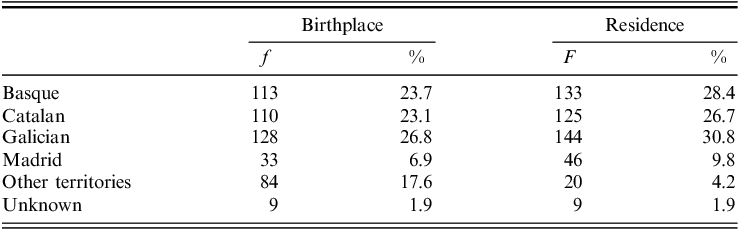
The sample was composed of 477 university students recruited from the regions of the Basque Country, Catalonia, Galicia, and Madrid. The first three territories were selected because they have a significant national identity, while Madrid was selected because it is the country’s capital, having great heterogeneity in terms of origins within its population. The sample was collected by contacting the universities in the four selected autonomous communities. This meant that a certain number of participants may have been born and/or lived outside of these autonomous communities. However, when recruiting the sample, we looked for a numerical balance among the participants in terms of national identity. The control of this numerical balance was carried out by observing the sample collection process. Once a national identity reached a sample size of around 100 cases, the data collection was stopped in the territory associated with that national identity. This control of national identity was carried out by observing the participants’ responses regarding which of the four national identities in Spain they identified with, rather than through their place of origin or residence. These characteristics of the sample can be observed in Table 1.
Birthplace and residence of the sample.

With respect to gender, the sample comprised 339 women (72.8%), 120 men (25.2%), and seven individuals who identified as non-binary (1.5%). The mean age of the participants was 24.71 years (SD=9.13). The age range of the participants was from 17 to 37 years (M = 24.74; Me = 21; Mo = 18). Regarding the participants’ birthplaces, the majority were born in the autonomous communities they were studying during the research (as shown in Table 1, comprising 80.1% of the cases). Concerning residential patterns, the majority of participants resided in the territories adjacent to their universities, while those residing in other territories resided in proximate areas. With respect to national identity, the sample included 110 individuals identifying as Basque (23.1%), 99 as Catalan (20.8%), 113 as Galician (23.7%), and 137 as Spanish (28.7%). However, with respect to political orientation, an overrepresentation of left-leaning ideology was observed (M = 8.08, SD = 1.79). To address this imbalance, we implemented an ad hoc distribution of our sample to facilitate more equitable ideological comparisons. To this end, we calculated the median score, which served as a general representation of left- and right-wing positions. Utilizing a scale of ideological positioning ranging from 0 (right-wing) to 10 (left-wing), those scoring 0 to 7 (n = 120, 25.1%) were categorized as having a centre-right ideology, a score of 7 to 9 (n = 219, 45.9%) indicated a left ideology, and a score of 10 (n = 112, 23.5%) was taken to indicate a far-leftist ideology.
Procedure
To access youths in territories with a national identity, the universities were asked to disseminate our research (online) among their students. To do so, the administrations of faculties and rectorships shared an email among students. We presented our research, and we attached the link to access the questionnaire for those who wished to participate. Sampling began in September 2020 and ended in February 2021, during which time the PSOE (Partido Socialista Obrero Español, Spanish Socialist Worker’s Party) and Unidas Podemos was in government. This research has obtained the approval of the Ethics Committee of the UPV/EHU [M10/2020/104]. This approval was granted because no identifiable information was collected, thus preserving anonymity. Additionally, participants were informed about the nature of the test and the absence of repercussion for their future academic, professional, and/or social status through an informed consent process that appeared on the website before taking the test. Furthermore, the database was protected to ensure that only the researchers had access to it.
Data Collection
To analyse the participants’ social representations of the Second Republic and the Transition, the Grid Elaboration Method (GEM) for free association was used. This technique is commonly used in research on social representations (Joffe and Elsey Reference Joffe and Elsey2014) and social representations of history (Bouchat et al. Reference Bouchat, Licata, Rosoux, Allesch, Ammerer, Bovina, Bruckmüller, Cohrs, Csertö, Delouvée, Durante, Ernst-Vintila, Flassbeck, Hilton, Kesteloot, Kislioglu, Krenn, Mari, Petrović and Klein2019). This method consists of providing participants with instructions and four boxes. The instructions given to the participants were as follows: ‘We ask you to write the first four words that come to mind when you hear or read Second Republic/Transition’. Afterwards, participants were then asked to explain the reasons and motives why these words had come to mind. Then, the whole corpus was analysed, both the questions and the explanations, by means of lexical analysis with the Iramuteq software.
Once this procedure had been completed, the participants had to state to which of the four national identities (Spanish, Basque, Catalonian, or Galician) they felt they belonged. They could choose only one. The participants were also informed that they would be asked to indicate their ideological positioning on a scale ranging from 0 to 10, with 0 representing the most right-wing position and 10 representing the most left-wing position. This particular item is the most common method of measuring political ideology, exhibiting good construct validity (e.g., Chirumbolo Reference Chirumbolo2002; Fibert and Ressler Reference Fibert and Ressler1998; Jost et al. Reference Jost, Napier, Thorisdottir, Gosling, Palfai and Ostafin2007; Kemmelmeier Reference Kemmelmeier1997). The participants were also asked to provide information regarding their place of birth, current place of residence, age, and gender.
Data Analysis
The Reinert method using Iramuteq software for lexical analysis (Reinert Reference Reinert1996) was employed to analyse the text corpus. This method has frequently been used to study social representations (Lahlou Reference Lahlou1996; Klein and Licata Reference Klein and Licata2003), confirming that the results obtained agree with those of other methods used in this field of research (Lahlou Reference Lahlou1996). This method is based on the premise that words are not independent of each other but reflect underlying themes. Reinert’s (Reference Reinert1996, Reference Reinert2003) main thesis is that all discourse is expressed from a set of words that constitute units of meaning independently of their syntactic construction. These units of meaning evoke a way of thinking about the object being spoken of or a field of thought since it is from these that the statements acquire meaning.
When comparing the Reinert method with classical content analysis (Allum Reference Allum1998), it has been concluded that both methods can provide the same level of contract validity. For although Reinert achieves results that are potentially replicable, it in no way removes the role of the researcher. This software moves the interpretative process to after the statistical analysis, whereas classical content analysis does it before, when constructing the coding frames (Allum Reference Allum1998). Therefore, although there may be differences in the interpretations of the results (as in all quantitative methods), the Reinert method avoids problems of reliability and validity that are attributed to other methods (Klein and Licata Reference Klein and Licata2003; Reinert Reference Reinert1996).
In accord with previous research using the Reinert method, the raw data were entered into the Iramuteq software and no pre-treatment was carried out. The most significant items of vocabulary in each class were selected based on the following three criteria: (1) an expected value of the word greater than 3; (2) evidence of the chi-square association, tested against the class [χ 2 ≥ 3.89 (p = 0.05); df = 1]; and (3) the word appears mainly in that class, with a frequency of 50% or more. The Iramuteq software determines which text segments are associated with each class or group of words and classifies them according to their chi-square value. In this study, the text segments with the most significant chi-squares of each class were recorded.
Once these ‘lexical universes’ have been identified, they are associated with ‘passive’ variables (independent variables). In the present case, the passive variables were national identity and ideological orientation. Thus, Reinert method operations are statistical, transparent, and reproducible until the final stage of interpretation. First, the analyst assigns a label to each specific vocabulary set that the software had identified as a lexical world based on co-occurrences and distribution patterns (Schonhardt-Bailey Reference Schonhardt-Bailey2013). Then, in the final phase, to create the labels or titles of each class, a systematic process was used in which the researchers named each class based on the words.
Finally, the researchers will label the group of words and text segments grouped by the software (Schonhardt-Bailey Reference Schonhardt-Bailey2013). In this final phase, this research adopted a systematic process to create the labels or titles of each class (Idoiaga Mondragon et al. Reference Idoiaga Mondragon, Orcasitas-Vicandi and Roman2022). Finally, a third researcher created the final label that all three approved.
Results
Second Republic
In order to explore the shared contents of the representations of the Second Republic among the youths, the text corpus was analysed by the Reinert method. This methodological approach enabled the identification of the manner in which the subjects represented the Second Republic, the concepts and connotations attributed to it, and the manner in which these concepts and connotations were interconnected.
The entire corpus was made up of 19,762 words, of which 2873 were unique. Therefore, the corpus was divided into 595 segments and four classes (see Figure 1).
The hierarchical clustering dendogram of the free association exercise for the Second Republic, with the most frequent words and the words with the greatest association χ 2(1) p < 0.001, and associated ideology and national identity (*)

The following observations can be made regarding the participants’ main ideas about the Second Republic, as elicited by the free association method. These ideas are represented by a series of high-frequency words and text segments, thus generating each class. First, the results show two branches or themes made up of different classes. These main clusters were named as ‘How was that time?’ (Class 1 – conflictive epoch; and Class 2 – progress epoch) and ‘How has this era shaped today?’ (Class 3 – symbology; and Class 4 – Information sources), and each class will be subsequently explained.
Class 1 is in the ‘How was that time?’ cluster, with a weight of 40.81%. This class has been designated a ‘conflictive epoch’ due to its incorporation of segments that depict the Second Republic as a period of societal instability and social tension, culminating in a state coup, civil war, and subsequent dictatorship. The interpretation of the Second Republic as a period of chaos and conflict, as promoted by political elites during the Transition period, has the potential to influence this interpretation. This interpretation of chaos persists until the onset of the civil war, aligning with the sentiments expressed by the class. The following are some of the most characteristic segments of the class: ‘The Second Republic was a historical moment where the revolution could have occurred in Spain, but consequently an environment of political and social instability was created that ended with a military uprising and a civil war where democracy was overcome by a coup d’état’ (X 2 = 118.78, left ideology, Galician). ‘I associate the Second Republic with a period in history in which political positions clashed with tension, causing political and social instability in a context of lack of economic and social development that led to a civil war’ (X 2= 92.72, centre-right ideology, Galician). This class exhibited a marked association with centre-right ideology (p < 0.04) and Spanish national identity (p < 0.05).
In the same cluster, Class 2 emerges with a weight of 12.13%. This class has been designated as a ‘progress epoch’ due to its depiction as a period characterized by significant social advancement across diverse domains, including but not limited to educational initiatives and the female vote. The most significant segments of the class are as follows: ‘Both education and culture in the Second Republic were key concepts that they tried to extend to the whole world; likewise, women began to have more weight through the female vote and their inclusion in the classrooms, and freedom and critical thinking were fundamental pillars’ (X 2 = 310.38, far-left ideology, Galician). ‘It was a time of advance to achieve rights for all; in this case, I am thinking especially of women of science with a research culture and therefore also of progress at all these levels and of freedom’ (X 2 = 283.54, left ideology, Spanish). This class is associated with a left ideology (p < 0.05), and the Galician national identity (p < 0.02).
The second cluster included segments where participants stated how this epoch shaped the current times. Consequently, Class 3, designated ‘symbology’ (20.59%), exhibited segments predominantly referencing the flag, although it also encompassed individuals from the era itself. Symbolic resources have been demonstrated to facilitate the representation of abstract concepts such as ideals and values (e.g., the flag as a symbol of a system, Clara Campoamor as a symbol of feminism and the fight for women’s rights) (Liu and Hilton Reference Liu and Hilton2005). Noteworthy segments include direct references to the flag and pivotal events of the era, along with references to prominent political figures of that period. One participant remarked, ‘The word freedom has come to my head, like the first because the republic gives the feeling of being able to elect our leaders and not have some who are inherited, the flag symbolizes the colours that had replaced red for purple, this being a symbol’ (X 2 = 273.51, centre-right ideology, Basque). ‘Purple because of the flag of the Spanish republic of April 14, 1931, and Indalecio Prieto and Manuel Azaña due to being important figures of that time’ (X 2 = 210.72, left ideology, Spanish). This class exhibits a strong association with Basque national identity (p < 0.0001).
Finally, Class 4 encompasses those segments pertaining to the source of information from which the participants internalized the representation of the Second Republic, i.e., the education system. This class was thus designated ‘Information sources’ (26.47%). The segments within this class illuminate the participants’ acquisition of this knowledge, which, as is often the case with social representations of the past, is predominantly attributed to the education system. The most salient segments of the class include: ‘I have chosen these words because they are the first that have come to mind, after studying it in class and hearing how this was lived from the mouths of my parents and grandparents I can only think that it was one of important changes in the history of Spain’ (X 2 = 117.05, far-left wing ideology, Basque). ‘I honestly did not study this subject of the history of Spain but I think it was a great advance in society and if it had gone well, Spain could be a more tolerant country today’ (X 2 = 109.19, left ideology, Spanish). This class exhibits a strong association with far-left ideology (p < 0.05) and Catalan identity (p < 0.02).
Transition
As was the case with the Second Republic, the Transition was analysed using the Reinert method. The entire corpus was composed of 20,742 words, of which 3305 were unique. The descending hierarchical analysis divided the corpus into 614 text segments and four classes (see Figure 2).
The hierarchical clustering dendogram of the free association exercise for the Transition, with the most frequent words and the words with the greatest association χ 2(1) p < 0.001, and associated ideology and national identity(*)

Class 4 emerged with a frequency of 11.9%, and it was designated the ‘hopeful epoch’ due to the presence of segments that allude to the attainment of individual liberties congruent with democratic principles that were acquired during that period, evoking a sentiment of hope. The following are some of the most salient segments: one participant articulated their sentiments with the following: ‘Hope is the first word that comes to mind for the liberation and fresh air that the Transition brought about: a new opportunity to live a better and free life’ (X 2 = 273.19, centre-right ideology, Basque). ‘The sensation that a door was opening and new air was coming in; the hope of advancing, of reconciling, of freedom, although it could have been the beginning of another civil confrontation, surprisingly a large majority was united’ (X 2 = 229.89, centre-right ideology, Galician). This class is related to left ideology (p < 0.05) and Catalan national identity (p < 0.05).
The creation of symbols referring to the creation of the state can be observed in Class 2, labelled ‘symbology’, with a weight of 34.1%. In this class, as in the class with the same name in the Second Republic, the segments observed speak about characters from the time itself. However, in contrast to the other class, historical events significantly influence the period under discussion (e.g., the death of Franco at the onset of the period). The following segments are particularly noteworthy: ‘Due to the fact that it is situated in a period of contemporary history, it was also just after Franco’s death and a constitution was established, which is why democracy returned to Spain’ (X 2 = 179.20, right-wing ideology, Spanish), ‘The first person who comes to me is King Emeritus, Juan Carlos I, since his decisions and actions were decisive, and I also believe that Spain finally began to move forward and to try again to put society in its place’ X 2 = 165.50, centrist ideology, Basque). This class is linked to centre-right ideology (p < 0.08) and Spanish national identity (p < 0.03).
Class 3, with a weight of 13.13%, was designated ‘democracy consolidation’ due to its inclusion of segments that primarily justify the political system as a precursor of democracy in the country and the subsequent reconciliation of the population. Consequently, the system is not only justified as the sole agent that has introduced democracy to the nation, but it is also contended that it was the sole entity capable of reuniting the Spanish populace following the confrontations and social divisions of the past (as substantiated by the prevailing hegemonic narrative of Spain – Izquierdo 2014). These notions manifest more distinctly in specific segments of the population, which include: ‘Democratic, in decades, with its relative limitations that will lead to the subsequent establishment of the current political order, freedoms and constitution, because in the process previously described the reforms are carried out that will allow the consolidation of the change, amnesty, legalization of political parties, fundamental rights, etc.’ (X 2 = 151.16, left ideology, Spanish). ‘During the Transition, the main step that the two Spains take is reconciliation with the main goal of achieving democracy after at least two centuries of coups d’état and civil wars’ (X 2 = 146.11, left ideology, Spanish).
Finally, Class 1 appeared isolated in its cluster with a weight of 40.91%. This class was designated as ‘Continuation of Francoism’ due to the fact that it encompasses segments where participants articulated the notion that the prevailing regime (emerging from this Transition) perpetuates the legacy of the dictatorship, thereby undermining the legitimacy of the contemporary system. The following are some of the most characteristic segments of the class: ‘The Transition is a mirage, a farce, a lie and a fallacy since the same political judges and same agents were handpicked, there was no real change unless we continue to transit today’ (X 2 = 137.92, far-left ideology, Basque). ‘The Transition seems to me a lie and a deception that all the people who lived and live in the Spanish state wanted to believe since Francoism continues in both political and judicial institutions, ecclesiastical police’ (X 2 = 122.20, far-left ideology). The present class has been demonstrated to be associated with far-left ideology (p < 0.0001) and Basque (p < 0.03), Galician (p < 0.05), and Catalan national identity (p < 0.05).
Discussion and Implications
The central objective of this research endeavour was to delve into the social representations concerning the Second Republic and the Transition periods held by university students. The findings reveal that the social representations of these periods are currently ingrained in the national identity and ideological affiliation of the participants, despite being considerably influenced by cultural memory, a phenomenon that is largely attributable to their educational attainment. The findings reveal a collective anchoring of the Second Republic and the Transition, serving as common reference points for the entirety of Spanish society with regard to significant periods in recent Spanish history. However, lexicographic analyses demonstrate that these periods are represented with different meanings, based on participants’ ideological affiliations and national identity. This suggests that sociological anchoring based on national identity and ideological affiliation plays a significant role in articulating the social representations of these periods.
First, as anticipated, peripheral (i.e., minority) national identities were associated with a favourable portrayal of the Second Republic and linked it with democracy. Conversely, the Spanish (i.e., dominant) national identity was linked with a negative construction. Initially, Galician national identity was associated with a representation of the Second Republic as a period of progress, during which various social advances were achieved. In accordance with the theory of social representations (see Jovchelovitch Reference Jovchelovitch2006; Moscovici Reference Moscovici, Farr and Moscovici1984), this phenomenon may be attributed to the assertion made by regions with a peripheral national identity regarding the necessity of transitional justice during these recent past periods (see Yusta Reference Yusta2014). This phenomenon may result in the adoption of idealizing discourses associated with the Second Republic, as evidenced by those who advocate for historical revisionism (see Retamozo Reference Retamozo2011). Conversely, Basque national identity has been linked to the embodiment of this era through symbols, thereby facilitating the process of objectification of social representations (Moscovici Reference Moscovici, Farr and Moscovici1984). The employment of symbolism, as evidenced by the historical figures and the colour purple in the flag, underscores the social progress embodied by figures such as the activist Clara Campoamor, who fought for women’s suffrage (see Casanova Reference Casanova2009). The utilization of these images serves to transform abstract concepts into tangible social realities, thereby initiating a process wherein group members are compelled to attribute meaning and significance to these symbols (Wagner Reference Wagner1998). By this process, the meaning and significance become something tangible, real, and enduring (Mahendran et al., Reference Mahendran, Magnusson, Howarth and Scuzzarello2019: 579). Negura and Plante (Reference Negura and Plante2021) refer to this phenomenon as ‘naturalization’. In this manner, the minority identities in Spain appear to align with the narrative of progress during the Second Republic, a stance that aligns with the historical revisionism espoused by political actors in the Spanish public sphere (see Yusta Reference Yusta2014). Conversely, the Catalan national identity was associated with the identification of institutional sources (e.g., education) utilized to construct the representation of the era. This suggests that minority identities in Spain utilize cultural memory to construct social representations of that era, potentially to legitimize and justify their own representation (Glăveanu Reference Glăveanu2009). Conversely, in the context of dominant national identity, our findings indicate that Spanish national identity portrays the Second Republic as a period of conflict, aligning with the narrative crafted by political elites during the Transition. These outcomes are consistent with those reported in the study by Liu and Hilton (Reference Liu and Hilton2005), but in the case of ethnic identities; where the dominant identity accepted the official narrative of New Zealand’s colonial past, while the Māori ethnic identity (i.e., minority) rejected such a narrative.
Second, as anticipated, the results of the study indicated that the predominant national identity was linked to a favourable interpretation of the Transition, while the vast majority of peripheral national identities, with the exception of Catalan, were associated with a perception of the Transition as a continuation of the Franco dictatorship. Notably, Catalan national identity was associated with a representation of the Transition as a period of hope and social change for the better. This outcome is incongruent with the findings reported in Busse et al. (Reference Busse, Ferrer-Fons, Grimm, Tholen, Sanjin, Wolnik, Pilkington, Pollock and Franc2017), wherein it was observed that young Catalans adopted a critical stance and a narrative more aligned with other peripheral identities, perceiving the Transition process as a farce. However, it remains challenging to ascertain whether these perceptions stem from cultural or communicative memory. The hegemonic narrative portrays this era as a new opportunity to live in democracy (see Izquierdo Reference Izquierdo2014), yet the study by Sainz de la Maza et al. (Reference Sainz de la Maza, Gil de Montes and Idoiaga2023) also demonstrates that activists for historical memory represented this era as a time of social demands by citizen movements. In the context of other minority identities, it is noteworthy that, as in studies related to ethnic identities (see Liu and Hilton Reference Liu and Hilton2005; Kus et al. Reference Kus, Liu and Ward2013), minority groups construct their social representations of the past as contested memories that criticize the current system, presumably due to the search to satisfy the needs of the group (see Tajfel and Turner Reference Tajfel, Turner, Worchel and Austin1986). In light of the argument that social representations are shaped by the prevailing context, it is plausible that these minority groups have adopted the narratives of political groups that advocate for historical revisionism. Examples of such groups include left-wing parties, as discussed by Ryan (Reference Ryan2017), and those with a pronounced peripheral national identity, as evidenced by Yusta’s (Reference Yusta2014) work. This hypothesis is reinforced when compared with the results obtained in the Second Republic, where it is seen that these sectors have an idealization of the era (Retamozo Reference Retamozo2011) and use symbols, such as the flag of this era, currently for their claims (Ryan Reference Ryan2017). With respect to the prevailing national identity, it is evident that it is intertwined with the symbolism associated with that era. Conversely, the Spanish identity appears to be associated with the processes of naturalization (Negura and Plante Reference Negura and Plante2021) of social representations, with the aim of making the contents of these representations real and tangible. Consequently, the prevailing national identity appears to prioritize the preservation of the prevailing social order by embracing the senses and meanings embedded within hegemonic narratives. This approach serves to legitimize its dominant status within Spanish society, thereby addressing the group’s needs, as previously theorized by Tajfel and Turner (Reference Tajfel, Turner, Worchel and Austin1986).
Third, and in relation to ideological affiliation, as expected, people with a left-wing political affiliation were generally associated with a construction of the era of the Second Republic as an era of progress, while people with a right-wing affiliation were associated with representing the era as conflictive. However, in the case of individuals with far-left ideological affiliations, this tendency was associated with the class that referred to the sources of information used to represent such an era. This suggests that, as in the case of Catalan national identity, these sources are used to justify the supposed objectivity of its representation (Glăveanu Reference Glăveanu2009). Conversely, the findings concerning the more moderate left-wing ideological affiliation prompt consideration of the observations made by Retamozo (Reference Retamozo2011), who noted the idealization of the Second Republic within these demographic groups, a phenomenon also documented by Ryan (Reference Ryan2017). Conversely, the centre-right ideological affiliation is associated with representing that era as conflictive. These outcomes align with studies conducted in Latin America, which revealed that individuals with this ideological orientation rationalized the dictatorial regimes that took place in their respective countries, attributing the preceding chaos and conflict to the state of disorder (Arnoso et al. Reference Arnoso, Arnoso and Pérez2012; Manzi et al. Reference Manzi, Ruiz, Krause, Meneses, Haye and Kronmüller2004).
In conclusion, as anticipated, individuals with a right-wing ideological affiliation were associated with a favourable representation of the Transition, characterized as positive and democratic. Conversely, individuals with a left-wing ideological affiliation were associated with a negative representation, criticizing its democratic nature. In the case of left-wing ideological affiliation, it is noteworthy that while the extreme left was associated with a representation of the era as a continuation of Francoism, the more moderate left was associated with a representation of the Transition as a hopeful era. These observations underscore the potential for heterogeneity within the left-wing political spectrum within our nation. It has been observed that Spanish citizen activists constructed this period as one of mobilization and social demands, yet concurrently as a period in which a different system was being established, albeit with the maintenance of Francoist institutions (Sainz de la Maza et al. Reference Sainz de la Maza, Gil de Montes and Idoiaga2023). The results of our study indicate that participants with a moderate left-wing affiliation have a tendency to characterize this era as one characterized by the social changes that were attempted and/or achieved. Conversely, those of an extreme leftist orientation have a propensity to depict this period as a perpetuation of Francoism, a perspective that is further reinforced by the rhetoric of minority left-wing parties, such as the Communist Party (Ryan Reference Ryan2017). Conversely, right-wing ideology has been linked to the symbolism of the era, aligning with the naturalization process (Negura and Plante Reference Negura and Plante2021) to substantiate the veracity of the Transition. In accordance with the fourth phase of anchoring as proposed by Doise et al. (Reference Doise, Clémence, Lorenzi-Cioldi and Kaneko1993), it can be posited that both the concept of Spanish national identity and the right-wing political affiliation, in response to the demands of their identity and ideological counterparts, construct their representations of the Transition. These representations are then substantiated through the utilization of images that seek to demonstrate their veracity and concreteness. Conversely, left-wing ideological affiliations may employ institutional sources of information, such as education, in constructing their representations of the Second Republic.
In summary, it can be posited that the social representations of the Second Republic and the Transition are profoundly influenced by the national identities and ideological orientations of university students. Conversely, the Spanish national identity and right-wing political affiliation construct an image of conflict for the Second Republic and one of regime change in the Transition. In contrast, the peripheral identities and left-wing ideological affiliations construct their representation of the Second Republic as an era of social progress, while they tend to be more critical of the Transition. This perspective aligns with Retamozo’s (Reference Retamozo2011) observations, who, in analysing the public discourse surrounding the recent past, noted its stagnation in entrenched positions. This observation, in conjunction with the findings of the study, suggests that these positions have permeated the demographic of university students. A broad review of the results of our research further suggests that the status quo of the country is contested, with the employment of divergent representations of these two eras playing a pivotal role in this contention. Ryan (Reference Ryan2017), who detailed how the citizen movement for transitional justice evolved towards demands for a change of regime to a republican one, has previously documented this phenomenon historically. Drawing upon the theoretical framework of social representations, it can be posited that the perceptions of these two eras by segments of peripheral national identities and left-wing ideological groups might serve as cognitive alternatives to the prevailing regime (see Kus et al. Reference Kus, Liu and Ward2013). However, further research is necessary to explore this in greater depth.
First, it is important to recognize that the current sample is not representative of the broader youth population, as it is composed exclusively of university students. Future research should seek to include participants with more diverse educational backgrounds. Second, the sample was predominantly female and showed a left-leaning ideological tendency. This demographic and ideological skew may have introduced certain biases into the results, particularly given the use of the median to construct the ad hoc distribution of ideological positioning. With regard to national identity, a categorical approach was adopted, whereby participants selected the identity with which they most closely identified. This methodological decision was made deliberately to capture the dominant identity framework shaping participants’ interpretations. However, future studies might also consider the degree of adherence to each identity. Finally, the participant recruitment strategy may have resulted in an over-representation of individuals with a recent or heightened interest in the topic, potentially affecting the overall composition and perspectives within the sample.
Data Availability Statement
The data that support the findings of this study are available on request from the corresponding author. The data are not publicly available due to their containing information that could compromise the privacy of research participants.
Conflicts of Interest
The authors declare that they have no conflict of interest.
Ethics Statement
The studies involving human participants were reviewed and approved by University of the Basque Country. Written informed consent to participate in this study was provided. UPV/EHU [M10/2020/104].
About the Authors
Martin Sainz de la Maza obtained cum laude in social psychology at the University of the Basque Country UPV/EHU in March 2024 with his thesis on social representations of the past. He currently works as an assistant professor at the same university, since November 2024 in the Department of Developmental and Educational Psychology. Throughout his career as a university professor, he has taught the subjects of Child Psychology, Educational Psychology and Sports Psychology at the Faculty of Education and Sports Sciences, as well as Statistical Data Analysis II and Evaluation of Intervention Programs at the Faculty of Criminology. As for his academic career, he has a degree in Psychology, a research master’s degree in Psychology and another in social sciences, all of which he completed at the UPV/EHU. Outside of teaching, Martín has worked as a neighbourhood social worker, working with people from different cultures, with a special emphasis on minors, where he has worked as an intervener as well as a sociocultural animator. In addition, he also worked at a family meeting point, carrying out and supervising visits for minors.
Nahia Idoiaga Mondragon is a graduate in Psychology (2011) and Psychopedagogy (2011), she holds a PhD in Psychology with international distinction (2016) from the University of the Basque Country UPV/EHU. In the field of research, focusing on educational psychology and social psychology, she has researched and published influential articles on topics related to socio-educational inclusion, education, feminism, and health. She is also involved in several projects, mostly European, that focus on the inclusion of young people in vulnerable situations. At the teaching level, she is an associate professor in the Department of Developmental and Educational Psychology. She also co-supervises theses for the PhD programmes in Psychology and Psychodidactics at the UPV/EHU. She is also vice-dean of undergraduate, postgraduate, and final degree projects at the Faculty of Education in Bilbao.
Lorena Gil de Montes is an assistant professor at the University of the Basque Country since 2000. She graduated from the University of the Basque Country and got her PhD in the Vrije Universiteit Amsterdam in 2001. She has a tenure position from 2011. Her main research interests are the relationship between language use and social psychological processes. She has done research in the field of social cognition and also in more socio-constructionist approaches such as Social Representations Theory. Her fields of study are health, discrimination, communication and the socio-cultural construction of diverse social objects in health, education and social contexts.


 Open access

