


INTRODUCTION
The burden of rabies in parts of the developing world is substantial, with rabies being responsible for the deaths of about 55 000 people each year, primarily children in Africa and Asia [Reference Knobel1]. However, the true number of deaths is thought to be as high as 100 000 annually [Reference Fooks2]. It is estimated that for every case reported, as many as ten cases may go unreported [Reference Meslin, Fishbein and Matter3]. Despite the high number of deaths that could be prevented, rabies control programmes are often underfunded in favour of more economically important diseases of humans and livestock [4].
According to the Filipino Department of Health, 200–300 Filipinos die from rabies each year [5]; however, the true incidence is undoubtedly much higher. About one-third of rabies deaths in the Philippines are in children. The Visayas region of the Philippines, which includes the island of Bohol, accounts for about one-third of the human rabies cases in the nation [Reference Dodet6]. The only significant reservoir of rabies in the Philippines is the dog. There is a perception that the majority of human cases are caused by bites from stray dogs; however, in the Philippines, 88% of human rabies cases are the result of bites from owned dogs [Reference Wallerstein7].
The Filipino Government has taken steps to address rabies with ‘The Rabies Act of 2007’, which provides for post-exposure prophylaxis (PEP) at established animal bite treatment centres, promotes education on rabies, and introduced animal control measures such as dog vaccination and pet registration [5]. That same year, the Bohol Rabies Prevention and Elimination Programme (BRPEP) was introduced by the Alliance for Rabies Control and the Bohol Provincial Government [Reference Dodet6]. As part of this programme, rabies education was implemented by local community leaders and responsible pet-ownership was included in elementary school curriculums. As many as 180 000 children have been taught about rabies with the hope that this knowledge is passed on to the rest of the family [8].
Mass vaccination and registration of the island's dog population also began in 2007. Vaccination is free; however, a small fee is charged for registration of dogs (100 pesos for intact males and 50 pesos for castrated males and females). In addition, canine vaccine is always available at the programme's headquarters. Those who suspect that a dog may have rabies are instructed to avoid contact with the dog and report the dog to the local authorities.
In order to ensure that PEP is administered in a timely manner to those with high-risk exposures, district hospital staff are trained on bite management and delivery of PEP, and six animal bite treatment centres have been established throughout the island [Reference Lapiz9]. The average cost of PEP is US$ 90 per patient; however, the government will subsidize two of the four doses recommended if care is received at a treatment centre.
The objective of this study was to determine the level of knowledge, attitudes, and practices (KAP) regarding rabies in Bohol 2 years following implementation of this programme and to examine factors associated with KAP scores.
METHODS
Study setting
The study area consisted of the entire island of Bohol, Philippines. Municipalities range in size from 6335 persons in Sikatuna to 92 297 persons in Tagbilaran City, in a total population of 1 230 110 (2007 census). Municipalities are further divided into barangays (the smallest administrative unit).
Sampling and data collection
Data were collected during June and July 2009 by institutional officers and staff from the Office of the Provincial Veterinarian (OPV) together with local municipal livestock technicians using a modified version of the WHO's Expanded Programme on Immunization (EPI) coverage cluster survey technique. Both the original EPI survey technique and modified versions have been described elsewhere [Reference Henderson and Sundaresan10–Reference Bennett12]. Briefly, our primary sampling unit was the barangay. Utilizing probability proportional to size sampling, we selected 46 barangays (henceforth known as clusters) from a total of 1109. Within each cluster, we selected ten households. The first household was chosen randomly, and each subsequent household was chosen by going to the next closest front door. This gave us a sample size of 460 households. Certain assumptions about population parameters were made to arrive at this sample size. First, the proportion of the vaccinated dog population was assumed to be 50%. It was also assumed that responses to questionnaires would be normally distributed across the population. The rate of homogeneity across the clusters was estimated as 0·02. Finally, based on previous studies, the design effect was estimated as 1·18.
One household member aged ⩾15 years was interviewed within each household. We obtained verbal consent prior to beginning the interview. Local interpreters were always available to help with interviews if necessary. In addition to household characteristics, we collected information on every dog within the dog-owning households (621 dogs); however, for the purposes of this analysis, we chose one dog randomly from each household.
Questionnaire and construction of KAP scores
We utilized a household questionnaire that consisted of 28 questions and a dog questionnaire that consisted of 14 questions. The questionnaires were pilot-tested prior to use, and data-quality assurance tests were incorporated throughout the process to eliminate errors and ensure completeness of data. For each of the three scores detailed below, we awarded one point for a correct response. We calculated knowledge scores for all households, regardless of dog-owning status. However, due to the nature of the questions, attitudes and practices scores were only calculated for dog-owning households.
Knowledge scores were limited to those households that reported they had heard of rabies and were based on responses to 11 items from the household questionnaire, which assessed knowledge of symptoms of rabies (in both dogs and humans), rabies transmission, what to do about a dog suspected of having rabies, awareness of PEP, and awareness of the rabies programme in Bohol.
Computation of the attitudes score was based on six items from the household questionnaire which assessed attitudes about rabies elimination and the Responsible Pet Ownership ordinance, the family's personal risk, treatment in the event of a bite, and willingness to comply with the ordinance.
Computation of the practices score was based on nine items taken from both the household and dog questionnaires which assessed dog vaccination status and proof of vaccination, restraint of dog, previous bite history of dog, and whether a male dog had been castrated or a female dog had been prevented from breeding in the previous year (as female dogs are rarely spayed, that question was not included).
Data analysis
All analyses were conducted using Stata v. 12 (Stata Corporation, USA). We had three separate multivariate models, one for each KAP construct. Covariates were kept continuous whenever possible. Based on univariate linear regression, any covariate of interest with a P value <0·25 was included in the full multivariate linear regression model. Variables were retained in the final model if the likelihood ratio test was significant (P ⩽0·05) or if the β-coefficient of any of the other covariates changed by ⩾10% upon removal of a covariate [Reference Hosmer and Lemeshow13]. We also chose to include age and sex of the respondent in all of the multivariate models as well as household dog-ownership in the knowledge model regardless of statistical significance as these were believed to be important. Additionally, we tested whether the knowledge score was associated with both the attitudes score and the practices score in univariate analyses. Since the P value was highly significant for both constructs, the knowledge score was included in both of these multivariate models.
RESULTS
We obtained data on 460 households. About 76% of respondent households reported owning at least one dog. Overall, more women (65%) than men (35%) were interviewed, and households were large, with a mean size of five household members (Table 1). Twenty-five percent of households reported that the head of the household was not employed.
Characteristics of the 460* surveyed households by dog-ownership, Bohol , Philippines, July 2009
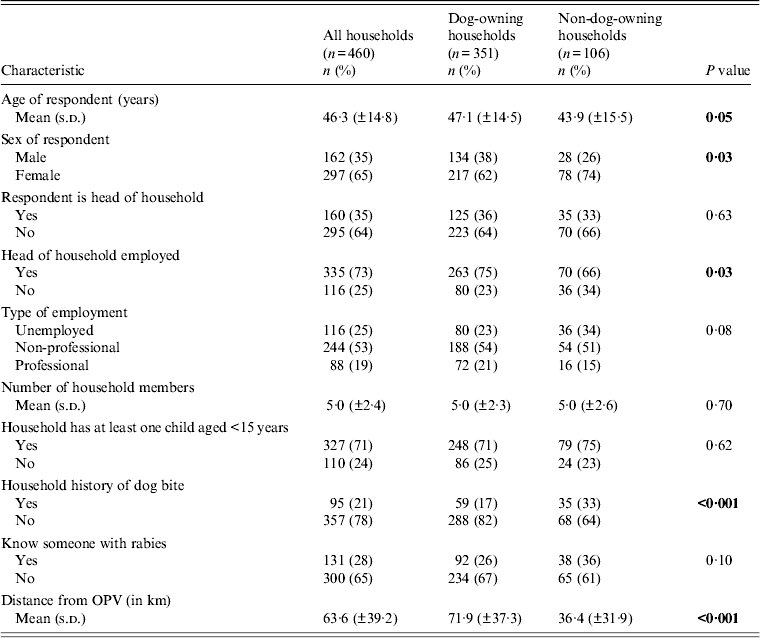
OPV, Office of the Provincial Veterinarian (from where the programme is administered).
* Counts may not equal total sample size due to missing data.
Knowledge
Utilizing the constructs described in Table 2, we determined a knowledge score for each household. The mean knowledge score was 8·4 (s.d. ± 3·4, range 1–24). Ninety-four percent of households reported that they had heard of rabies. However, of those that had heard of rabies, 31% could not correctly identify any symptoms associated with rabies in dogs. Twenty-seven percent identified one symptom correctly, 36% identified 2–3 symptoms correctly, and only 6% could identify four or more symptoms correctly.
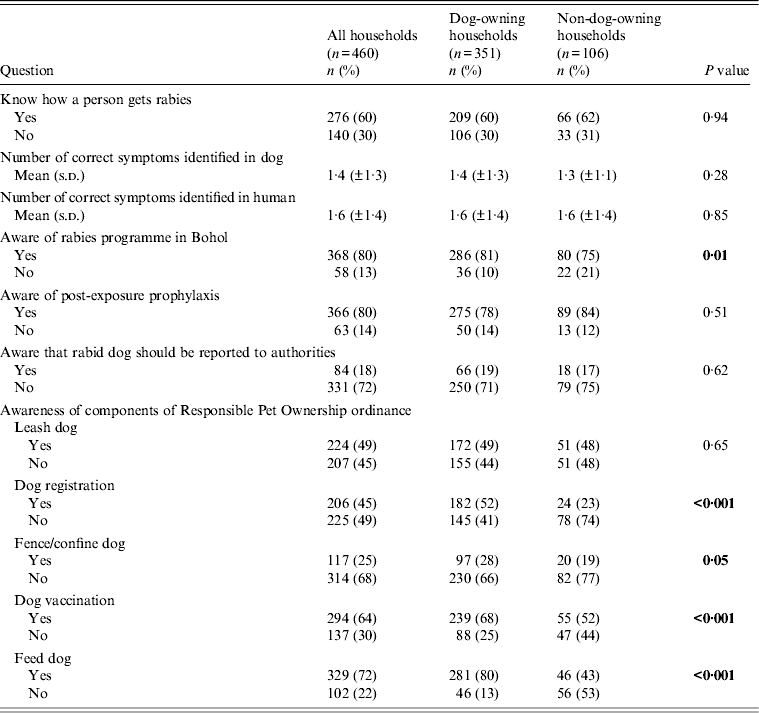
Of those households that correctly identified one or more symptoms of rabies in dogs, excessive salivation/drooling was the most frequently identified (36%) followed by weakness (20%), mood/behavioural changes (19%), aggression (13%), restlessness (10%), other miscellaneous symptoms (8%), biting inanimate objects (7%), and phobia of water, air, or light (6%).
More households were able to correctly identify symptoms of rabies in humans. About 51% of households identified two or more symptoms correctly. Phobia of water, air, or light was the most commonly reported symptom (34%), followed by fever (20%), excessive salivation (19%), headache (16%), and mood/behavioural changes (13%). Interestingly, only 7% of households reported weakness as a symptom, and <1% of households reported paralysis as a symptom of rabies infection.
Sixty percent of household respondents reported that they knew how a person became infected with rabies. However, when probed, only 57% were able to correctly identify one or more modes of transmission for rabies. About half (51%) stated that rabies is spread through a dog bite.
When households were asked what they should do about a dog exhibiting symptoms of rabies, 18% stated that they would report it to the authorities. Thirty-two percent stated that they would kill it themselves or have someone kill it, and 13% did not know what to do. Data were missing for almost 15% of households on this question.
Attitudes
Utilizing the constructs described in Table 3, we determined an attitudes score for each dog-owning household. The mean attitudes score was 5·7 (s.d. ± 0·6, range 2–6). Attitudes towards the Responsible Pet Ownership ordinance were generally positive, and 83% of households felt that the ordinance was good for the community. Households were also willing to pay the registration/vaccination fee on an annual basis (92%). However, only 64% of households believed that they were at risk for rabies.
Attitudes score constructs in 351* dog-owning households in Bohol, Philippines, July, 2009
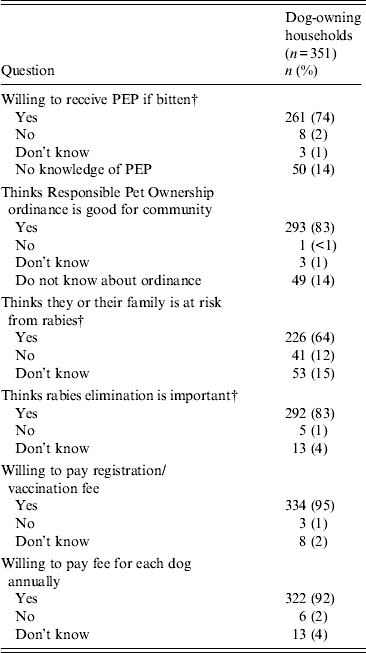
PEP, Post-exposure prophylaxis.
* Counts may not equal total sample size due to missing data.
† Dog-owners who had heard of rabies (n = 327).
Practices
Utilizing the constructs described in Table 4, we determined a practices score for each dog-owning household. The mean practices score was 7·1 (s.d. ± 1·7, range 2–9). Practices regarding vaccination and restraint of dogs were generally good, and 72% of dogs were reported as vaccinated. Castration of male dogs and maintaining adequate fencing to contain dogs were issues that could be improved.
Practices score constructs in 351* dog-owning households in Bohol, Philippines, July, 2009
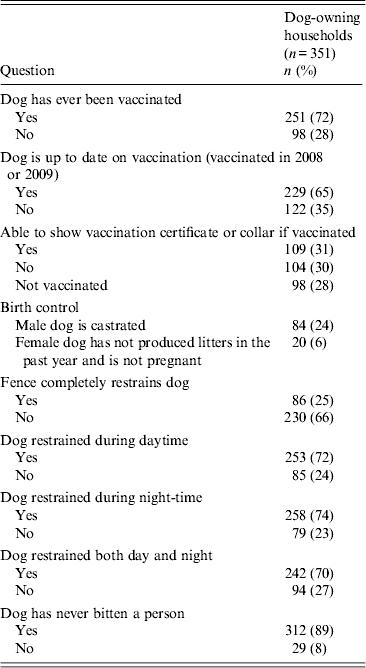
* Counts may not equal total sample size due to missing data.
Univariate analyses
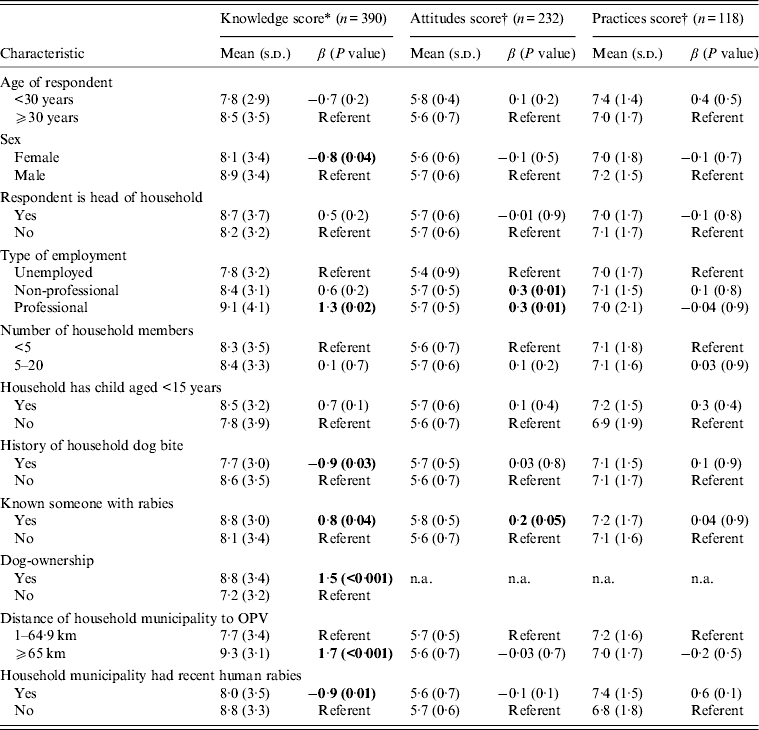
Table 5 shows mean KAP scores by household characteristics and results of our univariate analyses. The knowledge score was positively associated with dog-ownership (P = 0·001), employment in a professional field (P = 0·02), whether the respondent had ever known someone with rabies (P = 0·04), and increased distance from the OPV (P < 0·001). The knowledge score was negatively associated with female sex (P = 0·04), a household history of dog bite (P = 0·03), and recent cases of rabies in the municipality (P = 0·01).
Mean knowledge, attitudes, and practices scores with β-coefficients by respondent/household characteristics
OPV, Office of the Provincial Veterinarian; n.a., not available.
* Households that had heard of rabies.
† Dog-owning households.
The attitudes score was positively associated with three covariates; employment status (non-professional: P = 0·01; professional: P = 0·01), whether the respondent had ever known someone with rabies (P = 0·05), and the respondent's knowledge score (P < 0·001, data not shown).
The practices score was only positively associated with the respondent's knowledge score (P = 0·02, data not shown), and the effect was modest, with a 0·1 point increase in the practices score for each 1 point increase in the knowledge score. Households located in a municipality with recent rabies cases had a slight increase in their practices scores, and the result approached significance. However, this effect was not seen in the multivariate model.
Indicators of KAP scores
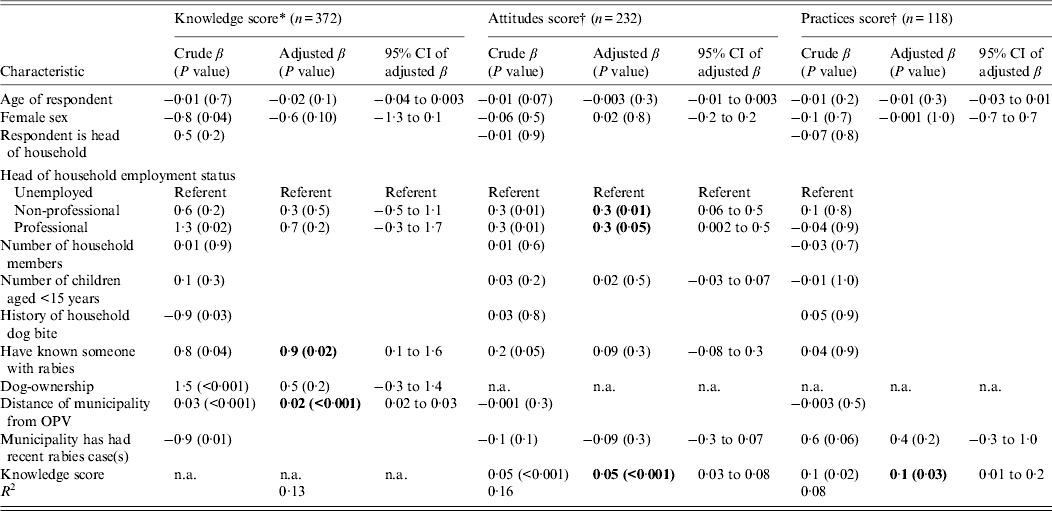
The results of the multivariate linear regression models for each score are shown in Table 6. After controlling for other significant covariates in the multivariate model of knowledge score, we found that only two of our independent variables were positively associated with knowledge: having known someone with rabies (β = 0·9, P = 0·02) and increased distance from the OPV (β = 0·02, P < 0·001). However, the effect size for distance from the OPV was very small. Only having known someone with rabies changed the knowledge score in any meaningful way. The attitudes score was positively associated with employment status (non-professional: P = 0·01; professional: P = 0·05) and the knowledge score (P < 0·001). The practices score was positively associated with only the knowledge score (P = 0·03); however, the effect was small (β = 0·1).
Results of univariate and multivariate linear regression of knowledge, attitudes, and practices scores by respondent/household characteristics
CI, Confidence interval; OPV, Office of the Provincial Veterinarian; n.a., not available.
* Households that had heard of rabies.
† Dog-owning households.
Ultimately, we found that only 13% of the variance in the knowledge score was explained by the independent variables included in our multivariate model (denoted by R 2). Similarly, the R 2 for the attitudes score and the practices score showed that only 16% and 8%, respectively, of the variance in these scores were explained by our multivariate models.
DISCUSSION
Few studies have examined KAP of rabies in the developing world, and results have been quite varied. Knowledge of rabies in southwestern Nigeria was lower compared to what we found in Bohol. Only 49% of the Nigerian respondents knew how rabies was transmitted to humans, and only 33% knew that prophylaxis vaccination for rabies was available, compared to 57% and 85%, respectively, in Bohol. The proportion of respondents who had been bitten by a dog was also much higher in Nigeria, 57% compared to only 21% of households in our study [Reference Opaleye14]. Similarly, in a study of dog-bite patients in Delhi, India, 61% of respondents knew that rabies was transmitted from the bite of an infected dog, and <33% received anti-rabies vaccine following a bite [Reference Lai15]. Bohol respondents did less well on knowledge of rabies compared to respondents in Kandy District, Sri Lanka, where almost 90% of respondents knew that the dog was the primary reservoir of rabies, and over 95% reported they would seek care from a doctor or hospital after being bitten by a dog [Reference Matibag16].
The most apparent reasons for these differences seem to be the length of time and level of involvement that national governments have played in supporting rabies control programmes. Sri Lanka has had a fairly strong national rabies programme since the 1980s [Reference Matter17] and has recently committed to eliminating rabies by 2016. In the Philippines, the Anti-Rabies Act was adopted in 2007, lending much-needed national support to the problem [Reference Dodet6]. By contrast, free mass rabies vaccination is non-existent in Nigeria, and control programmes which promote rabies education and vaccination are lacking [Reference Adeyemi18].
Overall, household respondents in Bohol had good knowledge of both the requirement to vaccinate dogs for rabies and the need to receive PEP if bitten by a dog. Participants also demonstrated some awareness of the classic signs and symptoms of rabies in humans; however, they did not demonstrate good awareness of the clear indications of the paralytic or ‘dumb’ form of rabies, either in dogs or humans. This could lead to cases going unrecognized and untreated. Respondents were also less knowledgeable about how rabies is spread to humans. The majority of people were aware of the rabies programme, but many failed to identify confinement of dogs and registration as key components. Respondents were also not well-informed on what to do about a dog that was suspected of having rabies. A similar study conducted in Sri Lanka found that 43% of respondents were aware that the head of a suspected rabid animal should be collected and sent to the proper authorities [Reference Matibag16]. In contrast, only 18% of our respondents knew to report a suspected rabid dog. The need to report dogs suspected of having rabies is particularly important for surveillance purposes to ensure elimination of transmission through dog vaccination campaigns and to identify cases quickly to prevent rabies in exposed individuals.
We found several factors that were associated with knowledge. Interviewees who knew someone with rabies scored almost 1 point higher on the knowledge score. It is possible that barangays which have had recent cases of rabies received more focused anti-rabies interventions and education; however, we controlled for whether the municipality had experienced a recent case and did not find evidence of this relationship. In addition, the knowledge score was positively associated with both the attitudes score and the practices score, even after controlling for the other covariates in the model. Knowledge had the greatest effect on practices, which bodes well for a programme with an emphasis on education.
One limitation of this study is that the questionnaire was not specifically designed to capture KAP but, rather, to assess dog vaccination coverage. Due to this, sample sizes for some of the covariates of interest were small. For the purposes of this study, it would have been beneficial to sample a larger number of dog-owners in order to have a larger sample size for both the attitudes and practices scores. In addition, we used a small number of questions to assess household attitudes, and there was clustering of scores towards the high end of the scale. This may indicate that the programme has been successful at influencing people's attitudes, or it may indicate the need for more detailed questions on this topic. Participants may be reluctant to answer questions about the programme negatively, especially when approached by those outside their community. In future, there may be a need to include more probing questions and reassure participants that the results of the questionnaire are strictly confidential. Finally, it would have been advantageous to conduct an identical study prior to implementation of the elimination programme to be able to assess baseline KAP for the population and properly evaluate and document improvement in KAP following implementation.
CONCLUSIONS
Our findings indicate that the Bohol population has a good knowledge of many aspects of rabies and the government initiative to control it. They also express willingness to comply with most of the Responsible Pet Ownership ordinances, including registration and vaccination of dogs. Further education on how to recognize rabies and the necessity of reporting potentially infected dogs to local authorities will help eliminate any remaining reservoirs of rabies on the island. In addition, including personal accounts from family members of victims of rabies will help to underscore why rabies control is so important and may have a lasting impact. Programme coordinators, local barangay livestock aides, and volunteers should continue to be trained on the importance of maintaining vigilance against the disease. The innovative approach of the BRPEP is unique to rabies control in the developing world. If this programme can be successful in the long-term, it can serve as a model for other countries struggling with canine rabies.
ACKNOWLEDGMENTS
We thank the staff of the Office of the Provincial Veterinarian, whose work in the office and in the field made the project possible as well as Rebecca Bryson, Kara Chappell, Emily Herrington, and Melissa Nolan for their support in data collection. In addition, we thank Asha Kapadia and Sally Vernon for their scientific input and review of the manuscript.
The Global Alliance for Rabies Control and UBS Optimus Foundation supported the work of Dr Lapiz and Dr Miranda. Both Dr Murray and Dr Davlin were affiliated with the University of Texas Health Science Center at Houston when this research was conducted. Dr Davlin is now a National Research Service Award (NRSA) postdoctoral fellow supported through an institutional training grant from the Eunice Kennedy Shriver National Institute of Child Health & Human Development of the National Institutes of Health (A.B. T32HD055163 NRSA). The content of this work is solely the responsibility of the authors and does not necessarily represent the official views of the Global Alliance for Rabies Control, NICHD, or the NIH.
DECLARATION OF INTEREST
None.



