



INTRODUCTION
Men who have sex with men (MSM) have an increased incidence of pathogens transmitted by the oro-fecal route such as Shigella and Hepatitis A virus (HAV) [Reference Simms1]. Notably, outbreaks of HAV infections are currently ongoing in Western-Europe [Reference Beebeejaun2, 3].
Hepatitis E virus (HEV), like HAV, is transmitted via the oro-fecal route. In developing countries, the main route of transmission of the virus is in contaminated drinking water while in high-income countries, HEV is considered as a zoonosis transmitted by consumption of contaminated food products. In these countries, the most frequent HEV genotype is genotype 3, and emerging evidence suggests that this genotype is also transmitted by other routes such as transfusion or contaminated water [Reference Sayed4, Reference Mansuy5]. A recent study performed in the Netherlands indicates that HEV is now the main cause of acute viral hepatitis [Reference Doting6]. In Belgium, although HEV infection is well documented in pig and wild boar populations [Reference Thiry7, Reference Thiry8], data about HEV seroprevalence in humans are limited. In a 2011 study performed on 100 randomly selected samples in a hospital of the northern part of the country, seroprevalence was found to be 14% [Reference Van Hoecke9]. A recent study performed on limited numbers of hospitalized patients with liver diseases and suspicion of HEV infection found an IgG seroprevalence of 15–20%, depending on the ELISA assay [Reference Cattoir10].
Acute HEV infection in immunocompetent subjects is generally asymptomatic [Reference Kamar11] and is associated with fecal shedding of infective viral particles during approximately 30 days [Reference Takahashi12, Reference Nicand13].
Recent studies in Europe suggest that HEV seroprevalence is higher in MSM and is increasing in the recent years [Reference Lanini14, Reference Payne15]. Transmission of HEV within MSM population could lead to future outbreaks. It is thus critical to determine whether MSM are at increased risk of HEV as they could benefit from vaccination. Although only available in China, an HEV vaccine has demonstrated high efficacy and to provide long-term protection against HEV infection [Reference Zhang16].
In the present study, we assessed the seroprevalence of HEV infection in an urban population attending a sexually transmitted infection (STI) clinic and assessed the risk factors associated with HEV seropositivity.
METHODS
The STI clinic of Saint-Pierre University Hospital is located in downtown Brussels and offers STI screening and treatment. Data that are prospectively collected include: sexual orientation, ethnic background, STI diagnosis (syphilis, Chlamydia trachomatis infection, Neisseria gonorrhea infection). Serum samples are stored at −20 °C at the laboratory. Subjects who attended the STI clinic of CHU Saint-Pierre and had an HIV test performed between 1 June 2014 and 15 January 2016 were identified retrospectively. Samples kept at −20 °C were screened for HEV IgG using the WANTA IgG ELISA kit (Wantai Diagnostics, Beijing, China). Positive samples for IgG were tested for IgM using the WANTAI IgM ELISA kit. HEV RNA detection was performed on all samples using the RealStar® HEV RT-PCR Kit (Altona Diagnostics, Hamburg, Germany). HEV serological and molecular detection were performed at the National Reference Center of Viral Hepatitis (Scientific Institute of Public Health, Brussels).
Risk factors for HEV seropositivity were analyzed using Fischer's Exact Test. Continuous variables were compared using Mann–Whitney non-parametric test. Statistical analyses were performed using SAS statistical software (version 9.4; SAS Institute, Cary, NC, USA) and Graphpad Prism 5.0 (GraphPad Software, San Diego California USA).
The study was approved by CHU Saint-Pierre's local ethic committee (reference AK/15-06-71/4526).
RESULTS
In total 799 subjects had at least one visit with an HIV test performed at the STI clinic within the selected time frame. A total of 576 samples were available with sufficient volume to perform serological analyses and polymerase chain reaction (PCR). The majority of subjects were male (79·7%) and of European origin (85·6%) of which 53% were Belgian. MSM proportion was 31·1%. As shown in Table 1, MSM had a higher rate of previous STI diagnosis (Syphilis, Chlamydia trachomatis or Neisseria gonorrhea) and a higher prevalence rate of HIV infection. Overall, HEV seroprevalence was 9·03% with 52/576 samples being positive for anti-HEV IgG. There was no difference in HEV prevalence between MSM and heterosexual subjects. Among the IgG positive samples, 2/52 (3·84%) were also positive for anti-HEV IgM. The 2 subjects with positive IgM were young women of European origin. All 576 samples were tested by RT-PCR and none were found to be positive. No HIV-HEV co-infection was observed. Risk factors for HEV seropositivity are presented in Table 2. Only age >35 years was significantly associated with HEV seropositivity.
Population characteristics according to sexual orientation

Risk factors for HEV seropositivity

DISCUSSION
HEV infection is considered as an emerging cause of acute hepatitis in Europe and is mainly caused by genotype 3 [Reference Doting6]. It is well established that genotype 3 HEV infection is a zoonosis; farm pigs are one of the main reservoir and consumption of pork meat is a major risk factor [Reference Sayed4]. In humans, the prolonged shedding of infective particles following acute infection, and possibly in asymptomatic subjects, could favor transmission through the oro-fecal route following sexual activities [Reference Takahashi12, Reference Nicand13]. The ongoing outbreak of HAV infection in Europe [Reference Beebeejaun2, 3] illustrates the potential of oro-fecal transmission of pathogens in the MSM population.
However, so far, person-to-person transmission through the oro-fecal route has only been described with genotype 1 HEV. In an outbreak in Uganda in a HEV-naive population, during which HEV was not detected in drinking water, the identified risk factors for ⩾2 cases in the affected households were being in contact with a jaundiced person, attending a funeral of a jaundiced person and lack of hand wash after defecation [Reference Teshale17]. The attack rate was high in a household with at least one case (56·7%). In Europe, although HEV outbreaks have been reported, no evidence of person-to-person transmission has been demonstrated so far [Reference Sayed4, Reference Nicand13].
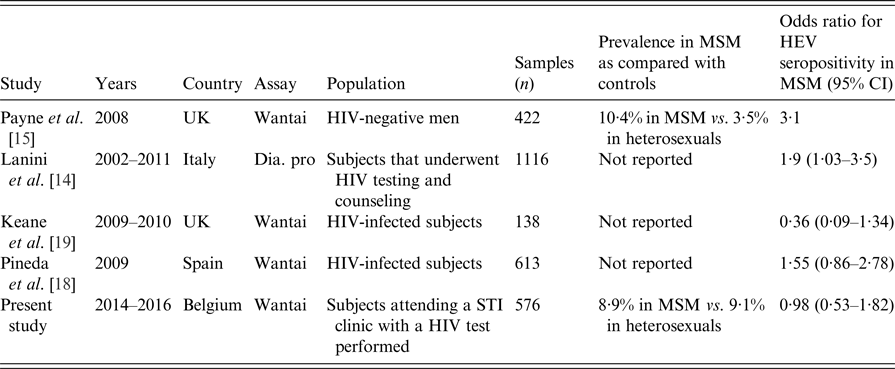
In the present study, no evidence of higher previous exposure to HEV in MSM as compared with heterosexual men & women was found. When comparing with recent European studies assessing the risk of HEV seropositivity in MSM populations (summarized in Table 3), our findings contrast with the results of two recent studies. In an Italian study performed between 2002 and 2011 on 1116 serums from subjects who underwent HIV testing, HEV seroprevalence was found to be higher after a multivariate analysis in MSM and foreign-born subjects with odds ratio almost two times higher in MSM (5% vs. 8·2%) [Reference Lanini14]. In a retrospective 3-year study performed in various sexual health clinics in the UK, Payne et al. analyzed 422 serums of MSM and heterosexual males. They found a higher prevalence of previous HEV infection in both HIV-infected and HIV-uninfected MSM as compared with heterosexuals (7·5%, 10·4% and 3·5% respectively) [Reference Payne15]. Despite these findings, other studies performed in European countries did not detect an association between sexual orientation and HEV seropositivity. In a large Spanish prospective study that included more than 600 HIV-infected subjects, MSM were neither found to have a higher seropositivity rate at inclusion nor to have a higher risk of seroconversion during the 2 years of follow up [Reference Pineda18]. In another study performed in the UK in 138 HIV-infected subjects, HEV seropositivity was only associated with pork meat consumption. Sexual orientation was not found to be associated with higher seroprevalence of HEV [Reference Keane19].
Summary of the studies that assessed HEV seropositivity in MSM subjects in Europe
This study shows that age over 35 years was significantly associated with increased HEV seropositivity. Increased age is a known risk factor for HEV infection, likely reflecting cumulative risk for infection [Reference Hartl20].
The major strength of our study is that HEV RNA testing was performed on all 576 samples. Indeed, use of serological test only to diagnosis HEV infection can lead to underdiagnosis. In a recent study performed on large numbers of blood donors in England, out of 79 donations positive for HEV RNA, 56 (71%) were negative for both HEV IgM and IgG using the most sensitive ELISA test (Wantai) [Reference Hewitt21].
Our study has some limitations. First, the limited time frame of data collection from which the analyses were performed does not allow us to detect a time-varying increase in seroprevalence as suggested in the UK [Reference Payne15]. Secondly, the sexual behavior (number of partners and unprotected anal intercourse) could not be correlated with HEV seroprevalence due to the retrospective design. However, the MSM subjects in this study had evidence of risky sexual behaviors; they had a higher HIV prevalence and a higher number of previous STI diagnosis.
Considering the ongoing outbreak of HAV infection in Europe [Reference Beebeejaun2, 3], HAV should be the first diagnosis in case of acute hepatitis in MSM. However, HEV infection should be considered in the differential diagnosis according to the local epidemiology in light of a recent Dutch study indicating that HEV is now the leading cause of acute hepatitis in this country [Reference Doting6].
In conclusion, this study did not find an increased prevalence of HEV seropositivity in MSM as previously reported in the UK and Italy probably reflecting a distinct dynamic of HEV infection across Europe. Moreover, in the whole cohort, no subject was found to have a detectable viremia suggesting low circulation of HEV in this urban population.
ACKNOWLEDGEMENTS
We thank Dr Sheila Cattell for English language revision. This study was supported by a grant from “Association d'aide à la recherche médicale André Vésale” to N.D.
DECLARATION OF INTEREST
None.



