


Introduction
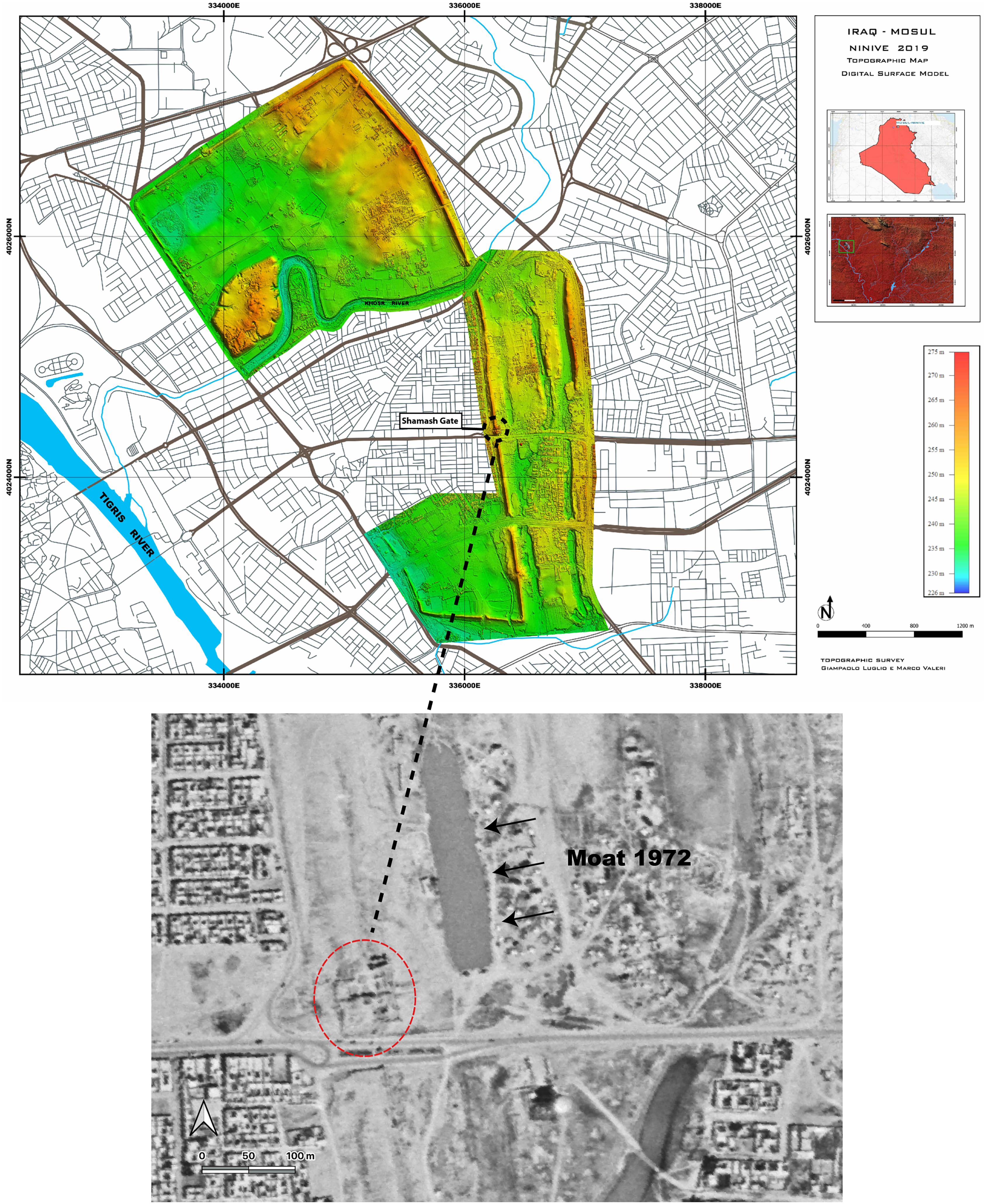
The monumental remains of the Shamash GateFootnote 1, which once formed a magnificent entrance through the eastern fortifications of ancient Nineveh, today tower over the principal eastern approach to the city of Mosul. As a strategically important entrance to the city (Fig. 1), the Shamash Gate was converted into a defensive position during the ISIS occupation of Mosul (2014–2017). This attention included the construction of a network of tunnels that cut through the foundations and superstructure of the ancient gate complex and the destruction of portions of the alabaster and limestone orthostats that once lined the inner gate system.
Top: Map of the region with DEM of Nineveh. Bottom: CORONA satellite image of the Shamash Gate, 1972
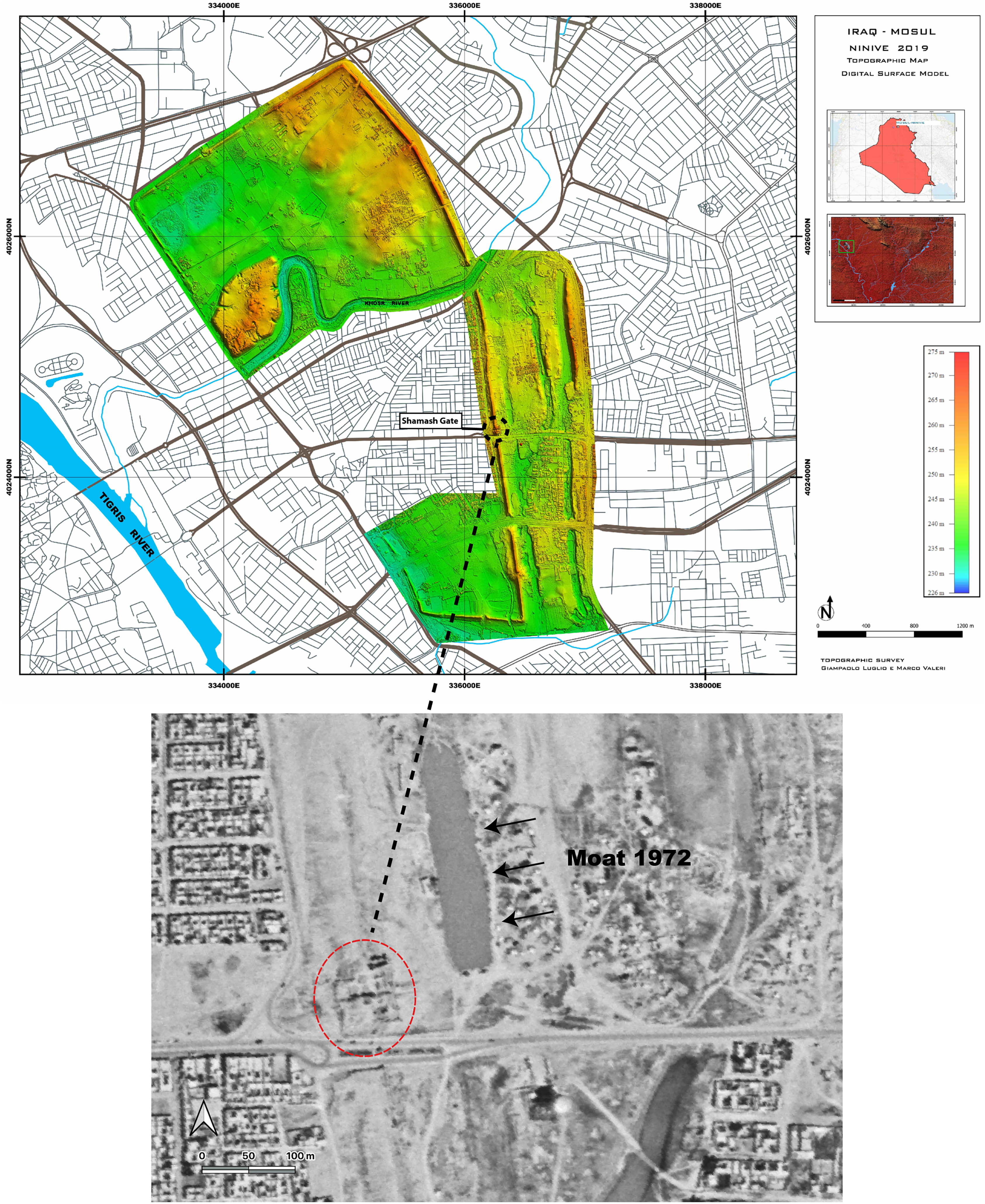
A preliminary investigation of the Shamash Gate in 2020 revealed both the considerable extent of the damage and destruction wreaked on this important and historic landmark of ancient Nineveh and Mosul during the period of ISIS control and the urgent need to stabilise the surviving remains of the gate. This investigation also confirmed, however, that the core of the gate complex remains intact and would benefit greatly from a carefully planned and judiciously implemented research program. The cultural and historical importance of the Shamash Gate as a unifying symbol of Mosul’s remarkable cultural legacy and its rebirth in the aftermath of the recent conflict adds greater significance to such an undertaking.
The initial investigations of the Shamash Gate were conducted under the license and invitation of the Iraqi-Italian Nineveh Expedition (NINEV_E) and the directorship of Nicolò Marchetti. One of the priorities of NINEV_E Project (2019–2023) was to document the destruction caused by ISIS to the cultural heritage of Nineveh, in particular, the remains of the Neo-Assyrian royal city located in the heart of modern East Mosul, while creating and curating a digital record of Nineveh as the groundwork for reviving and rehabilitating the site for the local community. This work combines excavations at the site and documentation, including the use of satellite remote sensing, 3D modelling, and the archiving of the almost two centuries of excavations at the site. These operations are meant to aid the efforts of local and international stakeholders (local and national government, NGOs, local communities, and academic institutes) in the reconstruction efforts of the monuments of Nineveh, and to combine and preserve the records of events that have impacted the site.
The Shamash Gate investigations, as part of this larger effort, have involved the mapping, stabilisation, excavation, and ultimately, the rehabilitation of the gate and its surroundings for public use as part of a larger cultural heritage park. The immediate and long-term objectives of the Shamash Gate Project’s investigations are to: (1) document the extant visible remains of the Shamash Gate, including the extensive network of tunnels created by ISIS, (2) conduct a damage assessment and mitigation (stabilisation) of threats to the archaeological remains at the site, and (3) conduct investigations of the archaeological remains, including their excavation, preservation, and restoration/presentation.
Here we present the progress of our three seasons of work at the Shamash Gate (2021-2023). These efforts have included the mapping of the gate, stabilising the structure of the gate threatened by an ISIS tunnel network, and excavation of parts of the gate, which have produced important insights about the gate’s structure, the fall of Nineveh in 612 B.C.E., and Mosul’s recent liberation. Collectively, the results of these investigations have revealed the remarkably well-preserved remains of two catastrophic episodes in the long and illustrious history of this ancient city.
Background History
Perhaps no locale provides a more fitting microcosm of the life of the city of Nineveh/Mosul than the Shamash Gate. Indeed, what remains of the gate encapsules distinct snapshots of two different battles, two and a half millennia apart: The fall of Nineveh to the Medes in 612 B.C.E., and the liberation of Mosul from ISIS in 2017. Between these two events, the gate materialises the scars of a colonial past, the pride of post-colonial nationalism, and the negligence enforced by political destabilisation.
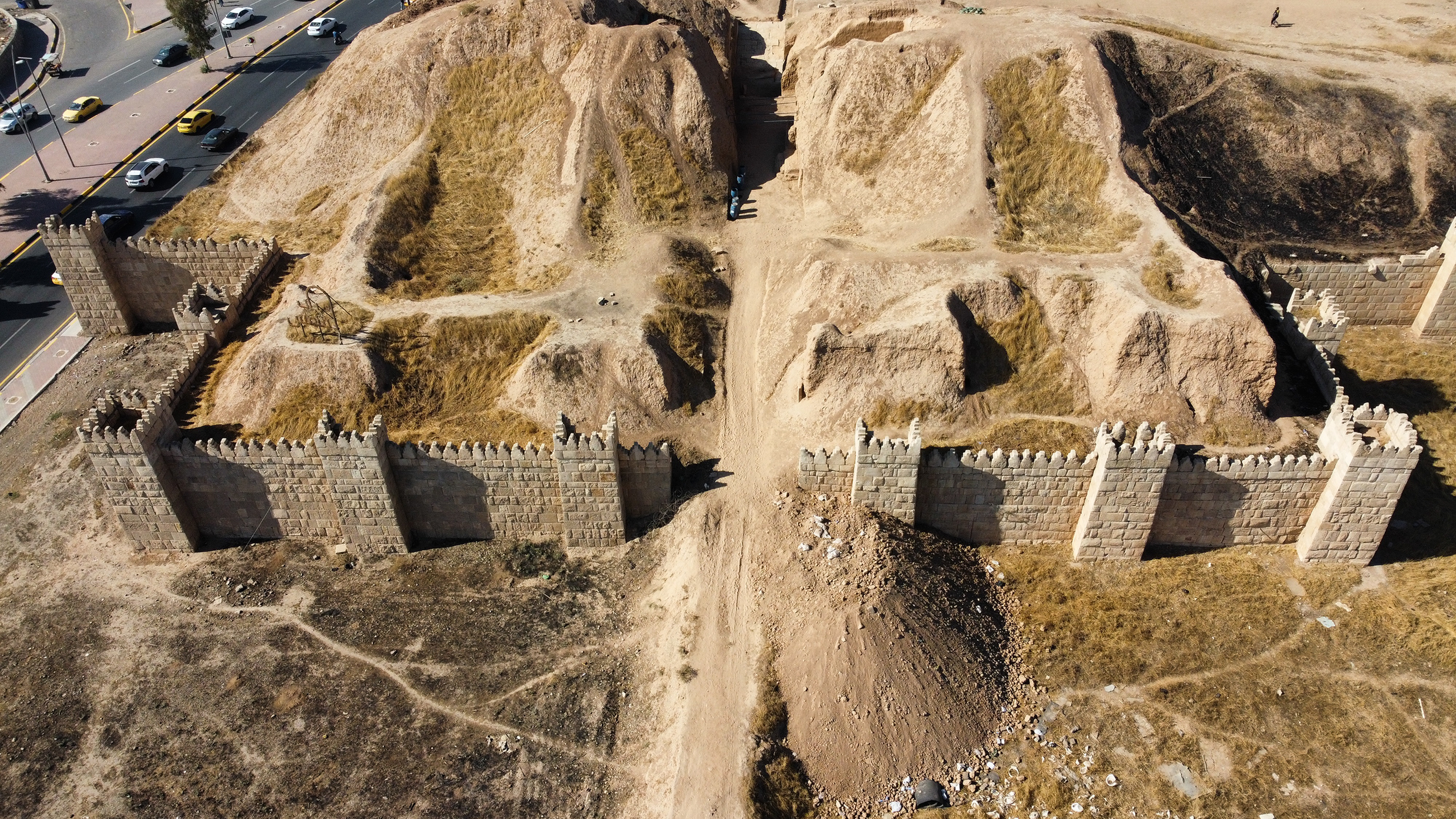
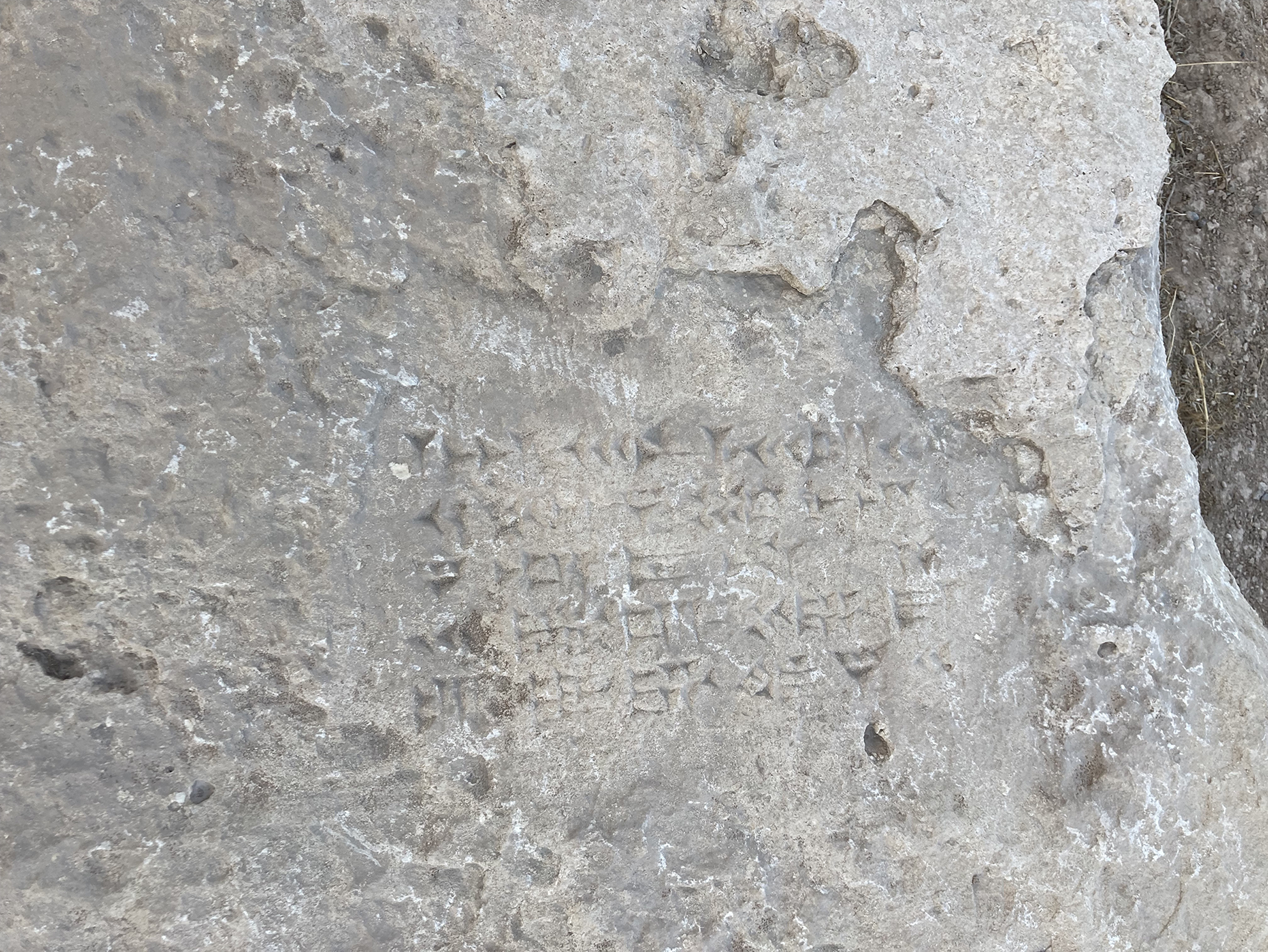
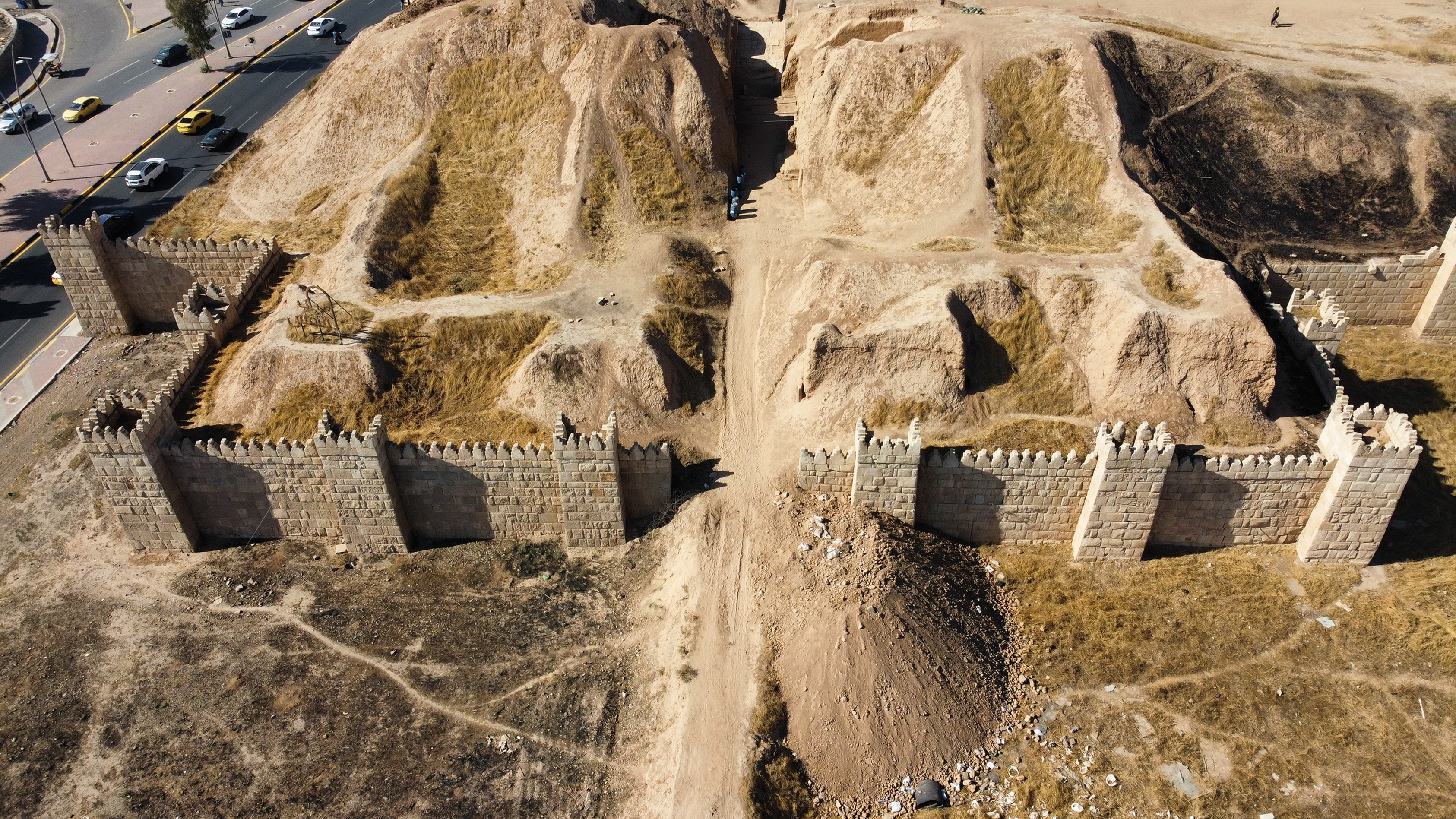
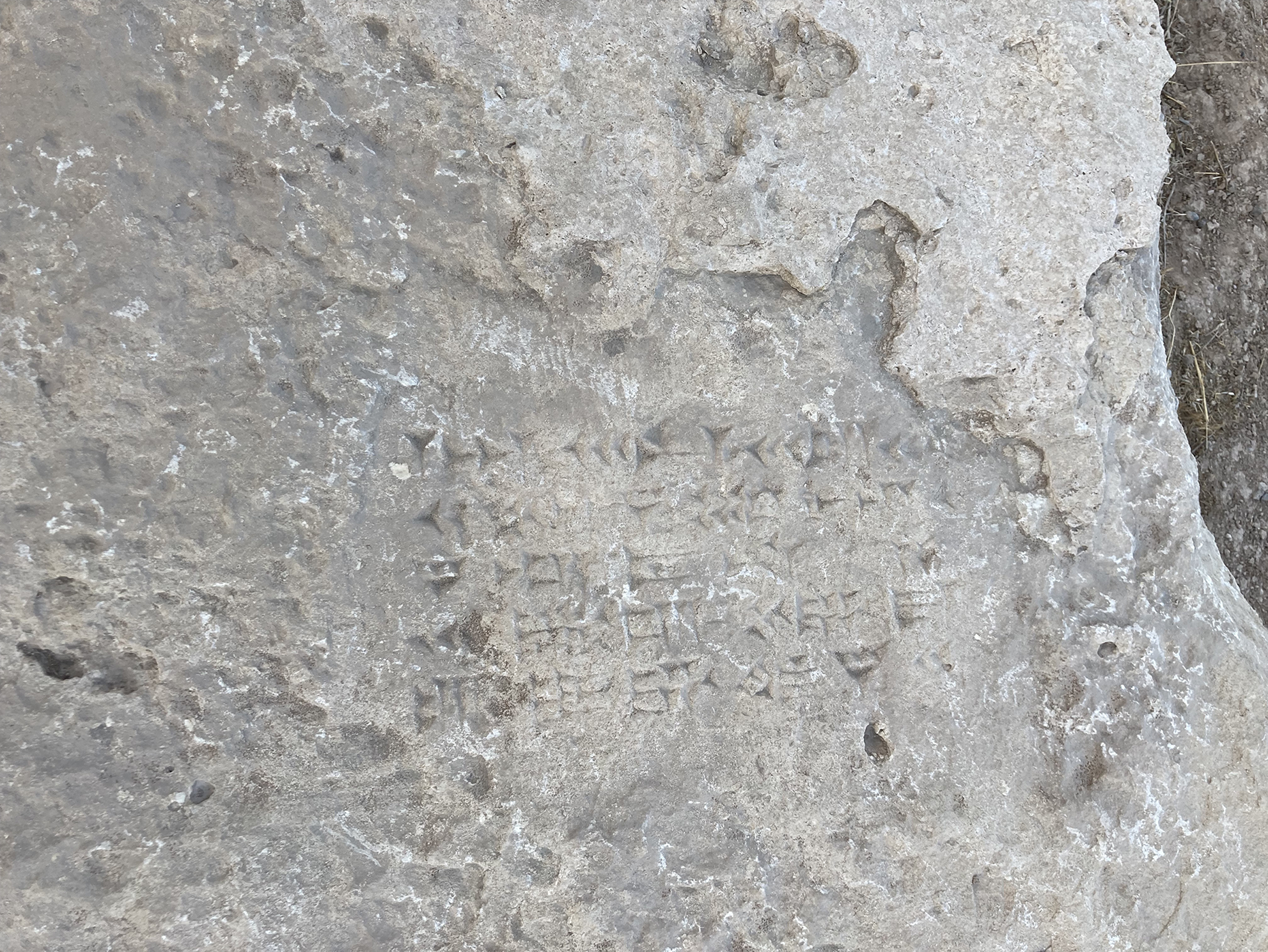
The Shamash Gate is one of eighteen gates that provided access to the city of Nineveh and it is considered one of the largest gates to the city (Fig. 2). According to textual sources (Grayson and Novotny Reference Grayson and Novotny2012: 18), the construction of the gate occurred as part of the extensive expansion of the city during the reign of King Sennacherib (705–681 B.C.E.). This construction history is supported by inscriptions on the orthostats that line the lower parts of the inner gate walls and towers (Fig. 3). Our recent work at the gate also suggests that renovations to the gate took place during the reign of King Ashurbanipal (669–631 B.C.E.) and/or earlier (see below). The gate provided access to the city from the east along the road connecting Erbil to Nineveh (Reade Reference Reade2016: 73). Within the city, the Shamash Gate also provided access to the main thoroughfare leading from the eastern wall to the mound of Nabi Yunis and Esarhaddon’s (680–669 B.C.E.) royal palace in the west.
Aerial Photo of the Shamash Gate from the east
Photograph of orthostat with inscription on the back
Nineveh and Mosul have had a long and tortured history of colonial exploitation. Indeed, Nineveh is the archetypal case or example, perhaps more than any other archaeological site in Iraq, of nineteenth century colonial antiquarianism. Initial excavations at the Shamash Gate were carried out in 1849–1850 by Austen Henry Layard and Hormuzd Rassam (Layard, Reference Layard1897; Madhloom Reference Madhloom1967: 138). This work, though described as excavations, was tantamount to looting, with its main focus on obtaining monumental statues and inscriptions by means of tunnelling in different parts of the gate. Finds by Layard and Rassam, consisting of monumental statues, carved stone plaques, and ancient tablets, were obtained from Nineveh in the 1850s.
The main archaeological investigations of the Shamash Gate were carried out by an Iraqi team during the 1960s (Madhloom Reference Madhloom1967, Reference Madhloom1968; Madhloom and Ali Mahdi Reference Madhloom and Mahdi1976). These investigations consisted of systematic, though partial, excavations of the gate, coupled with an intensive, albeit speculative, restoration and reconstruction program (Madhloom and Ali Mahdi Reference Madhloom and Mahdi1976: 25–27). The reconstruction of the gate consisted of the application of casing against the outer wall of the city, the outer façade of the gate, and a number of towers (roughly a length of 60 m) with ashlar masonry topped with crenelations, similar to those found during excavations and visible in Assyrian reliefs. The interior of the gate, namely the first two eastern towers, was reconstructed with mudbrick to a height of roughly 25 m from the surrounding surface level.
Despite its impressive appearance, the gate’s restoration has created a number of problems that we are just beginning to address as part of the current operations (cf. Madhloom Reference Madhloom1967, Reference Madhloom1968). First, the original floors of the gate and the chambers within the gate appear not to have been reached (see below). This issue was hinted at when Reade noted that the crenelations of the outer stone wall are only slightly higher than where the ramp meets the entrance surface, which would have been problematic in the defence of the city (Reade Reference Reade2016: 72). This has been further confirmed through our own excavations. Second, the reconstruction, though it did play an inadvertent role in preserving some features by capping them, nevertheless made future work more complicated. Because the excavations of the gate were not completed before restoration, the continuous erosion of the reconstructed mudbrick features, resulting primarily from overall neglect and limited resources, has added an extra layer of overburden that must be removed before excavations can properly commence. Moreover, due to the lack of detailed documentation for both these excavations and the reconstruction, understanding the interface between the ancient and the modern has added an extra layer of complexity to our investigations.
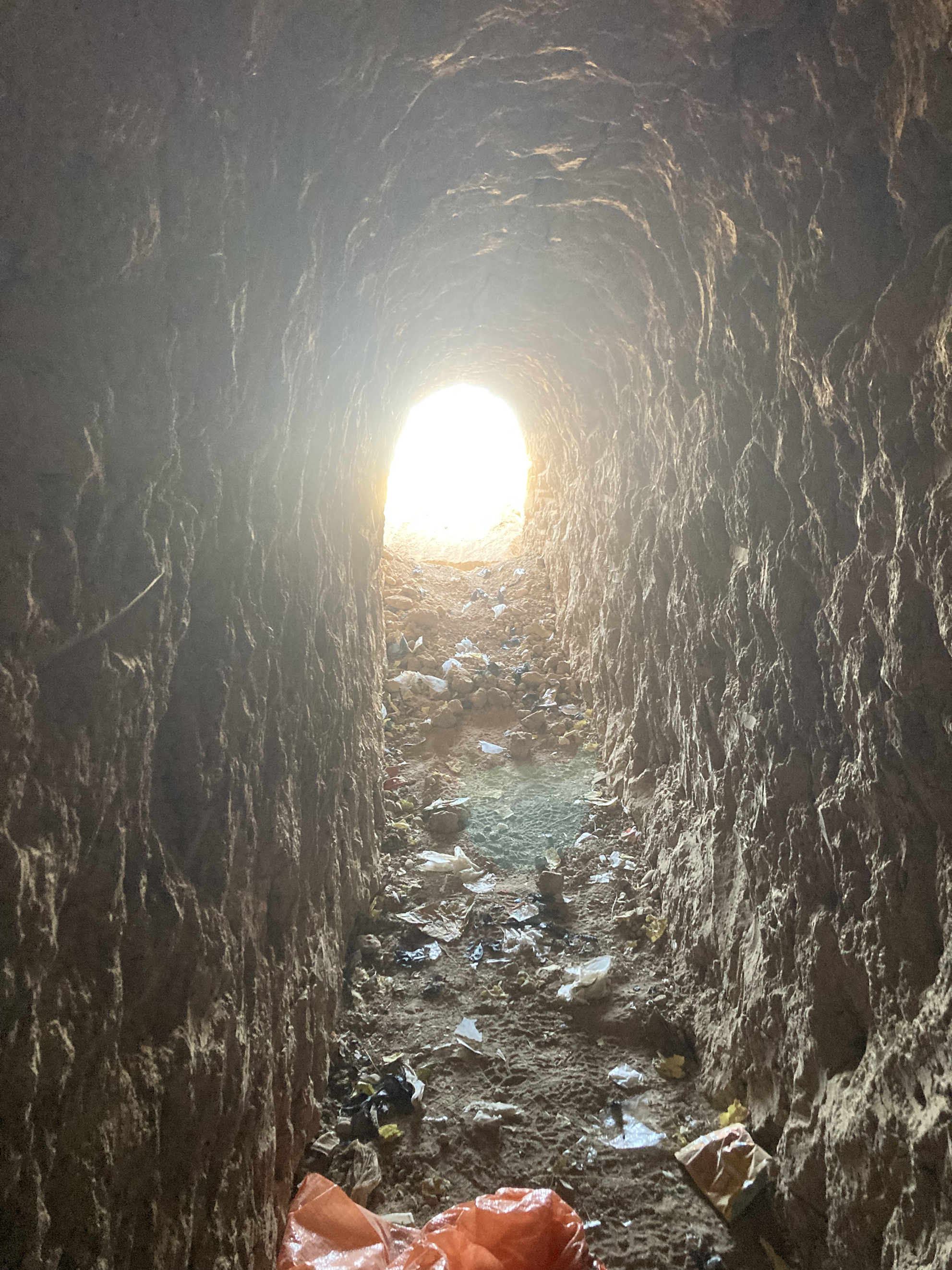
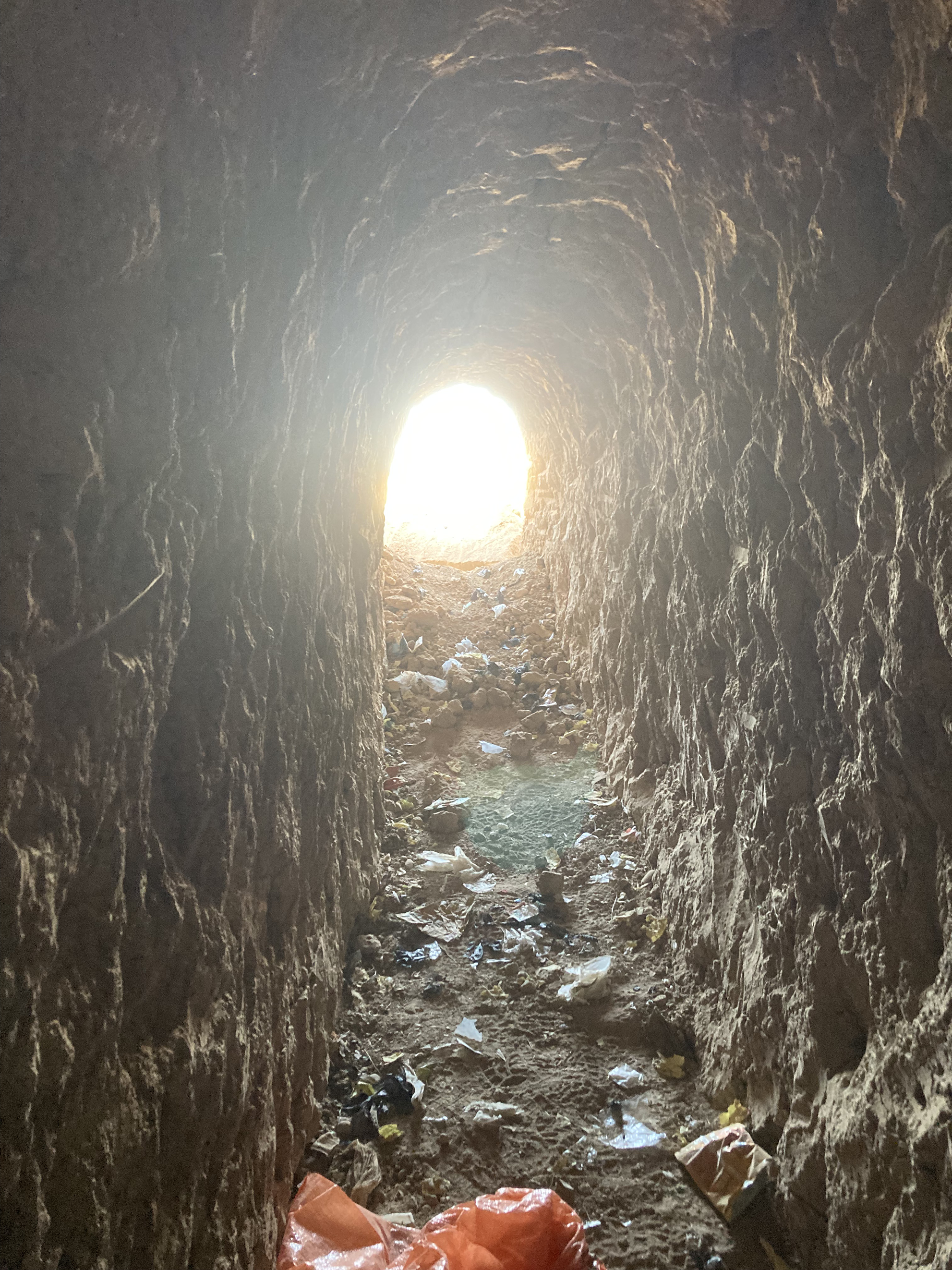
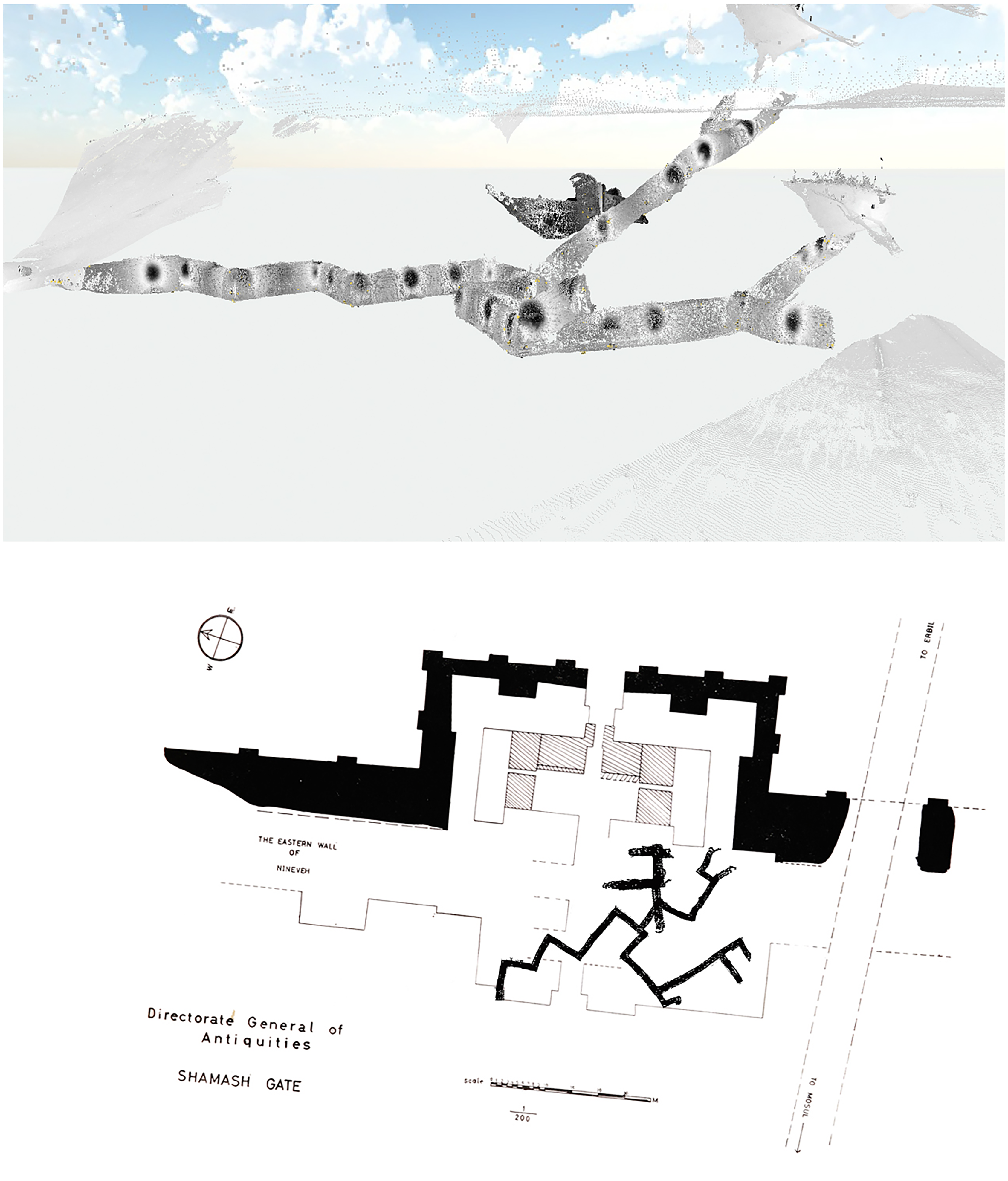
Beyond the neglect and erosion that has impacted the gate post-excavation, actions by ISIS further adversely impacted the structural integrity of the gate, in addition to its aesthetic appearance. Members of ISIS appear to have used the gate as a defensive position against attacks on the city anticipated from the east. Specifically, they dug a network of tunnels (approximately 210 m in total) inside and under the gate (Fig. 4), accessed via several entry points, presumably to move ammunition and fighters. This action has compromised the structural integrity of the gate, threatening its collapse. More harm occurred during the liberation of the city from ISIS. As defensive positions were taken up at the gate by members of ISIS, it was subjected to shooting and bombardment by the forces retaking the city. This is evident from the presence of shrapnel, shells, cratering, and burning in different parts of the gate.
Photo of ISIS tunnel
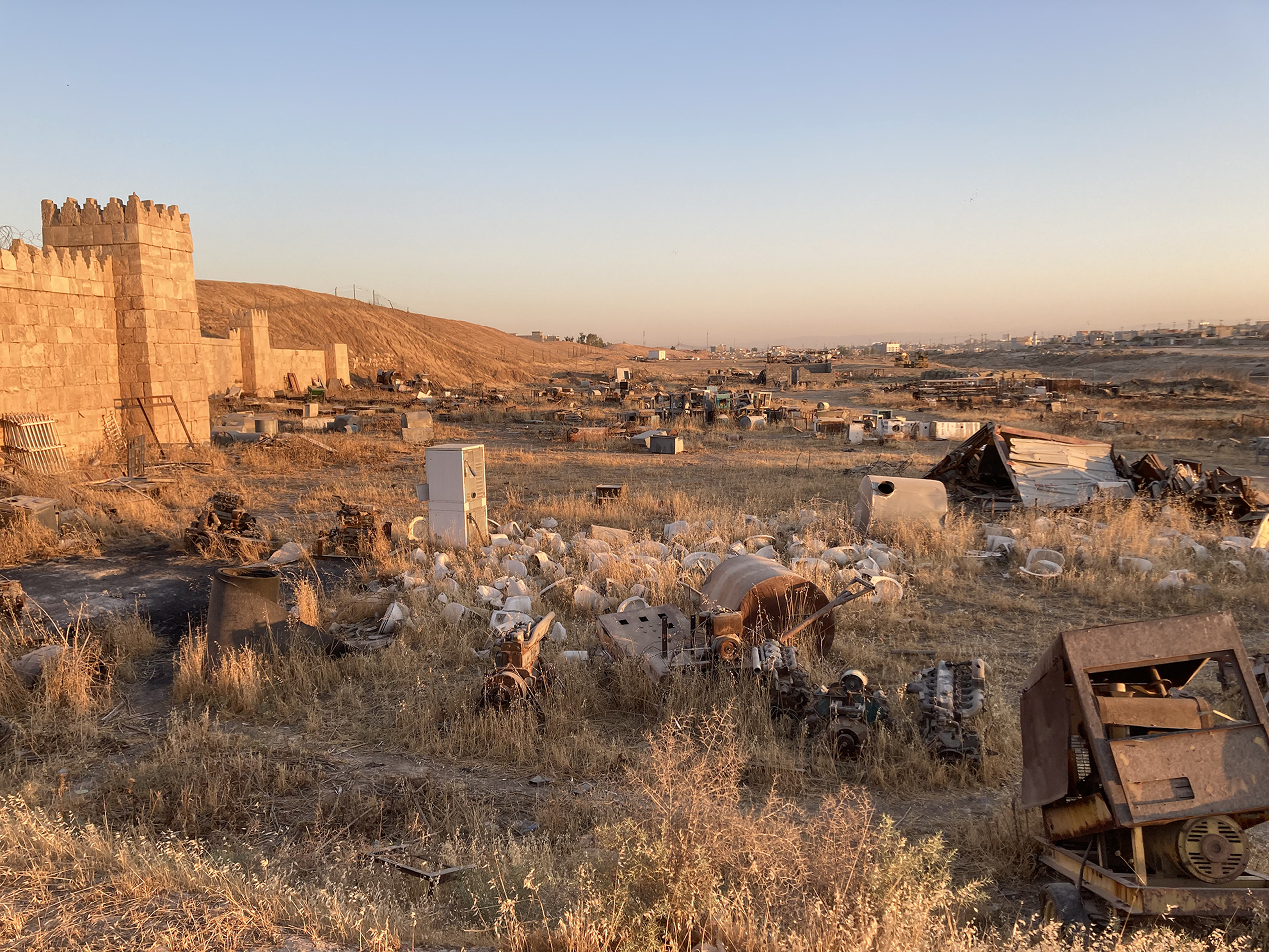
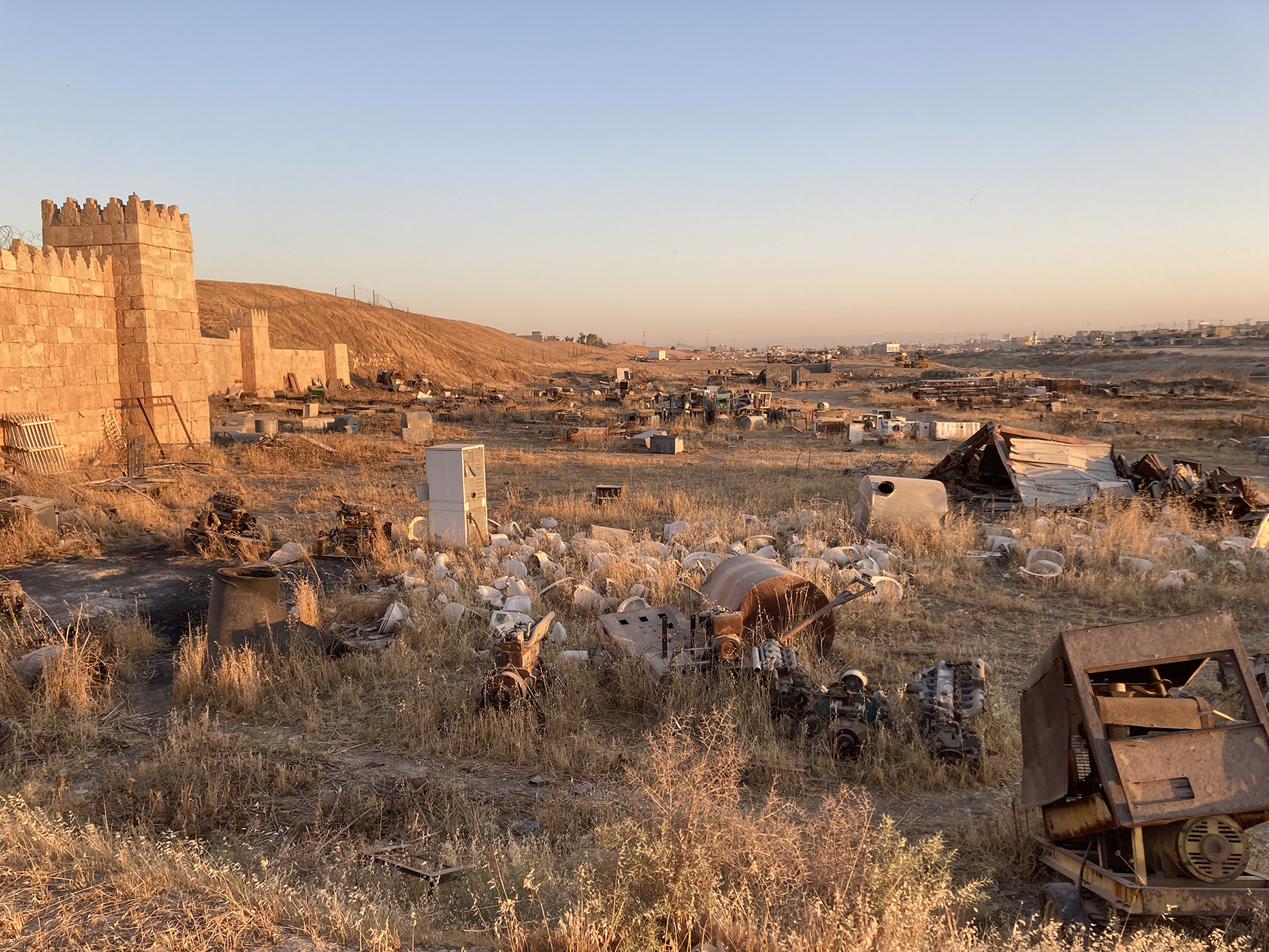
In addition, members of ISIS used the area immediately in front of the gate to the east as a collection point for items of daily use stripped from houses in the city. The collected items include washing machines, air conditioning units, and toilet seats, among other appliances and household furniture. It is not clear what the intentions were behind this collection, which extends for approximately two kilometers along the exterior eastern face of the Neo-Assyrian city walls, forming a sprawling junkyard at the main entrance to the city (Fig. 5), while limiting public access to this part of the gate complex and fortifications. It stands as a stark reminder of this turbulent recent episode in the long history of the city.
ISIS junkyard in front of the Shamash Gate
Mapping and Stabilisation of the ISIS Tunnels
In 2016, in preparation for the anticipated attack on Mosul by the Iraqi-led coalition, ISIS began developing defenses to retain control of the city of Mosul. As part of this preparation, ISIS established networks of tunnels throughout Mosul and its surrounding villages. With an anticipated advance from the east along the Al-Khazer and Baashiqa axis, the Shamash Gate, the major eastern entrance to the Neo-Assyrian city along the Erbil-Mosul road, was identified as a main point of defense, and a series of tunnels was excavated, largely beneath the foundations of the gate complex.
In January 2019, the NINEV_E Expedition began investigations in East Mosul under the auspices of the Iraqi State Board of Antiquities and Heritage (SBAH) and the University of Bologna. This included initial investigations in several of the networks of tunnels that ISIS had dug within the eastern wall line of the Neo-Assyrian fortifications, collecting a few inscribed bricks in the process. In October 2020, the lead author was invited to participate in the post-conflict archaeological investigations, restoration and rebuilding of the city, with a specific focus on stabilising the Shamash Gate complex and mitigating the damage caused by ISIS. This initial effort resulted in a preliminary assessment of the damage to the site, including the installation of a temperature and humidity sensor with a data logger in the tunnels to track changes to temperature and humidity, and the construction of an enclosing fence to secure the site.
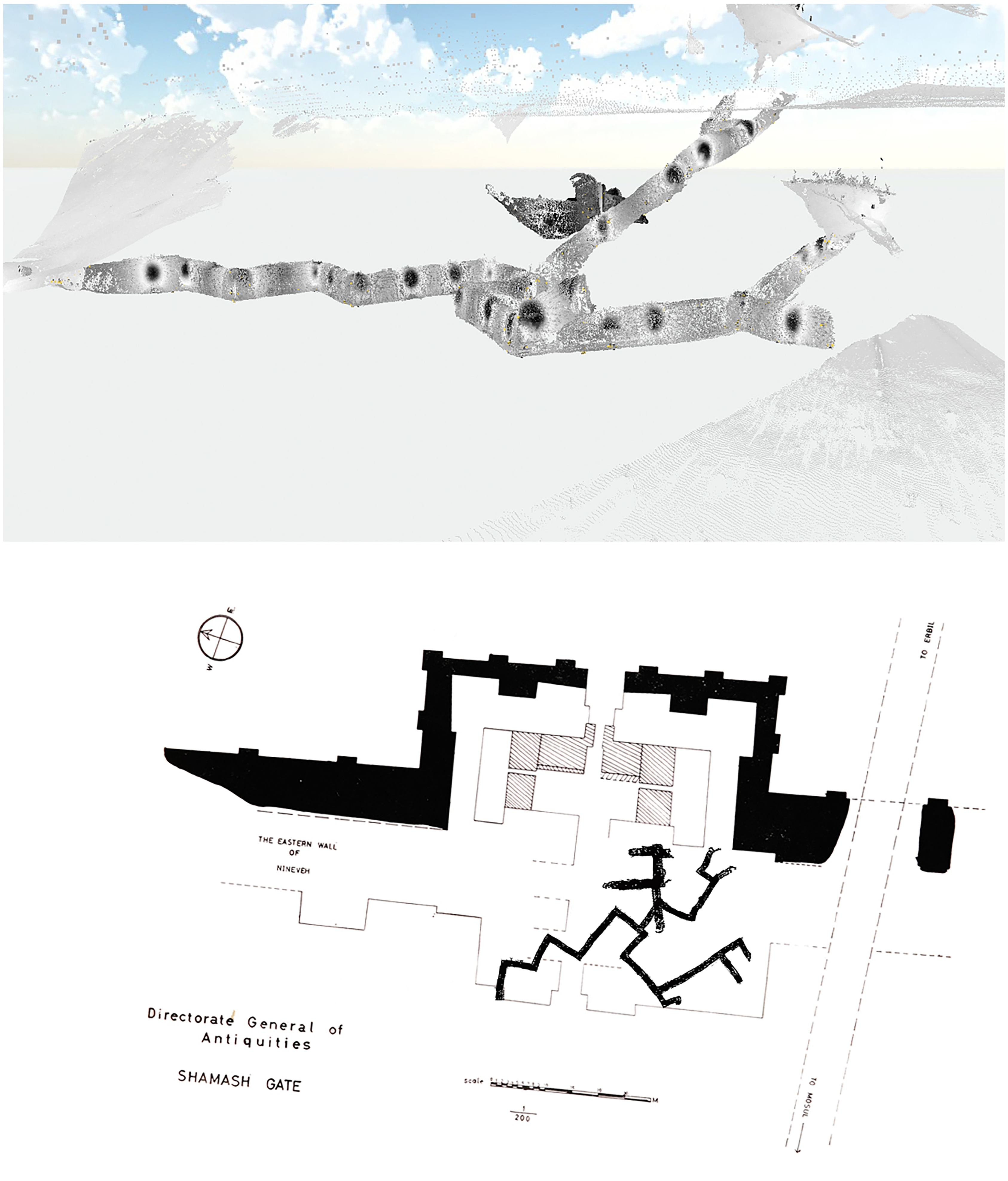
More systematic investigations of the tunnels occurred in 2021 (September 26 to October 15). Their primary aim was: (1) to thoroughly document the tunnels, and (2) evaluate their potential threat to the stability of the Shamash Gate complex. A FARO Focus 3D Laser Scanner was used to produce a comprehensive 3D image of the tunnels (Fig. 6). Systematic visual inspection also indicated that on occasion the ISIS excavators had broken through, or damaged, in situ orthostats and the stone pavement of the central gateway. In some instances, they smashed through the stone to continue their excavations, and in others, they attempted to work around the stone foundations of the gate complex, resulting in numerous dead-ends. The network of tunnels ran primarily under the foundations of the gate complex, but on occasion, tunnels were cut through stone and brick structures, ascending via a series of ramps and steps, and exiting at the top of the gate’s walls. The 2021 season’s investigations identified a clear threat to the stability of the Shamash Gate complex and the imminent danger of its collapse.
3D mapping of ISIS tunnel network
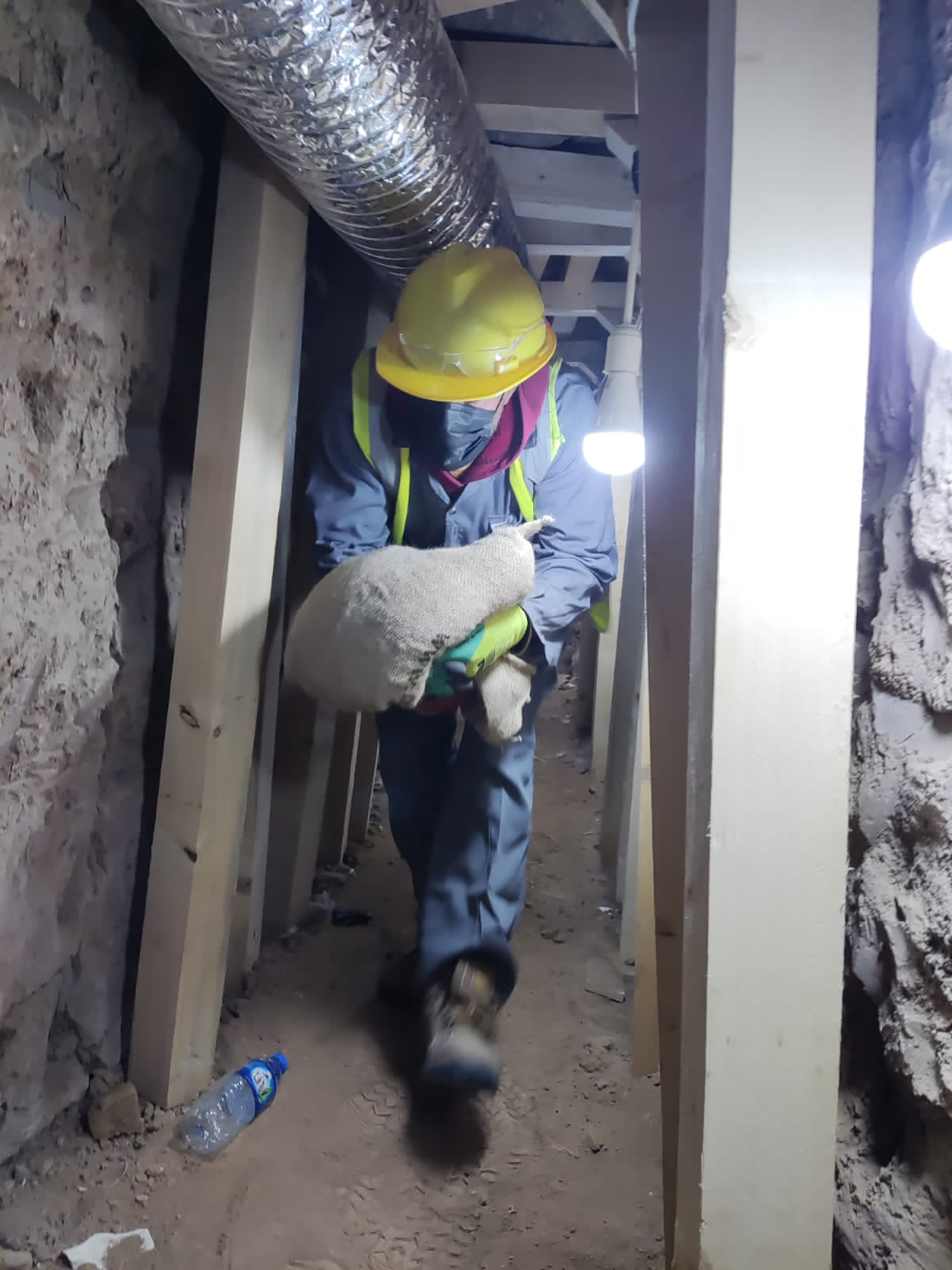
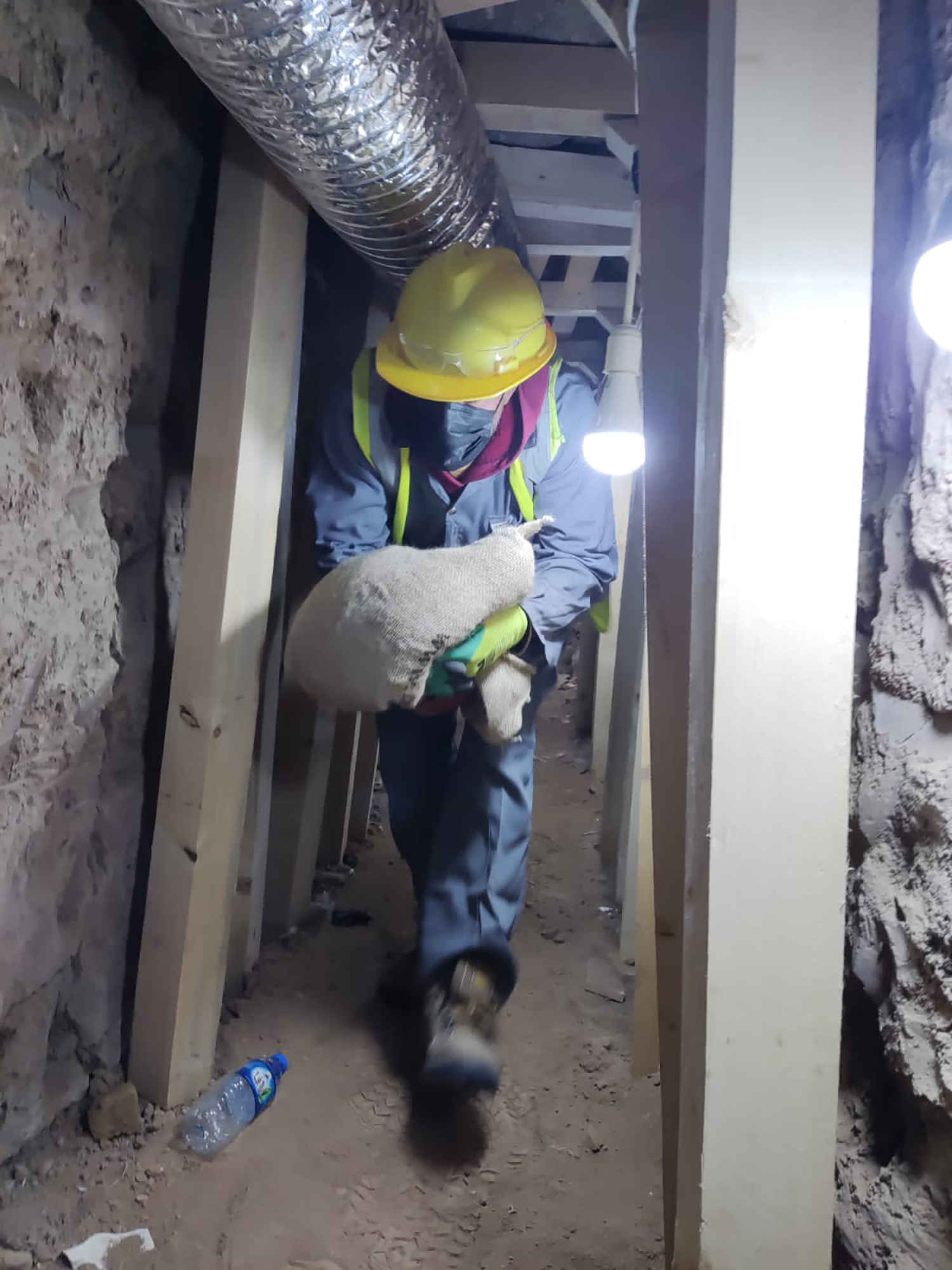
Fortunately, consultations following the 2021 season resulted in a collaboration with the United Nations Development Program’s (UNDP) team involved in the ongoing rebuilding of Mosul. In February and March 2022, with funding through the Peace and Stabilization Operations Program, the UNDP undertook the successful stabilisation of the ISIS tunnels that undercut the Shamash Gate. This effort resulted in the structural stabilisation of the tunnels, which were then backfilled completely with sandbags containing the soil originally excavated by ISIS (Fig. 7).
Member of UNDP Team filling the tunnels
Excavations
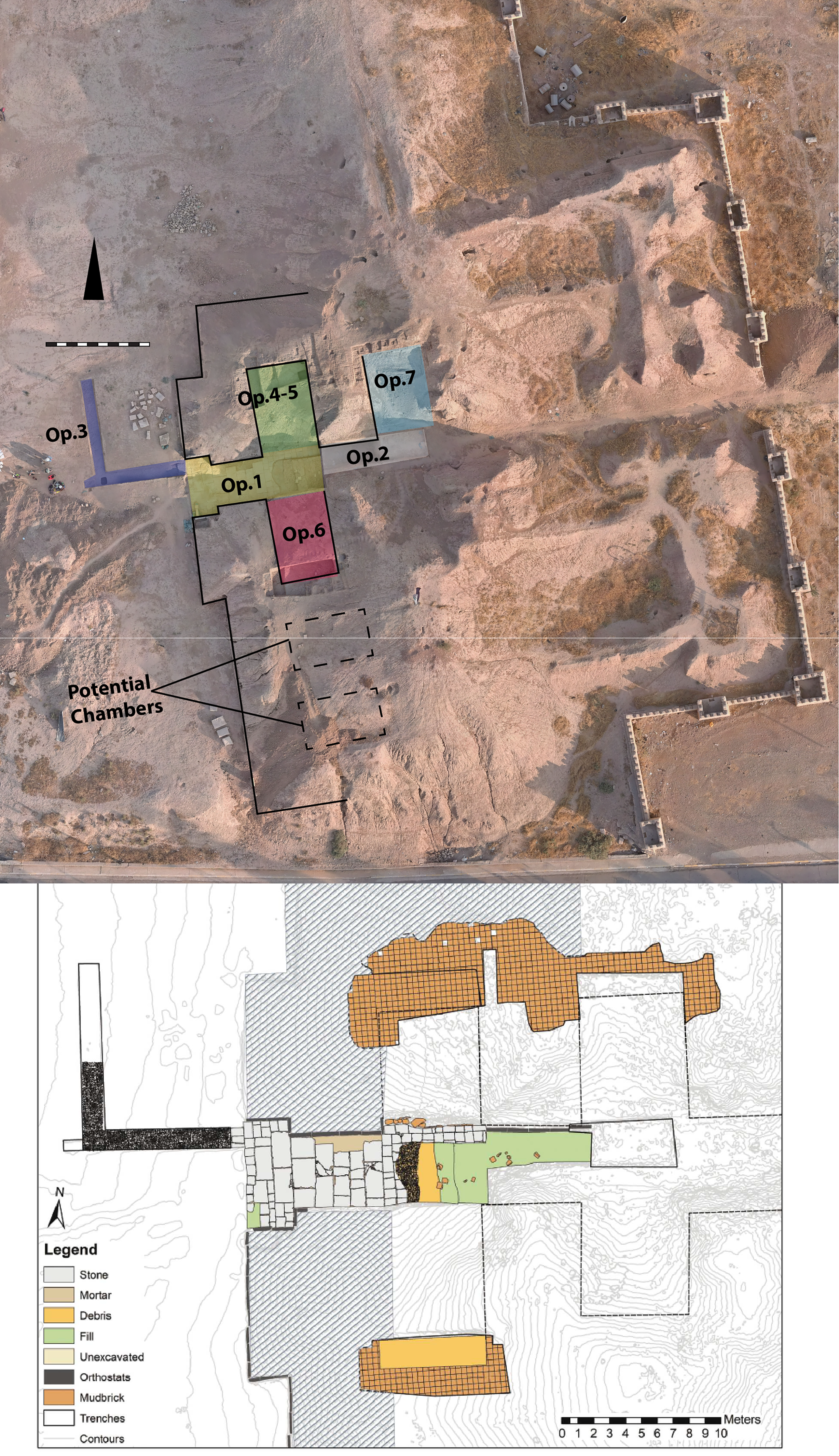
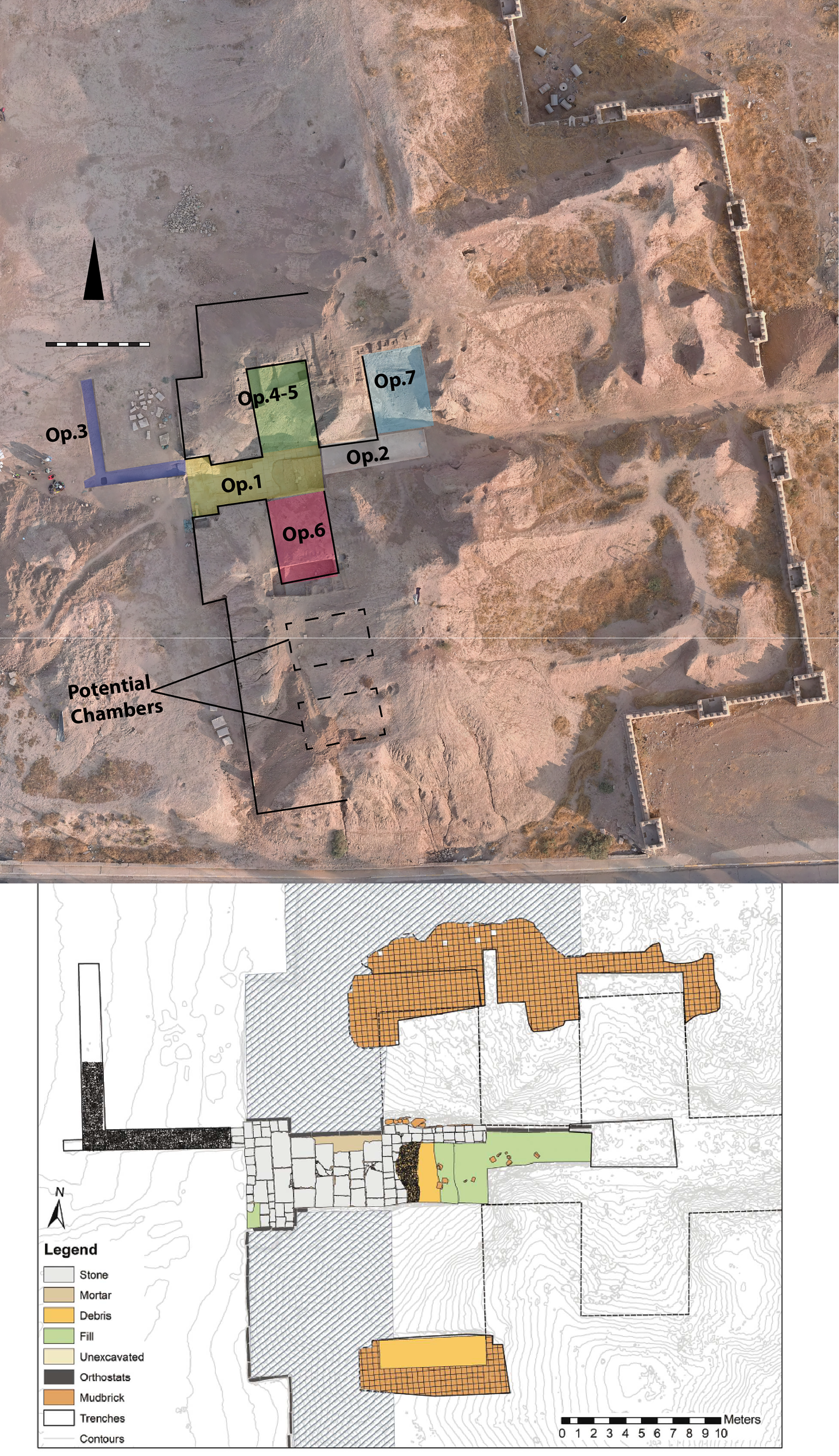
Seven discrete operations have been excavated within the Shamash Gate to date. These operations are distributed across four different sectors of the gate (Fig. 8): the main central passageway, the northern flank of towers and rooms, the southern flank of towers and rooms, and the interior to the gate.
Plan of the Shamash Gate
The Central Passageway (Operations 1 and 2)
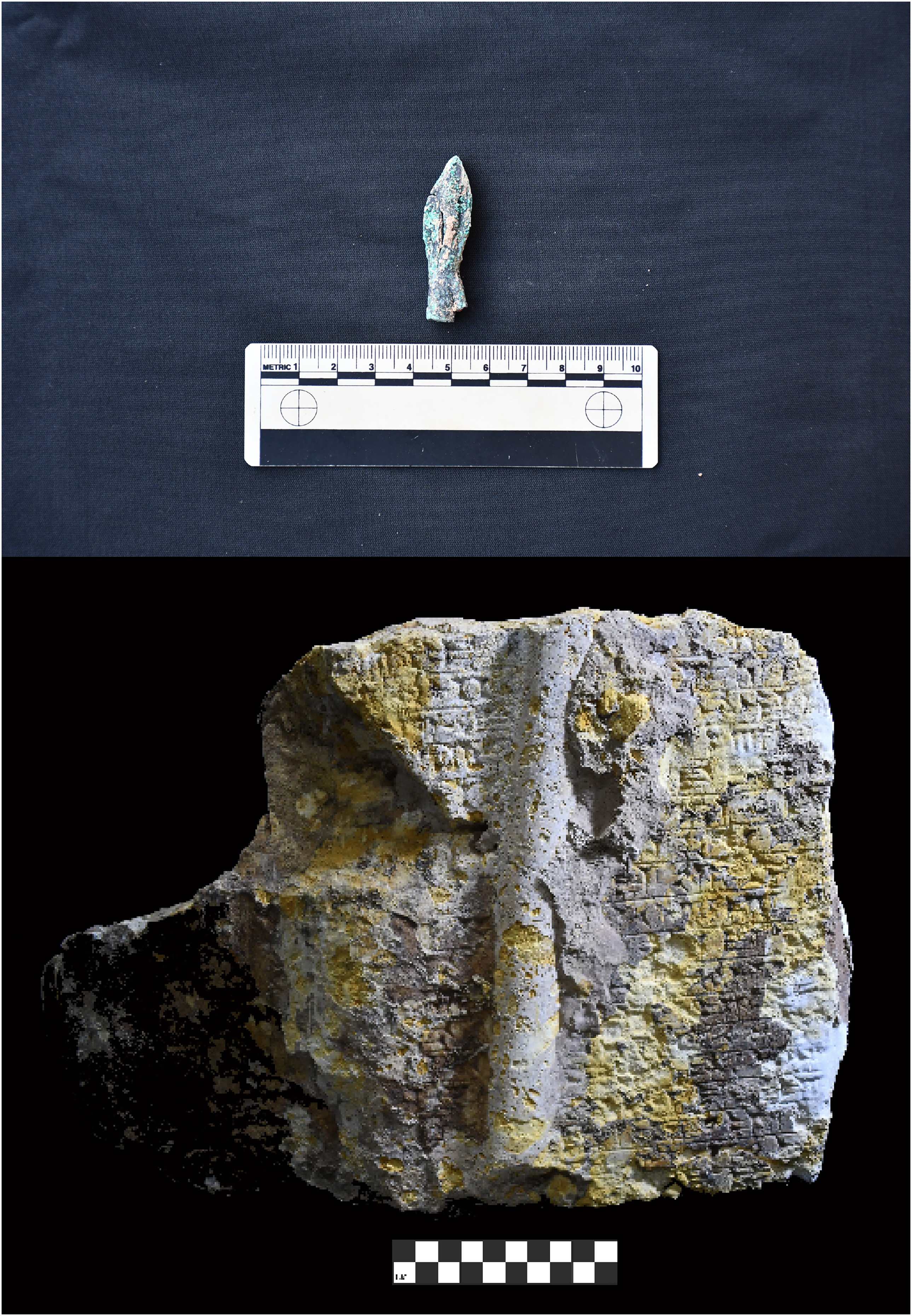
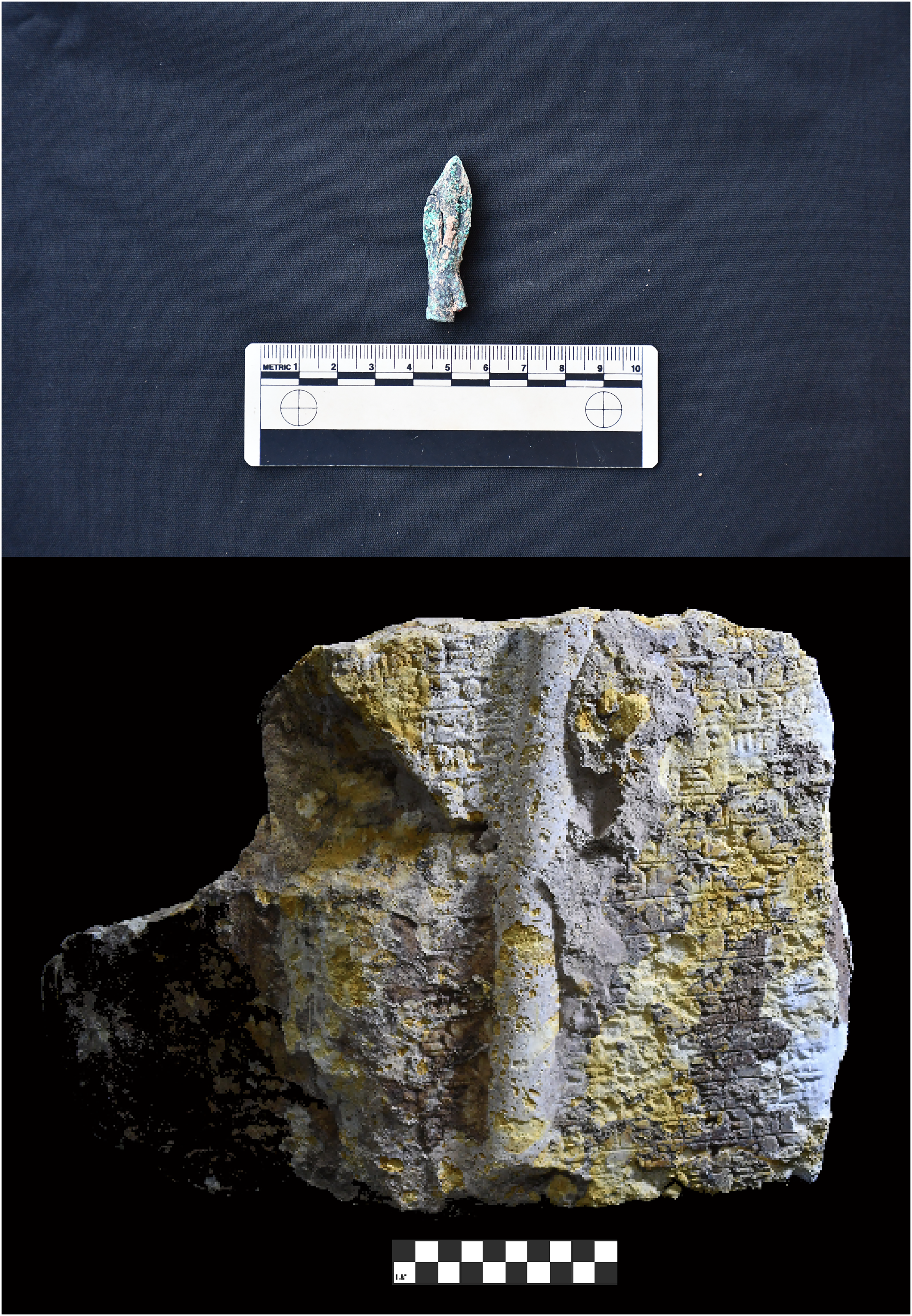
Operation 1 consists of the western portion of the passageway within the gate system (Fig. 8). The excavations in this area identified fairly secure contexts dating to the late seventh century B.C.E. and produced a wide range of artifacts including large numbers of stela fragments, partially articulated human remains, bronze and iron arrowheads, ceramics, and a decorated bone button (Fig. 9). Initial excavations in 2022, and more thorough investigations in 2023, confirmed that there were at least two phases of pavements within the gate system.
Finds in Operation 1: Top: arrowheads; bottom: stele fragments
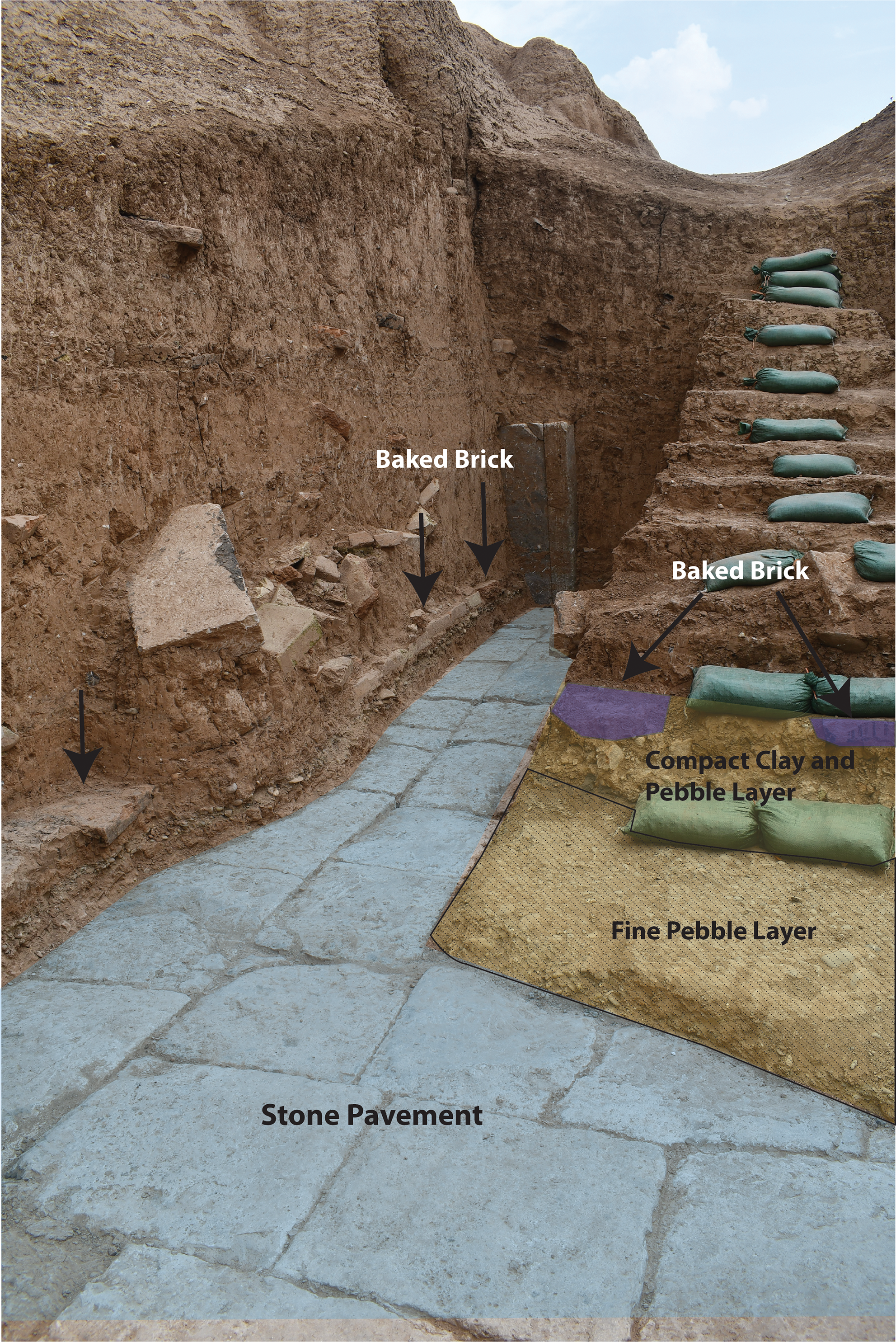
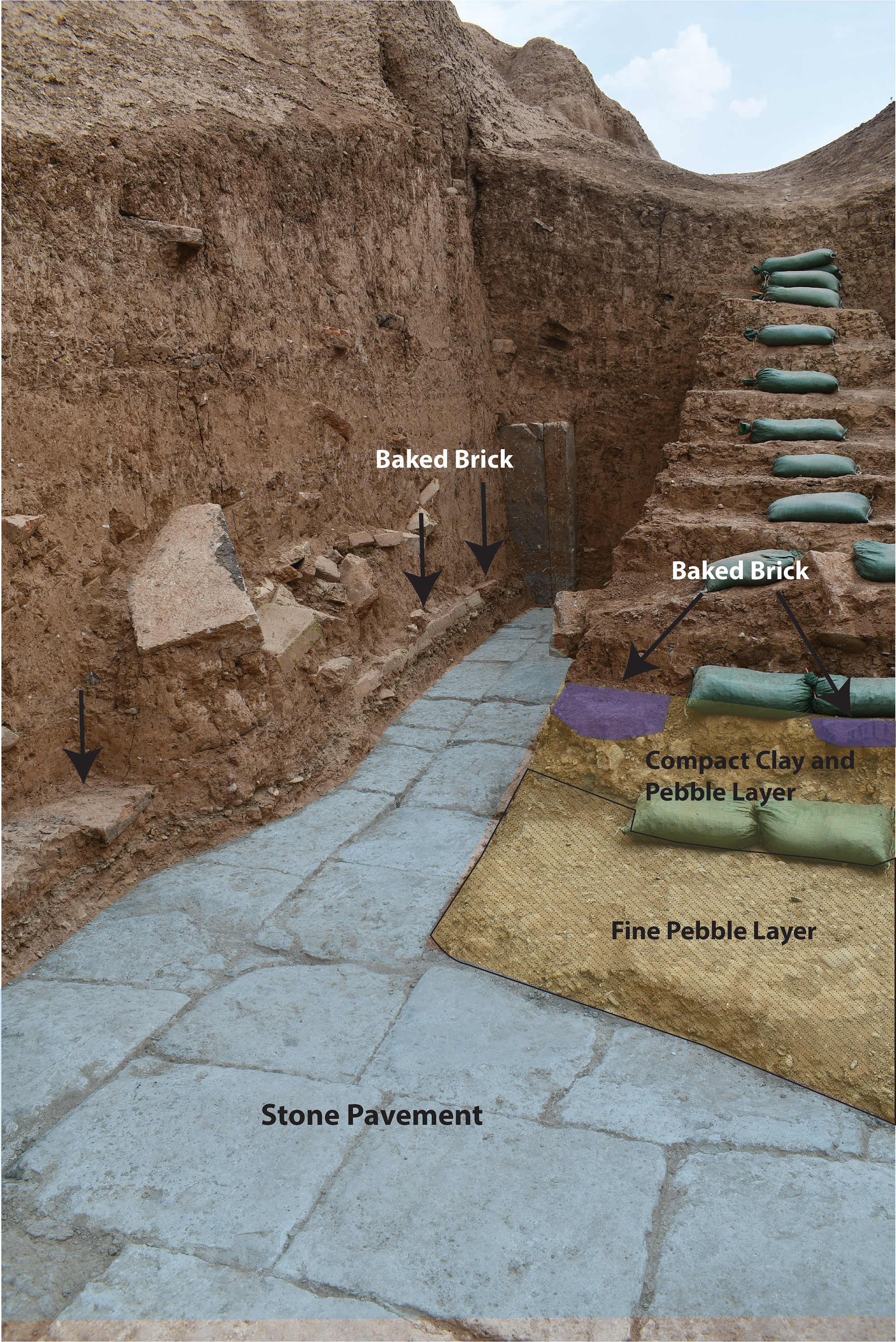
The earlier phase pavement consisted of large stone blocks of different sizes, perhaps laid out as part of the construction of the gate during Sennacherib’s (705–681 B.C.E.) expansion of the city (Reade Reference Reade2000: 396–399). The upper pavement is less clear in terms of its composition, due to its patchy preservation in Operation 1. The pavement appears to have been constructed of three layers, with an initial layer of mudbricks and fill present in some sections meant to level the floor (where the stone pavement may have dipped). A second layer of fine pebbles embedded in a hard clay matrix, which constituted the base of the pavement, lay on top of the bricks, occasionally resting directly on the stone pavement (Fig. 10). This second layer was the most coherent and was preserved in better condition than the upper layer of the pavement. The third layer seems to have been a fill formed of compact clay with interspersed pebbles and fragments of broken baked bricks. Embedded within this layer (Loc. 2881), were fragments of the stela, as well as human remains and other artifacts. In addition to the sequence observed in the passageway, the side chambers appeared to have been paved with baked bricks (visible in the section on the left in Fig. 10). Traces of a conflagration, manifest as pockets of ash and charcoal, were also noted in the area of the dense concentration of artifacts.
Details of pavement sequence in operations 1-2
While the destruction of the gate dates almost certainly to the fall of Nineveh in 612 B.C.E., the date (and purpose) of the secondary pavement is less clear. Traces of cart-wheel grooves could be seen in the earlier stone pavement. Different parts of the stone pavement have subsided, although it is not clear whether this took place during its time of use or after the collapse of the gate and from the resulting excess weight. The repaving of the entrance could have been a solution to water pooling in the gate and the impact this had on the stone slabs. The presence of pebble and cobble-stone layers suggests that the new pavement was laid to facilitate the gate’s water drainage capacity.
Operation 2 formed an eastern extension of Operation 1 inside the central passageway of the gate. The trench was rectangular in shape and extended from the edge of the inner-most pier to just before the central pier, with a length of 10 m and a width of 3.3 m (Fig. 8). This trench was cut along the face of the northern towers but was separated by roughly 1.2 m from the face of the southern towers. The position of the trench was determined due to the difficulty involved in removing the thicker deposits along the southern portion of the passageway, resulting from erosional slump.
The primary objectives in this trench were to remove the slope wash from the area east of Operation 1 and to reach the destruction levels preserved within it. Initially, excavations focused on the entire 10 m trench, removing 1 m depth of slope wash. Access steps (measuring approximately 6 m in length) were then cut descending from the east. Within the lower area, measuring 6 m x 3.3 m, we removed roughly 3.7 m depth of modern fill. The excavations reached the top of the orthostats that formed the northern line of the central passageway, immediately above the destruction debris encountered in Operation 1. This layer contained fragments of trapezoidal baked bricks, perhaps from the collapse of the central archway.
North Flank (Operations 4, 5, and 7)
These operations constituted three trenches (6 x 8 m) that followed the interior outlines of the chambers/courtyards of the northwest tower (Operations 4 north and 5 south) and the north–central tower (Operation 7) (Fig. 8). Both towers have experienced heavy erosion, oriented primarily in two directions. The first direction followed the water flow from the highest preserved points of the tower walls into the presumably softer and lower fills of the rooms towards the south and into the passageway. The second direction of erosion followed a flow from the thick mudbrick walls of the north–central tower towards the northwest tower. This second flow caused a further reduction in the height of the presumably lower northwest tower. The impact of erosion could be seen in the different levels of preservation of the eastern and western wall of the tower, with the eastern wall preserved 4 m higher than the western (inner) wall. A similar condition prevailed in the southern towers (Operation 6).
Both the northwest and north–central towers were constructed from fairly standard mudbricks (on average 35 x 35 x 12 cm), which were easy to define. The bricks were primarily tempered with rounded river pebbles of various sizes; these river pebbles had traces of a natural cement matrix attached to them, suggesting the clay or at least the temper used in the manufacture of the bricks was taken from the loose portions of the conglomerate bedrock that is found in east Nineveh.
The walls of the room or courtyard space of the northwest tower chamber aligned perfectly with the orthostats lining the interior passageway, where they turn towards the north into the tower courtyard/chamber. The perimeter of the room was clear, due to the well-preserved mudbrick and the ease with which the room fill peeled away from the walls. The interior wall-faces of the north–central tower were also straightforward. The two rooms had almost exactly the same dimensions, with a width of 6.75 m for the northwest tower, and 6.85 m for the north–central tower.
Our investigations cannot determine the original height of the northwest and north–central towers, and therefore we cannot determine whether the tower system was stepped, with the north–central tower serving as the highest tower in the defensive system. A stepped gate with an elevated central tower seems likely, if preservation is a reliable indicator in this instance. The presence of collapsed baked brick from an arched vault in the upper portion of the fill towards the better-preserved eastern wall in the northwest tower may suggest that it was only slightly lower than the central tower. This possibility is supported by the fact that the connecting north wall was level with the top of the east wall, dipping sharply (as a result of erosion) towards the west wall. We may suggest, therefore, that the great discrepancy seen in the elevation of the eastern and western walls, and hence between the northwest and north–central towers, was likely the result of erosion, rather than architectural design. This issue nevertheless will require further exploration in future seasons, specifically through the removal of the room fill in the towers (at some points almost 8 m deep), and through further clarification of the outline of their walls.
South Flank (Operation 6)
Operation 6 was located in the southwest tower of the gate system. The objectives of the operation were similar to those of the operations in the northwest tower; that is, understanding the outlines and dimensions of the chambers/courtyard off the gate’s central passageway. The two western-most towers were asymmetrical: the northwest tower was roughly 13 m wide, and the southwest tower was almost three times wider. This may indicate that there were two or three chambers in the southwest tower, a possibility further supported by the depressions seen in the topography of this area (see Fig. 8).
Excavation of the northern-most room of the tower system was prioritised, with the aim of finding the back (south) wall face, as well as the east and west wall faces of the room. This task proved to be more complicated than anticipated. First, the mudbricks in the southwest tower were completely different from those in the northwest. They were very friable, sand-tempered, and varied in their dimensions, and the outline of the bricks did not appear as readily as it did in the excavation of the bricks in the other two towers. Second, the two corners of the room had been eroded by two gullies: one flowing towards the west, eroding the southeast corner of the room, and the other at the western edge of the trench, running north and eroding the southwest corner of the room. Third, a large Sasanian pit had been cut along the face of the south (or back) wall of the room, distorting the connections between the eastern and western portions of the room. Finally, the remains of two exploded grenades were found in the trench. One had exploded in the vicinity of the southeast corner, while the second had exploded on top of the west wall. Despite these complications, we were able to determine the outline of the room, with the disparity in the preservation of the east and west walls similar to that found in the northwest tower.
The dimensions of the room match those of the corresponding room in the northwest tower, which suggests that there were perhaps two other rooms to the south of it, a possibility further supported by the size of the tower and its topography. A similar layout has been observed at the Adad Gate.
The differences between the bricks found in the northeast and southeast towers, in terms of their size, composition, colour, and weight, could indicate: (1) that one of the towers was reconstructed after its initial construction, or alternatively (2) that these differences reflect the distributed organisation of the Assyrian labour conscripted (ilku) to construct the city’s fortifications (Lorenzon and Wallis Reference Lorenzon and Wallis2022). In this second scenario, the heterogenous composition of the gate’s bricks would reflect the diverse local clay sources used by labour groups or work gangs organised according to provincial or district units and managed by the state.
Area West of the Gate (Operation 3)
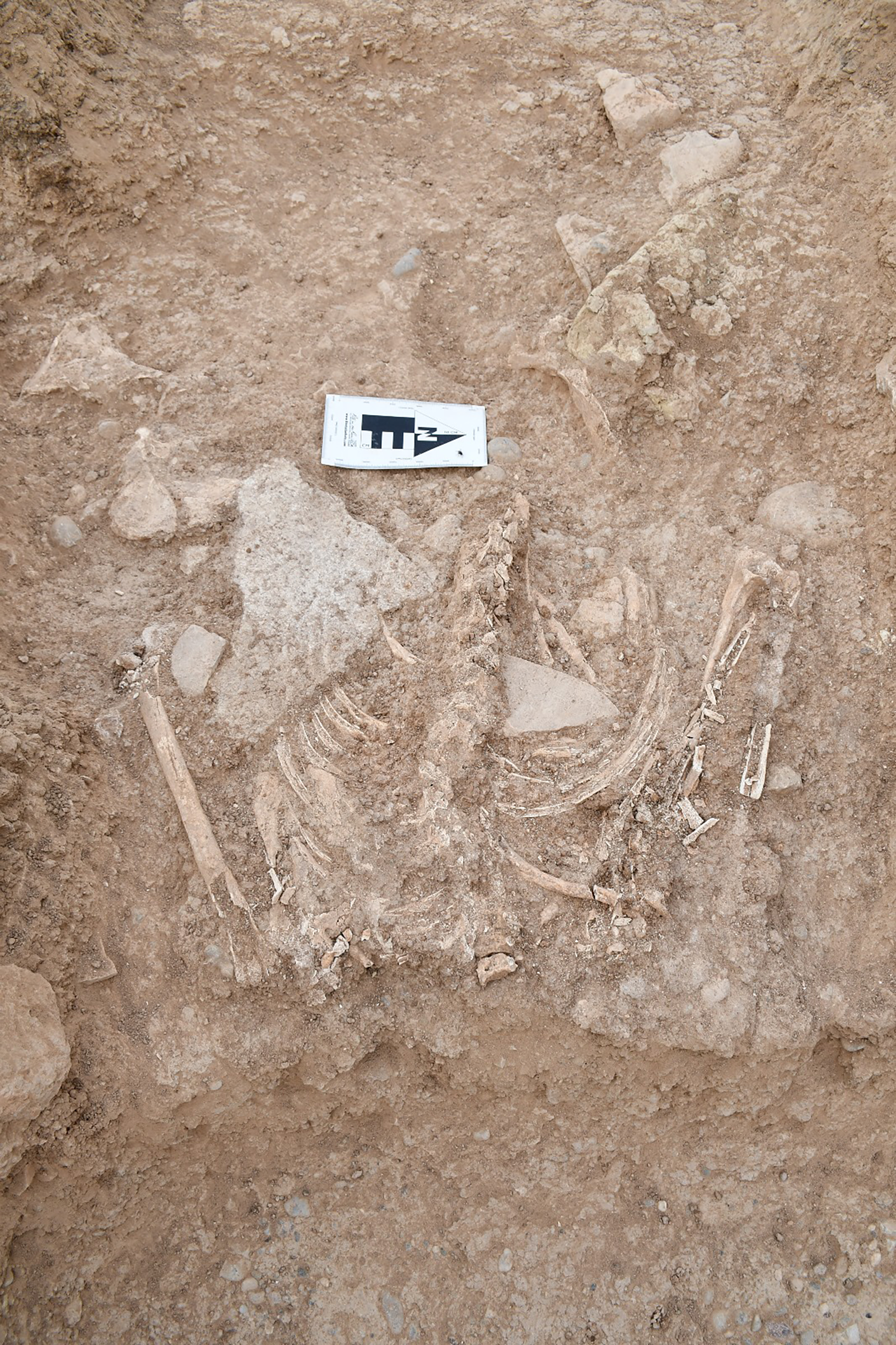
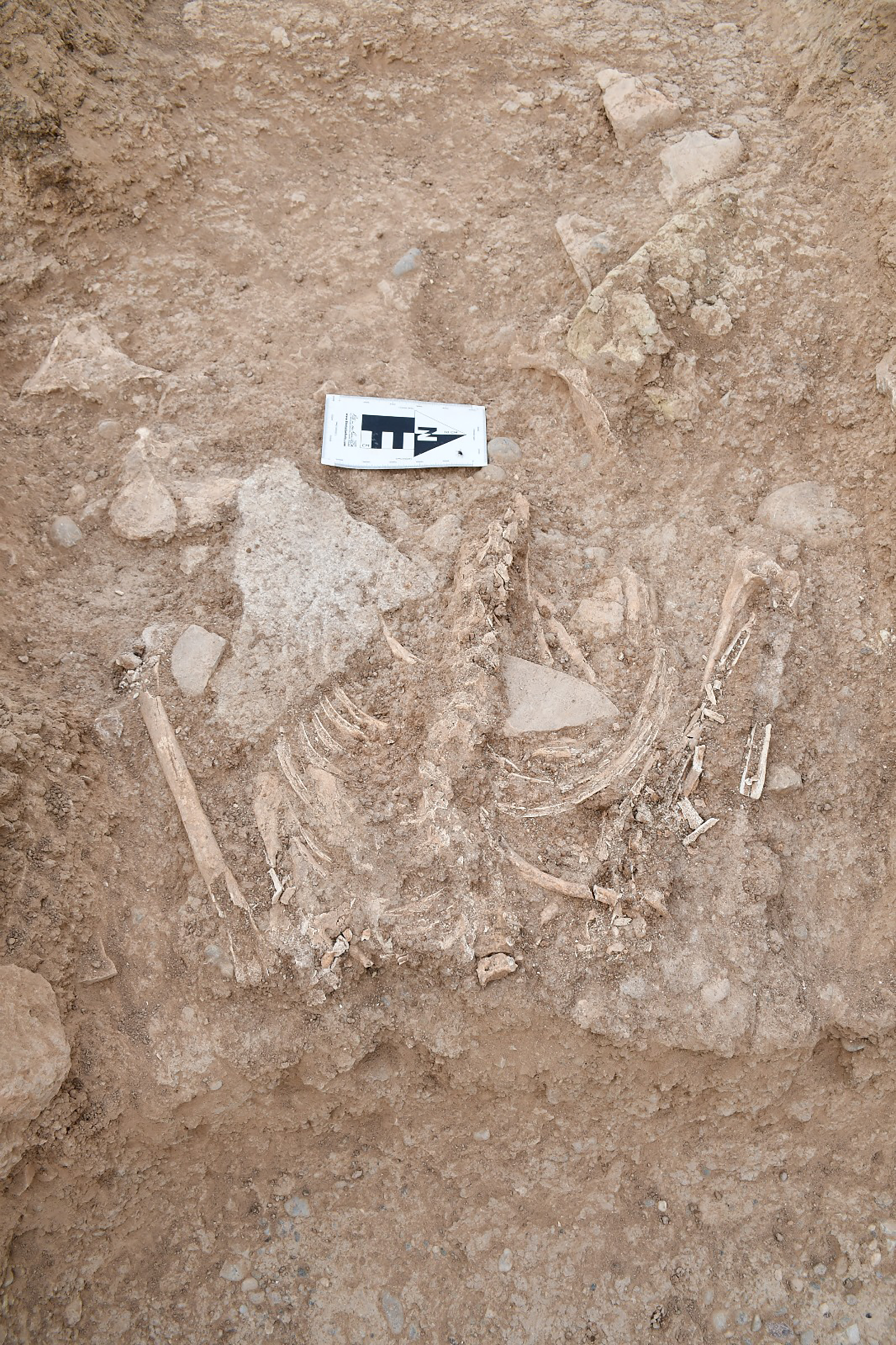
Operation 3 (Fig. 8) was an L-shaped probe designed to understand the area immediately inside the gate (see Petit and Morandi-Bonacossi Reference Petit, Morandi-Bonacossi, Petit and Morandi-Bonacossi2017: 125). The excavations completed to date have identified two surfaces. The lower surface was composed of medium-sized river pebbles embedded in a clay matrix. We are not sure if this surface was artificial, or whether it formed the natural geological composition of this area’s surface at the time of use, pressed and compacted as a result of repeated treading (see Madhloom Reference Madhloom1968). The upper surface was completely different, composed of clean red clay with fragments of baked brick embedded within it. The remains of a partially articulated individual were uncovered on this surface (Fig. 11).
Individual skeleton in operation 3
Artifactual Remains
Pottery
The following analysis is focused on the pottery recovered during the 2023 Shamash Gate excavations, specifically from Operations 1 through 7. The Operation 1 depositional contexts consisted of compact clay mudbrick collapse just above the second occupation surface in the corridor. Pottery was also collected from Operation 3, just west of the central passageway, as well as from Operations 4, 5, 6, and 7, located in the northern and southern towers. The contexts in Operations 4, 5, 6, and 7 consisted of eroded mixed mudbrick detritus, with modern material on the surface; pottery was collected from contexts immediately below the erosion levels as well.
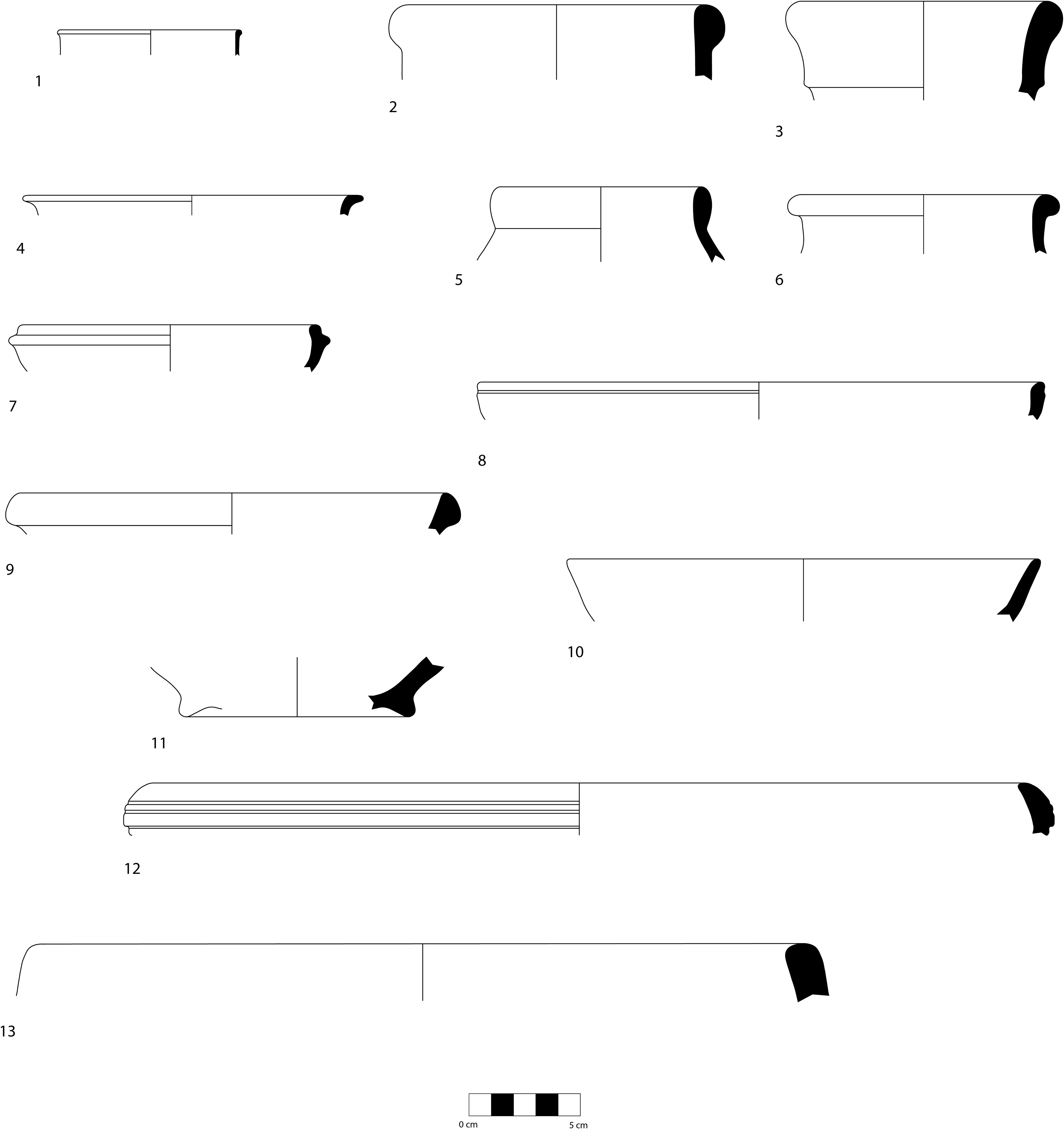
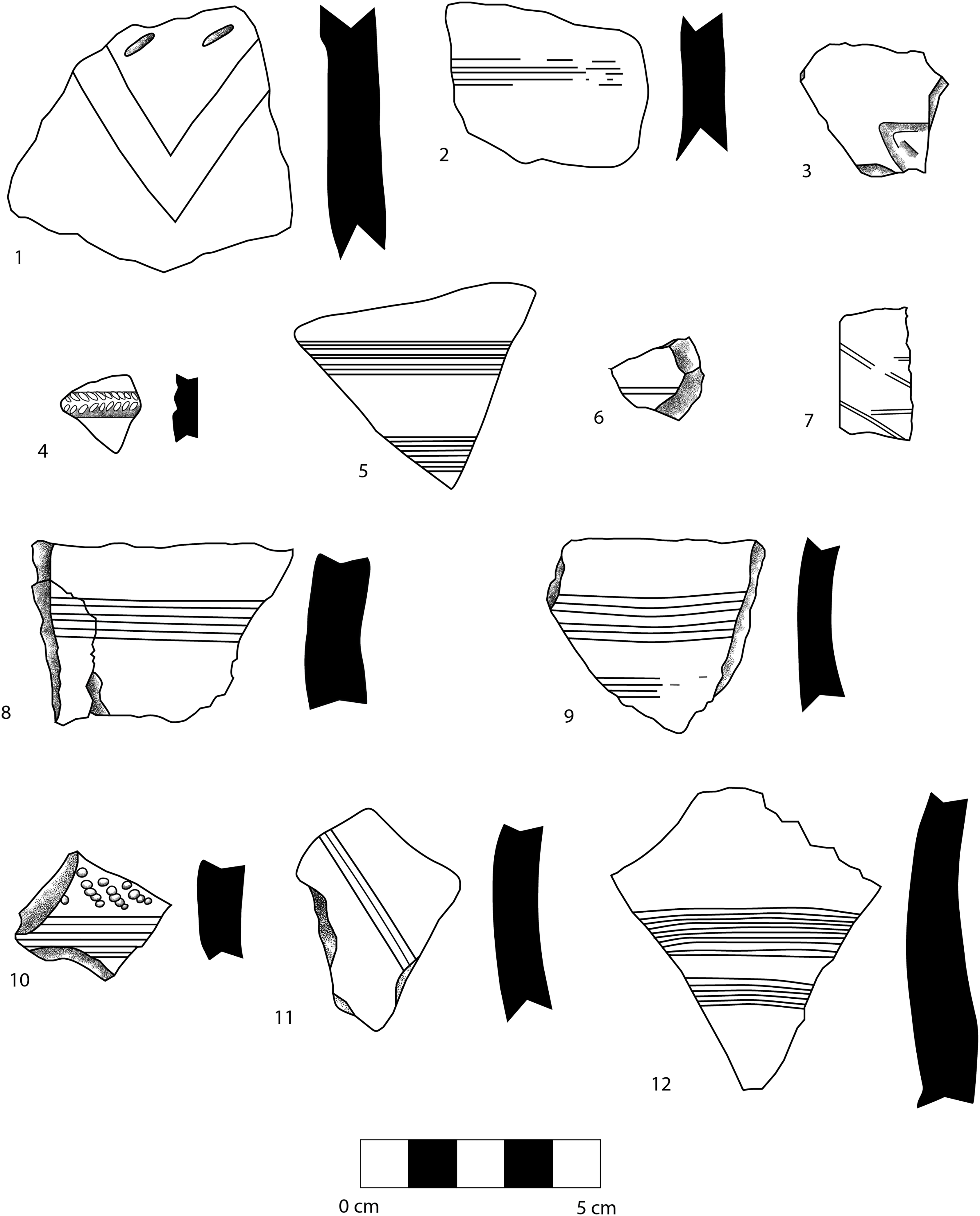
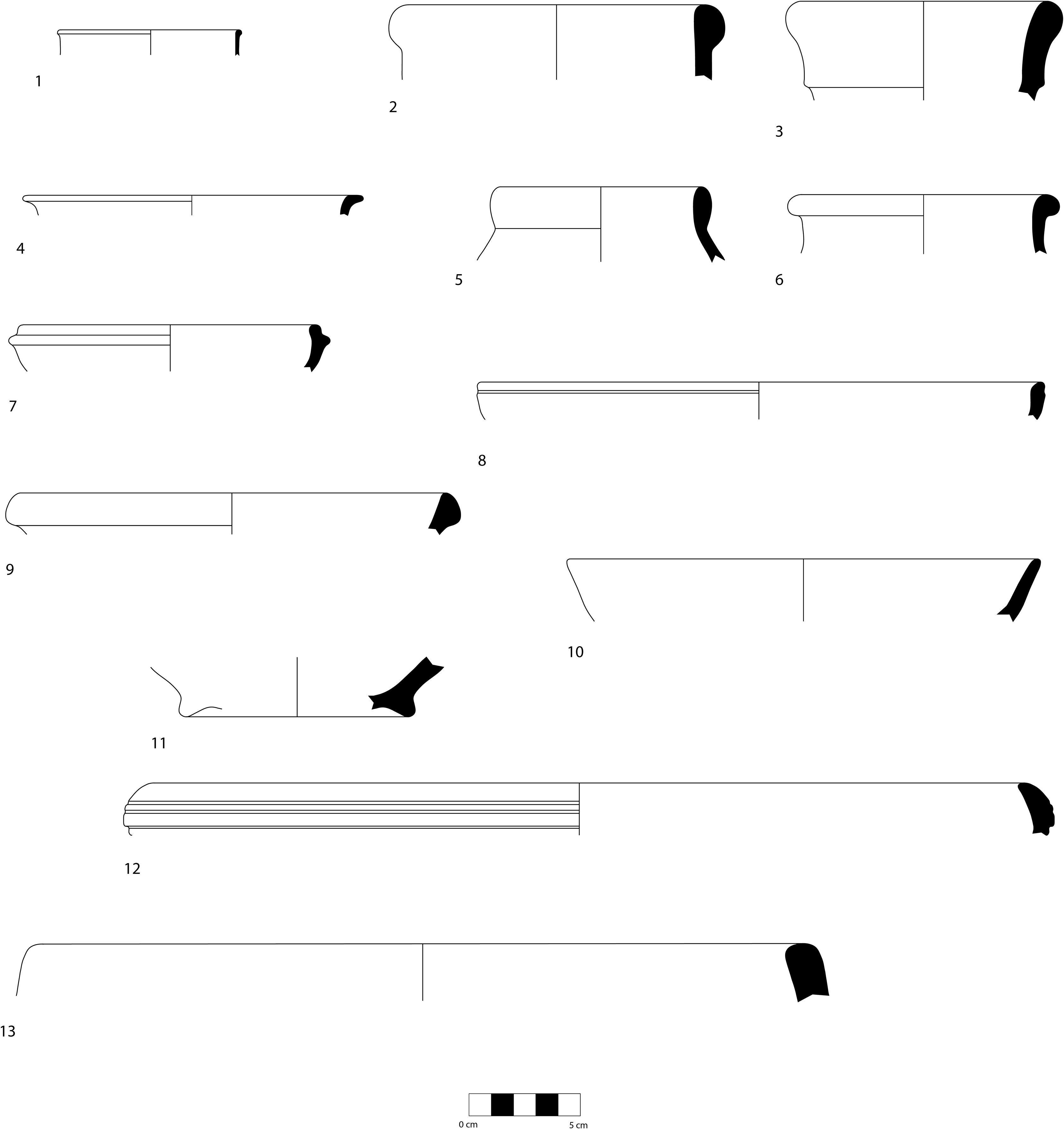
A total of 87 diagnostic sherds was recovered. Nearly all the diagnostic sherds were rims, with a few bases, and few duplicates of the same form. A majority of the sherds collected were wheel-made, with a few examples of coil and slab construction. The assemblage closely parallels forms in the typology created from the Mashki Gate excavations in 1989 and 1990 (Wilkinson and Lumsden Reference Wilkinson and Lumsden2022). As at the Mashki Gate, the primary Shamash Gate vessel forms were bowls with beaded rims (Type B1bFootnote 2) (Fig. 12.8), bowls with ribbed rims (B2) (Fig. 12.7), bowls with tapered rim (B3) (Fig. 12.10), small to medium bowls with grooves on the rim (B4a) (Fig. 12.12), bowls with everted externally thickened and projecting rims (B6b) (Fig. 12.4), jars with folded out-turned rims (J1a) (Fig. 12.3), jars with externally thickened rims and long necks (J2) (Fig. 12.2, 6), and jars with folded or thickened rims and short or no neck (J3) (Fig. 12.5).
The Shamash Gate excavations also produced fine ware/palace ware sherds, with over half coming from the northwest and north–central towers (Operations 4, 5, and 7), including diagnostic and nondiagnostic sherds. Two fine ware rims were collected from the mudbrick collapse fill of Operation 7. Most of the fine ware came from mixed contexts in topsoil or loose soil fill. Many of the fine ware forms were also paralleled closely in the Mashki Gate typology and the forms already listed above (Fig. 12.1), with only a few exceptions.
Plain wares from the Shamash Gate
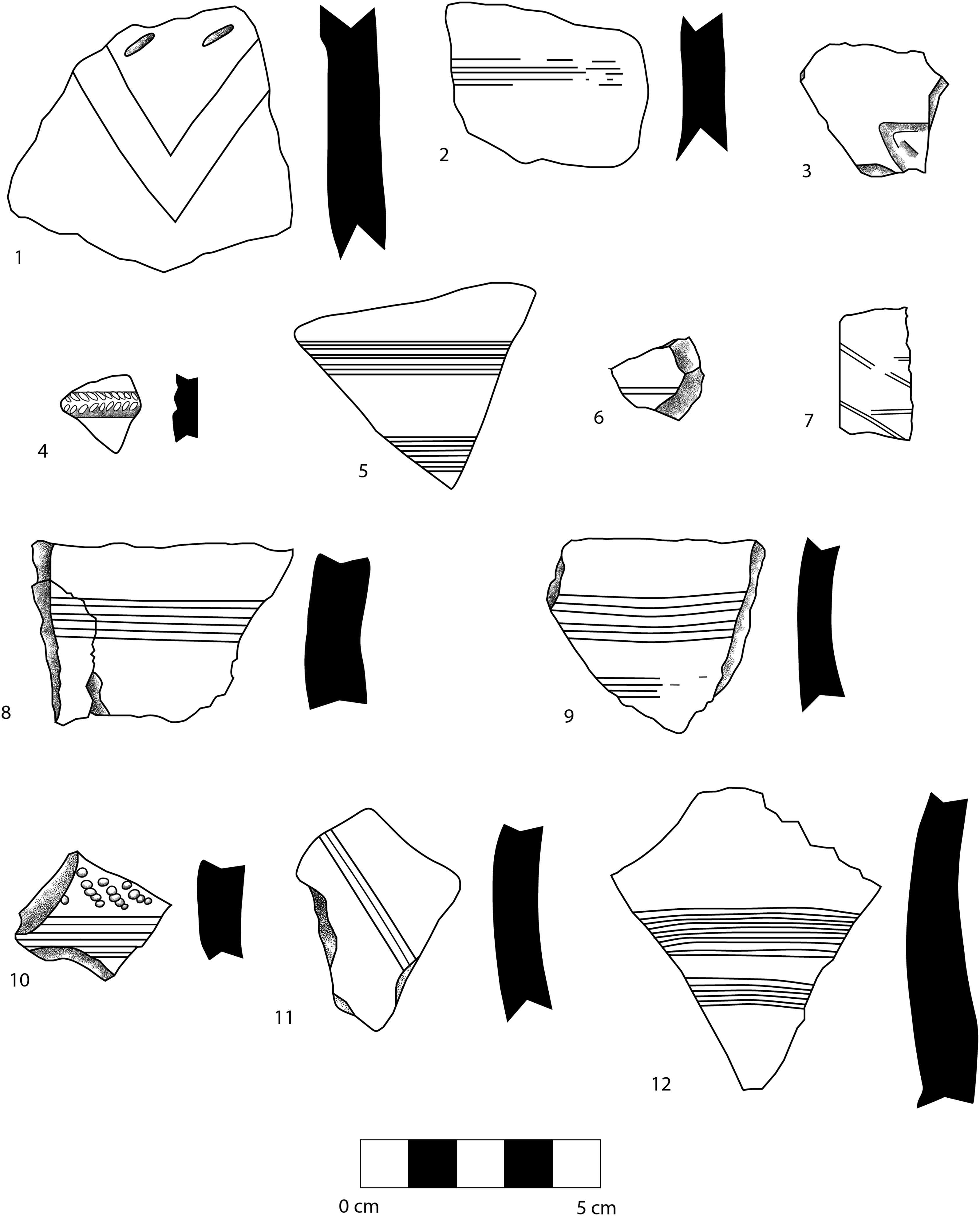
The primary surface treatment consisted of wet-smoothing, and in one circumstance, red slip on the interior and exterior of the sherd. The primary decorative style involved variations of banded incisions, comb impression and punctates. More specifically, the types of decoration included two v-shaped incisions creating bands with punctates, horizontal incised combing, horizontal incised combing with small punctates, diagonal incised lines, small braided applique, triangular incised lines with punctates, parallel horizontal and diagonal incisions creating a y-shape, and glaze. It is worth noting that only one or two examples of each of these decorative styles were recovered, and only twenty sherds in total had preserved decoration (Fig. 13).
Incised Wares
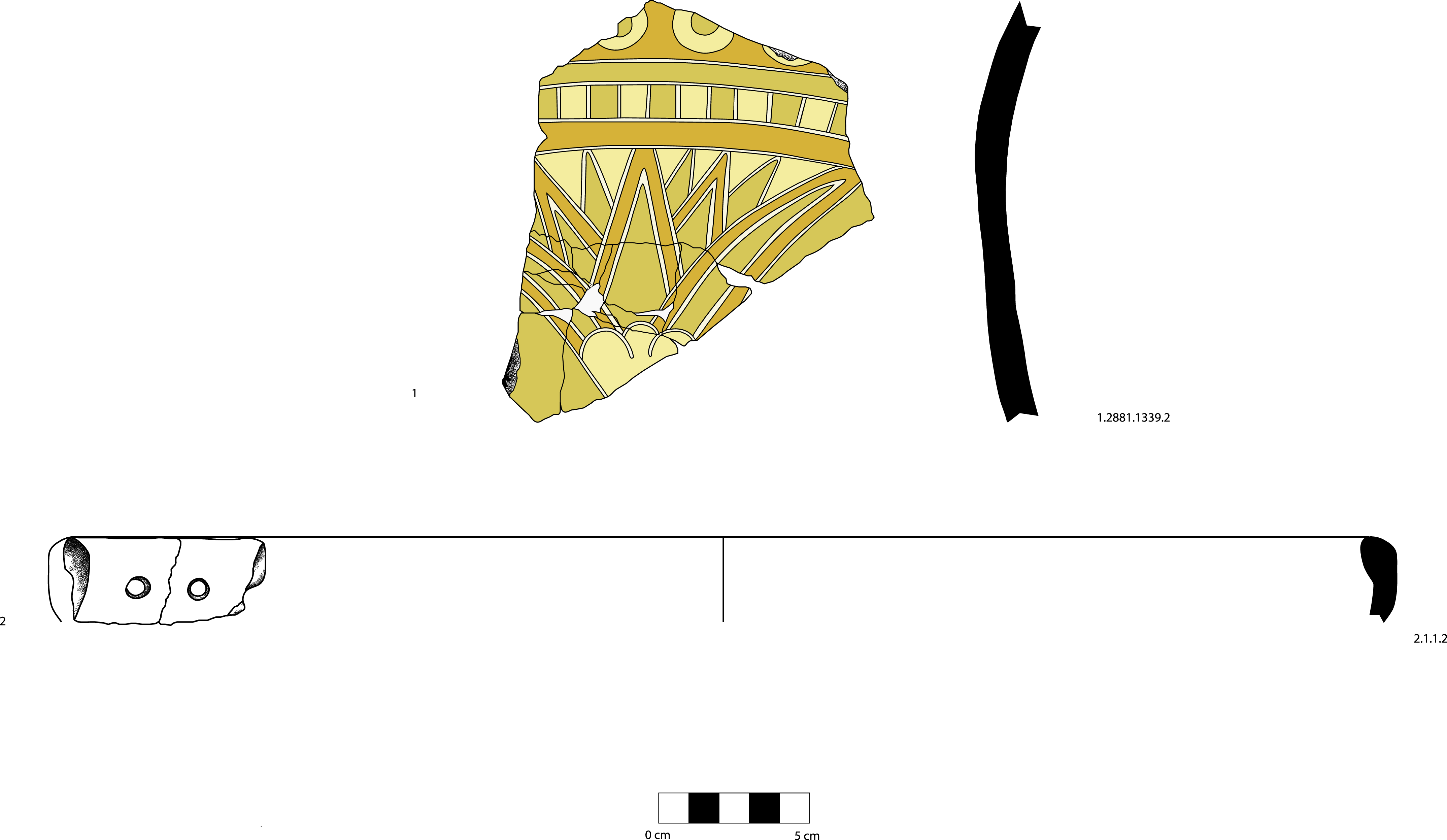
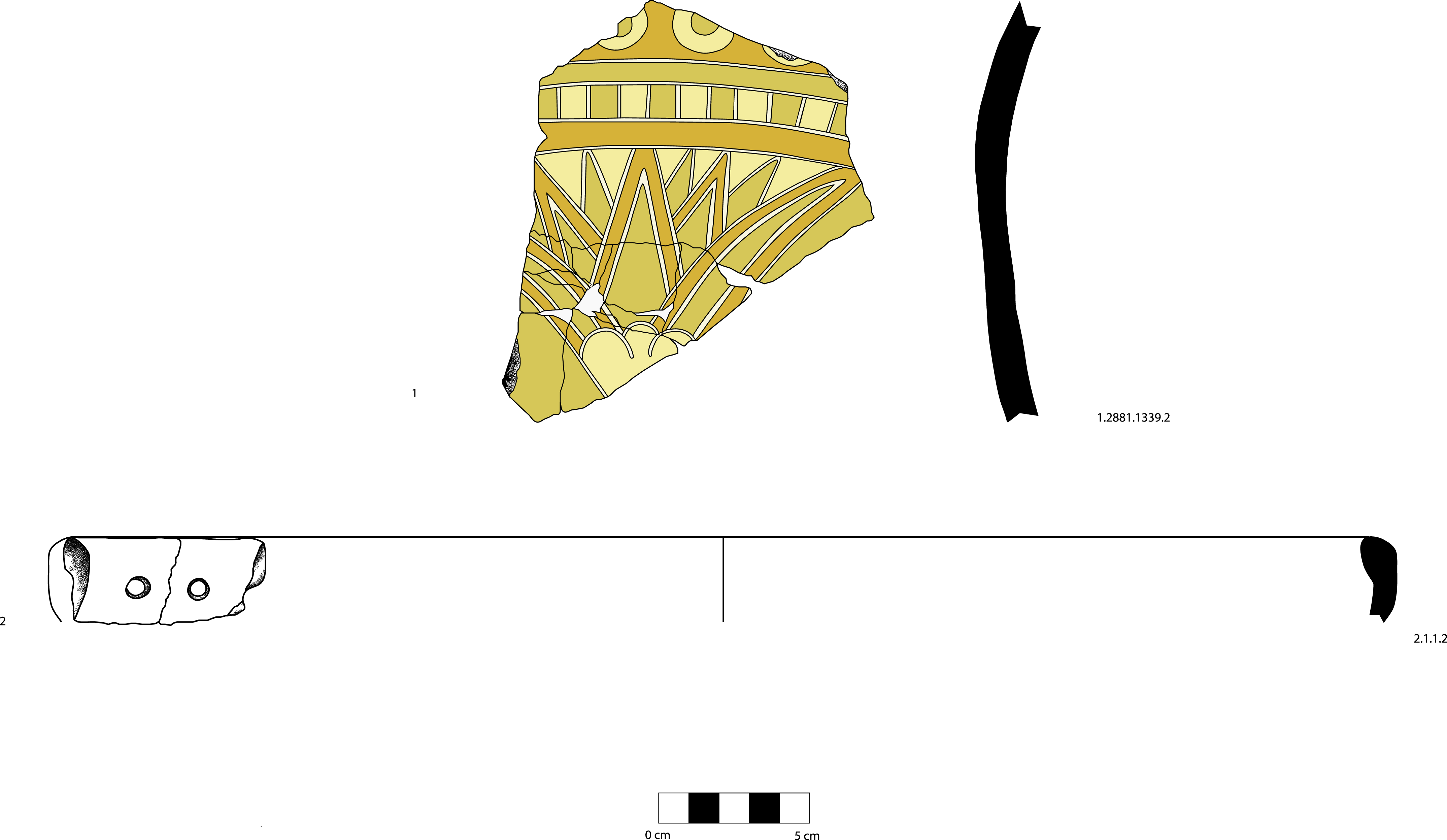
A vibrant Assyrian glazed ware body sherd was uncovered in Operation 1 in a hard compact surface (Fig. 14.1). It was found face down, and when lifted, it left a residual imprint of the vibrant glaze on the soil. The glazed pattern on the exterior of the sherd consists of a row of circular dots at the top and horizontal bands of solid and checkered shades of yellow glaze below this. A lotus flower motif was preserved towards the bottom of the sherd. The glaze alternates different shades of yellow, and each decorative element is bordered by a small white line, further accentuating the decoration. The interior of the sherd had a white glaze. Pottery with similar geometric decoration and yellow and white glaze was recovered from the Neo-Assyrian and Post-Assyrian levels at the Mashki Gate (Wilkinson and Lumsden Reference Wilkinson and Lumsden2022: 53).
Unique sherds
In summary, the Shamash Gate pottery assemblage recovered thus far dates unequivocally to the Neo-Assyrian and Post-Assyrian/Achaemenid periods, while closely paralleling the Mashki Gate typology. The Mashki Gate excavators have dated most of the pottery recovered from their excavations to the Post-Assyrian period, with a few examples dating to the late Neo-Assyrian period (Wilkinson and Lumsden Reference Wilkinson and Lumsden2022). Despite the evident similarities to the Mashki Gate assemblage, the Shamash Gate excavations have also produced a sizable amount of pottery that resembles common Neo-Assyrian forms. The thickened rim bowls, bowls with ribbed rims, and necked rim jars are some of the most common Neo-Assyrian forms, and these were all present at the Shamash Gate, though admittedly, many of these forms are also common in the Post-Assyrian period (Gavagnin, Iamoni and Palermo Reference Gavagnin, Iamoni and Palermo2016: 144–145).
The color of the Shamash Gate pottery provides another factor in dating the assemblage. A majority of the Mashki Gate assemblage was reddish/brown in color (Wilkinson and Lumsden Reference Wilkinson and Lumsden2022: 69–70). However, Wilkinson and Lumsden mention that at other contemporary Post-Assyrian sites, such as Khirbet Qasrij, pale yellow colored pottery was prominent (Reference Wilkinson and Lumsden ibid.: 69–70). In the Land of Nineveh survey, Post-Assyrian pottery can range in colour from green to buff and light brown (Gavagnin, Iamoni and Palermo Reference Gavagnin, Iamoni and Palermo2016: 146), while Neo-Assyrian assemblages typically have a buff colour but can also be yellowish/green or orange (Reference Gavagnin, Iamoni and Palermo ibid.: 144). The Shamash Gate produced a variety of sherds of different colors, but the majority were yellowish/green, suggesting a Neo-Assyrian date for the assemblage. The assemblage nevertheless exhibited a variety of other colors, from buff and light brown to orange and a reddish color. The pottery collected from the central passageway (Operations 1 and 2) was predominantly reddish or light brown in color, while the pottery from the side chambers and towers was mostly yellowish/green. In sum, the close parallels with the Mashki Gate assemblage (cf. Wilkinson and Lumsden Reference Wilkinson and Lumsden2022) and the Neo-Assyrian pottery recovered by The Land of Nineveh Archaeological Project (Gavagnin, Iamoni and Palermo Reference Gavagnin, Iamoni and Palermo2016: 142–146), support a late Neo-Assyrian and Post-Assyrian time range for the Shamash Gate pottery recovered to date.
In addition to the predominant assemblage, three residual Middle Bronze Age body sherds, characterised by their monochrome painted decoration on the exterior (cf. Gavagnin, Iamoni and Palermo Reference Gavagnin, Iamoni and Palermo2016: 138), were identified during the Shamash Gate excavations. The three sherds were found in varying contexts in the northwest tower (Operation 5): topsoil, a potential animal burrow, and compact clay fill. In addition, a Sasanian decorated body sherd was recovered from a compact clay mudbrick fill in Operation 6. It can be identified by its sandy temper, light brown colour, and the incised and stamped decoration on its exterior (cf. Reference Gavagnin, Iamoni and Palermo ibid.: 155). Finally, two green-glazed Early Islamic body sherds were collected from Operations 2 and 5, both from mixed contexts.
Two rim sherds recovered from Operation 1 preserved evidence of bitumen. The first had splotches of black bitumen on the exterior in no apparent pattern or configuration, while the second was coated in bitumen on the interior, with drips over the rim to the exterior. Both sherds were found in the vicinity of the stela fragments and bricks with bitumen coating (Operation 1). It is possible the bitumen was used as a form of decoration. However, due to the small size of the sherds, we were unable to discern whether the bitumen represented a design element; it is possible the bitumen had been applied to reduce the associated vessel’s porosity.
Another unique sherd was found in Operation 2, in a mixed context within a layer of compact mudbrick fill (Fig. 14.2). The rim has two fully intact perforation holes, as well as two partial perforation holes on the broken edges, suggesting the associated vessel had been mended. Finally, excavations of a compact clay fill in the northwest tower (Operation 5) produced a small fragment of clay slag.
Human Remains
Operation 1
The human remains in Operation 1 were composed of a mixture of many individual bones, with no articulation of any bone elements. A basic examination of the human remains indicates the presence of at least four individuals. The majority of the bones were extremely fragmented, preserved as large quantities of small fragments, rendering it difficult to identify the types of bone preserved and thus making it possible only to classify individual fragments as, for example, a shaft fragment of a long bone. The difficulty in identifying the bone type, and the side of the body represented, affected the process of estimating the minimum number of individuals (MNI) present. Thus, the presence of two fragmented pieces of cranium does not necessarily indicate the presence of two individuals (it might be that one individual cranium had broken into several fragments). The ongoing nature of the Shamash Gate excavations also means that analysis of the human skeletal remains must be preliminary. It was nevertheless possible to complete a preliminary assessment of all the bone fragments excavated in 2022.
Based on this preliminary analysis, it was possible to identify the presence of four individuals: (1) a child approximately 2.5–3 years of age; (2) an adolescent male with a bone growth age of 18–20 years; (3) an adult female aged between 20–30 years, based on the degree of dental wear; and (4) an adult of undetermined age and sex. These identifications were based on the presence of three right-side talus foot bones, indicating three individuals, and the presence of infant bone remains. A few animal bones were found in this context mixed with the human remains.
Operation 3 (Sample #18)
At the west (inner) entrance of the Shamash Gate, the poorly preserved remains of an adult individual were found in a face-down position (Fig. 11), with both upper arms at the sides of the torso and tightly flexed at the elbows so that the hands were in front of the neck. The bust had no cranium associated with it; an extremely fragmented mandible (with a brick covering it) was found near the articulated skeleton. A second partial brick was found over the right upper back, partially covering the ribs and a third brick fragment lay near the left pelvic area. The preserved bust of this individual ends with the lower thoracic and first lumbar vertebrae. The pelvic region was disarticulated (likely due to erosion), and the left and right side of the os coxea were found at a distance from the articulated remains. No lower limbs were found.
The discrepancy in the preservation of the upper and lower limbs of this individual might be related to the fact that only the upper part was buried, perhaps under some form of brick structure that had collapsed over the bust area, leaving the lower limbs exposed, which eventually were lost. The bone preservation is poor, due to the fact that the skeletal remains were very close to the topsoil, and any heavy movement over time would have caused the compression and fragmentation of the bones. As a result, once the bones were exposed, they fractured immediately into multiple small fragments.
No objects were found associated with this individual. The preserved portion of the mandible represents the mental eminence, possibly indicating a male. However, the rest of the bones of the upper limb are gracile, possibly indicative of a female. Thus, it was identified as an adult of undetermined sex, with an age estimated between 35–45 based on the degree of dental wear.
Ashurbanipal Stela
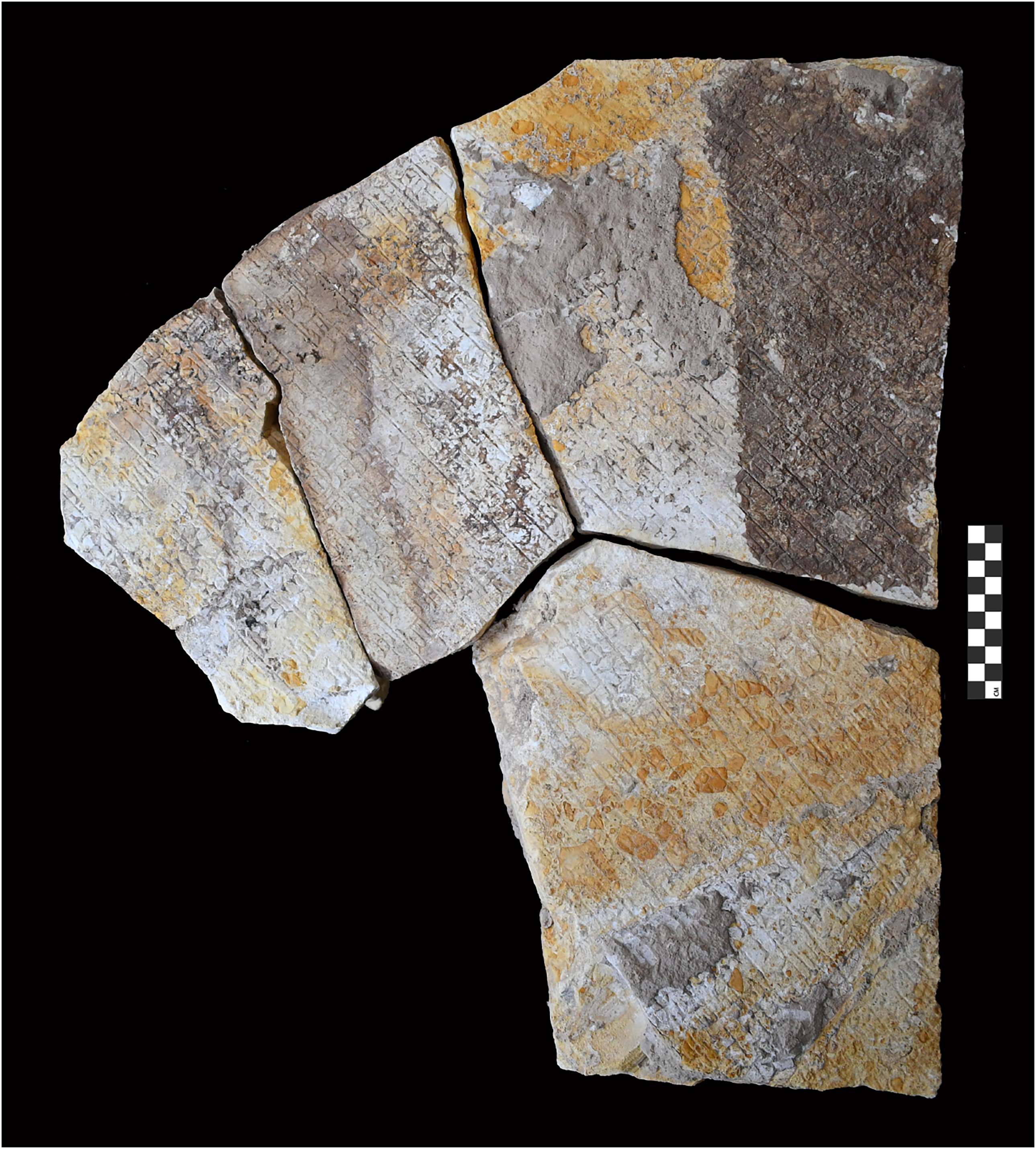
The fragments of a very large stela, carved from a soft stone, likely a chalky limestone (with breccia-like inclusions), and celebrating the figure and deeds of King Ashurbanipal, were recovered from the central passageway of the Shamash Gate. The monument is still being excavated, restored, and reconstructed. The stela has two carved faces, both inscribed with cuneiform text. One of the two faces, presumably the primary, front face, depicts a standing figure (discernable features include an elbow, a decorated dress, and a mace or a sceptre), most probably a representation of Ashurbanipal.
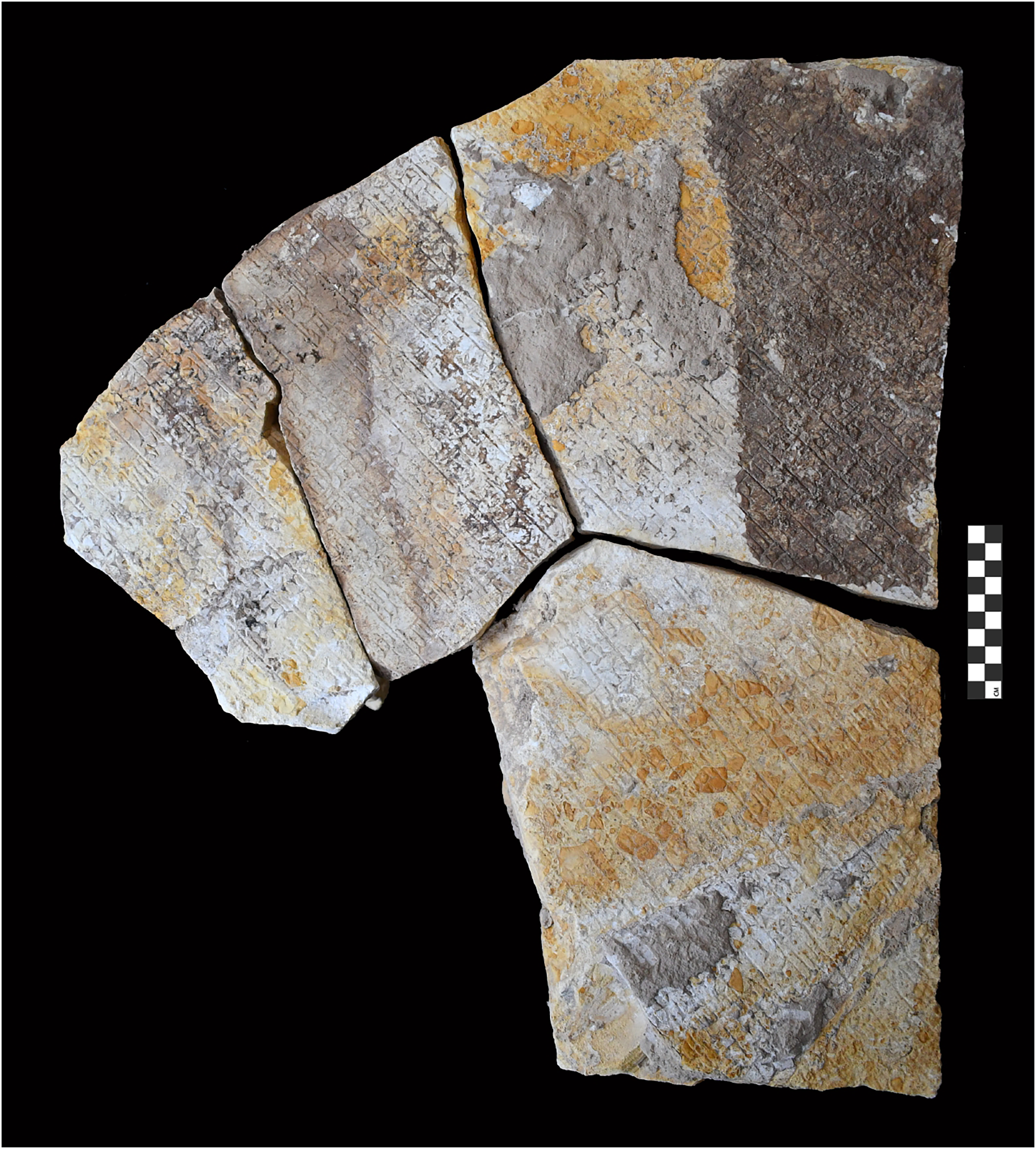
To date, 196 fragments of various sizes have been retrieved (Fig. 15). Most are too small to provide continuous and consistent text and to allow the identification of duplicates; some parts are irreparably damaged and no longer readable. The original size of the stela is unknown. Based on the proportions of the discernable fragments found thus far, the monument was not less than 2 m in height, about 80–100 cm in width, and 26 cm in thickness. Evidence of its intentional (and violent) destruction, presumably during the fall of Nineveh in 612 B.C.E., are seen in the highly smashed and varied sizes of the surviving fragments, including the presence of numerous small chips and flakes.
Stele fragments
The stone shows a severe decohesion of its surfaces and a very weak resistance to scratching. However, this condition is patchy and uneven, and in some parts, the stone matrix appears compact, with the characteristics of limestone. Traces of fire and burned organic remains (maybe straw) were found in the clay matrix that sealed its surfaces. The compactness of the clay is diverse: very dry and soft in places, but harder than the stone itself in other parts. In the most degraded parts, the clay pressed into the incised cuneiform signs occasionally retained the outline of the text where the surface of the stone had been lost. It is possible the stone became calcified from the intense heat of a fire at the time of its destruction, possibly inadvertently shattering the stone.
The conservation of the stela fragments involved an initial ‘light’ cleaning, which succeeded in removal of most of the clay from their surfaces. Three types of clay layers were discerned on these surfaces: (1) a soft clay layer, not very compact, with a thickness from 1 to 2 cm; (2) a hard clay layer, more compact and strongly attached to the stone surface, with a thickness from 1 to 2 mm; and (3) a layer composed of the original stone surface and clay, completely penetrating the stone, with a thickness in micrometers. The softer clay was removed by moistening it with a contact sponge, waiting a few minutes, and then extracting it with the help of a scalpel. Where this layer was hard to remove, it was thinned with the help of a hammer and chisel and then completely removed with an ultrasonic scaler. The harder clay layer was removed using the scaler and subsequently finished with scalpel and probes. The third layer of clay, which had congealed with the stone surface of the stela, was very thin and impossible to remove during this initial phase of conservation. It is visible as a dark brownish stain on those surfaces where it remains. All of the fragments, except two, required consolidation before they were cleaned. In most cases, this involved an acrylic resin (Acril33) mixed at 10% in water.
Thus far, the text of only a few fragments that join has been examined epigraphically. Four of these fragments (NE.22.O.818+NE.22.O.819+NE.22.O.847+NE.22.O.848) preserve significant portions of text on both their obverses and reverses (Fig. 15). The preserved text on both sides duplicates previously known inscriptions of Ashurbanipal written on clay tablets (possibly copies or preparatory drafts). NE.22.O.818+, in particular, corresponds to Ashurbanipal 207: 35’–58’ (cf. Jeffers and Novotny Reference Jeffers and Novotny2023: 281–282). It relates the escape of Taharqa from Thebes after the defeat of his army by Assyrian troops; the betrayal of three vassal kings in Egypt, who attempted to ally with Taharqa and plotted against Assyria; the capture of two of them, Necho and Sharru-lu-dari, who were brought to Nineveh before Ashurbanipal; and the pardon granted by the king to the former. The reverse, meanwhile, duplicates the reverse of Ashurbanipal 219 (cf. Jeffers and Novotny Reference Jeffers and Novotny2023: 318–319), with a request to Marduk for blessings for the king.
Summary Observations
As the monumental eastern entrance to the ancient city of Nineveh, the Shamash Gate has been the focus of traders, invaders and kings for millennia. As part of the joint Iraqi-Italian Expedition to East Nineveh, the Shamash Gate Project has spent the past three years documenting the damage this iconic landmark has suffered during two pivotal periods, or episodes, in its history. The documentation of the tunnels excavated by ISIS, which had significantly impacted the structural integrity of the gate, and consultations with the United Nations Development Program (UNDP), enabled a proper stabilisation of the entire gate complex.
The ensuing excavations of the gate, while initially a clearing program designed to remove the close to sixty years of accumulated erosional debris, quite unexpectedly revealed preserved evidence of the 612 B.C.E. conflagration that marked the fall of Nineveh. The ongoing excavations have revealed a complex palimpsest of the construction, rebuilding, and subsequent destruction of the gate. The original stone-paved surface of the gate, understood to be the product of Sennacherib’s initial construction, highlights the monumentality and importance of the gate. The severe weathering, subsiding and cart tracks worn into the stone surface speak to the volume of traffic that once flowed through this gate and its importance as one of the main arteries into the heart of the ancient city. This original pavement was subsequently resurfaced, most likely during the reign of Ashurbanipal, whose fractured stela was found in the destruction debris above this resurfaced street. Finally, the pulverised human remains attest to the violence that marked the fall of the city.
The 2020–2023 Shamash Gate investigations presented here have completed the first and second project objectives. They have revealed the considerable extent of the damage to this important and historic landmark of ancient Nineveh caused during two decisive episodes in the city’s long and illustrious history. They confirmed the critical need for action to stabilise the surviving remains of the gate, but they also established that the core of the gate complex remains intact and would benefit from a carefully planned and executed program of excavations, conservation, and restoration. The cultural and historical importance of the Shamash Gate as a prominent and integral part of Mosul’s world-renowned cultural heritage amplifies the urgency of such an undertaking. The Shamash Gate investigations also illustrate the importance and value of balancing scientific archaeological research with cultural heritage preservation.

 Open access

