





Impact statements
Efforts to conserve the ocean often emphasize permanently protected areas, while many coastal communities also use time itself as a tool for stewardship. Around the world, fishers temporarily close and reopen fishing grounds to allow ecosystems to recover while sustaining their livelihoods. Despite their prevalence, scientific attention to these temporary closures has been limited – and existing studies have largely focused on their ecological effects. This overlooks the fact that such practices are often deeply rooted in social relations, cultural traditions and local governance systems – features that can enhance the long-term sustainability of fisheries management. This study introduces a framework that helps researchers analyze the temporal dimensions of these systems – how long closures last and how access is distributed over time – revealing how social and ecological processes interact through time. By bringing these dimensions together, the framework expands the foundation for comparative research and fosters a more complete understanding of the diverse ways people and communities care for the ocean.
Introduction
The ocean is increasingly managed through spatially explicit policy tools such as marine spatial planning and marine-protected areas (MPAs). MPAs are widely considered an effective management tool for preventing the overexploitation of marine resources (Green et al., Reference Green, Smith, Lipsett-Moore, Groves, Peterson, Sheppard, Lokani, Hamilton, Almany, Aitsi and Bualia2009; Gaines et al., Reference Gaines, White, Carr and Palumbi2010; Sala et al., Reference Sala, Mayorga, Bradley, Cabral, Atwood, Auber, Cheung, Costello, Ferretti, Friedlander, Gaines, Garilao, Goodell, Halpern, Hinson, Kaschner, Kesner-Reyes, Leprieur, McGowan, Morgan, Mouillot, Palacios-Abrantes, Possingham, Rechberger, Worm and Lubchenco2021). These closures are designated areas where fishing and other activities are restricted or prohibited and aim to protect sensitive habitats, preserve biodiversity and allow fish populations to recover from overfishing. Several studies have revealed evidence of the effectiveness of large permanent fully protected areas for marine biodiversity protection, where restrictions on fishing and other activities are banned in perpetuity (McLeod et al., Reference McLeod, Salm, Green and Almany2009; Grorud-Colvert et al., Reference Grorud-Colvert, Sullivan-Stack, Roberts, Constant, Horta, Costa, Pike, Kingston, Laffoley, Sala, Claudet, Friedlander, Gill, Lester, Day, Gonçalves, Ahmadia, Rand, Villagomez, Ban, Gurney, Spalding, Bennett, Briggs, Morgan, Moffitt, Deguignet, Pikitch, Darling, Jessen, Hameed, Di Carlo, Guidetti, Harris, Torre, Kizilkaya, Agardy, Cury, Shah, Sack, Cao, Fernandez and Lubchenco2021; Sala et al., Reference Sala, Mayorga, Bradley, Cabral, Atwood, Auber, Cheung, Costello, Ferretti, Friedlander, Gaines, Garilao, Goodell, Halpern, Hinson, Kaschner, Kesner-Reyes, Leprieur, McGowan, Morgan, Mouillot, Palacios-Abrantes, Possingham, Rechberger, Worm and Lubchenco2021). Large permanent fully protected areas have gained further support with the rise of the “30×30” initiative, where the goal is to protect at least 30% of the world’s oceans by the year 2030 (Pike et al., Reference Pike, MacCarthy, Hameed, Harasta, Grorud-Colvert, Sullivan-Stack, Claudet, Horta, Costa, Gonçalves, Villagomez and Morgan2024; Robinson et al., Reference Robinson, LaBruna, O’Brien, Clyne, Dudley, Andelman, Bennett, Chicchon, Durigan, Grantham, Kinnaird, Lieberman, Maisels, Moreira, Rao, Stokes, Walston and Watson2024; Villasenor-Derbez et al., Reference Villasenor-Derbez, Costello and Plantinga2024). Although there is no consensus within the conservation community about what level of protection this target should entail (Stephenson et al., Reference Stephenson, Horta, Costa, Addamo, Bueno, Costello, Dudley, Eskuche-Keith, Fox, Gill, Gordó-Vilaseca, Grorud-Colvert, Klein, Moore, Morgan, Nalven, Paredes, Pike, Rao, Sullivan-Stack, Weiskel, Wenzel, Wells and Claudet2025; Henneker et al., Reference Henneker, Hinchliffe and Jarvis2026), the growing recognition of the importance of marine management and the need to restore and preserve marine ecosystems have led to increased advocacy for permanent closures as a means to achieve sustainable fisheries and safeguard marine biodiversity (Viana et al., Reference Viana, Gill, Zvoleff, Krueck, Zamborain-Mason, Free, Shepon, Grieco, Schmidhuber, Mascia and Golden2024).
However, in regions where livelihoods and food security depend directly on marine resources, the permanent closure of large fishing areas is often impractical and the effectiveness of MPAs has been the subject of considerable debate (De Santo, Reference De Santo2013; Rife et al., Reference Rife, Erisman, Sanchez and Aburto-Oropeza2013; Hilborn, Reference Hilborn2018; Hilborn et al., Reference Hilborn, Agostini, Chaloupka, Garcia, Gerber, Gilman, Hanich, Himes-Cornell, Hobday, Itano, Kaiser, Murua, Ovando, Pilling, Rice, Sharma, Schaefer, Severance, Taylor and Fitchett2022). MPAs also commonly operate better when there is a well-funded state apparatus or a non-governmental organization that can enforce the area, but in many coastal areas where these well-funded systems do not exist, MPAs can become “paper parks” existing only on paper with low compliance, highlighting the broader challenge of ensuring that management initiatives persist and remain effective over time (Rife et al., Reference Rife, Erisman, Sanchez and Aburto-Oropeza2013; Pienkowski et al., Reference Pienkowski, Clark, Mascia, Rivera-Hechem, Gelcich, Cook, Watrobska, Jagadish and Mills2026). The lack of local buy-in with top-down imposed MPAs can also lead to issues of justice and equity (De Santo, Reference De Santo2013; Bennett et al., Reference Bennett, Katz, Yadao-Evans, Ahmadia, Atkinson, Ban, Dawson, De Vos, Fitzpatrick, Gill, Imirizaldu, Lewis, Mangubhai, Meth, Muhl, Obura, Spalding, Villagomez, Wagner, White and Wilhelm2021; Grorud-Colvert et al., Reference Grorud-Colvert, Sullivan-Stack, Roberts, Constant, Horta, Costa, Pike, Kingston, Laffoley, Sala, Claudet, Friedlander, Gill, Lester, Day, Gonçalves, Ahmadia, Rand, Villagomez, Ban, Gurney, Spalding, Bennett, Briggs, Morgan, Moffitt, Deguignet, Pikitch, Darling, Jessen, Hameed, Di Carlo, Guidetti, Harris, Torre, Kizilkaya, Agardy, Cury, Shah, Sack, Cao, Fernandez and Lubchenco2021).
To address the challenges associated with MPAs, efforts have focused on both governance and spatial design. In addition to promoting more inclusive governance approaches, such as adaptive co-management (Bown et al., Reference Bown, Gray and Stead2013), experts have worked extensively on refining the spatial configuration of MPAs. Optimizing elements like size, spacing, shape and connectivity is intended to enhance ecological resilience, reduce vulnerability to poaching and increase stakeholder support by securing fisheries benefits (Green et al., Reference Green, Smith, Lipsett-Moore, Groves, Peterson, Sheppard, Lokani, Hamilton, Almany, Aitsi and Bualia2009; McLeod et al., Reference McLeod, Salm, Green and Almany2009; Gaines et al., Reference Gaines, White, Carr and Palumbi2010). These approaches are often implemented alongside regulations on fishing activities (e.g., gear restrictions or species-specific rules), underscoring that spatial design is rarely independent from the types of activities being managed.
Crucially, most of these efforts do not engage in a comprehensive exploration of temporal aspects of protection. Area-based fisheries management and conservation measures are often conceptualized along three interrelated dimensions: space (where management occurs), time (when restrictions apply) and activity (what human actions are regulated, such as gear types or fishing practices). Existing ABMT typologies provide a useful foundation for organizing these dimensions across marine management systems (Hilborn et al., Reference Hilborn, Agostini, Chaloupka, Garcia, Gerber, Gilman, Hanich, Himes-Cornell, Hobday, Itano, Kaiser, Murua, Ovando, Pilling, Rice, Sharma, Schaefer, Severance, Taylor and Fitchett2022), but they generally treat temporal aspects as categorical rather than structural, limiting systematic comparison across different temporal designs. The literature has also historically emphasized the regulation of activities through gear restrictions, quotas and effort controls and the spatial design of interventions such as MPAs and marine spatial planning. In contrast, far less attention has been given to the temporal dimension of protection. Instead, permanency is often positioned as the standard for achieving management goals such as the 30x30 initiative, neglecting the broader diversity of temporary management approaches (Dudley, Reference Dudley2008; Wenzel et al., Reference Wenzel, D’Iorio, Wahle, Cid, Cannizzo and Darr2020; Pike et al., Reference Pike, MacCarthy, Hameed, Harasta, Grorud-Colvert, Sullivan-Stack, Claudet, Horta, Costa, Gonçalves, Villagomez and Morgan2024). This tendency includes Other Effective Area-based Conservation Measures (OECMs) which must be “ongoing and for the long-term” – a definition that remains open to interpretation and may, in some contexts, include non-permanent measures while still implying extended protection (IUCN WCPA Task Force on OECMs, 2019). Together, these approaches reflect a broader paradigm in global marine management that emphasizes fixed spatial protections while treating time as static or secondary.
Yet, temporal management is neither new nor marginal. In the Global North, fisheries management has long relied on seasonal closures, rotational harvests and real-time restrictions to regulate fishing effort and protect spawning periods. In many parts of the Global South, however, communities have long practiced non-permanent closures, whether spatially fixed or shifting, rooted in local stewardship traditions, often serving broader socio-ecological and cultural objectives. These practices represent a rich but underexplored dimension of temporary marine management (Johannes, Reference Johannes1978).
Research on these tools has focused primarily on ecological outcomes, examining both their benefits and potential downsides (Hart, Reference Hart2003; Micheli et al., Reference Micheli, Saenz-Arroyo, Greenley, Vazquez, Espinoza Montes, Rossetto and De Leo2012; Lewison et al., Reference Lewison, Hobday, Maxwell, Hazen, Hartog, Dunn, Briscoe, Fossette, O’Keefe, Barnes, Abecassis, Bograd, Bethoney, Bailey, Wiley, Andrews, Hazen and Crowder2015; Little et al., Reference Little, Needle, Hilborn, Holland and Marshall2015; Munguía-Vega et al., Reference Munguía-Vega, Sáenz-Arroyo, Greenley, Espinoza-Montes, Palumbi, Rossetto and Micheli2015; Plagányi et al., Reference Plagányi, Skewes, Murphy, Pascual and Fischer2015; Chen and Hastings, Reference Chen and Hastings2023). Importantly, much of the existing literature examines temporal closures primarily as fisheries management instruments – typically seasonal or effort-control measures designed to protect spawning periods or regulate harvest. While these approaches are widespread and well documented, they represent only one form of temporal marine governance. In many parts of the world, communities also implement temporary closures that pursue broader socio-ecological goals, including biodiversity conservation, ecosystem stewardship and the maintenance of cultural traditions. These diverse examples of temporal fisheries management highlight the importance of studying not only ecological outcomes but also the socio-cultural and political dimensions of temporary marine management.
Non-permanent spatial marine resource management has a long history across Pacific Island regions. Across the Indo-Pacific, communities have widely implemented periodically harvested closures, a form of rotational or temporary closure used to manage coral reef fisheries and support multiple ecological and socio-economic (Bartlett et al., Reference Bartlett, Manua, Cinner, Sutton, Jimmy, South, Nilsson and Raina2009; Carvalho et al., Reference Carvalho, Jupiter, Januchowski-Hartley, Goetze, Claudet, Weeks, Humphries and White2019a; Cinner et al., Reference Cinner, Marnane, McClanahan and Almany2006; Cohen et al., Reference Cohen, Cinner and Foale2013; Cohen and Foale, Reference Cohen and Foale2013; Jupiter et al., Reference Jupiter, Epstein, Ban, Mangubhai, Fox and Cox2017. These systems are particularly prevalent in Melanesia, where customary marine tenure and traditional ecological knowledge enable communities to adaptively manage reef resources through periodic closures and pulse harvesting strategies (Goetze et al., Reference Goetze, Claudet, Januchowski-Hartley, Langlois, Wilson, White, Weeks and Jupiter2018). Specific local governance systems illustrate this broader pattern. In Papua New Guinea, communities with strong tenure rights implement periodic closures that can generate ecological and fisheries benefits under certain conditions (Cinner et al., Reference Cinner, Marnane, McClanahan and Almany2006; Bartlett et al., Reference Bartlett, Manua, Cinner, Sutton, Jimmy, South, Nilsson and Raina2009; Cohen et al., Reference Cohen, Cinner and Foale2013; Cohen and Foale, Reference Cohen and Foale2013; Jupiter et al., Reference Jupiter, Epstein, Ban, Mangubhai, Fox and Cox2017). In French Polynesia, communities are implementing temporary management forms called rāhui – closures historically established for ritual or social purposes that have increasingly been adapted for conservation and fisheries management (Bambridge et al., Reference Bambridge, Gaulme, Montet and Paulais2019; Oliver, Reference Oliver2019; Filous et al., Reference Filous, Lennox, Beaury, Bagnis, Mchugh, Friedlander, Clua, Cooke, Fuller and Danylchuk2021). Contemporary rāhui vary in objectives and design, but typically involve periodic openings during a multi-year closure period, after which they may expire or be extended (Bambridge et al., Reference Bambridge, Gaulme, Montet and Paulais2019; Oliver, Reference Oliver2019).
Similarly, in the Western Indian Ocean, temporary octopus closures have been reintroduced across several communities (Oliver et al., Reference Oliver, Oleson, Ratsimbazafy, Raberinary, Benbow and Harris2015; Silas et al., Reference Silas, Kishe, Mgeleka, Kuboja, Ngatunga and Matiku2022; Dudayev et al., Reference Dudayev, Hakim and Rufiati2023). These closures last for defined periods each year, temporarily banning octopus fishing and culminating in coordinated, celebratory harvests. Their predictable annual timing and strong local participation enhance food security, livelihoods and community cohesion. Some communities also adjust the location or boundaries based on socio-ecological feedbacks (Wosu, Reference Wosu2019; Drury O’Neill et al., Reference Drury O’Neill, Daw, Mwaipopo and Lindkvist2024).
Another example is found in Mexico, where “Zonas de Refugio” (fish refuges, in English) are fixed-term closures, typically lasting 5 years, during which fishing can be entirely prohibited. Initiated by small-scale fishers and non-governmental organizations following a 2007 fisheries law reform, they are intended to allow stock recovery (Quintana and Basurto, Reference Quintana and Basurto2021). Fixed-term closures are also used elsewhere; for instance, in New Zealand, they can last for up to 2 years (Gnanalingam and Hepburn, Reference Gnanalingam and Hepburn2015).
Despite their global relevance, temporary marine closures and the temporal dimensions of marine management they represent, have received far less attention in the literature than the spatial dimensions associated with permanent closures. A key challenge is the conceptual ambiguity of “temporary,” which groups diverse practices – seasonal bans, event-triggered closures, rotational systems and traditional time-bound regimes – under a single label. This broad categorization obscures how temporal design shapes not only ecological but also governance and social outcomes. Disentangling these effects requires explicit consideration of how temporal dynamics interact with spatial configurations and the regulation of activities, which are often deeply intertwined in practice. To address this gap, we introduce a conceptual framework focused on key temporal dimensions of marine closures. The framework clarifies distinctions between permanent and temporary systems, refines the language used to describe temporal strategies and helps identify avenues for future research. While our primary contribution is to advance understanding about temporal dimensions, we explicitly situate this framework within the broader space–time–activity paradigm and highlight the need for future empirical work to account for variation in regulated activities when evaluating the outcomes of temporary closures. Our goal is not to present temporary closures as a panacea, but to provide a framework for more precisely evaluating how spatial and temporal configurations shape marine management in resource-dependent communities, including how these approaches can complement other management strategies.
Key temporal characteristics of marine closures
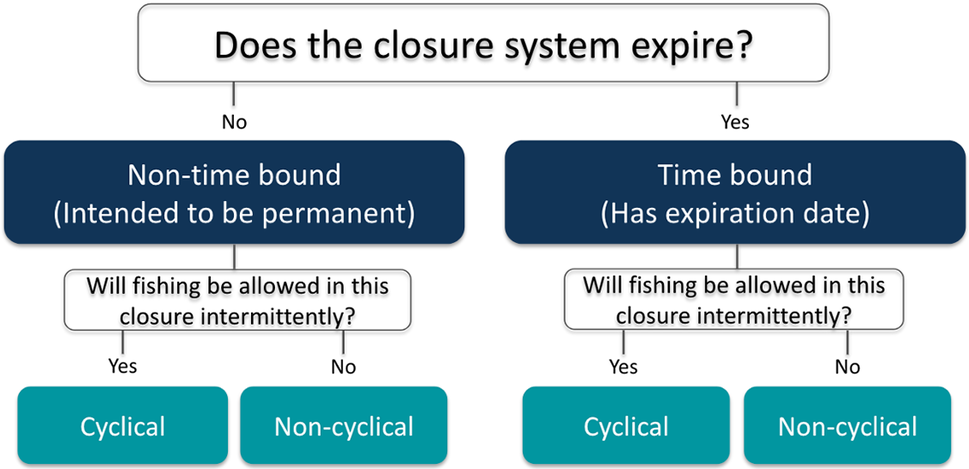
The term “temporary closures” is an umbrella concept, grouping together distinct management approaches and hindering both research and practice. To address this ambiguity, we propose a simple, yet powerful framework that distinguishes two key temporal characteristics: system duration and cyclicity (Figure 1).
Temporal classification of marine closures based on system duration and cyclicity. This framework distinguishes closures by whether they are time-bound (designed to expire or be reassessed after a set period) or non-time-bound (intended to persist indefinitely), and by whether they follow a cyclical pattern (with alternating open and closed periods) or are non-cyclical (remaining consistently closed or open). Cyclical closures can also be characterized by their access ratio – the proportion of time that resources are accessible to users – which reflects the intended balance between ecological protection and stakeholder use (Figure 2).
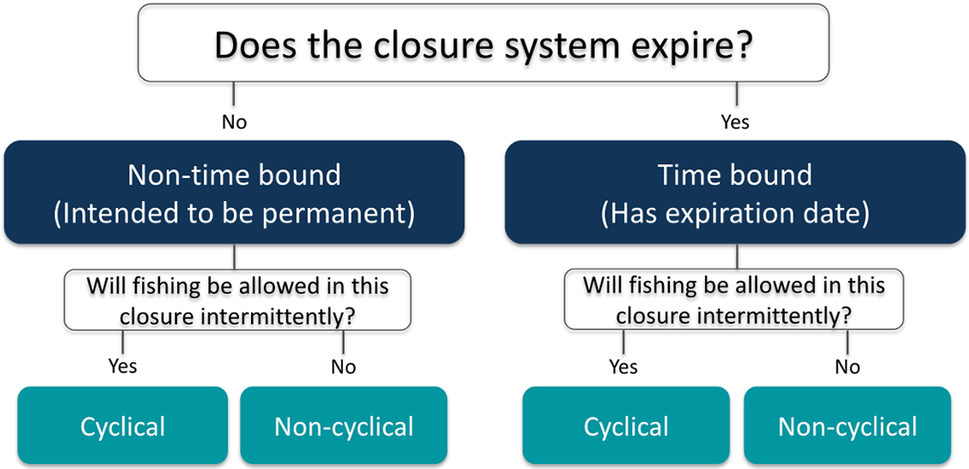
Figure 1. Long description
A hierarchical flowchart begins with a top central question box: Does the closure system expire?
Two paths branch downward from this question:
1. The left path, labeled No, leads to a dark blue box: Non-time bound intended to be permanent. Below this, a secondary question box asks: Will fishing be allowed in this closure intermittently?
- A Yes branch leads to a teal box labeled Cyclical.
- A No branch leads to a teal box labeled Non-cyclical.
2. The right path, labeled Yes, leads to a dark blue box: Time bound has expiration date. Below this, the same secondary question box asks: Will fishing be allowed in this closure intermittently?
- A Yes branch leads to a teal box labeled Cyclical.
- A No branch leads to a teal box labeled Non-cyclical.
System duration refers to whether closures are intended to be time-bound, with a defined expiration, or non-time-bound, designed to persist indefinitely. Time-bound closures, such as Mexico’s 5-year fish refuges, may be extended following evaluation, allowing for adaptive redesign based on outcomes. This deliberate, time-limited structure enables flexibility and iterative learning in management (Quintana and Basurto, Reference Quintana and Basurto2021). System duration strategies are underpinned by enduring institutions – formal or informal – that provide the governance foundation for their implementation (Ostrom’s “constitutional rules”) (Ostrom Reference Ostrom2012). For example, Mexico’s fish refuges are supported by the 2007 General Law of Sustainable Fisheries and Aquaculture. Thus, while institutions persist, our definition of time-bound refers specifically to operational rules – the in-practice arrangements – rather than the underlying legal or normative structures.
Cyclicity is a second key temporal dimension we have identified that describes crucial temporal characteristics of closures. Cyclical closure strategies involve a predetermined or ad hoc sequence of opening and closing periods of harvesting, whereas non-cyclical closures are designed to be closed indefinitely and not reopen for harvesting once established. The most well-known cyclical closures are seasonal closures, where a management area is designed to alternate between states of protection and access. A cyclical management system introduces periodic access to resources for resource users and can be designed to help align ecological and social rhythms.
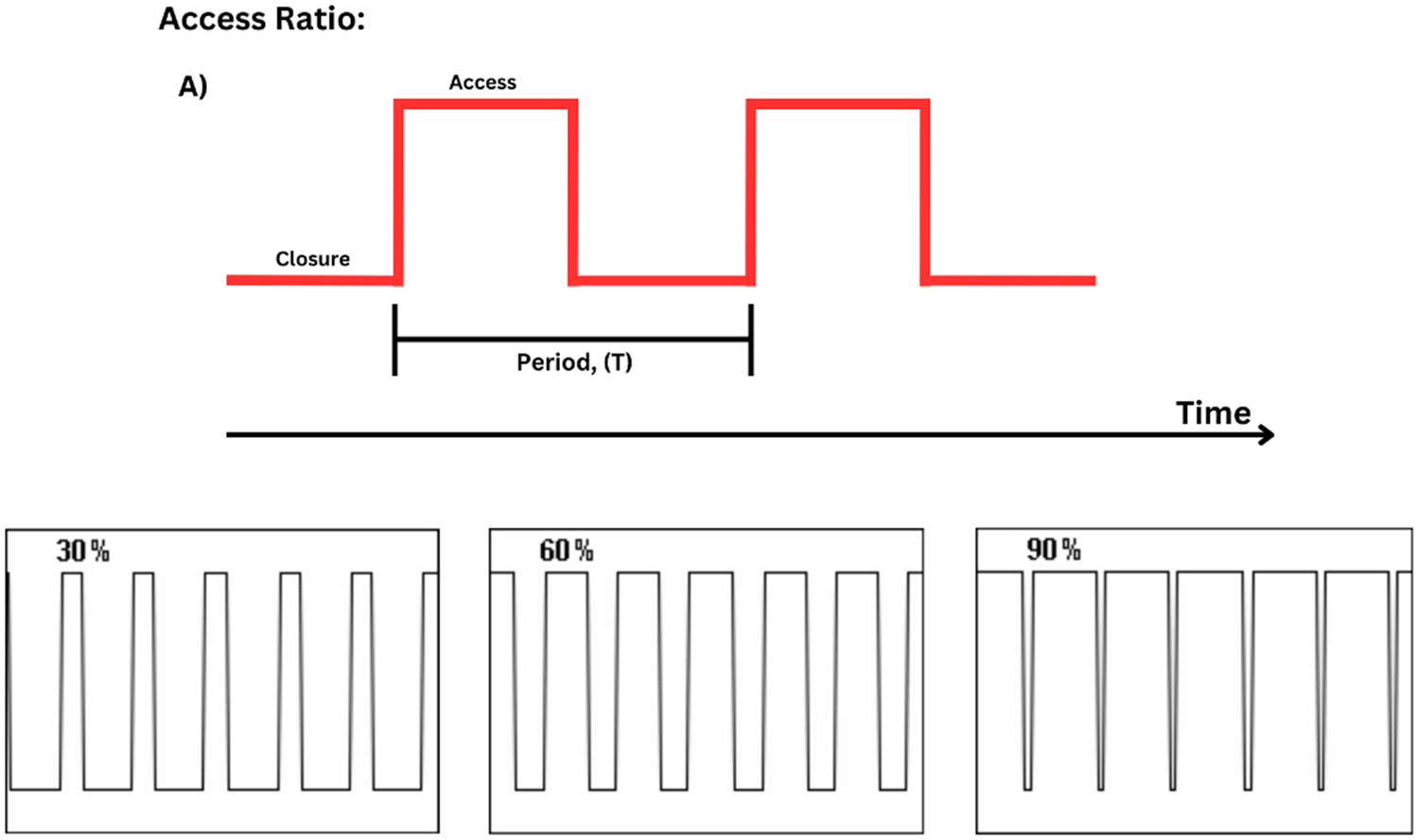
Cyclical closures can be further assessed through their access ratio – the proportion of time resources are available to users (Figure 2). This ratio shapes social and ecological outcomes: well-timed closures can support species recovery and fishery sustainability, while extended access may lead to overfishing, and limited access may reduce community support. In our framework, we emphasize access ratio primarily in the context of cyclical closures, where the proportion of open and closed periods is intentionally designed to align ecological and social objectives. Nonetheless, access ratio can also be applied more broadly to any temporary closure, including event-triggered or non-cyclical systems, to describe the realized proportion of time that resources are accessible. In these cases, the ratio emerges from management responses rather than deliberate design, but it still provides a useful comparative measure across diverse closure strategies.
Access ratio in cyclical marine closures. This figure illustrates the concept of the access ratio, which describes the temporal dynamics of cyclical closures. Panel A defines the components of the access ratio, including the durations of open and closed periods within a time frame (T). Panels B–D provide examples of closures with access ratios of 30%, 60% and 90%, respectively, demonstrating varying proportions of fishing access within a given period. While the access ratio is inspired by the concept of duty cycles in engineering, it does not require strictly repetitive patterns as those shown in these examples; the lengths of open and closed periods can vary dynamically across time frames, potentially reflecting adaptive management strategies.
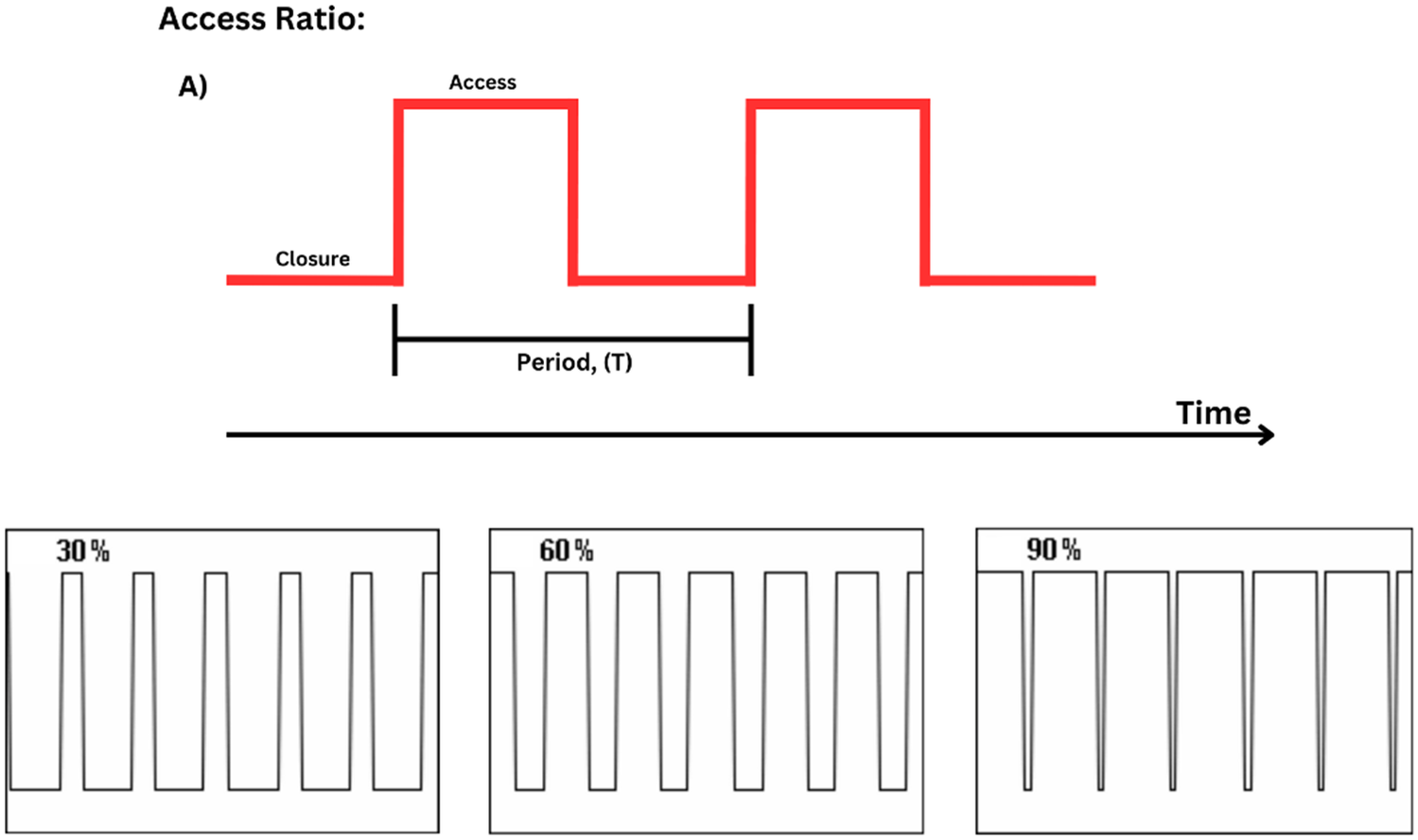
Figure 2. Long description
The diagram is organized into two main sections.
Top section, Panel A: A red square wave graph plotted against a horizontal arrow labeled Time. The low state of the wave is labeled Closure and the high state is labeled Access. A horizontal bracket below one full cycle of the wave (one high and one low segment) is labeled Period, T.
Bottom section, Panels B through D: Three side-by-side square wave graphs showing different duty cycles.
- The left graph is labeled 30 percent and shows narrow peaks with wide troughs, indicating short access periods relative to closures.
- The middle graph is labeled 60 percent and shows peaks that are slightly wider than the troughs, indicating access periods that exceed closure periods.
- The right graph is labeled 90 percent and shows very wide peaks with extremely narrow troughs, indicating nearly continuous access with very brief closure intervals.
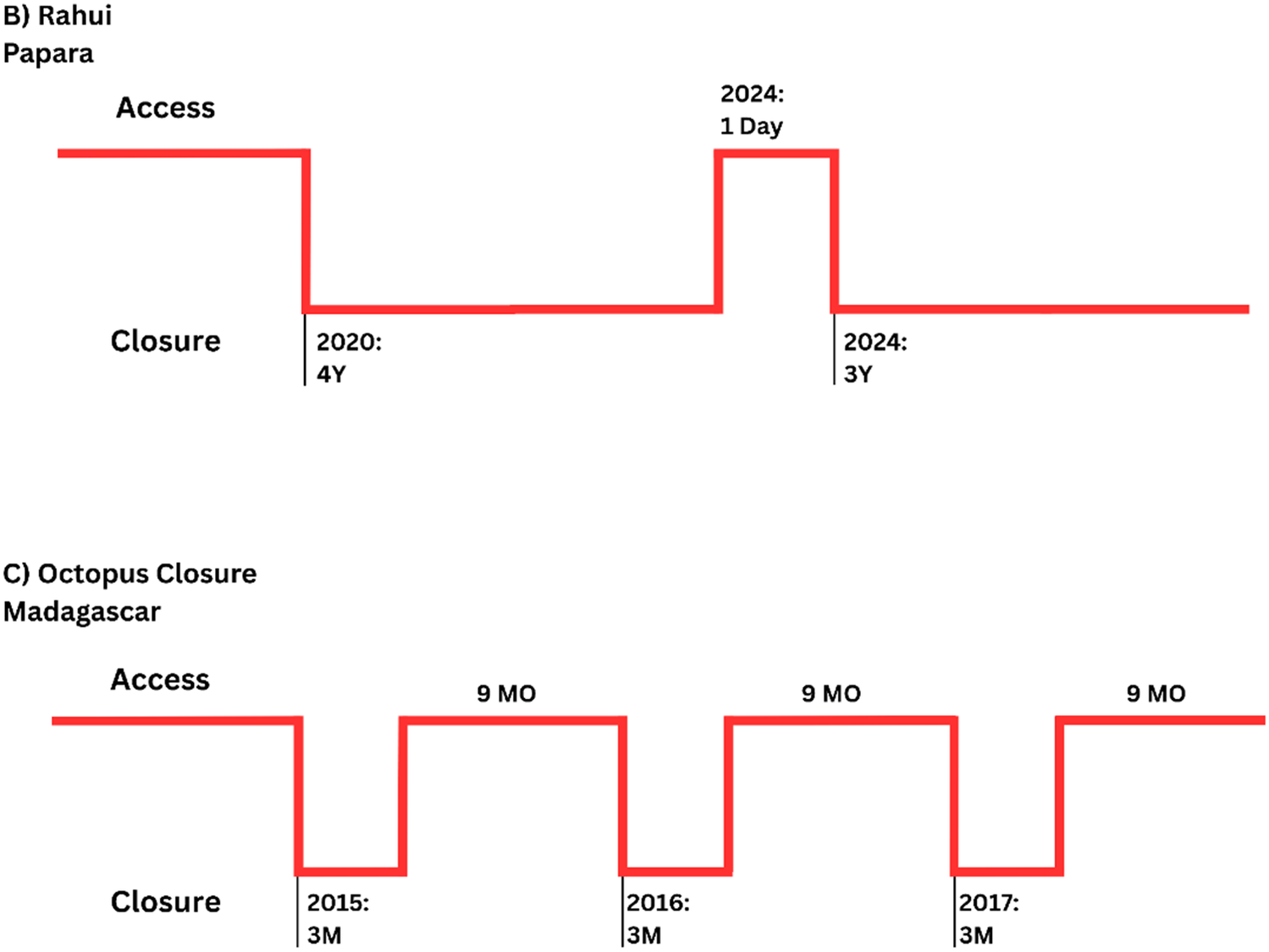
System duration, cyclicity and access ratio can help distinguish key temporal characteristics of management systems lumped together as “temporary closures” (Figure 3). For example, in French Polynesia, rāhui practices vary widely: On Maiao and Rapa Iti, the rāhui are cyclical, non-time-bound with eventual shifting zones. In Teahupo’o, the rāhui was initially designed as time-bound but non-cyclical, spatially fixed for a period of 3 years. In Papara and Tautira, rāhui are also time-bound but allow for cyclical openings within that period. While in the Western Indian Ocean, octopus closures are designed as non-time-bound, and cyclical, typically involving months-long closures followed by short harvest periods. Conventional trigger closures can be characterized by our framework as non-cyclical, time-bound measures activated in response to management or conservation concerns (Gullestad et al., Reference Gullestad, Blom, Bakke and Bogstad2015; Little et al., Reference Little, Needle, Hilborn, Holland and Marshall2015; Bisack and Magnusson, Reference Bisack and Magnusson2021).
Representation of the access ratio (red line) applied to select case studies. Access periods represent the length of time that communities have access to fishing. Closure periods represent the length of time communities cannot access the fishery. To enhance pattern recognition, the duration of cycles of each example is not depicted on the same timescale; instead, the specific durations are stated in years (Y), months (MO) and days. The figure highlights differences in access-to-closure ratios for the following cases: a) Papara rāhui and b) octopus closures in Madagascar.
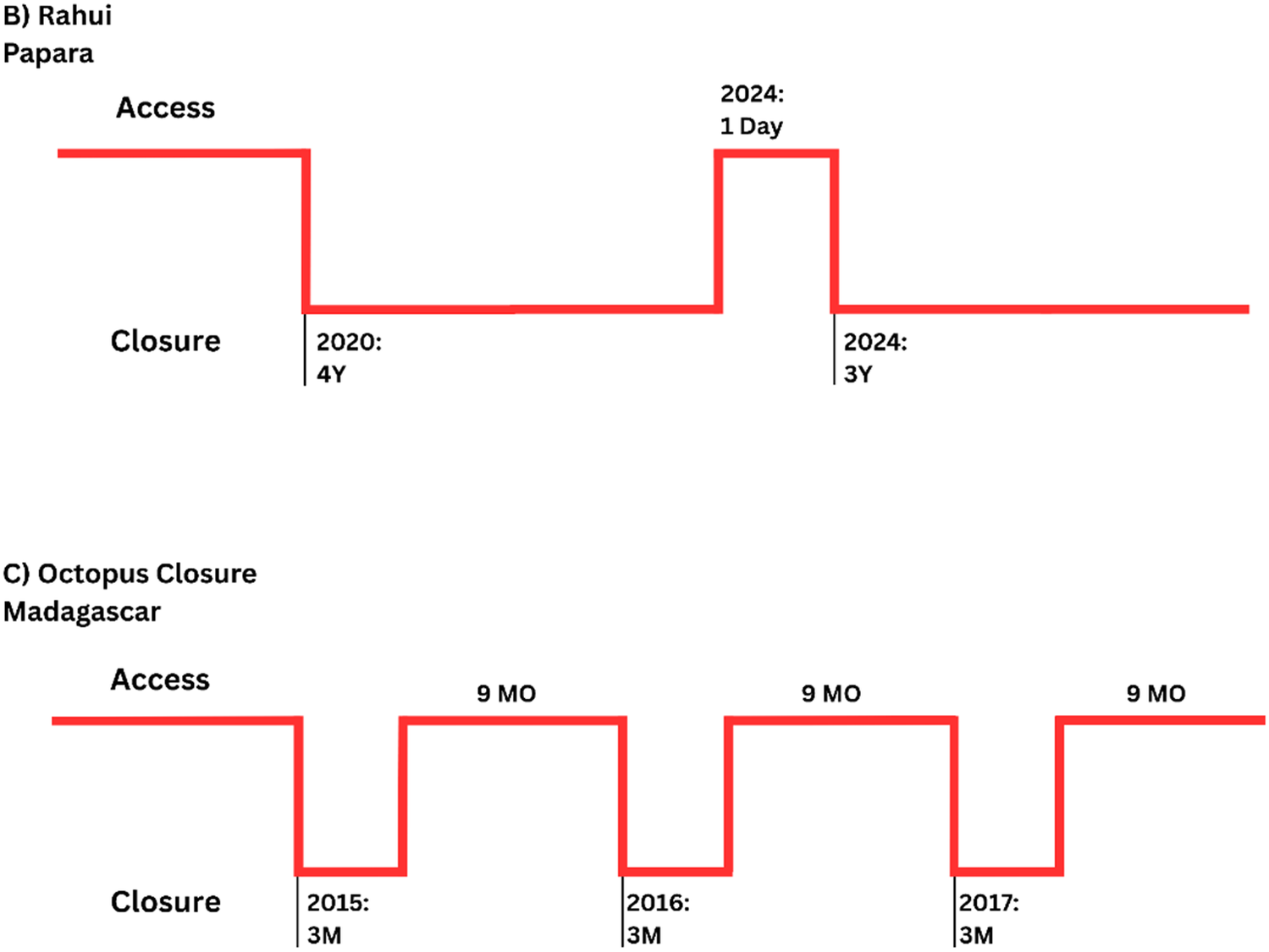
Figure 3. Long description
The image consists of two panels, B and C, showing a red line that steps between an upper Access level and a lower Closure level.
Panel B, titled Rahui Papara, shows a long initial Access period. The line then drops to the Closure level for a duration labeled 2020 4 Y. It rises briefly to the Access level for a duration labeled 2024 1 Day, before dropping back to the Closure level for a duration labeled 2024 3 Y.
Panel C, titled Octopus Closure Madagascar, shows a repeating cyclical pattern. The line starts at the Access level, then drops to the Closure level for 3 M in 2015. It rises back to Access for 9 M O. This cycle repeats twice more, with 3 M closures in 2016 and 2017, each followed by a 9 M O access period. The horizontal segments for access and closure in this panel are of uniform length relative to each other.
Our framework positions time as a fundamental design axis, offering precise vocabulary to uncover the nuanced trade-offs obscured by the broad “temporary” label.
Future research directions
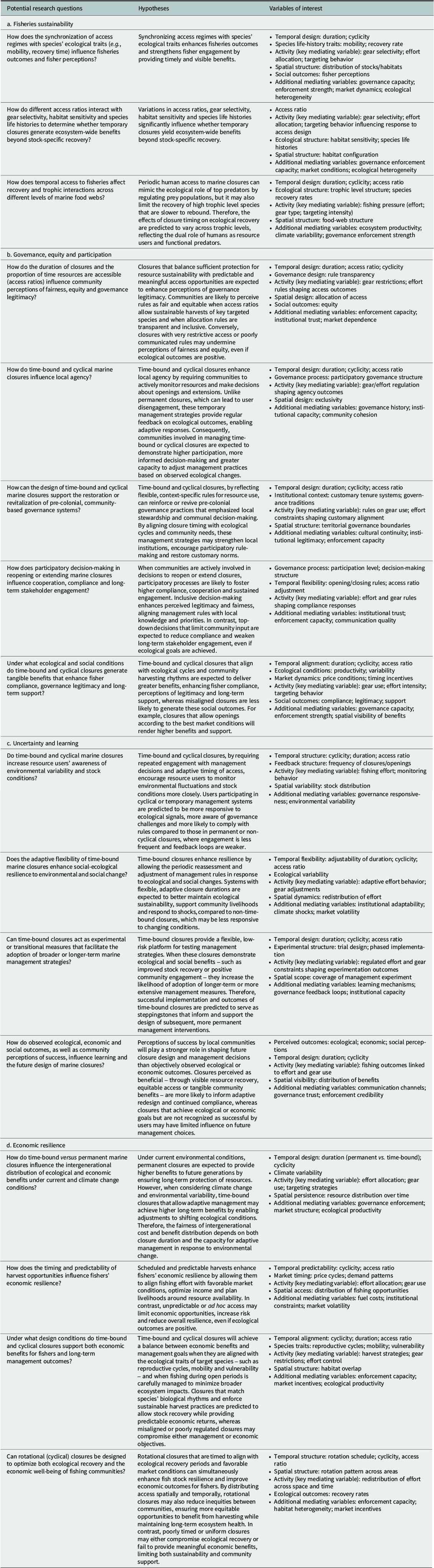
By highlighting key temporal attributes of marine closures, our framework reveals new research directions and underscores how variations in system duration and cyclicity influence socio-ecological trade-offs and management outcomes. We have identified four focal areas of research to guide and motivate future inquiry. These include (a) ecological and fisheries sustainability; (b) governance, equity and participation; (c) adaptability and learning; and (d) economic resilience (Table 1).
Major research areas and associated questions examining the ecological, social, governance and economic dimensions of area-based marine management through a temporal lens, explicitly incorporating activity (e.g., gear, effort and targeting behavior) and additional mediating variables (e.g., governance capacity, market dynamics and ecological heterogeneity) that condition outcomes across systems
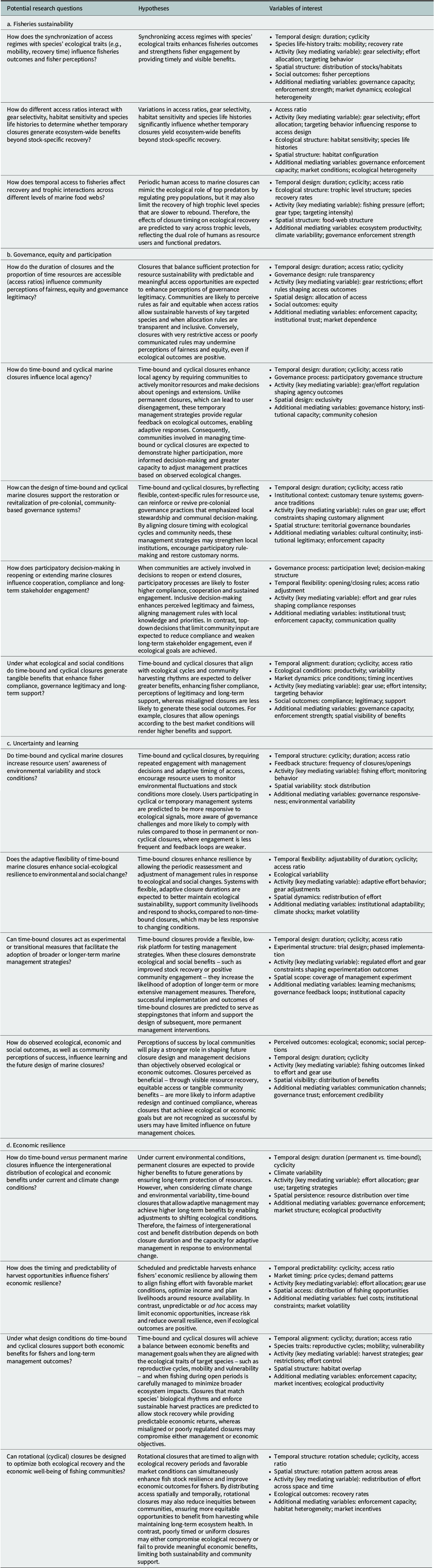
Table 1. Long description
Major research areas and associated questions examining the ecological, social, governance, and economic dimensions of area-based marine management through a temporal lens, explicitly incorporating activity (e.g., gear, effort and targeting behavior) and additional mediating variables (e.g., governance capacity, market dynamics and ecological heterogeneity) that condition outcomes across systems.
Ecological and fisheries sustainability
Most research on ecological outcomes has focused on permanent closures, showing that large non-time-bound closures can lead to strong conservation benefits, while small closures in networks can lead to conservation and fisheries benefits (e.g., Green et al., Reference Green, Smith, Lipsett-Moore, Groves, Peterson, Sheppard, Lokani, Hamilton, Almany, Aitsi and Bualia2009; Gaines et al., Reference Gaines, White, Carr and Palumbi2010; Sala et al., Reference Sala, Mayorga, Bradley, Cabral, Atwood, Auber, Cheung, Costello, Ferretti, Friedlander, Gaines, Garilao, Goodell, Halpern, Hinson, Kaschner, Kesner-Reyes, Leprieur, McGowan, Morgan, Mouillot, Palacios-Abrantes, Possingham, Rechberger, Worm and Lubchenco2021). However, studies of time-bound or cyclical closures have primarily emphasized their role as fisheries management tools. A substantial body of work demonstrates that periodically harvested closures can provide fisheries benefits, particularly for fast-growing or moderately vulnerable species, by increasing biomass before harvest or improving catch efficiency (Cohen and Foale, Reference Cohen and Foale2013; Goetze et al., Reference Goetze, Langlois, Claudet, Januchowski-Hartley and Jupiter2016, Reference Goetze, Claudet, Januchowski-Hartley, Langlois, Wilson, White, Weeks and Jupiter2018; Carvalho et al., Reference Carvalho, Jupiter, Januchowski-Hartley, Goetze, Claudet, Weeks, Humphries and White2019a; Keith et al., Reference Keith, Sameoto, Keyser and Ward-Paige2020). However, evidence that these systems consistently deliver long-term biodiversity conservation outcomes remains limited, especially for highly vulnerable or long-lived species, and there is concern of overharvest events during open periods (Goetze et al., Reference Goetze, Langlois, Claudet, Januchowski-Hartley and Jupiter2016, Reference Goetze, Claudet, Januchowski-Hartley, Langlois, Wilson, White, Weeks and Jupiter2018).
Despite these concerns, and the limited empirical evidence supporting the effectiveness of temporary closures in achieving management goals, emerging research suggests that time-bound closures can contribute to ecologically meaningful outcomes and may serve as valuable complements to other management tools, including permanent MPAs. For example, studies at Isla Natividad, Mexico, where a fish refuge was designed to expire after a fixed period, found that protection helped maintain the genetic diversity of exploited fish populations and may enhance resilience to environmental stressors (Micheli et al., Reference Micheli, Saenz-Arroyo, Greenley, Vazquez, Espinoza Montes, Rossetto and De Leo2012; Munguía-Vega et al., Reference Munguía-Vega, Sáenz-Arroyo, Greenley, Espinoza-Montes, Palumbi, Rossetto and Micheli2015; Smith et al., Reference Smith, Aguilar, Boch, De Leo, Hernández-Velasco, Houck, Martinez, Monismith, Torre, Woodson and Micheli2022). Although these studies do not explicitly label the site as a temporary closure, it operates under a time-bound management regime (Villaseñor-Derbez et al., Reference Villaseñor-Derbez, Aceves-Bueno, Fulton, Suarez, Hernández-Velasco, Torre and Micheli2019), illustrating how temporal design can shape ecological outcomes. Similarly, fishing cooperatives in the Mexican Caribbean have implemented time-bound closures to protect Nassau grouper (Epinephelus striatus) spawning sites (Fulton et al., Reference Fulton, Caamal-Madrigal, Aguilar-Perera, Bourillón and Heyman2018). These examples indicate that, although management outcomes from temporary closures are not as thoroughly documented as those from permanent MPAs, the potential for carefully timed closures to simultaneously support fisheries and ecological objectives represents a fruitful avenue for research.
Management strategies can incorporate both non-time-bound and cyclical closures, using flexibility to balance management goals with socio-cultural needs. Cyclical, time-bound closures, for example, can be timed to biological rhythms – such as spawning periods – allowing sustainable harvesting while supporting management outcomes. Most studies have focused on species-specific recovery, showing that such closures can enhance stock biomass, abundance and fishery yields across diverse life histories, fishing scenarios and spatio-temporal patterns (Game et al., Reference Game, Bode, McDonald-Madden, Grantham and Possingham2009; Carvalho et al., Reference Carvalho, Jupiter, Januchowski-Hartley, Goetze, Claudet, Weeks, Humphries and White2019b; Chen and Hastings, Reference Chen and Hastings2023). While non-time-bound MPAs can also protect highly vulnerable or slow-recovering species (Gnanalingam and Hepburn, Reference Gnanalingam and Hepburn2015), specific access ratios in temporal closures can protect short-lived species during critical reproductive periods (Cohen and Foale, Reference Cohen and Foale2013). Yet, the ecosystem-level and trophic effects of time-bound or cyclical management remain largely underexplored (Table 1). The access ratio influences not only target stock recovery but also habitat resilience, predator–prey interactions and bycatch survival. Periodic human access can alter top-down trophic dynamics, and the use of unselective gear or pulse fishing may disproportionately affect slow-recovering species (Goetze et al., Reference Goetze, Langlois, Claudet, Januchowski-Hartley and Jupiter2016). Considering gear selectivity, habitat sensitivity and species life histories can help identify thresholds where temporary closures provide broader ecological benefits while balancing fisheries objectives.
Future research should also explore how the synchronization of access regimes with ecological conditions influences fisheries outcomes and fisher behavior. MPAs can support stock recovery, but benefits depend on species mobility and larval dispersal (Planes et al., Reference Planes, Jones and Thorrold2009). These challenges in observing benefits, can limit community support. In contrast, time-bound closures offer an alternative for low-mobility species, enabling stock buildup during closures and immediate harvest upon reopening. These visible gains could enhance community benefits and long-term engagement (Table 1).
Governance, equity and participation
Balancing effective marine management with community engagement remains a central challenge. Non-time-bound closures are often favored for their simplicity – requiring primarily spatial decisions on size and location – which facilitates monitoring and enforcement (Smallhorn-West et al., Reference Smallhorn-West, Weeks, Gurney and Pressey2020). While sometimes implemented through co-management, these closures often prioritize biodiversity conservation over sustained local use (Day et al., Reference Day, Dudley, Hockings, Holmes, Laffoley, Stolton, Wells and Wenzel2019). When not designed with a community-centered perspective, they can suffer from low community buy-in (De Santo et al., Reference De Santo, Jones and Miller2011; Bennett and Dearden, Reference Bennett and Dearden2014). Moreover, their spatial boundaries and regulations are often designed to persist over long time horizons, which may not always align with the evolving needs, values and livelihoods of coastal communities, even though many non-time-bound MPAs undergo periodic management reviews (McClanahan et al., Reference McClanahan, Marnane, Cinner and Kiene2006).
Time-bound and cyclical closures could offer a more temporally responsive framework aligning the rhythms of human and non-human systems in settings where permanent MPAs face significant challenges. These approaches allow for periodic harvest and reassessment, and have the potential to foster deeper stakeholder engagement (Cinner et al., Reference Cinner, Lau, Bauman, Feary, Januchowski-Hartley, Rojas, Barnes, Bergseth, Shum, Lahari, Ben and Graham2019; Quintana et al., Reference Quintana, Giron-Nava, Urmy, Cramer, Domínguez-Sánchez, Rodríguez-Van Dyck, Aburto-Oropeza, Basurto and Weaver2021).
For example, in French Polynesia, rāhui are reemerging across the archipelagos and demonstrate strong adaptive potential. Traditionally, rāhui involved time-bound harvesting bans (usually a few years) imposed by chiefs who controlled defined coastal territories that extended into marine zones (Bambridge et al., Reference Bambridge, Gaulme, Montet and Paulais2019). Today, these closures take more diverse forms and are appealing to fishers since they lower the stakes of the initial decision to participate. Unlike long-term closures that are typically designed to persist for extended periods (although many are periodically reviewed), time-bound systems like many rāhui allow communities to “try out” management measures without forfeiting the possibility of future access (Fabre et al., Reference Fabre, Bambridge, Claudet, Sterling and Mawyer2021). This feature aligns with diffusion of innovations theory, which posits that practices that can be tested on a limited basis (“trialability”) are more likely to be adopted because users can assess their benefits and risks before committing to long-term change, an idea increasingly used to explain the spread of conservation initiatives (Mascia and Mills, Reference Mascia and Mills2018) Similarly, in Mexico, time-bound closures have been shown to align with local ecological knowledge and are typically established through collaboration between communities and relevant authorities (Quintana et al., Reference Quintana, Giron-Nava, Urmy, Cramer, Domínguez-Sánchez, Rodríguez-Van Dyck, Aburto-Oropeza, Basurto and Weaver2021; Quintana and Basurto, Reference Quintana and Basurto2021). The flexibility to revisit and adjust management decisions seems to offer a practical governance advantage in that stakeholder participation is required, which can reinforce stewardship among fishers by fostering a sense of ownership (Quintana and Basurto, Reference Quintana and Basurto2021).
Future research could help reveal the unique adaptive governance dynamics of time-bound closures and the differences between cyclical and non-cyclical schemes with varying access ratios. In both French Polynesia and Mexico, the periodic decision points – whether to open a rāhui or renew a fish refuge – appear to create spaces where stakeholders frequently encounter and must negotiate one another’s knowledge, priorities and uncertainties. These are not just moments of administrative review; they instead seem to encourage platforms for adaptive governance, where the rules of engagement, who decides, who benefits and on what grounds, are not fixed, but actively shaped through practice (Quintana et al., Reference Quintana, Giron-Nava, Urmy, Cramer, Domínguez-Sánchez, Rodríguez-Van Dyck, Aburto-Oropeza, Basurto and Weaver2021). More research could elucidate the extent to which and under what configurations time-bound and cyclical closures spawn new forms of social coordination. Rather than entrenching a static management regime, these systems are intrinsically responsive, enabling a kind of governance that adapts over time through stakeholder engagement and governance feedback.
Uncertainty, learning and adaptive management
Uncertainty is a defining challenge in marine resource management, underscoring the need for strategies that can mitigate risks while remaining responsive to changing ecological and social conditions. Non-time-bound closures embody a precautionary approach, offering insurance against environmental shocks and prioritizing long-term population recovery when regeneration timelines are uncertain – an attribute that is critical for biodiversity conservation (Hopkins et al., Reference Hopkins, Burns, Brooker, Dolman, Devenport, Duncan and Bailey2020). In contrast, temporal closures enable more timely reassessment and adjustment. While reassessment is also possible within permanent MPAs, their fixed nature may constrain the integration of emerging ecological information or limit responsiveness to changing conditions.
Temporary closures, including time-bound and cyclical closures, offer a dynamic management framework with the potential to support observation, adjustment and learning – key elements for managing uncertainty in complex marine systems. By allowing periodic reopening of protected areas, these approaches create opportunities for stakeholders to observe ecological responses, evaluate management outcomes and iteratively refine management strategies. Because reopening periods are anticipated, fishers may become more engaged in monitoring ecological signals and assessing the results of protection, while scientists, managers and fishers can exchange observations and interpretations during these cycles. Studies of temporary closures in small-scale fisheries suggest that these iterative processes can foster participation, strengthen compliance and generate feedbacks that shape subsequent management decisions (e.g., Oliver et al., Reference Oliver, Oleson, Ratsimbazafy, Raberinary, Benbow and Harris2015; Jupiter et al., Reference Jupiter, Epstein, Ban, Mangubhai, Fox and Cox2017; Cinner et al., Reference Cinner, Lau, Bauman, Feary, Januchowski-Hartley, Rojas, Barnes, Bergseth, Shum, Lahari, Ben and Graham2019). In some cases, the outcomes of temporary closures have prompted communities to rethink and modify their management arrangements. For instance, results from a multi-year closure in Mexico led local fishers to expand the protected area and extend the duration of protection (Quintana et al., Reference Quintana, Giron-Nava, Urmy, Cramer, Domínguez-Sánchez, Rodríguez-Van Dyck, Aburto-Oropeza, Basurto and Weaver2021; Quintana and Basurto, Reference Quintana and Basurto2021). Similar adaptive responses have been observed elsewhere: in both French Polynesia and Madagascar, initial closure arrangements evolved as fishers witnessed tangible benefits. In some cases, rāhui remained in place longer than originally planned, and fishers from Madagascar who had previously been skeptical came to support spatial restrictions after experiencing the positive effects of short-term octopus closures (Oliver et al., Reference Oliver, Oleson, Ratsimbazafy, Raberinary, Benbow and Harris2015; Fabre et al., Reference Fabre, Bambridge, Claudet, Sterling and Mawyer2021). While these cases illustrate how temporary closures can facilitate experiential learning and build support for management interventions, it remains unclear how consistently such adaptive processes emerge across different socio-ecological contexts or whether they translate into more effective management outcomes at broader scales. It is also important to note that closure periods are not strict statistical “controls”: income and other benefits from open periods can influence behavior and outcomes during subsequent closures, creating temporal spillovers that shape ecological and social dynamics. Further comparative research is therefore needed to determine when and under what conditions time-bound closures foster institutional learning and adaptive redesign. Further comparative research is therefore needed to determine when and under what conditions time-bound closures foster institutional learning and adaptive redesign. In particular, future studies should examine how the timing and repetition of these closures shape learning processes and adaptive capacity, which are critical for managing ecological and social uncertainty.
Economic resilience
Time-bound and cyclical closures introduce a distinct economic dimension that warrants deeper investigation. A key area for future research is the temporal distribution of costs and benefits. While permanent, non-time-bound closures can generate substantial ecological and economic benefits, including increased fish stocks, catch volumes and tourism opportunities (Costello et al., Reference Costello2024), time-bound and cyclical closures offer additional flexibility by allowing scheduled harvesting. This scheduling can help communities balance resource use across short-term livelihood needs and longer-term management goals, supporting more equitable intergenerational trade-offs in contexts where local livelihoods depend on predictable access to resources (Oliver et al., Reference Oliver, Oleson, Ratsimbazafy, Raberinary, Benbow and Harris2015; Silas et al., Reference Silas, Kishe, Mgeleka, Kuboja, Ngatunga and Matiku2022).
Research is needed to explore how such closures can alleviate the financial burdens often associated with marine conservation by offering predictable, high-value harvest opportunities. These mechanisms may serve as economic buffers, functioning similarly to savings accounts – allowing fishers to “store” biomass and extract it when most needed or when market conditions are favorable. The case of Baja California, where cooperatives drew on sea urchin and abalone reserves to offset pandemic-related losses, illustrates the potential for time-bound strategies to enhance economic resilience (Villaseñor-Derbez et al., Reference Villaseñor-Derbez, Fulton, Hernández-Velasco and Amador-Castro2023).
Future studies should examine how these temporal dynamics influence fishers’ willingness to comply, the sustainability of harvest cycles and the broader economic feasibility of cyclical closures in variable market and ecological conditions.
Conclusion
Non-time-bound closures, such as traditional MPAs, treat permanence as the only effective structuring of time, overlooking the diversity of marine management strategies worldwide. Understanding how temporal factors, duration and cyclicity, interact with spatial design is essential for effective fisheries management. Our framework highlights these temporal dynamics, offering new directions for research on adaptive management. As climate change and other pressures intensify, flexible, time-bound strategies may become increasingly important for supporting sustainable fisheries and resilient socio-ecological systems. A clearer temporal typology of closures can reveal which designs perform best under different ecological and social conditions, enabling more context-sensitive management and research.
Open peer review
To view the open peer review materials for this article, please visit http://doi.org/10.1017/cft.2026.10034.
Data availability statement
Data sharing not applicable to this article as no datasets were generated or analyzed during the current study.
Author contribution
E.A.B. and M.L. led the conceptualization of the manuscript. E.A.B. prepared the original draft of the manuscript. A.Q. oversaw the project coordination. Funding acquisition was secured by A.Q., S.G., M.L., A.H.W., E.L., J.W., S.F. and E.A.B. Investigation was conducted by all authors. Visualization was carried out by E.A.B., O.I., B.B. and M.L. All authors contributed to reviewing and editing the manuscript and approved the final version for publication.
Financial support
This work was supported by the National Science Foundation (NSF 20–579 Dynamics of Integrated Socio-Environmental Systems; Grant Number 2206739).
Competing interests
The authors declare none.
AI declaration
AI tools (ChatGPT, OpenAI) were used to assist with translation between English and Spanish and to refine sections written by second-language English and Spanish speakers. All ideas, analyses and interpretations are those of the authors.

 Open access


Comments
Dear Editors of Coastal Futures,
We are pleased to submit our manuscript, “Temporal dimensions in marine spatial closures,” for consideration as a Perspective in Coastal Futures.
This paper addresses an often-overlooked dimension of marine conservation: time. While marine protection has traditionally emphasized fixed spatial boundaries, temporality—how long, how often, and under what patterns areas are opened or closed—has received far less systematic attention. Yet temporary closures are widely used in small-scale fisheries, particularly in the Global South, where they are often culturally embedded, politically feasible, and responsive to dynamic ecological and social conditions.
Our manuscript introduces a conceptual framework that distinguishes three key temporal factors—duration, cyclicity, and access ratio—and illustrates how these characteristics shape governance arrangements and socio-ecological outcomes. By clarifying the temporal dimensions of closures, the framework offers a foundation for evaluating trade-offs between ecological and social objectives, supporting more adaptive, equitable, and context-sensitive conservation strategies.
We see this Perspective as a conceptual contribution that broadens the scope of existing research and opens new directions for theory, management, and practice. We believe it will be of strong interest to Coastal Futures’ readership, as it advances understanding of how temporal design can strengthen the resilience and inclusivity of marine management systems.
Thank you for your consideration. We look forward to the opportunity to contribute to Coastal Futures’ ongoing dialogue on innovative and forward-looking approaches to ocean governance and conservation.
Sincerely,
Erendira Aceves Bueno