





Introduction
Hand, foot, and mouth disease (HFMD) is an infectious disease caused by more than 20 types of enteroviruses [Reference Liu1, Reference Zhang, Xu and Xiao2], among which coxsackievirus A16 (CV-A16) and enterovirus 71 (EV-71) are the most common. This disease primarily occurs in children under 5 years of age [Reference Liu1, Reference Xu, Zhang and Xiao3]. A total of 11,814,830 cases of HFMD were reported in China between 2008 and 2014, with the average growth rate was 125.55/100,000 [Reference Li4]. Both non-pharmaceutical interventions (such as regular disinfection) and vaccination strategies are used to control the occurrence and spread of HFMD; however, the disease remains a major public health burden in China [Reference Liu5].
Previous studies have indicated spatiotemporal aggregation and heterogeneity (spatially local heterogeneity and spatially stratified heterogeneity) of HFMD [Reference Li4, Reference Zhang6–Reference Wang8], highlighting the importance of understanding its distribution and identifying high-risk areas and risk factors, which are prerequisites for undertaking targeted prevention and control measures to reduce the impact of HFMD [Reference Li4].
Various spatiotemporal models, including the spatiotemporal autoregressive model [Reference Truong9, Reference Phung10], spatiotemporal model with variable coefficients [Reference Hong11, Reference Li12], and Bayesian spatiotemporal model [Reference Zhang, Xu and Xiao2, Reference Hong13, Reference Xu14], have been utilized to evaluate the spatiotemporal distribution of HFMD and its associations with factors like meteorological patterns, socioeconomic status, and health conditions [Reference Wang15–Reference Tian17]. For instances, Ding et al. used an econometric panel model to explore the relationship between HFMD and meteorological factors [Reference Ding18]. Hong et al. constructed a monthly time-lag geographically weighted regression model to investigate spatiotemporal variations due to the effect of climatic factors on HFMD occurrence in the Inner Mongolia Autonomous Region, China [Reference Hong11]. Zhang et al. used a Bayesian spatiotemporal hierarchy model to identify the spatiotemporal heterogeneity (Supplementary Information S1) of HFMD [Reference Zhang, Xu and Xiao2]. However, these models suffer from mathematical complexities, intensive computation requirements, and limitations in dealing with spatial autocorrelation (e.g. the choice of spatial lag form or spatial error form in traditional autoregressive models) [Reference Griffith, Chun, Li, Griffith, Chun and Li19]. Additionally, they may fail to reveal the underlying spatiotemporal structure (Supplementary Information S1) and require the specification of the model’s parameter distribution [Reference Griffith20]. Moreover, these models used only a Rook [Reference Wang21] or Queen [Reference Liao22] weight matrix in spatial autocorrelation analysis [Reference Chen23–Reference Zhu25], without considering other possible configurations of weight matrix [Reference li and Gui26].
Griffith [Reference Griffith27] proposed an eigenvector spatiotemporal filtering method to overcome the flaws in the existing models. This method first breaks down geographical and temporal relationships into a set of eigenvectors [Reference Griffith and Li28, Reference Park29], a subset of the eigenvectors was then incorporated into a conventional nonspatial model as covariates. The biggest advantage of this new method is that the linear combination of the selected eigenvectors can filter the spatial autocorrelation out of the observations so that the observations in the model can be treated as if they are independent [Reference Griffith20]. The spatiotemporal filtering method can be applied to standard statistical models to construct spatiotemporal filtering models, making the modelling process simpler than that of other spatiotemporal models. In addition, the spatiotemporal filtering model allows visualization of the spatial autocorrelation of geo-referenced datasets which describes how map patterns evolve in space and time. Most importantly, compared to other models, the spatial and temporal weights can be flexibly set in a spatiotemporal filtering model to determine the optimal weight matrix better [Reference Tan30, Reference Lin and Ma31].
In this study, we developed spatiotemporal filtering models based on HFMD case data and compared their performance against Bayesian spatiotemporal models. We explored the influence of different weight matrices on model results and visualized the eigenvector’s maps to identify potential high-risk areas for HFMD.
Methods
Data source
Data collection was conducted in eastern China between 2009 and 2015, focusing on HFMD cases and relevant covariates at 78 prefectural levels. HFMD case data were obtained from the national infectious disease reporting system (NIDRS) of the China CDC. To assess potential risk factors, meteorological data were retrieved from China’s National Meteorological Information Center (https://data.cma.cn). The meteorological variables included daily average temperature (°C), average humidity (%), sunlight duration (h), and average wind speed (m/s) for prefecture-level cities. Additionally, socioeconomic variables, such as GDP per capita and the number of hospitals, were collected from local official demographic yearbooks. For a comprehensive understanding of the data collection process, a more detailed description can be found in our previous study [Reference Hong13].
To ensure data quality and avoid multicollinearity issues, all data were summarized on a monthly basis. Covariates that displayed a correlation greater than 0.6 were scrutinized, and the one with the weaker association with HFMD case occurrence was removed from the dataset [Reference Stone32]. Detailed data processing is provided in the Appendix (Supplementary Information S2).
Statistical analysis
We compared three spatiotemporal models of HFMD: the generalized linear mixed-effects model (GLMM), the spatiotemporal filtering model, and the Bayesian spatiotemporal model. We first examined the spatial correlation in the model residuals using Moran’s I (MI) to determine whether the eigenvectors could effectively remove the spatial correlation from the model residuals and then compared the model fit and accuracy between the spatiotemporal filtering model and the Bayesian spatiotemporal model.
Generalized linear mixed-effects model (GLMM)
The number of HFMD cases at time point t in each prefecture-level city i is denoted as $ {\gamma}_{it} $
(i = 1, 2, …, 78). The GLMM is formulated with a logarithmic link function, and the expression is as follows:
$ {\gamma}_{it} $
(i = 1, 2, …, 78). The GLMM is formulated with a logarithmic link function, and the expression is as follows:
 $$ \mathit{\log}\left({\gamma}_{it}\right)=\mathit{\log}\left({n}_{it}\right)+{\beta}_0+{\beta}_t{X}_t+\sum_k^m{\beta}_k{X}_k+{RE}_{it} $$
where $ {n}_{it} $
represents the population of the i-th region;
$ {n}_{it} $
represents the population of the i-th region; $ {\beta}_0 $
denotes the intercept term;
$ {\beta}_0 $
denotes the intercept term; $ {\beta}_{\mathrm{t}} $
denotes the regression coefficient of the time trend;
$ {\beta}_{\mathrm{t}} $
denotes the regression coefficient of the time trend; $ {X}_t $
denotes the time trend (e.g.
$ {X}_t $
denotes the time trend (e.g. $ {X}_t $
= 1, 2, …, 84);
$ {X}_t $
= 1, 2, …, 84); $ {\beta}_k $
is the regression coefficient of the covariate;
$ {\beta}_k $
is the regression coefficient of the covariate; $ {X}_k $
is the k-th covariate; and
$ {X}_k $
is the k-th covariate; and $ {RE}_{it} $
is random effect term. The variance and mean of the HFMD incidence data were unequal, which indicates that the incidence data were excessively dispersed. Therefore, a negative binomial distribution was chosen as the final link function for our GLMM based on the suggestion of the previous studies [Reference Sun33, Reference Chen and Huang34].
$ {RE}_{it} $
is random effect term. The variance and mean of the HFMD incidence data were unequal, which indicates that the incidence data were excessively dispersed. Therefore, a negative binomial distribution was chosen as the final link function for our GLMM based on the suggestion of the previous studies [Reference Sun33, Reference Chen and Huang34].
Spatiotemporal filtering model
The spatiotemporal filtering model is based on a GLMM. The $ {RE}_{it} $
terms are divided into two components: spatial structural effect (SSRE) and spatial unstructured effect (SURE). The linear combinations of filtered eigenvectors form the SSRE terms (the screening process can be found below), while the SURE represents the model residuals.
$ {RE}_{it} $
terms are divided into two components: spatial structural effect (SSRE) and spatial unstructured effect (SURE). The linear combinations of filtered eigenvectors form the SSRE terms (the screening process can be found below), while the SURE represents the model residuals.
 $$ \mathit{\log}\left({\gamma}_{it}\right)=\mathit{\log}\left({n}_{it}\right)+{\beta}_0+{\beta}_t{X}_t+\sum_{k=1}^K{\beta}_k{X}_k+\sum_{m=1}^M{\gamma}_{it m}{E}_{it m}+ SURE $$
where $ {E}_{itm} $
is the m-th eigenvector and
$ {E}_{itm} $
is the m-th eigenvector and $ {\gamma}_{itm} $
is the regression coefficient of the eigenvector.
$ {\gamma}_{itm} $
is the regression coefficient of the eigenvector.
The decomposition of a transformed connectivity matrix constitutes the core element of the spatiotemporal filtering method. More formally, decomposition yields
 $$ \boldsymbol{MVM}=\boldsymbol{E}\boldsymbol{\varLambda } \boldsymbol{E}', $$
where $ \boldsymbol{M} $
is a symmetric and idempotent projection matrix. If only the intercept is included in the construction of the projection matrix, the equation simplifies to
$ \boldsymbol{M} $
is a symmetric and idempotent projection matrix. If only the intercept is included in the construction of the projection matrix, the equation simplifies to $ \boldsymbol{M}=\frac{\boldsymbol{I}-\mathbf{11}'}{\boldsymbol{nT}} $
, where
$ \boldsymbol{M}=\frac{\boldsymbol{I}-\mathbf{11}'}{\boldsymbol{nT}} $
, where $ \boldsymbol{I} $
is the identity matrix and
$ \boldsymbol{I} $
is the identity matrix and $ \mathbf{1} $
is an n × 1 one-dimensional vector.
$ \mathbf{1} $
is an n × 1 one-dimensional vector. $ \boldsymbol{V} $
is the exogenously specified connectivity matrix (Supplementary Information S3) represented by the spatiotemporal weight matrix
$ \boldsymbol{V} $
is the exogenously specified connectivity matrix (Supplementary Information S3) represented by the spatiotemporal weight matrix $ W $
, which will be introduced below. The columns of matrix
$ W $
, which will be introduced below. The columns of matrix $ \boldsymbol{E} $
are n mutually independent eigenvectors obtained from the
$ \boldsymbol{E} $
are n mutually independent eigenvectors obtained from the $ \boldsymbol{MVM} $
, and each eigenvector in
$ \boldsymbol{MVM} $
, and each eigenvector in $ \boldsymbol{E} $
represents a distinct map pattern permitted by the units’ spatial arrangement and is associated with a certain level of spatial autocorrelation. The eigenvectors in
$ \boldsymbol{E} $
represents a distinct map pattern permitted by the units’ spatial arrangement and is associated with a certain level of spatial autocorrelation. The eigenvectors in $ \boldsymbol{E} $
are independent and orthogonal (the advantage of orthogonality is the absence of multicollinearity) [Reference Griffith35], which is screened first for significance before it is included in the model.
$ \boldsymbol{E} $
are independent and orthogonal (the advantage of orthogonality is the absence of multicollinearity) [Reference Griffith35], which is screened first for significance before it is included in the model. $ \boldsymbol{\Lambda} $
is the corresponding eigenvalue on the main diagonal of the matrix, and
$ \boldsymbol{\Lambda} $
is the corresponding eigenvalue on the main diagonal of the matrix, and $ \boldsymbol{E}' $
is the transposition matrix of
$ \boldsymbol{E}' $
is the transposition matrix of $ \boldsymbol{E} $
.
$ \boldsymbol{E} $
.
Construction of the spatiotemporal weight matrix W
Spatial weight matrices, the temporal weight matrix, and the spatiotemporal weight matrix for the spatiotemporal filtering model were constructed as follows.
First, we built four types of spatial weight matrices [Reference Chen and Huang34]: the Rook weight matrix, KNN (K = 1) weight matrix, the distance weight matrix (the list of distance vectors corresponding to the neighbouring objects was first calculated, and 1.5 times the maximum distance of neighbouring objects was specified as the distance threshold), and the second-order weight matrix. All the matrices were row normalized before modelling.
Next, we constructed a first-order temporal weight matrix to quantify the relationship between disease incidences over time. The weight between the two adjacent time periods was set to be 1 if there was a temporal dependence between the values of the two adjacent periods or if the value of a period depended exclusively on the value of the preceding period; otherwise, the weight was set to be 0. Finally, a spatiotemporal weight matrix was constructed and two sets of temporal dependence structures were specified [Reference Chen36].
-
1) Spatiotemporal lag structure:
The value of a position at a point in time is determined by its value at the previous point in time and the value of adjacent positions at the previous point in time (Figure 1a). The spatiotemporal time-lag dependence structure is expressed as a matrix by
 $$ {W}_1={I}_T\hskip0.5em \otimes \hskip0.5em {W}_N+{W}_T\hskip0.5em \otimes \hskip0.5em {I}_N $$
Spatiotemporal lag structure (a) and spatiotemporal contemporaneous structure (b).

where $ {I}_T $
is the T*T (84*84) order unit matrix;
$ {I}_T $
is the T*T (84*84) order unit matrix; $ \otimes $
is the Kronecker;
$ \otimes $
is the Kronecker; $ {W}_N $
is the N*N (78*78) order spatial weight matrix;
$ {W}_N $
is the N*N (78*78) order spatial weight matrix; $ {W}_T $
is the T*T (84*84) order temporal weight matrix; and
$ {W}_T $
is the T*T (84*84) order temporal weight matrix; and $ {I}_N $
is the N*N (78*78) order unit matrix.
$ {I}_N $
is the N*N (78*78) order unit matrix.
-
2) Spatiotemporal contemporaneous structure:
The value of a position at a given time point is determined by the value of all its adjacent positions and the value of that position at the previous time point (Figure 1b). In this instance, the contemporaneous spatiotemporal dependence structure is expressed as a matrix by
 $$ {W}_2={W}_T\otimes {W}_N+{W}_T\otimes {I}_N $$
Thus, our formula (3) $ \boldsymbol{MVM} $
becomes either.
$ \boldsymbol{MVM} $
becomes either.
Lag:
 $$ \left[\frac{\boldsymbol{I}-\mathbf{11}'}{\boldsymbol{nT}}\right]\left[{W}_1\right]\left[\frac{\boldsymbol{I}-\mathbf{11}'}{\boldsymbol{nT}}\right] $$
or
Contemporaneous:
 $$ \left[\frac{\boldsymbol{I}-\mathbf{11}'}{\boldsymbol{nT}}\right]\left[{W}_2\right]\left[\frac{\boldsymbol{I}-\mathbf{11}'}{\boldsymbol{nT}}\right] $$
Screening of the eigenvectors
For the spatiotemporal filtering method, the identification and selection of the relevant eigenvectors ( $ \boldsymbol{E} $
) are decisive step before building the model [Reference Griffith37]. The candidate set i∈{1,2,…,n} is determined by calculating MCi/MCmax for all eigenvectors [Reference Tiefelsdorf and Griffith38], where MC is Moran coefficient (
$ \boldsymbol{E} $
) are decisive step before building the model [Reference Griffith37]. The candidate set i∈{1,2,…,n} is determined by calculating MCi/MCmax for all eigenvectors [Reference Tiefelsdorf and Griffith38], where MC is Moran coefficient (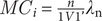 $ {MC}_i=\frac{n}{1V1'}{\lambda}_{\mathrm{n}} $
).
$ {MC}_i=\frac{n}{1V1'}{\lambda}_{\mathrm{n}} $
). $ \boldsymbol{E} $
with eigenvector, MCi/MC
max ≥ 0.25, enters the candidate set preliminarily. After that, a useful criterion for selecting eigenvectors from the candidate set is to combine stepwise regression and use a significance level criterion of 0.10 (the Akaike’s information criterion [AIC] = 0.1) [Reference Griffith39, Reference Griffith, Chun, Li, Griffith, Chun and Li40].
$ \boldsymbol{E} $
with eigenvector, MCi/MC
max ≥ 0.25, enters the candidate set preliminarily. After that, a useful criterion for selecting eigenvectors from the candidate set is to combine stepwise regression and use a significance level criterion of 0.10 (the Akaike’s information criterion [AIC] = 0.1) [Reference Griffith39, Reference Griffith, Chun, Li, Griffith, Chun and Li40].
Bayesian spatiotemporal model
 $$ {\gamma}_{it}\sim \mathrm{n} Binomial\left({\mathrm{E}}_{it}{\lambda}_{it}\right) $$
where $ {E}_{it} $
is the expected value for area i and time t.
$ {E}_{it} $
is the expected value for area i and time t. $ {\lambda}_{it} $
is the target estimated variable and is explained as the standard morbidity ratio (SMR) [Reference Griffith39].
$ {\lambda}_{it} $
is the target estimated variable and is explained as the standard morbidity ratio (SMR) [Reference Griffith39].
 $$ {\eta}_{it}=\mathit{\log}\left({\lambda}_{it}\right)={\beta}_0+\sum_k^m{\beta}_k{\chi}_k+{\delta}_i+{\upsilon}_i+{\varphi}_t+{\tau}_t+{\varPsi}_t $$
 $$ {\delta}_i\mid {\delta}_{-i}\sim Normal\left(\frac{1}{N_i}\sum_{j=1}^n{\alpha}_{ij}{\delta}_j,{s}_i^2\right) $$
where $ {\eta}_{it} $
is the structured additive linear predictor;
$ {\eta}_{it} $
is the structured additive linear predictor; $ {\lambda}_{it} $
is estimated SMR of HFMD in space i and time t;
$ {\lambda}_{it} $
is estimated SMR of HFMD in space i and time t; $ {\beta}_0 $
is the intercept term of the model;
$ {\beta}_0 $
is the intercept term of the model; $ {\beta}_k $
is the regression coefficient of the covariates;
$ {\beta}_k $
is the regression coefficient of the covariates; $ {\delta}_i $
is the structured spatial influence term;
$ {\delta}_i $
is the structured spatial influence term; $ {\upsilon}_i $
is the unstructured spatial influence term (i.e. the
$ {\upsilon}_i $
is the unstructured spatial influence term (i.e. the $ {\mathrm{RE}}_{\mathrm{it}} $
);
$ {\mathrm{RE}}_{\mathrm{it}} $
); $ {\varphi}_t $
is the temporally structured effect;
$ {\varphi}_t $
is the temporally structured effect; $ {\tau}_t $
is a temporally non-structured effect;
$ {\tau}_t $
is a temporally non-structured effect; $ {\varPsi}_t $
is the spatiotemporal interaction structure; and
$ {\varPsi}_t $
is the spatiotemporal interaction structure; and $ {s}_i^2={\sigma}_{\delta}^2/{N}_i $
is the variance of region i influenced by the spatial effects of the
$ {s}_i^2={\sigma}_{\delta}^2/{N}_i $
is the variance of region i influenced by the spatial effects of the $ N $
neighbouring regions, which depends on the number of its neighbouring regions
$ N $
neighbouring regions, which depends on the number of its neighbouring regions $ {N}_i $
.
$ {N}_i $
. $ {\alpha}_{ij} $
is 1 if region i and region j are adjacent, else it is 0. Here, we set four different weight matrices (Rook, KNN, distance, and second-order spatial weight matrices) to explore their effects on the model results.
$ {\alpha}_{ij} $
is 1 if region i and region j are adjacent, else it is 0. Here, we set four different weight matrices (Rook, KNN, distance, and second-order spatial weight matrices) to explore their effects on the model results.
The uninformative prior distribution N (0, 106) are used for $ {\beta}_0 $
,
$ {\beta}_0 $
, $ {\beta}_k $
,
$ {\beta}_k $
, $ {\tau}_t $
, and
$ {\tau}_t $
, and $ {\upsilon}_i $
.The prior distribution of the spatial structural effect
$ {\upsilon}_i $
.The prior distribution of the spatial structural effect $ {\delta}_i $
is modelled by conditional autoregression. Prior information for time effects (
$ {\delta}_i $
is modelled by conditional autoregression. Prior information for time effects ( $ {\varphi}_t $
) was modelled through a first-order autoregressive process.
$ {\varphi}_t $
) was modelled through a first-order autoregressive process.
Model evaluation
First, the spatial correlation in the residuals of the three models was examined using MI, where MI is used to determine whether spatial entities within a certain range are correlated with each other, with values distributed in [−1, 1]. Here, [0, 1] indicates a positive correlation between geographic entities, [−1,0] indicates a negative correlation, and 0 indicates no correlation [Reference Su41]. Subsequently, AIC, Bayesian information criterion (BIC), deviation information criterion (DIC), mean square error (MSE), and goodness of fit (R2) were used to compare the differences between the models with different weight settings. Larger R2 values and smaller AIC, BIC, DIC, and MSE values indicate better model performanceReference Musio, Sauleau and Buemi[42].
R software (version 4.1.3; R Foundation for Statistical Computing, Vienna, Austria) was used for the analysis, and the INLA, dplyr, spdep, and lme4 packages were utilized for data processing, matrix creation, and model development. QGIS (version 3.1.4; QGIS Development Team) was used to create maps.
Results
Spatial and temporal characteristics of HFMD in eastern China
Between 2009 and 2015, a total of 4,058,702 HFMD cases were reported. The incidence rates varied across space, but the disease was concentrated mainly in the south-eastern region of the study area. The incidence rate was also increasing over time but the rate was lower in 2015 than 2014 (Figure 2). The time-series plot of the HFMD incidence rate further revealed distinct seasonal patterns, indicating major incidence peaks occurring from May to July and minor peaks from September to November each year (Supplementary Information S4). Meanwhile, the incidence of HFMD in the East China showed spatially local heterogeneity (Supplementary Information S5). These findings suggest that HFMD is both temporally and spatially correlated and heterogeneous, necessitating further spatiotemporal analysis.
Incidence maps of HFMD in east Mainland China, 2009–2015.

Model specification, assessment, and comparison
The RE term of the GLMM was decomposed into SSRE and SURE, as illustrated in Figure 3. The SSRE showed spatial aggregation, whereas the SURE had no obvious spatial distribution pattern.
SSRE and SURE terms after decomposition of random effect terms.
*The values of the colour in the graph are relative sizes.

The MI of the original GLMM’s residuals demonstrated spatial correlation and was statistically significant (p < 0.05). The residuals of the spatiotemporal filtering model were effectively free of spatial correlation after adding the eigenvectors (p > 0.05) (Table 1).
Comparison of the results from the spatiotemporal filtering models and Bayesian spatiotemporal models

a MI-NON: MI value of generalized linear mixed-effects model (GLMM) residuals.
b P-NON: P value of MI value in GLMM residuals.
c N (initial): the number of eigenvectors with MIi/MImax ≥ 0.25.
d N (added): the number of eigenvectors after stepwise regression screening.
e MI: MI value of spatiotemporal filtering model residuals.
f P: P value of MI value in spatiotemporal filtering model residuals.
g R: Rook.
h K: K-nearest neighbour (KNN; K = 1).
i D: Distance.
j S: Second-order.
k C: Contemporaneous.
l L: Lagging.
The Bayesian spatiotemporal model with Rook weight matrix performed better based on the DIC and MSE values. The spatiotemporal filtering model with second-order contemporaneous weight matrix outperformed other models, as evidenced by lower AIC, BIC, and MSE values, and higher R 2 value. Furthermore, all spatiotemporal contemporaneous structures were superior to the models with lagged structures (Table 1).
Comparing the results of the optimal spatiotemporal filtering model with those of the Bayesian spatiotemporal model, the AIC and MSE values of the former model were 92,029.6 and 418,022.7, respectively, which were lower than those of the latter model. In addition, the R 2 value of the former model was about 30% higher than that of the latter model. These results suggest that the spatiotemporal filtering model performed better than the Bayesian spatiotemporal model (Table 1).
Model coefficients
Table 2 shows that the model coefficients from the spatiotemporal filtering models and Bayesian spatiotemporal models were overall consistent, sunlight and average humidity were negatively related to HFMD, whereas average wind speed and average temperature were positively associated with HFMD. However, an important observation is that the standard deviations of all the coefficients in the spatiotemporal filtering models were smaller compared to those in the Bayesian spatiotemporal models. This indicates a higher precision of estimation in the spatiotemporal filtering models. The smaller standard deviations suggest that the coefficients estimated by the spatiotemporal filtering models are more reliable and less affected by variability in the data.
Comparison of coefficients of the model

a indicates statistical significance (p < 0.05).
Exploration of map patterns based on eigenvectors
Figure 4 shows three statistically significant eigenvectors generated by models using different spatiotemporal matrices. These eigenvectors capture varying levels of spatiotemporal information. The first two eigenvectors contain the most spatiotemporal information, while the last eigenvector represents the least spatiotemporal information. The mapped geographical patterns are related to the eigenvectors at different geographical scales. While the first two eigenvector maps show a regional (larger) clustering pattern with a north–south orientation, the last eigenvector map shows a local (smaller) clustering pattern with much less visible orientation.
Eigenvector decomposition of the spatiotemporal simultaneous structure matrix. (a), (b), (c), and (d) represent the Rook, KNN (K = 1), distance, and second-order matrices, respectively, where (a1), (b1), (c1), and (d1) represent the first eigenvectors; (a2), (b2), (c2), and (d2) are the second eigenvectors; and (a3), (b3), (c3), and (d3) are the last eigenvectors.
* The colours in the figure represent map modes with different MI values. The darker the colour, the more concentrated the place is. All values are greater than 0.

Moreover, on the first eigenvector maps with the Rook and the second-order matrices (Figure 4: a1, d1) and on the HFMD incidence map (Figure 2), HFMD appeared to be concentrated in the south-eastern region of the study area.
Discussion
In this study, spatiotemporal filtering models were constructed to analyse the HFMD incidence in East China. The eigenvectors in these models effectively removed the spatial correlation from the residuals to better reveal the underlying spatiotemporal structure of the HFMD data. This information can help identify the risk factors and design effective interventions and control programs. We also compared the spatiotemporal filtering models and GLMM and the Bayesian spatiotemporal models. Based on the evaluation index, model coefficients, and the standard deviations of the model coefficients, goodness of fit, and precision of estimation, the spatiotemporal filtering models overall overperformed the Bayesian spatiotemporal models and therefore can be considered a more optimal approach to conduct the spatiotemporal analysis of HFMD in East China.
Identifying appropriate spatial weight matrices that can best represent the spatial relationship between the outcomes in the neighbouring spatial units is a critical step to investigate the spatial autocorrelation of HFMD [Reference Wang43]. Different from most of the previous studies that used only one spatial weight matrix, we applied four different spatial weight matrices to examine how and to what extent the spatial weight matrices could influence the model results. We also extended the investigation to include spatiotemporal weight matrices in the models. Our findings are as follows. First, the Rook spatial weight matrix was the best choice for the Bayesian spatiotemporal models, and this conclusion is consistent with some earlier findings [Reference Chen and Huang34, Reference Wang43]. HFMD spreads mainly through close contact, so people nearby are more susceptible to the disease. Second, expanding to the spatiotemporal matrix, the second-order weight matrix performed the best in the spatiotemporal filtering models. This might be because the spatiotemporal weight matrix captures the spatiotemporal interactions, whereas in the Bayesian spatiotemporal model, only the spatial weight matrix can be used. Third, the spatiotemporal contemporaneous structure was better than the lagging structure; this might be explained by the relatively short incubation period of HFMD [Reference Anon44] (approximately 5–7 days). Therefore, the monthly HFMD incidence was more significantly influenced by contemporaneous structure than by lag structure. Our eigenvector plots also showed that the Rook and second-order weight matrices were more consistent with the observed incidence of HFMD, suggesting that in our study area, there may be slight differences between the Rook and the second-order weight matrices. The first two eigenvectors of each matrix in Figure 4 contain relatively more spatiotemporal information and show clustering patterns for areas in the north–south direction (larger); whereas the last eigenvector represents the least spatiotemporal information and shows clustering patterns for places where the direction is not obvious (smaller). The map pattern that contains the most spatiotemporal information is most likely the major spatial distribution (e.g. east–west or north–south structure). This also verifies our conjecture and suggests that our eigenvector visualization can reveal the potential important areas that are the priorities for disease prevention and control.
Compared to GLMM and the Bayesian spatiotemporal model, the spatiotemporal filtering model could reveal underlying spatial patterns by extracting and visualizing eigenvectors. It detected spatial structures and patterns at finer spatial scales. Such information could potentially be used to reveal directions of disease spread and inform disease control priority, although the underlying mechanism of the discerned spatiotemporal structure and pattern will need to be investigated in separate studies.
The eigenvectors decomposed from the spatiotemporal filtering models are independent of each other; they can easily be applied to traditional statistical models to avoid the mathematical intractability issue that many traditional statistical models such as the spatial autoregression model suffer from. In addition, the spatiotemporal filtering models do not rely on the Markov chain Monte Carlo simulation as do Bayesian models [Reference Griffith, Chun, Li, Griffith, Chun and Li19], which make them require much less computational resources. In addition, several studies have begun to explore the spatiotemporal filtering method in practical applications. For example, using the eigenvector spatial filtering method, Zhang et al. attempted to estimate ground PM2.5 concentrations [Reference Zhang45], and Chen et al. built a spatiotemporal eigenvector filtering model based on population flow to examine the spatiotemporal pattern of health risk factors associated with COVID-19 [Reference Chen36] and effectively improved the model prediction accuracy. Results of the current study indicate that the spatiotemporal filtering model offers a promising alternative to traditional complex spatiotemporal models in disease-related applications.
In this study, we found that there is global spatial correlation and spatial heterogeneity in the incidence of HFMD in East China. The risk of HFMD in East China is influenced by meteorological factors (average temperature, average humidity, sunshine hours, and average wind speed) and economic factors (GDP), as indicated by our modelling results. So, we measured spatially stratified heterogeneity of the model’s residuals; we found that the heterogeneity became rather weak, indicating that the spatially stratified heterogeneity of HFMD may be attributable to the included factors in our model. Hence, the models used in this study are reasonable.
However, this study had several limitations. First, we compared model results of a few configurations of spatial weight matrices that are based on geometric adjacency; however, adjacency can also be based on the various geographic characteristics (demographic, socioeconomic, etc.), which should be explored in future studies. Also, in subsequent studies, it is necessary to investigate more innovative computational methods to further improve the efficiency of calculation (e.g. by using parallel computing). Second, how and to what extent the number of eigenvectors impact model results also require detailed studies.
Conclusions
The spatiotemporal filtering model is an effective spatiotemporal analysis method that can be used as a suitable alternative to traditional complex spatiotemporal models for practical application in the control of HFMD. More importantly, the generated eigenvectors can be used to reveal the potential direction of disease spread, which has not been possible with previous spatiotemporal models. However, the appropriate spatial and spatiotemporal weight matrices must be carefully considered.
Supplementary material
The supplementary material for this article can be found at http://doi.org/10.1017/S0950268824001080.
Data availability statement
The data that support the findings of this study are available on request from the corresponding author (Zhijie Zhang). The data are not publicly available due to restrictions (e.g. their containing information that could compromise the privacy of research participants).
Acknowledgements
We would like to thank the CCDC for assistance in research design and data collection; the views expressed are those of the authors alone.
Author contribution
L.Y.H., C.X., L.K., Y.Y., X.J.Y., Y.R., S.J., H.J.Q., and Z.Z.J. were involved in conceptualization; C.Z.R. and Z.Z.J. were involved in data curation; C.X., B.J.B., M.P.W., T.W., Y.L.L., W.Q.Y., and W.X.L. were involved in formal analysis; C.X., B.J.B., C.Z.R., and Z.Z.J. were involved in methodology; and C.X., B.J.B., C.Z.R., and Z.Z.J. involved in writing the review and editing the article.
Funding statement
This research was supported by the National Key Research and Development Program of China (grant number 2022YFC2602900); the Natural Science Foundation of Shanghai (147); the National Natural Science Foundation of China (grant number 82473736); Key research projects of Beijing Natural Science Foundation-Haidian District Joint Fund (grant number L192012), and Beijing Natural Science Foundation (grant number 7202073).
Competing interest
All authors have no competing interests to declare.


 Open access

