

Introduction
The death of a patient by suicide is one of the most distressing occupational crises that a mental health professional can experience and is associated with considerable and far-reaching impacts on mental health and professional practice (Sandford et al. Reference Sandford, Kirtley, Thwaites and O’Connor2021). Given that psychiatric disorders are a key determinant of suicide risk, psychiatrists are commonly tasked with the assessment and management of suicide risk (Pompili, Reference Pompili2023). Psychiatrists are mental health professionals who experience among the highest rates of both on-duty exposure to suicide (Lyra et al. Reference Lyra, McKenzie, Every-Palmer, Jenkin and Sar2021) and death by suicide (Dutheil et al. Reference Dutheil, Aubert, Pereira, Dambrun, Moustafa, Mermillod, Baker, Trousselard, Lesage, Navel and Abe2019). Studies conducted in Ireland and in the United Kingdom reported that 80% of psychiatrists had experienced a patient suicide and in the United Kingdom study 74% of the respondents comprised of consultants, which indicates the likely eventuality and significance of patient death by suicide in a career in psychiatry (Landers, et al. Reference Landers, O’Brien and Phelan2010; Gibbons et al. Reference Gibbons, Brand, Carbonnier, Croft, Lascelles, Wolfart and Hawton2019). A systematic review demonstrated that 46% of psychiatric trainees have encountered at least one patient suicide and the negative impact was significantly worse for trainees in comparison to senior psychiatrists (Leaune et al. Reference Leaune, Ravella, Vieux, Poulet, Chauliac and Terra2019).
Many personal and professional impacts of patient suicide on psychiatrists have been identified in both the international literature and nationally in Ireland. Trainees and psychiatrists in Canada who had experienced a patient suicide indicated higher levels of acute stress and posttraumatic stress disorder (Ruskin et al. Reference Ruskin2004). Other studies observed a continuing preoccupation with suicide or maladaptive fixation on suicide (Dewar, Reference Dewar, Eagles, Klein, Gray and Alexander2000; Landers, et al. Reference Landers, O’Brien and Phelan2010), sadness (Murphy et al. Reference Murphy, Clogher, van Laar, O’Regan, McManus, McIntyre, O’Connell, Geraghty, Henry and Hallahan2022), shock (Murphy et al. Reference Murphy, Clogher, van Laar, O’Regan, McManus, McIntyre, O’Connell, Geraghty, Henry and Hallahan2022), fear of negative publicity (Murphy et al. Reference Murphy, Clogher, van Laar, O’Regan, McManus, McIntyre, O’Connell, Geraghty, Henry and Hallahan2022), loss of confidence (Dewar, Reference Dewar, Eagles, Klein, Gray and Alexander2000; Gibbons et al. Reference Gibbons, Brand, Carbonnier, Croft, Lascelles, Wolfart and Hawton2019; Murphy et al. Reference Murphy, Clogher, van Laar, O’Regan, McManus, McIntyre, O’Connell, Geraghty, Henry and Hallahan2022), difficulty sleeping (Alexander Reference Alexander2000; Dewar, Reference Dewar, Eagles, Klein, Gray and Alexander2000), and guilt (Dewar, Reference Dewar, Eagles, Klein, Gray and Alexander2000; Landers et al. Reference Landers, O’Brien and Phelan2010; Murphy et al. Reference Murphy, Clogher, van Laar, O’Regan, McManus, McIntyre, O’Connell, Geraghty, Henry and Hallahan2022). Impacts on psychiatrists’ professional practice include difficulties in decision-making (Gibbons et al. Reference Gibbons, Brand, Carbonnier, Croft, Lascelles, Wolfart and Hawton2019) and career change consideration (Landers et al. Reference Landers, O’Brien and Phelan2010; Gibbons et al. Reference Gibbons, Brand, Carbonnier, Croft, Lascelles, Wolfart and Hawton2019), which can ultimately lead to burnout (Gaffney et al. Reference Gaffney, Russell, Collins, Bergin, Halligan, Carey and Coyle2009). For the wider system, patient suicide can have a detrimental effect on staff recruitment and retention, as well as patient care (Courtenay and Stephens, Reference Courtenay and Stephens2001; Gibbons et al. Reference Gibbons, Brand, Carbonnier, Croft, Lascelles, Wolfart and Hawton2019; Gibbons, Reference Gibbons2023).
Mental health professionals have indicated that receiving adequate support in the aftermath of a patient death by suicide has been helpful (Courtenay and Stephens, Reference Courtenay and Stephens2001; Gaffney et al. Reference Gaffney, Russell, Collins, Bergin, Halligan, Carey and Coyle2009; Castelli Dransart et al. Reference Castelli Dransart, Heeb, Gulfi and Gutjahr2015), which highlights the value in understanding how supports are helpful or not to psychiatrists who experience a patient death by suicide. Appropriate training in the immediate aftermath of a patient suicide, including training in recognising the signs of suicide and supporting bereaved family, other clients, and staff (Dewar, Reference Dewar, Eagles, Klein, Gray and Alexander2000; Gaffney et al. Reference Gaffney, Russell, Collins, Bergin, Halligan, Carey and Coyle2009), and informal and formal supports (Dewar, Reference Dewar, Eagles, Klein, Gray and Alexander2000) can be beneficial for psychiatrists. However, in some instances organisational responses such as serious incident enquiries can exacerbate the stress of experiencing a patient death by suicide (Gaffney et al. Reference Gaffney, Russell, Collins, Bergin, Halligan, Carey and Coyle2009; Gibbons et al. Reference Gibbons, Brand, Carbonnier, Croft, Lascelles, Wolfart and Hawton2019). Given that well-intentioned organisational responses to the suicide have the potential to both help and hinder psychiatrists, understanding psychiatrists’ own experiences and perceptions of how they need to be supported is a much-needed avenue of investigation.
The impact of patient suicide on psychiatrists can differ across health systems, which are operating within diverse jurisdictions with varying needs and resources. In a study conducted in Ireland, a death by suicide was identified to have a traumatic effect on both the personal and professional lives in up to 97% of psychiatrists (Landers et al. Reference Landers, O’Brien and Phelan2010), but a recent study demonstrated that only 18% of mental health professionals were offered support following a patient suicide (Murphy et al. Reference Murphy, Clogher, van Laar, O’Regan, McManus, McIntyre, O’Connell, Geraghty, Henry and Hallahan2022). In Ireland, the speciality of psychiatry has a role in responding to patient suicide risk, frequently in pressurised environments, and is required to adapt to the ever-changing patterns in demographics, risks and support needs related to suicide nationwide. As such, it is important to understand the psychiatrist’s experience of patient suicide at present and the supports and resources that are needed in an Irish context.
Study objectives
The aim of the study is to investigate how patient suicide affects the personal and professional lives of psychiatrists in Ireland, including consultant and non-consultant psychiatrists, and what resources/systems psychiatrists and psychiatrists in training would find helpful in mitigating the impact of a patient death by suicide.
The specific objectives are to investigate:
-
(1) How patient suicide affects the emotional well-being and clinical practice of psychiatrists;
-
(2) The resources that psychiatrists would find helpful before and after the suicide of a patient; and
-
(3) Psychiatrists’ attitudes to suicide and suicide prevention, and their perceptions of institutional and societal pressures.
Methods
This study received ethical approval from the BLINDED. A web-based survey informed by past research (Gibbons et al. Reference Gibbons, Brand, Carbonnier, Croft, Lascelles, Wolfart and Hawton2019) was designed by a team of researchers and clinicians. The survey was conducted via SurveyMonkey and disseminated by email by the College of Psychiatrists in Ireland from the 14th November 2022 until the 10th January 2023. Reminder emails to complete the survey were circulated on the 29th November and 14th December 2022. Options for multiple responses in SurveyMonkey was turned off to limit respondents to one response per browser or email address, to avoid duplicate respondents.
The survey contained 44 items which collected information on clinician demographics, patient demographics, and clinician experience of a patient death by suicide that had the most significant impact on them. The impact of patient suicide on the personal lives of clinicians was investigated by asking respondents to indicate whether they experienced a range of personal impacts in the aftermath, including pre-occupation with the suicide, low mood, decreased confidence and family problems. Respondents were asked to indicate the impact of the patient’s suicide on a Likert scale ranging from 0 = ‘no impact’ to 4 = ‘major impact’ on several outcomes such as difficulties making decisions relating to risk, avoidance of high-risk patients and increased desire to take time off work. Respondents were also asked to what extent did the death have an impact on their emotional wellbeing, on a Likert scale ranging 0 = ‘no effect’, 50 = ‘some’ and 100 = ‘a very severe response’. Finally in terms of personal impacts, respondents were asked to what extent did they feel responsible for the suicide on a Likert scale ranging from 0 = ‘not at all’ to 10 = ‘very responsible’. Moreover, the professional impacts of the death were investigated by asking respondents to indicate the impact of the death on working life and the professional experiences and the supports which were helpful or not. In this study manualised training is defined as the training in the assessment and prevention of suicidal thoughts or behaviours. In the survey the following training initiatives were provided as examples of suicide prevention training to select from: STORM Skills Training, ASIST, Safe-talk, Connecting for People training and Local induction training. Respondents rated the helpfulness of various individuals and agencies after a patient’s death on a Likert scale ranging from 0 = ‘very unhelpful to 4 = ‘very helpful’. Respondents were also asked to rate the impact of the patient death on clinical practice on a Likert scale ranging from 0 = ‘not at all’ to 10 = ‘very detrimental’. Attitudes towards suicide prevention questions were rated on a Likert scale where 0 = ‘not at all’, 50 = ‘to some degree’ and 100 = ‘very much’ and the psychiatrist’s perceived role in prevention, external pressure felt to prevent suicide, and beliefs about suicide predictability in secondary care were rated on a Likert scales ranging where 0 = ‘not at all’ to 100 = ‘very much’. In addition to scale response questions, there was multiple choice question and free response questions presented in the survey.
The survey was disseminated to 1889 members of the College of Psychiatrists of Ireland including full specialist members (n = 713), trainees (n = 457), non-consultant hospital doctors (NCHD) not in training (n = 148) and members with other membership categories (n = 571). Of the 1889 members notified, 279 members initiated the survey (response rate [RR] = 15%), however, 16 of those did not answer the question on experiencing patient death by suicide and any of the other following questions. A Chi square test for goodness of fit was conducted to understand the representativeness of the members who participated in the survey relative to the distribution of members in the College. The Chi square test was significant (p < .001). There was under representation from members at NCHD level (which included members at the basic specialist and higher specialist training levels) and in the other membership categories. The RRe for consultants and psychiatrists in training were 22.1% and 17.51%, respectively.
Data analysis
Descriptive analyses were conducted using IBM SPSS Statistics V29. Analyses were conducted for psychiatrists who reported to have worked with a patient who died by suicide (n = 232, 88.5% of the total survey respondents) and are reported for both the overall sample and for consultants and non-consultants. Non-consultants comprise of clinicians who reported the level that they are currently working at as follows; Foundation Year (n = 6), Basic Specialist Training (n = 31) and Higher Specialist Training (n = 26), Other (n = 3) and NCHD (n = 7). Consultants comprise of current consultants (n = 152), retired (n = 5) and acting consultant (n = 1).
Results
Participants characteristics
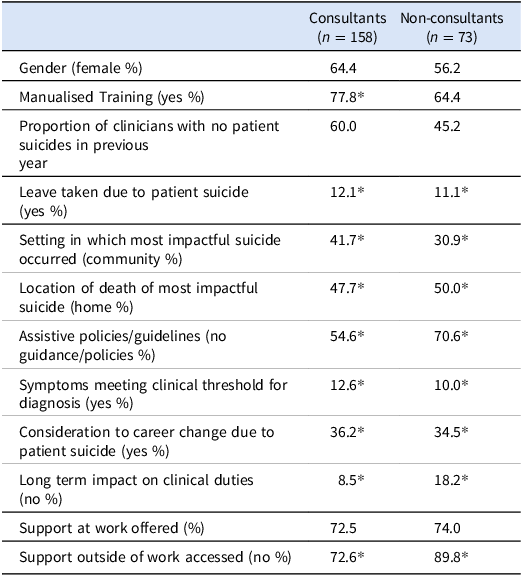
Table 1 presents demographic, professional, and clinical data for consultants and non-consultant psychiatrists. Most participants were female (61.6%) and were aged between 50–59 years (28.4%) and 30–39 years (27.6%), respectively.
Demographic, professional, and clinical data for clinicians who worked with a patient who died by suicide (or suspected suicide) (n = 232)

Note: n = 1 missing. *valid percent is reported for variables with missing responses.
Most participants obtained their primary medical degree in Ireland (79.4%). Just under two-thirds (66.2%) of participants reported working 11 years or more, 26.9% reported working between 4–10 years and the remaining 6.9% reported working in psychiatry for three years or less. Participants reported working in a variety of specialties including General Adult (59%), Old Age (13.3%), Child and Adolescent (16.8%), Learning Disability (4.3%) and other (11.6%). In terms of work setting, 73.7% of participants reported working in a community mental health service, 59.4% worked in an acute hospital, 25% in a mixed urban and rural setting, 15.0% in an urban setting, 7.3% in a rural setting, 8.6% in a private or independent practice and 5.1% reported working in another setting. In the previous year, 4.8% of participants had experienced two or more patients dying by suicide, 31.1% experienced one patient dying by suicide and 54.6% had not experienced a patient dying by suicide.
Most respondents (73.8%) reported having received manualised training in the assessment and prevention of suicidal thoughts or behaviours. Of those participants, participants mostly received local induction training (58%), STORM training (29%), ASIST (16.6%), SafeTALK (11.2%), Connecting for People (5.9%), other (29.6%) (CAMS, DBT, conference workshops, postgraduate training etc.,). The mean rating when asked to rate the degree to which psychiatrists felt that suicide prevention was their role (rated on a scale between 0-100) was 46.2 (SD = 26.2). Approximately one half (52.8%) of participants reported that they felt that suicide prevention was their role from some degree (50) to very much (100) and 8% rated this at ‘not at all’.
The mean rating (rated on a scale between 0–100) when asked to rate the degree to which psychiatrists felt external pressure to prevent suicide was 81.7 (SD = 24.4). When asked about how much pressure they felt from external sources to prevent patient suicide, 54.2% perceived pressure as ‘to some degree’ and a further 31.1% of respondents reported that they felt this very much (i.e., rating 100). Psychiatrists were asked a further question on what degree do they think suicide is predictable in secondary care, the mean on a Likert scale of 1-100 was 33.9 (SD = 20.2).
Experiences of a patient death by suicide
Participants were asked how long ago the patient death by suicide which most impacted on them occurred; 15.1% reported that the death occurred in the last 6 months, but for most participants the death occurred between 6–18 months ago (24.3%), followed by 3–5 years ago (18.8%). Over half of the participants (58.4%) reported that the suicide occurred while they were working as a consultant and 16.4% were in basic specialist training. Approximately one-third of the participants indicated that the death occurred in the community mental health services, 25.0% were inpatients and 4.0% were being treated in the Emergency Department. Approximately half of the deaths (50.2%) occurred in the patient’s home and 31.8% occurred in a public place. In relation to the patient’s age, 12% were less than 20 years old, 13.9% were 20–29 years, 20.8% were 30–39 years, 19.4% were 40–49 years and 31.5% were aged 50+ years, 2.3% could not remember. The most common diagnoses indicated by respondents included affective disorder (38.4%), personality disorder (25.4%), schizophrenia and drug dependence (each 17.2%).
Effect of the death on emotional wellbeing and personal life this
Most participants (61.8%) reported ‘some’ emotional effect at 50 or more, with a further 10.4% rating 100 which represents ‘a very severe response’ on emotional well-being . Some participants (11.8%) indicated that they felt that their symptoms had met a clinical threshold for diagnosis of a psychiatric disorder and a further 12.3% felt that they were uncertain about this. The most commonly reported effects were pre-occupation with suicide (52.2%), decreased self-confidence (40.5%), poor sleep (33.6%), low mood/anhedonia (21.1%), and irritability at home (19.0%). When prompted if another effect was experienced due to the death, sadness was the most common response (n = 14). The sense of responsibility decreased with time, with the mean score falling from 3.5 (SD = 2.9, n = 203) to 1.5 (SD = 1.84, n = 183) with hindsight. A significant difference was observed between genders (F = 3.69, dfs = 2,200, p = .026) with females displaying more feelings of responsibility (M = 3.9, SD = 3.1) than males (M = 2.8, SD = 2.7). No significant difference was observed between levels of psychiatry (F = 0.650, dfs = 5,196, p = .662).
Effect of the death on professional life
Nearly 22.3% of respondents rated the effect at a point of 7 or over and 19.2% rated the effect at a point of zero. The mean rating was 3.6 (SD = 3.2) and this did not differ significantly for males and females (F = 1.160, dfs = 2, 190, p = .316.) nor did it differ for level of psychiatrist (F = 1.033, dfs = 5,186, p = .400). Of the 16% of participants to rate the effect at 7 or above, 49% reported that this effect lasted 9 weeks or over. 69.5% reported that the experienced did not have an effect on their ability to carry out clinical duties in the longer term, 11.2% reported that it did have an effect and 19.3% were not sure. One-third of participants (35.5%) reported that they considered or acted in a way to change their career path due to the patient suicide and a further 6.6% reported that they were uncertain. Some (11.7%) reported to have taken annual/sick leave as a result of the experience.
Figure 1 reports on the impact of the death on various aspects of their professional lives. They reported a ‘big/major impact’ on several outcomes including heightened awareness of risk (69%), feelings of burnout (47.8%), decreased confidence (39.9%), desire to take time off work (37.1%), fear of negative publicity (37.4%), fear of litigation (36.9%) and increased desire for early retirement (36%).
Impact of the death on professional life.

Supports in the immediate aftermath
Participants were presented with an open-ended question asking were there policies/guidelines in place to assist their response to the death (161 participants responded). Of those, 54.5% (n = 88) reported that they did not have guidelines/policy in place at work to assist their response, 39.8% (n = 64) reported that they did have guidelines/policy and 5.6% (n = 9) were unsure/unaware. Ten of the respondents who reported having guidelines/policy indicated that this was nothing other than mandatory reporting.
Figure 2 outlines details on supports offered and accessed within the workplace. Missing data for the following items ranged from 8–171 participants. One third of the participants indicated that they were not offered any help from work in relation to the death. Support following a death by suicide was offered by formal line management to 30.7% of participants. Half of the participants (50.6%) reported that they did not access support from formal line management, 15.6% accessed support and found it to be unhelpful/very unhelpful, 22.5% reported that they accessed support and found it to be helpful and a 11.3% accessed support and found it to be very helpful. Support from colleagues was availed of by 78.6% of participants with most reporting that it was either helpful (44%) or very helpful (29.2%).
Supports offered and accessed within the workplace.

Figure 3 provides detail on the perceived helpfulness of each of the various events that may follow the death of a patient by suicide. Most participants indicated that they were not offered support with these events, with 24.4% being offered support with the clinical incident review, 22.7% with team meetings, 18.8% with Coroner’s Inquest, 16.5% with Critical Incident Review Procedures and 8% with mandatory reporting to external agencies. Media reports, mandatory reporting to external agencies, coroner’s inquest, critical incident review procedures, clinical incident review legal proceedings and disciplinary proceedings were reported more commonly as unhelpful/very unhelpful in comparison to helpful/very helpful. However, funeral attendance and team meetings were reported more commonly as helpful/very helpful.
Events following death and perceived helpfulness.

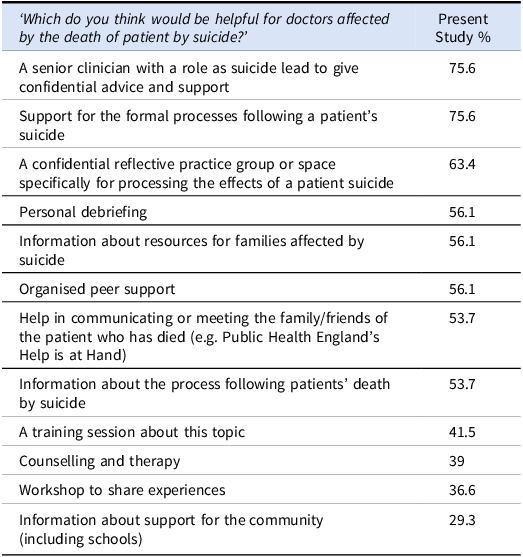
Table 2 outlines the supports following a patient suicide. Three-quarters (77.6%) reported that they did not have support outside of work. Of those who did, 58.5 and 48% accessed support from family and friends, respectively. Half of the participants who received support reported other sources which included support from a mental health professional/psychotherapist/counsellor (n = 11), general practitioner (n = 8), psychiatrist (n = 3), peers/friends with a background in mental health (n = 2) and spiritual advisor (n = 1). Participants most commonly indicated that a senior clinician with a role as suicide lead to give confidential advice and support, and support for the formal processes following a patient suicide would be most helpful (75.6% each).
Supports following a patient suicide

Note: items were administered as an opt-in and opt-out basis so participants that answered all questions were retained for each item;
n = 41.
Participants were asked ‘Did anything help make this event easier to cope with?’. Approximately half of the sample did not respond to this question (n = 119, 51.2%). Support from colleagues was the most frequent response reflected in responses (40%), followed by supportive management, time and reflection. Other helpful factors included the response of the patient’s family to the death, support from their own family, the review process, advice/information from an external agencies, legal support, self-care, and personal therapy.
Participants were also asked what they found to be unhelpful in relation to the death (n = 101). Lack of support from colleagues (including some negative comments) and review procedures were each noted by approximately 17% of the sample, with review procedures being described as too onerous or interrogative/confrontational in manner. Unsupportive management, the patient’s family response and the Coroner’s Court were also reported as being unhelpful in the aftermath of the death. Other factors which were not helpful included media reporting and social media, the legal process, juggling other professional responsibilities in the immediate aftermath, the procedure through which they learned of the death, unsupportive family, the debriefing procedure and the concept of ‘Zero Suicides’.
Discussion
This study aimed to investigate how patient death by suicide affects the personal and professional lives of psychiatrists and psychiatrists in training in Ireland and to identify the resources/systems which can mitigate or amplify the impacts of patient death by suicide on clinicians. The majority (88.5%) of the survey respondents worked with a patient who died by suicide or suspected suicide, which is similar to a previous study which sampled consultant psychiatrists in Ireland (80%) (Landers et al. Reference Landers, O’Brien and Phelan2010). A study sampling psychiatrists working at varying levels in the South of England reported that 80% had experienced a patient suicide (Gibbons et al. Reference Gibbons, Brand, Carbonnier, Croft, Lascelles, Wolfart and Hawton2019).
The present findings illustrate how the impact of patient death by suicide on clinicians’ personal and professional lives can remain for years after the suicide has occurred. Key personal effects identified include pre-occupation with suicide, decreased self-confidence and sadness. Although most participants reported that their ability to carry out clinical duties was not impacted in the longer term, long-term impacts on professional life included persisting impacts on confidence in clinical practice and consideration to or acting upon career change. Moreover, female participants displayed more feelings of responsibility than males, which aligns with previous systematic review findings that female psychiatrists and psychologists reported slightly higher scores on perceived responsibility at the time of death by suicide (Lyra et al. Reference Lyra, McKenzie, Every-Palmer, Jenkin and Sar2021). Other key professional effects identified include heightened awareness of risk, burnout, desire to take time off work and fear of negative publicity and litigation. A recently published paper by (Gibbons, Reference Gibbons2024) which analysed 1500 accounts of suicide bereavement shared by families, friends and clinicians concludes that the formation of delusional narratives can lead to blaming oneself for the death, which ultimately can have a detrimental impact on well-being and increase the risk of mental illness and the likelihood of death by suicide. Moreover, Gibbons acknowledges that the impact of delusional narratives can have a wider societal impact, insofar that systemic responses to suicide can be distorted (Gibbons, Reference Gibbons2024). Taken together with the present findings, it is clear that the wellbeing of clinicians who are bereaved by patient suicide must be front and centre to organisational responses in the aftermath of the suicide.
Participants agreed that the following supports were most helpful to assist in the aftermath of a patient suicide: (1) having a designated senior clinician to provide support, (2) greater support with the formal processes, (3) personal debriefing, (4) provision of peer support and a confidential reflective practice space to support processing the effects of a patient suicide and (5) Information about resources for families affected by suicide. Support from colleagues and line managers were largely rated as being helpful in the aftermath of patient death by suicide, which is underscored by the finding that three-quarters of the participants reported not having support outside of work. In general, participants indicated that they were not offered support with some of the events following the death, including the disciplinary and legal proceedings, critical incident review procedures, team meetings, funeral attendance, Coroners’ Inquest, mandatory reporting to external agencies and media reports. Moreover, the findings relating to supports were largely consistent between consultants and non-consultants, which aligns with calls for the need for greater focus on providing support for all clinicians, for enhancing clinician and patient wellbeing (Gibbons, Reference Gibbons2023). From a staff perspective, particular responsibilities in leading both formal and informal responses when a patient death by suicide occurs adds to the overall impact of the death. The complexity of these challenges supports the need for a more general staff welfare approach underpinned by structural change for how the workplace deals with these events for all relevant staff.
The present findings demonstrate the need for greater access to guidelines/policy and occupational support, which aligns with the Royal College of Psychiatrists guidance that having supports for staff, including with the bureaucratic processes, is a key component in the organisational response to patient suicide (Royal College of Psychiatrists, 2022). Moreover, 41.5% indicated that they would like ‘a training session about this topic’ when asked what would be helpful for clinicians affected by the death of a patient by suicide. Systematic review findings show that mental health practitioners identified the need for training that is focused on the impact of suicide, which led the authors to conclude that suicide prevention training alone may not prepare practitioners for the death of a patient, unless the training encompasses specific information on the possibility of experiencing the patient suicide, the likely impact, the procedures to be followed, and the availability of supports (Sandford et al. Reference Sandford, Kirtley, Thwaites and O’Connor2021). Sufficient and accessible training must be available to help increase clinician’s comfort, knowledge, skill, and ability to support those bereaved by suicide (Spruch-Feiner et al. Reference Spruch-Feiner, Labouliere, Brodsky, Green, Brown, Vasan, Cummings, Layman, Monahan, Galfalvy, Rahman, Kammer, Wainberg, Nicholson, Leckman-Westin, Finnerty and Stanley2022). Taken together, it is evident that the comprehensive suicide prevention training which permeates psychiatric clinical training needs to be supplemented by specialised, postvention training to assist psychiatrists in dealing with patient death by suicide.
Practice recommendations
There is a need for a robust system of support to assist psychiatrists both professionally and personally in the aftermath of a patient death by suicide, which meets the complex demands of patient suicide and is incorporated as a structural change for a more general staff welfare approach. This mechanism could incorporate a 1:1 response from a senior/experienced clinician who can support the formal processes and personal reflection in a confidential and non-judgemental manner. This support could be delivered by a senior psychiatrist in a line management role within the workplace or a separate organisational, pastoral suicide lead, who could deliver this support via a peer-delivered, mentorship model. This recommendation aligns with Recommendation 3. Buddy Systems and individual support (Royal College of Psychiatrists, 2022) for buddy systems and individual support, whereby a consultant or mental health professional with lived experience can support a psychiatrist who experiences a patient death by suicide. The ‘buddy’ can give collegiate support and information, helping to guide the clinician through the processes that follow the event. Moreover, according to (Royal College of Psychiatrists, 2022) having an organisational pastoral suicide lead appointed by each mental health organisation who could lead the organisational response in the pastoral care of clinicians experiencing loss of patient to suicide.
Moreover, there is a need to provide postvention training which equips psychiatrists to better cope with the aftermath of patient suicide, which is in line with the Royal College of Psychiatrists Recommendation 6. Training on the effects of patient suicide on clinicians and on the processes that follow (Royal College of Psychiatrists, 2022). This recommendation advocates for: (1) training institutions to have a major role in awareness and pastoral care, (2) induction which incorporates formalised training focusing on the potential impacts of suicide and mitigation measures, which is delivered in a way to include frank discussions about suicidality, (3) teaching sessions on the emotional effects of patient suicide as part of local teaching programmes delivered regularly and (4) clinicians’ attendance at inquest and serious incident review as part of training and induction. In line with the Recommendation 4. Group psychological support (Royal College of Psychiatrists, 2022) reflective spaces which are situated within the structures of teams and organisations can enable the trauma and grief associated with the death of a patient by suicide to be processed. This recommendation specifies that a Balint group, case discussion group and/or group staff support can act as a general reflective practice group. Furthermore, reflective practice sessions, including Schwartz rounds, provide opportunities for clinicians to see senior staff members modelling openness and vulnerability.
Limitations
It is important to note that the RR in the present study was 15% and there was an overrepresentation of consultants in the sample, which is similar to Gibbons and colleagues’ study (RR=34%) (Gibbons et al. Reference Gibbons, Brand, Carbonnier, Croft, Lascelles, Wolfart and Hawton2019). However, it should be noted that this is a national study which included all grades of psychiatrists working across a variety of clinical settings, and thus is broadly representative of the profession in the Irish context. Selection bias is likely to be an issue in the study sampling given that there was a relatively low survey response rate by the members of the College of Psychiatrists in Ireland. Moreover, clinicians affected by patient suicide or better equipped to participate in research may have had greater interest in participating in the survey. Taken together, the sample may not be representative of the wider psychiatrist population in Ireland which hinders the generalisability of the findings to broader psychiatrist experiences. However, the alignment of the present findings with previous studies conducted in the United Kingdom (Gibbons, Reference Gibbons2024) increases the likelihood that the present findings represent shared experiences by psychiatrists of patient death by suicide. Moreover, there is a population of psychiatrists who are not captured by the College of Psychiatrists in Ireland membership and therefore, their perspectives may not be accurately represented in the present study, given that clinicians who were members of the CPsychl were targeted for study participation.
There was considerable missing data for several survey items measuring supports, ranging 8–171 participants per item. Given the potential issues with reliability of data due to missingness, the supports data was limited to frequency analyses as opposed to considering inferential analyses which may be particularly sensitive to missingness. Missingness was limited to the support items which suggests that investigating supports in the context of patient death by suicide is likely a complex and nuanced phenomenon which is experienced in individualised ways and as such, is a phenomenon that may not be captured well using survey data collection methods.
Finally, the survey in the present study directed psychiatrists to focus on the patient death by suicide that they perceived as being the most impactful. This survey design was informed by exemplary research in this field (Gibbons et al. Reference Gibbons, Brand, Carbonnier, Croft, Lascelles, Wolfart and Hawton2019). However, is it important to acknowledge that the impact of experiencing multiple patient deaths by suicide on psychiatrists was not explored in the present study. Given that there is no doubt a unique, cumulative impact of patient death by suicide over time, future research should investigate the cumulative impact of patient suicide on psychiatrists and ways to mitigate this impact overtime.
Conclusion
Psychiatrists are commonly tasked with the assessment and management of patient suicide risk. Ultimately, patient death by suicide is often experienced by psychiatrists which can leave a lasting negative impact on the professional and personal lives of clinicians (Gibbons, Reference Gibbons2023). The present findings provide much-needed insight into the landscape of experiences of and needs for psychiatrists who experienced a patient death by suicide in Ireland.
Competing interests
The authors have no conflict of interests to declare.
Financial support
This study is funded by the BLINDED.
Ethical standard
The authors assert that all procedures contributing to this work comply with the ethical standards of the relevant national and institutional committee on human experimentation with the Helsinki Declaration of 1975, as revised in 2008.



 Open access

