


Internet use and online social networking is extremely popular among teens and young adults. By 2009, 93% of individuals aged 12–29 years reported internet use in the United States (Lenhart et al., Reference Lenhart, Purcell, Smith and Zickuhr2010). Teens and young adults show similarly high interest in social networking websites, with 73% of teens aged 12–17 years, and 72% of young adults aged 18–29 years, reporting social networking use (Lenhart et al., Reference Lenhart, Purcell, Smith and Zickuhr2010). In Australia, 96% of 18- to 34-year-olds use the internet, and between 36% and 51% of them use the internet for online gaming (Australian Bureau of Statistics, 2014).
In addition to frequency, the pattern of usage of the internet has also changed considerably. There is evidence of rapid growth in social connection and messaging programs, mobile application development, ability of users to generate and upload their own content, and much greater daily use of mobile rather than fixed devices (Burns et al., Reference Burns, Davenport, Christensen, Luscombe, Mendoza, Bresnan and Hickie2013). To what extent this expansion and the increased frequency of internet use impacts psychological distress is unclear.
Among internet users, a sub-set may develop problematic or addictive use, which may be similar to other non-substance addiction phenotypes (e.g., gambling, food, and sex; Frascella et al., Reference Frascella, Potenza, Brown and Childress2010). As many as 13% of internet users in the United States and 6.4% of adolescent internet users in Australia endorse at least one problem, similar to problems related to substance use disorders associated with excessive internet use (Aboujaoude et al., Reference Aboujaoude, Koran, Gamel, Large and Serpe2006; King et al., Reference King, Delfrabbo, Zwaans and Kaptsis2013). Accordingly, problems related to excessive internet use typically consist of unsuccessful attempts to reduce use, interference with relationships, and a pre-occupation with internet use when offline (Aboujaoude et al., Reference Aboujaoude, Koran, Gamel, Large and Serpe2006; Fu et al., Reference Fu, Chan, Wong and Yip2010; Kuss, Reference Kuss2013; Kuss et al., Reference Kuss, Griffiths, Karila and Billieux2014; Tao et al., Reference Tao, Huang, Wang, Zhang, Zhang and Li2010).
Psychopathological Correlates
Not only do symptoms of excessive internet use resemble other substance use disorder profiles, internet use is also potentially comorbid with a wide range of psychopathologies. Excessive internet use has been linked to major depression (Evren et al., Reference Evren, Dalbudak, Evren and Demirci2014; Ha et al., Reference Ha, Yoo, Cho, Chin, Shin and Kim2006; Huang et al., Reference Huang, Lu, Liu, You, Pan, Wei and Wang2009; Kim et al., Reference Kim, Ryu, Chon, Yeun, Choi, Seo and Nam2006; Ko et al., Reference Ko, Yen, Chen, Yeh and Yen2009; Mythily et al., Reference Mythily, Qiu and Winslow2008; Wang et al., Reference Wang, Luo, Bai, Kong, Luo, Gao and Sun2013; Yen et al., Reference Yen, Yen, Chen, Chen and Ko2007; Reference Yen, Ko, Yen, Chen, Chung and Chen2008; Yung et al., Reference Yung, Eickhoff, Davis, Klam and Doan2015), ADHD (Bernardi & Pallanti, Reference Bernardi and Pallanti2009; Ha et al., Reference Ha, Yoo, Cho, Chin, Shin and Kim2006; Ko et al., Reference Ko, Yen, Chen, Yeh and Yen2009; Yen et al., Reference Yen, Yen, Chen, Chen and Ko2007; Reference Yen, Yen, Chen, Tang and Ko2009; Yoo et al., Reference Yoo, Cho, Ha, Yune, Kim, Hwang and Lyoo2004), and social phobia (Bernardi & Pallanti, Reference Bernardi and Pallanti2009; Ko et al., Reference Ko, Yen, Chen, Yeh and Yen2009; Yen et al., Reference Yen, Yen, Chen, Chen and Ko2007; Yung et al., Reference Yung, Eickhoff, Davis, Klam and Doan2015). Dysthymia, hypomania (Bernardi & Pallanti, Reference Bernardi and Pallanti2009) and substance use disorders (Bai et al., Reference Bai, Lin and Chen2001; Shapira et al., Reference Shapira, Goldsmith, Keck, Khosla and McElroy2000; Yung et al., Reference Yung, Eickhoff, Davis, Klam and Doan2015) have also been associated with excessive internet use. However, these studies have relied on non-White populations or small sample sizes. Whether these findings generalize to normal variation among healthy white young adults is unknown.
Genetic Epidemiology of Internet Use
Given the behavioral and psychiatric correlates of excessive internet use, a thorough understanding of the genetic and environmental risks underpinning internet use and the associations with psychopathology are required. Recently, it has been shown that genetic factors explain between 48% and 66% of the variance in problematic internet use while the remaining variance could be explained by environmental factors unshared between siblings (Li et al., Reference Li, Chen, Li and Li2014; Vink et al., Reference Vink, Beijsterveldt, Huppertz, Bartels and Boomsma2015). However, to our knowledge, no study has explored the genetic and environmental etiology of internet use in a large population-based sample of healthy young adults. Prior to the widespread adoption of smart phones, one report investigating variation in mobile use found that familial aggregation was best explained by a combination of genetic and shared environmental influences (Miller et al., Reference Miller, Zhu, Wright, Hansell and Martin2012). Heritability for varying measures of mobile phone use ranged from 34% to 60%, while shared environmental influences accounted for 5% to 24% of the total variance. We hypothesize that genetic and environmental variation in internet use will likewise show similar patterns of heritability. We also hypothesize that individual differences in internet use will be associated with psychopathology.
Aims
Our aims are therefore to explore the genetic and environmental etiology of normal variation in internet use and social networking, as well as the size and significance of phenotypic associations between measures of internet use, internalizing disorders, and measures of cannabis, alcohol, and nicotine abuse and dependence.
Methods
Participants
Participants were from a large population-based sample of young adult twins and their non-twin siblings from the ongoing 19UP Project based on the BLTS in Queensland, Australia (for more detail, see Gillespie et al., Reference Gillespie, Henders, Davenport, Hermens, Wright, Martin and Hickie2012). Beginning in 1992, twins and family members were recruited from the greater Brisbane area. The majority were recruited through schools, but recruitment was also implemented via media appeals and word of mouth as part of an ongoing, multi-wave study examining melanoma risk factors at ages 12 and 14, cognition at age 16, and psychiatric diagnosis, brain imaging, and lifestyle and behavioral assessments in their early twenties. Data for the current analyses were collected between 2009 and 2013 as part of an ongoing US National Institutes of Health/National Institute of Drug Abuse (NIH/NIDA) project to study the genetic and environmental pathways to cannabis use, abuse, and dependence. Ascertainment began with adult twins and non-twin singleton siblings from the BLTS in order to obtain data from individuals who had passed through the age of maximum risk for the onset of cannabis use (typically 16–18 years) and cannabis-related problems. Response rates across the BLTS projects since 1992 range from 73% to 85%. Informed consent was obtained from all participants. Ethics approvals were obtained from the Human Research Ethics Committee at the QIMR Berghofer Medical Research Institute and the Institute Review Panel at Virginia Commonwealth University.
The 19UP survey comprised three separate online modules. Internalizing symptoms and substance use items were assessed as part of the first module. Internet use was assessed in the third module, which was completed by fewer participants. Complete internet use data were available from 2,059 individuals, consisting of 1,034 MZ and 1,025 DZ twins (56% female) aged 18–35 years (M = 26, SD = 3.97). See Table 1 for numbers of complete and incomplete twin pairs for each internet use variables.
Number of Complete and Incomplete (Singletons) for Each Variable

Measures
Internet use
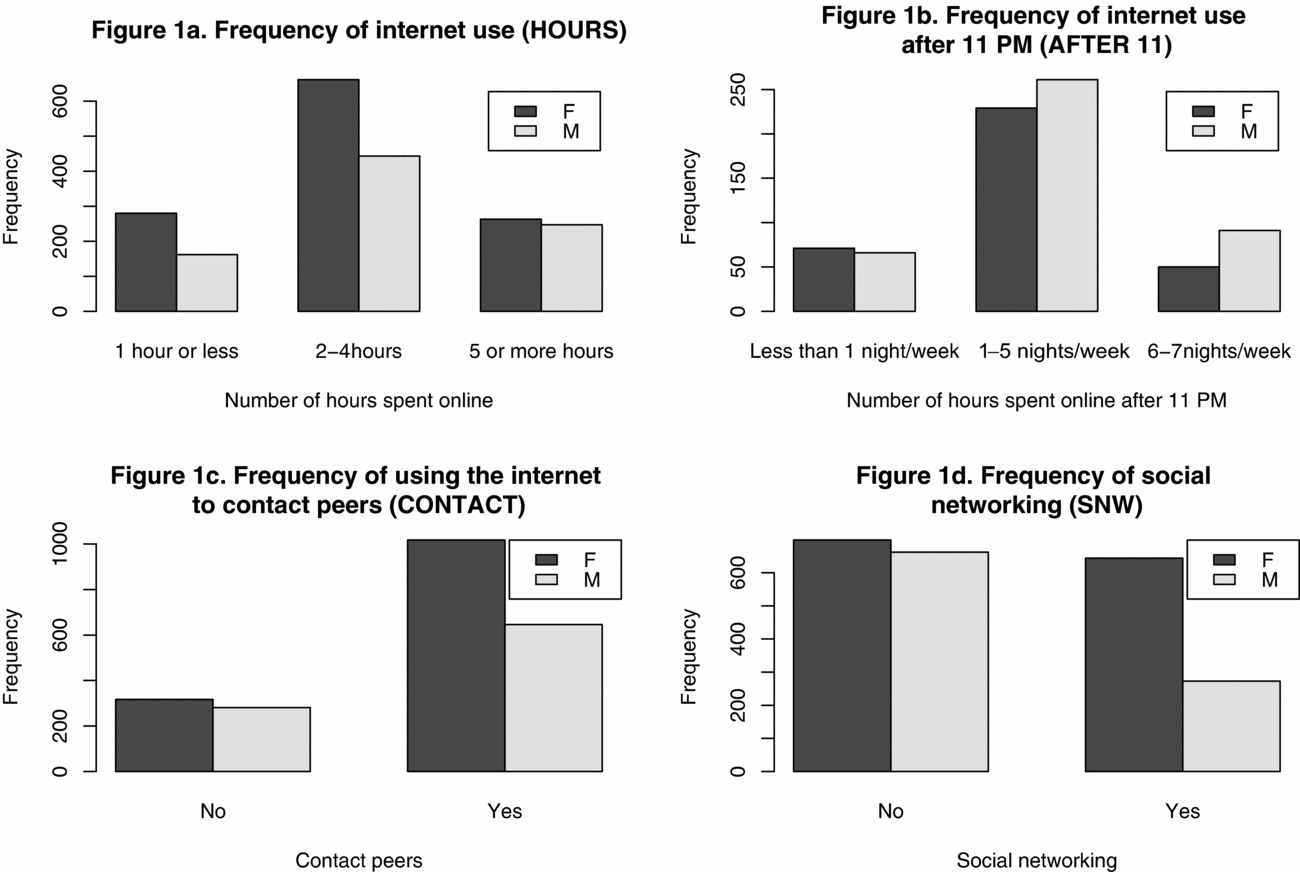
Measures of internet use were based on four questions administered via an online survey: (1) ‘Approximately how many hours a day do you spend using the internet?’ (‘HOURS’) measured on a 3-point ordinal scale (1 = 1 hour or less, 2 = 2–4 hours, 3 = 5 or more hours); (2) ‘How often do you use the internet after 11 PM?’ (‘AFTER 11’) measured on a 3-point ordinal (1 = less than 1 time per week, 2 = 1–5 nights per week, 3 = 6–7 nights per week); (3) ‘In general, do you use the internet to contact peers and/or other young people?’ (‘CONTACT’) measured as a binary outcome; and (4) ‘How do you spend most of your time using the internet?’ (‘SNW’). Response options for SNW included accessing chat rooms, health information, online virtual worlds, social networking websites, blogging, checking email, listening/downloading music, solo game playing, posting/viewing photos, instant messaging, discussion groups, viewing/uploading/downloading video material, YouTube, and educational learning. We focused on social networking websites because little is known about its psychological impact, despite its growing popularity (Lenhart et al., Reference Lenhart, Purcell, Smith and Zickuhr2010). Therefore, SNW was recoded as a binary outcome (No = 0, Yes = 1), if subjects indicated accessing social networking websites as the way in which they spend the majority of their time on the internet. Further, we chose to focus on number of hours spent using the internet after 11 pm because of the concerns regarding the potential health impact of using late at night and for many hours per day (Burns et al., Reference Burns, Davenport, Christensen, Luscombe, Mendoza, Bresnan and Hickie2013). Item frequencies are shown in Figure 1. Frequencies for AFTER 11 are slightly lower because they are contingent on a stem question asking participants if they use the internet after 11 pm. Those who responded ‘no’ were not asked the AFTER 11 question.
Frequencies of internet variables.
Psychopathology and substance use
Symptoms of internalizing disorders were based on self-reported DSM-IV (American Psychiatric Association, 2000) criteria for major depression (MD) and social phobia (SP) and were coded as either present or absent. Six hundred and twenty-three participants met criteria for MD (22.6%) and 425 met criteria for SP (15.4%). Cannabis and alcohol abuse and dependence were based on self-reported DSM-IV criteria and were coded as either present or absent (American Psychiatric Association, 2000). For alcohol, only subjects who endorsed five or more drinks for males or four or more drinks for females at least once a week for a month or more were subsequently asked the abuse and dependence items. For cannabis, only subjects who reported having used marijuana at least six times in their lifetime were asked the abuse and dependence items. Craving was also included for alcohol and cannabis in order to determine case status for DSM 5 alcohol and cannabis use disorder, also coded as present or absent: ‘When you were using [alcohol/marijuana] the most, did you ever crave, desire or have an urge for [alcohol/smoking marijuana]?’ Nicotine symptoms counts were based on the Fagerström Test for Nicotine Dependence (FTND; Heatherton et al., Reference Heatherton, Kozlowski, Frecker and Fagerstrom1991). Only subjects who endorsed having initiated nicotine use (or who reported current smoking status) and who smoked 100 or more cigarettes (4 to 5 packs) in their lifetime were eligible to be asked the FTND nicotine questions. The mean number of nicotine symptoms endorsed was 3.34 (SD = 2.43; range = 10). The participants that were not asked the abuse and dependence items were coded as unaffected.
Statistical Analyses
Data were analyzed using full information maximum likelihood (FIML) raw ordinal data methods in the OpenMx software package implemented in R (Boker et al., Reference Boker, Neale, Maes, Wilde, Spiegel, Brick and Fox2011; Neale et al., Reference Neale, Hunter, Pritikin, Zahery, Brick, Kirkpatrick and Boker2015). This approach combines data from complete and incomplete twin pairs, which has the advantage of increasing the accuracy of threshold estimates and thereby improving estimation of the polychoric correlations. By assuming a normal liability threshold model, the ordinal thresholds can be conceptualized as cut points along a distribution that classifies individuals in terms of a probability of endorsing one of two or more discrete or ordinal categories.
Tests of threshold homogeneity
In addition to enabling analysis of complete and incomplete data observations, FIML also permits tests of threshold homogeneity using ratio chi-square tests. Prior to twin modeling, measures of internet use were evaluated to test (1) the equality of response distributions within twin pairs, across sex, and zygosity; and (2) the equality and causes of correlations. This is analogous to tests of mean and variance homogeneity in the case of continuous data.
Univariate analyses
Standard univariate biometrical genetic models (Neale & Cardon, Reference Neale and Cardon1992) that exploit the expected genetic and environmental correlations between MZ and DZ twin pairs were fitted to each of the four internet use variables to estimate the size and significance of genetic and environmental risks. This model assumes that the variance in each of the observed items can be decomposed into additive (A) genetic, shared environmental (C), and non-shared or unique (E) environmental variance components. Because MZ twin pairs are genetically identical and DZ twin pairs share, on average, half of their genes, correlations for the effects are 1.0 and 0.5, respectively. An important assumption is that the common environments (C) are equal in MZ and DZ twin pairs. Non-shared environments (E) are by definition uncorrelated, and also include measurement error. This method was used to estimate the contribution of genetic and environmental variances or risks in each of the four internet variables (i.e., HOURS, AFTER 11, CONTACT, and SNW).
For each internet variable, the goodness of fit of the ACE model was then compared to models with the genetic (CE model) and shared environmental (AE model) parameters removed using likelihood ratio chi-squared tests (Neale & Cardon, Reference Neale and Cardon1992). Under certain regularity conditions (Steiger et al., Reference Steiger, Shapiro and Browne1985), the difference or change in the -2 × log likelihood of the saturated ACE and comparison AE or CE models is asymptotically distributed as a chi-square with the degrees of freedom (df) being equal to the difference in df) between the models. The best-fitting model was chosen on the basis of parsimony using the Akaike Information Criterion (AIC; Akaike, Reference Akaike1987). The model with the lowest index value was chosen as the best fitting.
Strength of association between internet use and psychopathology
Polychoric correlations and their standard errors were estimated in OpenMx (Boker et al., Reference Boker, Neale, Maes, Wilde, Spiegel, Brick and Fox2011; Neale et al., Reference Neale, Hunter, Pritikin, Zahery, Brick, Kirkpatrick and Boker2015) to measure the association between internet use, internalizing disorders, DSM-IV cannabis and alcohol abuse and dependence, DSM5 cannabis and alcohol use disorder, and symptoms of nicotine dependence. The correlations accounted for the statistical non-independence of the twin data by explicitly modeling the family structure.
Results
Tests of Threshold Homogeneity and Twin Pair Correlations
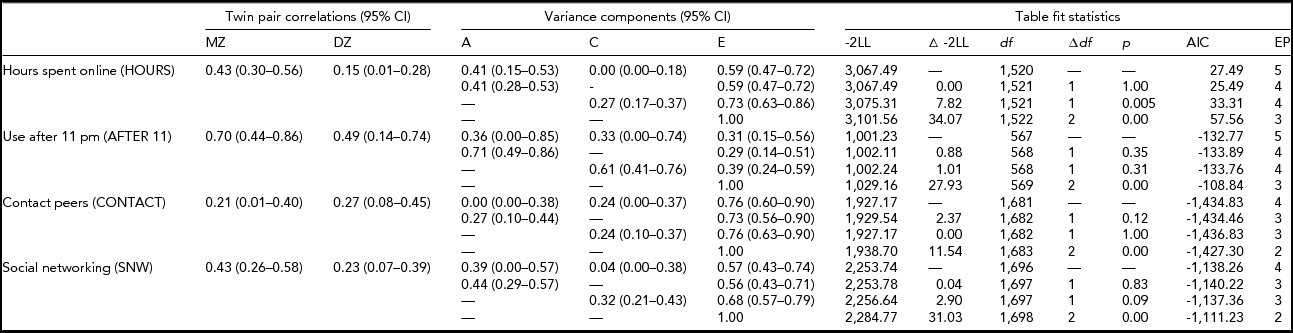
We found no significant differences in the threshold distributions in any of the four internet variables, either within twin pairs or across zygosity and sex. The MZ and DZ twin pair correlations for AFTER 11 and CONTACT could be constrained to be equal, suggesting that familial aggregation is likely attributable to shared environmental factors (Table 2). The MZ and DZ twin pair correlations for HOURS and SNW could not be constrained to be equal, suggesting some degree of familial aggregation attributable to additive genetic factors. For SNW, the DZ twin pair correlation was greater than half the MZ twin pair counterpart, suggesting that familial aggregation is likely attributable to a combination of additive genetic and shared environmental risk factors.
Monozygotic (MZ) and Dizygotic (DZ) Twin Pair Polychoric Correlations (95% CIs), Univariate Model Comparisons and Standardized Variance Components Attributable to Additive Genetic (A), Shared Environment (C), and Non-Shared Environmental (E) Risk Factors (95% CIs), and Model Fitting Statistics
Univariate Analyses
Standardized univariate components of variance and model fit statistics for the four internet use variables (HOURS, AFTER 11, CONTACT, and SNW) are shown in Table 2. For all variables except HOURS, the AE and CE sub-models did not significantly deteriorate the model fit when compared to the full ACE model. Also, the E model that predicted entirely random variation in each trait (i.e., no familial aggregation) provided a very poor fit to the data. For HOURS, the fit of the model deteriorated when C was dropped, suggesting that familial aggregation can be explained entirely by additive genetic factors. Although the AIC suggests that the AE sub-model provided a better fit for SNW compared to the CE sub-model for CONTACT, the differences in AICs between competing nested AE and CE models were mostly negligible. Based on the need for extreme caution when interpreting AICs based on small samples assessed via discrete or ordinal traits (Sullivan & Eaves, Reference Sullivan and Eaves2002), we retained the ACE model as the best-fitting explanation for the sources of variation within CONTACT and SNW. However, the variance components suggest that shared environmental factors explains the familial aggregation in CONTACT, while additive genetic factors explain the aggregation in SNW. For AFTER 11, the difference between the AICs for the AE and CE models was effectively zero, and the variance components suggest a combination of additive genetic and shared environmental risk factors is needed to explain the familial aggregation. Therefore, the full ACE model was also retained as the best-fitting explanation for AFTER 11.
Phenotypic Correlations
As shown in Table 3, phenotypic (within-person) correlations between the four internet use items ranged from non-significant to moderate. The correlation between SNW and CONTACT was moderate (r = 0.37), as was the correlation between AFTER 11 and HOURS (r = 0.36). SNW and HOURS were not significantly associated, but showed a negative trend (r = -0.09). In terms of the internalizing and substance use disorders, HOURS was modestly and positively correlated with SP (r = 0.09), as was CONTACT (r = 0.13). CONTACT was modestly and negatively correlated with DSM-IV cannabis abuse (r = -0.11), DSM5 cannabis use disorder (r = -0.11), and symptoms of nicotine dependence (r = -0.06). CONTACT was also modestly but positively correlated with DSM-IV alcohol abuse (r = 0.08). SNW was modestly and negatively correlated with DSM-IV cannabis abuse (r = -0.08), DSM-IV cannabis dependence (r = -0.13), and DSM5 cannabis use disorder (r = -0.11).
Phenotypic Polychoric Correlations Between the Four Internet Items, Internalizing Disorders, DSM4 Substance Abuse and Dependence, and DSM5 Substance Use Disorders
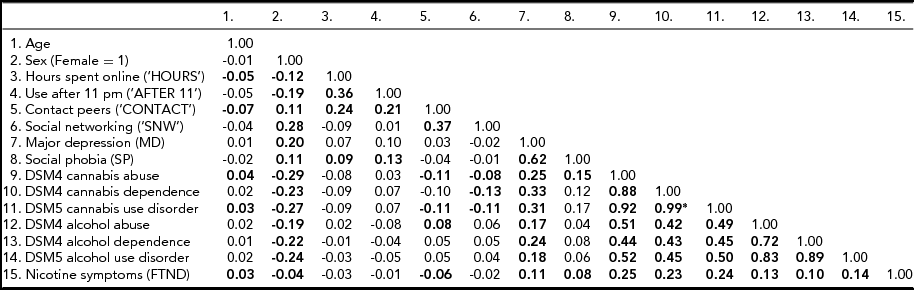
*Because DSM5 cannabis use disorder and DSM4 cannabis dependence are virtually perfectly correlated, optimization correcting for the non-independence within families was impossible. The polychoric correlation was 0.99 when run separately for Twin 1 and Twin 2. Significant correlations are bolded.
There were also some demographic differences in internet use, although of small effect. Increasing age was associated with less time spent on the internet (r = -0.05) and less use of the internet to contact peers (r = -0.07). Males spent more time on the internet than females (r = -0.12) and used the internet after 11 pm more often (r = -0.19), whereas females were more likely to use the internet to contact peers (r = 0.11) and to access social networking websites (r = 0.28). Females were more likely to meet criteria for MD (r = 0.20) and SP (r = 0.11), whereas males were more likely to have symptoms of all of the substance use disorders (r = -0.04 through -0.29).
Discussion
This is the first study to investigate the genetic epidemiology of normal variation in internet use. For all measures of internet use except for the number of hours spent on the internet, we found evidence of significant familial aggregation attributable to varying combinations of additive genetic and shared environmental factors. For the number of hours spent on the internet, familial aggregation was explained entirely by additive genetic factors. The pattern of twin correlations, model fit indices, and variance components suggest that the observed familial aggregation in social networking could be explained entirely by additive genetic factors. In comparison, shared environmental risk factors explained almost all of the observed familial aggregation in using the internet to contact peers. A combination of additive genetic and shared environmental risk factors explained the familial aggregation in the frequency of internet use after 11 pm.
We found no evidence for shared environmental risks in the number of hours spent using the internet. However, the estimated power to detect C for this variable with the current sample size was 5%, whereas the power to detect additive genetic variance was 80% (see Table 4). The power to detect the A and C variance components for all other variables was low. However, data collection is ongoing (Gillespie et al., Reference Gillespie, Henders, Davenport, Hermens, Wright, Martin and Hickie2012). Consequently, future analyses of the data based on larger samples will provide sufficient power to compare competing AE and CE sub-models.
Results of Post-Hoc Power Analysis to Detect A and C Variance Components

Consistent with previous research, we have shown that internet use was more frequent among younger adults (Lenhart et al., Reference Lenhart, Purcell, Smith and Zickuhr2010) and that females were more likely to use the internet for interpersonal communication (i.e., contacting peers and to access social networking sites; Weiser, Reference Weiser2000). Contrary to previous findings (see Bernardi & Pallanti, Reference Bernardi and Pallanti2009; Evren et al., Reference Evren, Dalbudak, Evren and Demirci2014; Ha et al., Reference Ha, Yoo, Cho, Chin, Shin and Kim2006; Huang et al., Reference Huang, Lu, Liu, You, Pan, Wei and Wang2009; Ko et al., Reference Ko, Yen, Chen, Yeh and Yen2009), we found no significant associations between measures of internet use and variation in DSM-IV MD. There were, however, small but significant and positive associations between the number of hours spent on the internet and DSM-IV SP, and between the frequency of time spent on the internet after 11 pm and DSM-IV SP. The discrepancy with our findings and other reports may be attributable to group differences and sample sizes. Previous reports ranged in size from 1,291 to 4,957, and relied on adolescents and young adults from Turkey (Evren et al., Reference Evren, Dalbudak, Evren and Demirci2014), Korea (Ha et al., Reference Ha, Yoo, Cho, Chin, Shin and Kim2006), China (Huang et al., Reference Huang, Lu, Liu, You, Pan, Wei and Wang2009), and Taiwan (Ko et al., Reference Ko, Yen, Chen, Yeh and Yen2009). Moreover, these reports assessed measures of excessive internet use, whereas our study assessed normal population variation in time spent on the internet, using after 11 pm, using the internet to contact peers, and the use of social networking.
Internet use was significantly associated with cannabis, alcohol, and nicotine use disorders. However, all associations were small, and our finding that social networking was protective against DSM-IV cannabis abuse, DSM-IV cannabis dependence, and DSM-V cannabis use disorder is inconsistent with previous studies showing a positive relationship between excessive internet use and substance use disorders (Bai et al., Reference Bai, Lin and Chen2001; Shapira et al., Reference Shapira, Goldsmith, Keck, Khosla and McElroy2000; Yung et al., Reference Yung, Eickhoff, Davis, Klam and Doan2015). Apart from small sample sizes, the discrepancy may be attributable to varying definitions of internet use. For instance, Bai et al. (Reference Bai, Lin and Chen2001) used risky internet use as the dependent variable as defined by Young's Internet Addiction Disorder Questionnaire (Young, Reference Young1996), which is based on a seven-item instrument based on DSM-IV criteria for pathological gambling, and had a sample size of only 251. The report by Shapira et al. (Reference Shapira, Goldsmith, Keck, Khosla and McElroy2000) was based on a very small sample size of N = 20 in which the definition of problematic internet use was based on DSM-IV criteria for substance use disorders such as items measuring distress, time-consumption, uncontrollability, and use interfering with important tasks. Our measures of internet use were not DSM-IV based, nor focused towards excessive internet use.
Limitations
These results should be considered in the context of two potential limitations. First, data were based on a single assessment. Analysis of data from multiple waves would permit tests of longitudinal stability and the partial control of measurement error. A second limitation includes potential ceiling effects on the measures of internet use, which do not identify individuals whose internet use is excessive. The highest level of use was 5 or more hours per day, which may or may not be excessive, and could be work related. However, our aim was to fill an important gap in the literature by focusing on the genetic and environmental etiology of normal variation in internet use and its association with psychopathology.
Conclusions
This is the first study to explore the genetic and environmental etiology of normal variation in internet use in a large, young adult sample of Australian twins. Twin modeling revealed that familial aggregation in the frequency of internet use and social networking was entirely due to additive genetic factors, whereas familial aggregation in using the internet to contact peers was entirely explained by shared environmental factors. Variation in frequency of use after 11 pm was explained by a combination of additive genetic and shared environmental risk factors. Our results also demonstrated that while social networking and contacting peers may be protective against cannabis use disorders and nicotine symptoms, frequency of use and contacting peers are linked to alcohol abuse and SP.
Acknowledgments
This report was supported by the United States National Institute on Drug Abuse, awarded to Nathan Gillespie (R00DA023549). The BLTS is supported by a variety of Australian NHMRC Grants awarded to Nicholas Martin, including Program Grant No. 566529, CRE 1061043, and fellowship support to Ian Hickie (1046899). We also acknowledge and thank the following QIMR project staff: Soad Hancock as project coordinator, David Smyth for IT, Lenore Sullivan as research editor, and our research interviewers Pieta-Marie Shertock and Jill Wood. We thank the twins and their siblings for their willing cooperation.



