


1 Dialogue in Context
1.1 Introduction
This research examines how ‘dialogue’ is manifested through dance and somatic practices, specifically a practice called Amerta Movement. Rather than focusing on verbal dialogue between people, we explore how dialogue can be an embodied, felt experience of moving with others. Amerta Movement is a free-form movement approach developed by Javanese dance artist Suprapto Suryodarmo (Prapto),Footnote 1 which we propose specifically explores dialogue with oneself, nature, other people, and wider communities. Prapto is an internationally recognised movement artist who founded the Lemah Putih arts organisation in Solo, Java, and travelled to give workshops and performances around the globe (Figure 1). Prapto passed away in December 2019, and hence the research looks closely at the reflections of his movement collaborators in Indonesia.
Amerta Movement in Stroud UK, July 2018, showing Prapto at centre and participants moving around him.
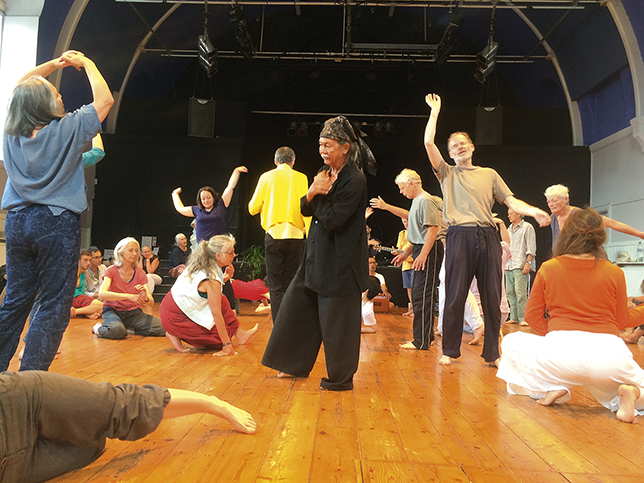
Amerta Movement is an approach to movement with awareness of one’s own body and the environment. Developed by Prapto in Java and through transcultural exchanges, Amerta Movement is often described as ‘free movement’, in the sense that there is no set form, and the person moves in response to their intuition and the surrounding environment:
Free movement here actually is not free like sakkarepe dewe (following whatever one wants). Free movement here means not using specific patterns in expressing. One is not bound by movement vocabulary, but is more toward net, greget, osik, wisik (intensifying, dynamic feeling, intuition to move, spiritual inspiration) … Free, here, also does not mean improvisation without any awareness of the form of posture or no awareness of the environment. Rather, it is more toward free movement that is contextual.
In this approach, there are a range of cues, ideas, and prompts to stimulate movement. Each person is responding to these in their own way, given their own bodies, and personal background. At the same time, they are encouraged to connect with everything around them – people, objects, and places. In this way, each person finds their unique way to move while also having the possibility to learn and grow as a mover. Movement practice is often taught in workshop settings at outdoor sites in nature, in the market, or at sacred sites. Often this leads to groups of people working within their own context to stimulate creative ‘srawung’ or ‘sharings’ – festivals with talks, workshops, and performances.
Movers come from all walks of life – artists, performers, teachers, scholars, bodyworkers, healthcare professionals – the list goes on. At its core, it is a creative practice, while it also explores self-awareness, finding one’s own life path, and spirituality. As Prapto (Suryodarmo Reference Suryodarmo2009, 1) notes: ‘what I was doing was also a performing art, but combined with a “samadhi” process or meditation that leads toward a development of inner-soul awareness’. In this approach, layers of artistic practice, personal development, spirituality, and life purpose overlap. Therefore, we examine dialogue as a creative movement practice which holds the potential for sharing ways of living that respect other humans and the wider environment.
The name ‘Amerta’ can be translated as ‘nectar of life’, while ‘Joged’ is an inclusive term for dance in Indonesia. Bloom, Galanter, and Reeve (Reference Bloom, Galanter and Reeve2014, 309) note: ‘Prapto uses Joged Amerta for his own work. This has released the term Amerta Movement as a more generic term for the garden of work inspired and influenced by his practice’. Importantly, the fieldwork took place in Indonesia in the years following Prapto’s death, as people were contemplating what Prapto had taught them and how they would continue to be inspired by his approach in their own practices. This meant that they referenced their impressions of what Prapto shared, their personal positions on Amerta Movement, and how Prapto informed the evolution of their own work. Many had worked or studied with Prapto but would not always strictly call what they practice Amerta Movement – instead, they are inspired by it and embed ideas behind it in their own work in different ways. It is important to note, therefore, that this Element does not seek to create the idea that there is a ‘pure’ form of Amerta Movement in Indonesia; rather it addresses the impact of its ideas and practices on the current work of a variety of artists there. Often practitioners use terminology from the practice differently, challenging a coherent narrative. We suggest that Amerta Movement has features and qualities that Prapto shared, but there is also potential for these to continue to grow and change according to the ongoing practice today.
While the history of Indonesia is not the focus of this research, it is significant that Prapto developed his approach in that context. A full account of the historical impact of colonisation and interreligious or interethnic conflict in Indonesia is outside the remit of this Element and is well-rehearsed elsewhere. This includes the history of Portuguese, Dutch, British, and Japanese occupation, and more recent secessional violence and religious conflicts. With over 700 languages and 1300 ethnic groups, Indonesia demonstrates the challenges and opportunities of a plural society. Butler (Reference Butler2016, 34) argues that Indonesia has historically developed peaceful strategies ‘as expressed in Indonesia’s national motto of Bhinneka Tunggal Ika (Unity in Diversity)’. Meanwhile, Maarif (Reference Maarif2014) describes local wisdom on pluralism in diversity management in Bali, Kalamantan, and Sulawesi between different religions and ethnicities, such as intercommunity support of religious festivities. However, Hamid (Reference Hamid2018) discusses how religious and ethnic identity are key factors in political decisions. The recent 2024 presidential election brought attention to the various religious, ethnic, economic, and political factors in the governance of the diverse population in Indonesia (see Tirtosudarmo and Carey Reference Tirtosudarmo and Carey2023). While our focus in this Element is on the creative process of dialogue through movement, we recognise that this context of diversity and difference is significant as being the location where this practice has developed.
Through fieldwork, we have uncovered how sensing, feeling, and ‘tuning’ are processes whereby dialogue is explored through everyday and non-pedestrian movements in Amerta Movement, in a variety of sites from temples to markets to seaside landscapes. Of particular significance is dialogue as a holistic approach to life, exploring the equal value of dialogue between all entities, including objects, nature, places, and God. Amerta Movement practices these principles of respect through workshops, public sharings, and performances, as a further step to dialoguing with wider communities. In this way, this movement practice aims to build a social, ethical, and aware approach to life. Through practicing movement with and for others, there is the potential to build respectful relations, improve equity and inclusion, and address social issues. By exploring Amerta Movement, we redefine dialogue, incorporating dance and somatic practices as ways to reflect on how embodiment is core to how people live in the world as a local and global community.
Given that dialogue as a term can be associated mainly with words, we ask: What is meant by dialogue through movement, in the field of dance and somatic practices? What does Amerta Movement add to understandings of dialogue in dance and somatic practices, but also more broadly in terms of intercultural and interreligious dialogue? How might this movement practice push the limits of dialogue towards social justice and beyond? Finally, what might Amerta Movement offer as a case study that foregrounds the value of practices from the Global South, while also highlighting cultural complexity and transcultural dimensions?
1.2 Somatic Practices across Cultures
In this Element, we focus on ‘somatic’ approaches to dance and movement that can be defined as those that combine awareness of body, movement, and environment. Eddy (Reference Eddy2017, 7) highlights ‘attention to body sensations and interpreting them with a perspective that aims to enhance a quality of life in which one stays present, mindful, even while moving: consciously acting’. Williamson (Reference Williamson2010, 44) adds common themes such as self-regulation, pleasurable movement, validation of subjective experience, sensory exploration, play, and contemplation. Often, they work towards bringing consciousness to habitual patterns (such as holding the breath or moving in a linear path) and then open a range of other possibilities. Movement facilitated by a practitioner in dialogue with the participant is a core facet, rather than demonstrating a fixed form (Brodie and Lobel Reference Brodie and Lobel2004, Weber Reference Weber2009, Williamson Reference Williamson2010, Eddy Reference Eddy2017).
Due to its emphasis on the shared facets outlined earlier, we situate Amerta Movement within the field of somatic practices. Embodiment is another word used frequently in reference to the practice, to indicate the inherent aliveness and felt experience of the body, rather than focusing on its appearance (Lavelle Reference Lavelle and Rouhiainen2009, Bloom, Galanter, and Reeve Reference Bloom, Galanter and Reeve2014). Embodiment is fundamental to the way in which somatic practices are viewed in this research, to understand ‘how people know the world through their bodies, particularly through movement in space’ (Wilde Reference Wilde2003, 171). Previous dance and somatic researchers have also indicated the significance of responsiveness to place and embodied ecological awareness in Amerta Movement practice (Butler, King, and Maltrud Reference Butler, King and Maltrud2003, Reeve Reference Reeve2010, Olsen and McHose Reference Olsen and McHose2014).
There has been increasing debate in the field of somatic practices on the role of embodiment in addressing social issues. Previous research has critiqued an over-emphasis on individualistic movement in somatics (Fortin Reference Fortin2002). Somatic practices can, however, pay attention to internal embodied processes of social experience. Johnson (Reference Johnson2018, 1) argues that ‘existing models of social justice have not been particularly attentive to the body’s role in reproducing oppression in everyday life’, suggesting that people carry trauma in their bodies through a range of felt experiences and expressions (such as body boundaries, gesture, posture, expression, eye contact, and touch). In somatic movement therefore, movers can learn about their socio-cultural conditionings and develop an embodied understanding of oppression and privilege. Through somatic self-awareness and exploration, it is proposed that bodily oppressions become apparent and can be explored or transformed, with Alexander and Kampe (Reference Alexander and Kampe2017, 3) articulating ‘the socially and culturally transformative potential of somatics’.
However, the field of somatic practices has also been critiqued for centring white, Euro-American practitioners at the expense of others. There is a desire within the field to broaden research beyond Anglocentric scholarship, and to acknowledge transcultural perspectives (Fortin and Grau Reference Fortin and Grau2014). Drury (Reference Drury2022, 16–17) states that while practitioners have described being ‘inspired’ by ‘non-Western’ traditions, Asian or African practitioners have often not been identified as somatic experts in their own right. This research uses the lens of somatic practices to focus on the knowledge inherent to the practice of Prapto and his colleagues from Indonesia. We foreground Amerta Movement as part of a wider field with shared somatic features and highlight how Amerta Movement can help in understanding the aspect of dialogue. ‘Somatic practices’ is used here with reference to how the field has developed historically and with an eye to its expansion, as the fundamental study and exploration of felt experience of movement in space and time.Footnote 2
In this context, our approach to culture requires further elaboration. We follow a ‘cultural studies view that culture includes the habits, customs, beliefs and practices of everyday life’ (Tirtosudarmo with Meehan 2025, 151). We consider intercultural dialogue in this Element, where there are differences across cultural practices, noting power differentials, for example, as a result of colonisation. At the same time, we acknowledge the fact that culture is not fixed and is always in flux and transcultural exchange. We, therefore, also ‘adopt processual and multiple perspectives in which both the creation of borders and differences, and the transcending of those borders and differences are viewed as core ongoing processes of cultural construction’ (Baker 2022, 285).
Such a processual view of culture underscores the importance of using geopolitical categories with care and precision. In somatic practices, Drury (Reference Drury2022, 15) cautions against the use of ‘non-Western’ cultures to reinvigorate the ‘West’. Also, such broad geographical areas cannot be regarded as monocultures, having a rich internal diversity. Recently, these categories have been replaced by the notions of the Global North and Global South, which again identify large regions with economic and social disparities, but avoid unhelpful stereotypes about ‘East’ and ‘West’. A mindful approach is required in exploring the value of Indonesian practices beyond their role as exoticised inspirations for scholars or practitioners in the Global North. With this in mind, we suggest that Amerta Movement practitioners from Indonesia are informed by and support their local areas. At the same time, we would not limit the value of Amerta Movement to Indonesia, since it has transcultural dimensions, core to Prapto’s work. We suggest that Amerta Movement embodies knowledge that can inform and challenge transdisciplinary fields such as dance, somatics, and interreligious and intercultural dialogue around the globe.
1.3 Introducing Dialogue through Movement
Although the word ‘dialogue’ is often associated with verbal exchange, it is widely used in the field of dance research. Embodiment as part of dialogue is highlighted by many authors (Anttila Reference Anttila2007, Dyer and Löytönen Reference Dyer and Löytönen2011, Rimmer-Piekarczyk Reference Rimmer-Piekarczyk2018, Berg Reference Berg2023). This is different from the concept of ‘body language’, with myths about universal physical expressions that can be directly decoded (Patterson et al. Reference Patterson, Fridlund and Crivelli2023). Dialogue through movement takes place not just through analysing the visual appearance of the body but through embodied feeling and sensing relationality. For example, Berg (Reference Berg2023, 287) describes ‘kinaesthetic dialogue’ where the dance teacher engages with movers through a range of means such as ‘kinaesthesia (felt bodily movement)’, ‘corporeal connection’, and ‘reciprocal non-verbal communication’ to indicate energetic qualities and feeling of movement. This suggests a kind of felt relationality, with skills of sensitivity to relationships that can be enhanced through certain movement practices.
Prapto also used the word dialogue frequently, with Lavelle (Reference Lavelle2021, 31) noting that ‘Physical contact between Prapto and an individual student might proceed as a mute, tactile “conversation” or “dialogue”, which would often activate or point to the hidden potential or the so-called “tacit knowledge” of the student’s body’. The premise is that there is a sensory knowing in the body, accessed through moving in dialogue. Amerta Movement also contains the idea that the ‘body speaks, conveys messages, and transmits meanings’ (Yuga, Reference Yuga2014, 24), again not as signs to be decoded but to be felt by movers in dialogue. Mainz et al. (Reference Mainz, Mainz and Kramer2011, 146) note on Amerta Movement that ‘Part of this dialogue is happening in the language of feeling/sensing (rasa). In its various modes and moods, feeling /perception /sensation /sentience’. Rasa is also referenced by Gebe (Reference Gebe2024) on Amerta Movement in sensing surroundings, the skin, place, or atmosphere, building awareness and attunement to people and places. Dialogue means attending to the interaction between what I perceive as inside/me and outside/not me.
Dialogue can therefore have broader meanings beyond exchange through language.Footnote 3 In this research, dialogue can evolve through movement interactions. At the same time, Prapto often engaged in language play between English and Bahasa Indonesia (Tirtosudarmo with Meehan 2025, 158). He could begin by speaking about a theme or task and then encourage practice through movement, with some verbal or vocal prompts. This would regularly lead to discussion, so language was incorporated as a stimulus as well as a way of reflecting on movement experiences. Embodied language is a factor of dance and somatic practices, which are not entirely non-verbal (Adler Reference Adler2002, Meehan 2015, deLahunta Reference DeLahunta2020). Embodied language arises from sensing and feeling bodily experience, rather than from concepts or ideas being applied to the body.
Suryodarmo (Reference Suryodarmo2009, 6) addresses the underlying principles of this dialogic approach, ‘where all the elements can mutually respect the presence of people or objects or other living beings, yet, simultaneously can still be in communication with a quality of dialogue’. Here he outlines the values of respect, listening and interaction embedded in dialogue through movement. He also delves into the qualities of dialogue as an informal approach to social communication. He comments: ‘I usually start more from dialogue, more conversation, more chatting, more say “hello”’ (Suryodarmo Reference Suryodarmo2012, 42). The process is likened to casual socialising through movement, where people are curious, relaxed, and enjoy interacting in an informal and playful way. This gives a sense of the gentle way people can come into dialogue through movement, starting from relaxation and connection, rather than conflict.
As mentioned, given the specific expertise it offers on communication and connection, this movement practice has the potential to contribute to the important area of intercultural and interreligious dialogue, to increasing tolerance, consensus building, and cooperation (van der Leij Reference van der Leij2021, 24–30). However, ‘mistrust’ can arise in more language-based interreligious dialogue initiatives, which ‘often have a lot of jargon and are being seen as intellectual discourses’ (van der Leij Reference van der Leij2021, 25). In addition to verbal exchange, interreligious dialogue can focus on those affiliating to mainstream religions, and many times with religious authorities or leadership. A community-based and inclusive approach through artistic practices can offer another route for dialogue. In fact, the arts in general are an important resource for finding creative approaches to intercultural, interreligious, and ecological dialogue (Illman Reference Illman2014) – although dance and movement require further investigation.
Amerta Movement often engages with intercultural and interreligious dialogue through its community-based ‘srawung seni’ (sharing art) programmes. The ‘srawung’ will be addressed more fully later, but essentially it involves participants coming together to share – for example, programmes might include performance, talks, conversation, workshops, and food. Butler et al. note: ‘Of particular significance is that although people had diverse perceptions, understandings, and practices … they could also create together’ (Reference Butler, Ardika, Sedyawati and Parimartha2011, 2). Prapto’s approach to srawung may have been informed by Indonesian practices of dialogue, such as silaturahmi, musyawarah, rembug desa, and gotong royong. Silaturrahmi is an everyday practice of visiting to reconnect with relatives, companions, friends, or colleagues. It is the practical tool to strengthen family and social ties, and to forge solidarity. As part of a dialogic approach, silaturrahmi precedes musyawarah. Musyawarah is a discussion by a group of individuals with issues/problems to resolve. It is a practice of listening to various perspectives of who are invited to offer solutions and come into agreement/consensus. Rembug desais a musyawarahconducted by authorised persons of a village, inviting and involving all relevant stakeholders of the village to make decisions. Decisions made in rembug desaare executed or implemented through gotong royong, the collaborative work of consensus by all members of the village for the village development.Footnote 4 These practices of dialogue involve bringing together different people, developing relations, and creating solutions or projects together. They often utilise spoken dialogue, but intrinsic is that people are gathering together, listening, and sharing space and time.
In Amerta Movement, the emphasis appears to be on developing skills for peaceful dialogue with others. Pruitt and Jeffrey (Reference Pruitt and Jeffrey2020, 23) suggest that ‘Dance has received little attention in the broader literature considering the arts and peacebuilding’. Väyrynen (Reference Väyrynen and Väyrynen2019, 2) also discusses the need to ‘bring the living and experiencing, sentient, body to the study of peacebuilding and peace’. Little has also been written about somatic practices in this area of peacebuilding, although some authors such as Eddy (Reference Eddy2016) and Linden (Reference Linden2022) explore how somatic practices can reduce hyper-alert bodily states of stress, de-escalate emotions such as anger through movement expression, and self-regulate to create the potential for openness to others, while remaining grounded in one’s own embodied experience.
However, we focus on the term ‘dialogue’ in this Element, rather than peace, since we are concerned with building competencies for dialogue. Whether dialogue can lead to peace is contested. For example, interreligious dialogue may explore theological and faith-based differences without preventing violent conflict or territorial disputes (Sheffler Reference Scheffler2007). Therefore, this research does not focus on formal ways of ensuring public peace in zones of conflict. However, we still consider dance as an approach to building capabilities for respectful social relations between people of different backgrounds, and with the environments they live in.
We contribute in this Element an account of dance and somatics as sensorial dialogue outside of Anglocentric paradigms. In addition, we add an understanding of the practical approaches utilised to facilitate and create the conditions and competencies for dialogue. Further, we address the extensive focus on exteroception (awareness of environment) and feeling in Amerta Movement. Diversity, subjectivity, and equality will be explored through the lens of dance and movement, to examine ways of living respectfully together with other humans and the wider environment through dialogue.
1.4 Some Reflections on Dialogue and Conflict
Significant to this Element is the fact that Amerta Movement developed during periods of political change in Indonesia: the aftermath of independence from colonisation, and successional battles. Tirtosudarmo and Carey (Reference Tirtosudarmo and Carey2023, 195) outline ‘political discontinuities and ruptures which shaped Indonesia as a nation-state since 1945’ noting that ‘a widespread disillusionment with democracy seems to have set in’. A liberal democratic approach has been critiqued for the often-concealed power and interests at play, and further for its idealistic tendency towards broad or vague world views on ‘common humanity’. Liberalism is a contested term (Bell Reference Bell2014), but can be viewed as opposing totalitarian leadership, and is instead based on a range of ideas such as individual freedom, equality, and tolerance of difference. While these appear as ultimately beneficial goals for individuals within a global community, they have also been critiqued for failing to engage with historicised and political inequalities within groups and worldwide. A noted, a concern with this is that ‘power-evasive liberal humanism promotes the pernicious elision of structural inequality under the guise of personal responsibility or individual prejudice’ (Kondo Reference Kondo2018, 13). Related ideas of personal responsibility for respect and commitment to tolerance arise in our research in Amerta Movement. There is a multitude of research on tolerance within Javanese culture and Islam in Indonesia, beyond a liberal, ‘Western’ paradigm (Wiyoso et al. Reference Wiyoso, Florentinus, Rohidi and Sayuti2019, Nuriyanto et al. Reference Nuriyanto, Rosidin, Rachmadhani, Fauzah, Wibowo, Susanto and Mibtadin2025). In this Element, we consider a dialogic approach as anti-authoritarian, and based on tolerance, while also being cognizant of the concerns around avoiding conflict, unequal access to expression and structural inequality.
Prapto was known for utilising ‘dialogue’ as a key term in his work, and early on asked that we did not focus primarily on conflict, while the practitioners in this research usually focused on modes of dealing with challenges. This could potentially be sensitivity to historical narratives of conflict, not wishing to inflame further conflicts, and a focus on creating practical change. Brauchler (Reference Bräuchler, Richmond and Visoka2020, 4) notes that while much has been written about conflict in Indonesia, ‘almost nothing is written yet about the Indonesian people’s search for peace and reconciliation’. We shift attention towards to local wisdom on diversity management (Maarif Reference Maarif2014). This research focuses on ways of building competencies and conditions for a dialogic approach through movement practice. Deardoff (Reference Deardorff2020, 5) notes that ‘Intercultural competence refers to the skills, attitudes, and behaviors needed to improve interactions across difference, whether within a society (differences due to age, gender, religion, socio-economic status, political affiliation, ethnicity, and so on) or across borders’. So rather than focusing primarily on social and political conflict, this Element aims to understand how movement can be an approach to building individual and community competencies for dialogue.
Although we do not present this research as a solution to political conflict, we do investigate the ways in which Amerta Movement can put forward new concepts and practices for how people can begin to creatively work with difference and togetherness in complex multicultural and interreligious societies. The focus in this Element is on dialogue, as a ground-up, movement-based approach, utilising decentralisation and movement of power, as well as localising it according to places and communities. In this way, it presents as anti-authoritarian, by aiming to question hierarchies of power (Wahman, Teorell, and Hadenius Reference Wahman, Teorell and Hadenius2013). Prapto put forth a dialogic approach as a methodology to undercut the status of any individual or group to make decisions for others, with a focus on relationality. This does not mean that conflict and power are not part of the Amerta Movement community, but, rather, we address the aims of the practice for dialogue as articulated in the interviews and practices.
The fieldwork identifies that practitioners in Indonesia focus on ‘grassroots leadership’ which is responsive to different social strata and equitable relations. Amerta Movement encourages people to connect with the environment to learn about respect and value of each ‘subject’, to inspire qualities of ground-up leadership. Further, shared activities or ‘srawung’ explore how people might creatively work together, with projects which bring communities together to address current issues that impact on them. The focus on relationality, in terms of dialogic leadership and serving your community in building a common purpose, grows from the values embedded in the movement practice which emphasises connection. Rather than the vagueness of ‘common humanity’, the specificity of each person and the ways they interact are foregrounded. Embodied experiences are highlighted as the ground for addressing cultural and social habits, which can be shifted through changes to the ways in which people interact on a practical level. We focus on the potential to shift thinking and practices from the ground-up, referencing how personal awareness can lead to social projects for change.
2 Dialogue, Collaboration, and Positionality
Not only is dialogue the topic of this research, but it also informs the approach to investigation. There is a dialogue between the researchers involved, as well as with the Amerta Movement practitioners. There are dialogues across disciplines, geographic locations, gender, religious and cultural backgrounds. We encounter people and environments as part of the research, particularly through a process of moving together. In this section, we address dialogue as an approach to the research, including embodied and decolonial methodologies.
2.1 Embodied Dialogue as Decolonial Methodology
Dialogic research has been articulated in many fields of research. Puigvert (Reference Puigvert2012, 88) suggests that ‘knowledge is the result of communication and agreements developed through human interactions between researchers and social actors. Such meaning or knowledge is therefore “dialogic”, built from intersubjectivity’. In this research, we listen to different voices of practitioners as experts in their field, engage with the social environment of the practice, and develop an understanding based on these interactions. As researchers, we aim to engage in a dialogic approach in the sense that we are not outside of the research but within the dialogue, through our living bodies. The research encompasses creative and embodied facets, and as we engaged through practice in the world of movement, this informed our experience and understanding of the research topic. The body is intersubjective – informed by relations with others, the social and cultural context which shapes each person. This aligns with Prapto’s terminology of ‘inter-independent’ in Amerta Movement, where each person is sensing their personal position in relation to other people and the environment (Bloom Reference Bloom2023, Kramer Reference Kramer, Arteaga and Gansterer2025). Within this frame, we explore the interlinking of the experiences of the practitioners and researchers, along with the contexts we inhabit, to develop our understanding.
A decolonising perspective is also important in considering how to deal with knowledge which is generated through transcultural exchange. The challenge is to avoid a historical pattern of ‘exploitative research’ which aims to ‘extract and claim ownership’ of indigenous knowledges (Smith Reference Smith2012, 1–10). Instead, the research process needs to be mutually beneficial, respectful of relationships and collaborative. A dialogical approach involves an exchange, where people are treated as inter-relational rather than objects, and that the embodied experiences of practitioners and researchers make contact. It also involves recognising oral and experiential knowledge, and rituals for building relationships that allow for knowledge sharing (Denscombe Reference Denscombe2024, 237). In this research, this involved travelling to the places of the practitioners, moving and eating together, before discussions; we also co-created a shared public event together. We realised that for many of the practitioners, this was an opportunity to reflect on Amerta Movement after the passing of Prapto, and to gather together to share workshops, discussion and performances. We also explored ways to circulate ideas and provide opportunities for reflecting back, such as online during and between fieldwork trips, as well as sharing together in different formats (workshop, performance, writing, discussion, instant messaging, social media, audio, and video).
The methodology addresses embodied socio-cultural, political, and ecological structures as embedded in the ‘coloniality of being’, which reflects on ‘the effects of coloniality in lived experience and not only in the mind’ (Maldonado-Torres Reference Maldonado-Torres2007, 242). Tsang (Reference Tsang2018) notes how postcolonial studies address the ongoing relationship with colonisation that remains after a country has been colonised. He notes that ‘decoloniality’ is not so much a political project as an epistemological one: ‘to delink ourselves from the structure of knowledge imposed by the West, and then to ‘reconstitute’ our ways of thinking, speaking, and living’. We would add to this decoloniality ways of sensing, feeling and moving in relation to each other and to the environment around us. Our methodology aims to ‘de-link’ (Mignolo and Walsh Reference Mignolo and Walsh2018) structural orders and engage embodiment; to cultivate subjectivity, and create relationality among individuals and environment.
We follow the concerns of de Sousa Santos (Reference Santos2018), who challenges colonial ownership over what counts as knowledge and its destruction of other ways of knowing. Instead, we address experiential, lived knowledges to ‘identify and valorize that which often does not even appear as knowledge in the light of the dominant epistemologies’ (Reference Santos2018, 2). Both fields of the researchers in this research have been dominated in different ways by colonial heritages, which have obfuscated the expertise of indigenous practitioners in Indonesia. Engaging in cross-disciplinary research has also entailed re-considering research methodologies, bringing dance, intercultural and inter-religious studies together. One shared area of interest has been in practice itself as a form of knowledge. Although we did not create artworks ourselves, as researchers, we engaged in movement practice with Amerta Movement practitioners, in line with ideas from practice research that ‘dialogic engagement of thinking and doing’ can produce ‘substantial new insights’ and ‘new knowledge’ (Nelson Reference Nelson2013, 19).
We echo Spatz’s (Reference Spatz2024, 4) quest to ‘put the predominantly white field of university-based artistic research into a wider decolonial framework’. He notes that artistic knowing has been more recently foregrounded in predominantly white academic intuitions. On the other hand, he argues that practice knowledge has been long been developed and shared in non-academic environments and indigenous practices. Publishing on Amerta Movement, we support the agenda of foregrounding this practice knowledge from Indonesia, and how it can contribute to debates in somatic and religious studies fields, and in the communities where it is practiced. Spatz (Reference Spatz2024) also not only engages with the significance of embodied practice research but also reflects on non-textual forms of knowledge sharing. In addition to this Element which holds the shared knowledge of the authors and practitioners, we also share other contributions authored by practitioners published in the related web resource, which can be accessed alongside this Element.Footnote 5
At the same time, this process needs to be balanced with the time, interest, and availability of participants to maintain their engagement with the research. Gibbs (Reference Gibbs2001, 684) notes on collaborative cross-cultural research: ‘what is important is often not so much what researchers do or don’t do, as how they conduct themselves with and in those communities. It is the relationships established and maintained’. Part of this process of establishing trust and relationships is a willingness to enter into the movement practice and to engage as vulnerable human beings who listen, connect, and learn together through our bodies. However, we all play different roles within the research process, which is, of course, not without its challenges, that we navigate through different approaches to dialogue raised in the text.
2.2 Fieldwork
The fieldwork involved embodied immersion in the community of Amerta Movement practice and the wider cultural context of Indonesia. As part of the research, Meehan, an Irish researcher who is based in the UK, with extensive experience of different somatic practices, travelled to Indonesia for the first time. Maarif, who is from Indonesia, is experienced in religious fieldwork in various regions of the country and entered more fully into the world of the Amerta Movement community during this research. Grau (Reference Grau and Buckland1999) describes how fieldwork in dance includes navigating power, privilege, identity, and ownership. There are challenges in encountering gatekeepers and in the potential breakdown of identities, with emotions of stress, disorientation, and guilt. She (199, 167) notes: ‘Fieldwork is about dialogue, intersubjectivity, building bridges of understanding between self and other … this requires insight, empathy, imagination, perceptivity and humility on both sides.’ We engaged in participant observation (a more passive, receptive role) and observant participant (active, embedded role) in the communities at play (Seim Reference Seim2024). While our presence was transient due to the time and funding for the research, we fully participated as movers. Rather than formal interviews, we had conversations before and after moving together in a mix of Bahasa Indonesia and English. Usually there was a rich interweaving of communication across languages as different people pitched in with translations and interpretations.Footnote 6
However, there were barriers to undertaking in-person fieldwork, including the fact that Prapto had passed away in December 2019. The proposal had to be respectfully reworked to shift focus onto Prapto’s legacy in the area of dialogue through movement, with Indonesian practitioners who had worked closely with Prapto. Key artist-practitioners were selected due to their close or long-term relationships with Prapto, experience of practicing Amerta Movement, and their range of different performance backgrounds (dance, theatre, puppetry, ritual performance). Additional artists and researchers were included through wider discussions and a ‘sharing’ event at the end of the fieldwork. The group included people from a range of age and career stages, various religious backgrounds, and based in different parts of Indonesia but mainly Java.
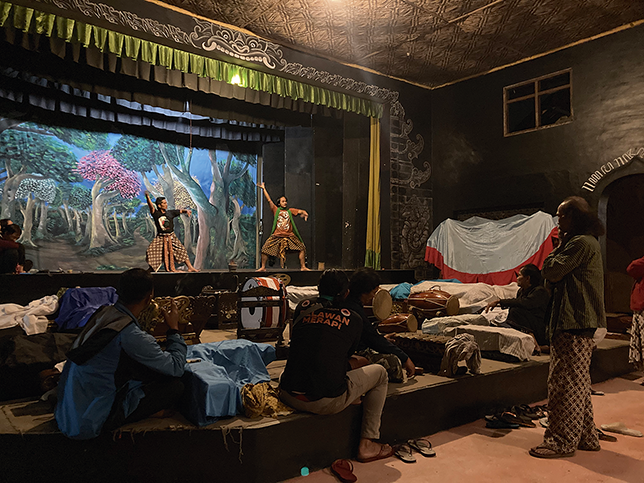
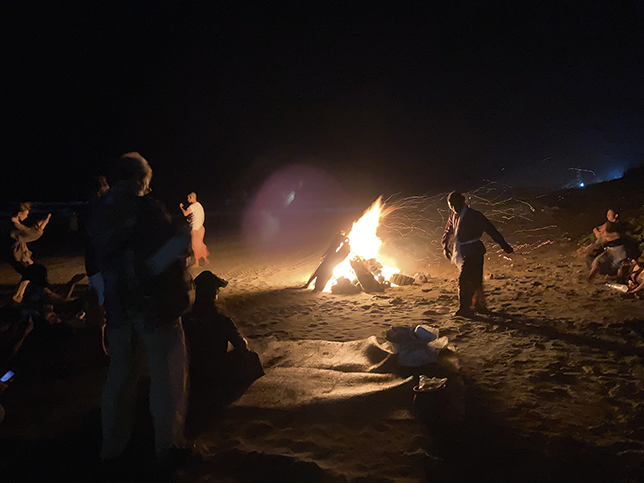
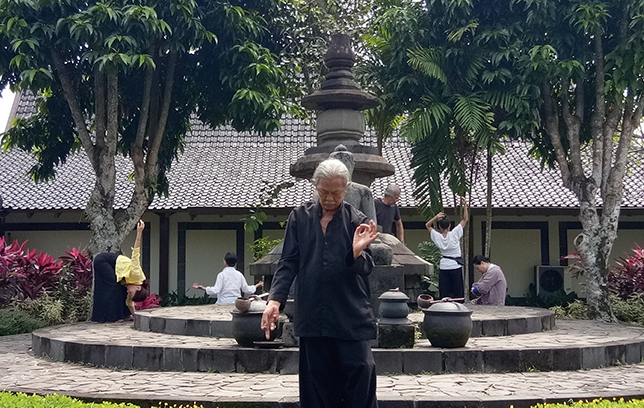
Further, funding from the research was obtained from the Leverhulme Trust in April 2020, when many countries globally went into COVID-19 lockdowns. While there were some online presentations and interactions during the pandemic, conducting in-person fieldwork was vital to understand this practice and how it developed in Indonesia. Eventually in September 2022, Meehan made her first trip to Java, collaborating with Maarif during the fieldwork. We visited senior artist Sitras Anjalin at his venue Padepokan Seni Tjipto Boedaja in Tutup Ngisor (Figure 2), where he holds a Saturday morning movement group, inspired by Amerta Movement. Sitras has a background in Javanese wayang puppetry but studied with Prapto and travelled abroad with him as an assistant. Next, we engaged with another senior practitioner, Agus Bimo Prayitno, as part of an open public event on a beach called Parangtritis (Figure 3), where Prapto had regularly practiced movement with groups, also near Yogyakarta. The event included a ritual on the beach to connect with the full moon, with music, incense, prayer, and food offerings, followed by an open movement session around a bonfire. Agus Bimo works under the title Teatr Mantra Gerak (Movement Mantra Theatre) with a background in wayang (puppetry), sound and mantra, informed by Amerta Movement, which he studied with Prapto since 1987, creating rituals with local communities in Java.
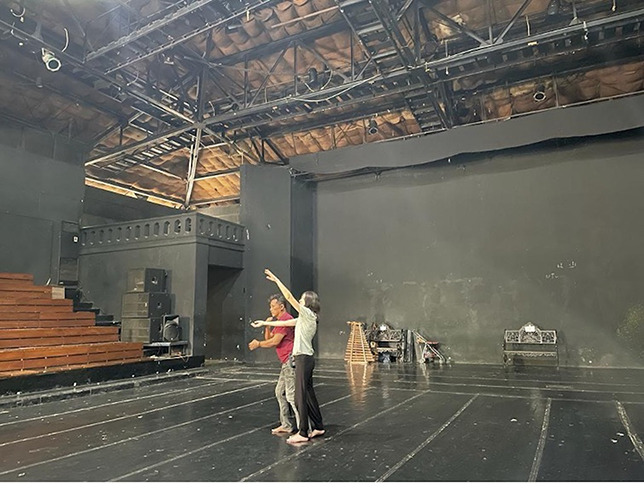
Watching rehearsal of performance at Padepokan Seni Tjipto Boedaja with Sitras in the foreground, 2022.
Sharing movement at Parangtitis beach with Agus Bimo, 2022.
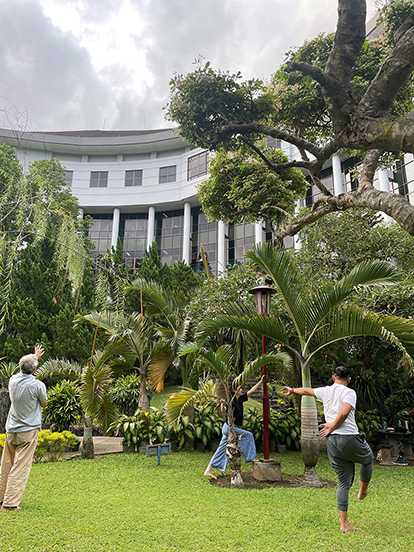
Following on from this, we held an interview and movement practice session with Ibed Surgana Yuga on the grounds of the Graduate School, Universitas Gadjah Mada (UGM) campus in Yogyakarta (Figure 4), in a large cultivated garden area which is overlooked by an open-air mosque. (Ibed’s own theatre space outside the city was unavailable due to a recent performance.) Ibed is a mid-career artist, originally from Bali but also living in Java. He is a theatre director, writer and publisher, and co-founder of Kalanari Theatre Movement, whose work aims at ‘emphasising humanity’s values’. We also met with Djarot Budi Darsono, a senior dance artist and performance-maker at a theatre studio space at an arts centre in Solo called Taman Budaya Jawa Tengah (Figure 5). He is a founder member of Studio Taksu, a dance-theatre group and community of artists who showcase independent work responding to Indonesian society. Our final interviews in Java were with dance artist Widya ‘Ayu’ Kusumawardani, based in Solo, and actor and author Iskandar ‘Alex’ Gebe from Lampung on the island of Sumatra in Indonesia. Ayu was developing her own countryside movement and retreat venue in the jungle called Omah Mili (House of Flow) outside of Solo, where we met for movement, food, and discussion. Ayu often works with women and mothers to explore movement practice and public performance. Alex cultivates opportunities for sharing ideas, movement, and theatre in his home region of Lampung, especially with Komunitas Berkat Yakin (Community of Blessings), while also writing about movement.Footnote 7 It was clear from meeting the practitioners that their work had both artistic and social dimensions to contribute to their communities.
Practicing movement with Ibed and Keith Miller at UGM, 2022.
Moving in the theatre with Djarot, 2022.
The trip also coincided with the Buddhist ‘1000 Day Ceremony’ following Prapto’s passing (Figure 6, Figure 7). His daughter Melati, family, and friends had collaborated to create an event which included a commemoration service on his land, with workshops, panel discussions, exhibition, films, and performances at Institut Seni Indonesia (ISI) Surakarta. This created opportunities to see Prapto from different perspectives and to meet a range of people engaged with his work. Here we met Diane Butler in person for the first time, a senior dance artist originally from the United States who has lived in Indonesia for over twenty years and completed her doctorate in cultural studies in Bali, where she lives. Her work is relevant to this research considering Prapto’s commitment to dialogue across cultures and transcultural perspectives. With Prapto, she co-founded Dharma Nature Time, which aims to ‘support interculture in cultural environments’ through ‘sharing in the arts, religiosity, and nature’ (Butler et al. Reference Butler, Ardika, Sedyawati and Parimartha2011, 1). We also hosted a discussion group with mainly local artists, friends, and researchers on Amerta Movement in Rumah Banjarsari Arts Space in Solo, which was highlighted by Prapto in our communications as an important space for future practice and sharing research.Footnote 8
Image of ‘Umbul Donga’ performance sharing at 1000 Day event, 2022.
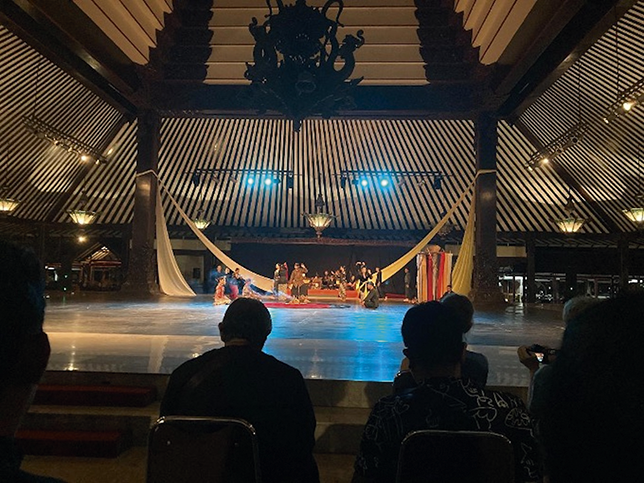
Image of ‘Solah Bowo’ sharing movement at 1000 Days event, 2022.
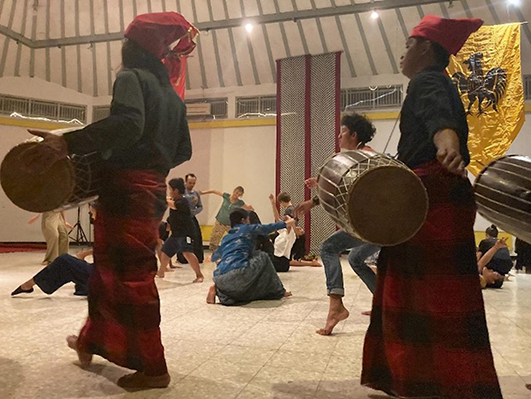
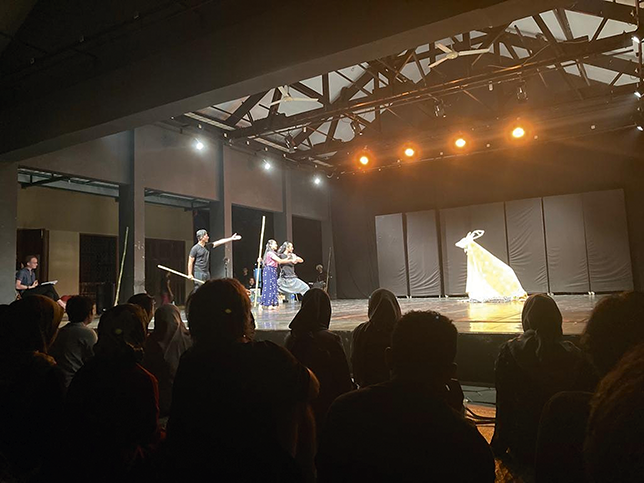
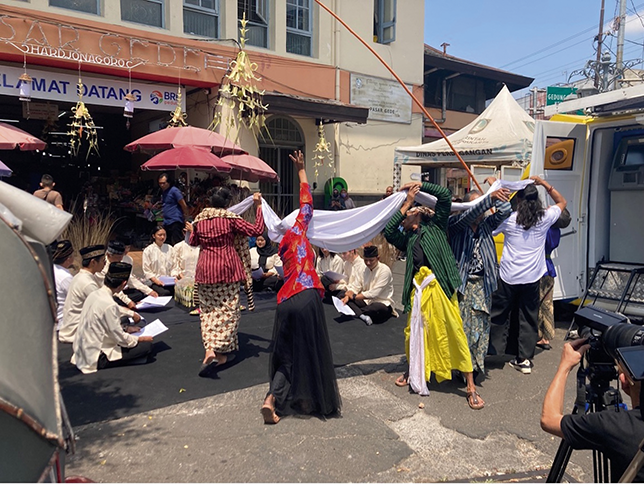
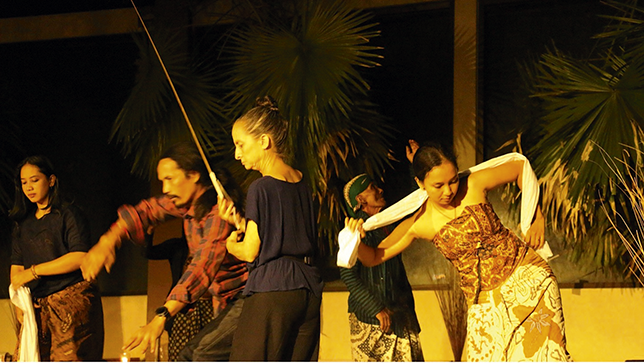
In 2023, we returned to work with each of the artists again in different sites, mainly in Javanese-Hindu temple sites (‘candi’ in Bahasa Indonesia) near Yogyakarta and Solo in Java (Figure 8). Further, we made a field trip to work with Butler in Bali, visiting Samuan Tiga and Goa Gadjah temples in Bedulu, sites of interfaith dialogue, especially between Hindu and Buddhist traditions. We also worked in Candi Teja Amerta, a contemporary temple created by Prapto for movement, on the sea front in North Bali. In addition, we attended performances and festivals by the practitioners to engage with their work outside Amerta Movement practice and within the sphere of public performance. For example, we attended a festival at Sitras’s place Padepokan Seni Tjipto Boedaja in Tutup Ngnisor which included readings, puppetry, dance, and drama (Figure 9); we also attended a work-in-progress sharing of a US-Indonesian theatre production of the Ramayana, the epic Hindu text in Yogyakarta, co-directed by Ibed (Figure 10). The focus was on understanding whether and how the artists apply the ideas underlying Amerta Movement in their own activities and communities. Finally, we came together with all of the core artists and a range of additional contributors at a sharing event called Srawung Rukun (Sharing Harmony) at Rumah Banjarsari and a public market called Pasar Gede (Figure 11, Figure 12).Footnote 9 These places had been selected by Prapto as sites of exchange for the event before his passing, and they served as sites for bringing together practitioners and researchers interested in the work of Prapto and our research.
Moving together at Candi Barong with Sitras Anjalin, Ribka Barus, Brian McGovern and others, 2023.
Javanese dance performance at Padepokan Seni Tjipto Boedaja, 2023.
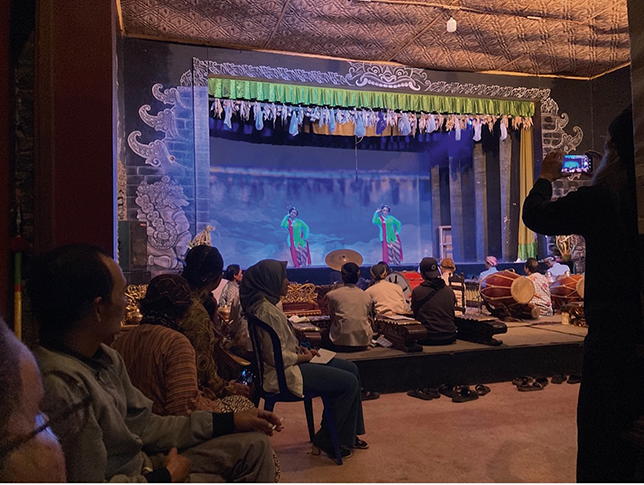
Ramayana: presentation of work in progress. Egopo Theatre in collaboration with Papermoon Puppet Theatre and Kalanari Theatre Movement. Padepokan Seni Bagong Kussudiarja, Yogyakarta, 2023.
Opening Offering for ‘Srawung Rukun’, with movement and song ritual, Pasar Gede, 2023.
‘Solah Bowa’ sharing movement at Rumah Banjarsari, 2023.
2.3 Positionality
Positionality acknowledges how the researcher’s background informs the research process and its interpretation. Given the focus of the research, it is significant that position is also a movement term. Within Amerta Movement, there is a focus on ‘finding my position’ (Reeve Reference Reeve2010) – knowing one’s own self in relation to others, as well as literal /metaphorical ways in which you position yourself in space. Haraway (Reference Haraway1988, 589–590) argues for an articulation of ‘location, positioning, and situating’; instead of placing ourselves ‘above’ the research participants as outside observers, we show where we are coming from and the role our own embodiment plays. The positionality of the two researchers for this Element is introduced next, coming from different disciplines, genders, religions, perspectives, and cultures.
2.3.1 Positionality – Meehan
My first encounter with Prapto occurred at Dance House in Dublin in 2011, while attending a performance by Irish somatic practitioner and dance artist Joan Davis. Prapto happened to be in the same building, teaching a workshop, and was invited to join the participatory performance, which sparked my curiosity. On moving to the UK in 2012, I attended workshops in Dorset with Amerta Movement practitioner Sandra Reeve, who had studied extensively with Prapto in Indonesia. I later attended performances and workshops with Prapto during his summer visits to the UK (2017–2019) and invited him to give a keynote workshop at Coventry University, UK in 2017. We began to discuss Amerta Movement as an approach to peaceful dialogue in Stroud, UK in 2018.Footnote 10
I had an experience of moving in Stroud, led by Prapto, that seemed to invite each person to explore their unique, individual movement while also stimulating a connection to other movers in the wider environment:
Attendees are made up of a large group of participants, from the UK, Europe, Indonesia, China, amongst other locations. I have a strong memory of feeling inspired to move with fluidity across the space. I make contact with the wooden floor, the walls, a chair. I can feel the warm sticky air in the room and hear the sound of musicians thick in the same air. I am aware there are other movers around me, that we are together in the space even if I am not touching or making eye contact. Prapto moves among us, occasionally adding voice to the sonic environment and physically connecting to other participants. I have a strong sense of a shared atmosphere, stimulated by Prapto, of being together in space. At the same time, I do not feel lost in the flow, but maintain a sense of my own body and movement, while immersed in shared space. I am struck by this experience of my own bodily integrity while in connection with others, and I am curious to know ‘what is Prapto doing to facilitate this’?
My experience was one of peace, resonance, connection – feeling my own timing and sensation while within a group. First, I was curious to understand how Prapto was cultivating an environment where distinct individual expression could co-exist with a sense of collective connection. Second, I was interested in how Prapto’s cultural heritage and transcultural approach might inform the field of somatic practices, in terms of offering perspectives on body-mind practices that developed in Indonesia, but with a global reach. Finally, I wondered if his work might offer an embodied understanding of intercultural dialogue. If diversity is welcome and can be allowed to exist in groups during movement practice, could this approach also have knowledge to share with interreligious and cross-cultural studies? My intention was to travel to Indonesia to work with Prapto and to deepen my understanding of these elements of individuality and community through movement.
However, things had altered radically by the time I travelled to Indonesia towards the end of the COVID-19 pandemic and after Prapto had passed away. I was re-adjusting to socialising with other people and navigating research in a different culture without the relative familiarity of Prapto and his extensive experience of working across cultures. I could feel in my body a range of responses – shifts to breathing, heartrate, emotions – as well as sensory input from an entirely new environment. This included temperature, humidity, food, insect bites, along with different locations such as village, urban, pendopo, cultivated gardens, seaside, and jungle spaces.
Journal entry: 14 September 2022
Moving with Agus Bimo, Parangtritis beach
I became aware of being white, European, foreign, without the language, unused to the climate, unsure how to greet or converse. In another example, with Sitras, we were invited into free non-stylised movement and yet I felt I could not move very much. I sought out the floor and pillars to feel gravity and weight to ground myself in the physicality of my body. I did not know who I was in this place, what was allowed in the space. On feeling ‘out of place’, Probyn (Reference Probyn2005, 49) comments that ‘Our bodies seem to know when they are at ease in a situation, when they know the rules and expectations, and conversely they also tell us loudly when we are out of our league, fish out of water’.
Prompted by my desire to fit into the religious and cultural context, I became increasingly aware of the Irish Catholic heritage that I carried in my body through felt sensations of my female body, in relation to visibility, covering, touch, and proximity. These experiences all led me to consider that religious and cultural dialogue can often be closely linked and might need to be considered in tandem. The context for Amerta Movement in Indonesia reminded me that religion, culture, and politics are closely intertwined. Ishiguro (Reference Ishiguro2022) suggests that whether a dance practice is considered religious or cultural in Indonesia lies within the individual choices that frame it as well as the social benefits associated with it. Likewise, Prapto, as I note later, had to traverse this fine line of identifying his work within the realm of ‘art’ as well as having dimensions of ‘religiosity’ and ‘ritual’.
Race is another aspect of the positionality of the researcher in this research. Tanasaldy (Reference Tanasaldy2022, 460) describes how the colonial history in Indonesia impacts on racial categories and interactions today. There are accounts of discrimination against Chinese and Black residents, including foreign visitors and indigenous Papuans/Chinese in Indonesia (Daniels Reference Daniels2024, Tanasaldy Reference Tanasaldy2022), along with a privileging of whiteness. Further, the history of white Europeans observing dance in Indonesia is fraught with the colonial and orientalist gaze. The choreographic writing platform Tubuh Tari Koreografi (Reference Koreografi2025) addresses the treatment of the first Javanese dance artists at the 1889 Colonial Exhibition in Paris, presented as seductive, dark-skinned, and exotic ‘objects’ on display. This is additionally complicated by the history of researchers from abroad extracting knowledge from colonised countries without collaboration with or deeper understanding of the context.
The position of the white, foreign researcher informed my discomfort and approach to the research, while I also experienced being a spectacle in Indonesia. Fechter (Reference Fechter2005, 1) notes the experience of white foreigners in Indonesia is often associated with ‘being looked at by Indonesians in the street, and by being called bule, an Indonesian term for white or ‘unpigmented’ person’. More troubling were the pervasive advertisements for skin whitening cream which Saraswati (Reference Saraswati2020, 19) argues is not necessarily about being Caucasian but having associations with cosmopolitanism, travel, and socio-economic mobility. In any case, a white person visiting Indonesia may face uncomfortable racial visibility for the first time, as an ethnic minority there. I was constantly aware of my visibility and felt self-conscious of the economic privilege I had in being able to travel to Indonesia.
While I could not fit in, I could bring my awareness to try to understand my position and how it is perceived. For example, how do I enter the space with awareness of not taking over and instead focusing on being only one part of the whole environment? The idea is not to negate or hide myself, but also to be aware of the histories that I carry with me. This can involve exploring how to not impose on the space and take accountability for qualities of interaction with others to enhance the conditions for dialogue.
My earlier experience in Stroud had pointed to the ways in which Prapto facilitated dialogue through creating an atmosphere of togetherness while also holding space for difference. However, when bringing together people from vastly differing geographical, cultural, racial, economic, social, and religious backgrounds, there is potential for the splintering of that feeling of togetherness. While my research aimed to understand how Amerta Movement can support dialogue, I became aware of the complex feeling of discomfort on an embodied level that needs to be considered when putting people in a dialogic encounter. However, I also experienced at times a sense of freshness, openness, and enjoyment of feeling my own body in new ways, stimulated by this dialogue. Working with movement as dialogue is a reminder of the fact that people’s bodies, while distinct, are porous. Entering into dialogue with another entails exposure which can be threatening or transformative, with the potential expansion of one’s identity. Somatic practices are resources for re-finding who we are while also acknowledging mutual inter-independence. As Prapto notes: ‘We are working with re‑placement. Finding our place in the world again and again, rather than getting lost’ (in Olsen Reference Olsen and McHose2014, 227). The process of attending to embodiment through moving and writing helped me to understand the experience and the challenges of practicing dialogue.
2.3.2 Positionality – Maarif
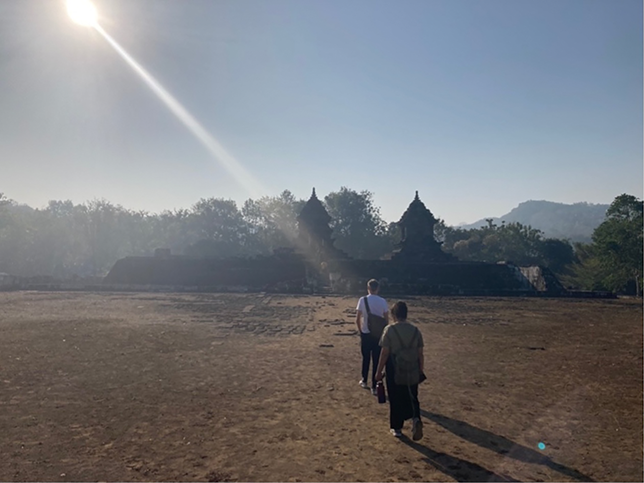
On 2–3 February 2018, I was invited by Diane Butler to join the workshop of ‘Moving Life Borobudur’ in Java by Prapto (Figure 13).Footnote 11 At that time, I did not know much about Amerta Movement, but based on a little study, I viewed it as a practice of religious methodology. So, I decided to bring my class on indigenous religions with me to join the workshop. I have built up my career as an academic in religious studies, focusing on the study of indigenous religions in Indonesia as a decolonising ‘religious’ methodology. My research applies a dialogical activism to develop an intersectional approach for advancing freedom of religion or belief (FoRB) in Indonesia, inviting civil society organisation activists of different issues such as women, people of different gender identities, children, individuals with disabilities, and displaced people.
‘Moving Life Borobudur’ with Prapto in the foreground, February 2018.
I have used the decolonising religious methodology to observe ‘the religious’ as relational, as opposed to ‘religion’ as the noun, the colonial construction, emphasising its theological (belief system) and institutional characters (Asad Reference Asad1993, King Reference King1999, Masuzawa Reference Masuzawa2005, Nye Reference Nye2019) and reproduced by the Indonesian state (Maarif Reference Maarif2017, Ropi Reference Ropi2017, Bagir Reference Bagir, Hefner and Andaya2018; Bagir et al. Reference Bagir, Asfinawati and Arianingtyas2020). I therefore observe religious people and their practices, in the way that anthropologists observe the cultural, sociologists see the social, or dance scholars see movement. This research has revealed how indigenous religious practices provide new understandings such as on human dignity and human–nature relations (Maarif Reference Maarif2021, Reference Maarif2023, Maarif and Asfinawati Reference Maarif and Asfinawati2023). The methodology of my research is based on the indigenous religion paradigm (Maarif Reference Maarif2019), which argues that existence is ontologically relational in the sense that the self exists relationally to other selves (human and non-human).
In Indonesia, interreligious dialogue mostly includes members of six recognised religions, and excludes followers of indigenous religions. Among the reasons is that interreligious dialogue focuses on issues of creating harmony and moderation between these religions. By de-centring these issues, and re-focusing on shared concerns, for instance on environmental preservation, followers of indigenous religions whose religiosity is related to the land become the main participants. De-centring as a notion and practice is arguably a transformative method in social relations, especially in interreligious dialogue, to include followers of indigenous religions in interreligious dialogue. In this research, decentring away from religion and instead focusing on relationality and embodiment, is a means for understanding interreligious dialogue in new ways.
This research seeks knowledge-based practices (Javanese: laku) to recover from disconnection or to rebuild relationships. Laku may be compared to praxis. Its form may range from a short-term practice as a preparation for an event, to a lifelong committed practice. Laku is an embodiment of knowledge and values. In this research, knowledge is developed through relationships, and so to develop the self is to engage in interpersonal relationships that may be either constructive or destructive. They are constructive if those engaging in them commit to acts of sharing for the well-being of themselves and others. This is religious laku (of sharing). They are destructive if interpersonal relationships are for selfish ambitions, such as exploiting nature for human benefit, denying the rights of nature to flourish. This is considered irreligious.
My participation in the practice of movement in the workshop of ‘Moving Life Borobudur’ revealed the religious methodology by enacting my dialogical religious self through dancing. Moving my body led me to realise that the crown of my head to my toes, and all parts in between, relate to each other. While moving, I was approached by Prapto, who whispered to me to slow my movement, to detect my body organs, and sense their connections. My reflection was that through the movement, my body was dialogical. I shared with Prapto that I sensed my body during the movement as dialogically religious in the sense that my hands have the rights and aspirations to move, but their rights and aspirations are fulfilled when they fulfil my other organs’ rights and aspirations. The rights of my organs are relational.
Prapto suggested that I reflect on relationships between my body and the surrounding environment through the practices of movement, and asked me, ‘Don’t you sense the relational?’ The insight echoed what I have learned from indigenous people of Indonesia and beyond (Maarif, Reference Maarif2023). Prapto further emphasised that the question about religion should not be what it is, but what it does. He echoed the critiques in religious studies that religion, the noun, is dominantly manufactured in the study of religion, as it maps boundaries and freezes differences (McCutcheon Reference McCutcheon1997, 2022, Cotter and Robertson Reference Cotter and Robertson2016). Dialogue may occur, but it is restricted to boundaries. By contrast, the adjective ‘religious’ denotes a creative act of dialogue, crossing boundaries of identities and creating spaces to listen, interact, and relate.
Amerta Movement is, for me, a creative method of contextualising and reproducing indigenous (Javanese) knowledge and practices of relationality (human–human relations; human–non-human relations; the past, present, and future relations), and bringing them into dialogue with current aspirations, issues, and challenges, and with other knowledges and practices we encounter. Moreover, it informs us about a creative method of doing research with indigenous (religious) methodology, emphasising relational dialogue as cultivating, producing, and practicing knowledge. I promised Prapto to come back to see him for further dialogical movement, to practice this methodology for the study of religion. Although he passed away before we started this project, his legacy, shared by those who continue to be in dialogue with his work, has been a valuable resource for me to practice and develop religious methodology, as ‘practice research’. Amerta Movement may be a kind of laku, with values/knowledge brought to life through embodiment.
2.3.3 Working Together through Dialogue
To begin, as researchers and people, we did not know each other very well and grew slowly accustomed to each other’s positions during field trips – on car journeys, at site visits, and in online conversations. As noted, Meehan was bringing her knowledge and understanding of dance and somatic practices, without a prior engagement with religious studies or Indonesia. Maarif began with a position of viewing Amerta Movement in Indonesia within an indigenous religious frame. We spoke on many occasions about Maarif’s view of religion, which decolonised it from strictures of religious doctrines, and instead engaged with values and practices through sensing and feeling the life of the body. At this juncture, we began to see that indigenous religious and somatic studies could in fact be reaching for similar aims.
The approach to analysis therefore developed through listening and conversation that was durational and entailed a commitment to ongoing dialogue. In order to proceed towards writing, we each presented separately at conferences on our perspectives and positions, sharing the contents with each other and discussing afterwards. We also brought our different skills, interests, methodological approaches, and disciplinary perspectives into the research. For example, Meehan embeds fieldwork journal entries garnered from a somatic background in reflective writing throughout this Element, to give readers an experience of the practice. Maarif embeds understanding from his experience of living within Indonesia, and working closely with communities from a religious paradigm that foregrounds indigenous practices and concepts. Rather than only analysing the words and practices of others, lively conversation became the medium for us to analyse together. Although our different positions did not necessarily change (our location, religious backgrounds, disciplines, and so on), it became apparent over time that our perspectives could complement, develop, and grow together. We propose that the knowledge generated in this research is collective, developed together, along with the practitioners and researchers we have encountered.
2.4 Conclusion
Somatic practices have at times been seen as problematically focusing on internal, personal experience rather than engaging with wider world issues. Such views have changed over time, owing to recognition that individual embodiment is informed by religious, social, and cultural contexts, and ‘embodied social justice’ (Johnson Reference Johnson2018) projects can also create new ways of responding in the world. We argue that movement as a creative practice can embed dialogic values and skills through respect, listening, self-awareness, and openness to change. Actions on a smaller scale that may at first appear to focus primarily on personal development and artistic outcomes can also inspire new ways of thinking, feeling, and being. Practitioners in our fieldwork have noted that this can develop towards community projects that bring people together to reflect on a range of social issues.
This Element does not aim to solidify the teachings that Prapto shared, which were evolving in his lifetime. Rather, we honour the experiences and practices of movement we encountered to understand the complexity of the practitioners’ rich offerings from the specific angle of ‘dialogue’. Prapto worked in dialogue with each person to find their own way to practice Amerta Movement and how it might be meaningful in their own lives. Hence, while we draw together perspectives from multiple sources, we are also offering our own situated interpretations as researchers on ideas of dialogue in Amerta Movement. The writing seeks to provoke new perspectives, seeing in fresh ways and enabling new associations, as part of the ongoing development of practice and research on this topic.
This Element brings together unique perspectives on dance and somatic practices as dialogue. It widens a geographically limited understanding of somatics, focusing especially on artists’ voices in an Indonesian context. It also considers how such dance and movement practices provide knowledge to inform interreligious and intercultural dialogue. We put forward our conceptualisation of dialogue as one that is not only interpersonal and language-based. We propose that dialogue is a sensory ecology of relationships between oneself, the environment, other people, and wider audiences or communities.
In the next part, we address how the term ‘dialogue’ is currently used in the field of dance and somatic practices, and then to how this is connected to current Amerta Movement practice in Indonesia.Footnote 12 Although some existing writing references dialogue in Amerta Movement, these have not been brought together comprehensively before. During the research, we also collected and translated writings by authors from Indonesia, which are included in our discussion next, alongside the writings of international practitioner researchers on Amerta Movement. In the next part, we also distinguish previous writings from the fieldwork: first discussing contextual writing, and then bringing in perspectives from the fieldwork workshops and interviews. Themes we have developed include dialogue with one’s own inner potential; dialogue with nature/place (sensing environments and recognising inter-independence); dialogue with other people (tuning into others and exploring intercultural dialogue), and dialogue with wider communities (engaging diverse participants and benefitting the community).
3 Dialogue with Oneself: Inner Enquiry through Connection
We suggest that dialogue can begin with coming to know oneself, but this personal landscape, of course, does not exist in isolation. It is shaped by personal experiences, cultural heritage, religion, and the current context, for example. Dialogue in dance also often comes through interaction with a teacher or choreographer, an idea which appears most frequently in dance research dealing with positions of power in pedagogy or performance. Gose and Siemietkowski (Reference Gose and Siemietkowski2018, 20) summarise the main issues:
… the traditional notion of ‘student’ is often a negative one in dance (at the mercy of a teacher’s grade, conforming to teacher’s rules and lacking autonomy), as well as for the notion of ‘dancer’ (an ‘instrument’, vulnerably expressive and yet often quietly submissive to a choreographer’s wishes or demands), and even the notion of ‘choreographer’
In some dance research, there has been an effort to understand how to create a more dialogic relationship, to counteract the imbalance of power. For example, Robinson and Domenici (Reference Robinson and Domenici2010, 217) discuss a dialogic approach which sees dance students not as ‘passive receptacles of knowledge’; they argue that learning can occur in exchange between teacher and student. Already a set of values appears to be inherent in research on dialogue in dance, where interconnection is valued over authority.
The aim of this dialogic process is to uncover the inherent inner potential of the mover, rather than imposing external approaches. Oreck and Nicholl (Reference Oreck, Nicoll, Conery, John-Steiner and Marjanovic-Shane2018, 163) emphasise that the dance artist has an inner dialogue, with their teacher as guide, to find their own artistic pathway, through play and self-reflection. Inner resources and reflection are also key to Rimmer-Piekarczyk (Reference Rimmer-Piekarczyk2018, 95), who examines ‘somatic intelligence through a dialogic approach to self-reflection in dance technique learning’. Referring to Bahktin’s dialogism, she highlights the shift of authority from external teacher or ideologies towards ‘somatic authority’ – listening to one’s own body as a source of insight. In this way, embodiment and movement become ways to access inner wisdom. Individual embodied enquiry is not completely autonomous, since it emerges through dialogue. At the same time, it also explores the potential for developing an inner wisdom rather than relying on external authority.
In his workshops or performances, Prapto also saw dialogue as an opportunity to engage in questioning, conversation, and movement exchange with participants (Baxter and Suryodarmo Reference Suryodarmo2018, 155–156). He saw himself as a ‘“catalyst” to awaken the potential of those who study’ (Sawega Reference Sawega1993, 1). He described those who worked closely with him as ‘dialoguers’, whom he guided ‘from the tradition of “gardener” rather than from the attitude of teacher’ (Bloom, Galanter, and Reeve Reference Bloom, Galanter and Reeve2014, 309). There is a sense of cultivating and providing conditions for personal growth through dialogue and shared understanding. Lavelle (Reference Lavelle2021, 31) also suggests that Prapto treated his students as equals, with whom he ‘carried on a dialogue, an exchange of ideas and experiences of life based on the practice’. Egalitarianism is cited by several authors. Tirtosudarmo (with Meehan 2025, 153) notes that ‘Pak Prapto saw everyone as equal … He appreciated everybody’s talent and in his own way, he encouraged them to activate their own potential’. Further, Rusputranto (Reference Rusputranto2022, 1) also notes: ‘He was one who, from the first moment of acquaintance, put me – and many other young friends – on an equal position to him: as a sharing partner’. This highlights the importance of dialogue as a means of avoiding a hierarchical ‘teacher-student’ relationship, instead learning together.
The movement practice, then, explores the unique background and potential of each person, which is uncovered through dialogue. This aligns with descriptions of one aspect of Prapto’s approach called ‘pribadi art’ or ‘individual art … based on personal development’ (Lavelle, 13). Amerta Movement has also been described as exploring ‘inner-soul awareness’ (Suryodarmo Reference Suryodarmo2009, 1), indicating that the movement approach is a personal and spiritual quest. There appears to be a suggestion that Prapto as facilitator enters into a moving dialogue with the participant to uncover, reveal and express aspects of this inner world of possibility, wisdom, and somatic intelligence. In a sense, the participant is engaging in understanding themselves through their engagement with others.
3.1 Knowing Oneself
This section delves more deeply into the aspect of Amerta Movement known as ‘pribadi art’ (private/personal art), based on the fieldwork in Indonesia with current practitioners who worked closely with Prapto; while the online resource provides further reflections on knowing oneself and one’s distinct movement.Footnote 13 Theatre-maker Alex notes that ‘individual training is the initial process of recognizing the body step by step’. Each person learns about their body and movement preferences, how their body feels, as well as opening up awareness to new possibilities. The mover is supported to develop an understanding of themselves, their background, their positions, and their own ways of moving/being in the world. Individual in this sense includes how a personal embodied history might include familial, cultural, social, religious, and geographical contexts that are part of the person’s life.
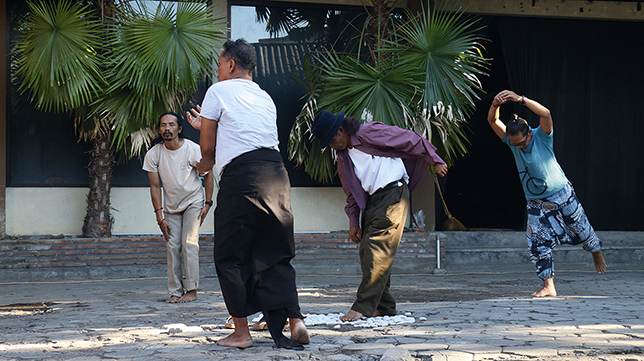
Amerta Movement is described in the interviews and workshops as ‘free movement’, ‘tuning’, ‘flowing’ by attending to awareness of the body experience in motion, with the form evolving as each person engages with it in their own way (Figure 14). Everyday movements are explored, including crawling, walking, standing, sitting, and lying for example, to connect to the sensation and feeling of one’s own body. Prompts for movement can include the impetus to move freely, feeling one’s own body structure, and following impulses through moving expression in space. For example, prompts include ‘moving with joints opening and closing’ and ‘touching self before touching other’ (Diane). Agus Bimo also encourages experiencing conscious awareness and aliveness in the body and movement, giving the prompt to imagine that there are eyes in different parts of your body – pores, elbows, ankles. With these ‘open eyes’, you can wake up to find the freshness of your movement. Another example is to start with basic movement and the pleasure of the moving body, as Sitras suggests, to: ‘Feel the life of the body, feel the freedom of the body, feel the body move.’ Sitras also suggests Javanese concepts to explore in movement such as moving initiated from thinking, feeling, sense perception, drive (impulse or desire), and finally movement while containing drive.
Exploring one’s own movement while with others. Alex, Djarot, Sitras, and Ibed at Rumah Banjarsari, 2023.
Each person learns about their own body and movement preferences and how their body feels, as well as opening up awareness of how they move and act in the world. Djarot notes: ‘the method is more teaching about self-discovery, meaning that specialization or personal specificity is really important’. As an example, Djarot states that Prapto used metaphors as a stimulus for movement. The same prompt can be interpreted differently by each person: ‘metaphors have no limits or no boundaries because everyone has their own mindset, thoughts, imagination, feelings. Metaphors are related to their background.’ Here the response to movement prompts is shaped by personal experiences and background.Footnote 14 Djarot further suggests that ‘Amerta Movement becomes a method for personal growing because there is no vocabulary … Prapto’s movement education methods [aim] to grow the person to be what they want’.
Each person’s awareness of themselves is given attention, with Sitras commenting that Prapto aimed ‘to make everyone feel important about their own self, they feel that they exist, in their own existence and significance.’ The idea is that everyone has a unique and distinct value, which they learn by coming to know themselves through experiencing their moving body. This exploration encourages movers to find their own way to respond, with Djarot noting: ‘I personally have the courage to try to grow continuously without fear of feeling wrong’. Here the exploration focuses on personal movement enquiry, through dialogue, but without an authority deciding the correct way to perform. That said, each person’s inner fears about moving can still arise in these explorations.
In practice, the artists utilise different methods to support self-development for themselves and those they work with. The principle of self-enquiry was developed through work with Prapto but is explored in different ways by the artists in their own setting. Ayu describes how she aims to cultivate self-awareness in her community with ‘ziarah ragawi’ (translated as the ‘body visit’ or ‘physical pilgrimage’). This is ‘a basic technique, which is to recognize ourself’ (Ayu) – a journey of exploration into body awareness and everyday movement with participants. Although she says that Prapto did not use this term ‘ziarah ragawi’, she notes that he explored this type of body awareness practice of slow movement to feel the body and environment.
In terms of individual exploration, Ayu comments on emotions that arise: ‘maybe there is a feeling that is buried so that we can have a dialogue with ourselves, we start to accept ourselves as we are’, but she also suggests ‘transforming’ these emotions through movement. Importantly, the movement practice is not so much about personal emotional expression as about finding ways to connect with others and transform emotions. The term ‘roso’ (sometimes referred to as ‘rasa’) may be a more useful term to use rather than emotion in relation to Amerta Movement.Footnote 15 The word ‘roso’, usually translated as feeling, is used regularly by the practitioners as a way of describing the core of Amerta Movement (e.g. Djarot: ‘Joged Amerta is really roso’; Sitras: ‘what’s important is roso’). It appears that the word ‘roso’ is about receiving feeling in relation as a sense of connection, rather than personal emotion. It is a way to connect with the felt sense of oneself in the environment and be inspired to respond together.
The importance of feeling as connecting is highlighted by the artists, who suggest that emotions can be isolating and disconnecting. Alex notes that ‘if we get too into following our emotions, it will automatically cut us off, we can’t control it’. Although learning about oneself, connection to others should be maintained. As Djarot suggests, it is ‘different from trance, like feeling good alone, like enjoying oneself, like being selfish. The meaning of sharing movement itself is more in the connection between each other’. Self-control is practiced, where participants are encouraged to transform personal emotions through moving in connection. Agus Bimo describes transforming emotions such as anger through looking with fresh eyes at the environment, listening to sounds, and moving with water. Ayu also notes that Prapto said to her: ‘dance is not a way for you to be depressed or always express what you feel, sharing pain too much, for example’; instead, ‘art must be used as a bridge to be useful’. The artists articulate how personal exploration is not self-centred but based on connecting.
Exploring one’s own physicality might show different notions of selfhood, which is not self-centred. In practice, Diane led a movement session on ‘de-centralisation’ in movement. In this, participants explore how not to make the core of the body a ‘centre’ around which everything can organise. Diane notes that ‘the members can have their own life rather than being referenced to a so-called centre’. There is a distinctiveness to each body part and how they might get arranged in relation to the rest of the body and the wider environment. She notes that this shows a kind of ‘unity in diversity’ within the body itself, which is then practiced in relation to others. Ibed also notes the diversity in each individual: ‘I’m not one thing’. There is potential to not get stuck in one position or direction, or not to see oneself as ‘centre’, but to see many possible arrangements in one’s own body and in one’s relation to others. This approach shows how self-exploration might not be self-centred, which clearly has wider implications in terms of decentralising hierarchies.
This kind of process aims at furthering individual growth of participants, rather than imitating a ‘teacher’ or ‘director’. As Alex notes when he asked Prapto many questions: ‘he told me that we learn together and “I’m not your teacher”’. Prapto also instructed Ayu to follow her own movement practice after he was gone: ‘you have to keep flowing, with your own style, your own way, your own place’. According to Ayu, he didn’t want to be seen as a leader, but rather a ‘modin’ (someone who prayed for his community). Prapto is regarded as a ‘provocateur’ by some, giving individuals tasks or questions to explore which can be challenging and playful. Cultural organiser Zen Zul notes: ‘Prapto always provokes, especially young people. Provoke in a positive way.’ He encouraged each person to have an inquiry to find their own pathway.
3.2 Growing Oneself
Each person is supported to develop an understanding of themselves, their position, and their own ways of moving/being in the world. While there are shared prompts, these result in different experiences and expressions from each person. Rather than teaching a set ‘approach’, each person develops their own understanding. Each person’s background, history, and memories inform their individual movement response. Ibed questions:
How to first recognize and be consciously aware about who you are? Where do you come from? What kind of religion educates your body? What kind of culture? Yeah, when you notice, you know your own language of your body. When you know your biography, when you know your body story, you know how to speak.
This process of enquiry into one’s background informs self-understanding, and expression in movement. The practitioners articulate how they embed practices and philosophies from their own background in exploring Amerta Movement. Sitras, inspired by Prapto, works with the ideas of ‘Asta Brata’, a Javanese philosophy. Asta Brata includes acknowledging the main elements of nature that inform life, space, and time; as an approach it recognises that humans are (inter)dependent on them and must collaborate with them.Footnote 16 Sitras notes that for him, previously Asta Brata was a ‘concept but not manifested. Not translated in dance’. Cultural heritage has the potential to be explored or applied in new ways through movement. Riwanto (a researcher in social demography) suggests that Prapto is ‘taking care of Javanese heritage … not leaving it, but transforming it into something else.’ Sahid Widodo (professor of Javanology), also notes that Prapto wanted to see Javanese philosophy not as a concept but made alive and renewed through dance and other creative forms.Footnote 17
The qualities, practices, and beliefs that pervade the practitioners’ cultural and religious backgrounds therefore become embodied and practiced through movement. Cultural heritage is not fixed but responds to changing circumstances and offerings of each practitioner. Most of the practitioners do not necessarily use the term ‘Amerta Movement’ for their work, instead integrating words from Prapto that fit with their own practice. Sitras, for example prefers the term ‘Solah Bowo’ (a Javanese term for a type of movement), while Ayu engages with the word mili (meaning flowing).Footnote 18 In these ways, they take prompts from what Prapto shares with them, connect it with their own interests and backgrounds, and develop their own practice.
Beyond Javanese approaches, other regional knowledge systems or histories are fostered in understanding the practitioner’s backgrounds. Alex, who worked with Prapto on megalithic sites within his home region of Lampung, notes that ‘everyone might have something like that based on their background and how ethnicity might determine it too’. Prapto encouraged Ibed to understand how his father’s background as a Balinese architect could inform the spatial aspects of his theatre practice. Reflecting on one’s background might also be about each person’s history, role, and positionality. Ibed states: ‘My ancestors are missionaries. They bring Hinduism from Java to Bali. So Prapto often gives a warning to me about my history.’ This indicates the importance of having an understanding of one’s own history and how it shapes physicality, attitudes, perceptions and actions.
Background is explored through a combination of respecting one’s heritage, experiencing it in an embodied way, while also being aware of personal positionality. Practices for coming to know one’s own history and dispositions involve developing awareness in freeform movement, moving in specific sites (home/away) and inviting one’s own heritage into the movement. Dialogue is encouraged between oneself and one’s heritage, rather than strictly adhering to a tradition, with potential to grow and change. The next part addresses understanding the context for individual experience, not only in relation to cultural heritage but also the physical landscapes, sites, and places that they move in.
4 Dialogue with Other-Than-Humans: Connection and Equal Value
There is a significant body of dance research dealing with dancing with places and sites, which we consider another form of dialogue. A wide range of approaches has been described elsewhere (Schiller and Rubidge Reference Schiller and Rubidge2014, Hunter Reference Hunter2015, Barbour, Hunter, and Kloetzel Reference Barbour, Hunter and Kloetzel2019, Meehan et al. Reference Meehan, Garret Brown, Voris, Kipp and Whybrow2021). Somatic, site-responsive practices involve sensing and perceiving the environment. This might include a deep immersion in textures, light, sounds, motion in space, and the historical resonances of a specific place. Often these site-responsive practices develop an ecological awareness and respect for the environment. The field of eco-somatics identifies that moving in nature can also draw attention to the climate crisis (Kampe, McHugh, and Münker Reference Kampe, McHugh and Münker2021), critiquing the colonial exploitation of nature while valuing indigenous respect for the land. Further, the field of dance and somatic practices has recently engaged with posthumanism as a lens through which to understand ‘other-than-human’ species as part of the environment, decentring the human actor. For example, Kramer (Reference Kramer2015) explores moving in nature as a way to experience the agency of the environment and how it can move with the human dancer.
Natural environments are often a partner for dialogue in Amerta Movement. Gebe (Reference Gebe2024, 4) notes on working with Prapto that ‘Movement in/with nature … is interrelated with participation in life of the cultural, social and ecological environment’. Engagement with nature is a way to sense one’s own body as part of the life and context surrounding each person. Tirtosudarmo (with Meehan 2025, 159 and 152) also states, ‘He taught me to feel the aliveness of nature and connection with the sacred, through movement and embodiment’, connecting this to ‘the meeting and embracing of micro- and macro-cosmos, man and nature.’ In Amerta Movement, there is often close attention to feeling oneself as part of the environment, rather than separate from it. Reeve (Reference Reeve2010, Reference Reeve, Williamson and Batson2014, Reference Reeve and Hunter2015) notes how this approach inspires ‘ecological movement’; an understanding of our place within the wider ecological system.
Prapto often invited participants to explore dialogue with an object, environment, site, or place. Lavelle (Reference Lavelle2021) describes how practicing movement with an object such as a static pillar is a way to connect with its inherent characteristics while also understanding one’s own contribution to interactions with it. This practice is meant to enhance understanding of the relationship between self and other by learning how to interact in fresh ways. The essential qualities of that dialogue include self-enquiry into the ways in which one habitually engages with an ‘other’ as well as exploring the potential for building connection through dialogue.
As a multifaceted approach, Amerta Movement engages with a broad range of ‘others’ as part of the movement practice. Prapto described an overarching ‘dialogue with life’ which meant ‘paying attention not only to our own condition and feelings but what is going on in other people around us, to what is going on in the wider environment and in life in general’ (Lavelle Reference Lavelle2021, 35). Kaplan (Reference Kaplan2017, 9) says of Amerta Movement that the process ‘stimulates individuals to discover their own “movement language”, which they can then use to create a dialogue within their being, with other people, nature, and God or spirit’. So, on the one hand, there is the process of gaining an understanding of one’s own movement, sensations and feelings. On the other hand, as Yuga (Reference Yuga and Yuga2024, 22) suggests, this dialogue in Amerta Movement aims to develop relationships, where an individual meets ‘the existence of other humans, animals, plants, objects, all of which are subjects, not objects’. Reflecting on the subjectivity and equal value of others is therefore an important aspect of the practice. Each object, place, and person have their own value in the world, rather than a hierarchy of authority. This addressing of authority is core to the exploration of dialogue in Amerta Movement, which develops wisdom through dialogue between different entities.
4.1 Connection through Sensing Environments
We now turn to engaging in dialogue with other-than-humans in Indonesia during fieldwork, with many related items in the online resource.Footnote 19 Amerta Movement practices often focus on felt experience of the environment. This includes practicing ways of sensing the natural environment, such as the wind and earth for example, as well as ‘tuning’ to the atmosphere (swasana), which is different in each place. In this way, it builds a connection between the person and the environment, as a form of dialogue. Sitras suggests working with eyes open: ‘see our surroundings, be aware to see trees, as inspiration for us’ since ‘closed eyes lead us elsewhere, a small world, ourselves’. Along with exploring nature, movers can also attend to the environment more broadly. Sitras notes that movers try to be ‘really alive, conscious, aware that there are pillars, there is wind passing by, there are friends nearby, there is a tree accompanying us, we must always be aware of it’. The mover is not alone or moving solo, they are always attentive to how their movement is in relationship with their surroundings.
Movement practice at Parangtritis beach with Agus Bimo, Ribka Barus, Meehan and Maarif.
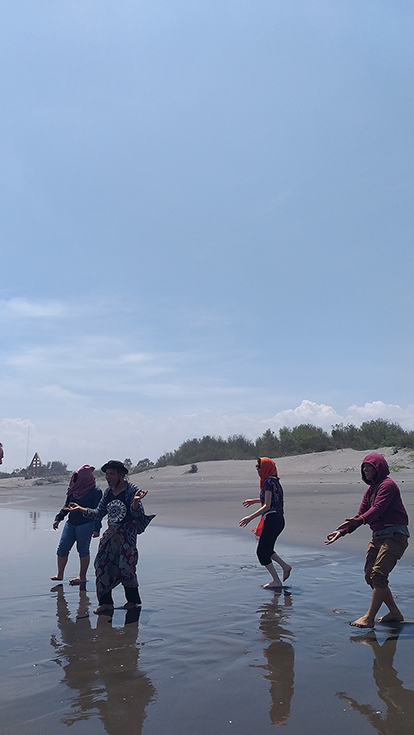
The practitioners explore ways of being inspired by the qualities of nature. As mentioned, Sitras draws on the Javanese concept of ‘Astra Brata’, which focuses on the qualities of eight elements of nature: sun, moon, stars, sky, earth, water, fire, and air. Sitras describes this: ‘so the meditation in movement can feel how the sun illuminates the universe … like water that always seeks a low place, like the wind that always seeks empty space, like the earth that facilitates life, taking the qualities above to embody in life’. Bringing attention to the environment is a way to connect with a variety of movement qualities. In a practice facilitated by Djarot, moving with the metaphor of seaweed stimulated a feeling of being anchored while also having the capacity to flow in response to the ocean. Through practicing with an image from nature, it is possible to experience a sense of stability and connection with one’s own body while remaining responsive, open and in motion. Further, working with the natural object of stones, facilitated by Diane, offered a way to feel our own weight and density, as well as connection with gravity towards the ground.
Moving with nature is also a stimulus for sensing the aliveness of the wider environment, with its own movement and rhythm. There is a dialogue in how mover and nature relate to and attune to each other. Agus Bimo describes how he works with water as a calming element, while Ayu finds inspiration from water in its flowing quality. This is not only about how nature informs movement such as dancing in a flowing or calm way. It is also about how movers connect with the qualities of nature to become more fluid and calm people, which informs the way they live and the kinds of projects they create. Ayu sees flowing water as an element which ‘will provide more support for the surrounding areas and give life, but it will not damage anything’. The fluidity of water inspires her quality of being in the world, as she creates new dance projects, to find ways to dance that support and enliven her wider environment.
As a way of sensing environments, the artists discuss being aware of the ‘atmosphere’ or ‘ambience’ of a place. Agus Bimo notes that each place has its own qualities for participants to attune to: ‘Nature has vibration, frequency, atmosphere (swasana-howo). Every place has an ambience.’ Each place has its own natural elements and quality, like the distinctiveness of each person. Sitras comments that ‘The important thing is to make the atmosphere of our micro-universe and macro-universe in sync’. He describes how the movement is a process of sensing and connecting inner personal and outer environmental landscapes. Working with the atmosphere also brings attention to change. As Alex notes: ‘tomorrow there must be a change because the atmosphere has changed, the weather has changed, it has an influence, the influence between space, atmosphere’. Djarot notes that moving between sites invites participants ‘to be open to a new ambiance because it has another character and nuance’. Instead of seeing nature as static, the participant is encouraged to see, accept, and respond to changes in each location. This means emphasising responsiveness to change, as an approach to dialogue with nature and in life.
The response of the mover, then, connects body and environment by being in ‘proportion’ or ‘living measurement’ to each other (Ibed). The aim is to connect to the surroundings rather than get lost in one’s own experience. Alex notes that dialogue between human and nature gives him a ’relief from the burden of actor’ as he is responding to the environment around him, rather than having the pressure to continually invent or perform. This suggests that self-focus can cause stress and expectations, perhaps linking with the idea of an individual ‘genius’ artist rather than responding to a situation. Ibed also notes that decentring the performer is important:
Some theatre works with the actor as the central point … Now I feel that my skin, my life, my sound and the ground, are all in the same position. All these entities have their own intent to give meaning, to dialogue. Prapto says this: the tree is speaking, the wind is speaking, the stone is speaking.
Instead of the mover being central, the various elements of the environment have a role to play, with objects, place, and people co-creating.
4.2 Recognising Inter-independence and Equal Value
The practitioners in Indonesia emphasise the inter-independence between humans and nature. Ayu describes bringing participants into nature: ‘we go outside with the trees, focus on the self in connection with others. Yes, you can take something, anything, and then you just move with this, choose your friend but from nature’. She also notes that by moving with nature as a partner, an understanding of interconnection is developed: ‘with plants we have a connection, as we get oxygen from them, even though we can’t see the form of oxygen but we are constantly connected’. She emphasises that the individual and nature are sustaining each other’s lives. Often Amerta Movement can take place in outdoor and semi-outdoor (pendopo) environments; in the mountains, by the sea and among the trees. However, it can also be practiced in indoor spaces, such as theatres, markets, and temples. Ibed comments: ‘it’s necessary to consider the wind, the weather, the humidity, the temperature. But when you make a performance in an indoor space, like outside, all things will influence the actor’. This consideration of inter-independence with the environment points to a wider concern of mutual exchange or dialogue between people and the places they inhabit.
Working closely with nature and place is part of a training for treating all beings (human and non-human) equitably, decolonising anthropocentrism that places humans at the apex of the universe. Ibed comments: ‘I got from Prapto that we put ourselves in the space as subject. But also the space, it’s a subject as well. Even a small thing. You see a rock. Or something dry leaves. It’s a subject.’ Each element of nature, place, thing, and person is understood as having a subjectivity, a role to play, their own life journey – albeit with diverse appearances and functions. Ibed notes: ‘it’s like saying ‘you’re not my object for me to do my performance’. It’s not just dead matter that I can use in any way. It has its own being or its own life.’ This aims to decentre the human subject as the primary source of meaning and places people in relation to the wider context of living beings, each having equal value. The practice shifts away from seeing the environment as an object with ‘use’ value but rather encourages movers to see the unique qualities of each element in a place. In another example, Ayu led a practice where we were asked to choose an object and move in dialogue with it. Through the movement practice, we explore the qualities of seemingly ‘meaningless’ objects, building a connection with them.
This brings a sense of respect for each aspect of our surrounding environment. Agus Bimo asks for permission from nature to move there through ritual preparation and offerings, acknowledging the subjectivity of the environment. Alex also describes how ‘greeting’ instigates an ongoing dialogue: ‘how do we behave towards everything there, because everything is a subject, not an object, and try to have a dialogue, and we greet them too, they also greet us, it means there is a different connection’. This indicates a way of seeing nature as a partner for dialogue, with qualities of ‘befriending’ and curiosity. Each entity is creating an expression in space with which movers can respectfully dialogue, through listening, greeting, and responding. Amerta Movement embeds values of inter-independence, equity, and respect as aspects of dialogue with nature and place. If the dialogue with self is about awakening self-reflection and personal awareness of one’s own actions, then environmental awareness seems to address ecological respect and environmental responsibility. We next consider how these ideas of respect extend to other people, as part of this environment.
5 Dialogue with Other People: Respect, Difference, and Transformation
We have so far focused on dialogue with oneself and the environment through movement. However, other people are part of this environment, which we now turn our attention towards. Anttila (Reference Anttila2007, 46) proposes that ‘bodily dialogue includes inner and outer movement of turning towards the other, sensing, feeling, and listening, as well as bodily involvement with other bodies, as in touch and contact work’. Dialogue is between inner and outer, becoming aware of the internal experience, while also connecting with others, in a dialogic feedback loop. On the one hand, dialogue therefore can support ‘somatic authority’ over external authority. On the other hand, it engages in an exchange with others, whether this be place, objects, or people.
In dance research that supports dialogic approaches, care and respect are often raised when working with others. Dyer and Löytönen (Reference Dyer and Löytönen2011, 315) argue that ‘that bodily encounters and explorations of reciprocity and shared responsibility can guide individuals to cultivate relationships and an “ethics of care”’. Meanwhile, Gose and Siemietkowski (Reference Gose and Siemietkowski2018, 12) focus on creating an ‘open dialogue of a caring encounter that could have inspired some sort of co-learning through cooperative problem solving’. Their research highlights how dancers can learn from each other, while teachers create environments of trust and respect, where all parties care for each other’s best interests. Dialogue, then, is a value-based approach which aims towards mutual collaboration and respect, even where roles are laden with power differentials. As an example, McCarthy-Brown and Carter (Reference McCarthy-Brown and Carter2019, 8) adopt somatic practices to create dialogue around racism with third level dance students in the United States, exploring racial and socio-economic experiences of students with different ethnic groups: ‘Embodied awareness, when skilfully employed through dance and movement experiences, may support students to feel and recognize their own patterns of mind and body that perpetuate bias and racially assumptive ideas.’ Embodied self-reflection is developed through a dialogue in movement between those of different backgrounds.
The term ‘dialogue’ is also sometimes used in dance in relation to intercultural dialogue between people. This might take place through exchange of different cultural dance forms in a professional dance context, or exchange of people from different backgrounds through community dance workshops. Of interest is the idea that dialogue through dance is a way to explore how cultural identities are constantly renegotiated through relationships. Transcultural dance exchanges can counter static assumptions of cultures and can support the potential for connection and transformation through dialogue in dance (Rogers Reference Rogers1998, Bannerman Reference Bannerman2016). Antilla et al. (Reference Anttila, Martin and Svendler Nielsen2019) highlight difference as meaning multiplicity rather than categorising specific groups with essentialised characteristics (such as religious or cultural affiliations for example). They argue for movement as ‘bending and playing, experimenting and creating, breaking boundaries, and finding new forms of embodied actions’ (Reference Anttila, Martin and Svendler Nielsen2019, 212).
This connects with a decolonising perspective which recognises the real-world impact of colonial categorisation of identities, at the same time as creating a space for dismantling colonial orders. In Johnstone’s (Reference Johnstone2022, 171) research in South Africa, she suggests: ‘representation and representationalism as frameworks [that] uphold and perpetuate hegemonic knowledge structures’, while arguing that ‘movement research, embodied practice, or dance-making are epistemic spaces that create possibilities for developing new technique’. Moving with identity differences then takes some nuance in navigating – acknowledging where we come from, while also the potential to be not fixed within that narrative or category. For Johnstone (Reference Johnstone2022, 174) ‘attending to emergence or unfolding of embodied techniques disrupts the linearity of preconceived stories and ideas and unsettles colonial scripts of dancing bodies’. History impacts on our body stories but exploring the emergent experience of the body offers new potential.
While Amerta Movement does not always focus on fixed identities, sometimes these do come into play, as movers become aware of their perceptions of others and of personal histories that they carry. Reeve (personal email communication, 1 September 2025) notes that ‘Prapto would always ask people ‘what is your background’ but he left it to them to share whatever they understood from that question – they could answer from any dimension – family, professional, cultural, spiritual … ’. The practice engages with embodied felt experience of identity rather than representation of it. For example, Gebe (Reference Gebe2024, 5) explains that ‘Participants are guided to become aware of cultural specificities in their own individual movement patterns and engage in embodied dialogues that involve understandings of cultural differences through movement’. Through reflective movement practice, a participant could consider what they carry in their movement from their own culture(s) and how this interacts with others. Reeve (Reference Reeve2009, 50) notes: ‘it becomes possible to use movement to identify, understand and if necessary, transform ingrained cultural attitudes and tendencies, to shift deeply rooted “incorporations” and to create new ways of moving forwards in dialogue with each other, whilst respecting diversity’.
At times, participants are encouraged to reflect on their position and where they come from, but they are also encouraged to engage in acts of opening to interaction and transformation. As an example, Prapto played with his own Javaneseness, adapting it for communicating with different cultures (Tirtosudarmoin press). Reeve (Reference Reeve2010, 198) comments on Prapto: ‘Dialogue is probably the key word here as he both engages with traditional myths as a source for his work and, at the same time, he is prepared to transform his cultural heritage if he does not feel that it is appropriate to the need of the times.’ Dialogue allows transformation in interactions between the individual (with their personal background), collective (heritage/community), and environment (current surroundings and group). The notion of de-centring raised earlier includes the potential for transformation of each culture through directly encountering, interacting, and sharing with others.
Given that conflict and power differentials can arise in working across cultures, however, there is a need for ongoing care in these interactions. While the term ‘care’ is not necessarily used in Amerta Movement, values of respect for others emerge in the dialogic approach to movement. Prapto developed the concept of ‘garden’, meaning a shared space where dialogue takes place, ‘giving equal value and respecting all beings, freedom, diversity’ (in Baxter and Suryodarmo Reference Suryodarmo2018, 146). A garden has elements which are cultivated, placed together within a shared space, and are also constantly evolving. Prapto’s work aimed to cultivate such spaces to allow different elements to co-exist, interact, and grow through shared movement. Prapto valued diversity in his workshops and sharings, asking: ‘How can we have sharing, gathering, and dialogue without fanaticism between the modern and the traditional cultures? We need a realm that can accept all human, nature, and religiosity resources’ (Suryodarmo in Buckwalter, Reference Buckwalter2010, 55). There is therefore an attention to diversity as part of dialogue, even when there is potential for change through interaction.
As we come into dialogue, it is important to have respect both for oneself and for others. Prapto notes that through engaging in movement with others, part of us will change, and part will remain as before: ‘there will be somehow part of assimilation, part as still we are as we are’ (Suryodarmo Reference Suryodarmo2012, 42). There is the possibility of maintaining one’s own differences while also learning and growing from interaction with others. Reeve (personal email communication, 11 May 2023) identifies the significance of the ‘bamboo’ approach for Prapto, with ‘large bamboo growing close together, and yet each cane independent, allowing the wind to pass through the spaces between – close together, not isolated and yet not leaning on each other’. In her approach to Amerta Movement, Reeve (Reference Reeve2009, 156) notes that dialogue does not encourage the mover to be like others. Instead, dialogue ‘implies that both have something to say, that both be aware of the other and that both have the capacity and curiosity required to listen to/see the other’. Dialoguing means making space for difference, rather than merging with other people, or expecting them all to be the same; while it also holds the potential for connecting, learning and growing.
5.1 Connecting to Other People
The approach to connecting with nature described earlier is similar to finding ways to connect with other people in Amerta Movement. Movers work in the environment to acknowledge the subjectivity of each entity. Alex adopts ‘sensing exercises to increase sensitivity and stability towards nature and empathy for others’. Working with nature and highlighting the subjectivity of each element means learning not to ‘use’ the environment for one’s own purposes, but to respect it. This is also relevant to working with other people: ‘when working with other people, don’t use them as your material’ (Alex). When engaging with other people and places, movers are again ‘decentralised’, valuing each life form. Participants are expected to see themselves in a shared environment, ‘because we come from many different backgrounds and different intentions – how to realise we are here together? How to match or tune first to nature?’ (Agus Bimo). Although we are different, we are together in a shared place. The online resource shows contributions that also explore connecting to others, whether specific groups, intercultural or intergenerational dialogue, and how that relates to the environment.Footnote 21
During the fieldwork in Indonesia, various terminologies are explored such as matching and tuning as part of dialogue. Ayu notes that at its best, when working with others, ‘Our energy matches, we don’t need to explain or speak, we just feel our energy match.’ This echoes the emphasis earlier on sensing and connecting with the atmospheres of nature. ‘Matching’ suggests some level of resonance, but it could also mean simply listening closely with the body and responding. Connecting with different people can be challenging, and the environment can prepare movers for that also. Like Lavelle (Reference Lavelle2021), referenced earlier, Ayu indicates that working with static pillars can prepare movers for working with humans: ‘we move with our partners as pillars; when we move with the pillars for a long time, they can’t be moved, we are paired with this rigid person who can’t change and whether we want it or not, we have to change, we have to be active’. Working with qualities of the environment, provides opportunities to learn ways of interacting with other people.
Then practitioners discuss ‘tuning’ to others, which connotes an instrument tuning up, or radio tuning into the correct frequency. Another related term is ‘attunement’, which suggests the close empathic resonances between people. Tuning here seems to include the highly sensitive tuning of the body towards the environment and others, which also has a feeling quality, but without an overemphasis on serving the emotional needs of another. Ayu notes: ‘we have tuning, connecting to the body, we can easily connect and easily communicate’. She identifies how tuning into the body is a way to sense the body’s experience of itself, the environment and others – to feel connected. Through this process, ‘the body has adaptation, tuning, connecting. Body has instinct to open mind, to be a family to everyone’ (Ayu). Tuning, she proposes, invites openness and responsiveness to other people, rather than resorting to fixed patterns of interacting. This is echoed by Alex, who says that ‘We would be open to anything, we are tuning, connecting, and sharing. If we don’t relax, it will be difficult for us to connect with others’. This process of tuning involves relaxing, releasing, and opening to facilitate connection to other people.
The process of developing self-awareness is also part of the journey of learning to connect with others. Ayu notes that ‘when we can recognize ourselves, we dare to recognize others’, while Djarot comments: ‘The meaning of sharing movement itself is more in the connection between each other.’ In one workshop, Ibed invited pairs to explore leading and following through movement (Figure 16). Although a common exercise in community dance workshops, it is interesting how it engages with notions of dialogue pertinent to Amerta Movement. This process engages self-learning in playing different roles, responding to others, noticing habits, and trying other possible ways to connect. While it may be a playful way to explore connection, it can also be done in a way that focuses on deep listening and an enquiry into patterns of responding. Within this process is the challenge of knowing one’s own self while being open to dialogue with others.
When I am led, my eyes are closed and I focus on my own experience. I am following ‘an arm’ and have no sense of the person. Then, I notice how hard it is to keep my sense of myself when leading another with my eyes open. Noticing how my parameters lead to surprising results.
Moving together, Alex Gebe and Brian McGovern. Rumah Banjarsari, 2023.
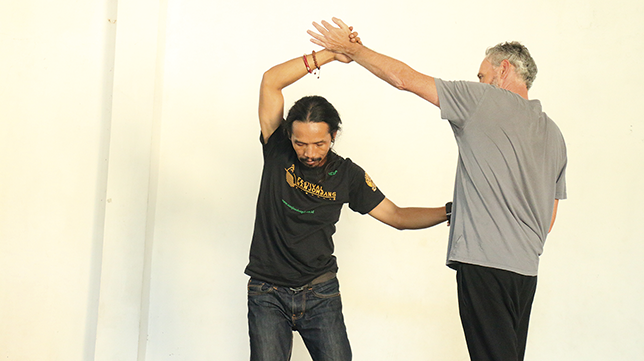
Interaction with others offers an opportunity for knowing one’s own differences and uniqueness, but it can also involve exploring different qualities of communicating with each other. Reflections on communication were raised by Alex: ‘there is a kind of personal initiative to actively dialogue, [choosing] with whom, and what form. To establish a relationship, there is a kind of initiative from the individual for that’. Here he suggests that grounded knowledge of oneself helps to understand what one is communicating and to make choices about how to engage with another. This means not entering into a dialogue without awareness of oneself and our choices.
5.2 Exploring Difference
At the same time as focusing on connection, the dialogic awareness of differentiation is important to Amerta Movement. When asked if one can lose individuality when tuning in to others in movement, Djarot notes: ‘when I feel that, I have to stop, I have to be conscious. I should stop, not go on, because if I go on, I lose (myself)’. This suggests the importance of self-awareness while practicing dialogue with others, of pausing and re-connecting to oneself in order to build a relationship with another. Ibed suggests that it is a process of interacting with others without imitating or trying to be the same: ‘You can’t be me. I borrow your shirt. Yeah, it may fit on my body, but it’s not comfortable because it’s not me. OK, I can use this shirt but make it mine, maybe it can be a different style.’ Here he describes how dialogue is not a way to merge, but rather to explore differences, to adapt without losing oneself.
Ibed also uses the metaphor of stopping at a crossroads or junction. He suggests pausing and listening before proceeding to the road, otherwise there might be a ‘crash’. This metaphor suggests a point of meeting and being aware of the steps you make: ‘to make good conditions for dialogue’ (Ibed). It indicates the importance of clarity in relation to direction and of purpose when engaging with others. It also suggests that connecting is complex and inherently faces clashes or disconnection. In other words, crashes are expected to happen as an inherent part of dialogic processes, with people carrying different background, beliefs, and identities for example. Self-knowledge is a prerequisite for communicating with others in dialogue, to avoid losing oneself, and to allow distinct experiences to co-exist.
The artists refer to an awareness of difference, with its potential for misunderstanding and conflict. Not only is the movement strategy of ‘pausing’ a possibility, but so too is enacting qualities of tolerance and diplomacy through movement. In working with other people, Sitras also notes: ‘in my opinion, Javanese culture is “wong ke wong” (person to person) … tolerance is high, so it’s very Javanese, there are good manners and politeness’. The movement practice is a space where anyone can enter with their different movement backgrounds and move in a shared space. There is a ‘tolerance’ for difference, which can visually be quite surprising to watch due to the wide variety of dance/movement backgrounds, ages, and so on, all moving alongside each other.
Djarot also engages with ‘diplomatic movement’: ‘“Diplomatic” means not blaming other people, not being direct when you don’t like or disagree with one of the members of the group so that the person concerned doesn’t get hurt.’ In his view, then, difference is not ignored, but at the same time there is an emphasis on developing connection. Alex says that theatre ‘doesn’t always have to start from conflict and conflict resolution, or difference as being a problem, but from a potential for togetherness’. Diane indicates that Prapto did not behave in a reactionary way to difference and conflict, instead focusing on creating benefit for others. Riwanto echoes this, stating, ‘a good quality of Prapto’s is not antagonising things, always looking from a different perspective. Trying to embrace all different kinds of people’.
Further, developing tolerance for difference also opens the potential for new learning. Ibed notes that ‘in Indonesia, there are many conflicts in religion. I think they’re not open. What is the potential to make dialogue? That person is closing to make the existence safe inside’. While openness might support dialogue, it may develop incrementally over time depending on what feels safe. Movement is a form of dialogue, a process of exploring with others. Alex says that ‘Prapto is expecting the movement to always transform, always develop. Because dialogue is moving, transforming, developing’. Here he describes how dialogue is an opportunity to connect and not remain static, to continue to grow and transform. Opening and closing is a dynamic which we can move through, as part of the process of connecting and changing over time.
5.3 Intercultural Dialogue
There is an international Amerta Movement community with practitioners especially prevalent in the UK, Europe, Australia, Asia, and North and South America.Footnote 22 Prapto often travelled abroad to teach, or groups travelled to study with him in Indonesia. He was committed to bringing Indonesian and international participants together such as supporting local participants to join workshops in Indonesia, or by bringing Indonesian artists with him when teaching abroad. According to Sitras, Prapto ‘hopes that not only foreigners could study with him … if there are Javanese people who join, he would be very happy’. These international exchanges were described by the Indonesian practitioners as interesting, exciting, enjoyable, humorous, challenging, and confusing, as well as strange and curious. Meeting with people from different countries provides a sense of shared education about moving together with differences. Diane described how Prapto ‘would partner the Indonesians with different foreign students. Also abroad he does that. As a mapping for dialogue’. This is an indirect way to find commonalities in a shared space, as well as discovering different ways of behaving, expressing, and communicating, often without a shared language.
Djarot recounts the challenges of working with very varied cultures: ‘Some come to study with Prapto, from Italy, from Germany, from Spain; it’s really different cultures, this is for me also difficult.’ Ayu notes the challenges of participants working together: ‘I’ve met several students from abroad, this was the first time they attended a workshop. They seemed very distant and when there was documentation, they were disturbed by the photos, they felt they were objects.’ This built towards a sense of togetherness in the workshops: ‘They are suddenly more open and friendly’ (Ayu).Footnote 23 While difference is noticed, a sense of coming together as a shared community is also valued. Alex suggests that they ‘don’t see differences as a problem but find a common point, a shared feeling point’. In Amerta Movement, the artists describe indirect and non-confrontational ways of exploring intercultural and interreligious dialogue. Djarot suggests that Prapto is ‘More talking about life, behaviour in life. Prapto is talking about it, but circling in talking about it’. This circuitous approach matches the Javanese perspective on tolerance and politeness raised earlier while also addressing how humans relate to difference through qualities of respect or openness.
The practice involves self-awareness of one’s body in space when in relation to others. For example, with Agus Bimo, we discussed how bowing to others is common in Indonesia, rather than walking through a group with an upright posture. We also discussed experiences of interacting together such as the use of eye contact and touch in movement sessions or daily life activities. Exploring such embodied experiences in practice and discussing them supports an awareness of habits we may carry with us, what feels comfortable or not. Further, it offers options to explore alternative ways of moving in relation to the contexts we inhabit.
The practitioners explain that they learn about the characteristics, stories, and psychology of different geographical cultures, but also learn to see through the lens of another. Prapto often brought his Indonesian colleagues with him on his teaching trips abroad. Culture shock, difficulties communicating, climate adjustments are all described in terms of how they impact on their bodies and experiences (Sitras, Ibed). Basic human challenges, such as the impact of climate on voice and movement are acknowledged, highlighting how the shift of place can bring attention to how the environment is constantly impacting on movers. Further, Djarot notes: ‘Prapto says you go abroad to see your own country, you have wisdom about your country by connecting with another country.’ Interacting across cultures provides new lenses for seeing one’s own culture as well as presenting challenges of adapting to new languages, environments and customs. Further, Prapto prompted questions about what happens to cultural heritage when people travel to another place. For Ibed, ‘Prapto always tries to give me a guide to try to find: Which part [of you] disappears in Bali? Which part remains in Bali?’ As an embodied practice, Amerta Movement embraces rootedness in heritage, alongside interpersonal, intra-cultural, and intercultural encounters. It encourages dialogue that recognises difference, stimulates connection and transcultural exchange, and explores adaptation without ‘losing oneself’. What this research will examine next is how a dialogic movement approach that emphasises self-awareness and values the environment and interpersonal respect may have wider social and political implications.
6 Dialogue with Communities: Consensus, Diversity, and Social Justice
Somatic practices have at times been critiqued for focusing excessively on individual experiences (Fortin Reference Fortin2002), but our focus on the term ‘dialogue’ indicates other directions. Moving with dialogue can support self-awareness while also creating ways of exploring respectful relationships and interactions. While dialogue foregrounds relationality between people, there are challenges to consider regarding collectivity that merit further attention. We now go further into the topic in understanding embodiment in relation to group consensus, examining how collective norms can function as form of bodily control and domination (Foucault Reference Foucault1977, 25–26). Body conformity and production can be seen for example in dance, where there are often ideal body shapes and techniques to produce at the expense of the dancer’s health and well-being (Fortin, Vieira, and Tremblay Reference Fortin, Vieira and Tremblay2009, 49). Further, dance has been used internationally to embody nationalist ideals and impose group ways of thinking and doing (Kant Reference Kant, Jackson and Shapiro-Phim2008, Meehan Reference Meehan2011). Within Indonesia itself, nationalism has played out in cultural forms to prescribe group cohesion over and above the individual within it, including in dance (Larasati Reference Larasati2013). Bräuchler (Reference Bräuchler, Richmond and Visoka2020, 7) notes that in Indonesia, ‘under Suharto’s New Order, authorised versions of artistic expressions including cultural performances were selected from among the regions’ diverse groups but were decontextualised and manipulated in a way that matched the government’s moral, aesthetic, language, and content requirements’.
Foregrounding cohesion and togetherness therefore raises questions around the position of dissenting or different individuals as they navigate traditions, ideologies, or group ideals. Hanlon Johnson (Reference Johnson1994) explores some of the ideals he encountered in somatic forms such as trying to achieve an aligned posture. He makes the case instead for somatics as a journey of self-discovery, rather than providing a common ideal which all must conform to. At the same time, he commends the creation of a shared community of movers, which allows the freedom of individual difference while sharing together. He (Reference Johnson1994, 165) notes that ‘Consensus originally meant sensing together …[italic added for emphasis] Shared practices of breathing, feeling, seeing, hearing and moving can make it easier for good-willed people of ideologically conflicting abstract beliefs to collaborate on basic human needs’. In a sensory way, he describes coming together through somatic attention to both individual and shared experience. This is echoed by Weig (Reference Weig2021, 25) who addresses how sensing, resonance, and attunement are significant parts of social cohesion through ‘clearly sensing and feeling each other’s ways of being and what is happening in the community, being actively sensorially connected with each other’. We suggest that consensus might not mean complete agreement or coherence, but the willingness to move together with our differences. In this way, as Johnson (Reference Johnson2018, 1) suggests, although embodiment can be a means for oppression, it might also lead the way towards ‘embodied social justice’.
Tirtosudarmo (with Meehan 2025) suggests that Prapto engaged in Amerta Movement as practice that is not only artistic, but also communal and political A key part of Prapto’s work included ‘srawung seni’ (sharing art) programmes, which foreground the diversity of people from different backgrounds interacting with each other. These are events where people gather to share workshops, discussions, and performances, bringing their individual contribution to a public group setting. Rusputranto (Reference Rusputranto2022) comments that ‘srawung is open to diversity; cross-cultural, cross-religious, cross-discipline, and so on. Joged Amerta with the concept of srawung becomes a forum for meeting this diversity’. Gebe (Reference Gebe2024) explains that srawung is a kind of ‘open day’ where workshop participants from different cultures and disciplines share an aspect of their Amerta Movement practice together: ‘the Open Day is a form of meeting to improve the quality of friendship; through this meeting it is hoped that organic interaction will occur’. Butler notes a specific feature of ‘srawung seni’: ‘of particular significance is that although people had diverse perceptions, understandings, and practices of religiosity in art – they could also create together’ (Reference Butler, Ardika, Sedyawati and Parimartha2011, 2). Dialogue, then, is predicated on the value of diversity as well as entailing transformation through relational and creative activities.
The srawung is a way of having unique contributions side by side, in a shared environment with an audience. There is no specific aesthetic, and the sharing events might include different styles of dance, movement, music, puppetry, and so on. As Sitras comments, Prapto ‘can accept anyone who enters and allows even though it doesn’t fit his concept’. Here, diversity is emphasised and decentralising directorial power is prioritised over aesthetic choices. The principles of dialogue are more important than authority over the visual appearance of the form. Proficiency of the practice is about enhancing skills of awareness, feeling, embodied communication, sensing atmospheres, and connecting with others.
‘Srawung seni’ are opportunities for building small networks and deep relationships. While Amerta Movement has a large following internationally, practitioners tend to gather in groups in specific important locations and develop relationships with that site and each other on a deep level. Large-scale events can occur but are embedded in the specificity of local sites and communities (such as for World Environment Day).Footnote 24 While concepts of social justice and activism are not usually discussed in previous research on Amerta Movement, experiencing the life and movement of the body is deeply relational and communal. As a practice, it explores sensing and feeling together as a way to move towards connection while maintaining space for difference.
6.1 Engaging Diversity for the Community
The artists involved in the fieldwork describe how Amerta Movement encourages a diversity of participants from different backgrounds, who bring varied local and global influences to their activities (Ibed); while the online resource includes projects that work with and benefit wider communities.Footnote 25 Djarot notes: ‘what interests me is how this Suprapto figure provides mechanisms, education, advice and prompts, with various people who are of different backgrounds’. Prapto worked with a very wide range of people of different generations, religions, and cultures, involved in art, healing, spirituality, law, and many other professions. Sitras notes that some participants in his sessions come from local villages and some travel from afar. Also, ‘the backgrounds are different’, for instance: ‘a sculptor’, ‘an English teacher’, ‘a religious person’. Ayu has also developed a local community who are not always from a performance background: ‘The Omah Mili community, most of them are also not artists, but housewives, shop sellers, boarding house owners, and so on.’ The dialogue, then, is based on using shared activities to navigate the differences that appear when diverse groups gather.
Sitras notes how Javanese dance is not possible for everyone to perform, while Amerta Movement can be practiced without a dance background. This highlights the importance of the community participation and inclusive remit of the approach. Participants join because ‘they really want to accept how to move naturally … and how the movement exercises can be useful in their lives’ (Ayu). They focus on ‘learning for life, so like people who study our own bodies, learn to try to feel connected to nature’ (Sitras). The process of moving together brings those with different backgrounds together in a common activity: ‘They have different background, all are different. Very complex. Slowly, slowly, we come together, then the same purpose’ (Ayu). With the skill developed in awareness of oneself, the environment, and other people, this leads to exploring how to move together within a common activity and shared space.
Finding different methods for engaging a wide range of people in a shared experience is part of the means for encouraging dialogue across difference. Also working with participants outside the performance community, Agus Bimo describes rhetoric as ‘a way of connecting, a way of expression … a way of saying something that people could understand’. Rhetoric might not just be about persuading someone of a single truth, but rather finding ways of connecting to diverse communities or tailoring movement prompts according to each person. Agus Bimo notes: ‘When Prapto trained friends with that technique, we could be together even if they have different backgrounds, right? He would call what he is doing a strategy or method of engaging the difference as a rhetoric, the way of making difference into harmony.’
In practice, Agus Bimo describes building the connection between participants in workshops, rituals, performances, and projects, through being a ‘holder’ – how he holds groups of people together: ‘binding various people (Figure 17), and awakening or reminding everyone, let’s be together and don’t be separated. It’s very hard. Because there are many different backgrounds’. While inviting people from different backgrounds, he describes how he acts as the ‘tie’ holding the different strands of a ‘broom’ together.Footnote 26 This means that while each strand is different, they can work together for a common aim. He acts as ‘holder’ through techniques for connecting people to each other and the environment. He comments that ‘You give signals or something like signs’, which is done by greeting each person and the place, sensitising people to their surroundings, or creating a shared ambience through sounds/music. At the same time, he does not force interaction: ‘Prapto gave me advice: don’t pull and don’t push.’ This aims to create a shared space for dialogue while also respecting difference in the ways people come together.
Connecting the community through ritual offering in nature, Parangtritis beach, 2022.
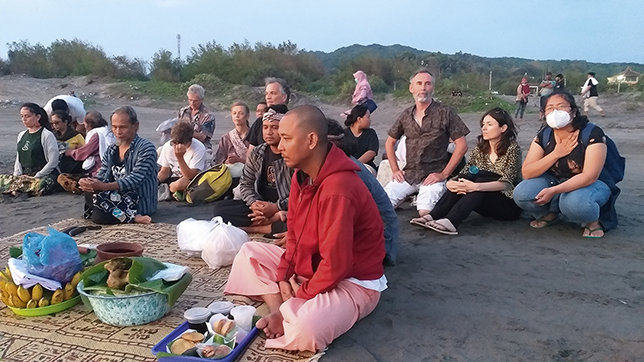
People also have diverse roles and contributions to offer to their communities. For example, Prapto used the framework of Circle, Oval, and Square to explore different roles and intentions for moving, such as prayer, healing, or performance.Footnote 27 When practicing at Candi Teja Amerta, we moved in different zones of the space associated with each of these intentions or roles, exploring nuances of them through movement. Each person may have a personal preference or background for one of these, but each has equal value, and can also coexist in public sharings. For example, a professional artist might offer a ritual, a community participant could perform alongside a professional dancer, or healing might occur through performance. What is significant is that each person is encouraged to find their own (sometimes changing) role and what they might contribute to their communities. The purpose is to bring personal background and interests into dialogue with the contexts inhabited. The ‘pribadi art’ outlined earlier, which is focused on learning about oneself, is complemented by the ‘messenger art’ process of having something to share with and benefit others.Footnote 28
6.2 Benefitting the Community
Each person is encouraged to find a purpose within their own diverse communities, shifting towards socially engaged practice. These communities might be geographical (such as Java, Bali, Sumatra) or occupational (mother, actor, dancer, healer) for example. Alex notes that ‘Prapto encouraged me as a stage actor to become a cultural actor and a social actor’ and ‘More broadly, we are expected by Prapto to be active in building something for the better around us’. For Agus Bimo, ‘movement embodies the values, and then it shares the values’ whereby the practice ultimately moves towards circulating the values developed through movement with wider communities. Riwanto suggests that Prapto placed himself within communities rather than formal institutions, to pursue his interest in art for social purpose. He articulates Prapto’s work as being with and for communities at different levels: ‘community can be a kampung (local area), can be a market. But it can be a whole planet’. Important to note, however, is how these projects grow from community over time, as Ayu suggests in her work: ‘the community being established was not formulated in a way to have a vision but just flows like water, it will find its own ways, through which it develops’.
Each of the artists in this research grow their own social projects in their communities, applying Amerta Movement for wider benefit. In this way, ‘dialogue is actually a tool to accomplish something’ (Riwanto). Agus Bimo regularly contributes to rituals and mantra movement for local communities. In particular, he was inspired by Prapto’s ‘sharing’ format to pioneer a festival called Gora Swara Nusantara (Strong Voice of the Indonesian Archipelago) since 2015. This festival brings together communities to share art performances in the region of Klaten in Java, with up to 30 art forms and 600 participants. In 2016, by situating arts events on the slopes of the Merapi mountain, the festival brought attention to the ecological impact of sand mining there. Agus Bimo, who has a particular interest in voice as part of movement, stated: ‘Because there was a voice that had to be heard about the environment regarding sand mining which was forgotten … the community knows that one day their land will no longer be able to be planted.’ Combining voice, movement, ritual, performance and community engagement, he created a dialogue between his own background, the natural environment, and local communities to ‘open up the eyes of the government’.
Prapto sometimes offered provocations to consider wider world issues that could be addressed by each person. In one example, Ibed was prompted by Prapto: ‘You can use your Balinese heritage to fight for belief.’ From there, Prapto collaborated with Ibed to develop a festival called Menggali Pustaka Candi (Excavating the Temple’s Literature, 2014)Footnote 29 staged in the Indonesian Islamic University in Yogyakarta (UII) where the remains of a Hindu temple, Candi Kampulan, were uncovered. Taking the opportunity to explore interreligious dialogue, inspired by the find: ‘Prapto asked a Hindu priest to come. A Buddhist priest to come. A Javanese, a traditional indigenous practitioner to come there. And then a group of Islamic music. And then they pray together, play together with some contemporary artists, dance and make music.’ However, the festival encountered challenges due to religious concerns; later they were allowed to continue, following reassurances that the event was a cultural performance and not a religious ritual. This project shows how self-reflection on positionality in relation to wider community issues of religious difference led to a creative means to stimulate dialogue.
Building communities for common purpose, whether social or artistic, does not always go without conflict. Alex notes that when moving in the megalithic sites in Lampung with Prapto,Footnote 30 he also faced challenges from the local community: ‘I was thought to be like a shaman, worshipping trees, by the community, even though it was a sensing exercise, only sensing how to move based on touch of air on the skin and so on.’ He notes that ‘You always have to be aware of potential conflicts in certain regions. If they were a strict religious person, they might misread it’, and he therefore aims to ‘find a way to help someone on the outside be able to read it better’. Rather than confrontation, this process was one of trying to find common understanding. Alex also reflects that in the past, large communities had to work together to build the megalithic sites, showing mutual cooperation. There is the potential to open up ways to connect with rather than clash with others, bringing communities together for a common purpose.
All the artists discuss the social and community dimensions of their work, inspired by the awareness developed through movement. Sitras works within his own rural mountain community, inviting people to practice movement together and creating space for community rehearsals. He also hosts festivals such as Wedharing Pamuja Nusantara (Offering Prayers for Nusantara, 2023) to advocate for local arts and heritage, as well as its values, in dialogue with the contemporary context and arts practices. Ayu devotes time at Omah Mili to gather and celebrate mothers for example, inviting them to dance with her in public events, since ‘maternal mental health is the main basic ingredient in the continuity of knowledge from generation to generation’. She has also developed a creative space in the jungle to share movement, arts, and community.Footnote 31 Diane has worked in dialogue with people from different religious and cultural backgrounds, through the International Foundation for Dharma Nature Time (IFDNT).Footnote 32
Many projects include sharing dance, music, and food, to provide a space of togetherness for the local community to mingle and connect. Zen Zul notes that ‘we need the five senses such as the smell of incense, the taste of coffee … in Javanese culture I think the five senses are really important’. Sound (with different instruments, musicians from diverse cultures and genders, generations and styles) can be used to co-create a shared ambience as an approach to dialogue. Further, significant qualities have been embedded in social projects such as collaboration with local communities and artists from different backgrounds, respecting place and its history, mutual cooperation, and exploring these through sensory events in public spaces. This echoes the approach of cultivating the social value of gotong royong towards living and working cooperatively together in a village, market, and community.
Zen Zul suggests that Prapto’s approach is a move away from the Javanese keraton (palace) style of hierarchical power where courtly dance forms flourished, and towards community-based and inclusive activities. The social and community leadership aspect of Amerta Movement is highlighted by Ayu, who notes that ‘he [Prapto] made his students satria [grassroots leaders] in their respective fields. That’s the main goal’. The cultivation of personal development, environmental awareness, and interpersonal respect contributes to each person gaining a wider purpose in their communities.
7 Dialogue Moves: Values and Practices
Amerta Movement as an approach to dialogue is grounded in self-understanding through embodied awareness, sensing the environment and relationality through moving with others. We emphasise the dynamism of the word ‘dialogue’, with constant motion and change as central. We argue that utilising a dialogic, adaptive approach to movement diverges from aesthetic ideologies which can tie people into cohesive cultural, religious, and political values. Prapto worked in dialogue with the context around him, as well as embedding transcultural dimensions due to the international exchanges woven into the practice. Further, the research also identifies the importance of ‘grassroots leadership’ which is responsive to different social strata. To conclude this Element, we draw together the core tenets and practices of dialogue through movement that we have explored in this research.
7.1 Dialogue as Non-hierarchical, Engaging Equal Value and Diversity
Previous research in dance has highlighted the authoritative role of the teacher or choreographer in relation to the dance, with dialogue offering a different approach (Robinson and Domenici Reference Robinson and Domenici2010, Gose and Siemietkowski Reference Gose and Siemietkowski2018). Dialogue promotes a way of guiding the mover to explore their own embodied insights. The interviews, workshops, and performances with Amerta Movement practitioners articulate a non-hierarchical approach through emphasis on self-discovery, including attention to knowing one’s background. Prapto’s interest in dialogue suggests a distrust of an authoritarian positioning which could lead to corralling groups to conform to specific ideals. Each person is encouraged to be curious about their own potential and inner embodied wisdom while experiencing relationality, rather than seeking an external authority. Sometimes in an Amerta Movement session, the movements can start to look similar, as people attempt to achieve awareness and connection by slowing down and moving gently in space, but this is not the aim. It is an ongoing challenge to find one’s own style while also sensing and connecting with others. Further, respect for Prapto as an international movement expert can lead to him being treated with deference. There are, of course, cultural differences affecting one’s place in social strata, including in Indonesia (Stelzer Reference Stelzer, Bloom, Galanter and Reeve2014). At the same time, the fieldwork points to the idea that each person is encouraged to develop their own application of Amerta Movement in their own context, through a dialogic approach.
With this focus on dialogue, inner potential is explored in relationship, with reflection on where you come from (personal background) and the current situation. External authority is therefore not replaced with complete autonomy. Balancing knowing oneself and openness to others is foregrounded in a reciprocal loop of discovery. There are a significant number of practices to explore – listening with the body, sensing one’s own position or pathway, openness, stopping, and tuning. Exploring the idea of ‘equal value’ is also practiced through ‘decentring’ and recognising the subjectivity of all entities, human and non-human. This does not mean removing the individual contribution, but noticing it as part of a wider landscape, working together. Difference is therefore supported while practicing togetherness, rooted in the practice of dialogue. Rather than notions of care highlighted in previous research, the emphasis is on respect and equal value, fostering a different kind of relation. Respect implies that others have equal capacity to exist and contribute, whereas caring might pertain to ‘looking after’ one another. Practicing with non-human counterparts provides a means to explore and model different ways of relating, especially sensing oneself in the wider environment and acknowledging the powerful aliveness of all beings (objects, places and people).
Diversity awareness is raised in the movement practice by calling attention to the differences within one’s own body and environment. Ibed states that ‘Prapto makes movement like a trigger to make us aware about our diversity’. Often, it can be challenging for diverse groups from different backgrounds to access somatic practices, given costs of participation and limited understanding about their purpose, relevance, or value (Ginot Reference Ginot2011). At the same time, it appears that Prapto was highly motivated to ensure that people of different backgrounds could participate in this kind of ‘movement meditation, or dance meditation’ (Suryodarmo Reference Suryodarmo2009). He supported this through welcoming people of different backgrounds, professions, cultures, genders, and skills to be part of the movement community, along with covering costs of Indonesian artists where possible to participate or travel with him abroad. This is important for diversity to inform the development of the practice, to encourage equity and inclusion, and to make space for difference to inform the dialogue.
The fieldwork shows how people from diverse cultural groups, geographical locations, and occupations are encouraged to come together in Amerta Movement to explore how to interact and connect. Embodied backgrounds (ethnicity, race, class, religion, nationality, gender, ecology) are colonially ordered, as a structure of control and hierarchical ranking, while also having a real-world impact on peoples’ lives. At times, practitioners do not discuss the participants’ backgrounds, with Sitras noting that he holds an open space for whoever turns up to practice moving together. This suggests a place for all to participate without being put into a ‘box’ of a specific identity. Others highlight specific groups such as mothers (Ayu) while maintaining an openness to engaging people from a range of backgrounds. Sometimes, Prapto would draw attention to the roles each person played to highlight how this informs their movement and/or how they might apply the movement practice in their daily life (mother, researcher, architect, healer, dancer, and so on). At other times, he also brought specific groups together, such as in interreligious events. Here, differences are explored through movement and artistic practice, sensitively and respectfully addressing social, political, cultural, or religious topics. Dialogue through movement aims to enhance the potential for interaction without losing oneself, but also provides opportunities for transformation as an ongoing process of living as movement.
7.2 Respectful Relations through Sensing Together and Grassroots Leadership
In Amerta Movement, self-awareness and learning about one’s own body and felt experiences are extensively emphasised, which points to self-understanding as a requisite to dialogue. The practitioners also note the idea of relaxing and releasing the body, and placing attention on connecting to others respectfully. An important facet is ‘feeling’ the body, raised in relation to ‘roso’ in Amerta Movement. Ashley (Reference Ashley, Colin, Seago and Stamp2023, 146) also considers the importance of feeling in dance as a decolonial approach: ‘If the experiential body is silenced, so is the violence acted upon it’, and instead promoting the ‘feeling, energy and aliveness of each individual performer’. Amerta Movement focuses not only on the appearance as ‘dance’ but being receptive to how the movement feels, as a process of reconnecting to oneself, the environment and others. Moreover, Amerta Movement focuses on exteroception (sensing the environment) as a condition for dialogue.
This again invokes Hanlon Johnson’s (Reference Johnson1994) focus on ‘consensus’ as sensing together. Rather than emotional ‘feeling’ being mobilised to align with group cohesion, the changing ‘feeling’ of the environment is valued in Amerta Movement. Interpreting this from the experience of the fieldwork, the environment becomes a medium through which to engage with other people. The atmosphere is a shared space through which to find ways into contact, grounded in the sensations of being together. While this may be ‘indirect’ in the sense of not directly addressing conflicts on religious or ethnic difference, it is also ‘direct’ in that it focuses on felt responses that arise in the moment of moving with difference. These felt responses develop capacity-building in dealing with differences, trauma, and conflicts that participants experience, whether in themselves or that they carry with them from their social, cultural, and political context.
Cultivating the individual’s sensate experience in moving relationship with the group/environment can be viewed as a way to avoid the pitfalls of art, religion, or nation as institutions which require conformity. Developing a dance and movement practice that is dialogical, embodied, and sensate can therefore be considered a way to address the social and political control of bodily behaviour. Instead, movement provides opportunities for difference, openness, and change. Shady and Larson (Reference Shady and Larson2010, 92) draw on Buber (Reference Buber1955) to argue for inclusive dialogue ‘marked by a willingness to open oneself to new ideas and perspectives – perhaps even being changed by them – but doing so without losing sight of oneself’. Likewise, Pruitt and Jeffrey (Reference Pruitt and Jeffrey2020, 1) suggest that ‘Harmony is not homogeneity … it is not achieved by eliminating difference, but instead by finding ways to work together that are mutually nourishing, that honour and reveal each other’s gifts’. This research examined how Amerta Movement rigorously develops a dialogic movement approach, exploring sensing experiences of togetherness with difference.
There is a concern that interreligious and intercultural dialogue focuses on leaders who use inaccessible jargon rather than supporting grassroots activities (van der Leij Reference van der Leij2021). Amerta Movement, as described by the practitioners, is rather a ground-up approach with grassroots leadership which is responsive to different social strata and more equitable relations. As mentioned, Prapto moved away from the master guru role, expected to be the only source of truth or wisdom, and instead encouraged dialoguing, where all participating are capable of being the source of wisdom and ‘blossoming’. Echoing the Javanese philosophy of Asta Brata, Amerta Movement also encourages people to connect with nature to learn about leadership. In the practice, participants learn about tuning to the environment, respect and value of each ‘subject’, to inspire qualities of ground-up leadership. Further, the ‘srawung’ or sharings explore how people might co-create, with projects which bring communities together to address current issues that impact on them. The focus on relationality, in terms of dialogic leadership and serving your community in building a common purpose, grows from the values embedded in the movement practice.
Indonesia is a region with wide-ranging ethnicities, languages, and belief systems. Finding ways to explore difference and togetherness have therefore been pressing. The fieldwork shows that Amerta Movement practices explore grassroots leadership of social projects, to support intersubjective collaboration and tolerance. It moves away from authoritarianism which enforces obedience to the authority of a person or institution, limits personal freedom of embodiment, and so restrains differences and diversity. Instead, there is an emphasis on each person experiencing themselves as part of the dynamic between people and places; it seeks to avoid erasing difference.
7.3 Practicing Dialogue
The artists we engaged with share various practices for guiding people in movement for self-reflection, awareness of environment, and interpersonal or intercultural dialogue. As mentioned earlier, the Javanese term ‘laku’ describes the preparations undertaken before public rituals or performance. Laku can be described as the way you do something – a method, technique, or framework, which can be improvised with and embellished.Footnote 33 This might also be a useful way for understanding how Amerta Movement can be a framework for dialogue. The values are contained within and developed through the ongoing practice of movement itself, leading to public ritual, performance, and social projects. Because dialogue is fundamental to Amerta Movement, these practices are constantly improvised around a core framework, to allow them to evolve with the people and places involved.
Indonesian or Javanese terms that arose in the fieldwork point to the elements of the framework in Amerta Movement that support dialogue (Figure 18). Pribadi (personal) brings attention to the individual’s self-discovery, knowing oneself and growing oneself through movement. In Swasana (atmosphere), participants are engaged with sensing outer environmental landscapes, developing a sense of respect for and inter-independence with one’s surroundings. This is followed by ‘Wong ke wong’ (person to person), focusing on movement modalities for respectful and connected interpersonal relating. The final aspect addresses ‘Satria’ (grassroots leadership) where the movement practice shifts to social movements for wider change and growth in diverse communities. Here, the ‘flow’ in movement builds into something much larger, involving communities.
Laku: Practicing dialogue in Amerta Movement
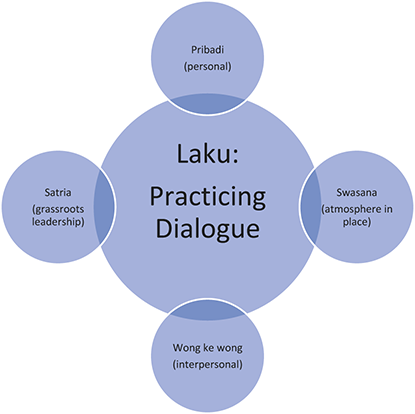
The mover needs to spend time coming to know their own background, learning to treat the environment as subject and practicing dialogue with other people. For the Amerta Movement practitioners we encountered, this develops into a dialogue with wider communities, with each person considering what they can offer in their social context. The aim is a personal, interpersonal, and ecological dialogue, where distinct ‘tunes’ can be in relationship with each other. Fundamental values include openness to change, treating every entity with equal value, welcoming diversity, and contributing to the community. This is practiced through movement enquiry with attention to sensing and feeling, decentralisation, opening and closing, flowing and stopping, responsiveness and transformation. Flexibility and responsiveness inform all stages of the practice, and we therefore consider that the values and practices themselves could keep adapting according to differences of environment and practitioners involved.
Amerta Movement–inspired ‘sharings’ and projects (such as interreligious events) may directly invite participants from different backgrounds. However, the practice does not always directly engage with conflicting groups, but rather focuses on respectful relations more generally. This does not mean avoiding challenges, since the artists describe movement strategies for dealing with ‘meeting at the crossroads’ of difference. However, dialogue in the practice is not generally about essentialising ‘opposing’ or conflicting groups. Barber and Saphakhun (Reference Barber, Saphakhun, Prentki and Breed2020, 370) suggest a ‘process of change [that] avoids the notion of resolving a conflict or solving a problem’ instead focusing on a ‘complex transformative outcome’. A less oppositional approach could be critiqued for being ‘power-evasive’ (Kondo Reference Kondo2018) by not dealing directly with political conflict. Instead, we view it as an opportunity to explore a holistic and movement-oriented approach.
Dialogue in Amerta Movement has a different logic – expanding out from the individual and their background, to the environment, to other people and the communities in each person’s life (Figure 19). While it could be said that people are already immersed in a dialogue all the time, Amerta Movement supports the conditions and capabilities for practicing dialogue within each of these layers. Unlike an oppositional motion (group to group), this expansive visualisation seems to shift into a vision of growing together with each other. Amerta Movement brings an embodied approach which cultivates values through movement practice, to create the conditions for dialogue, corresponding to Lederach’s view (1995, 26) of dialogue as ‘building awareness of self-in-context that produces individual growth and social change’. The process of learning this through movement can then become embedded in the daily lives of the participants, who can effect social change in their own communities.
Practicing dialogue in Amerta Movement – Expansion
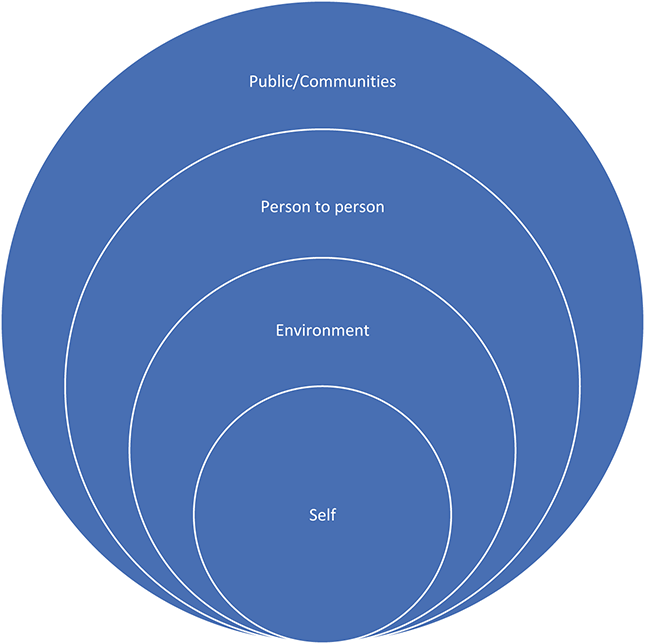
7.4 Final Reflections on Dialogue and Conflict
In this Element, we have identified how each person might take account for their own positions, backgrounds, and ways of interacting with the environment and with other people. However, we acknowledge that this takes place in a much wider social and political context. The focus of this research has been on how each person can take both responsibility and a sense of agency in their daily lives, creative activities, and community projects, through developing competencies and conditions for dialogue. We have tried throughout this Element to also articulate the complexities of this from an embodied point of view, where privilege and oppression can be felt and enacted. We propose to address difference in multiple ways through exploring personal awareness of positionality as the first step – what roles do I play in my community, what power do I hold, how can I enter a movement space with care? While conflict, anger, shame, jealousy, frustration, discomfort, or a range of other emotions can appear, the practitioners propose an acceptance and awareness of these emotions, with the aim to transform them through movement.
However, the fieldwork offers some interesting cues to explore conflict. While Amerta Movement doesn’t appear to be specifically engaging with ‘confrontation’ with its emphasis on artistic practice in relation to others, of course challenges do arise. The artists describe movement strategies such as pausing or stopping (Ibed, Djarot) in order not to lose oneself. Dialogue in conflict could be conceived of as a moving enquiry that asks: How can I find my own place in this conflict? How can I meet another, move away or towards, open or close? How can I follow the line of my movement in the face of barriers, how can we navigate being in this space together? How can I connect with nature and place to allow emotions to flow through and transform rather than staying stuck?
The context of Indonesia and the exchanges between cultures in Amerta Movement bring attention to the embodied effects of political, cultural, and social histories and the interaction of cultures in an increasingly globalised world. Critiques of a liberal framework question if it perpetuates existing power dynamics and inequalities, by focusing on individual actions rather than structural issues. In this research, we suggest that the aims for self-awareness, tolerance, and harmony are not simply individualistic, but aimed towards ‘coexistence between or among different communities, for example between different religious groups, which is problematic in Indonesia and also in the world’ (Riwanto, personal communication 19 August 2025). While there may be a focus on ‘pribadi’ or personal factors, to enhance self-awareness, there is also a focus on social projects as outlined in the research, in relation to religion and ecological issues for example. The grassroots social activism raised by the Amerta Movement practitioners invites further study to understand the range of social projects that exist, how these are developed through the movement practice, and how they explore global conflict, structural inequalities, and resource extraction. Perhaps a more useful term than conflict to contend with is ‘friction’ as described by Tsing (Reference Tsing, Harnish, Haenn and Wilk2016, 242–243): ‘Cultures are continually coproduced in the interactions I call “friction”: the awkward, unequal, unstable, and creative qualities of interconnection across difference’.
7.5 Conclusions
We have argued that dance and somatic practices have much to contribute to the research and practice of dialogue. Somatic practices more broadly can reveal cultural embodiment – touch, voice, and other interpersonal dynamics in public and private spaces. For example, if my habit is to stay close to the edge of the room rather than the centre, to prefer certain kinds of environments, or to move further away from specific gendered bodies rather than close by – these can all be explored in movement. Through this, the participant can come to recognise the value of their habits but also explore other possibilities as part of their repertoire. We have shared specific concepts and practices in Amerta Movement which can be applied in future work on dialogue, moving away from an oppositional model to a more layered and expansive enquiry in motion.
We have shared knowledge from Prapto and his ‘dialoguers’ from Java, Sumatra, and Bali, from different religious backgrounds, generations, and genders, to consider this theme of dialogue through movement. Prapto drew heavily on the influences of his Javanese heritage and philosophy as part of his guiding worldview. At the same time, he aimed in Amerta Movement to put these in dialogue with the new environments and people that he interacted with. Through his cultural heritage, as well as his work in a wide variety of contexts, Amerta Movement offers a valuable framework for exploring dialogue across difference as an ongoing practice.
Undertaking this research entails a reflection on decolonial methods with care and consideration. Through the research we attempt to continue the work of transcultural somatics, while being mindful of the constellations of power and privilege at work in these processes. One way we attempt this is through listening to the words and movements of those practicing Amerta Movement in Indonesia. As a decolonial approach, this aims to unpick the privileging of some types and geographies of knowledge over others. At the same time, we explore this within a scholarly setting to disrupt the kinds of knowing that are circulated in our disciplinary fields. Sharing the narratives and expression of writers and movers on Amerta Movement in Indonesia through our web resource is yet another facet that we have explored alongside this Element.
Another aspect to consider is how we as researchers can continue to embed the research in our own communities. Meehan has been offering a series of movement practices both online and in her local community in the UK through somatic classes and outdoor movement events.Footnote 34 This research took place during and in the aftermath of the pandemic, which shifted the ways in which many people live and work. There have been a range of challenging psycho-social impacts, with fears around social interaction and touch (Flaskerud Reference Flaskerud2022). There has been an increase in remote and hybrid working in many industries, which can reduce a sense of social and local connection (Pronk Reference Pronk2024, Clark Reference Clarke2025). This research has especially yielded new insights on the interconnected nature of moving together and building community. For Meehan, the process has supported the development of practices that can be offered to reconnect with embodiment, place, and community – as a way in which indigenous religious studies has started to inform her perspectives on practice in the UK.
For Maarif, the research has inspired new ideas to develop ‘practice research’ for the study of dance/art in religion. This approach has been developed further with students and artists in Java, with ideas from this research incorporated into the curriculum for research and community engagement.Footnote 35 For the study of religion, creative practices inform new insightful and practical ideas to incorporate into decolonisation projects. This is particularly useful to scholars who aim to decolonise the study of religion and yet face challenges to dismantle hegemonic colonial perspectives and structures. A significant decolonising perspective from Amerta Movement is that individuals are relational and dialogical, extending beyond human beings, to the environment, space, and time. Well-being is shared, as life is. Knowledge should also be oriented towards the well-being of all, towards ecocentric knowledge production.
Finally, we argue that dialogue is a relational dance and somatic practice that supports connection while making space for difference. We suggest that the living, sensing body and movement expression can be brought to the forefront in practice and research on dialogue. We explore dialogue through movement that encourages relationality and decentres the virtuosic performer/leader (whether in dance, cultural, or religious contexts). This approach ascribes subjectivity to objects and places, tuning into shared atmospheres. A kind of embodied rhetoric is used to engage audiences and innovate creative approaches to community-based social projects. Amerta Movement, we suggest, offers an embodied practice or laku for self-cultivation, connection with place and interaction with people, embedding values that support dialogue, towards social and ethical action through creative movement practices.
Acknowledgements
With thanks to all who have supported us along the way, these ‘pillars’ have supported the research to flourish: The Leverhulme Trust International Academic Fellowship, C-DaRE at Coventry University, CRCS at Universitas Gadjah Mada, Ribka Barus, Rifa Fitriana, David Akbar, M. Rizal Abdi, Sandra Reeve, Helen Poynor, Keith Miller, Brian McGovern, Andrew Carey, Melati Suryodarmo, and Galih Naga Seno. Thanks for editorial support goes to the Cambridge University Press team, Janice Hinckfuss, Dee Reynolds, and Fintan Walsh, as well as our peer reviewers. We would especially like to thank our generous research participants and contributors, especially: Sitras Anjalin, Agus Bimo Prayitno, Djarot B. Darsono, Ibed Surgana Yuga, Alexander Gebe, Widya Ayu Kusumawardani, Diane Butler, Riwanto Tirtosudarmo, Sahid Widodo, Zen Zul, Panji Wibowo and many more who contributed to conversations, activities and the online resource. With thanks to Suprapto Suryodarmo for supporting the seed of the idea.
About the Author
Dr. Emma Meehan is Associate Professor in Dance at Coventry University’s Centre for Dance Research. She received a Leverhulme International Academic Fellowship for research on Amerta Movement in Indonesia. She coordinates the international Somatic Practice and Chronic Pain Network. Research interests include dance, somatic practices, wellbeing, practice as research and transdisciplinarity.
Dr. Samsul Maarif is a faculty member, and head of MA program of the Center for Religious and Cross-cultural Studies, Universitas Gadjah Mada. He is coordinator of the consortium for Intersectoral Collaboration for Indigenous Religions (ICIR). His research interests include religions of indigenous people, ecology, art and religion, and decolonisation.
Senior Editor
Birkbeck, University of London
Fintan Walsh is Professor of Performing Arts and Humanities at Birkbeck, University of London, where he is Head of the School of Creative Arts, Culture and Communication and Director of Birkbeck Centre for Contemporary Theatre. He is a former Senior Editor of Theatre Research International.
Associate Editors
Royal Central School of Speech and Drama, University of London
Duška Radosavljević is a Professorial Research Fellow at the Royal Central School of Speech and Drama. Her work has received the David Bradby Research Prize (2015), the Elliott Hayes Award for Dramaturgy (2022) and the ATHE-ASTR Award for Digital Scholarship
Rutgers University
Caridad Svich is a playwright and translator. She teaches creative writing and playwriting in the English Department at Rutgers University-New Brunswick.
Advisory Board
Siân Adiseshiah, Loughborough University
Helena Grehan, Murdoch University
Ameet Parameswaran, Jawaharlal Nehru University
Synne Behrndt, Stockholm University of the Arts
Jay Pather, University of Cape Town
Sodja Zupanc Lotker, The Academy of Performing Arts in Prague (DAMU)
Peter M. Boenisch, Aarhus University
Hayato Kosuge, Keio University
Edward Ziter, NYU Tisch School of the Arts
Milena Gras Kleiner, Pontificia Universidad Católica de Chile
Savas Patsalidis, Aristotle University, Thessaloniki, Greece
Harvey Young, College of Fine Arts, Boston University
About the Series
Contemporary Performance Texts responds to the evolution of the form, role and meaning of text in theatre and performance in the late twentieth and twenty-first centuries, by publishing Elements that explore the generation of text for performance, its uses in performance, and its varied modes of reception and documentation.
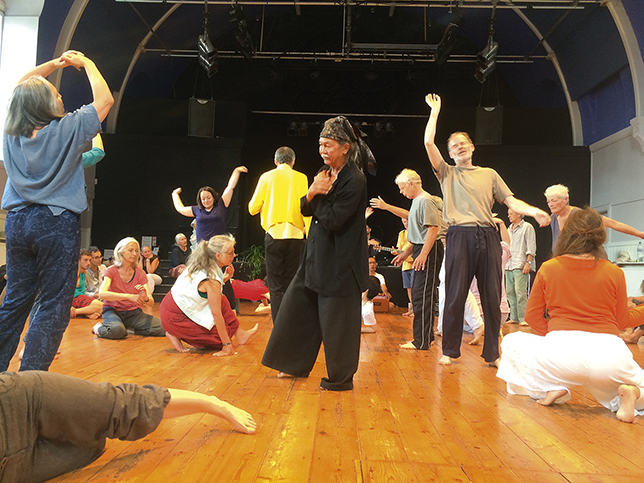
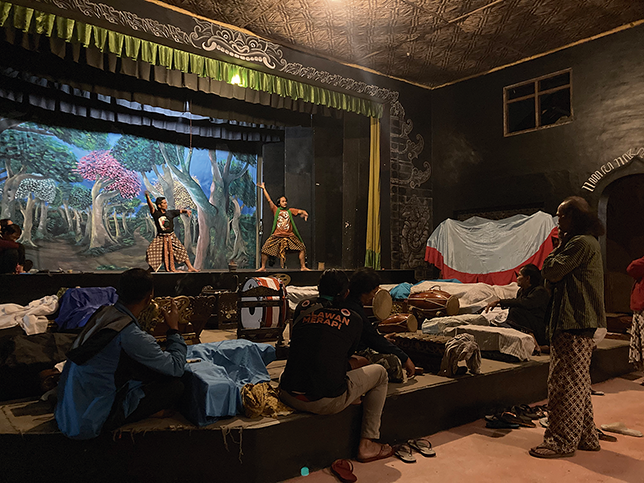
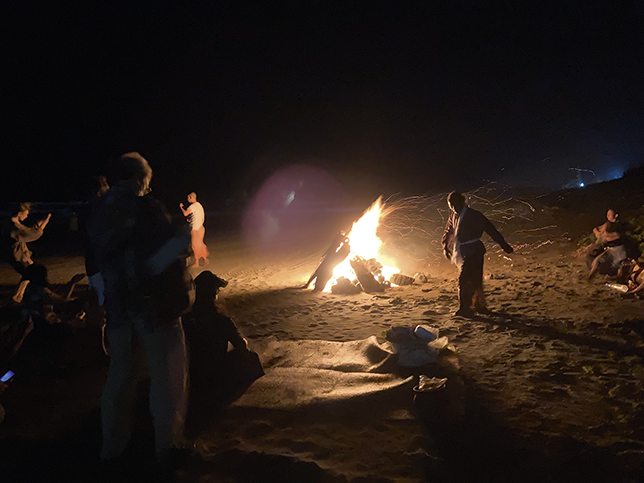
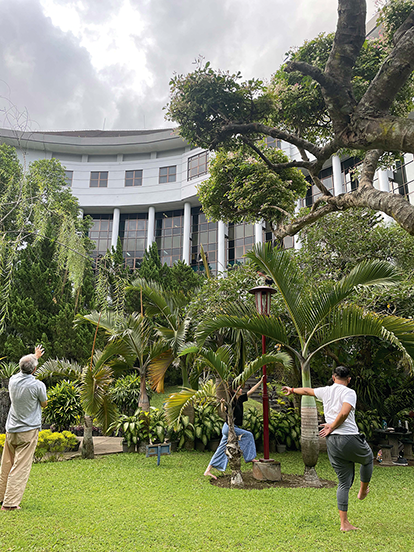
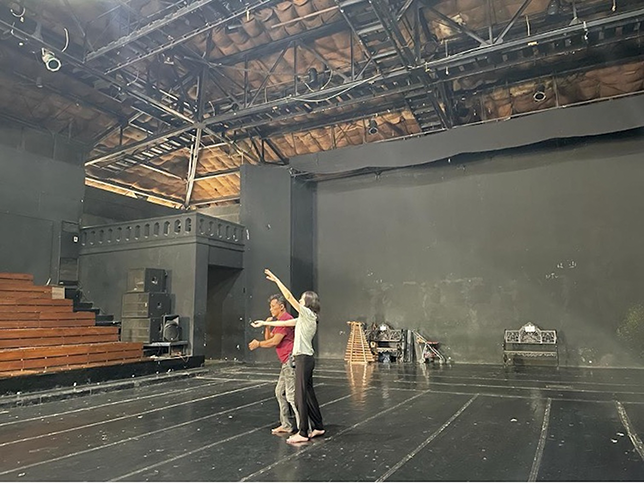
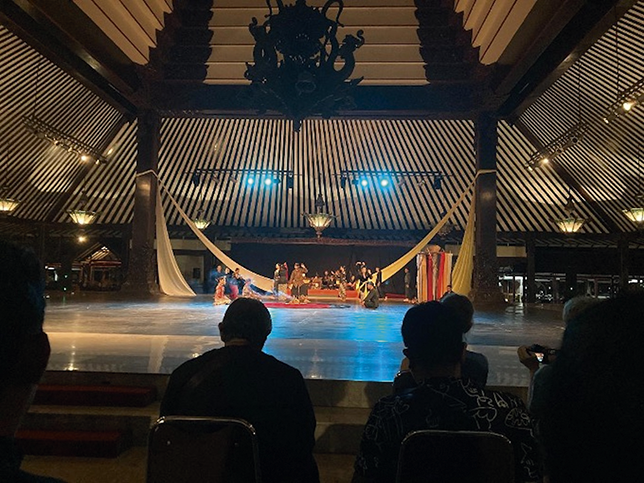
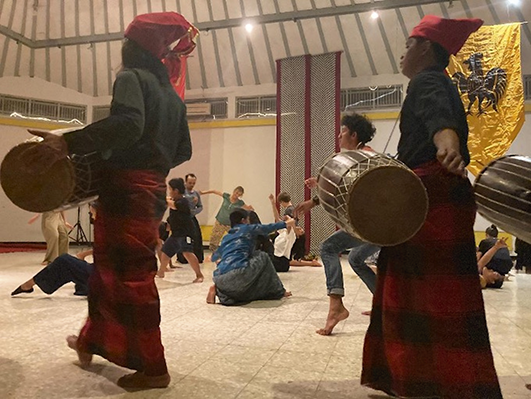
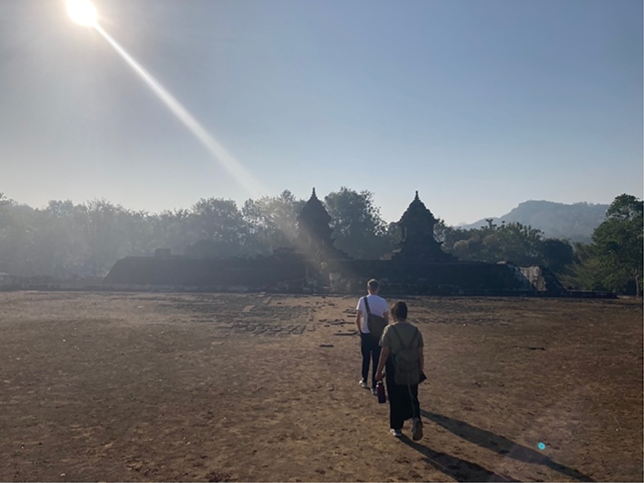
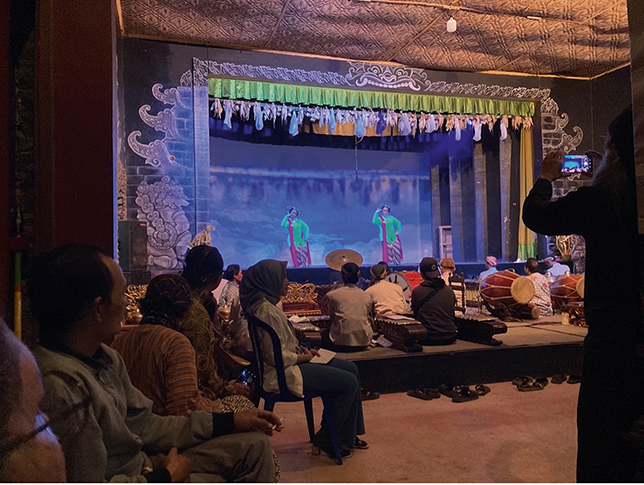
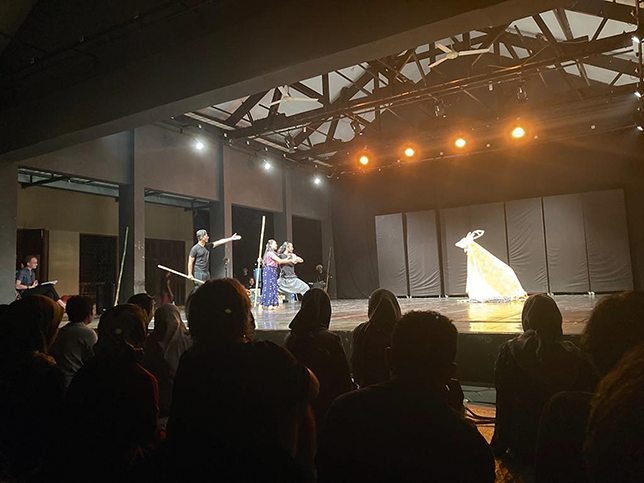
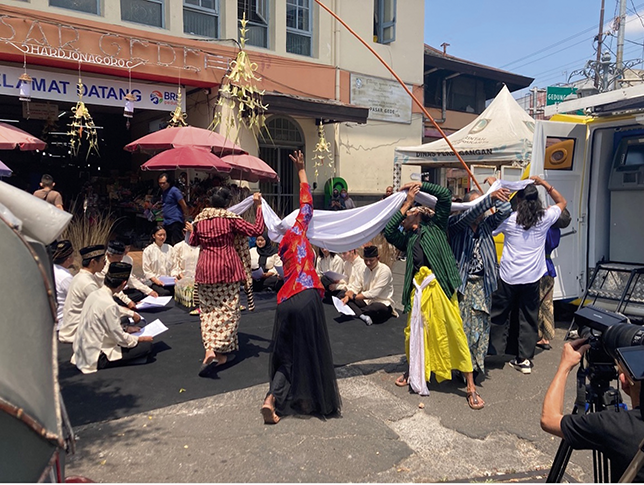
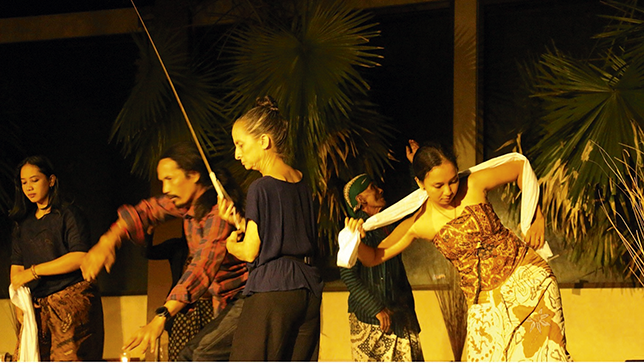
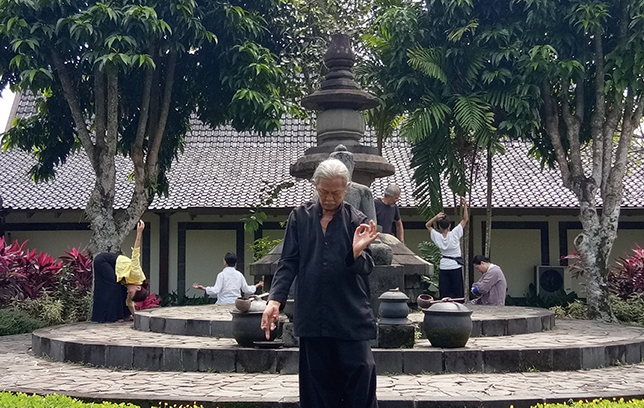
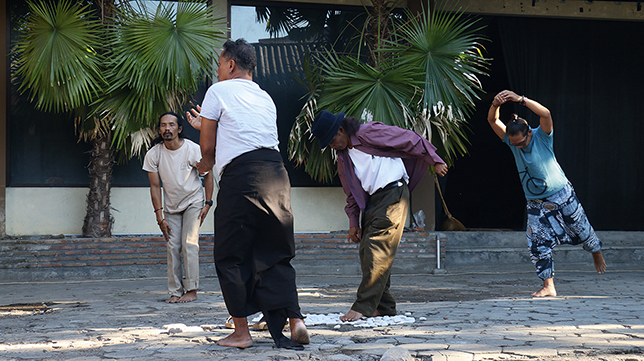
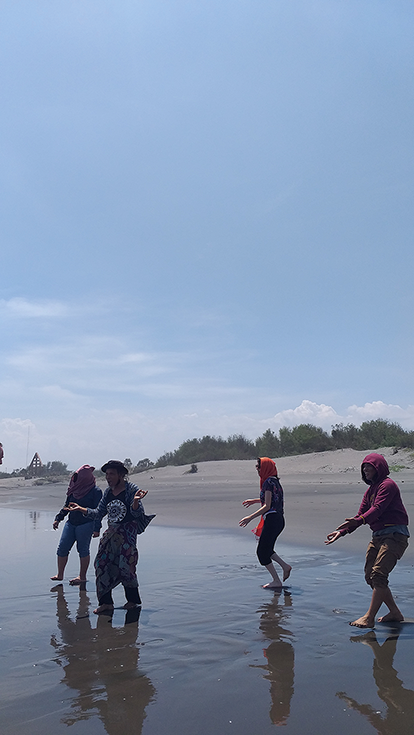
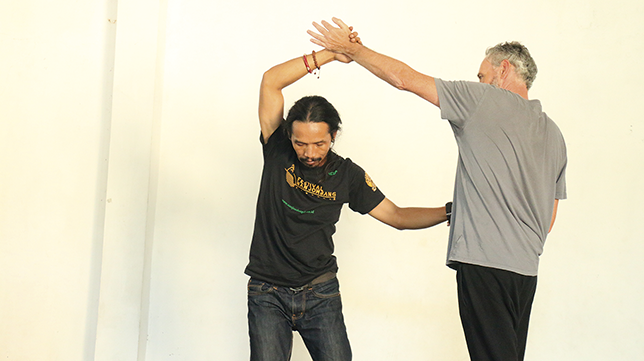
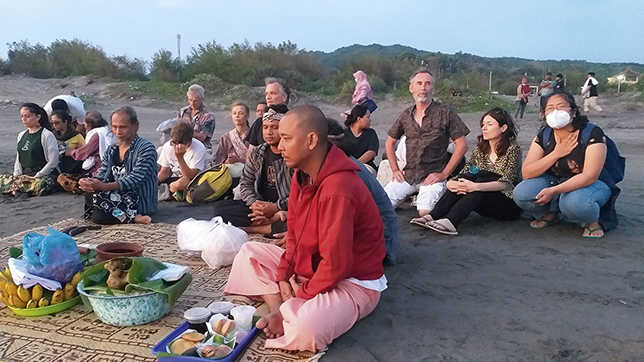
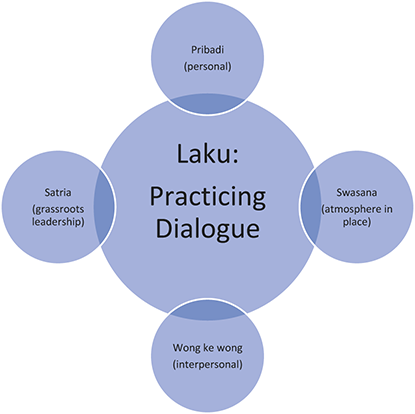
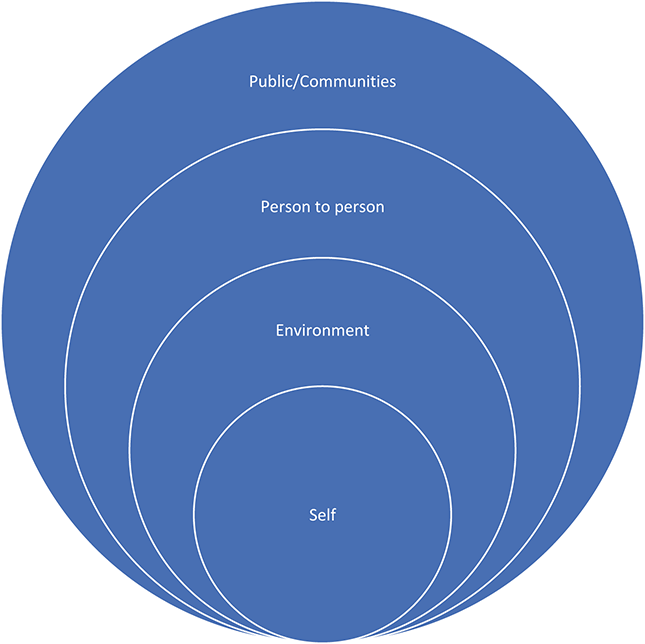

 Open access