

Introduction
Climate change is altering growing seasons, raising the likelihood of weather shock events and influencing the spread of agricultural pests and diseases. Across sub-Saharan Africa, this has resulted in higher temperatures, new and greater pest and disease pressures, increased incidence of drought, floods and wind damage (Mafongoya et al., Reference Mafongoya, Gubba, Moodley, Chapoto, Kisten, Phophi, Ayuk and Unuigbe2019; Schlenker and Lobell, Reference Schlenker and Lobell2010; Stuch et al., Reference Stuch, Alcamo and Schaldach2021). These changes present risks that are disproportionally felt by the smallholders who dominate African agricultural production, often depending on rain-fed agriculture and with limited capacity to respond to shocks (Muchuru and Nhamo, Reference Muchuru and Nhamo2019; Sani and Chalchisa, Reference Sani and Chalchisa2016).
Drawing on crop diversity is one of humanity’s most established methods to improve agricultural resilience and productivity. Crop diversity provides the fundamental genetic traits for breeders to develop new varieties, as well as the varieties from which smallholders can use to support diverse livelihoods and household needs (Dempewolf et al., Reference Dempewolf, Krishnan and Guarino2023). Growing a wide selection of crops allows farmers to hedge their bets for a harvest in uncertain conditions, consume nutritious diets, support local livelihoods and foster local biodiversity (Kozicka et al., Reference Kozicka, Groot and Gotor2019; Vernooy, Reference Vernooy2022). However, climate change and changing farming systems are causing crop and varietal diversity to be lost from sub-Saharan fields, leaving farmers with a narrow array of crops to face changing growing conditions (Khoury et al., Reference Khoury, Brush, Costich, Curry, de Haan, Engels, Guarino, Hoban, Mercer, Miller, Nabhan, Perales, Richards, Riggins and Thormann2022). Sustaining food security in these areas depends on farmers being able to rapidly adapt to these changing conditions, so as to minimise risks from yield variability and losses to local food availability. The question is how best to support farmers with useful crop diversity with the speed needed to face rising production pressures and demands.
One obvious answer is to develop improved varieties for farmers, and indeed this is the strategy used by many agricultural research and breeding organisations (Agra, 2017). However, these programmes require a long period of time for varietal development and tend to target a limited selection of major or cash crops, relying on a formalised business model of repeat purchase from agro-dealers for the ongoing development and production of these varieties (Chinsinga, Reference Chinsinga2011; Odame and Muange, Reference Odame and Muange2011). This system functions for a handful of African crops but is not neither financially viable, nor competitive for the much larger range of crops smallholders rely upon. Instead, farmers depend upon informal seed networks for their entire range of crops for livelihoods and household nutrition (McGuire and Sperling, Reference McGuire and Sperling2016). These informal networks are efficient and effective at sharing varieties but may struggle to access new diversity from outside local networks or ensure persistent supply of specific varieties where shocks or harvest failures have exhausted local stores (Coomes et al., Reference Coomes, McGuire, Garine, Caillon, McKey, Demeulenaere, Jarvis, Aistara, Barnaud, Clouvel, Emperaire, Louafi, Martin, Massol, Pautasso, Violon and Wencélius2015). Further, while informal systems also circulate varieties that originate from formal systems, these varieties focus on cash and major crops, rather than broad crop diversity.
Since the privatised model of the formal seed system has struggled to deliver the broad crop diversity farmers need, and informal systems are unlikely to quickly supply crop diversity that is not locally available, the alternative might be more cooperative or public funded models of introducing crop diversity in local systems. This cannot be a one-time introduction of diversity but instead a long-term system that works with farmers’ changing needs and remains agile to adapt to changing pressures. There is therefore a need for collaborations that improve farmers’ access to agrobiodiversity for resilient livelihoods and nutritional security.
We argue that genebanks, particularly national genebanks, can be a strategic partner for climate adaptation that are often overlooked in farming communities. National genebanks offer something unique in that their collections tend to host a wide range of nationally important crop varieties that are well adapted for the range of local growing conditions and consumer preferences. It is the suitability of these collections that make national genebanks so well placed to rapidly respond to local farmers’ needs.
Yet, many national genebanks are not positioned to supply seed bulks to farmers and local seed systems. They conduct seed multiplication to maintain inventory and enough seeds for distribution of small amounts but not to conduct seed multiplication to supply farmers at the volumes achieved by seed producers, which requires substantial investment in land, labour and input. While direct distribution to farmers is also happening occasionally, the flow of seeds goes predominantly through research and crop breeding institutes (Friis-Hansen and Sthapit, Reference Friis-Hansen and Sthapit2000; Westengen et al., Reference Westengen, Skarbø, Mulesa and Berg2018). This missing direct link back from genebanks to farmers appears to present a missed opportunity for both supporting local resilience and conservation efforts. While there is great value in exchange between genebanks and researchers for crop improvement, so too could genebanks connect more directly with diverse farmers. Connecting national genebanks and farmers for direct germ plasm exchange could help farmers access locally adapted varieties that can offer resilience to pests and climate stresses. This same farmer-genebank collaboration could also reduce the time in identifying useful varieties and traits, raise the likelihood of conserving more locally valued varieties and enhance understanding of farmers’ needs for crop improvement.
Despite the potential benefits of farmer–genebank collaboration, few studies exist on farmer awareness of ex situ genebanks, the methods by which such farmer–genebank networks could operate, and even fewer on the impacts of such interactions (Westengen et al., Reference Westengen, Skarbø, Mulesa and Berg2018). Understanding farmer perceptions of genebanks and how genebank–farmer partnerships could operate could provide a model for national genebanks to strengthen farmers’ access to seeds.
This study evaluates the ‘Germplasm User Groups’ (GUGs) established by five national genebanks across sub-Saharan Africa as part of the Seeds for Resilience (SFR) project, managed by the Global Crop Diversity Trust. This paper is one of two separate studies on different components of the GUG interactions. The first paper focuses on the genebank perspective of designing and operating GUGs, while our paper explores the outcomes to farmers from being part of GUGs between 2022 and 2024. We investigate how GUGs changed farmers’ awareness of genebanks, use of agrobiodiversity and the farmer-reported benefits from this experience. We end with a discussion of these findings and recommendations from the farmers’ perspective of how to strengthen genebank–farmer linkages.
Before sharing our methodology for the impact evaluation, we share an initial overview of the GUG set-up. A complete summary of this approach is expanded upon in Weltzien et al. (in review) which focuses on the mechanism of how the genebanks formed GUG working groups with farmers across target agroecologies, and how this approach influenced the perspective of genebank staff towards closer farmer engagement.
Germplasm User Groups
GUGs were designed to support genebank–farmer interactions by facilitating a participatory forum for knowledge exchange and evaluation of genebank collections for local agricultural use. This approach was based on similar participatory partnership working models between plant breeders and farmer organisations (Christinck et al., Reference Christinck, Rattunde and Weltzien2019). The aim was for genebanks to take an active role in engaging farmers for conservation and use of crop diversity.
One national genebank took part from each of the five countries. These were the Ethiopian Biodiversity Institute, Genetic Resources Research Institute at the Kenya Agricultural & Livestock Research Organization in Nairobi, the National Plant Genetic Resources Centre at the Zambia Agriculture Research Institute, the National Centre for Genetic Resources and Biotechnology in Nigeria and the Plant Genetic Resources Research Institute in Ghana. GUG locations within each country were selected by the genebanks based on different agroecological zones known to be experiencing impacts to agriculture from climate change.
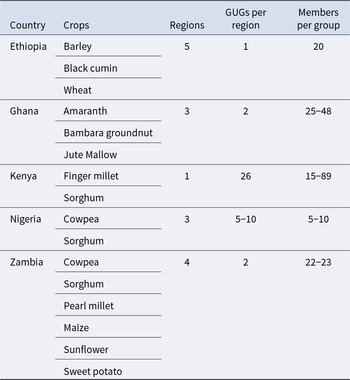
Each genebank identified existing farmer groups and focus crops for knowledge exchange, participatory assessment and seed distribution and exchange (Table 1). The GUG groups were generally established from existing farmer groups, through the help of extension agencies, NGOs and local research institutions. GUG activities were agreed between the genebank staff and GUGs at the start of the project and took place through meetings between 2022 and 2024. Activities focused on the trialling of genebank collections for farmer field conditions across demonstration plots. Multiple GUGs were established across study countries depending on crops and outreach. Members were invited after an initial discussion on the project goals. Involvement was voluntary and without financial incentive. In Zambia and Ethiopia, the farmers themselves selected which crops to work with while in Ghana, Nigeria and Kenya, the genebanks preselected the focus crops based on the diversity of their collections and relevance to resilience and food security.
Crop focus and number of GUGs by country
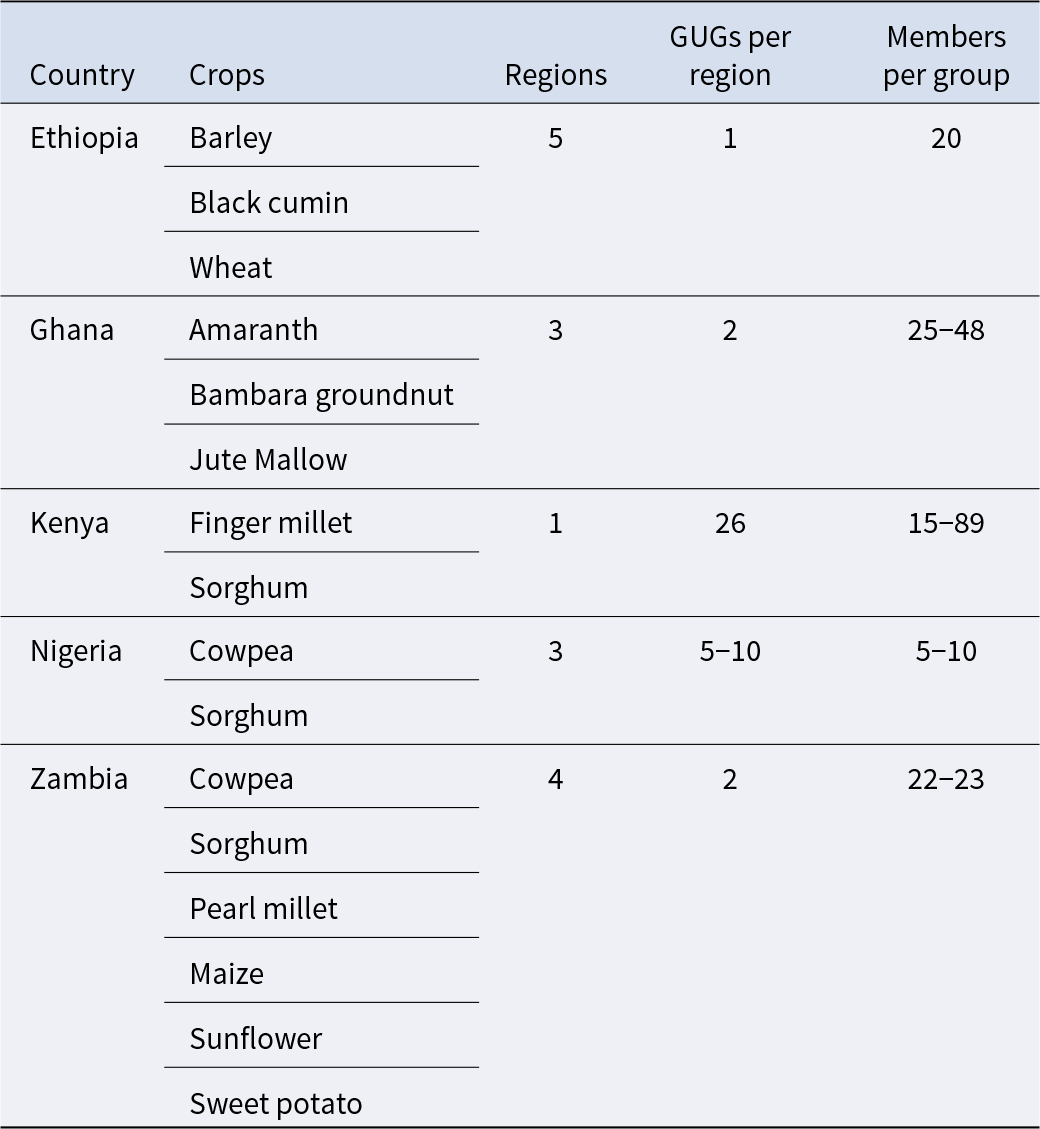
Table 1 Long description
The table summarizes, by country, the crops in focus, the number of regions covered, the number of GUGs per region, and the typical number of members per group. Ethiopia covers 5 regions with 1 GUG per region and groups of 20 members, focusing on barley, black cumin, and wheat. Ghana covers 3 regions with 2 GUGs per region and groups ranging from 25 to 48 members, focusing on amaranth, Bambara groundnut, and jute mallow. Kenya covers 1 region but has 26 GUGs per region, with group size ranging from 15 to 89 members, focusing on finger millet and sorghum. Nigeria covers 3 regions with 5 to 10 GUGs per region and 5 to 10 members per group, focusing on cowpea and sorghum. Zambia covers 4 regions with 2 GUGs per region and groups of 22 to 23 members, focusing on cowpea, sorghum, pearl millet, maize, sunflower, and sweet potato. Comparisons should be made cautiously because some values are ranges and the crop lists vary in length by country.
GUG activities are expected to continue beyond the SFR Project due to the connections established between GUGs and genebanks and the mandate of national genebanks to fulfil national requests for seed.
Methodology
The evaluation of GUGs was conducted in 2024 with national genebanks across five sub-Saharan countries using mixed methods. Country studies involved semi-structured interviews and a survey with farmers. Participants were invited from both GUG and non-GUG areas of comparative agroecologies and socio-economic status to provide for fair comparison of the intervention effects. The only exception to the comparative agroecologies was in Ethiopia, where political instability prevented field research at all GUG locations. Both GUG and non-GUG groups are distant from each other, and distant from genebank locations, requiring several hours driving to reach. Non-GUG participants were randomly selected from village administration lists by creating lists of all village members, numbering these households and then blindly drawing numbers from a bag for households to invite men or women from. No two respondents came from the same household. Smallholders across our focus areas are often associated with production or cooperative groups and so we did not select respondents on group membership beyond the GUGs, but did record group membership to control for the effect of this variable in our analysis. Participants from GUGs were either randomly selected using the same approach as with non-GUG members or, in the case of smaller GUG groups, systematically sampled to include the entire group. Involvement in the study was voluntary and anonymous, and that participation of the individual would not influence personal GUG activities or membership. All surveys and interviews took place in the preferred local language.
Our survey was designed to capture both socio-economic data, farming characteristics and key project indicators. Key project indicators included farmer’s perception of local crop diversity change, awareness of genebank activities, demand for genebank materials, performance of genebank materials in local conditions and benefits of GUG membership. This survey was designed to be applicable across all of the different arrangements in the five countries, while remaining consistent for comparison. The surveys were supervised by impact evaluator leads by country and enumerators entered data using the mobile app KoboCollect Toolkit. The country-level data were combined, cleaned analysed and visualised using Python and STATA17.
Quantitative data were analysed through descriptive statistics, chi-squared tests and logistic regression. Chi-squared tests were used to test associations in the data across categorical variables and logistic regressions were used to test the strength and direction of these relationships, as well as controlling for potentially compounding factors. To identify the effect of GUG membership on our dependent variables of interest, we estimated a series of logistic regression models to assess the effect of GUG membership and related covariates. The model we used is as follows:
 \begin{align*}& \,\,\,\,Logit\left({P\left( {{Y_i} = 1} \right)} \right) = {\beta _0} + {\beta _1}GU{G_i} + {\beta _2}Trai{n_i} + {\beta _3}Ex{t_i}\\
& \qquad\qquad\qquad\qquad + {\beta _4}Asso{c_i} + {\beta _5}Femal{e_i} + \mathop \sum \limits_{c = 1}^{C - 1} {\gamma _c}Countr{y_{ic}}\end{align*}
\begin{align*}& \,\,\,\,Logit\left({P\left( {{Y_i} = 1} \right)} \right) = {\beta _0} + {\beta _1}GU{G_i} + {\beta _2}Trai{n_i} + {\beta _3}Ex{t_i}\\
& \qquad\qquad\qquad\qquad + {\beta _4}Asso{c_i} + {\beta _5}Femal{e_i} + \mathop \sum \limits_{c = 1}^{C - 1} {\gamma _c}Countr{y_{ic}}\end{align*}where
β 0 = Outcome variable for individual i (e.g., used genebank seeds).
GUGi = GUG membership.
Traini = Respondent has received farm management training.
Exti = Respondent contact with extension workers.
Associ = Respondent membership in farmer groups.
Femalei = Respondent gender
Countryic = Country dummy variables (with one acting as a baseline).
This model was used to test independent variables as predictors of (i) genebanks knowledge, (ii) wanting to grow more crop diversity, (iii) using genebank material, (iv) perceived reduction in farmer varieties, (v) perceived reduction in community crop diversity; and (iv) expect diversity to Increase. Coefficients are presented as odds ratios through process of the exponential function . Marginal effects were calculated for country-level effects to provide predicted probabilities of conditional outcomes.
Qualitative data through semi-structured interviews were also used to triangulate findings from the quantitative research. These key informant interviews were analysed using a mixture of thematic analysis and grounded theory approaches.
The results from each country were written up independently by the country lead, and the aggregate findings are incorporated into this five-country overview using a convergent parallel approach combining quantitative findings with explanatory qualitative triangulation. As such, we combine both our results and discussion sections below, before concluding with our main findings and recommendations.
Results and discussion
Sample background
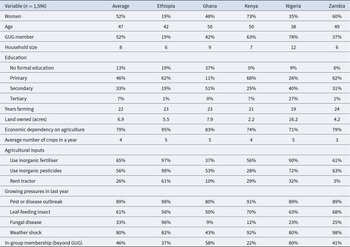
Our survey includes 1,596 respondents, spread across 15 regions and 36 villages in five countries. Moreover, 52% of this sample were involved in GUG activities (Table 2). Our sample is 51% women, although some countries showed more male or female representation depending on GUG composition. Respondents had an average age of 47, were most likely to have completed only primary school and came from households with around eight members. The average farmer in our sample has been farming for 22 years and owns 6.9 acres of land, although the standard deviation of land ownership varies with Kenyan farmers owning the least land (2.2 acres) and Nigerians owning the most (16.2 acres). Most respondents are smallholders, relying on rain-fed agriculture to provide around 79% of household income. On average, 65% of our sample use inorganic fertilisers and 56% use inorganic pesticides. Mechanisation varies across our sample but on average 26% rent a tractor. Farmers in our sample cultivate on average four crops in a year (Table 2).
Socio-economic and agronomic statistics of the sample
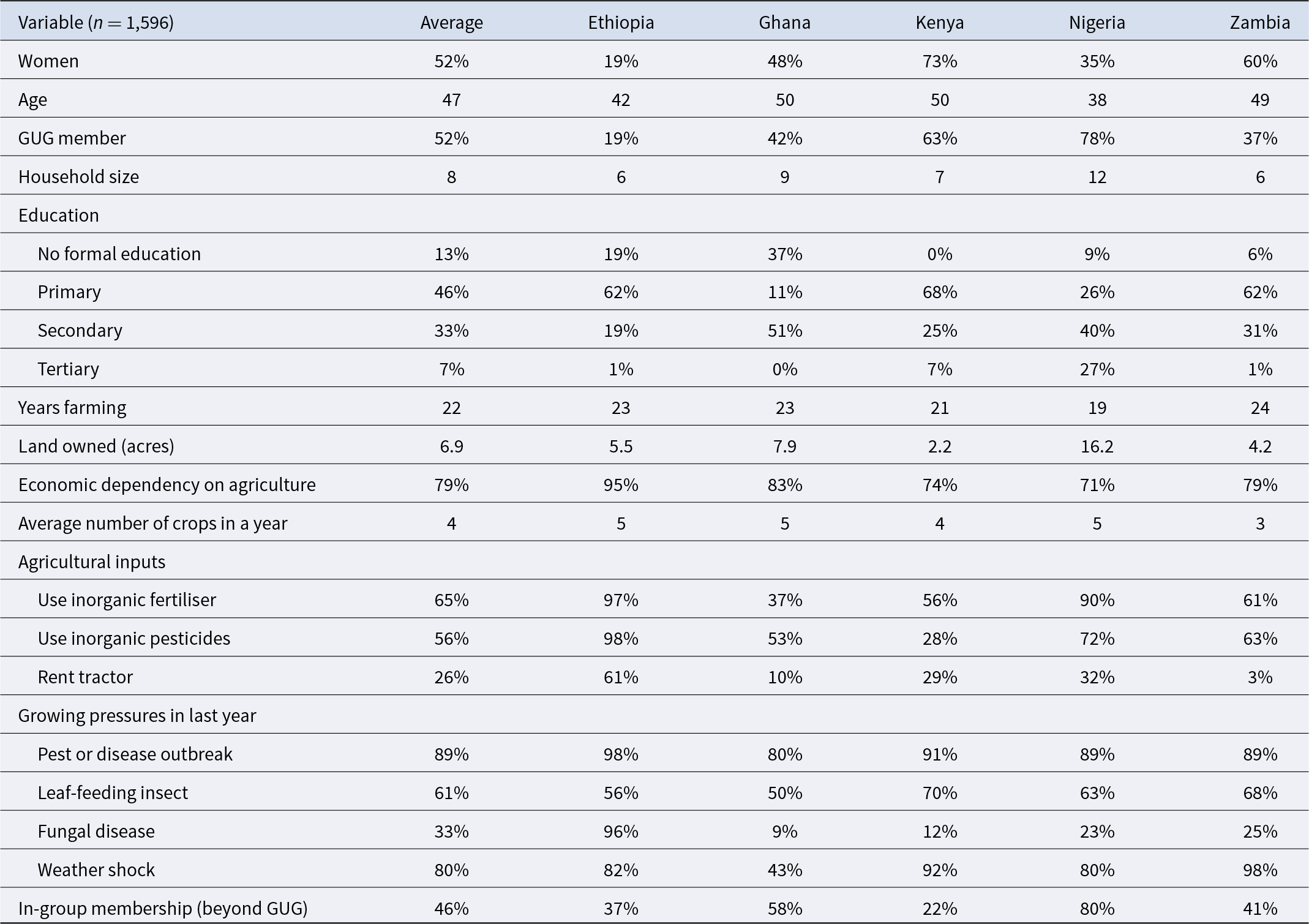
Table 2 Long description
The table summarizes socio-economic and agronomic characteristics for 1,596 survey respondents overall and by country (Ethiopia, Ghana, Kenya, Nigeria, Zambia). Overall, 52 percent are women, average age is 47, average household size is 8, and 52 percent are GUG members. Education is mostly primary (46 percent) or secondary (33 percent), with 13 percent reporting no formal education and 7 percent tertiary; Kenya reports no formal education at 0 percent, while Ghana has the highest no formal education at 37 percent. Respondents average 22 years of farming; land owned averages 6.9 acres but varies widely, from 2.2 acres in Kenya to 16.2 acres in Nigeria. Economic dependency on agriculture is high overall at 79 percent, highest in Ethiopia at 95 percent and lowest in Nigeria at 71 percent; farmers grow about 4 crops per year on average, ranging from 3 in Zambia to 5 in Ethiopia, Ghana, and Nigeria. Input use differs sharply by country: inorganic fertiliser use is 65 percent overall but reaches 97 percent in Ethiopia and 90 percent in Nigeria, while Ghana is lowest at 37 percent; pesticide use is 56 percent overall, very high in Ethiopia at 98 percent and lowest in Kenya at 28 percent. Tractor rental is 26 percent overall, highest in Ethiopia at 61 percent and lowest in Zambia at 3 percent. Reported pressures in the last year are widespread: pest or disease outbreak is 89 percent overall, weather shock is 80 percent overall (highest in Zambia at 98 percent and lowest in Ghana at 43 percent), and fungal disease shows the biggest contrast, from 96 percent in Ethiopia to 9 percent in Ghana. In-group membership beyond GUG is 46 percent overall, highest in Nigeria at 80 percent and lowest in Kenya at 22 percent. Percentages and averages are rounded, so small differences should be interpreted cautiously.
Survey results for all 1,596 respondents across the five countries. Percentages and values rounded to the nearest integer.
Farming challenges
Around 89% of our sample face challenges from pests and diseases. The nature of these biotic pressures varies slightly but the major threats reported are leaf-feeding insects and insects in general. Ethiopian farmers also report facing fungal risks to harvests, with 96% struggling with these pressures (Table 2). Subsequently, 56% of respondents use inorganic pesticides and fungicides. For abiotic pressures, 80% of respondents reported experiencing extreme weather events in the previous year. Ghanaian farmers were least likely to report this, with 57% having not experienced extreme weather events within the last year. Conversely, 98% of Zambian farmers experienced extreme weather events in the last year. Drought was consistently reported as the main weather pressure, which poses particular risks to respondents given that most lack access to irrigation.
Farmer groups
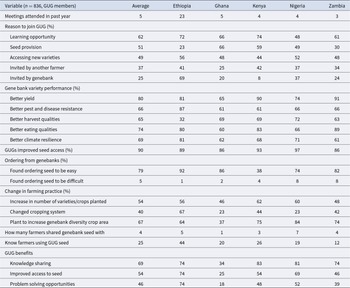
In addition to GUG membership, respondents are regularly associated with production or cooperative groups (46%), with this being highest in Nigeria where 80% of respondents report as belonging to another farming group while only 22% of Kenyan respondents belong to such groups. Farmers shared many motivations for joining GUG groups. The main reason, mentioned by 62% of GUG members, was the learning opportunity associated with taking part (Table 3). This desire for learning was mentioned by 10% more respondents than those who joined for seed, and 13% more than those who joined to access new varieties. It therefore seems the most widely expected benefit respondents saw in GUGs was not just the opportunity to gain physical material for farming but also to learn about the genebanks, and the potential use that might come from this learning. These three main reasons remained fairly consistent across countries. Being invited by other farmers was another common reason to join GUGs, but notably, the invitation from the genebank was a sufficient reason for 69% of Ethiopian farmers.
GUG member views
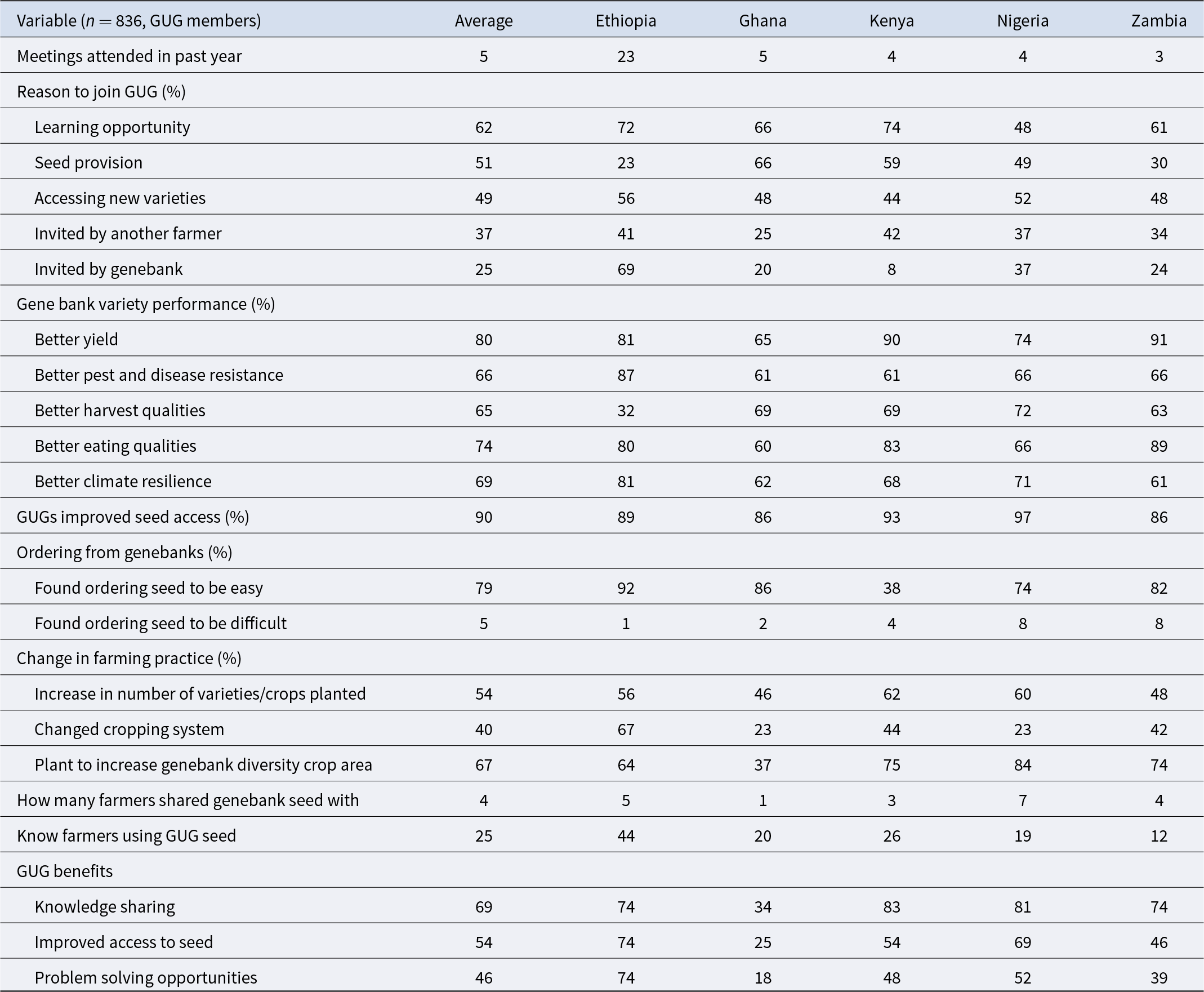
Table 3 Long description
Survey results summarize views and experiences of 836 GUG members overall and by country for Ethiopia, Ghana, Kenya, Nigeria, and Zambia. Meeting attendance averages 5 per year overall, driven by Ethiopia at 23 while other countries range from 3 to 5. Top reasons to join are learning opportunity at 62 percent overall and seed provision at 51 percent, with learning highest in Kenya at 74 and lowest in Nigeria at 48; genebank invitations vary widely, from 69 in Ethiopia to 8 in Kenya. Members report strong perceived performance of genebank varieties: better yield is 80 percent overall, highest in Zambia at 91 and Kenya at 90, and lowest in Ghana at 65; better eating qualities are 74 overall, reaching 89 in Zambia. Improved seed access through GUGs is high at 90 percent overall, peaking in Nigeria at 97. Ordering from genebanks is usually described as easy at 79 percent overall, but Kenya is notably lower at 38; difficulty is low overall at 5 percent, highest at 8 in Nigeria and Zambia. Reported practice changes include increasing varieties or crops at 54 percent overall and plans to expand area for genebank diversity crops at 67 percent, highest in Nigeria at 84. Seed sharing averages 4 other farmers overall, highest in Nigeria at 7 and lowest in Ghana at 1; knowing other farmers using GUG seed is 25 percent overall, highest in Ethiopia at 44 and lowest in Zambia at 12. Reported benefits emphasize knowledge sharing at 69 percent overall, especially in Kenya and Nigeria at 83 and 81, while Ghana consistently reports lower benefits across categories. Values are rounded, so small differences between countries may reflect rounding rather than meaningful gaps.
Survey results for all 836 GUG members across the five countries, rounded to the nearest integer.
GUG members attended an average of five meetings over 2023–2024, but this number is slightly skewed by the average of 23 meetings reported by Ethiopian GUG members held over the same time (Table 3). Ethiopian GUG meetings were attended by an average of 18 people, and 39 for the remaining countries. Ethiopian GUGs therefore had nearly five times the number of meetings, but often in smaller group sizes than the other locations.
GUGs raise awareness of genebank activities
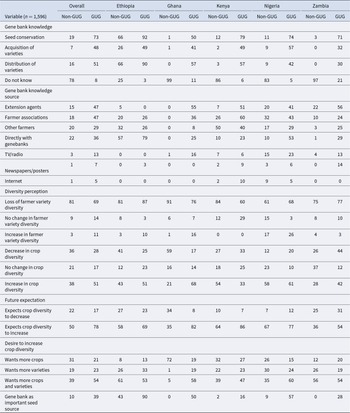
One key objective of GUGs was to raise awareness and understanding of genebank roles and activities. Besides Ethiopia, the national genebanks in this study do not have regular exchange opportunities with farmers and, as such, we expected that farmers across our study locations would have limited knowledge of the existence and operations of genebanks. These genebanks were also geographically distant from our study locations. Indeed, we find that 78% of non-GUG members answer that they do not know what a genebank is (Table 4). Logistic regressions show that GUG membership was a strongly significant determinant for knowledge of genebanks, with GUG members being far more likely to identify more genebank activities (odds ratio of 48.9, Table 5).
Indicators for survey results by GUG membership
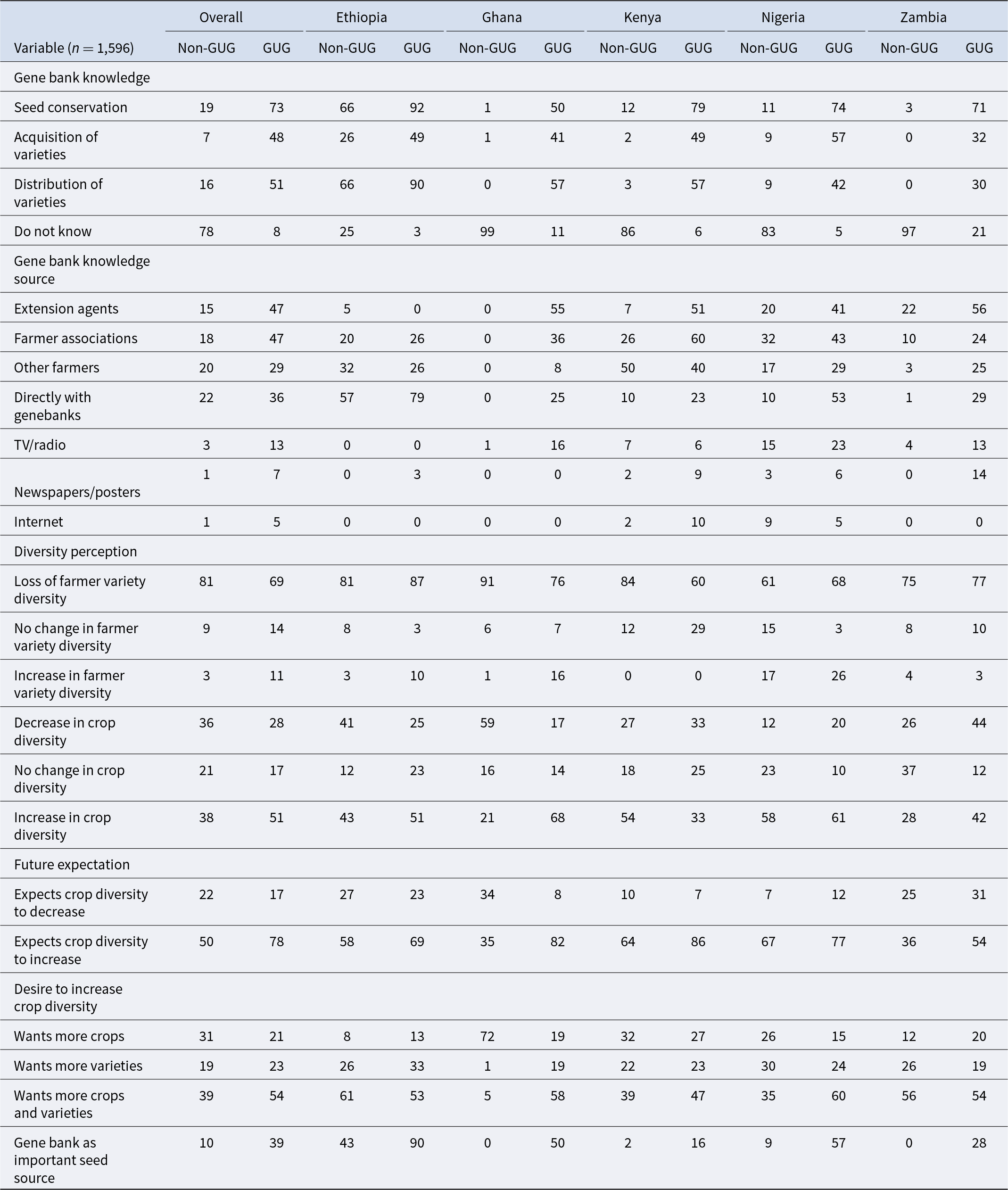
Table 4 Long description
Percentages compare survey indicators for GUG members versus non-members overall and within Ethiopia, Ghana, Kenya, Nigeria, and Zambia. Across all respondents, GUG members report much higher genebank knowledge: seed conservation 73% versus 19%, acquisition of varieties 48% versus 7%, and distribution 51% versus 16%, while “do not know” drops to 8% from 78%. Knowledge sources differ: among GUG members, extension agents and farmer associations are each 47% overall, and direct contact with genebanks is 36%, compared with 15%, 18%, and 22% for non-members. Country patterns show especially large gaps in Ethiopia, where genebanks are seen as an important seed source by 90% of GUG members versus 43% of non-members, and genebank knowledge is high for GUG members across seed conservation, acquisition, and distribution. In Ghana and Zambia, non-members most often report not knowing about genebanks, while GUG members report substantially more knowledge and more reliance on extension agents and associations. Perceptions of diversity are mixed: most groups report loss of farmer variety diversity, but GUG members more often report increases in crop diversity overall, 51% versus 38%, and more often expect crop diversity to increase in the future, 78% versus 50%. Desire to increase diversity also differs, with GUG members more likely to want both more crops and more varieties, 54% versus 39%. Values are rounded percentages, so small differences may reflect rounding rather than meaningful change.
Survey results for all 1,596 respondents. All values are reported as percentages, rounded to the nearest integer.
Regression results of key outcomes

Table 5 Long description
The table reports odds ratios from logistic regression models linking five characteristics to six outcomes about genebanks and crop diversity perceptions. GUG members show the largest effects: much higher odds of knowing about genebanks and using genebank seeds, higher odds of wanting more crops or varieties, and higher odds of expecting diversity to increase; they also report lower odds of perceiving reductions in farmer varieties and community crop diversity. Farm management training is associated with higher odds of genebank knowledge, wanting more crops or varieties, using genebank seeds, and expecting diversity to increase, with little to no change for perceived reductions. Contact with extension agents is linked to higher odds of genebank knowledge but lower odds of using genebank seeds and lower odds of perceiving a reduction in farmer varieties; it shows little change for other perception outcomes. Membership in a farmer association is associated with higher odds of genebank knowledge and seed use and higher odds of perceiving reductions in farmer varieties and community crop diversity. Being female is associated with higher odds of genebank knowledge and seed use, with minimal differences on the perception outcomes. Model fit varies across outcomes, with the highest pseudo R squared values for genebank knowledge and genebank seed use and lower values for the perception models, so interpret smaller effects cautiously.
Model y = ‘target dependent variable’ (GUG membership, training in farm management, contact with extension agents, member of farm association, gender, country). Number of observations for all = 1596. Table shows the odds ratios taken from the logistical regression coefficients, where values higher than 1 have a positive effect, values of 1 have no effect and values lower than 1 have a negative effect. ’*’ < 0.05, ‘**’ < 0.01, ‘***’ < 0.001. Country controls were included in all of these models, with the marginal effects of countries across the dependent variables expanded on in Table 6. Variance inflation factor scores were all below 2.0, indicating no problematic multicollinearity among explanatory variables.
Nearly all GUG members (92% of individuals) identify the role of genebanks, with 73% of GUG users knowing that genebanks are involved in seed conservation, 51% that genebanks distribute seed and 48% that genebanks also collect seeds. This is compared to 19%, 16% and 7% for the same categories respectively for non-GUG groups, and 78% of non-GUG members did not know about genebanks. In addition to GUG membership, we find that access to support systems such as training, contact with extension and membership in other farmer associations significantly affected knowledge regarding genebanks, but the effect size was much smaller than GUG membership (2.66, 1.86 and 2.53, respectively). This finding shows the importance of local support systems for raising awareness around genebanks, their functions and uses, but also how much more effective GUGs were for improving this understanding. Gender also had a small but significant effect with the odds being slightly higher of women having greater knowledge of genebank activities (1.58).
All country controls showed a small but significant effect on genebank knowledge, suggesting other contextual factors across countries that affect genebank knowledge. Based on the logistic regression, the predicted probability of a country on genebank knowledge, while holding other controls at their mean levels, show that Ethiopians were most likely to have knowledge of genebanks (Table 6). This can be explained by interview findings of the prevalence of Ethiopian community seed banks (CSBs) across all sample areas, which conserve local germ plasm and share this with members to grow and restock. The Ethiopian genebank works with these CSBs to supply seed and train farmers. Sample averages show that only 25% of Ethiopian farmers do not know what a genebank is, regardless of GUG membership (Table 4).
Marginal effects of country on key outcomes

Table 6 Long description
The table reports predicted probabilities for six outcomes by country: knowledge of genebanks, desire for more crops and varieties, use of genebank seeds, perceived reduction in farmer varieties, perceived reduction in community crop diversity, and expectation of increased diversity. Ethiopia stands out with very high knowledge of genebanks at 0.916 and the highest reported use of genebank seeds at 0.733, and it also has a relatively high expectation of increased diversity at 0.670. Ghana shows the lowest knowledge at 0.434 and the lowest desire for more crops and varieties at 0.292, while Kenya has the highest expectation of increased diversity at 0.770. Perceived reduction in farmer varieties is high across all countries, ranging from 0.671 in Nigeria to 0.819 in Ghana. Perceived reduction in community crop diversity is generally lower, with Nigeria lowest at 0.178 and Ghana highest at 0.408. Zambia has the lowest expectation of increased diversity at 0.444 despite a moderate desire for more crops and varieties at 0.570. These values are model-based predictions from logistic regressions with country effects, with other factors held constant, so they indicate adjusted differences rather than raw survey percentages.
All predicted probabilities are statistically significant at p < 0.001. Margins are estimated from logistic regression models with country fixed effects, holding other covariates at their means.
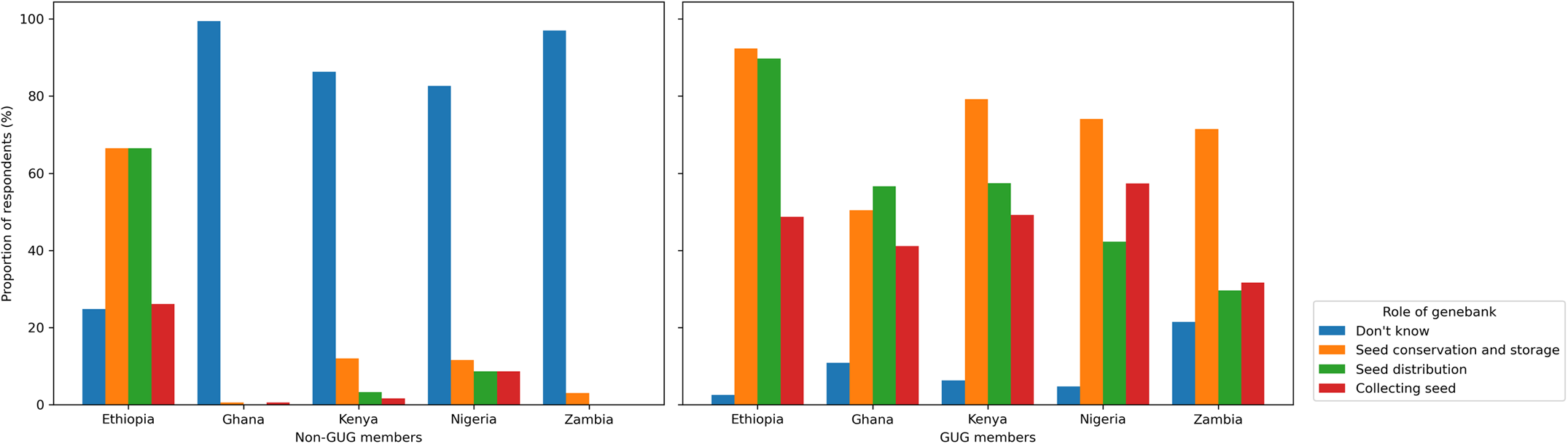
The other countries showed similar marginal effects on genebank knowledge, with respondents in Ghana being least likely to be knowledgeable about genebank activities. Grouping by GUG membership within countries shows contrast in farmers’ genebank knowledge, such as 99% of non-GUG members in Ghana and 97% of non-GUG members in Zambia do not know what a genebank is, compared to 11% of Ghanians and 21% of Zambian GUG members being unsure of genebanks (Fig. 1). Overall, GUG members were much more likely to know about genebanks, and understood a greater range of their activities. Respondents across the sample drew on a range of knowledge channels to access this genebank-related information (Table 4). Notably a greater number of GUG members appear to be drawing on a wider range of channels to learn about genebanks, particularly; extension agents, farmer associations, other farmers and other GUG members. GUG members themselves are a source of information for both GUG and non-GUG members and were likely a driver for learning in farmer association channels. This demonstrates the potential of GUGs in spreading awareness of genebank activities. Few farmers however draw on all information sources, with non-GUG members drawing on one or two sources, while most GUG members draw on two to three.
What respondents reported the role of genebanks to be, with the sample split by country and GUG membership (n = 1,596).

Figure 1 Long description
The image contains two grouped bar graphs comparing the role of genebanks across five countries: Ethiopia, Ghana, Kenya, Nigeria and Zambia. The left graph represents non-GUG members, while the right graph represents GUG members. The x-axis lists the countries and the y-axis represents the percentage, ranging from 0 to 100. The legend identifies four roles: ‘Don’t know’, ‘Seed conservation and storage’, ‘Seed distribution’ and ‘Collecting seed’. Bars are vertical and grouped by country, with colors differentiating roles. In the non-GUG members graph, ‘Don’t know’ is the dominant response, reaching nearly 100 percent in most countries. In the GUG members graph, ‘Seed conservation and storage’ and ‘Seed distribution’ show higher percentages, with ‘Collecting seed’ also notable. Ethiopia and Zambia have higher percentages for ‘Seed conservation and storage’ among GUG members. The graphs highlight the differences in genebank role awareness between non-GUG and GUG members.
Another way respondents could learn about genebanks would be through direct engagements. We found however that engagements with genebanks by respondents are rare, regardless of GUG membership. The only exception to this is found in Ethiopia, where 57% of non-GUG and 79% of GUG reports directly working with genebanks, which interviews find to be due to Ethiopian respondents working with community seed cooperatives where genebank staff operate. Perhaps unsurprisingly given the distance of our study areas from genebanks we find in person visits to genebanks by respondents to be rare. The overall mean value of visits across respondents to genebanks was 6%, but this is again heavily influenced by the higher proportion of Ethiopian respondents who regarded engagements with CSBs as visiting the genebank. It therefore seems that GUG membership only increased direct visits to the genebank in Ethiopia but otherwise caused no change in other countries.
In summary, GUGs increased awareness of genebank roles and activities, raised awareness about crop diversity and encouraged greater use of crop diversity through accessing genebank collections. Farmers generally have some understanding about genebanks, but GUG members are more likely to draw upon a wider range of knowledge channels to learn about genebanks. This included the promotion of peer-to-peer learning, whereby both GUG and non-GUG members learnt about genebanks and crop diversity through members, demonstrating the potential of GUGs as educational channels to share awareness of conservation and use of crop diversity. There were some country patterns to increased genebank understanding, with Ethiopia showing the strongest pre-existing farmer-genebank knowledge, likely because of regular engagement with CSB partnerships with the national genebank.
GUG membership raises farmer interest in crop diversity
In addition to knowing about genebanks, it seems likely that farmer interest in crop diversity could be a driver for encouraging interactions with genebanks. We found that GUG membership has a significant and the highest effect on raising demand for more crops and varieties (odds ratio of 1.7, Table 5). Farm management training and being a member of other farmer groups also increased the odds of wanting to increase crop diversity (1.55 and 1.34, respectively), while contact with extension agents and gender had no effect on desire for greater crop diversity. Countries showed some significant variation in this desire for more crop diversity. While we found broad farmer interest in growing more crops and varieties, marginal effects show that this was most sought after by Ethiopian and Zambian respondents (64% and 57%, respectively, Table 6). Ghanian respondents were least likely to show a demand for greater varietal and crop diversity (a predicted probability of 29%, Table 6). GUG interest in crop diversity was supported by Kenyan interviews, where farmers cited growing crop diversity as a core strategy to buffer against climate variability, pests and soil degradation.
GUG members were 15% more likely than non-GUG members to want to increase both varietal and crop diversity (Table 4). Non-GUG members, on the other hand, were 11% more likely than GUG members to increase only the number of crops, but not varieties. Overall, it seems that while the majority of respondents are generally interested in increasing crop diversity in some way, GUG members prefer to increase both the number of varieties and crops. This may also indicate that GUG members have a better understanding of crop diversity, encompassing different crops and varieties within crop species.
One reason why GUGs likely raised interest in crop diversity is that GUG participatory activities found value in the varieties tested for evaluation. GUG members reviewed how genebank diversity collections ranked in performance against local varieties, based on several criteria: yield performance; disease and pest resistance; harvest quality, eating quality and; climate resilience. We found that GUG members consistently ranked genebank varieties as higher performing than local varieties across all of these areas: 80% for higher yields; 66% for better pest and disease resistance; 64% for better harvest qualities; 73% for better eating qualities and; 68% for better climate resilience (Table 3). These results should however be caveated in that GUGs tested several varieties in genebank collections along these criteria and so these results likely point to GUGs finding superior lines in these different areas, rather than stating that all genebank varieties or a single variety outperformed all local varieties. For instance, Kenyan GUG participants offered nuanced comparisons – acknowledging genebank varieties for better maturity and processing traits, yet still valuing certain local seeds for traits like bird resistance or storage life. These findings were consistent across countries, with the exception that most Ethiopian members felt genebank varieties provided a comparable harvest to locally grown options. Overall, the GUG participatory activities have the potential to uncover varietal options, which helped to increase farmer demand for crop diversity.
GUGs improved accessibility and use of crop diversity
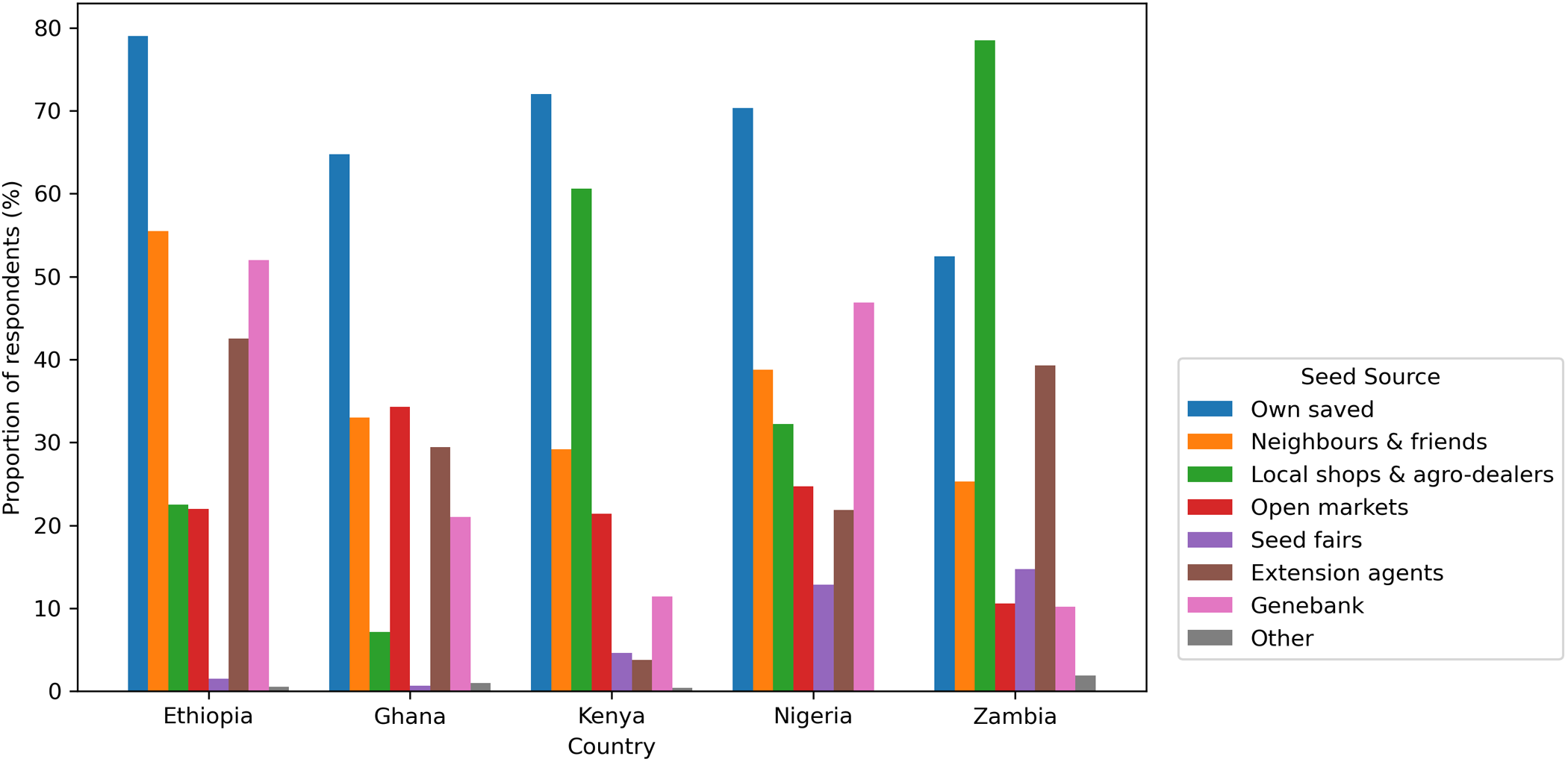
We found that respondents use a range of approaches to access these new varieties and crops. Respondents cite at least seven different channels as important seed sources. Own-saved seed is listed as one of the most important seed sources by respondents, with local shops and agro-dealers and neighbours and friends as the next main channels (Fig. 2). Grouping the sample by GUG membership however shows that 39% of the GUG members list genebanks as one of the most important channels, compared to 10% reporting this from non-GUG groups (Table 4). Looking further into this figure, we found that the majority of these non-GUG users are based in Ethiopia, where around 43% of non-GUG users list obtaining seeds through genebanks as one of their most important sources of seed. This same pattern for non-GUG users collaborating with genebanks was not as prominent in the other focus countries. Despite this influence of Ethiopian genebank connections, we found that GUG members were 47% more likely than non-GUG members to see genebanks as an important source of seed. Nearly all GUG members projected increases to the number of farmers using genebanks as potential seed sources in the future. GUG membership therefore is related to increased likelihood of farmers perceiving genebanks as an important source of seed. When asked how GUGs affected their access to seed, 90% of respondents felt that GUGs increased access to crop diversity (Table 3). Reports of improved seed access are also consistent across genders, where 93% of men and 91% women reported some form of improvement to seed access through GUG groups.
Seed sources respondents report as important to them, split by country (n = 1,596).
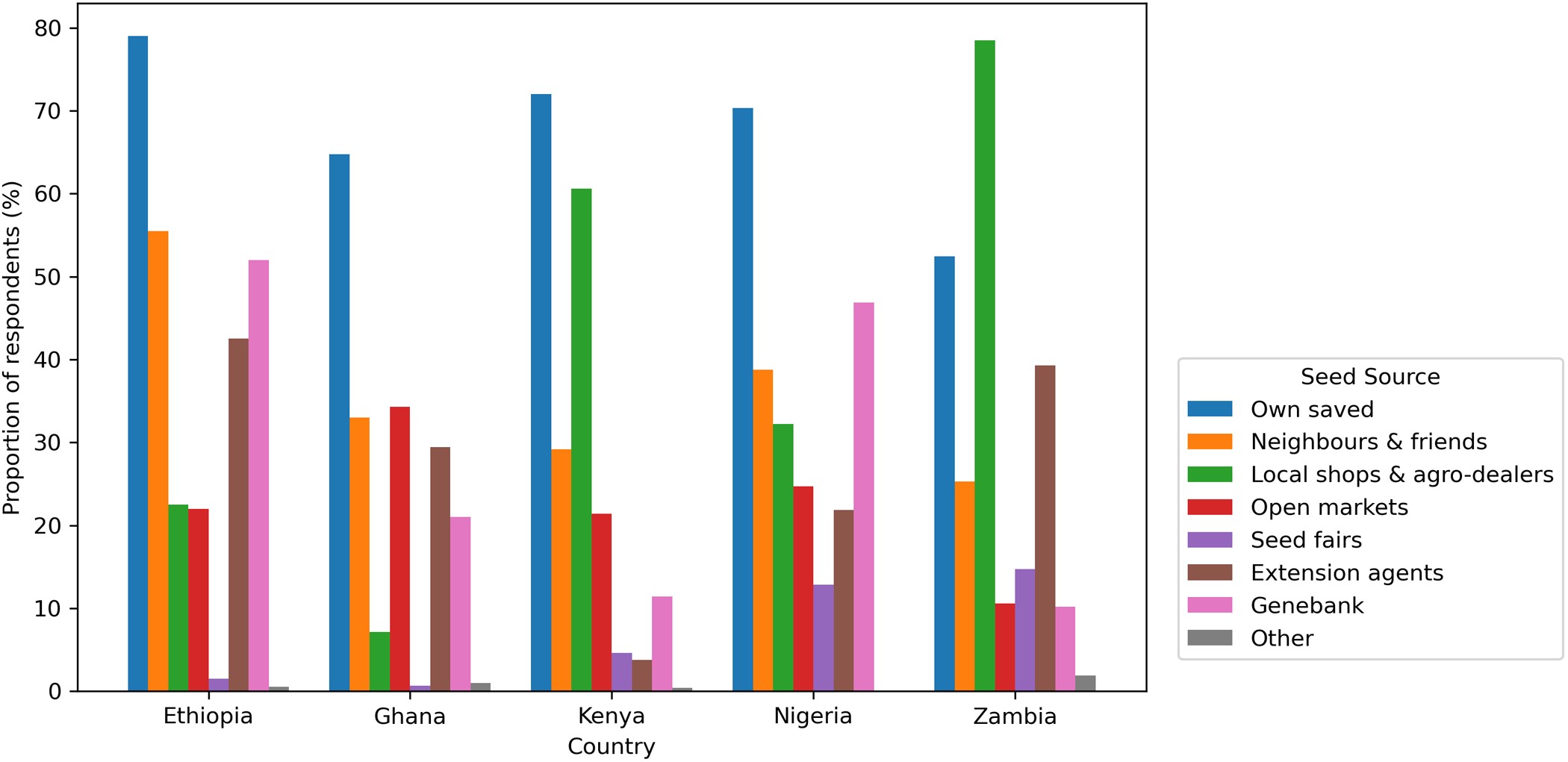
Figure 2 Long description
A grouped bar graph with the title Seed Source. Horizontal axis label: Country. Categories, left to right: Ethiopia, Ghana, Kenya, Nigeria, Zambia. Vertical axis label: Proportion of respondents left parenthesis percent right parenthesis. Range: 0 to 80. Legend entries: Own saved; Neighbours and friends; Local shops and agro dealers; Open markets; Seed fairs; Extension agents; Genebank; Other. Ethiopia values: Own saved 80; Neighbours and friends 55; Local shops and agro dealers 25; Open markets 24; Seed fairs 52; Extension agents 42; Genebank 23; Other 0. Ghana values: Own saved 65; Neighbours and friends 33; Local shops and agro dealers 7; Open markets 35; Seed fairs 22; Extension agents 0; Genebank 0; Other 0. Kenya values: Own saved 72; Neighbours and friends 29; Local shops and agro dealers 60; Open markets 22; Seed fairs 12; Extension agents 5; Genebank 3; Other 0. Nigeria values: Own saved 70; Neighbours and friends 38; Local shops and agro dealers 32; Open markets 25; Seed fairs 47; Extension agents 22; Genebank 12; Other 0. Zambia values: Own saved 52; Neighbours and friends 26; Local shops and agro dealers 78; Open markets 10; Seed fairs 15; Extension agents 39; Genebank 0; Other 10.
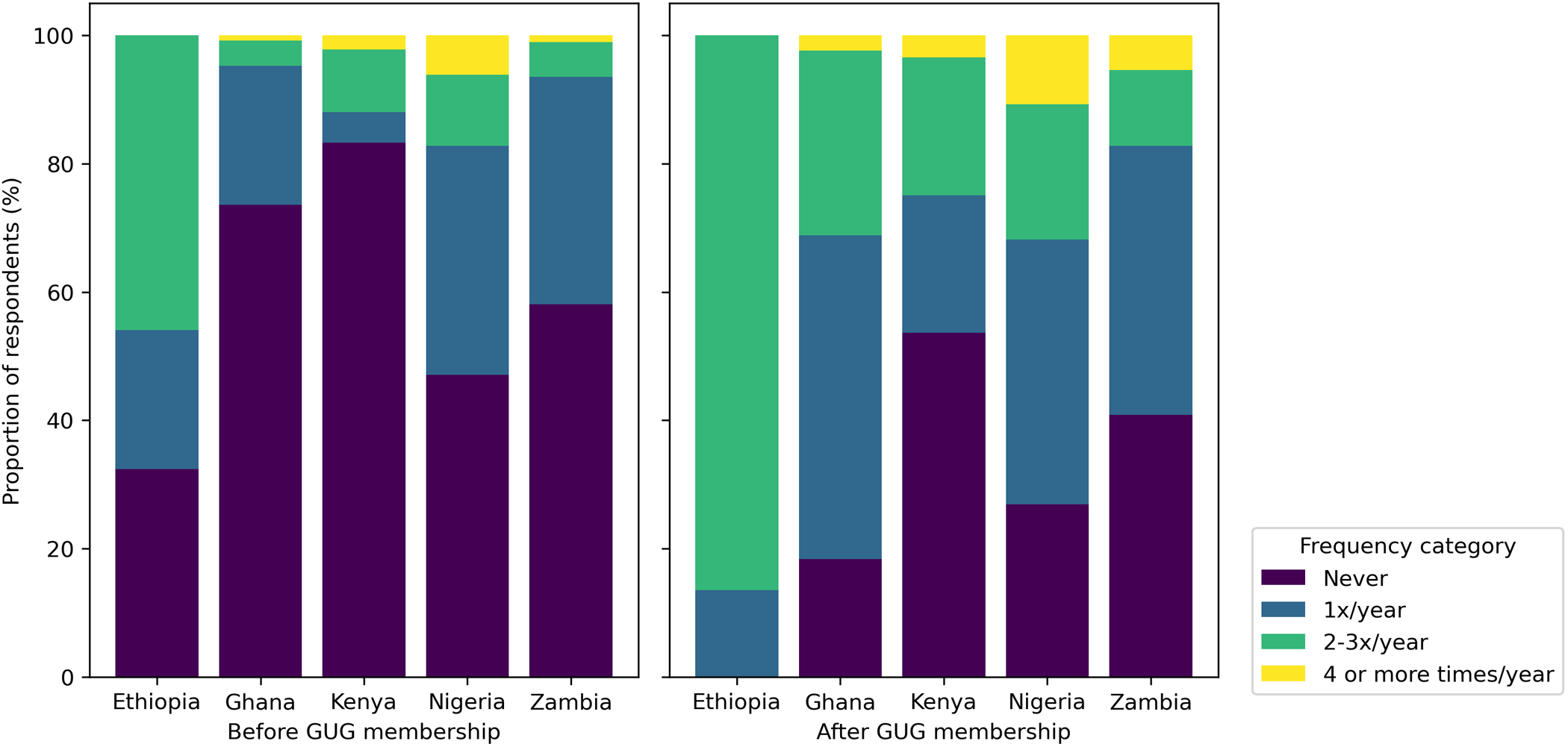
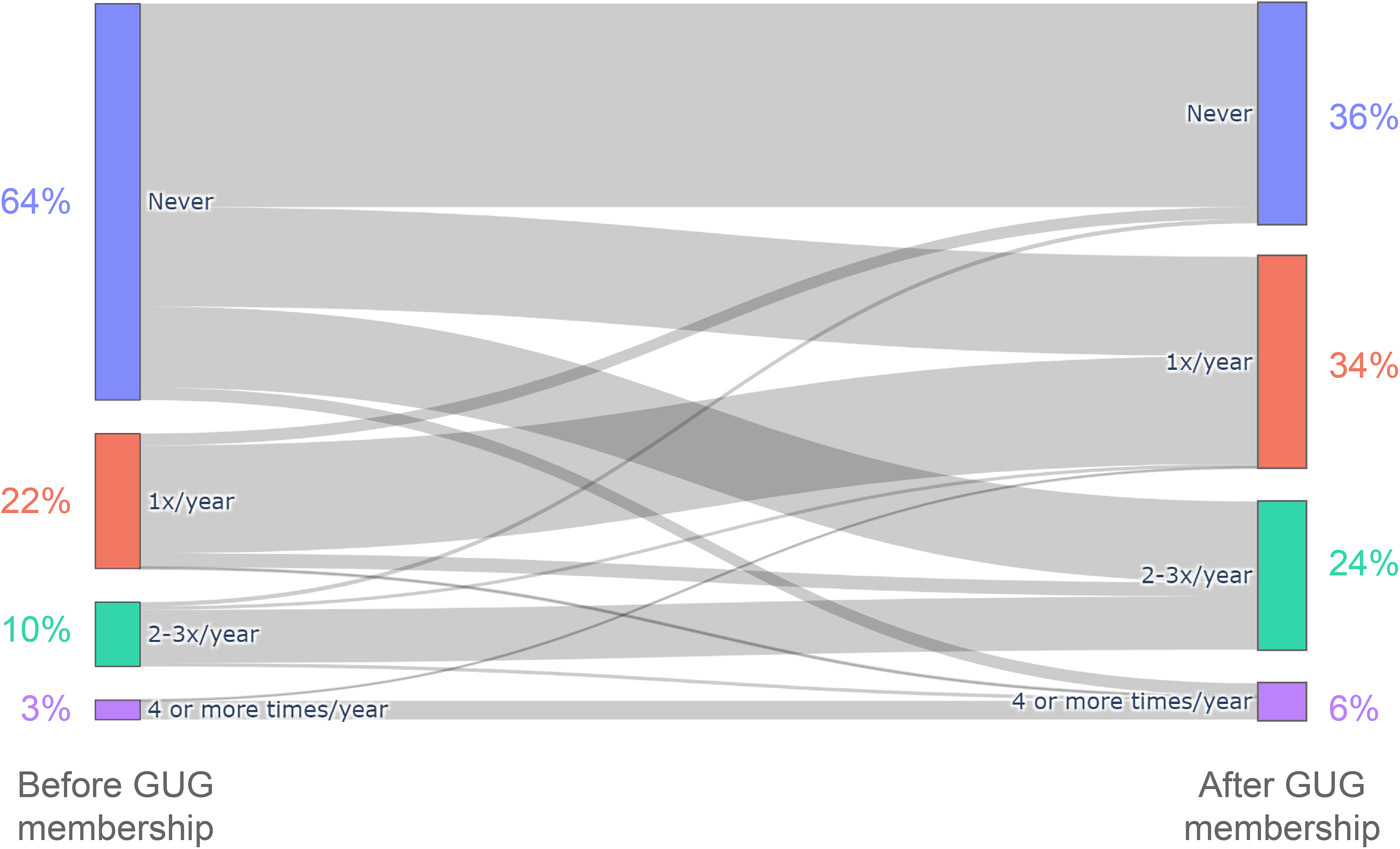
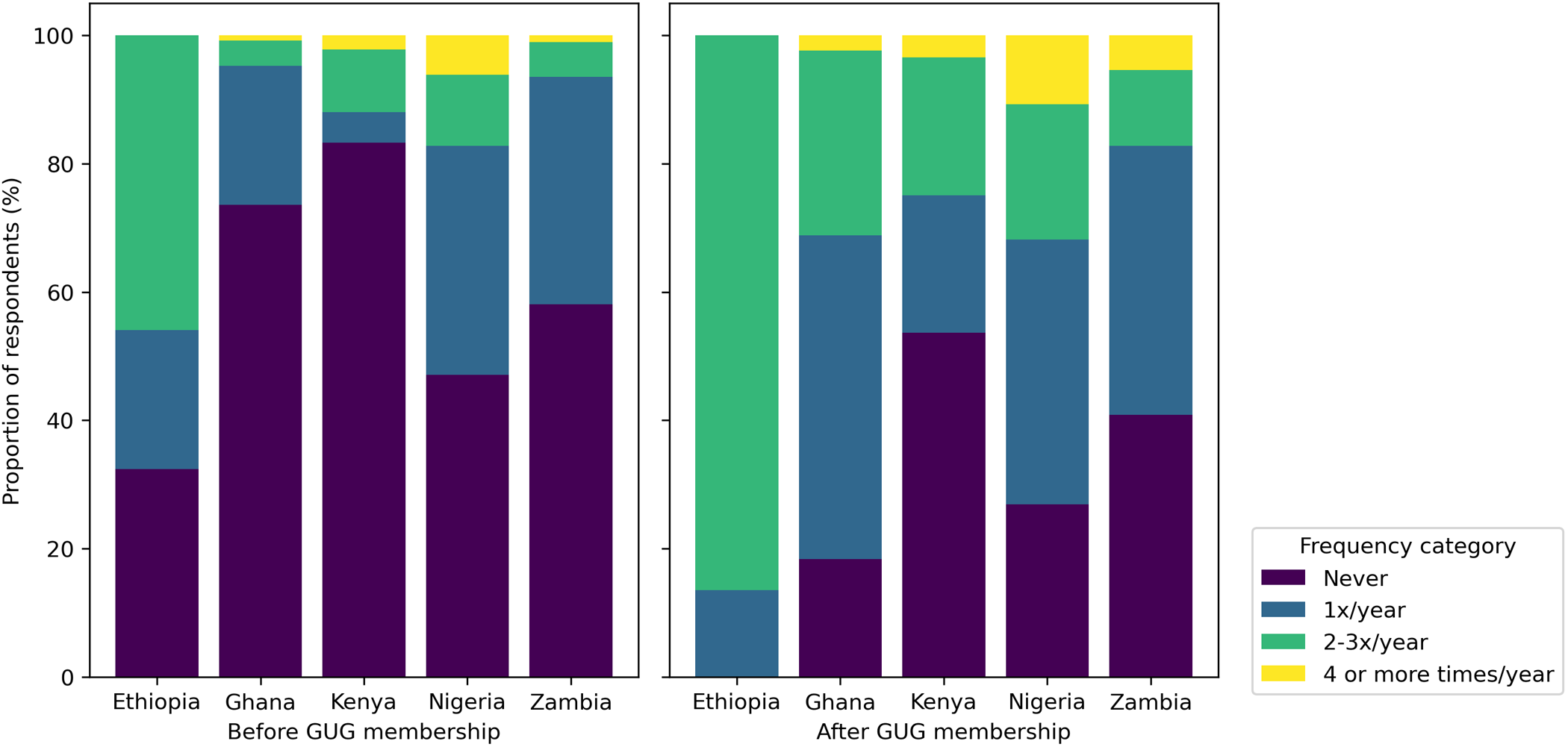
GUG membership also resulted in a rise of requests from genebanks since joining GUGs. Many of these individuals were requesting genebank seeds for the first time (Fig. 3). Prior to the GUGs groups, around 64% of respondents had never ordered from genebanks, reducing to 36% of the sample after becoming GUG members. Similarly, the number of respondents requesting seed once a year increased by 12% and those ordering two or three times a year increased by 14%. The increase in requests were generally consistent across countries, except Kenya, where 53% of GUG members had still never requested seed from the genebank, although this was an improvement from 83% prior to GUG membership (Fig. 4).
The change in how GUG respondents reported their requests from GUG banks from before and after GUG membership. The separate blocks show the number of times ordered per year, with the percentages showing the proportion of GUG members stating these amounts as a percentage of the total sample. These flows show patterns of change in individuals’ requesting frequency (n = 836).
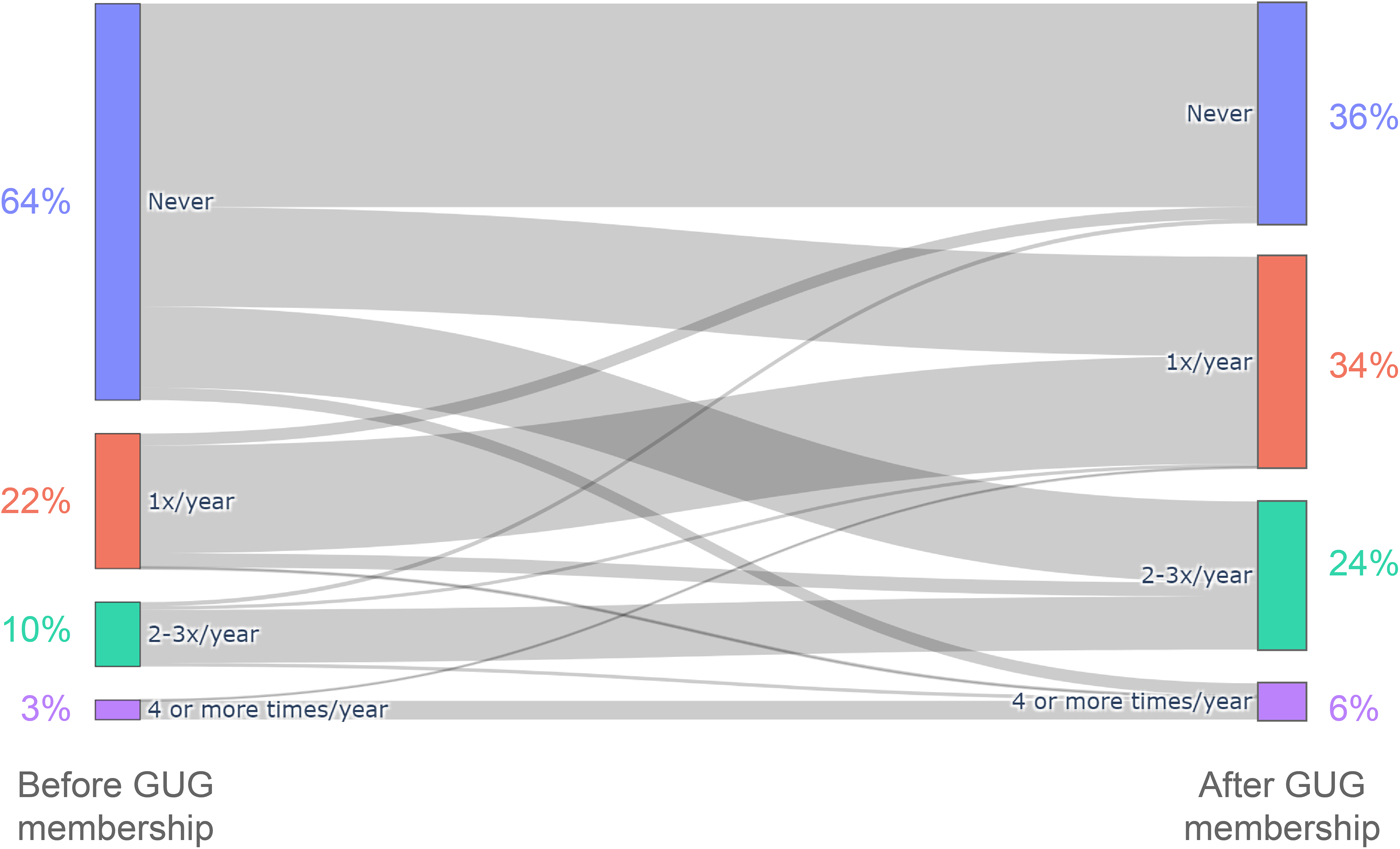
Figure 3 Long description
The flow diagram illustrates the change in request frequency from GUG banks before and after GUG membership. On the left, ‘Before GUG membership’ shows 64 percent never requested, 22 percent once per year, 10 percent two to three times per year and 3 percent four or more times per year. On the right, ‘After GUG membership’ shows 36 percent never requested, 34 percent once per year, 24 percent two to three times per year and 6 percent four or more times per year. The flows between these categories depict the shifts in request frequency among respondents.
Number of requests by GUG members made to genebanks from before and after GUG membership, split by the proportion of respondents giving this response within each country (n = 836).
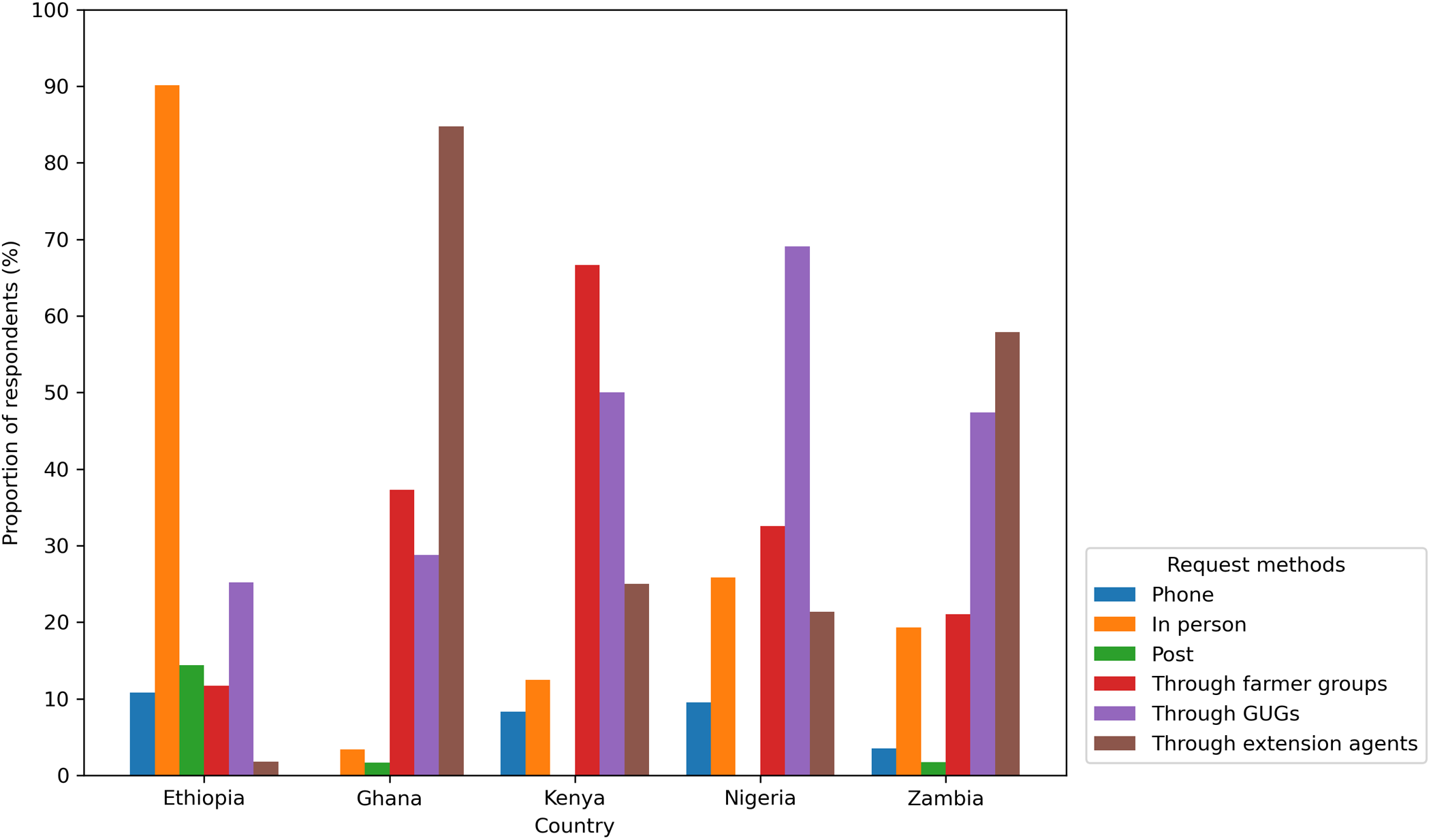
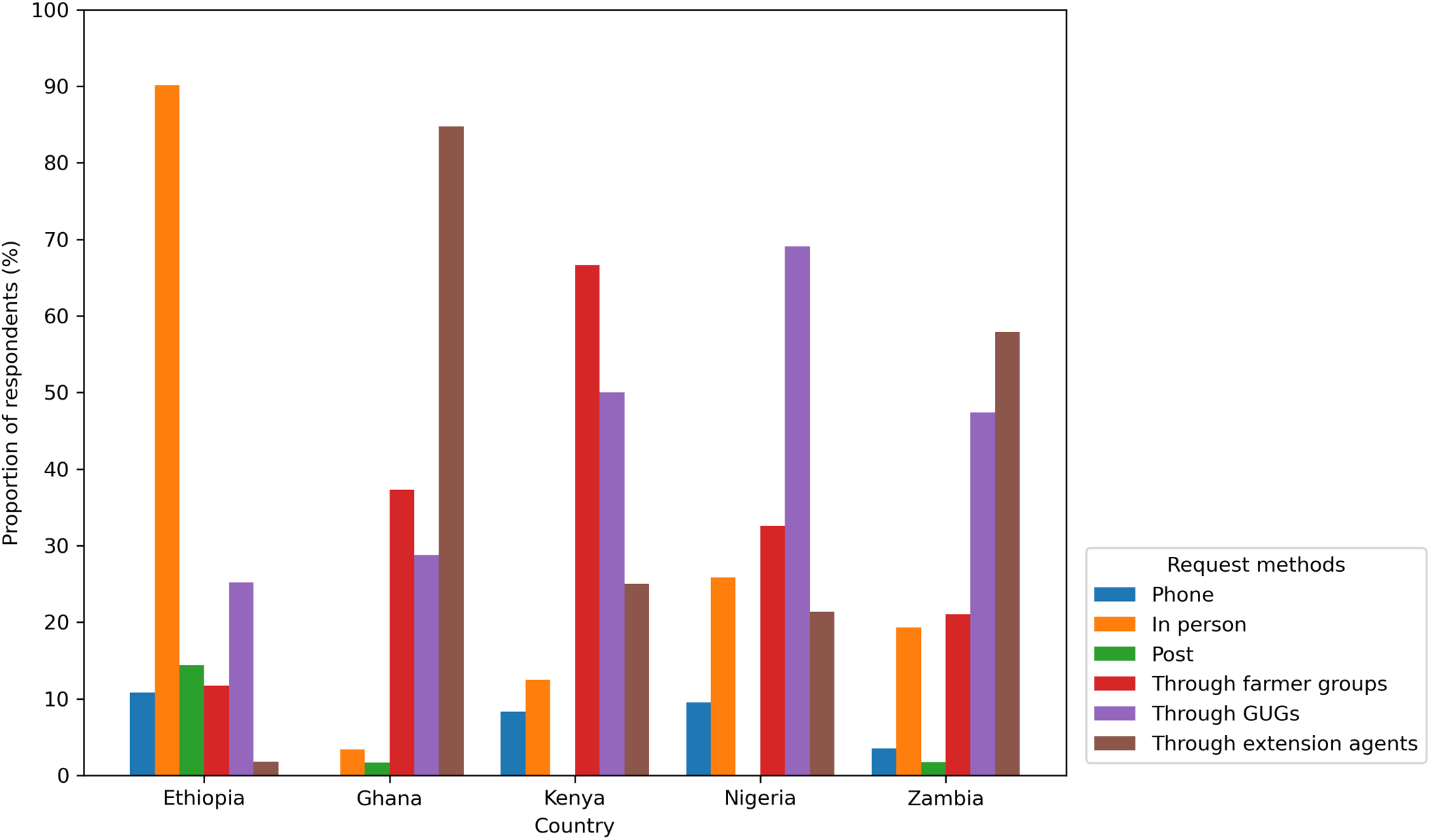
Farmers have a variety of methods through which they request genebank seeds, including: over the phone; in person; the postal service; through farmer groups; extension agents or; GUGs (see Fig. 5). The main preference in which GUG members requested genebank seeds differed by country. In Ethiopia, 90% had ordered in person through CSBs, in Ghana and Zambia the main method was through extension agents (85% and 58%, respectively), Kenyan GUG members mostly requested through farmer groups (68%) and Nigerians through GUGs (69%). Besides Nigeria, GUGs also remained a second or third channel of choice through which to order genebank diversity. Where respondents requested genebank seed, the majority (79%) found the ordering process to be straightforward (Table 3). These findings remain reasonably consistent across countries, with the exception of Kenya, where 58% of requesters found the process of ‘moderate’ difficulty. We also found that both women and men generally found requesting seeds to be either ‘easy’ or ‘extremely easy’ with 77% of women reporting this and 81% of men. It therefore seems that requesting genebank seed is generally easy for those who have tried.
How GUG members reported to request genebank seed, split by the proportion of these responses within each country (n = 836). ‘In person’ refers to direct communication with genebank staff.
As well as increasing requests for genebank materials, GUG membership had a significant and large effect on farmers using this material (odds ratio of 52.28, Table 4). Farm management training and farmer group association also had a significant but much lower effect on use of genebank materials (2.71 and 1.81, Table 4), suggesting both farm training and farmer groups encourage and enable access to genebank materials. Gender was also found to be positive, with women having significantly greater odds of accessing genebank diversity than men. We find that interactions with extension agents have a significant effect (p < 0.05), and this appears to lower the chances of obtaining genebank seed, perhaps suggesting that extension agents play a slight role in preventing use of genebank materials, perhaps through promoting other products. Country controls showed significance, with Ethiopian respondents showing the highest predicted probability of obtaining genebank diversity (73%, Table 5). Differences in proportion of seed deliveries across requesters can be partially explained by the capacity of the genebank to bulk the required amount and quality of seeds for distribution following the request for specific varieties. For instance, in the case of Kenya, malfunctions to seed drying facilities reduced the capacity of the genebank to appropriately dry seed for distribution. These findings therefore suggest that genebanks may struggle without additional support to keep up with farmer requests or require longer periods of time in which to fulfil orders.
We found that GUG seed acquisition from genebanks had spillover effects for surrounding farmers. On average, GUG members share seed with four other farmers (Table 3). There are some variations across countries, with Nigerian farmers sharing with seven other farmers on average and Ghana sharing with one. In Kenya, farmers elaborated on this practice, stating that seeds are often shared among neighbours for nutrition, health and as a way to reduce bird and pest risks. Using the mean values, we estimate that our sample of 916 GUG members could have led to seeds and knowledge being shared with a further 3,364 farmers. This demonstrates the potential reach of GUG in efficiently sharing crop diversity and knowledge across actors. On average, GUG users know 25 other farmers using genebank seeds (Table 3). This is notably higher in Ethiopia (44), where links appear comparatively stronger between farmers and genebanks. Conversely, Zambian farmers knew the least other farmers using genebank seeds (12), which is consistent with the earlier finding where Zambian farmers have comparatively little awareness of genebanks.
Overall, it seems that farmers in each country had varying options through which to request genebank seeds, but GUGs consistently improved access and direct flow of genebank materials to farmers’ fields, having the biggest impact in encouraging those who had never requested seeds from genebanks to do so. When genebank seeds reached the field, GUG seed exchange offered knock-on proliferation of genebank diversity across local communities.
GUGs improve perceptions of current and future diversity change
Given the project’s focus of improving access to genebank diversity, we wanted to see what effect GUG membership had on respondents’ wider perceptions of diversity change. We therefore measured respondent perception on the (1) loss of local farmer varieties over the last 5 years and (2) loss of general crop diversity in the community over the last 5 years. The first question concerns the observed loss of landraces and local varieties maintained by farmers. The second speaks to a general loss of crop diversity in the community, as might occur with shifts towards specialised or monoculture farming.
Regressions show that GUG membership has a significant but negative effect (0.658, p < 0.01) on the perception of a loss of farmer varieties, meaning GUG members are less likely to perceive a loss of local varieties (Table 4). Contact with extension agents also had a significant effect in reducing the chance of reporting a loss of varieties. Conversely, membership in farmer associations had a significant effect in raising the likelihood of perceived local variety loss. The contrast between GUG and non-GUG groups here, despite otherwise similar agroecologies, shows that GUGs either affected the perception or lived experience of local variety change. Unfortunately we do not have data to confirm the actual change in farmer varieties across our study locations. Country controls also showed no significance in this result, suggesting similar reports across all locations with the exception of Nigeria, which had an even lower chance of perceived varieties losses in GUG groups (67%, Table 4). Our sample generally reports varieties losses, with 81% of non-GUG and 69% of GUG members reporting the loss of landraces and farmer varieties over the past 5 years, and this pattern shows little variation across countries, with Ghana most likely to report losses (91% non-GUG and 76% GUG, Table 5). This finding matches interviews from Ghana, where farmers described a shift from traditional to commercial crops such as maize and soy, driving the loss of crops like Bambara groundnut and traditional culinary knowledge. GUG efforts to reintroduce diverse crops were therefore seen as important for restoring cultural and nutritional heritage.
The gender of the respondent showed no effect in perception of local species loss (Table 5). While most respondents, regardless of GUG membership, reported a loss of landraces and farmer varieties, GUG individuals were 12% less likely to report a loss of landraces and farmer varieties in the last 5 years. These findings suggest that GUG members may have experienced less loss of farmer varieties over the time period than non GUG members, and instead were more likely to see an increase in these varieties. These findings suggest that GUG activities may have had a role in maintaining access to landraces and farmer varieties.
GUG members also had a significant, and the strongest, effect on perception of crop diversity reductions in the community (0.73, Table 4). Farmer group membership had a significant effect (p < 0.05) but, matching the pattern with changes in varietal diversity, instead increased the likelihood of reporting a loss of crop diversity. This suggests that GUG members also had a different sense of the community crop diversity, with GUG members seeing more crop diversity in local fields and non-GUG members seeing less. We found that 51% of GUG users believe that the availability of crop diversity has increased in the last 5 years, compared to 38% of non-GUG members (Table 4). Similarly, 36% of non-GUG members believe crop diversity has decreased, compared to 28% of GUG members.
These perceptions make sense given the earlier finding that GUG membership resulted in farmers obtaining new crops and varieties, such as more varieties of indigenous crops, allowing GUG members to cultivate greater local crop diversity. For instance, GUGs in Ghana brought 20 varieties of Bambara groundnut to areas which farmers reported previously to only be able to access two. Similarly, Ethiopian GUGs reviewed 80 accessions of wheat and barley, many previously lost to the area, and Kenyan GUG members experimented with 51 sorghum varieties not used in their locality before. Based on these experiences, it is perhaps clear how GUG members might be more likely to experience a positive improvement in the availability of crop diversity during their time working with the genebank, contrary to the wider general loss of crop diversity non-GUG members are reportedly experiencing.
Likely because of these experiences, we found that GUG membership has a significant and the strongest effect on respondents expecting crop diversity to increase in the future (2.31, Table 4). Both GUG and non-GUG groups predict crop diversity will likely increase in the future (78% and 50%, respectively). Training on farm management also had a significant, but smaller effect on respondents expecting crop diversity to increase in the future, suggesting that farm management might also play a role in raising the anticipation of higher crop diversity in the future. This finding has some significance by our country controls, suggesting variation in how respondents view this likelihood across locations. Kenyan GUGs were the most likely to predict future increases in crop diversity (86%, Table 5) while Zambians were least likely to expect a rise in crop diversity (45%, Table 5).
GUG membership changed farming practice
We found that almost all GUG respondents report that GUG membership led to some changes in their farming practices. These changes are diverse, including increased crop diversity, changing of seed sources, improving their pest or disease resilience or changes to their cropping systems. Changing or increasing crop and varietal diversity was most commonly reported as a result of GUG membership, mentioned by 54% of respondents (Table 3). Further, we found that 67% of GUG members plan to increase the area of land they dedicate to material from the genebank. Around a third of GUG members also reported changing their cropping system, such as crop rotations or intercropping, to increase resilience to biotic pressures. These proportions were similar across countries, with the exception that Ethiopian respondents were more likely to report multiple benefits, and that 67% of the Ethiopian sample reported a change to their cropping practice as a result of GUG membership. These benefits were also reported similarly across genders, with the exception that women were slightly less likely to report a change in seed source. Women were, however, more likely to report a change in their cropping system (39% vs 28% for women and men, respectively). It therefore appears that GUG membership led to multiple benefits related to crop diversity, seed security access and farming practice; and that these benefits were felt broadly across countries and genders.
Capacity building was a central benefit of GUG membership
GUG members reported several benefits from their membership. The most reported benefit was knowledge sharing (69%), followed by improved access to seeds (54%) and problem-solving opportunities coming third (46%) (Table 3). While the most obvious benefit to GUG membership might simply be greater access to more diverse crops and varieties, actually the majority of benefits that farmers reported were to do with improving understanding, building social networks to information sources, and community or personal empowerment. These findings align with reports from Kenyan farmers that GUG meetings enhanced their farming knowledge, fostered behaviour change and encouraged innovation in crop and seed management techniques. Members viewed the groups as platforms for shared learning and social cohesion. Similarly, Ghanaian GUG participants stated GUG meetings provided social exchange and empowerment, and an opportunity to connect with farmers outside their immediate communities. These interactions helped reinforce a sense of collective agency in managing farming challenges These benefits remained remarkably similar across countries and gender, with the only major difference being that Ethiopian GUG members were most likely to report ‘capacity building’ as the main membership benefit (82%). Overall, these findings suggest that, despite slight differences in GUG design across countries, the results were equitably felt across participants. GUGs were welcomed not only for providing access to seeds but also for conferring knowledge and social benefits.
These findings demonstrate that GUGs should not be reduced to simply seen as seed delivery mechanisms. We found that GUGs also served to improve farmer’s understanding of crop diversity, and could influence changes in farming practices and cropping systems. In focusing on the direct use of genebank accessions, the findings demonstrate that it is important not to overlook the indirect capacity building outputs farmers experienced from connecting with genebank staff and participatory assessment of varieties. These engagements not only support farmer decision-making, they also provide interfaces for two-way exchange, to help genebanks collect new varieties of importance and re-evaluate the value in their collections to local actors. This process marks a change to the more traditional top-down process of farmers as passive recipients of genebanks outputs, to one with the potential to benefit both actors.
Opportunities, barriers and recommendations for scaling up GUGs
This evidence of the potential GUGs hold to supply farmer demand for crop diversity across all five African countries furthers the business case for investing in national genebanks to support local resilience. Other literature shows the value of group membership, such as formal cooperatives, informal seed networks or farmer field schools, can support exchange of germ plasm for resilience, but we find significant additional effects of GUG membership on top of other group associations in our sample (Coomes et al., Reference Coomes, McGuire, Garine, Caillon, McKey, Demeulenaere, Jarvis, Aistara, Barnaud, Clouvel, Emperaire, Louafi, Martin, Massol, Pautasso, Violon and Wencélius2015; Pautasso et al., Reference Pautasso, Aistara, Barnaud, Caillon, Clouvel, Coomes, Delêtre, Demeulenaere, De Santis, Döring and Eloy2013).
Varietal innovations are often provided to farmers through top-down breeding programmes and deployment through commercial channels. Gene banks play a less visible role in these breeding approaches, supplying genetic resources for introgression into modern varieties rather than offering genebank accessions directly to farmers. This separation between genebanks and farmers is partly structural. For instance, genebanks adhere to international protocols and scientific norms for ex situ conservation, and their materials are primarily curated to serve breeders and researchers. This focus is justifiable to some extent as many accessions lack the agronomic traits necessary to compete with elite lines in standardised, high-input farming conditions. However, this breeder-centric approach risks overlooking the context-specific value of some genebank accessions. Certain landraces or farmer varieties stored in genebanks may perform better under the heterogeneous, low-input and stress-prone conditions typical of smallholder fields, or offer more culturally sought after traits. Further, the large investment required for breeding and marketing varieties means that relying on a bioscience approach is not economically viable for the majority of crops farmers use (Odame and Muange, Reference Odame and Muange2011; Sperling et al., Reference Sperling, Gallagher, McGuire, March and Templer2020). Conversely, the investment requirements to support direct farmer access and use of genebank diversity are relatively low. We estimate GUG activity costs to be around €250,000 per country for 4 years of farmer engagement and seed bulking across multiple regions, based on budget allocation from the SFR Project. This amount seems reasonable compared to annual national agricultural research and budgets, such as the $41.4 million allocation to Kenyan crop research and development in 2024 (Open Budget Kenya, 2025). It is also likely lower than the operating costs of many modern breeding programmes to produce a range of resilient varieties for the diverse needs of African farmers (Lammerts van Bueren et al., Reference Lammerts van Bueren, Struik, van Eekeren and Nuijten2018; Lynam, Reference Lynam2011). These costs become even higher for biotechnologies seeking to bring greater resilience such as the estimated $1.4–1.6 million to produce a late-blight resistant potato (Schiek et al., Reference Schiek, Hareau, Baguma, Medakker, Douches, Shotkoski and Ghislain2016). Unlocking farmer’s access to genebank collections could therefore offers an efficient way for public investment to support farmer resilience and decision-making across remote areas.
GUGs also catalyse spillover effects that further the potential efficiency and scale of impact. On average, GUG participants share genebank seeds with four to five other farmers, suggesting outreach to over 3,000 farmers, far exceeding the initial GUG group sizes. This informal diffusion, particularly in remote regions, supports rapid, decentralised dissemination of crop diversity. While this estimate does not distinguish on GUG membership, the rate of sharing demonstrates the potential for GUGs to share genebank diversity with far greater numbers than the initial GUG group sizes. This is in part because farmer sharing can offer a sustainable and rapid way to share diversity over remote areas (Coomes et al., Reference Coomes, McGuire, Garine, Caillon, McKey, Demeulenaere, Jarvis, Aistara, Barnaud, Clouvel, Emperaire, Louafi, Martin, Massol, Pautasso, Violon and Wencélius2015).
However, a major barrier to scaling GUG activities depends on genebank capacity. Seed requests in this study went unfulfilled, primarily due to limitations in seed regeneration and multiplication. National genebanks generally have limited funding and small growing areas for regeneration and multiplication, posing a challenge to bulk up larger amounts of seed. National genebanks might therefore be able to multiply for their own needs, but struggle to deliver the additional multiplication requirements (planting and tending to fields, harvesting, drying, sorting) to supply seed to numerous farmers requesting samples. There are several options to address this challenge. The first point is to recognise that genebanks provide varietal diversity but are not designed for large seed requests, without additional funding support. Indeed, doing so could put pressure on the capacity of genebanks to perform their core operations of conservation. Another option is to outsource this multiplication to other actors, such as government research or extension services. Alternatively, this could follow examples from the integrated seed sector in supporting Local Seed Businesses managed by farmers trained in seed multiplication and storage (Mastenbroek et al., Reference Mastenbroek, Otim and Ntare2021). These integrated approaches have worked especially well in Uganda to introduce useful varieties, support local business and encourage two-way dialogue on farmer needs. Doing so will allow genebanks to focus on the collection, preservation and curation of varieties for farmer needs and remain able to action requests without risk of becoming overwhelmed.
An encouraging finding is that beneficial impacts from GUG membership appear to be generally consistent across gendered dimensions. GUG impacts also appear to be remarkably similar across all five countries, indicating a generalisability of the GUG approach and potential for scaling out in other areas and crops. A key consideration is that genebank staff in each country conduct careful and culturally sensitive discussions with farmer groups prior to the establishment of the GUGs. These approaches likely ensured the fit and smooth operations of the first GUG activities.
We recommend that genebanks continue the model of fostering equitable partnerships with existing farmer groups, with context sensitive engagement and co-development of activities. These working arrangements were well received by farmers and served to empower farmer groups as key partners. Institutionalising GUGs as a core genebank outreach model can foster long-term farmer engagement and expand participatory evaluation activities to help identify and adopt varieties for resilient agriculture. The case of Ethiopian national genebank stood out in many aspects because of its close linkage with CSBs across the country, which help farmers to understand the value of genebank collections and how to access them. These recent developments in Ethiopian seed systems could therefore serve as an example of how to support GUG-type activities, to increase farmer access to crop diversity, as well as supporting seed system resilience more generally (Mulesa, Reference Mulesa2021).
GUGs should continue to integrate peer-to-peer training, exchange visits and collaboration with extension services to expand knowledge sharing. Although GUGs focus on the exchange of genebank materials, farmers consistently valued the learning components of GUG engagements. Mobilising GUG members as local champions can amplify awareness and uptake, even in areas where genebank presence is limited.
More generally, we encourage national genebanks to advocate for policies that support the integration of genebank diversity into farming systems to enable accelerated evaluation and use of genebank materials. Governments and development agents should recognise the potential genebanks could offer for rapid climate adaptation and biodiversity safeguarding. National genebanks have varieties that are already well adapted to local environments and preferences. With modest funding, they can operate as first responders to support farmers trying to adapt to changing climates. Doing so would enhance resilience in agri-food systems, enriching smallholders with the diversity to ensure nutritious diets and profitable livelihoods.
Supplementary material
The supplementary material for this article can be found https://doi.org/10.1017/S1479262125100178.
Acknowledgements
The authors would like to thank the Global Crop Diversity Trust and the German Development Bank (KfW), for supporting this assessment as part of the Seeds for Resilience Project. The authors would also like to thank Dr Fred Ratunde and Dr Eva Weltzien for their work in the establishment of the Germplasm User Groups, and the five national genebanks for their assistance in this study.
Competing interests
The authors declare no conflicts of interests.




 Open access

