


Introduction
Anxiety disorders are common and associated with substantial disability (Kessler et al. Reference Kessler, McGonagle, Zhao, Nelson, Hughes, Eshleman, Wittchen and Kendler1994; Mendlowicz & Stein, Reference Mendlowicz and Stein2000). General practitioners (GPs) are usually the first professional contact for patients with anxiety disorders (Bijl & Ravelli, Reference Bijl and Ravelli2000; Wang et al. Reference Wang, Aguilar-Gaxiola, Alonso, Angermeyer, Borges, Bromet, Bruffaerts, de Girolamo, de Graaf, Gureje, Haro, Karam, Kessler, Kovess, Lane, Lee, Levinson, Ono, Petukhova, Posada-Villa, Seedat and Wells2007). However, only a minority of diagnosable cases is identified as such in primary care (Kessler et al. Reference Kessler, Lloyd, Lewis and Gray1999; Löwe et al. Reference Löwe, Gräfe, Zipfel, Spitzer, Herrmann-Lingen, Witte and Herzog2003), and when recognized, only few patients are referred to specialized mental health care (Wang et al. Reference Wang, Aguilar-Gaxiola, Alonso, Angermeyer, Borges, Bromet, Bruffaerts, de Girolamo, de Graaf, Gureje, Haro, Karam, Kessler, Kovess, Lane, Lee, Levinson, Ono, Petukhova, Posada-Villa, Seedat and Wells2007). Patients with anxiety disorders are thus likely to receive their only treatment from general medical providers (Regier et al. Reference Regier, Narrow, Rae, Manderscheid, Locke and Goodwin1993; Katz et al. Reference Katz, Kessler, Lin and Wells1998), which is in most cases pharmacotherapy (Weiller et al. Reference Weiller, Bisserbe, Maier and Lecrubier1998; Wang et al. Reference Wang, Demler and Kessler2002). Although medication can be an effective treatment option (Baldwin et al. Reference Baldwin, Anderson, Nutt, Bandelow, Bond, Davidson, den Boer, Fineberg, Knapp, Scott and Wittchen2005), many patients do not receive psychotropic medication at an appropriate dose and for an appropriate duration (Stein et al. Reference Stein, Sherbourne, Craske, Means-Christensen, Bystritsky, Katon, Sullivan and Roy-Byrne2004). Moreover, many patients prefer psychological therapies (van Schaik et al. Reference van Schaik, Klijn, van Hout, van Marwijk, Beekman, de Haan and van Dyck2004). Evidence-based psychotherapies, such as cognitive–behavioural therapy (CBT), are at least as effective as pharmacotherapy and should be considered, especially if initial treatment with medications proves inadequate (Issakidis et al. Reference Issakidis, Sanderson, Corry, Andrews and Lapsley2004; Butler et al. Reference Butler, Chapman, Forman and Beck2006).
General medical providers often lack resources and training necessary to provide evidence-based psychological treatments. One way of increasing access to evidence-based psychological treatment in primary care is Internet-based cognitive–behavioural treatment (ICBT). ICBT has been shown to be effective for a variety of anxiety and mood disorders (Andersson, Reference Andersson2016). Most of the growing body of evidence comes from studies evaluating guided self-help treatments. While patients work their way through a modularized, CBT-based self-help programme, therapists assist them, for example, via a secured email system. Several meta-analyses suggest that guided treatments lead to better outcomes than unguided treatments (Spek et al. Reference Spek, Cuijpers, Nyklicek, Riper, Keyzer and Pop2007; Richards & Richardson, Reference Richards and Richardson2012). However, especially in the field of anxiety disorders, good outcomes have also been reported in trials of unguided ICBT (Berger et al. Reference Berger, Caspar, Richardson, Kneubuhler, Sutter and Andersson2011a; Dear et al. Reference Dear, Staples, Terides, Karin, Zou, Johnston, Gandy, Fogliati, Wootton, McEvoy and Titov2015).
Given that the efficacy of ICBT has been established, in principle, an important new area of investigation is practice-oriented research on how this knowledge can be applied to routine health care (Emmelkamp et al. Reference Emmelkamp, David, Beckers, Muris, Cuijpers, Lutz, Andersson, Araya, Banos Rivera, Barkham, Berking, Berger, Botella, Carlbring, Colom, Essau, Hermans, Hofmann, Knappe, Ollendick, Raes, Rief, Riper, Van Der Oord and Vervliet2014). In recent years, a series of studies has evaluated the effectiveness of ICBT for anxiety disorders when delivered in psychiatric settings (Aydos et al. Reference Aydos, Titov and Andrews2009; Bergstrom et al. Reference Bergstrom, Andersson, Ljotsson, Ruck, Andreewitch, Karlsson, Carlbring, Andersson and Lindefors2010; Andrews et al. Reference Andrews, Davies and Titov2011; Hedman et al. Reference Hedman, Andersson, Ljótsson, Andersson, Ruck, Mortberg and Lindefors2011; Ruwaard et al. Reference Ruwaard, Lange, Schrieken, Dolan and Emmelkamp2012; Hedman et al. Reference Hedman, Ljotsson, Ruck, Bergstrom, Andersson, Kaldo, Jansson, Andersson, Andersson, Blom, El Alaoui, Falk, Ivarsson, Nasri, Rydh and Lindefors2013; El Alaoui et al. Reference El Alaoui, Hedman, Kaldo, Hesser, Kraepelien, Andersson, Ruck, Andersson, Ljotsson and Lindefors2015; Titov et al. Reference Titov, Dear, Staples, Bennett-Levy, Klein, Rapee, Shann, Richards, Andersson, Ritterband, Purtell, Bezuidenhout, Johnston and Nielssen2015) and a few trials have investigated ICBT in primary care settings (Newby et al. Reference Newby, Mackenzie, Williams, McIntyre, Watts, Wong and Andrews2013; Williams & Andrews, Reference Williams and Andrews2013; Newby et al. Reference Newby, Mewton, Williams and Andrews2014; Nordgren et al. Reference Nordgren, Hedman, Etienne, Bodin, Kadowaki, Eriksson, Lindkvist, Andersson and Carlbring2014). In those studies conducted in primary care, participants were recruited through their primary care contact and were supported either by the primary care practitioner or by therapists associated with the study team. The current study aimed to extend this work by investigating whether unguided ICBT for anxiety disorders is effective when delivered after a contact with a physician (MD), usually a GP. This form of dissemination may be representative because many physicians may lack the time to provide regular ICBT support in routine practice. For most practising physicians, it might be more feasible to prescribe unguided treatments after an initial examination and then conduct routine symptom monitoring, rather than provide intensive support for ICBT.
In contrast to previous studies, participants in this trial were recruited not only through their primary care contact but were also allowed to initiate participation by themselves (e.g. when they heard about the study through other channels, such as our study website or newspaper articles). In the latter case, participants were asked to inform their MD about their desire to participate in the study, to provide him or her with an information sheet, and to let the MD prescribe ICBT after a required face-to-face consultation. We combined the possibility of self-referral with the requirement of an MD consultation for safety reasons and because individuals increasingly obtain (mental) health information through the Internet prior to or in parallel with seeing their physician (Ball & Lillis, Reference Ball and Lillis2001). Patients are thus increasingly likely to gain knowledge and develop preferences about available treatments independently from their physicians. Consequently, the patient-initiated use of ICBT after a consultation with a medical professional may become a common delivery model of ICBT in primary care.
We evaluated a novel transdiagnostic and tailored programme that targeted several anxiety disorders, namely social anxiety disorder (SAD), panic disorder with or without agoraphobia (PDA) and generalized anxiety disorder (GAD). Although most of the evidence on ICBT comes from studies evaluating disorder-specific treatments, alternative treatment approaches have emerged with the aim of simultaneously treating both primary and co-morbid disorders (Titov et al. Reference Titov, Andrews, Johnston, Robinson and Spence2010; Carlbring et al. Reference Carlbring, Maurin, Torngren, Linna, Eriksson, Sparthan, Straat, Marquez von Hage, Bergman-Nordgren and Andersson2011). Both tailored ICBT, which modifies the treatment according to patient symptom characteristics and co-morbidities, and transdiagnostic ICBT, which is designed to target common underlying symptoms and predisposing psychological factors for anxiety and depression (Barlow et al. Reference Barlow, Allen and Choate2004), have yielded promising results (Titov et al. Reference Titov, Andrews, Johnston, Robinson and Spence2010; Carlbring et al. Reference Carlbring, Maurin, Torngren, Linna, Eriksson, Sparthan, Straat, Marquez von Hage, Bergman-Nordgren and Andersson2011). Although transdiagnostic and tailored approaches may not be more effective than disorder-specific treatments (Berger et al. Reference Berger, Boettcher and Caspar2014; Dear et al. Reference Dear, Staples, Terides, Karin, Zou, Johnston, Gandy, Fogliati, Wootton, McEvoy and Titov2015; Fogliati et al. Reference Fogliati, Dear, Staples, Terides, Sheehan, Johnston, Kayrouz, Dear, McEvoy and Titov2016), they have other advantages, particularly when delivered in primary care. An important pragmatic advantage is that transdiagnostic and tailored treatments address a broader range of patients. Moreover, the transdiagnostic approach requires treatment providers to manage only one rather than several online programmes and reduces the importance of properly coding a single principal diagnosis, particularly when symptoms of several anxiety disorders are simultaneously present, which is common (Kroenke et al. Reference Kroenke, Spitzer, Williams, Monahan and Löwe2007). These pragmatic advantages seem especially important when considering the low detection rate of anxiety disorders in primary care (Kroenke et al. Reference Kroenke, Spitzer, Williams, Monahan and Löwe2007).
In order to evaluate whether an unguided, transdiagnostic ICBT intervention for several anxiety disorders can be effective when delivered after a consultation with an MD, we conducted a randomized controlled trial (RCT). The intervention plus care as usual (CAU) was compared with a CAU control condition among participants fulfilling the diagnostic criteria of at least one of these anxiety disorders. To our knowledge, this is the first study of a transdiagnostic unguided treatment for anxiety disorders conducted in a primary care setting. We hypothesized that the 9-week intervention, offered adjunctively to CAU, would be superior to CAU alone in reducing anxiety and related symptoms, such as depression.
Method
Study design
This RCT compared an immediate treatment group with an active waiting-list control group. Both groups had access to CAU. The waiting-list control group was enrolled in the ICBT programme after the treatment group had completed the programme (after 9 weeks). The immediate treatment group was followed up until 6 months after randomization to examine the stability of potential treatment gains. We aimed at detecting a standardized between-group effect size (Cohen's d) of 0.35. Smaller effect sizes were considered to be irrelevant from a clinical point of view. A power analysis revealed that at an α error level of 0.05 and power (1 – β) of 0.80, approximately 88 participants per group would be required to detect a small to medium effect (Cohen's d = 0.35).
Participants
The participation in the study required an MD, usually a GP, to send us a signed document stating that (1) the MD had seen the patient, (2) the MD confirmed a SAD, PDA and/or GAD diagnosis, and (3) there were no medical reasons or other objections against the patient's participation in the study. The specific recruitment process differed among participants. While some participants first heard about the study from their MD (some MDs in Germany and Switzerland had been informed about the study), most participants first visited our study website (www.online-therapy.ch), then consulted an MD and asked him or her to sign and postmark the necessary document to participate in the study. Participants were recruited in Switzerland, Germany and Austria. After returning a written informed consent form signed by the participant and the signed document from the MD, participants were asked to complete online versions of the outcome measure questionnaires. Questions concerning demographic variables, previous or ongoing psychological treatment, and prescribed medication for depression/anxiety were included as well. After completing the questionnaires, participants were interviewed by telephone using the Structured Clinical Interview for Diagnostic and Statistical Manual of Mental Disorders, fourth edition (DSM-IV) Axis I disorders (SCID; First et al. Reference First, Spitzer, Gibbon and Williams1995). Five advanced masters students in clinical psychology and psychotherapy, three doctoral-level students in clinical psychology and psychotherapy, and the first author (T.B.) conducted the interviews. All SCID interviewers were trained in several sessions using the SCID manual and sample interviews. Additional supervision by the first author (T.B.) was provided throughout the study.
Criteria for inclusion were (a) age of at least 18 years, (b) access to the Internet, (c) sufficient knowledge of the German language, (d) a primary diagnosis of SAD, PDA or GDA as indicated by the MD and confirmed by the SCID, (e) no history of a psychotic or bipolar disorder, and (f) if taking prescribed medication for depression/anxiety, the dosage had to be constant for at least 1 month before the start of the treatment. Individuals indicating suicidal ideation with intent in the diagnostic interview would have been excluded and referred to the GP or a local psychiatrist. However, no participant reported suicidality in the interview.
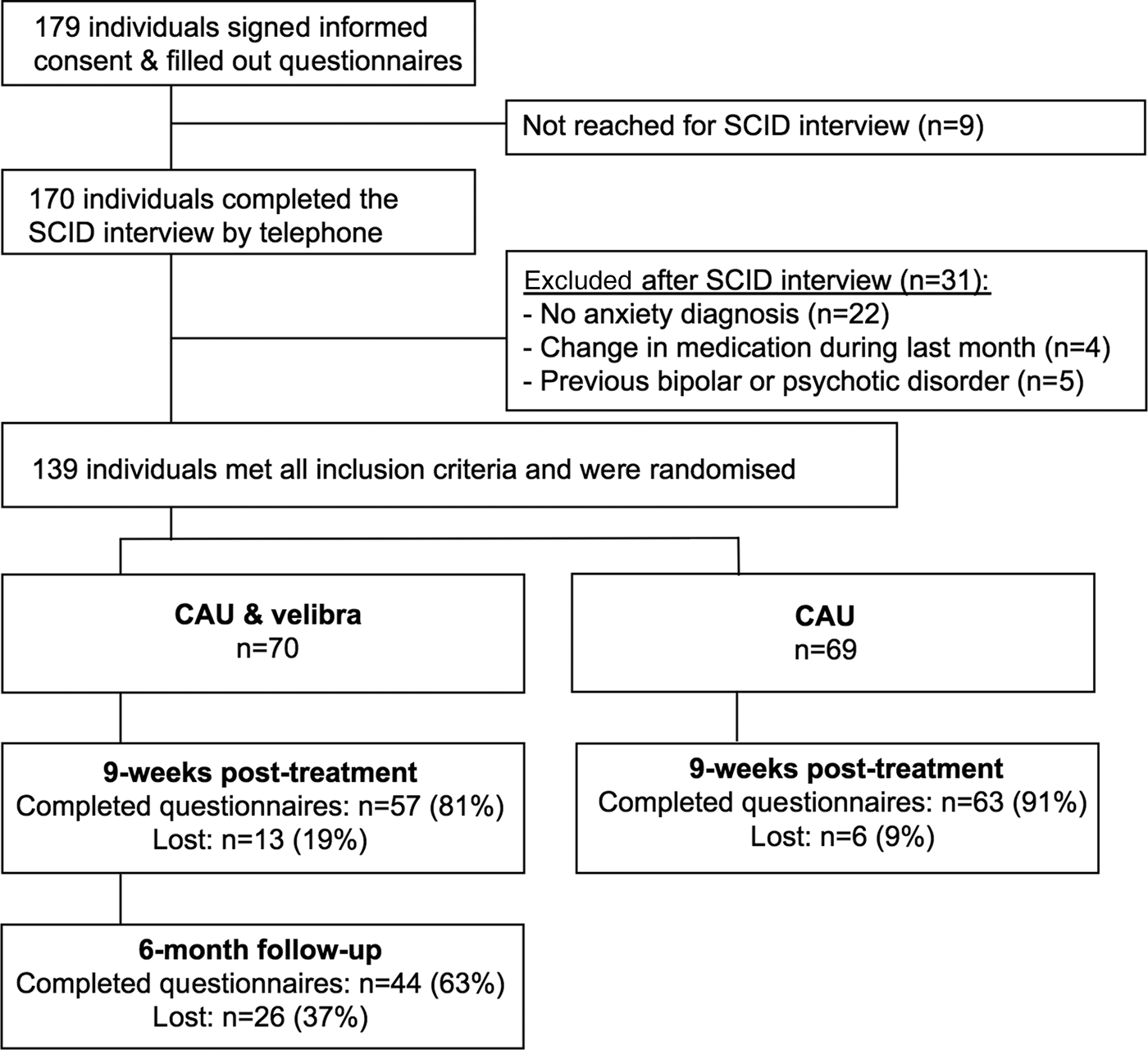
Details of the participant flow are shown in Fig. 1. A total of 40 applicants were excluded after providing informed consent but prior to randomization, mainly because they did not fulfill the diagnostic criteria of one of the anxiety disorders (n = 22) or because they were not reached for the SCID (n = 9). A total of 139 participants met all inclusion and none of the exclusion criteria and were thus randomized to one of the two conditions. A stratified randomization procedure was applied, such that a balanced distribution of primary diagnosis, medication and concurrent psychotherapy in the two conditions was ensured. The allocation lists were made using a computerized random number generator and were concealed from the investigators and participants. After the randomization, the participants received an automated email regarding their group allocation. In case they were allocated to the treatment group, an access code to the velibra programme and a description of how to access it were provided. After 9 weeks, all participants were requested to complete post-treatment questionnaires via the Internet, and to take part in a post-treatment telephone interview, in which the relevant SCID-I modules were re-evaluated. At this time, control group participants also received access to velibra. At 6 months after randomization (i.e. about 4 months after post-treatment), participants were contacted via email and asked to complete the questionnaires again. The protocol of this study was approved by the Ethics Committee of the Canton of Bern, and the trial was registered at www.controlled-trials.com (ISRCTN81412545).

Fig. 1. Selection, randomization and flow of participants through the trial. SCID, Structured Clinical Interview for Diagnostic and Statistical Manual of Mental Disorders, fourth edition (DSM-IV) Axis I disorders; CAU, care as usual.
Primary outcome measures
Participants completed self-report measures at pre-treatment, post-treatment (9 weeks) and follow-up (6 months after randomization). All questionnaires were administered via the Internet. Because not all participants suffered from the same primary disorder, disorder-unspecific measures such as the Depression Anxiety Stress Scales – Short Form (DASS-21; Lovibond & Lovibond, Reference Lovibond and Lovibond1995), the Beck Anxiety Inventory (BAI; Beck et al. Reference Beck, Epstein, Brown and Steer1988), the Beck Depression Inventory-II (BDI-II; Beck et al. Reference Beck, Steer and Brown1996), the Brief Symptom Inventory (BSI; Derogatis, Reference Derogatis1993) and the Short-Form Health Survey-12 (SF-12; Ware et al. Reference Ware, Kosinski and Keller1996) were used as primary outcome measures. The DASS-21 measures depression, anxiety and tension/stress. We only report results for the composite measure of the DASS-21. In the current sample, Cronbach's α for the composite scale was 0.90. The 21-item BAI was included as a general measure of anxiety-related symptoms across disorders (Cronbach's α = 0.75). The BDI-II was used to assess current depressive symptoms (Cronbach's α = 0.89). General psychopathology was measured with the BSI. For the purpose of this study, the Global Severity Index (GSI) was used (Cronbach's α = 0.93). To measure quality of life, we used the SF-12. Its two subscales measure physical and mental aspects of health-related quality of life. The test–retest reliability of this 12-item measure is good, roughly equivalent to the long-form (Ware et al. Reference Ware, Kosinski and Keller1996).
In addition to the self-report measures a diagnostic interview was conducted at pre- and post-treatment. At post-treatment, the interviewers only administered the diagnostic modules of the SCID-I for which participants had fulfilled the diagnostic criteria in the pre-treatment interview. The interviewers could not be kept blind at post-assessment regarding group assignment.
Secondary outcome measures
Disorder-specific instruments were used as secondary outcome measures. To measure social anxiety symptoms, we used the Social Phobia Scale (SPS) and the Social Interaction Anxiety Scale (SIAS; Mattick & Clarke, Reference Mattick and Clarke1998). The 20-item SPS and the 20-item SIAS were designed as companion measures, the former focusing on fear of scrutiny and evaluation, the latter concentrating on interaction anxiety. The internal reliabilities in the current sample were α = 0.93 for the SPS and α = 0.94 for the SIAS. The 14-item Agoraphobic Cognitions Questionnaire (ACQ; Chambless et al. Reference Chambless, Caputo, Bright and Gallagher1984) was used to measure cognitions regarding the catastrophic consequences of experiencing panic (Cronbach's α = 0.79). To measure fear of body sensations, we used the 17-item Body Sensations Questionnaire (BSQ; Chambless et al. Reference Chambless, Caputo, Bright and Gallagher1984; Cronbach's α = 0.89). Agoraphobic avoidance was assessed using the Mobility Inventory for Agoraphobia (Chambless et al. Reference Chambless, Caputo, Jasin, Gracely and Williams1985), which consists of the two subscales ‘avoidance alone’ (MIA; Cronbach's α = 0.96) and ‘avoidance accompanied’ (MIB; Cronbach's α = 0.96). The 16-item Penn State Worry Questionnaire (PSWQ; Meyer et al. Reference Meyer, Miller, Metzger and Borkovec1990) was used to capture the generality, excessiveness and uncontrollability of pathological worry (Cronbach's α = 0.87). At post-treatment, a measure of global patient satisfaction was also administered (Client Satisfaction Questionnaire; CSQ-8; Attkisson & Zwick, Reference Attkisson and Zwick1982).
Description of treatment
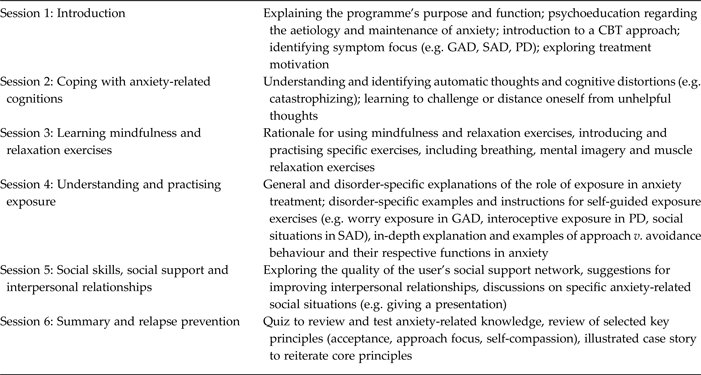
Participants in the intervention group received access to the self-help programme ‘velibra’, which was developed by Gaia AG, Hamburg, Germany, an e-Health company that has developed several previous Internet interventions, including ‘deprexis’, a depression-focused programme that has been tested in several RCTs (e.g. Meyer et al. Reference Meyer, Berger, Caspar, Beevers, Andersson and Weiss2009; Berger et al. Reference Berger, Hammerli, Gubser, Andersson and Caspar2011b; Moritz et al. Reference Moritz, Schilling, Hauschildt, Schroder and Treszl2012; Klein et al. Reference Klein, Berger, Schröder, Späth, Meyer, Caspar, Lutz, Arndt, Greiner, Gräfe, Hautzinger, Fuhr, Rose, Nolte, Löwe, Andersson, Vettorazzi, Moritz and Hohagen2016). Velibra consists of six treatment modules, the first five of which are followed by a ‘training session’, containing exercises addressing cognitive bias modification for interpretation (CBM-I; Beard & Amir, Reference Beard and Amir2008). The six treatment modules are cognitive–behavioural in orientation and emphasize transdiagnostic principles, such as anxiety as an evolutionary adaptive emotion, the ‘false alarm’ model of anxiety, experiential avoidance, and the role of approach v. avoidance motivation (Mogg & Bradley, Reference Mogg and Bradley1998; Carver, Reference Carver2006; Grawe, Reference Grawe2007; Barlow et al. Reference Barlow, Farchione, Fairholme, Ellard, Boisseau, Allen and May2010; McManus et al. Reference McManus, Shafran and Cooper2010; Bateson et al. Reference Bateson, Brilot and Nettle2011). Table 1 describes the content of the six modules. In velibra, content is conveyed via brief text passages, illustrations, audio recordings, downloadable PDF documents (summaries, worksheets), and daily fully automated text messages, which can be received as SMS (short message service) (optionally) or emails. The programme also contains several ‘symptom tracking’ questionnaires, allowing users to self-monitor changes in symptom severity. Users generally navigate the programme by reading brief text passages and continuously selecting response options deemed most relevant. Because the programme adjusts subsequent content based on individual responses, an ‘individually tailored dialogue’ emerges between programme and user. Tailoring and personalization are achieved by adjusting content to expressed preferences and endorsed characteristics (e.g. current symptoms, desire for background detail or wish to skip optional sections).
Table 1. Content of the six sessions in velibra

CBT, Cognitive–behavioural therapy; GAD, generalized anxiety disorder; SAD, social anxiety disorder; PD, panic disorder.
Statistical analyses
Group differences in demographic data and pre-treatment measures were tested with independent-samples t tests and χ2 tests where the variables consisted of nominal data. Differential outcomes at post-treatment were evaluated according to an intention-to-treat principle using a mixed-model repeated-measures analysis of variance with time (pre–post) as a within-group factor and treatment condition as a between-group factor. The mixed-effects models approach uses all available data of each subject and does not involve the substitution of missing values but estimates parameters about missing values (Gueorguieva & Krystal, Reference Gueorguieva and Krystal2004). We used an unstructured covariance structure for the analyses and estimated a separate model for each outcome measure. Significance testing of the diagnostic status at post-treatment was conducted with a χ2 test. According to an intention-to-treat principle, dropouts were treated as treatment failures. Within- and between-group effect sizes (Cohen's d) were calculated based on estimated means and the pooled standard deviation from the observed means. Within-group changes in outcome scores from post-treatment to follow-up were analysed using paired t tests for completers.
Results
Baseline evaluation
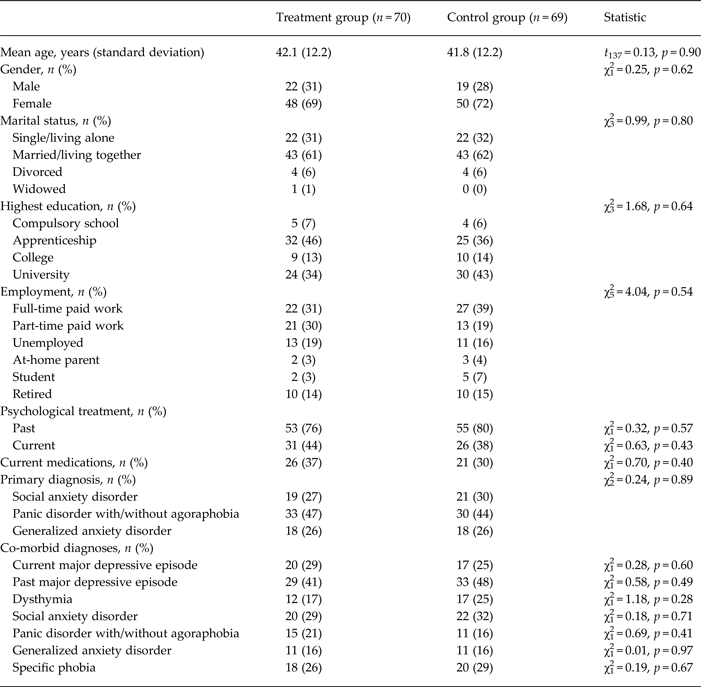
The mean age of participants was 42.0 years (s.d. = 12.1, range = 18–72 years), and 98 were female (70.5% of the sample). The majority were married or in a relationship (n = 86, 61.9%) and were in full-time (n = 49, 35.3%) or part-time paid work (n = 34, 24.5%). Most of the participants had conducted an apprenticeship (n = 57, 41.0%) or indicated a university degree as their highest education (n = 54, 38.8%). In total, 57 participants (41.0%) were currently in psychotherapy and 47 (33.8%) were currently taking prescribed medication for anxiety or depression. A large percentage of the participants had attended psychotherapy in the past (n = 108, 77.7%). Most of the participants (129/139) initiated the participation in the study themselves (72/129 found the study website through search on the Internet, 48/129 read about the study in newspaper articles, and 8/129 received a recommendation by a friend). In 10 out of 139 cases, the MD informed the participants about the study. There were no between-group differences on demographic characteristics or other variables (see Table 2 for sample characteristics and between-group comparisons). Moreover, there were no pre-treatment differences between the groups on any of the primary and secondary outcome measures (p’s > 0.18).
Table 2. Baseline demographics and sample characteristics for the treatment and control groups

Diagnostic status according to the SCID
A total of 63 (45.3%) participants were diagnosed with PDA as their primary diagnosis, 40 (28.8%) met the criteria of a primary SAD diagnosis, and 36 (25.9%) participants were diagnosed with a primary GAD diagnosis. Axis I co-morbidity was high among participants: 45 (32.3%) suffered from a current major depressive episode (MDE), 42 (30.2%) from a co-morbid SAD, 26 (18.7%) from a co-morbid PDA, 22 (15.8%) from a co-morbid GAD, and 38 (27.3%) from a specific phobia. Moreover, 62 (44.6%) of the participants had suffered from an MDE in the past. Diagnostic status did not differ between groups at baseline (see Table 2).
Dropouts from the study and programme usage
Of the 139 individuals who were randomized, a total of 120 (86%) participants completed the post-treatment questionnaires (see Fig. 1). There were no significant differences in terms of demographics and pre-treatment scores between those who provided post-treatment data and those who did not (p’s > 0.06). Mean time spent in the self-help programme was 13 h and 10 min (s.d. = 13 h 14 min; range = 0 min–83 h). The mean number of completed modules was 3.9 (s.d. = 2.3; range = 0–6 modules). In all, 32 participants (45.7%) completed all six modules. Eight (11.4%) participants did not start with the self-help programme. The mean number of CBM-I training sessions conducted between treatment modules was 4.4 (s.d. = 3.8; range = 0–17). Usage time and the number of completed modules correlated neither with pre-to-post changes nor with residual-gain scores of any of the outcome measures (p > 0.08).
Primary disorder-unspecific outcome measures and effect sizes in the overall sample at post-treatment
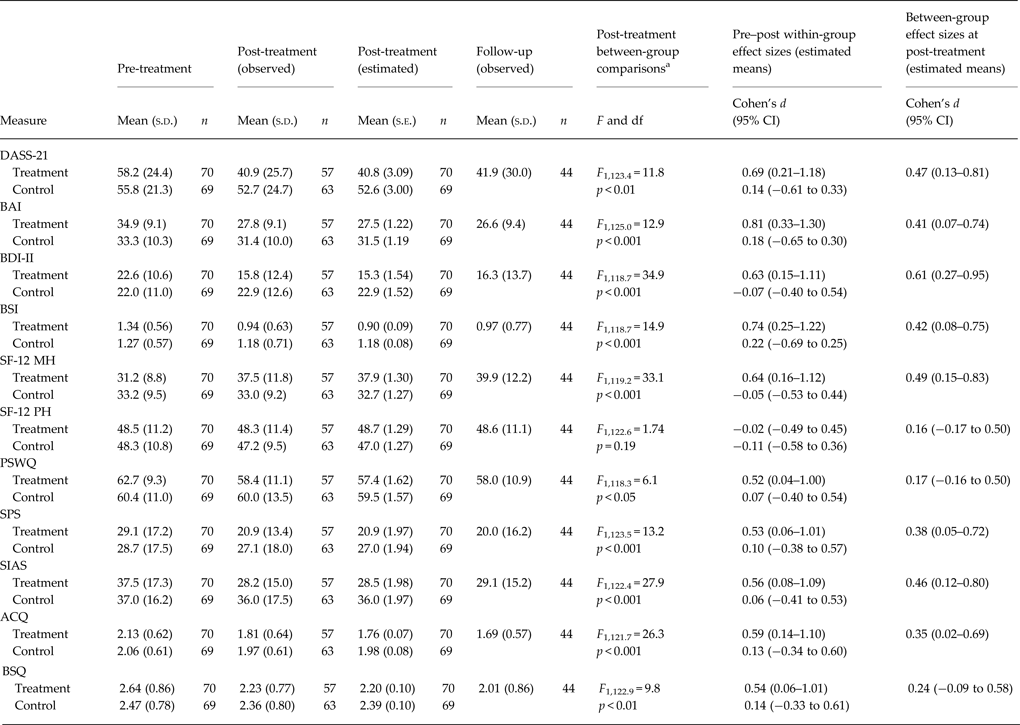
Observed and estimated means for all self-report measures are presented in Table 3. Linear mixed models with group as a fixed factor and time as a repeated factor (pre–post) were conducted separately for each of the dependent measures (see Table 3 for results). Main effects for the DASS-21, BAI, BDI-II, BSI and the mental health subscale of the SF-12 were qualified by significant group × time interactions [all F’s (degrees of freedom 1, 118.7–125.0) > 11.8, all p’s < 0.01]. Between-group effect sizes based on estimated means ranged between 0.41 (BAI) and 0.61 (BDI-II). Within-group comparisons based on estimated means in the treatment group revealed medium to large effect sizes (0.63–0.81). Within-group effect sizes in the control group clustered around zero (–0.07 to 0.22). No statistically significant group × time interaction was found on the physical health subscale of the SF-12 (F 1,122.6 = 1.74, p = 0.19). In order to explore whether concurrent psychotherapy or taking prescribed medication during the treatment period moderated pre–post effects on the primary disorder-unspecific outcome measures, we included the respective variable in the mixed-models analyses and tested the significance of the three-way interaction between time, group and concurrent psychotherapy or medication. In these analyses, none of the three-way interactions attained significance (all p’s > 0.06), indicating that neither concurrent psychotherapy nor using prescribed medication moderated the treatment effect on any of the primary outcome measures.
Table 3. Observed and estimated means for primary and secondary outcome measures and within- and between-group effect sizes

s.d., Standard deviation; s.e., standard error; df, degrees of freedom; CI, confidence interval; DASS-21, Depression Anxiety Stress Scales; BAI, Beck Anxiety Inventory; BDI-II, Beck Depression Inventory – second edition; BSI, Brief Symptom Inventory; SF-12 MH, Short Form Health Survey mental health subscale; SF-12 PH, Short Form Health Survey physical health subscale; PSWQ, Penn State Worry Questionnaire; SPS, Social Phobia Scale; SIAS, Social Interaction Anxiety Scale; ACQ, Agoraphobic Cognitions Questionnaire; BSQ, Body Sensations Questionnaire.
a Intention-to-treat analysis.
Secondary disorder-specific outcome measures and effect sizes in the overall sample at post-treatment
Based on the linear mixed models, all group × time interaction effects for the disorder-specific measures PSWQ, SPS, SIAS, ACQ and BSQ were significant [all F’s (degrees of freedom 1, 118.3–125.5) > 0.61, all p’s < 0.05] (see Table 2). Between-group effect sizes based on estimated means were small to medium, ranging from 0.17 (PSWQ) to 0.46 (SIAS). Within-group comparisons based on estimated means for the treatment group revealed medium effect sizes (0.52–0.59). Within-group effect sizes in the control group were small (0.07–0.14). Three-way interactions between time, group and concurrent psychotherapy or medication were not significant (all p’s > 0.32). Thus, concurrent treatment did not appear to moderate the treatment effect on any of the secondary outcome measures.
Disorder-specific outcome measures and effect sizes in the diagnostic subgroups at post-treatment
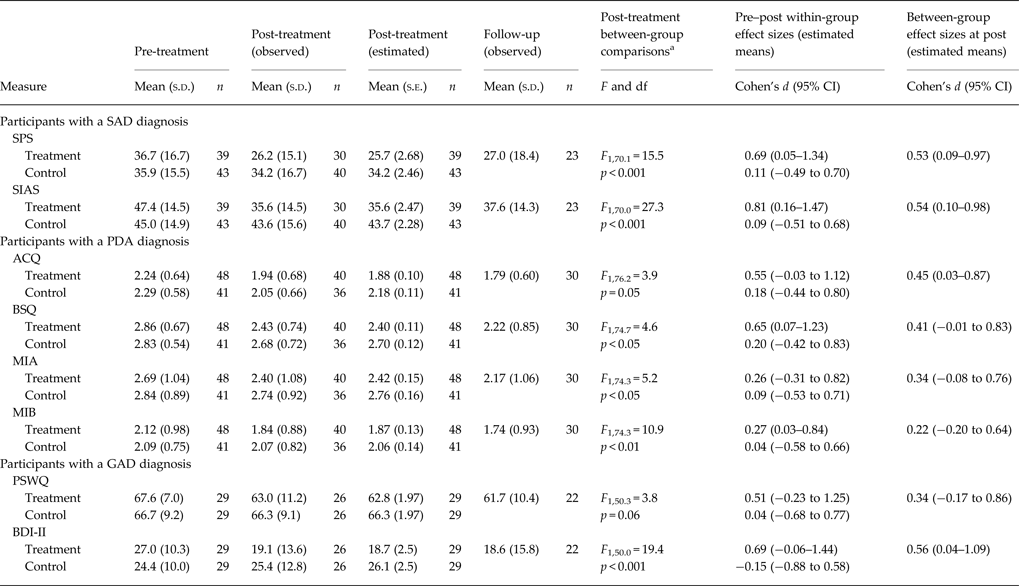
We also analysed group differences on disorder-specific measures separately for each anxiety diagnosis as assessed at pre-treatment. The three subgroups consisted of 82 participants with a SAD diagnosis, 89 participants with a PDA diagnosis, and 58 participants meeting the criteria of GAD as a primary or co-morbid disorder at pretreatment. Observed and estimated means for each group and all disorder-specific measures are presented in Table 4. Mixed-models analyses revealed either significant or marginally significant group × time interaction effects in each subgroup [all Fs (degrees of freedom 1, 50.0–76.2) > 0.38, all p’s < 0.06] (see Table 4 for detailed results). In the SAD subgroup, between-group effect sizes based on estimated means were 0.53 on the SPS and 0.54 on the SIAS. In the PDA subgroup, between-group effect sizes ranged between 0.22 (MIB) and 0.45 (ACQ). In the GAD subgroup, between-group effect sizes were at 0.34 on the PSWQ and at 0.56 on the BDI-II.
Table 4. Observed and estimated means for disorder-specific outcome measures for each diagnostic group and within- and between-group effect sizes

s.d., Standard deviation; s.e., standard error; df, degrees of freedom; CI, confidence interval; SAD, social anxiety disorder; SPS, Social Phobia Scale; SIAS, Social Interaction Anxiety Scale; PDA, panic disorder with/without agoraphobia; ACQ, Agoraphobic Cognitions Questionnaire; BSQ, Body Sensations Questionnaire; MIA, Mobility Inventory for Agoraphobia, Avoidance Alone; MIB, Mobility Inventory for Agoraphobia, Avoidance Accompanied; GAD, generalized anxiety disorder; PSWQ, Penn State Worry Questionnaire; BDI-II, Beck Depression Inventory – second edition.
a Intention-to-treat analysis.
Diagnostic response rates
In the analyses of the diagnostic response rates at post-treatment, dropouts from the SCID (i.e. 14/70 in the treatment group, and 9/69 in the control group) were regarded as non-responders. Among participants who fulfilled the diagnostic criteria for SAD at pre-treatment (n = 82), 11/39 (28.2%) of the participants in the treatment group and 2/43 (4.7%) in the control group no longer met diagnostic criteria for SAD (χ21 = 8.5, p < 0.01). Among participants who met the diagnostic criteria for PDA at pre-treatment (n = 88), 18/47 (38.3%) in the treatment group and 4/41 (9.8%) in the control group no longer fulfilled the criteria for PDA at post-treatment (χ21 = 9.5, p < 0.01). Among participants with a GAD diagnosis at pre-treatment (n = 58), 13/29 (44.8%) recovered in the treatment group, and 0/29 (0%) in the control group (χ21 = 16.8, p < 0.001).
Follow-up and treatment satisfaction
Observed means and standard deviations at 6 months after randomization (treatment group only) for all self-report measures are presented in Tables 3 and 4. Based on the completers sample, there were no significant post-treatment to follow-up changes for any of the primary and secondary outcome measures (t’s = 0.09–0.92, degrees of freedom = 40–41, p’s = 0.36–0.93), with one exception: The score on the BSQ further decreased significantly from post-treatment to follow-up (t = 2.52, degrees of freedom = 40, p < 0.05). Participants reported a high level of satisfaction with the self-help programme. The mean score on the CSQ-8 was 3.23 (s.d. = 0.51), lying between somewhat satisfied (3) and very satisfied (4).
Discussion
This study was the first investigation of the efficacy of a new transdiagnostic unguided ICBT intervention for three anxiety disorders, which was delivered after a contact with an MD in primary care. The findings indicate that this unguided ICBT – velibra – when delivered in this way is effective in reducing symptomatology and in increasing psychological well-being assessed as early as 9 weeks after treatment initiation. Between-group effect sizes after 9 weeks were in the small to medium range. In the treatment group, conservative estimates in which dropouts were regarded as treatment failures suggested that 28.2% of the participants with a SAD diagnosis, 38.3% of the participants with a PDA diagnosis, and 44.8% of the participants with a GAD diagnosis at pre-treatment no longer fulfilled diagnostic criteria at post-treatment, whereas such recovery was observed among fewer than 10% of participants in the CAU-only control condition. Furthermore, treatment gains were maintained up to 6 months after randomization. Given that (a) almost 80% of the participants had been treated with psychotherapy in the past, (b) 41% of participants were currently in psychotherapy, (c) approximately one-third of the participants were on stable medication for their condition, and (d) participants showed high co-morbidity rates, these results are encouraging.
In contrast to other studies conducted in primary care, participants were recruited not only through their primary care contact, but were also allowed to initiate participation in the study independently. In the latter case, they were required to undergo a face-to-face consultation with an MD prior to being permitted access to the study and the use of the self-help programme. This initial medical examination ensured diagnostic fit and improved client safety. In this study, 92.8% of all participants initiated participation in the study themselves and then consulted an MD, indicating that this delivery model of unguided ICBT is feasible and promising for the dissemination of unguided ICBT in primary care. Moreover, an examination of the participant flow through the trial shows that the number of participants lost prior to randomization and from pre- to post-treatment was lower than the numbers reported in a meta-analysis of computerized CBT treatments (Waller & Gilbody, Reference Waller and Gilbody2009). This finding may be related to at least two aspects of the current trial. First, it is likely that the need for a consultation with an MD increased the threshold to participate, resulting in a selection of patients who were strongly motivated to participate in the study. Second, as mentioned in the Introduction, the transdiagnostic nature of the treatment addressed a relatively broad range of patients, resulting in fewer individuals who needed to be excluded from the study because they did not fulfill the criteria of only one specific diagnosis. The relatively few exclusions and dropouts speak for the external validity of this study. The results may thus generally apply to a population that is willing to consult an MD because of anxiety symptoms and that is motivated to use an Internet-based self-help programme.
This study has several limitations. First, although participants in the control group could receive any treatment they actively sought, they did not receive an active treatment as part of the study. Because participants could therefore not be blinded to treatment allocation, we cannot infer the extent to which the observed effects are uniquely caused by the specific intervention under study. At the same time, our findings provide evidence for the efficacy of only this particular intervention and cannot be generalized to other programmes. A second limitation concerns the limited power of this study, which did not permit us to detect small differences in each of the diagnostic subgroups. Given resource limitations, recruitment was terminated after 139 randomized patients rather than the original aim of 176 patients. With this sample size, we still had sufficient power (>0.80) to detect medium effects between the intervention and control group, but insufficient power to detect small effects. A third limitation is related to the fact that the sample was better educated than the general population. This common observation in studies on Internet-based treatments limits the generalizability of our results and raises the question whether less educated individuals would also benefit from the intervention. A fourth limitation is that we do not have information about the exact amount, dose and quality of concurrent CAU for the treatment and control groups. Further limitations were that the inter-rater agreement of the clinical interviewers was not assessed, and that interviewers could not be kept blind regarding group assignment at post-assessment. Finally, the dropout rate at follow-up was relatively high, although it was low at post-treatment. The absence of a comparison group at follow-up does not allow us to infer the extent to which observed maintenance effects can be attributed to the intervention.
Despite these limitations, the current study provides evidence that this transdiagnostic unguided ICBT programme (velibra) for three common anxiety disorders is effective when delivered in primary care. Future research efforts are needed to compare this intervention with other active treatments, to better understand for whom and how it is effective, to determine its cost-effectiveness, and to investigate how it could be implemented on a larger scale so that it can contribute to alleviating the global burden associated with these anxiety disorders.
Acknowledgements
This research was supported by the Swiss National Science Foundation Grant PP00P1_144824/1 awarded to the first author (T.B.).
Declaration of Interest
The last author (B.M.) is employed as research director at Gaia AG, the company that developed, owns and operates the Internet intervention investigated in this trial. All the other authors report no relationships with commercial interests.

 Open access

