


Impact statements
Our research directly informs the urgent global dialog on combating plastic pollution, a crisis permeating the most remote corners of the Earth and affecting all forms of life. By critically examining the development of the Plastic Treaty, our work provides valuable insights into the complexities of international policy-making and the vital role of cooperation in addressing environmental issues that transcend borders. The study highlights 10 pivotal issues yet to be addressed in ongoing negotiations, offering a roadmap for policymakers and stakeholders to forge a comprehensive and robust treaty. It anticipates potential limitations due to domestic interests that could prevent agreement or weaken the final treatment of those 10 points. This analysis underscores the need for global unity to ensure that environmental provisions are not compromised. This research serves as a call to action for 175 member states negotiating the Plastic Treaty to prioritize the common good over national interests. It stresses the significance of decisive action and the shared responsibility of states to mitigate plastic pollution’s impact on ecosystems, economies, and communities worldwide. By shedding light on the negotiation dynamics through the lens of domestic and international power structures, our findings have the potential to influence the reframing of discussions to achieve stronger environmental protections. The implications of our work extend beyond academic discourse, providing a foundation for civil society, industry, and governments to advocate for a treaty that balances economic realities with ecological necessities. As the world races against the clock to address the plastic pollution crisis, our research offers a crucial perspective on the path toward a more sustainable and equitable use of plastics. The outcomes of this study aim to foster a deeper understanding among the states involved in the treaty, thereby enhancing public engagement and support for meaningful environmental policy.
Introduction
Plastic pollution has become a major global issue, with over 11 million metric tons of plastic entering the ocean each year from various sources (Jambeck et al., Reference Jambeck, Geyer, Wilcox, Siegler, Perryman, Andrady, Narayan and Law2015; GESAMP, Reference Kershaw, Carney Almroth, Villarrubia-Gómez, Koelmans and Gouin2020). The impact of plastic waste on the environment and human health has been well-documented (GESAMP, Reference Kershaw and Rochman2016, Reference Kershaw, Carney Almroth, Villarrubia-Gómez, Koelmans and Gouin2020), with plastics being found in all areas of the globe, including remote mountains and deep seas (Eriksen et al., Reference Eriksen, Lebreton, Carson, Thiel, Moore, Borerro, Galgani, Ryan and Reisser2014), as well as in the human body (Ragusa et al., Reference Ragusa, Svelato, Santacroce, Catalano, Notarstefano, Carnevali, Papa, MCA, Baiocco, Draghi, D’Amore, Rinaldo, Matta and Giorgini2021; Leslie et al., Reference Leslie2022; Yang et al., Reference Yang, Xie, Du, Peng, Han, Li, Zhao, Qin, Xue, Li, Hua and Yang2023). The complexity, transboundary nature, and global scale of the problem require international cooperation, as it is impossible for any single state to address the issue alone (Raubenheimer and McIlgorm, Reference Raubenheimer and McIlgorm2018; Simon et al., Reference Simon, Raubenheimer, Urho, Unger, Azoulay, Farrelly, Sousa, van Asselt, Carlini, Sekomo, Schulte, Busch, Wienrich and Weiand2021).
As a response to this complex issue, the United Nations (UN) initiated the negotiation of a legally binding global instrument to end plastic pollution, including the marine environment, through UNEA Resolution 5/14 (commonly referred to as the “Plastic Treaty”) (UNEP, 2022). The negotiations are taking place through a series of international meetings, with the aim of finalizing the framework by the end of 2024 and launching the instrument in early 2025. Five Intergovernmental Negotiating Committee (INC) meetings were scheduled from 2022 to 2024. Given the short timeline, there is clear urgency for research that may help shape the ongoing negotiations toward a more ambitious and efficient instrument.
To that end, we develop a framework based on the literature on power disconnects and regime formation and apply it to the ongoing negotiations for the Plastics Treaty (Young, Reference Young2011; Young et al., Reference Young, Webster, Cox, Raakjær, Blaxekjær, Einarsson, Virginia, Acheson, Bromley, Cardwell, Carothers, Eythórsson, Howarth, Jentoft, BJ, McCormack, Osherenko, Pinkerton, van Ginkel, Wilson, Rivers and Wilson2018; Webster et al., Reference Webster, Gonçalves, Kim, Bailey, Barros-Platiau and Oliveira2020). Using participatory observation and document analysis, we identified ten outstanding areas of ongoing contention and unpacked the effects of power disconnects on states’ positions. Specifically, we show that domestic power disconnects lead to variations in states’ negotiating positions, which range from a strong “fix the system” approach (reforms that greatly reduce production of plastic waste) to a weak “fill in the gaps” stance (mainly by improving disposal options) on these issues. We then look at international power dynamics to predict how negotiations are likely to proceed and identify leverage points for more effective treaty design. Without changes at the domestic level in powerful states, it is likely that the final Plastics Treaty will be a weak instrument that does little to tackle the global plastics problem.
Theoretical approach
Power disconnects (Young et al., Reference Young, Webster, Cox, Raakjær, Blaxekjær, Einarsson, Virginia, Acheson, Bromley, Cardwell, Carothers, Eythórsson, Howarth, Jentoft, BJ, McCormack, Osherenko, Pinkerton, van Ginkel, Wilson, Rivers and Wilson2018) occur when the actors who wield power are insulated from the costs of environmental degradation or when those who experience those costs lack the power to solve the environmental problem. It provides a framework for holistic analysis of international negotiations that bridges multiple theoretical and disciplinary divides. In particular, it draws on neo-institutionalist frameworks (Cook and Levi, Reference Cook and Levi2008; Putnam, Reference Putnam2009) to predict national policy positions based on dominant domestic interests within the context of international power structures. This approach leans heavily on Young’s logic of consequences, positing a degree of instrumental rationality in states’ behavior.
The international community of states plays a crucial role as primary decision-makers in treaty negotiations, shaping the outcomes through their positions and interactions. Power disconnect theory provides a valuable framework for analyzing these negotiations. It allows us to explain how power disconnects within states influence their positions in treaty negotiations, predict how power disconnects among states affect international negotiations, and identify leverage points where interventions might narrow power disconnects and thereby promote more equitable and effective outcomes. This approach not only justifies the focus on states as primary actors but also sets up the later discussion on the potential involvement of non-state actors, who can play a critical role in bridging these power gaps and contributing to more comprehensive treaty solutions.
To be clear, this is not a unitary actor approach, though it does share some advantages in the realms of tractability and parsimony. We simplify our analysis by classifying states by the balance of interests at the domestic level rather than assuming any single overwhelming interests (e.g., military or economic security). In this, we do elide some of the multifaceted nature of state actions in specific contexts, but this, in turn, allows us to illuminate pivotal negotiation dynamics (Young, Reference Young2011) that may benefit diplomats, academics and non-academic actors in understanding tacit interests and foreseeing the future developments of the Plastic Treaty.
Power disconnects
Power disconnects serve as central barriers in environmental governance, often delaying cohesive and unified action. A power disconnect is not simply a power imbalance but rather a misalignment among understanding of the problem, incentives to solve the problem, and resources available to design and implement solutions. In other words, disconnects are narrow when powerful (resource-rich) actors have incentives to solve an environmental problem because they understand the risk it poses to their interests and the importance of investing in solutions instead of diverting costs to marginalized populations. In such cases, environmental problems are more likely to be solved quickly. On the other hand, power disconnects are wide when resource-rich actors are insulated from environmental costs or lack understanding of their exposure. In such situations, environmental problems tend to be persistent and negative impacts usually fall on marginalized actors who do not have sufficient resources to solve the environmental problem (Webster et al., Reference Webster, Gonçalves, Kim, Bailey, Barros-Platiau and Oliveira2020).
Power disconnects are well-recognized in multiple settings and are especially pronounced in common pool resource (CPR) scenarios (Dietz et al., Reference Dietz, Ostrom and Stern2003). For instance, in transboundary challenges, the “upstream” actor has the power to stop the environmental problem but the “downstream” actor feels all of the negative impacts. To realign incentives, either the downstream actor must pay the upstream actor to reduce their negative environmental actions or a government entity must step in to ensure that the polluter pays.
In economics, power disconnects are epitomized by negative externalities, which occur when key decision-makers within markets impose costs on stakeholders who have little to no influence on market decisions (Reilly, Reference Reilly2012). We see this in the plastics context, where producers and consumers of plastic make most of the decisions about the level of production but do not pay subsequent environmental costs. In fact, this is a classic case of political disconnects reinforcing economic disconnects. People with the means can pay for plastic waste removal and even export their waste to other countries. In a sense, this internalizes part of the externality (cost of “managed” waste) but most of the socio-environmental costs are diverted away from producers and consumers of plastics, widening the power disconnect by reducing incentives to reduce plastic production and use.
Other important disconnects in the plastics arena can include inter-generational disconnects, international disconnects, and domestic political disconnects (Webster, Reference Webster2015). Because the vast majority of plastics do not biodegrade, they will persist in the environment for centuries, building up in both physical and biological systems. Microplastics, in particular, will proliferate as macroplastics break down into tiny particles that then enter the food chain and affect both human and ecological health (GESAMP, Reference Kershaw and Rochman2016; Ragusa et al., Reference Ragusa, Svelato, Santacroce, Catalano, Notarstefano, Carnevali, Papa, MCA, Baiocco, Draghi, D’Amore, Rinaldo, Matta and Giorgini2021). Thus, future generations will be exposed to more environmental harm from plastic pollution but they do not have influence over decision-making today.
International disconnects may be transboundary but they are also associated with trade flows of plastic products and plastic waste and, of course, international negotiations over plastic pollution. The Global South bears a disproportionate burden due to their lesser influence over international plastic policies, which are largely dictated by the consumption habits of the Global North (Brandon et al., Reference Brandon, Vanapalli, Martin, Dijkstra, De la Torre, Hartmann, Meier, Pathak, Busch and Ma2023). Furthermore, there is a legacy of plastic waste being exported from the Global North to the Global South (Brooks et al., Reference Brooks, Wang and Jambeck2018; Barnes, Reference Barnes2019; Barrowclough and Birkbeck, Reference Barrowclough and Birkbeck2022), a practice that has been recognized as waste colonization (Brandon et al., Reference Brandon, Vanapalli, Martin, Dijkstra, De la Torre, Hartmann, Meier, Pathak, Busch and Ma2023) or even plastic pollution trafficking (Danton and Walker, Reference Danton, Walker and Gündoğdu2023), which is being disciplined by the Basel Convention.
International disconnects are compounded by domestic political disconnects. In the Global North, most states are large consumers of plastics and some are also major producers, so they would face serious costs to reduce plastic production. On the other side of the disconnect, most consumers in the Global North are buffered by effective waste management systems, creating a detachment from the urgency of the problem. Although awareness has been increasing in recent years, much of this has been diverted to helpful but insufficient consumer-based programs such as the movements to ban plastic straws and single-use plastic bags (Barrowclough and Birkbeck, Reference Barrowclough and Birkbeck2022).
In the Global South, marginalized populations tend to experience the most visible negative impacts from plastic pollution, while powerful elites have insulated themselves using many of the same policy mechanisms that were implemented in the Global North. Moreover, many businesses and workers benefit from both plastic production and waste treatment in the Global South, creating vested interests in maintaining business as usual. Transnational actors, particularly multinational corporations, also benefit from cheap disposable plastic products and so may work at both domestic and international levels to prevent measures that might reduce the problem at its source (production and consumption) instead of treating the symptoms (disposal and treatment).
Mapping power disconnects to negotiating positions
Putnam (Reference Putnam2009) famously described international negotiations as a two-level game where states must balance domestic interests with international concerns. Here, we consider how the combination of domestic and international power disconnects described above is likely to impact international negotiating positions and outcomes from the Plastics Treaty. Specifically, we propose four main categories of negotiating positions with several sub-categories that accommodate the complex geopolitics of plastic waste.
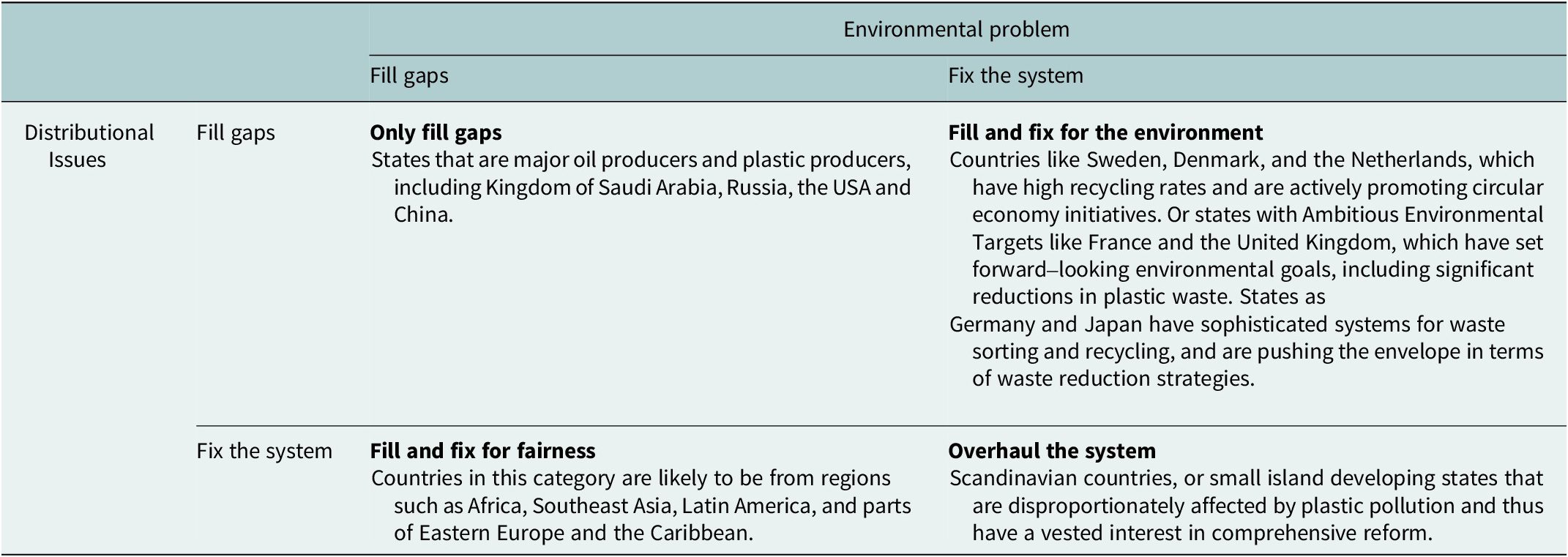
As noted above, the concept of power disconnects combines theories about incentives to engage in environmental governance with structural understanding of the effects of resource distribution on governance choices. Following Webster et al. (Reference Webster, Gonçalves, Kim, Bailey, Barros-Platiau and Oliveira2020), we leverage this duality to derive the predictions of state preferences described in Table 1. These four ideal types represent combinations of concern about the environmental problem (low/high) and stances on the uneven distribution of the economic costs of solutions (low/high). We expect that the stance on the environmental issue will largely be determined by domestic power disconnects, particularly the relative power of vested interests (e.g., people who benefit from plastic production, consumption, and/or disposal), while stances on distributional issues will reflect international power disconnects, especially fair and equitable considerations for covering the costs of implementing solutions and for regulating international trade in plastic and/or plastic waste. Table 1 brings theoretical predictions on how states would behave in the Plastic Treaty negotiations if the power disconnects hold true. We categorize states’ negotiating positions based on their concern for the environmental problem and their stance on the distribution of costs for solutions. The strong/weak classification within each category denotes the intensity of their policy advocacy. A ‘strong’ stance means that the state strongly supports comprehensive and binding measures, whereas a ‘weak’ stance reflects a preference for flexible, non-binding measures.
Theoretical predictions of categories from power disconnects and the likely behavior of member states and corporations in the Plastic Treaty negotiations
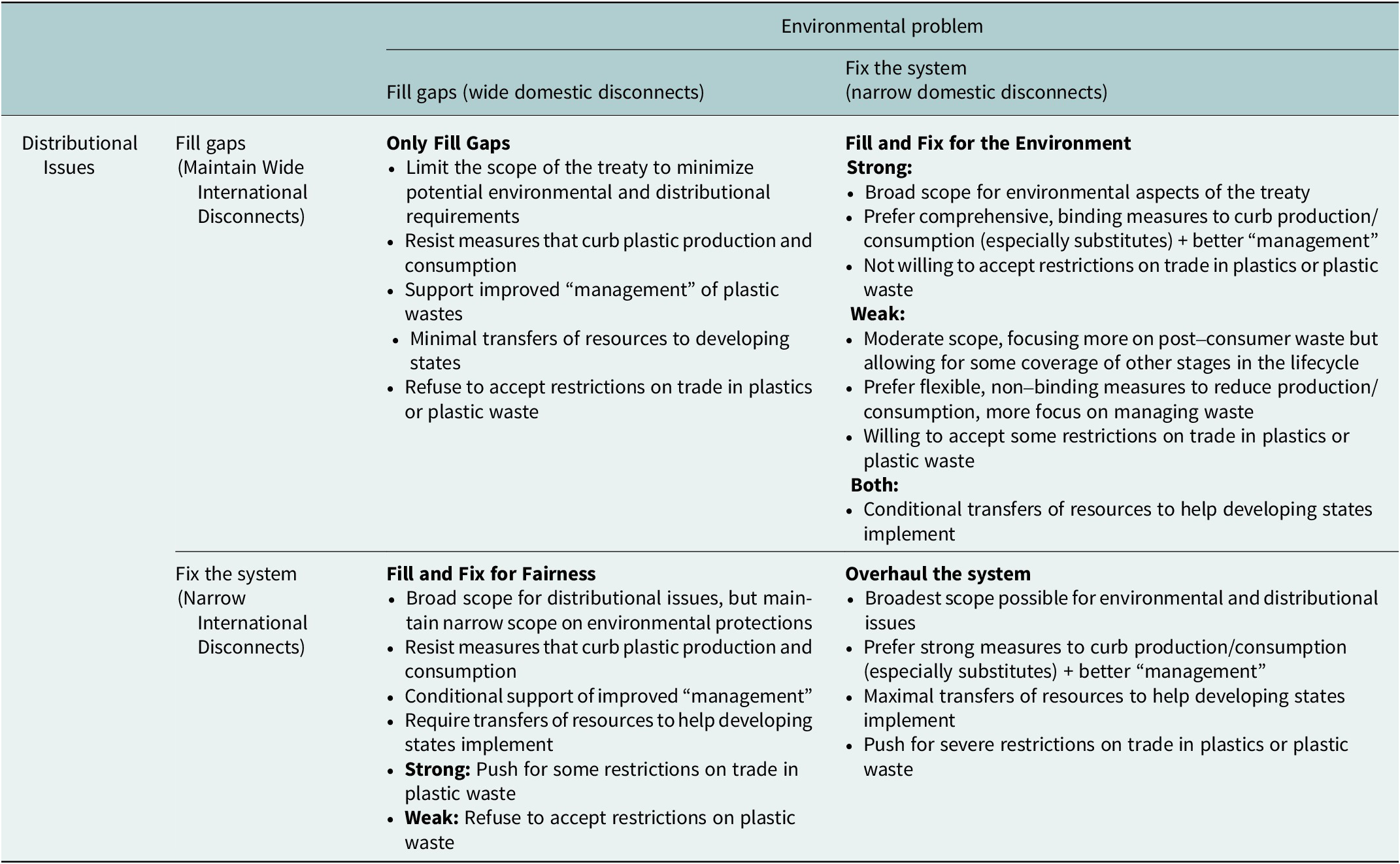
First, the “Only Fill Gaps” category ranks low in terms of both concern about environmental problems and willingness to address distributional issues. States within this classification are primarily concerned with maintaining the integrity of existing international frameworks while being open to flexible, non-binding environmental protections that address specific issues in plastic pollution that are not likely to reduce the production or consumption of plastics. This category is likely to comprise states where domestic power disconnects are wide due to a combination of insulation from the costs of plastic pollution (e.g., non-democratic states with insulated elites) and strong economic ties to the plastic, oil, and gas industries. Because of wide international power disconnects, these states resist extensive transfer of resources to help improve management and refuse to accept restrictions on international trade.
Second, states in the “Fix and Fill for the Environment” category have high to moderate concern about the environmental problem but are less concerned about distributional issues. Aligned with developed countries on various fronts, states in this category distinctly prioritize environmental outcomes. They push for strong environmental safeguards within the treaty, actively supporting measures that promise substantial environmental benefits and effective protection against the impacts of plastic pollution, especially focusing on recycling and improved design to reduce plastic content. They are often developed states with high levels of plastic consumption and a commitment to recycling and circular economy principles. They are concentrated on the scope of the treaty, but also advocate for targets and indicators and strategies to ensure compliance.
Third, “Fill and Fix for Fairness” prioritizes equity in the negotiations, especially considering the poorer states are not the ones to blame or responsible for solving the problem. They are in support of a fair resource allocation, advocating for financial aid and technical support to ensure all parties can meet treaty obligations. Frequently, these states are at the receiving end of inequitable environmental practices, such as plastic waste dumping. These are often developing countries or economies in transition. They are likely to focus more on the scope and treaty principles rather than the regulatory design of the treaty, as they are concerned about sanctions and compliance.
Lastly, “Overhaul the System” represents the most progressive stance, states in this group call for radical changes to the current system. They champion ambitious reforms that could significantly disrupt the status quo, advocating for transformative approaches in the global management of plastic pollution. This category would include states that have stronger environmental policies regarding plastic, are wealthier countries, present active Civil Societies and seek competitive advantage. They also tend to focus more on the regulatory design of the treaty, targets, indicators and advocate for binding mechanisms.
In light of these disconnects, the predictions from this theory may indicate that the negotiations are expected to be initially steered by actors desiring systemic change. However, states emphasizing gap-filling will likely dominate as discussions progress. When considering environmental aspects, these states might push for an agreement that does not challenge existing regimes and incorporates relatively malleable tools. Distribution-related issues could introduce delays in negotiations unless there is a shift in states’ interests and associated narratives toward a more ambitious treaty (Webster et al., Reference Webster, Gonçalves, Kim, Bailey, Barros-Platiau and Oliveira2020).
Methods
In this study, we engaged in a predictive, theory testing analysis. Our objective is to examine whether the behaviors of different states or groups align with the theoretical expectations posited by power disconnect theory. To this end, we have categorized each country/group of stakeholders based on a set of criteria (e.g., economic indicators, oil and gas production, recycling rates, plastic production, etc.). We have also used their negotiation positions during the Intergovernmental Negotiating Committee (INC) or formal statements as a proxy to test our theory.
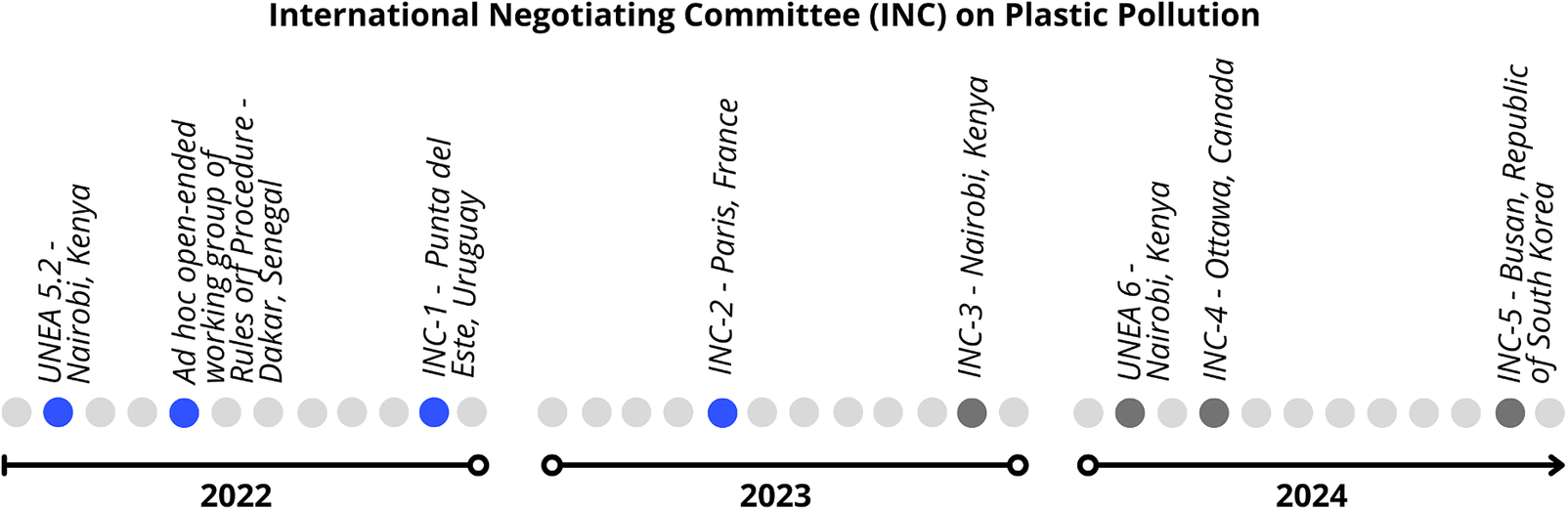
We traced the INC process, making observations during the two initial meetings. The INC sessions were organized after the mandate to negotiate the Plastic Treaty, as the new internationally binding legal instrument, at the UN Environment Assembly (UNEA) 5.2 in March 2022, in which UNEA Resolution 5/14 was adopted (Figure 1). The rules of procedure proposed for all INCs were then prepared by an ad hoc open-ended working group, convened by UNEP, from 30 May to 1 June, 2022, in Dakar, Senegal. The first session of the INC (INC-1) occurred in Punta del Este, Uruguay, in November 2022, and the INC-2, in Paris, France, in May 2023 (Figure 1).
Timeline of the International Negotiating Committee on Plastic Pollution meetings since the publishing of the UNEA Resolution 5/14, in which only those indicated in blue were considered within the time frame of our analysis.
Source: authors.
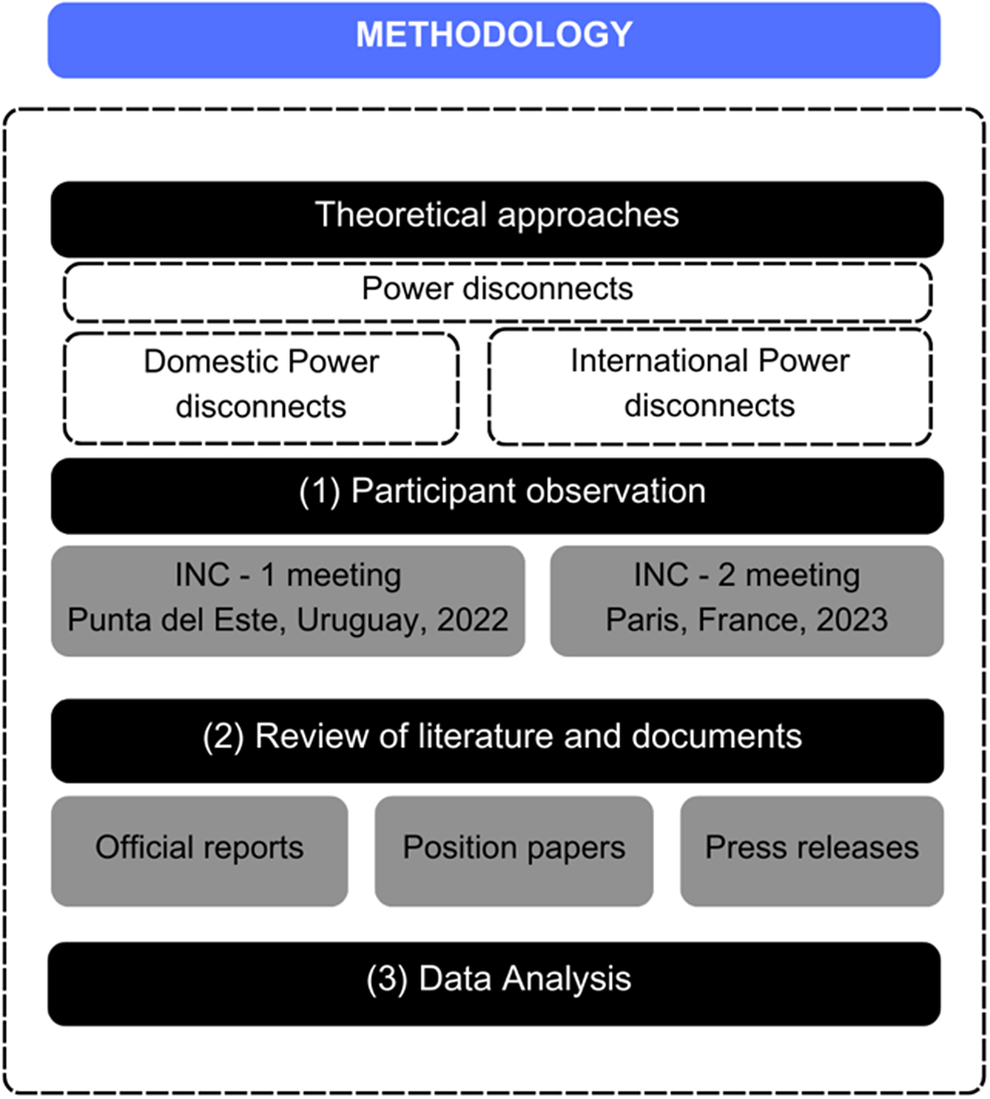
The data for this study came from two sources (Figure 2):
-
1. From the participant observation at two key stages of the negotiation process: INC-1 and INC-2. During these sessions, designated authors (INC-1: CIE, NMG, AT; INC-2: NMG, VMS) were present as observers in plenary sessions, contact groups, and side events. Observations were systematically documented in Excel digital format, capturing both comprehensive dialogs, salient points deemed critical to the negotiation dynamics and controversial and unresolved among the states. The criteria for significance were predetermined based on research objectives, ensuring consistency in data collection;
-
2. A review of relevant literature and documental analysis supplemented the data collected during the INC-1 and INC-2 meetings. This included reviewing official reports and documents produced by the United Nations Environment Programme, as well as position papers and press releases issued by participating states, observer organizations, civil society actors, Earth Negotiations Bulletin (ENB) reports and other reports from intergovernmental organizations (IGOs), non-governmental organizations (NGOs), and the media. The excerpts mentioned in this document originated from a dataset we created and consistently maintained during both INCs. We have corroborated these excerpts with written statements and, whenever possible, video recordings.
Method applied to investigate the institutional design and factors that shape the development of the Plastic Treaty.
Source: authors.
To analyze these extensive records and information, a qualitative content analysis was employed. This involved coding the data for recurrent themes, comparing statements to identify consensus and divergence, and mapping negotiation trajectories. These analytic steps were essential for highlighting the key points that shaped the findings. The process was iterative, with frequent cross-references between the raw observational data and the emerging results, thereby ensuring a cohesive and robust interpretation of the negotiations.
Our data collection involved systematic observation and documentation of the negotiation sessions during the INC meetings. Specifically, we captured detailed dialogs, including key points, arguments, and counterarguments made by various stakeholders. We recorded direct quotations, summarized statements, and documented notable exchanges that illustrated the negotiation dynamics. The criteria for data selection included the relevance to our research objectives, significance of the points made, and the presence of recurring themes or contentious issues. In addition to observing the sessions, we conducted a comprehensive review of relevant documents, including official reports, position papers, and press releases issued by participating states and observer organizations. This approach allowed us to cross-reference verbal statements with written proposals and official documents, ensuring the reliability of our data. Our analysis focused primarily on concrete text proposals and negotiated agreements to provide an accurate representation of states’ positions and the negotiation process.
Results
Key points to be addressed in the negotiation process
From the data collected during the participatory observation process, we summarize some ten key points that are still contested by states (Figure 3). Note the similarity among these ten points of divergence and our predictions of national positions based on the power disconnects theory (Table 1). We see that states are largely in disagreement over the scope of the treaty, with system fixers and fill and fixers generally seeking wider applications, while gap fillers prefer to limit the environmental and/or distributional reach of the instrument. Negotiations also continue over the regulatory strength of the treaty. While system fixers are pushing for stronger commitments to protect the environment and/or correct distributional inequalities, gap fillers resist these efforts entirely. We also see some states who are in the “weak fill and fix” category, as they argue for vague requirements, voluntary measures, and other soft regulatory approaches. The rest of this section describes these ten remaining issues of contention in more detail before moving on to a detailed breakdown of national negotiating positions.
The ten unresolved points in the Plastic Treaty Negotiations.
Source: authors.
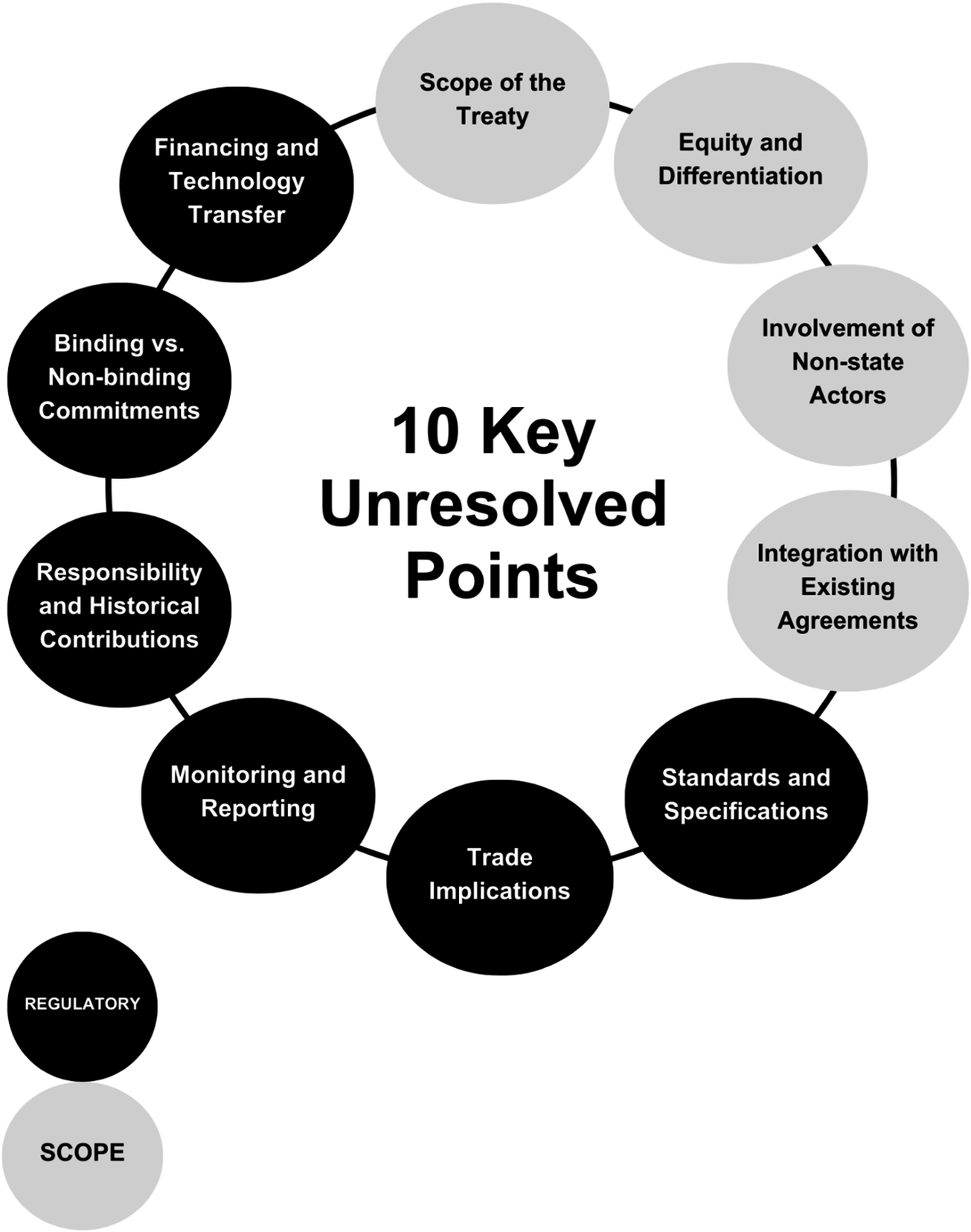
The ten points are classified into “Scope” and “Regulatory”. The Scope category encompasses the breadth and reach of the treaty’s provisions. It determines the extent of the issues that the treaty will address, the actors involved, and the overarching goals and objectives. This includes the following:
-
• Scope of the Treaty: Determining whether the treaty will focus on plastic waste management (fill gaps) or tackle the entire lifecycle of plastics (fix system), from production to disposal, is still under debate. As expected of states in the only fill gaps category, states with significant oil production are resisting the inclusion of upstream measures, including provisions to decrease plastic production, and pressing for a stronger focus on waste management instead of reduction of waste at the source.
-
• Equity and Differentiation: Recognizing the different capabilities and circumstances of states, and ensuring that the treaty provisions are fair and equitable is a cross-cutting issue in the negotiations of the Plastic Treaty. This can involve differentiated timelines or targets for different groups of states that might cause the treaty to be less ambitious than intended by some less developed states. As expected of states in the “fix and fill for fairness category”, developing countries argue for the inclusion of the “Common But Differentiated Responsibilities” principle.
-
• Involvement of Non-state Actors: Deciding the role of the private sector, NGOs, academia, and other non-state actors in implementing the treaty provisions is another concern. States that only want to fill gaps advocate for a strong role for industry, given their significant involvement in the plastics value chain, while states that lean toward fixing the system for the environment are wary of potential conflicts of interest.
-
• Integration with Existing Agreements: There are already regional and international agreements addressing some aspects of plastic pollution (such as the MARPOL Annex V for marine plastic litter). The new treaty would need to fit cohesively within this existing framework. Gap fillers do not want the new treaty to supercede existing agreements; system fixers would prefer a treaty that strengthens commitments in existing agreements.
The Regulatory category refers to the specific rules, standards, and mechanisms the treaty may establish to control and mitigate plastic pollution. This category includes aspects related to enforcement, compliance, and operational details such as
-
• Financing and Technology Transfer: Developing countries often seek financial assistance, technology transfer, and capacity-building support to implement treaty provisions. The source, amount, and mechanism of this financial assistance is not set already and can be a contentious point. Gap fillers on distributional issues prefer to rely on existing mechanisms like the Global Environment Facility, while system fixers would like a major overhaul that could ensure greater capacity building.
-
• Binding vs. Non-binding Commitments: The effectiveness of an international treaty often depends on whether its provisions are legally binding or voluntary. States that are gap fillers are not willing to commit to stringent, enforceable measures and system fixers are more prone to support national-based targets.
-
• Responsibility and Historical Contributions: Taking a fill-the-gaps stance on distributional issues, developed countries have historically contributed more to plastic production and waste but would prefer not to pay the full cost of cleanup for their historical contributions. Developing countries, on the other hand, are in the fix-the-system category for distributional issues and argue for the “polluter pays” or “extended producer responsibility” principles. They expect developed countries to shoulder a significant part of the responsibility and costs to combat plastic pollution.
-
• Monitoring and Reporting: Mechanisms to track, verify, and report on the implementation of treaty commitments are a critical aspect to assess the effectiveness of measures and of the instrument itself. Interestingly, states that want to fix the system for the environment share an interest in strong enforcement mechanisms with those that want to fix the system for distributional equity. However, they differ over who should bear the costs or burden of transparency and accountability. Only fill gaps states, on the other hand, resist enforcement mechanisms entirely.
-
• Trade Implications: Measures in the treaty might affect international trade, especially if there are bans or restrictions on certain types of plastics or plastic products. Again, as expected of “only fill gaps” states, countries with significant plastic manufacturing industries are resisting stringent measures, or even to include any provisions related to plastic trade due to potential economic impacts.
-
• Standards and Specifications: Deciding on standardized criteria for plastic production, recycling, and waste management is an additional source of discussion. This includes the definition of problematic and avoidable plastics and the debate on single-use plastics: whether to ban, reduce, or find sustainable alternatives. Only fill gaps and fill gaps for the environment countries tend to narrow down the definition of problematic and avoidable plastics to a very specific set of products and not to support the phase-out of single-use plastics.
States and vested interests in the Plastic Treaty
The ten remaining issues described above were identified through our detailed analysis of national negotiating positions. Ideally, we would be able to analyze rich datasets regarding the distribution of both power and perceptions of risk (or concern) about plastics in different countries in order to assess power disconnects at the domestic level before considering these implications for international power disconnects. However, data on concern is very difficult to collect, so we relied on two proxies to locate states in the negotiating position matrix outlined in Table 2: status as developing/Global South or developed/Global North and presence of strong vested interests in plastic production, consumption, disposal and/or trade.
Expected negotiation position category behaviors of states regarding the Plastic Treaty based on the theory
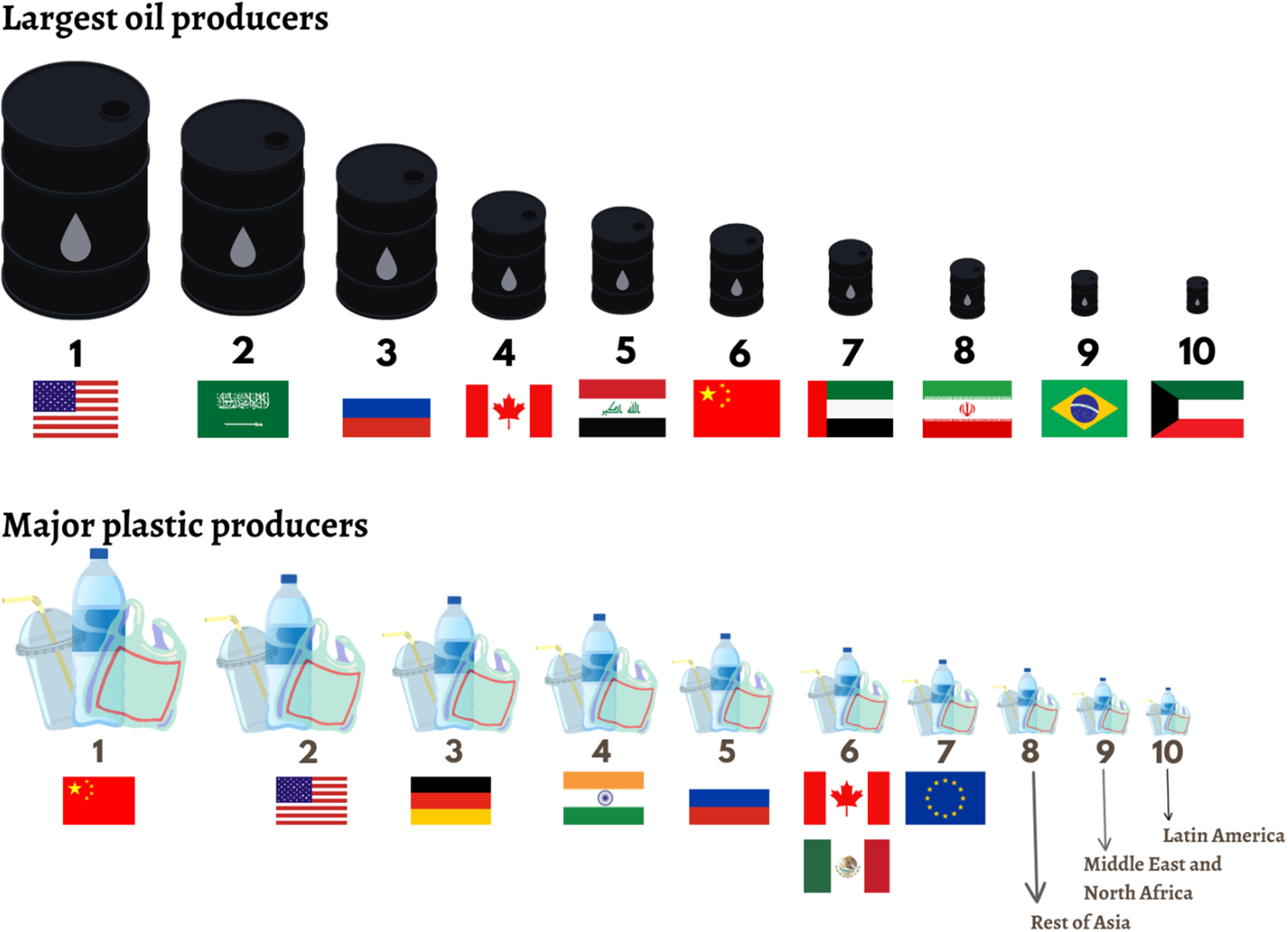
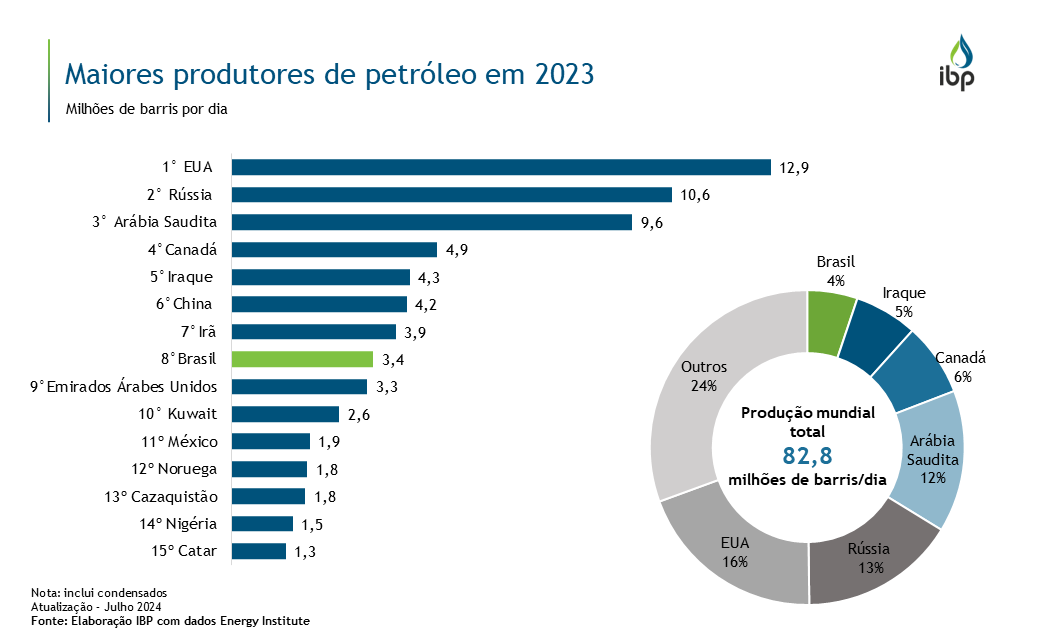
Our data reveals a complex global landscape of plastic production and waste, underpinned by the activities of major oil producers and plastic manufacturing countries. The United States leads as the largest oil producer, followed by Kingdom of Saudi Arabia and Russia (Brazilian Institute for Oil and Gas, 2024). This is significant as the production of plastic is closely linked to the oil industry, with the United States also featuring as one of the major plastic producers alongside China and Germany (Statista, 2021) (Figure 4).
Ranking of largest oil-producing countries, in order: United States of America, Kingdom of Saudi Arabia, Russian Federation, Canada, Iraq, China, United Arab Emirates, Iran, Brazil, and Kuwait (Brazilian Institute for Oil and Gas, 2024); and major plastic producing countries, in order: China, United States of America, Germany, India, Russia, Canada and Mexico, Rest of the European Union, Rest of Asia, Middle East and North Africa, and Latin America (Statista website data; Available at: https://www.statista.com/markets/410/topic/960/plastic-rubber/#overview).
The per capita plastic waste production presents a different hierarchy, with Singapore, Australia, and Oman topping the list (Minderoo Foundation, 2023). This indicates a substantial divergence between the sites of production and the intensity of waste generation, suggesting a disparity in consumption patterns and waste management efficiency (Figure 5).
Ranking the largest plastic waste producers per capita, in order: Singapore, Australia, Oman, Netherlands, Belgium, Israel, Hong Kong, Switzerland, United States of America and United Arab Emirates (Minderoo Foundation, 2023); Largest exporters of plastic waste, in order: United States of America, Hong Kong, Japan, Germany, United Kingdom, Belgium, France, Netherlands, Australia, Thailand (Wang et al., Reference Wang, Zhao, Lim, Chen and Sutherland2020); Largest importers of plastic waste, in order: China, Netherlands, Vietnam, Malaysia, Germany, United States of America, India, Turkey, Belgium and Italy (Wang et al., Reference Wang, Zhao, Lim, Chen and Sutherland2020); and Largest importers of plastic waste post China-ban, in order: Malaysia, Thailand, Vietnam, Hong Kong, Indonesia and Turkey (Fuhr and Franklin, Reference Fuhr and Franklin2019).
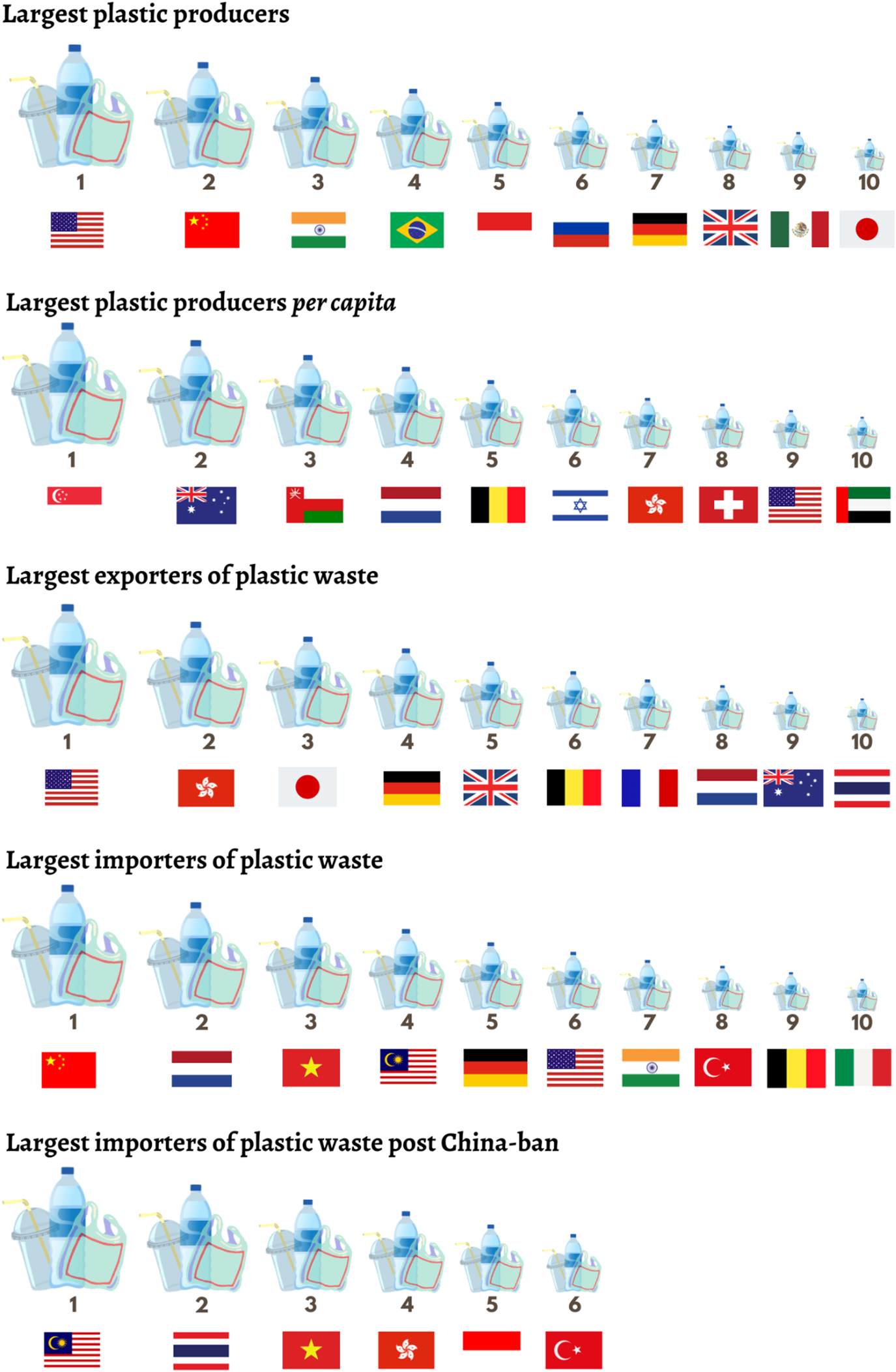
Furthermore, our data also illustrates the flow of plastic waste through international trade. The largest exporters of plastic waste are the United States, Hong Kong, and Japan (Wang et al., Reference Wang, Zhao, Lim, Chen and Sutherland2020), indicating a trend of waste being shipped from developed to less developed regions. Conversely, the largest importers are China, the Netherlands, and Vietnam, with China’s role diminishing after its import ban, leading to an increase in imports by countries like Malaysia, Thailand, and Vietnam (Fuhr and Franklin, Reference Fuhr and Franklin2019) (Figure 5).
These rankings underscore the intricacies of the plastic economy—highlighting the possible roles countries play as producers, consumers, and processors of plastic. These data may work as proxies to reveal the interconnectedness of global supply chains and the implications for international policy-making on plastic pollution. The data suggest that while some countries are central to plastic production due to their oil industries, others emerge as key nodes in the global waste trade, either as large-scale exporters, importers, or both.
Power disconnects in the negotiation process for the Plastic Treaty
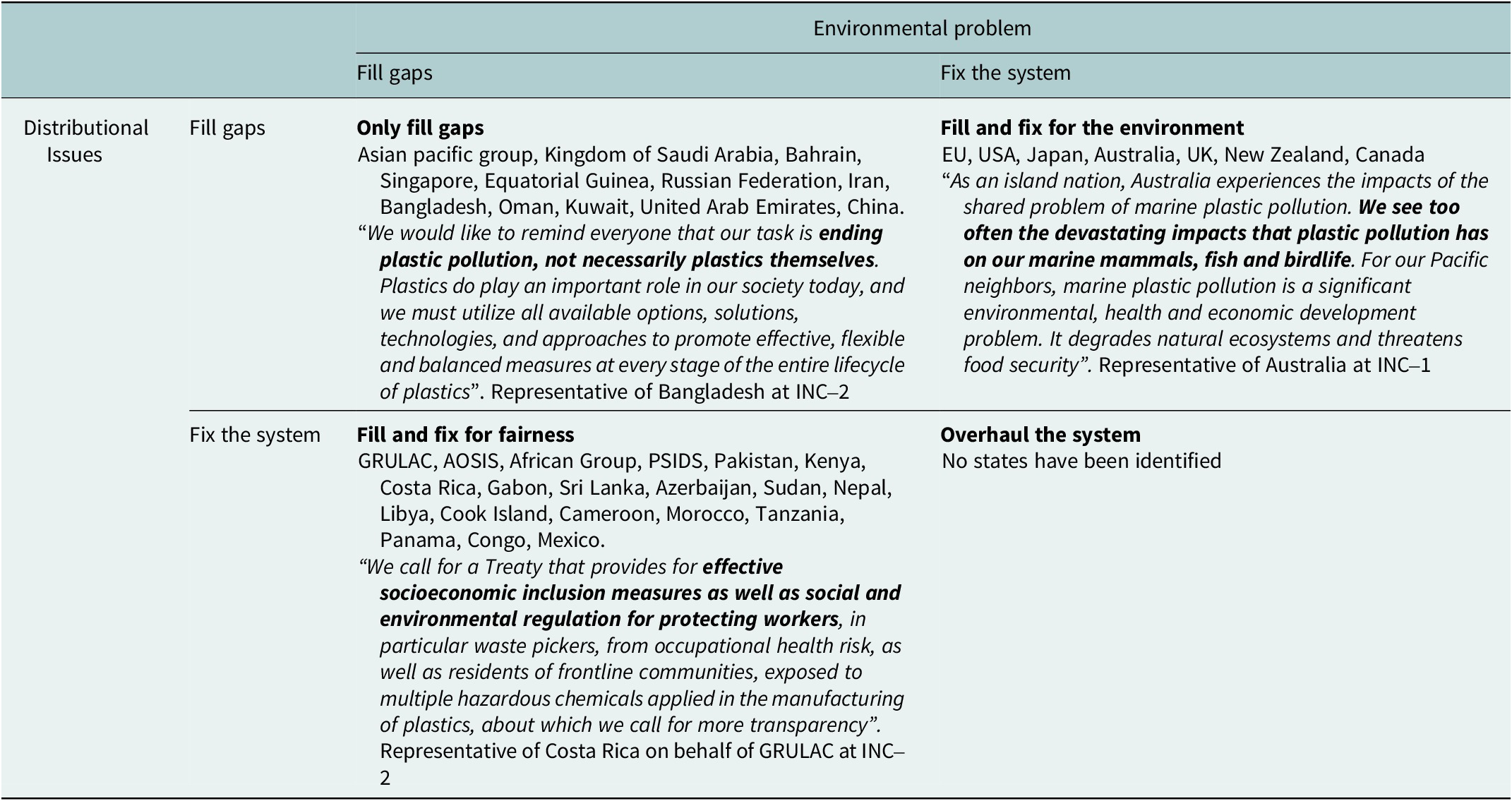
The study’s findings corroborate the theoretical prediction (Table 1) that power disparities influence negotiating behaviors in the global Plastic Treaty discussions. Key oil and plastic producers such as Kingdom of Saudi Arabia and China prefer to “Only Fill Gaps,” promoting limited adjustments to existing systems to protect their economic interests. A key highlight here is the USA, which figures among the highly dependent on oil and plastic production, however, have been positioning it as a “Weak Fill and Fix for the environment”, contradicting the posit theory, and aligning with the Western European States and other Developed countries. Despite advocating for environmental protections, tend to propose solutions that align with their economic capabilities and industrial interests, demonstrating a regulatory focus that advances environmental goals without disrupting established industries. Unlike China and Kingdom of Saudi Arabia, the USA seeks to balance environmental leadership with economic benefits, reflecting the influence of private sector innovation and strategic negotiation tactics. This behavior highlights the unique position of the USA compared to other major producers.
On the other hand, countries like Costa Rica, representing Group of Latin America and Caribbean Countries (GRULAC), along with African and Small Island Developing States (SIDS), advocate for a “Fill and Fix for Fairness” approach, addressing socio-economic and environmental disparities. Their focus on fairness represents both scope and regulatory categories, aiming to balance the treaty’s reach with substantive, equitable rules. While no countries have yet fully committed to an “Overhaul the System” approach, which would entail sweeping reforms under both the scope and regulatory categories, the data indicates that nations severely affected by plastic pollution might assume this role, if they realize they are working against the clock and a champion is needed. The study thus reveals a clear link between a country’s position in the plastic economy and its negotiation stance, reflecting broader issues of global environmental governance (Table 3).
Negotiation position category behaviors of states regarding the Plastic Treaty, considering the frameworks by Young et al. (Reference Young, Webster, Cox, Raakjær, Blaxekjær, Einarsson, Virginia, Acheson, Bromley, Cardwell, Carothers, Eythórsson, Howarth, Jentoft, BJ, McCormack, Osherenko, Pinkerton, van Ginkel, Wilson, Rivers and Wilson2018) and Webster et al. (Reference Webster, Gonçalves, Kim, Bailey, Barros-Platiau and Oliveira2020) and using empirical data. Quotes from plenary sessions illustrate the positioning of each category.
Discussion
The confluence of interests, as depicted in the results of this study, paints an illustrative picture of the geopolitical and economic intricacies that are shaping the Plastic Treaty negotiations. The reliance of plastic production on fossil fuels, with over 90% of virgin plastics being fossil-fuel based (OECD, 2023), positions major oil producers and industrial giants at a critical juncture. Countries like China, and members of OPEC are seen to wield considerable influence over the negotiations, often aligning with positions that safeguard their economic interests (Korppoo, Reference Korppoo2018; Ebner and Iacovidou, Reference Ebner and Iacovidou2021). This is emblematic of the “Only Fill Gaps” approach, which favors incremental changes and flexible measures that do not disrupt established industries or reduce demand for oil and plastic resin materials (Nature Sustainability, 2023). This has already been similarly reported for the BBNJ (Webster et al., Reference Webster, Gonçalves, Kim, Bailey, Barros-Platiau and Oliveira2020, Convention of Biological Diversity (Raustiala, Reference Raustiala1997) and UNFCCC (Brunnée and Streck, Reference Brunnée and Streck2013).
The “Fill and Fix for Fairness” stance, represented by countries such as Costa Rica and various members of GRULAC, reflects the study’s predictions about power disconnects. These countries are advocating for the treaty to incorporate social and environmental regulations that protect all stakeholders, especially those at the frontlines of plastic pollution (Ebner and Iacovidou, Reference Ebner and Iacovidou2021).
On the other end of the spectrum, the absence of countries firmly in the “Overhaul the System” camp suggests a reluctance to champion comprehensive reforms, despite the pressing environmental concerns and the principles of equity at stake. This reluctance is particularly notable given the interwoven economic dependencies on plastic production, as seen in countries like China, the United States, and various European states, all of whom have a significant stake in the global plastics industry (Figure 4). Although the theory has been predicted, Scandinavian countries still need to act more ambitious to lead the treaty negotiations, and this has not been evident in these early INCs.
The United States’ positioning in the “Fill and Fix for the Environment” category, despite its substantial interests in oil and plastic production, may appear as an outlier. This could be a reflection of the multifaceted nature of U.S. interests and the complex interplay of domestic and international policy goals. Furthermore, the U.S. might aim to maintain an image of environmental leadership internationally, while internally balancing this with its economic interests. Strategic negotiation tactics could also be at play, where the U.S. pushes for environmental measures with the foresight of crafting the treaty to ultimately benefit its own industries. This anomaly might also reflect the influence of the private sector and technological innovation within the country, which drives the U.S. to support environmental initiatives that coincide with its economic agenda. To fully understand this outlier behavior, a closer examination of the U.S.’s long-term negotiation patterns and the factors influencing its international environmental policies would be required.
We observe a highly politicized process where the interests of actors across the plastic value chain—from petrochemical companies to waste managers—exert influence and sometimes conflict (Ebner and Iacovidou, Reference Ebner and Iacovidou2021). The vested interests of oil-dependent economies, alongside industries and plastic producers, are manifest in their attempts to block or dilute plastic bans or stringent regulations.
The results indicate a direct correlation between countries’ roles as plastic producers and waste managers and their negotiating positions, which are ultimately influenced by domestic vested interests. These interests are particularly evident in countries with extensive coastlines and limited waste management systems, such as those in Southeast Asia, which underscore the need for building capacity and receiving financial and technological support in any international agreement (Lebreton et al., Reference Lebreton, Van Der Zwet, Damsteeg, Slat, Andrady and Reisser2017; Wang et al., Reference Wang, Zhao, Lim, Chen and Sutherland2020).
In sum, the Plastic Treaty negotiations reflect the intricate dance between domestic interests and international goals, with the equilibrium of power between these levels playing a pivotal role in shaping the outcome. The clarity of solutions that can be embraced without impinging upon states’ vested interests emerges as a critical determinant of the treaty’s success. The study’s predictions highlight that the power dynamics and the way they shape the treaty’s scope and regulations will be crucial in determining the effectiveness and fairness of the global agreement.
Conclusion
The study validates the power disconnects framework as an insightful tool for analyzing countries’ stances in the Plastic Treaty negotiations, directly correlated with their positions in the global plastic economy. The analysis of the ten key unresolved points reveals a delineation between countries advocating for limited revisions within the “Only Fill Gaps” category, primarily significant oil and plastic producers like the Russian Federation, Kingdom of Saudi Arabia, and China, who push for maintaining the status quo that benefits their economic interests. This stance corresponds with a narrow interpretation of the treaty’s scope, focusing on end-of-pipeline waste management rather than a comprehensive lifecycle approach. It also does not support the inclusion of plastic trade provisions in the instrument. In contrast, the “Fill and Fix for Fairness” group, which includes countries such as those in Latin America and the Caribbean nations, members of the African Group, and Small Islands Developing States, seeks expansive scope and robust regulatory measures to address socio-economic and environmental disparities. This reflects their push for equitable treatment in the treaty, incorporating principles of fairness and shared responsibilities, especially for countries bearing the brunt of pollution without being major contributors. The developed states within the “Weak Fill and Fix for the Environment” category highlight the need for environmental protection, yet their commitments appear to be moderated by domestic industrial interests, suggesting regulatory measures that align with their own advanced waste management capacities and high per capita waste generation. The absence of strong advocates for the “Overhaul the System” category indicates a gap in leadership for ambitious, system-wide reform, despite the pressing need illuminated by the unresolved issues, ranging from financial and technology transfer to binding commitments and trade implications. These analyses reflect the positionings of countries from INC-1 and INC2. Since this is an ongoing negotiation process, research following up on INC-3, INC-4, and INC-5 is necessary to comprehend the evolution of the ten unresolved points and the (re)distribution of countries among the four categories.
The ten identified points of contention encapsulate the negotiation challenges, underscoring the difficulty of reaching a consensus that satisfies both the scope and regulatory aspects of an ambitious, effective and equitable treaty. The divergent perspectives among countries underscore the intricate task of crafting a treaty that not only addresses the urgency of plastic pollution but also navigates the complex terrain of global economic and environmental interests.
In light of these intricate dynamics, it is imperative to comprehend the vested interests and domestic influences that underlie state positions in Plastic Treaty negotiations. Such understanding is indispensable for anticipating the course and ultimately shaping the outcome of this crucial global initiative to combat plastic pollution. Yet, it is important to have epistemic communities and civil society pushing for a more ambitious treaty that could overhaul the system and promote a more just and sustainable ocean.
Open peer review
To view the open peer review materials for this article, please visit http://doi.org/10.1017/plc.2024.28.
Financial support
This work was supported by the LRG (Grant #2022/10321-8, São Paulo Research Foundation (FAPESP); GSRL (CAPES Fellowship) and AT (Scholarship grant Proc. 310553/2019-9).
Competing interest
There is no conflict of interest to be reported.
Authors contribution
LRG: conceptualization, theoretical approach, methodology, validation, formal analysis, investigation, data curation, writing – original draft, writing – review & editing; DGW: conceptualization, theoretical approach, methodology, validation, formal analysis, writing – review & editing; NMG: conceptualization, methodology, formal analysis, investigation, data curation, writing – original draft, writing – review & editing; CIE: conceptualization, methodology, formal analysis, investigation, data curation, writing – original draft; VMS: conceptualization, methodology, formal analysis, investigation, data curation, writing – original draft; GSRL: conceptualization, methodology, formal analysis, investigation, data curation, writing – original draft; AT: writing – review & editing.


 Open access


Comments
Dear Editor,
I am writing to submit our manuscript entitled “Against the clock to face plastic pollution: critical challenges to elaborate a comprehensive and ambitious Plastic Treaty” for consideration in Cambridge Prisms: Plastics. This research examines the imperative global issue of plastic pollution and the international efforts to combat it through the development of the Plastic Treaty.
The urgency of addressing the plastic crisis is indisputable, and our study provides a timely and critical analysis of the complexities inherent in international policy-making. We explore the essential role of cooperation among nations and the pressing need to prioritize collective action over individual interests. Our findings identify ten pivotal issues that have yet to be addressed in the ongoing treaty negotiations, offering a valuable roadmap for policymakers and stakeholders.
With 175 member states currently negotiating this treaty, our research emphasizes the importance of unity and decisive action to avoid compromises that could weaken environmental protections. By highlighting the negotiation dynamics and potential power imbalances, we aim to influence a reframing of discussions towards stronger and more effective environmental policies.
Our study has been submitted only to this journal, and we strongly believe it does fit well with the upcoming Special Issue Perspectives on the Global Plastics Treaty vol 1.
Thank you for considering our submission. I look forward to the opportunity to discuss our research further.
Warm regards,
Leandra Gonçalves