


Introduction
Self-esteem, defined as a favorable or unfavorable attitude toward the self, is associated with physical and mental well-being in young adulthood, even when controlling for factors such as depression, gender, and socio-economic status (Rosenberg, Reference Rosenberg1965; Swallow & Kuiper, Reference Swallow and Kuiper1988; Trzesniewski et al. Reference Trzesniewski, Donnellan, Moffitt, Robins, Poulton and Caspi2006; Khosravi et al. Reference Khosravi, Mohammadpoorasl, Holakouie-Naieni, Mahmoodi, Pouyan and Mansournia2016). Although self-esteem results from an internal process of evaluating one's own skills and competencies, that process is influenced by what adolescents believe parents and peers think of them (Harter, Reference Harter and Baumeister1993). In fact, many early self-esteem theorists have posited that self-esteem is a predominantly social construct, and an individual's concept of self is significantly shaped by how he or she believes they are perceived by others in a given reference group (Cooley, Reference Cooley1902).
Social norms theory, which is primarily used to explain how an individual's perceptions of others’ behaviors and opinions shapes his or her own behavior, can help elucidate how the phenomenon described above may be operationalized. Social norms are the unwritten rules regulating what is appropriate in a society or group. There exist two primary schools of thought related to social norms: the first suggesting that norms are regularities in people's behavior or attitudes, the second asserting that norms are beliefs about what others do and approve of (Knight Lapinski & Rimal, Reference Knight Lapinski and Rimal2005; Morris et al. Reference Morris, Hong, Chiu and Liu2015). Scholars in the first stream of thought often refer to norms as the collective behaviors and attitudes shared by a society; what Chung & Rimal (Reference Chung and Rimal2016) call ‘collective norms’. Scholars in the second stream of thought instead think of norms as beliefs (right or wrong) about other people's attitudes and behaviors. Seminal work by social psychologist Cialdini distinguished between two types of social norms as beliefs: descriptive norms, the belief one has about what others commonly do, and injunctive norms, the belief one has about what others approve and disapprove of (Cialdini et al. Reference Cialdini, Demaine, Sagarin, Barret, Rhoads and Winter2006). Importantly, norms have a stronger effect when they are salient, that is, when situational cues activate them (Cialdini et al. Reference Cialdini, Kallgren and Reno1991; Cialdini & Goldstein, Reference Cialdini and Goldstein2004; Cislaghi & Heise, Reference Cislaghi and Heiseunder review). People often comply with social norms as they anticipate social rewards for doing so and social punishment if they do otherwise (Elsenbroich & Gilbert, Reference Elsenbroich, Gilbert, Elsenbroich and Gilbert2014). Social norms are considered distinct from personal attitudes. Although personal attitudes may be influenced by social norms, they represent an individual's own evaluation of a belief or behavior with some level of approval or disapproval (Mackie et al. Reference Mackie, Moneti, Shakya and Denny2015; Young, Reference Young2015; Chung & Rimal, Reference Chung and Rimal2016; Miller & Prentice, Reference Miller and Prentice2016).
Existing research demonstrates complex relationships between personal attitudes, different types of norms, and well-being. For example, a 20-country study found that self-esteem was associated with collective norms rather than personal attitudes (Becker et al. Reference Becker, Vignoles, Owe, Easterbrook, Brown, Smith, Bond, Regalia, Manzi, Brambilla, Aldhafri, Gonzalez, Carrasco, Paz Cadena, Lay, Schweiger Gallo, Torres, Camino, Ozgen, Guner, Yamakoglu, Silveira Lemos, Trujillo, Balanta, Macapagal, Cristina Ferreira, Herman, De Sauvage, Bourguignon, Wang, Fulop, Harb, Chybicka, Mekonnen, Martin, Nizharadze, Gavreliuc, Buitendach, Valk and Koller2014). Differences in these relationships may be attributed to different pathways through which messaging about norms may be activated in the brain (Morris et al. Reference Morris, Hong, Chiu and Liu2015). Adolescents may be especially sensitive to social norms, since receptiveness to social stimuli peaks during adolescence, and adolescents may perceive greater rewards for conforming (Dijkstra & Cillessen, Reference Dijkstra and Cillessen2013; Berger & Caravita, Reference Berger and Caravita2016). While protective and prosocial norms can positively impact adolescents’ well-being (Viner et al. Reference Viner, Ozer, Denny, Marmot, Resnick, Fatusi and Currie2012), empirical evidence has shown that social norms can also have a harmful influence on adolescents’ well-being, increasing their likelihood of engaging in behaviors such as smoking (Eisenberg & Forster, Reference Eisenberg and Forster2003), drinking alcohol (Dams-O'Connor et al. Reference Dams-O'Connor, Martin and Martens2007), and using recreational drugs (Jiloha, Reference Jiloha2009).
Research from high-income countries shows that girls exhibit significantly lower self-esteem than their male counterparts as early as adolescence (Allgood-Merten & Stockard, Reference Allgood-Merten and Stockard1991). While this lower self-esteem may in part be related to adolescent girls’ greater risk of depression as compared with boys’ (Cohen et al. Reference Cohen, Cohen, Kasen, Velez, Hartmark, Johnson, Rojas, Brook and Streuning1993), some empirical evidence suggests that women and girls who internalize gender norms that devalue women often hold themselves in lower esteem (Katz et al. Reference Katz, Joiner and Kwon2002).
Despite the widely recognized effect that norms have on people's health and well-being (Chung & Rimal, Reference Chung and Rimal2016; Cislaghi & Heise, Reference Cislaghi and Heiseunder review), there is a dearth of evidence on how gender- and violence-related social norms affect self-esteem, especially among refugee populations. Yet, understanding these complex relationships is particularly critical for these vulnerable populations as they often face greater risks of gender-based marginalization and violence. Nascent evidence from refugee settings indicates that individuals’ acceptance of intimate partner violence (IPV) and violence victimization may jointly be associated with lower levels of hope, and that these associations may not be consistent across different forms of violence (Stark et al. Reference Stark, Asghar, Meyer, Yu, Bakemore, Poulton and Falb2017a , Reference Stark, Asghar, Yu, Bora, Bavsa and Falb b ). Additionally, adherence to gender inequitable attitudes may be stronger among women, and women may reinforce such norms when in the presence of same-sex peers (Gage & Hutchinson, Reference Gage and Hutchinson2006; Uthman et al. Reference Uthman, Lawoko and Moradi2009; Trott et al. Reference Trott, Harman and Kaufman2016).
The study presented in this article explores these dynamic relationships among female adolescents from Sudan and South Sudan currently living in Ethiopian refugee camps. As of 2013, there were more than 500 000 refugees living in Ethiopia, of whom 135 926 were South Sudanese and 32 520 were Sudanese (UNHCR Operation in Ethiopia 2014). Adolescent refugees in this setting have been found to exhibit elevated rates of mental health distress, including depression, anxiety, and post-traumatic stress (Tempany, Reference Tempany2009). These mental health issues may result from exposure to conflict-related trauma in their home country, the hardships associated with forced migration, or the stressors of living in a foreign environment without access to one's normal support system (Tempany, Reference Tempany2009). Additionally, while gender norms and attitudes data among this population are limited in the literature, one study found that 82% of women and 81% of men in different areas of South Sudan agreed that ‘a woman should tolerate violence in order to keep her family together’; 68% of women and 63% of men agreed that ‘there are times when a woman deserves to be beaten’; and 56% of both men and women believed that women should not disclose physical violence committed by husbands to others (Scott, 2013). This article explores the relationship between gender inequitable and victim-blaming social norms, personal attitudes, and self-esteem among a sample of adolescent refugee girls participating in a life skills program in three refugee camps in Ethiopia.
Methods
Study setting, participants, and procedures
This study took place in three refugee camps in the Benishangul-Gumuz regional state in Ethiopia: Sherkole, Tongo, and Bambasi. The camps are home to tens of thousands of refugees, predominantly from Sudan and South Sudan (Falb et al. Reference Falb, Tanner, Ward, Erksine, Noble, Assazenew, Bakomere, Graybill, Lowry, Mallinga, Neiman, Poulton, Robinette, Sommer and Stark2016). Data for this analysis are drawn from the Creating Opportunities through Mentorship, Parental Involvement, and Safe Spaces (COMPASS) wait-list cluster-randomized controlled trial (for further details of the trial, see Falb et al.). Study inclusion criteria included: (1) being a girl 13–19 years of age; (2) residing in Sherkole, Tongo, and Bambasi refugee camps; and (3) possessing verbal proficiency in one of the four primary languages spoken within the camps (Funj, Regareg, Ingessena Kulelek, and Maban). Prior to the baseline study, IRC's research and program teams conducted language assessments and identified 19 tribal languages in the study camps, none of which are written. Verbal proficiency in one of the four most frequently spoken languages was assessed using a series of questions about girls’ typical language use at home, with friends, and at the market. For ethical reasons, girls with significant cognitive impairments or physical disabilities that would prevent independent completion of the questionnaire were not eligible for inclusion.
Caregivers, married girls, and girls over age 18 provided direct verbal consent, while verbal assent was obtained for all unmarried girls ages 13–17. Consent and assent were obtained in confidential spaces. Data were collected at two time points (July–September 2015 and July–September 2016). All surveys were self-administered using Audio Computer-Assisted Self-Interview (ACASI) programming in a private setting (Falb et al. Reference Falb, Tanner, Asghar, Souidi, Mierzwa, Assazenew, Bakomere, Mallinga, Robinette, Tibebu and Stark2017).
All study protocols were approved by the Institutional Review Board of the Columbia University Medical Center (Protocol #AAAP6855), the Administration for Refugee and Returnee Affairs in Ethiopia, and the International Rescue Committee's internal review board (Protocol #WPE 1.00.003).
Measures
Independent variables
Our analysis examines the relationships between self-esteem and three primary constructs: personal attitudes regarding gender role dynamics, injunctive norms regarding sexual violence and collective peer norms toward gender role dynamics. Our measure of personal attitudes surrounding gender role dynamics was constructed using four survey questions. Girls were asked to indicate their level of agreement with each of the following four statements: ‘It is a female's responsibility to avoid getting pregnant’; ‘A male should have the final word about decisions in his home’; ‘A female should tolerate violence to keep the family together’; and ‘It is okay for a male to beat his wife if she will not have sex with him’. For each statement, respondents were assigned a ‘1’ if they agreed and a ‘0’ if they disagreed. The final measure was created by summing the values of these four items, such that a value of ‘4’ reflected highly gender inequitable norms and a value of ‘0’ indicated gender equitable norms.
Our measure of perceived injunctive norms reflected how a girl believed her family and community would react if she was raped. Perceived injunctive norms are described as what one individual thinks others approve and disapprove, but investigating people's reactions to a given action have been found to be satisfactory proxy measures (Cislaghi & Heise, Reference Cislaghi and Heise2017). Girls were asked to indicate their level of binary agreement with two sanction-related statements: ‘My family would blame me if I was forced to have sex’ and ‘My community would force me to marry a man if he forced me to have sex’. Girls were assigned a ‘1’ if they agreed with the statement, and ‘0’ if they disagreed. The resulting measure was the sum of these two values; the final composite score could take a value of 0, 1, or 2, where 2 indicated greater perceptions of victim blaming norms.
Finally, we used a measure of collective peer norms toward gender inequity (Mackie et al. Reference Mackie, Moneti, Shakya and Denny2015). To measure collective norms, we aggregated individuals’ attitudes at the zonal level (geographic areas within the camps) to create a measure of what was considered ‘normal’ in a given reference group. This measure reflects the mean value of personal attitudes toward gender inequity described above, among all sample girls in a given zone. The study sample included respondents from 12 zones. Utilization of this variable allowed us to examine how gender inequitable norms might differentially impact a girl's well-being at the individual v. community or peer level. Other individual-level variables in our analysis included treatment status (1 = intervention; 0 = control), age in years, living with an intimate partner at endline (1 = yes; 0 = no), and whether or not a girl attended school between baseline and endline (1 = yes; 0 = no).
Outcome of interest
Our primary outcome of interest, self-esteem, was measured using the Rosenberg self-esteem scale (RSES). The RSES was designed to capture adolescents’ sense of self-worth by assessing both positive and negative feelings about themselves (Rosenberg, Reference Rosenberg1965). The RSES has been shown to be correlated with external personality traits as well as mental health conditions, including depression and anxiety (Rosenberg, Reference Rosenberg1979; Schmitt & Allik, Reference Schmitt and Allik2005). Respondents are presented with 10 statements and asked to indicate their level of agreement using a four-point Likert scale, ranging from ‘strongly agree’ to ‘strongly disagree’. Each item may take an ordinal value from 1 to 4, with 4 indicating strong agreement. The composite score is created by summing the values assigned to each of the 10 items, with some items being reverse-coded. The final scale may take a value from 10 to 40, where a higher value indicates greater self-esteem.
The RSES was first developed in 1965 and administered to high school students from 10 randomly selected New York high schools (Rosenberg, Reference Rosenberg1965). In subsequent years, the scale has been adapted for a variety of groups. The RSES exhibits high internal consistency, with a Guttman scale coefficient of reducibility at 0.92, as well as demonstrated test–retest reliability and stability (Rosenberg, Reference Rosenberg1979). Schmitt & Allik (Reference Schmitt and Allik2005) examined cross-cultural appropriateness of the scale in 28 languages and 53 countries, and determined the scale was generally valid for both individualist and collectivist societies. Previous use of the RSES in Ethiopia has demonstrated sufficient reliability, with a Cronbach's α of 0.64 (Schmitt & Allik, Reference Schmitt and Allik2005).
Question items for the RSES were administered as part of the survey using ACASI. Four of the five reverse-coded items from the original RSES were modified for use in this study. Findings from our formative research and pilot testing in the study population revealed that some of the negatively phrased items were confusing to girls. For this reason, items such as ‘I feel I don't have much to be proud of’ were rephrased as ‘I feel I have much to be proud of’; the final scale contains only one item that is reverse-coded. The Cronbach's α for this scale in this study was 0.86 at baseline and 0.88 at endline, demonstrating satisfactory reliability.
Statistical analysis
The sample size for this study was calculated assuming statistical power of 80% and a two-sided α of 0.05 to detect a 20% decline in the primary outcome of the COMPASS study (the incidence of past-year sexual violence) in the intervention arm as compared with the waitlist arm. Calculations estimated approximately 12–15 girls in each cluster and assumed an intraclass correlation coefficient for the study's primary outcome of 0.06 to account for clustering. Final calculations required 62 clusters, with 31 groups in each treatment arm, and at least 896 girls powered at the primary outcome of sexual violence. Self-esteem was subsequently examined in this sample as a secondary outcome of interest.
Linear mixed regression analyses were used to assess the relationships between attitudes and social norms, and self-esteem. Model 1 examines the relationship between individual attitudes toward gender inequitable norms at baseline and self-esteem at endline. Model 2 estimates the β coefficient between individual-level perceived injunctive norms at baseline and self-esteem at endline. In model 3, we assess the extent to which a ‘peer group effect’ influences a girl's self-esteem. Finally, a fourth model examines the impact of all three constructs simultaneously on the outcome of interest. Multicollinearity of this fourth model was assessed using a variance inflation factor (VIF) and a predetermined threshold of 2.5. All models control for treatment status, baseline self-esteem, age in years, whether a girl lives with an intimate partner, and whether she has attended school between baseline and endline. Standard errors are clustered at the level of randomization, which also served as the peer group assignment for COMPASS program sessions.
Due to attrition between baseline and follow-up surveys and item non-response for many sensitive questions, predictors were missing for approximately 10–20% of girls, and at least one item in the endline Rosenberg scale was missing for approximately 35% of girls. T tests were used to assess whether missingness of the outcome was associated with predictors. We conducted a sensitivity analysis by carrying out our main set of analyses on imputed data. A multiple imputation approach was used, generating a set of five imputations in Stata with ‘mi impute’. Thus, the final average values reflect a reasonable estimate of a full dataset. All analyses were implemented using Stata 14.
Results
The full baseline sample included 919 girls (Table 1). The average age of study participants at baseline was 14.59 years (s.d. 1.51). Funj was the most common language spoken among participants. Twenty-five percent of girls in the sample report living with an intimate partner at baseline, and no statistically significant differences were observed between treatment and control arms. On average, respondents had completed 3.99 years of school and 58% of respondents had attended school in the 12 months preceding baseline data collection.
Baseline characteristics
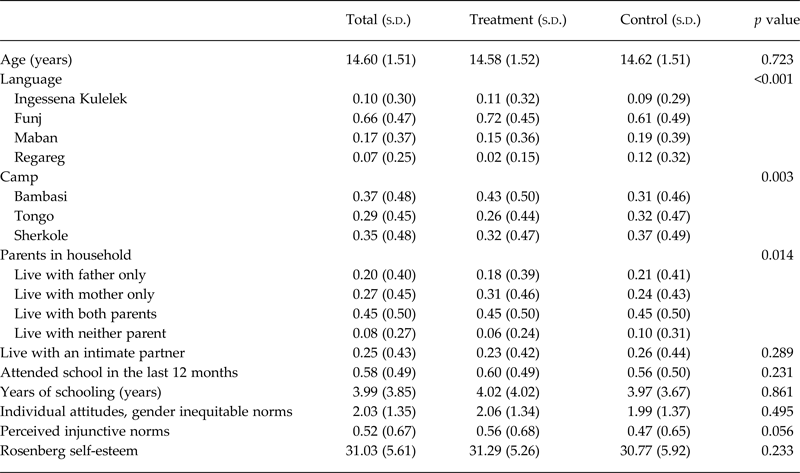
Note: all values reflect proportions in the sample, except when specified.
Missingness of the outcome of interest, Rosenberg self-esteem at endline, was found to be associated with a girl's individual attitudes toward gender equitable norms. Specifically, girls with greater gender equitable attitudes at baseline were more likely to have a missing value for at least one item in the RSES at endline. A girl's perceived injunctive norms variable was not associated with missingness of the outcome of interest.
A girl's personal gender inequitable attitudes were not significantly predictive of self-esteem at endline (p = 0.836) (Table 2). In other words, the number of statements supporting gender inequity that a girl agreed with was not associated with having a higher or lower level of self-esteem. In contrast, one standard deviation increase in the perceived injunctive norms scale was associated with a 0.103 standard deviation decline in self-esteem at endline (p = 0.014).
Estimates of Rosenberg self-esteem scale at endline, multilevel regressions
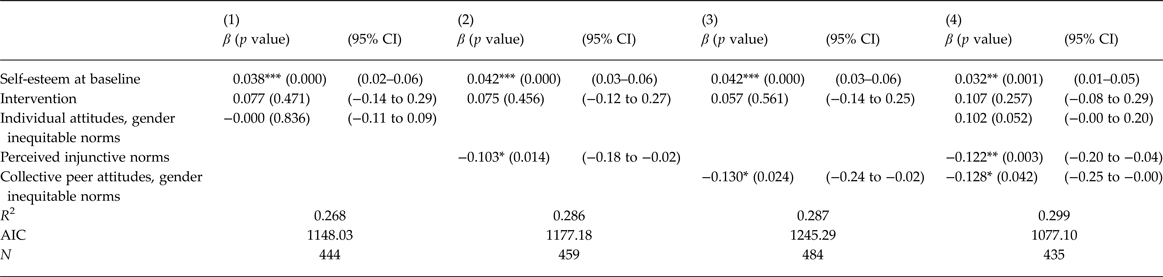
Note: coefficients are standardized. Standard errors are clustered at the group level of randomization. Coefficients are statistically significant at: *p < 0.05, **p < 0.01, ***p < 0.001. All models control for age in years at baseline, whether a girl has attended school between baseline and endline, living with an intimate partner at endline, and self-esteem at baseline. The mean VIF for model 4 is 1.2 and the VIF for any single predictor does not exceed 1.6.
The results from model 3 demonstrate that collective peer norms were also significantly predictive of self-esteem at endline; one standard deviation increase in a girl's collective peer norms scale resulted in a decline in her Rosenberg self-esteem score of 0.130 standard deviations (p = 0.024). The contrasting results from models 1 and 3 suggest that, although personal norms toward gender inequity did not impact self-esteem, living within a peer group that promoted greater gender inequity had significantly negative effects on girls’ self-esteem.
The findings from models 1 through 3 hold when examining the effects of these three factors on self-esteem simultaneously (model 4). One standard deviation increase in perceived injunctive norms and collective peer norms was associated with 0.122 and 0.128 standard deviation declines in the RSES, respectively, when controlling for all covariates.
The findings from models 1 through 3 were robust to our sensitivity analyses. We observed only one different result when running model 4 on the imputed data; while perceived injunctive norms and collective peer attitudes were still negatively associated with self-esteem, we found that individual attitudes toward gender inequitable norms were positively associated with self-esteem. This suggests our primary analysis, that individual attitudes are not associated with self-esteem, may be slightly less robust than our other findings.
Discussion
Low adolescent self-esteem has been associated with poor physical and mental well-being in young adulthood. Previous studies have demonstrated a bi-directional relationship between low self-esteem and depression and hopelessness, and there exists strong evidence linking low self-esteem to suicide ideation (Harter, Reference Harter and Baumeister1993). These relationships remain significant even when controlling for other factors such as gender and socio-economic status (Trzesniewski et al. Reference Trzesniewski, Donnellan, Moffitt, Robins, Poulton and Caspi2006). Further, research suggests self-esteem can influence women's and girls’ likelihood of violence victimization, a risk that is already elevated in humanitarian settings (Marsh et al. Reference Marsh, Purdin and Navani2006). A study examining risk factors for experiencing gender-based violence (GBV) post-hurricane Katrina found that women with low self-esteem had 2.3 greater odds of exposure to GBV than did women with high self-esteem (Anastario et al. Reference Anastario, Larrance and Lawry2008).
Our study finds that, while a girl's personal attitudes supporting gender inequitable roles have no effect on her self-esteem, the collective attitudes of her peers (what we called collective peer norms) toward the same items are significantly associated with lower self-esteem. In other words, a girl's agreement with gender inequitable statements did not translate to a diminished concept of self; in contrast, being surrounded by peers who adhere to norms that devalue girls resulted in lower self-esteem. Collective peer norms are thus powerful predictors of well-being among refugee adolescent girls in our study. Perceived injunctive norms that support victim-blaming in the event of forced sex were also predictive of lower self-esteem among these adolescent girls. A girl who believed she would be blamed by her family and community and receive minimal social support if forced to have sex exhibited lower self-esteem. Recall that perceived injunctive norms have a stronger effect when detectable social cues make them salient. Given the salience of violence in refugee settlements, it is not surprising that perceived injunctive norms regarding sanctions for survivors of violence would influence a girl's self-esteem, even if she has not herself been a victim of sexual violence.
This study, along with existing theory and evidence, hints at a potential ‘herd immunity’Footnote † Footnote 1 effect, where equitable gender- and violence-related norms among a group may be protective of well-being, and inequitable norms may exacerbate poor mental health. This herd effect is already a foundational assumption of programs that utilize social norms theory to induce behavior change. While targeting personal attitudes is helpful, influencing broader societal norms is critical (Mackie et al. Reference Mackie, Moneti, Shakya and Denny2015; Cislaghi et al. Reference Cislaghi, Gillespie and Mackie2016). From a programmatic perspective, these findings point to the need for more community-based interventions to leverage broader social norms change. Such an approach has the added benefit of potentially benefitting marginalized individuals who might not otherwise participate in these interventions. Although these individuals may not receive program messaging directly, norm changes at the community level may still positively affect their mental well-being.
Additionally, previous research demonstrates that adolescents are particularly susceptible to peer influence, more so than at other stages in the life course (Halfon & Hochstein, Reference Halfon and Hochstein2002; Steinberg, Reference Steinberg2005; Albert et al. Reference Albert, Chein and Steinberg2013). In addition to shaping the health and behaviors of adolescents, the peer group can have a profound impact on the construction of identity during this phase in the life course (Zarrett & Eccles, Reference Zarrett and Eccles2006). As adolescents develop their sense of identity, they begin to self-categorize themselves as belonging to certain groups; for example, adolescent girls identifying as ‘female’ will internalize the characteristics attributed to females among their peer group (Harris, Reference Harris1995). Following this logic, a girl whose peers devalue women and girls may hold herself in lower esteem as well, even if she does not subscribe to the same gender inequitable attitudes. Consequently, community social norms programs that intend to reach adolescents would be wise to include a component that specifically targets peer norms.
Further, because self-esteem has been shown to be highly correlated with self-efficacy among adolescent girls, the salience and internalization of gender inequitable norms may affect girls’ behaviors as they relate to GBV risks and responses (Allgood-Merten & Stockard, Reference Allgood-Merten and Stockard1991). This finding is especially relevant for refugee women and adolescent girls, who face increased risks of experiencing violence during, and after conflict (Hossain et al. Reference Hossain, Zimmerman and Watts2014). Previous studies show that adolescent acceptance of norms condoning traditional gender roles and IPV is strongly associated with later violence exposure (Lichter & McCloskey, Reference Lichter and Mccloskey2004). Our findings suggest that targeting changes in gender inequitable norms at the community level may strengthen girls’ self-esteem and resilience in the event of sexual violence and plausibly reduce the risk of victimization as well.
As we were experimenting with norms measurement, one limitation of this study may stem from our choice to use zones as the geographic unit when creating our measure of collective peer norms. This decision was based on three primary criteria. First, zones comprise individuals living within close proximity of each other, ensuring girls within a zone come into regular contact with one another. Second, the sample size of girls within each zone was sufficiently large to accurately represent ‘collective peer norms’. Third, the sample size of zones was large enough to capture variation in the measure of peer norms across zones. However, it is possible that other levels of aggregation would serve as more appropriate proxy reference groups for adolescent girls. For example, using camps rather than zones would minimize contamination across clusters, though it would also minimize cluster sample size and variation. Additionally, while the girls in our sample spoke informal Arabic as a means to communicate across different ethnicities in markets, schools, and other public spaces within zones, girls may more closely identify with others who share their ethnicity and language. Finally, because this study was funded to assess the impact of the intervention on the primary outcome of sexual violence, it was not powered specifically for detecting changes in self-esteem; the final number of clusters and girls in this sample may need to be increased in future studies evaluating similar relationships. Future research might consider carrying out similar analyses with different types of reference groups and with people of different gender and age.
Conclusion
The positive benefits of self-esteem are well established, and may have profound importance for a young generation emerging from conflict and displacement. Despite the destruction and disruption that conflict brings, unique opportunities may emerge to shift social norms related to gender and violence. These norm shifts may, in turn, have important and long-lasting effects on the well-being and safety of women and girls. Our research offers insight into pathways for strengthening self-esteem among adolescent girls, and highlights the importance of current efforts to shift social norms in humanitarian settings.
Clinical Trials Registration: NCT02384642
Acknowledgements
This study is part of the Creating Opportunities through Mentorship, Parental Involvement, and Safe Spaces (COMPASS) Program Evaluation, conducted by the Columbia University and the International Rescue Committee. The authors would like to thank the girls who agreed to be interviewed and the field staff for their work. The authors acknowledge the financial support of the UK Department for International Development (DFID grant #40080602). Statements made in this paper are the views of the authors alone, and do not constitute the policy of the above listed funding body.
Declaration of Interest
None.
Ethical standards
The authors assert that all procedures contributing to this work comply with the ethical standards of the relevant national and institutional committees on human experimentation and with the Helsinki Declaration of 1975, as revised in 2008.


 Open access

