


INTRODUCTION
Because the lexicon is an important domain of language that intersects with phonology, grammar, and literacy development it has been the focus of much research in the early bilingualism literature (Paradis, Reference Paradis, Hoff and Shatz2007). However, with few exceptions, studies contrasting language acquisition in monolinguals and bilinguals have focused primarily on language production. Although there is an extensive literature on word learning abilities in young bilinguals, a limited number of studies have specifically assessed receptive vocabulary development. Moreover, very few of these studies have assessed vocabulary development using experimental procedures. As a result, additional research on receptive language, a primary indicator of early lexical development, is required to fully understand the process of bilingual language development. We report data that show similarities and differences in receptive vocabulary size and efficiency in word recognition between very young bilingual and monolingual children.
To date, the literature suggests that while bilingual infants often have slightly smaller individual vocabularies, their total vocabulary is largely on a par with that of monolinguals (De Houwer, Bornstein & Putnick, Reference De Houwer, Bornstein and Putnick2013; Hoff, Core, Place, Rumiche, Señor & Parra, Reference Hoff, Core, Place, Rumiche, Señor and Parra2012; Junker & Stockman, Reference Junker and Stockman2002; Marchman, Fernald & Hurtado, Reference Marchman, Fernald and Hurtado2010; Oller & Eilers, Reference Oller and Eilers2002; Pearson, Fernández & Oller, Reference Pearson, Fernández and Oller1993, 1995; Petitto & Kovelman, Reference Petitto and Kovelman2003; Sheng, Lu & Kan, Reference Sheng, Lu and Kan2011; but see De Houwer et al., Reference De Houwer, Bornstein and Putnick2013, regarding early receptive vocabulary). Although multiple research paradigms have been used to assess early lexical development in bilingual children, most studies have relied on parental reports, such as the MacArthur-Bates Communicative Development Inventories (CDI; Fenson et al., Reference Fenson, Dale, Reznick, Thal, Bates, Hartung, Pethick and Reilly1993). Whereas the CDI can be used to assess receptive and productive vocabulary in children aged 0;8 to 2;6, there are several issues associated with using parental report alone to assess vocabulary development, particularly in bilingual infants. For example, parent-report measures such as the CDI have been found to underestimate monolingual and bilingual infants' vocabulary size (De Houwer, Bornstein & Leach, Reference De Houwer, Bornstein and Leach2005; Houston-Price, Mather & Sakkalou, Reference Houston-Price, Mather and Sakkalou2007). In bilinguals, the source of this underestimation is the tendency for a single reporter to complete the parental reports in both languages. As a result, it is important that more than one reporter complete the CDI, particularly if the child is learning his or her second language primarily from one parent or family member, or through daycare. While having the CDI filled out by multiple reporters is the best way to avoid underestimation of an infant's vocabulary, this can be a difficult requirement to meet, particularly if both parents are working outside of the home. Moreover, whereas parents may be able to accurately estimate the number of words their child is able to produce, estimating early comprehension can be more difficult, particularly when a child is exposed to more than one language. Therefore, going forward it is important that studies look at early lexical development using both parental-report measures as well as direct, laboratory-based assessment tools.
To our knowledge, only one study has reported high concurrent validity of the CDI with a laboratory-based measure of vocabulary development in bilinguals. This study, conducted with English–Spanish bilinguals at 2;3, included tasks involving object naming and spontaneous language use, and focused on vocabulary production rather than comprehension (Marchman & Martínez-Sussman, Reference Marchman and Martínez-Sussman2002). The present study, however, aimed to provide an accurate estimate of early receptive vocabulary development using both a parental report and the Computerized Comprehension Task (CCT) in both monolingual and bilingual infants. As part of this research, we explored the consistency between the CDI and the CCT, and examined how monolingual and bilingual infants differ with respect to early comprehension and lexical access. We also investigated how exposure to a second language has the potential to impact receptive vocabulary development and lexical access in young bilingual children.
Assessing early vocabulary comprehension using the CCT
The CCT, an assessment tool that builds upon preferential looking and picture book approaches, is a standardized task that requires infants to touch images on a screen in response to auditory prompts from an experimenter (Friend & Keplinger, Reference Friend and Keplinger2003). It assesses comprehension of forty-one words, including nouns, adjectives, and verbs, and has been found to be successful in testing infants as young as 1;4. The reliability of the CCT has been found to be high, and the convergent and predictive validity with parent reports are strong in monolingual English, French, and Spanish infants (Friend, Schmitt & Simpson, Reference Friend, Schmitt and Simpson2012; Friend & Zesiger, Reference Friend and Zesiger2011). To date, only one study has examined word comprehension in bilinguals using the CCT. Poulin-Dubois, Bialystok, Blaye, Polonia, and Yott (Reference Poulin-Dubois, Bialystok, Blaye, Polonia and Yott2012) found no difference in total vocabulary between monolinguals and French–English bilinguals at 2;0, and reported strong convergent validity of the CCT with the CDI: Words and Sentences, a parental report of productive vocabulary. In the present study, we extend this research to two younger samples at 1;4, comparing the receptive vocabularies of French monolingual and French–English bilingual infants using the CDI: Words and Gestures and the CCT. We also examine the consistency of the CDI: Words and Gestures and the CCT in both the L1 and L2 of French–English bilinguals.
Translation equivalents
An issue that often arises when examining early vocabulary development in young bilinguals is whether they acquire their vocabularies independently from one another (De Houwer et al., Reference De Houwer, Bornstein and Leach2005). Part of this debate is related to the concept of translation equivalents (TEs), or words that children acquire in each of their languages for the same concept (e.g. dog and chien). Understanding the acquisition of TEs is important because it not only violates the principle of mutual exclusivity (one word for each object), but it also provides evidence against the hypothesis that bilinguals have a fused or unitary linguistic system. Rather, the presence of TEs supports the notion that bilinguals essentially have two distinct lexical systems, and that they must switch across these two systems depending on the language that is active (Genesee & Nicoladis, Reference Genesee, Nicoladis, Hoff and Shatz2007; Patterson & Pearson, Reference Patterson, Pearson and Goldstein2004).
Previous research suggests that young bilingual children begin to acquire TEs by the middle of the second year (Genesee & Nicoladis, Reference Genesee, Nicoladis, Hoff and Shatz2007; Junker & Stockman, Reference Junker and Stockman2002; Quay, Reference Quay1995; Schelleter, Reference Schelleter2002). Whereas children tend to vary in the number of TEs that they accumulate and the rate at which they acquire them, generally speaking the proportion of TEs in a child's overall vocabulary is fairly low before 1;6 (David & Wei, Reference David and Wei2008; Pearson et al., Reference Pearson, Fernández and Oller1995; Sheng et al., Reference Sheng, Lu and Kan2011). As children approach the end of their second year, however, this proportion rises steadily, reaching about 30% by the end of the second year (Byers-Heinlein & Werker, Reference Byers-Heinlein and Werker2013; David & Wei, Reference David and Wei2008; Lanvers, Reference Lanvers1999; Nicoladis & Secco, Reference Nicoladis and Secco2000; Pearson et al., Reference Pearson, Fernández and Oller1995).
Whereas much is known about TEs in relation to children's productive vocabularies, there is a lack of information about the early development of TEs in the receptive vocabularies of bilingual infants. In the only published study of this issue, De Houwer, Bornstein, and De Coster (Reference De Houwer, Bornstein and De Coster2006) reported translation equivalents in all the French–Dutch infants that they studied at 1;1, ranging from 1% to 61%, with a mean proportion of 17%. The current study examines the relation between the proportion of TEs, exposure to a second language, and receptive vocabulary size in bilingual toddlers.
Many factors could influence vocabulary development in young children. For bilingual infants, language exposure, or the amount of time that a child is exposed to a particular language, can have a dramatic effect on lexical development. Increased exposure to a particular language often means that the child has more chances to acquire new words, and this ultimately leads to a larger vocabulary size in that language (David & Wei, Reference David and Wei2008; Pearson, Fernández, Lewedeg & Oller, Reference Pearson, Fernández, Lewedeg and Oller1997). Conversely, reduced exposure leads to fewer opportunities to acquire new words, and ultimately a smaller vocabulary size. The proportion of TEs is typically influenced by language exposure, with a more balanced exposure resulting in a greater number of TEs (David & Wei, Reference David and Wei2008; Pearson et al., Reference Pearson, Fernández and Oller1995; Pearson et al., Reference Pearson, Fernández, Lewedeg and Oller1997; Poulin-Dubois et al., Reference Poulin-Dubois, Bialystok, Blaye, Polonia and Yott2012).
Lexical access
Vocabulary size, whether assessed with parental report or laboratory tests, provides a static estimate of lexical development. Another critical aspect that could vary across monolinguals and bilinguals is lexical access. Adult bilinguals show deficits in lexical retrieval when performing a verbal fluency task, and experience more interference on lexical decision tasks (Gollan, Montoya, Fennema-Notestine & Morris, Reference Gollan, Montoya, Fennema-Notestine and Morris2005; Ransdell & Fischler, Reference Ransdell and Fischler1987; Roselli et al., Reference Roselli, Ardila, Araujo, Weekes, Caracciolo, Padilla and Ostrosky-Soli2000). Also, bilingual children and adults show poorer accuracy and slower reaction times on picture naming tasks (Kohnert & Bates, Reference Kohnert and Bates2002), even when naming pictures in their first language (Ivanova & Costa, Reference Ivanova and Costa2008).
With regard to lasting deficits in lexical retrieval, two main hypotheses have been proposed. One proposition is the weaker links hypothesis, which attributes the poorer access seen in bilinguals to differences in the frequency with which associative networks between words and concepts are used, with monolinguals utilizing these networks with greater frequency than bilinguals in a particular language (Gollan, Montoya, Cera & Sandoval, Reference Gollan, Montoya, Cera and Sandoval2008). In contrast, the competition hypothesis proposes that more effortful processing is required by bilinguals to access words in each language than by monolinguals because of the need to inhibit interference from a competing language (Dijkstra, Reference Dijkstra, Kroll and de Groot2005; Green, Reference Green1998).
Previous studies of on-line lexical comprehension with monolingual speakers of English and Spanish have shown that over the course of the second year toddlers become faster in identifying the referents of familiar words presented in continuous speech (Fernald, Pinto, Swingley, Weinbergy & McRoberts, Reference Fernald, Pinto, Swingley, Weinbergy and McRoberts1998; Hurtado, Marchman & Fernald, Reference Hurtado, Marchman and Fernald2007). Moreover, early efficiency in lexical processing is associated with a larger vocabulary and with long-term language and cognitive outcomes (Fernald, Perfors & Marchman, Reference Fernald, Perfors and Marchman2006; Marchman & Fernald, Reference Marchman and Fernald2008). Again, only a few studies have examined speed of word processing in young bilinguals. Marchman and colleagues (2010) assessed English–Spanish children's efficiency of spoken language comprehension at 2;6 using the ‘looking-while-listening’ procedure. Although mean reaction time to shift to the correct referent of a series of familiar nouns was as fast for Spanish as for English, speed of lexical access was not correlated across languages. Similarly, fluency in understanding familiar words in one language was linked to the number of words acquired in the same language but unrelated to vocabulary size in the other language. These strong within-language but weak across-language relations remain to be examined at the very early stages of bilingualism.
In a more recent study, French–English bilinguals and monolinguals were administered the CCT at 2;0, with comparisons of both accuracy and reaction time in L1 revealing no differences between the two groups on word retrieval (Poulin-Dubois et al., Reference Poulin-Dubois, Bialystok, Blaye, Polonia and Yott2012). A strong concurrent relation was observed between measures of receptive vocabulary size from the CCT and parental report of productive vocabulary in L1. Interestingly, the more TEs children had in their expressive vocabulary, the faster they retrieved the target words in their L1 on the CCT task, as measured by the latency to touch the correct image, independently of total vocabulary. This facilitation has been well documented in adult bilinguals and has been accounted for by the distracter's contribution to the activation level of the target through its activation of the shared conceptual node (Finkbeiner, Gollan & Caramazza, Reference Finkbeiner, Gollan and Caramazza2006). The fact that a similar facilitatory effect was found in such young bilinguals is impressive. In the present study, we attempted to replicate and extend these findings by comparing speed of processing of nouns, adjectives, and verbs in French–English bilinguals and French monolinguals at 1;4 using the CCT. By measuring the proportion of TEs in receptive vocabulary, efficiency in word recognition, and vocabulary size in both L1 and L2, we were able to test whether the effects observed in older toddlers and adults within and across languages are present early in bilingual language comprehension.
We collected data on fifty bilingual children aged 1;4 to 1;6 with exposure to French and English from birth (or soon after), and fifty-nine demographically comparable monolingual children with only French input from birth. The aim of the study was to measure monolingual and bilingual infants' word knowledge and speed of lexical access using both direct and indirect measures of receptive vocabulary development. Comprehension was assessed indirectly in English using the CDI: Words and Gestures, and in French using the French adaptations of the original American English CDI. Receptive vocabulary and on-line processing of words were also assessed directly with the CCT. Based on past research, we hypothesized that bilingual infants would exhibit smaller vocabularies in each of their languages on both the CDI and CCT, but that composite measures of receptive vocabulary would be similar to those observed in the monolingual sample. We also expected that infants would know more words in their L1 compared to their L2, and that exposure to their second language should in part predict infants' vocabulary size in L2, as well as the proportion of TEs in their receptive vocabulary. With respect to on-line processing of words, we predicted that the bilingual infants would show slower processing, particularly in their second language, on the CCT.
In comparison to most previous studies on vocabulary development in young bilinguals (except De Houwer et al., Reference De Houwer, Bornstein and Putnick2013), our relatively large sample size of bilinguals provided the opportunity to compare vocabulary scores of the monolinguals and bilinguals statistically. In addition, the wide range of exposure to L2 in our sample allowed us to treat relative exposure to L2 as a continuous variable in order to replicate and extend previous research that has shown that proportion of input in one language is positively related to measures in that language and negatively to those in the other language (Hoff et al., Reference Hoff, Core, Place, Rumiche, Señor and Parra2012).
METHOD
Participants
Monolingual participants were recruited from Geneva, Switzerland, via birth lists provided by the city of Geneva, and tested at the University of Geneva. Bilingual participants were recruited from the Montreal metropolitan area via birth lists provided by a government health agency, and were tested at Concordia University. Infants with visual or hearing problems were not eligible to participate in the study. A total of 138 infants were tested but some were excluded due to fussiness (n = 2), inability to complete testing or failure to return the required language questionnaires (n = 6), or not meeting the language selection criteria (n = 21).
The selection criteria for monolingual participants required that infants' exposure to their L1, French, be 90% or higher. The final monolingual sample consisted of fifty-nine infants between 1;3·19 and 1;5·2 (M = 1;4·9), and included twenty-nine females and thirty males, 51% of which were first-borns. L1 exposure ranged from 90% to 100% with a mean of 98%. Seventy-one percent of the mothers held a university degree.
The selection criteria for bilingual participants required infants to have either French or English as their L1 (assigned based on proportion exposure as reported on the Language Exposure Questionnaire; Bosch & Sebastián-Gallés, Reference Bosch and Sebastián-Gallés1997; DeAnda, Arias-Trejo, Poulin-Dubois, Zesiger & Friend, Reference DeAnda, Arias-Trejo, Poulin-Dubois, Zesiger and Friend2015 ). They also had to have been exposed to their L2 from birth, and not have been exposed to a third language (L3) more than 10% of the time. The final sample consisted of fifty infants between 1;2·27 and 1;7·3 (M = 1;5·9) and included twenty females and thirty males, 70% of which were first-borns. The majority of the mothers (78%) held a university degree. Given the difference in age between groups, all reported comparisons controlled for age.
L2 exposure in the bilingual sample ranged from 19% to 49% (M = 36%, SD = 9%), with infants exposed to their L2 on average 32·76 hours per week. Five participants were also exposed to an L3 on a regular basis with exposure ranging from 1% to 7% (M = 4%, SD = 3%). There were twenty-nine infants with English as their L1 and French as their L2 and twenty-one infants with French as their L1 and English as their L2. Thirty percent of participants had two bilingual parents each speaking both French and English, 30% of participants had two monolingual parents, one speaking French and the other speaking English, and 40% of participants had either one bilingual and one monolingual parent, or two monolingual parents, both speaking either French or English (in the case of monolingual parents speaking either French or English, L2 exposure occurred through daycare or another caregiver).
Materials
Language exposure questionnaire
Estimates of direct language exposure were calculated based on an interview-format administration of the language exposure questionnaire, a tool that has been used in previous research to distinguish between monolingual and bilingual children (Bosch & Sebastián-Gallés, Reference Bosch and Sebastián-Gallés1997; DeAnda et al., Reference DeAnda, Arias-Trejo, Poulin-Dubois, Zesiger and Friend2015; Fennell, Byers-Heinlein & Werker, Reference Fennell, Byers-Heinlein and Werker2007). Parents were asked for information about who speaks to the child on a daily basis, and the amount of time spent with these individuals (family, friends, caregivers, etc.) on a weekly basis. Parents were also asked about the different languages spoken by these individuals. An estimate of how much French and English the child is typically exposed to in a week was then calculated based on this information. The language that each child was exposed to the majority of the time was designated as their L1, and the language that the child heard less often was designated as their L2.
MacArthur-Bates CDI: Words and Gestures (CDI)
The CDI contains a vocabulary checklist that consists of 396 words (nouns, verbs, and adjectives). It is completed by parents and provides an estimate of a child's receptive vocabulary between 0;8 and 1;6 (Fenson et al., Reference Fenson, Dale, Reznick, Thal, Bates, Hartung, Pethick and Reilly1993). The French adaptation of the CDI (Kern, Reference Kern1999) was used for the monolingual group, and the American English (Fenson et al., Reference Fenson, Dale, Reznick, Thal, Bates, Hartung, Pethick and Reilly1993) and French Canadian (Trudeau, Frank & Poulin-Dubois, Reference Trudeau, Frank and Poulin-Dubois1999) adaptations were used for the bilingual group. Although we requested that the person with the greatest expertise in the target language fill out each CDI, 52% of bilingual participants had the CDI completed by two separate reporters. A comparison of CDI scores based on number of reporters, however, yielded no significant group differences, and so the data were collapsed across groups for all analyses.
Computerized Comprehension Task (CCT)
The CCT is a computer program created by Friend and Keplinger (Reference Friend and Keplinger2003) to directly assess language comprehension in very young children. It is composed of forty-one pairs of images containing nouns (23 pairs), verbs (11 pairs), and adjectives (7 pairs), which are matched on size, colour, brightness, difficulty, and word class (i.e. nouns, adjectives, or verbs). The two images are presented simultaneously on a computer touch screen with one on the left-hand side of the screen and one on the right-hand side of the screen in a forced choice format. Infants are asked to touch a target image on the screen. If the target image is touched, the computer emits a reinforcing sound; if it is not touched, no sound is produced. Target images appear equally often on the left- and right-hand sides of the screen, and there are similar numbers of easy, moderately difficult, and difficult words included on each task. All lexical targets were taken from the CDI: Words and Gestures, with word difficulty determined based on normative data from the same form (Dale & Fenson, Reference Dale and Fenson1996). Words were categorized as easy if comprehended by 66% of infants aged 1;4, moderately difficult if comprehended by 33% to 66% of infants aged 1;4, and difficult if comprehended by less than 33% of infants aged 1;4. The French adaptation of the CCT (Friend & Zesiger, Reference Friend and Zesiger2011) contains the same design features with changes in word selection based on French language norms (Kern, Reference Kern1999; Trudeau et al., Reference Trudeau, Frank and Poulin-Dubois1999). Because these adaptations were originally designed for monolingual samples, only a small proportion of cross-language synonyms were included in the assessment, limiting our ability to assess TEs on the CCT.
The version of the CCT software that was used records both accuracy and reaction time automatically, with accuracy calculated as the sum of correct responses for all trials completed. Reaction time was recorded beginning at the moment the target image was presented and ending when the infant touched one of the images presented on the screen. Images remained on screen for a maximum of 7 seconds. Trials were coded as missing if the child did not touch the screen. Monolinguals completed the French adaptation of the CCT and bilinguals completed both the French and English adaptations one to two weeks later.
Procedure
Upon arrival, participants were first given time to adjust to their surroundings and familiarize themselves with the experimenter. During this time, parents were asked to fill out a consent form and brief demographic questionnaire. The experimenter then carried out a short interview with the parents in order to complete the language exposure questionnaire. Parents of monolingual participants completed the French adaptation of the CDI at home, while parents of bilingual participants were asked to complete in the laboratory the adaptation that corresponded to the language they spoke with the child, and have the other CDI completed at home by the person who spoke that language with the child. The number of words indicated on the CDI in the child's primary language was then summed to determine the child's vocabulary size in their L1. This was carried out once more for bilingual participants to determine their vocabulary size in their L2. To determine each child's total vocabulary size, words in L1 and L2 were added together. Cognates, words similar in sound and spelling (i.e. pizza, pizza), were then subtracted from this total. The proportion of TEs was also calculated for each child by determining the number of TE pairs, subtracting cognates and semi-cognates, and dividing this number by the total vocabulary size minus cognates, semi-cognates, and non-equivalents. Semi-cognates are pairs of words (one from each language) that sound similar but have slightly different spelling (i.e. bloc, block), while a non-equivalent is a word that exists on one form of the CDI but does not exist on the CDI in the child's other language.
After this initial familiarization period, the experimenter led the infant to a nearby room to begin administration of the CCT. Infants were seated comfortably on a parent's lap within easy reach of the CCT touch screen. Parents were asked to wear darkened glasses and noise-cancelling headphones to prevent parental interference during administration of the CCT. The experimenter then administered four training trials using easy words so that the child could become familiar with the task. The experimenter was able to administer the training trials twice if needed, in order for the child to fully understand the task prior to beginning test trials. At the beginning of each trial, the screen was blank, and the experimenter asked the child: Where's the ________? Touch the ________, or Who is ________? Touch the one who is ________, or Which is ________? Touch the ________ one, for nouns, verbs, and adjectives, respectively. The two images then appeared on the screen for a maximum of 7 seconds. At the end of the visit, parents received $25 in financial compensation or a voucher for a toy or bookstore for their time, and the child received a small toy and certificate of merit. Bilingual participants returned one to two weeks later to complete the CCT in their second language.
RESULTS
Vocabulary size: parental report vs. CCT
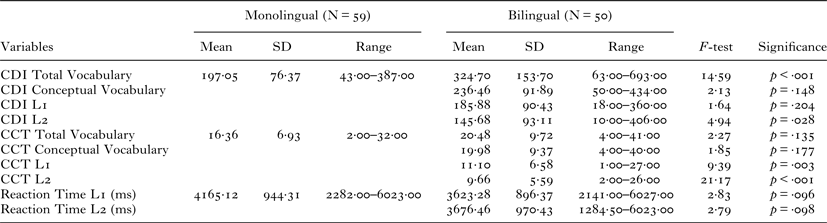
The first set of analyses compared receptive vocabulary size in monolingual and bilingual infants using data from the CDI. As shown in Table 1, bilinguals had a larger receptive vocabulary in their L1 compared to their L2 on the CDI (t(49) = 2·31, p = ·03, d = ·36). Monolinguals' receptive vocabulary was larger than bilinguals, but only in L2 (F(1,106) = 1·64, p = ·028, η 2 = ·045). When comparing total receptive vocabulary (total receptive vocabulary – cognates), bilinguals had a significantly larger total vocabulary than monolinguals (F(1,106) = 14·59, p < ·001, η 2 = ·121). This difference, however, did not hold for conceptual vocabulary (total receptive vocabulary – cognates – semi-cognates – TEs), or for the number of total concepts understood.
Mean receptive vocabulary scores on the CDI and CCT for monolinguals and bilinguals

The second set of analyses compared receptive vocabulary size in monolingual and bilingual infants using data obtained from the CCT. Both accuracy (number of correct trials out of trials completed) and reaction time were considered as indicators of performance on the CCT (see Table 2). Bilinguals were equally accurate on the CCT in L1 and L2, with performance on this measure in L1 and L2 positively correlated. The monolinguals, however, were significantly more accurate on the CCT than the bilinguals in both of their respective languages (L1: F(1,106) = 9·39, p = ·003, η 2 = ·081; L2: F(1,106) = 21·17, p < ·001, η 2 = ·167). However, when total and conceptual vocabulary were considered, the bilinguals appeared to have as many words and concepts as the monolinguals did. In contrast to parent-reported vocabulary on the CDI, direct assessment with the CCT revealed differences between monolinguals and bilinguals in the number of words comprehended in both L1 and L2. When trials with no responses were excluded and the proportion of correct responses (out of correct and incorrect responses) was compared to chance, monolinguals performed above chance (t(58) = 9·89, p < ·001; M = 0·67, SD = 0·13). This was also true of the bilinguals in both their L1 (t(49) = 4·04, p < ·001; M = 0·58, SD = 0·14) and their L2 (t(49) = 2·24, p = ·03; M = 0·55, SD = 0·16).
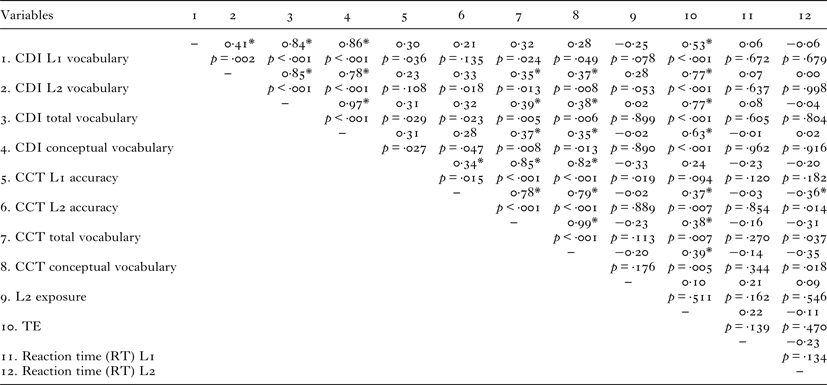
Zero-order correlations between receptive vocabulary variables for bilingual participants (n = 50; RT n = 45)
note: * indicates significance using a False Discovery Rate adjusted alpha for multiple comparisons (Benjamini & Hochberg, Reference Benjamini and Hochberg1995).
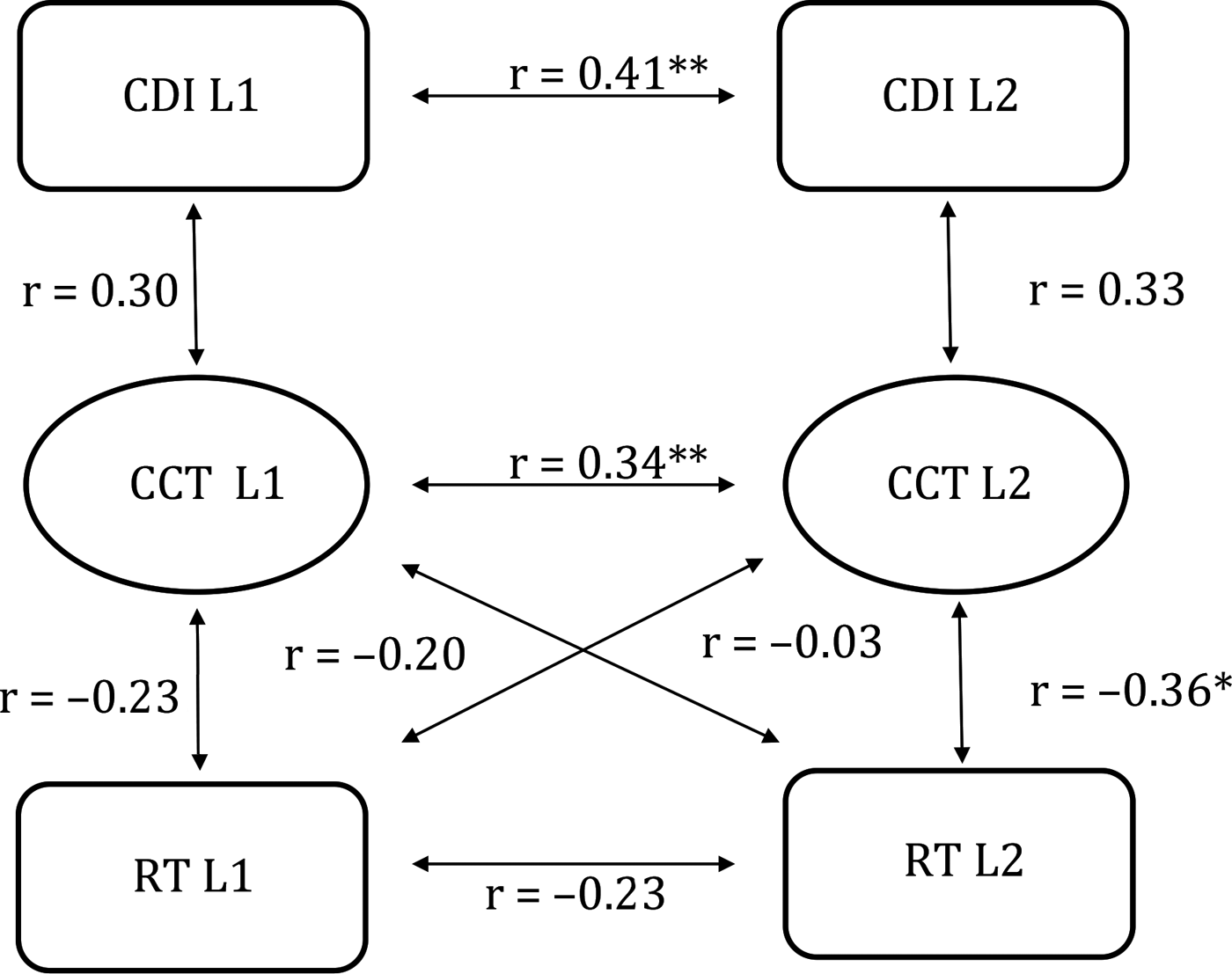
Table 2 presents the zero-order correlations between the key variables for bilingual children. In order to correct for multiple comparison tests for this group, the False Discovery Rate procedure was applied, a less conservative correction for Type 1 error than familywise error rate procedures (such as the Bonferroni correction; Benjamini & Hochberg, Reference Benjamini and Hochberg1995). As expected, both monolingual and bilingual infants' total score on the CCT was positively correlated with the size of their total receptive vocabulary on the CDI (monolinguals: r(58) = 0·26, p = ·05; bilinguals: r(48) = 0·39, p = ·005). This moderate convergence was also observed when each language was examined separately in the case of the bilinguals, although only statistically significant for L2 (see Table 2). This is consistent with previous research showing that performance on the CCT is convergent with parental report of receptive vocabulary on the CDI in both groups (Friend & Keplinger, Reference Friend and Keplinger2008; Poulin-Dubois et al., Reference Poulin-Dubois, Bialystok, Blaye, Polonia and Yott2012). As shown in Figure 1, vocabulary size in one language predicted vocabulary size in the other language, regardless of whether vocabulary was measured directly with the CCT or through parental report with the CDI.
Diagram depicting the relation between performance on the CDI and on the CCT, and between CCT accuracy and reaction time for bilingual infants.
Lexical access
Reaction time was calculated by averaging the reaction times of correct CCT trials only. All trials under 300 ms were considered to be impulse responses and were excluded from reaction time calculations. There was no difference in reaction time when comparing the bilinguals in their L1 and L2 (t(44) = 0·05, p = ·96, d = ·01). However, there was no significant difference in reaction time when comparing monolinguals to bilinguals in each of their languages. As shown in Figure 1, speed of processing in one language did not predict speed of processing in the other language. With regard to on-line word processing and vocabulary, as expected, accuracy on the CCT was negatively correlated with reaction time for monolinguals (r(58) = –0·61, p < ·001), such that larger receptive vocabularies were associated with faster reaction times and ultimately faster processing of the words in the task. A similar, but much weaker, relation was observed in the case of bilinguals in L2 (r = –0·35, p = ·014), such that infants who had a larger L2 score were faster at processing words (although in the expected direction, the link between accuracy scores and reaction time in L1 was not significant). However, there was no cross-language transfer between speed of processing and vocabulary (see Figure 1). This is in line with previous work (Fernald et al., Reference Fernald, Perfors and Marchman2006; Marchman et al., Reference Marchman, Fernald and Hurtado2010) showing that larger vocabularies are associated with faster reaction times in a looking task with English monolinguals at 1;6, 1;9, and 2;1, and Spanish–English bilinguals at 2;6. Vocabulary size on the CDI, however, failed to predict on-line word processing in both groups (see Table 2). The present findings suggest that receptive vocabulary size similarly affects the propensity of monolingual and bilingual infants to execute a voluntary response in a language task such that a facilitation effect is observed in both groups.
Translation equivalents
The relations between the proportion of TEs, direct and indirect measures of receptive vocabulary, and on-line word processing were also examined. There were a total of 340 possible TE pairs on the CDI, including 15 cognate pairs (i.e. jeans and jeans), and 21 semi-cognate pairs (i.e. banana and banane). The proportion of TEs was calculated by summing the TE pairs on the CDIs, multiplying by two, and subtracting all cognates and semi-cognates from this total. This number was then divided by the child's total vocabulary – cognates – semi-cognates – non-equivalents (words that do not have a translation). As mentioned before, the proportion of TEs could not be computed using data from the CCT due to limited overlap across the French and English versions. For this reason, we use the mean proportion of TEs in receptive vocabulary on the CDI (M = 53·76%, range: 9·41%–95·41%) in our subsequent analyses. As expected, the proportion of TEs in comprehension was positively correlated with bilinguals' L2 receptive vocabulary on the CDI (see Table 2). Furthermore, the proportion of TEs in bilinguals' total receptive vocabulary on the CDI was positively correlated with both L2 vocabulary and total vocabulary on the CCT, but not with L1 vocabulary. This suggests that the more words children knew in their second language, the more TEs they had in their lexicon. Similarly, vocabulary size on the CDI in both L1 and L2 predicted the proportion of TEs. However, the number of TEs in comprehension was unrelated to speed of processing (both L1 and L2) and L2 exposure.
Associations between exposure to L2, vocabulary, and lexical access
Lastly, exposure to L2 was examined in relation to both the CDI and CCT. Although L2 language exposure was not significantly correlated with bilingual infants' L1 or L2 receptive vocabulary on the CDI, the relation between L2 exposure and L2 vocabulary was in the expected direction (p = ·053). With regard to the relation between L2 exposure and accuracy on the CCT, the total number of correct trials on the CCT in L1 was negatively correlated with L2 exposure. However, there was no relation between L2 exposure and L2 accuracy on the CCT. These findings suggest that accuracy on the CCT in L1 decreases for bilinguals as their L2 exposure increases, but that the L2 exposure in our sample was not sufficient to facilitate accuracy on the CCT in L2. This may be due in part to variations in the quality of L2 input that children receive, as well as individual differences in word learning capability. However, given that the range of scores at this age in L2 on the CCT was quite small, it is also possible that there simply was not enough variation to produce a positive correlation between these variables.
DISCUSSION
The present study examined lexical development in French-speaking monolingual and French–English bilingual infants using both a parental report and a direct laboratory-based measure of receptive vocabulary development. According to parental report, our sample of young bilinguals had an L1 receptive vocabulary that was on par with that of our monolingual sample. Whereas these young bilinguals appeared to have developed a receptive vocabulary size in L2 that was somewhat smaller than that of the monolinguals, when both L1 and L2 receptive vocabulary were combined, the bilinguals surpassed the monolinguals in their word understanding. When considering the total number of words understood by monolinguals and bilinguals, bilinguals understood 39% more words than the monolinguals. When TEs were taken into account, however, and conceptual vocabulary was considered, no difference was observed between the two groups. These findings, based on parental report (CDI), replicate those of recent studies on receptive and expressive vocabulary (Core, Hoff, Rumiche & Señor, Reference Core, Hoff, Rumiche and Señor2013; De Houwer et al., Reference De Houwer, Bornstein and Putnick2013; Marchman et al., Reference Marchman, Fernald and Hurtado2010).
Interestingly, whereas the bilinguals' L1 receptive vocabulary appeared to be on a par with that of the monolinguals when measured by parental report, results from the CCT suggest that monolinguals may have an increased level of word comprehension when compared to the bilinguals. Our monolingual sample was significantly more accurate on the CCT when compared to the bilinguals in each of their languages. However, there were no significant group differences in CCT performance as a function of total and conceptual vocabulary. Previous work examining lexical development in infants at 2;0 using the CCT found no difference in accuracy when comparing monolinguals against bilinguals in their L1 (Poulin-Dubois et al., Reference Poulin-Dubois, Bialystok, Blaye, Polonia and Yott2012). One interpretation of this pattern of findings is that bilinguals' vocabulary size may catch up to that of the monolinguals by the end of the second year. Alternatively, it is possible that these findings highlight differences in patterns of bilingual development across receptive and expressive domains. Language experience and age-related lexical development in both the receptive and expressive domains may contribute to closing this gap in lexical acquisition.
Regarding the cross-language comparisons in bilinguals, results from the CDI suggest that bilinguals exhibit greater word comprehension in their L1 compared to their L2 at 1;5, but this difference was not revealed by the CCT. A potential reason for this discrepancy between measures is simply that the CDI assesses a much broader set of items than the CCT, such that differences between languages tend to be larger on the CDI. As a result, differences between L1 and L2 (on the order of 1 or 2 words) on the CCT can be easily masked by between-participant variability. A second possibility is that parents are sensitive to their child's exposure to L1 and L2 and use this to guide their comprehension estimates on the CDI, potentially giving children credit for words or concepts that they do not fully comprehend or that they understand only with the support of contextual information, particularly in L1. In support of this possibility, an analysis comparing infants' performance on the CCT against parental report of the same subset of 41 words found on the CDI yielded significant differences for both L1 and L2, with parents reporting comprehension of 20·62 words in L1 and 16·14 words in L2 on the CDI. This is in contrast to the 11·14 words in L1 and 9·62 words in L2 comprehended on the CCT. Recall that children's performance on the CCT is a direct measure of their decontextualized word knowledge. Thus, although children may exhibit knowledge in the contexts in which parents interact with them, this knowledge may not extend to unfamiliar contexts or exemplars. An ongoing longitudinal study investigating receptive and expressive vocabulary development in the same sample of children at 1;10 and 2;5 will provide a better understanding of developmental changes in word comprehension and production across languages in bilingual children and help to clarify the relation between direct and indirect methods of assessment.
Lexical access
One important contribution of the present study was to assess on-line processing of words in very young bilinguals. Previous work by Marchman and colleagues (2010) using the looking-while-listening paradigm in infants aged 2;6 learning both Spanish and English from birth, found no difference between L1 and L2 in vocabulary size (as measured by the CDI) or reaction time. Furthermore, whereas they found that vocabulary size and reaction time were significantly correlated within each language, they found no significant correlations between vocabulary size in L1 and L2, or between reaction time in L1 and L2. These findings suggest that efficiency in spoken language recognition and vocabulary knowledge go hand in hand regardless of whether a child is learning one language or two, and that this bi-directional relationship between processing speed and vocabulary size is confined within a particular language. We replicated, with a much younger sample of bilinguals, the similar vocabulary size in L1 and L2 when it was assessed with a laboratory-based task, the CCT. The replication of a similar speed of word-processing in L1 and L2 in infants at 1;5 using a different, haptic, response modality is also striking. Moreover, as shown in Figure 1, we observed a significant within-language relation between vocabulary size in L2 and reaction time on the CCT (although this relation was not significant in L1, the correlations were in the expected direction). Interestingly, our monolingual sample also exhibited this negative relation between reaction time and accuracy on the CCT, which is consistent with previous research showing significant negative correlations between accuracy and reaction time using a preferential looking time paradigm in English monolingual infants at 1;6, 1;9, and 2;1 (Fernald et al., Reference Fernald, Perfors and Marchman2006), and Spanish monolinguals at 2;0 (Hurtado et al., Reference Hurtado, Marchman and Fernald2007). This is particularly important, given that most previous research has utilized latency to look at the target picture as an indicator of word retrieval. Because we utilized a haptic response to derive reaction times in this study, the present findings indicate that this facilitation of reaction time with increased vocabulary size maintains across response modalities in young monolinguals. However, although there were no differences in reaction time for L1 and L2 in bilinguals, this facilitative effect was obtained only for L2 in our sample of French–English bilinguals at 1;5. This difference in findings across studies, however, may be attributed to many factors, including domain of acquisition (receptive or expressive), age of participants, and response modality (looking or touching). A more similar pattern of results might be observed when the current sample is tested closer to the second birthday.
Although there was considerable variability with respect to L1 and L2 vocabulary size on the CCT, given that the average discrepancy between vocabulary size in L1 and L2 on the CCT was so small (M = 1·52, SD = 7·03, Range: –21·00 to 18·00), it seems reasonable to assume that no statistical difference in reaction time would exist between languages. Furthermore, this may also explain why reaction time did not significantly differ between monolinguals and bilinguals on the CCT. Whereas the monolinguals on average knew 5·22 more words than the bilinguals on the CCT in L1, and 6·74 more words than the bilinguals in their L2, this discrepancy, although statistically significant, may not be enough to impact speed of lexical access on this task. Bilinguals' total vocabulary knowledge may also contribute to this result to some extent, as overall vocabulary growth is modestly linked with processing speed (Marchman et al., Reference Marchman, Fernald and Hurtado2010).
Language exposure and TEs
An important aspect of receptive language development in young bilinguals is the amount of lexical input that is received in each of their respective languages. In the present study, exposure to a second language was not significantly correlated with L2 scores on either the CCT or the CDI. This lack of a significant relation between L2 exposure and L2 vocabulary size contrasts with previous research showing that the quantity of exposure to a second language is an important factor in early bilingual language acquisition (David & Wei, Reference David and Wei2008; Hoff et al., Reference Hoff, Core, Place, Rumiche, Señor and Parra2012; Pearson, Reference Pearson2007; Poulin-Dubois et al., Reference Poulin-Dubois, Bialystok, Blaye, Polonia and Yott2012). However, it is important to note that although the relation between L2 exposure and L2 vocabulary size on the CDI was not statistically significant it was in the expected direction. Furthermore, it is possible that the apparent lack of relation between L2 exposure and L2 vocabulary size on the CCT may in part be due to the fact that infants' accuracy on the CCT in L2 was quite low at this age. This more restricted range of scores might have in turn been insufficient to produce a significant correlation between these variables. Alternatively, variation in the quality of L2 input that children are exposed to, as well as individual differences in word learning skills, may also be at play here. Importantly, however, we did observe a significant negative correlation between L2 exposure and L1 vocabulary scores on the CCT, suggesting that the larger the quantity of second language exposure, the less accurate these children were on the CCT in their dominant language.
Presumably, more L2 exposure should result in a more balanced L1:L2 ratio, and ultimately a greater number of TEs; however L2 exposure was not correlated with proportion of TEs in receptive vocabulary in the present study. While counter-intuitive, this result is actually in line with previous findings suggesting that, although balanced language exposure will typically lead to a balanced vocabulary, it does not necessarily result in a higher proportion of TEs (Poulin-Dubois et al., Reference Poulin-Dubois, Bialystok, Blaye, Polonia and Yott2012). Whereas a recent study carried out by David and Wei (Reference David and Wei2008) did show evidence of a significant relationship between language exposure and proportion of TEs, it also included a very small sample of only thirteen children. Furthermore, it is possible that in some cases bilinguals may be exposed to their languages in different environments, resulting in word learning that is context specific and ultimately leading to a lower proportion of TEs. Finally, this is one of the first studies to use a direct measure of early bilingual development in the receptive domain, and is thus a first step in gaining a better understanding of how children develop in their two languages over time.
Relatedly, no significant association between proportion of TEs in receptive vocabulary and reaction time on the CCT was observed. This contrasts with previous research in bilingual children at 2;0, which showed that a larger proportion of TEs in expressive vocabulary was associated with faster reaction times on the CCT (Poulin-Dubois et al., Reference Poulin-Dubois, Bialystok, Blaye, Polonia and Yott2012). In the past, it has been suggested that bilinguals experience interference from the competing language when trying to carry out a task in one of their languages. However, more recent studies examining speed of lexical access in adults indicate a facilitation effect (Finkbeiner et al., Reference Finkbeiner, Gollan and Caramazza2006). The findings reported in Poulin-Dubois and colleagues' (2012) study are consistent with these adult data and indicate that the child's competing language may actually act to facilitate lexical access by priming the child at a semantic level.
The lack of replication of this effect when translation equivalents are measured in comprehension suggests that the common semantic representation has to be more robust to facilitate word retrieval. The fact that the link between the proportion of TEs in production and reaction time was in the expected direction (albeit non-significant) supports this interpretation. Importantly, the present sample of infants is significantly younger than the sample investigated in Poulin-Dubois and colleagues' (2012) study, and at the time of testing these children had only begun to develop a productive vocabulary. This means that the number of TEs in their productive vocabulary was quite low. If a facilitation effect requires a more robust semantic representation, then we should see an effect on word retrieval by 2;0 when these children have developed a larger productive vocabulary, and a larger proportion of TEs as a result.
Transfer between languages
Whereas significant positive correlations were observed between the bilinguals' L1 and L2 vocabulary on both the CDI and CCT, no such link was found between efficiency in word processing in L1 and in L2, suggesting that speed of word retrieval in L1 may be largely independent from speed of word retrieval in L2 during the early stages of vocabulary development. Our results replicate the findings of Marchman and colleagues' (2010) study showing significant within-language relations between vocabulary size and speed of processing, but only for a direct measure of word comprehension. The convergence in findings regarding independent speed of processing in L1 and L2 is striking, as the previous study examined productive vocabulary development in 2;6 Spanish–English bilinguals using parental report, and yielded reaction times using eye-tracking methods, whereas the present study used both direct and indirect measures of vocabulary comprehension and a haptic response to assess efficiency in word retrieval. However, our findings diverge from Marchman et al. (Reference Marchman, Fernald and Hurtado2010) regarding cross-language relations in vocabulary. Marchman et al. reported that vocabulary size in L1 was not related to vocabulary size in L2 for either comprehension or production. Our data showed cross-language transfer for both direct and indirect measures of receptive vocabulary. These conflicting findings may reflect the inclusion of children with very low L2 exposure (as low as 9%) in the Marchman et al. sample. Nonetheless, at early stages in lexical development, lexical processing skills in the two languages are dissociable, as shown by the lack of cross-language convergence in speed of processing, but the ability to acquire words seems to converge across languages.
Assessing the consistency of the CDI and CCT
This is the first study to explore the validity of the CCT in a bilingual population, examining the relationship between parental report on the CDI and performance on the CCT in each of their individual languages (see Figure 1). The consistency that was observed between the CCT and CDI vocabulary scores for both monolinguals and bilinguals suggests that the CCT provides a reliable supplement to parental report in assessing vocabulary development in young children. Importantly, it has the potential to act as an objective measure of early language comprehension for monolingual and bilingual infants. However, whereas our bilingual sample was compared to a French monolingual sample in this study, it will be important for future research to examine how these bilingual infants compare to other monolingual samples. Furthermore, although efforts were made to control for age when comparing our monolingual and bilingual samples, the large age range associated with our bilingual sample is a limitation of the present study.
In sum, the present study highlights both similarities and differences in young monolinguals' and bilinguals' receptive vocabulary development. It is the first study to fully investigate receptive vocabulary development in young bilinguals by examining vocabulary development in each of their individual languages using both parental report and a direct measure of acquisition, the CCT. Our data suggest that early in development bilinguals acquire new words at the same rate or faster than monolinguals, with total vocabulary on average being much larger than that of the monolingual infants. However, when conceptual knowledge is taken into account, there appears to be no difference in rate of language acquisition. This trend in lexical development appears to shift over the course of development, however, with bilinguals ultimately possessing smaller vocabularies in each of their respective languages, and a total vocabulary that is on a par with that of the monolinguals. This suggests that bilingualism may ultimately lead to a developmental path that is different from that of monolingual individuals. Importantly, the present study emphasizes the importance of using multiple measures to assess receptive language development, and highlights the potential of the CCT as a valid alternative to the CDI in assessing early language comprehension. Furthermore, the samples included in this paper are part of a longitudinal study that will continue to investigate how monolingual and bilingual developmental trajectories change as these children begin school and progress towards the initial stages of literacy.