

Introduction
To expand the history(ies) of international humanitarian law (IHL) it might be necessary to look into a variety of sources, like visual materials. Images like paintings can not only inform us about the context in which the laws of war developed but can also inform us on practices, and most importantly, can make the abstract concrete. This can occur, for example, when we see a painting of a battle, a picture of a general, or an illustration depicting the reception of a certain law by the general public (comic satire). Looking into a wide range of sources is important, since before the First Geneva Convention of 1864 there was no multilateral treaty on the laws of war,Footnote 1 and the interpretations and practice of doctrinal works that systematized different customs and usages of war in Europe might have differed from setting to setting.Footnote 2 Furthermore, as a painting or an image can condense several discourses simultaneously, we could also gain different insights into ideas, values or critiques of the legal framework, or we could simply learn more about the practice and history of IHL.
Over recent decades there has been a growing interest in understanding law beyond texts and codes, situating the law in a wider societal context.Footnote 3 This widening of perspective, especially when looking into the arts, has focused on aspects such as the performative character of the law in courtrooms and constitutional assemblies.Footnote 4 Studies of the visual have also concentrated on how jurists have made use of emblems or heralds to express the law, in the sense of the lawyer using the visual as a medium of her/his practice.Footnote 5 Legal history has been a field tightly connected to this move in perspective, especially for the Middle Ages and the early modern period.Footnote 6 This amplification of perspectives is without a doubt enriching, but it is concentrated in fields of law like constitutional law, criminal law and more recently international law.Footnote 7 IHL, on the other hand, has been surprisingly absent from these engagements with the visual arts, notwithstanding the fact that there are a range of materials to draw upon, such as the “shipwreck” and “sea warfare” genres of military painting.Footnote 8 Art historians have written aboutFootnote 9 and also catalogued visual representations related to warfare; for example, looking at the Iconclass catalogue,Footnote 10 there are to be found twelve categories on war. Hence, the materials are there – it just remains for legal historians to reach for them.
Engaging with a painting to discover more about how the laws of war affected people, how laws were put into practice or how an artist perceived them can be eye-opening, but it can also be challenging. Unless an artistic expression has a direct or material connection to international law or IHL – for example, a painting commissioned to commemorate a treaty, or a building constructed to house an institution – it may be difficult to discern the relevance of it for international law at large. Nonetheless, an image, just by way of seeing it, can convey meaning on its own and can ignite curiosity. For instance, the painting that is the subject of this article is entitled The Pardon of the Belgians or The Exchange of Belgian Prisoners. The title is already intriguing and leads us to ask: was the exchange of prisoners a common practice in nineteenth-century Latin America? Why were Belgians involved in a distant conflict? Why were they pardoned?
This article aims to be an exercise seeking to demonstrate how a painting can serve not only as a historical source but also as a trigger for curiosity, prompting deeper exploration into the past and the history of the laws of war. The painting then serves as a starting point for learning more about the legal background of a practice and the specific details of the exchange of Belgian prisoners of war (PoWs) that took place in Michoacán, Mexico, on 5 December 1865, in the context of what is known as the French Intervention (1862–67).Footnote 11 Given the limitations of time and space, a full exploration of the Belgian volunteer corps in Mexico is beyond the scope of this article. Nevertheless, the discussion offered here will hopefully help to illustrate how the laws of war functioned at the dawn of their codification.
Regarding the sources used, this research has drawn on primary sources from Mexico’s General Archive of the Nation (Archivo General de la Nación, AGN) and the historical archive of the Mexican Secretary of Defence (Secretaría de la Defensa Nacional, SEDENA). Equally, the online archives of the US Department of State,Footnote 12 the personal correspondence of former president Benito Juárez,Footnote 13 the online database Memoria Política de México,Footnote 14 the compendium of official sources made by historian José María VigilFootnote 15 and the compendium of personal correspondence of France’s Marshal Achilles Bazaine, curated by historian Genaro García, have all been useful resources.Footnote 16 On the expedition of Belgian volunteers in Mexico, the work of Belgian historian Albert Duchesne, who studied the topic extensively, has been a major reference.Footnote 17
Preliminaries
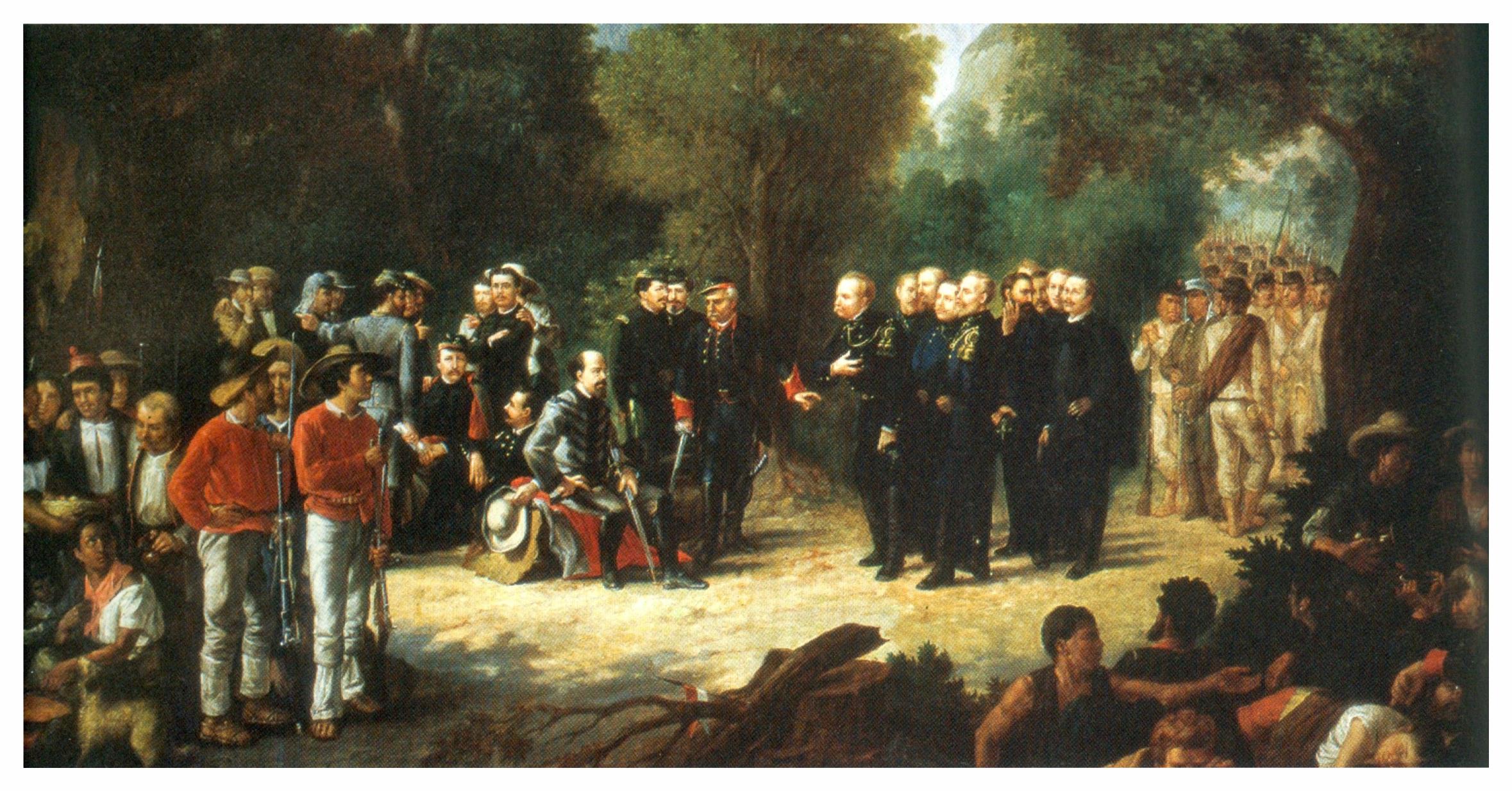
This article takes as its point of departure the 1881 painting El perdón de los belgas o El canje de prisioneros belgas (The Pardon of the Belgians or The Exchange of Belgian Prisoners) by Mexican artist Francisco de Paula Mendoza (see Figure 1). Even though we do not know much about de Paula Mendoza (?–1882), art historian Clementina Díaz y de Ovando tells us that the theme of the painting was probably inspired by the call made by liberal journalists Ignacio Manuel Altamirano, Luis de la Rosa and Francisco Zarco to start a national artistic canon that looked not outwards to foreign topics, but inwards. This would help to disseminate Mexican history and erase biased perceptions of the country as a place of chaos and anarchy.Footnote 18 The event of the exchange of Belgian prisoners during the French Intervention in Mexico was probably widely known at the time, and it was certainly viewed with pride – nowadays, the nearest city to where the exchange took place is even called “Acuitzio, Place of the Exchange” (Acuitzio del Canje). De Paula Mendoza adopted the theme and depicted it artistically, highlighting the humane treatment given to the Belgian PoWs and above all the respect for human life displayed at the event.
Francisco de Paula Mendoza, El perdón de los belgas o El canje de prisioneros belgas, 1881, available at: www.memoriapoliticademexico.org/Biografias/Im/bio-rivapalacio_regules_2.jpg.

The French Intervention in Mexico is a conflict which holds particular interest for the history of the laws of war, as it occurred between the American Civil War (1861–65) and the Franco-Prussian War (1870–71). Most intriguingly, during this intervention, actors from both major conflicts – whether as officials or as volunteers – were present in Mexico.Footnote 19 While this transnational convergence cannot be explored in detail here, it underscores the multifaceted and interconnected nature of the French Intervention and how it can be seen as a case study in which various visions of conducting warfare and international law collided.
The painting, depicting a scene in which Belgian PoWs are exchanged for Mexican republican prisoners, highlights a peaceful agreement amidst an armed conflict and shows the possibility of avoiding indiscriminate suffering in war by sparing the lives of combatants in an orderly and formal manner – something IHL aspires to.
The theme of de Paula Mendoza’s painting foregrounds the practice of exchanging PoWs, suggesting that before the First Geneva Convention of 1864 or the broader codification movement, there were existing principles guiding the conduct of war aimed at minimizing suffering, and that these stretched well beyond Europe. These included practices such as taking “prisoners of war” (a term that was already in use)Footnote 20 and ultimately exchanging them rather than executing enemy combatants.
The painting also offers insight into the treatment of PoWs: they appear to be unharmed and treated with a degree of dignity. The way the main figures in the middle, Belgian captain Visart de Bocarmé and Mexican general Vicente Riva Palacio, are depicted conveys the message that the parties are consenting on the exchange – that is, agreeing on something. As will be discussed below, this depiction is not merely symbolic, since the exchange was based on a written agreement (a so-called “cartel”) which set out the conditions under which it would occur.Footnote 21 The painting also highlights the importance that the laws of war and restraint in warfare had for nascent independent republics in Latin America, as these would in turn help to confer on them the status of a “civilized nation”.Footnote 22
The painting can also be approached as a window through which we can witness a commitment and understanding between two warring parties that represented clashing political views – republicanism and imperialism – but which could nonetheless agree to treat the PoWs humanely by exchanging them, sparing them suffering and in turn de-escalating the conflict.
The French Intervention in Mexico
In 1861, after three years of civil war between “liberals” and “conservatives”, Benito Juárez (1806–72), the first indigenous president in Mexico and in Latin America, issued the suspension of foreign debt.Footnote 23 Juárez didn’t neglect payment but rather proposed to postpone it, as financial resources were needed to implement the liberal legal reform.Footnote 24 Britain, Spain and France were not in favour of such a suspension and in October 1861 they signed the Tripartite Convention of London, in which they agreed to send combined military forces to the port of Veracruz. In December of the same year, combined troops arrived with Catalonia’s General Joan Prim (1814–70) as proxy of the European powers. In February 1862, the Tratado de la Soledad (Treaty of Soledad) was signed between the Mexican Republic and the three powers, in which the latter agreed to respect the sovereignty and territorial integrity of the Republic and pledged not to interfere in its political regime.
The French Army, however, remained in Mexican territory with 7,000 soldiers.Footnote 25 French representatives justified this move by stating that they aimed to liberate the people from a “system of terror” and to aid their subjects, who, they claimed, were endangered by the Mexican republican government.Footnote 26 As we will see below, the correspondence of Napoleon III (1808–73) reveals that his plans deviated from what was established in the 1861 Tripartite Convention of London.Footnote 27 Furthermore, Article 2 of the Treaty of Soledad established that the High Contracting Parties (Britain, Spain and France) would not seek any particular advantage or acquire territory derived from the coercive measures stipulated, such as occupying fortresses and military posts. Equally, the parties were obliged not to interfere in the inner affairs of the Mexican nation nor exert any influence that would affect the right of Mexico to choose and constitute freely its own form of government. In contrast, Napoleon III planned to expand his empire, and “Latin America” constituted the spatial ground where France would exert the leadership of the “Latin race”, united by common values such as Catholicism, a linguistic matrix (Latin), and being heirs of the Latin culture.Footnote 28 Latin America and especially Mexico would be the bulwark against the expansion of the United States, which was protestant and Anglo-Saxon.Footnote 29 In a letter to Count Charles Flahaut de la Billarderie, the French ambassador in Great Britain, Napoleon III disclosed his intentions regarding his plans in Mexico:
[Mexico], endowed with all the advantages of nature, has not only attracted a significant amount of our capital and many of our compatriots – whose existence is constantly under threat – but, if strengthened, could become an insurmountable barrier against North American encroachments, an incomparable market for English, Spanish, and French trade, and, by exploiting its own resources, could greatly assist our factories by expanding its cotton cultivation. The consideration of these various advantages, as well as the sight of one of the most beautiful countries in the world delivered to anarchy and facing imminent ruin, are the reasons why I have always taken a deep interest in the fate of Mexico.Footnote 30
On 7 April 1862, France’s General Lorencez (1814–92) occupied the city of Orizaba. This event marked the beginning of hostilities between Mexican and French troops.Footnote 31 After the defeat of French forces in Puebla on 5 May 1862, Napoleon III appointed Frederic Forey (1804–72) as chief commander and plenipotentiary of the Mexican expedition.Footnote 32 Marshal Forey had gained experience in Algeria, Crimea and Solferino. After arriving in Mexico, Forey addressed the Mexican population to convince them that France would help them to become a “civilized nation” and, among other things, to form an “honest army”. According to Forey, the French would help to build cities and roads and to expand agriculture, commerce and the arts. To fulfil this mission, peace was needed, and this could only be obtained through military operations against the republican army.Footnote 33
For the republican government headed by Benito Juárez, this was a clear violation of the law of nations. Juárez made this argument in his manifesto of April 1862, where he condemned the “aggression of France” as a violation of the 1862 Treaty of Soledad, in which France had committed to ensuring that the claim of reparations would occur within the framework of treaties and not through military measures.Footnote 34 Furthermore, Juárez qualified the “aggression of France” as a violation of what “contemporary powers had agreed to abstain from in favour of justice, civilization and universal peace”.Footnote 35 In this statement Juárez was plausibly referring to the 1815 Concert of Europe, and through it, to the political and normative foundations of the prohibition of wars of aggression.Footnote 36 France therefore had, within Juarez’s line of reasoning, no legitimate cause to use force.Footnote 37
In June 1863, while Archduke Maximilian’s acceptance of the Mexican crown was still pending, General Forey established through decree a Junta de Notables as a provisional government. This decree also formally declared the establishment of a monarchical regime.Footnote 38 Meanwhile, the republican government, along with its army and guerrilla forces, continued to mobilize across the country, organizing in different army divisions: North, Centre and Orient.Footnote 39
In July 1863, the leadership of the French expedition changed as Marshal Achilles Bazaine (1811–88) supplanted Forey as chief commander.Footnote 40 Like Forey, Bazaine was an experienced officer who had fought in Crimea, Italy and China before embarking to Mexico.Footnote 41 His strategy focused on gaining territory from republican strongholds, but as the guerrilla forces proved highly mobile, his 10,000 French troops were insufficient – and this is where the Belgian and Austrian volunteers came into play.Footnote 42
Guerrillas and the republican army
The Mexican republican army had just survived a cruel civil war, known as the War of Reform, and as a result forces were still mobilized.Footnote 43 In addition, echoing the right of citizens to resist tyranny, Juárez called the citizenship in general to join the defence of the republic. In a “Manifesto to the Nation”, he declared:
Let us defend ourselves from the war that is being provoked against us, by strictly observing the laws and customs established for the benefit of humanity. Let the inoffensive enemies [non-combatants], to whom we have offered generous hospitality, live safely and peacefully under the protection of our laws.Footnote 44
As a response to the military actions deployed by General Forey, and lacking the resources and time to organize a large regular and professional army, Juárez turned to the formation of guerrillas, which he properly legalized as belligerent armed forces in his decree of 23 May 1862.Footnote 45 According to this law, the members of these “guerrilla units” were subject to criminal punishment if they committed any of the crimes against individuals or their property listed in Article 4 of the Ley para Castigar los Delitos contra la Nación (Law to Punish Crimes against the Nation) established in early 1862.Footnote 46 Notwithstanding this domestic regulation of guerrillas, in which they were subordinated to a regular army, French officials viewed this type of warfighting with distrust, and as a result, a “counter-guerrilla” unit was deployed.Footnote 47 In the different primary sources it can be noted that republican guerrilla groups were often labelled as “bandits”, “brigandage”, “dissidents”Footnote 48 or gavillas. Footnote 49 In the realm of the vernacular, a small insight into how this labelling was received by the public in general can be found in the satires published in the bi-weekly newspaper La Orquesta, wherein the editors critiqued how republican forces were treated as rebels even though they were responding to an “aggression”.Footnote 50
Similarly, some republican guerrilla groups referred to themselves as chinacos, forming part of the nationalist and cultural folklore.Footnote 51 According to the historian Illhutsy Monroy Casillas, the word chinaco originates from the Nahuatl language and has been likened to the term sans-culotte.Footnote 52 A good example of how republican opponents to the French Intervention evoked sympathies, affinities and associations between the chinacos and the broader population through print media can be found in the journal La Chinaca, which was established to inform on, critique and satirize the French Intervention and could also be seen as an early example of how print media started to be used strategically during armed conflicts. Footnote 53
The concern around the labelling of the guerrillas as “bandits” or “uncivilized” was by no means unjustified, as this related to their delegitimization as belligerents.Footnote 54 As we will see further below, this type of labelling was of serious concern for the republicans. In general, the French considered the Mexican military undisciplined and unreliable.Footnote 55 One of Marshal Bazaine’s main objectives was to form a professional army to replace the prevailing caudillo culture, with the French army serving as a model.Footnote 56 By 1863, Bazaine had calculated that the regular republican army was formed of 12,000 men, with guerrilla groups all over the country, though the exact number of the latter was not known.Footnote 57 While there is a lack of systematized research on the different guerrilla groups that fought on the side of the liberal republicans as well as their practices regarding treatment of civilians or PoWs, from the archive of Marshal Bazaine and his reports on military activities, it can be deduced that there were groups that were disciplined like those fighting under the command of army generals.Footnote 58 However, it seems difficult to assess which groups were subordinated to a military command and which would fall in the category of “common criminality”, profiting from the chaos of the armed conflict.
The treatment and exchange of prisoners of war in practice
As early as 1812, during the Mexican independence wars, belligerent insurgent forces already had knowledge of, and an interest in observing, the laws of war.Footnote 59 For instance, we can find an interesting example of how PoWs were held and taken care of by warring parties in an agreement dated 1821.Footnote 60 This peace agreement between insurgents and imperial forces formally declared the end of hostilities. On the insurgent side, Manuel de Santa Anna (1776– 1827) took the initiative and convened with Spain’s representative Juan O’Donoju (1762–1821) to determine the manner in which the hostilities would cease. Most importantly, they agreed on exchanging PoWs. Some were freed without delay under parole not to fight again, while injured prisoners remained under the care of the warring parties. This last measure resembles Article 47 of today’s Geneva Convention III (GC III), which “prohibits the transfer of sick or wounded prisoners of war whose recovery would be jeopardized by such transfer”.Footnote 61
Almost forty years later, during the civil war between liberals and conservatives known as the War of Reform, several agreements on PoWs and armistices were signed. Interesting in this case is the fact that, notwithstanding the domestic character of the conflict, the parties referred to the law of nations in their agreements.Footnote 62 In an agreement from 1858 between the belligerent forces, both parties agreed not to cause further harm to the population and to follow “the mandates of humanity, civilization and the law of nations [derecho de gentes] which are represented in all realms of opinion”.Footnote 63 This agreement is a good example of how an awareness of limiting the consequences of war (regardless of its domestic or international character) was already present.
In the context of the French Intervention, even though there is no systematic study on how PoWs were treated, several files in the military archives reveal the intention of systematizing and having a record of foreign PoWs, and of providing them with some money for personal expenses.Footnote 64 There are lists of expenditures for “Algerian prisoners”, “Austrian prisoners” and “French prisoners”.Footnote 65 At least for the year of 1867, several records are found on the money and logistics to be used for the purposes of returning Austrian prisoners home; this brings to mind Article 118(4) of GC III, according to which the Detaining Power shall bear the costs of transportation of PoWs up to their port of embarkation.Footnote 66
As to the invocation of the laws of war by the republican army during the Intervention, in April 1862, a month after French forces started advancing in Mexican territory, Juárez set the tone for the rules to be followed, stating that “[d]uring war the law of nations will be observed by the Army and the authorities of the Republic”.Footnote 67 The republican government recognized itself as being a “civilized nation” and therefore claimed for itself, and its military counterparts, the validity of the law of nations.Footnote 68 Furthermore, there was an interest in achieving peace, as only through the enjoyment of peace would the desired liberal reform take place.Footnote 69
Not only was there a strategic interest in following the laws of war and showing the rest of the world that the Mexican Republic was a “civilized nation”, but also officials and public intellectuals were aware of the difficulties expected if foreign nationals were not treated well – especially regarding the payment of reparation claims.Footnote 70
The legalistic approach and the insistence (at least discursive) by republican forces that battle should follow the rules and principles of the laws of war is best exemplified by the Siege of Puebla from 1863. Republican general Jesús González Ortega (1822–81) resisted the siege for two months and agreed to surrender and end hostilities only after the signing of a written armistice to minimize harm to the civilian population and the army, agreeing also to the exchange of prisoners. According to historian María del Refugio Hernández, at the time it was not clear if the agreement would fall into the category of “armistice” or of “surrender”. Marshal Frederic Forey of France, praising the armistice proposed by General Ortega, noted that “the surrender of the stronghold was an unprecedented event, unrecorded in the European annals of war, and for that very reason, there was no fitting name to give it”.Footnote 71 Marshal Forey’s observation that the surrender was “unrecorded in the European annals of war” reflects the exceptional character of General Ortega’s proposal, not as an improvised or irregular act but as a formal, legalistic manoeuvre by a regular officer of the republican army. Ortega’s insistence on a written armistice – marked by respect for the enemy and humanitarian concerns – demonstrated the republicans’ desire to be seen not as insurgents or rebels but as legitimate belligerents acting within the evolving norms of international law.Footnote 72 It is also an example of how republican forces used legal forms to assert their political legitimacy vis-à-vis European powers. In addition, it could also be interpreted that formalizing the practice of the laws of war in a conflict against a European power was part of the increasing “juridification of international relations” and legalization of war.Footnote 73 The latter observation calls for more attention to nineteenth-century Latin America, as the region was arguably a major driver of these developments.
The doctrinal and legal development of the exchange of prisoners of war
The following section briefly presents the doctrinal work relevant at the time of the French Intervention, to clarify the legal knowledge underpinning the exchange of Belgian prisoners during that conflict. It further connects this historical doctrinal context to both historical and current provisions of IHL, offering a broader perspective on how IHL’s provisions have evolved.
According to the historical sections of the International Committee of the Red Cross (ICRC) Commentary on GC III, the treatment of PoWs began to change when prisoners became “nationalized” and not subject to individual custody.Footnote 74 Regarding the status and treatment of PoWs, when consulting historical doctrinal works, we find that in his treatise on The Law of Nations, prominent eighteenth-century Swiss jurist Emmer de Vattel (1714–67) stated that PoWs “may be secured and put into confinement”. Prisoners could be confined to slavery, exchanged or ransomed.Footnote 75 Vattel also noted that the liberty of PoWs ought to be covered specifically by a provision in peace treaties.Footnote 76
In addition, Andres Bello (1781–1865), whose 1832 Principios de derechos de gentes Footnote 77 was the first scholarly treatise on international law in Latin America, remarked that the exchange of PoWs results from a mutual agreement between the parties and enumerated the causes for which PoWs could be deprived of their lives.Footnote 78 These included when there is no assurance that they will maintain their word of not taking arms again or when their number is excessive and this might lead to a rebellion.Footnote 79 Vattel and Bello both mention that a measure for ending the captivity of PoWs is exchange or ransom.Footnote 80 By way of comparison, in modern-day IHL, the restriction of liberty of movement of a PoW must end after the cessation of hostilities, and repatriation should follow without delay (Articles 21 and 118 of GC III).Footnote 81 Prior to the cessation of hostilities, prisoners may be released if they are seriously injured or gravely sick, or if they have been imprisoned for a long time.Footnote 82
As to the enslavement of PoWs, Mexican jurist Clemente Munguía (1810–68) commented in his 1849 Elementary Coursebook on Natural Law and the Law of Nations that “no civilized nation would dare to sell or buy prisoners, as the law of nations does not declare them as slaves”.Footnote 83 It is worth pausing to consider the work of Munguía as he might have been a reference for republican liberals and generals during the period of the French Intervention, especially regarding the topic captured in the title of one of his coursebook chapters, “Of the Violent Means that Nations May Use for the Fulfilment of Their Mutual Rights and Duties”.Footnote 84 On the subtopic of belligerents, Munguía noted that he was inserting verbatim the work of Spanish jurist Antonio Riquelme because of that text’s “clarity and compatibility to Mexican legislation”.Footnote 85 Riquelme, who also published his work in 1849, argued that it is legitimate to secure enemy combatants in order to avoid their continued fighting, but when imprisoned, they should not suffer more harm than necessary and their right to life should be respected. Protection should be granted as long as this is not incompatible with military operations, and “for no reason should prisoners of war be harmed”. Riquelme continued by saying that when PoWs are excessive in number they should be placed at liberty, under oath that they would not take arms as long as the war continued.Footnote 86 The notion of “release under oath” resembles what today is known as release on parole (Article 21(2) of GC III).Footnote 87 Finally, Riquelme added that to avoid an increasing and accumulating number of prisoners, “a practice has been established in which prisoners are exchanged …[,] [t]he exchange being subject to the will of the belligerent parties”.Footnote 88 In Riquelme’s work, we find a reference to this issue that is particularly revealing: he explains the rationale behind the exchange of PoWs as a means to avoid their concentration and accumulation in prison camps.Footnote 89 It is also worth noting that the exchange of prisoners was a form of ending restriction of liberty while hostilities were still ongoing and was not restricted to those who were seriously ill or injured.Footnote 90
Regarding women and children, Vattel notes in his treatise of 1758 that not only combatants could be made hostages but also women and children if the capturing party found it to be of tactical advantage.Footnote 91 During the Napoleonic Wars (1803–15), for example, French and British civilians, including women and children, were taken prisoner.Footnote 92 Decades after the Napoleonic Wars, however, Bello noted that “civilized nations are now accustomed to making prisoners only those who hold arms”.Footnote 93 Moving forward in time, by 1849 Riquelme had established a category of “inoffensive enemies” – those who do not take part in hostilities, being women, children, the elderly, priests and the sick. For Riquelme, not taking part in hostilities granted these individuals protection, but if they were attacked by the enemy, they could defend themselves, and they would be subject to reprisals. In Riquelme’s view, reprisals should be limited to civilians who actively engaged in hostilities, rather than being directed at the civilian population as a whole. He saw this distinction as crucial to preventing the escalation of war into a broader, more indiscriminate conflict.Footnote 94
Comparing the comments of Vattel to those of Bello and Riquelme, we can see a gradual change in mentality toward a more restricted criterion of individuals who were subjects to reprisals, as well as those eligible to be taken as PoWs. This suggests that by the time of the Spanish scholar Riquelme, both an awareness of and a practical approach to limiting the conduct of warfare were taking form.Footnote 95
In the Brussels Declaration of 1874 and the Oxford Manual of 1880, we can see how the legal doctrine and practice presented above found their way into the codification movement, as both instruments stipulate that the exchange of PoWs is regulated by mutual understanding of the belligerent parties and that PoWs can be released in accordance with a cartel of exchange agreed upon by those parties.Footnote 96
With regard to the status and treatment of PoWs, the 1907 Hague Convention IV respecting the Laws and Customs of War on Land stipulates in Article 3 of its annexed Regulations that “[t]he armed forces of the belligerent parties may consist of combatants and non-combatants” and that “in the case of capture by the enemy, both have a right to be treated as prisoners of war”. Article 10 further stipulates that “[p]risoners of war may be set at liberty on parole if the laws of their country allow, and, in such cases, they are bound, on their personal honour, scrupulously to fulfil … the engagements they have contracted”.Footnote 97
The Geneva Convention of 1929 makes no reference to the practice of exchange of PoWs, and only provides that while hostilities are ongoing, “belligerents may conclude agreements with a view to the direct repatriation or accommodation in a neutral country of prisoners of war in good health who have been in captivity for a long time”.Footnote 98 GC III adopted this rule in its Article 109,Footnote 99 which further contemplates that parties to the conflict must repatriate seriously wounded and seriously ill PoWs, regardless of their number or rank. The second paragraph of this article further encourages parties, with the cooperation of neutral powers, to arrange for the accommodation of such prisoners in neutral countries during hostilities. Additionally, Article 118 provides that, following the cessation of active hostilities, all PoWs must be released and repatriated without delay. This is in line with what Riquelme noted in 1849. Even though nowadays GC III does not explicitly provide for the exchange of prisoners, the updated ICRC Commentary notes that this has been a historical practice,Footnote 100 though it is not encouraged for ethical reasons.Footnote 101 Furthermore, an exchange of prisoners while hostilities are ongoing could be considered a “special agreement” in terms of Article 6 of GC III.Footnote 102 The agreement regarding the Belgian prisoners during the French Intervention could, then, be a historical example of this sort of agreement, as well as of the cartel to which the Oxford Manual of 1880 refers to in its Article 75.
Interestingly, even though GC III does not explicitly provide for the exchange of PoWs, we can find the regulation of such exchanges in contemporary legal frameworks such as the United Kingdom’s Military Manual of the Law of Armed Conflict (UK Manual), issued in 2004.Footnote 103 The UK Manual notes the lack of explicit regulation by GC III and states that the exchange of prisoners is permitted under customary IHL, provided that it is conducted according to terms agreed upon by the parties involved.Footnote 104 According to the Manual, in practice, these exchanges typically follow a principle of equivalence – soldier for soldier, rank for rank – with adjustments for differences in rank titles or classifications. Agreements governing exchanges, sometimes known as cartels, may also include additional conditions, such as requiring the released personnel to refrain from further participation in the conflict.Footnote 105 The UK Manual also states that nowadays, exchanges are rarely carried out without high-level governmental agreement, and the involvement of a Protecting Power or the ICRC is usually sought.Footnote 106
The formation of the Belgian volunteer corps
Napoleon III’s interest in building alliances with Austria and Belgium through the French Intervention in Mexico was already evident in the letter that he addressed to the French ambassador Auguste Charles Joseph de Flahaut de La Billarderie (1785–1870) in Britain in 1861. In this letter, Napoleon explained the advantages of proposing Maximilian of Habsburg (1832–67) as emperor of Mexico, one of them being “his alliance by his wife – Charlotte, daughter of Leopold I – to the king of Belgians”.Footnote 107 Moreover, both Austria and Belgium had vested interests in supporting the French military expedition, as it offered the prospect of economic benefits and provided their armies with valuable experience abroad.Footnote 108
In December 1861, Maximilian was convinced to become emperor of Mexico, with the condition that the Mexican nation had to give its consent.Footnote 109 After gathering an “Assembly of Notables”, Maximilian was voted as emperor of Mexico through a plebiscite.Footnote 110 He accepted the throne of the Mexican Empire in 1863 and started the preparations to embark to Mexico in 1864.
Maximilian’s wife Charlotte (1840–1927) wanted to have a legion by her side to protect her in her residence in Mexico City.Footnote 111 The father of Charlotte, King Leopold I (1790–1865), accepted the proposition, and a legion of volunteers was organized. Leopold I was optimistic about the establishment of a monarchy in the foreign country, as Maximilian – his son-in-law – was to become its future emperor.Footnote 112 The Belgian volunteer force was formed for a variety of reasons. According to the analysis of military historian Duchesne, firstly, there was the interest of Belgian officials in the army gaining practical experience in far-flung places. Secondly, it was in the interest of Belgium to have Napoleon III’s military forces busy elsewhere and far away. Thirdly, commercial advantages, as well as increased influence on the American continent, were expected.Footnote 113
King Leopold I’s minister of war, Pierre Chazal (1808–92), was commissioned to organize the “Guard of Empress Charlotte”.Footnote 114 Recruitment was open to members of the military as well as civilians, and to Belgians as well as non-national citizens. Some who engaged as volunteers were sons of generals, but for the most part they were men of fortune from a modest background, as well as minors,Footnote 115 along with fifteen women.Footnote 116 The volunteers signed for an engagement of six years, received 60 francs as a signing bonus, would receive an indemnization after conclusion, and, most interestingly, for those who wanted to stay in Mexico, a donation of land was offered to “aid the colonization organized by Maximilian of Habsburg”.Footnote 117 The recruitment campaign successfully engaged around 1,600 individuals, who left to Mexico in four “detachments” between October 1864 and January 1865.Footnote 118
The formation of the volunteer corps raised several questions in Belgium. Would it be an official armed corps? Would this constitute a direct involvement of Belgium in the French Intervention in Mexico? Would that break Belgium’s neutrality? Would the lack of discipline of the corps endanger neutrality, and would this also have an effect on relations with the United States?Footnote 119 These issues were discussed in parliament.Footnote 120 A central concern during these discussions was whether the clause of Belgium’s perpetual neutrality in Article 7 of the London Convention of 1839Footnote 121 was applicable to States not part of the European system. It is important to recall that the Treaty of London gave Belgium independence from the Netherlands but at the same time bound Belgium to remain eternally neutral, and in return the big powers would guarantee its independence.Footnote 122
According to Duchesne, the issue of neutrality was not clearly answered and lingered even in 1898 with the Belgian presence in China.Footnote 123 For the Mexican case, Belgian parliamentarians decided that Belgian neutrality was not compromised as Juárez could not be considered as a belligerent, with the result being that in Mexico, the violence was not between two belligerents but between deux partis en presence – not a conflict between two nations, but an internal one.Footnote 124 It was also argued that no law prohibited enlistment in the service of a friendly power, and that the empire of Maximilian could not be denied the status of friendly power since Belgium had officially recognized it.Footnote 125 In addition, Belgian volunteers were already present in Rome giving service to Pio IX, so those in favour of the volunteer corps argued that the service given to Maximilian was just like that being provided in Rome.Footnote 126 It was further argued that the London Treaty of 1839 was not applicable to non-European nations, and this, in turn, called into question the “universality” of the law of nations, as according to the interpretation presented in the Belgian Parliament, the binding nature of the London Treaty of 1839 was effectively reserved exclusively for European nations. This brings to the fore the paradoxes that the recognition of former colonial possessions as independent States brought. Though Mexico’s independence was formally recognized, it seems that, selectively, some obligations were not binding vis-à-vis new post-colonial States.Footnote 127 The “European-only” character of core principles of the law of nations, like non-intervention and sovereignty, was being contested by the nascent independent States in Latin America, as they aspired to an international law equally applicable to all.Footnote 128
Finally, as a result of the debates held in the Belgian Parliament – and to ensure that the volunteers would face no legal impediments – Article 21 of the Belgian Civil Code was abolished. This article had previously stipulated that any Belgian serving in a foreign legion would lose their Belgian nationality.Footnote 129
It is also worth noting that prior to the French Intervention, a Treaty of Friendship, Commerce and Navigation was signed in February 1861 between the Mexican Republic and the Kingdom of Belgium.Footnote 130 This treaty consisted of thirty articles, and while it dealt mostly with commercial issues, its first article stated: “There will be perpetual peace and constant friendship between the Republic of Mexico and the Kingdom of Belgium and between the citizens of the two countries without distinction of persons or places.”Footnote 131 In addition, Articles III and IV stated that all Belgian nationals on Mexican soil would be subject to equal treatment as Mexican nationals. At least from the account of military historian Duchesne, the treaty was not an issue during the parliamentary debates on the Belgian volunteers; by the time of the recruitment of the volunteers, diplomatic relations with the Mexican Republic were already broken.Footnote 132 Mexican republicans were equally keenly aware of the threat that the enlistment of foreign nationals – particularly from countries with which the republic maintained friendly relations – could pose to the establishment of peace. This concern was so significant that it became one of the formal accusations brought against Maximilian of Habsburg during his trial in 1867.Footnote 133 The disregard by Belgian authorities of the treaty signed with the Mexican Republic was plausibly one of the many reasons that sparked strong critique among Mexican republicans against the double standards of the application of the law of nations by European powers.Footnote 134
It was not only within Mexican republican circles that the deployment of Belgian volunteers sparked sharp criticism, but also among the Belgian population at large. A few of these critiques can be found in the archives of the US Department of State. In August 1865, as reported by the special envoy of the Mexican republican government in Washington, Matías Romero (1837–98), the Antwerp association Nederduitsche Bund sent a letter to Benito Juárez protesting “against the imprudent assent of the Belgian government to the recruitment of troops for the service of a foreign usurper, thus intervening in the domestic affairs of Mexico, in violation of all international law and the laws of Mexico”.Footnote 135 The signatories of the letter also raised criticism of the recruitment process, which they viewed as deceptive: volunteers had been promised that they would merely escort Princess Charlotte, but by the time of writing, Belgian soldiers had already died fighting in the state of Michoacán. The signatories further emphasized that Belgium’s aspiration for independence should be extended to other nations as well, and that Belgians at large in no way supported the “cause of a foreign usurper”.Footnote 136 Adding to this, on 20 October 1865, Romero forwarded to William H. Seward (1801–72), then US secretary of State, a communication from the Liberal Union of the Civic Guard of Liege, in which the organization protested and rejected the erection of a monument in Brussels destined to preserve the memory of Belgians killed in Tacámbaro, Michoacán. Their reason: the cause for which the Belgians had fallen was “anti-liberal” and contrary to the efforts that Belgians had made in 1830 to gain their independence. They further argued that they could not support a monument that “glorifies the subjugation of a nation”.Footnote 137
The Mexican republican minister of foreign affairs, Sebastián Lerdo de Tejada (1823–89), responded to the letter from the Nederduitsche Bund by affirming that the recruitment of Belgian volunteers indeed violated Belgian neutrality. He emphasized that this action amounted to an unprovoked attack on a foreign nation, as Mexico had not engaged in hostilities against the Belgian State. Demonstrating his familiarity with Belgian law, Lerdo de Tejada further argued that the formation of the volunteer force also breached domestic legislation, which prohibited Belgian citizens from enlisting in foreign military service. Finally, he highlighted that the only duty of the Belgian government towards Mexico was “to respect the principle of the law of nations requiring every nation to respect the independence and sovereignty of every other … and to condemn a war that had no legitimate cause”.Footnote 138
Critiques of the Belgian volunteers were also made by republican newspapers in Belgium. Examples can be found in La Tribune du Peuple, in which the creation of the volunteer force was referred to as a “crime de lése-nation”, and the volunteers as “liberticides”. References were made to acts of plunder, and the decimation of the rule of law and liberties was also highlighted, supporting the Mexican Republic’s claim of the right to self-defence.Footnote 139
As we can see, the formation of the Belgian volunteer corps raised several concerns, including the issue of Belgian perpetual neutrality, but also the violation of a treaty between Belgium and Mexico. The ad hoc solutions brought by the Belgian parliament raised sharp critique not only among Mexican republicans but also within Belgium. The responses made by the Nederduitsche Bund and found in La Tribune du Peuple indicate connections between the republican and liberal circles in Europe and the Americas, while also suggesting that within these circles there was awareness of the double standards at play when applying international law and the laws of war.
Organization of Belgian volunteers
The Belgian volunteers were a heterogeneous group, and according to Duchesne, in general they sought to be officially incorporated into the regular army and to advance in the ranks. Some did succeed in this latter ambition, like Baron Théophile Wahis (1844–1921), for whom the Mexican experience was instrumental in acquiring his later post as secretary-general of the Department of the Interior in the independent State of Congo.Footnote 140 Wahis later declared: “Mexico has made my entire career.”Footnote 141
The exact number of volunteers that sailed to Mexico is difficult to determine, but as noted earlier, it is estimated at around 1,600.Footnote 142 The first group of volunteers arrived in October 1864, led by Lieutenant-Colonel Alfred van der Smissen (1823–95), who had previously fought with French forces in Algeria in 1851. The volunteer force was divided into two battalions: the Imperatrice and the Roi de Belges. Both composed the Regiment Imperatrice Charlotte. There were volunteers from countries including Germany, France, the Netherlands and Great Britain.Footnote 143
By early 1865, Bazaine commanded a force consisting of 28,000 French troops, 20,000 Mexican soldiers, 8,500 members of the rural army, between 6,000 and (according to Duchesne) 7,550 Austrians, and around 1,600 Belgian volunteers. In addition, an anti-guerrilla unit operated under the command of Charles Dupin (1814–68), a seasoned colonel and colonial officer with prior military experience in China, Crimea and Algeria before his deployment to Mexico.Footnote 144
After arrival, the Belgian volunteers were at first only tasked with safekeeping Princess Charlotte in Chapultepec Castle in Mexico City. In March 1865, they entered into combat against republican forces in the region of Michoacán. Diverting the Belgian forces from their original mission of protecting Princess Charlotte was a strategy that Bazaine employed because he needed extra manpower, as the French troops had to be mobile to defend other regions in Mexico.Footnote 145
The commander-in-chief of the Belgian volunteer corps, Alfred van der Smissen, was accused of being overly choleric and of carrying out several violent reprisals against the civilian population, including those committed in Zitácuaro, Michoacán, following the Belgian defeat at Tacámbaro.Footnote 146 The last detachment of volunteers returned to Belgium on 12 March 1867.Footnote 147
The Belgian prisoners of war and the “Black Decree” of October 1865
At an earlier stage of their deployment in the state of Michoacán, Belgian volunteers participated in important battles. One of these was the Battle of Tacámbaro, held in April 1865, in which the Belgian forces were defeated and around 190 soldiers were taken prisoner. According to the personal diary of Emile Walton, a Belgian volunteer, the conditions of the imprisonment were hard, though the prisoners were given some money for their subsistence, which was complemented by funds sent by Princess Charlotte.Footnote 148 From the private correspondence of Marshal Bazaine it can also be concluded that there was an interest, predominantly on the part of Charlotte and Napoleon III, in exchanging the Belgian PoWs as early as 30 April 1865.Footnote 149
The situation between the two belligerent parties and the conditions for the exchange of prisoners changed when Maximilian of Habsburg issued a decree on 3 October 1865, in which he ordered the execution within twenty-four hours of all those who resisted the imperial government or aided those who resisted. From reading the introduction to Maximilian’s decree, which came to be known as the “Black Decree”, it can be interpreted that the republican forces were not to be considered as belligerents anymore, but rather as “criminals”, justifying the decree as an act of civilization:
The government, strong in its power, will be inflexible in its punishment from today onward, since the privileges of civilization, the rights of humanity, and the demands of morality require it.Footnote 150
Marshal Bazaine instructed French superior commanders that the Black Decree should be publicized among imperial Mexican authorities, stressing that it is they who should enforce the decree. Only in a case of urgency, when a French garrison was in danger, could a French commander substitute the Mexican authorities. Bazaine pointed out that the emperor had tried before, without success, to “repress the dissidents”,Footnote 151 and in a confidential letter signed by Bazaine and dated 11 October 1865, he further stated that according to the decree, all individuals resisting the empire were considered criminal; therefore, no PoWs should be taken, and all “individuals holding arms ought to be shot”.Footnote 152 News of these events reached special envoy to Washington Matías Romero, who immediately informed William H. Seward, the US secretary of State. The correspondence between these two figures reveals how both sides condemned the Black Decree and its implementation as violations of the law of nations and the laws of war. The condemnation became even more urgent when republican Mexican generals José María Arteaga and Carlos Salázar – who were members of the regular army – were executed under the decree.
In the documents sent to Secretary of State Seward in late October 1865, Matías Romero highlighted the double standards revealed by the French and imperial officials in the implementation of the Black Decree. On the one hand, he argued to Seward, the decree was ordered by someone who illegally usurped power and who “was an instrument of the war”; on the other, the illegal power was declaring that “those fighting a legitimate war were bandits and had to be assassinated”. Secondly, the execution of Mexican generals Arteaga and Salazar – who were members of the regular republican army – was condemned by Romero as a “flagrant violation of the laws of war, and every principle of justice”.Footnote 153 In response, Seward wrote to John Bigelow (1817–1911), US ambassador to France, reporting that President Andrew Johnson (1808–75) was concerned and that
serious attention [should be given by] the French government to the military proceedings in Mexico, by which native Mexicans taken captive while adhering in war to their own republican government are denied rights which the law of nations invariably accords to prisoners of war.Footnote 154
Here we see how Seward, in the name of Johnson, is advocating for the rights of republican forces as PoWs. In a second dispatch, Seward further instructed Bigelow to inform Édouard Drouyn de lhuys, French minister of foreign affairs, that the “sanguinary policy” of the Black Decree was of concern to the United States and was “repugnant to the sentiments of modern civilization and the instincts of humanity”.Footnote 155 In response to this dispatch, the French minister answered that France was not responsible for the acts of Maximilian.Footnote 156 The matter was also the subject of a US Senate resolution in December 1865 requesting information on the decree.Footnote 157
According to contemporary historian José María Vigil, the Black Decree was already conceived a year before in 1864, and notably it resembles the decree of General Forey, who was in charge of the French military and of the transitional government before the arrival of Maximilian. In June 1863, Forey issued a manifesto in which he warned that in order for Mexico to be part of the civilized nations, arms should be laid down, offering an amnesty and stating: “I will declare enemies of the fatherland all those who resist my conciliatory call, and I will pursue them wherever they hide.”Footnote 158 Later that same month, he issued a decree in which he established the courts martial of his transitional government (regency), which would have the faculty of sentencing all individuals who were members of “armed bands” (“bandas de malhechores armadas”). According to the decree, the sentences could not be appealed, and the penalty should be executed within twenty-four hours.Footnote 159 This indeed could be considered a direct antecedent to the Black Decree.
From the correspondence from Archduke Maximilian it can also be concluded that he was waiting for President Juárez to renounce the republican cause – maybe leave the country – so that guerrillas would be “simply considered bandits”.Footnote 160 French journalist Eugène Lefevre had noted in 1869 that, according to the documents he found, between August 1863 and October 1865, he could count 430 individuals executed without trial by the imperial army after battle.Footnote 161
The Black Decree and the execution of well-known and respected Mexican republican generals Arteaga and Salazar ignited fear not only among republicans but also among the Belgian prisoners. On 23 October 1865, a letter of protest to their superior was signed by four Belgian prisoners: Breuer, Guyot, Flachat and Van Hollebeke. In it, they expressed their concern about how the imperialist Mexican colonel Ramón Méndez, “in violation of all the laws of humanity and war”, had executed PoWs, adding that “in all civilized countries, the life of prisoners of war is respected”. They highlighted that “the liberal army to which you refuse to give the name of army pays a greater respect to the laws of humanity and war than the leaders of your forces, for we who are prisoners are respected by all”. They also demanded that in the future, “in the name of Belgium the law of nations be respected”, and that Belgium rescind its support of such acts.Footnote 162
A similar letter was sent to the Belgian Parliament, wherein the prisoners asked for its intervention and stated that the Belgian volunteers should return as soon as possible to their native country. To support this, they raised the following concerns: (1) the disputed legality of the recruitment of the Belgian legion, as its primary goal was originally just to serve as the escort of Princess Charlotte; (2) the violation of Belgian neutrality when volunteers were involved in hostilities; (3) the execution by the aforementioned Colonel Méndez of republican generals who were made prisoners; (4) the endangered position in which the Belgian PoWs were put after the execution of republican generals, since nothing could guarantee that their own lives would be respected; and (5) the negative effects on Belgium’s reputation of continuing to support such acts.Footnote 163 According to Duchesne, the letters of the four Belgian PoWs generated disapproval among the Belgian volunteer corps as well as in Belgium. The letters were regarded by Maximilian as mutiny, while in the eyes of Belgian superiors they were the result of liberal indoctrination. After the PoWs were exchanged, some claimed they were forced to sign the letter.Footnote 164 Principal signatory Leopold Breuer defected to the Mexican republican side in October 1865.Footnote 165
The exchange of Belgian prisoners of war
As discussed in the previous section, and as referred to in the letter written by the four Belgian prisoners, the Black Decree of 1865 and the subsequent execution of republican generals Arteaga and Salázar had a direct impact on the fate of the Belgian PoWs, as General Arteaga was in charge of the Michoacán region. Coincidentally, Mexican republican general Vicente Riva Palacio (1832–96), who was a prominent figure of the liberal movement and a jurist, journalist and novelist, was also fighting in the state of Michoacán, and he wrote to Juárez saying that he could substitute General Arteaga.Footnote 166 Riva Palacio decided to take over the negotiations for the exchange of prisoners with imperial general Ramón Méndez. Above all, Riva Palacio wanted to avoid the possibility that republican general Nicolás Régules (1826–95) – who by that time was overseeing the prisoners – might decide to execute the Belgian PoWs as a reprisal. The negotiation of the exchange faced the difficulty that the imperial forces had a high number of generals and colonels as prisoners, while the republicans had mostly soldiers as prisoners. If the exchange was to be conducted exclusively following the criterion of one to one according to rank, most republican prisoners could not be exchanged.Footnote 167
At first Riva Palacio continued the negotiation with General Méndez, but this proved to be unsuccessful as Méndez wanted to exchange two Belgians for one republican. In addition, besides the pressure that he put on Riva Palacio to accept the deal, Méndez insisted on referring to Riva Palacio as “chief of the dissidents”. For Riva Palacio, who built his arguments on the laws of war and the law of nations, this was offensive and in open disregard of the right of the republicans to fight the imperialists and French forces.Footnote 168 To make things more complicated, by mid-October, eight Belgian officials escaped,Footnote 169 together with Captain Miñon, a Mexican imperialist whose role was as an interpreter. If we recall the writings of Emmer de Vattel, this could complicate the situation as fugitives could be condemned to death.Footnote 170 This is probably why the painting by de Paula Mendoza is titled The Pardon of the Belgians, as Riva Palacio pardoned them in spite of their escaping.
Notably, in contemporary IHL, the use of weapons against PoWs, especially against those who are escaping or attempting to escape, constitutes an extreme measure that is only permitted in the case of a threat to life or limb.Footnote 171 If a PoW escapes and is recaptured (as was the case with the Belgian prisoners), they should only be subject to disciplinary punishment.Footnote 172 The ICRC Commentary on GC III reminds us that historically, both the Brussels Declaration (in its Article 28) and the Oxford Manual (in its Article 68) contemplated the use of arms against a PoW attempting to escape, should the PoW refuse to return after being summoned to do so. GC III has discarded this notion after considering that it could be interpreted as permitting the use of force against prisoners.Footnote 173
In a letter in which Riva Palacio recalled the episode of the exchange of prisoners, he expressed disappointment in the escape of the Belgian prisoners, but he was also aware of the stakes of punishing the prisoners for escaping and understood anew the importance of the exchange. Subsequently, he decided to handle the exchange directly with Marshal Bazaine of France. In addition, Riva Palacio understood that closing a deal with Bazaine would equal a recognition of belligerence in favour of the republican forces. Riva Palacio sent a note and a proposal of exchange to Marshal Bazaine, in which he conditioned the exchange on the liberation of all republican PoWs regardless of rank.Footnote 174
On the side of the French imperial army and the Belgian volunteer corps, given the context of the Black Decree and the executions of republican generals Arteaga and Salázar, the imperial officials expected the execution of the Belgian PoWs to be imminent. When Bazaine received the letter from Riva Palacio, he was very satisfied and accepted Riva Palacio’s suggestion to exchange all republican PoWs for all Belgian PoWs. Bazaine also replied, in a letter of 16 November 1865, that he was very pleased with the “sentiments of humanity” in Riva Palacio’s agreement.Footnote 175 Republican prisoners captured in several battles in Michoacán, but also in Oaxaca, were agreed to be exchanged. An armistice of three days was also decreed so that the prisoners could march to the place of the exchange without difficulty.Footnote 176
In a dispatch sent to Secretary of State Seward on 20 February 1866, Matías Romero reported on the exchange of prisoners.Footnote 177 In this dispatch, Romero underscored that the agreement on the exchange was again a display of the double standards exerted by the French forces – especially regarding the inconsistency of giving the status of belligerents to republican forces. Romero argued that Marshal Bazaine’s recognition of the republican forces’ belligerent status stemmed from his interest in exchanging Belgian and French PoWs. In the view of Romero, the agreement on the exchange of PoWs was
an open confession that republican forces defending the independence of their country are not disorganized bands of highway robbers, as they assert, and it is unjust and absurd to deny them the considerations usually extended to all belligerents throughout the civilized world.
Overall, for Romero, the agreement proved to be a positive outcome as republican forces were no longer considered criminals and the humane treatment given by General Riva Palacio was acknowledged.Footnote 178
In the end, as some sources recall it, the exchange took place on 5 December 1865, solemnly and formally, as the agreement (cartel) was read out loud and signed by the warring parties.Footnote 179 Lists of the prisoners were exchanged. According to testimonies, the exchange was emotional for both parties but especially for the Belgians, as they were received with music from their military band.Footnote 180
What the painting tells us
Compared to other war paintings of the time, The Pardon of the Belgians or The Exchange of Belgian Prisoners depicts a peaceful scene.Footnote 181 It is not a representation of the horrors of war or violence but instead focuses on the agreement between two warring parties and their willingness to respect the human dignity of the PoWs. In this sense, this article has sought to demonstrate that the painting is very relevant for the history(ies) of the laws of war as it is a register of an exchange of prisoners between warring parties who were fighting for competing views about the political and societal order (republicanism versus monarchism, independence versus intervention, and so forth) but were able to find common ground, and this is what de Paula Mendoza portrays. The possibility of common ground between “enemies” makes the painting hopeful, as it indicates that no matter how radical different political views might be, an understanding is possible. It can also be argued that the painting serves as testimony to the achievement of reaching consensus between warring parties – preserving life, showing respect for the adversary, and upholding the formalities and conditions of the agreement, which were based on the then-applicable laws of war.
Looking closer into the painting, it can be observed in the foreground that people are sitting and resting. At the centre-right stands the Belgian captain Visart de Bocarmé, who was commissioned to lead the exchange. On the centre-left we see General Riva Palacio seated, though he was not actually present at the event. Plausibly de Paula Mendoza included him here to emphasize the humanity and moral concern of the republican general, particularly his desire to avoid unnecessary loss of life on both sides.
Bocarmé inclines in a pose with his hand touching his chest, a gesture symbolizing gratitude and reverence for Riva Palacio’s act. It can also be interpreted that with his gesture, Bocarmé is recognizing the republican forces as legitimate belligerents.
In the left-hand corner, we see children and two women cooking, making visible the participation of women and children in different chores during the conflict. One woman is cooking tortillas, so this could be a representation of how women had a role in cooking for the republican army and guerrillas – just as was the case during the Mexican Revolution in the figure of the adelita or soldadera.Footnote 182 In the painting, we also see the convergence of the world of the ordinary with that of the military: the chinaco, civilians taking part in the conflict, together with the high ranks of the military (Riva Palacio and Bocarmé). Depicting civilians in the painting could also be interpreted as a representation of the republican idea of the citizens’ participation in the building of political institutions – in this case, in the building of an independent nation-State.Footnote 183 The hierarchical differences between the various members of the armed forces – whether military or civilian – are well represented by the barefoot soldiers on the right and the elegant shoes of the higher-ranking military members.
Since the painter was not present at the actual event, the background he chose is particularly revealing. As Clementina Díaz y de Ovando observes, the landscape in the painting resembles a European forest as portrayed in romantic paintings more than the actual Mexican environment.Footnote 184 This aesthetic choice reflects a deeper contradiction within nineteenth-century Latin American nation-building: while asserting Mexico’s independence, the triumph of republicanism and a unique identity, the painter is framing his own reality through European imageries of landscape. In this way, he portrays the surroundings not as they truly were, but rather mirroring Europe, even in the act of representing a historic event.Footnote 185 The painting then reveals something more subtle: the mindset of the painter – one plausibly shared by other contemporary actors – wherein being part of the “civilized nations” required mirroring Europe not only through legal frameworks and customs of war but also through aesthetics. It could also be interpreted that only through mirroring Europe can the artist, the jurist or the statesman be taken seriously. This leaves us with a paradox that could extend to the legal order itself: we are not actually seeing things as they truly are, but only reflections of European thought or legal frameworks. As a result, the painting becomes a metaphor warning us that to see the real thing, we must dig and scratch to find what is underneath the dressing of European imagery.Footnote 186
As the painting celebrates the republican victory over monarchism, we should also be attentive to the ideological values represented. The exchange of Belgian prisoners can be understood as part of a broader “republican practice of virtues” which included respect for human life and the dignity of prisoners. In this light, the portrayal serves to counter then-dominant characterizations of the republicans as bandits, criminals or savages, and instead affirms a vision of citizenship grounded in the exercise of republican virtue.Footnote 187
The painting equally highlights how part and parcel of the republican movement was the commitment to law and the belief that law would lead to the equal standing of citizens and of nations. The practice of virtues, such as respecting human lives, was based on a “tradition of action”.Footnote 188 Concretely, the painting also suggests that complying with the usages and customs of war was tied to republican ideals of the time, such as achieving equality through law, respecting legal norms, and ending arbitrariness through lawful order.
Finally, de Paula Mendoza’s painting is neither a strict historical painting nor naturalistic; it is eclectic in style, and thus transitional.Footnote 189 Interestingly enough, the event portrayed also took place during a transitional period – multiple developments were unfolding during the French Intervention in Mexico, including massive recruitment, mechanical weaponry, juridification of international relations, codification of the rules of war, and imperial expansion.
Conclusion
This article has sought to demonstrate that visual representations can be essential for understanding the history of the laws of war, as they illuminate contextual, ideological and emotional dimensions that legal texts may not fully capture. As Chilean scholar Miguel Rojas Mix has argued, an image can be a complementary resource for historical inquiry: it can tell us things that text cannot, and is a living testimony that transmits several messages simultaneously.Footnote 190
This article took as its starting point the painting by Francisco de Paula Mendoza from 1881. From the painting, we can make several specific assumptions and a more general hypothesis about the history of the laws of war in post-colonial settings.
The event depicted in the painting, the exchange of Belgian prisoners during the French Intervention in Mexico, illustrates a historical case of “special agreements” in the sense of Article 6 of GC III, but most importantly, it is a case which draws on precedents toward the protection of PoWs and deviates from the common examples taking place in Europe or the United States. In addition, the different examples given in this article show how a tendency to formalize through legal arrangements the protection of PoWs, while avoiding unnecessary harm, was present as early as 1812. This also attests to the relevance that the laws of war had in nineteenth-century Latin America, and their strategic importance for gaining independence and asserting sovereignty.
As regards the French Intervention in Mexico, two visions of political organization and of international law clashed: republicanism and monarchism. The example of the exchange of Belgian prisoners allows us to see how for the Mexican republican government, being recognized as a civilized nation was an existential concern. There was also a strategic interest in following and formalizing the laws of war, as by doing so, the republicans could claim recognition of belligerence and gain reciprocity in the treatment of their forces.
The different sources reviewed for this article also show that there were different opinions and voices in Belgium regarding the country’s involvement in the French Intervention. Not all were in favour of supporting the intervention; republican Belgians felt solidarity with the Mexican cause, and through their expressions of support we know about their critiques not only of the Belgian volunteer force but also of the arbitrary application of the law of nations by imperial powers. This also points to the connections between republican and liberal circles in Europe and the Americas – the critique of the double standards when applying the law of nations was also present in the communications between Matías Romero and US secretary of State Seward. The latter communications also reveal how Seward argued for the recognition of Mexican republicans as belligerents as well for their rights as PoWs to be respected.
In this respect, examining different sources reveals that the legal language of international law was employed and deployed for specific political causes by a variety of actors – even those not directly involved in the conflict. In addition, civil society engaged with the language of international law and the laws of war on both sides of the Atlantic, as seen in the Mexican journal La Chinaca and the Belgian newspaper La Tribune du Peuple.Footnote 191
The negotiation of the exchange of Belgian prisoners, along with the other examples briefly discussed, helps illustrate that well before the codification and institutionalization of the laws of war, there existed a shared understanding and practice – supported by legal doctrine – regarding the treatment of PoWs as well as an awareness of the need to limit the consequences of war. PoWs were themselves aware of their status, as evidenced by the letter signed by Belgian prisoners Breuer, Guyot, Flachat and Van Hollebeke.
As to the Belgian involvement, officials cleverly framed it as a “volunteer legion” so as to avoid any direct participation by the Belgian army, and they circumvented the challenge posed by the neutrality clause in the 1839 London Convention by concluding that this treaty applied only to European States.Footnote 192 Members of the military like Minister of War Pierre Chazal hoped that through the Belgian involvement, the volunteers would acquire practical experience overseas. Indeed, for some, the Mexican experience was very relevant, as was the case for Baron Théophile Wahis, who, as noted earlier, later served as secretary-general of the Department of the Interior in the independent State of Congo. In this regard, the participation and entanglements of colonial officers in different settings and their justifications regarding the use of violence remain a promising field of further research, along with the patterns of colonial violence.Footnote 193 Furthermore, de Paula Mendoza’s painting bears witnesses to the importance that republicans gave to legality and formality. It celebrates and centres with honour the republican values behind the prisoner exchange: the ability to pardon the enemy, sparing human lives and ultimately limiting the consequences of war, just as Antonio Riquelme claimed in 1849 to be the ultimate aim of the laws of war.
Regarding republican values and ideas, the exchange of the Belgian PoWs brings to the fore the clashing of two different views on conducting warfare. The republican side grounded its legitimacy in the principle of popular sovereignty, which in turn justified the participation of civilians in hostilities.Footnote 194 The French Intervention offers a fascinating case which is not an inter-European conflict or a conventional colonial war, but a confrontation between a European empire (France and its allies) and a post-colonial republican State striving for both sovereignty and international recognition. The case also brings to light the role that the standardization and formalization of the laws of war had for Latin American republics. This might be worthy of wider research, as the region was plausibly an early and major motor of what is known as the “juridification of international relations” and of the legalization of war.
The painting also serves as a metaphor to make a more general assumption. As described in the previous section, de Paula Mendoza does not depict a Mexican landscape in the background, but rather a European forest as portrayed in romantic paintings. In doing so, he is framing his own national history with European references.Footnote 195 This may be a warning applicable to legal frameworks: when conducting historical or comparative legal research, we might be misled if we only examine the superficial commonalities between Europe and the rest of the world. If and how we can be able to look at what is behind or underneath this European referencing is another question, but it is already a good starting point to be aware of such problems that might be encountered when expanding the history(ies) of IHL.


 Open access