


The Camberwell Assessment of Need (CAN; Reference Phelan, Slade and ThornicroftPhelan et al, 1995) is probably the most commonly used instrument for comprehensive needs assessment in mental health services. In order to define needs for services, the CAN is focused on measuring personal and social functioning. However, as indicated by its low internal consistency (Reference McCrone, Leese and ThornicroftMcCrone et al, 2000) and the uncertain convergent validity with other measures of disablement (e.g. Reference Slade, Beck and BindmanSlade et al, 1999a ), the CAN seems to be resting on a rather weak basis in terms of what variables are actually being measured. This makes the factor structure of the CAN an important research issue. A principal component analysis by Slade et al (Reference Slade, Beck and Bindman1999a ) yielded seven rather vague components, with several cross-loadings, of which three were difficult to interpret. In the study reported here we used a sufficiently large sample and maximum likelihood factor analysis in an attempt to detect any significant latent variables underlying the CAN.
METHOD
Camberwell Assessment of Need
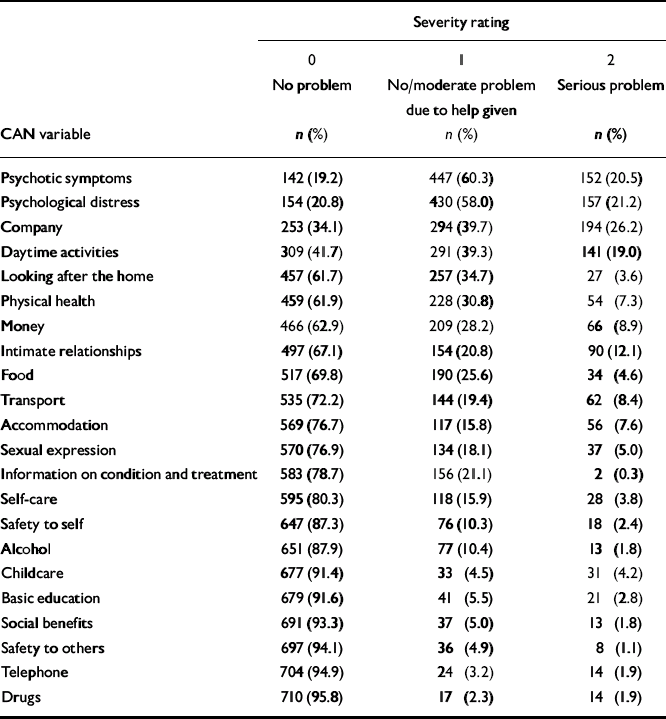
The Camberwell Assessment of Need surveys 22 areas of need (Table 1). Ratings of need are made on a three-point severity scale (0, ‘no problem’, indicating no need; 1, ‘no or moderate problem due to help given’, indicating a met need; 2, ‘serious problem’, indicating an unmet need) or rated as 9, ‘not known’. If a need is recognised (i.e. a severity rating of 1 or 2), then follow-up questions are asked to gain information about the current and required level of support as well as the appropriateness and effectiveness of any help given. Three summary scores can be calculated from the severity ratings in the completed CAN: total number of needs (rating 1 or 2), total number of met needs (rating 1) and total number of unmet needs (rating 2). The reliability of the original English version of the CAN (Reference Phelan, Slade and ThornicroftPhelan et al, 1995; Reference McCrone, Leese and ThornicroftMcCrone et al, 2000) as well as the Swedish version (Reference Hansson, Bjoerkman and SvenssonHansson et al, 1995; Reference Ericson, Hansson and TeikeEricson et al, 1997) used in the present study has been proved to be acceptable. For the purpose of our study, only the severity rating from each of the 22 variables were used, not the summary scores.
Distribution of severity ratings by Camberwell Assessment of Need (CAN) variable (n=741)

| Severity rating | |||
|---|---|---|---|
| CAN variable | 0 No problem n (%) | 1 No/moderate problem due to help given n (%) | 2 Serious problem n (%) |
| Psychotic symptoms | 142 (19.2) | 447 (60.3) | 152 (20.5) |
| Psychological distress | 154 (20.8) | 430 (58.0) | 157 (21.2) |
| Company | 253 (34.1) | 294 (39.7) | 194 (26.2) |
| Daytime activities | 309 (41.7) | 291 (39.3) | 141 (19.0) |
| Looking after the home | 457 (61.7) | 257 (34.7) | 27 (3.6) |
| Physical health | 459 (61.9) | 228 (30.8) | 54 (7.3) |
| Money | 466 (62.9) | 209 (28.2) | 66 (8.9) |
| Intimate relationships | 497 (67.1) | 154 (20.8) | 90 (12.1) |
| Food | 517 (69.8) | 190 (25.6) | 34 (4.6) |
| Transport | 535 (72.2) | 144 (19.4) | 62 (8.4) |
| Accommodation | 569 (76.7) | 117 (15.8) | 56 (7.6) |
| Sexual expression | 570 (76.9) | 134 (18.1) | 37 (5.0) |
| Information on condition and treatment | 583 (78.7) | 156 (21.1) | 2 (0.3) |
| Self-care | 595 (80.3) | 118 (15.9) | 28 (3.8) |
| Safety to self | 647 (87.3) | 76 (10.3) | 18 (2.4) |
| Alcohol | 651 (87.9) | 77 (10.4) | 13 (1.8) |
| Childcare | 677 (91.4) | 33 (4.5) | 31 (4.2) |
| Basic education | 679 (91.6) | 41 (5.5) | 21 (2.8) |
| Social benefits | 691 (93.3) | 37 (5.0) | 13 (1.8) |
| Safety to others | 697 (94.1) | 36 (4.9) | 8 (1.1) |
| Telephone | 704 (94.9) | 24 (3.2) | 14 (1.9) |
| Drugs | 710 (95.8) | 17 (2.3) | 14 (1.9) |
Data-set
The data-set for the study was compiled from a clinical case register at the University Hospital in Uppsala, set up in 1996 for longitudinal needs assessment of out-patients with severe mental illness. Needs assessments of all patients in regular contact with the mental health rehabilitation services at the Clinic for Psychosis and Rehabilitation are made once a year by patients' keyworkers using the Swedish version of the CAN (Reference Ericson, Hansson and TeikeEricson et al, 1997). The results of the assessments are recorded in the case register, along with each patient's current principal diagnosis according to the DSM-IV (American Psychiatric Association, 1994). The keyworkers have at least a half-day training in the use of the CAN, as recommended in the manual (Reference Slade, Thornicroft and LoftusSlade et al, 1999b ). All diagnoses recorded in the case register are made by a psychiatrist. The rehabilitation services, which have a catchment area of 225 000 inhabitants 18 years and older, serve the whole of Uppsala County, including the fourth largest city in Sweden.
For the factor analysis we selected the CAN assessment of each patient recorded in the case register from 1997 through 1999. A CAN assessment was considered incomplete if one or more items were rated ‘not known’ (i.e. rating 9). Such ratings are thus in practice equivalent to missing values. Generally, cases with missing values are either deleted in the statistical analysis or the missing values are substituted by, for example, group means. Both procedures may have serious drawbacks for multivariate analysis, such as discarding an unacceptably large proportion of subjects or attenuation of important parameters (Reference Little and RubinLittle & Rubin, 1987). To avoid such drawbacks, we chose to retain all selected CAN assessments while substituting any missing values by a multiple imputation procedure, using the Expectation-Maximisation algorithm as implemented in LISREL 8.50 for Windows (Reference Jöreskog and SörbomJöreskog & Sörbom, 2001; Reference du Toit and Melsdu Toit & Mels, 2002). This algorithm is a general technique for finding maximum likelihood estimates for parametric models when data are not fully observed, which is quite reasonable to use also with non-normal ordinal variables (Reference SchaferSchafer, 1997) (see also Schafer & Graham (Reference Schafer and Graham2002) for an introductory review of available multiple imputation methods). Several simulation studies (e.g. Reference EndersEnders, 2001; Reference Sinharay, Stern and RussellSinharay et al, 2001) have shown that maximum likelihood estimates obtained by multiple imputation in general are ‘robust’ and unbiased, even when the proportion of missing data is large.
The study was approved by the research ethics committee of the medical faculty of Uppsala University, Sweden.
Factor analyses
We conducted two successive exploratory factor analyses for severity ratings on the CAN with maximum likelihood extraction estimates using LISREL 8.50 for Windows (Reference Jöreskog and SörbomJöreskog & Sörbom, 2001). Selection of the number of factors to be extracted was based on the root mean square error of approximation (RMSEA) fit index (ϵ). Browne & Cudeck (Reference Browne, Cudeck, Bollen and Long1993) suggest that a value of ϵ≤ 0.05 indicates a close fit of the model. Oblique promax rotation of factor loadings was used, since the factors were found to be correlated (Reference Fabrigar, Wegener and MacCallumFabrigar et al, 1999). Only factor loadings of |0.30| or above were considered for interpretation (Reference GorsuchGorsuch, 1983). Factors comprising fewer than three salient loadings were discarded (Reference StreinerStreiner, 1994; Reference Floyd and WidamanFloyd & Widaman, 1995). Two-stage least squares (TSLS) estimates and their standard errors were used to judge whether a model was reasonable (Reference Jöreskog, Sörbom and duToitJöreskog et al, 1999), controlling the level of significance at α=0.01 (two-tailed). Finally, to check whether a model was preserved using an alternative common factor analysis technique which does not make the assumption of multivariate normality, a principal factor analysis (Reference Everitt and DunnEveritt & Dunn, 1991) was made (see also Fabrigar et al (Reference Fabrigar, Wegener and MacCallum1999) for a review of the major design and analytical decisions in exploratory factor analysis).
RESULTS
A total of 373 men and 368 women receiving out-patient treatment for severe mental illness and with a CAN rating during 1997 to 1999 were included in the study. Their mean age was 45.5 years (s.d.=12.2). Their principal diagnoses were schizophrenia or other psychotic disorder, n=506 (68.3%), mood disorder, n=84 (11.3%), anxiety disorder, n=38 (5.1%), other Axis I disorder, n=32 (4.3%) and personality disorder, n=67 (9.0%). Diagnoses were missing in 14 cases (1.9%).
The distributions of severity ratings, after imputation of missing values, are shown in Table 1. The distributions of ratings before and after imputation of missing values were very similar (data not shown). Most of the variables had just a small percentage of missing values (mean 2.9%, range 0.7-5.3), whereas for ‘intimate relationships’, ‘sexual expression’ and ‘information on condition and treatment’ the proportions of missing values were higher (24.2%, 44.0% and 8.1% respectively). Psychotic symptoms, psychological distress, company and daytime activities were the most common problems among the patients, whereas problems regarding social benefits, safety to others, access to telephone and drug misuse were uncommon.
We calculated the summary scores on the CAN, although they were not used in any of the analyses. The total number of needs was 6.4 (s.d.=3.4, 95% CI 6.2-6.6), comprising 4.7 (s.d.=2.7, 95% CI 4.5-4.9) met needs and 1.7 (s.d.=2.0, 95% CI 1.5-1.8) unmet needs.
Our maximum likelihood factor analysis included all 22 CAN variables. The RMSEA goodness-of-fit test indicated a close fit for a four-factor solution (ε=0.054), although comprising only 15 of the variables. Seven of the variables did not load on any factor: ‘psychotic symptoms’, ‘information on condition and treatment’, ‘safety to self’, ‘childcare’, ‘basic education’, ‘telephone’ and ‘social benefits’.
Factor 1 consisted of six variables, with high loadings (in parentheses) on ‘looking after the home’ (0.80), ‘food’ (0.79) and ‘self-care’ (0.63), moderate loadings on ‘money’ (0.55) and ‘accommodation’ (0.49) and a low loading on ‘transport’ (0.35). Factor 1 appeared to be a personal disability dimension, since all the constituting items are related to functional ability in daily living, and was accordingly labelled ‘Functional disability’.
Factor 2 consisted of three variables, with a high loading on ‘company’ (0.84), a moderate loading on ‘daytime activities’ (0.51) and a low loading on ‘psychological distress’ (0.33). This factor appeared to be a social relationships dimension, with variables concerning interpersonal interactions, social participation, and ties to social networks. Factor 2 was labelled ‘Social loneliness’.
Factor 3 also consisted of three variables, with high loadings on ‘sexual expression’ (0.84) and ‘intimate relationships’ (0.70) and a low loading on ‘safety to others’ (0.36). Again, this appeared to be a social relationships dimension, although on a more intimate level than Factor 2, with variables related to intimate contact, romantic relationships and satisfaction with sex life. Factor 3 was thus labelled ‘Emotional loneliness’.
Factor 4 consisted of four variables: ‘alcohol’, ‘physical health’, ‘money’ and ‘drugs’. However, all the factor loadings were low (0.39, -0.33, 0.32 and 0.30 respectively), indicating a weak and poorly defined factor. This factor appeared to be associated with substance misuse but was difficult to interpret, and hence not labelled.
All factors except Factor 4 were correlated with each other, with correlation coefficients in the range 0.35-0.50, indicating interdependence to a certain extent among the dimensions of functional disability, social loneliness and emotional loneliness.
To judge whether the four-factor model was reasonable, a TSLS estimation based on the promax-rotated solution was made. The first three factors were replicated by the TSLS estimation, with ‘looking after the home’, ‘company’ and ‘sexual expression’ respectively set as reference variables. Another two variables, ‘information on condition and treatment’, and ‘telephone’, also had significant loadings on Factor 1. The weak fourth factor, with ‘alcohol’ set as reference variable, was not replicated; none of its constituting variables had significant loadings of 0.30.
By comparing the results of the factor analysis with the results of the TSLS estimation, it appeared to be more reasonable to assume the existence of three rather than four common factors, comprising 13 of the 22 CAN variables. Thus, the first of the three presumed factors, ‘Functional disability’, would comprise the variables ‘looking after the home’, ‘food’, ‘self-care’, ‘money’, ‘accommodation’, ‘transport’ and ‘telephone’. The second factor, ‘Social loneliness’, would comprise ‘company’, ‘daytime activities’ and ‘psychological distress’, while ‘sexual expression’, ‘intimate relationships’ and ‘safety to others’ would constitute the third factor, ‘Emotional loneliness’.
To investigate the reliability of these three factors, the 13 potentially constituting variables were retained and examined in another factor analysis, following the same procedure as in the first analysis. The variable ‘Information on condition and treatment’ was not retained because of the cross-correlations to Factor 1 and Factor 3, while, at the same time, it was found to fit neither the concept of functional disability nor emotional loneliness.
The factor loadings and factor correlations following the second factor analysis are reported in Table 2. The expected three factors from the first analysis were replicated (RMSEA=0.051). Moderate correlations between ‘Functional disability’ and ‘Social loneliness’ as well as between ‘Social loneliness’ and ‘Emotional loneliness’ were found, indicating an approximately 20% shared variance in both cases (Table 3). A small correlation was also found between ‘Functional disability’ and ‘Emotional loneliness’, indicating only 3% shared variance between the two factors.
Promax-rotated factor loadings of a subset of variables on the Camberwell Assessment of Need (factor correlations are shown in Table 3)

| Variable | Factor 1 Functional disability | Factor 2 Social loneliness | Factor 3 Emotional loneliness | Unique variance |
|---|---|---|---|---|
| Looking after the home | 0.801 | – 0.11 | 0.01 | 0.43 |
| Food | 0.781 | 0.01 | – 0.04 | 0.42 |
| Self-care | 0.621 | 0.03 | – 0.05 | 0.61 |
| Money | 0.481 | – 0.02 | 0.14 | 0.74 |
| Accommodation | 0.441 | 0.12 | – 0.07 | 0.76 |
| Transport | 0.361 | 0.19 | – 0.08 | 0.79 |
| Telephone | 0.29 | – 0.07 | 0.20 | 0.88 |
| Company | – 0.07 | 0.891 | – 0.08 | 0.32 |
| Daytime activities | 0.18 | 0.501 | 0.05 | 0.61 |
| Psychological distress | 0.06 | 0.321 | 0.07 | 0.85 |
| Sexual expression | 0.01 | – 0.09 | 0.951 | 0.16 |
| Intimate relationships | – 0.22 | 0.301 | 0.571 | 0.49 |
| Safety to others | 0.12 | – 0.07 | 0.331 | 0.89 |
Factor correlations for analysis shown in Table 2

| Factor 1 | Factor 2 | Factor 3 | |
|---|---|---|---|
| Factor 1 | 1.00 | ||
| Factor 2 | 0.47 | 1.00 | |
| Factor 3 | 0.18 | 0.44 | 1.00 |
The three-factor solution was also subjected to TSLS estimation. The reference factor loadings, their standard errors and associated t-values are reported in Table 4. All three factors from the promax-rotated solution were replicated. ‘Functional disability’ was found to comprise ‘looking after the home’ (as reference variable), ‘food’, ‘self-care’, ‘money’, ‘accommodation’, ‘transport’ and also ‘telephone’, all with significant factor loadings. ‘Social loneliness’ was found to comprise ‘company’ (as reference variable), ‘daytime activities’ and ‘psychological distress’, also with significant factor loadings. Likewise, ‘Emotional loneliness’ was found to comprise ‘sexual expression’ (as reference variable), ‘intimate relationships’ and ‘safety to others’, with significant factor loadings as well.
Reference variable factor loadings of Camberwell Assessment of Need ratings estimated by two-stage least squares (method factor correlations are shown in Table 5)

| Variable | Factor 1 Functional disability | Factor 2 Social loneliness | Factor 3 Emotional loneliness | Unique variance | ||||||
|---|---|---|---|---|---|---|---|---|---|---|
| Loading | s.e. | t | Loading | s.e. | t | Loading | s.e. | t | ||
| Looking after the home | 0.771,2 | 0.00 | 0.00 | 0.41 | ||||||
| Food | 0.672*** | 0.07 | 10.13 | 0.18 | 0.09 | 2.02 | – 0.09 | 0.07 | – 1.27 | 0.46 |
| Self-care | 0.552*** | 0.06 | 8.81 | 0.15 | 0.09 | 1.71 | – 0.04 | 0.07 | – 0.59 | 0.64 |
| Money | 0.412*** | 0.07 | 6.32 | 0.12 | 0.10 | 1.18 | 0.16 | 0.08 | 1.96 | 0.75 |
| Accommodation | 0.432*** | 0.06 | 6.68 | 0.09 | 0.10 | 0.90 | 0.11 | 0.08 | 1.36 | 0.77 |
| Transport | 0.402*** | 0.06 | 6.14 | 0.14 | 0.10 | 1.39 | 0.05 | 0.08 | 0.62 | 0.78 |
| Telephone | 0.312*** | 0.07 | 4.68 | – 0.13 | 0.10 | – 1.27 | 0.27** | 0.08 | 3.30 | 0.88 |
| Company | 0.00 | 0.801,2 | 0.00 | 0.37 | ||||||
| Daytime activities | 0.25*** | 0.07 | 3.74 | 0.44*** | 0.12 | 3.64 | 0.08 | 0.08 | 0.95 | 0.64 |
| Psychological distress | 0.02 | 0.07 | 0.24 | 0.452*** | 0.10 | 4.45 | – 0.05 | 0.08 | – 0.65 | 0.82 |
| Sexual expression | 0.00 | 0.00 | 0.881,2 | 0.24 | ||||||
| Intimate relationships | – 0.15** | 0.05 | – 2.95 | 0.22** | 0.08 | 2.86 | 0.532*** | 0.08 | 6.47 | 0.55 |
| Safety to others | 0.14 | 0.06 | 2.19 | – 0.04 | 0.10 | – 0.37 | 0.342*** | 0.09 | 3.94 | 0.89 |
Factor correlations for analysis shown in Table 4

| Factor 1 | Factor 2 | Factor 3 | |
|---|---|---|---|
| Factor 1 | 1.00 | ||
| Factor 2 | 0.27 | 1.00 | |
| Factor 3 | – 0.04 | 0.50 | 1.00 |
‘Functional disability’ and ‘Social loneliness’ were slightly correlated (about 8% shared variance), whereas a more notable correlation between ‘Social loneliness’ and ‘Emotional loneliness’ was found, indicating a shared variance of about 25% (Table 5). ‘Functional disability’ and ‘Emotional loneliness’ were not correlated.
The three-factor solution was preserved in the subsequent principal factor analysis with promax rotation, both in full sample analysis and in analyses when the sample was divided, at random, in halves (data not shown).
DISCUSSION
The aim of the study was to search for latent variables in the Camberwell Assessment of Need. We conducted a maximum likelihood factor analysis of the CAN in a large and diagnostically heterogeneous sample of out-patients with severe mental illness. Our sample was similar with regard to age, gender and diagnostic distributions, as well as the distribution and level of need, to those previously reported in studies of out-patient populations (e.g. Reference Phelan, Slade and ThornicroftPhelan et al, 1995; Reference Issakidis and TeessonIssakidis & Teesson, 1999; Reference ArvidssonArvidsson, 2001; Reference Hansson, Sandlund and BengtssonTopsHansson et al, 2003). Support was found for a three-factor model, comprising 13 of the 22 variables in the CAN, with the first factor corresponding to functional disability, and the other two to different aspects of social health. The remaining variables did not load on any factor.
The first factor, labelled ‘Functional disability’, consisted of ‘looking after the home’, ‘food’, ‘self-care’, ‘money’, ‘accommodation’, ‘transport’ and ‘telephone’. This factor captures difficulties in basic functions and activities in normal living. Functional disability is generally defined as any difficulty, linked to health conditions, in conducting activities of daily living (ADL) (Reference McDowell and NewellMcDowell & Newell, 1996). Activities of daily living may in its turn be subdivided into personal ADL, limited to excretion, cleanliness, feeding, dressing, mobility and communication, and instrumental ADL, comprising household activities, mobility in the wider environment and other basic activities in independent living (Reference McDowell and NewellMcDowell & Newell, 1996). The CAN items comprised in ‘Functional disability’ seem to be tapping both aspects of ADL; ‘food’, ‘self-care’ and ‘telephone’ seem to be related to central aspects of personal ADL, whereas ‘looking after the home’, ‘money’, ‘accommodation’ and ‘transport’ are more related to aspects of instrumental ADL. These seven CAN items are also similar to central items in scales used particularly for measuring ADL (Reference McDowell and NewellMcDowell & Newell, 1996).
The other two factors, ‘Social loneliness’ and ‘Emotional loneliness’, seem to be tapping two distinct aspects of social health. Social health has consensually been defined as:
that dimension of an individual's well-being that concerns how he gets along with other people, how other people react to him, and how he interacts with social institutions and societal mores’ (Reference RussellRussell, 1973: p. 75).
Thus, broadly defined, social health is associated with functioning in social roles and integration in the community, and with affiliation and close relationships on a more intimate level. One obvious sign of problems in either of these aspects of social health is loneliness. The experience of loneliness is, however, according to Weiss (Reference Weiss1973), phenomenologically different depending on whether it is stemming from social isolation or from emotional isolation. Whereas social loneliness is a consequence of the absence of meaningful friendships, collegial relationships or linkages to other social networks, emotional loneliness is a result of the absence of romantic relationships or an intimate attachment. Symptomatically, social loneliness is often associated with feelings of boredom, depression, aimlessness and marginality, whereas emotional loneliness rather seems to be associated with apprehension, a sense of utter aloneness and a tendency to misinterpret or to exaggerate the hostile or affectionate intent of others. This typology of loneliness, first described by Weiss (Reference Weiss1973), has more recently been supported by a number of studies (e.g. Reference DiTommaso and SpinnerDiTommaso & Spinner, 1997; Reference Russell, Cutrona and RoseRussell et al, 1984).
The first of the two social health factors in our study - ‘Social loneliness’ - may be connected with lack of employment and few social contacts, which can be regarded as prominent elements of social isolation. It is reasonable to assume that problems and discontentment in these areas might indicate a sense of loneliness consistent with the construct ‘social loneliness’ in Weiss's typology. The inclusion of psychological distress in this factor is also consistent with the construct of social loneliness; high levels of psychological distress, particularly depression, have been found to be significantly associated with social loneliness but not with emotional loneliness (Reference DiTommaso and SpinnerDiTommaso & Spinner, 1997).
The second of our two social health factors was labelled ‘Emotional loneliness’. Lack of affiliation and intimate relationships are considered by Weiss (Reference Weiss1973) to be the essential elements of emotional isolation leading to emotional loneliness. It seems reasonable to assume that the three CAN items ‘sexual expression’, ‘intimate relationships’ and ‘safety to others’ might indicate loneliness in this sense.
Several variables did not load on any of the factors. This was not unexpected, because the items of the CAN were chosen to reflect the whole range of problems encountered by people with severe mental illness (Reference McCrone, Leese and ThornicroftMcCrone et al, 2000). Some might be more related to features of the service systems concerned than to the mental health conditions per se. This might explain why variables such as ‘information on condition and treatment’, ‘childcare’ and ‘social benefits’ did not load on factors related to personal and social functioning.
Neither ‘psychotic symptoms’ nor ‘safety to self’ were associated with a factor, which was perhaps more surprising. In this out-patient population it may not be useful to rate psychotic symptoms globally. In fact, symptoms are known to be highly variable among people with severe mental illness, both cross-sectionally and longitudinally (Reference van Os, Verdoux, Bijl, Gattaz and Hafnervan Os et al, 1999; Reference GanevGanev, 2000), and there appears to be only a modest association between current social dysfunction and the characteristic symptoms of psychotic episodes in schizophrenia (Reference Glynn, Mueser and TarrierGlynn, 1998). Consequently, it has also been recommended that social functioning should be assessed independently from psychopathology (Reference de Jong, van der Lubbe, Wiersma, Moscarelli, Rupp and Sartoriusde Jong et al, 1996).
Our results were to a certain extent in accordance with the previous study by Slade et al (Reference Slade, Beck and Bindman1999a ) using principal component analysis with orthogonal rotation, but there were also differences. Whereas our results indicate the presence of not more than three common factors, Slade et al found seven principal components, although only four were found to be interpretable. These four appeared to be associated with activities of daily living, relationships, drug and alcohol problems and living conditions. The ADL factor in our study was similar to the corresponding ADL component in the study by Slade et al, sharing the same items except ‘accommodation’ and ‘food’. The two social health factors found in our study were also somewhat in accordance with two components found by Slade et al: the items ‘daytime activities’ and ‘company’ loaded on the same factor in both studies, as did ‘sexual expression’ and ‘intimate relationships’. However, in comparison with the results of Slade et al, we seemed to find more ‘clean’ and conceptually consistent factors, which might be due to differences in methods. Common factor analysis generally provides a better simple structure and results that are more easy to interpret than a principal component analysis, especially when salient loadings are moderate in value rather than high (for a review of the aims and limitations of the different techniques see Reference Fabrigar, Wegener and MacCallumFabrigar et al, 1999).
Because our sample was restricted to out-patients with severe mental illness, our findings may not be generalisable to other patient populations or untreated community samples. Our study also has other limitations that should be considered. Some of the variables had many missing values, particularly ‘intimate relationships’ and ‘sexual expression’, which were both related to the emotional loneliness factor. Multiple imputation of missing data, which was used to compensate for this, was made under the assumption that all data were missing at random. However, there is no possibility of knowing whether this is true. Furthermore, the CAN assessments were made in routine clinical care, with many different raters. Regardless of any possible problems associated with such assessment conditions, it is a widely used method of data collection in research on severely mentally ill persons, having the advantage of confidence in long-term patient-staff relationships and naturalistic clinic conditions.
Our findings may have several clinical implications. First, although the results confirm the rather heterogeneous nature of the CAN overall, the summary scores of items corresponding to the more homogeneous dimensions of functional disability and social health might be measures that are more reliable and more sensitive to changes over time than the standard summary scores. This must of course be confirmed in further studies. Second, the three factors might also have a stronger clinical appeal than the standard summary scores and inform the care planning process in a more meaningful way, although individual needs also need to be examined along with any summary score. Finally, since problems in ADL, social interactions and intimate relationships call for different forms of remediation, the factor scores might be more useful as outcome measures in mental health rehabilitation programmes than the standard summary scores seem to be.
Clinical Implications and Limitations
CLINICAL IMPLICATIONS
-
▪ The summary scores of items corresponding to the dimensions of functional disability and social health might be measures that are more reliable and more sensitive to changes over time than the standard Camberwell Assessment of Need (CAN) summary scores.
-
▪ The three factors found might have a stronger clinical appeal and inform the care planning process in a more meaningful way than the standard CAN summary scores.
-
▪ Factor scores might be more useful outcome measures in mental health rehabilitation programmes than the standard CAN summary scores seem to be.
LIMITATIONS
-
▪ The sample was restricted to out-patients and might not be generalisable to other patient populations or untreated community samples.
-
▪ The CAN assessments were made in routine clinical care, with many different raters.
-
▪ Some of the CAN items had many missing values.
Acknowledgements
The authors thank all members of staff at Uppsala University Hospital involved in the Camberwell Assessment of Need ratings used in this study. Thanks are also due to Christina Hultman for helpful comments on an earlier draft of the paper. The Psychiatric Centre, Uppsala University Hospital, funded this study.




eLetters
No eLetters have been published for this article.