





Introduction
During the Neolithic period, various cultures emerged across different regions of Iran (Hole Reference Hole and Hole1987; Jamshidi Yeganeh Reference Jamshidi Yeganeh2023; Khanipour Reference Khanipour2023, Reference Khanipour2025; Khanipour and Azizi Kharanaghi Reference Khanipour, Azizi Kharanaghi, Richter and Darabi2024; Voigt and Dyson Reference Voigt, Dyson and Ehrich1992). Based on differences in pottery, Iranian archaeology divides the country into several cultural zones. Malek Shahmirzadi identified nine cultural zones in Iran (Malek Shahmirzadi Reference Malek Shahmirzadi2012). So far, many studies have been conducted on the relative and absolute chronology as well as the subsistence strategies of these regions (Abbasnejad Seresti and Sattari Galoogahi Reference Abbasnejad Seresti and Sattari Galoogahi2022; Alirezazadeh and Heydarian Reference Alirezazadeh and Heydarian2022; Ashrafi and Shirani Reference Ashrafi and Shirani2024; Khanipour Reference Khanipour2024a, Reference Khanipour2024b; Khanipour and Jamshidi Yeganeh Reference Khanipour and Jamshidi Yeganeh2025; Khanipour and Nishiaki Reference Khanipour and Nishiaki2024; Khanipour et al. Reference Khanipour and Niknami2021a, Reference Khanipour, Zare Kordshooli and Karami2021b). The western region of Iran is referred to as the Central Zagros, while the northwestern region is known as the Northern Zagros or the Northwestern Cultural Zone (Khanipour and Akbari Reference Khanipour and Akbari2024; Reference Khanipour and Akbari2025).
In most periods, the cultural materials of these zones are distinct; however, during the Chalcolithic period, a ceramic tradition emerged across the two zones, parts of eastern Mesopotamia, and the southern Caucasus. This ceramic tradition, first identified from excavations at Dalma Tepe in northwestern Iran (Karimikiya et al. Reference Karimikiya, Rezaloo, Abedi and Javanmardzadeh2022), is known as the Dalma culture. Although various reasons have been proposed for the wide distribution of Dalma ceramics, many researchers believe that the nomadic lifestyle and subsistence strategies of Dalma communities played a significant role in their widespread presence (Abdi Reference Abdi2002; Henrikson and Vitali Reference Henrickson and Vitali1987; Heidari, Reference Heidari2016).
Despite decades of archaeological excavations at Dalma-period sites and studies conducted on the topic (Hamlin Reference Hamlin1975; Henrickson Reference Henrickson1983), major challenges remain regarding the chronology of this period, its place of origin, and the timing and mechanism of its spread across such a vast geographical range. These challenges are primarily due to limited excavations, a lack of absolute dating, and the reliance on relative chronology in earlier studies. Most foundational archaeological research in this region predates the adoption of interdisciplinary studies and absolute dating methods, and even the few absolute dates available lack precision and do not accurately represent the period.
It is therefore essential to conduct radiocarbon dating on multiple sites to establish precise timelines for Dalma settlements in each region. This would enable researchers to determine the origin and expansion timeline of this culture. During the archaeological survey and excavation of the Belachak 3 site, cultural materials similar to those of the Dalma period were uncovered. Given the lack of absolute dates for this period in northwestern Iran, the radiocarbon results from Belachak 3 provide valuable insights into the time frame during which this culture was present in the region.
This article begins by discussing the existing challenges in the chronology of the Dalma period. It then introduces the Belachak 3 site and presents the findings from its excavation, including the absolute dating results. Finally, using a combination of relative cultural material comparisons and absolute chronology, the timeline of the Dalma culture’s prevalence in northwestern Iran is evaluated.
Chronological challenges of the Dalma period
The Dalma period in northwestern Iran is classified as the Early Chalcolithic or Hasanlu X phase within the Hasanlu chronology (Neseri Someeh and Bakhtiari Reference Neseri Someeh and Bakhtiari2024). For the first time, Young dated the Dalma painted pottery to the 5th millennium BCE (Young Reference Young1963). Hamlin attempted to provide a chronology for the Dalma period. From Dalma Tepe, a radiocarbon date of 4215 ± 85 BCE was obtained. Additionally, five radiocarbon samples from Hasanlu X (the Hajji Firuz period, second half of the 6th millennium BCE) and six radiocarbon samples from Hasanlu VIII (the Pisdeli period, 4th millennium BCE) were analyzed. Based on this evidence, Hamlin proposed a timeframe of 5000 to 4000 BCE for Hasanlu IX (Dalma) (Hamlin Reference Hamlin1975, 119–120). Excavations at Lavin Tepe revealed Dalma pottery from strata III to strata VII. Hejebri Nobari and colleagues suggested that Lavin Tepe could bridge the chronological gap between the Neolithic and Dalma periods in northwest Iran, as a gradual transition from the Late Neolithic to the Early Chalcolithic is observable in its stratigraphy (Hejebri Nobari et al. Reference Hejebri Nobari, Binandeh, Neyestani and Vahdati Nasab2012). Despite the significance of this site in pinpointing the emergence of the Dalma culture in the region, radiocarbon dates from Lavin Tepe have not yet been published.
Abedi’s excavations at Kul Tepe and Dava Göz proposed a chronology of 5400 to 5000 BCE for Hasanlu X, 5000 to 4500 BCE for Hasanlu IX, and 4500 to 4200 BCE for Hasanlu VIII (Abedi et al. Reference Abedi, Khatib Shahidi, Chataigner, Niknami, Eskandari, Kazempour, Pirmohammadi, Hosseinzaeh and Ebrahim2014, Reference Abedi, Omrani and Karimifar2015, tab. 1). Radiocarbon analysis of Kul Tepe revealed dates between 5000 and 4500 BCE for its Dalma layers. Recently, Abedi has proposed a new chronological phase for northwestern Iran, positioned between the Hajji Firuz and Dalma periods, which he has termed the Late Late Neolithic/Formative Dalma. He dates this phase to 5400/5300–5000 BCE (Abedi Reference Abedi2023).
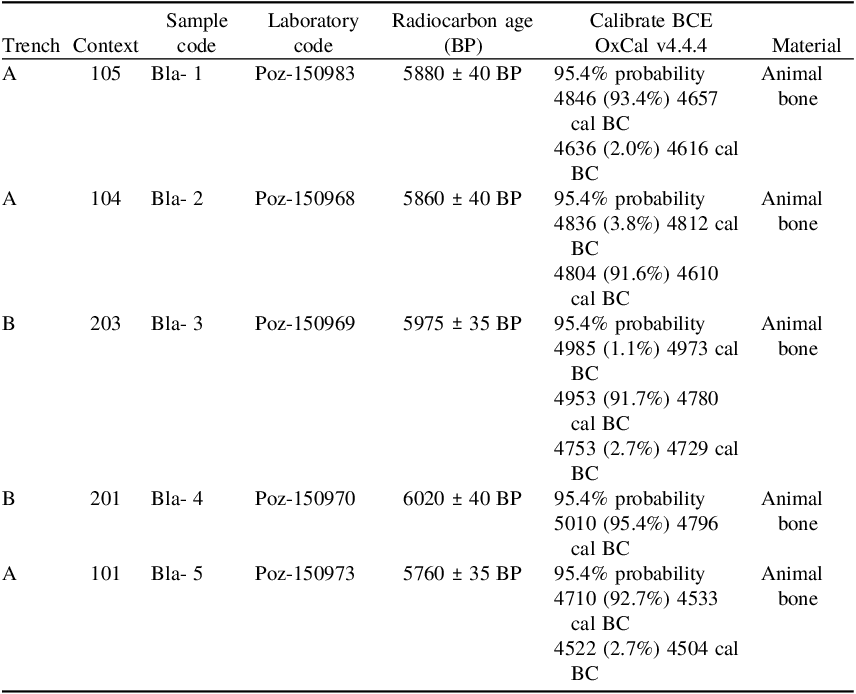
Radiocarbon dates for the Belachak 3 site, the calibration is based on OxCal v4.4.4

In the Central Zagros, the Dalma period, referred to as Godin X or the Dalma period, corresponds to the Early-Middle Chalcolithic. Various scholars have proposed different dates for this period. Levine and McDonald dated the onset of the Dalma period in the Kangavar plain to 4100 BCE (Levine and McDonald Reference Levine and McDonald1977). Henrickson suggested that the Dalma period in the Central Zagros did not precede 4100 BCE, with Dalma ceramic traditions in southern Azerbaijan, eastern Kurdistan, and northeastern Luristan reaching their peak between 4100 and 3700 BCE (Henrickson Reference Henrickson1985, 70). Young and Levine proposed relative dates of 4500–4000 BCE based on excavations at Seh Gabi (Young and Levine Reference Young and Levine1974). Absolute dating at the Soha Chay site in Zanjan provided a timeframe of 4252 to 4038 BCE for the site (Rahimi Reference Rahimi Sorkhani2008, 193). The site of Kalanan is another site in the central Zagros attributed to the Dalma period. Three absolute dating samples indicate a time range of 4042 to 3660 BCE for layers 2 to 8 of this site. Based on this, Saed Mucheshi suggests that the Dalma period in this part of the central Zagros falls between the late fifth millennium and the first half of the fourth millennium BCE (Saed Mucheshi et al. Reference Saed Mucheshi, Niknami, Mashkour, Fazeli Nashli and Firozmandi Shirejin2011).
Motarjem and Sharifi, based on excavations at Qeshlaq Tepe and thermoluminescence analysis, estimated the beginning of the Dalma period to be between 5500 and 5000 BCE. They argued that the Dalma culture persisted in this region for approximately 1000 years. They also suggested that the Dalma culture originated from communities familiar with the Hajji Firuz and Halaf traditions (Sharifi and Motarjem Reference Sharifi and Motarjem2018). Zamani Dadaneh introducing findings from Narmashir Tepe, proposed a timeframe of 5300 to 4600 BCE for the Dalma period, though no radiocarbon dates were provided, and their basis for extending the Dalma period back to 5300 BCE remains unclear (Zamani Dadaneh et al. Reference Zamani Dadaneh, Renette and Saed Moucheshi2021, 19).
Renette and Mohammadi Ghasrian, in their chronological table, suggested that the beginning and end of the Dalma period in northwest Iran and eastern Central Zagros occurred simultaneously during the first half of the 5th millennium BCE (Renette and Mohammadi Ghasrian Reference Renette and Mohammadi Ghasrian2020, tab. 1). In subsequent publications, Renette correlated the Dalma period with the Late Ubaid (Ubaid 3–4) and, based on Mesopotamian absolute timelines, proposed that the Dalma tradition emerged in the late 6th millennium BCE and persisted until at least the mid-5th millennium BCE (Renette Reference Renette2022).
The latest absolute chronology comes from Nad Ali Beig Tepe, analyzed by Bahranipoor, who used cultural materials and 15 radiocarbon analyses to suggest a timeframe of 5000 to 4600 BCE for the site. Since one meter of lower stratigraphy at Nad Ali Beig has not been dated, Bahranipoor proposed 5200/5100 BCE as the earliest date for the Dalma period in the Central Zagros, considering the possibility that Nad Ali Beig might not represent the earliest Dalma settlement in the region (Bahranipoor Reference Bahranipoor2023).
Belachak 3 site
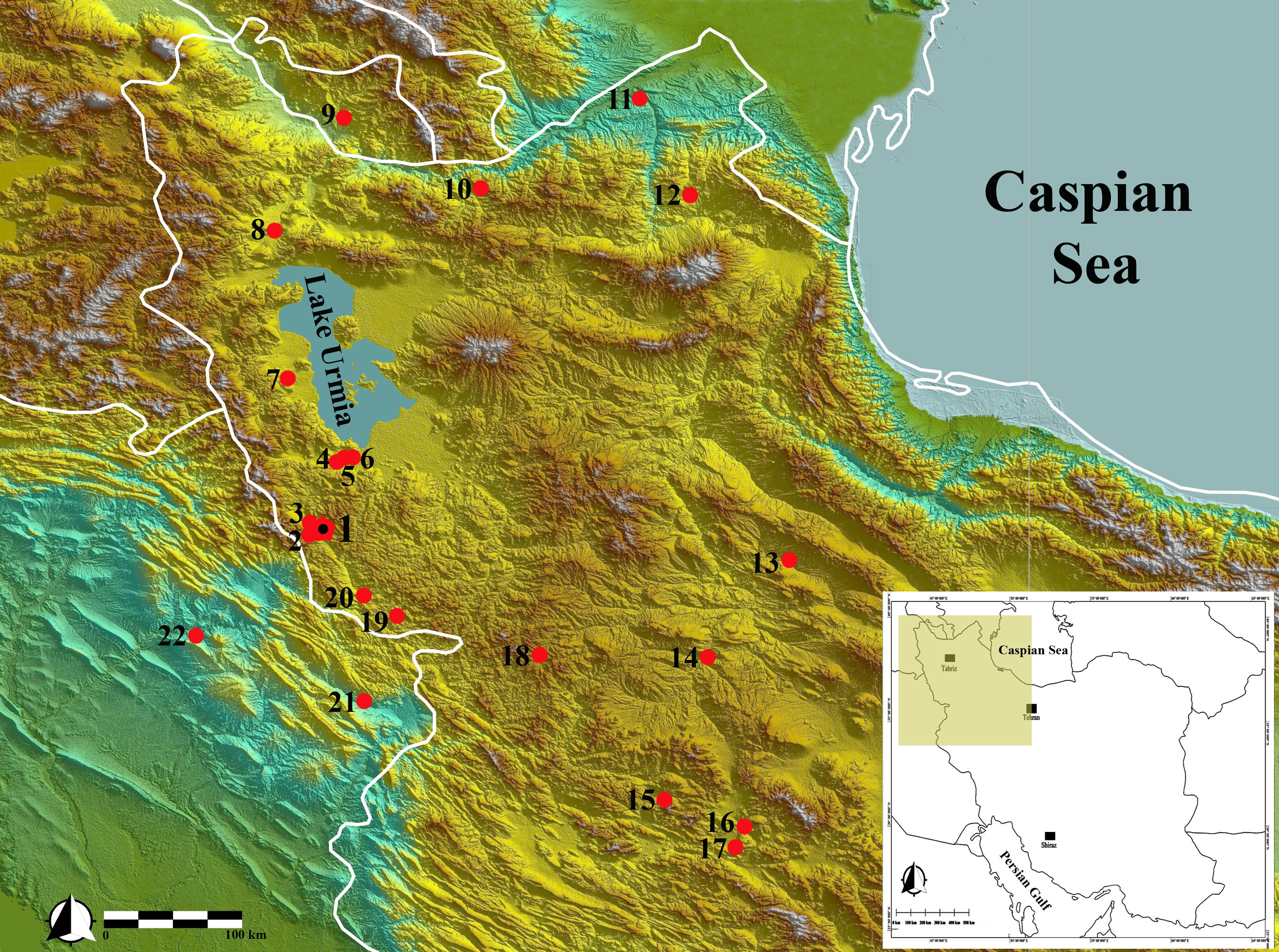
The Belachak 3 site is located in the little Zab River basin, approximately 1 kilometer north of Lavin village, in Piranshahr County, northwest Iran (Figure 1). This site measures 30 × 25 m and is situated at an altitude of 1373 meters above sea level. The area has been impacted by the construction of the Kani Sib Dam, which prompted a survey of archaeological sites at risk due to the dam’s reservoir by Reza Heydari in 2017 (Heydari Reference Heydari2017). Among the prehistoric sites identified during the survey was the Belachak 3 site. Given that the site would be submerged once the dam’s reservoir was filled, a rescue excavation was conducted by the first author of this article in 2020.
Location of the Belachak 3 site and sites as discussed in the text. 1. Belachak 3 site; 2. Girdi Sheytan; 3. Lavin; 4. Tappeh Dalma; 5. Hasanlou; 6. Pisdeli; 7. Seavan; 8. Dava Göz; 9. Nakhchivan Tappeh; 10. Kul Tepe; 11. Idier; 12. Ghosha Tape; 13. Soha Chay; 14. Qeshlagh; 15. Nad Ali Beig; 16. Seh Gabi; 17. Godin; 18. Kalnan; 19. Namshir; 20. Baqi; 21. Kani Shaie; 22. Surezha.

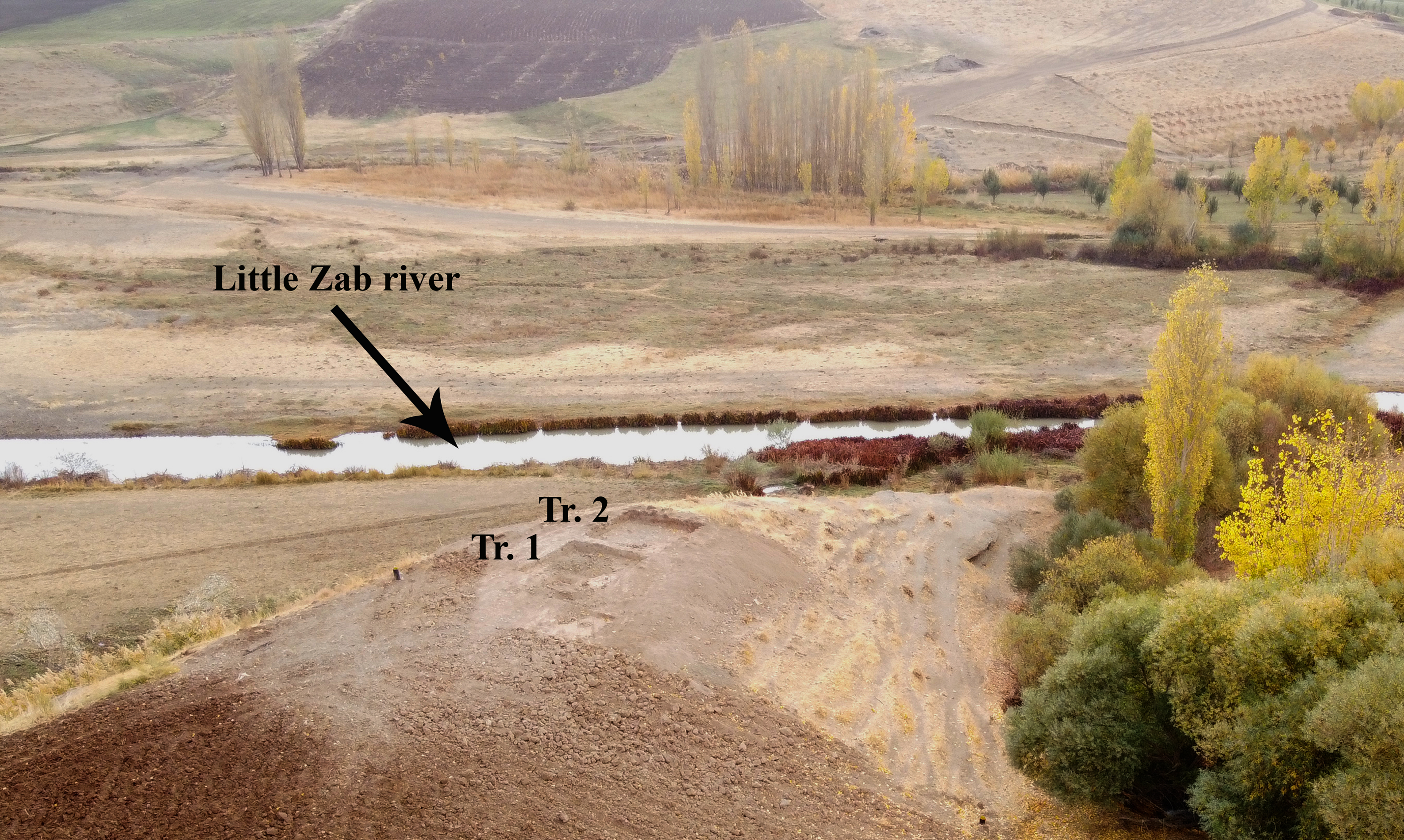
During the excavation, two trenches measuring 5×5 (Trench 1) and 3×5 m (Trench 2), as well as two test trenches measuring 2×2 m, were excavated (Figure 2). The cultural deposits at the site reached a depth of 60 cm. Due to the small size of the site, the absence of architectural structures, and the presence of heat-altered deposits (such as hearths), it can be inferred that Belachak 3 was used as a temporary settlement during the Dalma period. Some researchers associate the expansion of the Dalma culture with nomadic communities (Henrikson and Vitali Reference Henrickson and Vitali1987; Solecki and Solecki 1973; Tonoike Reference Tonoike2010). Thus, Belachak 3 can be considered evidence supporting the nomadic lifestyle of communities during this period.
Aerial photo of Belachak 3 site.

Relative chronology and ceramic typology of Belachak 3
In archaeological studies, pottery is commonly used to establish relative chronology and delineate the geographical extent of each culture. During the excavation of the Belachak 3 site, an initial relative chronology was proposed based on ceramic findings. Several researchers have previously studied Dalma period ceramics, typically categorizing them into four groups: plain, painted, red-slipped, and surface-manipulated (Hamlin Reference Hamlin1975, 117–120; Henrickson 1985, 69–70; Reference Henrickson and Kingery1986, 91–93; Levine and Young, Reference Levine, Young and Huot1987, 21; Tonoike 2010, 29–33; Reference Tonoike2012, 66–68; Zeynivand et al. Reference Zeynivand2013, 41–44).
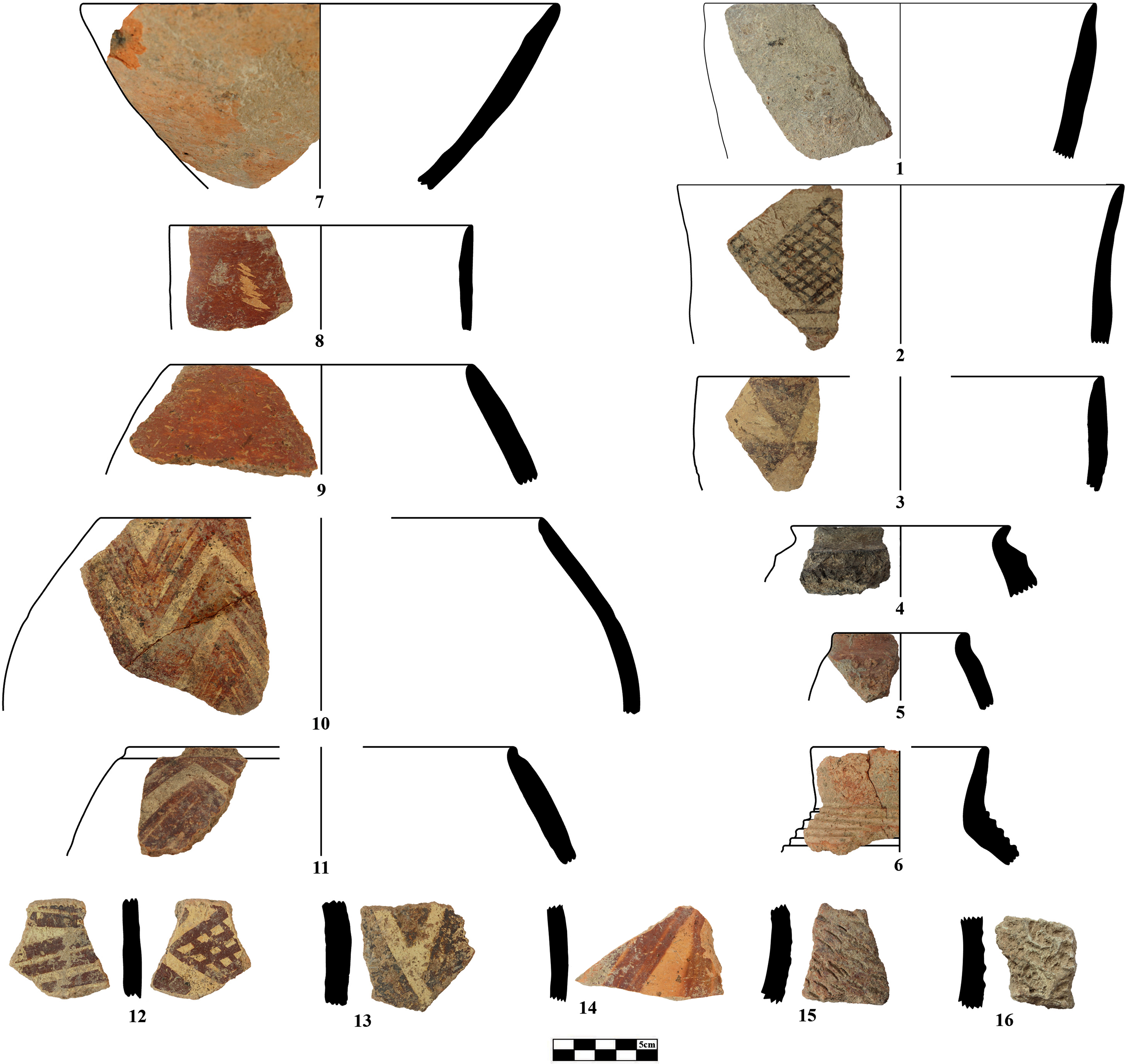
For the classification of ceramics at Belachak 3, we adopted a system based on color and decoration. Using this approach, the pottery from this site was divided into twelve categories: plain buff, painted buff, incised buff, impressed buff, buff with red slip, plain red, painted red, incised red, impressed red, streaked, applied Red and red-slipped wares (Figure 3). The decorations are predominantly geometric, featuring motifs such as zigzag lines, filled triangles, and hatched lozenges, painted in black or red. Negative painting, where designs appear through the contrast between the painted background and unpainted motifs, was also observed on a few sherds. While most decorations are on the exterior surfaces, occasional interior decorations were noted.
Pottery from Belachak 3 site.

The pottery was hand-made, and some sherds are gray due to insufficient firing. Most surfaces are well-smoothed. Straw temper marks are also visible on several pieces. The painted pottery resembles those from sites such as Dalma Tepe (Hamlin Reference Hamlin1975; Young Reference Young1963, 39), Seawan Tepe (Solecki and Solecki 1973), Lavin Tepe (Hejeri Nobari et al. Reference Hejebri Nobari, Binandeh, Neyestani and Vahdati Nasab2012), Seh Gabi (Hamlin Reference Hamlin1973; Henrickson Reference Henrickson1985, their fig. 7), Bǎqi (Falahian and Nazhati Reference Falahian, Nazhati and Choubak2017), Namashir (Zamani Dadaneh et al. Reference Zamani Dadaneh, Renette and Saed Moucheshi2021, their figs 17–18), Qeshlaq (Sharifi and Motarjem Reference Sharifi and Motarjem2018), Girdi Sheytan (Aghalari & Salimi, Reference Aghalari and Salimi2024) and Nad Ali Beig (Bahranipoor Reference Bahranipoor2023, their fig 7). Pottery with impressed motifs has been found across a broader geographical range, including sites such as Kani Shaie, and Surezha in Iraq (Alden et al. Reference Alden, Minc, Buehlman-Barbeau and Stein2021; Renette Reference Renette2022; Renette et al. Reference Renette, Abu Jayyab, Gibbon, Lewis, Abdullkarim Qadir, Cabral and Tome2021), as well as the sites mentioned above. All these ceramics are attributed to the Dalma culture. Since all Dalma ceramic types were identified at Belachak 3, and the site lies within the core region of this culture, it can be confidently attributed to the Dalma culture.
Absolute chronology of the Belachak 3 site using accelerator mass spectrometry
During the excavation of the Belachak 3 site, no suitable charcoal samples were discovered for radiocarbon dating. As an alternative, five animal bone samples were selected and sent to the Poznań Radiocarbon Laboratory in Poland for ¹⁴C analysis. Based on a detailed analysis of the pottery assemblage found from various excavated contexts at the Belachak 3 site, it has been determined that the entire occupational sequence belongs to the Dalma period. The homogeneity of pottery types across all contexts indicates a short-term, single-phase occupation, allowing for a confident correlation between the stratigraphic layers and the absolute chronology associated with the Dalma culture.
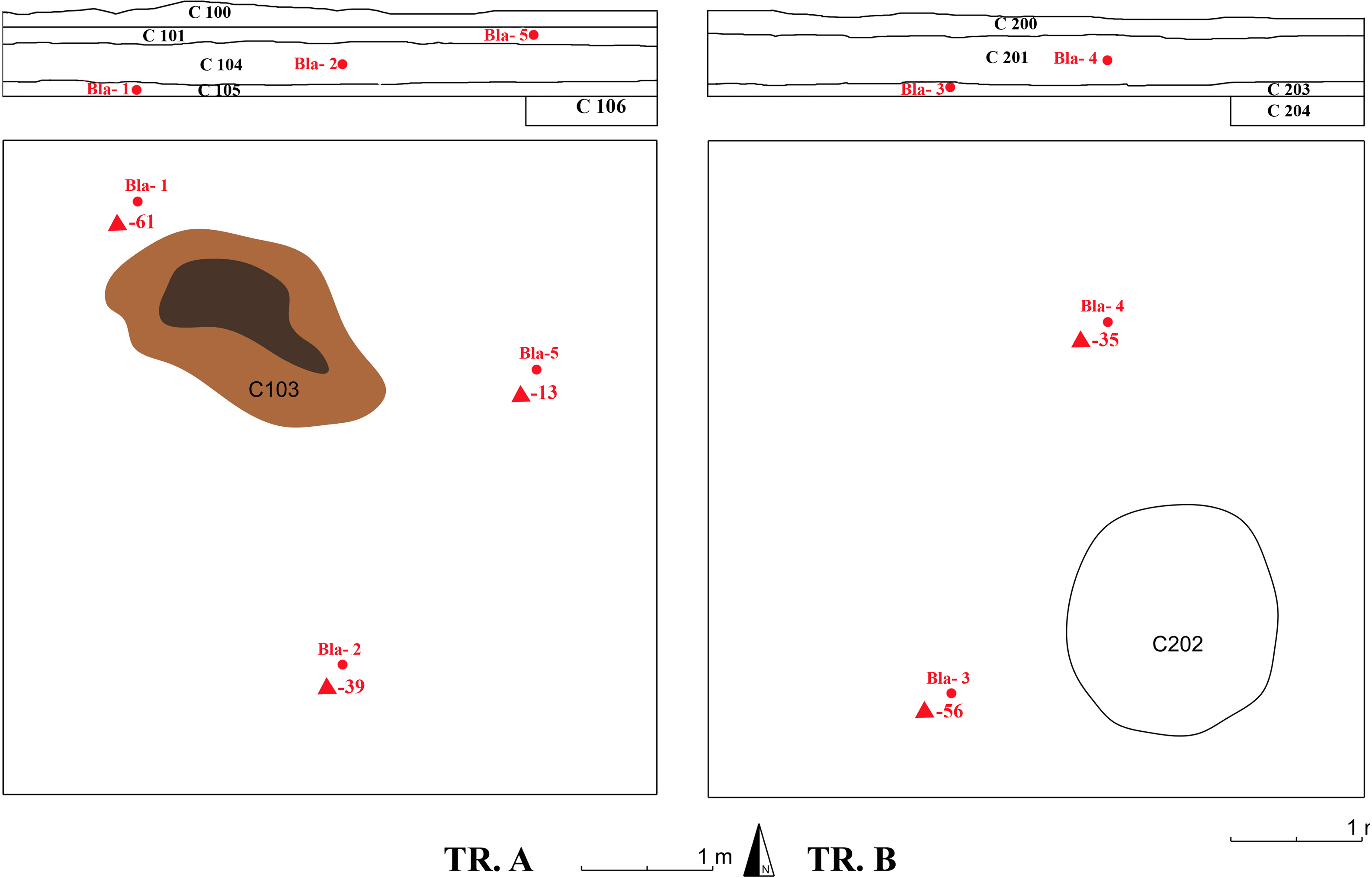
In Trench 1, three bone samples were selected from well-stratified and in situ layers: Sample 1 was obtained from Context 105 (Bla-1), the deepest layer in this trench, at a depth of 61 cm. Sample 2 was collected from Context 104 (Bla-2), situated at a depth of 39 cm. Notably, a hearth and a thermally altered structure were found in association with these contexts, suggesting that the deposits have remained undisturbed since their original use during the Dalma period. This enhances the reliability of the radiocarbon dates associated with these samples. Sample 5 was taken from Context 101 (Bla-5), the uppermost well-preserved layer in the trench, at a depth of 13 cm (figure 4). Together, these three samples provide a vertical chronological sequence representing the full depth of Dalma-period occupation in Trench 1.
The location of the analyzed samples in the plan and section of Trenches 1 and 2 at the Belachak 3 site.Footnote 1

To further refine the chronology, two additional samples were collected from Trench 2: Sample 3 was obtained from Context 203 (Bla-3), which rests directly on virgin soil and represents the earliest occupation layer in this trench, at a depth of 56 cm. Sample 4 was taken from Context 201 (Bla-4), which directly overlies Context 203, at a depth of 35 cm (Figure 4). As emphasized above, the site’s single-period occupation ensures that these radiocarbon dates, derived from securely stratified contexts, provide a robust and refined chronological framework for the Dalma culture in this region.
All measurements at the laboratory were carried out using the MICADAS system, which employs compact AMS technology and ensures high-precision analysis of small carbon samples (Stuiver and Polach Reference Stuiver and Polach1977). The bone samples underwent pretreatment to isolate collagen, following protocols optimized for archaeological specimens. The procedure involved demineralization of the bone matrix in dilute hydrochloric acid (HCl) to remove the inorganic components, followed by multiple rinses with ultrapure water. Alkali treatment (NaOH) was applied when necessary to eliminate humic acids and other potential contaminants. The samples were then gelatinized in a weakly acidic solution at elevated temperature (typically 58–60°C), filtered to remove particulates, and freeze-dried to obtain purified collagen (https://radiocarbon.pl/en/about-radiocarbon/).
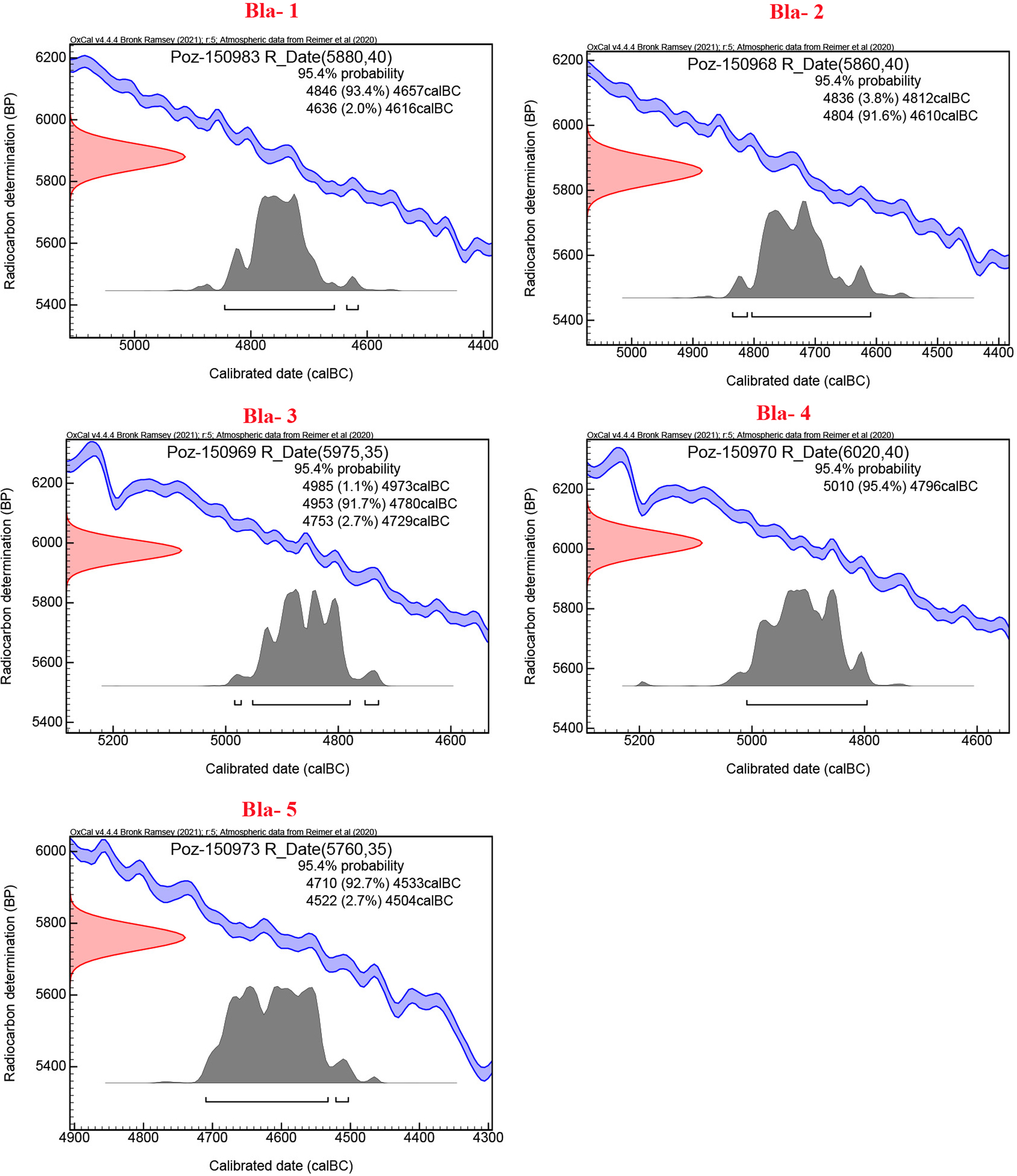
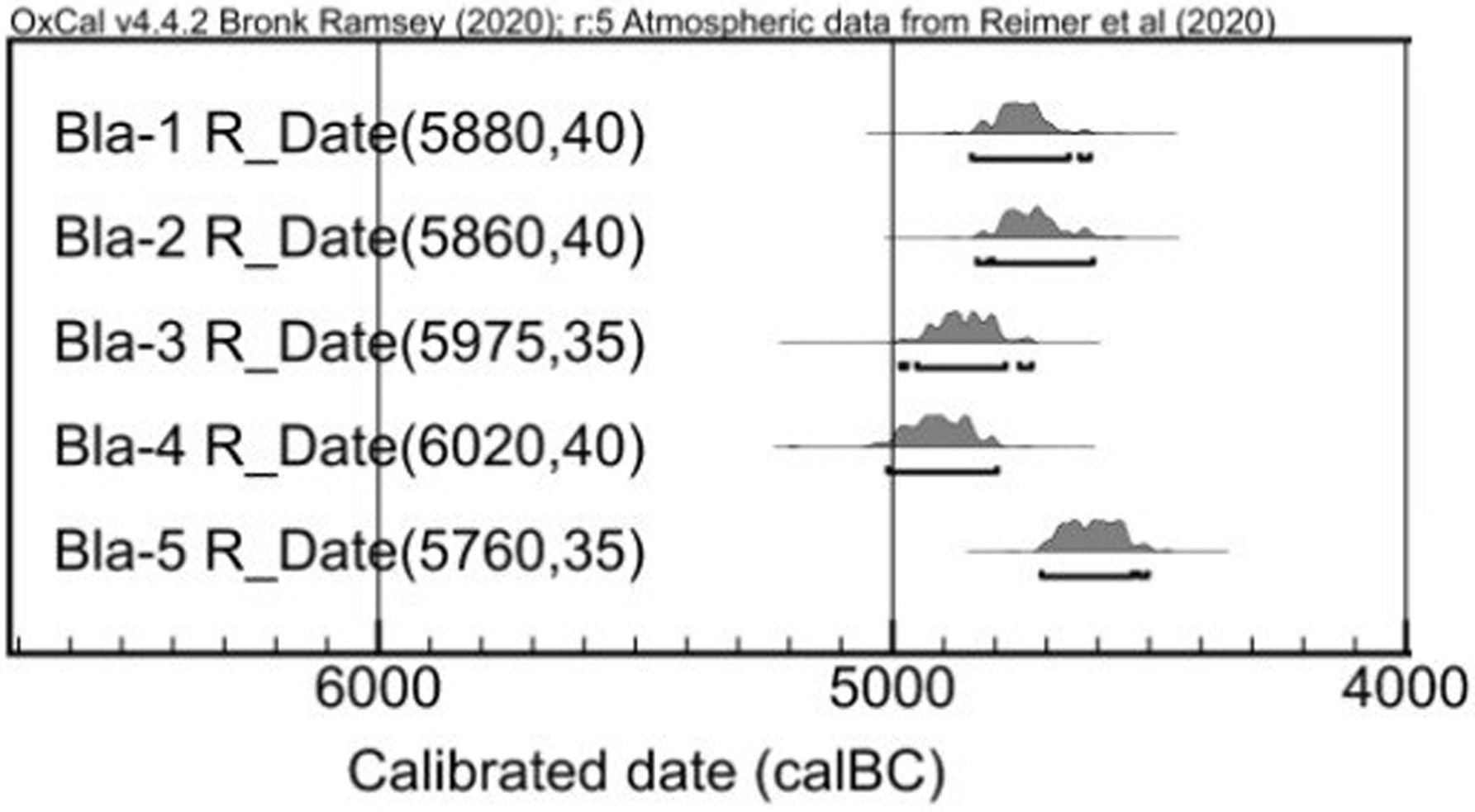
The extracted collagen was combusted to CO₂, which was then converted to graphite using the hydrogen reduction method with iron as a catalyst. The resulting graphite targets were pressed into aluminum holders and loaded into the MICADAS (MIni CArbon DAting System) AMS instrument. Radiocarbon measurements were performed using standard operating conditions, and the ratio of ^¹⁴C/^12C was determined for each sample. Stable carbon isotope ratios (δ¹3C) were measured to correct for isotopic fractionation and to assess the quality of collagen. All radiocarbon dates were calibrated using the OxCal v4.4 software (https://c14.arch.ox.ac.uk/oxcal/OxCal.html#) and the IntCal20 calibration curve (Reimer et al., Reference Renette and Mohammadi Ghasrian2020). Calibrated age ranges are reported at the 95.4% probability level (2σ). The calibrated results range from approximately 5000 to 4700 BCE (see Table 1; Figures 5 and 6), firmly situating the site’s occupation within the Dalma period. These radiocarbon dates, in conjunction with ceramic typology and stratigraphic observations, support the interpretation of Belachak 3 as a short-term seasonal settlement during this period.
14C radiocarbon dates of Belachak 3.

Calibrated radiocarbon dating for the Belachak 3.

Evaluation of Dalma period chronology based on absolute dating
As discussed above, it can be stated that even after several decades of research on the Dalma period, no consensus has yet been reached regarding its chronology. Reviewing various articles reveals significant confusion about the dating of this period. This lack of clarity stems from the absence of laboratory-based dating methods for many sites and the inadequate definition of Dalma ceramics. For the chronological study of the Dalma period, four types of sites can be identified:
-
1. Excavated sites with only relative absolute dating, such as Lavin Tepe and Namashir Tepe.
-
2. Sites with outdated absolute chronology, where newer analyses suggest inaccuracies, such as Dalma Tepe.
-
3. Sites associated with the Dalma culture, where some ceramics resemble Dalma types but do not represent the full Dalma assemblage (e.g., Surezha), or their ceramics significantly differ from Dalma (e.g., Soha chay and Kul Tepe).
-
4. Sites with all types of Dalma ceramics, along with updated absolute dating, such as Nadi Ali Tepe in central Zagros and Nahçivan Tepe in the southern Caucasus.
To date this ceramic culture, it is essential first to define the Dalma period and identify the characteristics that qualify a site as Dalma. The Dalma culture is distinguished by its ceramics, which are markedly different from those of neighboring regions. According to Hamlin’s classification (Hamlin Reference Hamlin1975), Dalma ceramics are categorized into four main types. If this entire ceramic assemblage is found at a site, it can be attributed to the Dalma culture. However, if only some types coexist with distinct ceramics, such sites should be considered related to Dalma, as Renette has effectively categorized into Dalma and Dalma-related sites (Renette Reference Renette2022).
During excavations at Kul Tepe (Abedi et al. Reference Abedi, Khatib Shahidi, Chataigner, Niknami, Eskandari, Kazempour, Pirmohammadi, Hosseinzaeh and Ebrahim2014), painted red ceramics were discovered from phase VIII, with an absolute date ranging from 5000 to 4500 BCE. Consequently, the site was attributed to the Dalma period by its excavator. However, no impressed wares were found, and the motifs on the painted ceramics differ significantly from Dalma ceramics. Therefore, Bahranipoor suggests that this site does not belong to the Dalma period (Bahranipoor Reference Bahranipoor2023). Soha Chay (Rahimi Sorkhani and Eslami Reference Rahimi Sorkhani and Eslami2018) is another site attributed to Dalma, with an absolute date in the last quarter of the 5th millennium BCE. However, Bahranipoor argues that the ceramics of this site correspond to Godin VII rather than the Dalma period (Bahranipoor Reference Bahranipoor2023). Another site attributed to the Dalma period is the Kalanan site. The excavator of this site stated that no painted pottery from the Dalma period was found, and only a few sherds with impressed decorations were discovered, based on which the site was attributed to the Dalma period (Saed Mucheshi et al. Reference Saed Mucheshi, Niknami, Mashkour, Fazeli Nashli and Firozmandi Shirejin2011). Contrary to the excavator’s opinion, since the majority of the pottery from this site significantly differs from Dalma pottery, it cannot be attributed to the Dalma period. Considering the ceramic evidence and absolute dating, this site should instead be associated with Godin VII.
Abedi, based on the chronology of Dava Göz, proposed a formative phase for Dalma and claimed that its origins should be pushed back to 5400/5300 BCE (Abedi Reference Abedi2023). While this hypothesis may be valid, as Abedi has not published images of the ceramics from this phase, it remains unclear whether they resemble Dalma ceramics from sites such as Dalma Tepe or Kul Tepe. If they are similar to those from Kul Tepe, they cannot be considered representative of Dalma’s formative phase. Abedi also references the findings from Idier Tepe and Ghosha Tepe to support his hypothesis. However, these sites lack absolute chronology analyses and may instead be categorized as Dalma-related sites.
The ceramics of Kul Tepe (Abedi et al. Reference Abedi, Khatib Shahidi, Chataigner, Niknami, Eskandari, Kazempour, Pirmohammadi, Hosseinzaeh and Ebrahim2014, Reference Abedi, Omrani and Karimifar2015), Ghosha Tepe (Derakhshi and Hejebri Nobari Reference Derakhshi and Hejebri Nobari2009), and Idier Tepe (Hessari Reference Hessari2019) suggest the possibility of a distinct ceramic culture in the eastern Lake Urmia region, which shared significant cultural connections with Dalma. While some ceramics resemble Dalma types, others show considerable differences.
Three sites—Nahçivan Tepe in the southern Caucasus, Belachak 3 southwest of Lake Urmia, and Nad Ali Beig in the central Zagros—have yielded complete Dalma ceramic assemblages and demonstrate cultural similarities. Their absolute chronologies provide reliable benchmarks for the Dalma period. The complete Dalma ceramic assemblage found at Belachak 3 confirms its association with this period, leaving no doubt about its attribution. Its results contribute to the absolute chronology of the Dalma period southwest of Lake Urmia, indicating its prevalence in this region during the first half of the 5th millennium BCE (approximately 5000–4700 BCE). However, since this site was temporarily occupied and lacks settlement continuity, it may not represent the earliest Dalma sites. Nevertheless, it confirms the presence of the Dalma culture in this area in the first quarter of the 5th millennium BCE. The chronology of Belachak 3 suggests that the Dalma culture was widespread in the northwest during the first half of the 5th millennium BCE, and the absolute chronology of Dalma Tepe (Hamlin Reference Hamlin1975) cannot be accurate. The radiocarbon results from Dava Göz also support this, as Pisdeli ceramics were common in the region during the second half of the 5th millennium BCE (Abedi et al. Reference Abedi, Omrani and Karimifar2015).
At Nahçivan Tepe, four occupational phases have been identified. Phases II and III, associated with the Chalcolithic and concurrent with the Dalma period, yielded radiocarbon dates of 4720–4529 BCE and 4945–4722 BCE, respectively. Although Phase IV was initially attributed to the Neolithic and compared to Hajji Firuz ceramics, later dating reassigned it to the Dalma period (Bahşeliyev Reference Bahşeliyev2021).
The results from Nadi Ali Beig are critical for Dalma chronology in the central Zagros. Radiocarbon analysis of 15 samples dates the Dalma occupation at this site to 5000–4600 BCE. Since approximately one meter of its lower layers remains undated, it has been suggested that the Dalma period in the central Zagros began around 5200/5100 BCE (Bahranipoor Reference Bahranipoor2023).
The ceramic assemblages from Belachak 3, Dalma (Hamlin Reference Hamlin1975), Nadi Ali Beg (Bahranipoor Reference Bahranipoor2023), and other Dalma sites indicate that while the four primary types of Dalma ceramics in the northern and central Zagros are similar, regional variations exist. For example, bichrome and polychrome ceramics, as well as black-on-buff wares found in the central Zagros, are absent in the northern Zagros. Additionally, although the overall ceramic repertoire of Dalma sites is consistent, the frequency of ceramic types varies across regions.
Conclusion
During the salvage excavation at the Belachak 3 site, evidence of the Chalcolithic period was identified. Based on its limited area, lack of architecture, and remaining cultural deposits, the site is interpreted as a temporary settlement. Some researchers suggest that small groups of nomadic shepherds seasonally migrated between scattered villages, acting as intermediaries in the distribution of goods such as obsidian and pottery. In light of this, Belachak 3 might have served a similar purpose. The discovery of several obsidian pieces at the site further suggests connections with the southern Caucasus region or Anatolia region.
A variety of pottery was recovered from the site, identified in Iranian archaeology as part of the Dalma culture. This suggests that the Belachak community consisted of nomadic people who occupied the region seasonally, likely during spring or summer. Given the area’s cold climate and snowfall, it is unlikely that the site was used during the winter months.
The radiocarbon results from this site indicate that the Dalma culture was prevalent in this region at least from 5000 to 4700 BCE. Considering the results from other sites, it can be suggested that this culture emerged in the late 6th millennium BCE, and the period from 5000 to 4500 BCE can be considered the time frame for the prevalence of the Dalma period in Iran. During this time, extensive cultural interactions existed between communities in the Central and Northern Zagros and the southern Caucasus, reflecting a broad network of cultural connectivity.

 Open access

