




On a warm evening in October 2024, I made my way to an artist-run music venue in downtown Cairo to attend an event advertised as “A Musical Evening: Shaykh Imam Sings On.” I took my seat among a few dozen others who had gathered to hear covers of songs by Shaykh Imam (1918–95), arguably the Arab world’s best known and most prolific oppositional singer-songwriter. Known for his musical settings of poetry by Ahmad Fu’ad Nigm (1929–2013) amongst others, Shaykh Imam rose to fame in late 1960s Egypt with a corpus of catchy songs commenting on current events and criticizing the failings of successive political regimes. Finding favor with leftist students and activists, he is remembered today as an icon of dissent, holding an almost mythical place in the imaginary of the Arab left (Fig. 1).
Shaykh Imam. From the collection of Dr. Esmat Elnemr.

The atmosphere at the gig was calm. The two resident musicians skillfully performed a selection of Shaykh Imam’s songs, staying true to the pared-back original instrumentation of ʿoud, percussion, and voice, and the audience seemed at ease. Most were individuals or groups of friends in their thirties, singing along and requesting their favorite tunes; a child sat in the front row, enraptured for a while before falling asleep on his mother’s lap; a couple in their early seventies clapped along. After a well-received performance of “Sabah al-Khayr” (Good Morning), a man raised his hand and gently interjected: “You know, I remember Shaykh Imam singing this song at a protest in Tahrir [Square] in 1972.”Footnote 1 The musicians and audience turned to him, keen to hear more. He reminisced at some length about his time as a student at Helwan University, where he saw Shaykh Imam perform, and the leftist student movement’s activities at the time. As he wrapped up his reflections, another younger member of the audience commented: “We heard this song in 2011 in Tahrir too!” Several people nodded. Indeed, Shaykh Imam’s songs were played in mediated versions in Tahrir and beyond, and performed live by bands including Eskendrella (est. 2000) and Bahia (est. 2011).Footnote 2 After some brief reminiscences about these days, the singer (and venue owner), cognizant no doubt of the increasing state repression of political activism, intervened: “Guys, let’s stick with Shaykh Imam shall we, we’re not here for politics!” and struck up to play the next song. But as the concert progressed, similar conversations and reminiscences flowed among the melodies, until the evening drew to a pleasant close.
Although Shaykh Imam died in 1995, his music continues to circulate, in both mediated and live forms at events such as the one described, at the monthly concerts put on in Old Cairo by the “Lovers of Shaykh Imam Association,” at performances in the Cairo Jazz club by bands such as Bahia, and at more intimate gatherings among friends. Contemporary performances of Shaykh Imam’s music often elicit the kind of reminiscences described above, where memories of the personal and political interweave, and historical moments are connected by a sonic thread. Different generations have distinct but interconnected associations with Shaykh Imam and his music. His songs are particularly “sticky,” to use Sara Ahmed’s concept; in their repetition, they accumulate affective value, attaching to particular bodies and ideas.Footnote 3
In this article, I explore how and why Shaykh Imam’s songs became so “sticky” and stuck so effectively to one particular group, that is, his primary and original fanbase: those active in leftist/student politics in 1960s and 1970s Egypt. Based on ethnographic fieldwork conducted in Cairo between 2015–2024 (more on this below), I explore the deeply entwined relationship between Shaykh Imam, his music, and these veteran activists to better understand the singular place he holds in the leftist imaginary. As veteran activists told me, his songs not only helped them process the 1967 defeat, which marked the end of the era of Gamal Abdel Nasser’s (r. 1954–70) pan-Arab state socialist dream, but also helped them make sense of the seemingly incomprehensible Anwar al-Sadat years (r. 1970–81), when they were positioned as enemies of the national project. My interlocutors were forced to renegotiate their place in a fast-changing nation that seemed to have less and less space for them, and Shaykh Imam’s music was central to this renegotiation, enabling his listeners to perform national belonging of a more intimate kind. These veteran activists’ embrace of this singer as their mouthpiece was central, I argue, to bolstering their vision of themselves as speaking for the population at large, and their claims – amidst many other competing claims – to be the authentic representatives of the Egyptian nation. However, such claims to speak for “the masses” are rarely straightforward and, by unpacking some of the oft-repeated claims made about Shaykh Imam, I consider how liberatory resistance can be entangled with regressive elements.
Listening to the Arab Left
In recent years, there has been increasing scholarly interest in histories of the Arab left. Building on earlier works by Tareq Y. Ismael, Ahmad Abdalla, and Selma Botman, scholars have recently sought to go beyond documentation of key figures and events, beyond analytical binaries of success and failure, and beyond leftists’ relationship with the state.Footnote 4 Fadi A. Bardawil, for instance, explores the relationship between theory and praxis in a Lebanese Marxist organization, while the editors of the volume The Arab Lefts: Histories and Legacies, 1950s–1970s call for increasing attention to be paid to the transnationality of Arab leftist movements and how the economy shapes these movements.Footnote 5 Recent roundtables in IJMES and the Arab Studies Journal on histories of the Arab Left similarly highlight the global nature of these movements, as well as the need to historicize and deprovincialize left histories.Footnote 6 The role of cultural or artistic practices associated with these political movements has been less explored, although they were a key feature in their sustenance and development. Important exceptions are Caroline Rooney’s work on culture of the post-2011 Arab left, Sune Haugbolle’s work on Lebanese musician Ziad Rahbani and the cultivation of liberal and leftist subjectivities, and writings on Shaykh Imam.Footnote 7 Marilyn Booth and Dalia Mostafa, for example, highlight Shaykh Imam’s role in sustaining political action, and Andrew Simon addresses the centrality of cassette tapes in the circulation of his music, enabling the production of narratives that counter those of the state, as well as noting the post-2011 revival of Shaykh Imam’s music.Footnote 8 Building on these largely text-based analyses of Shaykh Imam’s significance, with their fine-grained analysis of lyrics and written sources such as magazines and memoirs, I focus more on understanding the social life of his music ethnographically and through close listening to the music itself beyond the lyrics. Such an approach is necessary, I argue, to better understand the singular place he continues to hold in the leftist imaginary, and the substantial role played by the arts in social movements more broadly.
Literature on self-conscious resistance music, and music within social movements, has tended to romanticize it as a straightforward voice of the masses, as an epiphenomenal tool for mobilizing oppositional politics and ideology, or as merely reflective of existing oppositional discourses.Footnote 9 In contrast, David McDonald, writing about Palestinian music, convincingly argues that “such expressive media should be seen as constitutive fields where political and ideational effects… are not only expressed, but given materiality.”Footnote 10 This was tangible in much of the scholarship on the relationship between arts and politics written in the aftermath of the revolutionary moment of 2011, when the power of music and poetry was palpable and central to a sense of political possibility, its liberating potential seemingly self-evident.Footnote 11 During this time, the paradigm of “resistance” was in vogue for framing understandings of music and politics. But as the widespread feeling of possibility crumbled away, and counterrevolutionary repression increased, scholars became increasingly skeptical of this framework, not least because it risks us getting stuck in what Lila Abu-Lughod has called the “romance of resistance,” finding and celebrating an oppositional stance but stopping there, which actually serves to obscure the broader power dynamics at play.Footnote 12 I build on work that has questioned this scholarly attachment to “resistance” and moved in new directions, as Laudan Nooshin has done in relation to Iranian music and Ted Swedenburg and Polly Withers have done in relation to Palestinian music.Footnote 13 Instead of understanding Shaykh Imam’s importance as attached to his alleged ability to move the masses to political action (put simply, he did not; he remains unknown to the majority of Egyptians outside relatively small circles), or taking at face value his position as an authentic voice of the people, I suggest that thinking about Shaykh Imam’s reception and the myth-making that accompanies his enduring legacy enables other stories to emerge, especially in terms of music’s role in sustaining social movements and the performativity of nation and resistance itself.
As noted, my approach is largely ethnographic. After being introduced to a few veteran Shaykh Imam fans in 2015 through mutual acquaintances, I went on to conduct fieldwork intermittently with them and their circles in Cairo until 2024.Footnote 14 We attended concerts and rehearsals together, listened to recordings, and chatted. I also conducted more formal interviews and oral histories with some. All had been students in Egypt in the late 1960s and 1970s and were involved to varying degrees in leftist politics at the time. Most could be considered middle-class muthaqafīn, some upwardly mobile, having benefitted from Nasser’s education reforms, and are now largely retired doctors, engineers, lawyers, and journalists, often active on the side as poets or writers. Some left activism behind, while for others it remains a central part of their identity. It is worth noting that the vast majority of people I spoke to from this generation, encountered at events, and those most enthusiastically sustaining the memory of Shaykh Imam by partaking in public-facing activities – such as fan groups, events, and publishing books or articles about the singer – were men. I spoke with several women who remain deeply attached to the music of Shaykh Imam, but they were somewhat loath to reminisce and did not participate in the public-facing world of Shaykh Imam fandom. We might speculate, with Arwa Salih’s poignant memoir of her experiences of misogyny in leftist activist circles in 1960s and 1970s Egypt in mind, that the memories his music conjures are more ambivalent for veteran women activists.Footnote 15 The fact that what follows centers entirely on male voices perhaps reveals something about the gendered nature of the movement, an issue ripe for further research.
In terms of my own position, I was generally welcomed as an interested outsider, with my interlocutors approving of a British student studying at Oxford researching a singer they felt never quite received his dues. I was increasingly accepted as my own familiarty with Shaykh Imam’s music grew, and my interlocutors learned I was studying Arabic-style violin with the respected violinist ʿAbduh Daghir, enabling me to participate musically in gatherings. Indeed, my ethnographic focus is combined with attentiveness to the music itself, beyond the lyrics that typically take analytical precedence. This is one reason that I focus this article on Shaykh Imam (or rather, what we might call “the cult of Shaykh Imam”), instead of the more oft-discussed “Imam-Nigm duo.” Shaykh Imam did work extensively with Egyptian colloquial poet Ahmad Fu’ad Nigm, but he also composed for dozens of other poets from across the Arab world.Footnote 16 These poems, I believe, are brought to life through Shaykh Imam’s compositions and performances, taking on a life of their own beyond the original text. Also, he and his songs have a unique afterlife, as evidenced by the numerous fan groups, Facebook pages, and cover bands that dedicate themselves singularly to Shaykh Imam. Thus, I use the phrasing of my interlocutors by referring to these set poems, by Nigm and others, as “Shaykh Imam’s songs/lyrics.” Now, let us turn properly to these interlocutors, after a quick word to introduce the shaykh himself.
Waking Up from the Dream of Nasserism
Imam Muhammad ʿIssa was born in 1918 in Abu Numrus, Giza, to humble beginnings.Footnote 17 An eye infection caused him to lose his sight as an infant, and he began studying at the local kuttāb when he was six years old. Imam memorized much of the Qur’an and learned the fundamentals of tajwīd, as well as some Sufi poetry. His father wanted to send him to al-Azhar in Cairo but did not have the means, so instead sent him to the Shari`a Association (al-Jamʿiyya al-Sharʿiyya) located just behind al-Azhar, which trained underprivileged children to become imams or muezzins. Here, Imam completed his memorization of the Qur’an and had the title “Shaykh” bestowed upon him accordingly. However, he was expelled before completing his studies, after one of his teachers caught him listening to a radio broadcast of Shaykh Muhammed Rifaʿat, whose recitation style was considered by some too musical to be permissible.
Shaykh Imam subsequently recalled that this expulsion really felt like the beginning of something rather than the end. He began to spend more time in cafes, listening to the music of popular composers and singers such as Kamil al-Khulaʿi (c.1879–193?) and Zakariyya Ahmad (1896–1961) on the radio, and eking out a living as a reciter and singer of secular song at weddings. He began composing his own tunes and met Darwish al-Hariri (1881–1957) and Zakariyya Ahmad, who helped him learn ʿoud and musical modes. He was introduced to the poet Ahmed Fu’ad Nigm in 1962, and the pair began working closely together. They became quite well-known around Shaykh Imam’s local Cairene neighborhood of al-Ghuriyya, but it was in 1967 that they shot to prominence with the song “al-Hamdulillah” (Thank God).Footnote 18 It was a near-immediate response to a political event: Egypt’s defeat in the 1967 Arab-Israeli war. Fearing a public backlash to news of the defeat, President Nasser had initially announced the battle as a victory for Arab forces. But as the full scale of the defeat emerged and the regime and military’s astonishing mismanagement of events became apparent, the Egyptian public responded with anger. As well as the loss of land, the defeat signaled the end of the dream of pan-Arabism and the collective liberation of Palestine, and citizens began to question the proud Arab nationalist rhetoric that had dominated Egyptian media, which seemed increasingly removed from reality.Footnote 19 As Joel Gordon suggests, the 1967 defeat “upended the glorious national project, leaving a proud, forward-looking post-colonial people suddenly mistrustful of grand rhetoric (key elements of which had been sung by their beloved singers).”Footnote 20
For many of the veteran activists I met, hearing Shaykh Imam’s music, “al-Hamdullilah” in particular, was inextricably linked to the beginning of their disillusionment with the Nasser regime and their entry into the world of student politics. Sami, for example, had been a student in the sciences faculty at ʿAyn Shams University in Cairo in the late 1960s. He went on to work in a company and is now retired, living within rather modest means. As we sat in his small apartment in Bulaq, a working-class neighborhood in central Cairo, surrounded by overflowing bookshelves and hand-drawn portraits of movie stars and singers, he recalled hearing the song for the first time. Picking up a well-thumbed copy of Nigm’s collected poems from the coffee table beside him, he flicked through to find the lyrics to “al-Hamdulillah” and recited the opening lines, sung to Shaykh Imam’s melody. “This,” he told me, “changed Egypt. When we heard this, it radicalized students and made us rebel, and recognize Nasser for the dictator he was.” For Sami, it was the beginning of a life of political activism.
The song offers a cutting critique of Nasser’s responsibility for the defeat. Nigm’s lyrics begin by sarcastically imitating the victorious tone with which the battle was initially reported, but Shaykh Imam’s melody, set over a sparse drumbeat, sounds anything but victorious: the first two lines are sung largely on just one note, only occasionally dropping up or down a tone. His vocal tone is likewise flat and measured, highlighting the utter mismatch between Nasser’s rhetoric and the desperate reality of the situation. The funereal tenor of the song is quite distinct from the light-hearted sarcasm of much of his later repertoire. The song goes on to critique the increasing self-serving nature of Nasser’s regime and the emptiness of its rhetoric before accusing him of being a traitor.
Sami, like many others, framed his hearing of this song in terms of “waking up from the dream.” Although students had been elevated in Nasser’s state-building project, the regime simultaneously took measures to politically and administratively control the universities and depoliticize the student body.Footnote 21 The regime also enacted sweeping repression of leftist intellectuals.Footnote 22 Those facing the harshest repression were also those who had bought into Nasser’s dream wholeheartedly, which was in part why the defeat came as such a shock: the crumbling of Nasser’s legitimacy was the crumbling of their worldview. Shaykh Imam took center stage as this stunned disillusionment turned to anger.
“Hatta ya Batta” (lyrics by Sayyid Higab) is another song from this period that my interlocutors often mentioned, noting that it was the first song to explicitly condemn military officers for the 1967 defeat.Footnote 23 The title is a phrase from a children’s rhyme used in games; Shaykh Imam and his lyricists frequently used poetic and musical forms from children’s songs and nursery rhymes, in keeping with the colloquial lyrical and musical style for which they were known. Here, the words of the nursery rhyme are set to a slow, simple ascending scalic pattern in the ḥijāzkār mode, which gives it a melancholy, slightly ominousness feel: “Papa’s coming, carrying his bag / What’s in his bag? / There’s swindling, politics, and trickery” (Ḥaṭṭa yā baṭṭa yā daʾn al-ʾuṭṭa / bābā gāy w-shāyil al-shunṭa / eh fī-l-shunṭa? / fīhā mā fīhā ghishsh w-būlītīkā w-āwanṭa). We learn that Papa, who had failed at school, still managed to become an army officer, an ambassador, and then a minister, staying in power purely through the brute force of his nabbūt (stick). Whereas in the opening, the ominous music contrasts the innocence of the nursery rhyme lyrics, here the shift to a jolly nursery-rhyme tune in the more uplifting melodic mode of rāst contradicts the violence of the imagery, both times creating a jarring discomfort that serves to accentuate the meaning of the song. In contrast to Imam’s measured tone in “al-Hamdulillah,” here he wails emotively as the tune ascends.
The direct critique of Nasser and his regime presented in these songs was unprecedented. Before 1967, poets, musicians, and artists had largely been put to the service of Nasser’s nationalist project, writing and singing his rhetoric of Arab socialism. Singers such as Umm Kulthum (1898-1975) and ʿAbd al-Halim Hafiz (1929-77), and poets like Salah Jahin (1930-86), had embraced and were embraced by Nasser’s project, gladly generating patriotic and nationalistic songs. Saʿd, a veteran activist who studied at Helwan University and described Shaykh Imam’s songs as central to his political awakening as a student, explained that, to him, the artistic duo of ʿAbd al-Halim and Salah Jahin represented the pre-1967 moment and Nigm and Imam represented the post-1967 moment: “The first pair were building a statue for Nasser, and the second pair were tearing it down.” There were precursors to Shaykh Imam’s critical songs, for example in the more oblique critiques of the Nasser years found in Naguib Mahfouz’s 1966 novel Tharthara Fawq al-Nil (Chitchat on the Nile) and Sonallah Ibrahim’s semi-autobiographical 1966 novel Tilka al-Ra’iha (That Smell). And as time went on, especially after the redemption afforded by Egypt’s 1973 military victory, explicit cultural critiques became more widespread. But at the time, Shaykh Imam’s songs were heard as uniquely striking in their audacity and immediacy.
During the Nasser years, one other song solidified Shaykh Imam’s popularity with the student movement and leftists: “Guevara Mat” (Guevara Died, 1968).Footnote 24 The song announces the death of Che Guevara, the Argentinian Marxist revolutionary guerrilla leader and icon of leftist revolutionary action across the world. The song is a funeral dirge. Imam, often joined in chorus by Nigm and percussionist Muhammad ʿAli, as well as audience members, plaintively reads out an announcement: “Guevara’s dead / Guevara’s dead / That’s what the latest news on the radio said” (Gīfārā māt, Gīfārā māt, ākhir khabar fī-l-rādyūhāt). Shaykh Imam forgoes his usual background ornamentation on the ʿoud to let the declaration ring, playing only in the gaps between the lyrics. The use of the melodic mode sabā, known for its mournfulness, underscores the funeral feel, as does the seemingly eternally descending motif. There is no rhythm per se; the drum plays only on each beat, evoking a funerary march. In mourning the death of an international revolutionary folk hero, Imam and Nigm situate themselves politically: no longer were they just being critical of the Nasser regime’s handling of the defeat, but they are extolling the virtues of armed struggle. The song also situated them within a global current of activism: 1968 was a decisive year for students, workers, and left-wing activists across the world, and the song linked a local struggle to a global one. However, one might still understand the song as aligning with the ideology of Nasser’s “dream” – as highlighting the need to fight for Arab socialism and oblique support for Nasser’s project framed in a wider critique. Thus, Shaykh Imam’s repertoire at the end of the Nasser era was in line with leftist and student movements’ overall ideology at this time: critical of the regime and the imperfect application of its purported socialist ideals, but still aligning themselves with Nasser’s broader project. Shaykh Imam’s listeners may have woken up, as Sami put it, but they remained invested in the dream itself.
The Egyptian left embraced Shaykh Imam wholeheartedly, and the veteran activists I spoke to associated him specifically with their coming to terms with the defeat and the upending of Nasser’s project. “It was the truth of it,” suggested Husayn, that distinguished Shaykh Imam’s music. Husayn now runs a successful publishing house in Cairo, but during his time at university in the early 1970s, he had been heavily involved in theater. It was through these circles that he first came to hear Shaykh Imam. His songs offered a cutting critique of the broken system, their sarcasm appearing as the antidote to years of playing by the rules; a rejection of the high style that had proved to be nothing but cover for empty words. The colloquial, confrontational lyrics, combined with catchy melodies played in simple arrangements, stripped of any obfuscating rhetoric or complex musical flourishes, were heard as an honest, authentic acknowledgement of the direness of the situation. There was no pretense that people should struggle on in the same vein, nor was there a feeling of defeat. “Shaykh Imam’s songs helped us process the defeat,” Sami explained to me, and they did so in a distinct and powerful way. Put differently, these songs helped mediate this generation’s contradictory relationship with Nasser and memories of the Nasser years in general. Shaykh Imam and Sami both spent time in prison towards the end of Nasser’s rule, the former on trumped-up drug charges (though no doubt in reality for his oppositional songs), the latter a victim of Nasser’s outright repression of Communist Party activity. Discussing the Nasser years with Sami, he became quiet and reflective. Eventually, with a look of disgust on his face, he said sharply: “Nasser and Hitler, they were the same.” However, his face softened as he went on: “but Nasser, he was our father….”
By the early 1970s, the current of student activism that blossomed in 1968 had gained momentum and was “beginning to develop into a fully-fledged movement.”Footnote 25 “The students are back,” as Shaykh Imam, recently released from prison, sang in “Ragaʿu al-Talamza” (1972, lyrics by Nigm), and they meant business. My interlocutors recalled these years with an excited nostalgia. New cultural groups and societies were formed within the universities, hosting leftist poets, playwrights, and performers. This renewed cultural life on campus, tied up as it was with left-wing politics, was key to opening up a space of political possibility and sustaining an active political life among the student left.
And there was certainly a lot to fight for. In the early 1970s, leftists dominated campuses and were at the forefront of an active and popular oppositional movement. But as the decade wore on, it came to be understood by my interlocutors as a bleak period. When Anwar al-Sadat replaced Nasser, he implemented sweeping reforms, including a gradual abandonment of state socialism, making peace with Israel, a political realignment with the west, and policies of economic infitāḥ (opening) with an associated rise in consumerism. My interlocutors recalled feeling like the country was moving in a direction they opposed. In contrast to the privileged discursive position they had held within Nasser’s vision of nationhood, under Sadat they were increasingly marginalized. Shaykh Imam sharpened his performative power during these years, steadfastly continuing his critique but using subtly different tools given the very different context of the Sadat years. In doing so, he helped his listeners “make sense of a senseless Sadat,” as one veteran activist put it. He did this, I suggest, through cultivating two complementary sides to his repertoire and persona: oppositional on the one hand, patriotic on the other. For while his fans were rejecting Sadat’s vision of Egyptian society, their primary frame of reference nonetheless remained “the nation.” Shaykh Imam’s ability to express patriotism while still standing outside the establishment-controlled narrative was an important balancing act, and key to his appeal.
Shaykh Imam the Oppositionist, Shaykh Imam the Patriot
The most immediately apparent aspects of Shaykh Imam’s oppositional stance are the lyrics he selected. My interlocutors recalled the process by which he turned poems into songs. Poets would sit with him, recite a new poem they had been working on, and, if moved to, the shaykh would begin noodling on his ʿoud, a melody gradually taking shape. It was a quick and public affair; friends and fans would be sitting around, listening and sometimes commenting or making suggestions. It was also an iterative process, as the poet would sometimes alter the poem to fit the emerging tune. In the 1970s, the lyrics Shaykh Imam chose to put to song addressed various aspects of Sadat’s politics and the resulting rising social inequalities. “Ful wa Lahma” (Beans and Meat, 1973[?], lyrics by Nigm), for example, sarcastically responds to Sadat’s announcement that people should not complain about the rise in the price of meat because meat is unhealthy, so people should be eating (cheap) beans instead anyway. The song highlights the absurdity of Sadat’s claims and the way he blamed the poor for their own misfortunes. Other songs took aim at Sadat’s policies “opening” trade with western countries, realigning Egypt’s political allegiances in favor of the west (and obliquely Israel) while cutting ties with the Soviet Union and other Arab countries. “Sharaft ya Nixon Baba” (Welcome, Papa Nixon, 1974, lyrics by Nigm) spotlights the hypocrisy of Sadat’s hosting of US President Nixon, whose foreign policy had subordinated Arab states in favor of Israel.Footnote 26 “Carter ya Nadl” (Carter you Weasel, lyrics by Nigm, 1979/80) similarly lambasts Nixon’s successor Jimmy Carter for his role in the Camp David Accords, in which the leaders of Egypt and Israel signed a peace treaty in 1979. “D’Estaing” (1975), meanwhile, comments sarcastically on the budding friendship between Sadat and conservative French President Valery Giscard d’Estaing.Footnote 27 “It was sarcastic times,” one veteran activist told me. For the activist and his friends, the most fitting response to the absurdity of Sadat’s farcical claims was sarcasm shaped into biting social critique, turning the regime’s words back on them.
But it was not purely the lyrics to which people responded. Shaykh Imam’s performative presence was central to the power of his music, and these oppositional songs in particular. Take “D’Estaing,” for example.Footnote 28 The song opens with a simple maqsūm beat sitting behind rhythmic chordal strums on the ʿoud – a technique much better suited to the guitar. The ʿoud is not designed to be strummed chordally, so to create this sound Shaykh Imam had to strum the instrument hard, with comic excess – a mocking musical nod to European chordal guitar style, perhaps. He brings in the chorus with a nasal mock-French accent, which juxtaposes the colloquial Egyptian phrases he sings. As he launches back into his strumming, we hear (on various home-made recordings) the audience members take over the melody, whilst he comically interjects French phrases such as “oui oui,” “sil-vous plait,” “ooh la la,” and a falsetto “ha haaa!” In contemporary performances, audience members often add these phrases, central as they are to the feel of the song. Shaykh Imam musically emphasized juxtapositions set up in the lyrics – between rich and poor, western and Egyptian, honest and dishonest. This audience interaction was another key feature of his performative appeal, as audiences were literally engaged in performing a critique of these characters of officialdom in the form of communal singing (a common feature of music in social movements globally). Shaykh Imam represented, to the leftist activists I met, the exact opposite of the regime.
Shaykh Imam cultivated this oppositional aura in other ways too. His use of space was central. He refused to play state venues or give ticketed concerts, performing instead within universities (Fig. 2), political party headquarters, and people’s homes (Figs. 3–5). With relish, people recounted stories of the various ways they successfully evaded security to smuggle Shaykh Imam into their universities in the 1970s – from signing him in as a student under a false name to pushing past security by sheer force. This sense of taking a space by force gave his fans a sense of ownership and power. We can see Shaykh Imam’s central place in sustaining an active cultural life on campus, which was directly connected to sustaining political action more broadly.
Shaykh Imam performing at an event supporting Palestine in the Faculty of Arts, Cairo University. Exact date not known; c. early 1970s. From the collection of Dr. Esmat Elnemr.

From left to right: Dr. Esmat Elnemr, Shaykh Imam, and Muhammed ʿAli. From the collection of Dr. Esmat Elnemr.

Shaykh Imam performing at the home of a fan in Tunisia. From the collection of Dr. Esmat Elnemr.

Shaykh Imam performing at the home of a fan in Cairo. From the collection of Dr. Esmat Elnemr.

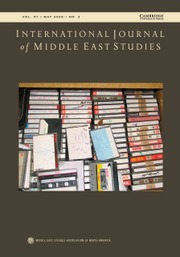
The fact that his music was never commercially produced and he broadly refused to engage with state media outlets lent weight to his anti-establishment credentials. Asked if he would ever consider using mass media to reach a wider audience, Shaykh Imam said he would “refuse unconditionally,” claiming: “my mass media are the masses.”Footnote 29 He was apparently offered a recording deal with New Orient Artistic and Film Production company, as well as well-paid ticketed concerts, but refused, stating, “I sing for the poor and needy” and repeating what his teacher Darwish al-Hariri had allegedly told him: that music was a calling, not something to make money from.Footnote 30 As Simon has noted, newly emergent cassette technology meant that Shaykh Imam’s fans were able to record his spontaneous performances and produce tapes relatively cheaply and easily.Footnote 31 Yet unlike other artists similarly absent from state-controlled airwaves, Shaykh Imam’s cassettes were not available commercially, even from the many sidewalk stalls selling (pirated) cassettes. “Just owning his tapes could get you arrested!” Dr ‘Ala, who befriended the artist in the early 1970s while a medical student, recalled with a smile. Others similarly reminisced fondly about the danger (and seeming allure) of these illicit tapes. Recordings of Shaykh Imam’s music were obtainable solely through existing personal networks of friends, and were shared, lent, or copied until the song became barely audible above white noise, as opposed to being bought and sold (Fig. 6).
A personal collection of home-made recordings of Shaykh Imam. From the collection of Dr. Esmat Elnemr.

In this sense, listening to Shaykh Imam’s music was a marker of distinction – exclusive by its very nature. Farid, a now-retired doctor who was a student at Alexandria University in the late 1960s, recounted how he was appointed by a group of students in 1967 to source a tape of “al-Hamdulillah” after receiving a written copy of the lyrics. The only way to do this, they decided, was from the singer himself. So, Farid made a pilgrimage of sorts to Cairo and got a tape of the song directly from Shaykh Imam. However, upon returning to Alexandria, he discovered that the tape did not contain the voice of Shaykh Imam, but that of Shaykh Mahmud Subh (1898–1941), a respected reciter-turned-musician with whom Shaykh Imam had learned music.Footnote 32 Presuming it was an innocent mistake, back to Cairo Farid went, where Shaykh Imam explained to the disgruntled student that giving him the Mahmoud Subh tape had been intentional: he should get a sense of the singer’s musical lineage before he would be ready to listen to the man himself. Having proved his dedication, Farid was finally given the copy of “al-Hamdulillah” and returned to Alexandria. As well as giving a sense of Shaykh Imam’s wicked sense of humor, another central part of his mythology, this story highlights the fact that Shaykh Imam seemed uninterested in making money from his art, happy for his music to circulate freely outside the culture industry and what was perceived as an increasingly consumerist society.
Leftist students and activists embraced these aspects of Shaykh Imam’s persona, and he certainly played up to it. He was seen as an inspiration: “We could have all learned something from him. He didn’t care about being arrested, he just said what needed to be said,” one veteran activist told me, referring to the artist’s repeated incarcerations at the Citadel prison. Indeed, his very being seemed to embody dissent and resistance. “His best songs were written in prison!” his fans almost universally claim, yet when I asked them which these songs were, nobody could quite remember. This is not to say they were not, it is just important to remember that this oppositional aura is as much a construction of his fans as it was inherent to his music and persona.
However, there was another side to Shaykh Imam’s persona and repertoire that was central to his appeal among leftists. Many of his best-loved songs are straightforwardly patriotic and nationalistic – pro-Egypt rather than anti anything. They contrast, or rather perfectly complement, the specificity of the more often-discussed oppositional songs introduced above, in that they speak in universals about loving Egypt. Likewise, I found that my interlocutors generally tempered their stories of Shaykh Imam’s powerful oppositional aura or bad-boy persona with statements about how he loved his country and was authentically “of the people”: ibn al-balad (a salt-of-the-earth guy) or ṣawt al-shaʿb (voice of the people).
In the calm, ponderous song “al-Awila Baladi” (My Country First, 1967/8?), for instance, Shaykh Imam sings Nigm’s lyrics straightforwardly: “My country first; my country second; my country third” (al- Āwwila baladī, wa-l-tāniyya baladī, wa-l-tālta baladī). And in “Masr Yama ya Bahiyya” (Beautiful Egypt, 1969/70?, lyrics by Nigm), he praises Egypt, its land, and its people. Other patriotic songs of his are more rousing, pro-Egypt, and anti-injustice in an abstract way. “Ya Masri Qumi” (Egypt Rise Up, 197?) is one of Shaykh Imam’s most fondly remembered songs: “Egypt, rise and pull yourself together / I have all you could ever wish for” (Yā Masr ʾūmī wa-shiddī al-ḥīl / kull illī titmannīh ʿandī), go the lyrics by Nagib Shihab al-Din. It is a call to arms, a declaration that the power should be with the people not the regime, but it does not critique a specific regime or leader. Likewise, “Shayyid Qusurak” (Build your Palaces, 197?, lyrics by Nigm) is another stirring number that speaks in universals about throwing off the shackles of oppression and the masses revolting. My interlocutors said that listeners at university demonstrations often requested this song at both the beginning and end of each performance. Such songs make grand claims of national pride, rather than focusing on specific people and places central to the songs discussed above. Shaykh Imam’s fans heard something different in his nationalistic songs, as opposed to say Umm Kulthum’s. Magdy, a veteran student activist and now retired doctor, explained that “for Umm Kulthum, Egypt is the pyramids, the Nile, civilization… But for Imam, it’s the gallabiya… it is people not things.”Footnote 33 Similarly, many of my interlocutors felt that Shaykh Imam’s power lay in not affiliating with any particular party: “He sang for all of us… if he sang, say, just for the Trotskyists, the others would not hear. But he sang for all people,” Magdy explained.
These patriotic songs were serious, and free from mocking sarcasm or double entendre. “They were like our own national anthems,” suggested Magdy, who regularly heard Shaykh Imam perform in Cairo’s leftist Hizb al-Tagammuʿ (National Progressive Unionist Party) headquarters during the 1970s. Crucially, listeners heard the full repertoire of his songs. The combination of patriotic numbers and oppositional ones “made you love your country in a different way,” according to Girgis, who became involved in left-wing politics in the 1970s. He explained that in Shaykh Imam, he and his fellow activists did not hear empty nationalism. “His national anthems were more like saying, ‘Screw this country, screw her. But we love her; we can make her better.’” While acknowledging its flaws, “the nation” remained central. As Gennaro Gervasio argued, this generation of activists “placed emphasis on the national or patriotic question (al-qaḍiya al-waṭaniyya)” rather than “the social question (al-qaḍiya al-ijtimaʿiyya).”Footnote 34 Shaykh Imam’s songs made an alternate, and more equitable vision of nation seem possible. As Tom Nairn suggests, nationalism is inevitably Janus-faced: it is simultaneously an ideal of enlightenment and brutally interventionist.Footnote 35 Something similar can be seen here under Sadat, where nationalism becomes a specter, but one responds not by leaving the nation entirely, but by insisting on its potential enlightening character. Nationalism is always one of gaps, paradoxes, misfits, and sometimes overt challenges, as Partha Chatterjee argues, but it is nonetheless exceedingly difficult to stand outside it.Footnote 36
Despite their commitment to the national project, Sadat increasingly attempted to position leftists outside, or even as enemies, of the nation. He held student activists indirectly responsible for the 1977 bread riots, though their role was actually “relatively minor.”Footnote 37 Sadat’s “obsession with the ‘communist threat’” intensified throughout the 1970s, and the radical left became the primary focus of state repression, enduring waves of brutal arrests.Footnote 38 During these years, leftists were not only pushed out of official state-led imaginings of the nation, but found themselves competing with other unofficial imaginings too, most notably Islamism. Within universities, the reformist wing of the Islamist movement overtook the left as the major opposition – aided by Sadat, who encouraged the formation of Islamic student groups to help dissolve the threat of the left.Footnote 39
Sadat armed Islamist students; indeed, my interlocutors recalled their Islamist counterparts tearing down their wall-posters and engaging them in fights on campus. It became near impossible to host cultural events without disruption. Several of my interlocutors recalled, rather bemused, that although the Islamists explicitly opposed Shaykh Imam’s presence on campus, in the beginning they made overtures to try and co-opt him – he was after all a shaykh, and still regularly recited the Qur’an alongside performing secular songs. “It didn’t work, of course,” chuckled Girgis. “They could only agree with about three or four of his songs, and they considered the rest haram!” Like the left, the Islamists opposed many of Sadat’s policies, his peace treaty with Israel in particular, and what many felt to be an undemocratic nationalist project spearheaded by elites. But as Charles Hirschkind notes, their critique was “not oriented toward militant political action or the overthrow of the state,” but rather “a normative ethical project centred upon questions of social responsibility, pious comportment, and devotional practice.”Footnote 40 This proved a compelling alternative to many Egyptians, and the left rapidly lost support to the Islamist movement.
As the left were increasingly marginalized, the need to prove their place in the nation – to themselves and others – grew more pressing, as belonging to the nation must be performed. As Kelly Askew notes with regards to music and Tanzanian nationalism, “the power entailed in trumpeting one version of reality… over others… requires work, continual re-enactment, unremitting performance.”Footnote 41 Shaykh Imam’s songs were a key means through which his fans performed this alternative kind of national belonging. Their embrace of Shaykh Imam as their mouthpiece was central to reinforcing their vision of themselves as speaking for, and from, the population at large, thus positioning themselves as the true representatives of the nation. This, in turn, was central to giving this group confidence that their will embodied the wants and desires of the people, which was a big part of their political project.
Authenticating Shaykh Imam and Performing the Nation
This brings us to consider a key feature of Shaykh Imam’s mythology, an insistence among my interlocutors upon authenticating him. Certain aspects of his musical style and features of his biography were repeatedly brought up in the context of emphasizing that Shaykh Imam was truly “of the people”: beloved by all of Egypt, including workers and peasants, by virtue of his humble background and the simple, colloquial nature of his music. Claims of authenticity are, of course, bound up with broader negotiations of one’s own perceived position in the world; they are performative. As Allan Moore suggests, “in acknowledging that authenticity is ascribed rather than inscribed in a performance, it is beneficial to ask who, rather than what, is being authenticated by that performance.”Footnote 42 Here, I deconstruct some of the oft-repeated authenticating claims about Shaykh Imam and his music, not to prove or disprove them, but to better understand the work such claims do for those making them.
First, consider the lyrics he chose to set to music. In addition to the lyrical content, the fact that Shaykh Imam’s poets wrote in heavily colloquial Egyptian ʿāmiya as opposed to more formal fuṣḥa Arabic is pertinent to listeners. Magdy, for example, explained that the lyrics to the songs were “as people speak on the street. This way, everybody understood him. At this time there were a lot of big poets, but [they were] writing in classical Arabic. You needed an education to understand the words… their words would not touch ninety percent of Egyptians.” This assumption that ʿāmiya automatically appeals to the uneducated masses is reproduced in academic writing on Shaykh Imam and Ahmad Fu’ad Nigm. Kamel Abdel Malek, for instance, suggests that Nigm’s poetry was “a genuine mouthpiece for the oppressed and the unlettered folk… in a country that suffers from a high rate of illiteracy, it is little wonder that Nigm’s azjal [poems] are popular. Those who cannot read, can, at least, listen to and understand these azjal when they are recited.”Footnote 43 This presumes that just because the simple, colloquial words could be understood by the “unlettered folk,” it was they who constituted the audience.
The above also presumes that colloquial is necessarily oral, as opposed to written fuṣḥa. Historically, though, colloquial poetry and song lyrics have been written in journals and newspapers aimed squarely at the educated reading public. Shaykh Imam’s lyrics had a lively presence as written texts; the “orality” was secondary, predicated as it was on literacy, as Walter Ong would describe it.Footnote 44 Imam’s lyrics/Nigm’s poems were published in magazines such as al-Kawakib (The Stars) in the late 1960s, as well as in subsequent poetry collections.Footnote 45 At a more quotidian level, Farid, my Alexandrian interlocutor, described how he and fellow Alexandrian students were first made aware of Shaykh Imam after receiving a hand-scrawled note with the transcribed lyrics of “al-Hamdulillah.” I similarly heard stories about how written song lyrics were passed around factory floors, and how Nigm smuggled new poems out of his jail cell by writing them on the inside of cigarette packets and passing them to visiting friends or prison guards. As Ong notes, once writing is embedded in society, there is often a kind of nostalgia for the stage of “primary orality,” a pristine state before there was writing, clearly constituting a tool for constructing authenticity.Footnote 46
Whatever the rhetoric of using colloquial language to reach “the masses,” colloquial Arabic poetry in Egypt has, on the whole, been written and consumed by the educated.Footnote 47 There is a performative aspect in choosing to use fuṣḥa or ʿāmiya – Shaykh Imam did not just happen to work with colloquial texts. Within Egypt’s linguistic ideology, the choice to use one register or another is conscious and political; it is a marker of a political position on the part of the performers and their audiences. As Reem Bassiouney argues, “individuals choose from their [linguistic] ‘repertoire’ to index social variables that index an identity.”Footnote 48 Shaykh Imam’s fans reproduce this distinction between ʿāmiya and fuṣḥa, using it to authenticate him. But the practical effect of this choice was not that his compositions and performances actually reached the working-class, non-literate public – ironically, these people were turning their backs on the left in droves and devoting themselves to an ideological formation predicated on the Qur’an and “classical” religious texts.
Shaykh Imam’s musical style is also frequently brought up as a means to authenticate him. As noted, my interlocutors heard his musical style as uniquely authentic, capable of conveying the truth. His status as a shaykh and reciter of Qur’an helped with this. As Danielson has noted, “the belief that musical authenticity rested with the mashayikh has pervaded Egyptian histories and criticism of music throughout the twentieth century.”Footnote 49 Recordings of Shaykh Imam reciting the Qur’an and performing at mawālid (saint day festivals) circulate among fans alongside his secular songs, as do memories of him leading prayers.Footnote 50 His religious (but decidedly not Islamist) character was an important aspect of his appeal, lending weight to the “patriotic” side of his repertoire outlined above.
His choice to perform only with ʿoud and vocals, sometimes joined by his friend Muhammad ʿAli on percussion and a chorus of audience members singing along, marked a departure from the rich orchestral style in vogue at the time. Tellingly, when Shaykh Imam was granted a short-lived slot on the state radio station Sawt al-ʿArab (Voice of the Arabs) during Ramadan 1968, several of his patriotic songs were recorded and broadcast in full orchestral arrangements.Footnote 51 The show, called “Maʿ Alhan al-Shaykh Imam” (With the Compositions of Shaykh Imam), broadcast only twenty-something of the planned thirty episodes, and is recalled by fans as an attempt by the Nasser regime to co-opt the singer. Indeed, Shaykh Imam later said he saw this period as “part of a process of containment by the regime.”Footnote 52 The show was presented by Raja’a al-Naqqash, a literary critic/journalist who was editor-in-chief of al-Kawakib and a vocal supporter of Shaykh Imam. In the first episode, al-Naqqash introduces the audience to the singer-composer as someone who has the potential to “renew popular (shaʿbī) art” and touch everyone from workers in factories and fields to those in different social institutions. Successive episodes focus on different sides of Imam’s repertoire, including his satirical songs, patriotic songs, romantic songs, and religious songs (his explicitly politically oppositional songs are conspicuously absent, however). Al-Naqqash chats with Shaykh Imam and praises his talent, inviting him to perform, which Imam does with an orchestral ensemble behind him. In other episodes, the presenter introduces singers including Fayda Kamil, Layla Nazmi, and Muhammad Rushdi to perform Shaykh Imam’s compositions backed by a classical Arabic ensemble (Fig. 7). Their renditions are unrecognizable when compared to Shaykh Imam’s versions. The addition of harmony and orchestral instrumentation may have received the nod of approval from radio screening committees, but my interlocutors were unimpressed by the singer’s brief foray into this state-driven modernist-orchestral style.Footnote 53 They had little interest in listening to or sharing these recordings, which were understood as a kind of aesthetic co-optation forced upon Shaykh Imam and lacking the perceived authenticity that, for them, defined him.
Shaykh Imam and Fayda Kamil record a song, presumably in 1968, for the radio show. From the collection of Dr. Esmat Elnemr.

In fact, Shaykh Imam actively mocked respected modernist singers in his song “al-Fawazir” (Ramadan Riddles, lyrics by Nigm).Footnote 54 Naming no names, for this was a riddle, he lampooned Umm Kulthum for her out-datedness and perceived lack of moral standing, criticizing her for singing the praises of whomever was in power for her own material gain. He sang this verse in a style that mocked Umm Kulthum’s “high” style – in contrast to his simple, regular phrasing, melody line, and drumbeat – as the regular beat drops out and Shaykh Imam played long expansive phrases on the ʿoud, responding with a vocal line. He sang the list of morally questionable rulers for whom she allegedly sung eulogies in a dramatic mock-announcement style, eliciting roars of laughter from audiences. He then went on to mock ʿAbd al-Halim Hafiz, criticizing his penchant for love songs at the expense of social responsibility or social equality. Shaykh Imam, famous for his impersonations, sarcastically sighed and whimpered these lines, taking a dig at ʿAbd al-Halim’s soft voice and perceived effeminateness.
As well as rejecting musical modernism (and its purveyors), Shaykh Imam’s style was also audibly distinct from the other new musical styles that began dominating Cairo’s soundscape in the 1970s, styles that incorporated western elements and were heard as trendier by young listeners. Shaʿbī music, for instance, sung by the likes of Ahmad ʿAdawiyya, was associated with the city’s working classes and, although explicitly non-political, often made astute observations about social inequalities.Footnote 55 Several of my interlocutors told me that they had listened to ʿAdawiyya in secret but did not tell their fellow activists for fear of judgement. Several more told me they also listened to other American-influenced Egyptian pop bands that became popular in the 1970s, such as al-Jets and al-Masryeen.Footnote 56 But while my interlocutors listened to and enjoyed this music, they also critiqued it for lyrics they perceived as vacuous and the artists’ attachment to making money from their art. In public, at least, my interlocutors instead embraced Shaykh Imam, who consciously rejected western melodies and instrumentation, stating that “renewal must always come from within the art itself, not from outside.”Footnote 57 During Sadat’s open door neo-liberal turn especially, Shaykh Imam hearkened back to a style perceived as something more authentic, untainted by the apparent corrupting influence of the increasing encroachment of western musical styles.
Shaykh Imam’s old, authentic style, I was repeatedly told, echoed that of musicians Zakariyya Ahmad and Darwish al-Hariri. Both men were shaykhs (though, like Imam, not Azhari-trained) who also worked in the secular commercial market. They composed within older musical forms, such as the muwashshaḥ and dūr, embracing new technology that necessitated the adaptation of such forms. It is with these musicians that Shaykh Imam learned to play the ʿoud and learned the complexities of maqāmāt (melodic modes) and īqaʿāt (rhythms). Rumor has it that he played with Zakariyya Ahmad’s band until it transpired that he was leaking Zakariyya’s new compositions for Umm Kulthum before she performed them, at which point he was fired. The extent to which Shaykh Imam really worked closely with these musicians is unclear, but in conversationally highlighting his ties to these old musical giants, the last of the old guard, listeners authenticate him as part of a respectable musical lineage and link him to a style that was increasingly being sidelined in favor of more commercially driven western-influenced pop.
The song “Ya Masri Qumi,” introduced above, is often cited as an example of Shaykh Imam’s talent at composing in this older style.Footnote 58 It is more musically complex than the majority of his other songs, using the samāʿī (10/8) rhythm, a mainstay of the Ottoman-Egyptian repertoire, in contrast to his more frequent use of the simpler āyūb, malfūf, maqsūm, and waḥda rhythms. In recordings, while Shaykh Imam confidently keeps time, you can sometimes hear percussionists accompanying him drop out after failing to settle into a rhythm that was perhaps unfamiliar. “With this song, it’s as if he was trying to get back to his roots,” a musician in his thirties, who sings in a Shaykh Imam cover band, told me. It is a style that, by the 1970s, sounded somewhat stale and anachronous, but, to his fans, served to imbue him with a sense of prestige and authenticity.
However, his compositions actually sound very distinct from this older style. Recordings of him performing songs and taqāsīm (instrumental improvisations) in this older style suggest he was familiar with and proficient in it, although his taqāsīm sometimes depart from this traditional style in their playfulness, using extended techniques such as slides in non-traditional ways. His own compositions are modally simpler than this older style, typically remaining in one or two related maqāmāt. Perhaps the biggest difference lay in the fact that he composed music primarily in service to lyrics, whose meaning took precedence, whereas the lyrics perhaps co-existed on more equal footing in older styles. Cynics say he merely retained the simple elements of this style, as opposed to developing (or even sustaining) it. Fans, on the other hand, attribute this simplicity to the necessity of producing something that everyone, regardless of education or background, could enjoy and memorize. This argument about his musical style echoes the ʿāmiya debate above and seemingly ignores the fact that a broad range of music with far greater complexity was comprehensible and popular at the time.
Finally, Shaykh Imam’s association with the neighborhood of Hush ’Adam, al-Ghuriyya, in what is known as Islamic Cairo, is often used to authenticate him.Footnote 59 He continued to reside there even when he began to move largely in circles of the educated elite, which is often used as proof of his appeal with the poor and uneducated. He did have a small, self-contained and proud fanbase there, which proves, his fans insist, that “he is the voice of the people,” not just the voice of the leftists. There remains a real sense of pride amongst Hush ’Adam residents regarding their association with Shaykh Imam. Until recently, the “Lovers of Shaykh Imam Association” held their monthly concerts there, in the café he used to frequent. Indeed, on one of my visits to see the house in which he had lived, residents were keen to tell me about the songs he wrote for them. “He sang for us; he sang for the streets of Hush ’Adam! He sang about anything that happened here,” one man told me, fondly reminiscing about daily life with the singer and keen to show me the Nigm-esque poetry that he himself had been inspired to write.Footnote 60 However, in other popular neighborhoods, Shaykh Imam is largely unknown.Footnote 61
Here, a word on “authenticity” is necessary. Mattijs Van de Port questions anthropologists’ apparent obsession with deconstructing authenticity as “(merely) invented” whenever the concept is mentioned, and critiques their tendency to conclude with what is, by now, a predictable observation: “They [the anthropologists’ interlocutors] may think it is real what they are doing and saying, but this is what it really is: a construct!” But rather than abandon the concept, Van de Port suggests the focus should instead be on describing and analyzing “the techniques and the resources that people have at their disposal to believe, in the sense of taking things to be true.”Footnote 62 Of course, any expression of authenticity is a construct, but going beyond this observation to acknowledge how such claims to authenticity function, and to what end, is productive. In this case, Shaykh Imam’s listeners rallied around him as resembling everything that was being eroded in their society. Through their embrace of Shaykh Imam, claiming him as both “our [the left-wing student movement’s] voice” and “the voice of the people,” his listeners were also able to reinforce their claims of speaking from and to the masses, despite the “near-total hegemony of intellectuals in the movement, to the detriment of workers and peasants,” as Gervasio puts it.Footnote 63 Shaykh Imam’s songs and presence were central to the movement’s contention that it represented the desires of the nation, which was a key element of its political project, and its negotiation of its shifting place in a fast-changing society, which had less and less space for such movements. Coalescing around Shaykh Imam and his music enabled listeners to feel a sense of national belonging more intimate than that grounded in explicit ideology or party politics.
Conclusion
The irony that Shaykh Imam’s fanbase was largely made up of bourgeois university students and intellectuals was not lost on everyone. Amir al-ʿAmari, a student in the Faculty of Medicine at ʿAyn Shams University in the early 1970s, remembers gathering in the university hall and seeing Shaykh Imam, Ahmad Fu’ad Nigm, and percussionist Muhammad ʿAli for the first time: “The three of them actually appeared strange in the midst of medical students from middle-class families, including girls dressed in the latest fashions.” He went on: “I listened in a trance, but many questions were forming inside me – who are they? Who brought them here and how can these people of extreme poverty be mixed with these medical students, most of whom were children of well-off families?”Footnote 64 When I asked veteran activists and younger Shaykh Imam fans about this incongruity, a genuine sense of bafflement was not uncommon. Many were surprised by the question, and said they had never really thought about it, trailing off into musings about the fact that he was not allowed on mass media, before changing the subject.
Some people did, however, object to this group’s sense of ownership over the “voice of the people.” A journalist for al-Ahram (The Pyramids) in 1995 reacted incredulously to the fact that Shaykh Imam’s obituary had characterized him as such. “How could he be ‘the voice of the people’ when most Egyptians had never heard of him?” he asked accusingly. There is, of course, nothing unique about stars of popular culture being posthumously granted this accolade, but it does raise the broader question of who gets to represent and speak for the nation, and ultimately points to one reason Shaykh Imam’s songs did not move the masses. Despite his fans’ attempts to draw sharp lines between their rhetoric (that is, leftists and Shaykh Imam’s music) and official Nasserist rhetoric that served only to appropriate the struggle of “the people” for the gain of the regime, there were undeniable parallels: both elements represented a small group of intellectuals professing to speak for the will of the masses. It is perhaps easy to understand why people would be wary or tired of this rhetoric of the enlightened few leading the masses to revolution. It all sounded eerily familiar, despite being experienced as a total break with the empty rhetoric of the past by the “enlightened few” themselves; a few who felt that their values and interests embodied those of the nation. “Only out-of-touch activists who sit around in cafes and talk about the world’s injustices instead of actually doing anything listened to Shaykh Imam,” insisted an Egyptian musician living in England, before launching into a scathing caricature of the artist, eyes screwed shut, his voice powerful but unrefined, nasal and out of tune, strumming haphazardly on his ʿoud with a look of self-important grandeur on his face. Whilst in the late 1960s and early 1970s the radical left had dominated university campuses, by the mid 1970s their ideas seemed stale and far removed from the realities of everyday life. To many, Shaykh Imam had become a relic of a past with which people were increasingly disillusioned.
Whilst the explicitly oppositional singer lingered in relative obscurity, other currents were seemingly offering more convincing accounts of the discrepancies between official discourse and real life: popular culture deemed vulgar and Islamism. They offered a way for people to negotiate their identities as they were, free of modernizing discourse. Lila Abu- Lughod noted that in 2004, by which point more and more scholars were declaring the death of the nation-state, “the nation-state remains the primary context, at least in Egypt, for everyday lives and imaginations of most of the people who produce media and constitute their audiences.” Egyptian TV serials, she suggested, “seek to draw them [viewers] into the nation, but do not suggest how they might transform their nation-state to make it a more equitable place.”Footnote 65 Shaykh Imam’s songs, one might argue, did suggest the means for transformation, but the majority of the population were just not buying it.
Shaykh Imam and Ahmad Fu’ad Nigm stopped working together in the mid-1980s, allegedly because of an argument over money. Neither produced any esteemed works after the split. Very few veteran activist fans were keen to broach this topic, and several got visibly upset when I enquired as to why the two had parted ways. For this group, Shaykh Imam’s songs conjure up memories of specific events and, more broadly, a time when they were oppressed, but within ever more circumscribed spaces, active and powerful; there was a real sense of possibility. But as the 1970s drew to a close, various other currents prevailed, and this sense of hope dissipated. Many leftists and intellectuals went into self-exile, leaving Egypt for a few years or more permanently. One such Egyptian, who moved to Paris for five years at the end of the 1970s, spoke about these “black years” – the suicides, relationship breakups, and personal dramas tied up with the dissolution of the left in Egypt. In the consciousness of these activists, just as Shaykh Imam’s songs elicit specific positive memories, acknowledging the end of his productive period means conjuring the painful reality of the demise of the left and the fading dream of a more equal society.
Artistic figures, especially Shaykh Imam, played a key role in the lives, politics, and sense of national belonging felt by members of the Egyptian left throughout the 1960s, 1970s, and beyond. Unpacking some of the rhetoric and mythology that surrounds the singer enables us to better understand the important role he played for his primary fanbase. However, questions remain: what role did Shaykh Imam and his music play in the broader Arab leftist movement, as his songs circulated widely in countries such as Tunisia and Lebanon? How do the attachments of younger generations of Shaykh Imam fans in Egypt, many of whom heard his music for the first time during the 2011 revolution, differ from those of these veteran activists? Exploring such questions offers one avenue to further our understanding of the relationship between music and social/political movements, and how these intersect in people’s everyday lives.
Acknowledgements
Many thanks to Dr. Esmat Elnemr for sharing his extensive archive of photos and recordings, and to all my other interlocutors, who have been anonymized. Preliminary research was conducted with the support of an Economic and Social Research Council UK studentship (2014–16), and the article was written up with the support of a Postdoctoral Fellowship at CEDEJ, Cairo (2022–24). Thanks also to Joel Gordon and the three anonymous reviewers for their rigorous and thoughtful suggestions, and to Walter Armbrust and Helena Kaznowska for helpful comments on much earlier iterations of this work.


 Open access

