


Introduction
Volunteering is often seen as one of the mechanisms through which young people can prepare themselves for the job market. This assumption tends to be built around the notion that through volunteering, one can gain useful skills (Oliveira et al., Reference Oliveira, Fernandes, Carneiro, Brandão, Campos and Carreira2020) and experience (Evans & Yusof, Reference Evans and Yusof2022) necessary for future career development. Thus, the importance attached to pre-career experiences and job-readiness exposure have led to the privileging of volunteering (Everingham & Motta, Reference Everingham and Motta2022) in diverse strategies for tackling development and inequality. In Uganda today, programmed volunteering, understood as ‘structured, planned and audited activities’ (Baillie Smith et al., Reference Baillie Smith, Fadel, O’Loghlen and Hazeldine2022a, Reference Baillie Smith, Mills, Okech and Fadelb: 32), remains the most visible manifestation of this, to the extent that it constitutes a major strategy for government and civil society institutions such as humanitarian agencies for equipping young people with skills for employability. Uganda is host to over 1.5 million refugees predominantly from neighbouring countries (UNHCR, 2022) that include South Sudan, Democratic Republic of Congo (DRC), Somalia, Rwanda and Burundi, due to its relative stability in a conflict-stricken region as well as its progressive approach to refugee management (World Bank Group, 2016). The inflow of refugees into Uganda is triggered by multiple factors, although armed conflict predominates. For South Sudan, mass exodus began after the outbreak of inter-ethnic and political conflict in 2013, refugees from the DRC have been fleeing insurgencies caused by attacks from different rebel groups, especially in the Eastern part of the country bordering Uganda, while Somali refugees have been mainly displaced due to attacks from Islamist groups.
Despite its refugee policy of open borders that allows free movement of refugees within the country, Uganda still struggles with meeting the livelihood needs of all refugees. Section 29(vi) of the Uganda Refugees Act (2006) observes that refugees are entitled to access employment opportunities and engage in gainful work (Mujuzi, Reference Mujuzi2008) yet in reality its implementation remains largely opaque. The United Nations High Commission for Refugees (UNHCR) claims that there is widespread lack of awareness of refugees’ right to employment in the country (UNHCR, 2021). Moreover, the precondition for work permits issued by the Ugandan Ministry of Internal Affairs as part of the qualifications required for refugees to access formal employment in Uganda adds another barrier to employment for refugees, particularly for youth. Against this background, volunteering is increasingly positioned as providing a way of levelling the ground of opportunities for refugees, creating learning and development spaces, boosting their self-reliance and subsequently enabling them to settle down faster in the host country. In the absence of a comprehensive volunteering policy, Uganda depends on existing legal instruments for refugees that are blind on volunteering (Uganda Refugees Act, 2006; Uganda Refugees Regulations, 2010). Accordingly, organisations and stakeholders in this sector rely on a framework offering guidance for volunteering administered by the Ugandan Ministry of Gender, Labour and Social Development (2017). However, this state-run volunteering programme is clearly structured on targeting mostly graduates from tertiary institutions, and therefore not accounting for the specific needs of young refugees, or the types of inequalities and hierarchies experienced in refugee settings.
Such considerations underpin how refugees are often engaged as volunteers by development actors in Uganda. In the refugee settlements in the country, young refugee volunteers are pivotal to programme implementation while serving in different roles, such as caseworkers, trainers, language translators and interpreters, guides and casual helpers at food distribution points, among other tasks. The importance of this voluntary labour helps conceal layers of inequality embedded in the practice itself and how volunteering fails to address these inequalities. Through the lens of narratives from young refugee volunteers based in Kampala city, and the refugee settlements of Bidibidi, Nakivale and Rwamwanja, this paper proposes a new framework for thinking about volunteering and inequality while also calling for robust debate by different stakeholders that engage volunteers to reflect on this issue.
The main aim of this paper is to show how volunteering is important for young refugees in Uganda to learn new skills and earn a livelihood, but that not everyone enjoys the same access to volunteering opportunities within refugee communities. Through this, we argue against the homogenisation of volunteering by particular groups, such as refugees, and for greater attention to the intersections of volunteering and inequalities in the global South. This research distinguished three main axes along which the unequal access to volunteering is distributed: language, gender and education. There are of course other axes and parameters that impact inequality in this context, including, but not limited to, employment and remuneration policies, access to information and technologies, as well as other personal and social characteristics. However, our dataset particularly highlights language, gender and education due to their pivotal roles in shaping social dynamics and opportunities for young refugees, recognising their key impact on individuals within this specific demographic; hence, they comprise the specific focus of this paper. These three categories intersect with each other and create conditions where people from certain backgrounds have less opportunities to volunteer and to advance their skills and social position. What we show in this paper is not only that claims for volunteering as helping create a level playing field are not necessarily sustainable, but also that volunteering can exacerbate inequalities. We also emphasise different types of mobility within our analysis, demonstrating how the three axes of language, gender and education under discussion can powerfully shape physical and social mobility for young refugees. For example, we examine how gendered dimensions of volunteering are influenced by freedom of movement and we explore how wider processes of social mobility and social capital intersect with education and language. The paper is divided into three main sections. The “Conceptual and Theoretical Framing” section situates the paper in relation to wider research on volunteering, displacement, development and inequalities. The “Methodology” section details the dataset the paper analyses as part of a wider multi-methods project. The “Volunteering and Refugee Inequalities” section analyses our findings through the lenses of language, gender and education. Finally, the paper concludes by arguing for greater care in avoiding homogenising particular groups and their volunteering participation and calls for increased attention to the ways volunteering intersects with inequalities.
Conceptual and Theoretical Framing
There has been a substantive body of research celebrating and documenting positive contributions of volunteering, which have underpinned policy prescriptions around its role in tackling development and inequality. In refugee studies, volunteering has been conceptualised as a vehicle for bridging relationships (Chen, Reference Chen2018; Howard & Burns, Reference Howard and Burns2015), building networks (Allen & Galiano, Reference Allen and Galiano2017) or, more succinctly, as a practice fostering ‘insider–outsider’ two-way relationships between volunteers and partners or community members (Howard & Burns, Reference Howard and Burns2015: 6). However, such attributions often situate volunteers as actors with homogeneous experiences and volunteering as a practice performed on behalf of refugees (Meijeren et al., Reference Meijeren, Lubbers and Scheepers2023), with limited attention directed towards levels of inequalities between volunteers or other types of volunteering, including refugee-led volunteering. While the roles of volunteers in filling human resource gaps are praised, notably in terms of refugee integration in global North contexts (Fratzke & Dorst, Reference Fratzke and Dorst2019), there remains a lack of evidence on the implications of volunteering for volunteers’ lives and livelihoods in different parts of the world. Looking beyond the ‘celebratory’ leads to an expanded conception of volunteering and its significance across the global North and South. For instance, the notion that volunteering helps secure or develop educated identities (Jones, Reference Jones2023) or that volunteering can be conceptualised in relation to multiple livelihoods or hustling (Mwaura, Reference Mwaura2019) all present new frontiers for further research.
Emerging scholarship has explored experiences of refugee-led volunteering (Alio et al., Reference Alio, Alrihawi, Milner, Noor, Wazefadost and Zigashane2020; Betts et al., Reference Betts, Easton-Calabria and Pincock2021) and the relationships between volunteering, employability and inequalities, particularly in the global South (Baillie Smith, et al., Reference Baillie Smith, Fadel, O’Loghlen and Hazeldine2022a, Reference Baillie Smith, Mills, Okech and Fadelb; Hustinx et al., Reference Hustinx, Grubb, Rameder and Shachar2022). There is recognition within the literature on volunteering that no single definition can adequately capture its complex ramifications as understood in different contexts (Baillie Smith & Laurie, Reference Baillie Smith and Laurie2011; Ganesh & McCallum, Reference Ganesh and McCallum2009). Such limitations necessitate an expanded understanding of volunteering that takes into consideration the often-ignored experiences of different stakeholders and individuals in the global South, including devoting greater attention to a broader range of inequalities and their intersection with volunteering and work.
Existing literature also shows that as young people leave school early with limited qualifications, second chance programmes can help increase their access to formal education, obtain recognised certification and improve their chances of finding a job (Fares & Puerto, Reference Fares and Puerto2009). Moreover, an evaluation of vocational education in the Rwamwanja refugee settlement revealed that vocational education and training contributes to the improvement of young refugee livelihoods (Kashungwa et al., Reference Kashungwa, Adupa and Niwagaba2017).
In this context, while a stream of volunteer studies have largely concentrated on volunteer modalities and their pathways for success (Allan, Reference Allan2019; Bendixsen & Sandberg, Reference Bendixsen and Sandberg2021; Penny & Finnegan, Reference Penny and Finnegan2019; Shachar & Hustinx, Reference Shachar and Hustinx2019), other critical literature provide assessments that call into question volunteering’s role in relation to inequalities. For instance, Veal and Nicholas (Reference Veal and Nichols2017) show that among European countries, high levels of volunteering are associated with lower levels of income inequality, while Maurath et al. (Reference Maurath, Wright, Wittorp and Hardtke2015) find that volunteer experience does not significantly bridge early or late career gaps. A recent special issue in Voluntas (Hustinx et al., Reference Hustinx, Grubb, Rameder and Shachar2022) on inequality in volunteering brings to the fore Ma and Konrath’s concern with the predominance of theorisations of volunteering. The authors suggest that dominant groups in society are most likely to volunteer either because they possess sociocultural and other resources needed for participation in volunteering or simply because such resources are consistent with desired traits sought for by volunteer-involving organisations (Ma & Konrath, Reference Ma and Konrath2018: 1148). But while there is growing academic debate on volunteering and inequality, there remain gaps. In the context of development debates, discussions around volunteering and inequality have often centred around international volunteering and its contribution to tackling or exacerbating inequalities between the global North and South (Baillie Smith & Laurie, Reference Baillie Smith and Laurie2011; Schech, Reference Schech2017). As the review of the literature above demonstrates, while there is growing exploration of volunteering and inequality, there remains relatively limited interrogations of volunteering and inequalities within global South settings, and how these relate to the particular experiences of groups such as young refugees in intersectional ways. Such analyses are crucial when we consider that young people are treated as major players in the global volunteering industry, and that displacement remains a critical challenge within the global South, and not only affecting global North countries seeking to protect their borders.
In this paper, we build on existing explorations of inequalities and volunteering, bringing these into dialogue with new data on the experiences of young refugees in Uganda. Through this, we offer new insights into the roles of volunteering in refugees’ lives and highlight its intersections with inequalities experienced in this context. In doing so, we reveal how being attentive to individual experiences and perceptions within marginalised and vulnerable groups requires us to rethink understandings of the impacts of volunteering.
Methodology
This article draws on data collected as part of a large-scale collaborative and mixed-methods research project funded by the UK’s Global Challenges Research Fund (GCRF) and Economic and Social Research Council (ESRC) (Grant number: ES/S005439/1) whose main objective was to analyse volunteering by young refugees in Uganda and its impacts on skills, employability and inequality. The project involved two universities in the global North (Northumbria University and Loughborough University, UK) and two universities in the global South (Uganda Martyrs University and Mbarara University of Science and Technology, Uganda). This collaborative arrangement in itself enabled a shift from approaches and ways of working that mostly privilege volunteering experiences and scholars from/based in the global North. Full ethical approval was obtained from Northumbria University Ethics Committee, the Mildmay Research Ethics Committee (MUREC), and the Ugandan National Council for Science and Technology (UNCST); the Ugandan Office of the Prime Minister (OPM) also approved the project and supported the team’s access to the refugee settlements.
Between 2019 and 2022, the project engaged a total of 3862 participants in four refugee settings in Uganda (Kampala City and the refugee settlements of Bidibidi, Nakivale and Rwamwanja). The activities involved young and adult refugees, employers, government officials, and staff and stakeholders from humanitarian and development agencies and community-based organisations. The methods included a large-scale survey for youth refugees (3053 participants); an online survey for employers (78 participants); stakeholder workshops (631 participants across all stages of the project); 80 interviews, including biographical interviews with refugees and stakeholder interviews; and 20 participants conducting participatory photography, also known as photovoice. While the project collected quantitative and qualitative data through these different methods, this paper explores volunteering and inequality by drawing mainly on qualitative data gathered during stakeholder interviews and workshops, biographical interviews and the photovoice activities, which were undertaken between 2019 and 2021.Footnote 1 The photographs and respective accompanying information shared in this paper are from the photovoice component of the project and are anonymised to protect the photographers’ identities, in line with our ethical commitments to the participants. Each of the young refugees participating in the photovoice activities were trained and equipped with a digital camera to use for taking photographs of different aspects of volunteering for a period of four weeks. These photographs were analysed collaboratively with participants who provided interpretations and rationale behind different photographs. The use of these participatory techniques was key in shaping definitions of volunteering by young refugees as they saw it.
To ensure that young people were placed at the centre of the study, young refugees were selected in collaboration with local refugee community leaders in each of the research settings to constitute Youth Advisory Boards. These Boards provided a critical brokerage function, helping the project navigate local power dynamics and inequalities and ensuring that our samples reflected the diverse experiences of young refugees over the interests of Non-Governmental Organisations (NGOs) and other humanitarian actors. Throughout the project, the Boards—which reflected the different ethnic groups we were working with, as well as including balanced participation of young women and men—provided crucial guidance to support the most appropriate approaches in working with young refugees. Their advice included, for instance, insight on interview participant selection procedures and timing of data collection activities in the settlements based on their understanding of local contexts. This is not to suggest that the Boards eliminated local hierarchies and dynamics, but they went some way to ensuring the research team were aware of them, and could design approaches that mitigated their impacts on the different stages of research design, data collection and analysis.
The Boards’ inputs, alongside the stakeholder workshops and interviews, were central to the development of a project definition of volunteering which reflected young refugees’ experiences and that formed the basis of the study:
‘Any time you spend, or expertise you provide, with the purpose of contributing to your community or other communities. This can happen occasionally or regularly, through your own initiative or with organisations (such as community groups, NGOs or UN agencies), and it can be unpaid or for a per diem or other incentive’.
Data collected were analysed using NVivo, following a thematic coding framework as well as co-analysis and sense-making with stakeholders.
Volunteering and Refugee Inequalities
The predominant focus of policy and academic discourses on the positive aspects of volunteering for refugees can obscure inequalities experienced among young refugees when engaging with programmed volunteering (see also Baillie Smith et al., Reference Baillie Smith, Mills, Okech and Fadel2022b). These can be seen in the ways such activities are organised and the conditions within that context. Findings from the study indicate unequal outcomes for volunteers with some considering it to be exploitative rather than beneficial. The following statement from an interviewee is illustrative of these inequalities:
‘I used to volunteer, like, I could be called and I go to where [I] am supposed to give support; for example, with [NGO] we could spend a day distributing food and maybe at the end of the day they give us like 20,000 [Ugandan Shillings, ~5 USD] for transport or just saying thank you, because we could do a lot of heavy work and 20,000 was not worth the work we did. But it was okay with us, they would just say ‘Have that and go buy soap and wash your clothes’, just as a simple reward, although nationals would be rewarded better’ (Interview with male refugee participant from the Democratic Republic of Congo living in Nakivale).
Uganda’s open-door refugee policy gives the impression that there is equality in access to and benefits from volunteering for both refugees and hosts. However, this example shows that the wider inequalities refugees experience in seeking work also shape volunteering, and in particular, the ways that volunteering may offer a pathway to employment.
Unlike other host countries, Uganda does not restrict refugees to camps where their movements would be controlled. Rather, refugees live in settlements where each family receives a portion of land, typically measuring an average of 30 by 30 square meters and on which they establish basic housing while practising other livelihood activities, such as backyard gardening to subsidise food handouts from humanitarian organisations. In some cases, volunteering experience is expected to facilitate one’s transition into employment. Even then, young refugees face significant hardships due to limited livelihood options in the settlements, but also due to challenges related to fierce labour market and privileges to national citizens when it comes to full-time employment. Many refugee participants in our study mentioned that volunteers seeking entry into more rewarding work opportunities (in sectors such as education, banking, administration, management) find that these are exclusively ring-fenced to volunteers of Ugandan nationality. Interviewees recalled their personal experiences of being refused a job where they had been volunteering because of their refugee status.
‘…they advertised, and I applied for a management job; we did an interview and I scored 82, then the person who followed me got 72 but I was disappointed when the HR called me in the office and told me that he was glad that I was the best, but [he] was sorry for that position [which] was meant for a Ugandan national… I got annoyed and even stopped volunteering with them because I was the one who had always been supporting and helping in most of the activities, but they just ignored me’ (Interview with male refugee participant from the Democratic Republic of Congo living in Rwamwanja).
The favourable legal and policy environment on refugee access to work in Uganda ignores inherent difficulties faced by different sections of refugees. While this challenge is real for refugees of all nationalities, our research indicates that, for example, female refugees from Francophone countries with lower levels of education experience a bigger hurdle when it comes to access to volunteering opportunities, and by extension, any real employment opportunity that might come as a result of volunteering experience. Accordingly, even where people can access volunteering opportunities, the prospect of whether this might pave the way for access to paid work often relates to their identity. As some scholars have argued, intersectionality when applied to refugee research helps give voice to oppressed or invisible groups (Vervliet et al., Reference Vervliet, De Mol, Broekaert and Derluyn2014). The experience of the refugee participant from the Democratic Republic of Congo quoted in the above excerpt affirms this view, especially while demonstrating that even among men who are perceived to be more privileged when it comes to access to employment opportunities, there exists different layers of inequality. On this, McCall (Reference McCall2005) calls for the deconstruction of inter-categorical relationships that social categories represent. Our research project revealed that within refugee communities, there are three main axes which shape refugees’ access to and experiences of volunteering: language, gender and education. This analysis reveals that the inequalities refugees experience in their wider lives is not separate to why refugees volunteer, what opportunities they are able to access, and how it impacts their lives and their mobility. The following sections provide our analytical discussion on (1) language as a form of social capital; (2) the intricate interplay between gender and physical mobility; (3) the nuanced relationship between education and social mobility; and, finally, (4) the intersectional influences across these areas on the inequalities experienced by refugee volunteers.
Language as ‘Social Capital’
Our findings establish the importance of language as a key factor that shapes both opportunities and outcomes for participation in volunteering by young refugees in Uganda. This might seem obvious at one level, but there are nuanced ways in which languages are perceived in relation to the specific contexts within which young people are volunteering. We found that refugees from dominant ethnic groupsFootnote 2 were more likely to gain access to short-term stipend-earning volunteering opportunities as language translators or research assistants, than those from minority ethnic groups whose linguistic dialects were only understood within smaller circles.
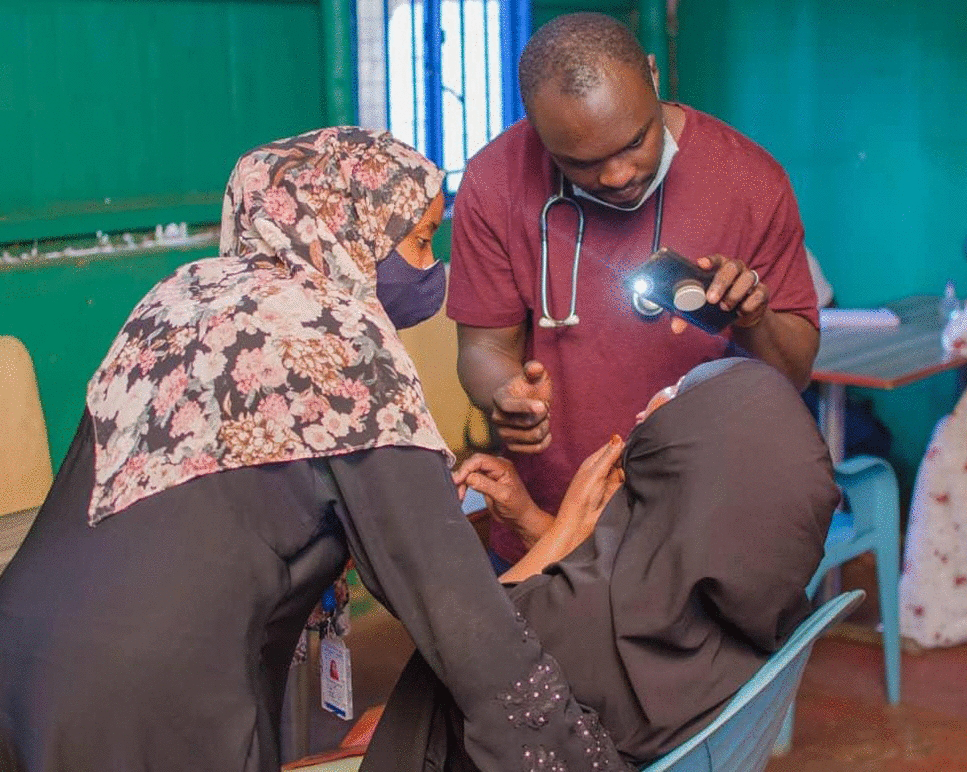
The use of interpretation skills in volunteering was identified in different contexts, such as health-related activities at the community level, as shown in the photovoice data from Kampala (Fig. 1). In this example, we can see how language and professional or skilled status come together to shape volunteering roles, and who can access and participate in them; having both some professional training and relevant languages makes participation in higher status volunteering more likely. Overall, knowledge of the English language has been recognised as especially important for young refugees in Uganda to navigate the uneven terrain of opportunities as it forms the entry point for qualifications and access to employment. English remains the official language in Uganda; therefore, knowledge of the language tends to place individuals in advantageous positions with regard to employability.
Photovoice material from Kampala. “This is one of the refugee youth volunteers living in Kampala, she is a health student, and she volunteers in the community as a village health team. This picture shows her interpreting between a doctor and a sick refugee mom”.

‘In Uganda, they treat us all the same as long as you can read and write [in] English’ (Interview with male refugee participant from South Sudan living in Bidibidi, emphasis added).
This view challenges assumptions around volunteering as a ‘levelling’ activity as the options available to a young Francophone Congolese refugee are, for instance, remarkably different from those available to a South Sudanese coming from a background of formal education in English:
‘…at the time when I had reached Uganda, I lacked education qualification[s] and I had also not yet learnt English, so the volunteering opportunities I would get were only limited to community sensitisation and mobilisation’ (Interview with male refugee participant from the Democratic Republic of Congo living in Rwamwanja).
The disproportionate impact of language in shaping opportunities was not only witnessed with regard to the English language. Knowledge of dominant languages and dialects widely spoken in refugee settlements leads to more volunteering opportunities to those who speak them at the expense of those who do not. Our findings reveal that language translations and interpretations are one of the dominant roles played by volunteers and a key source of stipends, particularly from ‘programmed’ volunteering activities with organisations. As a result, the focus on a few dominant languages by development actors sets uneven ground for volunteers from different ethnicities. This observation is reflective of similar experiences elsewhere in the world. While reflecting on the selection process for volunteers among asylum seekers in Austria, scholars note the privileging of those with either English or German language education as adequate qualifications for selection (Hassemer, Reference Hassemer2020). Considering education status is often a reflection of social class background, this selection process reproduced already existing inequalities between possible candidates, as the opportunities and resources to invest in acquiring the aforementioned languages are not equally distributed (Flubacher et al., Reference Flubacher, Duchêne and Coray2018). How these factors play out in Uganda is significant, since volunteering opportunities are often a source of income and key to sustaining livelihood, meaning livelihood chances of dominant groups may be increased by volunteering at the expense of other groups.
Knowledge of languages spoken by the host communities is yet another factor that shapes a young refugee’s access to opportunities in Uganda as these were found to be key to building local networks, exposure to critical information, as well as gaining acceptability and local integration. Volunteers who know both English and languages spoken in refugee hosting districts are at more advantaged positions, sometimes even in relation to Ugandan nationals:
‘I think it took me about an hour [to start volunteering since coming to Uganda] because, when I reached the reception centre, immediately I started volunteering from there because some people didn’t understand English. So, I was translating for them in Arabic and I started volunteering right from there. So, when we came [to the settlement] already people knew me because every information there, I would translate for them. So, having known me from the reception centre, when we reached here, they knew me and elected me as the neighbourhood watch. So, I started from there to volunteer…’ (Interview with male refugee participant from South Sudan living in Bidibidi).
Displacement due to conflict and other factors disentangle young refugees from hitherto useful networks that were critical to their livelihoods. Network-building therefore becomes a key strategy in the bid to identify opportunities and gain access to them, and in this regard, language remains a key dimension of the social capital available to refugees, especially when visualised as being the productive value of relationships between people (Clark, Reference Clark2006). Volunteering opportunities are then entangled within these processes. Unfortunately, knowledge of certain types of languages also reflect socio-economic and class background as demonstrated by prior exposure to formal education leading to the acquisition of certain linguistic skills by some and not by all. These inequalities can be manifested in who gets to volunteer and how. Such manifestations of inequality within and between specific subgroups suggest the importance of intersectionality in volunteers’ circumstances, such as language and location, while indicating that such experiences are non-homogeneous, even within the same context.
Gender and Physical Mobility
Not only are education and language important determinants of access to participation in volunteering, but engagement in volunteering also intersects with gender. Gendered dimensions of volunteering have received growing attention in recent years (e.g. Cadesky et al., Reference Cadesky, Baillie Smith and Thomas2019). Our research shows that gender intersects with particular features of being a young refugee, and reveals that among refugees, there is a disproportionate lack of access to volunteering for girls compared to boys. Several reasons exist to explain this scenario. This includes unfavourable work conditions for girls such as volunteer work with long hours that affecting their domestic responsibilities, especially where patriarchal social stratifications remain unchallenged. There are also protection issues, including the fear of being exposed to sexual and gender-based violence in certain situations, and therefore the risk of potentially ‘creating’ more harm when engaging female volunteers.
The social structures in the refugee settlements of our study mean that young women are often not afforded the opportunity to speak out regarding their rights. It can, therefore, be harder for young women to find opportunities for volunteering without express permission from those around them. Volunteering in this context intersects with other cultural practices that restrain young women’s participation in communal activities. As this stakeholder shares during an interview, volunteering is also shaped by women’s physical mobility:
‘I think the boys are a bit more proactive and, you know, volunteering especially within the refugees’ settlement depends much more on your availability [to] being seen by the actors to be available, so they engage you… So, the girls probably stay home more than the boys, but the boys keep moving around where NGOs are concentrated’ (Interview with male staff, International Organisation, Kampala).
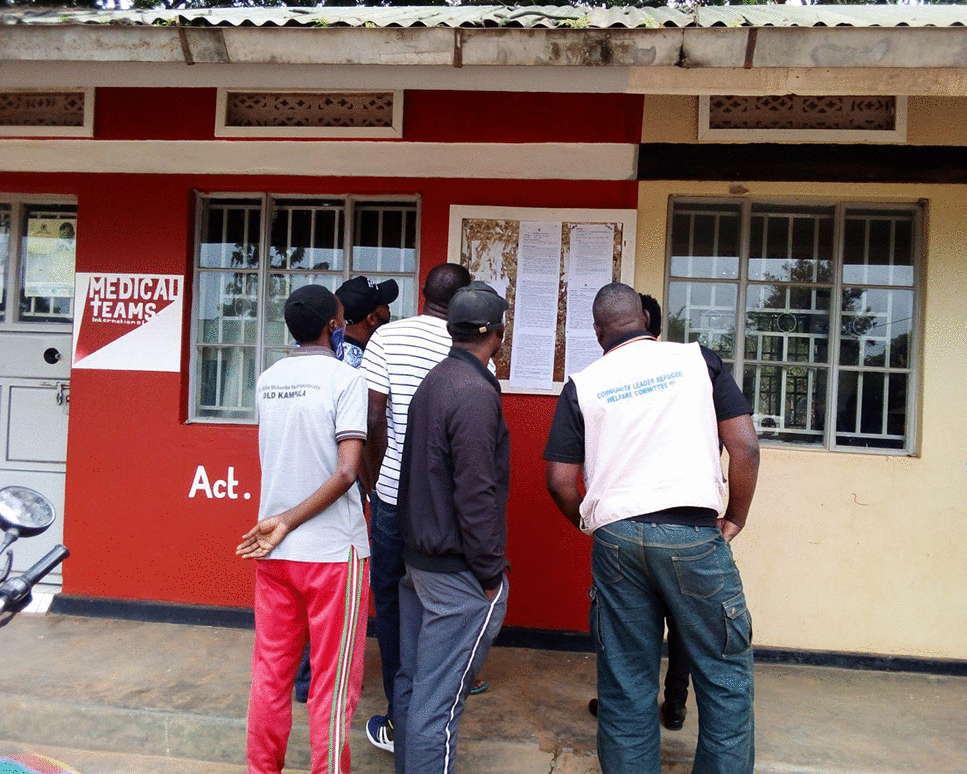
The importance of mobility in analysing inequalities in the context of volunteering is manifested in several ways. Firstly, there is physical mobility where boys and men generally tend to have more freedom of movement both within and outside the settlements compared to the girls and women. For example, youth with bicycles or motorbikes find themselves in more privileged positions to access opportunities. The gendered access to opportunities was perceived at different levels, such as when it comes to the physical access to notice boards where opportunities tend to be advertised, particularly in the context of refugee settlements. The young female photographer quoted in Fig. 2 explained the power of information seen through her picture taken in the Nakivale settlement (Fig. 2). However, there is a visible gendered dimension in relation to whom is effectively able to access the offers promoted by organisations and the private sector, echoing our earlier argument about limited female mobility affecting their (lack of) presence in such spaces.
Photovoice material from Nakivale. “Information is power… because here, the youth here of our community, here around, they go to this place and they normally find very many adverts, job opportunities of different organisations or the private sector”.

Secondly, women are constrained by domestic social reproductive roles within their family’s welfare based on culturally sanctioned role stratifications. This restriction has implications for access to critical information such as available volunteering opportunities, which may be posted in spaces where women have less ready access. It can also mean women lack the flexibility of time to take part in opportunities that are available. As a remedial action, some organisations specifically targeted women volunteers:
‘We have equal numbers [of women and men volunteers] however, how do we get to the equal numbers - it does include additional outreach to female volunteers. So, we have an equal number because we put an emphasis on having equal numbers’ (Interview with female staff, UN Agency, Kampala).
This reveals that gender equality in volunteering cannot be assumed, rather requiring proactive strategies to counteract the ways gendered hierarchies impact how volunteering is promoted and how people are enabled to participate.
Gender-based inequalities ironically disadvantage some men as well regarding family expectations. A male refugee volunteer typically finds himself vulnerable to social pressures to provide for the family, both nuclear and distant, since he is viewed as being in a more favourable economic situation. These expectations ignore intrinsic difficulties already facing refugee volunteers such as unequal or delayed remuneration of stipends, and the types of language and labour inequalities outlined earlier. This reality has led to situations where some families are no longer keen to see their children participating in volunteering activities as they see them as unbeneficial both in terms of producing immediate income as well as leading towards paid employment in the longer term.
Education and Social Mobility
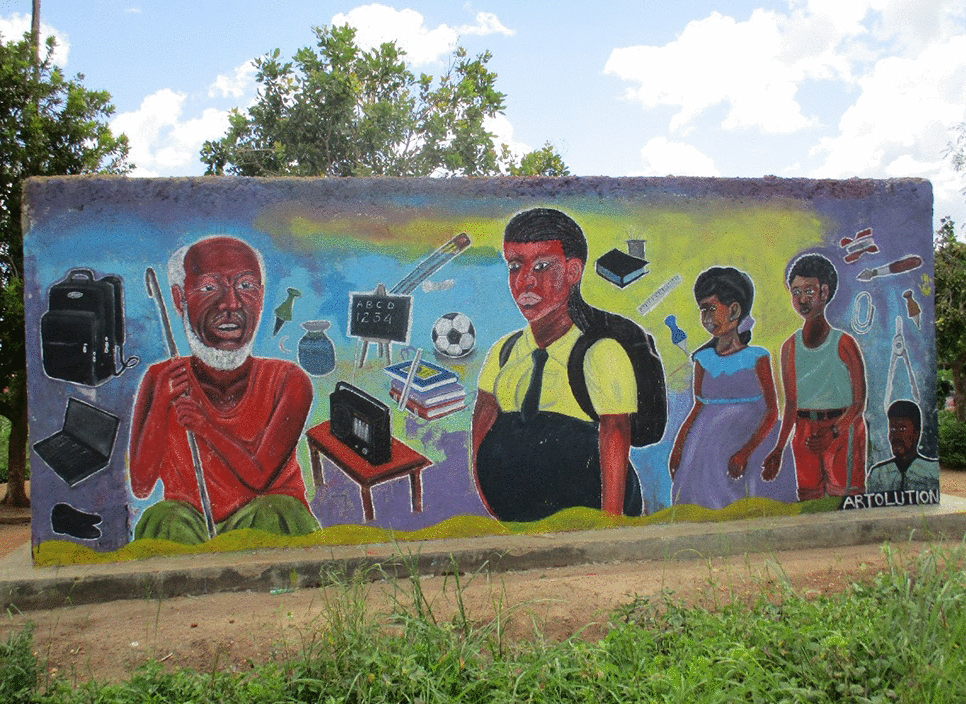
Finally, a third aspect of identity-based inequality this study has identified is related to education and social mobility. Our findings illustrate the role of formal education in enhancing opportunities for young people’s participation in programmed volunteering activities. This is mostly because education is seen as constituting a benchmark for knowledge acquisition and skills transfer desirable for their work environment and social mobility. Education tends to affect access to programmed volunteering in particular (Baillie Smith et al., Reference Baillie Smith, Fadel, O’Loghlen and Hazeldine2022a, Reference Baillie Smith, Mills, Okech and Fadelb), in that those with formal education are more likely to be engaged by humanitarian organisations, while youth with lower literacy levels tend to undertake other forms of everyday volunteering at faith-based centres, food distribution points or other spontaneous occasions within the community. Here we see formal education being equated to ‘knowledge’ and seen as a proxy for their social ability to navigate volunteer roles. The economic and social disparity that results from this has had far-reaching consequences for young refugees in Uganda, many of whom have had to drop out of school for various reasons, such as failure to afford basic materials or lacking relevant documentation to back up their claims on previous academic standings. The issue of education also intersects with other social dynamics and inequalities, for example gender. Early pregnancies within a settlement can prevent young women from accessing schooling, as one of the photovoice participants highlighted (Fig. 3).
Photovoice material from Bidibidi. “The teenage pregnancy was something rampant in the settlement here, most of the young girls got pregnant during the Covid period because there are no schools so and here the picture is showing very clearly the girl is pregnant and she is trying to go back to school. The father is wondering, they’re not happy. So it makes it to be the worst, the situation was worse, what people were going through was not easy for girls especially”.

Lack of education, itself often shaped by gendered social roles, can then combine with wider gendered inequalities in volunteering participation. For those participants who did not have formal education, volunteering and work opportunities were reportedly limited:
‘I did not participate in all activities that I wanted because some opportunities required education qualifications which I did not have at the time’ (Interview with male refugee participant from the Democratic Republic of Congo living in Rwamwanja).
Although educational attainment is an important factor for one to be considered as a volunteer, it normally needs to be evidenced by diplomas or certificates. Most young refugees who fled their countries of origin leaving their academic papers behind find it difficult to prove their education status, hence missing out on opportunities. Some participants explained how they finished school and higher education but were not able to bring their certificates with them, something also highlighted by this stakeholder:
‘For a Ugandan you may be having that qualification, for a refugee because you cannot prove it because of conflict or whatever reason, you ran and left the papers behind, so maybe because they, Ugandans, have qualifications, they can prove it and they are given a better volunteering position than a refugee who cannot prove that’ (Interview with female staff, International Organisation, Kampala).
Thus, the difference between those refugees who, having attained some level of education, possess documentation or not creates uneven ground for access to programmed volunteering activities.
Refugees that had some experience of studying in Uganda prior to their refugee status reported finding it relatively feasible to benefit from their social mobility and existing networks to access volunteering opportunities. Possession of a Ugandan education background also tends to place some refugees in privileged positions because of easier communication and networking:
‘But if you can speak the language of the host, it will also be a privilege, like, some us during the first war we were also refugees and studied in Uganda so we learned some local languages, like, if I am taken to Adjumani or Moyo [districts in Northern Uganda] there are local languages that I can speak so I have the advantage of working [on] that side. Then when they need you to work in the host community and [you] say you can speak Aringa [language spoken in Northwestern Uganda], you can also work together with the host community. But those are just a few [examples]’ (Interview with female refugee participant from South Sudan living in Bidibidi).
Here we can see how education and language come together to shape access to—or exclusion from—volunteering opportunities. Less formal dimensions to education are also significant. For example, levels of digital literacy and access to information through digital platforms (e.g. mobile phones; Internet) can be key in determining young refugees’ participation in volunteering opportunities. The possession of and access to such digital resources enhances easier access to vital information such as available volunteering opportunities in the settlements. This impacts on who gets to know what opportunities exist where and when, shaping wider dynamics of refugee youth volunteering in Uganda. Digital literacy may also impact what kinds of opportunities young refugees can access, with more professional opportunities dependent on such literacy likely to be better remunerated.
Intersectional Inequalities and Impacts on Community
Overall, volunteering can provide refugees with opportunities to learn new skills that can help them secure employment in the future, and sustain their livelihoods, as these two research participants share:
‘Being a volunteer, I think has helped me solve some of my problems, by the way. Like the little incentive I have helped me to use them as capital to do some bit of animal rearing, that way it makes me still have some income’ (Interview with male refugee participant from South Sudan living in Bidibidi).
‘From volunteering, I have been able to earn some little money which has helped me to pay school fees for my child and partly for my young sibling, I have been able to support my family, I and my brother have managed to put up a decent house at home, [I] am able to cater for medical bills, without only depending on [NGO] cash’ (Interview with female refugee participant from the Democratic Republic of Congo living in Rwamwanja).
However, our research also reveals that access to such opportunities is not equal, and that social categories and identities associated with the languages refugees speak, as well as their gender, and education levels play an important role in allowing young refugees to improve their lives. These social categories often overlap and, as hinted earlier, demonstrate the importance of considering intersectionality in relation to youth volunteering studies, particularly among young refugees. For instance, one of the participants highlights how Francophone women from the Democratic Republic of Congo are disadvantaged with regard to access to volunteering opportunities due to low levels of education:
‘…back in DRC girls were discouraged from going to school, so very few girls are educated and this affects the Congolese girls who are here because they lack qualifications for such opportunities’ (Interview with male refugee participant from the Democratic Republic of Congo living in Rwamwanja).
Our research highlights that despite its promise of providing opportunities for better livelihoods for refugees, new forms of vulnerabilities also emerge out of volunteering, to the extent that those with access to remunerated voluntary work are no longer viewed as ‘normal’ refugees, but rather as a special kind of individual lifestyle beyond the level of ‘ordinary’ refugees:
‘But I wouldn’t be looked at like a normal refugee, am looked at as a refugee who is self-reliant, yet the reality [is I] am not’ (Interview with male refugee participant from the Democratic Republic of Congo living in Kampala).
The tendency of volunteering to target, privilege and reward some youth possessing the most desired qualifications and characteristics thus can also create rifts within refugee communities in Uganda. The social discomfort associated with this new kind of labelling expressed by the Congolese participant above is in itself a form of vulnerability. This discussion highlights not only how volunteering can shape inequalities in global South settings, but that it is critical to be attentive to inequalities within social groups when analysing their participation in volunteering and the benefits that it can bring.
Conclusion
This paper has analysed findings from research on volunteering by young refugees in Uganda to highlight critical conceptual and empirical issues around the role and impacts of volunteering in the context of displacement. Using the lens of intersectionality, it has focused on refugees from four different nationalities and in different settlements, as well as urban Kampala, to reveal the ways volunteering is connected with issues of gender, language and education to introduce, maintain and in some cases exacerbate inequalities among young people. In doing so, it has shown how participation in volunteering is interwoven with the multiple and intersecting inequalities that shape the day-to-day life of a young refugee in Uganda and their relationships with the wider community members, as well as their physical and social mobility.
The findings provide important evidence on key axes that shape access to volunteering, the impacts it has and how it relates to inequality. The global development and humanitarian industry have for a long time projected a single narrative of volunteering as a necessary approach to engage community members in the co-creation of solutions to their local needs through participatory engagements. The altruistic spirit with which voluntary work has been associated often negates any criticisms, obscuring manifestations of inequalities that remain embedded within aspects of the practice. The tendency of volunteerism to offer opportunities to young people as a source of skill acquisition, or avenue for experience building for job-readiness, all place it in a position of high regard. However, as this paper shows, such considerations fail to acknowledge the unequal ways in which such perceived benefits are spread depending on individuals’ identity and mobility. The inequalities that volunteering fails to address, or in some cases exacerbates, can only be understood using intersectional lenses that recognise how factors such as gender, language, education and mobility interweave to create highly uneven access to livelihood opportunities.
This paper argues that when such considerations are ignored, the result is the privileging both of particular kinds of volunteers and types of volunteering, exacerbating inequalities rather than challenging them. The paper reveals how, rather than being a levelling force, volunteering is entangled with the identities, relationships and dynamics that differentiate refugees in Uganda, shaping their relationships with each other and with host communities. This then highlights the need to avoid homogenising refugees in policy prescriptions and scholarship on volunteering and displacement. It also underscores the importance of a more concerted focus on the intersections of volunteering and inequality, particularly in the context of displacement, that is often already characterised by multiple and severe exclusions.
Acknowledgements
The authors would like to thank the research funders (ESRC/GCRF, grant ES/S005439/1), the Youth Advisory Board members and all research participants and stakeholders for making this project possible, particularly through the Covid-19 pandemic. The authors would also like to thank the journal editors and anonymous reviewers for their insightful comments and suggestions that have helped improve this manuscript.
Declarations
Conflict of interest
The authors declare that they have no conflict of interest and that this manuscript has not been published or is under consideration elsewhere.
Data Access Statement
This study was supported by the UK’s Global Challenges Research Fund (GCRF) and Economic and Social Research Council (ESRC) [Grant number: ES/S005439/1, “Skills acquisition and employability through volunteering by displaced youth in Uganda”]. All data supporting the research are provided as supplementary information accompanying this paper at https://doi.org/10.5255/UKDA-SN-855975 under a Creative Commons (CC BY-SA) licence.

 Open access

