

INTRODUCTION
Increased emission of the greenhouse gases (GHGs) is a prime contributor to global climate change, which has, to a larger extent, threatened the sustainability of agriculture. However, agriculture not only suffers from climate change but also contributes immensely to climate change by emitting GHGs such as CO2, N2O and CH4. About 12% of the total anthropogenic emissions of GHGs are directly generated in agriculture, while its total contribution to GHGs approaches to 35% if the indirect emissions such as emissions from fertilizer industry, deforestation and land conversion to agriculture are counted in (IPCC, 2007). Given that agriculture's share in global gross domestic product (GDP) is about 4% (Lybbert and Sumner, Reference Lybbert and Sumner2010); these figures suggest that agriculture is highly GHG intensive.
Conversely, agriculture offers immense prospective to mitigate climate change, approximately one-third of the total abatement potential (Smith et al., Reference Smith, Martino, Cai, Gwary, Janzen, Kumar, McCarl, Olge, O’Mara, Rice, Scholes, Sirotenko, Howden, McAllister, Pan, Romanenkov, Schneider and Towprayoon2007). Among the options for mitigating GHG within agricultural system, soil carbon sequestration offers, by far, the highest potential, nearly 89% of the total technical potential worldwide (Smith et al., Reference Smith, Martino, Cai, Gwary, Janzen, Kumar, McCarl, Olge, O’Mara, Rice, Scholes, Sirotenko, Howden, McAllister, Pan, Romanenkov, Schneider and Towprayoon2007). IPCC (2007) reports that better water management in agriculture can help mitigate GHGs equivalent to 1.14 Mega-gram carbon dioxide equivalent (Mg CO2-eq) ha−1 yr−1 irrespective of climatic zone. The mitigation potential of tillage and residue management depends on climatic zone: 0.72 Mg CO2-eq ha−1 yr−1 in warm-moist climatic zone, 0.53 Mg CO2-eq ha−1 yr−1 in cool-moist climatic zone, 0.35 Mg CO2-eq ha−1 yr−1 in warm-dry climatic zone and 0.17 Mg CO2-eq ha−1 yr−1 in cool-dry climatic zone (IPCC, 2007). There is a great opportunity to mitigate the contribution of agriculture to GHGs emission in order to slow down the progression of climate risk. Therefore, concerns about mitigating and adapting to climate change are renewing the impetus for investments in agricultural research and are emerging as additional innovation priorities.
Recently, there has been considerable effort to make agricultural production environment friendly and sustainable and many innovations are coming out. Among them, a shift from the conventional tillage based production system (which includes repeated ploughing, cultivating, planking and pulverizing) to zero-tillage system (i.e., direct drilling of wheat seeds with minimal disturbance of soil to open slits and place seed and fertilizer) has gained significant importance in wheat production of Indo-Gangetic Plains. Zero-tillage system is reported to ensure timeliness of sowing, precision in seeding, reduction of production cost (Jat et al., Reference Jat, Gathala, Ladha, Saharawat, Jat, Kumar, Sharma, Kumar and Gupta2009; Saharawat et al., Reference Saharawat, Singh, Malik, Ladha, Gathala, Jat and Kumar2010) and improve soil properties (Jat et al., Reference Jat, Gathala, Saharawat, Tetarwal, Gupta and Yadvinder-Singh2013; Sapkota et al., Reference Sapkota, Mazzoncini, Bàrberi, Antichi and Silvestri2012) and yet maintaining and, in many cases, even increasing crop yield (Jat et al., Reference Jat, Gathala, Saharawat, Tetarwal, Gupta and Yadvinder-Singh2013; Mishra and Singh, Reference Mishra and Singh2012). As compared to CT system, ZT system has been reported to increase C sequestration and decrease CO2 emission (Almaraz et al., Reference Almaraz, Zhou, Mabood, Madramootoo, Rochette, Ma and Smith2009; Sainju et al., Reference Sainju, Jabro and Stevens2008) as well as N2O emission (Baggs et al., Reference Baggs, Stevenson, Pihlatie, Regar, Cook and Cadisch2003; Ussiri et al., Reference Ussiri, Lal and Jarecki2009). Another important impact of ZT is the efficiency of agricultural water use as it increases the water retention capacity of the soil, decreases soil erosion, reduce evaporation losses and enhance variety of life within and on surface of soil (Kassam et al., Reference Kassam, Friedrich, Shaxson and Pretty2009). Conversely, tillage operations lead to loss of soil organic carbon by intensifying soil erosion (Lal, Reference Lal1997; Reference Lal2004). Increasing soil organic carbon by 1 Mg ha−1 yr−1 is expected to increase world food grain production by 32 million Mg yr−1 mainly from developing countries (Lal, Reference Lal2006).This contributes to food security of the masses in developing countries like India, where 72% of the total population still reside in rural areas, primarily reliant on agriculture for their livelihoods.
Unlike the CT, ZT also reduces the use of fossil fuel or animal traction power required for tillage operation, thereby contributing to the mitigation of climate change (Grace et al., Reference Grace, Antle, Aggarwal, Ogle, Paustian and Basso2012; Grace et al., Reference Grace, Jain, Harrington, Robertson, Antle, Aggarwal, Olge, Paustian, Basso, Ladha, Hill, Gupta, Duxbury and Buresh2003). Crop production activities such as tillage, fertilizer and pesticides uses, contribute towards carbon emissions and thus, improved techniques for performing these activities help reduce GHG emissions from agriculture (Lal, Reference Lal2004). Therefore, in order to evaluate the mitigation benefits of ZT wheat, we compare the input use, especially number of tillage operations, number of irrigations, fertilizer use, and pesticides and herbicide use, for wheat cultivation under ZT and CT assuming that increased use of inputs or tillage operations lead to more GHG emissions.
Farmers in developing countries mostly work under imperfect credit markets and thus, resource constraints can limit their adoption of new technology. Under such a setting, availability of the technology alone is not sufficient for a technology shift to occur and thus, it calls for other incentives (Smith et al., Reference Smith, Martino, Cai, Gwary, Janzen, Kumar, McCarl, Olge, O’Mara, Rice, Scholes, Sirotenko, Howden, McAllister, Pan, Romanenkov, Schneider and Towprayoon2007). A recent study by Grace et al. (Reference Grace, Antle, Aggarwal, Ogle, Paustian and Basso2012) shows that there is a potential to sequester approximately 44 Mt C over 20 years if rice-wheat system of India shifts from conventional tillage to no-tillage. They also predicted that at a carbon price of USD 200 Mg-C−1, there is a potential to sequester 79% of this estimated C sequestration. However, at present there is no institutional framework for carbon trading in agriculture in India and the lessons learned from pilot projects in other developing countries are not so encouraging and hence may take longer time to become a reality for the small farmers in South Asia (Milder et al., Reference Milder, Majanen and Scherr2011). Furthermore, existing carbon markets have mostly focused on GHG emission reductions and offsets from the industrial and energy sectors. Under this situation, farmers are interested to adopt new technology with a potential to sequester carbon and contribute to climate change mitigation, only if the technology results in higher crop yield or reduces the cost of production given the yield. Consequently, economic benefits to farmers adopting conservation agriculture based crop management technologies stands as a crucial component in order to ensure successful adaptation of agriculture to climate change (Grace et al., Reference Grace, Antle, Aggarwal, Ogle, Paustian and Basso2012). Therefore, this study assessed whether ZT has a cost- reducing and/or total benefit enhancing as compared to CT. For this, the cost of inputs including cost of tillage operation, irrigation, cost of seed treatment, and cost of purchasing and applying fertilizer, herbicide and pesticide under these two contrasting tillage systems were compared. Additionally, for assessing economic benefits to farmers, cost-benefit analyses of the two tillage systems are compared.
Although possibilities to reduce the GHGs emission from agriculture or to sequester carbon in soils by adopting alternative agricultural practices such as ZT are available, the speed of its adoption in the developing world is not much encouraging. This might be due to the fact that farmers lack knowledge on local adaptation and performance of such technologies which help mitigating climate change without compromising yields while producing higher economic gains, implying that there is a need to establish a mechanism for local adaptation of such technologies through active participation of farmers to disseminate this knowledge to other farmers and communities. Therefore, we conducted farmers participatory field experiments for three consecutive years (from 2009–10 to 2011–12): managed jointly by researchers and farmers during the first two years (i.e., 2009–10 and 2010–11) in order to impart scientific knowledge to farmers about managing ZT production system and from the third year (2011–12), these were farmer experiments and fully managed by them. This ensures a gradual adoption of the technology by farmers and dissemination of knowledge from scientific community to local farmers through participatory working and building trust. Therefore, this study is not only about the assessment of the economic and GHG mitigation benefit of wheat production under ZT system compared to CT based wheat production system; it also explores the mechanism to transfer technology from scientific community to farmers. Although some studies have examined productivity and sustainability of ZT production system, a holistic comparison of economic and environmental benefit of CT and ZT based wheat production in North-West India is still scanty and this paper fills in this gap so as to enthuse policy planners for promoting such multi-pronged technologies.
The rest of the paper is organized as follows. The section two provides a general introduction of the study area along with the materials and methods used for experiments and the data analysis. Section three presents the major results and discussions while the last section concludes the study.
STUDY AREA, MATERIALS AND METHODS
Study site
The study was conducted in four districts (Karnal, Kurukshetra, Kaithal, and Yamunanagar) of Haryana, India ((29°07’15’ N to 30°08’15 N, 75°02’20’E to 77°04’10’E). Figure 1 shows the locations of study area within India.
Study locations in Haryana state, India.

Site characteristics
The mean annual rainfall in the study area varies from 650 mm to 970 mm, about 80% of which is received from June to September. Wheat is grown during the cold and dry winter season from November to April. The study area consists predominantly of alluvial and calcareous soil with very less organic carbon and weakly structured, sandy loam to clay loam type of soil. The minimum and maximum temperature in the study area varies from 4°C to 46°C.
In this region of IGP, wheat has been mainstay of food security from the past and is continuing although area under rice is also increasing in the recent decades (Erenstein et al., Reference Erenstein, Farooq, Malik and Sharif2008). Rice–wheat and wheat–sugarcane are the two dominating cropping patterns in the study area. In winter season, wheat alone covers around 93% cultivated land. Wheat production in this area is highly mechanized and input-intensive with large land holding as compared to that of eastern IGP (Erenstein et al., Reference Erenstein, Farooq, Malik and Sharif2008). Despite the availability of a developed canal irrigation system, groundwater is still a major source of irrigation in this area.
The popularity of rice has increased pressure on the timely sowing of wheat, which in turn also affects the wheat yield. As the delay in harvesting of preceding rice crop results in late sowing of wheat seed, this increases the possibility of lower wheat yield due to terminal heat. The time of sowing of wheat after rice is further delayed due to the intensive tillage operation requirements, soil moisture problems, and non-availability of traction power in peak season.
Treatments and experimental details
The farmer participatory experiments were conducted in ten farmers’ field in each of the four districts mentioned above. Each farmer had mirror trials involving both treatments i.e. CT and ZT production system. The plot size in farmers’ field ranged from 1000–1500 m2 depending on the size of the particular piece of land. The experiment was conducted for the three consecutive wheat seasons i.e. 2009–10, 2010–11 and 2011–12 in the same plots. In 2009–10 and 2010–11, the trials were managed jointly by the researchers and farmers whereas in 2011–12 the trials were managed by farmers and we only collected relevant data from them. This ensured a gradual adoption of the technology by farmers after seeing its benefit while working closely with researchers. By third year, many other farmers were also found to have adopted no-till system of wheat production but we recorded data only from the farmers’ who were involved from the very beginning and particularly from those plots dedicated to these particular trials since 2009–10 winter season.
Field preparation and crop management
CT system involved two harrowing, three ploughing using field cultivator and one field levelling using wooden plank. The wheat in this method was seeded in 20-cm rows using a seed-cum fertilizer drill. In ZT system, on the other hand, wheat crop was seeded at 20-cm row spacing using ZT seed-cum-fertilizer drill. In general, wheat was irrigated at the crown root initiation, tillering, jointing and dough growth stages by flooding the plots up to the point where 5 cm water was standing in the field under both scenarios.
Data recording
The data on pedo-climatic condition of each farm along with management practices including fertilizer and pesticide application in both scenarios in each farmer's field were recorded and compiled. A simple check-list was prepared and the information about land use and management changes such as tillage system, manure and fertilizer application, residue management and so on under each production system was gathered.
Fuel and energy consumption
The duration of pump used for irrigation was recorded and this information along with the horsepower of pump was used to calculate total electricity consumption. Similarly, amount of fuel consumed for various farm operations for entire crop cycle was also recorded.
Crop yield
At maturity, at each location the crops from three randomly selected 3×3 m2 quadrates were harvested manually 5 cm above the ground. The biomass was dried and threshed to determine grain and straw yield. Grain yield was measured at 13% moisture level and straw biomass yield was determined after sun-drying the straw for 3–4 days. The grain and straw yield from three quadrates within a plot were averaged to determine the plot value.
GHG quantification
The model (Cool Farm Tool, CFT)
Several models are available for the quantification of GHG from agricultural production systems. Some of them are process based models while others are empirical models based on various emission factors published elsewhere. The Cool Farm Tool (Hillier et al., Reference Hillier, Walter, Malin, Garcia-Suarez, Mila-i-Canals and Smith2011) is a GHG calculation model which integrates several globally determined empirical GHG quantification models in one tool. The tool recognises context specific factors that influence GHG emissions such as: pedo-climatic characteristics, production inputs and other management practices at farm level. The model has a specific farm-scale, decision-support focus. According to Hillier et al. (Reference Hillier, Walter, Malin, Garcia-Suarez, Mila-i-Canals and Smith2011), there exists a considerable scope for the use of the model to inform on current practices and potential for climate change mitigation. The model provides output as total emission of GHG of interest both per unit area as well as per unit of output. This allows us to estimate the performance of production system from GHG emission perspective both in terms of land-use efficiency and efficiency per unit of product.
Estimation of GHGs emission using CFT
The information about soil and climatic characteristics, plot area and total production from the plot as well as crop management inputs such as fertiliser and pesticide applications were entered into CFT. Further, data about land-use and management change such as changes in tillage system and use of cover crops, compost, manure and residue were also entered into the model. Similarly, total energy consumed per plot (unit area) during entire crop cycle was also included to calculate emission from machinery use and fuel consumption. CFT uses a simplified model derived from ASABE (2006) for estimation of emission from machinery and fuel use, Ecoinvent (2007) for estimation of GHG emission from fertilizer production, a model developed by Bouwman et al. (Reference Bouwman, Boumans and Batjes2002) for estimation of N2O emission from fertiliser application. Changes in soil C due to land-use change, manure and residue management are based on IPCC methodology as in Ogle et al. (Reference Ogle, Breidt and Paustian2005) and Smith et al. (Reference Smith, Powlson, Glendining and Smith1997).
Economic analysis
For economic analysis, we compared total input costs of wheat production between conventional tillage and zero tillage systems. In order to obtain total cost of production, the amount of various inputs applied was multiplied by prevalent market prices. Table 1 presents the market prices of major inputs in the study area over the study periods.
Input and output prices in the study area.

Note: USD 1 = 50 Indian Rupees; Price of pesticide/herbicide varied by type and thus, not presented in the table. However, this is included in the total cost calculation.
Cost of equipment used under each tillage system was calculated based on existing rental value of the equipment. Therefore, initial investment, depreciation, and insurance were not separately included in the analysis. Total production of wheat (main product) as well as wheat straw (by-product) were recorded and multiplied by the respective market price in order to calculate gross return. Net returns were calculated as the difference between gross returns and total costs. Cost benefit analysis was calculated for 3 years under both ZT and CT. For this, we divided gross returns (i.e., total value of main product and the by-product) from wheat production by the total cost of wheat production under the two alternative tillage systems.
Statistical Analysis
As each farmer's field accommodated both treatments, individual farmer field was considered as a block. Analysis of variance (ANOVA) for completely randomized block design was performed using the CoStat Software (CoHort, 2012). Before analysis, the Bartlett test was performed to test the homogeneity of error variances. Differences between treatment means were compared using a LSD test at P < 0.05 (Gomez and Gomez, Reference Gomez and Gomez1984). Where relevant, the paired t-test was performed between the treatments using Stata version 10.1 software (Cameron and Trivedi, Reference Cameron and Trivedi2009). All economic analyses were also done in Stata 10.1 version.
RESULTS AND DISCUSSION
Input use and crop management
Table 2 presents the input use for wheat cultivation under zero tillage and conventional tillage.
Input use for wheat cultivation in different tillage system.

Note: Significance level: *** (1% level), ** (5% level) and * (10% level); standard errors are reported in parentheses.
In order to produce wheat under conventional management systems, approximately 5 preparatory tillage operations on the farm are required whereas ZT system does not require such tillage operations. ZT, therefore, significantly reduces farmers’ economic burden and time-lag associated with tillage operations. Furthermore, with a drastic reduction in the farm tillage operations, fuel used for farm operations is also reduced in the study area as all farmers use tractors for tilling the land. This reduces carbon dioxide emission due to fossil fuel burning (each litre of diesel burning emits 2.6 kg CO2-eq). Another important difference can be seen in irrigation because farmers using ZT system required no pre-sowing irrigation as planting is done with residual soil moisture while the CT system required one pre-sowing irrigation for wheat. There is also significant difference on the mean level of total number of irrigation required for wheat under ZT and CT systems. As irrigation is a very carbon intensive practice (Lal, Reference Lal2004), increased efficiency in its use not only saves water but also help mitigate the climate change. There is no significant difference in the case of fertilizer use under these two alternative tillage systems. Slightly higher amount of pesticide is used under CT as compared to ZT, but the difference is statistically insignificant. However, amount of herbicide applied is significantly higher under CT compared to ZT. Overall, there is a significant saving in the input use when a farmer shifts from CT to ZT system of wheat production.
Greenhouse gas (GHG) emission
Cool Farm Tool (CFT) uses total production area, productivity and management input data along with pedo-climatic conditions to estimate GHGs. As these variables were more or less same in all three years, GHG emissions did not differ from one year to another. Therefore, we are presenting the greenhouse gas emission data averaged over three years. Estimated CO2 emission was significantly higher from CT based wheat production than ZT based system. CT based wheat production emitted 0.6 Mg of CO2-eq while ZT based production system actually sequestered 0.84 Mg of CO2-eq ha−1 (Table 3) and hence the net difference is 1.44 Mg CO2-eq ha−1 season−1. However, nitrous oxide emission was not different between CT and ZT based production system.
Estimated emission of CO2 and N2O from CT and ZT based wheat production in Haryana averaged over three wheat seasons from 2009–2012.†
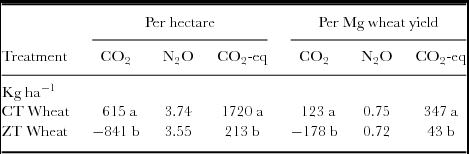
†Each value in the table is mean 120 data points (forty farmers times 3 years of run) Means in each column followed by different letters are significantly different at P<0.05(LSD test); CT = Conventional tillage, ZT = Zero Tillage
Interaction of many factors such as soil temperature, soil structure, water-filled pore space and soil organic matter influence N2O emission from soil. In general, fertilizer application and residue management are two major factors contributing to N2O emission in agro-ecosystem (Rochette et al., Reference Rochette, Worth, Lemke, McConkey, Pennock, Wagner-Riddle and Desjardins2008). Similar fertilizer and residue management under both production systems in our study contributed to similar emission of N2O showing non-significant effect of tillage systems. Although some have reported to increased (Baggs et al., Reference Baggs, Stevenson, Pihlatie, Regar, Cook and Cadisch2003; Ussiri and Lal, Reference Ussiri and Lal2009) or decreased (Robertson et al., Reference Robertson, Paul and Harwood2000; Steinbach and Alvarez, Reference Steinbach and Alvarez2006) emission, Jantalia et al. (Reference Jantalia, dos Santos, Urquiaga, Boddey and Alves2008) reported no effect of tillage on N2O emission.
There was no methane emission as crop residues were removed off the farm in both the cases. Also, production of CH4 in soil is dependent on limited O2 supply which is controlled by soil water content. As wheat in the region is grown during cold and dry winter, less water content in soil may be one of the major reasons for non-emission of CH4.
When all emissions were converted into CO2 equivalent, ZT based wheat production was nearly carbon neutral. This is because N2O emission was counter-balanced by carbon sequestration in ZT system. CT based wheat production emitted 1.7 Mg of CO2-eq ha−1 which was about 347 kg CO2-eq Mg−1 of wheat yield. Since there was no difference in wheat yield between CT and ZT (4.8 Mg ha−1 and 4.6 Mg ha−1 in ZT and CT, respectively), the emission trend per unit of product followed the same trend as in per hectare basis (Table 3). Our result corroborates with the finding of Dendooven et al. (Reference Dendooven, Patiño-Zúñiga, Verhulst, Luna-Guido, Marsch and Govaerts2012) who also reported lower global warming potential of ZT system than CT system in a 9 years long trial.
The difference in GHG emission between ZT and CT mainly came from changes in soil carbon stock as influenced by tillage management. Shift from CT to ZT sequestered about 1.3 Mg of CO2-eq ha−1 during one wheat crop season (Figure 2), which is equivalent to about 343 kg C ha−1 season−1. This estimated C stock change due to conversion of CT to ZT system, in our study, was slightly higher than the estimates of Grace et al. (Reference Grace, Antle, Aggarwal, Ogle, Paustian and Basso2012) who reported C sequestration potential of converting CT to ZT as 305 kg C ha−1 yr−1 following IPCC guidelines. Although reduced number of tillage operations consumed less fuel in ZT (Table 2) than in CT based system, fuel and energy induced emission in terms of CO2-eq was not significantly different between ZT and CT (Figure 2). The emission due to fertilizer application, irrigation and pesticide application did not show a significant difference between CT and ZT based production system.
Contribution of various components in total emission in CT and ZT based wheat production. Vertical bars show the standard errors of the mean.

Economic benefits of ZT wheat
Before presenting the net returns and the benefit- cost ratio of alternative tillage practices, we present the total cost of wheat production under these alternatives in Table 4.
Total cost for wheat cultivation in different tillage system (USD ha−1).

Note: USD 1 = 50 Indian Rupees; significance level: *** (1% level of significance); standard errors are reported in parentheses. + This is calculated by assuming 6% interest rate on total input cost
From Table 4, we see that total cost of production is much higher in the case of CT as compared to ZT. Farmers save about USD 79 ha−1 in terms of the reduced input cost while shifting from CT to ZT wheat production system. The major difference in input cost is found in cost of preparatory tillage and cost of irrigation. Though the cost of sowing is slightly higher in under ZT compared to CT, this will not affect much to the total input cost. Under CT total cost of irrigation is about USD 49 ha−1 against the USD 33 ha−1 under ZT. This benefit has also environmental implication as water is one of the most critical resources for irrigation. Efficient utilization of water contributes to saving irrigation water (help avoid depleting water table) and also related to the efficient use of electricity, which in turn leads to less C-emission. In the case of preparatory tillage, about USD 65 ha−1 is spent under CT while it is not required under ZT. Our results are closer to the results from other studies carried out in India in rice-wheat system, where the cost of production was significantly higher (about USD 52 ha−1) for CT than in ZT treatments (Erenstein and Laxmi, Reference Erenstein and Laxmi2008).
Now we move to the benefit-cost analysis (BCA) of wheat production under ZT system as compared to CT system. Table 5 presents the results of the net returns and BCA of wheat cultivation under ZT and CT for three consecutive years.
Net returns and benefit-cost ratio of wheat cultivation under ZT and CT.

Note: Significance level: *** (1% level), ** (5% level), and * (10% level); standard errors are in parentheses.
Based on Table 5, net return under ZT is higher as compared to CT in all years. On the average, using ZT system rather than CT for wheat production, farmers can achieve additional net revenue amounted to USD 97.5 ha−1 (i.e., 28% higher net returns per ha compared to CT). This is very close to the results obtained by Erenstein and Laxmi (Reference Erenstein and Laxmi2008) in the IGP. Similarly, benefit-cost ratio is much higher in the case of wheat production under ZT as compared to CT. The difference of BCA under these alternative systems is statistically significant at 1% and 5% level. Based on overall benefit-cost ratio, we conclude that ZT, on the average, provides 12% more total economic benefits to farmers when compared to CT. This higher net return along with higher BCA in ZT wheat production also indicated the success of knowledge dissemination from CIMMYT and NARES scientists to the farmers in the study area.
Economic and Environmental Impact of ZT wheat in Haryana
Our results suggest that shifting from CT to ZT based wheat production would reduce CO2 emission by 1.5 Mg per hectare per wheat season. With a current estimated area of 260,000 ha under ZT wheat (CSISA, 2010) in Haryana state, the current GHG benefit due to the adoption of ZT is about 0.4 million Mg CO2-eq. The government of Haryana has set a target to increase the area of ZT wheat to about 1 million ha by 2015 (HFC, 2012). If this is realized, the climate change mitigation benefit for the state will be 1.5 million Mg CO2-eq per wheat season.
Economic benefits of zero tillage wheat can be viewed in two ways. First, there is a significant amount of cost being saved under the ZT system as compared to CT. Our estimate in Table 4 shows that about USD 79 ha−1 can be saved by shifting from CT to ZT based wheat production. For an individual farmer, this gain by shifting from CT to ZT in a hectare is quite small. However, this shift is of additional relevance for Indian farmers, where labor has increasingly become one of the major constraints in agriculture mainly due to the young generation being less attracted by the sector and expanding non-agricultural job markets. Furthermore, farmers in the study area are now looking for resource conserving agricultural practices as they face severe depletion of groundwater, a major source of irrigation in Haryana. To address both of these problems, ZT is more viable option for an individual farmer. On the top of it, the government of Haryana now provides some economic incentives to farmers for adopting the conservation agriculture including ZT.
Using a simple estimation, if farmers in the targeted area under Haryana follow ZT based wheat production instead of CT, this would lead to a saving in input costs equivalent to USD 79 million per wheat season, given the target of 1 million ha under ZT by 2015. As ZT reduces tillage and irrigation requirements, this would also reduce the burden on government budget spent for subsidizing electricity for farm operations due to less use of electricity by farmers for such operations. The analysis presented in Table 5 exhibits that shifting from CT to ZT wheat production system can enhance farmers income substantially as the net revenue per ha from ZT is 28% higher than the net revenue from CT. Thus, if the government of Haryana can bring 1 million ha under ZT by 2015 which is doable, the farmers’ in this state will generate about USD 97.5 million more net revenue per year.
Although there is no sign of a near future development of carbon trading in agriculture, especially carbon trading market associated with soil carbon sequestration, its development can contribute significantly to promoting ZT based wheat production and help mitigating climate change in agriculture. The Haryana Farmers Commission has already recommended to the Government of Haryana through the Agriculture Policy document of the Haryana state to establish provisions for payments on carbon credits (HFC, 2012). For this, the government needs to work on the development of regulatory market for carbon trading as the voluntary market for carbon trading takes longer time to come forward.
CONCLUSION
This study assessed the on-farm economic and environmental impacts of ZT wheat in Haryana state of North-West India. The results show that shifting from CT to ZT wheat production system reduces the farmers total input cost per ha by 20% (USD 79 ha−1) and increases net revenue per ha by 28% (USD 97.5 ha−1). If the target of the government of Haryana to increase the area under ZT wheat production system to about 1 million ha by 2015 can be realized, it would save about USD 79 million per wheat season through a reduction in the cost of production and this will bring approximately USD 97.5 million additional net revenue to wheat farmers in Haryana. Our estimations clearly showed the GHG mitigation benefits of ZT based wheat production as this reduces CO2 emission by 1.5 Mg ha−1 season−1. This means adopting ZT to about 1 million ha under wheat production in Haryana will reduce GHG emission of about 1.5 million tonne of CO2 equivalent.
Along with these environmental and economic benefits, this study reveals the benefits of disseminating knowledge about ZT farming practice through the participatory field trials. This can be replicated in other areas as conservation agriculture is a more knowledge intensive practice and farmers require knowledge gathered by scientific community in order to adopt this technology appropriately. Thus, the policy implication is to strengthen the institutional association between farmers and the scientific community. This could be done by endorsing such participatory methods in order to promote the technology that has win-win benefits of mitigating climate change and yielding higher economic benefits to farmers.
Acknowledgements
Farmers’ field trials for this study were supported by CSISA funded by Bill and Melinda Gates Foundation and USAID. Collection, compilation and analysis of data were done through the support of CGIAR Research Programs (CRPs) on Climate Change, Agriculture and Food Security (CCAFS) and WHEAT (CRP 3.1). The authors sincerely thank to Anil Bana and all CIMMYT staffs based at Karnal for their contribution during trials set up and data collection. We also acknowledge the support from innovative farmers of the Haryana. Thanks to Subash Ghimire for assisting to collect data and review of relevant literature.


 Open access

