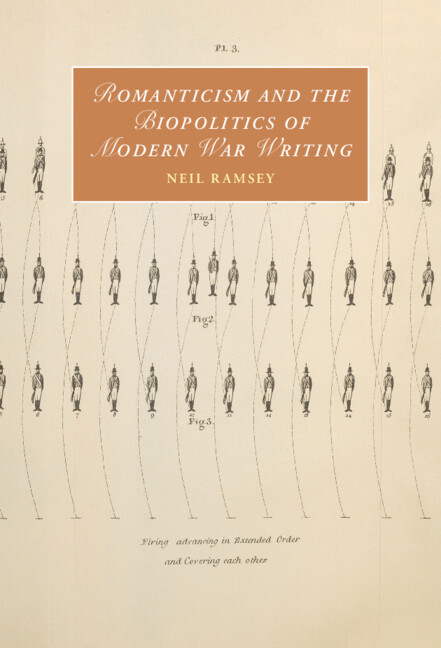
Romanticism and the Biopolitics of Modern War Writing

-
Select format
-
- Publisher:
- Cambridge University Press
- Publication date:
- 25 April 2023
- 23 February 2023
- ISBN:
- 9781009118798
- 9781009100441
- 9781009114998
- Dimensions:
- (229 x 152 mm)
- Weight & Pages:
- 0.6kg, 304 Pages
- Dimensions:
- (229 x 152 mm)
- Weight & Pages:
- 0.442kg, 304 Pages
- Subjects:
- Literature, English Literature 1700-1830
- Series:
- Cambridge Studies in Romanticism (135)
You may already have access via personal or institutional login- Subjects:
- Literature, English Literature 1700-1830
- Series:
- Cambridge Studies in Romanticism (135)
Show more authors 
You may already have access via personal or institutional login
Book description
Military literature was one of the most prevalent forms of writing to appear during the Romantic era, yet its genesis in this period is often overlooked. Ranging from histories to military policy, manuals, and a new kind of imaginative war literature in military memoirs and novels, modern war writing became a highly influential body of professional writing. Drawing on recent research into the entanglements of Romanticism with its wartime trauma and revisiting Michel Foucault's ground-breaking work on military discipline and the biopolitics of modern war, this book argues that military literature was deeply reliant upon Romantic cultural and literary thought and the era's preoccupations with the body, life, and writing. Simultaneously, it shows how military literature runs parallel to other strands of Romantic writing, forming a sombre shadow against which Romanticism took shape and offering its own exhortations for how to manage the life and vitality of the nation.
Contents
Contents
Metrics
Altmetric attention score
Full text views
Full text views helpTotal number of HTML views: 0
Total number of PDF views: 0 *
 Loading metrics...
* Views captured on Cambridge Core between #date#. This data will be updated every 24 hours.
Usage data cannot currently be displayed.
Accessibility standard: Unknown
Why this information is here
This section outlines the accessibility features of this content - including support for screen readers, full keyboard navigation and high-contrast display options. This may not be relevant for you.
Accessibility Information
Accessibility compliance for the HTML of this book is currently unknown and may be updated in the future.