1 Introduction: Lines in the Sand
The study of ancient borders – from the definition of the term to the research questions and conclusions – is fundamentally predicated on the interests of the scholar. If one is interested in fixed, even fortified, geopolitical boundaries tied to sovereign power, these can be found in state propagandistic texts as well as in the archaeological remains of Hadrian’s Wall, the Great Wall of China, and the Second Cataract forts of ancient Egypt’s Nubian frontier, to name just a few examples. This delineation of power can also be expressed symbolically, as in the case of Rome’s pomerium line, which despite having strong effects on law, imperium, and cultural practice was not a physical reality. The common historical or literary vignette of drawing a line in the sand, such as Gaius Popillius Laenas drawing a line around Seleucid Emperor Antiochus IV to prevent his invasion of Egypt (Livy, Ab Urbe Condita, XLV.12 & Polybius, Histories, XXIX.27), is another example of the power of figurative borders. If one’s focus is on the religious or ideological roles of borders, these can be seen in ancient civilizations including Egypt, Rome, Sumer, and the Maya, which performed rituals involving the walking, measuring, or plowing of the border (Diener & Hagen Reference Diener and Hagen2012, pp. 24–30). Religious complexes often had sacred boundaries to separate the pure from the profane, and religious references abound of cosmic borders or the role of the gods in securing the territorial borders of the terrestrial king or state. In these cases, it naturally follows that borders would be defined as fixed limits, whether real or metaphorical, set lines that were often marked on the landscape and whose main role was to divide, delineating territory, population, polities, and even purity. In the end, we are left with a neat patchwork map with distinct sections abutting along clear edges, distinguishing what was, for instance, Egypt versus Nubia, who was an Israelite versus a Philistine, or a Roman versus a Celt.
Conversely, for those interested in the lived reality of the border, such rigid lines become much more blurred. Archaeological, textual, and art historical evidence from a more local scale consistently presents borders as zones rather than lines, porous and flexible, with overlapping cultural inputs that result in new, hybrid production. Seals from Kanesh showed both blending and maintenance in Anatolian and Assyrian motifs, serving as identity markers reflecting generational shifts in multiethnic families (Larsen & Lassen Reference Larsen, Lassen, Kozuh, Henkelman, Jones and Woods2014). At Fort Ross in California, Indigenous Californian women utilized their own traditional cooking practices to produce meals that were more familiar to their Alutiiq husbands (Lightfoot et al. Reference Lightfoot, Schiff and Martinez1998; Lightfoot & Martinez Reference Lightfoot and Martinez1995). Women in Roman Pannonia (Rothe Reference Rothe and McInerney2014, pp. 508–511) and Egyptian Nubia (Smith Reference Smith and Areshian2013, pp. 88–94) preserved traditional, local burial styles while others melded cultural inputs from both local and imperial customs.
Everything from religion and technology to daily basics such as foodways and dress was adapted and transformed in these borderland regions. Even in the case of fortified, walled borders, it is possible to examine both the efficacy of the fortifications as well as the exchange and mobility that occurred in spite of those defenses. The study of borders therefore invites – or demands – that we become more comfortable with ambiguity and accept that different conceptions of borders can exist simultaneously at distinct scales or to individual actors. We need to extend Frankfort’s “multiplicity of approaches” in accepting contradictions in the Egyptian religious realm (Frankfort Reference Frankfort1948, pp. 4, 18–19) to their ideas of borders as well. It was likely conceivable to the ancient Egyptian, without much effort, to have rigid, impermeable borders established by the king and the gods while simultaneously recognizing that those borders were crossed constantly by people, goods, and ideas.
In both cases, it is clear that borders are fundamentally linked to questions of identity, belonging, and group inclusion. Borders dictate not only what territory may lie under whose sovereignty, but who is permitted to live or belong in that territory, distinguishing between insider and outsider (Agnew Reference Agnew1994, p. 63; Biersteker & Weber Reference Biersteker and Weber1996, pp. 2–3; Doty Reference Doty, Biersteker and Weber1996, p. 128; Murphy Reference Murphy, Biersteker and Weber1996, p. 97; Paasi Reference Paasi, Paasi, Prokkola, Saarinen and Zimmerbauer2018, pp. 23–24; Shachar Reference Shachar2019, p. 98). It is precisely the border that determines who is a “citizen” or a foreigner who has had to cross into the host land, meaning there is an inextricable ontological relationship between borders and immigrants. Barth first argued that ethnic groups themselves were defined more by their boundaries than the “cultural stuff that it encloses” (Barth Reference Barth1969, p. 15), suggesting that the relationship between borders and collective identity is mutually constitutive.
The link between territory and identity has an unconscious but strong homogenizing effect, eliding the diversity within territorial boundaries in favor of a shared self-conception based on place, and rendering that collective identity coterminous with the edges of the polity (Agnew Reference Agnew1994, pp. 56, 70–71; Paasi Reference Paasi, Johnson, Schein and Winders2013, pp. 478–482, Reference Paasi2020; Smith Reference Smith, Chisholm and Smith2016, pp. 1–3; Van Houtum & Van Naerssen Reference Van Houtum and Van Naerssen2002, p. 126). Paasi defines this as socio-spatial fetishism, noting that “physical and symbolic borders and b/orderings are critical in the social construction of otherness” as well as a national identity (Paasi Reference Paasi2020, p. 21). Terms like “immigrant” and “alien” inherently reference a normative collective identity to which these elements do not belong (Doty Reference Doty, Biersteker and Weber1996, p. 128). This homogenizing tendency has already been noted in the study of ancient Egypt; in 2006, Kemp wrote that “Books about ancient Egypt take for granted that the ancient Egyptians were already, in essence, a nation” (Kemp Reference Kemp2006, p. 19), and that the Egyptians had a shared word for humankind (rmt̠), which referred to their collectivity as a people, excluding foreigners (Kemp Reference Kemp2006, pp. 22–23; Kootz Reference Kootz, Jesse and Vogel2013, p. 34). This idea was seemingly reified in Egyptian ideology, in which cosmic order (ma’at), represented by kmt, the arable land of the Nile Valley, as well as its inhabitants, was diametrically opposed to isfet or chaos, embodied in foreigners, foreign lands, and the desert (dšrt) (Assmann Reference Assmann and Jenkins2003, pp. 151–153; Loprieno Reference Loprieno1988; Zivie-Coche Reference Zivie-Coche2018, pp. 25–26). Indeed, Assmann argues that, in this worldview, foreigners cannot be considered human at all (Assmann Reference Assmann and Jenkins2003, pp. 152–153). This conception of the world ordered by clear cultural and geographic borders reflects modern understandings of nation-states, political sovereignty within territory, and “ideologies of cultures as hermetically sealed and spatially fixed” (Paasi Reference Paasi, Johnson, Schein and Winders2013, p. 478), rather than lived realities – whether in ancient Egypt or today.
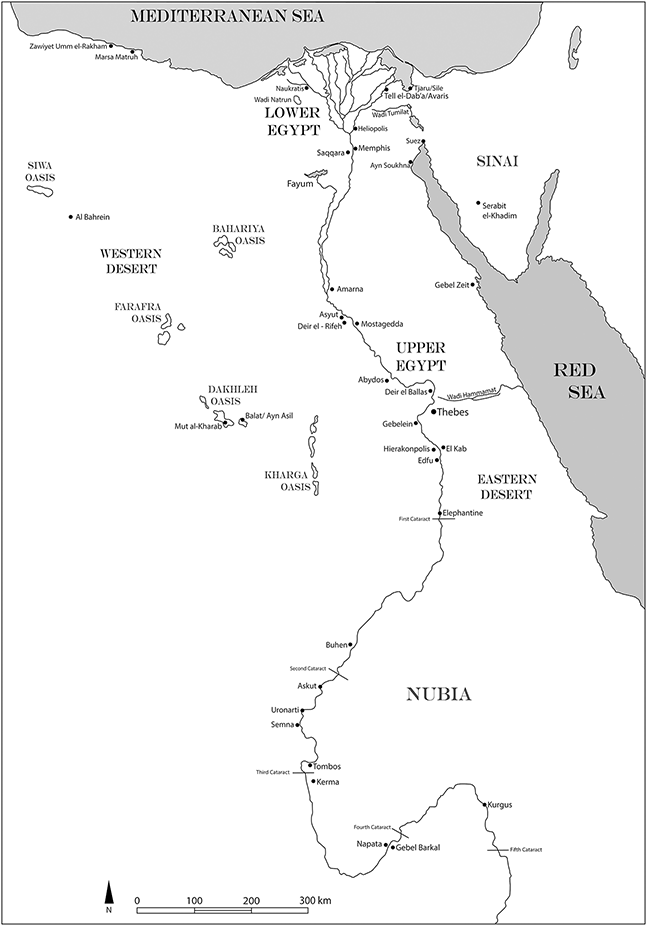
Egypt is perhaps one of the most alluring of ancient civilizations in which to find absolute borders because of the uniqueness of its geography (Figure 1). Its “natural” borders fall in the north at the Mediterranean Sea, in the east at the Red Sea, in the west at the impassable expanse of desert, and in the south at the First Cataract of the Nile (Hornung Reference Hornung and Bredeck1992, p. 74; S.T. Smith Reference Smith, Parker and Rodseth2005, p. 209). These rigid geographical features allow us to envision a state that was neat and nearly square, and they give rise to the extremely pervasive misconception of a unitary Egyptian identity isolated within those borders (Zivie-Coche Reference Zivie-Coche2018, p. 25). State texts reinforce this vision and contrast it with wretched foreigners and even the foreign lands themselves, whose physical features are opposite to Egypt’s own. Yet Egypt was never really isolated, and immigrants from numerous places can be found settling in and integrating into Egypt across the longue durée (Schneider Reference Schneider and Wendrich2010; Taterka Reference Taterka2024). Reconciling these two conflicting understandings of Egypt, characterized by Loprieno as topos and mimesis (Loprieno Reference Loprieno1988), requires the investigation of multiple forms of evidence, as well as a willingness to accept multiple simultaneous conceptions of ancient Egypt’s borders. Furthermore, it is crucial to remember that the location, permeability, and understanding of borders, as well as their attitudes toward immigrants, certainly changed often over the millennia of Egypt’s history.
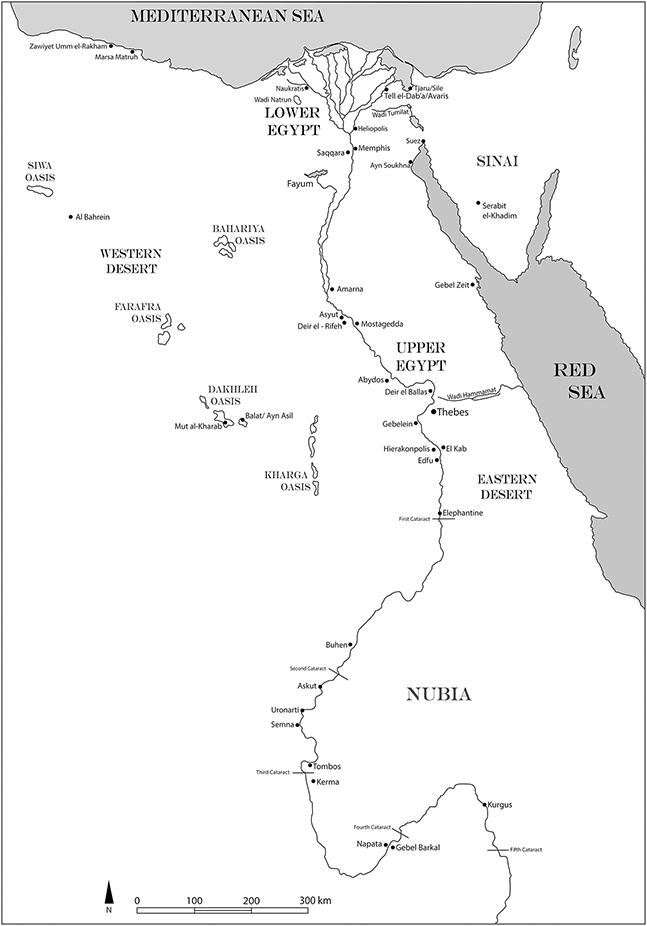
Figure 1 Map of ancient Egypt and Nubia, by author.
1.1 Previous Approaches
The study of borders and immigration by necessity must embrace every available modality of evidence, from textual to archaeological, imperial to individual, and international to local. The most well-known and often discussed textual sources are the royal inscriptions denigrating foreigners and the so-called border stelae, which are often the same texts. Textual evidence on borders and immigration, however, can also be found in literary tales, graffiti, personal letters, religious texts, and more. The archaeological record is crucial to understanding the reality of border experiences in sites like border fortresses as well as settlements in which locals and immigrants lived together; often archaeology provides our only evidence for immigration or cultural encounters.
Most studies on borders in ancient Egypt have investigated the topic from the political and/or ideological perspective. Examinations often focus on the definition of the ancient Egyptian terms tꝫš and d̲rw, including to what extent these terms can be compared to modern notions of borders (Galán Reference Galán1995, pp. 102–103; Siegel Reference Siegel2022), or on ancient Egyptian political thought on the nature of ma’at and isfet and its reflection in Egypt’s border policies (Langer Reference Langer, Chantrain and Winand2018; Langer & Fernández-Götz Reference Langer and Fernández-Götz2020, pp. 39–41). Many concentrated on the precise extent of those borders (Schlott-Schwab Reference Schlott-Schwab1981) and on the nature of the political control exerted by the Egyptian state within or beyond them. Interpretations range from rigid pharaonic sovereign control over the Nile Valley, deserts, and imperial holdings beyond, to recognizing that these claims of established borders may only indicate the possibility of the king asserting his influence, whether via violence or simply a trade arrangement (Bleiberg Reference Bleiberg1984; Darnell Reference Darnell and Wilkinson2007; Galán Reference Galán1995, Reference Galán, Milano, de Martino, Fales and Lanfranchi1999; Hornung Reference Hornung and Bredeck1992; Kootz Reference Kootz, Jesse and Vogel2013; Liverani Reference Liverani1990, Reference Liverani and Liverani2001; Lorton Reference Lorton1974; Morris Reference Morris2004, Reference Morris2017; Müller-Wollermann Reference Müller-Wollermann1996; Quirke Reference Quirke1988; Redford Reference Redford1992; Schlott-Schwab Reference Schlott-Schwab1981; Siegel Reference Siegel2022; Smith Reference Smith1995, Reference Smith, Parker and Rodseth2005b; Török Reference Török2008; Vogel Reference Vogel, Bar, Kahn and Shirley2011; Zibelius-Chen Reference Zibelius-Chen1988; Zivie-Coche Reference Zivie-Coche2018).
The study of foreigners in ancient Egypt has also been worked on extensively. Earlier approaches focused on culture-historical definitions of foreign identities and the rapidity of their complete assimilation to Egyptian cultural norms – their Egyptianization. More recent scholarship addresses the biases inherent in the concept of Egyptianization and investigates how the identities of foreigners were adapted, transformed, or maintained when they moved to Egypt (Candelora Reference Candelora, Candelora, Ben-Marzouk and Cooney2022a; Matić Reference Matić2020; Schneider Reference Schneider and Wendrich2010; Taterka Reference Taterka2024). Interestingly, there is a tendency, even in recent scholarship, to continue to refer to these individuals as (acculturated) foreigners rather than using the term “immigrants.” While some people were certainly brought to Egypt against their will, many moved voluntarily, and all would be referred to in modern parlance as some variety of migrant. Indeed, many of these individuals maintained and advertised their foreignness as a strategy to promote their craft or professional specialty (Candelora Reference Candelora2019a), but the continued use of the term “foreigner” implies that they never quite lose their foreign status to scholars, despite seemingly having done so in the eyes of their ancient neighbors. Applying modern approaches to immigration allows us to incorporate new theoretical frameworks, especially to better conceptualize the generations that came after the initial move to Egypt. Though the term “immigrant” still qualifies these individuals as distinct from natives, it at least indicates that they have made Egypt their home permanently and need to be thought of as constituting a portion of the Egyptian population and contributing to its culture.
Therefore, to study immigration/immigrants is to prioritize the social history and lived experience of the border, rather than solely examining the geopolitics of the border and lines on a map. Concentrating on immigrants allows us to relocate the border as the center, as well as divorcing it from its geographic constraints, to explore the border’s role in the creation of new cultural products and the construction of identities. Although we can never truly understand the actual experience of ancient peoples, the attempt to reconstruct aspects of that reality from several viewpoints allows us to start to shed our own cultural frameworks to at least imagine different ways in which they might have encountered their worlds. This Element therefore approaches these entangled questions of borders and immigrants in ancient Egypt from the perspective of ambiguity, embracing the likelihood of a multiplicity of understandings that changed over time.
2 B/ordering
Borders are most often conceived of as lines on a map – edges, limits, or divisions of land. They are delimitations of space that define the geographical edges of a polity and symbolize the territory within which that polity has sovereignty (Bissonnette & Vallet Reference Vallet, Bissonnette and Vallet2022, p. 1). In setting those territorial and political boundaries, borders also mark the distinction between the interior and exterior, those who belong and the “Other” (Newman Reference Newman2003, pp. 5–6). This encompasses notions of citizenship and the legal rights such membership confers, requiring some form of control to supervise entry not only into the territorial space of the state but also into its citizenry (Diener & Hagen Reference Diener and Hagen2012, p. 86; Shachar Reference Shachar2019). Modern borders are marked in the physical world by border control stations, walls, and even signage, and are monitored and policed. Especially since 9/11, borders around the world have been fortified, with more than eighty walls constructed as of 2018 (Paasi Reference Paasi2022, pp. 7–9; Vallet Reference Vallet, Bissonnette and Vallet2022, p. 7). This increasing level of control and surveillance of conflicted borders is juxtaposed strikingly with what many scholars are describing as a move toward a borderless world, one in which modern technology, communication and trade networks, and mobility are effectively erasing many of the world’s borders (Diener & Hagen Reference Diener and Hagen2012, pp. 60–61; Paasi Reference Paasi, Paasi, Prokkola, Saarinen and Zimmerbauer2018). Yet legal scholars argue that borders are not disappearing, but being reinvented through forms of border control that have been unlinked from territorial boundaries, while the legal privileges of citizenship are still inextricably bound to the lines drawn on the map (Shachar Reference Shachar2019, pp. 96–98). Even the study of borders has traditionally been limited to disciplines like political science and geography, so embedded are the notions of borders and territorial sovereignty (Mullin Reference Mullin2011a, p. 12).
Yet this concept of the border is a relatively modern invention. Numerous studies have shown that the idea of borders as state limits was “invented” with the signing of the Treaties of Westphalia at the end of the Thirty Years’ War (Diener & Hagen Reference Diener and Hagen2012, p. 3; Shachar Reference Shachar2019, pp. 97–98). Essentially, these treaties were agreements to limit state power through the partition of space, but gave rise to, as Amilhat Szary put it, “a long lasting tautology whereby territory is defined by state, state by sovereignty, and sovereignty by territory” (Amilhat Szary Reference Amilhat Szary, Agnew, Secor, Sharpe and Mamadouh2015, p. 4). She even notes that these early European boundary treaties are contemporaneous with the first precise regional maps that could be used to demonstrate or “prove” the location of those borders (Amilhat Szary Reference Amilhat Szary, Agnew, Secor, Sharpe and Mamadouh2015, p. 5). Krishna proposes that the modern obsession with mapping borders is a means to literally inscribe nationality and sovereignty (Krishna Reference Krishna1994). This Westphalian system of territorial sovereignty received its current form in the mapping out of nation-states after the world wars and the fall of the Soviet Union (Baud & Van Schendel Reference Baud and Van Schendel1997, p. 215; Langer & Fernández-Götz Reference Langer and Fernández-Götz2020, p. 37) and is reified in the United Nations (UN) Charter (Art. 2, Para. 4), which states that “all Members shall refrain in their international relations from the threat or use of force against the territorial integrity or political independence of any state” (Diener & Hagen Reference Diener and Hagen2012, p. 62).
Many scholars have demonstrated that this particular brand of territoriality – the concept of the sovereign state – is the “unquestioned geographical framework within which we consider any and all issues ranging from ethnicity to migration to water quality” (Murphy Reference Murphy, Biersteker and Weber1996, p. 104), and within which we approach the study of ancient states and their borders. Yet this particularly Westphalian conception of borders, aside from being modern, is also an invention. These types of clear-cut, sharp boundaries do not exist in reality, and our insistence on finding and studying them is a reflection of our own socio-spatial fetishism or cartographic anxiety (Krishna Reference Krishna1994; Paasi Reference Paasi2020, Reference Paasi2022, pp. 7–9; Strassoldo Reference Strassoldo1977, p. 85). Consequently, modern parallels will be explored throughout as a means to destabilize our fixed cultural understanding of borders and to introduce potential alternative perspectives that can be applied to the ancient evidence.
2.1 Blurring Borders
A brief survey quickly begins to blur this perception of borders. Borders often correspond with natural features in the landscape principally because those features actually exist in reality (Smith Reference Smith, Chisholm and Smith2016, pp. 2–3). Otherwise, the “lines on a map” do not translate into a lived experience. Eighteenth-century European sovereigns, among many others from across history, utilized rivers and mountain chains to reinforce their power as derived from God (Amilhat Szary Reference Amilhat Szary, Agnew, Secor, Sharpe and Mamadouh2015, p. 5). Even when you construct an encounterable border on the landscape, like a border wall, it is highly permeable and unenforceable (De Leon Reference de Leon2015; Vallet Reference Vallet, Bissonnette and Vallet2022, p. 12). Many of the well-known examples from the ancient world, such as Hadrian’s Wall, the Great Wall of China, the Sadd-e Sekandar, and Sumerian walls were also permeable in practice, meant more as projections of imperial power and perhaps staging grounds for campaigns than for preventing population movement (Diener & Hagen Reference Diener and Hagen2012, pp. 33–34; Hodgson Reference Hodgson2017; Mojtahed-Zadeh Reference Mojtahed-Zadeh2005). In ancient Egypt, only a few freestanding walls existed and were also likely meant only to structure and direct mobility. Strings of border fortresses, located in the southern, northwestern, and northeastern regions, were certainly utilized for surveillance and the control or recording of population movement, as attested in the Semna Dispatches and Papryus Anastasi V (Knoblauch Reference Knoblauch and Raue2019; Kraemer & Liszka Reference Kraemer and Liszka2016; Morris Reference Morris2004, pp. 804–809, Reference Morris2017; Schneider Reference Schneider and Babej2017; Siegel Reference Siegel2022, pp. 15–16; Smither Reference Smither1945). They were also used for organizing trade and military expeditions, and served as manifestations of the power of the Egyptian king, rather than complete blockades against migration (Siegel Reference Siegel2022, Reference Siegel2024).
Furthermore, borders need not conform to geography or territorial limits at all. One of the most common places to encounter border control checkpoints is in airports, which often sit well within the geographical interior of the state (Paasi Reference Paasi, Johnson, Schein and Winders2013, p. 485). Ambassadors have diplomatic immunity, meaning that these individuals technically embody the border, taking it with them wherever they go, and embassies themselves exist as sovereign islands within other states (Diener & Hagen Reference Diener and Hagen2012, pp. 74–80). In ancient Egypt, parallels can be found in the border forts, which in the New Kingdom fell well within the claimed territorial limits of the Egyptian state or king. For instance, while royal inscriptions at Kurgus and Naharin proclaimed these as the locations of Thutmose I and Thutmose III’s established borders (Davies Reference Davies, Spencer, Stevens and Binder2017; Vogel Reference Vogel, Bar, Kahn and Shirley2011), the corresponding border forts (or checkpoints?) were located in the Sinai and at the Second Cataract hundreds of kilometers away. Several of the Amarna Letters have also been interpreted as representing versions of passports (Tarawneh Reference Tarawneh and Mynářová2011, p. 275, EA 30) or duty-free statements (Moran Reference Moran1992, pp. 112–113, EA 39, 40), suggesting that the sovereignty of Late Bronze Age emperors could be envisioned as traveling beyond their territories.
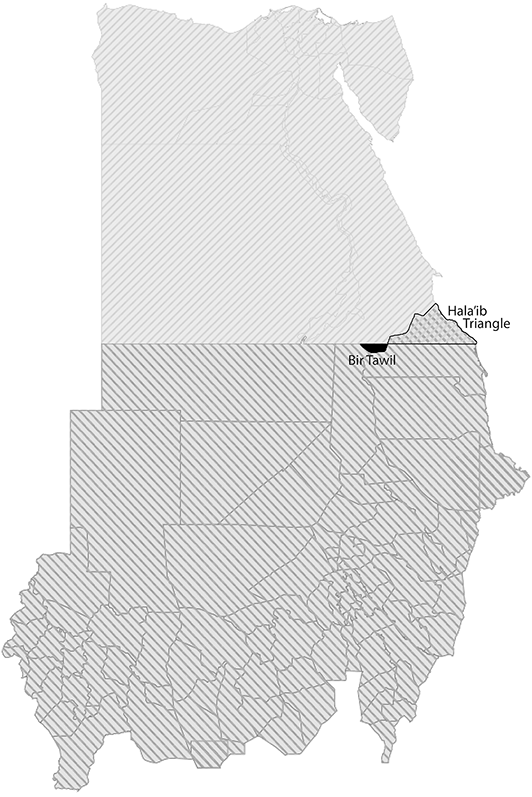
Finally, political claims to territory do not always correspond with actual political control or sovereignty. The United States and China have planted their flags on the moon, an action synonymous with staking claim to territory (Rudnicki Reference Rudnicki2016, p. 304), and the Outer Space Treaty gives satellites and spacecraft the ability to carry sovereignty in the same way as ships or ambassadors. The UN Convention on the Law of the Sea, 1967–1982, resulted in legislation dictating economic, jurisdictional, and even mining rights to seabeds, often in no way geographically contiguous with the country claiming those rights. In 2007, Russia used a submersible to plant its flag and claim sovereignty over the North Pole seabed and its resources, despite not yet having the technology to exploit those resources (Diener & Hagen Reference Diener and Hagen2012, pp. 76–80). Terrestrial examples can also be found if the territory being claimed or disputed is either extremely difficult or undesirable to control. The contested Indo-Pakistani border at Siachen Glacier was originally left unmapped during Partition due to the hostile environment and terrain. It has since been manned by military personnel on both sides, thousands of whom have died from exposure rather than armed conflict (Krishna Reference Krishna1994, p. 512). Additionally, Hans Island, a 1.3 square kilometer spit of uninhabited land in the Arctic, was contested until 2022 between Canada and Denmark. Though the conflict really centered on where the water rights of each country fell, this barren island became the centerpiece of the friendly dispute (Rudnicki Reference Rudnicki2016). In contrast, Bir Tawil (Figure 2) is a 2,060 square kilometer area of desert between Sudan and Egypt, assigned to both countries by British administrative mapmakers in 1899 and 1902 respectively. Yet neither claim the territory as a strategy to boost their claims to the nearby and much more valuable Hala’ib Triangle, disorienting “our expectations of what nations and borders are trying to achieve” (Bonnett Reference Bonnett2014, p. 76). Similar debates extend into Egyptology concerning whether the state was ever actually in control of the surrounding desert regions or oases, as well as how contested borders were navigated (Darnell Reference Darnell and Wilkinson2007; Hubschmann Reference Hubschmann2010b; Morris Reference Morris, Ikram and Hawass2010a).
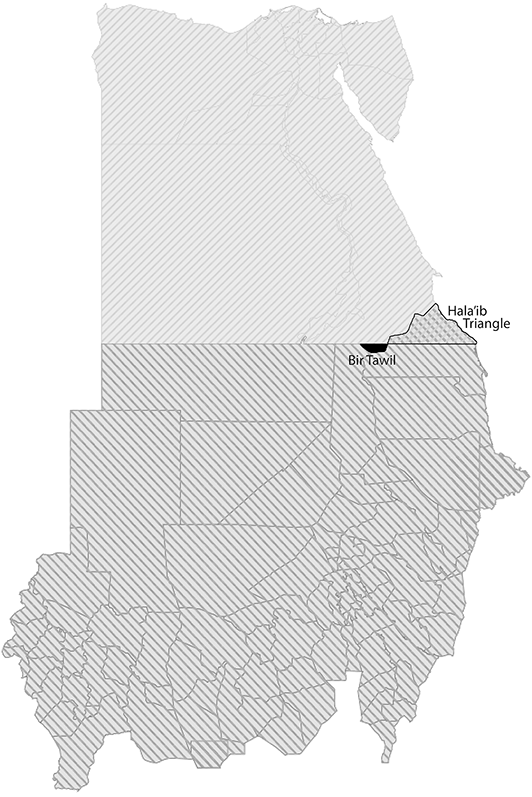
Figure 2 Bir Tawil and the Hala’ib Triangle – Cmglee McGeddon, CC BY 3.0, via Wikimedia Commons.
Another complicating issue is entangled terminology. Academic discussions of borders often deal not only with the term “border,” but also “boundary,” “frontier,” and “borderland,” all of which share the basic definition of divisions of groups and/or geography. Other languages such as French, German, and Spanish each have a singular term that encompasses all of these associated concepts (frontière, grenze, frontera) (Langer Reference Langer, Chantrain and Winand2018, pp. 48–49; Parker Reference Parker2006, p. 79), while in English the distinctions between them shift by study. Both border and boundary have been defined as a linear geopolitical limit; frontier, border, and borderland as zones of interaction and exchange; borderland as the no-man’s-land between two unified polities; frontiers as the regions beyond the edges of imperial systems rather than between them, etcetera (Adelman & Aron Reference Adelman and Aron1999; Amilhat Szary Reference Amilhat Szary, Agnew, Secor, Sharpe and Mamadouh2015, pp. 1–2; Baud & Van Schendel Reference Baud and Van Schendel1997; Feuer Reference Feuer2016; Langer & Fernández-Götz Reference Langer and Fernández-Götz2020, pp. 33–35; Newman Reference Newman2003; Paasi Reference Paasi2022, pp. 7–9; Parker Reference Parker2006; Strassoldo Reference Strassoldo1977). Yet all are spatial practices tied to territoriality, sovereignty, and identity.
2.2 New Border Studies
Recent scholarship has elucidated that geographic, political, and cultural borders are discontiguous more often than not, and that even the most fortified and surveilled of borders are quite permeable. Borders can therefore, as uncomfortable as it may seem, be divorced from notions of sovereignty or territoriality. They can overlap, change over time, and be fuzzy (Feuer Reference Feuer2016, p. 51; Paasi & Zimmerbauer Reference Paasi and Zimmerbauer2016). Indeed, the study of native groups from around the world has been extremely helpful in presenting alternative models of territoriality. In North America, for example, native groups did not entertain such bounded notions of land ownership or sovereignty and had to be forced into these legal constraints by the westward expansion of the United States. Tribal groups with diverse leadership structures were assigned single leaders who were meant to embody sovereignty, and the tribe was assigned a parcel of land over which it previously had no notions of claim (Goldberg-Ambrose Reference Goldberg-Ambrose1994, pp. 1130–1134). A fascinating project called Native Land Digital (https://native-land.ca) is using historical documents and ethnographic sources to reconstruct a map of Indigenous groups and languages around the world – the outcome has produced a map that defies our expectations, showing territories that overlap and areas that remain unclaimed. This project also clarifies that some relationships and overlaps are visible only at the most local of scales. This undertaking helps us visualize alternative organizations of territory that account for borders and identities that overlay one another’s edges, rather than being stitched neatly together into a “patchwork,” “mosaic,” “jigsaw,” or any number of metaphors that evoke clearly defined divisions (Langer & Fernández-Götz Reference Langer and Fernández-Götz2020, p. 38; Shachar Reference Shachar2019, p. 98). When borders are conceived of in this way, they can much more easily be seen as fluid, changeable, permeable, and in constant need of maintenance.
In New Border Studies, borders have been reconceived of as bordering processes, dynamic institutions and practices that define inclusion and exclusion between territories and/or people. They are social and political constructs that are highly context- and audience-dependent and need constant reification through surveillance, fortification, ideological rhetoric, or ritual acts (Amilhat Szary Reference Amilhat Szary, Agnew, Secor, Sharpe and Mamadouh2015, pp. 6–10; Baud & Van Schendel Reference Baud and Van Schendel1997, p. 211; Diener & Hagen Reference Diener and Hagen2012, pp. 1–2; Feuer Reference Feuer2016, pp. 14, 23, 121; Laakkonen Reference Laakkonen2020; Newman Reference Newman2003; Paasi Reference Paasi2022, pp. 1–5; Parker Reference Parker2006; Parker & Vaughan-Williams Reference Parker and Vaughan-Williams2009). Borders are also highly performative spaces wherein different aspects of identity can be emphasized in varying contexts (Mullin Reference Mullin2011a, p. 19). This approach demands a bottom-up perspective focused on the actors and practices that create and maintain these divisions (Newman Reference Newman2003, p. 6). It also allows us to see borders more as borderlands, middle grounds, or third spaces – cultural interfaces, broader zones wherein identity is negotiated and cultural production occurs (Anzaldúa Reference Anzaldúa1987, p. 3; Baud & Van Schendel Reference Baud and Van Schendel1997; Bhabha Reference Bhabha1994; Feuer Reference Feuer2016; Hämäläinen & Truett Reference Hämäläinen and Truett2011; Mullin Reference Mullin2011a; White Reference White1991, Reference White2006). Instead of treating the border as peripheral, this framework treats the border as the center, at least for some of the population, and acknowledges that borders and borderlands can occur within the interior of the state as well (Baud & Van Schendel Reference Baud and Van Schendel1997, p. 212). Borders can divide territories, social groups, and even cultural practices and values, sometimes simultaneously, though often not. For example, the original Mason–Dixon Line from the 1760s marked the contested border between Pennsylvania, Maryland, and Delaware, forming a border – which was even marked on the landscape by stelae – well within the United States interior. And, although invoked as significant during (and since) the Civil War, this border did not coincide with divisions in practice between slave-owning states and free states, groups who considered themselves culturally Southern or Northern, the political division between the Union and the Confederacy, nor did it mark a boundary north of which institutional racism ceased to exist (Castronovo Reference Castronovo, Michaelsen and Johnson1997). Borders are multilayered and deeply entangled constructs reified and reinforced through ongoing processes of demarcation and division; “borders are not ‘natural’ phenomena; they exist in the world only to the extent that humans regard them as meaningful” (Diener & Hagen Reference Diener and Hagen2012, p. 1).
2.3 Borders in Ancient Egypt
In applying these approaches to the evidence from ancient Egypt, it is important to be cognizant of the cartographic anxiety or territorial trap that allows us to see only the Westphalian borders of a sovereign state. The most commonly depicted map of ancient Egypt shows a “state-territory named Km.t” whose politico-territorial borders “coincide with the topographical ones” – namely the defined natural demarcations of the deserts, Mediterranean Sea, and First Cataract (Kootz Reference Kootz, Jesse and Vogel2013, p. 40; see also Hornung Reference Hornung and Bredeck1992; S.T. Smith Reference Smith, Parker and Rodseth2005, Reference Smith2003, p. 4). Yet New Kingdom nome lists establish the length of Egypt as measured not from the Mediterranean coast to the cataracts, but between various Delta cities (which changed depending on the time period, including Behdet, Tanis, Alexandria, and Piramesse) and Elephantine (Schlott-Schwab Reference Schlott-Schwab1981, pp. 82–83). It has been repeatedly noted that “maps create a strong sense of the existence of borders” (Paasi & Zimmerbauer Reference Paasi and Zimmerbauer2016, p. 80), indicating their “finality and permanence” (Diener & Hagen Reference Diener and Hagen2012, p. 76). The simple act of drawing those lines on a map literally inscribes and reifies the concept of ancient Egypt as a sovereign state (Amilhat Szary Reference Amilhat Szary, Agnew, Secor, Sharpe and Mamadouh2015, p. 5). However, for a culture that was certainly interested in the cartographic rendering of the world – examples exist of maps of the duat, a topographical map of Wadi Hammamat, progressions through landscapes, architectural plans, and more (Figure 3) (Barnard Reference Barnard and Selin2008; Shore Reference Shore, Harley and Woodward1987) – nothing resembling our expectation of a map that depicts Egypt or its territorial borders has yet been found (O’Connor Reference O’Connor and Talbert2012, p. 48). I would propose that this lack of map is the first of many hints that the ancient Egyptians had their own conceptions of territoriality and its relationship to power and identity, as distinct from our Westphalian assumptions as the Indigenous example discussed in Section 2.2.

Figure 3 “Goldmine Papyrus,” topographical map of Wadi Hammamat
The textual record clearly demonstrates that Egypt had cultural concepts, tꝫšw and d̲rw, that resemble modern notions of borders. Much has been written debating the exact definitions and distinctions between these two terms, indicating a confusion similar to that seen around the use of the English terms “border,” “boundary,” “frontier,” and “borderland.” For instance, many have agreed that tꝫš represents the ancient Egyptian geopolitical administrative border, marking the territorial sovereignty of the king, while ḏr is a religious concept tied to the limits of the cosmos (Goelet Reference Goelet, Chazan, Hallo and Schiffman1999; Hornung Reference Hornung and Bredeck1992; Liverani Reference Liverani1990; Quirke Reference Quirke1988; Redford Reference Redford1992; Schlott-Schwab Reference Schlott-Schwab1981). Bleiberg argued that tꝫš has a more political orientation while ḏrw are specifically referring to geographical limits, and Lorton, approaching the issue from a legal standpoint, claims that tꝫš are religiously dictated boundaries while ḏrw are the geopolitical limits of foreign lands (Bleiberg Reference Bleiberg1984; Lorton Reference Lorton1974). Several scholars have stressed that while tꝫš should be interpreted as “border,” it should be taken as an ideological statement of pharaonic power, not a literal marker of state territory (Kootz Reference Kootz, Jesse and Vogel2013; Langer & Fernández-Götz Reference Langer and Fernández-Götz2020; Smith Reference Smith1995, p. 188, Reference Smith, Parker and Rodseth2005b; Török Reference Török2008, p. 13; Vogel Reference Vogel, Bar, Kahn and Shirley2011, p. 322; Zibelius-Chen Reference Zibelius-Chen1988, p. 200).
Galán’s comprehensive examination of tꝫšw elucidated that they are not an exact correlate to a modern border line, demonstrating the contextual nature of their meaning (Galán Reference Galán1995, p. 133). Within the Nile Valley, tꝫš indicated the “limit of the territory assigned to an estate, a town or a province,” which are fixed and established by the king (Galán Reference Galán1995, pp. 111–116, 133). Abroad, tꝫšw generally referred to the “king’s sphere of influence,” encompassing not only strongly controlled territories but also any area that may have regularly sent taxes or gifts, engaged in trade, or shared some sort of relationship with the Egyptian king (Galán Reference Galán1995, pp. 117–126, 133–135, Reference Galán, Milano, de Martino, Fales and Lanfranchi1999, pp. 22–23). Crucially, he pointed out that “Egypt and the extension of Egypt’s tꝫšw did not coincide in space” (Galán Reference Galán1995, p. 135), undermining the elision of a unified Egypt with set territory. Galán’s discussion of d̲rw reflects the complexity and confusion of the word. He suggests that ḏrw are tied to ideology and the cosmos, but are also real territories past the tꝫšw of the king that do not recognize his authority. In some cases, ḏrw seems to refer “to the population and/or the valuables on X’s land,” a meaning that also applies within Egypt during tax collection. Even the jar lid of Apepi associated bringing in the d̲rw of foreign lands with those lands contributing their bꝫk to him (Galán Reference Galán1995, pp. 131–132, Reference Galán, Milano, de Martino, Fales and Lanfranchi1999, p. 25).
Recently, Siegel reconceptualized these two terms through modern border frameworks. He argued that both ḏrw and tꝫšw were boundaries, though the former were immutable while the latter could be established or changed by the king (Siegel Reference Siegel2022, p. 7). He nuanced Galán’s notion of tꝫš, stating:
I prefer to view a tꝫš as a royally established performance of power that demarcates space where one could potentially be subjected to the violent force of the pharaoh. This area did not necessarily have to be bounded in a linear fashion or even contiguous; rather, a tꝫš established a horizon wherein the Pharaonic state could levy taxes, requisition personnel, conscript or impress individuals, seize goods, engage in trade, send messengers, or inscribe itself upon the landscape in the form of monuments, fortresses, military campaigns, commercial expeditions, or ritual practice.
This perception of tꝫš acknowledges that borders are performative, marked by continuous action or processes of reinscription, and need not be contiguous or linear. He also made the excellent point that the very fact that we have such trouble locating or defining the tꝫšw and d̲rw of ancient Egypt “should serve as an obvious warning” that they had concepts of boundaries and political borders distinct from our own (Siegel Reference Siegel2022, pp. 9).
Siegel further noted that “tꝫš itself can be a verb meaning ‘to delimit, to divide’” (Siegel Reference Siegel2022, pp. 10 n. 40, Wb V, 236:15–237:8). Conversely, ḏr is related to the compound term r-ḏr for “entire(ty)” (Wb V, 589.6–591.8), while the glyph itself (Gardiner sign M36) represents a bundle of flax stems literally encircled by rope. Perhaps the confusion between these two terms is paralleled by the association between the two ancient Egyptian conceptions of eternity, ḏt (linear time) and nḥḥ (circular time) (Assmann Reference Assmann and Jenkins2003, pp. 18–19). Our modern worldview provides no strong cultural comparisons to these differentiated ideas, demonstrating a completely alternative understanding of time. Similarly, tꝫš may be a more linear and ḏr a more circular, all-encompassing understanding of boundaries and what they contain, again indicating a unique and disparate way of defining and dividing the world.
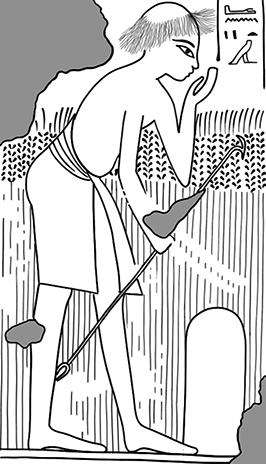
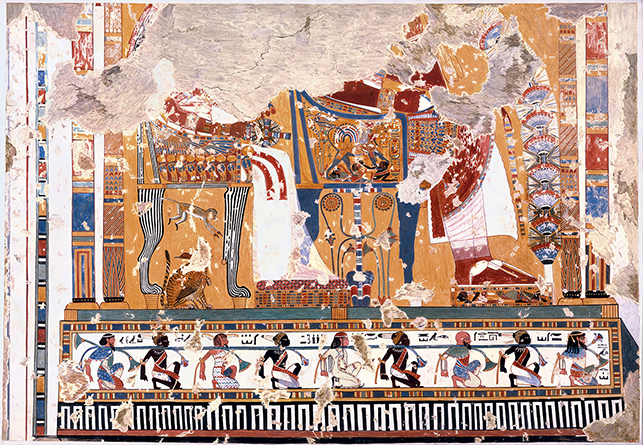
Within the Nile Valley, the most local borders were field and estate boundaries, which, at least ideologically, were established by royal command and were meant to be fixed. Estate lands and their produce were endowed to specific cults, and the stelae recording those endowments generally mention only the field’s dimensions rather than location, and they were held in temples. Some of these donation texts, along with scenes from the New Kingdom Theban tombs of Nebamun (Figure 4) and Amenemopet, indicate that some regular field boundaries were marked on the land with stones or stelae, though none have been found in situ (Galán Reference Galán1995, pp. 109–110, 139–142). Increasing in scale, estates, towns, and cities could have their own demarcated tꝫšw, as did the forty-two provinces (spꝫt) into which Egypt was administratively subdivided. These were also dictated by the king, and the autobiography of Khnumhotep II indicates they might also have been marked in some cases by stelae, as was the city of Amarna (Galán Reference Galán1995, pp. 105, 136; Quirke Reference Quirke1988, pp. 262).
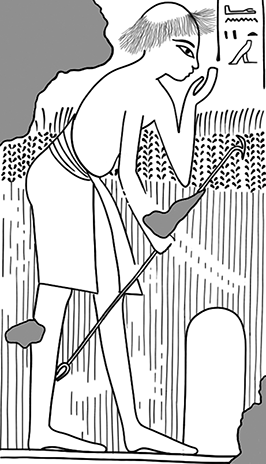
Figure 4 Field marker, tomb of Nebamun, Thebes – by author.
Although these domestic borders seem to coincide with modern notions of territorial limits, a closer examination of the sources and their contexts complicates this picture. For instance, Galán notes that only six of the Amarna stelae were truly meant to mark borders, including measurement data, while the rest were more akin to royal dedications to the Aten (Galán Reference Galán1995 pp. 136–137, 145). Further, field borders were so often disputed that the Duties of the Vizier from the tomb of Rekhmire made it clear that this administrative headache was his responsibility, and Ramses II complained in his Abydos dedicatory inscription that he had to order that field boundaries be written down rather than preserved orally (Galán Reference Galán1995, pp. 114–116; Siegel Reference Siegel2024, pp. 24). This frequency of disputes is understandable given that these field boundaries were quite literally erased from the land with the flood and had to be reestablished annually. Shore even notes how incongruous it seems, given these circumstances, that no field maps seem to have existed (Shore Reference Shore, Harley and Woodward1987, p. 128). In the autobiography of Khnumhotep, it seems that the Oryx nome was either so powerful or so disputed that multiple successive kings (Amenemhet I, Senwosret I, and Senwosret II) felt required to reestablish its borders, including its water rights and control of local resources like tamarisk trees. Additionally, this text indicates that the district was demarcated with stelae on its northern and southern tꝫš, whereas its eastern and western edges ended at the ḫꝫst (hill country) (Galán Reference Galán1995, pp. 105–106). Even in the Pyramid Texts, the borders of the country are referred to as the “two mountains” (Kootz Reference Kootz, Jesse and Vogel2013, p. 40). The lack of clearly established borders in inhospitable landscapes is a common phenomenon throughout history; Greek colonies in northern Africa marked their borders along the Mediterranean coast, but not on their desert edges, while Malay and Mongol polities were much less concerned with borders overall, focusing their control on main cities and the transportation arteries connecting them (Diener & Hagen Reference Diener and Hagen2012, pp. 27–31).
Collectively, this evidence indicates two things: (1) that the concept of tꝫš was fully predicated on the specific geography of the Nile Valley. Only the northern and southern nome borders required marking, and the territory of these districts seems not to have included the deserts, just settlements and arable land; (2) that the demarcation of these internal boundaries likely had less to do with ownership of territory than to whom or where the harvest or resources of said land were assigned, and who was responsible for administering that process – just as mineral and water rights can be owned separately from land today.
The issue becomes much more complex when attempting to define the borders of the state, and the role of the king and royal ideology in those bordering processes. Many texts, especially from the New Kingdom, refer to vague cosmic borders under the king’s authority, like the winds, the four posts of heaven, what the sun encircles, etcetera. These titles legitimize royal authority within Egypt, where the monuments are located, and always represent territorial control as personal to the individual king, rather than to a sovereign state (Galán Reference Galán1995, pp. 120–124; Hornung Reference Hornung and Bredeck1992, pp. 88–89; Liverani Reference Liverani1990; Siegel Reference Siegel2022, pp. 26–29; Smith Reference Smith and Lustig1997, p. 82).
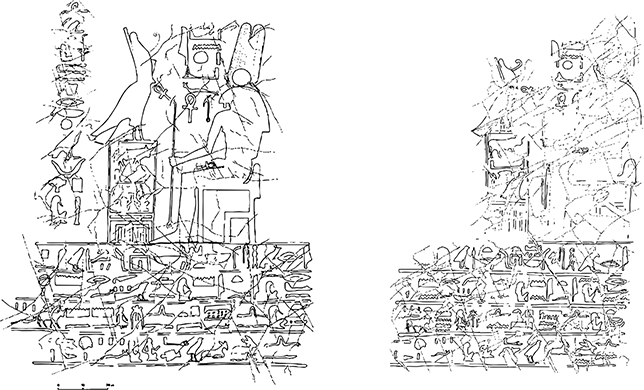
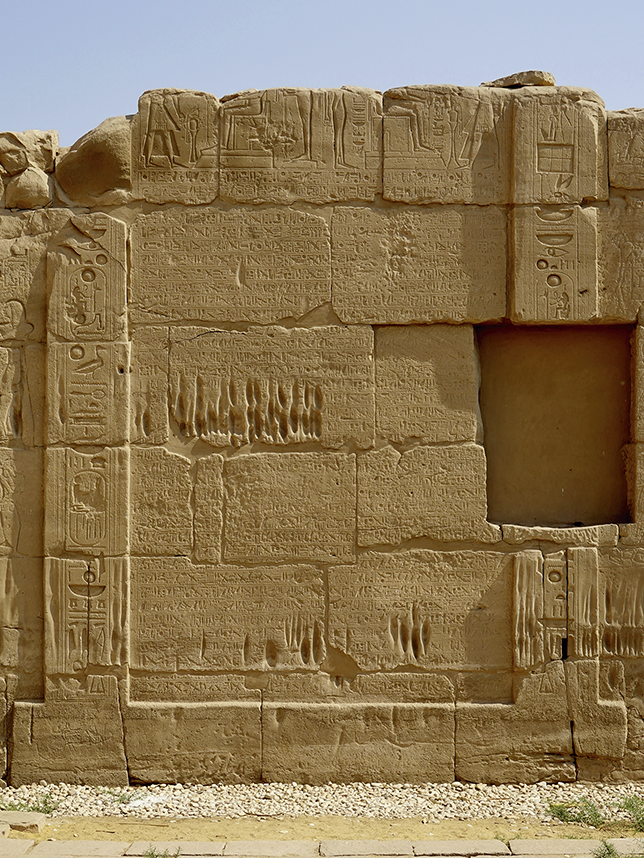
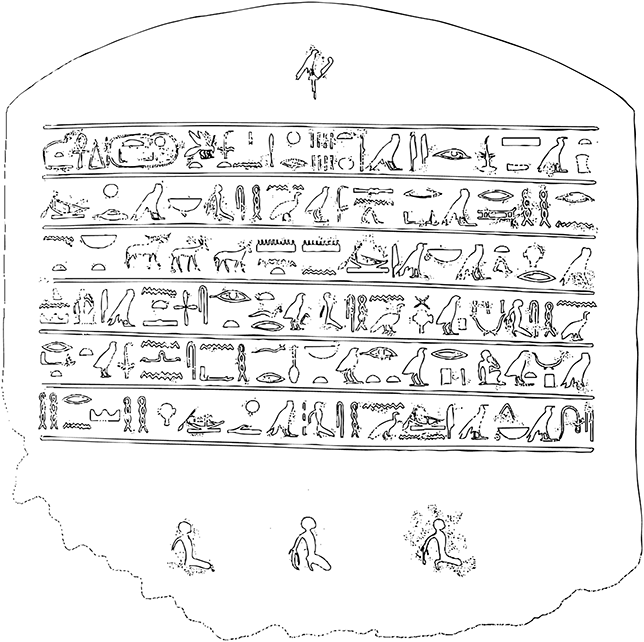
Then there are the cases where the kings claim to have set their tꝫšw at (often relatively vague) locations in foreign territory. These borders were associated with military victories and conquest, and also had to be established, maintained, or extended by each king in turn – they do not seem to have applied to the state beyond the royal person. Sometimes these foreign tꝫš seem to be marked, either by stelae hailing the establishment of the particular king’s tꝫš, or by strings of border forts that represented real surveillance and control of population movements and trade (Dunham & Janssen Reference Dunham and Janssen1960; Knoblauch Reference Knoblauch and Raue2019; Morris Reference Morris2017; Siegel Reference Siegel2022, pp. 11–15; S.T. Smith Reference Smith, Parker and Rodseth2005, p. 211; Smither Reference Smither1945; Vogel Reference Vogel, Bar, Kahn and Shirley2011). However, several scholars have argued that these stelae should be seen as victory stelae commemorating specific deeds and projecting royal power, rather than functioning as literal border markers claiming ownership of territory (Eyre Reference Eyre and Israelit-Groll1990; Galán Reference Galán1995, pp. 137, 148–151; Siegel Reference Siegel2022, p. 12; Thum Reference Thum, Neumann and Thomason2022). For instance, both Thutmose I and III have stelae at Kurgus (Figure 5), though the farthest southern extent of actual Egyptian control seems to have ended in the region of Gebel Barkal, some 250 kilometers downstream (Galán Reference Galán1995, p. 148; S.T. Smith Reference Smith, Parker and Rodseth2005, p. 215). Even the fortresses fall well inside the claimed tꝫš of various Egyptian kings, delimiting the fertile land of the Nile Valley and Delta, rather than serving as border control for the full expanse of territory claimed by Egypt.
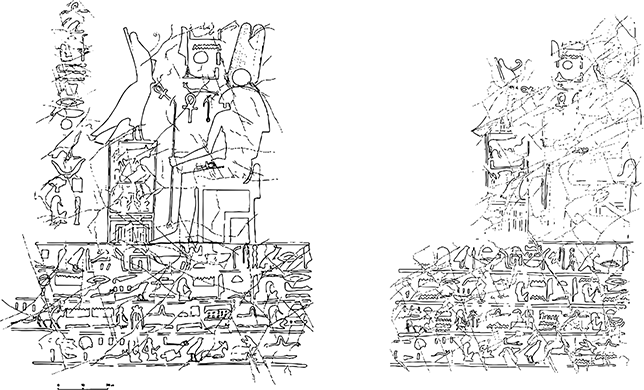
Figure 5 Stelae of Thutmose I (left) and Thutmose III (right), Kurgus, by author after Davies Reference Davies, Spencer, Stevens and Binder2017, figures 6 and 7.
This raises the question of what should be considered the borders of a sovereign state called Egypt. Do these borders fall at the limits of the king’s political control, his claimed tꝫš in the Levant and Nubia? Or are they located at the edge of the Nile Valley, the traditional division between ma’at and isfet, between the black and red lands? Many scholars have referred to this territory, kmt, as “Egypt proper” (Galán Reference Galán1995, p. 9; Langer Reference Langer, Chantrain and Winand2018, p. 49; S.T. Smith Reference Smith, Parker and Rodseth2005, p. 227), and argue that in ancient Egyptian political thought, the ma’at/isfet dichotomy also marked the division between Egyptian and foreign – territorially, culturally, and demographically (Assmann Reference Assmann1990, pp. 174–236; Langer Reference Langer, Chantrain and Winand2018; Langer & Fernández-Götz Reference Langer and Fernández-Götz2020; S.T. Smith Reference Smith, Parker and Rodseth2005, p. 228). Certainly, the tꝫš established by Senwosret III at Semna belonged specifically to him, rather than to Egypt (Galán Reference Galán1995, pp. 108–109). But early in the New Kingdom, texts began to refer to the tꝫšw of kmt being located abroad. So did the ancient Egyptians conceive of themselves as living in a sovereign state known as kmt (Goelet Reference Goelet, Chazan, Hallo and Schiffman1999, p. 41; Kootz Reference Kootz, Jesse and Vogel2013, p. 40)? And did that state’s authority extend beyond the Nile Valley, controlling the deserts, oases, and conquered lands, and existing separately from the king?
2.4 Bordering kmt
Ancient Egyptians’ conceptions of their own territoriality shifted over time. Up through the First Intermediate Period, references to an entity of Egypt were often made in the dual, using the terms tꝫwy (two lands) or titles like nsw bjty (king of Upper and Lower Egypt), while in some cases the incredibly vague term tꝫ pn (this land) was used. This duality was also inherently acknowledged in ideological symbols such as the White and Red crowns and titulary such as the king’s Two Ladies name, referring to both Upper and Lower Egypt (Wengrow Reference Wengrow2006, pp. 207–215). The words tꝫš and d̲rw do not appear in Old Kingdom texts, but official titles through the Middle Kingdom do refer to doors/gates (r-Ꜥꝫ) or mouths (r) to foreign lands from the Delta or Upper Egypt (Galán Reference Galán, Milano, de Martino, Fales and Lanfranchi1999, pp. 27–29, 33; Kees Reference Kees1934, pp. 83–86; Roccati Reference Roccati, Archi and Bramanti2015, pp. 155–159).
The terms kmt and tꝫ-mry (beloved land) do not appear until the transition into the Middle Kingdom. Several graffiti in Wadi Hammamat refer to kmt as the place to which expeditions return, using the N23 cultivated land sign as a determinative, or juxtapose it with dšrt, the desert, making it clear that they were referring to the literally black, arable land of the valley. These early nonliterary examples clearly show that kmt was meant to indicate a type of land rather than a geopolitical entity (Galán Reference Galán, Milano, de Martino, Fales and Lanfranchi1999, pp. 29–36; Roccati Reference Roccati, Archi and Bramanti2015, p. 155). Middle Kingdom examples of kmt are much more common in literary sources such as the story of Sinuhe, Admonitions of Ipuwer, and Teachings for King Merikare, which were likely edited numerous times throughout Egyptian history. In these texts, kmt generally appears in opposition to foreigners or the desert, suggesting that it could have indicated a unitary sense of “Egypt,” the fertile land, or both (Candelora Reference Candelora, Candelora, Ben-Marzouk and Cooney2022b, pp. 240–241; Galán Reference Galán, Milano, de Martino, Fales and Lanfranchi1999, pp. 36–41). Interestingly, this double meaning is confirmed when the internal borders of Egypt are considered; the autobiography of Khnumhotep notes that the eastern and western sides of his district extend only to the ḫꝫst, suggesting that pharaonic state control and the sense of what constituted Egypt extended only to where the desert cliffs rose on either side of the Nile (Kootz Reference Kootz, Jesse and Vogel2013, p. 40).
Certainly, individual uses of the term kmt are highly variable, suggesting that their nuance was context-dependent. The stela of Senwosret I’s vizier, Montuhotep, calls him ḥry ṯp n kmtwt dšrwt (Overseer of the Black Lands and Red Lands). kmt appears here in the plural, so it cannot refer to a single sovereign entity and is juxtaposed with the deserts in order to highlight its intended meaning of fertile lands (Goelet Reference Goelet, Chazan, Hallo and Schiffman1999, pp. 33–34). Another truly unique example from the Hymns to Senwosret III uses kmt with the people-group determinative, just like the famous example from the Victory Stele of Merenptah. Yet the use of the singular feminine pronoun to refer back to kmt in the following line indicates that it does not mean “Egyptians.” Instead, the use of kmt in conjunction with dšrt, tꝫwy, and ἰdbwy suggests that kmt here is the (in this case personified) fertile land, rather than a polity or nation (Goelet Reference Goelet, Chazan, Hallo and Schiffman1999, pp. 36–37). A stele of Montuemhat, an official under Senwosret III, found at Semna records the title “rꝫ-Ꜥꝫ ḫr kmt” (doorway for kmt) (Goelet Reference Goelet, Chazan, Hallo and Schiffman1999, p. 33), perhaps referring to the fortress itself as the new gateway to Egypt, consequently relocating the border to the Second Cataract and confirming the king’s establishment of his tꝫš in the same location. Alternatively, because the fertile floodplain widens north of Semna, this title might imply that the black land was now considered to extend further south.
This context-dependent variability continues through the Second Intermediate Period and early New Kingdom. For instance, in a famous passage from the First Kamose Stele, the king bemoans that he has to share kmt with an Ꜥꝫmw and a Nubian, a comment that already raises interesting questions about the territorial control of Kerma at the time. Yet his council’s immediate response is that as far as Cusae “it is Ꜥꝫmw waters” (mk mw pw n Ꜥꝫm.w) and “He (Apepi) has the land of the Ꜥꝫmw, we have kmt” (ḥr⸗s sw ḫr tꝫ n Ꜥꝫm.w tw⸗nn ḫr kmt) (Candelora Reference Candelora2020, pp. 110, 305–306). Here it appears that Kamose thought of kmt as the stretch of fertile land from the Delta to Upper Egypt, while his council simultaneously considered kmt to be whatever area the king controlled at that time, in this case only a portion of Upper Egypt south of Cusae. The near-contemporary autobiography of Ahmose, son of Ibana, notes that after the defeat of Avaris, the fighting continued to the south in kmt (Sethe Reference Sethe1927, ln. 11), implying that this Delta city was not in kmt (Candelora Reference Candelora, Candelora, Ben-Marzouk and Cooney2022b, pp. 242–243).
Even much later into the New Kingdom, sources reveal specifically contextualized uses of the term with implications for the conception of Egypt and the borders of the state. A late Twentieth Dynasty series of letters between Tjaroy and his son Butehamun reveal that neither of them conceived of Nubia, a territory controlled by the Egyptian state and by this point in history subjected to centuries of colonization, as part of kmt (Candelora Reference Candelora, Candelora, Ben-Marzouk and Cooney2022b, p. 243; Černý Reference Černý1939, letters 29, 50; Wente Reference Wente and Meltzer1990, pp. 189, 196). In a letter found at Deir el-Medina, workman’s wife Takhentyshepse complains to her sister Iyt that her husband does not think her family supplies their household with enough provisions, and insists that she go down to kmt (McDowell Reference McDowell1999, p. 42n16). Again, this suggests that Deir el-Medina was not located in kmt, in this case certainly referring only to the fertile agricultural land, but calling into question the assumption that kmt was unequivocally the name for the Egyptian state.
Furthermore, there are numerous examples of places we assume to have been part of the state of Egypt that do not appear to be located in kmt in the ancient sources. The late Dynasty 11 examples from Wadi Hammamat that mention returning to or coming from kmt signify that the authors of those texts did not situate this important, resource-rich region in kmt. Officials’ stelae and literary tales like the Eloquent Peasant provide parallel cases for the Wadi Natrun and Serabit el Khadim, and Tallet has convincingly identified the Red Sea port of Ayn Soukhna as the ḫꝫst Ꜥꝫmw from the autobiography of Pepinakht (Candelora Reference Candelora, Candelora, Ben-Marzouk and Cooney2022b, pp. 241–242; Goelet Reference Goelet, Chazan, Hallo and Schiffman1999, pp. 32–33; Parkinson Reference Parkinson2012, pp. 26, 29; Tallet Reference Tallet2009, pp. 712–714). Taken together, these examples demonstrate that locations that were claimed to be under the king’s authority were not considered part of kmt – making it unlikely that kmt was the name for a sovereign state of Egypt in this period.
2.5 Egypt’s Borders
However, a substantive change did take place under the New Kingdom imperial expansion – the concepts of tꝫšw and kmt came together for the first time. While Senwosret III famously boasted about expanding his borders in his Semna and Uronarti stelae, the tꝫš strictly belonged to him rather than to Egypt. The earliest example of swsḫ tꝫšw kmt (extending the borders of kmt), occurs in the autobiography of Ahmose, son of Ibana, in the section dedicated to Amenhotep I’s Nubian campaigns (Sethe Reference Sethe1961, p. 7 ln. 24–25). In his Abydos stele, Thutmose I claims that he “made the tꝫšw of tꝫ-mry as far as what the sun-disc encircles” and “I caused kmt to be on top, every land being its servant” (Galán Reference Galán1995, p. 119 ex. B; Sethe Reference Sethe1961, pp. 102, 9–15). However, all of these examples are ideologically charged, meant to emphasize the power of the individual king in performing these great deeds. Seigel notes that most instances referring to the tꝫšw kmt or swsḫ kmt seem to coincide with propagandistic attempts to build cohesive shared identity and rally support against enemies, such as the Hyksos or Sea Peoples (Siegel Reference Siegel2022, pp. 26–27).
One of the central tenets of these New Kingdom tꝫšw is that they have to be reestablished by each successive king, again suggesting they are tied to the specific ruler rather than a state. This practice is reflected in the Amarna Letters, in which countries are referred to as belonging to specific leaders, and the international trade and diplomatic agreements must be redrawn with each new reign (Siegel Reference Siegel2022, pp. 26–29). Furthermore, the tꝫšw themselves encompassed vague cosmic limits or broad regions rather than having identifiable, fixed locations on the landscape (Galán Reference Galán1995, p. 133). Certainly, the numerous examples of vassals gone rogue in the Amarna Letters demonstrate that the claiming or establishment of tꝫšw did not necessarily coincide with political control (Morris Reference Morris, Hawass and Wegner2010b; Siegel Reference Siegel2024, p. 23). This, as well as the questionable level of control exerted by the state over the deserts, ties into alternative understandings of territorial sovereignty in which the state is viewed less as a “homogenous blob” (M.L. Smith Reference Smith2007, p. 31) and more as a network with main population centers connected by corridors, and control that can be noncontiguous (M.L. Smith Reference Smith2005).
For instance, on Hatshepsut’s Karnak obelisks, she claimed that “Amun has caused that I rule kmt and dšrt (the black land and the red land). … He has made my tꝫš as far as the ḏrw of heaven” and “kmt, dšrt, ḫꝫswt nb(t) (the black land, red land, and every foreign land) are united under my feet.” In this example, as well as many others, all of the territorial units representative of the Egyptian worldview (kmt, dšrt, ḫꝫswt) are identified as separate entities that are united under the power of the king, meaning kmt is again unlikely to be the name of the sovereign state, but instead the designation of a type of land. She goes on to list the location of her tꝫšw (again they belong to her, not Egypt) in the four cardinal directions, and all are described as being almost mythical, or at the very least very distant, locations. Her western tꝫš is at Manu, the mythological mountain where Re sets in the evening, and her southern tꝫš is in Punt (Sethe Reference Sethe1961, pp. 372, 3–12). Hatshepsut did not set her border at Punt in the modern sense; she did not have both control of and claim to all territory up to Punt. It is listed here as another example of an extremely distant land, so an ideological projection of Hatshepsut’s power rather than a realistic, geographic description of her or Egypt’s sovereignty (Galán Reference Galán1995, p. 134; Siegel Reference Siegel2022, p. 16).
Because so many of the modern assumptions about borders and territorial sovereignty were born via treaty, it is crucial to examine ancient treaties for these same ideas. The so-called Kuruštama treaty, dating potentially to the reign of Thutmose III or Amenhotep II, is preserved in several fragments as well as referenced in later Hittite texts. The agreement was struck between unnamed Hittite and Egyptian kings, and the extant portions refer to the relocation of the Kuruštama people, formerly Hittite subjects, to Egypt (Vigo Reference Vigo, Miniaci, Greco, Vesco, Mancini and Alù2024, pp. 122–123). Though our knowledge of this diplomatic document is incredibly fragmentary, no discussion of the borders between Egypt and Hatti is preserved.
The Treaty of Qadesh (Figure 6), dating from the reign of Ramses II, has survived largely intact. Remarkably, however, in a treaty that essentially focuses on a border conflict between the Egyptian and Hittite Empires, there is only one mention of the word tꝫš in a standard royal epithet of Ramses II, and no indication that the two parties agreed upon an actual location for the disputed border (Kitchen Reference Kitchen1970, p. 227 ln. 5). Instead, the agreement for peace is made between the two rulers, as was the custom in the Amarna Letters. Most importantly, the text goes on to reference that the peace will last between generations of the rulers’ descendants, and finally between “the land of kmt with the land of Hatti, in peace and brotherhood just like us for eternity” (Kitchen Reference Kitchen1970, pp. 227–228 ln. 13). I would argue that this is the first time we see kmt potentially representing a sovereign political entity separate from the king, though still crucially lacking clearly defined geopolitical borders. Yet interestingly, though the treaty goes on to outline further aspects of the agreement in language familiar from modern international relations, including trespassing, extradition rights, diplomatic immunity, mutual defense, etcetera, these arrangements are once more made specifically between Ramses and Hatusilli rather than their countries in perpetuity – suggesting again that the ancient Egyptians had a completely different understanding of territorial sovereignty.

Figure 6 Treaty of Qadesh, Karnak Temple, Luxor – Olaf Tausch, CC BY 3.0, via Wikimedia Commons.
Significantly, even the ancient Egyptians recognized their amorphous borders. The first Upper Egyptian nome was called tꝫ sty (Nubian land), while an area of the Western Delta was ḫꝫst ṯmḥw (foreign/hill land of the Tjemehu) (Moreno García Reference Moreno García2015, p. 75; Smith Reference Smith1991, p. 124); in fact, this part of the Delta might not even have been considered to be kmt, given that it was referred to as ḫꝫst. The southernmost districts were included in the same administrative divisions as Lower Nubia, and the oases always received the ḫꝫst sign determinative, even in periods when the Egyptian kings claimed them as part of their dominion (Gauthier Reference Gauthier1925, pp. 202–203; Smith Reference Smith and Lustig1997, p. 82). Therefore, we should break from trying to inscribe modern notions of linear borders and sovereign territory onto ancient Egypt, and consider that ancient Egyptians had their own conceptions of territoriality and power. Instead, we can investigate the lived reality of Egyptian borders by approaching them as borderlands – amorphous zones where bordering practices not only created and maintained social difference but also often caused those differences to blur – and that these bordering practices could potentially distinguish people from disparate regions within Egypt more strongly than from groups across the border.
3 Othering: Borders and Identity
Territoriality and borders are active forces in constructing our sense of self and the “other” (Diener & Hagen Reference Diener and Hagen2012, pp. 12–13; Newman Reference Newman2003, p. 5). Yet it is not the border as a geopolitical line that acts as an anthropomorphized agent, but rather the practices and processes used to enculturate individual and collective identities based on bounded space (Paasi Reference Paasi2020; Parker Reference Parker2006). These practices can be produced or reproduced via “material and ideological, conceptual and cartographic, imaginary and actual, and social and aesthetic” means (Paasi Reference Paasi2022, pp. 2–3), from flags to languages, state signs and slogans to local cuisines and dress. Collective identities often construct and reify themselves by emphasizing characteristics specific to a location (Paasi & Zimmerbauer Reference Paasi and Zimmerbauer2016, p. 88), and the multiscalar nature of such bordering practices is apparent, spanning from local high school sports rivalries to international geopolitical alliances such as the Allied or Axis Powers of World War II. Identity and borders are so entangled as to be conceptually similar in many ways – both are flexible social constructs that define belonging and are reified via processes and practices that are contextual, often performative, and can be elective, imposed, or ingrained. Already in the 1960s, Barth recognized that it is through the construction of a boundary that we create and inscribe “otherness” and therefore define and maintain a sense of self (Barth Reference Barth1969).
3.1 Borders and Collective Identity
This entanglement applies not only at the personal or local scale but also at the level of the state. Historically, borders have been seen as geographical markers of political sovereignty that divide polities, but also enclose national identities (Bissonnette & Vallet Reference Vallet, Bissonnette and Vallet2022, p. 1). Yet these national identities are imagined communities, conceived of as “inherently limited and sovereign,” though still powerful in eliciting deep attachments (Anderson Reference Anderson2006, pp. 4–7). They are created by state discourse that glosses over regionality and heterogeneity (Agnew Reference Agnew1994; Doty Reference Doty, Biersteker and Weber1996; Van Houtum & Van Naerssen Reference Van Houtum and Van Naerssen2002, p. 126). Our modern conception of nationality, the “idea of congruence between a people with shared characteristics and the spatial expression of their political organization,” is a new idea that was also forged after Westphalia, especially during the 1800s in Europe (Smith Reference Smith, Chisholm and Smith2016, p. 1). This notion also “assumes that the territorial state functions as a geographical container … in which state borders are regarded as coincident with political or social borders” (Paasi Reference Paasi, Johnson, Schein and Winders2013, p. 482; also see Agnew Reference Agnew1994; Smith Reference Smith, Chisholm and Smith2016, pp. 5–7). This conflation of the nation and the state has led to a preconception that a unified national identity can exist and is tied to a specific location (Murphy Reference Murphy, Biersteker and Weber1996, p. 97).
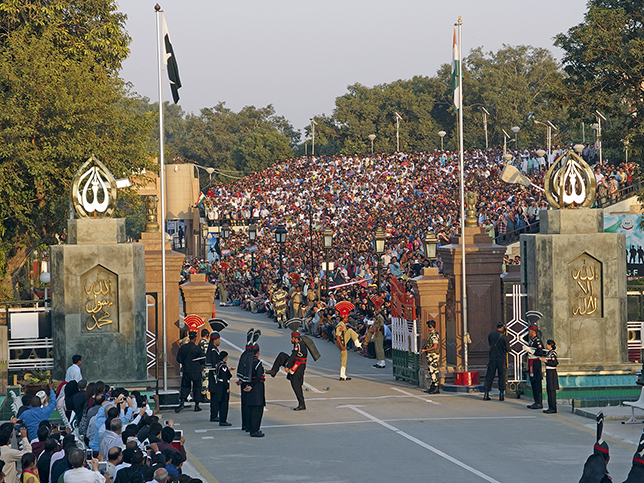
The crucial role of performance as one of the bordering processes that manufactures national identity is made apparent in the daily “Retreat Ceremony” at the Wagah–Attari border between Pakistan and India (Figure 7). The ceremony takes place in a literal no-man’s-land between the two countries flanked by gates painted in the colors of each country’s flags. At sunset, the gates are opened and soldiers from each nation, bedecked in ceremonial uniforms and bearing their flags, march in to perform dance-like drills and shake hands. National anthems are played, and masters of ceremony on both sides of the border compete to get spectators to shout patriotic slogans more loudly than the other. Thus this border is a physical marker on the landscape indicating where the states of India and Pakistan begin and end, but the ceremony itself also serves to create and amplify national identities in a conflicted border region (Parciack Reference Parciack2018; Purewal Reference Purewal2003).

Figure 7 Lowering of the flag ceremony at Wagah–Attari border – Guilhem Vellut, CC BY 2.0, via Wikimedia Commons.
Another process that draws boundaries not only along state lines, but also amongst identities, is determining the conditions of citizenship (Biersteker & Weber Reference Biersteker and Weber1996, pp. 13–14). Citizenship conveys rights of access to particular spaces, as well as the attendant rights and protections that apply within that space (El-Enany Reference El-Enany2020, p. 2; Shachar Reference Shachar2019, p. 98). This gives the state the authority and “ability, in the face of ambiguity and uncertainty, to impose fixed and stable meanings about who belongs and who does not belong to the nation” (Doty Reference Doty, Biersteker and Weber1996, p. 122). Even the use of terms like “alien,” “immigrant,” or “refugee” indicates that these individuals are something other than the “normative citizen,” a concept that would be meaningless without these outsiders or the borders that define them (Doty Reference Doty, Biersteker and Weber1996, pp. 126–128).
Yet several theorists have demonstrated that the collective identity known as a “nation” often does not correspond to the territorial state (Agnew Reference Agnew1994; Newman Reference Newman, Atkinson and Dodds2002). Paasi identified around 200 states/countries globally, while arguing that there are more than 500 discernable nations, showing that multiple collective identities often exist within the borders of a single state, and can transcend them as well (Paasi Reference Paasi, Johnson, Schein and Winders2013, p. 483). Diasporic communities, for example, share collective identities that are still often tied to but occur beyond a specific territory (Gilroy Reference Gilroy and Woodward1997, pp. 319–321; Hall Reference Hall, Williams and Chrisman1994; Newman Reference Newman, Atkinson and Dodds2002). In this sense, linear borders are myopic constructs that tell us very little about reality and lived experience. Instead, “to focus on boundaries means to become aware of the fuzziness of social systems and groups” (Strassoldo Reference Strassoldo1977, p. 86). Another representative example is found along the imposed border between Bangladesh and northeastern India, where in some cases, the new border was established running directly through extended family compounds. Both the families and the border control forces involved complained about the arbitrariness of the division, both in territory and national identity, arguing that people on both sides shared blood, a language, clothing, cultural practices, etcetera, and that daily cross-border visits and even marriages continued in spite of the new fence (Krishna Reference Krishna1994, p. 515). Interestingly, the aforementioned Wagah–Attari “retreat ceremony” now features daily instances of migration – the third stage of the ceremony includes citizens and their belongings crossing the border in both directions, a standard administrative occurrence at a border crossing point that is intentionally timed to be viewed by a large audience (Parciack Reference Parciack2018, p. 761). This public display of access serves to highlight the permeability of the border and population mobility, and reflects the imposed nature of this border on a local population whose ties cross it.
3.2 Bordering “Egyptian-ness”
One of the most enduring Egyptological “fictions” is that of a unified, Egyptian national identity that coincides with the state’s territorial borders (Zivie-Coche Reference Zivie-Coche2018 p. 26; also see Loprieno Reference Loprieno2001, p. 69; Moers Reference Moers, Uljas, Amstutz, Dorn, Müller and Ronsdorf2015, pp. 693–694). For instance, Hubschman writes, “The community of ancient Egypt comprised peoples who shared a common language and culture, who were ruled by a divine royal lineage and who occupied rigidly-defined territories centred around the Nile Valley and Delta regions” (Hubschmann Reference Hubschmann2010b, p. 51). However, much of the ideology of a unified Egypt was developed during the Predynastic Period to codify and support burgeoning Egyptian kingship (Wengrow Reference Wengrow2006). This pan-Egyptian identity is often referred to using the term rmt̠, meaning “humankind,” to indicate only Egyptians rather than foreigners (Haring Reference Haring and van Soldt2005, pp. 164–165; Kemp Reference Kemp2006, pp. 22–23). Some even argue that the understanding of only Egyptians as human shows their conceived centrality in the world, their equation with order, and even a strong sense of ethnocentrism and xenophobia (Assmann Reference Assmann and Jenkins2003, p. 154; Graeff Reference Graeff and Waitkus2008; Kootz Reference Kootz, Jesse and Vogel2013, p. 34). However, recently several studies have demonstrated that rmt̠ can in fact be used to refer to foreigners as well as Egyptians, and that a closer translation might be “people” (Candelora Reference Candelora, Candelora, Ben-Marzouk and Cooney2022b, pp. 244–245; Chantrain Reference Chantrain, Mynářová, Alivernini, Bělohoubková and Kilani2019; Kilani Reference Kilani, Kilani, Belekdanian, Alvarez, Klein and Gill2015; Moers Reference Moers and Felber2005; Taterka Reference Taterka2024, pp. 116–117).
The term tꝫ-mry, beloved land, for the whole of Egypt has also been suggested to show a strong emotional tie between Egyptians and their “homeland” (see, for example, Matić Reference Matić2020, p. 6). It should be noted that this loaded term does not appear until the Middle Kingdom, and mostly occurs in propagandistic literary texts that mainly employ it to juxtapose Egypt with foreign lands (Goelet Reference Goelet, Chazan, Hallo and Schiffman1999, pp. 29–30). In some instances, kmt also seems to have evoked attachment. In the Satire of the Trades, also composed during the Middle Kingdom, the trader/messenger who has gone abroad only knows himself again when he returns to kmt (P. Sallier II, column VII, ln. 6–8). Yet Moers aptly notes that “it is by no means clear, however, whether this passage is on Egypt as a political (vulgo: ‘national’) entity or for example just about ‘landscape,’ to name just one possible alternative” (Moers Reference Moers, Uljas, Amstutz, Dorn, Müller and Ronsdorf2015, p. 699). Another alternative would be that the trader recognizes himself upon returning to his home – the very next line in the text describes him reaching his house in the evening (Simpson Reference Simpson2003, p. 434). A similar nuance might be found in the late Twentieth Dynasty letters between Butehamun and his father, Tjaroy, who was stationed in Nubia. In multiple letters, both express their desire for Tjaroy to return to kmt from the “far-off land” (Wente Reference Wente and Meltzer1990, p. 189 L. 312) but specify they mean his return home to Thebes and to the “gods of your town” (Wente Reference Wente and Meltzer1990, p. 196 L. 317; see also Černý Reference Černý1939, L. 29, 50).
Furthermore, specific hometowns are emphasized in highly propagandistic texts such as the Hymns to Senwosret III. While this collection of hymns is usually discussed as celebrating the king’s role in securing and protecting a unitary “Egypt,” the land is always referred to in its subdivided parts: tꝫwy (the two lands), ἰdbwy (the two banks), kmt and dšrt (the black and red lands), and šmꜤ (Upper Egypt). Additionally, the third hymn of the cycle begins each line with “How great is the lord for his town,” rather than for the whole of Egypt (Allen Reference Allen2014, pp. 369–381). Some highly misleading translations of this text go so far as to imply that ancient Egypt had a concept similar to modern notions of citizenship, tying legal rights and protections to geographic sovereignty; for example, “How jubilant are your citizens, for you have fixed their boundaries” (Simpson Reference Simpson2003, p. 303 II.2). Yet the particular portion of the papyrus (UC 32157) where the word in question appears is heavily damaged, and other translations either omit a word here or have used terms like msw (children) instead (Allen Reference Allen2014, p. 373 2.2). In fact, most of the Egyptian terms translated as “citizen” more accurately reflect the meaning of “townsperson” (Wb 1, 201.1), and no evidence exists to suggest that crossing borders was linked to a change in citizenship in ancient Egypt (Siegel Reference Siegel2022, p. 22).
Two of the most often cited examples of a unified “Egyptian” identity are both tied to cultural practice and geography. Both can be found in the Middle Kingdom Story of Sinuhe, and relate to hygiene and clothing, as well as the purported desire of all Egyptians to be buried in Egypt (Kemp Reference Kemp2006, p. 21; Matić Reference Matić2020, p. 11). However, it is rarely acknowledged that both of these “universally Egyptian” episodes apply to only the highest elites. In the first example, Sinuhe returns to Egypt and sheds the vestiges of his life in West Asia. He is cleaned, groomed, and clad in white linen (Lichtheim Reference Lichtheim2006a, p. 233). Yet Sinuhe’s transformation from Ꜥꝫm (West Asian) back to “Egyptian” does not happen when he crosses some defined state border, but when he returns to the royal residence – he is also a high official with personal access to the royal family. Therefore, these customs of dress and hygiene are more likely to be representative of royal or high elite traditions, rather than representing some pan-Egyptian ethnicity (Candelora Reference Candelora, Candelora, Ben-Marzouk and Cooney2022b, p. 244). Even among this contemporary elite class, variation on adornment practices can be found within idealized settings; Middle Kingdom officials, especially in Middle Egypt, often depicted themselves in their tombs wearing brightly colored and intricately patterned textiles, presumably made of wool, rather than the expected white linen (Galczynski Reference Galczynski2024, pp. 81–88; Moreno García Reference Moreno García, Miniaci, Greco, Del Vesco, Mancini and Alù2024, p. 15).
Yet the urgent desire to be buried in Egypt is most often referenced as a symbol of a unified Egyptian identity. This supposedly “Egyptian” desire was recorded not only in Sinuhe but also in the autobiographies of Sabni and Pepinakht Heqaib, in which the bodies of deceased expeditionary officials were returned to Egypt for burial (Matić Reference Matić2020, p. 11; Sethe Reference Sethe1932, Urk, I, 134, 13–17). Yet in these cases as well, it is only the highest of elites who might be able to afford such corporeal retrieval or be gifted it by the king. In the Shipwrecked Sailor, the serpent assures the sailor that he will die in his town, and Simpson even footnotes this line with an explanation that “burial in a foreign land was abhorrent to the Egyptians” (Simpson Reference Simpson2003, p. 50n7). Yet in this example, it is not Egypt in which the sailor wants to be buried, but in his hometown, presumably in the same necropolis where his family is buried. Additionally, most of these examples date to the Old or Middle Kingdoms, suggesting there may have been changes in this practice over time. In fact, there are several examples of New Kingdom Egyptian officials buried below the First Cataract in Nubia, and in the story of Wenamun, reference is made to Egyptians buried in the Levant (Buzon & Simonetti Reference Buzon and Simonetti2013; Di Biase-Dyson Reference di Biase-Dyson2013, p. 336; Goelet Reference Goelet, Chazan, Hallo and Schiffman1999, p. 26). P. Insinger provides a Greco-Roman perspective on this issue, implying that the concern does not have to do with being buried away from Egypt, but being buried at all: “The one who dies away from his town, he gets buried only by pity” (P. Insinger 28, 7, Ragazzoli Reference Ragazzoli, Subías, Azara, Carruesco, Fiz and Cuesta2011, p. 29). This corresponds closely to pharaonic punishments for crimes considered especially heinous, in which the convicted would be executed and denied a proper burial, thus losing their access to an afterlife (Lorton Reference Lorton1977, pp. 17–23).
Other aspects that have been presented as stereotypical of “Egyptian-ness” are a common language, belief in a divine king, and a shared religion (Kemp Reference Kemp2006, p. 20; Matić Reference Matić2020, pp. 10–11). While there was a common language, it exhibited regionalism and likely included at least five distinct dialects (Allen Reference Allen2010; Hagen Reference Hagen and Wilkinson2007, p. 250). In P. Anastasi I, one scribe complains the other is incomprehensible; “Your discourses … are so confused when heard that no interpreter can unravel them. They are like a Delta man’s conversation with a man of Elephantine” (Wente Reference Wente and Meltzer1990, p. 109 letter 129). This satirical jab between scribes emphasizes the existence and extremity of these dialects, suggesting that individuals from the northern and southern areas of Egypt would have had difficulty communicating at all. This regionalism is also apparent in religion, for although the general pantheon was the same across Egypt, individual cities and regions focused their worship on particular deities or triads, as well as having their own creation myths (Dunand & Zivie-Coche Reference Dunand, Zivie-Coche and Lorton2005, pp. 25–28).
Another common “illusion égyptologique” is that Egypt was either isolated or isolationist (Zivie-Coche Reference Zivie-Coche2018, p. 24). This misconception is based on xenophobic, anti-foreigner rhetoric common in royal or literary texts, stemming from the duality of ma’at and isfet. This worldview, simplistically put, equates Egypt and Egyptians with cosmic order, ma’at, and foreigners and their lands with chaos (Assmann Reference Assmann and Jenkins2003, pp. 151–153; Chantrain Reference Chantrain, Mynářová, Alivernini, Bělohoubková and Kilani2019; Haring Reference Haring and van Soldt2005, p. 164; Kemp Reference Kemp2006, pp. 22–23; Langer Reference Langer, Chantrain and Winand2018; Langer & Fernández-Götz Reference Langer and Fernández-Götz2020, pp. 39–41; Loprieno Reference Loprieno1988; Moers Reference Moers, Uljas, Amstutz, Dorn, Müller and Ronsdorf2015; Schneider Reference Schneider and Wendrich2010, pp. 145–147; Taterka Reference Taterka2024, pp. 119–122). Archetypal scenes of kings upholding ma’at feature him smiting, sitting enthroned upon (Figure 8), or trampling bound foreigners (S.T. Smith Reference Smith and Wilkinson2007, pp. 223–229; Peirce Reference Peirce2019; Taterka Reference Taterka2024, p. 119). Certainly, border security and the prevention of foreign immigration was equated with ma’at, and the “influx of foreigners is one of the major motifs that define catastrophe and social disorder in ‘pessimistic’ literature” (Eyre Reference Eyre and Israelit-Groll1990, p. 140). When viewed in tandem with the archaeological, textual, and artistic evidence for border forts and surveillance programs, one is left with an impression of an Egypt with closed borders that prevented mobility and/or migration (Moreno García Reference Moreno García, Miniaci, Greco, Del Vesco, Mancini and Alù2024, pp. 5–10; Morris Reference Morris2017; S.T. Smith Reference Smith, Parker and Rodseth2005, pp. 210–215).
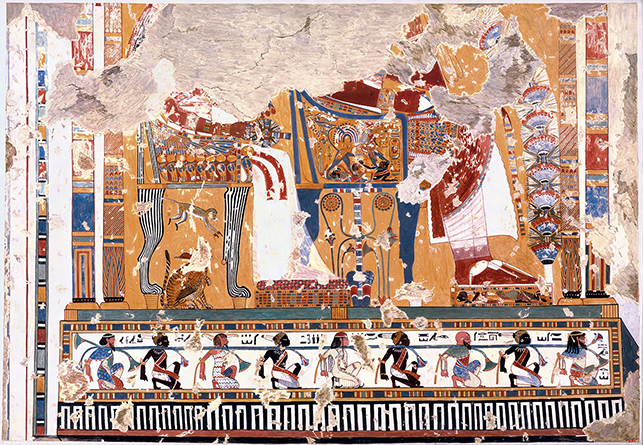
Figure 8 Bound foreigners beneath the thrones of Amenhotep III and Queen Tiye, tomb of Anen, Thebes –
The Year 8 Semna Stele of Senwosret III (Figure 9 – Berlin 14753), erected at one of these border forts, is often cited as the prime example of the Egyptian state claiming ownership of property, marked by a rigid border that prevented population movement (Vogel Reference Vogel, Bar, Kahn and Shirley2011, p. 322):
(1) Southern border (tꝫš), which was made in year 8 under the majesty of the double king Chakaure [Senwosret III], given life for ever (2) and ever, not to allow, that it will passed by any Nubian travelling to the north, (3) travelling on land or by a Nubian ship, and also any cattle of (4) a Nubian, except a Nubian, who comes to merchandize in Iqen (Mirgissa), (5) with a message or anything, which can be done well together with him. It will not be allowed, (6) that an indigenous ship of a Nubian will pass Heh by sailing northwards in eternity!
However, the only caveat preventing Nubians crossing the border was that they stop at the fortress of Mirgissa to declare themselves and what they may have to trade – in this case, they were welcome to pass. Siegel notes that border transgressions were generally painted as “a personal affront to the pharaoh’s power” rather than a failure of the border (Siegel Reference Siegel2022, p. 20). Despite this edict, archaeological evidence from southern Egypt suggests that Nubians were able to cross and settle in Egyptian territory for millennia (Adams Reference Adams1984; de Souza Reference de Souza2019; Hafsaas-Tsakos Reference Hafsaas-Tsakos, Godlewski and Łajtar2010; Irish & Friedman Reference Irish and Friedman2010; Knoblauch Reference Knoblauch and Raue2019; Liszka Reference Liszka2015, Reference Liszka, Candelora, Ben-Marzouk and Cooney2022; Schneider Reference Schneider and Wendrich2010; Smither Reference Smither1945). Thus the issue does not seem to have been immigration or border crossing in general, but rather unsanctioned cases of foreigners settling in Egypt without the knowledge of the state. This state oversight of immigration likely applied to the wnt and sgr settlement types, as well as the late New Kingdom resettlement of Libyans and Sea Peoples within Egypt, probably ensuring they were incorporated into tax-paying structures (Moreno García Reference Moreno García, Miniaci, Greco, Del Vesco, Mancini and Alù2024, pp. 12–13; Siegel Reference Siegel2022, p. 20).

Figure 9 Small Semna Stele of Senwosret III (Berlin 14753) – by author after Meurer Reference Meurer1996, T. 1.
Certainly, the rhetorical topos proclaims a stark contrast between Egyptian and foreign, “seeing the world in black and white” (Langer Reference Langer, Chantrain and Winand2018, p. 50). However, in practice, the ma’at/isfet, Egyptian/foreigner dichotomy was not at all rigid. These opposites instead reflected different ends of a spectrum rather than an either/or. Both pairs were mutually constituted, in that both were required for the other to exist meaningfully and be recognizable; there would be no order without chaos, and no self without the other. Additionally, context dictated where someone might fall along the spectrum, a fluidity that can be found throughout the Egyptian worldview. Seth was the literal embodiment of chaos, a negative force, until his chaos was needed to aid in Re’s journey. Hathor and Sakhmet are also excellent divine examples of this spectrum, as they were often considered the ordered and chaotic forms of the same divinity. In many cases, Egyptians were manifestations of isfet rather than ma’at; Upper and Lower Egypt could be included as part of the Nine Bows, and Egyptians were named among the enemy leaders in the Execration Texts (Muhlestein Reference Muhlestein2008; Uphill Reference Uphill1967, pp. 394–395). Conversely, foreigners could also be representative of ma’at by serving the king, especially on campaign. This is illustrated, for example, in the orderly rows of Sherden marching for Ramses II in his various Qadesh reliefs (Figure 10) (Abbas Reference Abbas2017).
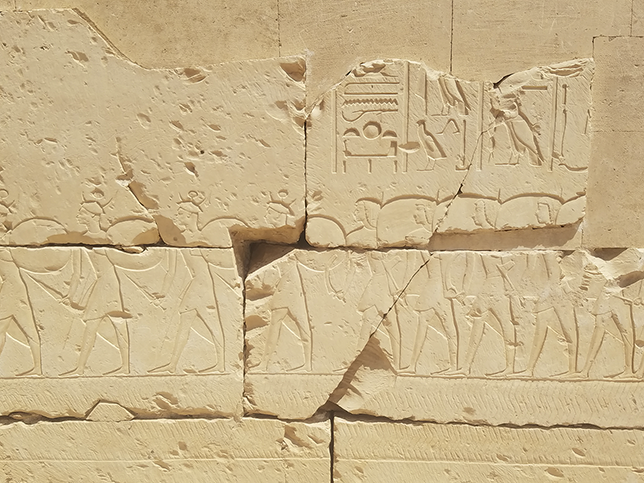
Figure 10 Relief of Sherden marching for Ramses II at the Battle of Qadesh, Abydos – by author.
Individuals from Egypt could and did assume foreign identities, as exemplified by Sinuhe making a life for himself in West Asia. Upon his return to Egypt, the king said, “Look, Sinuhe has returned as an Asian that the Asiatics have created” (Allen Reference Allen2010, p. 142). In P. Anastasi I, while a hapless scribe is abroad, his groom flees in the night; “He consorts with the Shasu Beduin tribes and assumes the guise of an Asiatic” (Wente Reference Wente and Meltzer1990, p. 107). Both Egyptians and foreigners were considered rmt̠, people, and were capable of losing their humanity (Chantrain Reference Chantrain, Mynářová, Alivernini, Bělohoubková and Kilani2019; Moers Reference Moers and Felber2005). In all, it seems that the conception of what it meant to be Egyptian or foreign was less a clear-cut, rigid dichotomy based on borders, geographic origin, or cosmic worldview, but rather a fluid understanding that could shift based on context.
3.3 Regional Identities
For most of human history, and arguably still today, local and regional identities superseded many others, especially the sense of belonging to a nation or empire. Regional identity characterizes groups that both subdivide and cross the border of the state, essentially those that do not fit the homogenizing, dominant identity discourse (Paasi Reference Paasi2003). For instance, in early twentieth-century Italy, individuals were far more likely to ascribe to identities linked to extended families, villages, or regions, than to consider themselves “Italian.” In fact, differences between northern and southern Italians were extreme enough that spoken dialects impeded communication and cultural differences, which aligned more with European or Mediterranean groups respectively, and inspired mutual disdain. Individuals did not identify as collectively Italian until they immigrated to foreign countries, though even these diasporic groups tended to cluster by home region (Gabaccia Reference Gabaccia1999). In much of the premodern world, these regional identities were tied to kinship networks and their long association with a “hometown” (Langer & Fernández-Götz Reference Langer and Fernández-Götz2020, p. 37; Terlouw Reference Terlouw2009).
The same tie to hometowns can be seen throughout Egyptian history, especially in autobiographical and didactic texts. Moers argues that “hometown and region are the key factor of social attribution” in Egypt, starting at least in the Old Kingdom and evident most clearly in the intermediate periods (Moers Reference Moers, Uljas, Amstutz, Dorn, Müller and Ronsdorf2015, p. 696). Perhaps the most paradigmatic examples come from First Intermediate Period autobiographies; Iti of Gebelein proclaimed, “I am an excellent townsman who acts with his strength. I am an important pillar in the Theban region and a role-model in the south” (Figure 11) (CG 20001 1 l. 2–4, Landgráfová Reference Landgráfová2011, pp. 68–70). The roughly contemporary autobiography of Mereri declared that he was “a loved one of the whole city of Dendara, a praised one of his town” (Schenkel Reference Schenkel1965, p. 130). Similar sentiments can be found through the Late Period, including on the block statue of Harwa from the Twenty-Fifth Dynasty (Berlin 8163, Moers Reference Moers, Uljas, Amstutz, Dorn, Müller and Ronsdorf2015, p. 696). Wisdom literature from the Middle Kingdom through the Greco-Roman period, including the Teachings of Ptahhotep, Ani, Amenemope, Ankhshesonqi, and pIsinger, continuously emphasize the importance of family, being known and liked in your town, as well as being wary of outsiders (Hagen Reference Hagen and Wilkinson2007, pp. 244–248; Moers Reference Moers, Uljas, Amstutz, Dorn, Müller and Ronsdorf2015, pp. 696–698).
Figure 11 Stele of Iti and Neferu, Suppl. 13114 –
In Egypt, outsiders or strangers need not be foreigners, but simply individuals who are unknown to one’s townspeople; in the Teaching of Ani, young men are warned to “beware of a woman who is a stranger, one not known in her town” (Lichtheim Reference Lichtheim2006b, p. 137). The ancient Egyptian concept of self-identity “may look entirely different abroad, which, in Egypt, might begin very close to home” (Moers Reference Moers, Uljas, Amstutz, Dorn, Müller and Ronsdorf2015, p. 698). Indeed, individuals traveling to different regions would encounter different dialects, landscapes, climates, and peoples. The word most often used to describe entering kmt, hꝫj (descend), could also be applied to people leaving their home regions starting in the Old Kingdom (Candelora Reference Candelora, Candelora, Ben-Marzouk and Cooney2022b, p. 242; Moers Reference Moers, Uljas, Amstutz, Dorn, Müller and Ronsdorf2015, pp. 695–696; Parkinson Reference Parkinson2012, p. 26). Interestingly, the same root was used in a Third Intermediate Period text to emphasize an individual’s sense of belonging. The inscription states, “I belong (n.j wj) to Thebes, I have been born in her, I am not a non-local (hꝫj)” (Louvre C 258 l. 5, Moers Reference Moers, Uljas, Amstutz, Dorn, Müller and Ronsdorf2015, p. 696). The disturbance and feelings of unbelonging that even intra-Egyptian travel could cause was also mentioned in the Story of Sinuhe. Describing his disorientation at finding himself in West Asia, Sinuhe finds the most relatable parallel to be “like a Deltan seeing himself in Elephantine” (Allen Reference Allen2014, p. 79), indicating not just the geographic but also the cultural dislocation one might experience in a distant region of Egypt. New Kingdom writings known as “praises of cities” express “homesick alienation” and poetic longing for one’s hometown, clarifying that officials viewed being away on missions as equivalent to exile (Moers Reference Moers, Raaflaub and Talbert2010, p. 695; also see Lichtheim Reference Lichtheim, Burstein and Okin1980; Ragazzoli Reference Ragazzoli, Subías, Azara, Carruesco, Fiz and Cuesta2011, p. 27). It is apparent that local or regional identity was of far more significance to the ancient Egyptians than any sense of supposed “national” belonging (Assmann Reference Assmann and Schuster1996, p. 97; Candelora Reference Candelora, Candelora, Ben-Marzouk and Cooney2022b, pp. 244–248; Hagen Reference Hagen and Wilkinson2007; Matić Reference Matić2020, pp. 11–12; Moers Reference Moers, Uljas, Amstutz, Dorn, Müller and Ronsdorf2015; Schneider Reference Schneider and Wendrich2010, p. 145).
4 Borderlands and Immigration
The prioritization of regional identity, as well as the vague and permeable “state” borders discussed in Sections 2 and 3, suggests that ancient Egyptians experienced a “multiplicity of borders, which may operate on different levels at different times” (Mullin Reference Mullin2011b, p. 103). Similarly, Parker argued that the Assyrian imperial frontier in Anatolian was comprised of multidimensional and overlapping boundaries, consisting of geographic, political, demographic, cultural, and economic divisions (Parker Reference Parker2006), while Green and Costion developed the Cross-Cultural Interaction Model to visually represent the complexity of such frontier interfaces (Green & Costion Reference Green, Costion and Beaule2017). Borders are not only locations and political demarcations but also social phenomena and institutions; bordering practices actively draw and maintain boundaries between groups that are largely defined through interaction with an “other.” Such boundaries differentiate, but also allow for crossing over, serving as meeting points and zones of interaction (Baud & Van Schendel Reference Baud and Van Schendel1997, p. 216). This approach reframes borders as borderlands, places where identities are created, intersect, and are transformed (Anzaldúa Reference Anzaldúa1987; Lightfoot & Martinez Reference Lightfoot and Martinez1995; Mullin Reference Mullin2011a). Borderland identity is a highly local, flexible commodity that can be situational, strategic, and transient (Hämäläinen & Truett, Reference Hämäläinen and Truett2011, p. 348; Lightfoot, Reference Lightfoot2008; Lightfoot & Martinez, Reference Lightfoot and Martinez1995).
Instances of cultural interaction can be approached via a broad collection of postcolonial theories (Candelora Reference Candelora, Candelora, Ben-Marzouk and Cooney2022a). The study of ethnicity is relevant to the examination of immigration as human mobility tends to bring different ethnic groups into contact, and it is the comparison itself that helps define the groups. Similarly to broader identity theories, ethnicity theories define social groups as constructed collectives that are ascribed to by the individual and affirmed by those both within and beyond the group, and also see ethnicity as flexible and context-dependent (Barth Reference Barth1969; Bentley Reference Bentley1987; Emberling Reference Emberling1997; Jones Reference Jones1997; Lucy Reference Lucy, Díaz-Andreu, Lucy, Babic and Edwards2005; Matić Reference Matić2020; Shennan Reference Shennan1989; Smith Reference Smith2003). In applying these concepts to ancient interactions, many viewed material culture to be a direct expression of identity. However, this requires identity or ethnic groups to be firmly bounded, which they are not; instead, “material culture represents numerous relationships between people and things, as well as between things, and thus networks” (Bader Reference Bader2021, p. 21). Such “complex webs of economic, political, social and cultural linkages” between material and people have been the focus of theories of entanglement that work to understand what exactly material culture reveals about the humans who produced and used it (Dietler Reference Dietler2010, p. 53; Hodder Reference Hodder2012; Stockhammer Reference Stockhammer and Stockhammer2012a).
Several studies provide excellent discussions of the history and difficulties inherent in studying migration via material culture, both in Egypt and elsewhere in the ancient world (Bader Reference Bader, Messer, Schroder and Wodak2012, Reference Bader2021, pp. 15–40; de Souza Reference de Souza2020; Knapp Reference Knapp2008, pp. 30–65, Reference Knapp2021, pp. 2–9; Lightfoot Reference Lightfoot2008; Liszka Reference Liszka2012, pp. 41–132; Mourad Reference Mourad2021, pp. 25–44; Priglinger Reference Priglinger2018). Frameworks drawn from biology and linguistics, such as hybridity, creolization, and mestizaje, have been used to characterize the blended nature of material culture that results from cross-cultural or inter-ethnic interaction. Although helpful for understanding the finished artifacts as reflections of that contact, these theories tend to be more descriptive than explanatory. Bader stresses that reasonable interpretations of “ethnic markers” from the archaeological record, especially pottery, must take into account “the complete context and the several types of evidence of these finds and the way they are used” (Bader Reference Bader2021, p. 31). This holistic picture centers more on the way material culture was fashioned and utilized, as well as how individuals received that socialized knowledge, acknowledging that identity is not embodied in the finished product, but in the constellation of practices surrounding it (Bourdieu Reference Bourdieu1977; Lave & Wenger Reference Lave and Wenger1991; Lightfoot et al. Reference Lightfoot, Schiff and Martinez1998; Maran & Stockhammer Reference Maran and Stockhammer2012; Stockhammer Reference Stockhammer2012b; Wendrich Reference Wendrich2012; Wenger Reference Wenger1998).
The contact zones themselves, whether real or imagined spaces, have been theorized as particularly flexible, liminal areas wherein distinct identities meet, clash, blend, and transform. This has been theorized as Bhabha’s “Third Space,” Kopytoff’s “ecumene,” and White’s “Middle Ground,” but each concept notes that these zones are characterized by entanglement and exchange because the groups in contact are attempting to understand and accommodate one another. This process results in novel cultural production, hybridized material culture, mutually constituted worldviews, and practices that draw selectively on both traditions to form altogether new customs and identities (Bhabha Reference Bhabha1994; Kopytoff Reference Kopytoff and Kopytoff1987, p. 10; White Reference White1991, Reference White2006).
Borderlands are precisely these types of spaces, perhaps with the additional quality that their very liminality allows for even more cultural flexibility (Anzaldúa Reference Anzaldúa1987; Hämäläinen & Truett Reference Hämäläinen and Truett2011). Anzaldúa described the United States–Mexico borderland as the locus where “two worlds [merge] to form a third country – a border culture” (Anzaldúa Reference Anzaldúa1987, p. 3). Within these regions, daily face-to-face interactions between distinct identity groups allow people to accommodate one another, including transforming their material and nonmaterial traditions (Baud & Van Schendel Reference Baud and Van Schendel1997, p. 216; Feuer Reference Feuer2016, p. 12).
As many have noted before, potentially ethnic identifying terms such as “Egyptian,” “West Asian,” “Nubian,” “Libyan,” etcetera, are both convenient and difficult to change; this type of generalization “allows dialogue to occur” while obscuring natural diversity (Bader Reference Bader2021, p. 11n24; Kemp Reference Kemp2018, p. vi). Therefore, I follow Bader in clarifying that the use of these terms is not meant to ascribe an ethnic identity to either the culture or people discussed here, but rather to identify the broad geographical region in which the most parallels are found (Bader Reference Bader2021, p. 72).
4.1 Immigrants in Ancient Egypt
Early studies of immigration approached cultural interaction and transformation via assimilation models. Assimilation presupposes several things about the cultural encounter: that the exchange is unidirectional, that the host society is superior to that of the immigrant, that the immigrant benefits from “unlearning” their original culture, and that ethnic or immigrant communities such as enclaves act only as temporary waystations en route to full assimilation and integration into the host society (Alba & Nee Reference Alba and Nee1997, Reference Alba and Nee2003). In the case of immigration in ancient Egypt, the same assumptions are engrained in the concept of Egyptianization, namely that any immigrants would have sought to assimilate, as completely as possible, to the “superior” Egyptian culture. For instance, a common refrain is: “Egyptianized foreigners had the ability to be assimilated into Egyptian society and the adoption of local religious and burial practices, behaviors, language, and material culture would see the disappearance of indicators of a non-Egyptian presence” (Hubschmann Reference Hubschmann2010a, p. 185; discussing O’Connor Reference O’Connor and Tait2003, p. 159; Kitchen Reference Kitchen and Leahy1990, p. 21; for refutation of this idea, see Candelora Reference Candelora2019a, Reference Candelora, Candelora, Ben-Marzouk and Cooney2022a; Cohen Reference Cohen1992; de Souza Reference de Souza2013; Leahy Reference Leahy1985; Moreno García & Schneider Reference Moreno García and Schneider2018; Schneider Reference Schneider, Gundlach and Klug2006; Smith Reference Smith2003; Van Pelt Reference Van Pelt2013). Much of this conceptualization has been predicated on the cosmological view of the foreigner as a manifestation of chaos (see Section 3.2), which by default categorizes them as a barbaric antagonist and prevents their acceptance and incorporation into Egyptian society. For instance, Langer argues: “Recalling that foreigners were part of Izfet by default it appears highly unlikely that they could be transformed into quasi-Egyptians” (Langer Reference Langer, Chantrain and Winand2018, p. 65). From the perspective of Egyptian ideology, it can be difficult to imagine a situation in which an immigrant could become Egyptian; even the use of “quasi” emphasizes two crucial assumptions – that there was a unified, normative way to be Egyptian, and that foreigners would always fail to fully achieve that form. Langer acknowledges that “In reality, of course, individual foreigners could well integrate into New Kingdom society, although it has to remain unclear to what extent foreigners could overall blend in with Egyptians or what the ‘success rate’ of integration was” (Langer Reference Langer, Chantrain and Winand2018, p. 66). Yet the underlying impression is that immigrants’ ultimate goal should be to assimilate completely to this “Egyptian” culture.
However, it has been demonstrated that a normative or national Egyptian identity did not exist, suggesting that immigrants were adapting to localized cultural norms that may not have been defined by their holders, or seen by us, as Egyptian. Further, the assimilation model does not account for any influence of the immigrant on the host society nor immigrants’ continued maintenance of their identities of origin, even across multiple generations. Instead, new theoretical frameworks dealing with cultural interaction and immigration scenarios agree that exchange and influence is multidirectional, resulting in entirely new cultural and material production drawing from all traditions. Alba and Nee refer to this as “composite culture,” which evolved “out of the interpenetration of diverse cultural practices and beliefs” (Alba & Nee Reference Alba and Nee2003, p. 10). They acknowledge that mainstream culture is already “highly variegated,” but that this new, composite culture consists of “multiple interpenetrating layers and allows individuals and subpopulations to forge identities out of its materials to distinguish themselves from others in the mainstream” (Alba & Nee Reference Alba and Nee2003, p. 13).
Newer approaches account for a range of acculturative options that immigrants can choose to employ strategically in different contexts, which may be affected by other intersectional aspects of their identity such as social status or gender (Berry Reference Berry1997; Dietler Reference Dietler and Cusick1998, p. 299; Knapp Reference Knapp2008, p. 64; Phinney et al. Reference Phinney, Horenczyk, Liebkind and Vedder2001). This includes targeted assimilation, but also appropriation, adaptation, selective incorporation, indifference, or outright rejection of any aspect of culture, from belief to material (Dietler Reference Dietler2010). Indeed, psychological studies of modern immigrants have shown the highest mental health among those who employed a range of approaches, adapting elements from the host culture alongside the maintenance of traditions from their homelands (Phinney et al. Reference Phinney, Horenczyk, Liebkind and Vedder2001). Evidence from ancient Egypt demonstrates that immigrants applied many of these strategies in adapting to their new homes.
Despite the enduring illusion of ancient Egypt as isolated and xenophobic, interactions with foreigners and foreigners immigrating to and settling in Egypt occurred throughout pharaonic history. Immigrants would cease to be considered “foreign” if they lived in the Nile Valley, instead, as Schneider puts it, becoming Egyptians “of foreign origin” (Schneider Reference Schneider and Wendrich2010, p. 144; see also Assmann Reference Assmann and Schuster1996, p. 97; Schneider Reference Schneider2003, Reference Schneider, Gundlach and Klug2006). Ethnonyms like Ꜥꝫm or nḥsj were applied to foreigners abroad as well as to acculturated members of Egyptian society (Chantrain Reference Chantrain, Mynářová, Alivernini, Bělohoubková and Kilani2019; Priglinger Reference Priglinger2019; Schneider Reference Schneider and Wendrich2010, p. 144), suggesting that their diverse ethnic origin was no impediment to their integration into pharaonic cultures. In his First Intermediate Period stela from Gebelein, Qedes, a soldier of Nubian descent, boasted, “I surpassed this whole town in swiftness, its Nubians and its Southerners” (Schenkel Reference Schenkel1965, p. 61). This demonstrates that not only he, but other Nubians as well, were considered unproblematic members of the town of Gebelein (Moers Reference Moers, Uljas, Amstutz, Dorn, Müller and Ronsdorf2015, p. 696). It is also interesting to note that Qedes defines the population of Gebelein as consisting specifically of Nubians and Southerners, rather than Egyptians, emphasizing the higher significance of regional identities. Several other groups of foreign mercenaries also relocated and were integrated into Egyptian society over the longue durée (Abbas Reference Abbas2017; Emanuel Reference Emanuel2013; Schneider Reference Schneider and Wendrich2010, p. 147). In the Story of Wenamun, the protagonist declared that “those who sail under Smendes are Egyptian crews (jst kmt). He has no Syrian crews (jst ḫꝫr.w)” (Lichtheim Reference Lichtheim2006b, p. 226), suggesting that individuals of foreign descent, regardless of where they were located in the world or what practices they followed, were considered Egyptians if they worked for the king. This ability of foreigners to become Egyptian is even reflected in Hittite texts. The Deeds of Šuppiluliuma I stated that the “Storm-god of Ḫattuša carried the man (collective singular) of Kuruštama, a Hittite subject, to the land of Egypt and made them Egyptians” (Vigo Reference Vigo, Miniaci, Greco, Vesco, Mancini and Alù2024, p. 122). This example implies, in this case from an etic perspective, that the only requirement for being Egyptian was living in the Nile Valley.
Schneider crucially noted that a simplistic application of the foreigner topos was not an accurate reflection of the Egyptian worldview, as the degree and nature of cultural interaction with foreigners changed over time (Schneider Reference Schneider and Wendrich2010, p. 147; Taterka Reference Taterka2024, p. 118). Relatively small-scale contact via trade, mobility, and military engagements characterized the Predynastic Period and the Old Kingdom. A smattering of evidence in the Old Kingdom suggests that foreigners relocated to Egypt, whether voluntarily or involuntarily as prisoners of war (Spalinger Reference Spalinger1979). The autobiographies of Weni and Harkhuf record the use of Nubian mercenaries, and Nubians are also employed as attendants to high elites buried at Giza. Ꜥꝫmw (im)migrants appear on the Sahure and Unas pyramid causeways, showing seafaring sailors and emaciated groups (Schneider Reference Schneider and Wendrich2010, pp. 150–151). An increase in Nubian immigration, specifically to centers in the south like Gebelein, Hierakonpolis (HK27 C), and Aswan, is attested mainly in burial evidence from the First Intermediate Period (Irish & Friedman Reference Irish and Friedman2010; Meurer Reference Meurer1996).
Especially as contact and exchange with neighboring regions increased from the Middle Kingdom onward, Egypt was exposed to new groups of people and various sources presented more nuanced, context-dependent perceptions of foreigners and immigrants. The Middle Kingdom and Second Intermediate Period saw an influx of foreigners recorded in textual and archaeological evidence. Immigrants who retained foreign names, sometimes alongside assigned Egyptian names (P. Brooklyn 35.1446), occupied almost 100 different professions spanning all social classes, and in funerary contexts these immigrant families sometimes maintained their foreign naming traditions for generations (Mourad Reference Mourad2013; Saretta Reference Saretta2016; Schneider Reference Schneider2003). Middle Egyptian tombs and inscriptions record the presence of Nubian, Southwest Asian, Libyan, and Eastern Desert soldiers in officials’ militias (Figure 12) (Moreno García Reference Moreno García, Miniaci, Greco, Del Vesco, Mancini and Alù2024, pp. 10–17; Newberry Reference Newberry1893). Archaeological evidence from the Eastern Delta indicates immigration from West Asia (Bader Reference Bader, Duistermaat and Regulski2011; Bietak Reference Bietak and Marée2010; Mourad Reference Mourad2015, Reference Mourad2021; Priglinger Reference Priglinger2019; Redmount Reference Redmount1995; Stantis & Schutkowski Reference Stantis, Schutkowski, Bietak and Prell2019). Medjay individuals worked for the Egyptian crown (Liszka Reference Liszka2012), while cemetery and ceramic data from the valley preserve our only testimony of Pan-Grave immigration (de Souza Reference de Souza2013, Reference de Souza2019; Meurer Reference Meurer1996; Schneider Reference Schneider2003).

Figure 12 Foreigners, east wall of the chapel of Khnumhotep I (No. 14), Beni Hasan – by author after Newberry Reference Newberry1893: pl. 47.
By the New Kingdom, the evidence for immigration increased, and the acceptance, display, and even celebration of diversity was heightened in this period. In the Eighteenth Dynasty, some of the highest offices of state were occupied by individuals who were born outside of Egypt, such as Thutmose III’s Mitannian wives (Lilyquist Reference Lilyquist2003); by people with foreign names like Aper-El, the vizier under Amenhotep III/Akhenaten (Zivie Reference Zivie2014); or by people who may have been of foreign descent such as Maiherpri, who was given the high honor of a burial in the Valley of the Kings (Lakomy Reference Lakomy2016; see also discussions and caveats in Matić Reference Matić2020, p. 13; Schneider Reference Schneider and Wendrich2010, p. 155; Taterka Reference Taterka2024, pp. 127–128). This expanding acceptance was also made clear in religious texts. The hymns to Amun-Re (P. Bulaq 17) and the Great Hymn to the Aten acknowledged that these gods created all peoples, including foreigners, and did not imply their subordination to Egyptians, while in the fourth hour of the Book of Gates, foreigners were able to participate in the afterlife. Foreign names were preserved more often by the New Kingdom, and increasing attention was paid to the nuanced artistic rendering of difference in cultural costumes (Haring Reference Haring and van Soldt2005; Schneider Reference Schneider and Wendrich2010, p. 154). The impact of immigrants can be seen across Egyptian society in the importation and adaptation of new technologies, foreign loan words, literary and artistic motifs, religion, and more (Candelora Reference Candelora2019a, Reference Candelora2020, Reference Candelora, Steadman and Laneri2023; Cornelius Reference Cornelius1994, Reference Cornelius2004; Hoch Reference Hoch1994; Mourad Reference Mourad, Bietak and Prell2019, Reference Mourad2021; Schneider Reference Schneider, Gundlach and Klug2006, Reference Schneider2008, Reference Schneider2011; Winand Reference Winand, Grossman, Dils, Richter and Schenkel2017).
By the first millennium BCE, foreigners and immigration were central to the characterization of Egypt. Many more Libyans as well as new groups, including Judeans, Phoenicians, Carians, and Ionians, settled in Egypt and often served as mercenaries. Naukratis was founded to serve as the main Greek trading port, and became home to sailors from all over the Eastern Mediterranean world (Hasdemir Bozkuş Reference Hasdemir Bozkuş2023). This period also saw a series of foreign reigns, including Libyan, Napatan, Assyrian, Persian, and Ptolemaic, which affected immigration, cultural expression, and identity (Jansen-Winkeln Reference Jansen-Winkeln2000; Johnson Reference Johnson, Teeter and Larson1999; Mathieson et al. Reference Mathieson, Bettles, Davies and Smith1995; Schneider Reference Schneider and Wendrich2010, pp. 155–156; Taterka Reference Taterka2024, pp. 130–133). As is evident from this brief survey, immigration was a constant reality throughout Egyptian history, only increasing over the longue durée, while the reception of immigrants was constantly transforming based on context.
4.2 Immigrant Identities
It should be stressed that in the millennia of immigration to Egypt, full Egyptianization was never the only acculturative outcome to be pursued. In each case, immigrants struck an “acculturative balance” between their cultures of origin and their new host society (Berry Reference Berry1997, p. 9; Phinney et al. Reference Phinney, Horenczyk, Liebkind and Vedder2001, p. 495), often producing hybrid material culture and new identities. Indeed, modern immigrants often commodify their “ethnic capital,” advertising their foreignness or “deliberately cultivat[ing] specific ethnic markers” to improve their lives (Kim Reference Kim2019, p. 358). This capitalization allows immigrants to alter relationships of power with locals, positioning themselves as the expert in certain skills or products linked with their ethnicity, and earning them credit in both economic and social form (Kim Reference Kim2019; Li Reference Li2004).
Numerous examples of such capitalization can be found among immigrants in ancient Egypt, especially in particular craft traditions and among mercenary groups. Textual records preserve examples of textile producers, vintners, and boatbuilders who not only maintained West Asian naming practices, often over generations (which in and of itself is not a marker of foreignness), but were also sought after for their expertise, which was conceived of as West Asian (Candelora Reference Candelora2019a, pp. 30–34; Galczynski Reference Galczynski2024, pp. 227–233, 241–245; Morris Reference Morris, Galán, Bryan and Dorman2014, p. 371). Specifically Nubian and Eastern Desert mercenary groups were recorded as serving the Egyptian king and officials by the late Old Kingdom, and evidence for the immigration of some of these groups appears not long after (Liszka Reference Liszka2012; Meurer Reference Meurer1996). These people likely brought new leatherworking techniques and emphasized their Nubian identities in pursuing careers as hunters, herders, entertainers, and more (Moreno García Reference Moreno García, Miniaci, Greco, Del Vesco, Mancini and Alù2024, pp. 9, 14). By the New Kingdom, foreign mercenaries were also drawn from West Asia, especially those who were considered maryannu, charioteers (Gnirs Reference Gnirs1996; Moorey Reference Moorey and Shortland2001), and at least some of these immigrants capitalized on their foreignness as a sign of their chariotry skill. One example is Berlin Stele ÄM 14122 from Amarna, depicting a man utilizing common Egyptian artistic motifs to denote West Asian origins, including a particular hairstyle and large beard (Figure 13). He also bears a likely semitic name, Trr, and has a spear behind him, a weapon associated with charioteers. His wife, who is shown in a more stereotypically Egyptian style aside from her red skin tone, also has a non-Egyptian name (Haring Reference Haring and van Soldt2005, pp. 168–169; Schneider Reference Schneider1992, pp. 237–238). In this case, it is likely the elite Trr commissioned the stela, suggesting that he was intentionally highlighting ethnic markers that would associate him with a West Asian tradition of skilled charioteers (Candelora Reference Candelora2019a, pp. 32–34).
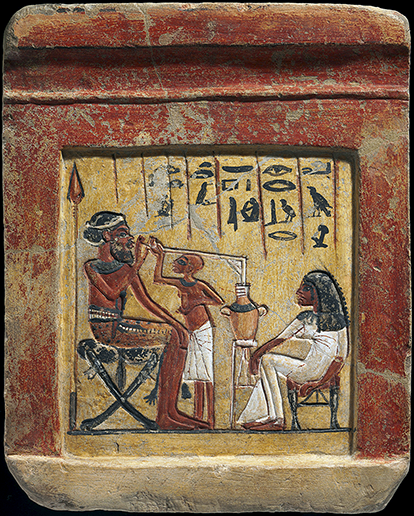
Figure 13 Stele of a Syrian soldier drinking, ÄM 14122 – Staatliche Museen zu Berlin, Ägyptisches Museum und Papyrussammlung / Sandra Steiß CC BY-SA 4.0.
Even the foreigners who ruled Egypt (many of whom lived there and thus should be considered immigrants) capitalized on or at least preserved aspects of their foreign identities. The Hyksos, the Libyan rulers of the Third Intermediate Period, the Napatans, and the Persians all kept their original personal names, adopting titles and throne names from the Egyptian repertoire. The Libyans even brought culturally specific titles such as Chief of the Ma, Libu, or Meshwesh, while the Hyksos adopted an Egyptian title for themselves (ḥḳꝫ ḫꝫswt, rulers of foreign lands), potentially to highlight their foreignness (Candelora Reference Candelora2017; Leahy Reference Leahy1985). These immigrant rulers also brought and adapted elements of their native styles of rule to Egypt. The Hyksos seem to have retained a kinship-based governmental structure with broad powers and a style of diplomacy common in contemporary West Asia (Candelora Reference Candelora2019a). The Libyans operated using a more feudally based arrangement that may have reflected their native tribal organization (Broekman Reference Broekman2010; Cole Reference Cole, Pinarello, Yoo, Lundock and Walsh2015; Jansen-Winkeln Reference Jansen-Winkeln1999). The Twenty-Fifth Dynasty conversely took a more contextualized approach to state control, accepting vassalage in the Delta but exerting more direct influence in the south, and incorporating royal women into the ruling structure (Lohwasser Reference Lohwasser2001; Pope Reference Pope2014; Török Reference Török2008, pp. 311–376). The Napatan kings also showed themselves as distinct from the standard Egyptian monarch through visual markers such as the skull cap, double uraeus, and ram’s-head necklace (Russmann Reference Russmann1995, p. 232). In the Libyan Period, it seems to have been primarily the elite, rather than the kings themselves, who continued to be shown wearing potential identity markers like feathers, either vertically or horizontally, on their heads (Cooney Reference Cooney2011, pp. 279–291). Additionally, the only six extant examples of falcon-headed coffins or cartonnages all belong to elites or kings of the Libyan Period, perhaps indicating a visual display of distinct identities (Broekman Reference Broekman2009). Also in the Persian Period, many elite and royal depictions, such as the statue of Udjahorresnet, Ptahhotep, or the Suez stelae of Darius, elected to adopt, maintain, or evoke elements like the Achaemenid court robe and lion-headed bracelets (Colburn Reference Colburn2020; Cooney Reference Cooney1954; Lloyd Reference Lloyd and Tuplin2007). The continued use of potentially foreign visual markers certainly linked elites with the current regime, and in the case of the rulers themselves may have served to remind their Egyptian subjects not only of their origins but also of their ties to power brokers and trade networks abroad.
Furthermore, identity markers were maintained for presumably more personal reasons of ascription rather than capitalization. West Asian immigrants may have preserved personal adornment traditions through dress and toggle pins (Figure 14) (Bader Reference Bader2021, p. 30, but see important caveats on p. 92), as well as weaponry and burial customs (Bader Reference Bader, Duistermaat and Regulski2011, Reference Bader2021, pp. 52–54, again with significant cautions; Forstner-Müller Reference Forstner-Müller2008, Reference Forstner-Müller and Marée2010; Philip Reference Philip2006). For the various Libyan groups in Egypt, the conservation of their western identities included Libyan personal names, forms of social structure, the use of feather adornment, and burial practices (Broekman Reference Broekman2010; Broekman et al. Reference Broekman, Demarée and Kaper2009; Cole Reference Cole, Pinarello, Yoo, Lundock and Walsh2015; Jansen-Winkeln Reference Jansen-Winkeln1999; Leahy Reference Leahy1985; Naunton Reference Naunton and Lloyd2010; O’Connor Reference O’Connor and Leahy1987). Examples from the Persian Period can also be found in the continued use of ethnic identifiers, shows of group solidarity, and religious traditions among the various groups living at Elephantine (Becking Reference Becking and Folmer2022).

Figure 14 Southwest Asians from the tomb of Khnumhotep II (Tomb 3), Beni Hassan –
Another particularly interesting example is the funerary stele of Djedherbes from Saqqara (Figure 15). The stele displays a funerary inscription in both the hieroglyphic and Demotic scripts, and lists Djedherbes’s mother as Tanofrether and father as Artam, clearly Egyptian and Persian names respectively. The lunette features a winged sun disc that, due to the addition of a feathered tail and spirals in place of pendent uraei, bears more resemblance to Achaemenid symbols of Zoroastrianism than the typical Egyptian version. Further, while the upper register is a relatively standard scene of the deceased being mummified by Anubis, the lower register selectively combines elements from an Egyptian offering scene and an Achaemenid presentation scene (Mathieson et al. Reference Mathieson, Bettles, Davies and Smith1995). Interestingly, in the inscriptions Djedherbes did not claim either Egyptian or Persian identities, but the collective may suggest his embodiment of a third identity characteristic of this southwestern borderland of the Persian Empire. This fascinating find also emphasizes the need to develop new frameworks to better understand not just immigration in ancient Egypt, but also second-generation and later descendants.
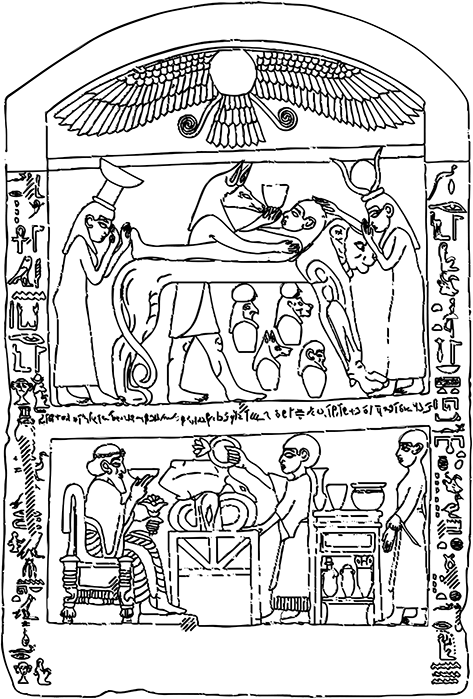
Figure 15 Stele of Djedherbes, Saqqara – by author after Mathieson et al. Reference Mathieson, Bettles, Davies and Smith1995, figure 3.
5 Borderland Identities
The goal of the following case studies is to demonstrate the entanglement of borders and immigration, as well as the potential of borderlands theory to reframe our approaches to the ontological relationship between these concepts. In the study of ancient Egypt, liminal places and their populations are often approached differently if that place is viewed as part of a sovereign territory called Egypt. Research questions concerning foreigners are developed around the existence of a national, pan-Egyptian identity, contained within geopolitical borders, to compare them against. By recentering the border, regardless of whether it falls between Egypt and foreign lands or within Egypt itself, it is possible to focus instead on local identity expressions, working from the bottom up to investigate human agency, accommodation, and adaptation in the negotiation of interactions between different groups. Further, while traditional approaches to borders necessitate rigid distinctions between primordial identities (Jones Reference Jones1997), a borderlands framework presupposes that the interacting identities are inherently fluid and constantly changing.
Knapp has noted the “multiplicity of problems involved in defining” an identity and has suggested that archaeologists focus on the ways in which that identity was constructed (Knapp Reference Knapp2008, p. 63) – here understood as the bordering processes involved, and how that identity was communicated to or performed for society. These case studies are not meant to be exhaustive treatments of borders and hybridity or entanglement along Egypt’s edges, as each has been examined much more thoroughly in the sources cited. My aim is to reconsider these cases from a borderlands perspective to investigate how immigration and adaptation operate multidirectionally within these liminal spaces, allowing for a more nuanced perception of both borders (or lack thereof) and the identities specific to these zones.
5.1 The Nile Cataracts
This region, including Egypt’s southern expanse as well as Lower Nubia, has the most developed scholarly tradition of investigation into borders and identity (to name just a few: Adams Reference Adams1984; Cohen Reference Cohen1992; de Souza Reference de Souza2019; Liszka Reference Liszka2012; Minor Reference Minor2012; Smith Reference Smith2003; Smith & Buzon Reference Smith, Buzon, Green and Costion2018; Török Reference Török2008; Zibelius-Chen Reference Zibelius-Chen1988). I hesitate to refer to this region as the Egypto–Nubian border, as even this terminology inherently assumes primordially distinct identities defined by a geopolitical border. This borderland spanned from somewhere north of the First Cataract to around the Third Cataract, and is actually defined by a lack of firm border, which moved depending on context – including both chronological and social contexts, as well as ideological versus administrative perspectives. For instance, in the Middle Kingdom, Lower Nubia was included in the administration of the “Head of the South” along with Upper Egypt forming a border at Cusae, while the contemporary politico-ideological border is usually considered to have been located at the Second Cataract (Smith Reference Smith and Lustig1997, p. 82, Reference Smith2005a). Various trajectories of immigration have been demonstrated within this borderland; C-Group and Eastern Desert immigrants (if we should even class them as immigrants at all, as opposed to natives to this broad borderland) settled in Upper Egypt (see Section 4.1; de Souza Reference de Souza2019; Hafsaas-Tsakos Reference Hafsaas-Tsakos, Godlewski and Łajtar2010; Irish & Friedman Reference Irish and Friedman2010; Liszka Reference Liszka2012). People from cities like Thebes also immigrated south, settling at sites like Tombos, and “Egyptian” soldiers were stationed in the fortresses at the Second Cataract (Buzon et al. Reference Buzon, Simonetti and Creaser2007; Buzon & Bowen Reference Buzon and Bowen2010; Buzon & Simonetti Reference Buzon and Simonetti2013; Smith Reference Smith1995, Reference Smith2003, Reference Smith and Areshian2013; Smith & Buzon Reference Smith, Buzon, Green and Costion2018). The following case study examines the personal responses of immigrants as borders shifted around them.
In the late Middle Kingdom or Second Intermediate Period, Egyptian state control of Lower Nubia waned. The soldiers stationed in these fortresses had been living alongside and/or interacting commonly with various local groups, including Kermans and C-Group Nubians for decades in this borderland. Stuart T. Smith has been able to convincingly demonstrate the intensifying mixture of these communities through the Second Intermediate Period, when the state-claimed, politico-ideological border presumably shifted back from Semna to the region of Elephantine (Smith Reference Smith1991, Reference Smith1995). Stelae from the fortress of Buhen, dating to this period of heightened entanglement, reveal interesting autobiographical information about two men who likely identified primarily as culturally Egyptian – whether they were born in Egypt or to “Egyptian” families stationed at the fortress.
The stelae of Sepedher, the commandant of Buhen (Figure 16), and Ka, an official (Figure 17), are both from the stylistic, linguistic, titulary, and religious traditions common to Egypt. They are round-topped stelae with winged sun discs and wadjet eyes in the lunettes respectively, as well as ḥtp-dἰ-nsw offering formulae written in (if somewhat difficult) Middle Egyptian hieroglyphs. All of the family members of Ka and Sepedher, known from these stelae and another erected by Sepedher in honor of his brother (Philadelphia 10983), have Egyptian personal names (Säve-Söderbergh Reference Säve-Söderbergh1949, p. 55) – again, not alone strong indicators of identity, but taken in tandem with all the other Egyptian elements, may suggest a potential expression of group belonging.

Figure 16 Stele of Sepedher (Philadelphia 10984), Buhen – by author after Säve-Söderbergh Reference Säve-Söderbergh1949, figure 1.

Figure 17 Stele of Ka (Khartoum 18), Buhen – by author after Säve-Söderbergh Reference Säve-Söderbergh1949, figure 2.
These stelae are remarkable in that they both refer to these individuals serving not an Egyptian king, but the ruler of Kush. Sepedher proclaimed, “I was a valiant commandant of Buhen, and never did any commandant do what I did; I built the temple of Horus, Lord of Buhen, to the satisfaction of the ruler of Cush” (translation after Säve-Söderbergh Reference Säve-Söderbergh1949, p. 55). Such claims of supremacy and uniqueness are typical of Egyptian autobiographical stelae, as is the task of constructing, embellishing, or refurbishing religious installations to the satisfaction of the king. Ka says outright, “I was a valiant servant of the ruler of Cush; I washed [my] feet in the waters of Cush in the suite of the ruler Nd̠ḥ, and I returned safe and sound [to my] family” (translation after Säve-Söderbergh Reference Säve-Söderbergh1949, p. 52). The first statement is a bald declaration that he served the Kerman king, and Säve-Söderbergh interpreted the difficult and unparalleled feet-washing passage as a ceremonial expression of loyalty (Säve-Söderbergh Reference Säve-Söderbergh1949, p. 53). Finally, Ka returned home to Buhen, not Egypt, to his family, which included not just his children, but eventually at least his grandchildren as well, as Ka’s grandson, Ahwoser, was the dedicator of the stele.
Consequently, these two individuals are intriguing examples of identity negotiation in borderland contexts. Ka at least is a member of a multigenerational family belonging to that borderland, and both he and Sepedher reveal devotion to a local borderland deity, Horus of Buhen. Their stelae served as public monuments that allowed for expressions or advertisement of their identities and group ascriptions, at least to the community in the region of Buhen who were able to read or interpret them. Publicly then, both men expressed a majority of elements that align most closely with Egyptian traditions, while proudly declaring that they served the ruler of Kush – a statement that would set them against not just Egyptian political alignment but also the ma’at/isfet worldview. It would seem that as the political border shifted around Buhen, the community centered there did not express a profound shift in identity. Whether the border moved during the lifetimes of Ka and Sepedher, or that of their ancestors, these men were apparently unperturbed by changing political allegiances, and seem to have belonged first and foremost to the borderland and its local traditions and exigencies.
5.2 The Eastern Desert
The Eastern Desert is a vast region spanning from the Mediterranean coast in the north to well into modern Sudan and Eritrea. In the ancient world, this zone was home to various nomadic or seminomadic groups, who often interacted with the inhabitants of the Nile Valley, whether expeditions for trade and raw materials traversed the desert, or because the nomads found temporary work or settled in the valley permanently (Barnard & Duistermaat Reference Barnard and Duistermaat2012; Barnard & Wendrich Reference Barnard and Wendrich2008; Darnell Reference Darnell2021; Förster & Riemer Reference Förster and Riemer2013; Liszka Reference Liszka2012). It is a borderland region whose many toponyms reflect the diversity of groups living within it, including not only groups categorized broadly as Nubian, such as the Medjay and Pan-Grave, but also Ꜥꝫmw and more (Barnard Reference Barnard, van der Vliet and Hagen2013; Cooper Reference Cooper2015; Tallet Reference Tallet2009). The next case study was selected because it has often been discussed as an example of immigrant acculturation so complete that they “disappeared” from the archaeological record (see excellent discussion in de Souza Reference de Souza2013).
The Pan-Grave Culture has been identified through archaeological evidence, mainly in the form of characteristic burials, at sites in the Nile Valley from Lower Nubia to Middle Egypt. The “typical” Pan-Grave assemblage is often described as a pan-shaped grave, sometimes surrounded by a loose ring of stones, containing a body buried in a flexed position with distinctive ceramics, jewelry, decorated bucrania, and leather goods (Bietak Reference Bietak1966; Cohen Reference Cohen1992; de Souza Reference de Souza2013; Liszka Reference Liszka2012). Due to their sudden appearance, especially in Upper Egypt in the late Middle Kingdom through the Second Intermediate Period, as well as the weaponry found in their burials, the Pan-Grave were identified as mercenaries serving in the Theban army (de Souza Reference de Souza2013, pp. 109–110; Ryholt Reference Ryholt1997, pp. 178–179). They were also equated with the Medjay of contemporary Egyptian texts, but this link has been convincingly challenged (Liszka Reference Liszka2012, Reference Liszka2015).
Several recent studies into the Pan-Grave Culture have shown significant variation in the expression of this potential identity within the Egyptian Nile Valley. Generally, the southernmost cemeteries tend to align more with the “typical” assemblage, featuring round pit graves and contracted burials, while more northerly sites feature rectangular graves with supine inhumations. This shift to a more traditionally Egyptian form of burial, along with the inclusion of Egyptian funerary objects such as kohl pots, storage jars, and occasionally coffins, has been explained as the Egyptianization of these immigrants (de Souza Reference de Souza2013, p. 112). However, upon closer examination, the incorporation of these Egyptian elements did not come at the expense of the inclusion of standard Pan-Grave artifacts and ceramics within these “Egyptianized” graves. Though Cohen and de Souza disagree as to the chronological significance of this change in burial practice, they agree that the maintenance of some Pan-Grave customs in all the graves is crucial to demonstrate individual agency in selecting from amongst both traditions (Cohen Reference Cohen1992; de Souza Reference de Souza2013). As de Souza emphasizes, “If funeral rituals are interpreted as an effort to reaffirm the identity of the deceased, then the strong Nubian character of the assemblages is a clear indication that the Pan-Grave community retained a strong and distinct identity” (de Souza Reference de Souza2013, p. 118). Although it remains unclear why these burials ceased in the New Kingdom, it was seemingly not due to overwhelming Egyptianization.
Many further distinctions have also been recognized within Pan-Grave Culture. Bourriau classified a split in the Egyptian ceramics found at these sites; those at Deir el Rifeh follow the Lower Egyptian tradition, while those at contemporary Mostagedda, just a few miles south and across the river, follow the Upper Egyptian tradition. She proposed that this division could be explained by different political alliances with the Hyksos and Thebans, respectively (Bourriau Reference Bourriau, Leahy and Tait1990, pp. 44–46). Additionally, in an extensive examination of Pan-Grave ceramics, de Souza identifies at least five, if not more, regional variations on the manifestation of Pan-Grave Culture, suggesting that we instead consider the Pan-Grave as a cultural horizon. He rightly argues that given these were likely nomadic bands, each would have had their own identities and expressions thereof, and would have been exposed to different interaction and exchange influences (de Souza Reference de Souza2019, pp. 140–153). Consequently, what has previously been treated as a homogenous immigrant identity actually has a variety of divisions, demonstrating that borders and bordering processes can occur within the borderland as well.
5.3 The Oases
The Western Desert of Egypt was home to various nomadic groups, but permanent settlement was only supported in the largest oases, namely Siwa, Bahariya, Farafra, Dakhleh, and Kharga. Even the closest of these oases were a several-day journey from the Nile Valley, necessitating appropriate preparation and a stock of water and supplies (Giddy Reference Giddy1987). This broad region was always a borderland, a zone of intense interaction between “Egyptians” (or people from the valley) – who were the immigrants in this case – and local desert groups. Interestingly, throughout pharaonic history, terms for the oases were almost always determined by the ḫꝫst sign, and the inhabitants of the oases were called wḥꝫtyw, “oasis dwellers,” which also received the ḫꝫst and throw stick classifiers, as on the Middle Kingdom stela of Ikudidi (Gauthier Reference Gauthier1925, pp. 202–229). In New Kingdom tomb scenes, these oasians are depicted with specific dress and hair, further distinguishing them from the other groups shown. Two Third Intermediate Period texts, the Maunier Stela and the Tale of Woe, portrayed the oases as decidedly unpleasant and places for criminal banishment. This consistency in representation demonstrates that the oases and their inhabitants were thought of as foreign (Hubschmann Reference Hubschmann2010b, pp. 52–58; Morris Reference Morris, Ikram and Hawass2010a). This case study focuses on the oases because they retained a distinct borderland identity despite constant contact with and periodic occupation by the Egyptian state.
One of the key concerns of research in this area is the constantly changing level of pharaonic presence and (claimed?) control over the oases. Early Dynastic serekhs, inscribed at the mouths of wadis along the valley route and at Kharga, are the earliest evidence for Egyptian presence in the region, likely in the form of royal expeditions. Such marking implies that the Egyptians “saw themselves as not of this region” and sought to incorporate it ideologically into the new state (Hamilton Reference Hamilton, Mynářová, Kilani and Alivernini2019, pp. 161–164). Starting in this period, and increasing in the Third–Fourth Dynasties, sites like Mut al-Kharab in Dakhleh show a combination of Nile Valley ceramics and those of the local Sheikh Muftah Cultural Unit. This evidence has been interpreted as the start of Egyptian colonization of the oases, primarily for resource exploitation, in which immigrant Egyptians lived alongside indigenous groups (Hope & Kaper Reference Hope, Kaper, Woods, McFarlane and Binder2010, p. 220; Ricketts Reference Ricketts, Warfe, Gill, Hamilton, Pettman and Stewart2020, pp. 599–602). While the material culture of the oases during the later Old Kingdom shows all the hallmarks of material entanglement and hybridity, some sites show a maintained spatial separation between traditions while others do not, and both groups retain clear markers of distinction (Ricketts Reference Ricketts, Warfe, Gill, Hamilton, Pettman and Stewart2020), exemplifying a range of interactive strategies and outcomes.
By the late Sixth Dynasty, an Egyptian administration was set up at Ayn Asil/Balat in Dakhleh, which kept in contact with the central government at Memphis (Pantalacci Reference Pantalacci and García2013). According to the autobiography of Khentikaupepy, the officials in charge would have been raised at the court in Memphis and appointed personally by the king (Pantalacci Reference Pantalacci and García2013, p. 199). Many material elements emphasized their ties to the valley. They had large mastabas and material culture similar to the valley, as well as evidence for the royal cults of Pepi I and II (Hubschmann Reference Hubschmann2010b, pp. 60–63; Morris Reference Morris, Ikram and Hawass2010a, p. 139; Pantalacci Reference Pantalacci and García2013, p. 201). Their “palace” contained an archive whose texts were written in Egyptian, but were inscribed on clay tablets rather than papyri, a unique occurrence (Pantalacci Reference Pantalacci and García2013, p. 197).
In fact, while these administrators worked for the Egyptian king and likely came from the Nile Valley, numerous elements from Balat indicate they held the power, royal favor, or simple distance from the king needed to do things differently, in a way endemic to this borderland. The official in charge was the ḥḳꝫ wḥꝫt, the “Ruler of the Oasis,” rather than the more standard titles for district leaders within the Nile Valley (Valloggia Reference Valloggia, Geus and Thill1985). The unique title ḥḳꝫ was more commonly applied to the leaders of foreign lands, people with direct authority over their region (Pantalacci Reference Pantalacci and García2013, p. 199). These rulers were also granted ka chapels and cults by a decree of Pepi II, a prerogative normally reserved for the king himself (Moeller Reference Moeller2018, p. 182; Morris Reference Morris, Ikram and Hawass2010a, p. 139; Pantalacci Reference Pantalacci and García2013, p. 201). Writing occurred on clay tablets, a fact that may have resulted from a lack of resources, but was still a practice specific to this borderland. Hardtke even argued that the occurrence of extended family members within the administration of the oases demonstrated a kinship-based structure distinct from the Nile Valley (Hardtke Reference Hardtke, Warfe, Gill, Hamilton, Pettman and Stewart2020, p. 243). Consequently, by the late Old Kingdom, the oases, especially Dakhleh, represented a liminal zone in which novel cultural production and new practices were formed.
The oases continued to be a unique “third space” throughout pharaonic history, even during periods when the Egyptian king supposedly held more direct control. In a royal inscription from Deir el-Ballas, Montuhotep II claims that he annexed both Wawat and the oases to Upper Egypt (Darnell Reference Darnell2008; Fischer Reference Fischer1957, p. 40). Darnell proposed that this was the first time the oases were officially incorporated into the Egyptian state (Darnell Reference Darnell2008, p. 100). Yet only a few reigns later, private stelae recorded trouble. The stelae of Kay and Dd-Iqw both reported being sent by Senwosret I to put down rebellions in the oases (Darnell Reference Darnell2008, p. 101; Fischer Reference Fischer1957, p. 41; Hope & Kaper Reference Hope, Kaper, Woods, McFarlane and Binder2010, p. 231). Even once this region was supposedly quelled, local leaders still took advantage of their borderland context to flaunt their unique authority. The stela of Sa-Igai, a governor of Dakhleh, has been dated to the reign of Montuhotep II. The inscription not only names him as Chief of the Priests, but also a ḥḳꝫ, perhaps referencing the Old Kingdom borderland title. Further, it claims that Sa-Igai erected monuments for the borderland-specific cult of Igai, “Lord of the Oasis” (Hope & Kaper Reference Hope, Kaper, Woods, McFarlane and Binder2010, pp. 227–228; Kaper Reference Kaper, Warfe, Gill, Hamilton, Pettman and Stewart2020, p. 370; Morris Reference Morris, Ikram and Hawass2010a, p. 140), making it perhaps the earliest record of the public patronage of temples, an act that had previously been a solely royal honor (Hope & Kaper Reference Hope, Kaper, Woods, McFarlane and Binder2010). Later, potentially during the reign of Senwosret III, two governors of Dakhleh, Ameny and Mery, depicted themselves in rock art sporting hairstyles and belts decorated with uraei, another royal prerogative (Hardtke Reference Hardtke, Warfe, Gill, Hamilton, Pettman and Stewart2020, p. 243; Tallet Reference Tallet, Warfe, Gill, Hamilton, Pettman and Stewart2020, p. 707).
Through the Third Intermediate and Late Periods, the oases continued to express a distinctive, borderland culture characterized by entanglement. A particularly interesting case comes from a small temple to Amun of Ighespep in Al Bahrein, an uninhabited oasis outside of Siwa, dating to the reign of Nectanebo I (Figure 18). The decorative program of this small monument is incredibly unusual; while polychrome offering scenes focus on specifically oasian deities, only the eastern half of the temple features Nectanebo. The Egyptian king is shown in standard pharaonic costume with the titles sꝫ rꜤ and nsw bἰty. However, on the western walls of the temple, the offering is being performed by an individual named Wenamun, who wears a headband with a vertical feather, typically a marker of Western Desert identities. Paralleling Nectanebo, Wenamun receives royal titles and cartouches; he is called “King of Upper and Lower Egypt and of the feather” as well as “the powerful one of the two deserts of Chou” (Gallo Reference Gallo2006; Hardtke Reference Hardtke, Warfe, Gill, Hamilton, Pettman and Stewart2020, pp. 246–248). In this setting, Wenamun is shown as equal to Nectanebo, simply a contemporary ruler with equivalent titles specific to this borderland. This example demonstrates the fluidity and flexibility of borderland identities, as Wenamun selects from among the repertoires both of Egypt and the oases to communicate his local role and authority. The reference to the two deserts of Chou also echoes the term “the two lands of the Oases,” which indicated the unity of the Northern (Baharia and Farafra) and Southern Oases (Kharga and Dakhleh) (Gauthier Reference Gauthier1925, pp. 27–28). The unification of duality in these terms reflects the same concept seen in Egyptian geographic labels and titles, like the two lands, Upper and Lower Egypt, and the two banks (Kuhlmann Reference Kuhlmann, Förster and Riemer2013). Therefore, Wenamun’s employment of both of these titles in particular shows his borderland adaptation of Egyptian traditions.

Figure 18 Wenamun offering to Amun of Ighespep, Al Bahrein – by author after Gallo Reference Gallo2006, figure 12.
5.4 The Eastern Delta
The final case study, the region of the Eastern Delta, shares numerous aspects with the other borderlands discussed. First, interaction between locals and Southwest Asians, as well as continuous mobility, was a constant characteristic of this zone. Trade and resource expeditions were launched from the region by both land and sea, ensuring the focus of this borderland was oriented to the Mediterranean and West Asia. Multidirectional immigration between the Eastern Delta and West Asia is attested as early as the Predynastic Period (Van den Brink & Levy Reference Van den Brink and Levy2002), causing the area to retain a unique borderland identity distinct in many ways from the Nile Valley. Second, the politico-ideological border shifted frequently throughout pharaonic history; sources like P. Anastasi IV refer to Piramesse as the site of the border between the Egypt and West Asia, while multiple texts indicate that Avaris may not have been considered a part of Egypt during certain eras (see Section 2.4; Candelora Reference Candelora2019a).
It is becoming increasingly clear that bordering processes occurred within this borderland as well; in the Second Intermediate Period, distinct expressions of hybridity and identity can be found not only in different places within the Eastern Delta, such as the sites in Wadi Tumilat (Mourad Reference Mourad2021, pp. 76–83), but even in different excavation areas within the regional capital at Tell el Dab’a. For example, the settlement in Area F/I displayed a blend of material culture that drew from both Egyptian and West Asian traditions. Houses, which were of typical Egyptian layout, had attached, aboveground burial chambers identified as tötenhauser with remains of family burials and cultic activity apparently centered on an adult male. While both cultures practiced ancestor veneration, Müller argued that these installations and their location within the settlement more closely align with West Asian burial customs, but the fact that these vaults were accessible only from outside, rather than from within the house, indicated the incorporation of Egyptian notions of separation between the living and dead. This particular admixture resulted in a new tradition specific not just to the Eastern Delta borderland, but to this area of the city in particular. Additionally, the visibility of these vaults, as well as a potential communal chapel surrounded by further inhumations, were outward expressions of group solidarity – a bordering process – that served to created a unique identity (Müller Reference Müller2015).
Roughly 500 meters to the southeast, Area A/II exhibits different burial traditions. Burial styles and the nature of this area changed over time, displaying hyperlocal adjustments to altered circumstances. In the late Middle Kingdom strata G/1–3, only eight subterranean tombs were excavated featuring generally “Egyptian”-style architecture, but some melding of other aspects, such as body position, ceramics, and burial goods, with Southwest Asian types (Bader Reference Bader2021, pp. 53–54). In stratum F, the area was converted from a settlement to a sacred complex with a massive temple (Temple III) and cemetery, in which all the tombs were aligned to the temple. In the following phases, the settlement expanded back across the area, preserving the temple, and the material culture apparently underwent a noticeable shift to a hybrid “Delta type” inspired by both Egyptian and Southwest Asian cultures. In the latest Hyksos phase, new tomb types were introduced featuring shafts attached to houses, leading to subterranean family tombs (Forstner-Müller Reference Forstner-Müller and Marée2010, p. 129). Overall, the burials in Area A/II reflect the constantly shifting significance of the area, adapting to the conditions and/or demographics of each new phase. Distinctly unlike the visible funerary structures of area F/I however, the tombs in Area A/II from all strata lack superstructures (Forstner-Müller Reference Forstner-Müller and Marée2010, p. 130), indicating different burial practices and meanings in this nearby area demarcating a potential border within the larger city.
Bietak has suggested that the westernmost Complex 1 in Area R/III was a settlement of purely Egyptians, whereas Complexes 2 and 3 across the street were occupied by Southwest Asians, according to the presence versus absence of toggle pins and intramural burials (Bietak Reference Bietak2016, pp. 269–272). However, it is more likely that Complex 1 served as an administrative district, as first proposed by the excavators, and it is crucial to consider that in a borderland context such as this, toggle pins may not represent such firm “ethnic markers,” but instead reflect material and relational entanglements linked to fluid identities (Bader Reference Bader2021, p. 92).
Even the immigrant-descended rulers of the Fifteenth Dynasty recognized and accommodated the variability of the borderland community over which they ruled. They strategically maintained aspects of their Southwest Asian origins while incorporating and adapting elements from Egyptian traditions, in many cases creating a third, Delta-specific mode of doing. They commissioned monumental inscriptions in hieroglyphs, including standard Egyptian royal titulary and throne names. However, they preserved their personal, Semitic names in a cartouche, an archetypal symbol of Egyptian kingship, and selected an Egyptian title, ḥḳꝫ ḫꝫswt, to emphasize their foreign backgrounds. In terms of their governing structure, the Hyksos seem to have retained their kinship-based power networks, but overlaid Egyptian titles and tools, such as scarab seals and the language itself, to produce an administration specific to the borderland. They continued to participate in Southwest Asian networks of trade and diplomacy via gift-giving and correspondence, granting them access to both political allies and a rich supply of desirable imports. Additionally, the Hyksos adopted aspects of Egyptian religion, claiming to be sons and embodiments of Re, instructed by Thoth, and beloved of Sobek. Yet they also chose a syncretized borderland deity – Seth of Avaris, a union of Seth and a Southwest Asian storm god – as their patron, and established a temple and cult to him that would continue in this liminal region for more than 400 years. The persistence of this distinct borderland identity was made apparent when the Ramesside kings, themselves members of this borderland community, adopted the same god as their own royal patron, and further established the cults of other Southwest Asian deities at Piramesse (Candelora Reference Candelora2017, Reference Candelora2019a).
6 Conclusions: Immigrant Impacts
It is crucial to consider the term “border” as both a noun and a verb – a thing and a process (Diener & Hagen Reference Diener and Hagen2012, p. 59). The paradox of studying borders in this way is that they both create divisions and invite interaction across them (Baud & Van Schendel Reference Baud and Van Schendel1997, p. 216). In the case of ancient Egypt, approaching the borderlands as the core space rather than the periphery helps mute the overbearing foreigner topos of state rhetoric and the anachronistic imposition of a national, Egyptian identity. Instead, it allows for the examination and nuancing of the lived reality of both immigrants and locals in these interaction zones. Further, borderlands encourage us to embrace ambiguity as the state of the question, rather than approaching these topics through false objectivity. In these regions where there was never a “precontact” or “culturally pure” phase, identity and immigration remained flexible, multidirectional concepts. Material culture and practices blended, reflecting a hybridized form of production, and cultures were consciously juxtaposed as a form of bordering between groups. It is also becoming apparent with new research that bordering processes defined distinct, locally focused identities within the borderland as well, regardless of whether that liminal zone was located at the assumed edges of Egypt or in the heart of the Nile Valley.
Ancient Egypt was characterized by the vagueness and permeability of its borders and by a lack of isolation. Interaction and immigration were constants throughout pharaonic history, only increasing in intensity as time went on. This is not meant to imply that the numbers of immigrants were necessarily large, but that their infusion into and inclusion in Egyptian society was common, and that even small-scale interactions could have far-reaching effects. Critically, acculturation is not a process only the immigrants undergo in such contact scenarios. Members of the host society can and do acculturate aspects of immigrant culture, usually due to a desire to be slightly unique for status and upward social mobility (Rudmin et al. Reference Rudmin, Nilsen and Olsen2007, p. 50). This also raises the question of when foreigners and foreign cultural elements cease to be alien (Panagiotopoulos Reference Panagiotopoulos, Maran and Stockhammer2012), as well as what aspects of archetypal Egyptian culture are in fact the negotiated cultural production of a borderland.
Many different aspects of Egyptian culture were impacted by cross-border interaction or the integration of immigrants into society. Much of the innovations that characterized the New Kingdom, for example, were driven by accommodations and transformations of material and nonmaterial aspects of culture in borderland contexts, both within and beyond Egypt. The incorporation and adaptation of these cultural elements were not simple, one-to-one correspondences or unidirectional inheritances, but the result of complex negotiation and bordering processes that altered Egyptian society from the religious and political to the militaristic and mundane. Foreign deities were not just added into the Egyptian pantheon, but were entangled in Egyptian mythological traditions, and in the case of Qedeshet, for instance, deities were invented anew from a blend of religious influences to suit the circumstances and communities of their time (Cornelius Reference Cornelius2004; Mourad Reference Mourad2021; Schneider Reference Schneider2011; Zivie-Coche Reference Zivie-Coche2018). Cuisine was transformed by the importation of foreign foods and domesticated crops, as well as the associated knowledge of production – an excellent example being that of wine and viticulture. Yet the impact of these foods (or drinks) was not restricted solely to the realm of diet and farming, but reverberated also into religious ritual and burial practice. Wine in particular remained a borderland product in several ways; its cultivation was better suited to the Delta and oases, and immigrant vintners were brought into Egypt throughout at least the New Kingdom (Lesko Reference Lesko, McGovern, Fleming and Katz1996; Murray Reference Murray, Nicholson and Shaw2000). A vast array of technologies were adapted for Egyptian use from such borderland encounters, from the most basic system of weights and measures to the complex military package featuring the chariot, horse, composite bow, and scale armor. These technologies touched most facets of Egyptian life, including simple commodity exchange, household weaving, transport, laboring with tools, music, and much more (Mourad Reference Mourad2021, pp. 219–348; Shaw Reference Shaw2012). The military was the social arena that was perhaps most transformed; not just the material elements of new weapons, armor, and machines, but also tactics, jargon, and even military reward systems were adapted to local needs through the continual integration of immigrant soldiers and craftsmen within the Egyptian military. Additional nonmaterial transformations occurred in the language, diplomatic practice, and even cultural values (Candelora Reference Candelora2019a; Moreno García Reference Moreno García, Miniaci, Greco, Del Vesco, Mancini and Alù2024, p. 17).
Therefore, envisioning ancient Egyptian borderlands as particularly dynamic social spheres “in which interaction and change can occur more readily than elsewhere” (Feuer Reference Feuer2016, p. 21) allows us to separate the study of borders from geopolitics. Rather than exploring borders as restrictive, linear structures, approaching them as contact zones emphasizes the transboundary mobility, exchange, and mutual production that occurs within these spaces. These borderlands are no longer delegated to the fringes of the map or of society, but instead center the flexibility and accommodation of these liminal spaces in the construction of identity and innovation.
Gianluca Miniaci
University of Pisa
Gianluca Miniaci is Associate Professor in Egyptology at the University of Pisa, Honorary Researcher at the Institute of Archaeology, UCL – London, and Chercheur associé at the École Pratique des Hautes Études, Paris. He is currently co-director of the archaeological mission at Zawyet Sultan (Menya, Egypt). His main research interest focuses on the social history and the dynamics of material culture in Middle Bronze Age Egypt and its interconnections between the Levant, Aegean, and Nubia.
Juan Carlos Moreno García
CNRS, Paris
Juan Carlos Moreno García (PhD in Egyptology, 1995) is a CNRS senior researcher at the Sorbonne University, as well as lecturer on social and economic history of ancient Egypt at the École des Hautes Études en Sciences Sociales (EHESS) in Paris. He has published extensively on the administration, socio-economic history, and landscape organization of ancient Egypt, usually in a comparative perspective with other civilizations of the ancient world, and has organized several conferences on these topics.
Anna Stevens
University of Cambridge and Monash University
Anna Stevens is a research archaeologist with a particular interest in how material culture and urban space can shed light on the lives of the non-elite in ancient Egypt. She is Senior Research Associate at the McDonald Institute for Archaeological Research and Assistant Director of the Amarna Project (both University of Cambridge).
About the Series
The aim of this Elements series is to offer authoritative but accessible overviews of foundational and emerging topics in the study of ancient Egypt, along with comparative analyses, translated into a language comprehensible to non-specialists. Its authors will take a step back and connect ancient Egypt to the world around, bringing ancient Egypt to the attention of the broader humanities community and leading Egyptology in new directions.