





Impact statement
Psychiatric emergencies occur when individuals experience serious mental suffering and behavioral alteration that require immediate treatment. When healthcare workers do not have adequate training or resources to respond effectively, this can lead to violence, discrimination and deprivation of fundamental rights of people facing mental health conditions, including the excessive or unsafe use of interventions such as involuntary restraint and seclusion. Restraint refers to the use of physical, chemical or mechanical methods to restrict a patient’s movement, and seclusion is a form of restraint that involves isolating a patient in a room or other space. These topics are critically important in Africa due to the unique challenges facing many health systems on the continent, including resource constraints, stigma surrounding mental health and gaps in the availability of trained mental health professionals. Restraint and seclusion practices, while sometimes necessary to ensure staff and patient safety, raise ethical and human rights concerns that demand urgent attention. We conducted a scoping review of restraint and seclusion practices and their impacts in African clinical settings using the PubMed, Embase, CINAHL, PsycInfo and ProQuest databases, and identified 29 relevant studies on the topic. Restraint and/or seclusion were employed to manage aggression, enable involuntary treatment or prevent harm to oneself or others. Patients found restraint and seclusion to be dehumanizing, a cause of posttraumatic stress and a barrier to future help-seeking. Healthcare workers described inadequate training, overuse of restraint and seclusion, injuries and emotional distress after employing these treatments. This scoping review has illuminated challenges associated with restraint and seclusion across various African contexts, including their overuse, unsafe use and use for punitive purposes. We underscore the need for culturally sensitive and patient-centered care while highlighting the importance of reforming current practices to prioritize safety, dignity and the minimization of trauma. The findings serve as a foundation for guiding policy changes, advocacy efforts and improvements in training for mental health professionals.
Background
In Africa, more than 116 million people were estimated to be living with mental health conditions before the COVID-19 pandemic, and this burden has likely increased during and after the pandemic (World Health Organization [WHO], 2022). This situation has been worsened by several factors, including a large gap between the scope of mental health challenges and the number of providers available to provide treatment, the stigma surrounding mental health in many settings and the impact of poverty and conflict situations on lower-income regions of Africa (Singla et al., Reference Singla, Kohrt, Murray, Anand, Chorpita and Patel2017; Moitra et al., Reference Moitra, Santomauro, Collins, Vos, Whiteford, Saxena and Ferrari2022). Although the availability of treatment varies widely across different African settings, there are fewer than two mental health workers per 100,000 people on the continent, with many nations having fewer than one mental health worker per one million people (WHO, 2022). In addition, fewer than 11% of member states in Africa provide pharmacological or psychological interventions at community and primary care levels (WHO, 2022).
For people with serious mental illness (SMI), which is marked by major functional impairment, inadequate mental health treatment leads to increased risk of psychiatric emergencies. Psychiatric emergencies are defined as “serious mental suffering and behavioral alteration, which promptly requires adequate treatment” (Goretti et al., Reference Goretti, Esposito and Di Petta2023). Often, this involves agitated or aggressive behavior, active psychotic symptoms or other forms of disorganized thinking and behavior. The nature of these symptoms can lead to fear, concern for safety and activation of emergency response systems such as security personnel, law enforcement or medical response. When responders are inadequately resourced and undertrained, their responses are likely to escalate symptoms and worsen the emergency (Baldaçara et al., Reference Baldaçara, da Silva, Pereira, Malloy-Diniz and Tung2021). This can lead to violence, discrimination and deprivation of fundamental rights of people facing mental health conditions, including the excessive or unsafe use of interventions such as involuntary restraint and seclusion (Alemu et al., Reference Alemu, Due, Muir-Cochrane, Mwanri and Ziersch2023).
Restraint refers to the use of physical, chemical or mechanical methods to restrict a patient’s movement, and seclusion is a form of restraint that involves isolating a patient in a room or other space. In theory, both methods are intended to be used only when necessary to prevent a patient from harming themself or others, reduce the risk of harm and assist the patient to self-regulate and regain control of their behavior (Parkes and Tadi, Reference Parkes and Tadi2025). However, throughout history as well as in recent years, there has been widespread documentation of the use of restraint and seclusion in an unsafe, excessive or punitive manner due to lack of resources, education or access to more humane alternatives (Recupero et al., Reference Recupero, Price, Garvey, Daly and Xavier2011).
Prominent global health agencies have provided limited guidance on the topic of psychiatric restraint and seclusion in recent years, with the most cited guidance coming from the 2006 United Nations Convention on the Rights of Persons with Disabilities (United Nations, 2006) and the WHO’s QualityRights Initiative (WHO, 2019). As a result, efforts at advocacy, improvement and reduction of restraint and seclusion practices in Africa have been quite limited and most often occur at a local level (Mutiso and Ndetei, Reference Mutiso and Ndetei2024). Involuntary restraint and seclusion are prevalent in many African clinical settings, potentially due to limitations in the human resources and infrastructure needed to prioritize alternative approaches. The use of restraint and seclusion can lead to physical injury, emotional trauma and even death (Mohr et al., Reference Mohr, Petti and Mohr2003). Although the complete abandonment of these practices is difficult to envision, it is critical to minimize their use and to maximize their safety (Khadivi et al., Reference Khadivi, Patel, Atkinson and Levine2004).
In high-income global settings, efforts have included mandated training to improve de-escalation strategies and reduce the use of restraint and seclusion, increased staffing and improved infrastructure (Pérez-Toribio et al., Reference Pérez-Toribio, Moreno-Poyato, Lluch-Canut, Molina-Martínez, Bastidas-Salvadó, Puig-Llobet and Roldán-Merino2022). In addition, legal provisions have been implemented in many countries to help protect patients’ safety and rights. For example, the code of practice for the UK Mental health Act of 1983 states that physical restraint should be used as a last resort where there appears to be a real possibility of harm if withheld. The American Medical Association Code of Medical Ethics also states that restraint should never be for punitive reasons, for convenience or to offset staff shortages (O’Donovan et al., Reference O’Donovan, Boland and Carballedo2023). As a result of these efforts, there have been improvements in the standard of care for psychiatric patients in Western countries over the recent decades, and it will be crucial to implement similar strategies in other global settings, including throughout the continent of Africa.
A 2021 systematic review sought to identify psychiatric hospital reforms in low- and middle-income countries and identified 16 studies on the topic (Raja et al., Reference Raja, Tuomainen, Madan, Mistry, Jain, Easwaran and Singh2021); only two of the studies were conducted in Africa, and most of the studies described reforms in a single site or region rather than a broader national effort (Uys et al., Reference Uys, Mhlaluka and Piper1996; Krüger and Lewis, Reference Krüger and Lewis2011). One more recent effort involved the implementation of WHO QualityRights training in Ghana, which showed positive preliminary engagement. However, no data at the institution-level or patient-level impacts of this training have been reported to date, and the implementers described challenges related to a lack of resources to put the training into action and non-acceptance of guidance to reduce coercive treatments among some providers (Osei et al., Reference Osei, Amissah, Hanu, Tawiah, Brobbey, Arthur, Ansong, Ohene, Gyimah, Kofie, Taylor, Yaro, Funk, Drew, Moro, Carta, Baingana, Kpesese, Orrell and Cole2024). To encourage the success of future efforts, it is vital to gain a clearer understanding of current practices and attitudes related to restraint and seclusion that may hinder future efforts at reform.
The objective of this article was to conduct a scoping review of studies describing the use of restraint and seclusion to manage psychiatric emergencies in clinical settings in Africa. The synthesis of these studies will inform future efforts to improve patient safety and uphold ethical standards in mental health care, including the adaptation and implementation of existing intervention models within African contexts.
Methods
To conduct this scoping review, we first developed and completed structured searches of five databases: PubMed, Embase, CINAHL, PsycInfo and ProQuest. By including a variety of databases with differing but relevant content areas and research types (e.g., full-length manuscripts, conference abstracts and dissertations/theses), we were able to comprehensively identify literature related to our topic. Search queries were developed in collaboration with a medical librarian and refined to meet the specifications of each database. Search queries included terms for (1) Africa and each of the 47 African countries listed in the WHO Regional Office for Africa listing (WHO, 2025), (2) restraint and seclusion and (3) mental health. Full search queries can be found in Supplementary Appendix A. We performed additional searches using variations of these terms using search engines such as Google and Google Scholar and scanned the references cited in the final included studies to identify gray literature or relevant articles that may have been missed during our structured searches.
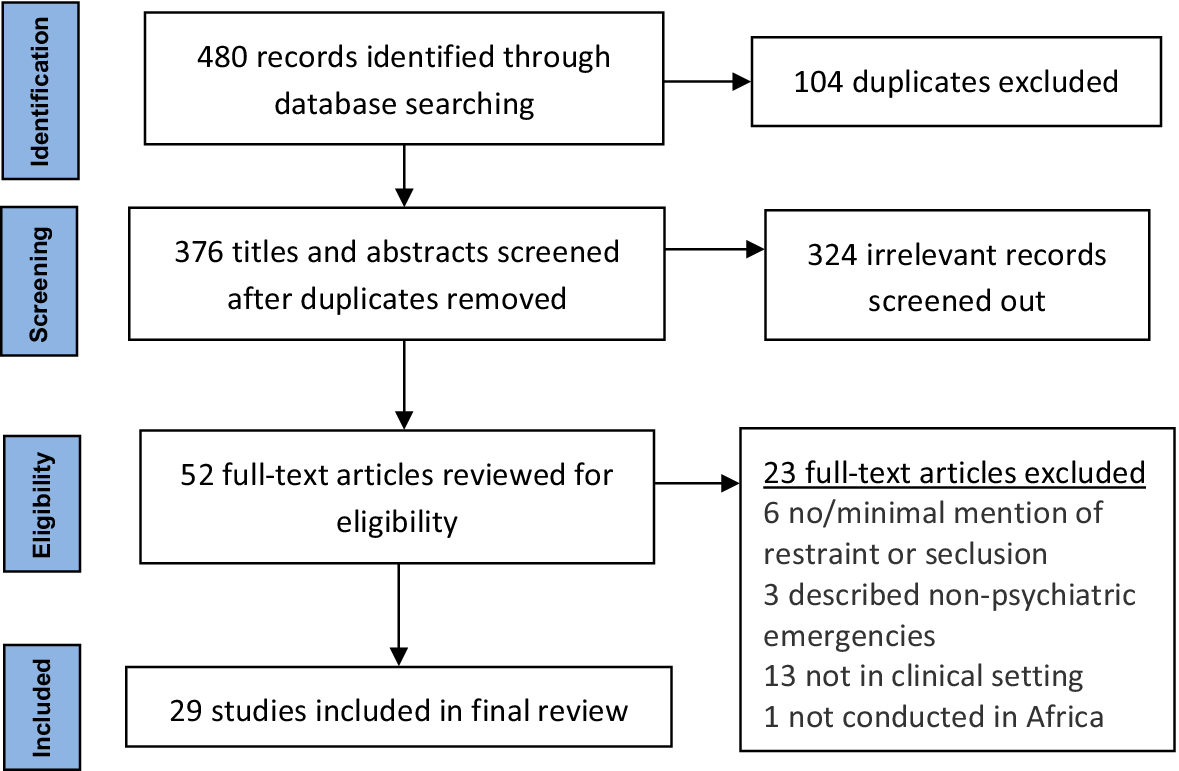
Upon completion of our searches’, identified works were imported into Covidence, an online platform for organizing systematic reviews. After removal of 104 duplicate records, we identified 376 unique studies that were considered for inclusion in the scoping review (see Figure 1).
Review flowchart.

The process of screening these records involved two main steps: title/abstract screening and full-text screening. Prior to screening, we developed eligibility criteria to guide inclusion or exclusion of the studies, and these criteria were further refined and finalized during the screening process. Inclusion criteria included: studies conducted in Africa, focused on the use of restraint and seclusion for psychiatric emergencies and was conducted in a hospital, clinic or other professional treatment setting. Exclusion criteria included records without data (e.g., commentaries, letters to the editor); prior systematic reviews or literature reviews; case studies or case series with fewer than 10 participants due to concerns about generalizability; studies not presented in English; studies not conducted in Africa (e.g., conducted with African diaspora in other settings); studies with non-African people in African settings (e.g., missionaries, tourists); studies focused on drug and medicine action only (e.g., physiology, drug interactions, biochemistry, genetics); studies in nonclinical or nonprofessional community settings such as traditional healers or religious healers; studies focused on medical confusion, delirium, epilepsy or disorientation with purely medical or neurological (i.e., not psychiatric) etiology; and animal studies.
During title and abstract screening, we reviewed each record to determine whether the study was clearly irrelevant or otherwise ineligible for inclusion. Two authors independently reviewed each record and voted on its advancement for full-text screening. Disagreements between the two raters were resolved in team meetings until a team consensus was reached. Studies advanced to full-text screening were reviewed in detail by two team members who voted on their inclusion in the final review, and once again, disagreements were resolved by the full team until consensus was reached. Studies deemed eligible for the final review during full-text screening were assigned for data extraction by one team member, with review and quality check by a second team member, using structured extraction tables. Extracted data included study nation and setting, topic and objectives, description of participants, data analysis and methods, key findings and author-described implications for future research, practice and policy.
Results
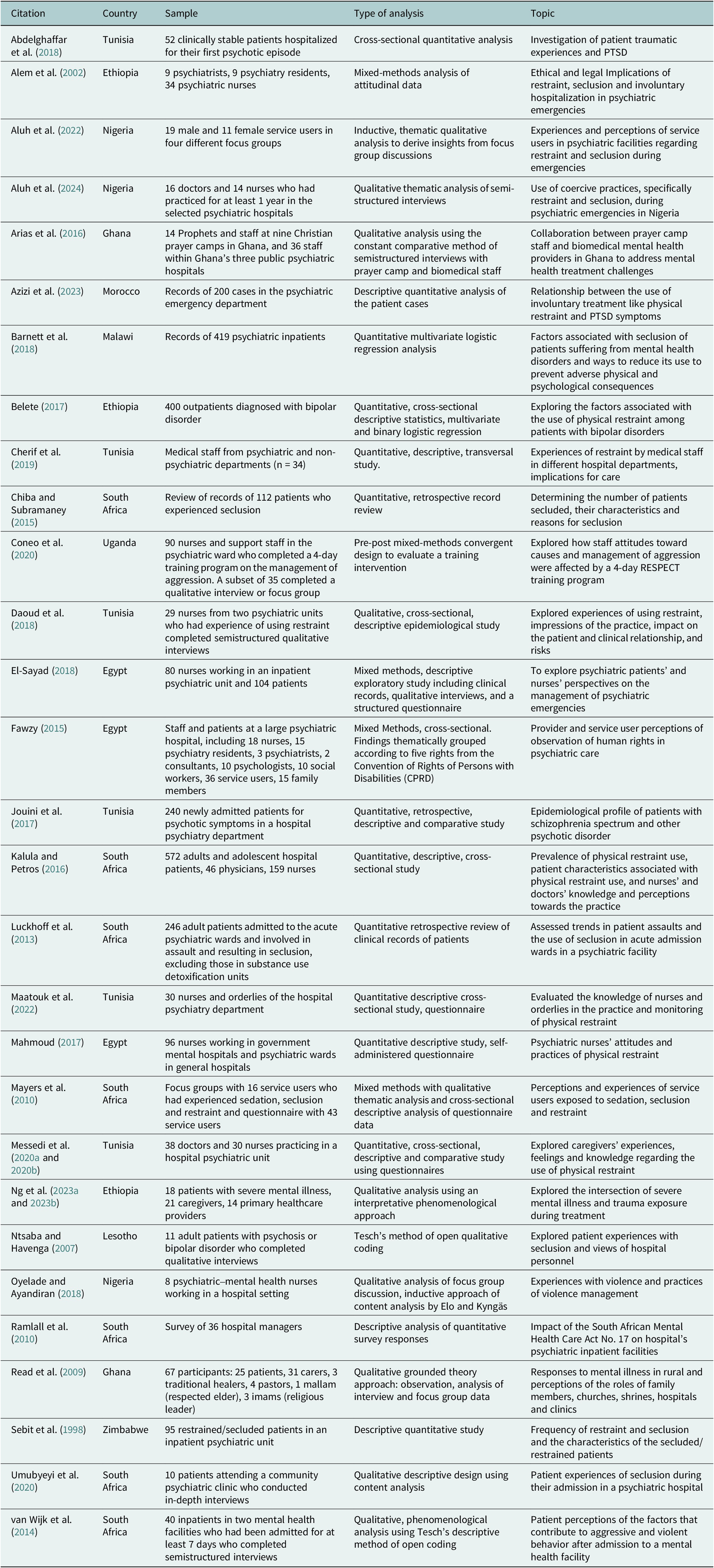
The sample size of the 29 final included studies varied greatly, ranging from 8 to 572 participants. Of the 29 included studies, seven studies were conducted in South Africa (Mayers et al., Reference Mayers, Keet, Winkler and Flisher2010; Ramlall et al., Reference Ramlall, Chipps and Mars2010; Luckhoff et al., Reference Luckhoff, Jordaan, Swart, Cloete, Koen and Niehaus2013; van Wijk et al., Reference van Wijk, Traut and Julie2014; Chiba and Subramaney, Reference Chiba and Subramaney2015; Kalula and Petros, Reference Kalula and Petros2016; Umubyeyi et al., Reference Umubyeyi, Banamwana, Mukangabire, Kagabo, D’Arc and Bagaragaza2020), six in Tunisia (Jouini et al., Reference Jouini, Karoui, Robbana, Mhedhbi, Nsibi, Chaari, Ben Salah, Ellouze and Mrad2017; Abdelghaffar et al., Reference Abdelghaffar, Ouali, Jomli, Zgueb and Nacef2018; Daoud et al., Reference Daoud, Azzouz, Ben Fadhel, Taamallah and Bouzid2018; Cherif et al., Reference Cherif, Ben Thabet, Turki, Maalej, Omri, Feki, Zouari, Zouari and Charfi2019; Messedi et al., Reference Messedi, Chamseddine, Aribi, Charfeddine and Amami2020a; Maatouk et al., Reference Maatouk, Larnaout, Abassi, Lansari, Staali and Melki2022), three in Nigeria (Oyelade and Ayandiran, Reference Oyelade and Ayandiran2018; Aluh et al., Reference Aluh, Ayilara, Onu, Grigaitė, Pedrosa, Santos-Dias, Cardoso and Caldas-de-Almeida2022, Reference Aluh, Ayilara, Onu, Pedrosa, Siliva, Grigaitė, Santos-Dias, Cardoso and Caldas-de-Almeida2024), three in Ethiopia (Alem et al., Reference Alem, Jacobsson, Lynöe, Kohn and Kullgren2002; Belete, Reference Belete2017; Ng et al., Reference Ng, Hook, Selamu and Hanlon2023b), three in Egypt (Fawzy, Reference Fawzy2015; Mahmoud, Reference Mahmoud2017; El-Sayad, Reference El-Sayad2018), two in Ghana (Read et al., Reference Read, Adiibokah and Nyame2009; Arias et al., Reference Arias, Taylor, Ofori-Atta and Bradley2016), one in Zimbabwe (Sebit et al., Reference Sebit, Acuda and Mhondoro1998), one in Lesotho (Ntsaba and Havenga, Reference Ntsaba and Havenga2007), one in Uganda (Coneo et al., Reference Coneo, Thompson, Parker and Harrison2020), one in Malawi (Barnett et al., Reference Barnett, Kusunzi, Magola, Borba, Udedi, Kulisewa and Hosseinipour2018) and one in Morocco (Azizi et al., Reference Azizi, Seyar, Baabouchi, Laboudi and Ouanass2023). These studies consisted of 14 quantitative (Sebit et al., Reference Sebit, Acuda and Mhondoro1998; Ramlall et al., Reference Ramlall, Chipps and Mars2010; Luckhoff et al., Reference Luckhoff, Jordaan, Swart, Cloete, Koen and Niehaus2013; Chiba and Subramaney, Reference Chiba and Subramaney2015; Kalula and Petros, Reference Kalula and Petros2016; Belete, Reference Belete2017; Jouini et al., Reference Jouini, Karoui, Robbana, Mhedhbi, Nsibi, Chaari, Ben Salah, Ellouze and Mrad2017; Mahmoud, Reference Mahmoud2017; Abdelghaffar et al., Reference Abdelghaffar, Ouali, Jomli, Zgueb and Nacef2018; Barnett et al., Reference Barnett, Kusunzi, Magola, Borba, Udedi, Kulisewa and Hosseinipour2018; Cherif et al., Reference Cherif, Ben Thabet, Turki, Maalej, Omri, Feki, Zouari, Zouari and Charfi2019; Messedi et al., Reference Messedi, Chamseddine, Aribi, Charfeddine and Amami2020a, Reference Messedi, Charfeddine and Aribi2020b; Maatouk et al., Reference Maatouk, Larnaout, Abassi, Lansari, Staali and Melki2022; Azizi et al., Reference Azizi, Seyar, Baabouchi, Laboudi and Ouanass2023), 10 qualitative (Ntsaba and Havenga, Reference Ntsaba and Havenga2007; Read et al., Reference Read, Adiibokah and Nyame2009; van Wijk et al., Reference van Wijk, Traut and Julie2014; Arias et al., Reference Arias, Taylor, Ofori-Atta and Bradley2016; Daoud et al., Reference Daoud, Azzouz, Ben Fadhel, Taamallah and Bouzid2018; Oyelade and Ayandiran, Reference Oyelade and Ayandiran2018; Umubyeyi et al., Reference Umubyeyi, Banamwana, Mukangabire, Kagabo, D’Arc and Bagaragaza2020; Aluh et al., Reference Aluh, Ayilara, Onu, Grigaitė, Pedrosa, Santos-Dias, Cardoso and Caldas-de-Almeida2022, Reference Aluh, Ayilara, Onu, Pedrosa, Siliva, Grigaitė, Santos-Dias, Cardoso and Caldas-de-Almeida2024; Ng et al., Reference Ng, Hook, Selamu and Hanlon2023b) and 5 mixed method studies (Alem et al., Reference Alem, Jacobsson, Lynöe, Kohn and Kullgren2002; Mayers et al., Reference Mayers, Keet, Winkler and Flisher2010; Fawzy, Reference Fawzy2015; El-Sayad, Reference El-Sayad2018; Coneo et al., Reference Coneo, Thompson, Parker and Harrison2020).
Regarding study populations, participants included patients (Sebit et al., Reference Sebit, Acuda and Mhondoro1998; Ntsaba and Havenga, Reference Ntsaba and Havenga2007; Mayers et al., Reference Mayers, Keet, Winkler and Flisher2010; Luckhoff et al., Reference Luckhoff, Jordaan, Swart, Cloete, Koen and Niehaus2013; van Wijk et al., Reference van Wijk, Traut and Julie2014; Chiba and Subramaney, Reference Chiba and Subramaney2015; Fawzy, Reference Fawzy2015; Belete, Reference Belete2017; Jouini et al., Reference Jouini, Karoui, Robbana, Mhedhbi, Nsibi, Chaari, Ben Salah, Ellouze and Mrad2017; Mahmoud, Reference Mahmoud2017; Abdelghaffar et al., Reference Abdelghaffar, Ouali, Jomli, Zgueb and Nacef2018; Barnett et al., Reference Barnett, Kusunzi, Magola, Borba, Udedi, Kulisewa and Hosseinipour2018; Umubyeyi et al., Reference Umubyeyi, Banamwana, Mukangabire, Kagabo, D’Arc and Bagaragaza2020; Aluh et al., Reference Aluh, Ayilara, Onu, Grigaitė, Pedrosa, Santos-Dias, Cardoso and Caldas-de-Almeida2022; Azizi et al., Reference Azizi, Seyar, Baabouchi, Laboudi and Ouanass2023), medical caregivers such as doctors and nurses (Alem et al., Reference Alem, Jacobsson, Lynöe, Kohn and Kullgren2002; Ramlall et al., Reference Ramlall, Chipps and Mars2010; Daoud et al., Reference Daoud, Azzouz, Ben Fadhel, Taamallah and Bouzid2018; El-Sayad, Reference El-Sayad2018; Oyelade and Ayandiran, Reference Oyelade and Ayandiran2018; Cherif et al., Reference Cherif, Ben Thabet, Turki, Maalej, Omri, Feki, Zouari, Zouari and Charfi2019; Coneo et al., Reference Coneo, Thompson, Parker and Harrison2020; Messedi et al., Reference Messedi, Chamseddine, Aribi, Charfeddine and Amami2020a; Maatouk et al., Reference Maatouk, Larnaout, Abassi, Lansari, Staali and Melki2022; Aluh et al., Reference Aluh, Ayilara, Onu, Pedrosa, Siliva, Grigaitė, Santos-Dias, Cardoso and Caldas-de-Almeida2024), or mixed groups (Read et al., Reference Read, Adiibokah and Nyame2009; Arias et al., Reference Arias, Taylor, Ofori-Atta and Bradley2016; Ng et al., Reference Ng, Hook, Hailemariam, Selamu, Fekadu and Hanlon2023a). See Table 1 for additional details on the included studies.
Overview of included studies

Study design and topic
Studies deployed various forms of interventions, including educational interventions for caregivers (El-Sayad, Reference El-Sayad2018; Cherif et al., Reference Cherif, Ben Thabet, Turki, Maalej, Omri, Feki, Zouari, Zouari and Charfi2019), policy-based interventions (Mayers et al., Reference Mayers, Keet, Winkler and Flisher2010; Barnett et al., Reference Barnett, Kusunzi, Magola, Borba, Udedi, Kulisewa and Hosseinipour2018; Azizi et al., Reference Azizi, Seyar, Baabouchi, Laboudi and Ouanass2023) and multidisciplinary team-based intervention (Luckhoff et al., Reference Luckhoff, Jordaan, Swart, Cloete, Koen and Niehaus2013; Chiba and Subramaney, Reference Chiba and Subramaney2015; Daoud et al., Reference Daoud, Azzouz, Ben Fadhel, Taamallah and Bouzid2018), focused on reducing restraint or seclusion practices in clinical settings. Others were non-interventional and descriptive (van Wijk et al., Reference van Wijk, Traut and Julie2014; Fawzy, Reference Fawzy2015; Jouini et al., Reference Jouini, Karoui, Robbana, Mhedhbi, Nsibi, Chaari, Ben Salah, Ellouze and Mrad2017; Aluh et al., Reference Aluh, Ayilara, Onu, Pedrosa, Siliva, Grigaitė, Santos-Dias, Cardoso and Caldas-de-Almeida2024).
A majority of the studies primarily investigated restraint (Abdelghaffar et al., Reference Abdelghaffar, Ouali, Jomli, Zgueb and Nacef2018; Aluh et al., Reference Aluh, Ayilara, Onu, Grigaitė, Pedrosa, Santos-Dias, Cardoso and Caldas-de-Almeida2022; Azizi et al., Reference Azizi, Seyar, Baabouchi, Laboudi and Ouanass2023; Barnett et al., Reference Barnett, Kusunzi, Magola, Borba, Udedi, Kulisewa and Hosseinipour2018; Belete, Reference Belete2017; Cherif et al., Reference Cherif, Ben Thabet, Turki, Maalej, Omri, Feki, Zouari, Zouari and Charfi2019; Coneo et al., Reference Coneo, Thompson, Parker and Harrison2020; Daoud et al., Reference Daoud, Azzouz, Ben Fadhel, Taamallah and Bouzid2018; El-Sayad, Reference El-Sayad2018; Jouini et al., Reference Jouini, Karoui, Robbana, Mhedhbi, Nsibi, Chaari, Ben Salah, Ellouze and Mrad2017; Kalula and Petros, Reference Kalula and Petros2016; Mahmoud, Reference Mahmoud2017; Messedi et al., Reference Messedi, Chamseddine, Aribi, Charfeddine and Amami2020a, Reference Messedi, Charfeddine and Aribi2020b; Ng et al., Reference Ng, Hook, Hailemariam, Selamu, Fekadu and Hanlon2023a; Oyelade and Ayandiran, Reference Oyelade and Ayandiran2018), whereas fewer studies focused primarily on seclusion (Ntsaba and Havenga, Reference Ntsaba and Havenga2007; Ramlall et al., Reference Ramlall, Chipps and Mars2010; Luckhoff et al., Reference Luckhoff, Jordaan, Swart, Cloete, Koen and Niehaus2013; Barnett et al., Reference Barnett, Kusunzi, Magola, Borba, Udedi, Kulisewa and Hosseinipour2018; Umubyeyi et al., Reference Umubyeyi, Banamwana, Mukangabire, Kagabo, D’Arc and Bagaragaza2020), and six studies investigated both topics (Sebit et al., Reference Sebit, Acuda and Mhondoro1998; Mayers et al., Reference Mayers, Keet, Winkler and Flisher2010; van Wijk et al., Reference van Wijk, Traut and Julie2014; Fawzy, Reference Fawzy2015; Coneo et al., Reference Coneo, Thompson, Parker and Harrison2020; Aluh et al., Reference Aluh, Ayilara, Onu, Pedrosa, Siliva, Grigaitė, Santos-Dias, Cardoso and Caldas-de-Almeida2024).
Definitions of coercive measures varied slightly across studies. One study specified that their definition of coercive measures included involuntary admissions, compulsory treatment, seclusion and restraint (Aluh et al., Reference Aluh, Ayilara, Onu, Grigaitė, Pedrosa, Santos-Dias, Cardoso and Caldas-de-Almeida2022). Among the studies that provided definitions of restraint, many differentiated between mechanical, chemical and physical restraint (van Wijk et al., Reference van Wijk, Traut and Julie2014; Fawzy, Reference Fawzy2015; Oyelade and Ayandiran, Reference Oyelade and Ayandiran2018; Aluh et al., Reference Aluh, Ayilara, Onu, Grigaitė, Pedrosa, Santos-Dias, Cardoso and Caldas-de-Almeida2022). Definitions of mechanical and physical restraint tended to overlap between studies, with physical restraint defining any physical methods of restricting a patient’s movement (Fawzy, Reference Fawzy2015; Mahmoud, Reference Mahmoud2017), while mechanical restraint referred specifically to the immobilization of a patient with a mechanical device (Aluh et al., Reference Aluh, Ayilara, Onu, Grigaitė, Pedrosa, Santos-Dias, Cardoso and Caldas-de-Almeida2022). Forms of physical restraint included being held down, tied, shackled and chained in place (Arias et al., Reference Arias, Taylor, Ofori-Atta and Bradley2016; Oyelade and Ayandiran, Reference Oyelade and Ayandiran2018; Ng et al., Reference Ng, Hook, Hailemariam, Selamu, Fekadu and Hanlon2023a). Chemical restraint was defined as using psychotropic or sedative drugs to reduce patient movement or aggressive behavior (Aluh et al., Reference Aluh, Ayilara, Onu, Grigaitė, Pedrosa, Santos-Dias, Cardoso and Caldas-de-Almeida2022). The definition of seclusion was generally consistent across studies and involved confining a patient to an environment that is controlled and contained (Ntsaba and Havenga, Reference Ntsaba and Havenga2007; Chiba and Subramaney, Reference Chiba and Subramaney2015; Umubyeyi et al., Reference Umubyeyi, Banamwana, Mukangabire, Kagabo, D’Arc and Bagaragaza2020). Ntsaba and Havenga specified that seclusion should be accompanied by careful observation by a staff member, and some studies described that seclusion should be in a specific facility or room (Ramlall et al., Reference Ramlall, Chipps and Mars2010; van Wijk et al., Reference van Wijk, Traut and Julie2014).
The primary point of divergence regarding coercive measures was their purpose. While most definitions agreed that the main purpose of coercive measures was to control unsafe behaviors (Barnett et al., Reference Barnett, Kusunzi, Magola, Borba, Udedi, Kulisewa and Hosseinipour2018; Daoud et al., Reference Daoud, Azzouz, Ben Fadhel, Taamallah and Bouzid2018; El-Sayad, Reference El-Sayad2018; Umubyeyi et al., Reference Umubyeyi, Banamwana, Mukangabire, Kagabo, D’Arc and Bagaragaza2020), some authors argued that coercive measures could also serve therapeutic purposes (Sebit et al., Reference Sebit, Acuda and Mhondoro1998; Maatouk et al., Reference Maatouk, Larnaout, Abassi, Lansari, Staali and Melki2022). Barnett et al. (Reference Barnett, Kusunzi, Magola, Borba, Udedi, Kulisewa and Hosseinipour2018), however, emphasized that these measures should only be used for emergency contexts and have no therapeutic value .
The topics investigated in these studies included service users’ perspectives on coercive practices in inpatient settings (Ntsaba and Havenga, Reference Ntsaba and Havenga2007; Mayers et al., Reference Mayers, Keet, Winkler and Flisher2010; van Wijk et al., Reference van Wijk, Traut and Julie2014; Umubyeyi et al., Reference Umubyeyi, Banamwana, Mukangabire, Kagabo, D’Arc and Bagaragaza2020; Aluh et al., Reference Aluh, Ayilara, Onu, Pedrosa, Siliva, Grigaitė, Santos-Dias, Cardoso and Caldas-de-Almeida2024), as well as caregivers’ experiences with physical restraint (Messedi et al., Reference Messedi, Charfeddine and Aribi2020b). Additionally, four studies examined various healthcare workers’ perspectives and attitudes toward coercive methods and aggression management (Mahmoud, Reference Mahmoud2017; Cherif et al., Reference Cherif, Ben Thabet, Turki, Maalej, Omri, Feki, Zouari, Zouari and Charfi2019; Coneo et al., Reference Coneo, Thompson, Parker and Harrison2020; Maatouk et al., Reference Maatouk, Larnaout, Abassi, Lansari, Staali and Melki2022).
Some studies explored the frequency of restraint and seclusion, demographic profiles of affected populations and trends in restraint and seclusion (Sebit et al., Reference Sebit, Acuda and Mhondoro1998; Luckhoff et al., Reference Luckhoff, Jordaan, Swart, Cloete, Koen and Niehaus2013; Kalula and Petros, Reference Kalula and Petros2016; Belete, Reference Belete2017; Jouini et al., Reference Jouini, Karoui, Robbana, Mhedhbi, Nsibi, Chaari, Ben Salah, Ellouze and Mrad2017; Barnett et al., Reference Barnett, Kusunzi, Magola, Borba, Udedi, Kulisewa and Hosseinipour2018). A few studies identified that restraint and seclusion contributed to patient trauma and posttraumatic stress disorder (PTSD) (Abdelghaffar et al., Reference Abdelghaffar, Ouali, Jomli, Zgueb and Nacef2018; Azizi et al., Reference Azizi, Seyar, Baabouchi, Laboudi and Ouanass2023; Ng et al., Reference Ng, Hook, Hailemariam, Selamu, Fekadu and Hanlon2023a). Additionally, two studies examined the ethical, legal and human rights implications related to the use of restraint and seclusion (Alem et al., Reference Alem, Jacobsson, Lynöe, Kohn and Kullgren2002; Fawzy, Reference Fawzy2015).
Study quantitative outcomes
The prevalence of restraint and seclusion varied widely across studies. The highest rate was observed in a study in South Africa, where 83.7% of patients reported experiencing seclusion, although only 14.0% had been restrained (Mayers et al., Reference Mayers, Keet, Winkler and Flisher2010). In a study of 400 people with bipolar disorders in Ethiopia, 65% had experienced physical restraint at some point (Belete, Reference Belete2017). Studies in inpatient psychiatric units in Tunisia (Jouini et al., Reference Jouini, Karoui, Robbana, Mhedhbi, Nsibi, Chaari, Ben Salah, Ellouze and Mrad2017), South Africa (Kalula and Petros, Reference Kalula and Petros2016) and Malawi (Barnett et al., Reference Barnett, Kusunzi, Magola, Borba, Udedi, Kulisewa and Hosseinipour2018) reported rates of restraint and seclusion of 21.1%, 23.0% and 30.3% of patients, respectively. Another study looking at both restraint and seclusion in Zimbabwe found a much lower prevalence of 8.5% (Sebit et al., Reference Sebit, Acuda and Mhondoro1998).
Restraint and seclusion were frequently used to manage agitation, physical and verbal aggression and to prevent self-harm (Sebit et al., Reference Sebit, Acuda and Mhondoro1998; Chiba and Subramaney, Reference Chiba and Subramaney2015; Messedi et al., Reference Messedi, Chamseddine, Aribi, Charfeddine and Amami2020a, Reference Messedi, Charfeddine and Aribi2020b). Physical restraint was also used as a preventive measure, or to enable involuntary treatment (Fawzy, Reference Fawzy2015; El-Sayad, Reference El-Sayad2018; Cherif et al., Reference Cherif, Ben Thabet, Turki, Maalej, Omri, Feki, Zouari, Zouari and Charfi2019). Male gender, young age, psychosis, comorbid illnesses, aggressive behavior and being presented in restraints as well as contextual factors such as being unemployed or single were identified as significant risk factors for the use of restraint or seclusion (Sebit et al., Reference Sebit, Acuda and Mhondoro1998; Luckhoff et al., Reference Luckhoff, Jordaan, Swart, Cloete, Koen and Niehaus2013; Chiba and Subramaney, Reference Chiba and Subramaney2015; Belete, Reference Belete2017; Jouini et al., Reference Jouini, Karoui, Robbana, Mhedhbi, Nsibi, Chaari, Ben Salah, Ellouze and Mrad2017; Barnett et al., Reference Barnett, Kusunzi, Magola, Borba, Udedi, Kulisewa and Hosseinipour2018). Khat use was identified as a predictor of restraint in one study (Belete, Reference Belete2017), but substance use was not associated with increased use of restraint in a second study (Barnett et al., Reference Barnett, Kusunzi, Magola, Borba, Udedi, Kulisewa and Hosseinipour2018). Two studies identified restraint and seclusion as predictors of patient trauma and PTSD (Abdelghaffar et al., Reference Abdelghaffar, Ouali, Jomli, Zgueb and Nacef2018; Azizi et al., Reference Azizi, Seyar, Baabouchi, Laboudi and Ouanass2023) and patients viewed.
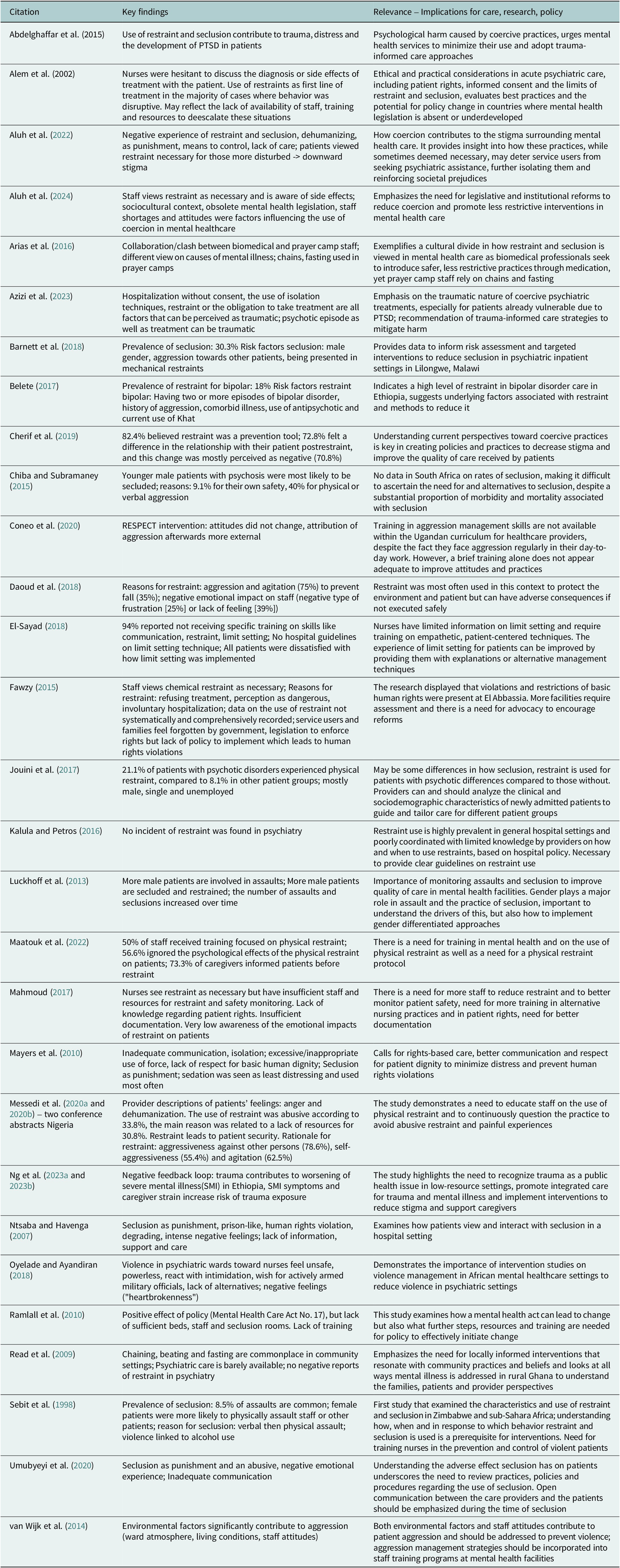
Among quantitative studies examining provider and nurse perceptions, restraint and seclusion were viewed by providers as a necessary treatment and the first and most preferred response to patient agitation (Alem et al., Reference Alem, Jacobsson, Lynöe, Kohn and Kullgren2002; El-Sayad, Reference El-Sayad2018). One study limited provider training on restraint and seclusion and limited understanding of policies dictating their use (Kalula and Petros, Reference Kalula and Petros2016). Two studies showed poor documentation and monitoring of patient safety (Kalula and Petros, Reference Kalula and Petros2016; Mahmoud, Reference Mahmoud2017) and two studies showed low provider understanding of the emotional impacts of restraint and seclusion on patients (El-Sayad, Reference El-Sayad2018; Maatouk et al., Reference Maatouk, Larnaout, Abassi, Lansari, Staali and Melki2022). Only one study described an intervention aimed at changing attitudes and practices related to restraint and seclusion, where the team observed short-term change in provider attitudes but no change in their intention to use restraint and seclusion in future practice (Coneo et al., Reference Coneo, Thompson, Parker and Harrison2020). See Table 2 for additional descriptions of the key findings of each study.
Key findings of the included studies
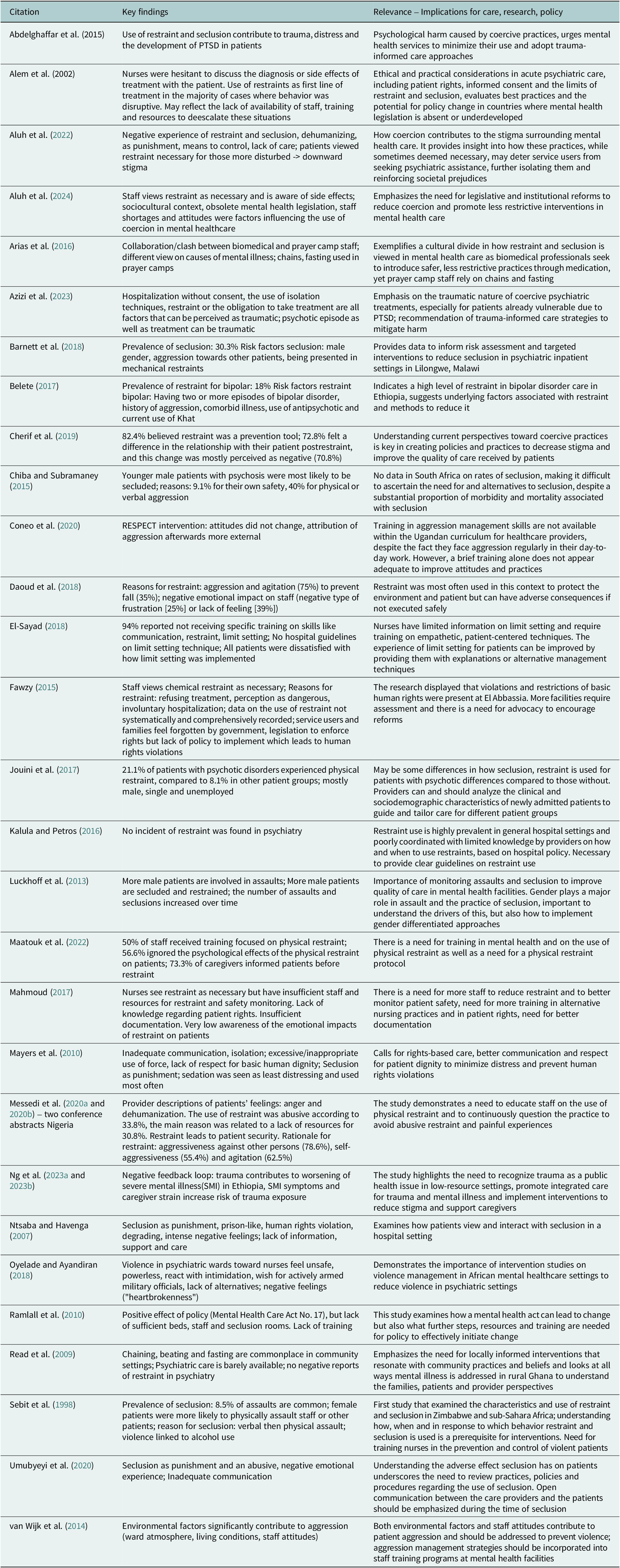
Synthesis of qualitative, quantitative and mixed-methods outcomes
From the patients’ perspective, restraint and, especially, seclusion were often reported to be used as punishment or as a means of control (Ntsaba and Havenga, Reference Ntsaba and Havenga2007; Mayers et al., Reference Mayers, Keet, Winkler and Flisher2010; Umubyeyi et al., Reference Umubyeyi, Banamwana, Mukangabire, Kagabo, D’Arc and Bagaragaza2020; Aluh et al., Reference Aluh, Ayilara, Onu, Grigaitė, Pedrosa, Santos-Dias, Cardoso and Caldas-de-Almeida2022). Healthcare professionals reported how the lack of resources, staff and knowledge of alternative practices contributed to aggression and the use of restraint (Alem et al., Reference Alem, Jacobsson, Lynöe, Kohn and Kullgren2002; Ramlall et al., Reference Ramlall, Chipps and Mars2010; van Wijk et al., Reference van Wijk, Traut and Julie2014; Messedi et al., Reference Messedi, Chamseddine, Aribi, Charfeddine and Amami2020a, Reference Messedi, Charfeddine and Aribi2020b; Aluh et al., Reference Aluh, Ayilara, Onu, Pedrosa, Siliva, Grigaitė, Santos-Dias, Cardoso and Caldas-de-Almeida2024). Patients experienced restraint and seclusion as dehumanizing, leading to strong negative emotional reactions and the development of PTSD (Ntsaba and Havenga, Reference Ntsaba and Havenga2007; Mayers et al., Reference Mayers, Keet, Winkler and Flisher2010; Abdelghaffar et al., Reference Abdelghaffar, Ouali, Jomli, Zgueb and Nacef2018; Umubyeyi et al., Reference Umubyeyi, Banamwana, Mukangabire, Kagabo, D’Arc and Bagaragaza2020; Aluh et al., Reference Aluh, Ayilara, Onu, Grigaitė, Pedrosa, Santos-Dias, Cardoso and Caldas-de-Almeida2022; Azizi et al., Reference Azizi, Seyar, Baabouchi, Laboudi and Ouanass2023; Ng et al., Reference Ng, Hook, Hailemariam, Selamu, Fekadu and Hanlon2023a). Seclusion was described as prison-like (Ntsaba and Havenga, Reference Ntsaba and Havenga2007). The lack of adequate communication, support and care from staff was often described by patients (Ntsaba and Havenga, Reference Ntsaba and Havenga2007; Mayers et al., Reference Mayers, Keet, Winkler and Flisher2010; Umubyeyi et al., Reference Umubyeyi, Banamwana, Mukangabire, Kagabo, D’Arc and Bagaragaza2020; Messedi et al., Reference Messedi, Chamseddine, Aribi, Charfeddine and Amami2020a; Aluh et al., Reference Aluh, Ayilara, Onu, Grigaitė, Pedrosa, Santos-Dias, Cardoso and Caldas-de-Almeida2022).
Healthcare professionals frequently viewed restraint and seclusion as necessary in the management of aggression and violence, which are often common in psychiatric facilities and pose an occupational hazard (Sebit et al., Reference Sebit, Acuda and Mhondoro1998; van Wijk et al., Reference van Wijk, Traut and Julie2014; Oyelade and Ayandiran, Reference Oyelade and Ayandiran2018). Several studies reported that restraint and seclusion practices place an emotional burden on staff, leading to feelings of guilt, “heartbrokenness” or frustration (Mahmoud, Reference Mahmoud2017; Oyelade and Ayandiran, Reference Oyelade and Ayandiran2018). Two studies looking at training in restraint found that 50% and 94% of staff in these settings did not receive formal professional training in restraint and seclusion (El-Sayad, Reference El-Sayad2018; Maatouk et al., Reference Maatouk, Larnaout, Abassi, Lansari, Staali and Melki2022). One study described an intervention that targeted staff attitudes without significantly changing them (Coneo et al., Reference Coneo, Thompson, Parker and Harrison2020).
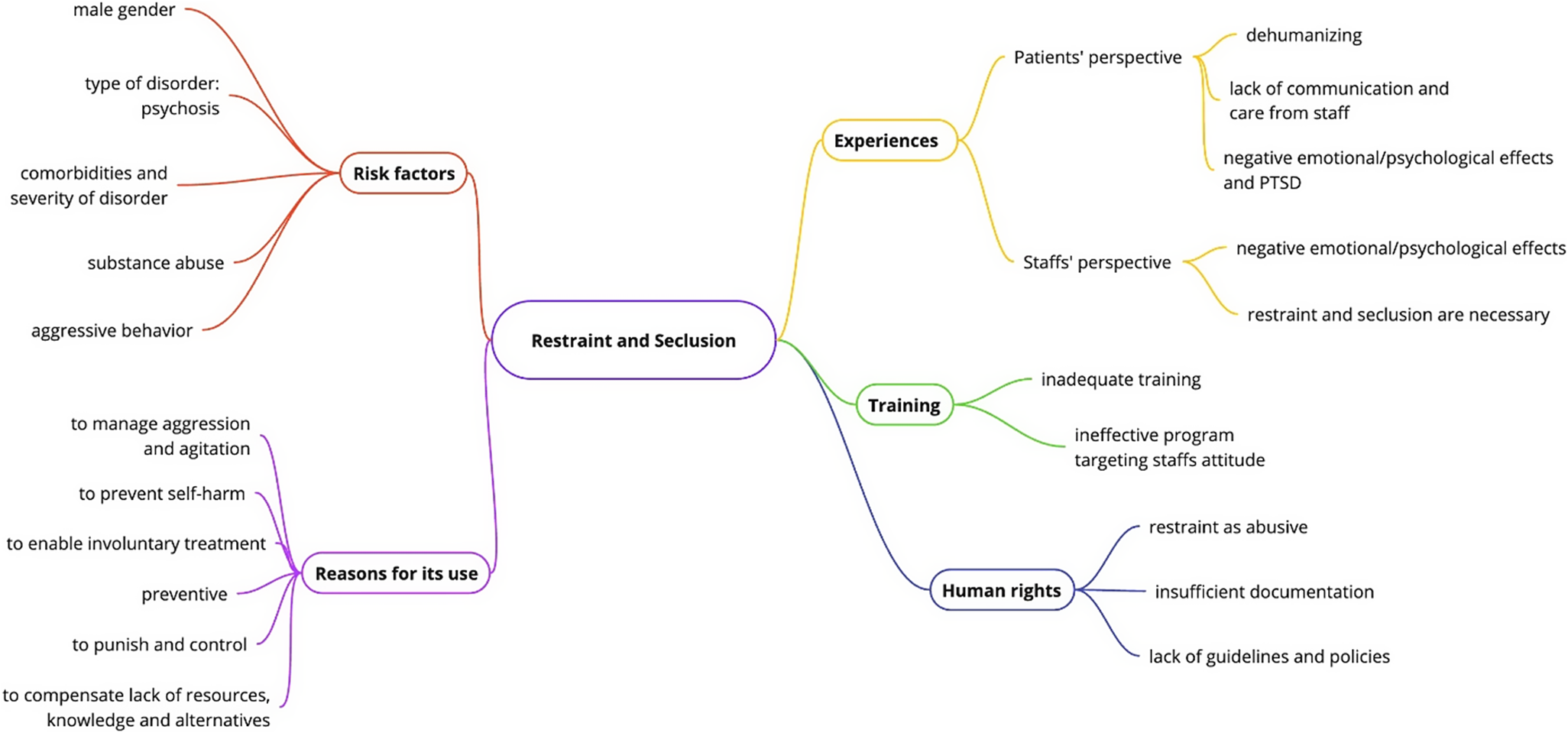
Several studies have problematized human rights and legal issues regarding restraint and seclusion. In one study, restraint was perceived as abusive by healthcare workers in 33.8% of cases (Messedi et al., Reference Messedi, Charfeddine and Aribi2020b). Other studies describe its insufficient documentation (Fawzy, Reference Fawzy2015; Mahmoud, Reference Mahmoud2017) and the lack of policies and guidelines to guide and limit restraint and seclusion (Fawzy, Reference Fawzy2015; El-Sayad, Reference El-Sayad2018) (Figure 2).
Summary of key themes reflected in the included studies.

Implications described in the included studies
The studies included in this scoping review highlighted implications for care, policy and research regarding the use of restraint and seclusion in African hospital settings. Many studies emphasized the human rights abuses and emotional trauma associated with these practices, which often deter patients from seeking psychiatric care (Abdelghaffar et al., Reference Abdelghaffar, Ouali, Jomli, Zgueb and Nacef2018; Aluh et al., Reference Aluh, Ayilara, Onu, Grigaitė, Pedrosa, Santos-Dias, Cardoso and Caldas-de-Almeida2022; Azizi et al., Reference Azizi, Seyar, Baabouchi, Laboudi and Ouanass2023; Cherif et al., Reference Cherif, Ben Thabet, Turki, Maalej, Omri, Feki, Zouari, Zouari and Charfi2019; Fawzy, Reference Fawzy2015; Messedi et al., Reference Messedi, Charfeddine and Aribi2020b; Ng et al., Reference Ng, Hook, Hailemariam, Selamu, Fekadu and Hanlon2023a; Ntsaba and Havenga, Reference Ntsaba and Havenga2007). A few studies identified that ethical and practical considerations related to restraint and seclusion by emphasizing patient rights, and ensuring informed consent through open communication and education (Alem et al., Reference Alem, Jacobsson, Lynöe, Kohn and Kullgren2002; Mayers et al., Reference Mayers, Keet, Winkler and Flisher2010; Daoud et al., Reference Daoud, Azzouz, Ben Fadhel, Taamallah and Bouzid2018; Umubyeyi et al., Reference Umubyeyi, Banamwana, Mukangabire, Kagabo, D’Arc and Bagaragaza2020).
Most studies proposed reforms, with some studies suggesting increased documentation and monitoring of restraint and seclusion (Luckhoff et al., Reference Luckhoff, Jordaan, Swart, Cloete, Koen and Niehaus2013; Chiba and Subramaney, Reference Chiba and Subramaney2015; Jouini et al., Reference Jouini, Karoui, Robbana, Mhedhbi, Nsibi, Chaari, Ben Salah, Ellouze and Mrad2017; Mahmoud, Reference Mahmoud2017; Barnett et al., Reference Barnett, Kusunzi, Magola, Borba, Udedi, Kulisewa and Hosseinipour2018). A few studies advocated for behavioral interventions to address violence and aggression management to reduce reliance on these practices (Jouini et al., Reference Jouini, Karoui, Robbana, Mhedhbi, Nsibi, Chaari, Ben Salah, Ellouze and Mrad2017; Barnett et al., Reference Barnett, Kusunzi, Magola, Borba, Udedi, Kulisewa and Hosseinipour2018; Oyelade and Ayandiran, Reference Oyelade and Ayandiran2018). Many studies highlighted the importance of training healthcare providers in patient-centered care, limit setting and proper management of psychiatric emergencies (Sebit et al., Reference Sebit, Acuda and Mhondoro1998; Ntsaba and Havenga, Reference Ntsaba and Havenga2007; Mayers et al., Reference Mayers, Keet, Winkler and Flisher2010; Kalula and Petros, Reference Kalula and Petros2016; El-Sayad, Reference El-Sayad2018; Cherif et al., Reference Cherif, Ben Thabet, Turki, Maalej, Omri, Feki, Zouari, Zouari and Charfi2019; Coneo et al., Reference Coneo, Thompson, Parker and Harrison2020; Messedi et al., Reference Messedi, Chamseddine, Aribi, Charfeddine and Amami2020a; Maatouk et al., Reference Maatouk, Larnaout, Abassi, Lansari, Staali and Melki2022).
Many studies pointed to policy implications, especially the need for institutional and legislative reforms in regions with absent or underdeveloped mental health laws but must be complemented by systemic and behavioral changes (Alem et al., Reference Alem, Jacobsson, Lynöe, Kohn and Kullgren2002; Ramlall et al., Reference Ramlall, Chipps and Mars2010; Fawzy, Reference Fawzy2015; Belete, Reference Belete2017; Cherif et al., Reference Cherif, Ben Thabet, Turki, Maalej, Omri, Feki, Zouari, Zouari and Charfi2019; Umubyeyi et al., Reference Umubyeyi, Banamwana, Mukangabire, Kagabo, D’Arc and Bagaragaza2020; Aluh et al., Reference Aluh, Ayilara, Onu, Pedrosa, Siliva, Grigaitė, Santos-Dias, Cardoso and Caldas-de-Almeida2024). The sole intervention study in this review evaluated a 4-day training program seeking to reduce restraint and seclusion but had little impact (Coneo et al., Reference Coneo, Thompson, Parker and Harrison2020). Another study examined a much more far-reaching policy change, the South African Mental Health Care Act of 2002, which stipulated that regional and district hospitals must admit and treat mental health care users for 72 h before transferring them to a psychiatric hospital (Ramlall et al., Reference Ramlall, Chipps and Mars2010). Although this policy was described as an effort to improve human rights among people struggling with mental illness, its implementation put considerable stress on the healthcare system because of inadequate infrastructure and staff and may have actually led to increases in the inhumane use of restraint and seclusion outside of psychiatric settings (Ramlall et al., Reference Ramlall, Chipps and Mars2010). The studies emphasized the need for systemwide reforms that extend beyond policy change to include provider training, clear guidelines on the safe use of restraint and seclusion, and improved regulation and oversight, as well as dedication of new resources to support the safe and effective implementation of these strategies (Mayers et al., Reference Mayers, Keet, Winkler and Flisher2010; Kalula and Petros, Reference Kalula and Petros2016; Mahmoud, Reference Mahmoud2017; El-Sayad, Reference El-Sayad2018; Messedi et al., Reference Messedi, Charfeddine and Aribi2020b; Maatouk et al., Reference Maatouk, Larnaout, Abassi, Lansari, Staali and Melki2022).
Discussion
This scoping review presents findings from 29 heterogenous studies conducted in Africa exploring the use of restraint and seclusion to manage psychiatric emergencies in clinical settings. The studies explored provider, patient and caregiver perspectives on these practices. Nominally, restraint and seclusion were used to ensure patient and environmental safety; however, multiple challenges were identified in the extent and way these practices were used. Both patients and providers acknowledged that restraint and seclusion were overused across multiple settings and were harmful to the physical and emotional well-being of both patients and providers. Patients identified examples of inappropriate and inhumane uses of restraint and seclusion, such as for punitive purposes.
Regarding efforts to reduce the use of restraint and seclusion and to minimize harm in its use, some key takeaways from this scoping review are that there is limited knowledge by providers on aggression management and crisis de-escalation. Furthermore, many settings lacked clear standards on when these practices should be used and how to use them in a way that maximizes effectiveness and safety. This included lack of continual monitoring of patient safety, not clearly communicating to patients why these practices were being used and when they would be discontinued, and poor ongoing assessment of symptoms to monitor safety and discontinue restraint and seclusion as quickly as possible. The lack of training and clear standards led to obvious ethical and human rights violations in many settings.
Many of the studies suggested reforms through policy; however, several also advocated that policy changes must be coupled with improved documentation, training and other measures to ensure more ethical practices within psychiatric emergencies. The studies also highlight significant gaps in infrastructure, training and policy, contributing to the widespread use of restraint and seclusion. In contrast to higher-income countries, African settings often lack the necessary systemic support, with insufficient training, resource shortages and a lack of standardized guidelines. Furthermore, the absence of culturally informed interventions and comprehensive documentation limits the ability to implement effective reforms. Future research will not only spread awareness of the issues at a national level but also encourage greater targeted reform improving the quality of patient care in psychiatric hospitals.
Future research should focus on developing, adapting and implementing culturally tailored, least-restrictive interventions for managing psychiatric emergencies. Moreover, longitudinal studies and intervention trials are essential to assess the effectiveness of interventions and reforms, ensure ethical practices and improve mental health outcomes. Expanding this body of work will be vital in addressing the complex intersection of mental health care, human rights and resource limitations in Africa.
This scoping review has several limitations. First, we only included studies published in English, which may have led to the omission of important studies conducted in other languages. Additionally, although we searched multiple academic databases and additional searches to identify gray literature, we may have missed unpublished studies and published work that was not included in these databases. Furthermore, case studies and case series with fewer than 10 participants were excluded, as were studies focusing on nonhospital settings, such as faith-based or traditional healing contexts. Future studies may seek to explore these types of research. Many of the included studies relied on participant self-report and, given the sensitivity of the topic, biases in reporting likely influenced the results, potentially leading to underreporting of harmful practices. Finally, the broad scope of this review, covering a vast continent and complex topic, limited our ability to provide detailed descriptions of individual study outcomes in specific African settings. Although we conducted a thorough search inclusive of all 47 countries on the continent as defined by the WHO, the final list of 29 studies represented only 11 nations in Africa, and findings should not be generalized beyond those settings. This dearth of research on restraint and seclusion practices throughout much of the continent also points to the clear value of future studies on the topic.
Conclusions
The topic of psychiatric emergencies and the associated use of restraint and seclusion in Africa is of critical importance, given the unique challenges facing many health systems on the continent, including resource constraints, stigma surrounding mental health and gaps in the availability of trained mental health professionals. Restraint and seclusion practices, while sometimes necessary to ensure safety, raise ethical and human rights concerns that demand urgent attention. This scoping review has illuminated challenges associated with restraint and seclusion across various African contexts, including its overuse, unsafe use and use for punitive purposes. We underscore the need for culturally sensitive and patient-centered care while highlighting the importance of reforming current practices to prioritize safety, dignity and the minimization of trauma. The findings serve as a foundation for guiding policy changes, advocacy efforts, intervention research and improvements in training for mental health professionals.
Open peer review
To view the open peer review materials for this article, please visit http://doi.org/10.1017/gmh.2025.10052.
Supplementary material
The supplementary material for this article can be found at http://doi.org/10.1017/gmh.2025.10052.
Data availability statement
Data or details of the underlying processes of this scoping review are available upon request from the corresponding author.
Author contribution
All authors contributed to the design, analysis, interpretation of findings and manuscript writing, and approved the final submitted version of the work.
Financial support
This research was supported by a Career Development Award from the NIH National Institute of Mental Health (K08 MH124459). We also acknowledge support received from the grant, “Sociobehavioral Sciences Research to Improve Care for HIV Infection in Tanzania” (D43 TW009595).
Competing interests
The authors have no competing interests to declare.


 Open access


Comments
Professor Judy Bass and Professor Dixon Chibanda, Editors-in-Chief
Cambridge Prisms: Global Mental Health
April 17, 2025
Dear Professors Bass and Chibanda,
Please see our enclosed manuscript, “The management of psychiatric emergencies in Africa: A scoping review of restraint and seclusion practices in clinical settings and their impacts,” which we are submitting for your consideration. Many African settings are woefully under-resourced to provide mental health treatment, and in the context of inpatient management of psychiatric emergencies, this leads to inhumane and dangerous conditions for both patients and staff.
My co-authors and I have witnessed firsthand these conditions. This manuscript systematizes those experiences by rigorously reporting the findings from the current literature on the management of psychiatric emergencies in clinical settings in Africa. Importantly, we go beyond summarization to describe the implications of this literature for future clinical practice, research, and policy.
We identified 29 studies for inclusion in this review, which provide a strong window into the current conditions of psychiatric treatment in diverse African settings. Restraint and/or seclusion were employed to manage aggression, enable involuntary treatment, or prevent self-harm. Patients found restraint and seclusion to be dehumanizing, a cause of posttraumatic stress symptoms, and a barrier to future help-seeking. Healthcare workers described inadequate training, overuse of restraint and seclusion, injuries, and emotional distress after employing these treatments.
Given the broad implications and potential for high impact of this work, we believe that this manuscript is a strong fit for your journal and will be of interest to your readers. We present a sound methodological approach and analysis, and we believe this manuscript will add to the literature informing intervention development in a vital, life-saving aspect of the mental health field.
The manuscript has not been previously published, nor has it been submitted for publication elsewhere. We declare that we have no conflicts of interest in relation to this research and all sources of support have been appropriately disclosed. The authors are the sole owners of the compiled data, which may be made available upon request. All listed authors contributed substantially to the work and manuscript according to ICMJE criteria.
Thank you for your consideration. We look forward to your review and to the possibility of having our work published in Cambridge Prisms: Global Mental Health.
Sincerely,
Brandon A. Knettel, Ph.D.
Associate Director, Duke Center for Global Mental Health
Duke University School of Nursing and Duke Global Health Institute