


Introduction
The revival of militant right-wing extremist groups and the rise in incidents in recent years relating to that revival have nurtured an increasing focus among both academics and policymakers on how democratic actors can confront threats from the extreme right (Backlund, Reference Backlund2022; Biard, Reference Biard, Caluwerts and Reuchamps2021; Goodman, Reference Goodman2022; Heinze, Reference Heinze2018). In the literature, it has been claimed that civil society organizations (CSOs) have the capacity to defend democracy from threats from the extreme right (Foley & Edwards, Reference Foley and Edwards1996; Pedahzur, Reference Pedahzur2002; Kaltwasser & Taggart, Reference Kaltwasser and Taggart2016). Civil society organizations have been described as being a democratic counterforce and “watchdogs” that have a multifaceted approach to countering right-wing extremism particularly during politically charged situations (Meyer & Tarrow, Reference Meyer and Tarrow2018; Michael, Reference Michael2003; Schroeder et al., Reference Schroeder, Greef, Ten Elsen and Heller2022). In addition, CSOs are considered crucial in government-initiated programs when it comes both to counteracting violent extremism (CVE) and to processes of deradicalization of individuals (Aly et al., Reference Aly, Balbi and Jacques2015; Dalgaard-Nielsen, Reference Dalgaard-Nielsen2016).
Yet, the role CSOs have when it comes to responding to right-wing extremism is not well understood. First, civil society may embrace a violent and destructive side, while (in) activity or silent acceptance within civil society may pave the way for both populist political parties and movements on the extreme right (Berman, Reference Berman1997; Ekiert & Kubik, Reference Ekiert and Kubik2014). Second, little is known about how various types of CSOs perceive their role when responding to right-wing extremism. The literature is emerging on the role of social movements as a democratic counterforce to the growing presence of populism (Chiodi, Reference Chiodi, Ruzza, Berti and Cossarini2021). However, this literature is mainly concerned with responses from a specific element of the CSO, that being social movements. Even if CSOs take a stand against right-wing extremism, it cannot be assumed that all CSOs, when it comes to counteracting it, have the same role, interest, or willingness.
The aim of this article is to address this as yet unanswered question by exploring empirically how various types of CSOs perceive their role and responsibility when it comes to responding to right-wing extremism. The empirical analysis is of a sample of local CSOs in the Swedish town of Ludvika, where the presence of the prominent neo-Nazi movement the Nordic Resistance Movement (NRM) has been particularly strong and where local CSOs have taken a stand against it (Lundberg, Reference Lundberg2021). The article focuses on pro-democratic civil society—that is, organizations with an overall objective to empower democracy (Pedahzur, Reference Pedahzur2002). More specifically, the article addresses the following research question: How do various types of CSOs perceive their role, interest, and willingness in terms of responding to right-wing extremism and what is the implication of this for the role of civil society as a democratic counterforce and watchdog in terms of right-wing extremism?
The article makes the following theoretical and empirical contributions to the literature. First, it provides theoretical insight into the recurring discussion of civil society as a democratic counterforce and collective “watchdog” that can put pressure on and mount resistance against movements that are at odds with democracy (Meyer & Tarrow, Reference Meyer and Tarrow2018; Pedahzur, Reference Pedahzur2002; Warren, Reference Warren2021). Second, it provides a new empirical understanding of how CSOs view their responses to the extreme right and how, if at all, responses may differ between various types of CSOs. As such, the article emphasizes the preferences, ideology, and moral orientations of various types of CSOs in terms of how they relate to movements on the extreme right (cf. Jasper, Reference Jasper2021; Meyer, Reference Meyer2004). Finally, the article shines light on how CSOs perceive their role when it comes to responding to right-wing extremism compared to societal actors within the state, the media, and the private sector. A more detailed understanding of how various types of CSOs perceive their role, interest, and willingness when it comes to responding to political extremism could, for example, enable a more fine-tuned strategy for how government implements the role of civil society when formulating policy (Gielen, Reference Gielen2019; Massoumi, Reference Massoumi2021).
Analytical Framework
Interest in how democratic actors respond to right-wing extremism has been central to social sciences. Scholars such as Mudde (Reference Mudde1995) and Capoccia (Reference Capoccia2005) were concerned about the risk posed by populist political parties and violent movements on the extreme right and the reactions by political actors and institutions. In contrast to the recent literature, which tends to focus on right-wing populism, this article draws attention to the traditional and more apparent forms of right-wing extremism, namely fascism and Nazism. Right-wing extremism applies to movements and political parties associated with a specific ideology that encompasses authoritarianism, anti-democracy, and exclusionary and/or holistic nationalism and politically motivated violent behaviors (Carter, Reference Carter2018). More specifically, in this article attention is directed at the neo-Nazi and militant NRM, which is strongly associated with right-wing extremism in terms of both ideology and behavior.
Civil society, that is, the arena within society that is distinct from the state and the market and usually the family, where collective action in associations and social movements, and by way of other forms of engagement, takes place (Cohen & Arato, Reference Cohen and Arato1992), has repeatedly been ascribed a role in safeguarding democracy against movements on the extreme right (Foley & Edwards, Reference Foley and Edwards1996; Pedahzur, Reference Pedahzur2002). In addition to the civility-building role of CSOs in terms of strengthening civic competencies such as trust and tolerance, studies have addressed the “watchdog” role of civil society in relation to right-wing extremism. A study from Germany and Austria shows how protests and resistance within civil society raise awareness and may lessen the willingness of citizens to affiliate with extremist movements (Art, Reference Art2007). On a similar note, Michael (Reference Michael2003) provides detailed examples of how various CSOs in the USA serve as advisors and watchdogs vis-à-vis the movements on the extreme right, thus stimulating government repression of extremism. Drawing on insight from the case of Brandenburg in Germany and Israel, Pedahzur (Reference Pedahzur2002, Reference Pedahzur2003) finds that CSOs respond to extremism by supporting victims of extremism and educating the citizens on democratic values. All in all, these studies suggest that CSOs play a role as bulwark against extremism and as a democratic counter force.
However, the optimism relating to the role of CSOs in relation to right wing extremism has also been criticized. Indeed, the literature draws attention to the more violent and potentially destructive side of civil society. This is captured in terms such as the “dark”, “bad”, or “uncivil society” (Kopecky & Mudde, Reference Kopecky and Mudde2003), which refer to a wide range of disruptive, unwelcome, and threatening elements between the individual and the state: for example, the Ku Klux Klan, Oath Keepers, and other criminal and terrorist organizations with exclusionary agendas. Conceptually, the term uncivil society has been criticized as being untheorized, and the question arises as to whether to not more violent elements of civil society should even be included in the term civil society. Kocka (Reference Kocka and Kean2006, 40–1), for example, refers to civil society as a specific social action that (among other criteria) operates nonviolently. Leaving the conceptual exercise to one side, the literature emphasizes the fact that although civil society in most cases is beneficial to democracy, the potential harmful impact of civil society cannot be ignored and may under certain circumstances also undermine democracy. Ekiert (Reference Ekiert, Stoltzfus and Osmar2021) concludes in the case of Poland that over the last decade, civil society enabled extreme cultural and political polarization and facilitated mobilization of far-right, nationalist, and conservative religious movements. In a similar manner, Berman (Reference Berman1997) argues that civil society in Germany has not guaranteed sustained and stable democratic governance (see also Grande, Reference Grande2022). All in all, the literature points to the importance played by civil society in mounting resistance against movements that are at odds with democracy while at the same time not neglecting the less democratic aspects of civil society.
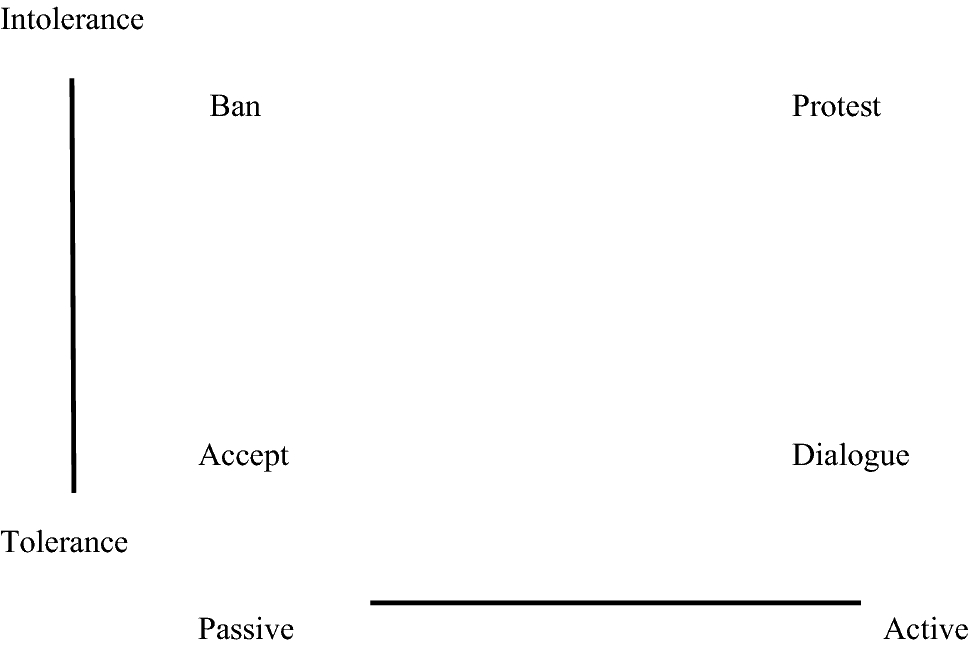
The way in which pro-democratic CSOs perceive their role when it comes to responding to right-wing extremism is, however, more complex. CSOs may prefer various strategies and hold different sentiments toward movements on the extreme right. Indeed, some may envisage a more active role than others that use different mobilization strategies. Combing central strands from the civil society literature with scholarship on how political parties react to extremist challenges, Lundberg (Reference Lundberg2021) presents a typology that distinguishes between four distinct theoretical types of responses—accept, ban, protest, and dialogue—that vary along two axes: tolerance and intolerance on the one hand, and passive and active political participation on the other (see Fig. 1).
Classification of the responses of civil society organizations to right-wing extremism.

The first type of response, accept, combines a high degree of tolerance with a lack of political engagement. Tolerance refers to the inclination to accept, tolerate, or perhaps even welcome right-wing extremism—for example, by allowing representatives of such movements democratic rights such as freedom of expression, the right to vote, and the right to stand for election (Gibson, Reference Gibson2006). A passive response involves no attempt to influence public attitudes, government decisions, or political outcomes that might limit the room in which right-wing extremism can maneuver. Consequently, this response stands in contrast to the argument by de Tocqueville (Reference de Tocqueville2000) and Putnam (Reference Putnam1993)—that being that civil society strengthens democracy by, for example, putting pressure on and mounting resistance against the extreme right.
The second type of response, ban, incorporates responses that demonstrate a high intolerance of and reluctance to confront right-wing extremism. This includes responses that affirm efforts to restrict or regulate the civil and political rights of movements that do not respect liberal democratic principles (Capoccia, Reference Capoccia2005). That is, it refers to compliance to government bans. However, civil society is passive because of, for example, a fear of reprisal; a lack of organizational resources or a lack of a political agenda in which the response to right-wing extremism is perceived to be inconsistent with the aims and mission of the CSO.
Protest, the third type of response, resembles the “militant strategy” (Capoccia, Reference Capoccia2005) and includes responses that aim to resist and counteract right-wing extremism that is characterized by a high level of intolerance and active participation. This type of response is emphasized in social movement literature and recognizes the use of confrontational tactics such as protests, riots, media campaigns, and methods to resist or isolate such movements (Meyer & Tarrow, Reference Meyer and Tarrow2018). In its most extreme form, this includes repressive responses that employ the use of violence and civil disobedience.
Finally, the fourth type of response, dialogue, is marked by tolerance and active participation. This response recognizes the political rights of extremists but in contrast to protest, it integrates responses described as being essential in the deliberative model of democracy. This response underscores the value of tolerance, inclusion, and public discussions in civil society. It includes responses that seek both to alter the political debate, political decisions, or public attitudes, as well as to listen and include right-wing extremists in dialogue in the public arena while also taking note of the compatibility of arguments and policies with the core values of liberty and equality (Rummens & Abts, Reference Rummens and Abts2010).
In contrast to previous typologies that differentiate between three principal types of civil societies (Foley & Edwards, Reference Foley and Edwards1996; Pedahzur, Reference Pedahzur2002), this typology offers a more fine-tuned theoretical point of departure as a means to uncover forms of responses that are ideal within a more pro-democratic civil society. In addition, it takes into consideration the level of participation and sentiments of tolerance toward movements on the extreme right. However, the analytical framework does not include all possible responses. In addition, it offers very little guidance on how different types of CSOs view their role in terms of responding to right-wing extremism. Although civil society is perceived to be a distinct arena or sector, CSOs are rarely cohesive players. They have various roles and perceive a variety of interactions with movements on the extreme right (cf. Jasper, Reference Jasper2021).
A recurring perspective in the social movement literature to explain how CSOs choose strategies and action repertoires is the importance of political structures. The political process theory incorporates a range of factors such as the organizational resource and infrastructure, and framing processes as well as the surrounding institutional and political environment. CSOs are portrayed as rational actors and choose strategies in response to the resources and political opportunities and constraints available to them. However, while political structures are important, recent literature points to the importance of more culturally attuned perspectives (Jasper, Reference Jasper2021; Jasper & Duyvendak, Reference Jasper and Duyvendak2015). Organizations do not use all strategies available to them or within their repertoire with the same regularity. Rather, they prefer strategies that they identify with (Meyer, Reference Meyer2004; Polletta & Jasper, Reference Polletta and Jasper2001). Ennis (Reference Ennis1987) argues that the political strategies of CSOs follow an “inner logic” that is based on the ideology and preferences of their members and supporters as well as external limits such as resources and the institutional environment. On a similar note, Snow and Benford (Reference Snow, Benford, Morris and Mueller1992) suggest that social movements prefer strategies that are consistent with the values and preferences of their members as this is central also to the way in which movements frame and define policy problem and attribute blame.
A conventional view in the literature is that social movements and other conflict-oriented organizations take the conflictual nature of politics and are often strongly associated with advocacy and protest. The inner logic and identity of these CSOs is strongly related to a political agenda, and they are often considered to be at the forefront when it comes enabling political pressure and change and functioning as a democratic infrastructure (Meyer & Tarrow, Reference Meyer and Tarrow2018; Wollebæk & Selle, Reference Wollebæk, Selle, Jobert and Kohler-Koch2008). In contrast, consensus-oriented organizations, such as social service organizations, sport organizations, and hobby clubs, are often considered to be less politically oriented as their aim is instead related to providing social services, creating social ties, and providing recreation and a sense of social belonging in local communities.
Previous findings from Ludvika show that humanitarian and religious organizations appear to have taken on a greater role in mobilizing joint initiatives in the public sphere when the NRM rallied to maintain representation in the local government assembly (Lundberg, Reference Lundberg2021). Similarly, Pedahzur (Reference Pedahzur2002, p. 147) reveals how society-oriented organizations such as religious groups confront the roots of extremism by raising awareness, fostering dialogue between secular and religious domains, and strengthening democracy through educational means. This tallies well with Meyer (Reference Meyer2004), who found that religious organizations and bridging organizations, whose identity and reputation rest on the notion of political neutrality when it comes to political conflicts, preferred strategies that facilitated dialogue, inter-community dialogue, and social interaction between individuals from both sides of a conflict. Thus, it is possible that organizations that take considerable social responsibility in the support and care of individuals and groups within society, such as humanitarian, religious, and social service-oriented organizations, are equally or more active in responding to right-wing extremism as organizations that are guided more by an explicit political agenda.
Research Design
The article is based on empirical evidence generated by a digital survey directed at representatives from 272 CSOs in the municipality of Ludvika in Sweden. Sweden has experienced considerably more right-wing terrorism and militancy compared with other Nordic countries (Ravndal, Reference Ravndal2018). However, Sweden is also described as a country with a political culture marked by an active and well-organized civil society, making it an interesting case to study in terms of CSO response. Sweden has had a right-wing extremist presence since the mid-1920s and over the decades, various Nazi organizations have adopted right-wing populist ideas. The neo-Nazi movement the Nordic Resistance Movement formed from three Nazi groups and was formally established in 1997. The organization operates in-line with right-wing extremist criteria, and its overall aim is to overthrow the democratic order in the Nordic region and establish a national socialist state.
The town of Ludvika is located in the county of Dalarna in the northern part of Sweden. Though not historically considered to be a stronghold of the extreme right, the town is home to several leading representatives of the neo-Nazi movement the NRM, and the presence of the NRM was particularly intense during the 2018 general election, when the NRM campaigned intensively to maintain representation in the local government assembly. At that time, CSOs took an active stand against the movement (Lundberg, Reference Lundberg2021). Despite NRM efforts, residents of Ludvika rejected the NRM, and the movement lost formal political influence. Subsequently—and at the time of this study—the atmosphere in the local community became less troubled, with much less public activity and visibility on the part of the NRM, while their efforts to influence local policy and recruit new followers were all but absent.
This article directs attention at how CSOs perceive their role, interest, and willingness to respond during less turbulent times when the structural threats posed by the NRM were in decline. By focusing on Ludvika, this article draws on a setting where it can be assumed that CSOs at least have deliberated and reflected on their own role and responsibility and perhaps developed a preference in terms of how various types of CSOs perceive their role vis-à-vis the NRM. On the one hand, it is possible that CSOs would have little toleration for the movement and favor attempts to repress them. On the other hand, it is equally possible that CSOs may restrain from responding to the NRM given its threatening behavior. Furthermore, in a local setting such as Ludvika where people live side by side and share everyday life, it may be difficult to avoid the movement and its representatives, and some degree of tolerance may be required.
The survey was distributed between August 2020 and December 2020 to all CSOs listed in the register of organizations within the municipality of Ludvika (Municipality of Ludvika, 2020). The sample (N = 272) includes a variety of CSOs from sports and hobby organizations to political organizations, culture organizations, and humanitarian and social service organizations. The questionnaire comprised 14 questions about the role and responsibility of CSOs when it comes to responding to right-wing extremism; about sentiment toward the NRM; about response strategies; and about several background issues relating to the individual CSOs. A chairperson from each organization completed the questionnaire as its representative and is thus a critical source of information on how local civil society relates to the NRM.
Each organization was coded into one of four categories that showed the different roles the organizations had within society (Wollebæk & Selle, Reference Wollebæk, Selle, Jobert and Kohler-Koch2008). Culture organizations (30) include those organizations that have at center the local community and culture, and that work to establish a good sense of local community and belonging. Thus, this category includes primarily consensus-oriented and public-benefit-oriented organizations—for example, village communities, and organizations that coordinate various cultural activities and events. Humanitarian and social service organizations (12) include organizations that have considerable social responsibility in the support and care of individuals and groups within society. This category includes organizations such as the Red Cross and the Lions Club, disability organizations, and self-help groups, as well as two immigrant organizations that aim to provide services to target groups. These organizations are notable for being consensus-oriented and for embracing a social rather than political role. Sports and recreation organizations (60) include local sports and hunting associations, hobby associations, motorsport associations, and fishing associations. These organizations are, in general, non-political, and their intention is to offer their individual members leisure activities and recreation. Finally, political organizations (10) include organizations guided by an explicit political agenda: for example, environmental organizations, farmer associations (such as the local branch of the Federation of Swedish Farmers), and local temperance and pensioner organizations. As such, these have the role of provider of a democratic infrastructure and mediator of members’ interests.
The names of the organizations, as well as information from homepages/Facebook where available, determined which category the organizations were placed in. To validate the categorization, CSOs were also asked to indicate the significance of activities such as art and culture, recreation, self-help, social services, and political opinion. Categorization was then confirmed by comparing with the self-evaluations of the CSOs themselves. A few organizations could not be identified and were excluded from the sample. It is important to stress that CSOs may also be conceptualized as hybrid organizations that combine different institutional logics, aims, and strategies. For example, the primary aim of an organization may be to influence the political agenda, but it may also be to provide social services to target groups. The categorization cannot fully take this aspect into account, which must be noted upon interpretation of the results. However, this is to some extent dealt with by the CSOs’ own evaluations. The response rate was 42 percent, which provided a target sample of organizations (n = 113). As the categorization partly relied on results from the survey, it was not possible to establish an accurate response rate for each type of CSO.
Results
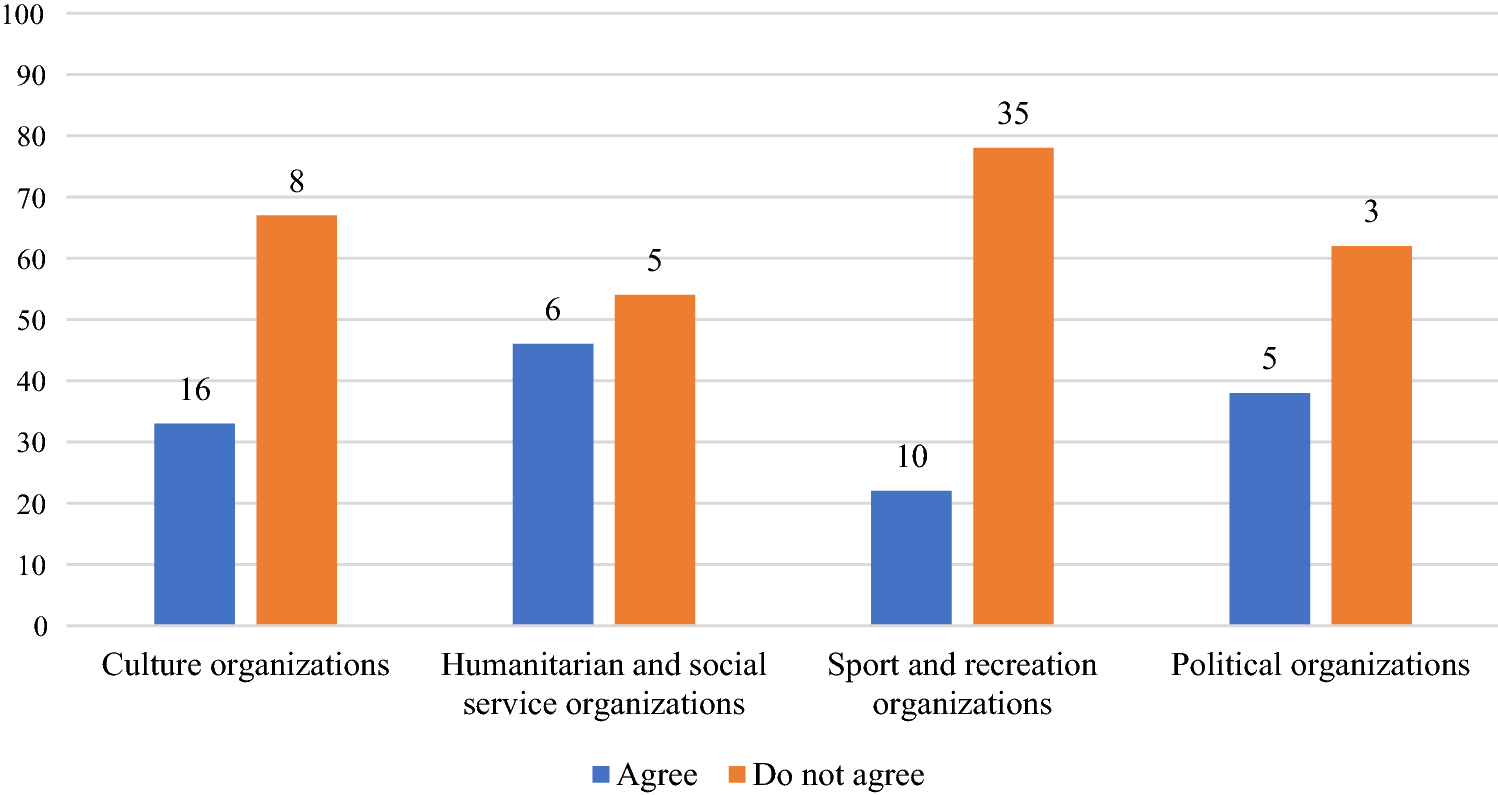
The literature stresses that civil society plays a key role in the defense of democracy and in energizing resistance in relation to threats from the extreme right. But to what extent does the individual CSO consider itself responsible for responding to right-wing extremism? To what extent is the response to right-wing extremism of interest to CSOs? To explore these questions, CSOs were first asked to indicate if they agreed to the statement that responding to the NRM is of interest to the organization.
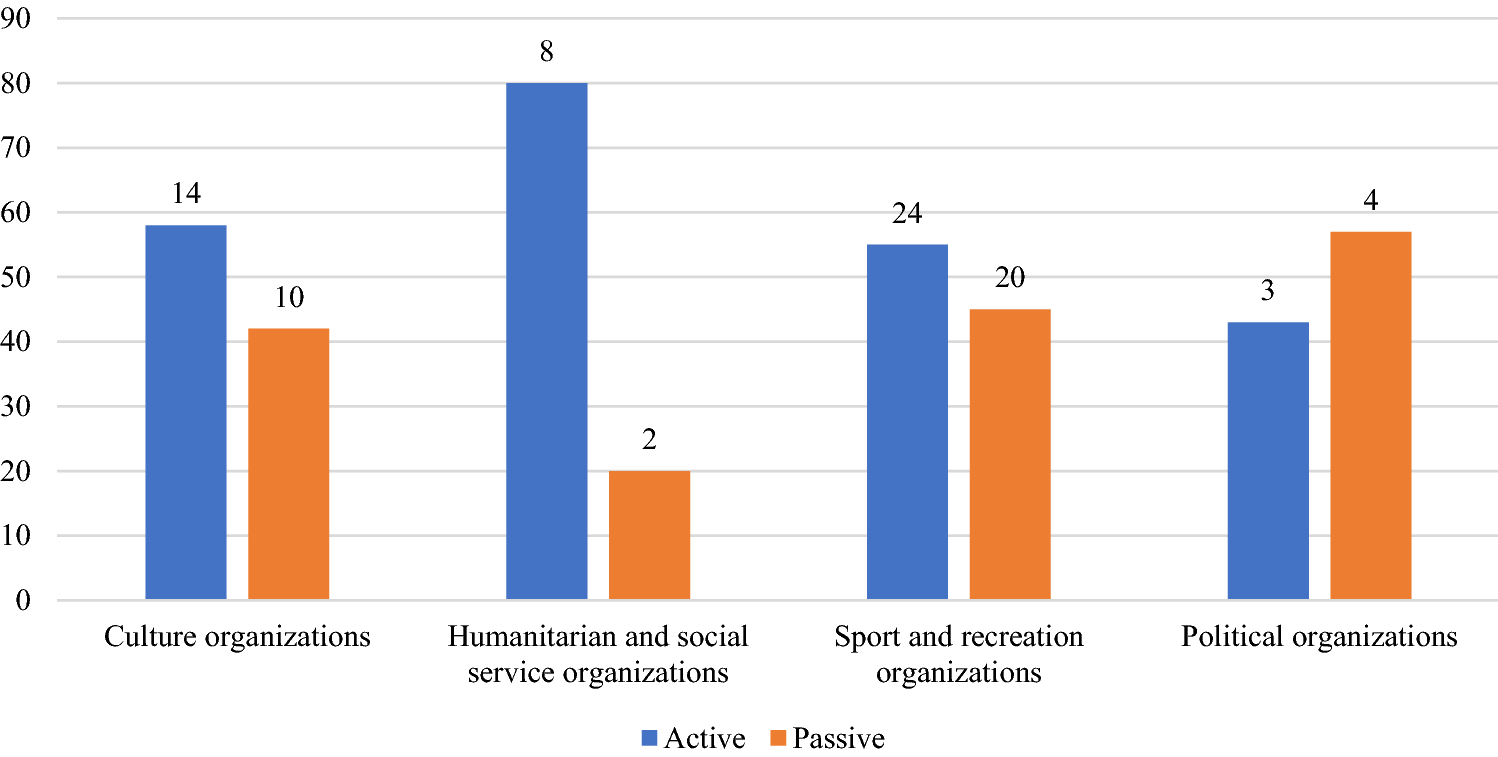
The results show that 30 percent of the CSOs consider that a response to the NRM is of interest to the organization and that there are differences in terms of response between type of CSO. Of the political organizations, 38 percent agree fully or partly that responding to the NRM is of interest to the CSO. The corresponding figures for culture organizations are 33 percent and 22 percent for sports and recreational organizations. Interestingly, 46 percent of the humanitarian and social service organizations agree with this statement (Fig. 2).
Interest in responding to the Nordic resistance movement by type of civil society organization (percent, absolute numbers above each column). Note: The results are based on the following question: “Responding to movements on the extreme right, such as the Nordic Resistance Movement (NMR), is not of interest to our association.” The figure displays the share of CSOs that agree to some extent or to a great extent. The item was coded reversed
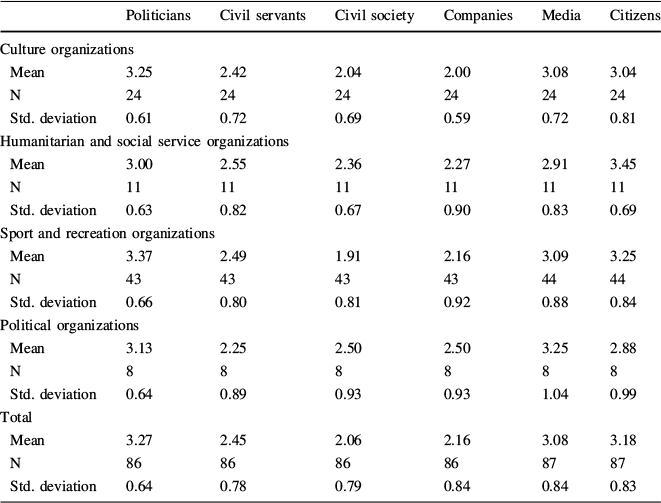
Furthermore, CSOs were asked to indicate if they agreed or disagreed with the statement measuring the role that the following societal actors have when it comes to responding to right-wing extremism: politicians, civil servants, civil society, private companies, the media, and citizens. The results of the mean differences show that CSOs consider politicians, the media, and citizens to have the greatest responsibility when it comes to responding to right-wing extremism, followed by civil servants, CSOs, and private companies.
As shown in Table 1, humanitarian and social service organizations and political organizations are more likely to agree to the statement that civil society has the greatest responsibility. In addition, humanitarian and social service organizations place slightly more weight on the role of citizens compared to the other types of CSOs, and political organizations downplay the role of civil servants. A one-way between group analysis of variance was conducted to explore the impact of type of CSO on the role and responsibility of various societal actors. The results did not show any statistically significant differences between type of CSO.
Civil society organizations on the responsibility various societal actors have when it comes to responding to right-wing extremism

Politicians |
Civil servants |
Civil society |
Companies |
Media |
Citizens |
|
|---|---|---|---|---|---|---|
Culture organizations |
||||||
Mean |
3.25 |
2.42 |
2.04 |
2.00 |
3.08 |
3.04 |
N |
24 |
24 |
24 |
24 |
24 |
24 |
Std. deviation |
0.61 |
0.72 |
0.69 |
0.59 |
0.72 |
0.81 |
Humanitarian and social service organizations |
||||||
Mean |
3.00 |
2.55 |
2.36 |
2.27 |
2.91 |
3.45 |
N |
11 |
11 |
11 |
11 |
11 |
11 |
Std. deviation |
0.63 |
0.82 |
0.67 |
0.90 |
0.83 |
0.69 |
Sport and recreation organizations |
||||||
Mean |
3.37 |
2.49 |
1.91 |
2.16 |
3.09 |
3.25 |
N |
43 |
43 |
43 |
43 |
44 |
44 |
Std. deviation |
0.66 |
0.80 |
0.81 |
0.92 |
0.88 |
0.84 |
Political organizations |
||||||
Mean |
3.13 |
2.25 |
2.50 |
2.50 |
3.25 |
2.88 |
N |
8 |
8 |
8 |
8 |
8 |
8 |
Std. deviation |
0.64 |
0.89 |
0.93 |
0.93 |
1.04 |
0.99 |
Total |
||||||
Mean |
3.27 |
2.45 |
2.06 |
2.16 |
3.08 |
3.18 |
N |
86 |
86 |
86 |
86 |
87 |
87 |
Std. deviation |
0.64 |
0.78 |
0.79 |
0.84 |
0.84 |
0.83 |
These results derive from the following question: “There are many different actors in society who can respond to right-wing extremism. How well do the following statements agree with the views expressed in your organization? Politicians/civil servants/civil society/companies/the media/citizens have the greatest responsibility when it comes to responding to right-wing extremist movements such as the Nordic Resistance Movement (NMR).” Responses were recorded on a scale from 1–4: ‘Agree fully’, ‘Agree partly’, ‘Agree to a lesser extent’, and ‘Do not agree’. The item was coded reversed. A high mean value indicates strong responsibility to respond while low value indicates a low responsibility in responding to the NRM
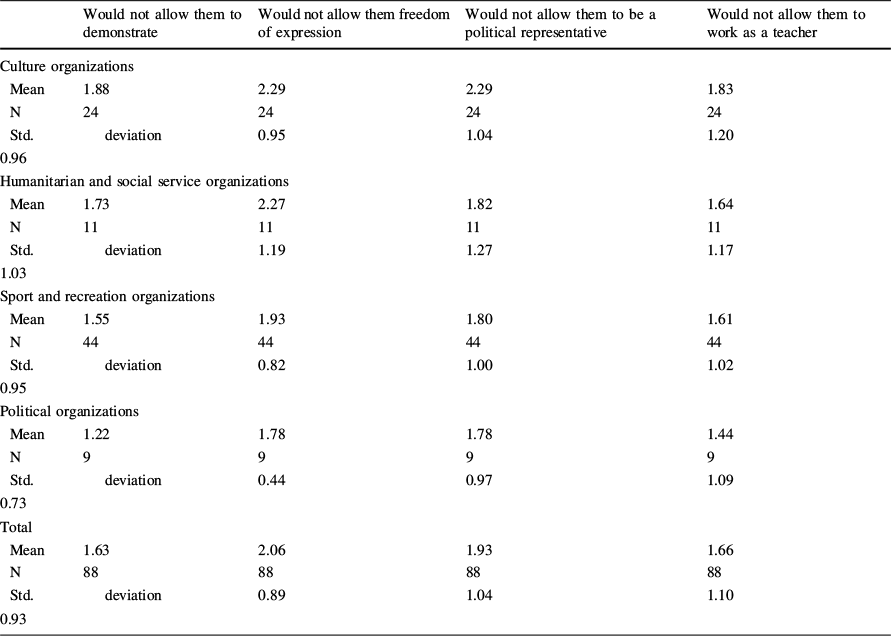
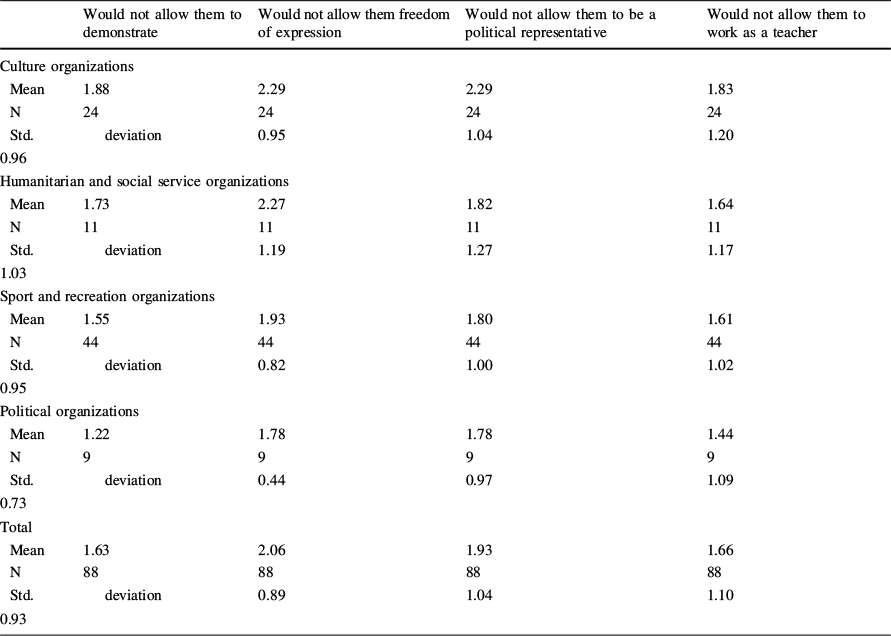
Following the typology presented in the theoretical section above, a central parameter in understanding CSO responses to right-wing extremism is the extent to and the way in which CSOs are likely to tolerate representatives of such organizations. To this end, CSOs were asked to indicate to what extent they were willing to extend various rights or activities to representatives of the NRM. The results of the mean differences are presented in Table 2. Overall, we can state that a vast majority of the CSOs are not willing to extend any of these rights to representatives of the NRM. Political organizations appear slightly more intolerant followed by sport and recreation organizations, humanitarian and social service organizations, and culture organizations. However, for some aspects, the difference in percent between type of CSO is not great. A one-way between group analysis of variance was conducted to explore the impact of type of CSO on each of the items measuring intolerance. The results did not show any statistically significant differences between type of CSO.
Intolerance toward the Nordic resistance movement by type of civil society organization
Would not allow them to demonstrate |
Would not allow them freedom of expression |
Would not allow them to be a political representative |
Would not allow them to work as a teacher |
|
|---|---|---|---|---|
Culture organizations |
||||
Mean |
1.88 |
2.29 |
2.29 |
1.83 |
N |
24 |
24 |
24 |
24 |
Std. deviation |
0.95 |
1.04 |
1.20 |
0.96 |
Humanitarian and social service organizations |
||||
Mean |
1.73 |
2.27 |
1.82 |
1.64 |
N |
11 |
11 |
11 |
11 |
Std. deviation |
1.19 |
1.27 |
1.17 |
1.03 |
Sport and recreation organizations |
||||
Mean |
1.55 |
1.93 |
1.80 |
1.61 |
N |
44 |
44 |
44 |
44 |
Std. deviation |
0.82 |
1.00 |
1.02 |
0.95 |
Political organizations |
||||
Mean |
1.22 |
1.78 |
1.78 |
1.44 |
N |
9 |
9 |
9 |
9 |
Std. deviation |
0.44 |
0.97 |
1.09 |
0.73 |
Total |
||||
Mean |
1.63 |
2.06 |
1.93 |
1.66 |
N |
88 |
88 |
88 |
88 |
Std. deviation |
0.89 |
1.04 |
1.10 |
0.93 |
The figure displays the proportion of CSOs that agree to the statements measuring various dimensions of tolerance. Responses were recorded on a scale from 1–4: ‘Agree fully’, ‘Agree partly’, ‘Agree to a lesser extent’, and ‘Do not agree’. A high mean value indicates a high tolerance, and a low value indicates a high intolerance to the NRM
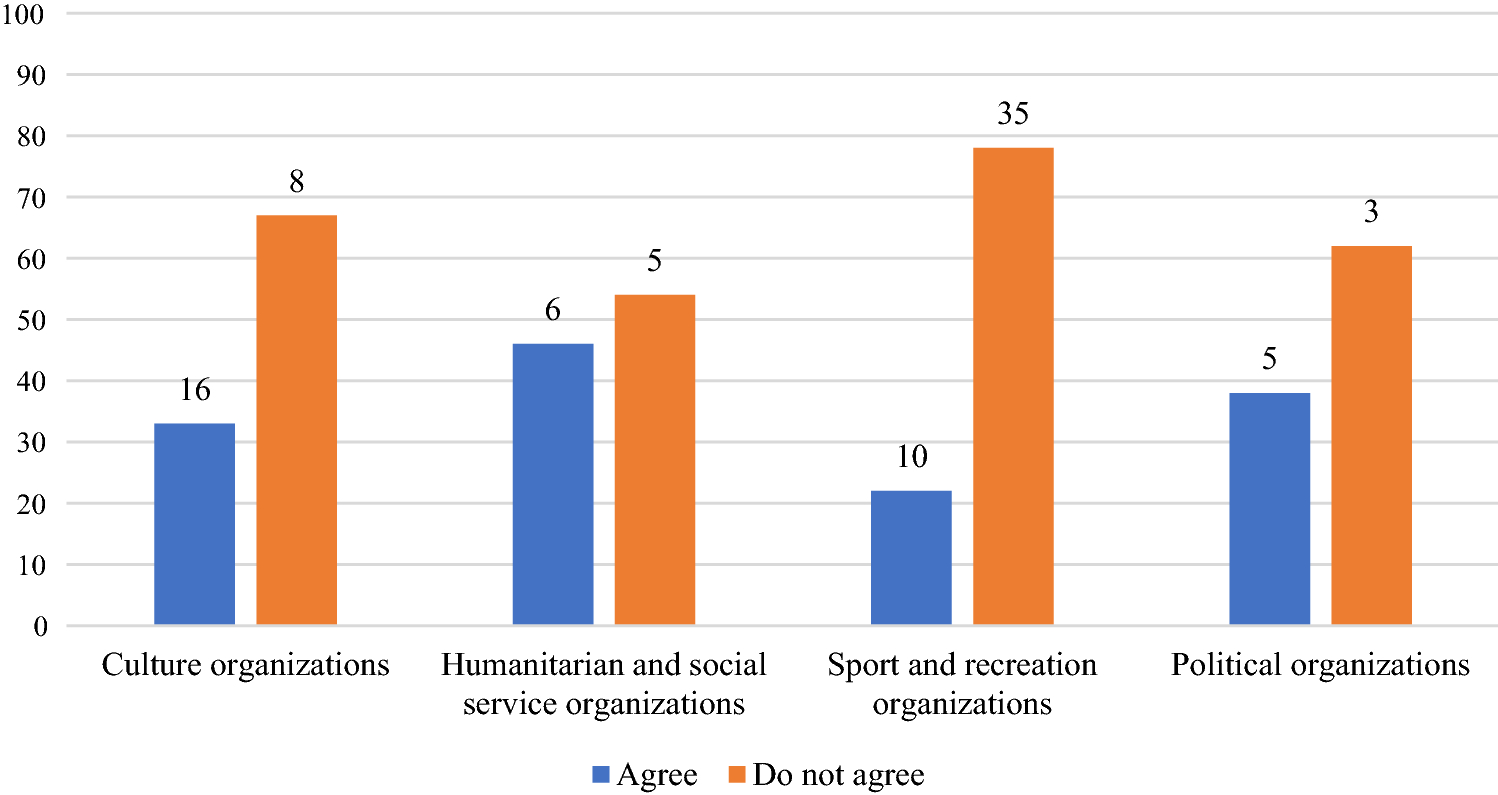
When it comes to active and passive involvement, CSOs were asked to indicate the extent to which they were willing to respond to movements on the extreme right, such as the NRM, if they were to seek political influence within the municipality. The results show that 58 percent of the CSOs indicated that they would respond to the NRM using at least one of the 14 strategies ranging from manifestations, demonstrations, social gatherings, deliberation with citizens, civil disobedience, and more violent responses. A look at the differences between type of CSO in Fig. 3 reveals that 80 percent of the humanitarian and social service organizations indicated a willingness to respond, followed by culture organizations (58 percent), sport and recreational organizations (55 percent), and political organizations (43 percent). Thus, humanitarian and social service organizations appear to be the most active type of CSO. The results correspond with previous findings from during the 2018 election when humanitarian and religious organizations were very much active in taking initiatives to respond to the NRM (Lundberg, Reference Lundberg2021).
Willingness to respond to right-wing extremism by type of civil society organization (percent, absolute numbers above each column). Note: The question was as follows: “If a situation arises where movements on the extreme right, such as the Nordic Resistance Movement (NMR), seek influence in local politics within your municipality, how likely is it that you would engage in the following ways to counter the movement?” (Demonstrations, petitions, leaflets, manifestations, social gatherings, deliberations with citizens, deliberations with representatives of the NRM, contacting politicians/civil servants, traditional media, social media, working with other CSOs, civil disobedience and supporting CSOs using violence). The figure displays the share of CSOs that indicated it to be likely and very likely (active) or not likely or very unlikely (passive). Absolute numbers are given above each column

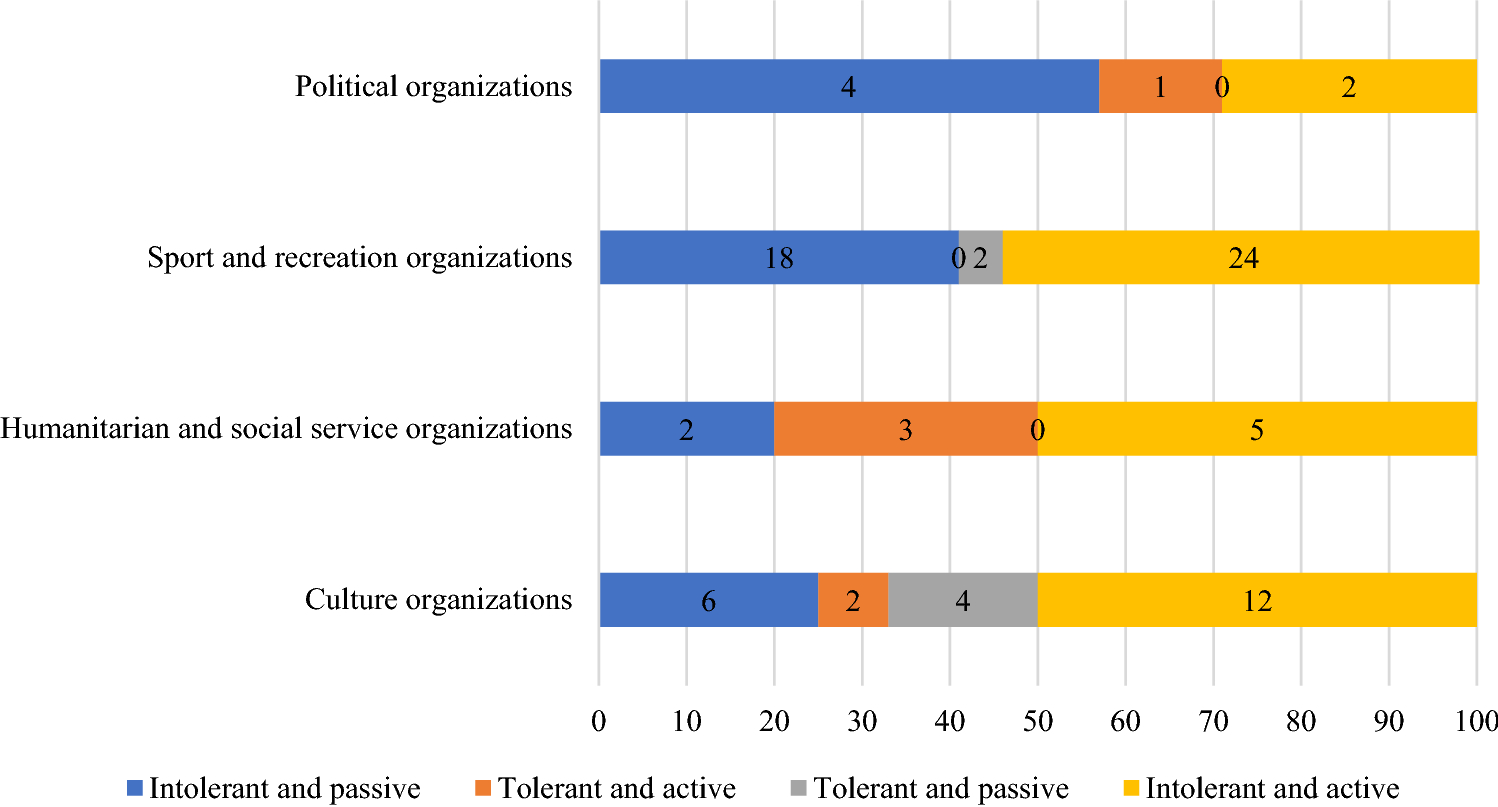
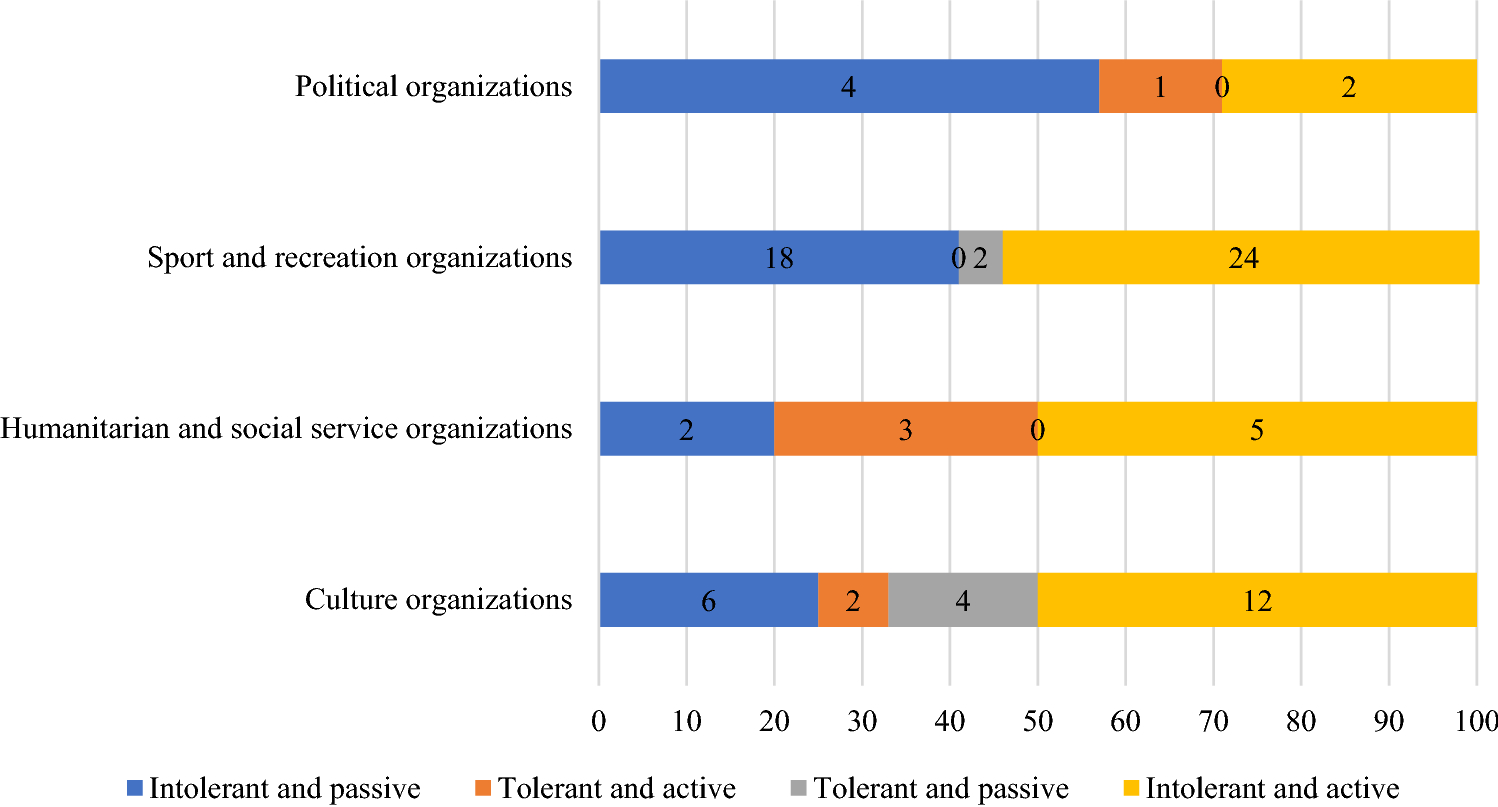
Combining tolerance and willingness to respond, Fig. 4 shows that most of the political organizations fall into the category intolerant and passive. Hence, they are intolerant of the NRM yet are unwilling to respond to it. A slightly different pattern is found among the other three types of CSOs. Culture organizations, humanitarian and social service organizations, and sports and recreational organizations fall under the category intolerant and active. Corresponding to the results reported above, few organizations are tolerant. However, humanitarian and social service organizations diverge by reporting more tolerant and active organizations compared to the other three categories. However, as Fig. 3 illustrates, there are few organizations in each category, and therefore conclusions need to be drawn with caution.
Tolerance and willingness to respond by type of civil society organization (percent, absolute numbers within each column). Note: The figure is based on two items: (1) dichotomous variable measuring if the Nordic Resistance Movement (NRM) should be banned or not; and (2) dichotomous variable measuring the willingness to respond to the NRM in some way or not to respond, as reported in Fig. 3
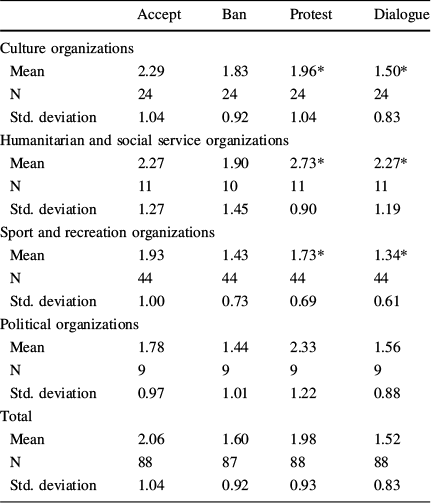
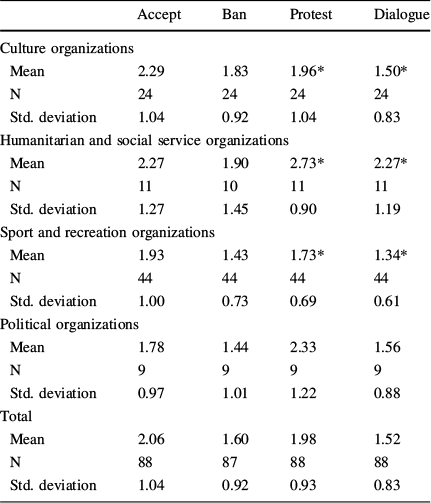
Finally, Table 3 shows CSO responses that consider the four theoretical types of responses: accept, ban, protest, and dialogue. The results of the mean differences show that overall, CSOs agree to a large extent that movements such as the NRM should be banned and that CSOs are not very likely to agree that dialogue with representatives of the NRM is a good way to respond. With respect to accept, CSOs only partly agree that representatives of the NRM should not be allowed to express its opinions in public and that protests and demonstration is a good way to respond to movements on the extreme right. Furthermore, the descriptive data demonstrate differences in response between type of CSO. Humanitarian and social service organizations appear most positive about using dialogue and protest, while sports and recreational organizations and cultural organizations are the most hesitant to do so. Political organizations are the least likely to accept movements on the extreme right such as the NRM. A one-way between group analysis of variance was conducted to explore the impact of type of CSO on the key types of responses. There were statistically significant differences at the p < 0.05 level in the scores for two of the responses: protest and dialogue: F (3, 84) = 4.29, p = 0.001 and dialogue F (3, 84) = 4.10, p = 0.001.
Key dimensions in the direct response of civil society organizations to right-wing extremism
Accept |
Ban |
Protest |
Dialogue |
|
|---|---|---|---|---|
Culture organizations |
||||
Mean |
2.29 |
1.83 |
1.96* |
1.50* |
N |
24 |
24 |
24 |
24 |
Std. deviation |
1.04 |
0.92 |
1.04 |
0.83 |
Humanitarian and social service organizations |
||||
Mean |
2.27 |
1.90 |
2.73* |
2.27* |
N |
11 |
10 |
11 |
11 |
Std. deviation |
1.27 |
1.45 |
0.90 |
1.19 |
Sport and recreation organizations |
||||
Mean |
1.93 |
1.43 |
1.73* |
1.34* |
N |
44 |
44 |
44 |
44 |
Std. deviation |
1.00 |
0.73 |
0.69 |
0.61 |
Political organizations |
||||
Mean |
1.78 |
1.44 |
2.33 |
1.56 |
N |
9 |
9 |
9 |
9 |
Std. deviation |
0.97 |
1.01 |
1.22 |
0.88 |
Total |
||||
Mean |
2.06 |
1.60 |
1.98 |
1.52 |
N |
88 |
87 |
88 |
88 |
Std. deviation |
1.04 |
0.92 |
0.93 |
0.83 |
Each key type of response is based on the following statements. Accept: “People from movements on the extreme right, such as the Nordic Resistance Movement (NMR), should not be allowed to express their opinion in public.” Ban: Imagine that our politicians propose that movements on the extreme right, such as the Nordic Resistance Movement (NMR), should be banned. How likely is it that your association would support such a proposal? Dialogue: “Dialogue / debate with representatives from movements on the extreme right, such as the Nordic Resistance Movement (NMR), is a good way to respond to right-wing extremism.” Protest: “Demonstrations and protests are a good way to respond to movements on the extreme right, such as the Nordic Resistance Movement (NMR).” Responses were recorded on a scale from 1–4: ‘Agree fully’, ‘Agree partly’, ‘Agree to a lesser extent’, and ‘Do not agree’
*The mean difference is significant at the 0.05 level
Post hoc comparisons using the Tukey HSD test indicated that the mean score for protest was significantly different between humanitarian and social service organizations (M = 2.23, SD = 0.9) and sports and recreation organizations (M = 1.73, SD = 0.69). Thus, sports and recreation organizations were more positive about using protest than humanitarian and social service organizations. However, despite reaching statistical significance, the actual differences in mean scores between the types of CSOs were quite small. To this end, effect sizes (Cohen's d) were calculated for the differences between type of organization. The magnitude of the difference between humanitarian and social service organizations and sports and recreation organizations was 0.45 and between humanitarian and social service organizations and culture organizations it was 0.36, which is considered moderate.
With regard to dialogue, post hoc comparisons using the Tukey HSD test indicated that the mean score was significantly different between humanitarian and social service organizations (M = 2.27, SD = 1.19) and sports and recreational organizations (M = 1.34, SD = ,61); and between humanitarian and service organizations and culture organizations (M = 1.5, SD = 0.83). When compared to protest, the actual differences in mean scores between the type of CSOs with regard to dialogue is more apparent. The effect sizes (Cohen's d) were calculated for the differences between type of organization. The magnitude of the difference between humanitarian and social service organizations and sports and recreation organizations was 0.39 and between humanitarian and social service organizations and culture organizations 0.36, which is considered moderate.
Taken together the results suggest that CSOs consider politicians, the media, and citizens to have the greatest responsibility when it comes to responding to right-wing extremism, followed by civil servants, CSOs, and private companies. Sports and recreation organizations and culture organizations place less significance on the role of civil society, while humanitarian and social service organizations and political organizations are slightly more positive in this regard. Yet, a one-way between group analysis of variance did not confirm statistically strong differences between type of CSO.
Furthermore, most CSOs do not consider their response to the NRM to be of interest. Nonetheless, a majority would be willing to respond to the NRM if it seek influence in local politics in the municipality. Finally, CSOs are largely intolerant of movements on the extreme right, and many refuse NRM representatives their democratic right and favor attempts to ban such movements. Importantly, humanitarian, and social service organizations are more willing to respond to the NRM using strategies involving dialogue than sports and recreation organizations and culture organizations. In addition, sports and recreation organizations and culture organizations were slightly more positive about using protest than were humanitarian and social service organizations.
Conclusions
The results indicate that CSOs see themselves as having a collective watchdog role vis-à-vis right-wing extremism, but the level of interest and willingness and sense of responsibility they express when it comes to responding directly to movements on the extreme right differ between them and are not necessarily evenly distributed across them. Humanitarian and social service organizations were more inclined to engage in dialogue with representatives of the Nordic resistance movement (NRM) and citizens compared with sports and recreation organizations and culture organizations. Sports and recreation organizations and culture organizations were slightly more positive when it came to using protest than were humanitarian and service organizations. However, politicians, the media, and citizens were considered by the CSOs to have the main responsibility when it came to responding to right-wing extremism. Consequently, CSOs placed the principal role of defending democracy against the threats of the extreme right in the hands of citizens, their representatives, and the media.
The findings suggest that CSOs that embrace a humanitarian and social role and direct their efforts toward solving social problems and building strong local communities may have a similar or more pronounced role when responding to right-wing extremism compared to organizations that have an explicitly political agenda (Lundberg, Reference Lundberg2021; Pedahzur, Reference Pedahzur2003; Sanchez Salgado, Reference Sanchez Salgado2021). This may be surprising given the role often accredited to conflict-oriented organizations when it comes to mobilization in response to negative conditions (Meyer & Tarrow, Reference Meyer and Tarrow2018). Also, humanitarian and socially oriented CSOs appear to prefer responses that are slightly more oriented toward dialogue and deliberation. A more advanced analysis is needed to identify the extent to which differences between CSOs can be generalized beyond the case of Ludvika and Sweden and the way differences between type of CSO can be further explained.
The responses of humanitarian and social service organizations raise the question as to whether or not bridging organizations are more likely to confront right-wing extremism in more varied ways, using dialogue and deliberation in-line with a concentric view of democracy than a bonding organization might have, at least in terms of local political settings (cf. Putnam, Reference Putnam1993; Berman, Reference Berman1997, p. 426). It is possible that humanitarian and social service organizations are more willing to respond given their stronger focus and identity on building horizontal networks and attachment to values and norms such as tolerance, respect, and humanitarianism (Lundberg & Abdelzadeh, Reference Lundberg and Abdelzadeh2022). Political organizations, on the other hand, are more mindful of their members’ interests and of building strong ties within rather than across group boundaries, and are thus more hesitant to respond, tolerate, and engage in deliberation with deviant elements of civil society. Although the concept of bridging and bonding can be interpreted differently, it does offer another way to understand how responses may vary from one CSO to the next.
In other words, one hypothesis could be that CSOs with bridging mechanisms are more likely to accept or tolerate right-wing extremism and to engage in dialogue with representatives of such movements given their inclination to build cross-cutting networks and attachment to values and norms such as tolerance, respect, humanitarianism, and peaceful coexistence. CSOs nurtured by more bonding mechanisms that foster homogeneous networks may be less tolerant of—or willing to engage in deliberation with—deviant elements of civil society and may take on a more confrontational role, corresponding to ban and protest.
This study has limitations and strengths that warrant attention. First, it is important to warn against drawing conclusions that are too far-reaching given the explorative approach of this study that relies solely on a small CSO sample in a specific setting. Second, the sample is not representative, and it cannot account for the effect of self-selection—that is to say, the CSOs that responded to the survey may be especially interested in working toward counteracting movements on the extreme right. For example, the results from each type of CSO may be contingent on the orientation of their individual orientation. This must be noted when interpreting the results. Finally, the article does not take into consideration the temporal dimension of how CSOs view their responses (Kaltwasser & Taggart, Reference Kaltwasser and Taggart2016, p. 210). It is possible that some CSOs prefer strategies that depend on how the existence and actions of the NRM and other societal actors evolve over time. In other words, the pattern of responses may differ between type of NRM and across time.
At the same time, the study has several strengths. Drawing on a framework for classifying the direct responses of CSOs to right-wing extremism, it provides insight into how various types of CSOs view their role when it comes to responding to movements on the extreme right. From a policy perspective, and when designing and implementing government-initiated programs aimed at counteracting political extremism, stakeholders should be attentive to the heterogeneity within civil society and the differences between types of CSOs in terms of both sentiment toward such movements and preferred strategies. Finally, given the importance that CSOs place on state institutions and the media, they may prefer to have a complementary role rather than be an alternative when it comes to responding to political extremism.
Funding
Open access funding provided by Dalarna University.
Declarations
Conflict of interest
No potential conflict of interest was reported by the author.
Ethical guidelines
The author adhered to the ethical guidelines of the Committee on Publication Ethics (COPE).

 Open access

