




Introduction
Coronavirus disease 2019 (COVID-19), caused by the virus SARS-CoV-2, is causing widespread sickness and mortality around the world (https://www.who.int/docs/default-source/coronaviruse/situation-reports/20200712-covid-19-sitrep-174.pdf?sfvrsn=5d1c1b2c_2), along with considerable and probably extended societal and global economic impacts. The virus is thought to be spread through the human population primarily via airborne droplets from coughing, sneezing or talking (particularly during more prolonged contact/exposure in enclosed spaces) and through touching of contaminated surfaces (Asadi et al. Reference Asadi, Bouvier, Wexler and Ristenpart2020), with the main symptoms including high fever, persistent cough, loss of senses of taste and smell and fatigue (Rothan & Byrareddy Reference Rothan and Byrareddy2020). In more serious cases, pneumonia-like symptoms develop leading to inflammation of the lungs, which appears to be the primary cause of mortality. Mortality risk for infected individuals increases exponentially with age, and the elderly and immunosuppressed are considered particularly vulnerable, with a high proportion within these groups requiring hospitalization following infection and, in turn, a high proportion of those hospitalized going on to require intensive care, generally requiring artificial ventilation (Richardson et al. Reference Richardson, Hirsch, Narasimhan, Crawford, McGinn and Davidson2020). In an effort to reduce virus transmission and prevent healthcare systems from being overwhelmed, many national governments have put in place measures to limit or ban large (or any) gatherings and to promote or enforce social distancing or self-isolation (Anderson et al. Reference Anderson, Heesterbeek, Klinkenberg and Hollingsworth2020), with these measures likely to be in place for many months at least.
In the midst of the global COVID-19 pandemic, Antarctica is the only continent thought to have remained free of cases of infection by the SARS-CoV-2 virus. However, in an area under international governance through the Antarctic Treaty System (Jacobsson Reference Jacobsson, Berkman, Lang, Walton and Young2011), it remains to be seen how the Antarctic Treaty Consultative Parties (those Antarctic Treaty Parties with decision-making authority) will deal with the crisis, and how national governmental operators and the Antarctic tourism industry, represented by the International Association of Antarctica Tour Operators (IAATO), which between them control the vast majority of movement of people to, from and around the Antarctic continent and surrounding remote islands, will respond.
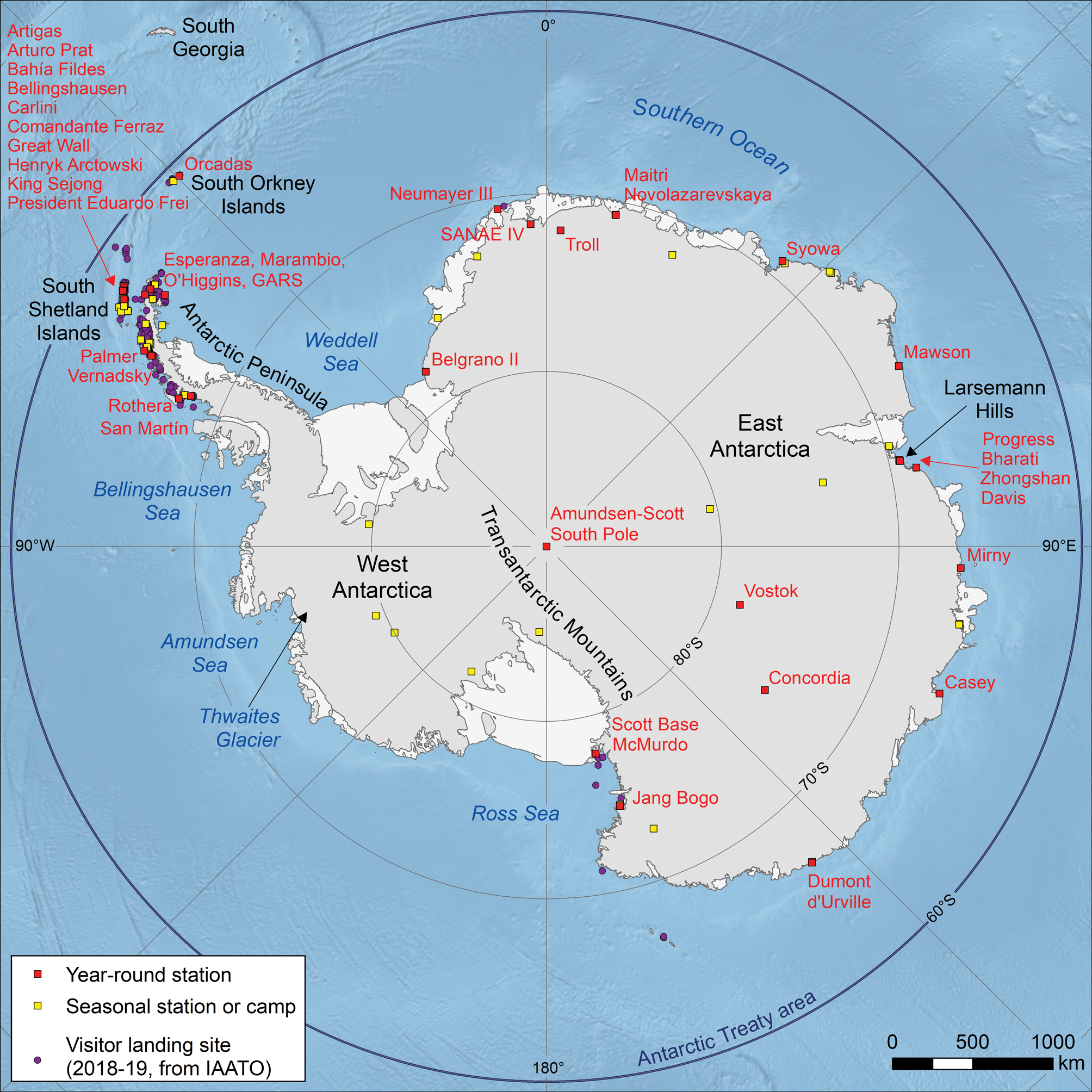
By early March 2020, as awareness of the debilitating effects of the virus and the ease of its transmission between humans became clear, many national Antarctic programmes had already undertaken or were in the process of the normal downscaling of their operations in preparation for the onset of the winter (Laing & Garrison Reference Laing and Garrison2020) and the summer Antarctic cruise tourism industry was coming to an end. For those national programmes yet to complete their summer activities, globally widespread restrictions to limit transmission of the virus meant major disruptions in international travel, making repatriation of remaining Antarctic summer personnel back to their home nations a priority (see Figs 1 & 2).
Map of the world showing Consultative and Non-consultative Parties to the Antarctic Treaty (https://www.ats.aq/devAS/Parties?lang=e) and the main gateway locations used by national governmental operators and the tourism and fishing industries to access Antarctica.

For example, as normal international air routes became unavailable, the British Antarctic Survey chartered the cruise vessel MS Hebridean Sky to provide safe and secure passage for 85 scientists, support staff and contractors to return from the access point of the Falkland Islands to the UK (https://www.bas.ac.uk/media-post/antarctic-homecoming-responding-to-covid-19). In a similar case, 26 Indian personnel were stranded in Cape Town on their return journey from Maitri Station in Dronning Maud Land, until they were repatriated by the Indian government (https://www.outlookindia.com/newsscroll/26-scientists-among-150-indians-returning-home-from-s-africa-this-week/1840097). A number of national operators that would normally return personnel using international air routes were forced to transport them from Antarctica to their home continents using their own or other countries' logistic support vessels. At the same time, global awareness of the high risk of virus transmission on board vessels became apparent following the high infection rate on the cruise ship MS Diamond Princess (Mallapaty Reference Mallapaty2020). As a result, the major gateway destination nations of Chile and Argentina, through which the majority of national and tourism operators route their vessels, aeroplanes and personnel/visitors, restricted their access, and the Antarctic tourism season came to a more rapid end than planned (Laing & Garrison Reference Laing and Garrison2020, https://edition.cnn.com/2020/04/07/americas/greg-mortimer-cruise-ship-coronavirus-intl-hnk/index.html). In one reported incident, 24 passengers displayed COVID-19 symptoms on their return journey from a cruise including popular visitor sites on the Antarctic Peninsula aboard the MS Greg Mortimer, which initially departed from Ushuaia in mid-March 2020 (Ing et al. Reference Ing, Cocks and Green2020). When tested offshore from Montevideo, Uruguay, 12 days after the initial outbreak, 59% of passengers and crew were positive for COVID-19, with 81% asymptomatic, although, tragically, later there was one fatality. It is therefore highly probable that visitors from this vessel carrying the SARS-CoV-2 virus landed at the Antarctic sites visited, including the highly visited Deception Island, Danco Island and Paradise Bay (Ing et al. Reference Ing, Cocks and Green2020). Although no other similar reports appear to be publicly available, it seems unlikely that this would be the only such vessel so affected.
Fishing vessels active in the Southern Ocean were, in some instances, able to complete their planned journeys following the onset of the COVID-19 crisis. For example, krill fishing continued around the Antarctic Peninsula and South Orkney Islands in April and May, with the catch quota reached by June 2020. Where crew and mandatory scientific observers (required under the Convention on Conservation of Marine Living Resources (CAMLR Convention); see CCAMLR 2020) were already available, some fishing trips were able to commence. However, restrictions on international travel have caused difficulties in mobilizing crew and observers to and from departure ports. For example, the crew of one New Zealand long-line fishing vessel, San Aspiring, owned by the Sanford fishing company, was stranded in the Falkland Islands, as safe travel via international flights was not available. Sanford sent another vessel, San Aotea, from New Zealand to the Falkland Islands to return the crew back to New Zealand (https://en.mercopress.com/2020/07/01/kiwi-longliners-meet-at-falklands-san-aotea-on-thursday-leaves-for-new-zealand).
Preventing the virus reaching Antarctica has been a high priority for national operators, as the often cramped and communal living conditions on research stations and vessels would facilitate its rapid transmission, and a lack of specialist medical equipment, staff or medical evacuation options (especially during the winter) could prevent effective treatment of the most serious cases. For now, Antarctica is thought to be free of the virus, with the ~1000 overwintering personnel at 38 stations across the continent remaining safe from infection due to their extreme isolation, as access by ship or aircraft during winter is rare. But what will the future bring as, all too soon, Antarctica will become accessible again at the onset of the next spring and, necessarily, at least some operations will resume in order to supply and relieve overwintering stations? In this paper, we consider the implications of the global COVID-19 pandemic for Antarctic governance, national operator logistics, scientific research, tourism and fishing, as well as for the Antarctic environment.
Governance
The negotiation of the Antarctic Treaty in 1959, which placed pre-existing national territorial claims into abeyance, put in place the mechanism for a form of international governance of the Antarctic continent and surrounding Southern Ocean above latitude 60°S. Currently, 54 nations are signatories to the Antarctic Treaty ('Parties'), with the 29 Consultative Parties that have demonstrated substantial research activity in the region eligible to partake in governance decision-making through a consensus model at the normally annual Antarctic Treaty Consultative Meeting (ATCM) (Gray & Hughes Reference Gray and Hughes2016) (Fig. 1). The Protocol on Environmental Protection to the Antarctic Treaty (signed 1991, entered into force 1998) sets out basic principles for the protection of the Antarctic environment and established the Committee for Environmental Protection (CEP), which normally meets annually to provide advice and formulate recommendations to the Parties in connection with the implementation of this Protocol for consideration at the ATCM. However, due to the risks associated with COVID-19, the planned 2020 ATCM and meeting of the CEP, scheduled to convene during the period 25 May–4 June in Helsinki, Finland, were cancelled. The ATCM rules of procedure allow for intersessional consultation and agreed action by the Antarctic Treaty Secretariat (ATS; see para. 46: https://documents.ats.aq/atcm42/ww/ATCM42_ww010_e.pdf); however, it remains to be seen to what degree discussion on the impact of COVID-19 will be undertaken across the Treaty Parties facilitated by virtual rather than face-to-face communication. Taking the broader remit of the Treaty Parties into consideration, the work of the ATCM and CEP will inevitably be delayed to some extent. From an environmental management perspective, revision of existing protected area management plans and designation of new protected areas will be postponed, as will agreement of initiatives to respond to the effects of climate change in Antarctica. Nevertheless, some intersessional work is likely to continue through various ATCM and CEP fora, including the CEP Subsidiary Group on Management Plans and Subsidiary Group on Climate Change Response, in anticipation of the next face-to-face ATCM and CEP meeting, or pending the development of an alternative virtual mechanism for ATCM decision-making.
The Antarctic Treaty is based upon openness and freedom of international scientific investigation and cooperation, including the exchange of scientific personnel between Antarctic expeditions. Furthermore, the Treaty allows Parties to inspect the stations, ships and aircraft of other signatories within the Treaty area, and for designated observers to ‘have complete freedom of access at any time to any and all areas of Antarctica’, although the effectiveness of this system has been questioned (Tamm Reference Tamm2018). The ability to fulfil these actions may be jeopardized by the quarantine procedures made necessary by COVID-19, thereby undermining, albeit temporarily and for sound reasons, some of the founding principles of the Antarctic Treaty System.
The CAMLR Convention was established with the primary objective of conserving living resources in the Southern Ocean, where conservation includes rational use of those resources (www.ccamlr.org). Fishing is intended to be demonstrably sustainable, and each year the Parties to the Convention meet and use available scientific data to set catch limits for each fishery (primarily including toothfish, icefish and krill) within the Southern Ocean, and to agree associated conservation measures. The CAMLR Convention rules of procedure allow for intersessional decision-making (see Rule 7: https://www.ccamlr.org/en/system/files/e-pt3_0.pdf), but the practicalities of agreeing new and updated conservation measures, including those pertaining to catch limits for commercially harvested species, for the coming year in the absence of a physical meeting have yet to be determined.
Impacts upon national operator logistics, science, tourism and the fishing industry
National operator logistics
Some Antarctic programmes, such as that of Spain, ended their 2019–20 field seasons early in anticipation of international travel restrictions, while many national operators had all but completed their planned summer field season by the time COVID-19 became a global pandemic (Laing & Garrison Reference Laing and Garrison2020). This means that, for some, the implementation of broader quarantine practices to keep the virus out of Antarctica in the next operational season have yet to be tested. Some nations that rely heavily upon logistic support provided by other nations, such as Portugal and the Netherlands, have largely or completely cancelled their Antarctic programme for the 2020–21 field season (European Polar Board 2020). However, the 20 nations operating year-round research stations will need to replace overwintering personnel and resupply the stations, or close and secure their stations entirely. At the present time, most national Antarctic programmes plan little more than to support essential operational activity and planned maintenance until greater certainty is achieved, in which case only some high-priority fieldwork may be attempted (COMNAP 2017, Antarctica New Zealand 2020a, European Polar Board 2020, https://timesofindia.indiatimes.com/india/india-wont-miss-its-annual-antarctic-expedition-despite-covid-19-situation/articleshow/75726160.cms). Infrastructure construction or redevelopment projects have been scaled back at Rothera Research Station (UK) and Scott Base (New Zealand) (Antarctica New Zealand 2020a, 2020b, British Antarctic Survey 2020a). Forward preparation of logistical support for future science projects, such as the preparatory deployment of deep-field depots, has also be reduced or delayed (Voosen Reference Voosen2020). Some Antarctic scientific cruises may proceed as planned or in modified form (e.g. the Polarstern cruise of the Weddell Sea by Germany; see European Polar Board 2020), but lack of certainty concerning access to ports for refuelling or taking on stores or personnel prior to entering the Southern Ocean may make some cruises unviable. The Council of Managers of National Antarctic Programmes (COMNAP; www.comnap.aq) has facilitated information exchange on plans for the 2020–21 summer season between national operators and non-governmental organizations working in Antarctica and has prepared practical COVID-19 guidance, albeit these are only available to COMNAP members at present. Nations that host ‘gateway’ Antarctic departure/return points have put in place protocols for the management of ships, aircraft and personnel entering or leaving Antarctica via their country (https://batimes.com.ar/news/world/antarctica-is-still-free-of-covid-19-but-can-it-stay-that-way.phtml), thereby providing the opportunity to ensure a level of consistency in biosecurity practices across all operators using those access routes (e.g. https://www.spp-antarktisforschung.de/storages/uni-rostock/Alle_MNF/Antarktisforschung/Dokumente/Aktuelles/COVID-19_PROTOCOL_INACH_english.pdf) (see Fig. 1).
Scientific research
Faced with uncertainty regarding the accessibility of gateway ports, coupled with the need to prevent SARS-CoV-2 from reaching Antarctica, many nations have already drastically scaled back their science plans for the 2020–21 field season (e.g. see https://timesofindia.indiatimes.com/india/india-wont-miss-its-annual-antarctic-expedition-despite-covid-19-situation/articleshow/75726160.cms). Several nations plan to continue supporting long-term science monitoring programmes in the vicinity of some Antarctic and sub-Antarctic research stations to prevent gaps in long-term datasets (e.g. the collection of data on higher predator (i.e. seal and seabird) population counts and diet compositions as part of the Commission for the Conservation of Antarctic Marine Living Resources (CCAMLR) Ecosystem Monitoring Program (https://www.ccamlr.org/en/science/ccamlr-ecosystem-monitoring-program-cemp)) (see https://www.earthisland.org/journal/index.php/articles/entry/antarctic-researchers-film-crew-marine-mammal-study-pandemic/). However, in general, ‘deep-field’ science (i.e. that requiring onward travel from research stations by ship or aircraft or multi-day overland travel) has been put on hold, and nations with laboratory facilities are limiting station-based activities to only the most essential research, largely the maintenance of long-term datasets (Antarctica New Zealand 2020a, British Antarctic Survey 2020b). The US National Science Foundation and British Antarctic Survey have postponed planned fieldwork in the International Thwaites Glacier Collaboration (ITGC; www.thwaitesglacier.org) examining the risk of sea-level rise associated with the near-term melting of parts of the West Antarctic Ice Sheet (ITGC 2020). Data on long-term deployed remote scientific instruments may not be retrieved and the instruments themselves not maintained until the location is next visited (Voosen Reference Voosen2020). If located in areas of high snow accumulation, the equipment may be at risk of being lost due to burial. As climate change continues, our understanding of its increasingly dramatic impacts will be held back if crucial monitoring work is interrupted (IPCC 2019, Laing & Garrison Reference Laing and Garrison2020). Another aspect of normal monitoring activity likely to be impacted is that relating to the identification of human impacts, which helps deliver the Antarctic Treaty System's objective of environmental protection, in accordance with the Protocol on Environmental Protection to the Antarctic Treaty. However, scientists may have little opportunity to monitor the effects of reduced human presence on Antarctic species, habitats and ecosystems (Tin et al. Reference Tin, Fleming, Hughes, Ainley, Convey and Moreno2009, Coetzee & Chown Reference Coetzee and Chown2016, Dunn et al. Reference Dunn, Forcada, Jackson, Waluda, Nichol and Trathan2019).
The COVID-19 pandemic has also heavily impacted scientific and logistical activities away from the continent, with travel restrictions and safety concerns necessitating the cancellation of both the Scientific Committee on Antarctic Research (SCAR) Open Science Conference and the COMNAP Annual General Meeting scheduled to take place in Hobart, Tasmania, in late July/early August 2020 (https://www.antarctica.gov.au/news/2020/international-antarctic-conferences-cancelled-due-to-coronavirus). With the physical meetings cancelled, SCAR moved a much-reduced version of the conference to an online format (3–7 August 2020; https://www.scar2020.org), as did COMNAP. Other impacts affecting the delivery of scientific outputs have included the partial or complete shutdown of many universities and research institutes, the cancellation or deferral of research funding and a hiatus in employment for fixed-term researchers and research students. In the future, further probable impacts include redundancies and enforced retirements of established researchers, as governments are forced to address the deep impacts of the pandemic on national economies (Korbel & Stegle Reference Korbel and Stegle2020, Myers et al. Reference Myers, Tham, Yin, Cohodes, Thursby and Thursby2020).
Tourism
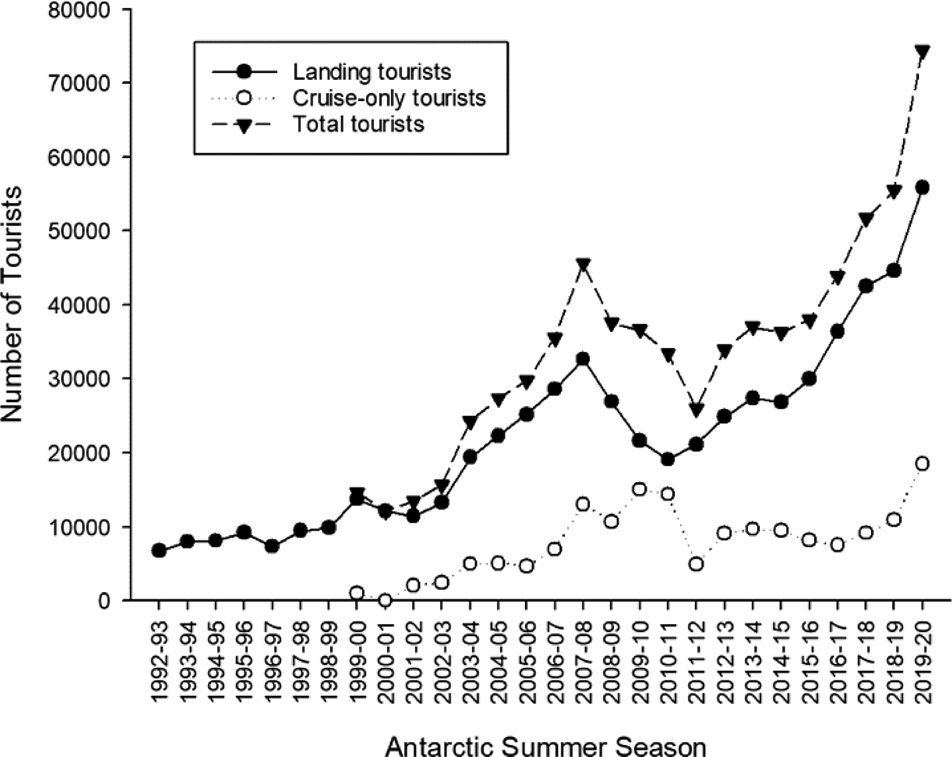
After a record number of 74 401 tourist visitors to Antarctica in the 2019–20 summer (IAATO 2020), it will be a challenge for the largely cruise-based tourism industry to operate effectively in 2020–21. Multiple factors will play a role, including potential access restrictions at gateway ports and airports (see Fig. 1), the likelihood of severe ongoing long-haul international travel restrictions and probable lower demand from customers (many of whom are more elderly and therefore demographically more vulnerable to the virus) due to concern over infection risk and difficulties in acquiring medical insurance (Ing et al. Reference Ing, Cocks and Green2020, Liu et al. Reference Liu, Chen, Lin and Han2020). National governments permitting tourism activities in Antarctica may stipulate minimum quarantine or social distancing standards to increase passenger safety, although the physical constraints and economics of providing adequate mitigation, given the structure of typical smaller cruise vessels, and the reliance of the Antarctic cruise industry on small boat supported landings, could be insurmountable or impractical. On King George Island, South Shetland Islands, Chile has facilitated the use of Teniente Rodolfo Marsh Martin Airport by some tour operators as a cruise exchange point, flying visitors in and out of Antarctica using the commercial airline Aerovías DAP, where they join or leave their cruise vessel (Liggett & Stewart Reference Liggett, Stewart, Dodds, Hemmings and Roberts2017). These flights also bring tourists who make a short overnight stay at an established tourist camp on the island. Making this a viable option from a safety perspective during the 2020–21 season may be challenging, while various national operators also utilize the same air link and flights. All of these factors may combine to result in a dramatic short-term decline in the Antarctic tourism industry on a scale comparable to, if not considerably greater and longer lasting than, the 43% drop in visitor numbers following the global economic downturn of 2007–08 (Nicola et al. Reference Nicola, Alsafi, Sohrabi, Kerwan, Al-Jabir and Iosifidis2020) (see Fig. 3).
Fishing industry
The COVID-19 pandemic has negatively impacted the global fishing industry by limiting or preventing the landing, processing and distribution of fish to customers and restricting the rotation of crew due to quarantine practices (Bennett et al. Reference Bennett, Finkbeiner, Ban, Belhabib, Jupiter and Kittinger2020, Havice et al. Reference Havice, Marschke and Vandergeest2020). Currently, it is unclear how these factors may affect the Southern Ocean fishery during the coming months, including how the fishing industry will respond and whether or not fishing will be possible in the short term if CCAMLR procedures for decision-making on conservation measures are affected. For example, under the CAMLR Convention scheme of international scientific observation (SISO), all vessels fishing in the CAMLR Convention Area are required to carry an observer for some or all of their fishing operations (CCAMLR 2020). Therefore, prior to departure, quarantine practices may be needed for all crew and observers to ensure that there is no SARS-CoV-2 aboard ship, as transmission could be extremely rapid aboard these vessels. Due to high operational costs, fishing vessels maximize their time at sea and very rarely land on the continent, so risk of viral transmission to Antarctic communities is likely to be low. However, it may be increased in the eventuality of accidents, or ship entrapment in ice, requiring support and rescue from other (national operator) vessels, as has occurred several times in recent years in the Ross and Amundsen seas (e.g. the fire aboard the Jeong Woo 2 in 2012, when three lives were lost; see https://www.maritimenz.govt.nz/magazines/safe-seas-clean-seas/issue-39/issue-39-6.asp). In the specific case of South Georgia (a sub-Antarctic island that lies within the CAMLR Convention Area but north of 60° latitude), the island's governmental authorities currently require fishing and tourist vessels to be inspected by government officers at King Edward Point prior to commencing their activities in the island's economic zone. This may create an opportunity for COVID-19 transmission, and this is a particular concern as tourist and national operator vessels fulfilling the same requirement often go on to visit the Antarctic Treaty area after calling at South Georgia.
A potential reduction in fishing activity may reduce the quantity of fish harvested, including non-target species, as well as reduce incidental mortality of marine mammals and seabirds. However, should there be fewer properly licenced fishing vessels active in the region, and possibly fewer government patrol vessels, illegal, unreported and unregulated (IUU) fishing may increase, having spent several years largely under control, potentially contributing to non-sustainable depletion of fish stocks and to lower standards of viral biosecurity applied to their crews (Osterblom et al. Reference Osterblom, Bodin, Rashid Sumaila and Press2015, Bennett et al. Reference Bennett, Finkbeiner, Ban, Belhabib, Jupiter and Kittinger2020).
Environmental impact
Under these unprecedented circumstances, how will a reduced human presence, over the short term at least, affect the Antarctic environment? Antarctic terrestrial ecosystems are simple, comprising mosses, lichens, liverworts and only two species of flowering plant, with the native terrestrial fauna limited to microinvertebrates, protozoa, tardigrades, nematodes, rotifers and only two insect species (Convey Reference Convey2017). Microbial species rapidly become dominant with higher elevation and distance from the coast. The richest terrestrial communities, bird colonies and seal haul-out sites are limited to the 15% (~6000 km2) of the total ice-free area across the continent (~44 000 km2) that is located close to the coast where generally milder climatic conditions are found (Hull & Bergstrom Reference Hull, Bergstrom, Bergstrom, Convey and Huiskes2006, Convey Reference Convey2017, Bokhorst et al. Reference Bokhorst, Convey and Aerts2019). However, it is within this small area that most research stations and tourist visitor sites are found (Brooks et al. Reference Brooks, Jabour, van den Hoff and Bergstrom2019), resulting in direct and ongoing competition between the needs of humans vs those of nature and creating a challenge for effective protection and conservation (Pertierra et al. Reference Pertierra, Hughes, Vega and Olalla-Tárraga2017, Leihy et al. Reference Leihy, Coetzee, Morgan, Raymond, Shaw and Terauds2020).
Human activity in Antarctica has led to well-documented local environmental impacts, including non-native species introductions (Frenot et al. Reference Frenot, Chown, Whinam, Selkirk, Convey, Skotnici and Bergstrom2005, Hughes et al. Reference Hughes, Pertierra, Molina-Montenegro and Convey2015), major one-off and chronic pollution events (Bargagli Reference Bargagli2005) and destruction of terrestrial and marine habitat (Tin et al. Reference Tin, Fleming, Hughes, Ainley, Convey and Moreno2009). A sudden and substantial reduction in human activity within Antarctica potentially has clear short-term benefits for Antarctic ecosystems. The risk of introduction of non-native species to marine and terrestrial environments will decrease with the reduced arrival of cruise and research vessels and landings of tourist visitors, cargo and national operator personnel (Frenot et al. Reference Frenot, Chown, Whinam, Selkirk, Convey, Skotnici and Bergstrom2005, Chown et al. Reference Chown, Lee, Hughes, Barnes, Barrett and Bergstrom2012, Hughes et al. Reference Hughes, Pertierra, Molina-Montenegro and Convey2015, Convey & Peck Reference Convey and Peck2019, McCarthy et al. Reference McCarthy, Peck, Hughes and Aldridge2019). With many national operators temporarily scaling down or ceasing deep-field activities, the risks of intra- and inter-regional transfer of species will also be reduced (Hughes et al. Reference Hughes, Convey, Pertierra, Vega, Aragón and Ollala-Tárraga2019). However, trampling impacts upon fragile Antarctic soil and vegetation often have long-lasting consequences due to naturally slow recovery rates, so short-term reductions in human activity may have only limited benefits (Tejedo et al. Reference Tejedo, Benayas, Cajiao, Albertos, Lara and Pertierra2016, https://www.environments.aq/emerging-issues/the-impacts-of-trampling-and-ground-disturbances-on-antarctic-soils). The risk of major pollution events resulting from marine incidents should decline with fewer vessels operating in the area (Kennicutt et al. Reference Kennicutt, Sweet, Fraser, Stochton and Culver1991, Aronson et al. Reference Aronson, Thatje, McClintock and Hughes2011), albeit that, should an incident occur, the already limited capacity to mount search and rescue and any required oil spill responses will be diminished further (Filler et al. Reference Filler, Kennicutt, Snape, Sweet, Klein and Fingas2015). With fewer vessels and some summer-only research stations remaining closed, fuel combustion for power generation will decline with a concurrent temporary reduction in local greenhouse gas production and atmospheric pollution (Wolff Reference Wolff1992, Poland et al. Reference Poland, Riddle and Zeeb2003, Amelung & Lamers Reference Amelung and Lamers2007). However, with some stations and facilities remaining unvisited and routine maintenance not being undertaken, the chance of leakage from fuel storage systems may increase, along with other sources of pollution, particularly where existing infrastructure is already aging (Wilkness Reference Wilkness1990, Tin et al. Reference Tin, Fleming, Hughes, Ainley, Convey and Moreno2009, Braun et al. Reference Braun, Hertel, Mustafa, Nordt, Pfeiffer, Peter, Tin, Liggett, Maher and Lamers2014). A further pollution threat concerns the potential for loss, through burial, of fuel drums stored in remote locations to support deep-field activities, some of which need to be raised every 1–2 years (depending upon the snow accumulation rate). Lower research station occupancy will also result in lower volumes of sewage release to the environment, thereby temporarily reducing the release of pollutants, such as trace metals and microplastics, and non-indigenous microorganisms (Connor Reference Connor2008, Power et al. Reference Power, Samuel, Smith, Stark, Gillings and Gordon2016, Reed et al. Reference Reed, Clark, Thompson and Hughes2018, Stark et al. Reference Stark, Conlan, Hughes, Kim and Martins2019, Webb et al. Reference Webb, Hughes, Grand, Lohan and Peck2020). Lower levels of visitation will reduce disturbance of wildlife, which may be particularly relevant in locations where wildlife population declines have been linked to tourism and national operator activity (Pfeiffer Reference Pfeiffer2005, Coetzee & Chown Reference Coetzee and Chown2016, Dunn et al. Reference Dunn, Forcada, Jackson, Waluda, Nichol and Trathan2019, https://www.umweltbundesamt.de/sites/default/files/medien/461/publikationen/4424.pdf). Ongoing or planned major infrastructure projects or station redevelopment work may be slowed or postponed, delaying any associated environmental impacts (Antarctica New Zealand 2020b, British Antarctic Survey 2020a, European Polar Board 2020, https://future.usap.gov/what-is-aims/). Limits on field party activity could, in the short term, reduce the rate of expansion of the human footprint within Antarctica, thereby prolonging the integrity of the region's wilderness areas (Hughes et al. Reference Hughes, Fretwell, Rae, Holmes and Fleming2011, Leihy et al. Reference Leihy, Coetzee, Morgan, Raymond, Shaw and Terauds2020).
Keeping SARS-CoV-2 out of Antarctica
Many potential routes exist for the importation of SARS-CoV-2 into Antarctica. Ships are the main means for transport of people and cargo to Antarctica, although many national operator personnel today arrive in Antarctica by air. Estimates of the intensity of shipping activity across fishing, tourism and research sectors suggest there may be ~180 vessels and ≥ 500 voyages in Antarctic waters annually, with a concentration of activity around the northern Antarctica Peninsula and Scotia Arc, where ~50% of Antarctic research stations and most of the established tourist visitors sites are located (see https://www.ats.aq/devAS/Ats/VisitorSiteGuidelines?lang=e) (Fig. 2), as well as the most intense fishery activity (McCarthy et al. Reference McCarthy, Peck, Hughes and Aldridge2019). Once within the Antarctic Treaty area, vessels may resupply or visit several stations and support scientific, logistical or tourism activities at multiple locations, thereby acting as potential dispersal agents for the virus, both into and within Antarctica. Aircraft are used by both national governmental operators and the tourism industry to transport people and high-priority or perishable cargo (such a fresh foods) rapidly to Antarctica, and in relative comfort compared to the often rough and extended ocean crossing by ship. Aircraft operators may experience difficulty accessing Antarctica due to flight restrictions in South America and elsewhere. Aircraft operated by several national operators as well as commercial companies often use a number of established airstrips. In particular, Teniente Rodolfo Marsh Martin Airfield, Fildes Peninsula (Chile), Rothera Research Station, Adelaide Island (UK), Troll Airfield (Norway), Novo Runway (Russian Federation; Antarctic Logistics Centre International (ALCI)) and McMurdo Station (USA) are used as stopping and/or refuelling points as aircraft transit through to other research stations and field locations on the continent; however, this in itself has risk and will need to be managed (Hughes et al. Reference Hughes, Convey, Pertierra, Vega, Aragón and Ollala-Tárraga2019).
The Drake Passage separates the Antarctic Peninsula from southern South America, and the ~800 km crossing provides the most rapid ship access to the continent, typically taking 2–3 days, while aircraft can access the continent in only a few hours (as little as 1.5 hours from Punta Arenas to King George Island, 4–5 hours to Adelaide Island and 4 hours to Union Glacier) (Bender et al. Reference Bender, Crosbie and Lynch2016). These time periods are considerably shorter than the incubation period of the virus for an infected person, and such flights are shorter than virus viability in the atmosphere or on various surfaces (Asadi et al. Reference Asadi, Bouvier, Wexler and Ristenpart2020, van Doremalen et al. Reference Van Doremalen, Bushmaker, Morris, Holbrook, Gamble and Williamson2020), demonstrating the need for effective quarantine practices of staff for ~14 days prior to Antarctic deployment (Laurer et al. Reference Laurer, Grantz, Bi, Jones, Zheny and Meredith2020).
The Antarctic research community and national operators have considered and implemented, to varying extents, wider biosecurity procedures to prevent the introduction of non-native species to Antarctica (Chown et al. Reference Chown, Lee, Hughes, Barnes, Barrett and Bergstrom2012, https://www.comnap.aq/wp-content/uploads/2019/11/Intercontinental-Checklists-2019.pdf) and, to a lesser degree, the anthropogenic dispersal of native and non-native species within the continent (Hughes et al. Reference Hughes, Convey, Pertierra, Vega, Aragón and Ollala-Tárraga2019), although the extent to which these would have any impact on the introduction of viruses is unclear. General consideration has also been given to the prevention of dispersal of animal pathogens between bird colonies and seal haul-out sites (Kerry & Riddle Reference Kerry and Riddle2009, https://documents.ats.aq/ATCM42/WW/ATCM42_WW008_e.pdf). However, the imposition of quarantine measures to prevent the dispersal of human disease within Antarctica had received little international attention prior to the COVID-19 pandemic, representing a major logistical challenge for both national operators and the tourism and fishing industries. National operators are increasingly aware of these issues and are making considerable efforts to plan for the 2020–21 summer season, giving priority to the health of their personnel and visitors and to the Antarctic environment (Antarctica New Zealand 2020a, British Antarctic Survey 2020b).
SARS-CoV-2 may be transmitted via symptomatic and asymptomatic individuals (Nishiura & Kobayashi Reference Nishiura and Kobayashi2020, Yu & Yang Reference Yu and Yang2020), making the use of a 14 day quarantine and testing period prior to travel a sensible precaution to reduce the risk of transmission (Chen et al. Reference Chen, Li, Deng, Huang, Ou and Lin2020). The virus may also be transferred via recently contaminated cargo and food supplies, albeit virus load may be low. Frozen foods are routinely used to provision Antarctic stations; however, coronaviruses in general show considerable stability in a frozen state and may survive for up to 2 years at -20°C, so ensuring adequate quarantine or sterilization practices may not be easily delivered (https://www.who.int/docs/default-source/coronaviruse/situation-reports/20200221-sitrep-32-covid-19.pdf?sfvrsn=4802d089_2). To safeguard station personnel, individual national operators may also be reluctant to host visits from either other national operators or cruise vessels at their Antarctic and sub-Antarctic research stations, as has been common practice to date (Bender et al. Reference Bender, Crosbie and Lynch2016, Laing & Garrison Reference Laing and Garrison2020, https://www.antarctica.gov.au/news/2020/australian-antarctic-program-precautionary-measures-against-novel-coronavirus). Heritage organizations that normally operate on the continent may not be able to undertake routine maintenance of historic huts, such as those in the Ross Sea region, or be able to provide staff to manage the hut at Port Lockroy (Antarctic Peninsula) (Dunn et al. Reference Dunn, Forcada, Jackson, Waluda, Nichol and Trathan2019, https://nzaht.org/covid-19-update/, https://www.ukaht.org/news/latest-news/what-does-covid-19-mean-for-ukaht-1/). The implications of reduced access to historical and heritage sites may be minimal in the short term, unless urgent building maintenance is required. Nevertheless, a reduction in Antarctic tourist visitation may result in a decline in donations to these organizations, which may have longer-term implications for the conservation of Antarctic heritage.
Risk to human health should the COVID-19 pandemic reach Antarctica
Currently, there are no vaccines available against COVID-19 infection, no specific antiviral drugs to treat those infected and only limited treatments available that appear to lessen the effects of the more serious cases or the probability of mortality. Should SARS-CoV-2 be transferred to Antarctica, regional climatic conditions may influence its viability and transmissibility. Some preliminary evidence suggests that lower temperatures and humidities, which are characteristic in Antarctica, may increase the transmission of SARS-CoV-2 (Tobías & Molina Reference Tobías and Molina2020, Wang et al. unpublished data). However, conversely, many microorganisms and viruses are susceptible to damage by ultraviolet (UV) radiation; consequently, high levels of UV radiation in Antarctica, particularly during mid-summer and the period of anthropogenic ozone depletion in the spring, may reduce transmission risk in the outdoor environment (Hughes Reference Hughes2005, Carleton et al. unpublished data, Karapiperis et al. unpublished data, Merow & Urban unpublished data).
In stark contrast to the more mature age demographics of tourist visitors, research and support personnel travelling to Antarctica with national operators are often from lower age groups and are generally subject to rigorous medical screening prior to deployment, making them potentially less susceptible to developing the more severe symptoms of COVID-19 (Davies et al. Reference Davies, Klepac, Liu, Prem, Jit and Eggo2020). Conversely, many personnel typically engage in tiring physical work under demanding environmental conditions with limited access to fresh foods, which may negatively affect their immune system (Tingate et al. Reference Tingate, Lugg, Muller, Stowe and Pierson1997). In particular, mucosal immune suppression has been reported in the early months of an Antarctic expedition (less so during the overwintering period), which is the period of greatest movement of personnel and potential transmission risk (Cameron & Moore Reference Cameron and Moore1968, Gleeson et al. Reference Gleeson, Francis, Lugg, Clancy, Ayton, Reynolds and MacConnell2000). Furthermore, psychological stress and anxiety, possibly exacerbated by concern about the safety of friends and family members from COVID-19 infection in home nations (Laing & Garrison Reference Laing and Garrison2020, https://abcnews.go.com/International/life-antarctica-continent-case-coronavirus/story?id=69716325, http://nopr.niscair.res.in/bitstream/123456789/54392/1/SR%2057%286%29%2030-31.pdf), may also affect susceptibility to disease (Palinkas & Suedfeld Reference Palinkas and Suedfeld2008, Khandelwal et al. Reference Khandelwal, Bhatia and Mishra2015).
On a typical research station, physical space is at a premium and personnel live in close proximity, sharing bedrooms/bunkrooms and bathroom facilities and eating in communal spaces, making social distancing impractical and providing substantial opportunities for virus transmission. Furthermore, most people infected with SARS-CoV-2 are believed to shed the virus in their faeces, even if they are asymptomatic, so research station sewage systems present a major risk of further virus transmission, with sewage treatment plant technicians being particularly at risk (Gormley et al. Reference Gormley, Aspray and Kelly2020, Zhang et al. Reference Zhang, Wang and Xue2020). Medical facilities vary greatly across research stations and on board vessels (COMNAP 2017), and few if any are equipped with the sophisticated medical equipment, including ventilators, required to treat serious infections, while medical oxygen supplies required to aid those in respiratory distress are generally very limited or not available (Ñamendys-Silva Reference Ñamendys-Silva2020). Currently, serious medical issues normally result in the patient being evacuated from Antarctica. However, this can present extreme logistical challenges (including risk to the personnel involved), require the diversion of resources from other tasks, take considerable time and may be hampered by poor weather conditions, particularly if the person concerned is part of a remote field party or the requirement arises in the Antarctic winter. A limited number of wintering stations, as well as summer field parties, are located at high altitude (≥ 3000 m above sea level) on the polar plateau, where atmospheric pressure may make any lung infections that limit oxygen uptake more serious (COMNAP 2017). Given the rapid rate at which COVID-19 symptoms can develop, dealing with an infection in Antarctica is likely to be a serious and potentially life-threatening issue, particularly as most vessels and smaller research stations do not have doctors or fully trained medical professionals. It may also be difficult to safeguard the health of those providing care, many of whom will not be professional medical practitioners trained in the proper use of personal protective equipment (where available), hand hygiene, aseptic techniques and environmental infection control measures, instead being general station personnel with some additional first aid training (Cheung et al. Reference Cheung, Ho, Cheng, Cham and Lam2020).
Should instances of COVID-19 infection become apparent at an Antarctic research station, the typical geographical isolation of stations and the limited and well-controlled number of transport routes between them mean that isolation and quarantine measures could, in most cases, be rapidly and effectively applied (Pertierra et al. Reference Pertierra, Hughes, Vega and Olalla-Tárraga2017, Hughes et al. Reference Hughes, Convey, Pertierra, Vega, Aragón and Ollala-Tárraga2019). Similarly, an outbreak aboard ship should be easily contained within the vessel. However, in areas where there are clusters of stations and frequent exchange of personnel, such as the South Shetland Islands, Larsemann Hills and parts of Victoria Land, quarantine measures may be more difficult to enforce (Laing & Garrison Reference Laing and Garrison2020). For example, the Chilean Eduardo Frei Montalva Station and the Russian Federation's Bellingshausen Station on Fildes Peninsula are directly adjacent to one another, five other stations are located in the immediate vicinity around Maxwell Bay and the area is a transport hub for personnel travelling on to other stations as well as national operator and cruise vessels. In this case, internationally agreed and enforced quarantine practices will be required to prevent virus spread following an outbreak (COMNAP 2017). Difficulties may be further exacerbated where airstrip infrastructure is used by more than one nation. Examples include the Teniente Rodolfo Marsh Martin Aerodrome on Fildes Peninsula, operated by Chile (which is used by multiple nations including Argentina, Brazil, Chile, the UK, Uruguay and the commercial airline Aerovías DAP from Chile), and Rothera Research Station, which is used by aircraft from the UK, the USA, Canada (charter for Italy, the USA and other nations), Germany, China and Chile, or the Williams Field airfield near McMurdo Station, Southern Victoria Land, which is operated by the USA and also used by the Canadian charter operator, New Zealand and, occasionally, Italian, Korean, British and Australian logistics. Should a case of COVID-19 become evident at a research station, one response might be the evacuation of that person and other (if not all) personnel on that station from the continent as rapidly as possible. However, finding a gateway port that will accept a number of infected personnel, or those suspected of infection, could be problematic. Furthermore, the most rapid route off the continent may entail air transport via other stations and/or the use of ships, probably involving assistance from other operators, which may generate substantial risks of further infection. More generally, it remains to be seen how necessary quarantine measures may affect the ability of national operators to provide and engage with emergency search and rescue operations. In particular, the relative prioritization of quarantine and search and rescue is not clear.
Virus transmission to Antarctic wildlife
Antarctica is well known for its charismatic wildlife, including penguins and seals, which often congregate in densely packed colonies, and there is a general concern about transfer of disease to Antarctic wildlife (Kerry & Riddle Reference Kerry and Riddle2009). Animal mass mortality events due to disease are little documented within Antarctica, and current knowledge of pathogens and diseases in wildlife is limited (Barbosa & Palacios Reference Barbosa and Palacios2009, Grimaldi et al. Reference Grimaldi, Seddon, Lyver, Nakagawa and Tompkins2015). Within the Antarctic region, evidence for several commonly pathogenic viruses has been recorded in avifauna (e.g. influenza virus A, Newcastle disease virus) and marine mammals (e.g. sealpox virus and canine distemper virus) (for an overview, see https://www.environments.aq/information-summaries/antarctic-wildlife-diseases). The zoonotic origins of many coronaviruses (including SARS-CoV-2) are thought to be from bats, the natural reservoir host, where they are generally non-pathogenic; however, pathogenicity may occur following transmission to a new host species, including humans (Zhou et al. Reference Zhou, Yang, Wang, Hu, Zhang and Zhang2020). Coronaviruses have been isolated from a variety of infected birds, mammals and other vertebrates, including cats, cows, dogs, ducks, ferrets, lions, mice, mink, pangolins, pigs, tigers, turkeys and some snake species, with a subset of these exhibiting disease symptoms, but the extent of the intermediate host range for SARS-CoV-2 has yet to be determined (Opriessnig & Huang Reference Opriessnig and Huang2020, Ye et al. Reference Ye, Yuan, Yuen, Fung, Chan and Jin2020, Reference Leroy, Ar Gouilh and Brugère-PicouxLeroy et al. in press). The potential for zoonotic transmission of SARS-CoV-2 from humans to Antarctic wildlife, which could result in rapid spread within colonies and even animal mass mortality events, is a cause for concern. However, the ability of this virus to jump the species barrier to Antarctic wildlife, via humans or other species, and the likelihood of disease symptoms developing are as yet unknown (Goumenou et al. Reference Goumenou, Spandidos and Tsatsakis2020, Leroy et al. in press). Some Antarctic species, including skuas, gulls and fur seals, migrate from Antarctica to places, such as southern South America, where there are already high COVID-19 infection rates in human populations and contaminated water sources, and they could act as a further route for infection in populations within Antarctica. Should humans on research stations become infected, released sewage may contain the virus, thereby providing a further mechanism for infection of wildlife in the vicinity (Smith & Riddle Reference Smith, Riddle, Kerry and Riddle2009, Stark et al. Reference Stark, Conlan, Hughes, Kim and Martins2019).
A recent report examined the likelihood of reverse zoonotic transmission of SARS-CoV-2 from humans to Antarctica wildlife (Barbosa et al. unpublished data). Given the lack of information available concerning the potential for infection of Antarctic species, the authors advocate use of the precautionary principle and propose a set of guidelines to reduce the risk of reverse zoonotic transmission of the virus from humans to Antarctic wildlife (Barbosa et al. unpublished data).
Considerations for the longer term
Here, we have considered predominantly the short-term impacts of the COVID-19 pandemic upon Antarctica. The unprecedented nature of this worldwide heath crisis means that predicting how global society will adapt and respond is extremely difficult. Given that activity in Antarctica is almost entirely dictated and driven by priorities within individual nations and the rapid rate at which those priorities are changing, the future range and extent of human activities in Antarctica are difficult to predict. What is not in doubt is the high cost of conducting Antarctic research. With the global economy under considerable strain and many new calls on national resources, the funding of Antarctic research may appear to be a relative luxury. However, this perspective overlooks the critical nature of Antarctic research in our understanding of globally important ongoing issues including climate change and sea-level rise (ITGC 2020). While COVID-19 is resulting in global upheaval, the threats presented by global environmental change over the coming decades may be considerably more severe (IPCC 2019). A priority for the Antarctic community will be to communicate the importance of Antarctic research to national governments in order to ensure ongoing investment. Since sealers first set foot on the continent 200 years ago, Antarctica has tested the resilience, determination and ingenuity of those who seek to go there. COVID-19 is an additional challenge that must be effectively managed to ensure science of global relevance is maintained. Nevertheless, a forced reduction in research activity on the continent itself may provide an opportunity for scientists to further analyse some of the many existing datasets collected prior to the pandemic, thereby increasing scientific knowledge without further associated environmental impact in Antarctica, although this can only be a ‘stop gap’ or short-term mitigation measure for the scientific community. It may also create an opportunity for researchers to reflect on the status of existing scientific knowledge and how it can be best communicated to policymakers in order to elicit appropriate action - an issue of particular and urgent relevance with regard to climate change (Knutti Reference Knutti2019).
One potentially positive outcome of the pandemic, which is not exclusive to Antarctica, has been the need to explore and implement practical methods to hold international discussions and meetings, particularly in light of the need to reduce greenhouse gas emissions associated with travel (e.g. Blackman et al. Reference Blackman, Bruder, Burdon, Convey, Funk and Jähnig2020). SCAR, COMNAP and CCAMLR have all held at least some of their normal meetings via various virtual meeting platforms, while the ATCM and CEP have continued using existing online platforms hosted by the ATS (www.ats.aq). However, this is part of a separate and wider ongoing debate, with the efficacy of such approaches being far from resolved. For example, SCAR's rules of procedure (https://www.scar.org/library/governance/5118-rules-of-proc-may18/), underlying its consensus decision-making process, currently demand that its Delegates' meetings take place in person, but there has been some delay in the agreement of a virtual decision-making process by all member nations.
Conclusions
Antarctica's remoteness, the low human presence (up to 5000 national operator staff and ~75 000 tourists across a continent of 14 million km2), the emergence of the COVID-19 pandemic at the end of the Antarctic summer season and the rapid actions of those nations and operators still active on the continent at that time have helped keep Antarctica free of the virus through the first wave of the global pandemic. However, keeping the SARS-CoV-2 virus out of Antarctica in the future while maintaining previous levels of research (including science in remote field locations) and other forms of visitation, including by the tourism and fishing industries, is unlikely at present. The strength of international cooperation will play an important part in the exclusion and/or future containment of the virus, but, in a time of considerable uncertainty, planning of national responses as well as internationally coordinated actions bring considerable challenges. With a very short window before the start of the 2020–21 summer, national operators will need to implement new protocols and management strategies that match their national guidelines and priorities, and they will need to negotiate with their partners and neighbours to ensure that mutual support and collaboration in Antarctica are not compromised. In addition, commercial actors may need to respond rapidly to the constraints of international regulation and guidance and the requirements to maintain the safety of their clients and staff. What cannot currently be known is how the short-term responses that are required to manage the clear and present risks will persist and transform how Antarctica is managed in the longer term. Nevertheless, for Antarctic activities to be maintained, it will be essential for Antarctic Treaty and CCAMLR Parties to actively seeking to minimize disruption to the governance of Antarctica. CCAMLR have made efforts to hold some form of virtual meetings in 2020. However, with the 2020 ATCM in Helsinki already cancelled due to the pandemic, it remains unclear what contingency planning to facilitate decision-making has been put in place by the Parties should the planned ATCM XLIII in Paris in 2021 also need to be cancelled.
Acknowledgements
This paper contributes to the British Antarctic Survey (BAS) Polar Science for Planet Earth ‘Biodiversity, Evolution and Adaptation’ Team, the BAS Environment Office Long Term Monitoring and Survey project (EO-LTMS) and the ‘State of the Antarctic Ecosystem’ research programme (AntEco) of the Scientific Committee on Antarctic Research (SCAR). We acknowledge discussion with Susie Grant, Lloyd Peck, David Vaughan and David Wattam in the preparation of this manuscript. Laura Gerrish is thanked for map preparation. We thank two anonymous reviews for their helpful comments, which greatly improved this manuscript.
Author contributions
KAH conceived the work and produced the first draft of the manuscript. PC and KAH undertook further drafting and editing of the article.
Financial support
The authors are supported by Natural Environment Research Council core funding to the British Antarctic Survey.



 Open access

