


Introduction
Individuals diagnosed with mental health problems have a reduced life expectancy compared with people without, and this difference is commonly attributed to lifestyle factors, such as smoking (De Hert et al., Reference De Hert, Cohen, Bobes, Cetkovich-Bakmas, Leucht and Ndetei2011; Hert et al., Reference Hert, Correl, Bobes, Cetkovich-Bakmas, Cohen and Asai2011; Musuuza et al., Reference Musuuza, Sherman, Knudsen, Sweeney, Tyler and Koroukian2013; Osborn et al., Reference Osborn, Levy, Nazareth, Petersen, Islam and King2007). For example, a cohort study of adults with and without serious psychological distress reported that current smokers with psychological distress lost an average of 14.9 life years, compared to never-smokers without psychological distress (Tam, Warner, & Meza, Reference Tam, Warner and Meza2016). Furthermore, in heavy smokers alone, the presence of mental illness reduces life expectancy by 8–10 years (Chesney, Goodwin, & Fazel, Reference Chesney, Goodwin and Fazel2014). In depression, for instance, tobacco-related conditions account for roughly 50% of excess mortality (Callaghan et al., Reference Callaghan, Veldhuizen, Jeysingh, Orlan, Graham and Kakouris2014). There are also associated economic costs; in 2009/10, the indirect and direct cost to the economy for smokers reporting mental health problems was estimated to be £2.34 billion in the United Kingdom (Wu, Szatkowski, Britton, & Parrott, Reference Wu, Szatkowski, Britton and Parrott2013). The most common mental disorders in the United Kingdom are anxiety (5.9%) and depression (3.3%) (15.7% combined prevalence; Office of National Statistics, 2007) and, within these, smoking rates are reported at 39.8% for adults with depression and 37.4% for those with anxiety (McManus, Meltzer, & Campion, Reference McManus, Meltzer and Campion2010), compared with 15.8% in the general population (Office for National Statistics, 2017; West & Brown, Reference West and Brown2016). While smoking rates in many high-income countries are decreasing in the general population (West & Brown, Reference West and Brown2016), smoking rates are stagnating or increasing in adults with common mental disorders, and require more effective control (Centers for Disease Control and Prevention, 2012; Cook et al., Reference Cook, Wayne, Kafali, Liu, Shu and Flores2014; Goodwin et al., Reference Goodwin, Wall, Choo, Galea, Horowitz and Nomura2014; Szatkowski & McNeill, Reference Szatkowski and McNeill2014).
Several factors may account for this difference in smoking prevalence. For example, adults with mental health problems on average experience stronger addiction to nicotine (Malpass & Higgs, Reference Malpass and Higgs2007; Marshall, Johnson, Bergman, Gibson, & Zvolensky, Reference Marshall, Johnson, Bergman, Gibson and Zvolensky2009; Perkins, Karelitz, Giedgowd, Conklin, & Sayette, Reference Perkins, Karelitz, Giedgowd, Conklin and Sayette2010; Royal College of Physicians & Royal College of Psychiatrists, 2013; Weinberger, Desal, & McKee, Reference Weinberger, Desal and McKee2010), more severe withdrawal symptoms (Weinberger et al., Reference Weinberger, Desal and McKee2010) and higher rates of relapse after attempting to quit compared with those without (Lukowski, Morris, Young, & Tinkelman, Reference Lukowski, Morris, Young and Tinkelman2015; O'Brien, Knight-West, Walker, Parag, & Bullen, Reference O'Brien, Knight-West, Walker, Parag and Bullen2015; Piper et al., Reference Piper, Smith, Schlam, Fleming, Bittrich and Brown2010; Taylor, McNeill, & Aveyard, Reference Taylor, McNeill and Aveyard2015). This may contribute to lower quit success rates (Lukowski et al., Reference Lukowski, Morris, Young and Tinkelman2015; O'Brien et al., Reference O'Brien, Knight-West, Walker, Parag and Bullen2015) than in the general population of smokers. Despite this, smokers reporting mental health problems report a similar desire to quit smoking as those without, as well as feelings of concern for their health (Siru, Hulse, & Tait, Reference Siru, Hulse and Tait2009; Weinberger, George, & McKee, Reference Weinberger, George and McKee2011). It would seem important, therefore, to use external triggers – e.g., physician advice and support – to translate this motivation into action in order to increase the likelihood of quit attempts and quit success.
A recent narrative review examined the efficacy of smoking-cessation treatments in smokers with depression over the previous two decades (Weinberger, Mazure, Morlett, & McKee, Reference Weinberger, Mazure, Morlett and McKee2013) and found that a few studies reported differences in smoking-cessation outcomes by depressive status. Furthermore, randomised controlled trials have shown that several smoking-cessation treatments can be effective at encouraging successful quit attempts in adults with mental health problems, including smoking-cessation counselling (Rogers et al., Reference Rogers, Smelson, Gillespie, Elbel, Poole and Hagedom2015), e-cigarettes (O'Brien et al., Reference O'Brien, Knight-West, Walker, Parag and Bullen2015), motivational interviewing interventions (Ferron et al., Reference Ferron, Devitt, McHugo, Jonikas, Cook and Brunette2016; Steinberg, Williams, Stahl, Budsock, & Cooperman, Reference Steinberg, Williams, Stahl, Budsock and Cooperman2016) and nicotine replacement therapy (NRT) use (Evins, Cather, & Laffer, Reference Evins, Cather and Laffer2015; Gierisch, Bastian, Calhoun, McDuffie, & Williams, Reference Gierisch, Bastian, Calhoun, McDuffie and Williams2012; Roberts, Evins, McNeill, & Robson, Reference Roberts, Evins, McNeill and Robson2016). Other studies have suggested that smoking-cessation treatments need to be tailored to the specific needs of smokers reporting mental health problems (McNally & Ratschen, Reference McNally and Ratschen2010). For example, the Smoking Cessation Intervention for Severe Mental Ill Health Trial (SCIMITAR; Gilbody et al., Reference Gilbody, Peckham, Man, Mitchell, Li and Becque2015) reported a 13% increase in smoking cessation a year later in smokers with severe mental health problems when the intervention was tailored to their mental illness, compared with standard treatment.
However, stop-smoking services can only be effective if they are used by the population of smokers. In the United Kingdom, National Health Service (NHS) stop-smoking services were used in less than 5% of smokers’ quit attempts in 2015 (West & Brown, Reference West and Brown2016). It may be the acceptability or accessibility of these services that contribute to the reduction in successful quit attempts in smokers reporting mental health problems, when compared to the general population of smokers.
Brief interventions, given by General Practitioners (GPs), can also be effective in promoting smoking cessation (Stead & Lancaster, Reference Stead, Buitrago, Peciado, Sanchez, Hartmann-Boyce and Lancaster2012) and may be more accessible to a greater number of smokers. For instance, Very Brief Advice (VBA) on smoking has been found to be effective in triggering quit attempts in smokers while requiring a minimal time investment. In England, VBA typically involves 5 minutes or less in which the GP asks the patient whether they use tobacco, advises them to quit smoking and offers NRTs and/or referral to other quit aids if the patient is willing to quit (West, McNeill, & Raw, Reference West, McNeill and Raw2000).VBA interventions have been related to a 40–60% increase in smoking-cessation attempts (Aveyard, Begh, Parsons, & West, Reference Aveyard, Begh, Parsons and West2012), presumably because they act as a ‘trigger’ event for quitting, coupled with a definitive offer of support.
A few studies have explored rates of advice regarding service use from health professionals, such as GPs. Of those that have, the results are mixed and report higher (Szatkowski & McNeill, Reference Szatkowski and McNeill2013), lower (Prochaska et al., Reference Prochaska, Reyes, Schroeder, Daniels, Doederlein and Bergeson2011) or comparable (Mitchell, Vancampfort, De Hert, & Stubbs, Reference Mitchell, Vancampfort, De Hert and Stubbs2015) rates of encouragement and support to access stop-smoking aids in smokers reporting mental health problems, compared with smokers without. Without effective encouragement and service uptake, tobacco use cannot be controlled within this population, and smoking prevalence will likely remain high.
Aims
While there is some evidence for differences in stop-smoking advice (Prochaska et al., Reference Prochaska, Reyes, Schroeder, Daniels, Doederlein and Bergeson2011), this information is limited and no clear information is available in relation to the use of stop-smoking support. This study, therefore, is aimed to examine whether GP advice and/or offer of support, or stop-smoking service use differed between smokers reporting or not reporting depression/anxiety.
Methods
Study Design
Data were collected using cross-sectional household surveys of representative samples of the population of adults in England, conducted monthly between April and September 2012. The surveys are part of the ongoing Smoking Toolkit Study, which is designed to provide tracking information about smoking, alcohol consumption and related behaviours in England. Each month, a new sample of approximately 1,800 adults, aged ≥16 years, complete a face-to-face computer-assisted survey. Full details are provided in a previous paper (Fidler et al., Reference Fidler and West2011). Ethical approval was granted by the University College London ethics committee.
Participants
A total of 10,732 adults were surveyed. The analytic sample was limited to those aged 40 years and older (n = 6,471) as most of the deterioration in health-related quality of life due to smoking would not be expected to occur until after that age. Of these, 6,411 completed the question on depression/anxiety, of which 1,162 were current cigarette smokers or recent (within the past year) ex-smokers and were included in the analysis. The sample was limited to current smokers and recent (<1 year) ex-smokers because only this group provided data on smoking and quit attempts.
Measures
Socio-demographic characteristics
Data were collected on age, gender and occupationally based classification of socio-economic status called ‘social grade’ (Market Research Society, 2006): ABC1 = higher and intermediate professional/managerial and supervisory, clerical, junior managerial/administrative/professional or C2DE = skilled, semi-skilled, unskilled manual and lowest grade workers or unemployed.
Smoking characteristics
Cigarette smoking status was assessed with the question: Which of the following best applies to you? (1) I smoke cigarettes (including hand-rolled) every day, (2) I smoke cigarettes (including hand-rolled), but not every day, (3) I do not smoke cigarettes at all, but I do smoke tobacco of some kind (e.g., pipe or cigar), (4) I have stopped smoking completely in the last year, (5) I stopped smoking completely more than a year ago, (6) I have never been a smoker (i.e. smoked for a year or more) or (7) Don't know. Those who responded either (1) or (2) were classed as current cigarette smokers. Those who responded (5) were classed as long-term ex-smokers and those who responded (6) were classed as never-smokers. The analytic sample comprised those who responded (1), (2), (4) to this question; the remainder were excluded as they were either not cigarette smokers (3), (6) or were not asked about the factors under consideration here (5), (7).
The number of quit attempts and cigarettes smoked per day were based on self-report. Participants were asked to state their motivation to quit smoking on the Motivation to Stop Scale (MTSS) (Kotz, Brown, & West, Reference Kotz, Brown and West2013) from 1 (low) to 7 (high). Nicotine dependence was measured using the heaviness of smoking index (HSI) (Heatherton, Kozlowski, & Frecker, Reference Heatherton, Kozlowski and Frecker1989) ranging in score from 0 (low) to 6 (high).
Mental health
Anxiety/depression was assessed using an item from the EuroQol five dimensions questionnaire (EQ-5D) (Brooks, Reference Brooks1996). This is an established measure of health status covering five domains, including mental health. The mental health item asks respondents to choose one of the following options: (1) I am not anxious or depressed, (2) I am moderately anxious or depressed or (3) I am extremely anxious or depressed. For the purpose of analysis, scores were dichotomised into ‘anxiety/depression present’ (response 2 or 3) or ‘not present’ (response 1).
GP advice and use of support
GP advice was measured via the question, ‘Have you spoken to your GP in the last 12 months?’ to which participants could respond: (1) yes, he/she suggested that I go to a specialist stop smoking advisor or group, (2) Yes, he/she suggested that I see a nurse in the practice, (3) Yes he/she offered me a prescription for Champix, Zyban, a nicotine patch, nicotine gum or another nicotine product, (4) Yes, he/she advised me to stop but did not offer anything, (5) Yes, he/she asked me about my smoking but did not advise me to stop smoking, (6) Yes, I have seen my GP in the last year but he/she has not spoken to me about smoking, (7) No, I have not seen my GP in the last year or (8) ‘don't know/can't remember’. Where participants selected more than one option, both were coded assuming that they were not mutually exclusive (response options 1–3).
Use of stop-smoking aids was assessed using three questions, which asked what methods they had used to quit on their most recent, second most recent and third most recent quit attempts. Participants were given a list of stop-smoking methods that included prescription medications (NRT, Zyban, Champix), NHS support (group or one-to-one), NHS distal support (NHS helpline or website), over the counter NRT, hypnotherapy, e-cigarettes or given the option to choose ‘other’ or ‘nothing’ (willpower or nothing). Smokers were scored as using a particular stop-smoking aid if they identified having used it at least once within their past three quit attempts. Methods were coded once, even if identified twice by the same participant.
Analysis
Data were analysed using SPSS Version 20.0, and unadjusted analysis was weighted using a rim weighting technique to match the English population profile on various socio-demographic characteristics (Fidler & West, Reference Fidler, Shahab, West, Jarvis, McEwan and Stapleton2010). Differences in socio-demographic and smoking characteristics by depression/anxiety status were determined with chi-squared tests and one-way ANOVAs for categorical and continuous variables, respectively.
Linear and logistic regressions were used for the primary analysis to calculate the association between depression/anxiety status and GP advice and use of stop-smoking aids, adjusting for age, sex and social grade.
Results
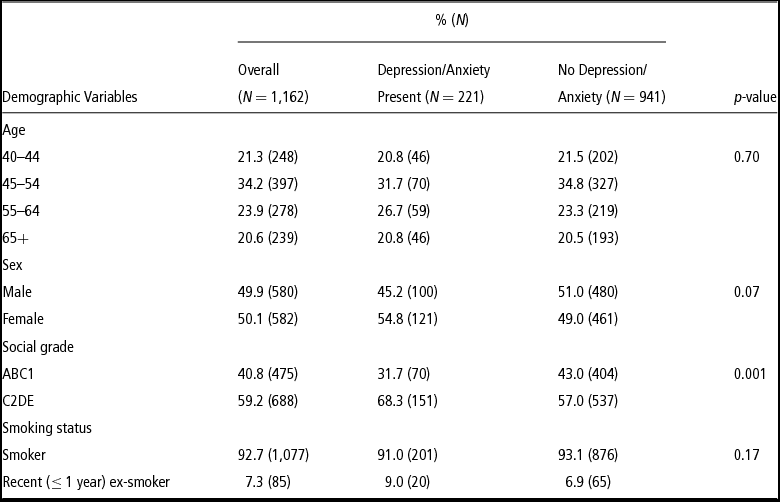
The analytic sample was equally balanced in terms of gender, and the majority were in social group C2DE (Table 1). The mean age of participants was 55 years (SD = 11.1), with an age range of 40–92 years. Depression/anxiety was reported by 19.0% of participants (95% C.I. = 16.9–21.4; N = 221), with 3.8% (95% C.I. = 2.9–5.2; N = 45) reporting ‘extreme’ anxiety/depression. Participants reporting depression/anxiety were more likely to be in a lower social group but no other statistically significant differences were found (Table 1).
Demographic characteristics, by mental health status (weighted)
Smoking Characteristics
The majority of participants (92.7%, 95% C.I. = 91.0–94.1) were current smokers. Overall, participants had low nicotine dependence and moderate motivation to quit (Table 2). In adjusted analysis, participants reporting depression/anxiety had greater nicotine dependence, as measured by HSI, and higher motivation to quit than participants without. No difference was found in relation to cigarette consumption or the number of quit attempts made in the past year (Table 2).
Motivation to quit, quit attempts and nicotine dependence, by mental health status

1 97 cases missing.
2 91 cases missing.
3 Adjusted for age, sex, social grade.
Depression/anxiety not present = reference group.
GP Advice and Use of Support
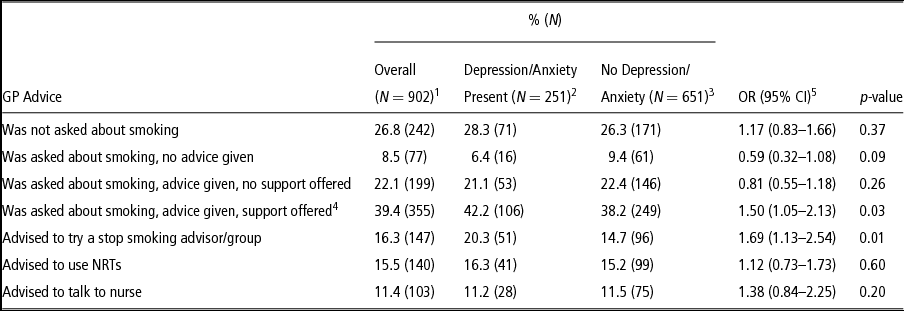
Over two thirds of participants had seen their GP in the past year (70%, 95% C.I. = 67.6–72.6; N = 902). Of these, over a quarter were not asked about their smoking habits, and around 20% were given advice to quit smoking but not offered any support (Table 3). In adjusted analysis, participants reporting depression/anxiety were more likely to have seen their GP in the past year than those without (83.4% vs. 66.1%, 95% C.I. = 1.8–3.6, p < .001). Of those who did visit their GP, participants reporting depression/anxiety were more likely to have been offered support, in particular, advice to try a stop-smoking advisor or group (Table 3). No other differences were significant.
Access to, and receipt of, GP advice in smokers, by mental health status
1 29 cases missing.
2 5 cases missing.
3 24 cases missing.
4 Participants could report one or more types of advice given.
5 Adjusted for age, sex, social grade.
Depression/anxiety not present = reference group.
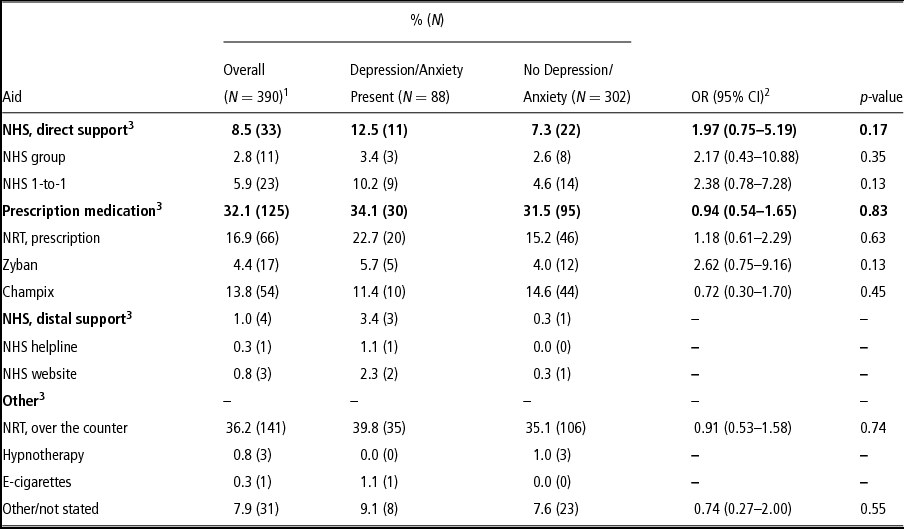
Of participants, 30.3% (N = 390, 95% C.I. = 30.9–36.3) had attempted to quit at least once within the past year; of these 28.0% (N = 116, 95% C.I. = 23.9–32.5) used ‘nothing’/’willpower’ in all of their quit attempts. In adjusted analysis, no significant differences were identified between participants reporting or not reporting depression/anxiety in the stop-smoking aids they had used (Table 4).
Use of stop-smoking aid over the past three quit attempts, by mental health status
1 Data were aggregated across three quit attempts, participants could select up to three options; 274 participants reported using aids in at least one quit attempt.
2 Adjusted for age, sex, social grade.
3 Bold indicates groupings of services below.
Depression/anxiety not present = reference group.
Discussion
Summary
In this study, we compared GP advice and stop-smoking aid use in current cigarette smokers and recent ex-smokers by depression/anxiety status. We identified that participants reporting depression/anxiety were more likely to have visited their doctors in the past year, and were more likely to have been offered support than smokers not reporting depression/anxiety. Use of stop-smoking aids among smokers and recent ex-smokers was low, and there were no significant differences recorded in stop-smoking aids used by depression/anxiety status – although this may be a type 2 statistical error. Participants reporting depression/anxiety were also shown to be more nicotine dependent than those without – as assessed by HSI, but not mean number of cigarettes smoked per day – and reported greater motivation to quit, but had a similar number of quit attempts over the past year.
Strengths and Limitations
This study reports novel findings regarding the communication between smokers and their GPs by self-reported mental health status, and the relationship between communication and service use, using an extensive population dataset. However, there are several limitations. First, we identified the presence of depression/anxiety using a single-item self-report measure. As such, prevalence may be inflated by adults experiencing border-line or mild depression/anxiety symptoms. This measure also asks participants to report their mental state on the day of data collection, rather than over a period of time and so may reflect situational distress rather than long-standing mental health conditions. Further analysis of these disorders by severity (for example, using the PHQ-9 (Kroenke & Spitzer, Reference Kroenke and Spitzer2002) and GAD-7 (Spitzer, Kroenke, Williams, & Löwe, Reference Spitzer, Kroenke, Williams and Löwe2006)) may offer a clearer picture of the extent to which mental health affects GP advice and stop-smoking aid use.
Second, as data were collected retrospectively, there is a danger that differential forgetting may account for some of the observed associations. Finally, as previously mentioned, our sample consisted predominantly of current smokers with low motivation to quit. Therefore, the homogeneity of the results may be a result of the population rather than a true lack of differences in behaviour by mental health status. This may be particularly limiting when considered in conjunction with the cross-sectional design of this study, which can cause self-selection issues, and the modest sample size, which limits our ability to detect subtle differences. Further longitudinal research in larger samples could elucidate this issue.
Comparison with Existing Literature
This study reports novel findings regarding the communication between smokers and their GPs by mental health status, using an extensive population dataset. Our findings are in agreement with a previous work, which has shown that smokers reporting depression/anxiety display stronger addiction to nicotine (Malpass & Higgs, Reference Malpass and Higgs2007; Marshall et al., Reference Marshall, Johnson, Bergman, Gibson and Zvolensky2009; Perkins et al., Reference Perkins, Karelitz, Giedgowd, Conklin and Sayette2010; Royal College of Physicians & Royal College of Psychiatrists, 2013; Weinberger et al., Reference Weinberger, Desal and McKee2010). We observed this association in relation to HSI score, which is a composite of cigarettes per day and time to first cigarette. The association was not evident on cigarettes per day alone, possibly because this may be driven by financial considerations rather than nicotine dependence alone. We also observed a similar number of quit attempts in current/recent ex-smokers with and without mental health problems, whereas previous research has reported a greater number of quit attempts amongst smokers with mental health issues (Zvolensky, Farris, Leventhal, Ditre, & Schmidt, Reference Zvolensky, Farris, Leventhal, Ditre and Schmidt2015). This discrepancy may reflect our specific study population, which mainly comprised smokers with low motivation to quit, as opposed to smokers seeking help to quit. As such, our results may reflect a population for whom tobacco control measures have, so far, had little impact. Previous research has suggested higher motivation to quit in smokers reporting depression/anxiety (Siru et al., Reference Siru, Hulse and Tait2009; Weinberger et al., Reference Weinberger, George and McKee2011). Our data support this observation but suggest that current smokers reporting depression/anxiety, despite being more motivated to quit, still show low overall motivation and do not attempt to quit at a higher rate than the general population of smokers. As such, they may require more support and encouragement from the health care system to follow through with quit plans.
Current/recent ex-smokers reporting depression/anxiety were more likely to have visited a doctor within the past year than those without, potentially in relation to their mental state and/or associated declines in overall health (De Hert et al., Reference De Hert, Cohen, Bobes, Cetkovich-Bakmas, Leucht and Ndetei2011; Hert et al., Reference Hert, Correl, Bobes, Cetkovich-Bakmas, Cohen and Asai2011; Musuuza et al., Reference Musuuza, Sherman, Knudsen, Sweeney, Tyler and Koroukian2013; Osborn et al., Reference Osborn, Levy, Nazareth, Petersen, Islam and King2007). The finding that there were no differences in GP's assessment of smoking status among those reporting or not reporting depression/anxiety contradicts earlier studies, which found that GPs are less likely to ask adults with mental health problems about their smoking because they believe that they are less likely to have the motivation or ability to quit (Prochaska et al., Reference Prochaska, Reyes, Schroeder, Daniels, Doederlein and Bergeson2011; Szatkowski & McNeill, Reference Szatkowski and McNeill2013). As such, the results shown here may reflect the positive outcomes of previous research and interventions (such as the Quality and Outcomes Framework) encouraging GPs to consider smoking-cessation advice for patients with mental health. Furthermore, this may explain the higher motivation to quit within this subpopulation. Alternatively, it may reflect the higher motivation to quit shown in the participants reporting depression/anxiety causing them to encourage active advice-giving behaviour in their GPs, or the short-term life of the depression/anxiety measure used. It may also be affected by an increase in comorbidities (not assessed here) in smokers reporting depression/anxiety triggering a discussion from their doctor.
Encouragingly, when stop-smoking advice was given, participants reporting depression/anxiety were more likely to be offered support than those without, with no other differences apparent in GP advice. This result contrasts with a previous work involving other health professionals, including specialist mental health care workers, who express substantial reservations about providing stop-smoking advice (McNeill & Shahab, Reference McNeill and Shahab2016). This may be due to a feeling of responsibility for physical health in GPs in which may not be the primary concern of mental health professionals. This is important, as research suggests that the effectiveness of stop-smoking advice alone is enhanced when an active offer of support is made (Aveyard et al., Reference Aveyard, Begh, Parsons and West2012). Providing advice, even if very brief, has been shown to boost quit rates (Roberts, Kerr, & Smith, Reference Roberts, Kerr and Smith2013; Stead et al., Reference Stead, Buitrago, Peciado, Sanchez, Hartmann-Boyce and Lancaster2013), and so these results are reassuring for the future uptake of smoking cessation in smokers with mental health issues.
However, no difference was found in actual use of support by mental health status. This may reflect the small number of participants who reported using stop-smoking aids. Alternatively, it may suggest a lack of enthusiasm for group support in those reporting depression/anxiety, or a lack of appropriate smoking-cessation material for adults feeling depressed/anxious within these groups (Gilbody et al., Reference Gilbody, Peckham, Man, Mitchell, Li and Becque2015; McNally & Ratschen, Reference McNally and Ratschen2010). Smokers reporting depression/anxiety may, for example, feel that their experiences are unrelated to those experienced by other smokers, or may feel daunted by the thought of expressing their problems in front of groups; although this has not been explored in the literature. Without further exploration of the factors driving the results presented here, it is unlikely that tobacco control measures will effectively reduce smoking rates in smokers reporting mental health issues.
Conclusions
This study presented evidence that smokers reporting depression/anxiety show greater motivation to quit but also experience stronger nicotine dependence than those without, and so are likely to require greater support to quit successfully. Although smokers who report anxiety or depression appear to be more likely to be offered stop-smoking support than other smokers, they are no more likely to take up the offer. Further tailored input may therefore be required to turn this offer of support into an actual use of stop-smoking aids.
Financial Support
We are grateful to Cancer Research UK and the British Heart Foundation for funding this analysis (C27061/A18679). The Smoking Toolkit Study is primarily funded by Cancer Research UK (C1417/A14135, C36048/A11654, C44576/A19501) and has previously also been funded by Pfizer, GSK and the Department of Health. JB's post is funded by a fellowship from the Society for the Study of Addiction and is also supported by CRUK (C1417/A14135). Robert West is funded by Cancer Research UK (C1417/A14135). LS is a HEFCE funded member of staff at University College London. JM is funded by an innovation grant from Cancer Research UK (C42785/A20811) and the National Centre for Smoking Cessation.
Conflict of Interest
LS has received an honorarium for a talk, an unrestricted research grant and travel expenses to attend meetings and workshops from Pfizer, a pharmaceutical company that makes smoking-cessation products, and has acted as paid reviewer for grant awarding bodies and as a paid consultant for health care companies. JB has received an unrestricted research grant from Pfizer to study population trends in smoking. RW has received travel funds and hospitality from, and undertaken research and consultancy for, pharmaceutical companies that manufacture or research products aimed at helping smokers to stop. The other authors have no conflicts of interest to declare.
Contributors
LS conceived the original idea for this study. RW obtained funding and JB managed the day-to-day running of the study. JM undertook the data analyses and wrote the initial draft with further input from LS, JB, RW and LB. JM is guarantor for this article. All authors read, reviewed and approved the final version. All researchers listed as authors are independent from the funders and all final decisions about the research were taken without constraint by the investigators. LS and JM had full access to all the data in the study and JM had final responsibility for the decision to submit for publication.
Ethical Standards
The authors assert that all procedures contributing to this work comply with the ethical standards of the relevant national and institutional committees on human experimentation and with the Helsinki Declaration of 1975, as revised in 2008.



