


Introduction
Globally, there has been remarkable progress in the use of family planning. Contraceptive prevalence – defined as the proportion of currently married women using any method of contraception – increased from 55% to 63% between 1990 and 2010 (Alkema et al., Reference Alkema, Kantorova, Menozzi and Biddlecom2013). Recent Demographic and Health Surveys (DHS) also show notable increases in contraceptive use in a number sub-Saharan Africa countries (Sharan et al., Reference Sharan, Ahmed, May and Soucat2011). Despite this increase, unintended pregnancy – pregnancies that are mistimed or unwanted at the time of conception – remains a major concern in many settings (Sedgh et al., Reference Sedgh, Singh and Hussain2014). Studies reveal that high rate of contraceptive discontinuation is a major contributor to unintended pregnancies (Davidson et al., Reference Davidson, Kalmuss, Cushman, Romero, Heartwell and Rulin1997; Fallon et al., Reference Fallon, Janine, Speizer and White2008; Curtis et al., Reference Curtis, Xe Evens and Sambisa2011). Dissatisfaction with the method and desire to get pregnant have been cited as main reasons for contraceptive discontinuation and non-use (Ali & Cleland, Reference Ali and Cleland1995; Ali et al., Reference Ali, Cleland and Shah2012). Analysis based on DHS also reveals a number of reasons why many women in low-income countries are not using contraception despite wanting to avoid a pregnancy (Sedgh et al., Reference Sedgh, Ashoford and Hussain2016). Women commonly cite dissatisfaction due to concerns about side-effects and health risks, such as menstrual disruption and infertility, and social network disapproval as some of the major reasons for contraceptive non-use.
There has been a growing interest in method-specific satisfaction for its potential to improve quality of family planning services (Rosenberg et al., Reference Rosenberg, Waugh and Burnhill1998). Direct measurement of overall satisfaction with a method is routinely used in clinical trials, acceptability studies and assessments of new service delivery approaches (Mitchel & Thistle, Reference Mitchel and Thistle2004; Hubacher et al., Reference Hubacher, Masaba, Manduku, Chen and Veena2015). However, it is rarely used in population-based studies. Instead, satisfaction with contraception is inferred from information routinely collected in DHS calendars on cause-specific discontinuation. Stopping a method because of side-effects, health concerns or a desire for a more effective method are typically grouped together as method-related reasons and interpreted as dissatisfaction (Ali & Cleland, Reference Ali and Cleland2010; Ali et al., Reference Ali, Cleland and Shah2012). While this interpretation seems logical, it relies totally on the validity of a single self-reported reason, which may not capture a blend of different motivations, nor does it tell us anything about the satisfaction of women who stop for other reasons such as desire for a pregnancy nor, indeed, of continuing users. Direct measurement of satisfaction thus complements data on discontinuation in understanding contraceptive choices and diffusion of views about methods in social networks, as found in a study conducted in rural Kenya (Rutenberg & Watkins, Reference Rutenberg and Watkins1997). Satisfied current and past users are likely to be the main drivers of method adoption by never users (Fisher & de Silva, Reference Fisher and De Silva1986).
Satisfaction may be asked of current and of past users of a method. Generally, most studies find that majorities of current users of a method claim to be satisfied (Rosenfeld et al., Reference Rosenfeld, Zahorik, Saint and Murphy1993; Oddens, Reference Oddens1999). A study by Oddens found that satisfaction was very high among current users of oral pills (83%), IUD (89%) and condoms (53%) (Oddens, Reference Oddens1999). This is unsurprising in view of the universal tendency to align attitudes to behaviour. Despite data showing that majorities of women prefer hormonal methods for their effectiveness and convenience, a large number of current users discontinue using them due to method-related factors. For example, according to the 2014 Kenya DHS report, the rates of all-cause 12-month discontinuation of pills and injectables in Kenya were 45% and 31%, respectively (KNBS et al., 2015). The same report showed that about half of discontinuers did so for method-related reasons. Thus the very high levels of satisfaction among current users reported in most studies may be misleading. Accordingly, this paper relies on the reported satisfaction of past users. However, the current beliefs and opinions about specific methods among past users are based on women’s own past experiences with the method. As a result, the findings may be affected by recall bias associated with information obtained retrospectively (Kopec & Esdaile, Reference Kopec and Esdaile1990).
In a country such as Kenya where use of reversible methods has been reasonably high for many years and where discontinuation is also common, past users tend to outnumber current users. Past users also constitute a high proportion of women with unmet need for family planning in sub-Saharan Africa (Jain et al., Reference Jain, Obare, Ramarao and Askew2013; Machiyama & Cleland, Reference Machiyama and Cleland2013). Research shows that satisfaction influences method choice, including the resumption of use of a method, switching, compliance and continuation (Peipert et al., Reference Peipert, Zhao, Allsworth, Petrosky, Madden, Eisenberg and Secura2011). However, evidence on factors associated with method-specific satisfaction among past users is limited. The evidence is particularly scarce for low-income countries where low contraceptive use, a high discontinuation rate and a low switching rate to alternative methods are major concerns.
This study examines factors associated with satisfaction with hormonal contraceptive methods among past users in Kenya. The focus is specifically on determinants of satisfaction with oral pills and injectables among married women aged 15–39 who have used them in the past but are no longer using them at the time of the survey. The study used data obtained from two different settings in Kenya – Nairobi (urban site) and Homa Bay county (rural site). Oral pills and injectables were selected for the study because they were two of the three most popular contraceptives in both sites (Machiyama et al., Reference Machiyama, Huda, Ahmmed, Odwe, Obare and Mumah2018). Past users of the two methods also outnumbered current users in the two study settings. In the urban site, past and current users of injectables comprised 43% and 31% of the total sample, respectively, while the corresponding estimates for pills were 31% and 8%. Similar relative magnitudes were observed in the rural site. Understanding the determinants of satisfaction with oral pills and injectables among past users is important for informing family planning programmes.
Methods
The analysis draws on a baseline survey for a 2-year prospective study entitled Improving Measurement of Unintended Pregnancy and Unmet Need for Family Planning, which aimed to advance knowledge of unmet need and unintended pregnancy, including contraceptive uptake and continuation. Detailed information on the background, rationale and study methodology is published elsewhere (Machiyama et al., Reference Machiyama, Casterline, Mumah, Huda, Obare and Odwe2017). The study was conducted between August and December 2016. Only married or co-habiting women aged between 15 and 39 years were eligible for inclusion. The upper age limit and enrolment of women in stable union was informed by the need to recruit women who were at potentially high risk of pregnancy during the observation period. The target sample size in each site was 2600 married women aged 15–39 years. The sample size was informed by the need to detect a 30% difference in reproductive outcomes (pregnancy, use and non-use of contraceptives) at 95% confidence level and 80% power with an assumption of 10% non-response rate (Fleiss et al., Reference Fleiss, Levin and Paik2013).
The study populations for the two sites were drawn using a different strategy. In the urban site, data collection was nested within the Nairobi Urban Health and Demographic Surveillance System – an on-going health and demographic surveillance site run by the African Population and Health Research Center. Data were obtained from two slum communities, Korogocho and Viwandani. A total of 5905 married or cohabiting women aged between 15 and 39 years were eligible for inclusion in the study. Out of these, 3093 women were randomly sampled. Interviews were completed with 2812 of the eligible women (1293 in Korogocho and 1519 in Viwandani) representing a 91% response rate. The final urban sample for analysis included 869 and 1218 past users of oral contraceptive pills and injectables, respectively.
In the rural site, participants were identified in two stages. The first stage involved a random sample of twelve sub-locations (the smallest administrative unit in Kenya) in each of three purposely identified sub-counties in Homa Bay County – namely Ndhiwa, Rachuonyo North and Rachuonyo South. All households in the selected sub-locations with currently married women aged 15–49 years were identified with the help of the local administration (village elders, sub-chiefs and chiefs). All individuals in those households were then listed to generate the sampling frame. In the second stage, a total of 3118 women aged 15–39 years were randomly sampled from among 5424 that were within that age range and were married at the time of listing. A total of 2424 women among sampled women completed the interviews, representing a 78% response rate. The final analytical sample comprised 576 and 1066 past users of oral contraceptive pills and injectables, respectively.
Face-to-face interviews of eligible women lasting an average of 45–60 minutes were conducted using a structured questionnaire. The questionnaire captured information on socio-demographic characteristics: contraceptive knowledge and use; reproduction; sexual activity; retrospective and prospective measures of fertility preferences; perceived partner’s fertility preferences; perceived risk of pregnancy; and generic attitudes towards pregnancy prevention. In addition, the study was innovative by including questions on method-specific beliefs and attitudes. A total of ten opinions and beliefs were ascertained for all women aware of each of six modern methods (pills, injectables, implants, IUD, condoms, female sterilization) and two traditional methods (rhythm and withdrawal). Specifically, respondents were asked whether, in their opinion, a particular method was easy to access, easy to use and effective at preventing pregnancy. Participants were also asked whether, in their opinion, use of a particular method was likely to cause health problems, unpleasant side-effects, interference with menstruation or infertility, and whether it was safe to use for a long period without taking a break. In addition, respondents were asked to indicate their opinion on husband’s/partner’s approval of the method, use of the method by members of social networks of friends, neighbours and relatives, and whether their network members were satisfied with the method if they had ever used it. The dependent variable ‘satisfaction with a method’ was measured directly by asking ever users the following question: ‘All things considered, were/are you satisfied or unsatisfied with using [METHOD]?’ Respondents were required to indicate whether they were satisfied, dissatisfied or had mixed feelings/neither satisfied nor dissatisfied. A binary variable was then created to capture satisfaction with a method, or otherwise.
Analysis controlled for socio-demographic factors: respondent’s age (continuous); level of education (coded as 1=no education/primary incomplete, 2=completed primary and 3=secondary and above); number of living children (continuous); fertility preference (coded as 1=wants a child soon/within 2 years/undecided, 2=wants a child but would like to wait for 2 or more years, 3=doesn’t want a/another child and 4=other (includes sterilized/cannot get pregnant/missing); and timing of last use (coded as 1=within last 3 years and 2=more than 3 years ago/do not know).
The analysis involved descriptive statistics, χ 2 tests and estimation of a multivariate logistic regression model examining variations in the likelihood of being satisfied with oral pills and injectable contraceptives among past users. For multivariate analysis, each attribute was coded in a binary manner such that the most positive response was categorized as 1, and 0 otherwise. For the rural sample, analysis took into account the sampling design by adjusting for clustering of individuals residing in the same village. Multivariate results are presented as adjusted odds ratios (AOR) with 95% confidence intervals (CI). Correlation and the Variance Inflation Factor (VIF) analyses were performed to check for multicollinearity and tolerance values of all attributes. There were no major multicollinearity problems associated with most attributes for oral pills and injectable contraceptives among past users (mean VIF range 1.13–1.18).
Results
Background characteristics
Table 1 presents a summary of the sample characteristics. In Homa Bay, the majority of past pill and injectable users were aged 30–34 years, had an average of 3–4 children and had no formal or incomplete primary schooling. In Nairobi, the majority of past pill and injectable users were aged 30–34 years, had 1–2 children and had completed primary school. About a third (between 30% and 41%) of past pill and injectable users in both sites did not want a/another child. The majority of past pill users had last used the method more than 3 years ago (52% in rural and 62% in urban) while the majority of past injectable users stopped using the method within the last 3 years (65% in rural and 54% in urban). Approximately 22% and 32% of past pill and injectable users, respectively, were not currently using any method. The results on current contraceptive use showed a tendency to switch to a more effective method among past users of pills and injectables in both sites – the majority of past pill users were using injectables (31% in Homa Bay and 36% in Nairobi) while the majority of past injectable users were using implants (29% in both sites). Implant use was also common among past pill users (21% in both sites).
Distribution (%) of characteristics of past users of pills and injectables, by rural/urban site
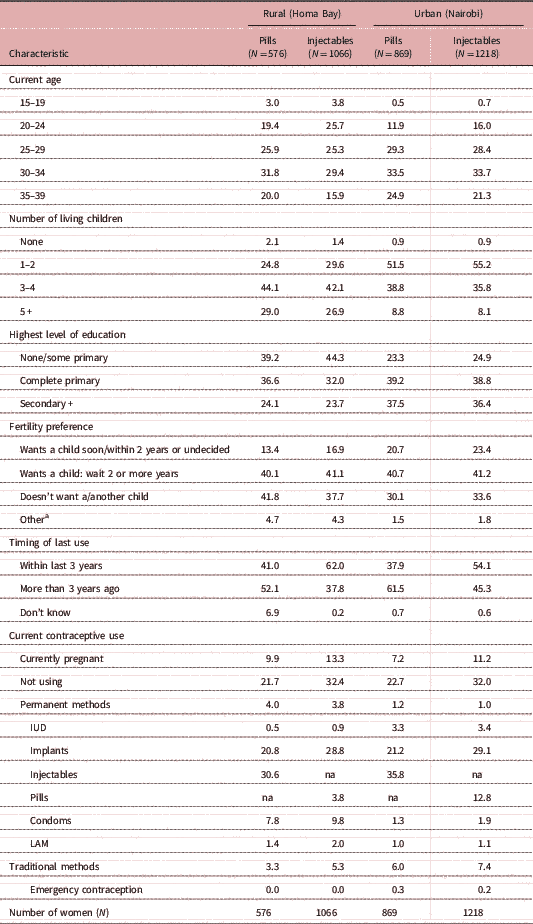
a Other includes women who were sterilized, those who indicated they cannot get pregnant and those who did not indicate their fertility preference.
LAM, Lactational amenorrhoea method; IUD, intra-uterine device; na, not applicable.
Levels of satisfaction/dissatisfaction
Table 2 presents the level of, and main reasons for, dissatisfaction with oral contraceptive pills and injectables among past users by site. The proportion of past users of pills who were dissatisfied with the method was significantly higher among women in the urban than the rural site (56% vs 44%). A similar difference was apparent for past injectable users (53% vs 39%). The results in Table 2 further show specific reasons for method dissatisfaction. In both sites, the majority of women were dissatisfied with injectables because of side-effects. Experience of irregular menstrual cycles was the second most cited reason for dissatisfaction with injectables, followed by concerns about health problems. These reasons were also common among dissatisfied past pill users across the two sites. In addition, appreciable proportions of women were dissatisfied with pills because they considered it was not an easy-to-use method (21% in rural site and 32% in urban site) or because they became pregnant while using it (19% in the rural and 11% in the urban). The results further show that few women (<10%) cited opposition of partners or others, lack of access, expense or stock-outs as a reason for dissatisfaction with pills or injectables.
Level of, and main reasons for, dissatisfaction with pills and injectables among past users by rural/urban site
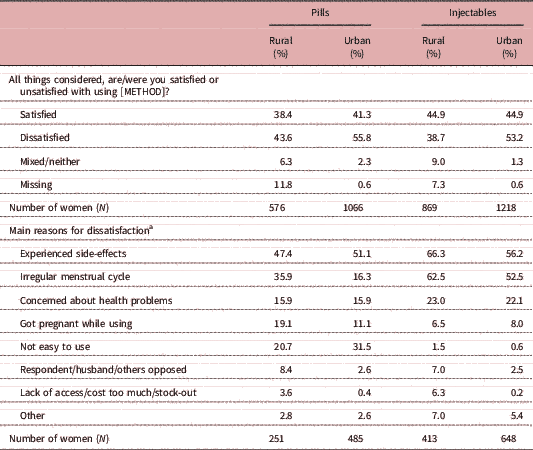
a Multiple responses were allowed.
Opinions and attitudes towards oral pills
Analysis of opinions about pills showed profound differences between satisfied and dissatisfied past users in both the rural and urban sites (Table 3). In general, satisfied past users of pills were significantly more likely than those dissatisfied to report positive attributes about pills and less likely to report negative beliefs. The contrasts between satisfied and dissatisfied users were particularly pronounced for beliefs about ease of use, effectiveness and likelihood of causing serious health problems, side-effects and menstrual disruption. Conversely, satisfaction was unrelated to ease of access and only small minorities of either satisfied or dissatisfied users expressed concerns about permanent damage to future childbearing. The single largest difference between rural and urban respondents related to beliefs about serious health problems; such concerns were much more common in the rural than in the urban site, among both satisfied and dissatisfied users.
Opinions and attitudes towards pills among satisfied and dissatisfied past pill users by rural/urban site
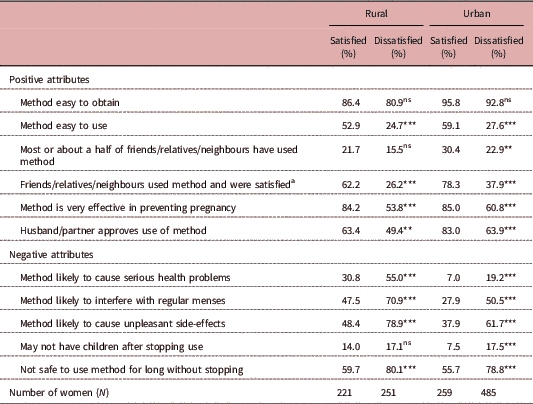
Respondents who indicated ‘mixed/neither’ to the question on satisfaction were excluded.
a Only includes respondents whose friends/relatives/neighbours had used the method.
***p<0.001; **p<0.01; *p<0.05; ns not significant.
Opinions and attitudes towards injectables
Table 4 presents opinions and attitudes towards injectables among satisfied and dissatisfied past users by site. As in the case of pill users, satisfied injectable users judged the method more positively on every attribute than did dissatisfied users. Differences were relatively small for ease of access, ease of use, effectiveness, perceived prevalence of use in social networks and concerns about fertility impairment. Conversely, they were particularly large for perceived likelihood of serious health problems, menstrual interference and unpleasant side-effects. Compared with past pill users, injectable users, both satisfied and dissatisfied, were more likely to rate their method as easy to use and effective, but more likely to cause menstrual disturbance. In the urban but not the rural site, injectable users were more concerned about fertility impairment than pill users.
Opinions and attitudes towards injectables among satisfied and dissatisfied past users by rural/urban site
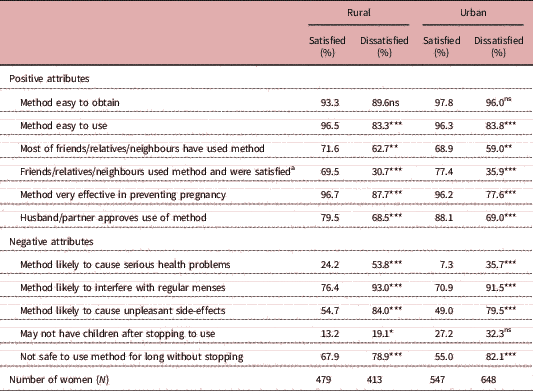
Respondents who indicated ‘mixed/neither’ to the question on satisfaction were excluded.
a Only includes respondents whose friends/relatives/neighbours had used the method.
***p<0.001; **p<0.01; *p<0.05; ns not significant.
Multivariate analysis
Multivariate logistic regression was used to explore the relative contribution of the variation in each opinion and belief on the satisfaction score among past users when all the attributes were considered together. As shown in Table 5, satisfaction with oral contraceptive pills among respondents in the rural site was more likely for those reporting that the method was effective in preventing pregnancy (AOR 3.16, CI=1.96–5.08), easy to use (AOR 2.14, CI=1.39–3.310) and safe to use for a long time without stopping (AOR 1.97, CI=1.26–3.08). Furthermore, satisfaction with pills was 1.74 and 1.82 times more likely, respectively, among women who perceived that the pill does not cause side-effects or interfere with the menstrual cycle compared with those who felt otherwise. However, ease of access, belief that the method might cause serious health problems or permanent infertility and husband’s approval were not significantly related to satisfaction. Similar results were obtained in the urban site. Two major differences between sites are apparent. In the urban but not the rural site, concerns about serious health problems and perceived husband’s approval of the method were significant predictors of satisfaction.
Multivariate logistic regression model examining variations in the likelihood of satisfaction with oral contraceptive pill among past users by rural/urban site
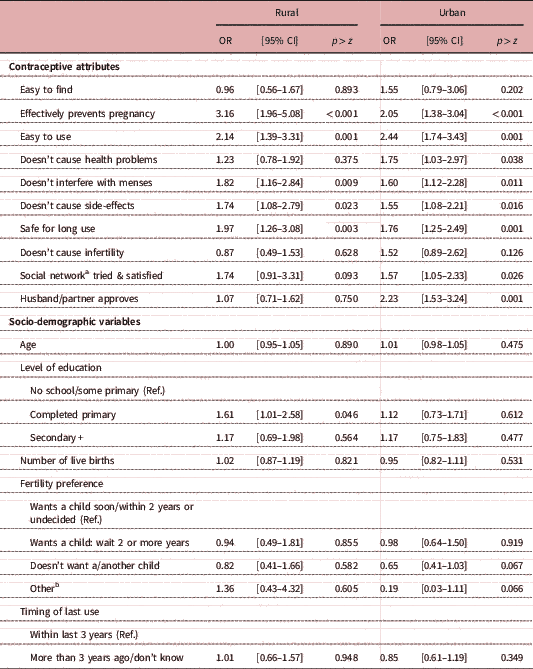
a Social network includes friends, relatives and neighbours.
b Other includes women who were sterilized, those who indicated they cannot get pregnant and those who did not indicate their fertility preference.
Ref.: Reference category; CI: confidence interval.
Table 6 presents the results of the multivariate logistic regression model examining variations in the likelihood of satisfaction with injectables among past users by site. Perception of effectiveness in preventing pregnancy, ease of use, absence of unpleasant side-effects and satisfied use by social networks were the most powerful predictors of satisfaction with injectables in the rural site (OR range between 2.44 and 2.78). Furthermore, satisfaction with injectables was more likely among past users who perceived that it does not cause serious health problems (OR=1.55, CI=1.11–2.18), interfere with menses (OR=1.86, CI=1.15–3.01), cause infertility (OR=1.64, CI=1.08–2.51) and that their husband/partner approves (OR=1.49, CI=1.05–2.12). A similar pattern of result was apparent in the urban site, where absence of serious health concerns and the perception of widespread satisfactory use among friends, neighbours and relatives emerged as the most powerful predictors (ORs of 3.25 and 3.28, respectively). Unlike in the rural site, past injectable users who perceived that the method was safe to use for a long period of time were more likely to be satisfied (OR=2.25, CI=1.65–3.07) than those who felt otherwise.
Multivariate logistic regression model examining variations in the likelihood of satisfaction with injectables among past users by rural/urban site
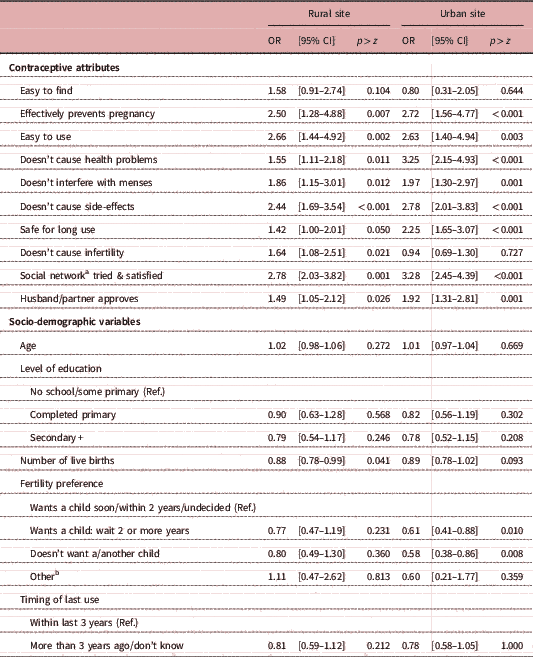
a Social network includes friends, relatives and neighbours.
b Other includes women who were sterilized, those who indicated they cannot get pregnant and those who did not indicate their fertility preference.
Ref.: Reference category; CI: confidence interval.
Discussion
This study examined factors influencing satisfaction with oral contraceptive pills and injectables among past users in rural and urban settings in Kenya. It specifically focused on women’s opinions and beliefs on contraceptive attributes that may be associated with satisfaction among past users of oral contraceptive pills and injectables. The decision to omit examination of satisfaction among current users was based on the fact that the very high levels of satisfaction (around 90% for injectable users in both sites and pill users in Nairobi in the current study) are likely to be misleading. Moreover, past users outnumber current users and thus their evaluations of methods may be a key influence on the general climate of opinion on specific methods in communities, thereby influencing method-specific adoption and perhaps continuation. Further analysis revealed statistically insignificant variation in socio-demographic characteristics (age, level of education and fertility preference) between current and past users of pills and injectables in both sites (results not shown). The findings contribute to the literature on predictors of method-specific satisfaction and contraceptive continuation.
The level of satisfaction among past users was remarkably similar across the two methods in both sites, ranging from 38% to 45%. Comparable population-based data are unavailable for sub-Saharan Africa but these estimates are consistent with discontinuation rates for pills and injectables in the region. They are also broadly similar to estimates from Europe and USA. For example, a German study found a level of 58% satisfaction among past users of oral contraceptives (Oddens, Reference Oddens1999) while similar levels may be inferred from a study in the USA for oral contraception and injectable users (Peipert et al., Reference Peipert, Zhao, Allsworth, Petrosky, Madden, Eisenberg and Secura2011).
As expected, the results showed widespread differences in opinions about pills and injectables between satisfied and dissatisfied past users. For both methods, these differences were particularly pronounced for beliefs about the likelihood of serious health problems, unpleasant side-effects and menstrual disruption. Again, the findings are consistent with abundant evidence on self-reported reasons for discontinuation (Trlin & Perry, Reference Trlin and Perry1982). However, it is of interest that substantial proportions of satisfied past users, ranging from 38% to 55%, associated the method with unpleasant side-effects and the majority believed that prolonged use without taking a break would be unsafe. In Homa Bay, but not in the Nairobi site, the belief among satisfied past users that the method is likely to cause serious health problems was common: 24% for injectables and 31% for pills. Clearly, overall satisfaction with a method can co-exist with negative beliefs, either based on experience, such as side-effects, or on unfounded fears, as in the case of serious health problems or the dangers of prolonged use.
These simple descriptive results provide a valuable insight into the contraceptive culture of Kenya. Contraceptive practice is well established in the slums of Nairobi and has increased rapidly in Homa Bay. In both sites, injectables are the most commonly used method. Yet even this method is viewed with a degree of fear and suspicion. Clear majorities, both among satisfied and dissatisfied users, believe that prolonged use is unsafe and substantial minorities think that it is likely to cause serious health problems. While the growing imperative to regulate childbearing can stifle these concerns, the results suggest that commitment to the method may be shallow, with the consequence that discontinuation is high.
These results may also be relevant to an understanding of reproductive change in West Africa, where urban fertility has declined substantially with a concomitant rise in modern method use (Askew et al., Reference Askew, Maggwa and Obare2017). In Accra, for instance, well-educated urban women are achieving small families with a blend of less effective, but perhaps less-threatening methods such as periodic abstinence, withdrawal and condoms with backup from emergency contraception, rather than from readily available highly effective methods, such as injectables (Marston et al., Reference Marston, Renedo, Nyaaba, Machiyama, Tapsoba and Cleland2017). The concerns about hormonal methods among women in Accra and elsewhere in the cities of West Africa may well prove to be similar to those expressed by Nairobi women.
The multivariate results shed more light on the predictors of satisfaction with pills and injectables among past users. Attributes such as accessibility, and fears about infertility, generally had no influence on satisfaction with either method in either the rural or urban site. For both methods, perceived effectiveness and ease of use were strong predictors of satisfaction in both sites. However, past users, in general, were less likely to rate pills as effective and easy to use than injectables and this difference helps to explain the higher levels of use of injectables than pills in both sites. Previous studies show that dissatisfaction with the contraceptive pill is common due to accidental pregnancy attributed to non-compliance (Rosenberg et al., Reference Rosenberg, Waugh and Burnhill1998; Hooper, Reference Hooper2010). For the pill, the predictive strengths of other beliefs, though statistically significant in some cases, were relatively weak compared with ease of use and perceived effectiveness, with the exception of views about the safety of long-term use and, in Nairobi, of husband’s approval.
Interpretation of results is complex for injectables. Most beliefs about the attributes of this method had strong effects on satisfaction and no decisive influence could be identified. Furthermore, the effects were generally similar across the sites, though health concerns and perceived safety of long-term use appeared to be more important in the urban than the rural site.
One major difference between the results for pills and injectables was the effect on satisfaction of perceived social network experience, which was much stronger for injectables than for pills. The results for injectables are consistent with a large body of previous research showing that an individual’s contraceptive behaviour is heavily influenced by the experiences and views of friends, neighbours and relatives (Behrman et al., Reference Behrman, Kohler and Watkins2002; Yee & Simon, Reference Yee and Simon2010). A large number of satisfied users may affect uptake of a method among never users and continuation of current users by transmitting positive information. The power of social influence goes a long way to explaining the narrow method-mix in many countries. Most women are not autonomous in their decisions to start a contraceptive method. On the contrary, their natural preference is for a familiar method that has been used successfully by friends, neighbours or relatives. This interpretation is consistent with qualitative evidence for Kenya (Rutenberg & Watkins, Reference Rutenberg and Watkins1997). While women respect the information given by family planning providers, their contraceptive choices are largely determined on the basis of conversations with friends. Why the social network effect was much weaker for pills is unclear but may simply reflect the fact that pill use was much less common than injectable use in both sites.
Socio-demographic factors – age, number of living children, level of education and duration since last time respondents used a method – had insignificant effects on satisfaction with oral contraceptive pills and injectables in both the rural and urban samples. In contrast, much of the literature on contraceptive use and method choice has documented large effects of demographic and social factors, such as age, parity and schooling. The implication of this surprising result is that the effects of these perceived contraceptive attributes are uniform across major strata of the population.
The study has some limitations. Satisfaction is a subjective judgment, hence some women may have indicated dissatisfied with a method due to a strong preference for another method, or because they are unlikely to use the concerned method in the future. Another limitation could be attributed to the ‘halo effect’, that is, the tendency to evaluate specific attributes of a person (in this case, a method) based on an overall judgment (Van Doorn, Reference Van Doorn2008). It is also possible that dissatisfaction with a method may be underestimated given a tendency to give positive responses during interviews. The analysis did not take into account current contraceptive use status among past users though there is a possibility that dissatisfaction among past users is conditional on current use status. The omission of current use status was deliberate since evaluating its effect was beyond the scope of the current study. Despite the aforementioned limitations, relying on past users provides a sizeable number of dissatisfied ever users of a method that is rarely found among current users.
In conclusion, prior evidence from population-based studies in Africa on method-specific satisfaction is rare and, to the authors’ knowledge, no study in the region has measured in such detail beliefs about methods or attempted to investigate links between these beliefs and overall satisfaction. The findings are broadly consistent with the literature from industrialized countries on method satisfaction. Dissatisfaction with pills and injectables is common among past users in both rural and urban Kenya mainly due to health-related concerns. Worries about impairment of childbearing did not emerge as a major influence on satisfaction but doubts about the safety of prolonged use were more important. Some negative and erroneous perceptions can be addressed by targeted counselling or wider community-based communication efforts. Other negative perceptions, such as unpleasant side-effects and menstrual disruption, are based on individual experience and cannot easily be addressed by counselling, education or communication.
Acknowledgments
The authors are indebted to the women who participated in this study and the team members who worked at the two study sites, Nairobi and Homa-Bay, and at APHRC, and Population Council, Kenya. The authors would like to thank the members of the STEP UP Consortium Advisory Group and Senior Management Team for their invaluable feedback in the design and implementation of the study.
Ethical Approval
The authors assert that all procedures contributing to this work comply with the ethical standards of the relevant national and institutional committees on human experimentation and with the Helsinki Declaration of 1975, as revised in 2008. Ethical approval for the study was obtained from the Institutional Review Boards of the London School of Hygiene and Tropical Medicine and Population Council, as well as from the AMREF Ethics and Scientific Review Committee for the Nairobi site and Kenyatta National Hospital-University of Nairobi Ethics and Research Committee for the Homa-Bay site.
Conflicts of Interest
The authors have no conflicts of interest to declare.
Funding
The Improving Measurement of Unintended Pregnancy and Unmet Need for Family Planning study was funded by the Department for International Development (DfID) through the STEP UP (Strengthening Evidence for Programming on Unintended Pregnancy) Research Consortium.


 Open access

