



Introduction
Sensory impairment can affect any age group, and it is identified as one of the most common chronic conditions of later life (Brennan et al., Reference Brennan, Horowitz and Ya-ping2004), with unequivocal evidence that sensory impairment and associated disability increase with age (Access Economics, 2009). Sensory impairment describes people living with a range of impairments, and for this study includes people with varying degrees of hearing loss, sight loss and loss of both senses [Scottish Government (SG), 2013]. As the prevalence of sight and hearing loss increases with age, the number of people in the United Kingdom with sensory loss will rise dramatically. Almost 2 million people in the United Kingdom live with sight loss and this is predicted to reach 4 million by 2050 (Access Economics, 2009). Hearing loss affects over 10 million people in the United Kingdom (Action on Hearing Loss, 2011), and dual sensory impairment (DSI) or deaf-blindness, which is concurrent loss of both vision and hearing, affects between 5% and 9% of older adults (Lin et al., Reference Lin, Gutierrez, Stone, Yaffe, Ensrud, Fink, Sarkisian, Coleman and Mangione2004).
People with disabilities, including those with a sensory impairment, have poorer health outcomes, lower educational achievements, less economic participation and higher rates of poverty than people without a disability [World Health Organisation (WHO), 2011]. Sensory impairment has been associated with cognitive and functional decline (Brennan et al., Reference Brennan, Horowitz and Ya-ping2004; Schneider et al., Reference Schneider, Gopinath, McMahon, Leeder, Mitchell and Wang2011), interfering with everyday competence and individuals’ ability to carry out activities of daily living (Brennan et al., Reference Brennan, Horowitz and Ya-ping2004; Chia et al., Reference Chia, Mitchell, Rochtchina, Foran, Golding and Wang2006; Tay et al., Reference Tay, Wang, Kindley, Chia, Landay, Ingham and Mitchell2007; Gopinath et al., Reference Gopinath, Schneider, Hickson, McMahon, Burlutsky, Leeder and Mitchell2012b). Impairment impacts negatively on a person’s independence by increasing reliance on community and/or family support and contributes to risk factors that predispose to accidental injury or harm (Brennan et al., Reference Brennan, Ya-ping and Horowitz2006; McManus and Lord, Reference McManus and Lord2012). For example, older people with dual sensory impairment are more likely to have falls than people with visual impairment only (Crews and Campbell, Reference Crews and Campbell2004). Interventions to prevent falls are recommended through appropriate multi-disciplinary assessment (Royal National Institute of Blind People, 2010). Hidden and/or untreated sensory loss affects quality of life by impeding recreational activities (Steinman and Allen, Reference Steinman and Allen2012) and leads to withdrawal from social interaction, with nearly half of blind and partially sighted people feeling ‘moderately’ or ‘completely’ cut-off from people and things around them (Pey et al., Reference Pey, Nzegwu and Dooley2007). The impact of visual and hearing impairment on depression are well-established (Evans et al., Reference Evans, Fletcher and Wormald2007; Chou, Reference Chou2008), and self-reported depressive symptoms occur more often among older people with DSI compared with their non-sensory-impaired peers (Schneider et al., 2011). To a person with dementia, failure to recognise and respond to sensory loss results in greater isolation and failure to respond appropriately to basic physical needs (SG, 2013).
Given the projected increase in the incidence of sensory impairment and its strong correlation to isolation and disability, it is important to evaluate strategies that have the potential to reduce the negative impact of impairment. Studies have shown that hearing aids can improve social and emotional function, communication and reduce depression (Mulrow et al., Reference Mulrow, Aguilar, Endicott, Tuley, Velez and Charlip1990) and disability (Vuorialho et al., Reference Vuorialho, Karinen and Sorri2006). Within the United Kingdom, access to information and specialist services is recommended as an important aspect of service provision to support people with sensory impairments (UK Vision Strategy 2013–2018; SG, 2004; 2013). Guidance sets out key outcomes for people with sensory impairment and stresses the importance of assessment for deaf, visually impaired and dual sensory impaired people as well as robust reporting and monitoring procedures (SG, 2004; 2013).
The Scottish Government has piloted a sensory impairment ‘one-stop shop’ approach to service delivery in 10 locations throughout Scotland. The aim is to shift service delivery away from General Practitioners and hospitals, reducing pressure at these points, into a model where services can be delivered locally at a single access point, with expert support, advice and information provided within the same location. Although there may be local variations, there is a focus on rehabilitation and enablement of people who have vision and/or hearing impairment through provision of wide-ranging support services, which, for example, include specialist assessment, advice, service referral and access to specialist equipment, adapted information material and interpreting services.
The Scottish Government funded a new service for people with sensory impairment in the Western Isles of Scotland. Ensuring availability of services in rural and remote communities and raising awareness about the services to those who need them most is essential to support people with sensory impairment (WHO, 2011). The Western Isles Sensory Centre (WISC) opened in 2011 and provides advice, assessment, referrals and practical interventions to support independent living for people with sensory impairments living in this remote and rural part of Scotland. Working in partnership with health, social and voluntary agencies (eg, Sight Action), the WISC aims to provide effective, equitable and sensitive services to meet the needs of visually and/or hearing-impaired people.
There is clearly a gap in knowledge and limited research regarding how or whether older people with visual and/or hearing loss living in rural locations access support and interventions that may help prevent or treat the debilitating effects of such impairments. The reasons for this may be two-fold. First, it is recognised that in older adults with potentially many age-related problems including sensory impairment, their ability to complete a survey and participate in research is reduced. Second, recruiting older adults to participate in research from rural locations may be challenging due to less exposure to and knowledge of research (Edelman et al., Reference Edelman, Yang, Guymon and Olson2013). It has also been proposed that rural residents may have a mistrust of outsiders that can decrease any willingness to take part in postal surveys (Dibartolo and McCrone, Reference Dibartolo and McCrone2003; Loftin et al., Reference Loftin, Barnett, Bunn and Sullivan2005).
This is the first study to assess such an approach to service delivery in people with sensory impairment living in a remote Scottish location. The overall aim of this study was to evaluate the impact, if any, that the WISC had made on those who had attended. The specific objectives were to establish the demographic profile of the clients using the WISC and to detail the nature of the sensory impairment, the accessibility of the WISC and to determine the clients’ overall satisfaction with the service they received and the difference, if any, that the WISC had on their lives.
Methods
A mixed-methods approach using quantitative and qualitative methods for data collection was used in this study. Only clients attending for their first visit or having an initial interaction with the WISC were included. There were no other exclusion criteria. The questionnaire used was original, developed for this study to specifically ascertain the experience of clients who accessed the WISC (Smith et al., Reference Smith, Shepherd and Jepson2013). Existing self-rated measures that assess sensory impairment and functional ability were not used, as they excluded service user views or sought information that was not relevant for this study. The questionnaire was developed with the help of sensory support staff to ensure that the questions addressed the key purpose and outcomes of the sensory service. Questionnaire text was presented in a format suitable for people with sensory impairment in a large, simple style font size (size 16) using bold type and presented on white paper. The questionnaire was piloted with the ‘Sensory User Forum’ to ensure questions were legible, relevant and clear. In total, there were 13 questions, 10 of which had a response option (including ‘other’). The questionnaire covered the following areas: demographic characteristics (gender, age); reasons for accessing the centre (clients were asked whether their sensory impairment was visual, hearing, dual or if they had been referred); and type of interaction with WISC staff (in person, phone or email), how they had become aware of the WISC, accessibility of the WISC, their rating of the service offered and the impact (if any) of the service on their daily activities.
The questionnaire was disseminated by the WISC staff to clients at the end of any visit. Those who had contacted the WISC by phone or email were sent the questionnaire by post. Clients were asked to return the questionnaire in the stamped addressed envelope provided. At the end of the questionnaire, clients were asked whether they would be willing to participate in either face-to-face or telephone interviews to gain a deeper understanding of their experience of using the WISC. The Statistical Package for the Social Sciences 19 (IBM SPSS, Armonk, New York, United States) was used and descriptive statistics were computed to summarise data.
The qualitative element involved one-to-one in-depth interviews with clients. From the 47 completed and returned questionnaires, 17 people agreed to be interviewed. A purposive sample of 12 clients was invited to be interviewed at their home or by telephone. Participants were chosen to ensure a geographical spread from across the Western Isles and to ensure a representation of people with hearing, visual or dual sensory impairment. As the population in the Western Isles is widely dispersed, it was important to gain the views of clients who lived at a distance from the centre to ascertain whether the service met their needs. Interviews were audio-recorded and transcribed verbatim. To minimise variation, all interviews were undertaken by one interviewer. Using semi-structured interviews, clients were interviewed for ~30–40 min and were asked to describe their experience of living with a sensory impairment, attending the WISC, the assistance they had been given and whether any interventions provided had affected their daily living activities. The transcripts were analysed using a framework approach (Ritchie and Spencer, Reference Ritchie and Spencer1994) to answer our key research question: ‘what impact had attending the WISC had on clients’ daily lives’? Analysis was conducted by two researchers (A.S. and A.Sh.) and consensus was reached on key themes. Data were anonymised to protect participants’ identities.
Information sheets about the research were provided to a range of healthcare, social-care and third-sector care professionals in hospitals and primary care settings who have direct contact with people with sensory impairment, and were invited to participate in individual interviews. Interviews were subsequently held with seven professionals to ascertain their awareness and use of the WISC. Interviewees included hospital senior charge nurse; community nurse; social-care assessor; representative from third-sector careline services (community alarm system providing remote call handling and response); occupational therapist; audiologist; and a general practitioner.
Ethics approval for this study was granted from the School of Health Sciences, University of Stirling Ethics Committee.
Results
Of the 106 questionnaires that were sent to WISC clients, 47 were returned (46%). Two of these were blank, and therefore were not included in the analysis. The age and gender of the participants who completed the questionnaire are detailed in Table 1. In total, seven women and five men participated in the interviews; their age ranged from 61 to 85 years, seven people indicated that they had a hearing impairment, four people a visual impairment and one person indicated that they experienced DSI.
Gender and age of survey participants
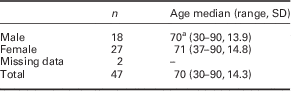
a 1 male participant did not record age.
Clients were asked to provide the main reason for attending the WISC. For the majority this was due to hearing difficulties (n=25, 53.2%) followed by visual problems (n=8, 17%) or both hearing and visual problems (n=6, 12.8%). Two clients (4.3%) indicated that their main reason for attendance had been that they were referred but they did not state why and six clients (12.8%) did not specify the reason. Half of the clients (50%) who attended lived in the same town as the WISC, with a further 23.9% living between 4 and 30 miles away. A further 26.1% lived on a number of different islands in the Western Isles. Almost 90% of clients indicated that they had no problems accessing the centre with 77.8% attending in person (Table 2).
Reason for attending the centre, access and initial contact
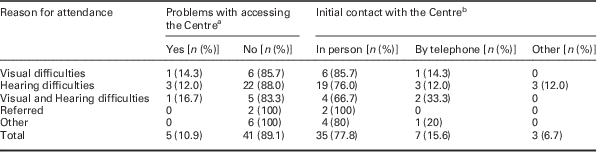
a 46 participants answered this question.
b 45 participants answered this question.
Data analysis from the questionnaires and interviews generated a number of themes that included the following: the impact of sensory impairment on the individual; the need for support; contact with WISC; impact of the service on daily living activities; early intervention; and suggestions for service improvement.
The impact of sensory impairment on the individual
Clients described in some detail the impact their sensory impairment had on their lives and the reasons for them seeking advice and help from the WISC. The decision to seek help was often triggered by problems encountered in individuals working lives. For those with hearing impairments, phone communication was often problematic, especially if this was an essential component of their work. The frustration felt was evident:
‘I can’t hear the phone at work, I can’t answer it when it rings and hear who is speaking’. (client 2, female)
‘I can hear voices but can’t distinguish the words; I cannot understand and end up hanging up’. (client 4, male)
The inability to hear alarm clocks led to concerns of being late for work and other appointments. Difficulties were also noted in terms of home life. Being unable to hear doorbells meant that people missed callers or restricted their movements and activities in the home and garden to avoid missing a visitor. Clients also expressed significant anxiety about their personal safety, both in and outside their home. Notably, the inability to hear smoke detectors caused concern
‘My particular problem was the smoke alarms at home I can’t hear them at night. You take out your hearing aid you can’t hear the smoke alarms going off’. (client 12, male)
‘Before this I had black eyes from bumping into things, and knocking into people or knocking over display stands. I was burning myself’. (client 6, female)
The impact of deafness on personal relationships was also noted:
‘I think there must be a huge army of people who are in desperate states because their domestic family situation is being placed in some cases at risk, because the other member of the family is constantly saying, what? Speak up [...] I’m sure in some cases that when you take all the other flashpoints in a relationship into account deafness may be the one that tips the balance’. (client 12, male)
Clients also spoke of the sense of isolation that they experienced when others were unaware of their hearing impairment. They indicated how cumulative challenges of hearing impairment negatively impacted on their general well-being:
‘I am gregarious but with poor hearing, it isolates you and you begin to get a bit tired of saying ‘pardon, what did you say?[...]I think most people close in on themselves, they don’t relate’. (client 11, male)
‘I suppose it is well recognised that deaf people get depressed and their deafness just gets on top of them’. (client 12, male)
All the healthcare and social-care professionals interviewed described regular encounters with people with sensory impairments, although this may not normally have been the primary reason for a consultation. There was consensus that professionals were mostly aware of people with hearing impairments, and estimates ranged from 50% (community nurse) to 70% (social-care assessor) of patients or clients; estimates for visual impairments were lower across all professional groups (20%). There was considerable awareness among professionals of the life limiting effects of sensory impairments, and examples were provided where professionals observed that patients or clients had significantly altered lives as a result.
The need for support
Clients spoke of the attitudes they had encountered from other people with sensory impairment who, they suggested, seemed reluctant to access further help or support. For example, one client described how they had tried to promote awareness of the WISC with a friend but had come up against a ‘brick wall’ as their friends’ medical intervention had ended and the friend decided that ‘nothing else could be done’. Another client described the sense of fatalism from other people about sensory decline, and suggested that people assumed that ‘deafness is one of those things and nothing can be done’. Both clients, healthcare and social-care professionals noted that it was not unusual for them to encounter people who had hearing aids fitted but then had not used them. Interestingly, in the interviews, both clients and professionals made a number of references to hearing aids that ‘sat unused in drawers’.
Healthcare and social-care professionals described how, in their experience, socially isolated individuals often were least likely to contact others for help, consequently exacerbating their degree of social isolation. They also suggested that people whom they cared for with sensory impairments could also be reticent about seeking further support and it was suggested that there was difficulty in getting older people to work with outside agencies. However, the importance of information provision about sensory services was identified to ensure people could make informed decisions about accessing the service – for example, one professional noted:
‘It’s not about forcing equipment on people, but it is letting them know they are there, and that it should not be the isolating condition it once was’. (client 1, female)
Contact with the WISC
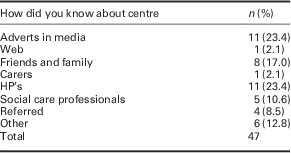
Clients were made aware of the WISC from a number of sources, with adverts in the media and information from Health Professionals being the main sources identified (Table 3). The level of awareness by healthcare and social-care professionals about the WISC and the services offered was variable, ranging from a good level of service awareness to limited knowledge about services, and this was most evident with the nurses interviewed.
Participants’ awareness of the centre
Clients were asked to give their satisfaction rating on three specific aspects of the WISC service on a scale of ‘very well’ to ‘very poor’ with a further option of ‘did not have this need’. The ratings for the various statements are shown in Table 4.
Satisfaction with service delivery

Clients were asked to give an overall rating of the service they had been offered by the WISC from excellent to very poor. In general, the service was rated favourably with 89% of clients rating the service as either excellent or very good, 4% as average and 2% as poor.
The clients expressed a high level of satisfaction with the service they received, and in particular valued the way in which WISC staff demonstrated both insight into their condition and empathy with the challenges experienced from their sensory impairment:
‘It is difficult to explain but it is a joy to go in [...] one automatically thinks you are talking to empathetic people who understands where you are coming from’ (client 12, male)
‘I have tunnel vision – was seeing my doctor and although helpful and sympathetic were not the experts […] they really understood the implications of my sight problem’ (client 6, female)
‘They recognise that it is just not a case of putting equipment in, but that there may be underlying conditions like arthritis and take that into account […] I would say there is a very holistic approach’. (client 5, male)
A further important consideration for some clients, particularly those with visual impairment was the anticipatory aspect of care provision provided:
‘When you lose your central vision, someone at the centre can talk about it, tells what is going to happen […] visual loss is gradual and the supports can be there from the beginning’ (client 9, male,)
‘My eyesight is also getting worse […] it is nice to know that there is somewhere I can go to get advice’ (client 3, male)
Impact of the service on daily living activities
When survey participants were asked how input from the WISC had affected their ability to participate in activities, 51.1% (n=24) indicated that the advice/interventions allowed them to take part in activities that previously they were not able to. Approximately a third of participants (n=18, 38.3%) responded that input from the WISC had no significant impact on their activities, and a further five participants (10.6%) did not answer this question.
During the interviews, clients expanded on the impact of WISC interventions on aspects of their lives. There was evidence that some clients were able to participate more fully in activities than they had previously been able to do and as a result experienced a greater sense of independence. An enhanced capacity to participate in social interaction featured highly. When clients were provided with hearing aids and given advice on how to use and maintain the aids and other assistive hearing devices, they described how this had positively impacted on their social interaction:
‘Before I got the hearing aid I was closing myself off an awful lot. I was missing out on conversations’. (client 5, male)
‘Before I got the phone I could only text which was fine but if my phone actually rang I knew I would not hear it but now I can’. (client 7, female)
In some instances, installation of simple equipment had made all the difference to client’s comfort and functional independence:
‘I am absolutely delighted with it [alarm clock] because if I do manage to get a full time job the last thing I want to do is sleep in’. (client 5, male)
‘I can make my own tea’. (client 10, female)
‘I can now bake and cook with talking scales and measuring cups’. (client 9, female)
‘When I am doing my cooking it is a lot less hassle to be able to switch to the red button instead of peering at the number’. (client 6, female)
Interviewees described how installation of door alarms provided a greater sense of independence at home. The implementation of simple solutions such as a magnifying glass for reading had the potential to help individuals fulfil important needs such as spiritual needs:
‘I can now hear the doorbell, I can take the bell to the bottom of the garden or to my shed […] I won’t be so cut off and can spend time there […] I will be able to stay longer doing something useful! I am very pleased about this’. (client 4, male)
‘I can read my bible now and that makes such a big difference’. (client 10, female)
Increased sense of safety
Clients described how advice from the WISC had improved their ability to look after themselves and had increased their awareness of how to remain safe. For example, mobility training had helped one person to avoid injury, whereas previously there had been considerable anxiety experienced:
‘I am able to go out without fear of being knocked down’. (client 6, female)
Installation of alarms that alerted individuals to fire/smoke were particularly valued and increased confidence that individuals would be warned of danger:
‘Before not able to hear the smoke detector…now confident when I am alone, especially in bed that the alarm can be recognised’. (client 12, male)
Assistive technology also supported self-management of medication:
‘The talking clock, what a difference that makes, you can get up too early and get medication times confused’. (client 6, female)
Early intervention
Interviewees recognised that people with impairments are often at risk of the condition worsening and that as people get older dual sensory impairment becomes more prevalent. For example, reference was made to the ‘creeping nature’ of deafness or the ‘accumulative loss’ of central vision as a result of macular degeneration or the inevitability of complete sight loss in some instances. The importance of early intervention for people with sensory impairments was highlighted by clients and professionals alike. There was recognition that early interventions by the WISC can help maintain safety and independence as well as potentially help in minimising the emotional impact of sensory loss:
‘The fact that they have someone to talk to, when people are going to lose their central vision, then someone from the Centre can talk to them, understands the condition, tells them what is going to happen, the aids…vision loss is gradual and they need the support from the beginning’. (social care assessor)
Suggestions for service improvement
When survey respondents were asked for ways in which the WISC could enhance current service provision, the most frequently occurring response related to improving public awareness of the service. In addition, participants felt that healthcare and social-care professionals could do more to promote the service to people with sensory impairments, their families and carers. Interviews with healthcare and social-care providers revealed a variation in awareness of the level of service provision, ranging from a high level of awareness to limited knowledge about what the service could provide, and they indicated difficulty in promoting a service they had limited knowledge about.
Discussion
People who experienced sensory impairment provided some insight into the impact that hearing or vision impairment had on their lives. Variations in functional ability, caused by sensory decline, interfered with the execution of everyday tasks, exacerbated the experience of isolation, compromised safety, impaired confidence and self-esteem as well as had an impact on work and social life. The resulting impact on the quality of life of people with vision (La Grow et al., Reference La Grow, Alpass, Stephens and Towers2011) and hearing impairment (Gopinath et al., Reference Gopinath, Schneider, Mcmahon, Teber, Leeder and Mitchell2012a) are known; however, the non-economic costs that can include social isolation and stress are difficult to quantify (WHO, 2011). However, despite evidence of negative life impact, both clients and professionals were aware of people with sensory impairments who were disinclined or reluctant to seek further assistance for their impairment. Apparent reluctance to seek sensory support may be due to low awareness of information and available services (Schneider et al., Reference Schneider, Gopinath, McMahon, Leeder, Mitchell and Wang2011), financial concerns (Kharicha et al., Reference Kharicha, Iliffe and Myerson2013), fatalism or attribution of sensory loss to destiny (Spafford et al., Reference Spafford, Laliberte, Rudman, Leipert, Klinger and Huot2010) or may be connected to the rural context of this study. For example, Spafford et al. (Reference Spafford, Laliberte, Rudman, Leipert, Klinger and Huot2010) found some differences in the use of visual services between people living in urban and rural areas, although these differences were not related to service location and access but to attitudinal differences such as independence. Lack of general demand for services, connected to fear of loss of independence, has been identified within remote Scottish communities (King and Farmer, Reference King and Farmer2009). Importantly, data from this evaluation indicate that establishing a service such as the WISC does not automatically result in service uptake, despite the prevalence of individuals with sensory impairment in the community. Many reasons exist as to why people do not access a service, and therefore active promotion of service benefits to potential clients, their carers and the wider community is essential.
From questionnaire responses and interviews, the WISC service was mainly positively reviewed and, importantly, helped some clients in this study to enhance aspects of their lives, often through advice, support and/or relatively inexpensive equipment such as alarm clocks and talking scales. It was evident that service delivery was both empathetic and the clients valued the sensitive way in which their needs were addressed. This is an important finding, as barriers to service provision do exist for people with disabilities (WHO, 2011) and addressing these barriers includes provision of a skilled and supportive workforce for people with sensory impairment (SG, 2013).
As a direct result of contact and subsequent assessment provided through the WISC, some clients were able to identify a range of ways in which the interventions had reduced their sense of social isolation, impacted positively on self-confidence and sense of self-esteem and safety. Importantly, interventions had supported greater functional independence in their own homes. In this study, the evidence further confirmed that minor adaptations to homes increased the client’s degree of independence. Associations between adaptations and quality of life have been demonstrated. For example, the provision of assistive devices can be an important element of limiting progression to disability that may accompany visual impairment (Dahlin-Ivanoff and Sonn, Reference Dahlin-Ivanoff and Sonn2004) and hearing impairment (Gopinath et al., Reference Gopinath, Schneider, Mcmahon, Teber, Leeder and Mitchell2012a). Assistive technologies, when appropriate to the user and the user’s environment, have been shown to be powerful tools to increase independence and improve participation (WHO, 2011). However, it was also noted by both clients and professionals that aids, notably hearing aids, were not always used, and this is finding is important as failure to use assistive technology such as hearing aids can result in increased use of community support services (Scheider et al., Reference Schneider, Gopinath, McMahon, Leeder, Mitchell and Wang2011)
The service-delivery model evolving from the WISC pilot demonstrates the potential for effective integrated working between healthcare, social and third-sector agencies that positively support care delivery for people with sensory impairment. The overarching principle promoted by the United Nations Convention on the Rights of Persons with Disabilities (CRPD) (1) is that services should be provided in the community and not in segregated settings. Person-centred services are preferable, so that individuals are involved in the decisions about the support they receive and have maximum control over their lives (WHO, 2011). Although local circumstances will influence how sensory services are configured, the development of community capacity to support local responses is important for service sustainability and service access. The findings from this study suggest that it is beneficial to secure engagement with existing health, social and voluntary services and that enhanced co-ordination of activity could further improve service use. The importance of early intervention to support people with sensory impairment was highlighted. However, provision for sensory support services does not necessarily result in the use of that service, and further research into the reasons why services are not accessed or why assistive technologies such as hearing aids are not used would help to inform service design and provision. In addition, limited evidence exits about the health-seeking behaviours of older people in rural areas such as the Western Isles of Scotland. Finally, it may be unrealistic to expect that any service is going to reach all of the target population, and even if it does individuals may not themselves see the need for it. They may think that they are managing their sensory impairment ‘well enough’.
Limitations
When this study was undertaken, the service was relatively new, and although there had been a number of initiatives to raise awareness they appeared to have somewhat limited impact. Lack of service awareness was noted by study participants and a wide range of suggestions were provided to further promote the WISC and to increase the number of people who accessed the service.
Existing quality-of-life measures could have been used to assess the impact of service access before and after clients accessed the WISC; however, this study focused on client population following service input. Additional information from the interviewees about any existing co-morbidities may have provided further insight into the experience of living with impairment and existing conditions. Although the questionnaire was piloted with a service user group, potential respondents with low vision could have encountered difficulties in completing the survey and this may have lowered our response rate. Low response rates are a recognised limitation of surveying people with visual impairments (Schmier et al., Reference Schmier, Halpern, Covert, Delgado and Sanjay2006). In addition, hearing-impaired people may have been reluctant to agree to take part in the interview due to communication concerns, and thus people with severe visual and/or hearing impairment may not have been well-represented in this study. As we were unable to record the characteristics of all WISC clients who received a questionnaire, we cannot determine whether those who did not respond were similar or different from the group that did.
Acknowledgements
The authors thank all the WISC clients, carers, nurses, social workers and GPs who gave their time to complete the survey and were interviewed in this study.
Financial Support
We are grateful to Sight Action and the WISC for funding the original evaluation study.
Conflicts of Interest
None.



