


Impact statement
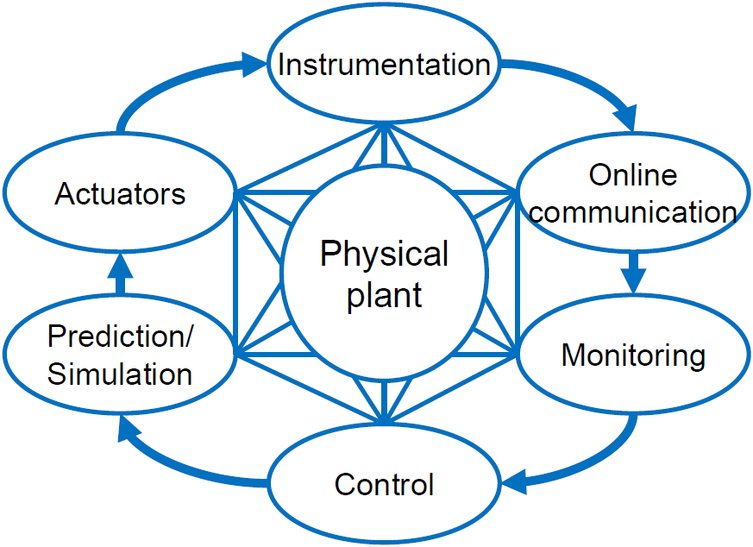
Instrumentation, control and automation (ICA) are key technologies at all levels of wastewater treatment: operating equipment, ensuring satisfactory effluent quality and maximizing plant efficiency. ICA is not a single scientific branch but a collection of several scientific and engineering disciplines, illustrated by the figure.

Introduction
The International Water Association (IWA) organized its 14th conference on Instrumentation, control and automation (ICA) in Oslo in 2025. This article is based on the keynote “ICA – long journey to where we are today” presented by the author. The ICA development has been described in earlier reviews (Olsson et al., Reference Olsson, Nielsen, Yuan, Lynggaard-Jensen and Steyer2005; Olsson, Reference Olsson2012; Olsson et al., Reference Olsson, Carlsson, Comas, Copp, Gernaey, Ingildsen, Jeppsson, Kim, Rieger, Rodríguez-Roda, Steyer, Takács, Vanrolleghem, Vargas Casillas, Yuan and Åmand2014; Yuan et al., Reference Yuan, Olsson, Cardell-Oliver, Van Schagen, Marchi, Deletic, Urich, Rauch, Liu and Jiang2019), now followed by an update of possibilities and challenges.
ICA – a “decathlon” of scientific and engineering disciplines
An ICA system contains adequate process instrumentation, a monitoring system to gather data, process and display the data, detect and isolate measurement faults or process abnormal situations and a control system to meet the goals of the operation. It is emphasized that the ideal ICA system contains a quality team of people who feel a deep sense of ownership of the system and who are committed to the continuous improvement ethics.
ICA is not a single scientific branch but a collection of several scientific and engineering disciplines, as emphasized already in Olsson and Newell (Reference Olsson and Newell1999) and a later in Olsson and Ingildsen (Reference Olsson, Ingildsen, Chen, Loosdrecht, Ekama and Brdjanovic2020). Figure 1 indicates some of the couplings.
-
• The physical process. Any successful ICA implementation relies on process knowledge that extends beyond information about tank volumes, expected concentrations and biological models. The location of sensors and instruments must be carefully considered. Are the actuators, like valves, compressors and pumps – continuously controllable? Are they mostly working around the most efficient operating point? What is known about the influent load variability?
-
• Instrumentation. Is the performance of an instrument or sensor adequate for the purpose of the measurement? Which are the essential sensors and instruments to make the plant satisfy the effluent limits? Are the locations of process sensors adequate? How much can an operator influence equipment arrangement and behavior? Is the organization prepared for instrumentation maintenance (Ingildsen and Olsson, Reference Ingildsen and Olsson2016)? Instrumentation is further discussed below.
-
• Communication. Today any plant can provide a distributed control room. Sensor information can be communicated over large geographical distances, from weather stations, from sewer flow rate and concentration measurements, as well as from water distribution systems pressures, concentrations and flow rates. The virtual control room with network access also offers possibilities to provide specialist competence and support when the operating conditions demand extra attention.
-
• Monitoring is more than measurements. It is the systematic process of collecting, analyzing and using information to track a process toward reaching its objectives and to guide management decisions (Olsson and Newell, Reference Olsson and Newell1999, part B). Needless to say, any sensor data must be screened and validated before it can be the basis for control. Noise is filtered and outliers are detected. Sudden changes are detected by high-pass filters. Once data is validated, process variables can be estimated, abnormal conditions detected and guidance be provided to the operator. Many of the methods are not specific for the water industry, and many experiences from other process industries are also applicable for the water industry.
-
• Control. Control engineering offers all the methodology that is needed in water operations (Åström and Murray, Reference Åström and Murray2014). Mostly, the dynamics in water operations are simple in the sense that outputs of control actions are reasonably predictable. The responses are mostly monotonous, and the processes do not exhibit inherent oscillatory behavior. Consequently, most controllers can be low order and still offer sufficient control authority. Notably, most controllers, not only in the water industry but also in other process industries, are PI or PID type controllers.
-
• Sampling frequency. It is crucial to understand how often to measure and how often to manipulate. For example, dissolved oxygen (DO) concentration can be measured frequently, like every 6 s, and many measurements can be filtered to create a more reliable DO value, for example, every 6 min. Equally important is to determine the frequency of control actions. To change the air flow every minute (yes, there are plants with this implementation!) is meaningless and often destructive, since the response of an air flow change will be noticed only within 10–30 min (Åmand et al., Reference Åmand, Olsson and Carlsson2013) The dominating time scale of the dynamics of concentrations and flow rates must be related to the measurement and control frequencies.
-
• Prediction and simulation offer powerful tools not only for more advanced design but also for handling various process conditions. Using available simulation packages, “packaged” knowledge about process dynamics, offers great potential for prediction, process improvements and long-term planning to deal with future load changes (Saagi et al., Reference Saagi, Flores-Alsina, Kroll, Gernaey and Jeppsson2017).
-
• Actuators. The importance of actuators is often forgotten. The development of power electronics during the last few decades has made continuous control of motors, pumps and compressors a proven and affordable technology. No control action can compensate for an inappropriate actuator. A wrongly designed influent flow pump with on/off control will make DO control difficult or impossible. An air compressor with poor controllability cannot be compensated with a smart control algorithm.
Network diagram with ‘Physical plant’ at the center, surrounded by Instrumentation, Online communication, Monitoring, Control, Prediction/Simulation, and Actuators, all connected in a loop.

ICA reveals that everything is connected in a plant. Any system with recirculation requires plant wide design of the control and operation. Return sludge flow rate, nitrate recirculation, filter backwashing influence will couple control actions between unit processes. Also forward couplings must be understood. One goal can be to maximize carbon removal in the aerator. Another goal is to keep more carbon in the aerator in order to maximize biogas production in the anaerobic digester.
Any ICA implementation forces people to communicate and motivates a systems view. Unless this is realized any implementation of sensors, controllers and actuators can be broken by a weak link.
The requirements of a system-wide approach are rarely satisfied in academic education. Education too seldom considers interactions between disciplines (Olsson, Reference Olsson2021). Too often plant designers are not knowledgeable in dynamics. It should be reminded that ICA has to be considered already at the design phase. It is not a good solution to expect that ICA can solve insufficient design criteria.
ICA today
Any urban water system is subject to variability and disturbances. The influent to a wastewater treatment plant is variable in flow rate, concentration and composition. Plant operation must deal with sudden disturbances like a rainstorm or a toxic spill as well as with a wide span of diurnal, weekly or long-term load changes. Similarly, urban water supply systems need to meet variable demands from customers and should detect and handle disturbances like leakages and sudden bursts in the distribution system (Olsson and Newell, Reference Olsson and Newell1999, Ch. 15).
Often there is an order of magnitude difference between the lowest and the highest load during the day. Many disturbances are created internally, within the plant, because of the operation. Recycle flows – such as the return sludge flow rate, nitrate recirculation, digester supernatants or backwash filter flows – can cause major operational problems unless they are carefully controlled. Considering all disturbances, it is intolerable to operate any plant with constant settings of pumps, compressors, valves and other actuators.
ICA is a hidden technology. It is ubiquitous in all industrial processes, including urban water systems. As long as everything works fine it is not noted, but when things go wrong it will be observed. ICA has now about 50 years of history in the water industry and is well recognized. Progress was not obvious in the early years; one early attitude was that ICA will be a necessary burden to be added to a plant in order to correct for a poor design. However, the combination of technology push and demand pull has made ICA a natural part of any water operation (Olsson et al., Reference Olsson, Carlsson, Comas, Copp, Gernaey, Ingildsen, Jeppsson, Kim, Rieger, Rodríguez-Roda, Steyer, Takács, Vanrolleghem, Vargas Casillas, Yuan and Åmand2014).
ICA is a key technology at three major levels:
-
• keep the plant running,
-
• satisfy the effluent requirements,
-
• maximize the efficiency.
On the equipment level of plant operation, control is taken for granted. Levels, flow rates, pressures and temperatures are typically controlled automatically using pumps, compressors and valves as actuators. The control systems are usually standardized PLC or SCADA systems, like those in any process industry. Automation vendors usually have sufficient knowledge to implement successful operation to keep the plant running.
To satisfy the effluent quality there are many concentration control loops. In an activated sludge plant automatic control of DO, sludge age, return sludge and other concentrations are proven methodologies. In most plants, this level of control is adequate. It contributes to maintain the effluent quality, allows unmanned operation during nights and weekends and saves energy and other operational costs. Still, many control systems fail at this level. The reason is not that the system dynamics is difficult, that the sensors are not sufficiently robust or that the actuators are not sufficiently controllable. Many implementers do not have sufficient knowledge of the process dynamics or do not efficiently communicate their knowledge. Sensors may be located at wrong positions, data analysis is not adequate, sampling frequencies are often unrealistic (mostly too fast), control parameters are not adequately tuned or an actuator does not properly translate a control signal to action. Furthermore, the reward system for operators may sometimes discourage smarter control (Rieger and Olsson, Reference Rieger and Olsson2012).
Online nutrient sensors are becoming common and affordable. Today, controlling the DO with a variable setpoint, based on ammonia removal is a proven technology (Åmand et al., Reference Åmand, Olsson and Carlsson2013). The dosage of chemicals can be based on online phosphate measurements and the recirculation of the nitrate rich water in pre-denitrification plants can be based on nitrate measurements in the anoxic reactor (Ingildsen, Reference Ingildsen2002). Most often, the payback time for costly instruments is amazingly short. Energy can be saved, and the dosage of chemicals can be minimized. Other sensors, like pH and gas flow rate, make it possible to run an anaerobic digester with higher throughput while keeping the operation safe (Liu et al., Reference Liu, Olsson and Mattiasson2004).
Maximizing plant efficiency implies that each unit process can no longer be operated in isolation. Instead, a plant-wide or a system-wide approach is required. Sludge production in the liquid train of an activated sludge system should be adapted to the desired feed to the anaerobic digestion to produce biogas. Sewer operation affects the capacity of the wastewater treatment system. Minimizing the plant electrical energy consumption requires a plant-wide perspective. Using energy from biogas and effluent heat content can make a wastewater treatment plant a net energy producer, indicating that the term resource recovery plant is more relevant.
Also, for a drinking water supply plant, the operation ought to be plant-wide to obtain high efficiency and resilience. There is a tight coupling between the unit processes, which forces the control to take the couplings into consideration, for example, distributed pressure control in the water supply system. All water supply should meet adequate, but not necessarily the same quality criteria.
Surely, any water operation is complex if all the demands are to be satisfied. Operation is required to be efficient around the clock, consistently addressing disturbances, making maximum use of available volumes and all the time satisfy effluent quality standards. To give a consistent and clear order to control goals is a truly multicriteria decision problem and is an overall ICA challenge.
The early years
The American Public Works Association published already in a 1970 report on the “feasibility of computer control of wastewater treatment” (EPA, 1970). It was concluded that both offline computer applications and online computer control in wastewater treatment were feasible and should be implemented. A key driving force was that personnel posed “a real problem in the operation of plants.” There were difficulties in obtaining qualified personnel, in training operators and maintenance people. New regulations would further exacerbate this scarcity of qualified operators. Automation was considered the solution. However, the fear of unemployment was a great obstacle for early automation.
Later, in the 1977 ICA conference in London, LH Thompson, UK, remarked: “it is likely that in many cases the justification for an automated system will not lie in a saving in staff, but in a quicker and more reliable response to variable operational circumstances” (ICA, Reference Drake1977). The later ICA development has proven this statement to be correct.
Computer hardware and communication equipment were available and considered reliable for use in industrial process control. Computers were used mainly for data logging. However, it was recognized that reliable online instruments for some of the variables considered essential to continuous monitoring and control of wastewater treatment were not on the market.
Plant management was ready to consider computers for offline tasks like reports, maintenance files, inventory control and business areas. The APWA authors recommended plant management to “give serious considerations to computer control of plant processes, despite the lack of both knowledge and sensors in some areas of wastewater treatment.” Some examples to consider were control of return sludge based on sludge level, aeration rate to maintain a DO level and variable speed pumping for uniform plant flow. The 1970 report emphasized that “only by application of computer control can the wastewater treatment process be optimized as a total integrated system.”
A computer was a major investment in 1970. Naturally, the question was if sufficient cost improvements could pay for the investment (Schrimgeour, Reference Schrimgeour1968).
A conference in Vienna in 1971 on “Design-Operation Interactions for Large Wastewater Treatment Plants” arranged by the International Association on Water Pollution Research ([IAWPR], the predecessor of IWA) became an important event to put the attention to ICA. Some operations people realized that designers had been working on wastewater treatment plant automation without complete awareness of what had been going on elsewhere. The lively discussion developed at the conference clearly indicated that the ICA topics were of such widespread and current interest that a subsequent conference should be devoted exclusively to them.
The first instrumentation and control conference under the sponsorship of IAWPR was held in London in 1973 (ICA, Reference Andrews and Briggs1973). This was my first ICA conference, and it has been followed by another 13 conferences arranged every fourth year by IWA and its predecessors.
With my control engineering background, it was a perfect challenge to learn about the key issue expressed at the London conference (ICA, Reference Andrews and Briggs1973): “We accept that variability is of great importance, but being faced with the task of expressing its effect on performance had to conclude that at the present time there are no data on which to assess its effects.” The control challenges and problems were summarized in Olsson et al. (Reference Olsson, Eklund, Dahlqvist and Ulmgren1973) and formed the basis for our work for the next decades in our attempts to control wastewater treatment systems (Olsson, Reference Olsson1977).
The London, Reference Andrews and Briggs1973 conference attracted 225 people and 64 papers were presented. Unfortunately, the 1973 conference was only documented in the preprints, but more details were documented in Olsson (Reference Olsson2012). Most of the attendants represented utilities and “problem owners” while academic researchers were a minority. The leading initiatives and results came from the United States and the United Kingdom. Some computerized systems from large city plants were presented. Typically, the computer systems performed only data acquisition. Computer implementations of PID-controllers for some lower level controls were demonstrated. Few papers addressed research issues on ICA and most of the control systems presented had been designed on an empirical basis.
Following the 1973 London conference, a workshop was held in Clemson, S.C., USA in September 1974, addressing Research Needs for Automation of Wastewater Treatment Systems (Clemson, Reference Clemson, Buhr, Andrews and Keinath1974). The workshop was sponsored by the USEPA and became a landmark in the early ICA development for wastewater treatment systems. Many participants were invited from government regulatory and research agencies, universities, operating engineers and managers of large treatment systems, consulting engineering firms and equipment manufacturers. Being a workshop, formal presentations were mixed with working groups on various topics. Among the 104 participants, only 2 came from outside the United States, one being me.
The director at EPA, W Rosenkranz, set up the tone of the workshop, stating: “A treatment system should no longer be considered as a marginal water pollution control facility, but rather as a production facility for wastewater refining or renovation” (Clemson, Reference Clemson, Buhr, Andrews and Keinath1974). It was recognized that there was a lack of more fundamental knowledge concerning dynamic behavior, control strategies, component reliability, cost–benefit analysis of ICA and the effect of automation on design.
DO was a key topic in London, Reference Andrews and Briggs1973. At the time of the Clemson workshop a survey of some 50 plants in the USA had been conducted. Automatic online DO control was implemented at 12% of the plants.
Several research needs were identified:
-
• Sensors: Development of efficient and dependable sensors. Some of the key variables included flow rates, sludge blanket level, settling velocity, respiration rate, suspended solids, short-term BOD, ammonia, nitrate and phosphorous.
-
• Instrument testing: A central location for gathering and dispensing information on instrumentation testing. Such a facility “would be of considerable assistance.”
-
• Performance specifications should be developed for sensors and instrumentation as a guide to the user community.
-
• Modeling: Development of dynamic mathematical models for individual processes, using latest data available. An important long-term goal was the incorporation of the individual process models into an overall mathematical model for treatment plants.
-
• Control: Control strategies based on computer simulation using mathematical models should be developed. Control strategies should be evaluated in pilot scale to select the most promising ones for future demonstration in full scale, including cost/benefit analysis. Control designs should be expanded to include interrelationships between liquid and solids processing, storm water and dry-weather flow control and treatment and eventually area-wide or system-wide wastewater treatment.
Some of these visions have yet to come true, so there is still work to do! Professor JF Andrews, Clemson University, recognized the need for education at all levels when he noted: “A course in Process Dynamics and Control is commonly found in most chemical engineering curricula. We would be well advised to include a course in Dynamics and Control of Wastewater Treatment Systems in environmental engineering curricula” (Clemson, Reference Clemson, Buhr, Andrews and Keinath1974). Today, there are such courses, but it has taken a long time to make Andrews’ vision come true.
Already at the ICA (Reference Drake1977) conference, some of us were impatient, as documented by Beck (Reference Beck1977). One aspect was to stress the importance of the overall system under discussion, that is, the whole urban water cycle. Another aspect was the difficulties in communication between control engineers and water and wastewater professionals.
The two first ICA conferences, 1973 and 1977, were initiated by pioneering efforts from individuals and organizations in the United States and United Kingdom. However, the United States and United Kingdom participation in the IWA (and its predecessors) ICA conferences later decreased dramatically, from 95% in 1973 (Olsson, Reference Olsson2012) to 3–4% at the last two conferences, 2022 and 2025.
Instrumentation
It was realized early that any control based on 5-day BOD could not be realized. Already in 1964, Robert Arthur presented an automatic respirometer to determine short-term oxygen uptake (Arthur, Reference Arthur1964).
Instrumentation was a key issue in the 1973 London conference. The sensors offered for wastewater control appeared to be those developed for other industries and were not suitable for the usually hostile conditions of wastewater processing. DO control and the potential energy savings were well recognized (Briggs, Reference Briggs1973; Petersack and Stepner, Reference Petersack and Stepner1973). The discussion at the Clemson, Reference Clemson, Buhr, Andrews and Keinath1974 workshop on the need for efficient and dependable sensors was mentioned above.
Today online in situ nutrient sensors are a proven and accepted technology, eliminating slow sensor dynamics and long measurement delays, resulting in easier control and better performance. The excellent instrumentation overview (Vanrolleghem and Lee, Reference Vanrolleghem and Lee2003) is still a recommended reading, and some new instrumentation perspectives are presented in Weerasinghe et al. (Reference Weerasinghe, Jayathilaka and Vithanage2025).
System-wide control requires sewer monitoring, where flow measurements are critical. Since flow meters for sewers are expensive and requires a lot of maintenance, soft sensors are attractive and cost-effective. Lin et al. (Reference Lin, Tian, Qiu, Hu and Yuan2025) have developed a soft sensor that derives flow rate from water depth measurements. However, training of such sensors requires extensive direct flow measurements. The authors have proposed soft flow sensors based on water depth measurements at two adjacent manholes, rather than a single manhole. This significantly reduces the demand of flow data for training. The soft sensor has been implemented on a low-cost Raspberry Pi 5 processor that powers a water level sensor.
Our society is creating increasingly micropollutants that utilities must deal with. Some micropollutants appear in so small concentrations that they cannot even be detected in a lab environment. There are still many difficulties to handle in practical applications with a lot of possibilities for errors. One of the hurdles is the lack of standardization. Close cooperation between maintenance and operation cannot be overrated. Even if review articles present the state-of-the-art of instrumentation, equipment vendors should provide the most updated instrumentation information.
Monitoring
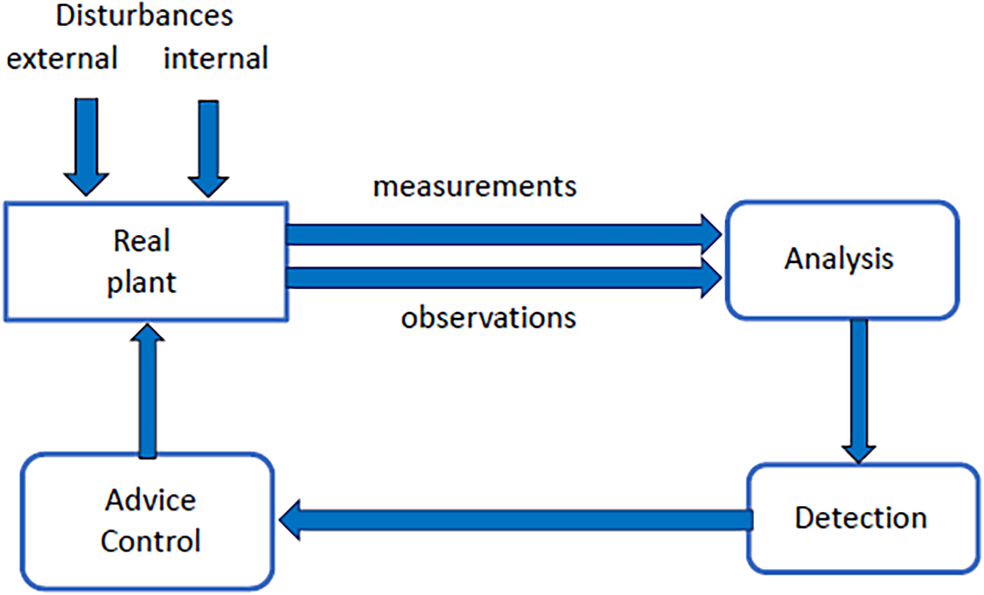
Monitoring indicates tracking the operational state of a process or a machine via online instrumentation (Figure 2). By analyzing measurement data, the detection time of anomalies can be shortened, for example, for leakages, component failures or water thefts. This will reduce water loss, contamination or energy waste (Olsson and Newell, Reference Olsson and Newell1999, part B; Ingildsen and Olsson, Reference Ingildsen and Olsson2016; Yuan et al., Reference Yuan, Olsson, Cardell-Oliver, Van Schagen, Marchi, Deletic, Urich, Rauch, Liu and Jiang2019). Monitoring as a basis for early warning in water systems is described in literally hundreds of articles (Corominas et al., Reference Corominas, Garrido-Baserba, Villez, Olsson, Cortés and Poch2018).
Flowchart showing disturbances affect a real plant, which sends measurements and observations to analysis, leading to detection and advice control that feeds back to the plant.

Any monitoring system must determine whether acquired data are meaningful and correct, which makes data screening essential. As a minimum, it should include normal range comparisons (high and low limits), rate of change and variance. Low-pass filtering techniques are essential to remove noise while retaining the essential signal information. High-pass filters can detect sudden or fast changes. More sophisticated monitoring techniques rely on AI tools, for example, by comparing the observed behavior with “typical” patterns of similar units.
Computer control experiences
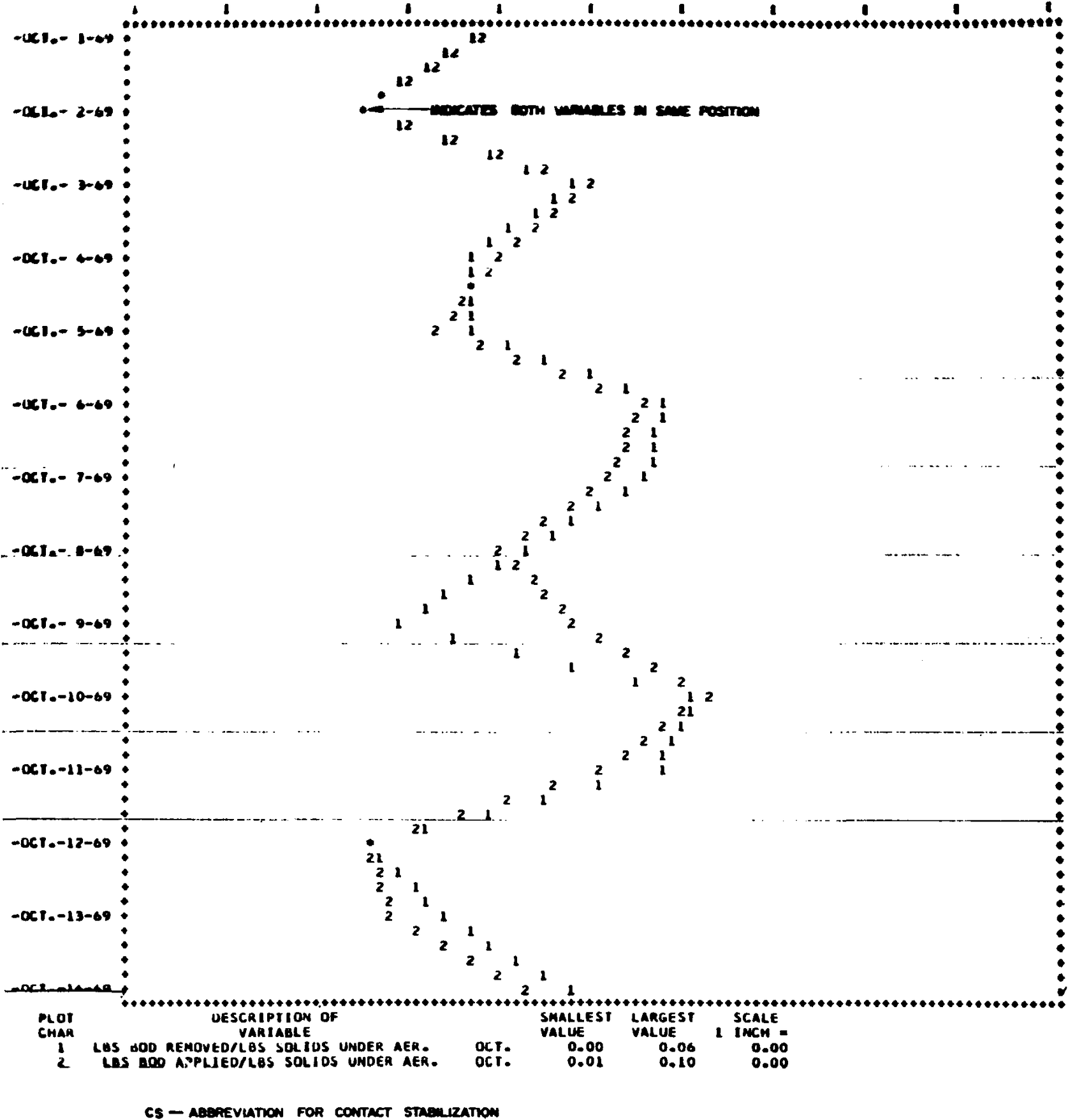
Our first dynamical experiments were conducted in 1973 at the Käppala Wastewater Treatment Plant, at the time serving 300,000–400,000 people in the northern suburbs of Stockholm. This was one of the first plants to install a computer system (Siemens) for online data acquisition. Real-time data could be stored in the computer and saved on punched paper tape for later analysis on our Digital Equipment PDP 15/35 Computer at the Automatic Control Department at Lund University. A typical typewriter graphical output could look like Figure 3.
A typical line graph showing two variables related to solids under aeration plotted daily.

There was a lot of resistance to use computers for control in the mid-1970s. The price was relatively high, and to motivate such a high investment the value of the process to be controlled had to be much higher. This in turn meant that the complexity was substantial. In other words, there were several obstacles to overcome: instrumentation was expensive and not very reliable, the process dynamics was not very well-known, the actuators had to be sufficiently flexible, the computer had limited storage capacity and adequate control algorithms had to be developed.
The computer revolution during the last half century has been breath-taking. The author acquired a real-time computer for the Department of Automatic Control in 1970 with the price 1 SEK (≈0.1 US$ or 0.09 €) per bit of primary memory (according to consumer index, this would correspond to around 10 times higher price today). Today RAM memories are around 108–109 times cheaper; neither computing power nor storage capacity present any practical limits.
In 1975, we implemented DO control – a PI controller in cascade with a proportional controller for the airflow rate – in the Siemens computer at the Käppala treatment plant (Olsson and Hansson, Reference Olsson and Hansson1976a, Reference Olsson and Hanssonb) and the following year at a midsize plant in Gävle, Sweden (Gillblad and Olsson, Reference Gillblad and Olsson1977). However, when more regulators were to be implemented, it was decided to get a minicomputer Digital Equipment LSI 11 instead of reprogramming the available process computer. This was the first LSI computer shipped to Sweden. We had been warned that the signal quality from the sensors was so low that the signals could not be used for control. This was proven to be wrong. Many cables had probably been inadequate, and some signal cables had been placed close to power cables. Digital signal filtering was used successfully to eliminate instrument and signal transmission noise.
A major obstacle was the lack of economic incentive. We could readily present great savings by using closed loop DO control. The problem was that the municipal treatment plant had no profit incentive. The argument that we met was simply: “it is fine that you can save 20, 30, or even 40% of our aeration costs. However, if we implement it, then we will simply get a correspondingly smaller budget for next year. So, we would not gain anything.” We met lack of economic incentives as late as 2002. Using an online phosphate measurement, it was demonstrated that the instrument would pay for itself in 3 months because of savings of chemicals. It was decided “that this means that we have to worry about an extra instrument, and the operators will not like it.”
Modeling work
The first dynamical models of the activated sludge process were developed in the late 1960s (Andrews, Reference Andrews1969), considering carbon removal with one type of bacteria, substrate and DO. DO dynamics was not well understood in the early 1970s. We performed a lot of process identification experiments in Käppala in 1973–1975 to find out the DO dynamics (Olsson and Hansson, Reference Olsson and Hansson1976a; Olsson and Hansson, Reference Olsson and Hansson1976b). Since the DO dynamics is much faster than the hydraulics and the substrate utilization, it could be isolated in its own time scale. By purposefully disturbing the airflow rate to the aerated reactor, the DO concentration variations in various locations along the reactor were recorded. The influent water flow rate was manipulated by redirecting the flow to other parallel basins and the return sludge flow rate was purposefully manipulated to create disturbances in the DO concentrations. The sampling time Δt had to be chosen carefully and should be sufficiently short to record relevant dynamical phenomena but sufficiently long so that all data could be stored in the available 16 kb core memory.
The first Activated Sludge Model was presented in 1985, a true landmark also for ICA (Henze et al., Reference Henze, Grady, Gujer, GvR and Matsuo1987). The subsequent ASM models (Henze et al., Reference Henze, Gujer, Mino and van Loosdrecht2000), and anaerobic (Batstone et al., Reference Batstone, Keller, Angelidaki, Kalyuzhnyi, Pavlostathis, Rozzi, Sanders, Siegrist and Vavilin2002) and biofilm (Eberl et al., Reference Eberl, Morgenroth, Noguera, Picioreanu, Rittmann, Van Loosdrecht and Wanner2006) process models have contributed to encapsulate the knowledge. The impact has been phenomenal. Modeling has developed from a pure research instrument into commercially valuable software packages that provide powerful design and prediction tools.
The ASM models are not directly identifiable from online measurements (Holmberg, Reference Holmberg1982; Jeppsson and Olsson, Reference Jeppsson and Olsson1993; Julien et al., Reference Julien, Babary and Lessard1998) and are not suitable for model-based control. However, models of reduced dimensionality can be derived to form the basis for predictive control.
Secondary settler models have been developed over the years to better understand settler and clarifier behavior (Vitasovic, Reference Vitasovic1986; Takács et al., Reference Takács, Patry and Nolasco1991; Plósz et al., Reference Plósz, Weiss, Printemps, Essemiani and Meinhold2007, Reference Plósz, Nopens, De Clercq, Benedetti and Vanrolleghem2011).
Computational fluid dynamics (CFD) techniques has been described in several publications to model the flow within different sedimentation tanks. CFD techniques apply the theory of continuous mechanic mixtures, using continuity and motion equations for each constituent of the mixture, besides incorporating the appropriate constitutive equations. This mathematical point of view has a huge impact on process understanding (Luna et al., Reference Luna, Silva, Fukumasu, Bazan, Gouveia, Moraes, Yanagihara and Vianna2019).
Still much remains to be done. For example, we do not have a full understanding of the relationship between the activated sludge flocs and the settleability of the sludge. However, there is a temptation to make models increasingly complex as our knowledge of basic mechanisms increase. As Gujer (Reference Gujer2011) remarked: “some hydraulic phenomena may be wrongly explained by adjusting biokinetic parameters. This is an example of the consequences of structural errors that are wrongly compensated by parameter adjustments.”
Digital twins
The interest for digital twins is snowballing, also in the water area. There is a logical extension from sophisticated simulation software using advanced models to digital twins. A digital twin software is a virtual replica of the physical process, enabling real-time monitoring, simulation and prediction to optimize performance and decision-making. The first challenge is to achieve a real-time update of the digital twin parameters from the physical process measurements. The second challenge is how to apply the twin to real plant operation. There are potential applications for fault detection, monitoring, operator guidance, long-term planning, and so forth (Liu et al., Reference Liu, He, Mou, Xue, Chen and Xiong2023; Wang et al., Reference Wang, Li, He, Tao, Wang, Yang, Savic, Daigger and Ren2024). Still, a major challenge is the identifiability of the digital twin from dynamical data. Another issue is to find the most useful time frame for digital twin operations.
Controllability
The importance of actuators should not be forgotten. In the last few decades, there has been a revolution in the development of power electronics. Power transistors like insulated-gate bipolar transistors are now generally available for currents >500 A and voltages >1 kV with high switching frequencies. Frequency control of electric motors is both affordable and reliable, from mW scale motors to MW drives. Variable speed control of liquid and air flow rates has a profound influence on both the control action quality and on energy efficiency.
The actuator output is useful information. For example, it enables the control of the DO according to “the most open valve” control method (Olsson and Newell, Reference Olsson and Newell1999; Åmand et al., Reference Åmand, Olsson and Carlsson2013). Also, by monitoring the air or liquid valve opening together with air flow or liquid flow measurements, it is possible to detect pipe clogging or increased friction in the valve operation.
Control engineering today can offer almost anything in terms of methods and algorithms that the water operation might need (Olsson and Ingildsen, Reference Olsson, Ingildsen, Chen, Loosdrecht, Ekama and Brdjanovic2020). Even if control is applied in completely different areas, there is a common theory that is independent of the applications. There are literally hundreds of textbooks on control. Åström and Murray (Reference Åström and Murray2014), available on open access, is recommended. The authors are world leaders in the development of control theory and engineering.
There are several sources of uncertainty, such as measurement inaccuracy, process noise, parameter values, structural uncertainty and process mode changes. Some of these uncertainties can be eliminated with further knowledge and research. Other types of uncertainty will always be there, like influent water changes, or mode changes. The designer mostly compensates for the uncertainty by adding a safety factor in the design. The control engineer needs to compensate in another way. Since prediction is not perfect, control actions should become more cautious. Such a controller will have a smaller gain so that the desired process variable will need a longer time to reach the final goal. Control under uncertainty or stochastic control is a special field of control theory where uncertainty and disturbances are modeled explicitly. Another area of great interest is robust control, where the uncertainties are implicitly included in the control design.
System-wide automation
R Kukudis, Cleveland Utility, USA, reflected about two key issues already at the 1973 London conference (Kukudis, Reference Kukudis1973), the necessity to integrate design and control and system-wide control: “Even if we had the most sophisticated, automated plant in existence, it still would not be able to operate at maximum efficiency, because the designs of wastewater treatment plants are based on uniform combined sewer flow with consideration for periodic intensity due to storm flow or periodic lows during dry weather spells or hours of least demand. So, much of the time, the flow into the plant is either above or below the maximum efficiency level.” Control should use available but often unused capacities: “We must speak of automation in the entire system – the network of sewers and the plants.” Sewer control was applied in Cleveland in the early 1970s (Kukudis, Reference Kukudis1973). During dry periods, flow equalization was used. During storm periods, the system was designed to primarily capture and treat the first 20 min of “first flush” flow during the storm period. Any necessary bypassing after the first period would be of diluted effluent.
A convenient way of designing and operating control systems is to decompose complex systems. However, eventually we must step back and take a helicopter view of the whole plant, or even a larger system. Whatever size of the system we must define its boundaries to define external and internal events. Depending on the system size, there are different degrees of freedom, and each system definition will determine what can be manipulated (Olsson, Reference Olsson2021).
It was recognized early that the operation of the primary settler will influence the treatment both in the activated sludge unit and the anaerobic treatment of the sludge. Chemical precipitation can be performed by dosing before or after the reactors or in the reactor itself. Recycles make complex couplings obvious, such as the return sludge, nitrate recycle or the recycling of the supernatant from the anaerobic digester to the influent of the wastewater treatment. The interactions demand that we look at the global effects of the chosen disturbance rejection strategies, with a particular emphasis on recycle streams. The aim of the control of the treatment plant is to satisfy effluent requirements while minimizing operational costs. During storm conditions, these goals may be difficult to reach. The control of a sewer system isolated from the treatment plant operation will lead to suboptimal solutions. If the goal of the sewer operation is to minimize the combined sewer overflow, then the risk of overloading the plant is apparent. Integration requires compromises to satisfy the overall goal.
Tools to handle various scenarios need to be developed and relevant performance indices must be defined. A major obstacle seems to have more to do with data (assessment, management and analysis) and administration than with control algorithm issues. An early notable plant-wide approach was presented by Rodriguez-Roda et al. (Reference Rodriguez-Roda, Sànchez-Marrè, Comas, Baeza, Colprim, Lafuente, Cortés and Poch2002). The authors recognized that wastewater treatment plants are clear examples of complex and multifaceted environmental systems. A successful plant-wide control cannot be based on a single technique. Even if control engineering, sensor technology and computer systems are advanced, the integrated operation of wastewater systems requires more. The authors defined three operational levels, the PCL and sensor level, the database level to infer the possible operating state of the complete plant and the upper level for dynamic simulation for evaluation and prediction.
Decentralized systems
A decentralized approach to water supply, stormwater harvesting, local wastewater treatment and reuse, benefits from the advantages of source separation, which encourages simple small-scale systems and on-site reuse. Arguments in favor of decentralized wastewater management systems for communities in rural or peri-urban areas have been discussed and advocated by many (Wilderer and Schreff, Reference Wilderer and Schreff2000; Larsen et al., Reference Larsen, Udert and Lienert2013; Olsson, Reference Olsson, Larsen, Udert and Lienert2013; Capodaglio, Reference Capodaglio2017). Decentralization facilities can usually be built to exactly fulfill current needs, and be expanded later, as further needs arise.
Cities in many countries are gradually losing their character of densely concentrated settlements and are gradually sprawling to the countryside. Since the cost for distribution or collection systems mostly is the dominating capital cost, decentralization is becoming a viable alternative. The technology for both drinking water treatment and water reuse is scalable, from household sizes and up. Furthermore, renewable electric energy supply is also scalable. A long-term operation of a household treatment plant is demonstrated in Gillblad and Olsson (Reference Gillblad and Olsson2023). The plant is fully automated and self-sufficient, both for the solar energy supply and for the process operation.
Artificial and real intelligence in automation
The word automation is related to the Greek word automatos ”self-acting.” Still, the human should be an essential part of automation. The paradox of automation says that the more efficient the automated system is, the more crucial the human contribution of the operators will be. Bainbridge (Reference Bainbridge1983), a cognitive psychologist, discussed the ways in which automation of industrial processes may expand rather than eliminate difficulties for the human operator. Humans are less involved, but their involvement becomes more critical. If an automated system has an error, it will multiply that error until it is fixed, or the system is shutdown. This also will require that both designers and operators need to acquire a new and more multifaceted way of thinking.
As described, digitalization is not new phenomenon but started half a century ago with computer control of wastewater treatment systems and dynamical modeling of biological treatment. The computer revolution during the five decades has created new possibilities. Computers of today have at least a million times more memory than 50 years ago. Storing huge amounts of data is no longer a problem. Communication technology has also been revolutionized. In the 1970s, the sensor connections to the computer were analogue. Today IoT is a proven technology and common practice (Martínez et al., Reference Martínez, Vela, el Aatik, Murray, Roche and Navarro2020). However, this has created a new class of problems, related to cyber security.
Our first “expert system” was implemented in 1975 (Gillblad and Olsson, Reference Gillblad and Olsson1977), but the term was not used at that time. Fuzzy logic was applied to monitor the system and guide the computer to the relevant control algorithm for DO, recycle or bypass control. Methods relying on more data and refined algorithms later were called knowledge-based. Parameter identification was complemented with neural networks, fuzzy logic and more elaborate methods for logic decisions, inspiring to the new term machine learning. Now this is part of AI.
ICA, including basic automation and SCADA systems, is already in place in most industrialized countries. While some control actions can still be refined, the operations staff has already been reduced from 24/7 duty and manual monitoring to operators on standby online duty outside business hours. Today, the great challenge is a systems view, including plant-wide operation, integration of urban water systems, where the end-user (customer) is part of the system.
A prerequisite for success of digitalization is not only instrumentation development, smart monitoring and control, but also system connectivity and the willingness to digitalize. It is also a means to uphold and innovate services provided, increase business opportunities and connect to other municipal services. For a long time, it has been argued that automation should influence the design process to allow smaller safety margins, thus reducing capital cost. Obviously, such a system is more sensitive to disturbances, putting a higher demand on technical and organizational capabilities (Simic and Nedelko, Reference Simic and Nedelko2019). A crucial part of the digitalization and journey toward AI is motivating employees, creating confidence in the digital culture and creating acceptance (Arnell et al., Reference Arnell, Miltell and Olsson2023). This must involve the whole organization (Vitasovic et al., Reference Vitasovic, Olsson, Ingildsen and Haskins2022).
The use of digital technologies to tackle environmental challenges and advance a circular and climate neutral economy is growing with a phenomenal speed (Garrido-Baserba et al., Reference Garrido-Baserba, Corominas, Cortes, Rosso and Poch2020; Arnell et al., Reference Arnell, Miltell and Olsson2023). The “fourth revolution” refers to the circular management of water. The rise of publications related to AI and its potential for urban water management has grown exponentially only during the last few years. They relate to predictions of rainfall, flooding, contaminant detection and leak detection as well as strategic planning. It also emphasizes the need to consider the complete urban water cycle and not be limited to an individual treatment plant.
As AI is being developed to a wide variety of applications, it is tempting to assume that AI will be the solution for process difficulties. The application of AI in water treatment currently lacks a theoretical framework and empirical research (Jin et al., Reference Jin, Huang and Ren2025). AI must work in tandem with people, and generative AI ought to be developed toward assistance in water management. The concept of situation awareness has been established as critical for effective interaction and oversight of systems. We should learn how AI tools best can complement human experience and knowledge, both in design and in operation (Endslay, Reference Endslay2023). Agrawal et al. (Reference Agrawal, Gans and Goldfarb2022) demonstrate the importance of increased knowledge concerning pros and cons of AI chatbots like ChatGPT.
We are frequently drowning in data and lose sight of the forest from the trees. The human brain is a fantastic engineering tool, and – for the foreseeable future – cannot be substituted with even the smartest and most useful algorithms. Data must be translated into knowledge (Corominas et al., Reference Corominas, Garrido-Baserba, Villez, Olsson, Cortés and Poch2018). George Ekama, South Africa, put this in a lucid way at the IWA WWTmod conference in Quebec in 2010 “:The main problem is to keep the main problem the main problem.”
The industry – Academia relationship
At the 1973 London conference, it was obvious that the contributions came from the problem owners; more than 80% of the presentations came from utilities, instrument manufacturers and plant designers, while only 10% came from academia (Olsson, Reference Olsson2012). Since then, a predominant part of conference presentations and publications come from academic researchers, while the “real problem owners” are missed too often. Focus has shifted from problem driven to methodology driven research, as noted already after the 2001 ICA conference (Olsson, Reference Olsson2002). Academic people have several incentives to come. Publish or perish is the rule at most universities, so results must be presented, discussed and compared. There are certainly many obstacles to implement great ideas in full scale, and many academic researchers cannot afford such an effort. Funding agencies ask for quick results and PhD students have to finish on time. Implementation work is both expensive and time-consuming and this kind of work is usually not rewarded in academic systems.
Our challenges
Collecting data from online instrumentation is not the main challenge today. Too often, information hidden in data is not extracted or data are fragmented. One of the problems is to standardize the format of available data to make exhaustive analysis possible. A lot of efforts are made in this direction.
We must find ways to increase the communication between “problem owners” – utilities and vendors – and academia. An increasingly sophisticated water industry will compete with mainstream process industries for process and process systems engineers. Education will be crucial to meet the future development.
Design and operation must be developed together. A lot of progress has been made to make plants more controllable, for example, by individually controlled aeration zones (Olsson et al., Reference Olsson, Åmand, Rieger, Carlsson and Rosso2019) and controllable actuators. Dynamic simulation is applied in several cases to achieve a robust design. Design should include the choice of adequate actuators, suitable sensor locations and ensure that various parts of a water system are controllable. Uncertainties should be expressed in other terms than safety factors.
ICA should be one of the tools for a better handling of sustainability with our systems, in harmony with nature. It should aim at a metric to judge the sustainability of different options that will facilitate a fruitful dialog between those involved: politicians, ecologists, engineers and economists.
The world today is becoming drier because of global warming, increasing population and misuse of water (Olsson, Reference Olsson2022). There will be an increasing demand for water reuse and circular management of water. ICA has a potential to be an important part of the solutions. It is not sufficient to make the water systems smart; we must be smarter water users. More than 25 years ago, we wrote: “Our societies will need clean water and clean air. Sustainability will not only be a matter of cost. In fact, it is already a matter of survival in some countries. What role will automation play in this development and how can we meet that challenge?” (Olsson and Newell, Reference Olsson and Newell1999). The challenge from 1999 may still be valid.
Open peer review
To view the open peer review materials for this article, please visit http://doi.org/10.1017/wat.2026.10022.
Acknowledgments
My sincere thanks to the editors of Cambridge Prisms Water for inviting me to publish this article. Professor Harsha Ratnaweera, chairman of the ICA conference, kindly invited me to present my keynote. Professor Dragan Savić encouraged me to extend my presentation to a article. So many people have educated me, inspired me, published together with me, given me generous support and tried to keep me honest over the years. They are simply too many to mention individually. I hope that this publication will echo not only history or nostalgia but give a creative and realistic look into the future potential of automation.
Financial support
No financial support has been provided for this publication.
Competing interests
I am not aware of any competing interests.

 Open access


Comments
Dear Sirs,
Recommended to submit a review paper on ICA (Instrumentation, control and automation) by Professor Dragan Savic, I am happy to submit my contribution. Looking forward to the verdict by the reviewers and hope to make an interesting contribution to the Journal.