
Skip to main content Accessibility help
×
  • Cited by 1
    • Show more authors
    • You may already have access via personal or institutional login
    • Select format
    • Publisher:
      Intersentia
      Publication date:
      12 December 2017
      28 October 2015
      ISBN:
      9781780685441
      9781780683362
      Dimensions:
      Weight & Pages:
      Dimensions:
      Weight & Pages:
    • Subjects:
      Law, Family Law
    You may already have access via personal or institutional login
  • Selected: Digital
    Add to cart View cart Buy from Cambridge.org
    Subjects:
    Law, Family Law

    Book description

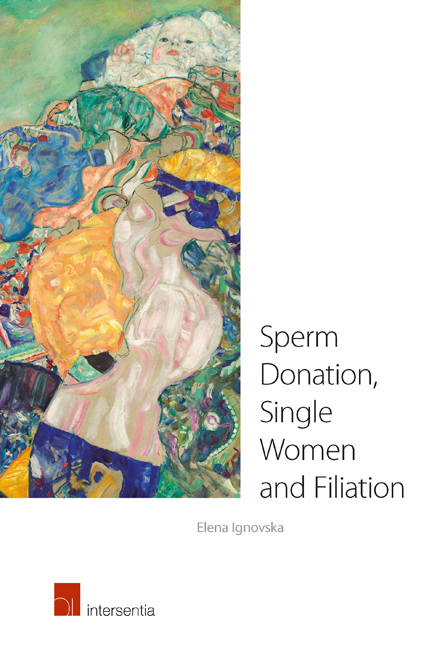
    Although recent family law debates have been predominantly paedo-centric, the founding of "bio-medically assisted families" still focuses on the individual parents' rights to reproduce. By introducing donations, the donor's genetic contribution becomes instrumental and the legal attribution of parenthood negotiated through expressed intentions. The absence of a genetic, social and legal father can only occur in single women's conceptions by choice, hence calling into question the role of the societal father.This neglects the future child's voice in private and family life issues on at least two levels: informational (lacking information about origins, often related to personal identity) and legal and functional (care provided by both parents). It furthermore emphasises the inconsistency in the treatment of "naturally" and "artificially" conceived children since the latter have restricted access to parental judicial proceedings.The conflicts between individuals in the family go beyond national family laws and become a matter of reconciling progenitors' and children's human rights. Yet the discrepancies between different civil law jurisdictions are remarkable. In addition, the sensitivity of the filiation of children conceived by sperm donation to single women requires more than legal solutions - it requires an interdisciplinary approach encompassing ethics, psychology, anthropology and sociology. Moreover, by arguing and suggesting solutions the issue also becomes political. Hence, this book provokes the curious minds of lawyers, ethicists, physicians, bio-technologists and those assisting and wishing to found families. It clarifies concepts, studies the rationale behind the legal complexity in ten national European jurisdictions, and confronts the rights and responsibilities of the stakeholders, providing a balanced independent conclusion and suggestions towards international harmonisation.

    Refine List

    Actions for selected content:

    Select all | Deselect all
    • View selected items
    • Export citations
    • Download PDF (zip)
    • Save to Kindle
    • Save to Dropbox
    • Save to Google Drive

    Save Search

    You can save your searches here and later view and run them again in "My saved searches".

    Please provide a title, maximum of 40 characters.
    ×

    Contents

    Metrics

    Full text views

    Total number of HTML views: 0
    Total number of PDF views: 0 *
    Loading metrics...

    Book summary page views

    Total views: 0 *
    Loading metrics...

    * Views captured on Cambridge Core between #date#. This data will be updated every 24 hours.

    Usage data cannot currently be displayed.

    Accessibility standard: Unknown

    Why this information is here

    This section outlines the accessibility features of this content - including support for screen readers, full keyboard navigation and high-contrast display options. This may not be relevant for you.

    Accessibility Information

    Accessibility compliance for the PDF of this book is currently unknown and may be updated in the future.
