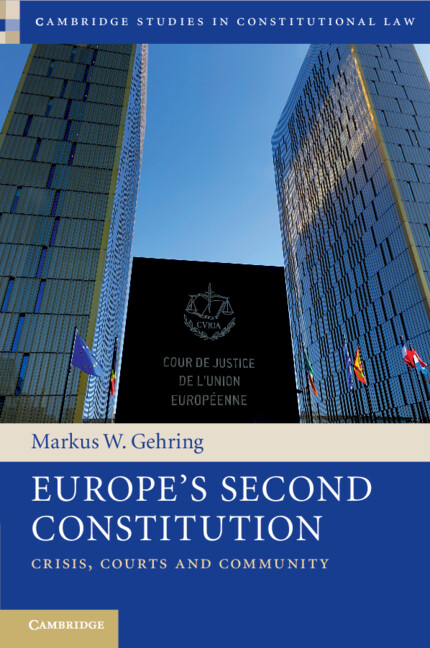

The process of European constitutionalisation is met with extensive scepticism in current national legal and political spheres and in broader circles of public opinion across Europe. By shedding light on these concerns, this book reveals a widespread misunderstanding of constitutional federalism, which permeates the Member State courts, popular media, and many academic communities. A failure to address confusion over this fundamental concept is leading us towards impoverished development of the EU's 'Second Constitution', and even ensuring that the role of both domestic and international European courts in enriching the constitutionalisation process is overlooked and undervalued. In a bid to avoid such consequences, this book explores how federalism and further constitutionalisation - rightly understood in a dialogue of the European courts - may actually change this process and allow a clearer advance toward Europe's Second Constitution for, but also with, the people of Europe.
'Europe’s Second Constitution offers a rich and powerful reminder that while incremental change is a natural development in every 'living' constitution, there must nonetheless also be 'constitutional moments' when a generation leaps forward to address the problems of the future. Europe today requires such a leap - and this wonderful new contribution explores the obstacles in the past and present that continue to block a 'second' EU Constitution.'
Robert Schütze - Professor of European and Global Law, Durham Law School and College of Europe, Bruges
Loading metrics...
* Views captured on Cambridge Core between #date#. This data will be updated every 24 hours.
Usage data cannot currently be displayed.
This section outlines the accessibility features of this content - including support for screen readers, full keyboard navigation and high-contrast display options. This may not be relevant for you.
Accessibility compliance for the PDF of this book is currently unknown and may be updated in the future.
