

Introduction
The scope of the Dopolavoro ferroviario movement is immense, and the possibility of further developments could bring huge benefits to the national economy.
The vast railway organisation, which covers the whole Country with an exceptional network that penetrates even areas with primitive social, intellectual and environmental conditions that are almost resistant to the most advanced forms of new civilisation, will make a remarkable contribution to material and social evolution thanks to its efficient organisation and the unwavering faith of the apostles of the idea. (Pannunzio Reference Pannunzio1926)
This is how Sergio Pannunzio, an intellectual and then undersecretary of state for railways, presented the birth of the Dopolavoro ferroviario (DLF), a social club for railway workers. Established in October 1925, the DLF was the first and largest leisure organisation for public servants during the Fascist dictatorship, counting 264 branches and 157,427 members in the early 1930s.Footnote 1 Designed specifically for employees of the Ferrovie dello Stato (State Railways) and their families, it promoted sporting, cultural, recreational and welfare activities, playing a central role in fascist propaganda and socialisation among railway workers. As this category of workers had shown themselves to be among the most hostile to fascism, the regime used the DLF to strengthen its control over their leisure time, thus penetrating their daily lives. At the same time, the organisation was much more than just a recreational provider. While the dictatorship imposed a dense surveillance network, the DLF enabled railway workers to improve their living conditions and travel, thus broadening their horizons in terms of both action and mindset.
Despite the attention paid to the DLF by the regime and the Ferrovie dello Stato, the size and consistency of its activities, and the role it played among railway workers, historians have rarely explored its history – except in the context of studies focusing on other topics. In The Culture of Consent (1981), Victoria De Grazia has written extensively about the history of the DLF and its role in disciplining railway workers. Some references to its welfare function can be found in Il paese che si muove (2001) by Andrea Giuntini, as well as in Stefano Maggi’s The Italian Railways (2020), but they are included within the broader context of the history of rail transport in Italy. Further insights are offered in studies dedicated to railway workers’ trade unions and their progressive fascistisation (Paolini Reference Paolini1998; Valentinuzzi Reference Valentinuzzi, Maggi and Paolini2000; Petrucci Reference Petrucci and Maggi2007). However, the history of the DLF is generally overshadowed by the conflict over control of its management between the Partito Nazionale Fascista (PNF – National Fascist Party) and the Associazione Nazionale dei Ferrovieri Fascisti (ANFF – National Association of Fascist Railway Workers).
The present article is the first comprehensive study of the creation and development of the DLF during the fascist ventennio. Still active today, the organisation boasts a century-long history and a current network of 102 local associations, headed by the Associazione Nazionale DLF (ANDLF – DLF National Association), and 87,000 members (ANDLF 2020, 5, 13). While the ventennio spans only a small part of this history, it merits closer examination due to its historiographical importance and the DLF’s role during this period.
The events surrounding the DLF, which occurred during the establishment of the Fascist dictatorship in Italy, lie at the intersection of several strands of historiographical research. First, they fit into the broader framework of the history of work and leisure. In doing so, they highlight the changing relationship between companies and employees (Musso Reference Musso2011; Alberti Reference Alberti2024) as well as the central role of leisure in early twentieth-century dictatorial regimes (Corbin Reference Corbin1996; Cavazza and Scarpellini Reference Cavazza and Scarpellini2006). In this sense, the DLF reveals the tension between individual leisure activities and their reorganisation in the interests of the national community, in a political and social context in which the autonomy of individuals was severely restricted, if not eliminated (Cavazza Reference Cavazza, Cavazza and Scarpellini2006, 100–104). In particular, the DLF is an emblematic case of how nineteenth-century corporate paternalism was transformed into more modern forms of assistance, surveillance and social control (Benenati Reference Benenati1997). This process was evident in the railway sector, where the specific nature of the work, sense of belonging and strategic importance of public employment reinforced the role of after-work institutions as mediators between the state and workers. In fact, the history of the DLF is closely linked to that of the Ferrovie dello Stato and railway trade unionism. However, it is also tied to other aspects of the professional and political life of railway workers, including their attitude to fascism and expressions of dissent and organised antifascism (Taborri Reference Taborri2019), as well as to the more general transformations of the railway sector during this period.Footnote 2
Second, the DLF is a valuable source for analysing the policies of the fascist welfare state (Pavan and Stolzi Reference Pavan and Stolzi2025), particularly with regard to the roles of the Opera Nazionale Dopolavoro (OND – National Afterwork Club), the national leisure network, and the PNF in socialising leisure time (Vigilante Reference Vigilante2014). Studying the sporting, educational, cultural and tourist initiatives promoted by this alliance enables us to closely examine the strategies adopted by the regime to build consensus among workers and consolidate support for Benito Mussolini’s totalitarian project (Corner Reference Corner2012). While a comparative approach is beyond the scope of this article, establishing connections with other after-work organisations, such as that of FIAT (Bonello Reference Bonello, Canella and Giuntini2009), may offer food for thought for broader reflections on the dynamics of social discipline and the politicisation of workers’ leisure time, not only in Italy but also in other European dictatorships of the twentieth century, particularly the German (Timpe Reference Timpe2017) and Portuguese (Valente Reference Valente1999) regimes.
Finally, the DLF’s history is worth studying on its own. By reconstructing its origins, institutional profile and development, we can chart the trajectory of an organisation that, throughout the ventennio, involved thousands of railway workers across the country, continuing its work after the Second World War and up to the present day.
The article is structured as follows. First, it explores the origins of the DLF, its internal organisation and the formation of a national network. It then examines the activities promoted in the welfare, agricultural, educational and cultural, recreational and sporting sectors. Finally, it discusses the DLF’s role within the regime’s broader programme of disciplining and fascistising railway workers, as well as the limitations and contradictions of this project. The research draws on extensive documentation consulted at the Archivio Centrale dello Stato in Rome, the Biblioteca della Fondazione ‘FS Italiane’, the ANDLF library and the Biblioteca Nazionale Centrale in Florence. In particular, the sources include the annual reports of the Ferrovie dello Stato for the financial years under investigation and a rich collection of periodicals produced by the DLF’s provincial branches. Combined with information obtained from the daily press and publications of the period, this wealth of material has compensated for the absence of an institutional archive, which was lost and only reconstituted in the 1990s with the establishment of the ANDLF.
Origins and structure of the DLF
Long before the advent of fascism, the Ferrovie dello Stato set up a welfare policy for employees and their families. In 1907, the Gestione case economiche per i ferrovieri was founded with the aim of building low-cost housing for railway workers near railway hubs, followed in 1919 by the establishment of building co-operatives. The Opera di previdenza a favore del personale ferroviario (a welfare fund for railway workers) was created in 1913 to provide subsidies and loans to families, whereas foundations such as those dedicated to Elena di Savoia and Vittorio Emanuele III primarily aimed their services at children and ran holiday camps. Finally, the Provvida consumer co-operative was introduced in 1925 to provide basic necessities at controlled prices (Valdivieso Reference Valdivieso, Chini, Meliarca and Proia1956, 291–318).
The DLF operated within this framework, building on an important tradition of mutual aid, recreational clubs and sports associations (Maggi Reference Maggi2017). The DLF was established by Royal Decree No. 1908 of 25 October 1925, later converted into Law No. 562 of 18 March 1926. Although it was set up as a structure directly dependent on the Ferrovie dello Stato, it was co-ordinated with the OND (Bollettino Ufficiale delle Ferrovie dello Stato 1925, 623–626). The OND itself had been established not long before, by Royal Decree No. 582 on 1 May 1925. The project was promoted by Mario Giani, an engineer at Westinghouse Corporation, and dated back to 1919. Inspired by the paternalistic model of leisure management that was common in the English-speaking world, it was designed to alleviate conflicts between company management and the working classes by engaging the latter in educational activities that would raise their cultural level and distract them from alcohol consumption and gambling (Thiesse Reference Thiesse and Corbin1996, 327–330). During the Fascist regime, the OND gradually changed its structure and functions; it became a welfare and leisure organisation, but also a means of disciplining Italians, even outside working hours (De Grazia Reference De Grazia1981, 24–33).
The DLF had a central office at the general directorate of the Ferrovie dello Stato, as well as a central commission tasked with the supervision of the branches and the management of financial resources. The latter included representatives from the railways, the OND and the ANFF. The functions of the provincial branches were set out in specific model statutes that standardised internal structures and defined hierarchical relationships (Ufficio Centrale del DLF 1930). The stated aims were the ‘healthy and productive use of railway workers’ free time, through institutions designed to develop their physical, intellectual and moral capacities’. These objectives were part of a broader project that included propaganda initiatives and publications aimed at highlighting efforts to ‘elevate the railway class’ (Bollettino Ufficiale delle Ferrovie dello Stato 1925, 623). The approach was similar to that of the OND: the focus was on providing assistance and opportunities for personal development, as well as organising workers’ leisure activities (Vigilante Reference Vigilante2014, 65–69). The DLF aligned well with this general vision, tailoring its content to the characteristics of railway workers.
However, the organisation had another purpose: to appease the discontent of this category of workers, who had been heavily affected by fascist repression. A few weeks after Mussolini’s government came to power in December 1922, the Ferrovie’s board of directors was dissolved and replaced by Edoardo Torre, a long-time fascist commissioner with extensive powers. Over the next two years, the company underwent a major overhaul, reducing its workforce from 227,000 in 1922 to 174,000 in 1924 (Maggi Reference Maggi2020, 157). These measures particularly affected antifascist railway workers (Valentinuzzi Reference Valentinuzzi, Maggi and Paolini2000, 30).
Furthermore, internal relations within the railway company were restricted, and when the Italian railway workers’ union – the Sindacato ferrovieri italiani – was dissolved in February 1925, all forms of trade union representation were eliminated. Royal Decree No. 1631 of 22 July 1923 and the subsequent reforms of staff regulations effectively abolished the eight-hour working day, increased night work and overturned the main trade union achievements of the previous decade. At the end of 1923, wages and pensions were cut and new professional classifications were introduced, aimed at creating divisions among staff (Valentinuzzi Reference Valentinuzzi, Maggi and Paolini2000, 31–32). These measures generated strong opposition among railway workers, who tried to reorganise their union, creating a state of unrest that also involved ANFF members. Mussolini himself had to intervene, placing the ANFF under the direct control of the PNF (Petrucci Reference Petrucci and Maggi2007, 165–166).
Not only was dissent repressed through regulatory measures, but also through the actions of the Railway Militia. Founded in May 1923, it became a special corps of the Voluntary Militia for National Security, the armed wing of the PNF. The Railway Militia’s duties included maintaining public order on transport services and defending the assets of the Ferrovie dello Stato, as well as supervising its workforce (Maggi Reference Maggi2020, 158).
At the same time, the model statute drawn up by the DLF central office in 1930 introduced references to the ‘spirit of collegiality’ among staff, appealing to their sense of duty towards the authorities (Ufficio Centrale del DLF 1930, 5). The new regulations for railway workers, which made it compulsory to swear allegiance to the king and renounce membership of political parties or movements that opposed fascism, also date back to 1925 (Petrucci Reference Petrucci and Maggi2007, 163).
DLF members were grouped into four categories: active members (railway workers still in service, who paid a monthly fee of two lire); supporters (who paid higher contributions); distinguished members (former managers or members recognised for exceptional merits); and associate members (young people and family members). Membership entailed a number of benefits, ranging from access to club premises, libraries and sports facilities to discounts with affiliated companies and services (Ufficio Centrale del DLF 1930, 7–8). Furthermore, railway workers who had held positions in the DLF could benefit from career advancement, even though these positions were exclusively reserved for members of the PNF or the ANFF (Petrucci Reference Petrucci and Maggi2007, 166).
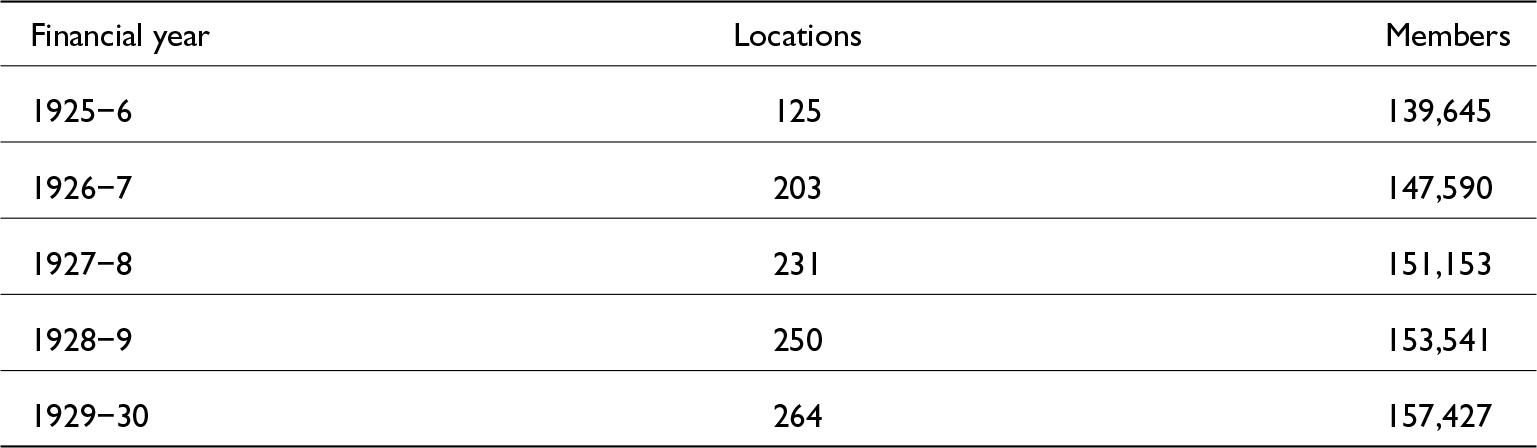
The DLF grew rapidly. In 1926, it had almost 140,000 members, rising to over 157,000 by 1930 – nearly the entire railway workforce. At the same time, it developed a widespread network of offices: 125 in 1926, increasing to 264 by 1930.
Number of locations and members of the DLF for the period 1925–30; Amministrazione delle Ferrovie dello Stato (1925–30)
The branches were located at stations, depots and railway junctions. The Ferrovie invested considerable resources in constructing facilities that included sports fields, theatres and multi-purpose spaces. The propaganda department carefully planned the inaugurations of the branches, often scheduling them for 28 October, the anniversary of the March on Rome. These events included speeches, performances and sports competitions (Berezin Reference Berezin1997, 101–102). The most notable example was the opening of the DLF headquarters in Rome, designed by Angiolo Mazzoni. It was inaugurated in 1930 in the presence of Mussolini, party secretary Augusto Turati and minister of communications Costanzo Ciano. The monumental building housed a large theatre, rooms for cultural and sporting activities, and spaces reserved for the ANFF (La Stampa Reference La Stampa1930).Footnote 3
Growth of the national network
Despite the rapid expansion of the DLF network, many independent clubs had survived the fascist repression and still existed by the end of the 1920s. An OND survey found that about 5,000 associations were active outside the institutionalised system, including several railway associations. Examples include the Sempre Avanti! club in Varese, which was closed by the prefect in 1925 because of its political connotations, and the Società della tazza in Novara. Although the latter was openly apolitical, it was targeted because it competed with the official DLF (De Grazia Reference De Grazia1981, 44–45).
When the OND was placed under external administration in 1927, pressure on independent associations intensified; the survival of the associative fabric that had emerged in previous years was undermined by propaganda and coercion, on the one hand, and by the economic crisis, on the other. Joining the DLF network became inevitable if a branch wanted access to funds and visibility, but this meant giving up symbols, statutes and autonomy, erasing decades of associative traditions. The Nuovo circolo ferrovieri in Pisa (established in 1897), for example, was transformed into a DLF branch in 1926 (Il Dopolavoro Ferroviario 1926), whereas the branches in Gorizia (1922) and Treviso (1919) were dissolved by prefectural order (Centro Culturale Sud Ferrovia 1995, 16). The Ancona branch, founded before 1884, was devastated by Blackshirts during the antifascist strikes of August 1922 (Battistoni 2001, 10).
The fascistisation of the branches was also evident in the names they were given. While some maintained links with tradition by commemorating railway workers who had died in the First World War, it was more common to dedicate them to local fascist figures or prominent leaders. The branch in Castellammare Adriatico, for instance, took its name from Attilio Forlani, a stoker killed during a socialist strike, and the above-mentioned Ancona branch was dedicated to the squadrista Mario Zaccheroni, who died in Rimini in 1922. Several branches were named after Roberto Farinacci, a former railway worker and PNF secretary.Footnote 4 The one in Rimini was even named after the Duce’s father, Alessandro Mussolini (Calbucci Reference Calbucci2002, 48), while the Livorno branch honoured Costanzo Ciano (Casini and Sanguinetti Reference Casini and Sanguinetti2016, 12). The branches in Trieste and Forlì were even permitted to bear the name of Benito Mussolini, a highly symbolic recognition that entitled them to significant privileges.Footnote 5
In the 1930s, the DLF’s responsibilities increased. It was entrusted with running canteens, refectories and nurseries. Reports by the Ferrovie mention the management of after-school clubs and the creation of new nurseries in Florence, Mestre, Rome and Venice. The DLF also awarded ‘Dopolavoro prizes’ to the most hard-working tenants of low-cost housing (Camera dei Fasci e delle Corporazioni 1939, 1543–1544).
The largest of the 25 active canteens – which served 700 meals a day – were located in Bologna, Trieste, Venice and Milan. In response to the worsening economic situation, low-cost restaurants were opened in Gorizia, Milan, Rivarolo and Sampierdarena from 1926 onwards, strengthening the DLF’s welfare activities (Amministrazione delle Ferrovie dello Stato 1931, 204).
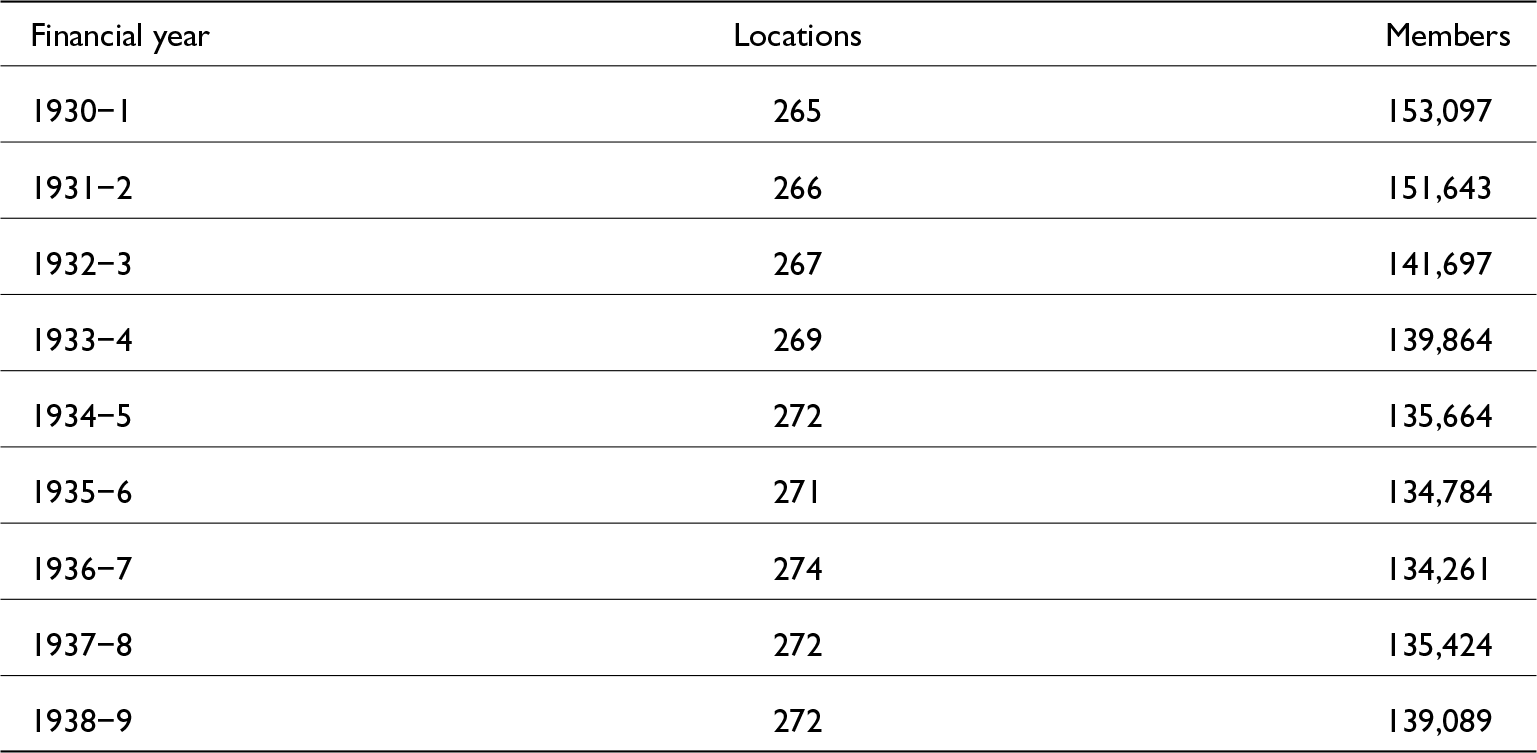
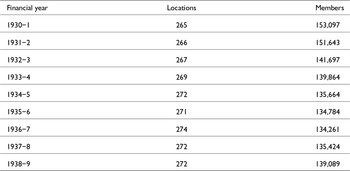
Between the 1920s and 1930s, the DLF’s membership grew significantly, reaching 151,643 in 1931–2. However, as competition from road transport increased and the economic crisis worsened, the Ferrovie’s financial situation deteriorated, resulting in further redundancies and retirees not being replaced (Valentinuzzi Reference Valentinuzzi, Maggi and Paolini2000, 39). This led to a sharp reversal of the trend. In 1935, membership fell to 135,664, a number that remained essentially stable until the Second World War. The number of branches reached 272 by the mid-1930s, peaking at 274 in 1937.
Number of locations and members of the DLF for the period 1930–9; Amministrazione delle Ferrovie dello Stato (1930–9)
From a financial perspective, Royal Decree No. 1908 guaranteed an annual income of 800,000 lire from the Ferrovie and an additional 10 lire per member. In 1925–6, income totalled 1.4 million, while expenditure amounted to 1.3 million. Thanks to the expansion of the network, income increased to 4.65 million in 1926–7, compared to expenditure of 3.5 million. Both figures stabilised at around 4 million in 1929–30. Membership fees amounted to 792,710 lire, meaning that the largest contributions still came from the railway company. The main expenses, on the other hand, were subsidies to the branches, totalling over 1.8 million lire in 1929–30.Footnote 6
In the early 1930s, the DLF’s net assets exceeded 7.4 million lire. From 1931–2, funding fell for the cultural sector – which had previously been the largest recipient of funding – while that for sport and welfare (251,380 lire) increased to become the main area of funding (Amministrazione delle Ferrovie dello Stato 1932, 178). This reflected the DLF’s evolution, characterised by an increase in material aid during the crises of 1929 and 1935, but also an alignment with the regime’s anthropological revolution project, which aimed to shape healthy, strong and combat-ready citizens (Cassata Reference Cassata2024).
During that decade, the Italian leisure management model attracted international attention. Foreign observers praised the organisational efficiency guaranteed by the DLF, even if they occasionally criticised its authoritarian approach. Delegations of foreign railway workers visited the branches, including a Hungarian group in 1929, about 200 French railway workers in 1935 and a Bulgarian delegation in 1939, which was welcomed in Milan (Amministrazione delle Ferrovie dello Stato 1934–5, 54–55; Corriere della Sera 1939). Similar systems for organising leisure time to that of the OND were adopted by other fascist dictatorships (De Grazia Reference De Grazia1981, 239–240), starting with the German Kraft durch Freude in 1933 (Baranowski Reference Baranowski2004; Timpe Reference Timpe2017), followed by the Fundação Nacional para a Alegria no Trabalho in Portugal in 1935 (Valente Reference Valente1999), the Ergatiki Estia in Greece in 1937 (Petrakis Reference Petrakis2005, 134–135) and Educación y Descanso in Spain in 1939 (Jiménez Aguilar Reference Jiménez Aguilar2025). Hence, at the outbreak of the Second World War, the DLF boasted an extensive network, thousands of members and assets of around 30 million lire, most of which were destroyed in the war.
Activities in the provincial branches
The DLF was divided into branches promoting activities in the welfare, agricultural, educational and cultural, recreational and sporting sectors. The structure was flexible: a single branch could form a partnership with others and expand it depending on the number of members, available resources and participation rates (Ufficio Centrale del DLF 1930, 6).
Welfare played a central role. It covered the management of canteens, refectories and nurseries, as well as hygiene and first aid courses. In addition to these initiatives, school awards were given to encourage railway workers’ children, beauty contests were held, and rewards were given for the cleanliness of public housing. One of the most prominent activities was the ‘Befana fascista’ (fascist Epiphany), which was officially established in 1928 but had already become widespread before that. Combining charitable tradition with patriotic rhetoric and propaganda (Bosworth Reference Bosworth2005, 291–292), the celebration involved thousands of children receiving gifts adorned with fascist symbols and images. The event became firmly embedded in the railway workers’ collective memory. After the war, its ideological aspects were eliminated and it was renamed ‘Befana del ferroviere’, the ‘railwayman’s Befana’ (Voci della Rotaia 1973, 26).
The DLF was also responsible for promoting vacation colonies for children, either by the sea or in the mountains. The regime had organised holidays for railway workers’ children ever since the 1920s as part of its system of mass control, continuing a practice that had already been popular in liberal Italy (Pivato Reference Pivato2023). This approach was based on nineteenth-century medical theories that fresh air and the sea had beneficial properties for young people (Berrino Reference Berrino2011, 142–146). State colonies were generally entrusted to the Opera nazionale maternità e infanzia (National Mother and Child Agency), the PNF’s youth organisations or the OND.
The Ferrovie dello Stato had facilities for the children of employees, which were entrusted to the aforementioned welfare fund for railway workers or the Vittorio Emanuele III foundation, while the DLF helped to organise trips and arrange accommodation, assisted the workers and promoted holidays in their facilities. In 1938, as many as 15,000 children and orphans of railway workers were accommodated in seaside colonies, for example in Cagliari, Catania, Messina, Palermo, Pesaro, Rimini, Sassari, Senigallia, Viareggio, Zara and Lido Calambrone in Pisa, as well as in the following mountain resorts: Valnegra and Rota d’Imagna in the Bergamo area; Montepulciano in the province of Siena; and Campo di Giove in the Abruzzo Apennines (Amministrazione delle Ferrovie dello Stato 1932–3, 52).
The agricultural sector developed in line with the regime’s economic policy, which progressively became oriented towards autarky. Starting in 1926, chicken coops and crops were located alongside the railway lines, but the real breakthrough came in 1928, when the ministry of communications made 200,000 hectares of land available to the branches (Fontana Reference Fontana1928, 468–470). Vegetables, fruit and eggs were distributed among the members, while national competitions and the prolific production of technical manuals encouraged agricultural activity. Within a few years, fish farms and breeding farms producing chickens, rabbits, bees and silkworms had been set up, and thousands of trees had been planted (Amministrazione delle Ferrovie dello Stato 1935–6, 56). The agricultural branches took part in the ‘Battle for Grain’ (Gagliardi Reference Gagliardi2007) and provided ornamental plants to decorate railway stations. Following the invasion of Ethiopia and the sanctions imposed by the League of Nations, the agricultural commitment was strengthened, as were the efforts to collect precious metals and funds in support of the war effort. In addition, a prewar competition to celebrate the best floral displays at stations was relaunched. The initiative spread throughout Italy from 1926, rewarding railway facilities that best cared for their green spaces and floral decorations (Ente Nazionale Industrie Turistiche 1927).
The educational and cultural branch, too, played a leading role, especially in the 1920s. Technical training courses were organised in areas such as stenography, electrical engineering and telegraphy, as well as general culture courses, vocational programmes and even musical training. At a local level, funding was provided for scholarships, after-school activities, conferences and magazines. The branches in Bologna, Turin and Genoa were particularly active, involving hundreds of students. From the 1930s onwards, boys were offered courses in telegraphy and radio-telegraphy, while girls were given lessons in dressmaking and sewing (Amministrazione delle Ferrovie dello Stato 1932–3, 190). The results of these courses were sometimes presented to the public in the form of exhibitions and displays, such as the Exhibition of Women’s Work organised by the branch in Crotone (Amministrazione delle Ferrovie dello Stato 1929–30, 196).
Cultural trips and excursions were particularly relevant, seen as opportunities for both education and leisure. In synergy with the OND and other tourist agencies, the PNF aimed to promote a ‘national tourist awareness’ (Capuzzo Reference Capuzzo2019, 81), encouraging knowledge of the Italian territory among the working classes. Along the same lines were the ‘popular trains’, special third-class trains that ran on public holidays, allowing families of modest means to visit the seaside, mountain resorts or art cities at reduced rates (Maggi Reference Maggi2020, 181). Some branches even organised trips abroad, including to Paris, Brussels and Budapest. However, as the international political situation changed, the destinations gradually shifted towards Central and Eastern Europe, particularly Germany (Notiziario 1929; Ozi Fecondi 1930).
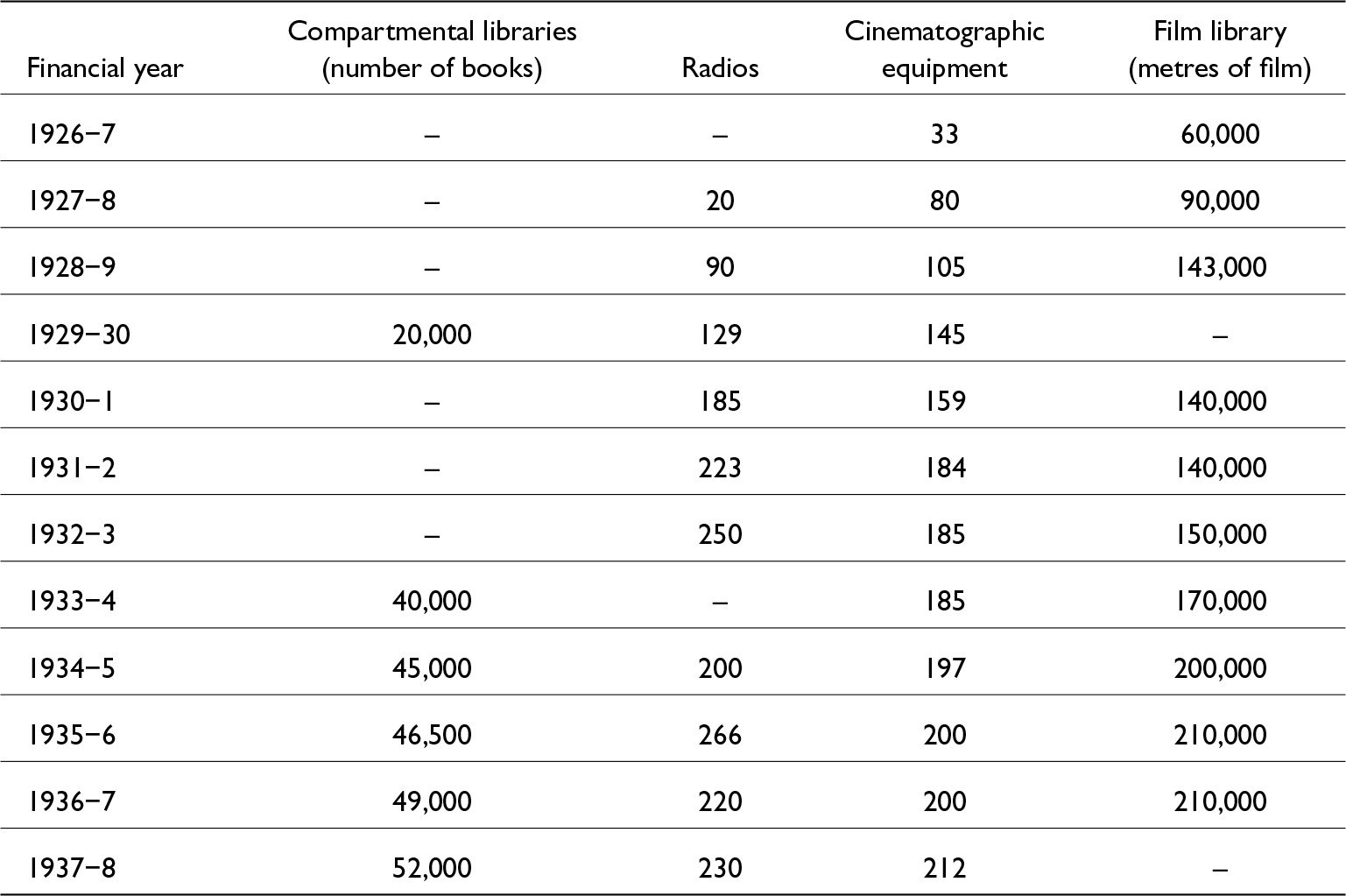
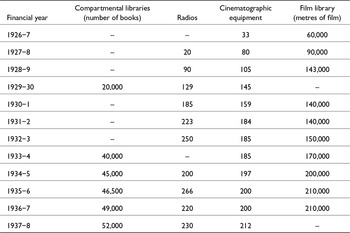
Another important tool was the creation in 1926 of circulating libraries. These allowed railway workers in peripheral areas to receive books at home. By 1936, the network included more than 46,000 volumes, with thousands of loans per year (Amministrazione delle Ferrovie dello Stato 1935–6, 57). As for the reading rooms in the DLF branches, these contained newspapers, DLF magazines and regime-sponsored publications. The general cultural offering was thus complemented by a range of patriotic and propaganda texts.
Some indication of the reading material available in the branches can be found in the 1931 Catalogo generale of the DLF library in Bologna. The collection was divided into thematic sections. In addition to magazines, periodicals and newspapers, it included literary works, ranging from light Italian and foreign literature to Latin and Greek classics; scientific publications covering art, art history, philosophy, pedagogy, religion and hagiography; and children’s books and Italian and foreign-language collections. Furthermore, there were specialist areas dedicated to economics, social sciences and law (including political texts and biographies), mathematics, physics and natural sciences, as well as history, geography, encyclopaedic works and theatre. In addition to a wide range of classics (e.g. Dante, Homer and Cicero), the library’s collection also included popular novels, such as The Count of Monte Cristo, The Three Musketeers and The Lady of the Camellias by Alexandre Dumas, as well as a large selection of works by Lev Tolstoy and Fyodor Dostoevsky. The Risorgimento was represented by Giuseppe Garibaldi’s writings. Not surprisingly, it contained many propaganda works, such as collections of speeches by Arnaldo and Benito Mussolini, the Dux by Margherita Sarfatti and Storia della rivoluzione fascista (History of the Fascist Revolution) by Giorgio Alberto Chiurco (Dopolavoro ferroviario di Bologna 1931). Overall, this selection clearly reflects the dual purpose of the branches’ cultural dimension: offering a wide range of general interest material and including tools for fostering a fascist consciousness.
The DLF central office invested heavily in the purchase of film and radio equipment – also via a collaboration with the LUCE institute – for the production of films on various aspects of railway operations (Amministrazione delle Ferrovie dello Stato 1926–7, 279). In 1928, LUCE’s film library contained 90,000 metres of film, while the number of film equipment items increased from 80 in 1927 to 145 in 1930, reaching 212 in 1938. In fact, many branches had projectors, and the number of radio sets rose from 129 in 1930 to 250 in 1933.
Number of libraries and film and radio equipment items for the period 1926–38; Amministrazione delle Ferrovie dello Stato (1926–38)
Finally, the introduction of so-called fascist Saturdays in 1935 encouraged participation in recreational and sporting activities, which meant that workers had more free time (Dogliani Reference Dogliani2024). There were many theatre, choir and music groups, but sport attracted the most attention. Popular disciplines such as bocce, tamburello, cycling and swimming coexisted with more expensive sports such as rowing, fencing and tennis, which were made accessible thanks to subsidies and agreements. Some branches specialised in specific sports: rowing in Naples and Treviso, swimming in Venice, and mountaineering in Albenga and Verona (Amministrazione delle Ferrovie dello Stato 1930–1, 206). Sports competitions, such as skiing races and cycling tours, were celebrated as tests of discipline and vigour, accompanied by markedly militaristic rhetoric. Railway workers usually had their own championships and competitions, separate from other categories of workers, but some delegations occasionally participated in OND competitions and achieved significant results (La Stampa della Sera 1934).
The media covered news of sports victories, giving them space in newsreels and on radio broadcasts. These events served not only to document the DLF’s success, but also to strengthen the sense of belonging among members, who gathered in cinemas or around radio sets in the branches. Spectacular feats such as climbs, cycling expeditions and rowing challenges were commonplace, and were often supported and publicised by the regime. One notable accomplishment was the crossing of the Tyrrhenian Sea by five DLF rowers from Livorno, who covered 1,155 kilometres in 23 stages aboard the Cortellazzo – a boat named in honour of Costanzo Ciano, Count of Cortellazzo – to reach Palermo on 2 October 1929 (Casini and Sanguinetti Reference Casini and Sanguinetti2016, 20–29).
Surveillance and dissent
The DLF’s activities spanned the entire ventennio, reflecting the regime’s transformations and underlying tensions. Thanks to its growing membership, widespread territorial coverage, architectural investment and variety of activities, the DLF was one of the most significant manifestations of the relationship between fascism and leisure time. At the same time, its development was made possible by an established framework of solidarity and social initiatives, showcasing the regime’s ability to leverage and redirect existing structures.
In addition to providing leisure time activities, the DLF also influenced the workers’ daily habits, continuing a tradition of paternalism dating back to the nineteenth century. Cultural and hygiene education, sport and the ‘healthy’ use of leisure time were considered effective tools for steering railway workers away from vices and harmful lifestyles. The clubs were meant as an alternative to pubs and cafés, directing workers towards constructive activities and, most importantly, away from politics. However, they often turned into places where alcohol was consumed and gambling took place, a trend encouraged by the presence of refreshment areas authorised to sell inexpensive drinks (Vigilante Reference Vigilante2014, 109–110). This is demonstrated by reports to the Livorno police headquarters regarding gambling at the local DLF branch, to the extent that the chairman, Giuseppe Casini, was ‘invited to put a stop to the obscenity’ (Casini and Sanguinetti Reference Casini and Sanguinetti2016, 18).
Alcohol and gambling weren’t the only enemies to be fought. The circulation of potentially subversive ideas was also considered harmful. For this reason, ‘No talking about politics’ signs were displayed at the entrance to the clubs (Lodi Rizzini Reference Lodi Rizzini1986, 18). Nevertheless, many of the activities were clearly political in nature, supporting the regime. The very decision to separate railway workers from the rest of the working class – including through special competitions and separate facilities – was politically significant, given the category’s leading role in the trade union struggles of the early postwar years (De Grazia Reference De Grazia1981, 139).
Despite these precautions, a certain critical spirit persisted. Italo Briano, a railway worker from 1917 to 1942, recalled that many colleagues did not ‘willingly accept the ballyhoo of the time, which attributed all achievements exclusively to the “regime”’. If anything, the results achieved at work and in the growth of the DLF were due ‘to the spirit of discipline and sacrifice that had always been the pride of the entire class and not the exclusive merit of a political oligarchy’ (Briano Reference Briano1977, 206).
Moreover, the Fascist regime was familiar with the dissent of railway workers. In January 1923, Mussolini himself recalled the railway workers’ antifascist activity in the months preceding the March on Rome. In response to a witness statement from the Sindacato ferrovieri italiani, the Duce severely reprimanded the association, reminding it of its role in the strikes and protests against the Blackshirts (Il Popolo d’Italia 1923). Control over the category continued even after the trade unions were dissolved. In 1928, the Railway Militia established an investigative office responsible for monitoring the behaviour of railway workers, not only during their shifts but also at the DLF branches (Valentinuzzi Reference Valentinuzzi, Maggi and Paolini2000, 40–41).
Nevertheless, forms of resistance remained, exacerbated by worsening economic and working conditions. Between 1930 and 1933, approximately 22,000 railway workers were dismissed as part of corporate restructuring, which led to increased workloads and wage cuts. Inflation and the rising cost of living further undermined the situation, profoundly affecting the morale of the workforce (Valentinuzzi Reference Valentinuzzi, Maggi and Paolini2000, 38–39). Many adapted, ‘grumbling but obeying’, as Briano recalled, but old convictions were occasionally reaffirmed, leading to attempts at political and trade union reorganisation (Briano Reference Briano1977, 206).
For many long-time antifascists, the DLF was an opportunity to blend in, an ‘entryist’ solution to continue the struggle from within, in line with the guidelines of the antifascist organisations that had been re-established abroad. The socialist – and later communist – Edmondo Bozzani recalled frequently attending the clubs to ‘camouflage’ his position, only to discover that ‘in that environment, fascist faith was nothing more than a thin veneer’ (Bozzani Reference Bozzani1977, 23). Similarly, former trade unionist Giuseppe Foco described how an antifascist cell had infiltrated the management of the DLF in Alessandria between 1930 and 1933 (Valentinuzzi Reference Valentinuzzi, Maggi and Paolini2000, 42). These were, of course, niche experiences made risky by their clandestine nature. However, they helped maintain an associative mindset and a system of values that would resurface during the war.
In the 1930s, the DLF branches were gradually restructured. As a result, they increasingly became instruments of mobilisation and propaganda. The original focus on productivity and discipline gave way to a stronger emphasis on welfare and propaganda, partly in response to the economic crisis. The branches became part of an apparently apolitical mechanism created by the regime to manage leisure time, which would prove useful for mediating conflicts and shaping consensus (De Grazia Reference De Grazia1981, vii).
The activities of the branches were reorganised when Italy entered the war. Canteens were made more efficient, new services were set up for those called back to duty and for soldiers en route to the front, and support was provided to the agricultural sector in its efforts to cultivate crops and raise livestock (Amministrazione delle Ferrovie dello Stato 1939–40, 93). Most importantly, the assistance offered to railway workers and their families, among others, could be a real lifesaver for a civilian population struggling to make ends meet. In fact, the distribution of food, clothing and basic necessities in the branches – partly supported by the Ferrovie dello Stato – enabled survival in an increasingly difficult context (Lodi Rizzini Reference Lodi Rizzini1986, 14).
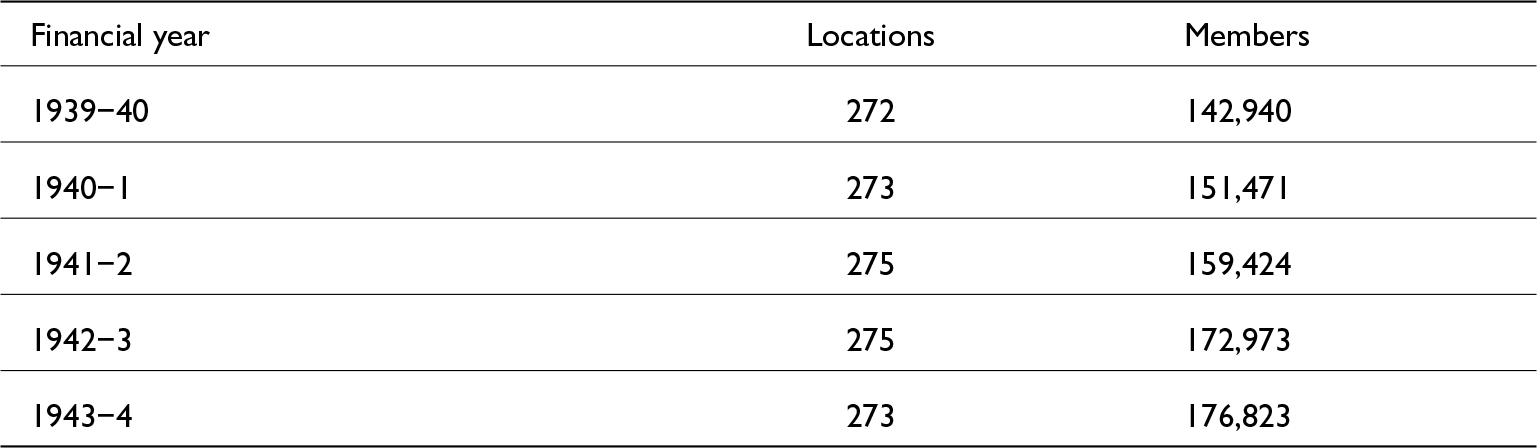
Despite the call to arms and the bombings that targeted railway junctions and decimated the number of active branches, the DLF continued to provide aid, implementing ‘a set of measures that were unmatched by those attempted by other administrations or bodies during that tragic period’ (Amministrazione delle Ferrovie dello Stato 1943–4, 77). This effort was one of several attempts to address the shortcomings of the fascist welfare system. From the first weeks of fighting, the latter could barely meet the needs of a growing number of people made vulnerable by the war (Giorgi and Pavan Reference Giorgi and Pavan2021, 198). For this reason, too, the number of members grew steadily during the war, encouraged both by the regime and, above all, by the need to access the assistance guaranteed by the DLF.
Number of locations and members of the DLF for the period 1939–44; Amministrazione delle Ferrovie dello Stato (1939–44)
Conclusion
As explained in the introduction, this article is based mainly on official sources: regulations, reports and other documents produced by the Ferrovie dello Stato, as well as periodicals and publications edited by the DLF branches. This documentation provides a wealth of quantitative data and descriptive information, enabling a reconstruction of the activities carried out within the branches, the DLF’s organisational structure and the relationships between the centre and the periphery in a comprehensive and, at times, detailed manner. Taken together, these sources reveal how the DLF evolved during the Fascist dictatorship, highlighting both the breadth of the initiatives promoted and the organisation’s presence across the territory.
However, the official nature of the documentation has prevented a thorough analysis, because it primarily reflects the image that the organisation and the regime wanted to project. Hence, it was crucial to compare different sources and adopt a critical approach that would identify discrepancies and dissonances within the official narrative. In fact, comparing the personal accounts of frequent participants and employing a long-term perspective that embraced the entire ventennio proved particularly useful in revealing the internal contradictions of the DLF, its shifting character in relation to political and social changes, and, more generally, the everyday practices in the branches. While the latter confirm the railway workers’ strong attachment to the DLF as a place where they could socialise and receive assistance, they also cast doubt on its ability to fascistise and discipline the workforce.
Over the course of its first 20 years, the DLF made a significant contribution to the regime’s ‘culture of appearances’ (Colarizi Reference Colarizi1991, 104–106). Its partnerships and growing focus on welfare, as well as the success of its initiatives and sporting achievements, all helped to reinforce the image of a country capable of progressing despite its structural problems and economic crisis. In doing so, it diverted attention away from the hardships of everyday life, worsening working conditions and the progressive deterioration of state institutions.
The continuity between fascism and post-fascism in the organisation of leisure time has never been a secret, nor has the ongoing continuity within the associated institutions (Ciuffoletti Reference Ciuffoletti1995, 15). Think, for example, of the endless battles to change the regulatory framework underpinning the DLF in postwar years (Paolini Reference Paolini1998, 123–125). Yet there were also ruptures and transformations, both within the organisation itself and in the way railway workers experienced it.
The DLF helped to integrate workers into the regime’s framework, sometimes so effectively that it erased existing associations and a rich heritage of traditions. Fascism was firmly ingrained in the branches and, in many cases, exerted control over the most delicate and potentially dangerous activities. Moreover, membership guaranteed significant advantages that became indispensable when the economic situation deteriorated in the 1930s and during the war. Thus, holding positions of responsibility within the branches and acting in accordance with the party’s instructions could lead to career advancement, facilitating pay rises and promotions.
At the same time, everyday life in the branches became part of a tradition of associational participation and critical thinking that served as an antidote to the most radical ideological pressures. Various personal accounts and historical research have confirmed that DLF membership often expressed only apparent adherence to the fascist model, rather than sincere identification with its dictates (De Grazia Reference De Grazia1981, 140). Associational participation and esprit de corps among railway workers, coupled with their practical work experience and the influence of older colleagues, preserved an internal memory and fostered resilience. At the same time, sporting activities, trips abroad and training courses helped to strengthen their critical thinking, broadening their cultural horizons and opening their eyes to different worlds. Ultimately, this highlighted the vulnerability of the disciplinary system built around the DLF.
The fascistisation of the DLF was substantial, but never fully realised, which confirms the ‘imperfect’ nature of the machine erected by the Fascist state (Melis Reference Melis2018). As the DLF had its own offices and staff connected to the Ferrovie dello Stato, it was less influenced by the party than other organisations. Furthermore, many provincial branches were only fascist in appearance, maintaining organisational and cultural dynamics that had existed prior to the regime’s rise to power (De Grazia Reference De Grazia1981, 139).
In this precarious balance between political imposition and cultural resilience, the DLF reflected the changing times: a place of leisure, associational participation and welfare provision that simultaneously revealed the tensions and contradictions of a regime that stubbornly sought to shape citizens’ daily lives. The experience of war, destruction and reconstruction marked the beginning of a new era for the DLF and the country, both materially and morally – an era characterised by a tension between rupture and continuity, between the recovery of tradition and inevitable innovation. This is reflected in the fact that, following the fall of the Fascist regime, the first free meetings to reconstitute the unions and discuss the future of railway workers in democratic Italy were held in DLF premises (Bozzani Reference Bozzani1977, 32).
Translated by Andrea Hajek
Acknowledgements
I would like to thank the anonymous reviewers for their help and comments. I am also grateful to Stefano Maggi, who read a first draft of the article.
Competing interests
The author declares none.
Michelangelo Borri is a postdoctoral researcher at the University of Siena. He holds a PhD from the universities of Trieste and Udine and has been a visiting researcher at Maastricht University and the Instituto de Ciências Sociais at the University of Lisbon. His research interests include fascism and the history of rail transport in Italy. He has presented papers on these topics at national and international conferences and published several contributions. His most recent publication is Storia del Dopolavoro ferroviario italiano (Il Mulino, 2025).


 Open access

