


1. Introduction
Non-invasive brain stimulation (NIBS) encompasses a range of techniques that modulate brain activity without invasive intervention, such as high-voltage stimulation methods and low-current electrical stimulation. Among these methods, transcranial Direct Current Stimulation (tDCS) has gained particular attention due to its simplicity, portability, and affordability. tDCS involves delivering a weak direct electrical current to the brain via sponge electrodes placed on the scalp, typically administered by trained professionals in clinical or research settings (Reference Nitsche, Cohen, Wassermann, Priori, Lang, Antal and Pascual-LeoneNitsche et al., 2008). Studies have shown that tDCS can positively influence cognitive functions (e.g., decision-making, memory, and attention), and motor and sensory functions in both patients and healthy individuals (Reference Lefaucheur, Antal, Ayache, Benninger, Brunelin, Cogiamanian, Cotelli, De Ridder, Ferrucci, Langguth, Marangolo, Mylius, Nitsche, Padberg, Palm, Poulet, Priori, Rossi, Schecklmann, Vanneste and PaulusLefaucheur et al., 2017; Reference Wang, Chang, Yang and ChengWang et al., 2023).
While the safety of tDCS has been extensively investigated (Reference Bikson, Grossman, Thomas, Zannou, Jiang, Adnan and WoodsBikson et al., 2016), the efficacy studies have focused on optimising electrode placement and montages to enhance its neuromodulator effects (Reference Bikson, Grossman, Thomas, Zannou, Jiang, Adnan and WoodsBikson et al., 2016; Reference DaSilva, Volz, Bikson and FregniDaSilva, 2011). Evidence-based guidelines have been developed aiming to standardise protocols and optimise therapeutic outcomes across various health conditions (Reference Fregni, El-Hagrassy, Pacheco-Barrios and BrunoniFregni et al., 2021). Furthermore, studies exploring tDCS application in healthy individuals and athletes for performance enhancement have been rapidly increasing, expanding its scope beyond therapeutic contexts (Reference Yu, Zhang, Nitsche, Vicario and QiYu et al., 2024).
Successfully developing improved brain stimulation devices requires a multifaceted approach that addresses technical, regulatory, and user-related challenges (Reference Pacheco-Barrios, Gianlorenco, Camargo, Dodurgali, Tangjade and FregniPacheco-Barrios et al., 2024). The authors argue that individuals’ perceptions of tDCS are critical to the design of these devices, as they directly influence acceptance and usability. Although previous research indicate that perceptions and expectations influence engagement and adherence to therapeutic interventions, there is a lack of understanding of participants’ perceptions of non-invasive brain stimulation (Reference Stillianesis, Cavaleri, Tang and SummersStillianesis et al., 2022). Reference Griffiths, Walker, Jiang, Noel-Johnson and ZafarGriffiths et al. (2023) investigated patients’ views and experiences of depression symptoms regarding the feasibility, acceptability, usability, and value of a self-administered tDCS device used in combination with a well-being behaviour therapy software but did not delve into the design dimensions and features.
Addressing this gap, for the first time in the literature, this paper elicits perceptions from multiple stakeholders (i.e., healthy volunteers, tDCS practitioners/neurophysiologists, designers) regarding the most used fixation methods for tDCS electrodes, through the adaptation of the Repertory Grid Technique (RGT) in three separate focus groups (Reference Hogan and HorneckerHogan & Hornecker, 2013). The research questions are “What are the perceptions of diverse stakeholders on the most commonly used electrode fixation methods in tDCS devices?” and “What are the design dimensions of tDCS devices to enhance user experiences?” Within this scope, this paper contributes to the literature with design dimensions for tDCS devices and recommendations for new TDCs designs that are not only functional but also trusted and embraced by patients and healthy individuals, while also enhancing the tDCS application experience for experts.
2. Related work
2.1. Dimensions of tDCS interaction and design
The design of tDCS devices has evolved significantly, driven by their expanded use from controlled laboratory settings to clinical and home environments. While early research predominantly focused on the clinical efficacy and neurophysiological mechanisms of tDCS (e.g., Reference Kekic, Boysen, Campbell and SchmidtKekic et al., 2016), as the technology has matured, a growing body of work has emphasised the critical role of user-centred design (Reference Pacheco-Barrios, Gianlorenco, Camargo, Dodurgali, Tangjade and FregniPacheco-Barrios et al., 2024).
Employing a variety of methodologies–from qualitative interviews and usability testing to hardware development and analyses of online communities–previous studies collectively build a more robust account of tDCS design. A dominant theme across these studies is the critical need to improve the usability of tDCS devices, particularly for non-expert users. The most significant usability barrier identified is the correct and consistent placement of electrodes. For instance, an investigation of the DIY tDCS community revealed a strong desire for better guidance, as users often rely on unofficial online forums to learn complex procedures (Reference JwaJwa, 2015). A usability study testing a novel, flexible cap with integrated electrodes found it to be significantly more reliable and comfortable for both participants and practitioners compared to conventional strap-and-sponge methods (Reference Hunold, Ortega, Schellhorn and HaueisenHunold et al., 2020). Similarly, the development of a universal headset designed for easy and repeatable self-application emphasises the importance of form factor in simplifying the setup process (Reference Valter, Moreno, Grym, Gabay, Nazim and DattaValter et al., 2021).
The subjective physical experience of receiving stimulation is a critical factor influencing user acceptance, expectations, and the scientific validity of clinical trials. Multiple double-blind, sham-controlled studies have rigorously assessed comfort and the nature of physical sensations, and found that tDCS at 2mA is well-tolerated, with the most common sensations being mild and transient tingling, itching, or warmth that occur primarily at the beginning of a session (Reference Russo, Wallace, Fitzgerald and CooperRusso et al., 2013; Reference Wallace, Cooper, Paulmann, Fitzgerald and RussoWallace et al., 2016). Crucially, these studies confirmed that participants could not reliably distinguish between active and sham stimulation, validating the effectiveness of blinding in randomized controlled trials (Reference Wallace, Cooper, Paulmann, Fitzgerald and RussoWallace et al., 2016). The dimension of physical comfort and the management of these sensations are therefore vital, informing technical design choices like as automated ramping of current and ergonomic headgear design to ensure a safer, more tolerable use.
2.2. User perceptions in design-related disciplines and RGT
Users’ perceptions have core importance in design. Because product design involves various decisions, people’s perceptions of different products can elucidate their needs and concerns (Reference Hassenzahl and WesslerHassenzahl and Wessler, 2000). Prior to any actual experience of use, anticipation of the experience occurs, resulting in the formation of expectations (Reference Karapanos, Zimmerman, Forlizzi and MartensKarapanos et al., 2009; Reference NormanNorman, 2004; 2013). The repertory grid technique (RGT) is a structured procedure for eliciting perceptions of a defined area of interest (Reference Hogan and HorneckerHogan & Hornecker, 2013). The theoretical basis for exploring how individuals construct their personal understanding is rooted in Personal Construct Psychology (Reference KellyKelly, 1955), which states that “a person’s processes are psychologically channelised by the ways in which he anticipates events”. Accordingly, not only real, but also anticipated experiences shape individuals’ personal constructs, influencing how they understand and interact with the world. A key aspect of this process is about how they distinguish between things–perceiving some as similar and others as different. These discriminations are bipolar and called constructs (e.g., hard and soft).
RGT has been used as a research method to collect both qualitative and quantitative data (Reference Fallman and WaterworthFallman & Waterworth, 2005). It is used as a structured interview that aims at exploring how individuals construct the world around them. Participants are guided to compare a set of elements (objects, events, people) along self-defined bipolar constructs, then rate each element against each construct. From a design perspective, this personal construct tells something about not only the person who defines it, such as their perceptions, but also the products’ attributes (Reference Hassenzahl and WesslerHassenzahl & Wessler, 2000).
The interest in RGT from design and HCI disciplines increased after the millennium (e.g., Reference Hassenzahl and WesslerHassenzahl & Wessler, 2000; Reference Fallman and WaterworthFallman & Waterworth, 2005). To illustrate, RGT has been used in the exploration of on-body interactive products (Reference Kuru and ErbuğKuru & Erbuğ, 2013), aesthetics of interaction (Reference Mőttus, Karapanos, Lamas and CocktonMőttus et al., 2016), shape-changing interfaces (Reference Kwak, Hornbæk, Markopoulos and Bruns AlonsoKwak et al., 2014), user experience from the perspective of children (Reference Süner and ErbuğSüner & Erbuğ, 2016), information visualisation (Reference Kurzhals and WeiskopfKurzhals & Weiskopf, 2018), situated software practices (Reference Kirk and BlincoeKirk & Blincoe, 2021), first impression formation of visually impaired people (Abendschein et al., 2021), and participatory design of games for older people (Reference Fonseca, Duque, Silva and IshitaniFonseca et al., 2022). RGT can complement other tools and methods used for eliciting design requirements. Its usage can be extended or adapted in diverse ways and contexts to capture stakeholders’ expectations (Reference Fonseca, Duque, Silva and IshitaniFonseca et al., 2022). Thus, various RGT adaptations have emerged, including Reference Hogan and HorneckerHogan & Hornecker’s (2103) RGT process. They blended RGT with focus groups to elicit multi-person constructs without traditional rating or statistical measures.
3. Methodology
An adapted RGT study was conducted to explore the perceptions of diverse stakeholders regarding the most common fixation methods for tDCS electrodes. Since the study aimed to elicit perceptions, direct current was not applied to the participants. The RGT method was blended with focus groups, considering the recommendations of Reference Hogan and HorneckerHogan & Hornecker (2013). The main purpose of carrying out adapted RGT sessions was not to elicit product-specific insights but to use them as tools to help participants articulate diverse aspects through comparison and collective discussion. Three RGT sessions were organised in a focus group format with tDCS practitioners, volunteers, and designers. Each session included six participants. A total of eighteen people were recruited through open calls issued separately for each group. For practitioners, the criterion was being a tDCS practitioner with professional or research experience with tDCS systems. For volunteers, it was having prior exposure to or interest in tDCS applications. For designers, it was having experience in interaction design or product development.
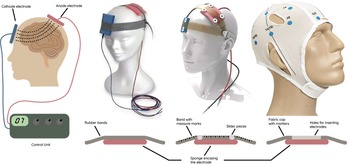
The same procedure was followed for all the sessions, with minor alterations depending on the participant group. After an initial benchmarking study surveying the range of electrode fixation approaches and systems, three categories were identified: (1) rubber band–based, (2) adjustable measured bands, and (3) marked fabric bonnets. The benchmarking decisions and the identification of the most commonly used tDCS systems were guided by the last two authors, both experienced tDCS practitioners. For the sessions, a representative example from each category was selected based on market availability and ease of use (Figure 1). The study received ethical approval from Koç University.
Types of electrode fixation methods used in the study

Figure 1 Long description
Panel A: A diagram showing the placement of cathode and anode electrodes on the head, connected to a control unit. Panel B: A mannequin head with electrodes attached using rubber bands. Panel C: A close-up of the band with measurement marks and slider pieces, highlighting the sponge encasing the electrode. Panel D: A mannequin head wearing a fabric cap with markers and holes for inserting electrodes.
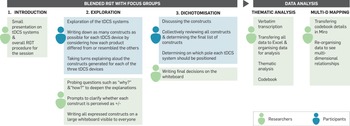
Overview of study methodology

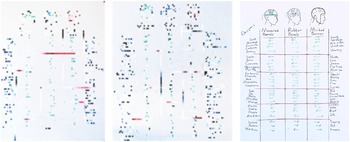
A pilot study with six designers has been carried out before the actual sessions. Figure 2 provides an overview of the overall methodology before diving into details. The initial step of the session was introduction, which started with a short presentation explaining the study procedure and fundamentals of tDCS. Participants then individually examined each tDCS device for five minutes to familiarise themselves with different tDCS devices. The construct elicitation step began by individually writing as many constructs as possible for each tDCS device, reflecting on how each product differs from or resembles the others. Then, participants took turns explaining their constructs aloud for each of the three tDCS devices. When necessary, ‘why?’ and ‘how?’ questions were asked to probe the explanations and to guide them in indicating whether their constructs were positive or negative. In the meantime, one of the researchers noted the mentioned constructs on a large whiteboard visible to all participants. When no new constructs emerged from similarities or differences among tDCS devices, the group reviewed all constructs, discussed them, and finalized a list of included constructs. Finally, there was no rating, but dichotomisation where the group was asked to put each element under one dimension or the other. The final decisions were noted down on the whiteboard (Figure 3). This step served only as a visual reminder for all participants to see the mentioned structures during the workshop and to finally go over them together.
Dichotomisation outputs for three participant groups

Figure 3 Long description
Panel A: A heatmap displays dichotomisation outputs for the first participant group. The heatmap uses a color gradient to represent different values, with red indicating higher values and blue indicating lower values. The axes are not explicitly labeled, but the grid pattern suggests a comparison of multiple variables or conditions. Panel B: Another heatmap shows dichotomisation outputs for the second participant group. Similar to Panel A, this heatmap uses a color gradient to represent values, with red indicating higher values and blue indicating lower values. The grid pattern is consistent with Panel A, suggesting a similar comparison of variables or conditions. Panel C: A table lists dichotomisation outputs for the third participant group. The table includes columns for different conditions or variables and rows for individual participants or data points. The table is divided into three sections: Measured Bands, Rubber Bands, and Marked Bands, each with corresponding data entries.
The average session duration was 2 hours, with a 15-minute introduction to the tDCS systems and RGT approach, followed by 45 minutes for exploring the tDCS systems and 45 minutes for discussing the constructs. The interview recordings were transcribed verbatim, and the data were prepared for qualitative analysis in Excel. Since a content-analytic procedure could be applied also to the qualitative data collected throughout an RGT session (e.g., Reference Tomico, Karapanos, Levy, Mizutani and YamanakaTomico et al., 2009), and the study had different sessions, which aimed to use an adapted version of RGT to structure the elicitation of diverse perceptions of tDCS devices in a group setting, a thematic analysis (Reference Braun and ClarkeBraun & Clarke, 2006), synthesising data from all sessions, was utilised. The first author first coded the practitioners’ data, and the second author closely reviewed this initial analysis to discuss and agree on the coding strategy and the initial draft of the codebook. The first author then continued coding the full dataset, during which the first two authors met regularly to discuss emerging issues and reach agreement on the final set of codes and the overall analysis content. All analysed data were transferred to Miro board and organised to map multi-dimensional relationships (Figure 4). In both Excel and Miro, the participant group that addressed each dimension, as well as the trade-offs between dimensions, were also noted.
Snapshots from the thematic analysis in Excel and a multidimensional map in Miro

4. Dimensions of tDCS design
4.1. Ease of use
One of the primary requirements for ease of use is ease of understanding. Using terminology familiar to tDCS practitioners in different or unfamiliar ways was perceived as misleading. For instance, seeing the ‘motor’ and ‘bottom’ labels together on the same strap confused them in the study, as they automatically thought of the upper strap when they saw the ‘motor’ label. Beyond the self-explanatory nature of the products and the clear and descriptive information on them, the similarity of tDCS designs to existing products (e.g., hat, bonnet) was positively received. In product structures where strap use is very open-ended, determining which straps should go where and the angles between them proved challenging. Plus, it was emphasised that dynamics that may occur during product use should positively impact understandability. For example, sponge-like parts change colour as they get wet, informing practitioners about the procedure and thus increasing understandability.
Difficulties in attaching the product to the head or placing the electrodes were perceived as affecting the ease of installation, which was determined by having an open-ended structure, offering an integrated solution that leaves little to think about for the user, having a shape and material that allows easy fit to the head, and having contrasting colours with the hair. Since measurement is a crucial step in the tDCS procedure, ease of measurement was also emphasised. The self-measured and labelled structure (e.g., Easystrap), including the electrode placement straps, was positively received.
Speed of application was associated with ease of use. It was stated that assembling and fitting parts in multi-part structures could take longer. Yet, even when there could be multiple parts, it was suggested that having designated parts for securing certain parts and/or electrodes, as well as features like Velcro, could facilitate rapid assembly and fastening. The difficulty of cleaning the material and the need for a longer drying time even when it can be cleaned, were also mentioned as design considerations in relation to speed of application.
Self-installability was also considered as an aspect of ease of use. Features such as a single-piece overall structure, the ability to prepare and attach electrodes externally, straps with built-in measurements, and resemblance to daily products, such as a cap or bonnet, were perceived as facilitators of self-installation.
It was stated that, beyond placing the product and/or electrodes on the head, it is important to be able to manipulate the product or electrodes during the procedure. This ease of intervention was thought to be influenced by several product features. To illustrate, the product’s closed nature can make it difficult to lift and manipulate if hair gets stuck under the electrode or if the electrode needs to be wet during tDCS application. The material’s inflexibility and rigidity can also make access underneath difficult.
Flexibility in use was noted by participants. The product’s specific design for a specific area/stimulation target suggested that modification and variety of uses would be difficult, thus allowing for a single montage and limited use. The ability to adjust the product’s structure and the size of electrode placement surfaces (e.g., straps), to expand the area to accommodate a larger number of electrodes, to be used on different areas of the head, to place electrodes in multiple positions, and the flexibility of the material to adapt to different head shapes were counted as factors that provide flexibility in various ways of use.
4.2. Trust
According to all participant groups, dimensions related to trust were deemed crucial for a positive user experience. Installation accuracy was at the forefront. The ability of the electrode to be firmly fixed to the product and to remain in place even if the hair slips could affect installation accuracy. The feeling of slippage was suggested to be reduced by the product’s closed structure/form, its good fit on the head, the surfaces supporting the electrodes being made of firm, non-slip, and adjustable materials, and a certain degree of adhesion/cling to the scalp. However, when the product has a closed form, depending also on the material and structure, the electrodes were thought to get completely wet during wetting; or the possibility of the wetness spreading on the head caused concerns about current leakage. Some participants also stated that the product should be supportive even when mobile, supporting feelings of safety. The possibility of loosening or turning at the pivoting and joining points of surfaces like straps and rulers was linked to installation inaccuracy. Additionally, requiring excessive traction during electrode placement can give patients the impression that something is amiss. It was noted that even in cases where there are defined parts for fixing the electrodes to the relevant surfaces or straps, the electrodes being bent or not lying flat will negatively affect the application, and therefore their design should be carefully considered.
Low impedance was also emphasised. Electrode impedance refers to the resistance to current flow at the electrode–skin interface. High impedance can reduce stimulation effectiveness by limiting current delivery, while low and stable impedance ensures consistent and safe neuromodulation. Factors such as failure to maintain stable and sufficient pressure on the electrodes and the presence of dense or unmanageable hair interfering with electrode–skin contact are considered to affect impedance by disrupting the flow of electrical current during tDCS application. Thus, the hardness and flexibility of the material, the product enclosure, the shape of the electrodes (e.g., rectangular), and the structure of the areas that hold/press them were identified as important for proper impedance in tDCS designs.
Ease of standardisation was also linked to trust. Practitioners noted the ability to attach electrodes to the same location in repetitive measurements, indicating that marked electrode locations are helpful. Still, they emphasised that even with known electrode locations (e.g., Bonnet), electrode placement (vertical or horizontal) can affect standardisation.
Trust in tDCS products was also related to perceived hygiene. Discoloration and yellowing of plastics (e.g., non-uniform discolouration of grey over time, yellowing of transparent materials), the idea that the fabric has been used by someone else, and the smell of the material were found disturbing, indicating that they may reduce willingness to use the device.
The professional appearance of the designs was also noted as critical to trust. Having clearly defined electrode locations supported the perception that the designs were thoughtful, sophisticated, and professional. Conversely, the lack of specific electrode locations (e.g., simply tucked under perforated tape) was perceived as sketchy and primitive. When a product contained multiple parts/features, resolving these parts simultaneously or having many of them defined (e.g., marked measurements on a strap) fostered the feelings of trust by making the product appear sophisticated, technical, and scientific.
Yet, the balance between amateur-professional appearance was also found important for its threatening-calming appearance. When the product appears overly technical and medical, participants perceived it as intimidating, frightening, and anxiety-inducing. Visual complexity and similarities to negative hospital-related experiences or products created a sense of tension and negatively impacted product confidence. For example, pre-measured straps on hard, transparent plastic tapes were described as making one feel as if they were about to undergo surgery, or they were described as similar to products used during blood draws, evoking a sense of pain. Another example was the possibility that electrodes, due to their material or rigidity, could leave a mark similar to a burn or sweater scar when they touch the skin, evoking tension and a feeling of discomfort. Simple designs made the procedure feel less serious and created a less intense mental association with electricity.
4.3. Comfort
Material suitability was emphasised for physical comfort, particularly in areas that come into contact with the skin. In addition to the material being non-itching, non-sticky, non-sweaty, non-tight, light and airy, the psychological comfort created by the material’s pleasant texture and feel was also perceived as important. It was noted that a fabric or fully enclosed product can itch after being worn for a certain period. It was also thought that even if the fabric isn’t wet, it can still give the impression of wetness, negatively affecting the comfort. Furthermore, according to the participants, the material should not have a bad odour when wet with a solution. It was discussed that straps/rulers made of hard plastic may stick to the skin, cause sweating, and create an unpleasant sensation. Products that meet the user excessively (e.g., areas passing over the chin and neck) were also found to negatively impact both physical and psychological comfort. It was also crucial that the product did not hurt (e.g., did not pull or tear hair) or give the perception of doing so.
4.4. Visual appeal, durability and affordability
The tDCS design’s stylish, aesthetic, and high-quality appearance was also commented on for its visual appeal, besides its relation to trust. The potential availability of tDCS products in homes or on mobile conditions was discussed to increase the importance of visual appeal. A product routinely used for healthcare purposes at home or during mobile conditions was expected to feel high-end. The completely enclosed design, yellowing of the colour, cold colours, or a simple appearance all caused the product to be perceived as ugly.
Some participants stated that the product should be durable for long-term use. Durability and wear-resistance were mainly important for tDCS practitioners. Enclosed tDCS designs created the perception that cables are prone to damage.
tDCS design features created some perceptions of financial accessibility. Products with a large area surrounding the head, or modular structures allowing multiple electrodes and assembly were found to be more economical than products allowing a single and specialised use. Additionally, it was stated that when products are portable (e.g., light, with few parts, simple), they become less expensive as they allow multiple use in different contexts.
5. Discussion
We identified six primary dimensions for tDCS device design: Ease of Use, Trust, Comfort, Visual Appeal, Durability, and Affordability. Extracting insights from three distinct stakeholder groups–volunteers, practitioners, and designers–not only validated these dimensions but also revealed significant and insightful divergences in their priorities. These differences are not arbitrary; they reflect the distinct roles, goals, and contexts of each group.
While some design attributes are valued by all participant groups, many are specific to the stakeholder’s role. We found a consensus on the importance of Comfort (both physical and psychological), and the high-level dimensions of Ease of Use and Trust.
At a more granular level, this consensus held for core sub-dimensions: ‘Ease of Understanding,’ ‘Self-Installability,’ and ‘Installation Accuracy’ were deemed critical by everyone. This indicates a shared, foundational need for a tDCS device that can be applied correctly (even by a layperson), and provides clear assurance of that correctness.
However, beyond this core agreement, priorities diverged significantly. The most pronounced differences emerged in dimensions related to the device’s logistical and technical lifecycle. Durability and Affordability, for instance, were key considerations for practitioners and designers, who must manage device purchase, upkeep, and long-term use in a clinical or research context. Volunteers, whose interaction with the device is temporary and who do not bear the direct financial or maintenance burden, did not identify these as primary concerns.
Within Ease-of-Use, while sub-dimensions like ‘Flexibility in Use’ and ‘Ease of Measurement’ were critical for practitioners and designers, who require devices that can adapt to different protocols, head sizes, and research needs, volunteers prioritised simplicity and did not express a need for these advanced functionalities. Furthermore, ‘Ease of Intervention’–the ability to safely halt or modify a session–was a unique and critical requirement raised only by practitioners, reflecting their clinical responsibility and oversight. In an interesting pairing, ‘Speed of Installation’ was highly valued by designers (who aim for efficiency) and volunteers (who may be anxious or desire a shorter procedure), but less so by practitioners, who may prioritise methodical accuracy and safety over speed.
A similar pattern appeared within the Trust dimension. While ‘Installation Accuracy’ was a shared goal, the technical markers of trust differed. Practitioners, logically, were highly concerned with ‘Low Impedance’ and ‘Ease of Standardisation,’ as these are objective, technical indicators of a reliable and replicable clinical intervention. These concerns were less salient for designers and volunteers, who may lack the technical expertise to prioritise them. ‘Hygiene’ also emerged as a stronger concern for practitioners and volunteers–the two groups who are directly involved in the physical, patient-contact aspects of the procedure.
Finally, while Visual Appeal was a theme for all groups, its importance in relation to trust was clearly stratified. While designers and volunteers placed a high value on aesthetics, which aligns with modern consumer expectations for wearable technology, practitioners were less concerned with the device’s general visual appeal in relation to trust.
Our findings also contribute to the shift in tDCS use contexts, from supervised clinical applications to unsupervised, remote, or home-use contexts. This shift introduces a fundamental design challenge by removing the trained practitioner–who traditionally manages setup, ensures safety, and provides psychological reassurance–from the process.
Our results, particularly the strong consensus from the volunteer group, provide a clear blueprint for designing in this new expert-free context. They show that the challenge in designing home-based tDCS devices is no longer just technical; it is psychological. The emphasis of volunteer participants on ‘Ease of Understanding’ and ‘Self-installability’ is not just a desire for convenience, but a prerequisite for enabling user autonomy. Yet, this desire for autonomy is deeply linked to their high prioritisation of ‘Installation Accuracy’. This combination reveals a critical insight: users are willing to take control, but they are also anxious about performing a session incorrectly. Thus, a successful home-use device must not only be simple to apply but must also provide clear feedback that the setup is correct. This feedback mechanism becomes the primary source of user confidence and trust, a direct replacement for the reassuring nod of a clinician.
Results highlights the importance of the device’s emotional and aesthetic impact, a factor often overlooked in traditional medical device design. The high value volunteers placed on ‘Comfort’ and a ‘Calming Appearance’ is particularly relevant for home use. A device used daily in a personal space, like a bedroom, becomes part of the user’s life. If it is uncomfortable, or if its appearance is perceived as threatening or medical (as the Trust dimension revealed), it can become a source of anxiety and stigma. Thus, our findings suggest that for home-use tDCS to be successful, designers must prioritise the user’s psychological well-being as much as the device’s technical functionality, creating an experience that is not only effective but also empowering, reassuring, and unobtrusive.
Nevertheless, our study has several limitations. As intended, the study focused on eliciting perceptions of anticipation in a casual context. Conducting the study in a real-world setting and incorporating actual use experiences in both clinical and home-use scenarios might have provided additional insights. Furthermore, participants were recruited through open calls. Although we applied inclusion criteria and ensured participants’ relevance to the study’s purpose, future studies should aim to include a broader range of experiences to achieve greater heterogeneity in expertise and prior exposure.
6. Conclusion
This study aimed to identify the key design dimensions of tDCS devices by capturing and comparing the perspectives of its three primary stakeholder groups: volunteers, practitioners, and designers. Using the Repertory Grid Technique, the study revealed a rich set of constructs, structured into six primary design dimensions: Ease of Use, Trust, Comfort, Visual Appeal, Durability, and Affordability. Aside from these dimensions, it uncovered different stakeholder perspectives. While practitioners emphasised technical and logistical dimensions such as ease of standardisation and durability, volunteers were understandably focused on the immediate user experience, highlighting self-installability and a calming appearance. By illuminating such differences, this study provides a nuanced, multi-perspective understanding that can directly guide the design of future tDCS devices, helping to balance competing needs and create products that are effective, usable, and trusted in clinical and domestic contexts.
Acknowledgements
This project has been supported by TÜSEB Health Institutes of Türkiye, within the scope of Emergency R&D Project Support Program, Project Number: 31320.


 Open access

