

Archaeological education and professional training in California are entering a period of rapid change driven by new legal reforms. In 2023 and 2024, Assembly Bills (AB) 226 and 389, introduced by State Representative James Ramos (Serrano/Cahuilla), responded to ongoing failures by public universities to comply with the Native American Graves Protection and Repatriation Act (NAGPRA). This legislation mandates the repatriation of ancestral remains and cultural items, encompassing both Indigenous belongings and Ancestors’ ecofacts in funerary and nonfunerary contexts, to their respective Tribes and restricts their use in teaching and research in the University of California (UC) and California State University (CSU) systems. Tribal communities that voiced their concerns during listening sessions played a key role in shaping these new laws by calling for greater accountability from universities. These changes are prompting a reevaluation of archaeological training by requiring a reconsideration of how traditional methods are being taught given new ethical standards and frameworks.
Many of the collections affected by these laws had been excavated without consultation with Tribal groups, often as part of salvage and research projects conducted across the state. For decades, these materials were central to training in public and applied archaeology programs, particularly within the CSU system, which has long served as a key pipeline into careers in cultural resource management (CRM). Today, CRM remains the dominant force shaping archaeological practice (Altschul and Klein Reference Altschul and Klein2022), a trend reinforced by the scarcity of academic job opportunities that increasingly directs archaeologists toward applied careers (Speakman et al. Reference Robert J., Hadden, Colvin, Justin Cramb, Jones and Kling2018). Although discussions about how to better align archaeological training with the applied sector have long focused on how universities can better prepare students for the workforce (e.g., Blanton Reference Blanton1995; Elston Reference Elston1997; Green and Doershuk Reference Green and Doershuk1998; Larkin and Slaughter Reference Larkin and Slaughter2021; Pluckhahn Reference Pluckhahn, Bender and Messenger2019; Schuldenrein Reference Schuldenrein1995; Welch et al. Reference Welch, Burley, Driver, Hogg, Jayasundera, Klassen, Maxwell, Nicholas, Pivnick and Dore2018), we approach this question from the other side—that is, examining whether and how CRM firms are responding to broader reforms in higher education.
To explore this issue, our article presents one of the most comprehensive surveys of CRM employers in the state of California. We first document hiring priorities and perceived skill gaps for entry-level positions within the current CRM landscape. We then assess how well educational programs prepare students to meet these demands by highlighting emerging training and research models in California that reflect and contribute to broader regional reforms. We find that aspects of academic preparation align with CRM needs, but tensions remain, particularly regarding the industry’s emphasis on technical experience versus the academy’s focus on broader anthropological training. Although we focus on California, this conversation is relevant to a national audience not only because CRM remains the dominant employer in archaeology but also because current transformations in California exemplify broader shifts in the field. We argue that these shifts point toward a “new” public archaeology that meets the present and fosters inclusive, collaborative, and ethically accountable engagement with the past. We situate this emerging framework within the broader evolution of the discipline, identifying how the field is actively being reshaped in this new direction.
Toward a “New” Public Archaeology
Public archaeology has followed a long, winding path, having been framed in terms of CRM, the public as a whole, various sectors of the public, and community engagement. Perhaps the best working definition is offered by Moshenska (Reference Moshenska2017:3): public archaeology is “practice and scholarship where archaeology meets the world.” This sets a good baseline for thinking about the field and inviting reflection on the present moment. Indeed, such awareness makes clear that a reimagined public archaeology has been taking shape for some time. For example, Green and colleagues (Reference Green, Green and Schuldenrein2021) propose a “new public archaeology” that bridges the gap between CRM and academic archaeology. Similarly, González-Ruibal and colleagues (Reference González-Ruibal, González and Criado-Boado2018) advocate for a “new public archaeology” that actively engages in broader public debates, stands against reactionary populism, and is committed to critical teaching. Klein and colleagues (Reference Klein, Goldstein, Gangloff, Lees, Ryzewski, Styles and Wright2018) reinforce the urgency of this shift, arguing that the discipline’s future hinges on building meaningful relationships with the public.
Although our perspective aligns with these calls for a more inclusive “new” public archaeology, it diverges in some important ways. We argue that archaeology is becoming increasingly multidisciplinary. Historically, the discipline has focused on grand theories and paradigms; however, today, the field has adopted a pluralistic approach (Abadía Reference Moro Abadía2023). This influences public archaeology by encouraging the incorporation of innovative methods and epistemologies. As emphasized by McDavid and Brock (Reference McDavid, Brock, Gnecco and Lippert2014), activism, multivocality, collaboration, and community engagement are essential to modern public archaeology. These approaches involve diverse voices, embrace multiple perspectives, and foster community partnerships to cocreate knowledge. Building on these principles, Tushingham and Fulkerson (Reference Tushingham, Fulkerson, Stapp and Longenecker2021) argue that public archaeology is “by, with, and for the people,” reflecting its commitment to inclusivity and shared authority in research and practice. This “new” public archaeology draws on these methods and remains mindful of the applications and implications of our work (see also Bollwerk et al. Reference Bollwerk, Connolly and McDavid2015 Brown et al. Reference Brown, Timbrook and Bardolph2018; Colwell Reference Colwell2016; Kimmel et al. Reference Kimmel, Katz, Lewis and Wilk2023; Schneider and Panich Reference Schneider and Panich2022; Silliman and Ferguson Reference Silliman, Ferguson, Ashmore, Lippert and Mills2010).
CRM has intersected with public archaeology since McGimsey’s (Reference McGimsey1972) call for a publicly accountable practice. Although originally rooted in legal compliance, the field has evolved to prioritize ethical responsibility and collaboration with communities affected by heritage decisions. For example, Section 106 of the National Historic Preservation Act (NHPA) mandates consultation with federally recognized Tribes when projects may affect historic properties. AB 52 of the California Environmental Quality Act (CEQA) mirrors these requirements at the state level. Similarly, federal and state repatriation laws, such as NAGPRA—which applies specifically to federally recognized Tribes—and CalNAGPRA—which extends consultation rights to nonfederally recognized Tribes recognized by the state—establish legal and ethical frameworks for collaborative engagement with Indigenous communities. Although these laws do not apply to all descendant communities, such as immigrant or diasporic groups, the broader shift toward inclusive, community-centered practice reflects growing attention to questions of representation and accountability across the field (see Dunnavant et al. Reference Dunnavant, Justinvil and Colwell2021). As legal requirements become more entwined with ethical commitments and community collaboration, the boundary between academic and applied archaeology has become increasingly difficult to define, supporting White and coworkers’ (Reference White, Weisman, Tykot, Wells, Davis-Salazar, Arthur and Weedman2004) assertion that “all archaeology is public archaeology.”
Additionally, archaeology has become increasingly reflexive. Events such as the COVID-19 pandemic and the Movement for Black Lives have underscored systemic inequalities, prompting archaeologists to critically reconsider the societal impact of their work (Flewellen et al. Reference Flewellen, Dunnavant, Odewale, Jones, Wolde-Michael, Crossland and Franklin2021; Gamble et al. Reference Gamble, Claassen, Eerkens, Kennett, Lambert, Liebmann and Lyons2021; VanDerwarker et al. Reference VanDerwarker, Brown, Gonzalez and Radde2018). Scholars challenge the discipline’s colonial foundations and ties to Western scientific paradigms (Schneider and Hayes Reference Schneider and Hayes2020) and emphasize practices that promote Indigenous sovereignty (Laluk et al. Reference Laluk, Montgomery, Tsosie, McCleave, Miron, Carroll and Aguilar2022). At the same time, frustration is mounting within the profession over persistent marginalization based on race, ethnicity, gender, sexuality, and disability (Heath-Stout Reference Heath-Stout2024). This current phase of public archaeology thus demands a more inclusive and reflexive praxis that deeply engages local communities, challenges the discipline’s historical biases, and promotes a more equitable future.
This broader transformation toward a new public archaeology is already evident in California’s legislative efforts to reshape how archaeology is taught and practiced by giving Indigenous peoples control over their own cultural belongings and heritage. Although these values are becoming institutionalized within public universities in our state, it remains unclear how CRM companies are responding to these shifts and what they currently prioritize. To better understand these dynamics, we surveyed CRM employers across California to assess their expectations for entry-level archaeologists after the passing of AB 226 and AB 389. This case study thus offers a critical lens into what CRM companies value versus how students are currently being trained. Our findings suggest that if CRM and academic training are to move forward together, both must actively participate in shaping a new public archaeology.
Goals and Methods: The Bridging Archaeological Education and Practice Project
The Bridging Archaeological Education and Practice Project was initiated by the Women in California Archaeology (WCA; 2023–2024) in response to discussions about the increasing skills gap between CRM expectations and educational training. WCA was established to support and mentor women archaeologists, reflecting the growing presence of women in higher management and research roles in California archaeology. Even though the focus is primarily on women, WCA acknowledges the importance of inclusivity and recognizes the diverse experiences of individuals across the gender spectrum. One of its aims is to offer guidance on resumes and other professional skills crucial for students entering the field by identifying skills to highlight and advising on areas where students need to improve. This effort led to discussions about the adequacy of university training in preparing students for jobs in archaeology. With the recent passage of AB 226 and AB 389, we were interested in examining how these legislative changes affect the skills and knowledge required to secure a job in CRM.
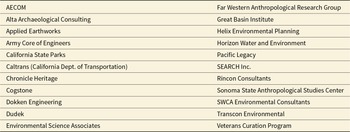
Several key issues guided the formation of our survey. First, we sought to understand the entry-level experiences that CRM firms prioritize, given the evolving educational landscape and limitations on traditional teaching materials. Our initial focus on field schools led us to explore broader skill sets valued in CRM practice. As we developed the survey, additional interconnected themes surfaced, including the importance of educational background, networking opportunities, other relevant experiences, and pathways for career advancement within the field. With the groundwork laid, we organized the “WCA Survey to Help Students in California Archaeology” at the CRM Job Fair during the 58th Society for California Archaeology Conference on March 16, 2023, in Oakland. This event, coordinated by Albert Gonzalez at CSU East Bay, brought together recruiters from 22 firms and agencies across the state, all eager to identify potential hires (Table 1). In addition, we distributed surveys to colleagues at the conference who, while not present at the job fair, are directly involved in CRM hiring for entry-level positions. We placed the survey on the attendees’ tables at the start of the job fair and circulated it throughout the event. We also contextualized the need for the study with participants given recent legislative changes and our goal to help students find entry-level jobs. We replicated the study at the 57th Society for Historical Archaeology conference in Oakland on January 9, 2024, where 13 firms were represented. A total of 23 individuals responded to the survey. Although this may seem like a small sample size, these responses represent 23 individuals from different CRM firms, with the slight possibility of overlap because these surveys were administered at two conferences.
CRM Firms Represented at the 58th annual Society for California Archaeology Meeting CRM Job Fair.

Table 1 Long description
The table provides a list of Cultural Resource Management (CRM) firms that participated in the 58th annual Society for California Archaeology Meeting CRM Job Fair. It includes a total of 14 firms, such as AECOM, Alta Archaeological Consulting, and California State Parks, among others. The firms are presented in pairs, indicating a diverse representation from both public and private sectors. Notable entries include government entities like the Army Core of Engineers and Caltrans, as well as private consulting firms like Rincon Consultants and SWCA Environmental Consultants. This variety suggests a broad interest in archaeological and environmental planning services across different organizational types.
The survey was 52 questions long and took 10–15 minutes to complete. The directions on the survey indicated that it sought to answer questions regarding entry-level positions:
The Women in California Archaeology (WCA) frequently have students asking us for help with their resumes. While we offer advice based on our experiences, we consider what CRM firms look for today. By filling out this survey, the WCA and others in leadership roles in the Society for California Archaeology will be better prepared to guide students on the job market and support the next generation of archaeologists who seek employment in CRM.
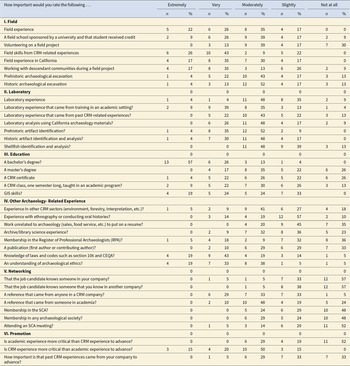
The survey began with questions about the CRM companies: their size (large >500, medium 500–99, and small >99), ownership structure (private companies or public agencies), whether it was a women-owned business, and the respondent’s job title. The survey then progressed through six components—field experience, laboratory experience, education, other archaeology-related experience, networking, and promotion, in which respondents were asked to answer 38 Likert-scale questions with a gradation scale of “extremely,” “very,” “moderately,” “slightly,” and “not at all” (Table 2). Four questions ranked experiences by order of importance, and there were two yes-or-no questions. There was also a section for open-ended responses at the end of every section . Three additional open-ended questions, including what applicants are lacking in entry-level positions, how students can be better trained for jobs in CRM, and how those in leadership positions outside academia can help students get jobs in CRM, were included at the end of the survey to capture any missing information not addressed by the previous sections.
Responses to the 38 Likert-Scale Survey Questions.
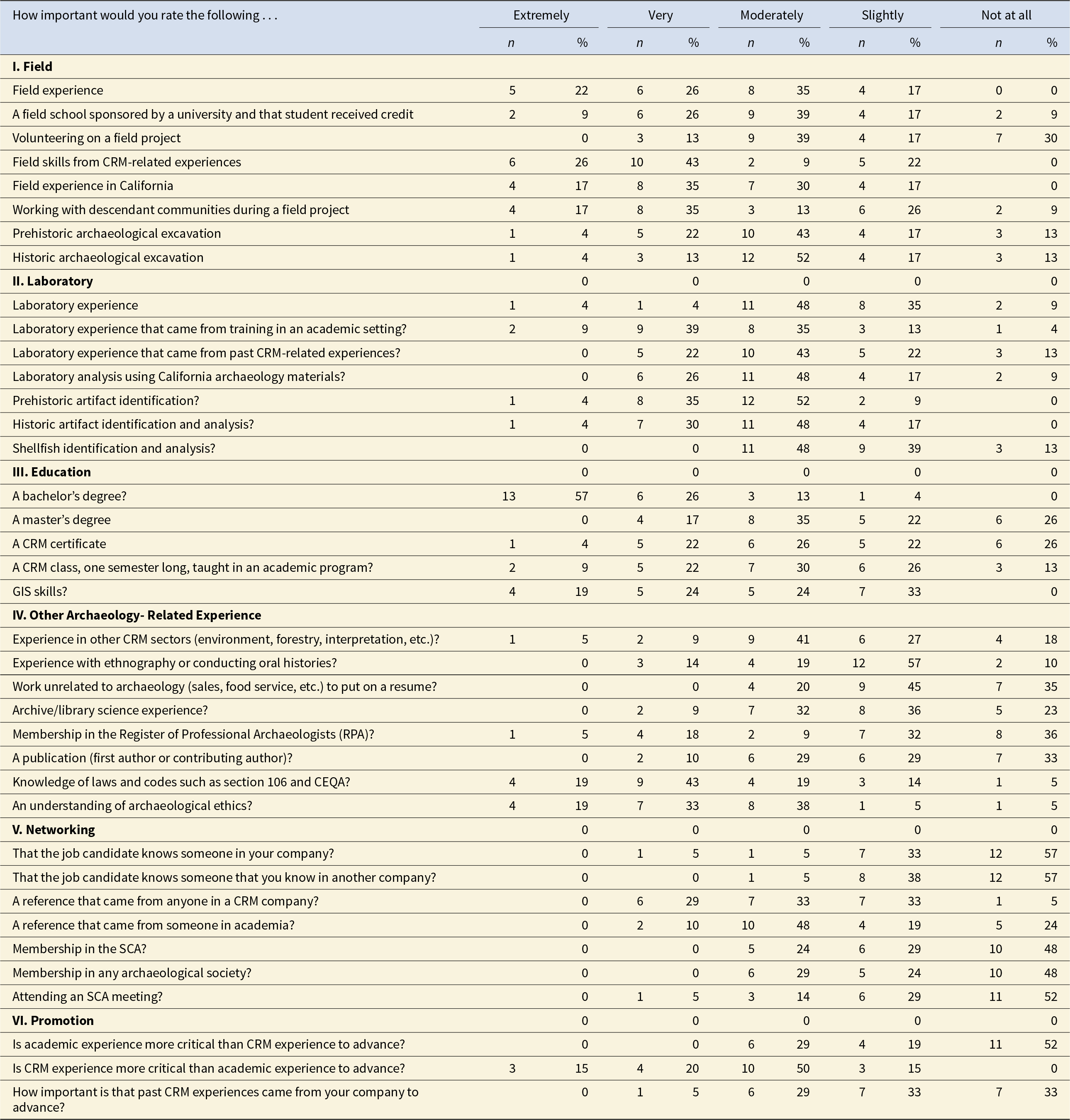
Table 2 Long description
The table measures the perceived importance of various experiences and qualifications in archaeology-related fields, using a Likert scale. A bachelor's degree is considered extremely important by 57% of respondents, the highest in the education category. In contrast, knowing someone in the company is deemed not important at all by 57% in the networking category. Field experience and laboratory skills show varied importance, with field skills from CRM-related experiences rated very important by 43%. Membership in archaeological societies and attending meetings are generally rated as less important. The data suggests a strong preference for formal education and specific field skills over networking connections.
Results
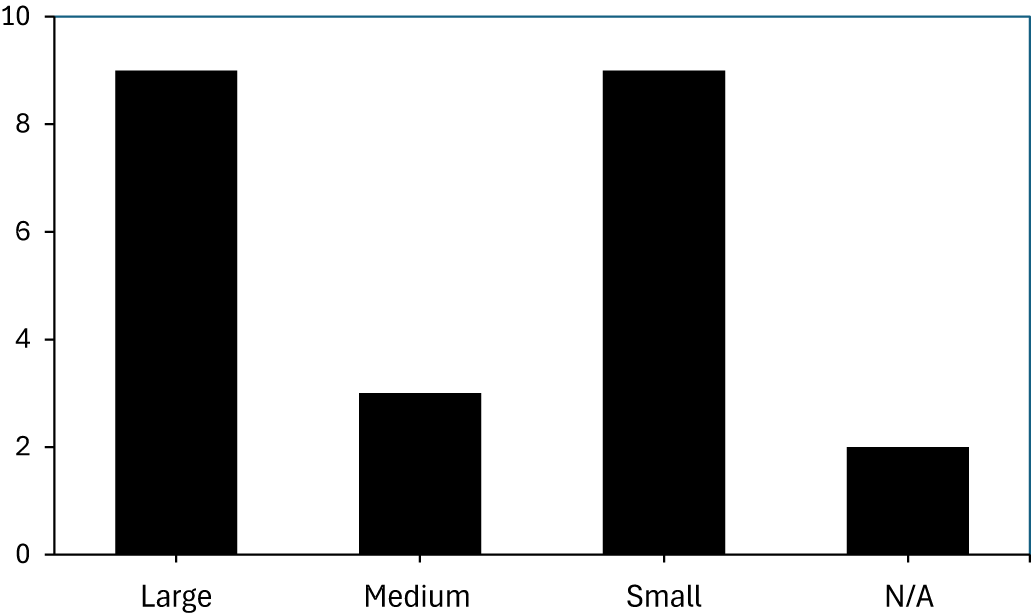
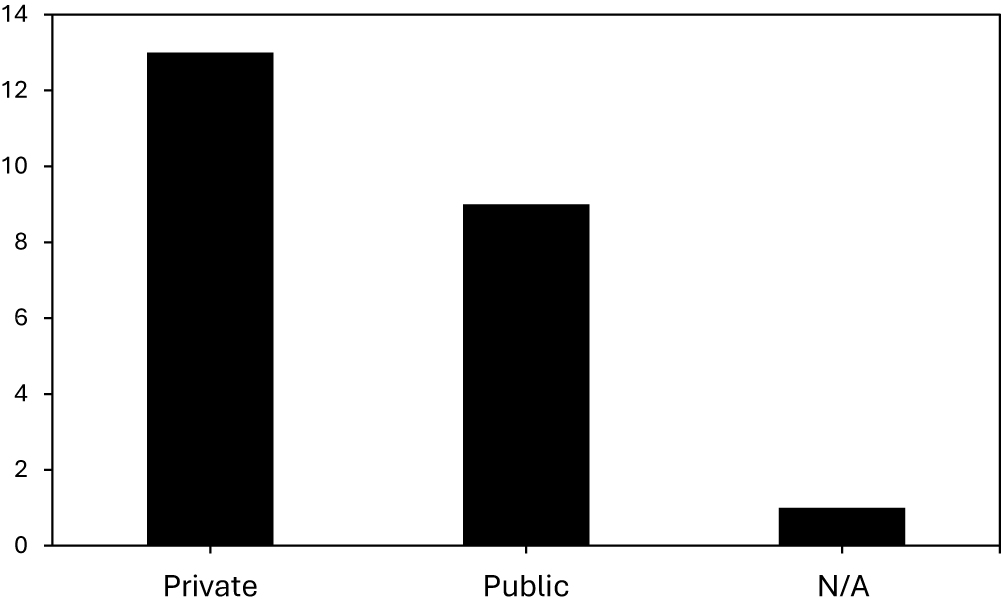
Nine respondents were from “large” CRM firms (500 employees or more; 39%), and the same number were from “small” firms (1–99 employes); three were from medium-sized (100–499) companies, and two did not specify the size of their firm (Figure 1). Nearly 60% of respondents worked at private firms (n = 12; 57%), with the rest employed by public firms or agencies (n = 9; 39%), except for one person who responded “not applicable” (Figure 2). A chi-square test of significance was conducted to analyze the relationship between company size and sector but found no statistically significant differences across all survey questions at the 0.01 confidence level. This indicates that, although respondents worked for CRM organizations of varying sizes and purposes (including private companies and public agencies), the responses exhibit a general consensus regarding the skills and experiences that recruiters seek. To enhance clarity, we grouped responses of “extremely” with “very,” and “moderately” with “slightly.” The results yielded three important issues: (1) field-related CRM experiences, (2) local experiences, and (3) other important information.
Number of respondents reporting CRM firm or agency size, considering all employees.

Figure 1 Long description
A bar graph displays the number of respondents by firm size categories: large, medium, small and not applicable. The x-axis represents the firm size categories labeled as Large, Medium, Small and N/A. The y-axis ranges from 0 to 10, indicating the number of respondents. The bars show that both Large and Small categories have nine respondents each, Medium has three respondents and N/A has two respondents.
Respondents reporting whether they represent public or private CRM firms or agencies.
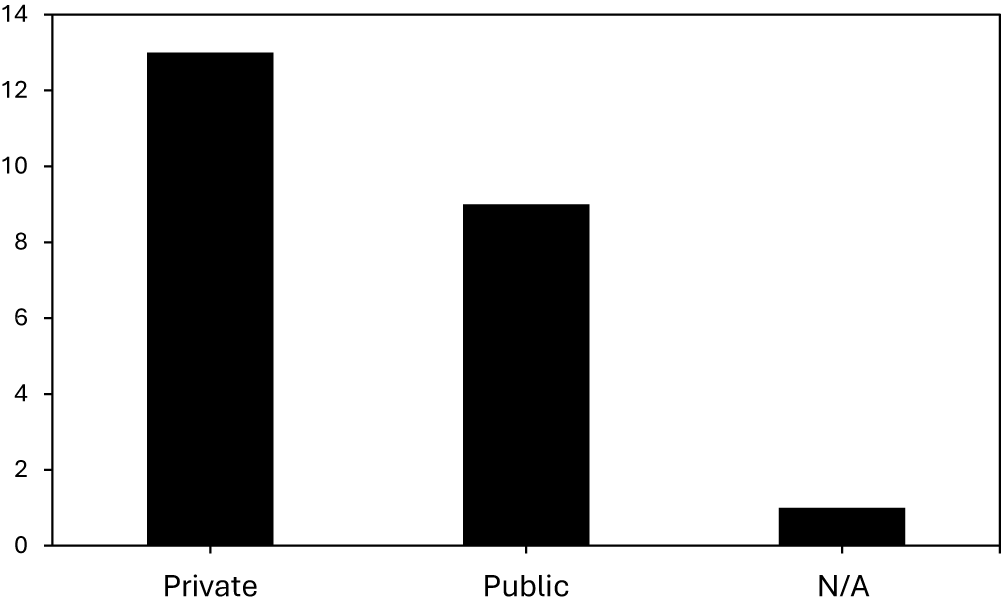
Figure 2 Long description
A bar graph displays the number of respondents by sector. The x-axis lists three categories: Private, Public and N/A. The y-axis ranges from 0 to 14. The Private category has a bar reaching 12, the Public category has a bar reaching 9 and the N/A category has a bar reaching 1.
Field and CRM-related Experiences
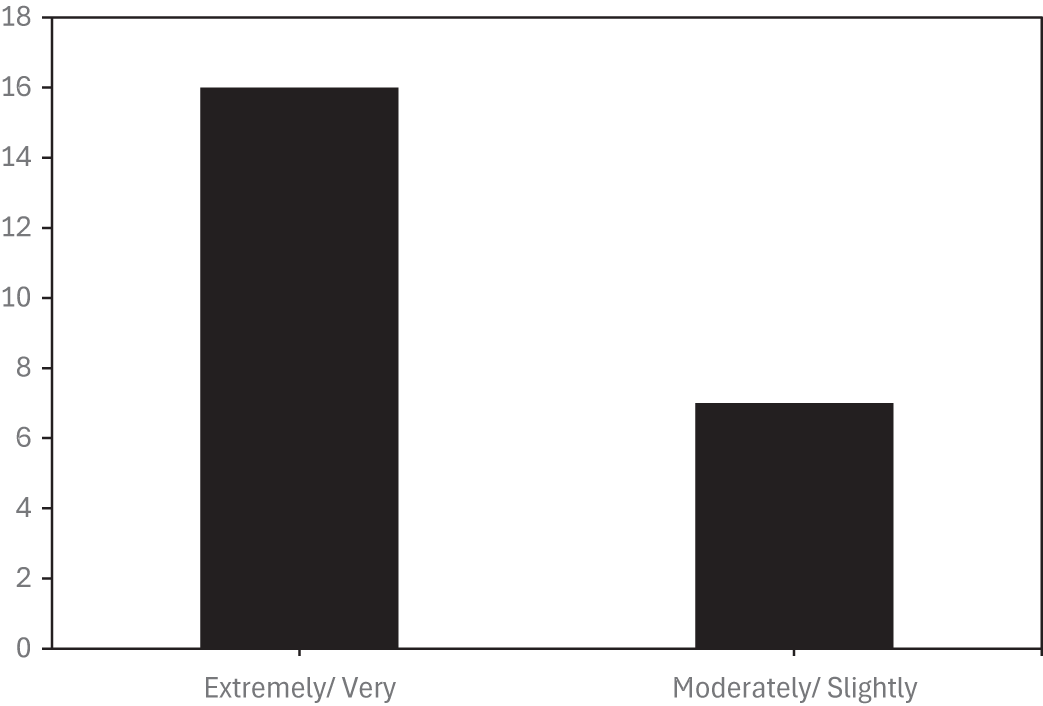
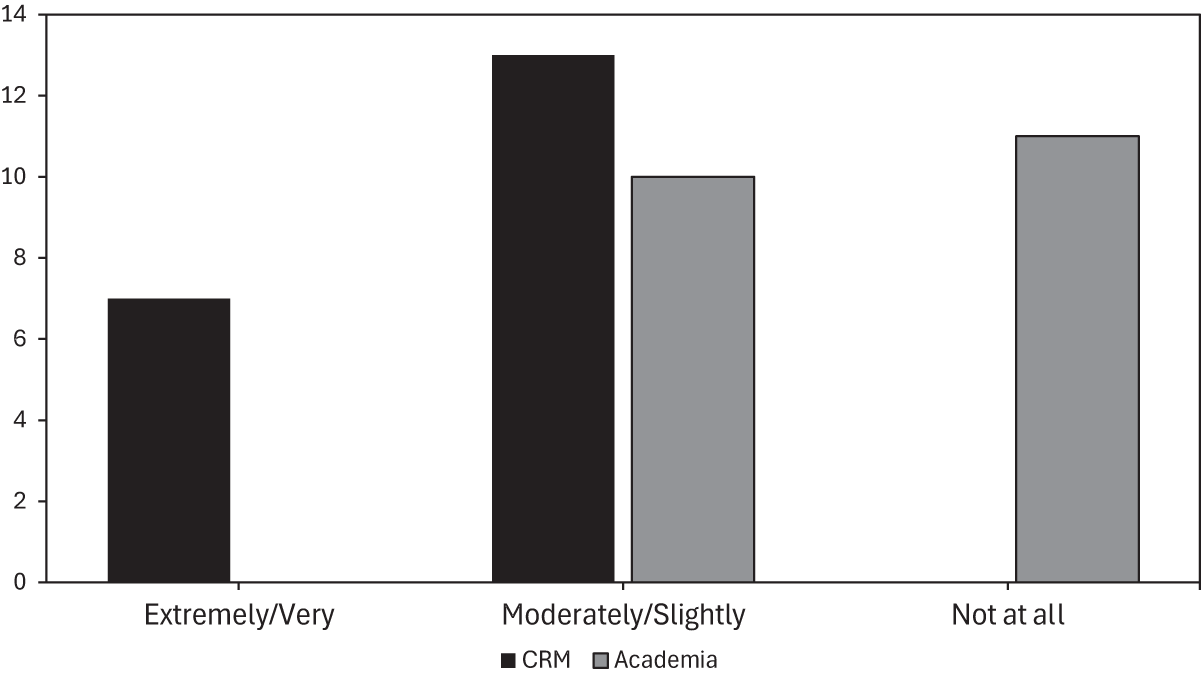
Field experience emerged as one of the most highly valued skills throughout the survey. Compared to every other section, most respondents rated the “field experience” questions as “extremely” or “very” important. Additionally, in the open-ended responses, the term “field,” followed by words such as “experience,” “skills,” “methods,” and “practices,” was mentioned 43 times, ranking as one of the top values in the survey. The question that ranked the highest in importance (n = 16; 70%) was related to CRM field-related experience, indicating that candidates need practical experience in the industry to be competitive for entry-level positions (Figure 3). This preference in the CRM realm of expertise was also evident in the “Promotions” section, where respondents indicated that CRM experience was more important for advancement than academic credentials (Figure 4). This was a surprising find, because many students seek master’s degrees specifically so they can be promoted.
Respondents marking field experience from CRM-related experience as extremely or very important.

Figure 3 Long description
A bar graph comparing two categories: 'Extremely/Very' and 'Moderately/Slightly'. The y-axis ranges from 0 to 18. The 'Extremely/Very' category has a bar reaching a value of 16, while the 'Moderately/Slightly' category has a bar reaching a value of 6. The graph visually contrasts the higher preference for the 'Extremely/Very' category over the 'Moderately/Slightly' category.
Respondents marking experience that counts more to be promoted between CRM and academia.

Figure 4 Long description
A bar graph comparing the importance levels of CRM and academia. The x-axis shows categories: Extremely/Very, Moderately/Slightly and Not at all. The y-axis ranges from 0 to 14. CRM is represented by a dark bar and academia by a lighter bar. For Extremely/Very, CRM is at 7. For Moderately/Slightly, CRM is at 13 and academia is at 11. For Not at all, academia is at 12.
A second highly ranked question was in regard to field experience from universities versus CRM. Field experience from universities was seen as less important than CRM-related experiences; however, nine responses in the open-ended comments mention the importance of field schools more generally, particularly those that involve survey and site recording. The credibility of the field school was also noted as necessary, with one respondent stating, “There is an expectation to have some experience, mostly that comes from a field school—an accepted field school.” This remark underscores the value placed on formalized training programs that provide a specific CRM skill set highly regarded in the industry.
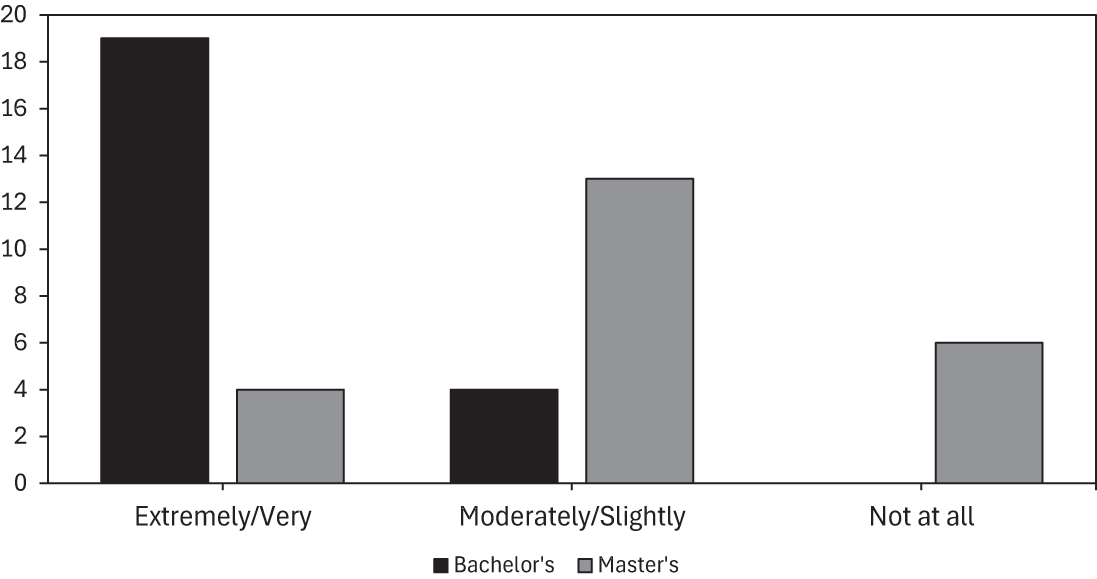
The education portion of the survey revealed that gaining field school training while earning a bachelor’s degree is most important: this degree was rated the most important in the extremely/very important category. Master’s degrees were seen as less critical (Figure 5). This sentiment was echoed in the open-ended responses, which emphasized the importance of experience over education. One respondent remarked, “Education is important, but it’s only one important factor. Field experience and real-world experience are more important. If you don’t know how to apply what you learned, then you don’t bring a lot to the table.” Another added, “I value experience over education 100% of the time unless a permit is required that limits the position,” and “Field + lab experience may override education in many cases.” These responses likely reflect expectations for entry-level hiring, which was the intended focus of the survey, rather than the qualifications required for advanced roles. It is important to recognize that the Secretary of the Interior’s Professional Qualifications Standards and the Register of Professional Archaeologists (RPA) certification still require an master’s-level education and experience.
Respondents who marked the importance of having a bachelor’s or master’s degree.

Figure 5 Long description
A bar graph comparing the perceived importance of bachelor's and master's degrees. The x-axis shows three categories: Extremely/Very, Moderately/Slightly and Not at all. The y-axis ranges from 0 to 20. For the Extremely/Very category, the bachelor's degree bar reaches 18, while the master's degree bar is at 4. In the Moderately/Slightly category, the bachelor's degree bar is at 4 and the master's degree bar is at 12. In the Not at all category, only the master's degree bar is present, reaching 4.
Local Experience
Throughout the survey, many responses spoke to the value of local expertise. For example, in the “Field Experience” section, the question that garnered the second-highest number of responses in the “extremely/very” category (n = 12; 52%) was about fieldwork within the state of California. Another 11 responders (48%) replied that it was “moderately” or “slightly” important, but no one marked “not at all.” Related to this question is an issue concerning local laws. Knowledge of laws was seen as necessary in the “Other archaeology-related experiences” section of the survey. Indeed, one respondent explained, “Enroll in a course on cultural resource laws/policies and/or become familiar with them, particularly those relevant to your state.” The statement underscores the importance of understanding the specific laws and regulations governing archaeological work in California: this knowledge is essential to navigate compliance issues and effectively steward cultural resources within the state.
Overlapping with legal considerations is the importance of archaeological ethics rooted in local contexts. These concerns ranked second in the extremely/very important category of the “other Archaeology-related experience” section. It also received support in the field section of the survey for the question regarding “experience working with descendant communities in field projects” category (n = 12; 52%). Such experiences often involve direct collaboration with communities whose cultural heritage remains deeply intertwined with the local landscapes and archaeological sites under study.
In the laboratory section of the survey, two questions received the highest number of responses. The first addressed the relative importance of “prehistoric” versus “historic” materials, with most respondents emphasizing the importance of knowledge of prehistoric materials. We used the term “prehistoric” because it remains common in CRM report writing; however, in hindsight, we should have used “precontact,” which is increasingly preferred in CRM and more respectful of Indigenous perspectives that critique the colonial implications of “prehistory.” Despite this, we believe that respondents understood our intent to reference materials with deep use histories in the region, predating European colonization and continuing into the colonial period. The second question examined whether specific types of laboratory experience are prioritized on resumes with many respondents marking “yes.” The most sought-after specialties included zooarchaeology, osteology, and lithics. Both zooarchaeology and lithics demand an in-depth understanding of local fauna and lithic materials and typologies, underscoring the critical role of local expertise in addressing industry needs.
Other Archaeology-Related Experiences
One of the most notable trends revealed by the survey is the emphasis on socialization in CRM, as consistently highlighted in the open-ended responses. Even when the term “work ethic” was not explicitly mentioned, respondents emphasized related qualities such as “effective communication,” “enthusiasm,” “a willingness to learn and listen,” “professionalism,” “proactive clarification-seeking,” “punctuality,” “respectful treatment of others,” “adherence to instructions,” and “a positive attitude.” These sentiments capture the practical qualities that CRM companies seek and shed further light on why experiences within the CRM sector hold greater significance in cultivating these attributes than do those in academia.
In the technical realm, there was also a strong response to a skill set that involved GIS, with many respondents rating it as extremely or very important. This finding aligns with the recurring mentions of GIS throughout the survey’s open-ended responses. Proficiency in tools such as ArcMap, Trimble, and California Information Centers (regional archives and research facilities for archaeological and historical resource records in the state) reflects the increasing importance of GIS in archaeological research and CRM work. Similarly, report writing was a frequent comment in both the survey’s ranking portion and in open-ended responses, with respondents consistently emphasizing its significance.
Discussion
The survey results provided insights into the dynamics of CRM-related experiences in the post–AB 226 and AB 389 era. Many company leaders highlighted that field skills and a CRM background are essential. Local expertise was also identified as a significant factor. Issues surrounding ethics, engagement with descendant communities, and knowledge of Indigenous cultural materials are all matters that must be addressed at the local level, and all were deemed important. The survey also underscored the preference for real-world experiences sought by industry professionals and the value of a strong work ethic developed through CRM-related experiences.
We examine these findings in the context of innovative research and training programs currently underway in California. Our discussion is organized around two central themes: (1) how academic institutions are responding to CRM priorities in light of new mandates and (2) the ongoing tensions that continue to shape archaeological practice. We explore the first theme—the academic response—through field experience and experience beyond the field. The examples we highlight are part of our broader approach that aligns with a “new” public archaeology we advocate for in this article. The second theme—tensions and transition—focuses on the challenges and frictions that arise as CRM adapts to evolving expectations and training models across the state.
Field Experience
Field experience is widely recognized as essential for entry-level positions in heritage management, and our survey echoes many other recent studies (e.g., Larkin and Slaughter Reference Larkin and Slaughter2021; Morgan Reference Morgan2023; Rowinski Reference Rowinski2023). However, academic field schools are undergoing significant reevaluation at the institutional level in response to criticism for perpetuating exclusivity by imposing financial, physical, and geographical barriers (Colaninno et al. Reference Colaninno, Beahm, Drexler, Lambert and Sturdevant2021, Reference Colaninno, Lambert, Beahm, Tallman, Drexler and Sturdevant2024; Prince et al. Reference Prince, Blackwood, Brough, Landázuri, Leclerc, Barnes and Douglass2022). On the one hand, issues such as inadequate training, curation challenges, and high costs underscore the need for innovative approaches to field training (CRM Archaeology Podcast Episode 286, April 17, 2024). On the other hand, recent listening sessions for Native communities across the CSU system have amplified Indigenous voices that express opposition to traditional field schools because of their history of exhumation practices. These critiques reflect a growing consensus among professionals that the conventional field school model is outdated.
In California, efforts are underway to make field schools more accessible and equitable. One model is the University of California, Berkeley, field school, which was designed to reduce barriers by offering free participation, providing students with a stipend, and giving course credit (Kansa et al. Reference Kansa, Reifschneider, Byram, Gonzalez, Hastorf, Lightfoot, Tripcevich and Tung2024). Other approaches advocate for field schools that integrate heritage preservation principles directly into their methodologies (Chiton Reference Chilton, Smith, Messenger and Soderland2010). In practice, this involves incorporating low-impact archaeology and subsurface surveys, which are essential for a socially responsible, twenty-first-century archaeology (Colwell Reference Colwell2016; Gonzalez Reference Gonzalez2016; Mills et al. Reference Mills, Altaha, Welch, Ferguson and Silliman2008; Silliman and Ferguson Reference Silliman, Ferguson, Ashmore, Lippert and Mills2010). Recent work by Newsom and colleagues (Reference Newsom, Soctomah, Blackwood and Brough2023) highlights how academic and Tribal partners can blend archaeological science with language revitalization and community stewardship. Their climate-responsive model embodies the ethical and methodological shift that a new public archaeology must adopt.
Building on this momentum, several recent projects in California have disrupted dominant historical narratives while fostering student and community participation. Brown (Reference Brown2024), for example, highlights the importance of community engagement at Mission La Purísima Concepción, located in Lompoc, California, where Chumash presence has long been marginalized in the mission space. The project involved consultation with the Santa Ynez Band of Chumash Indians’ Elders Council, the inclusion of descendants of those baptized at the mission, and on-site Tribal monitoring. It also included an undergraduate training program in collaboration with California State Parks. The involvement of these multiple communities brought the project full circle: the material record revealed Indigenous cultural persistence, and the practice of archaeology itself, within a historically marginalized space, helped challenge dominant narratives of Indigenous erasure that had had a meaningful impact on both students and the public (see also Brown and Liguori Reference Brown and Liguori2023). On a similar note, Sanchez and colleagues (Reference Sanchez, Apodaca, Gonzalez, Gonzalez, Nason, Herthel, Nason, Byram and Hunter2024) illustrate collaborative research in Central California by collecting historical ecological data that emphasize the legacies of Native peoples and their environmental connections, thus guiding stewardship within Tribal territories today. By the end of the field season, Native students felt empowered to explore their own history. Projects such as these align with the collaborative model advanced by Kent Lightfoot and his students from the University of California, Berkeley, whose long-standing work with Tribes has helped shape more inclusive and community-centered archaeological practices (see Malios et al. Reference Mallios, Gonzalez, Grone, Hull, Nelson and Silliman2024). By “putting archaeology to work” (Panish et al. Reference Panich, Arellano and Wilcox2024) in collaboration with Tribes, these projects not only train the next generation but, as Kroot and Panich (Reference Kroot and Panich2020) observe, also empower students and community members to become active stakeholders in the past.
In these discussions, it is essential to recognize that traditional field schools may no longer offer the most effective training model, and thus, we should consider new ideas and methodological approaches. As Atalay (Reference Atalay2012:241) suggests, centering community needs may require traditional methods to take on supportive rather than leading roles. One productive direction is to broaden the definition of field experience to include ethnographic methods. Indeed, Zarger and Pluckhahn (Reference Zarger and Pluckhahn2013) advocate for integrating ethnographic training into archaeology programs, an approach that aligns well with the needs of CRM, especially given the revised National Register Bulletin 38 on Traditional Cultural Properties. Some programs—such as the Public Archaeology program at CSU Northridge (CSUN)—respond to this call by emphasizing ethnographic methods as a key facet in archaeological practice. At CSUN, students engage in an oral history project of archaeologists, which not only develops research skills but also fosters critical reflection on the discipline.
Beyond the Field
Preparing students for contemporary careers in archaeology requires more than meeting technical and field-related job qualifications. As the field evolves, there is a growing need to balance practical training with critical, theoretical, and humanistic approaches (Green and Doershuk Reference Green and Doershuk1998). Indeed, as a multidisciplinary field, archaeology demands a holistic educational approach (Gillespie Reference Gillespie2004). Engaging students with evolving theoretical frameworks and ethical considerations is crucial to preparing them for real-world roles. It reinforces the idea that “heritage, values, preservation, and stewardship are as integral to archaeology as using a trowel or tape measure” (Elia et al. Reference Elia, Pérez-Juez, Anderson, Bender and Messenger2019). Students begin to see archaeology not only as a technical profession but also as a humanistic practice.
Many California programs are adjusting to meet these disciplinary shifts, with the CSU system leading this transition. These institutions, rooted in changes in CRM legal compliance that began in the 1970s, are updating their programs to reflect a modern approach—a new public archaeology. For instance, CSU Sonoma’s revised master’s program in anthropology/archaeology now includes a social sciences and interpretation concentration (alongside a natural sciences and technology concentration), emphasizing heritage preservation, ethics, and non-Western epistemologies. At CSU Humboldt, students gain practical skills in CRM fieldwork (e.g., GIS, remote sensing, site mapping, excavation, and artifact analysis) complemented by training in heritage interpretation and ethnographic consulting (Castro et al., Reference Castro, Bruner and Angeloff2023). Similarly, the emphasis of public archaeology at CSUN integrates historic preservation law with emerging approaches in public archaeology, including applied, activist, and collaborative methodologies. Beyond the CSU system, other universities are exploring innovative ways to integrate ethical and cultural heritage perspectives into their curricula. At Santa Clara University, for example, Lueck and Panich (Reference Lueck and Panich2020) use extended reality (XR) technologies, including 360° images and 3D models, as part of larger digital heritage projects, emphasizing the potential for new technologies to enhance archaeological teaching and student training.
Indigenous archaeology offers a critical framework for advancing the goals of a new public archaeology (Atalay Reference Atalay2007; Schneider and Panich Reference Schneider and Panich2022). Although Indigenous sites dominate CRM work across North America, Indigenous perspectives are often excluded from the process (Steeves Reference Steeves2015). This disconnect is especially troubling given that most archaeologists in settler societies are trained within Western paradigms that overlook Indigenous ontologies, epistemologies, and relationships to land (Ferris and Dent Reference Ferris and Dent2020:32). In response, some programs integrate Indigenous archaeology into student training through applied experiences. For instance, internships between universities and CRM firms help students engage directly with descendant communities to manage cultural resources and territorial landscapes (Neusius Reference Neusius2009; Lanthier Reference Lanthier2024). Similarly, CSU East Bay offers the course Archaeological Science and Indigenous Knowledge that combines scientific methods with Indigenous perspectives. It is structured around inclusive methodologies and provides a model for teaching and practicing Indigenous archaeology in the classroom and heritage management contexts.
In line with these priorities, ethical considerations are essential in broadening students’ perspectives and helping shape them into responsible citizens. For example, Steeves (Reference Steeves2015:129) attributes the growing divide between academia, archaeology, CRM, and Tribal Historic Preservation programs to the lack of sufficient training in ethical practices and heritage laws. This gap can be addressed by integrating ethics into core curricula by encouraging students to engage with issues such as ownership of cultural resources, control over historical narratives, and archaeologists’ responsibilities toward Indigenous sovereignty. Participation in events like the Ethics Bowl at the Society for American Archaeology (SAA) provides students with hands-on experience in navigating real-world ethical dilemmas. Indeed, the Society for California Archaeology has also launched its own Ethics Bowl, where students and CRM practitioners debate the most pressing challenges of the time, offering a model that other regional archaeological organizations can adopt. Many students report that such experiences leave them better prepared for the demands of CRM work.
Our survey results also highlight another key part of student preparation: having strong professional and interpersonal skills, including the ability to communicate effectively in writing. Employers consistently emphasized the importance of communication, punctuality, adaptability, and a willingness to learn. These so-called soft skills are best cultivated through hands-on experience, meaningful mentorship, and fostering a sense of belonging within the field. Strong mentorship can play a transformative role for students from historically excluded groups by challenging the persistent perception that archaeology is a field reserved for only a narrow demographic (Brown Reference Brown2018). Changing that perception requires reimagining what archaeology looks like and who it serves. Supernant et alia (Reference Supernant, Baxter, Lyons and Atalay2020) advocate for “archaeologies of the heart,” which center care, trust, and accountability—principles that directly support Indigenous sovereignty and a more inclusive discipline. A new public archaeology must place mentorship and inclusive engagement at its core to support the development of soft skills and ensure that students and stakeholders feel they can contribute meaningfully to the field.
Tensions and Transitions
Although the models for a new public archaeology that we highlight align with CRM expectations for entry-level positions, tensions remain around how the sector evaluates and recruits new professionals. Survey responses reveal long-standing concerns that recent graduates lack the necessary field and lab skills for a field tech position. As a result, many in the industry may view the examples we present as value-added rather than necessary. This critique raises crucial questions: Has the CRM sector fully absorbed the educational and ethical reforms reshaping academic archaeology in California, or are these changes still seen as peripheral to CRM’s core mission? Are the models we present successful for careers in CRM? And can California serve as a bellwether for national reform?
It is important to acknowledge that much of CRM specifically deals with threatened resources. Although preservation is often advocated as the preferred form of treatment, it is rarely a viable option because of the timelines and pressures inherent in mitigation-driven work. Indeed, the tension between ideal preservation and practical constraints has been a recurring theme in critiques of CRM archaeology (Praetzellis and Praetzellis Reference Praetzellis and Praetzellis2011). This reality has led some to argue that CRM is structurally constrained in its ethical aspirations. Yet, even within these constraints, change is possible. Structural transformation in the CRM sector will require a bottom-up shift in values, purpose, and the power to decide (Lyons et al. Reference Lyons, Leon, Peone, Hazell, Miller, Dent and Hoffmann2022). One example is the work of Byrd and colleagues (Reference Byrd, Arellano, Engbring, Leventhal and Darcangelo2022) at Far Western, who collaborated with the Muwekma Ohlone Tribe to document ancestral lives and acknowledge historical trauma. This project went beyond standard consultation; archaeological research was conducted at the request of the Tribe, and their goals shaped the outcomes of the project.
Such shifts are becoming increasingly visible in California, where collaborative initiatives involving universities, Tribal nations, and CRM agencies are working to address tensions between academic reforms and industry practice. Brown and colleagues (Reference Brown, Sher, Whitaker, Boutin, Castano, Diaz-Longo and Geary2025), for instance, discuss the work of the California Archaeological Collaborative, a statewide initiative focused on developing sustainable solutions to protect California’s heritage. Their report outlines actionable steps to meet contemporary archaeological challenges by bridging CRM and educational contexts. On a broader scale, the Airlie House 2.0 meetings, organized by the National Park Service, the SAA, and other partners, have brought together stakeholders across the nation to envision a more inclusive, community-based future for CRM (Banks et al. Reference Banks, Childs, Douglass, Hawkins, Jones, Klein and Lindsay2025). These conversations call for new policies and best practices grounded in ethical accountability and public responsibility.
Despite these developments, structural barriers persist. While formal partnerships between CRM and academic institutions offer one of the clearest paths to improving training and workforce readiness, few mechanisms exist to support and sustain such partnerships over time. Moreover, equity-based field schools face persistent financial, logistical, and institutional challenges (Kansa et al. Reference Kansa, Reifschneider, Byram, Gonzalez, Hastorf, Lightfoot, Tripcevich and Tung2024). Still, archaeology has long demonstrated its capacity for pedagogical innovation. For example, the landfill excavation field school developed by Rathje and Murphy (Reference Rathje and Murphy2001) illustrated how nontraditional approaches can deliver rigorous and relevant training. Contemporary adaptations of such models could serve as vehicles for a new public archaeology. For example, one need not look far to find meaningful connections between the study of waste and today’s “wicked problems,” which are complex, interrelated issues such as climate change, consumption, and environmental justice (Schofield Reference Schofield2024). These examples remind us that the tools for transformation are already available: what is needed now is a sustained commitment to aligning innovation with the principles of a new public archaeology.
Complicating these efforts is the current political climate. Under the Trump (2024–2028) administration, resistance to Tribal consultation and descendant community involvement has intensified. These conditions threaten to stall or reverse progress toward a more accountable archaeological practice. Regional and political variation complicates efforts to establish a unified national standard for training and ethics. What is feasible and expected in California may not yet be realistic elsewhere. In this context, a truly “new” public archaeology may be out of reach. Yet this unevenness underscores the need for a principle-based approach to reform. CRM must prepare practitioners who can adapt to these differences to remain relevant across diverse legal, political, and cultural contexts.
At this moment of transition, we argue that the tensions surfaced by our survey are not roadblocks to reform but signs that transformation is already underway. These tensions reflect a field debating its future, caught between a long-standing push to train students in technical skills, which has never fully met expectations, and a new perspective that questions not how we can adapt to CRM but how CRM can help shape emerging models rooted in a new public archaeology. As this shift unfolds, one thing is clear: academic institutions in California are not turning back. However, a truly new public archaeology cannot emerge from academic reform in California alone or isolated industry efforts. If archaeological practice across the nation is to remain relevant, it must engage with these changes and take an active role in shaping the discipline’s future.
Conclusion
Nearly two decades ago, a special issue of the SAA Archaeological Record examined the state of academic archaeology. In it, Kantner (Reference Kantner2004:2) urged archaeologists to “seriously consider what our discipline is doing and what it hopes to achieve.” At the time, the conversation centered on curriculum design, the relevance of academic research, and the best ways to prepare students for careers in the field. Although Kantner’s call for reflection remains relevant, the scope of that conversation has deepened. Today, archaeology is being reshaped by new legal mandates, community-led initiatives, and shifting ethical priorities. These developments demand not only academic reform but also a fundamental rethinking of CRM practice.
Using California as a case study, our research contributes to the broader national conversation about how training models, hiring expectations, and ethical responsibilities are evolving in real time. Survey data from CRM professionals emphasize the importance of hands-on field experience, legal and ethical literacy, local knowledge, and strong interpersonal skills, particularly those cultivated through CRM-focused work. Even under changing legal frameworks, many university programs across the state are rethinking their structures to meet workforce needs while also considering wider calls for reform. In this context, the question is no longer whether academic programs adequately prepare students for careers in CRM. Like many similar studies, our findings show that CRM values the same core competencies, even as reform takes hold. Instead, our study prompts a more timely and impactful question: How can the academic and professional sectors share responsibility for shaping the future of archaeology?
Our examples do not offer a universal solution, but the principles guiding these shifts can inform national efforts to rethink how archaeology is taught and practiced. We advocate for a new public archaeology rooted in this transitional moment that equips students for the realities of contemporary practice while staying accountable to the communities that archaeology serves. This vision is part of a broader movement to reform the discipline and reframe its purpose. By embracing this model, archaeology becomes a means of understanding the past and a tool for building a more just and inclusive future.
Acknowledgments
We are grateful to the numerous CRM organizations in California that participated in our survey at the 58th Society for California Archaeology Conference in Oakland, California, and the 57th Society for Historical Archaeology conference in Oakland, California. Lee Panich and three anonymous reviewers graciously gave their time, insight, and constructive critiques, which helped sharpen our arguments and strengthen this manuscript. We are grateful to our colleagues at the Society for California Archaeology, where an earlier version of this article was presented.
Funding Statement
The authors declare no external funding was received for the research, authorship, or publication of this article.
Data Availability Statement
The data supporting this study are housed in digital format at the California State University, Northridge (CSUN) Public Archaeology Laboratory. Interested parties should contact the Department of Anthropology at CSUN directly to inquire about data access.
Competing Interests
The authors declare none.

 Open access

