





INTRODUCTION
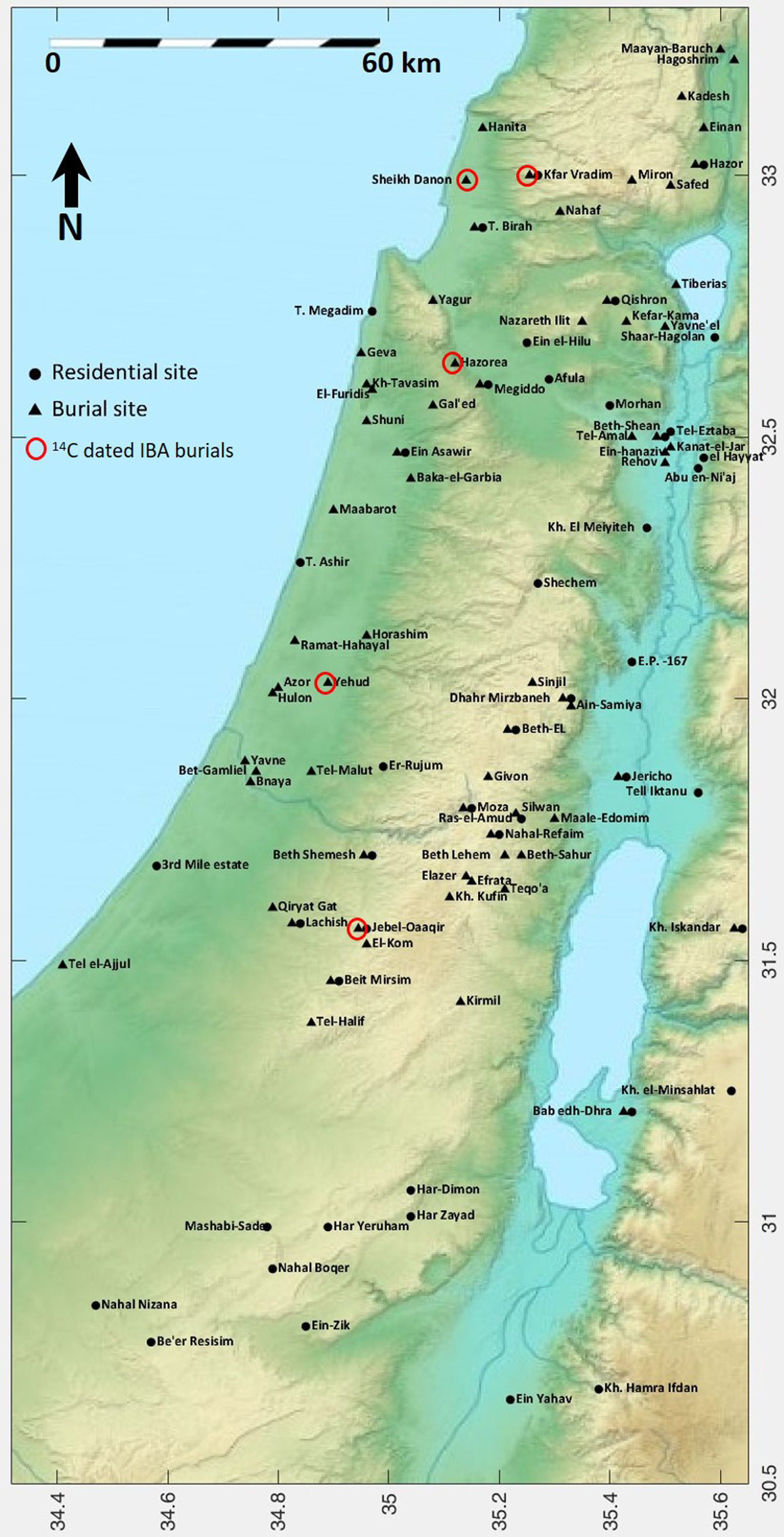
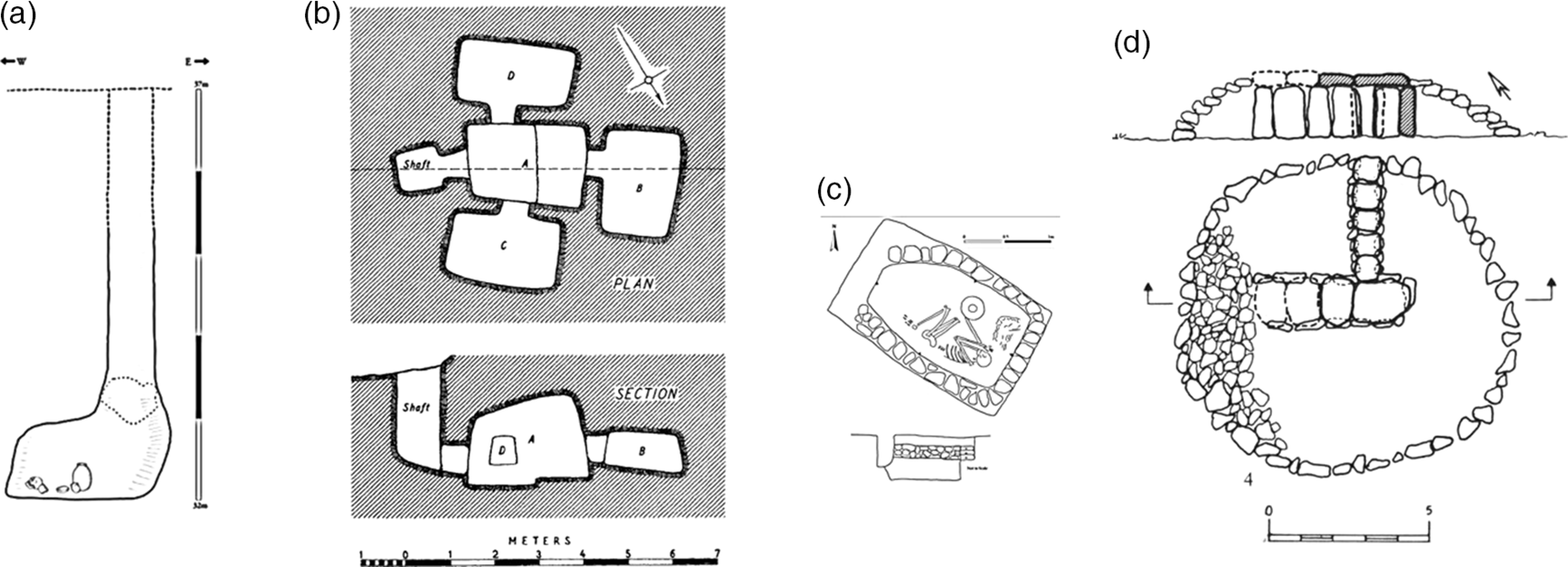
The Intermediate Bronze Age (IBA hereafter, also known as EB-IV) populated the southern Levant in the second half of the third millennium BCE. It was a pastoral-rural culture with clear differentiation in settlement patterns and material culture from the urban Early-Bronze III culture (EB-III) preceding it. Scholars identify distinct cultural aspects in IBA, including, among others, its burial habits. Dozens of IBA burial sites, some containing hundreds of tombs, have been discovered to date (Figure 1). Most IBA burials include grave goods accompanying the deceased on their eternal journey, mainly pottery vessels, copper alloy objects, beads, and animal parts. The most common IBA burials found are in shaft tombs, dug into the bedrock, or in the ground. One type is a primary burial(s) within a single chamber (Figure 2a), as in the burial fields of Bet Dagan (Yannai et al. Reference Yannai and Nagar2014), Yehud (Govrin Reference Govrin2015), and some Jericho tombs (Kenyon Reference Kenyon1965). Another shaft tomb type is of secondary burials with disarticulated bones within one or several tomb chambers (Figure 2b), as in Megiddo (Guy Reference Guy1938), Hazorea (Meyerhof Reference Meyerhof1989), and Jebel Qaaqir (Dever Reference Dever2014). Less common are IBA cist tombs that are stoned-lined or slab-roofed (Figure 2c), as in Tell el-Ajjul (Kennedy Reference Kennedy2015) and Tiwal esh-Sharqi (Tubb Reference Tubb1990). Some dolmen and tumulus/cairn burials were also attributed to the IBA (Figure 2d), e.g., in the Golan (Epstein Reference Epstein1985; Sharon et al. Reference Sharon, Barash, Eisenberg-Degen, Grosman, Oron and Berger2017) and the Negev (Dever Reference Dever2014:213–216). Major IBA burial sites were excavated, among others, also at Beth Shan (Oren Reference Oren1973), Lachish (Tufnell Reference Tufnell1958), Gibeon (Prichard Reference Prichard1963), ‘Ein Asawir (Horowitz Reference Horowitz and Yannai2016), Dhahr Mirzbaneh (Lapp Reference Lapp1966), ‘Ein Samiya (Dever Reference Dever1972), Tiwal esh-Sharqi (Helms Reference Helms1983; Tubb Reference Tubb1990), Umm el-Bighal (Helms et al. Reference Helms and McCreery1988), and Khirbat Iskandar (Richard et al. Reference Richard, Long, Holdorf and Peterman2010).
Southern Levant map indicating IBA settlements and burial grounds. Red circles indicate burial grounds that were 14C dated within this research. (Please see online version for color figures.)
Examples of IBA tomb types: (a) Single chamber shaft tomb at Yehud (redrawn after Govrin Reference Govrin2015: Fig. 119). (b) Multiple chamber shaft tomb at Megiddo (redrawn after Guy Reference Guy1938: Fig. 42). (c) Cist tomb at Tell el-Ajjul (redrawn after Kennedy Reference Kennedy2015: Fig. 4). (d) Dolman plan from the Golan (redrawn after Epstein Reference Epstein1985: Fig. 1).
EB III sites with substantial burial activity are an exception. Such sites are Jericho with rock-hewn tombs and Bab edh-Dhra with unique above-the-ground charnel houses. Other than that, only several more tombs in the southern Levant were attributed to EB-III (Ilan Reference Ilan2002:96–99 with references). The vast number of burials discovered from the IBA is in striking contrast to the low number of tombs found from the preceding period of EB III. Yet, the published IBA absolute dates are from settlements, not burials. A possible exception is one date from a multiperiod tomb at Tell al-Husn in northern Jordan (Al-Muheisen et al. Reference Al-Muheisen and Al-Bashaireh2012).
The EB “High Chronology” based on a systematic analysis of 14C dates suggests that EB III cities ceased to exist around 2500 BCE, and IBA sites already existed around the same time (Regev et al. Reference Regev, de Miroschedji, Greenberg, Braun, Greenhut and Boaretto2012, Reference Regev, Finkelstein, Adams and Boaretto2014; Höflmayer et al. Reference Höflmayer, Dee, Genz and Riehl2014; Lev et al. Reference Lev, Shalev, Paz, Regev and Boaretto2020; Fall et al. Reference Fall, Falconer and Höflmayer2021). The high chronology extended the duration of the IBA period from about 300 years in the previous consensus (Mazar Reference Mazar1990; de Miroschedji Reference de Miroschedji2009) up to 500 or 600 years. It is essential to determine when the drastic change in burial practices between EB III and IBA (described above) occurred within the IBA duration of half a millennium. When did IBA-type burials start? Were they common throughout all of the IBA period? Exploring this item can help us better understand the IBA culture and its development. Although progress has been made lately in IBA pottery relative periodization (D’Andrea Reference D’Andrea2012, Reference D’Andrea and Richard2020; Shalev et al. Reference Shalev, Walzer, Paz, Adams and Roux2022), it still cannot tell us much about IBA burials chronology. Radiocarbon absolute dating is a potential tool to explore IBA burials chronology. The best practice in bone radiocarbon dating is isolating and dating the collagen fraction within the bone (Yizhaq et al. Reference Yizhaq, Mintz, Cohen, Khalaily and Weiner2005; Brock et al. Reference Brock, Higham, Ditchfield and Bronk Ramsey2010). Unfortunately, human bones from ancient tombs in the southern Levant often undergo considerable diagenesis due to climatic and environmental conditions in this region. Bones are often found fragmented and in a deteriorated condition, and many times there is below minimal content or insufficient quality of collagen to enable trustable radiocarbon dating. In most of the IBA burials excavated in Israel during the last several decades, human bones were not preserved well or not researched.
Nevertheless, in the presented research, we succeeded in dating IBA human bones from several IBA burial sites, sampling bones during new excavations of IBA burials, and sampling stored IBA bones from a few past excavations.
MATERIALS AND METHODS
Sites Sampled for IBA Burials Dating
A human skeleton within a single-phase burial cave is a safe and secure context for radiocarbon dating the tomb’s contents. The first 14C dates of human bones published from IBA burial sites in Israel are presented here. These 14C dates are all of human bones found within well verified IBA contexts within the following burial sites (see circled sites in Figure 1):
-
Jebel-Qaaqir
-
Yehud
-
Sheikh-Danon
-
Kefar-Veradim
-
Hazorea
The following sections present the bone sampling details for each of the above sites:
Jebel Qaaqir
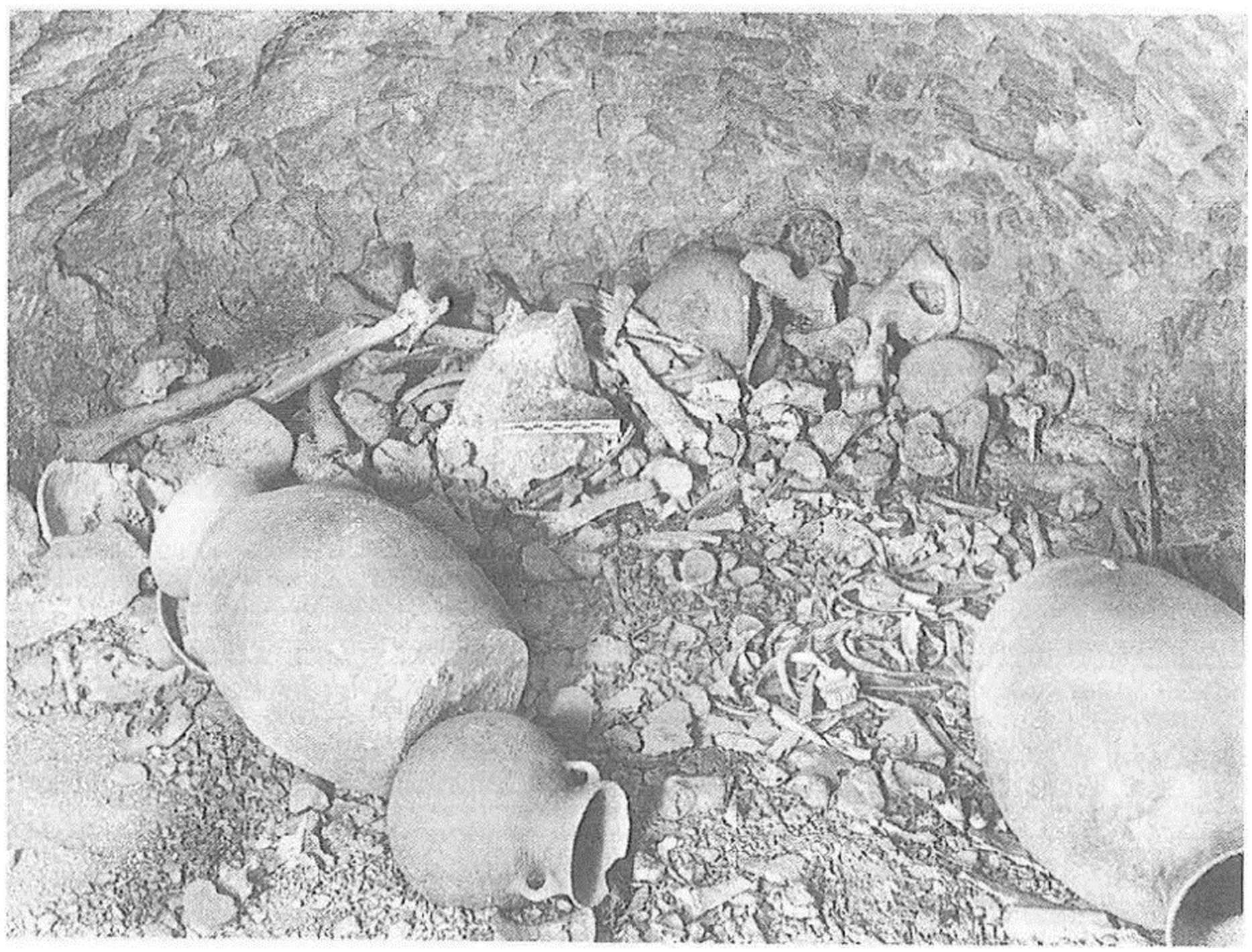
In cemetery B at Jebel Qaaqir, 59 tombs were excavated by W. Dever (Dever Reference Dever2014). Most of them were robbed in antiquity, but a few seemed intact. Sealed tomb B-54 with its two chambers (A, B) is one of the richest caves found at Jebel Qaaqir (Figure 3). Disarticulated human bones of at least nine individuals, five females and four males, were identified in tomb B-54. Seven were adults 40 to 60 years old, and two were adolescents (Smith Reference Smith1982). Three bronze objects and ten intact ceramic vessels were found in this tomb and identified as IBA-related. Bones from this tomb were sampled from the NNH collections at the Hebrew University with permission from P. Smith. We have chosen and dated five left-side radii and a rib that showed sufficient collagen preservation, thus ensuring we dated five different individuals. However, we could not associate each dated bone to a specific individual.
Jebel-Qaaqir. Tomb B-54 chamber B with its contents (photo source: Dever Reference Dever2014: fig.2.54).
Yehud Burial Ground
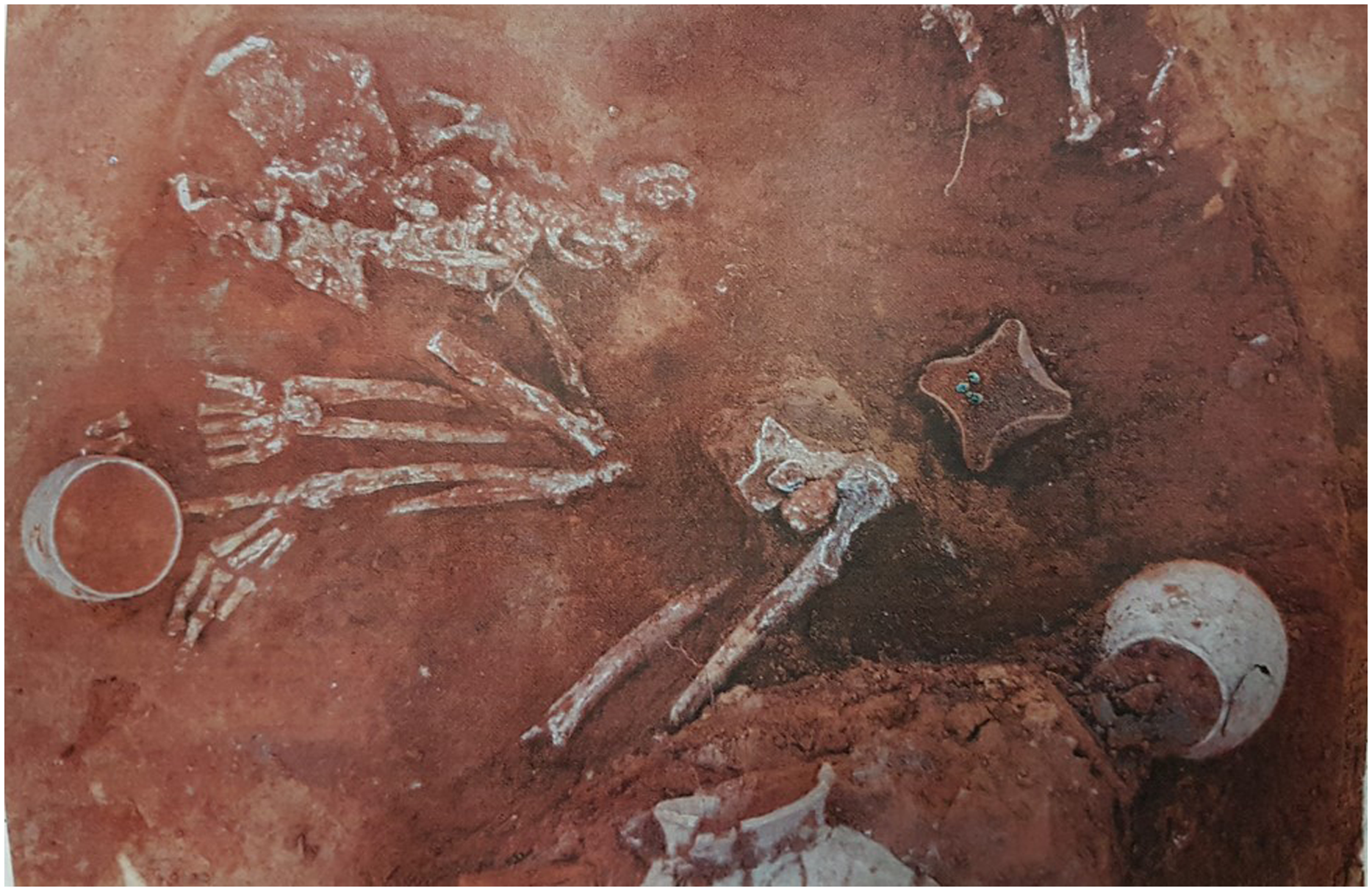
Salvage excavations of burial grounds at Yehud, including over 100 IBA single shaft tombs and several MB shaft tombs, were directed by Yehuda Govrin on behalf of the Hebrew Union College during 2008/2009 (Govrin Reference Govrin2015) and 2012 (Govrin forthcoming). The 2012 excavation uncovered a field of shaft tombs dug into the natural Hamra soil. Most tombs, including all those dated in this research, contained a single human skeleton in articulation and several distinctive IBA ceramic vessels (Figure 4). Some other tombs were identified as from the MB period according to their pottery. Bones from the Yehud burial field were documented and stored. Systematic collagen tests over bone fragments from the 2012-season excavated IBA shaft tombs were performed. Overall, 149 bone samples from 52 IBA tombs were tested to assess their suitability for 14C dating. Bones from fourteen (14) IBA tombs included suitable collagen and were radiocarbon dated. Thirteen dated bones are from the main burials concentration. Dated sample RTD-8948 from tomb L2000 was located in a smaller tomb concentration, abutting the main burial field from the southwest.
Partial view of a typical IBA tomb (L226) excavated at Yehud burial ground. Note the pottery offerings and small copper items inside the four-spouted lamp. (Photo courtesy of Yehuda Govrin.)
Sheikh Danon
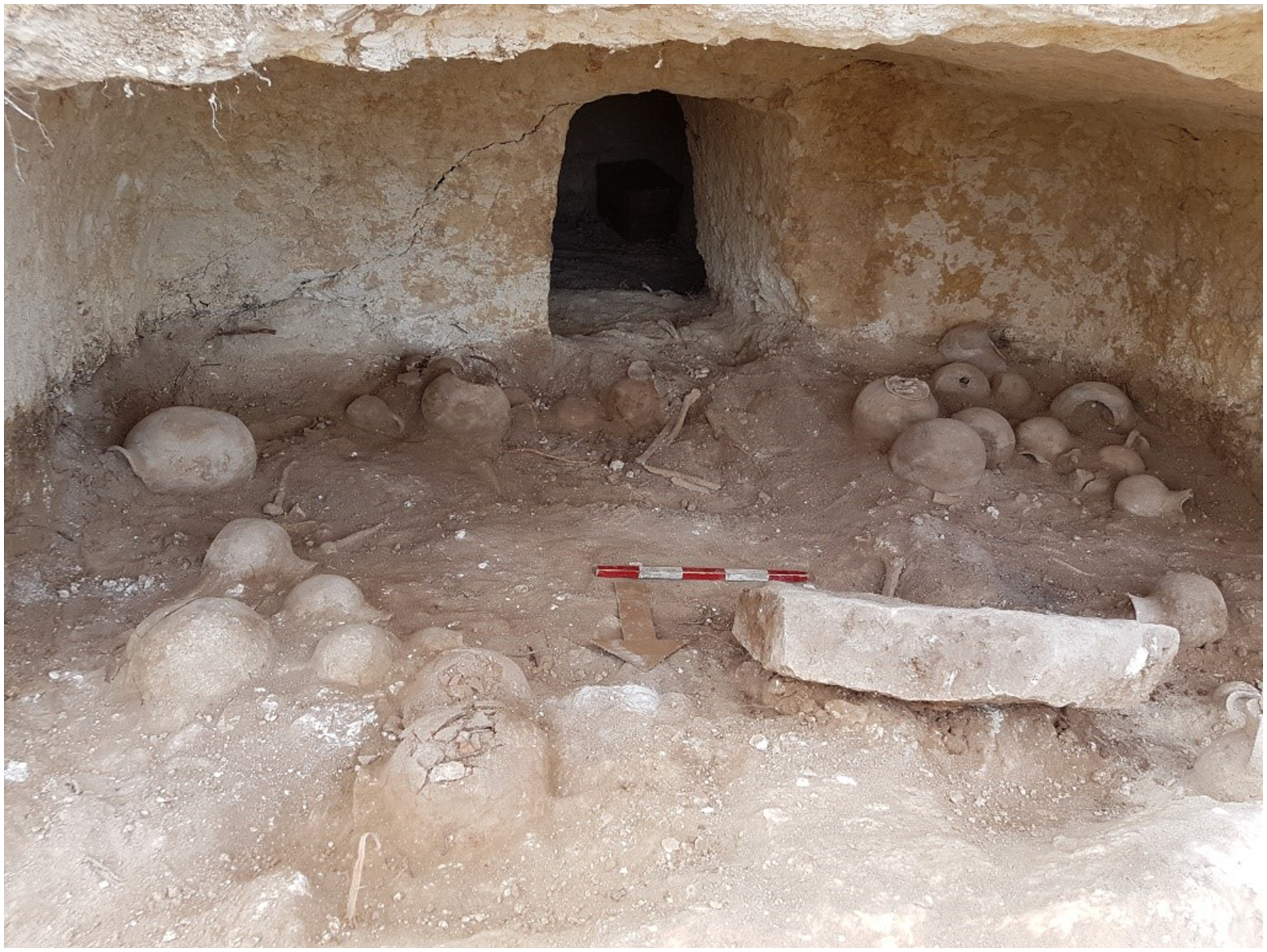
Salvage excavations led by Zach Horowitz on behalf of the Israel Antiquities Authority were conducted during the winter of 2018 in a burial cave on the northern slopes of the village of Seikh Danon on Israel’s northern coastal plain, five km East of Nahariya (permit 8212/18. To be published). The cave appears to be a part of an IBA burial ground in that location (Getzov Reference Getzov2008). The excavated cave consists of two rectangular rooms. A rectangular entry shaft leads into the main chamber, with a smaller room as its extension. Over 40 complete pottery vessels, a few copper alloy objects, and disarticulated scattered Human bones of at least ten individuals were unearthed within ∼40 cm of accumulated sediment and collapsed ceiling debris on the bottom of this cave’s two rooms (Figure 5). All material culture found was identified as belonging to the IBA period. Several human bones from various locations in the cave entry room were collected for 14C dating, and three bones that displayed sufficient Collagen amounts were processed and dated. The dated bone fragments were collected at least two meters apart. Yet, the bones in this cave were disarticulated and scattered around, and we are not sure if they represent different individuals.
Sheikh Danon. A view of the burial cave main chamber from its entry point during excavation, looking south. The corridor into the smaller chamber is seen at the back. (Photo courtesy of Ron Lev.)
Kefar Veradim
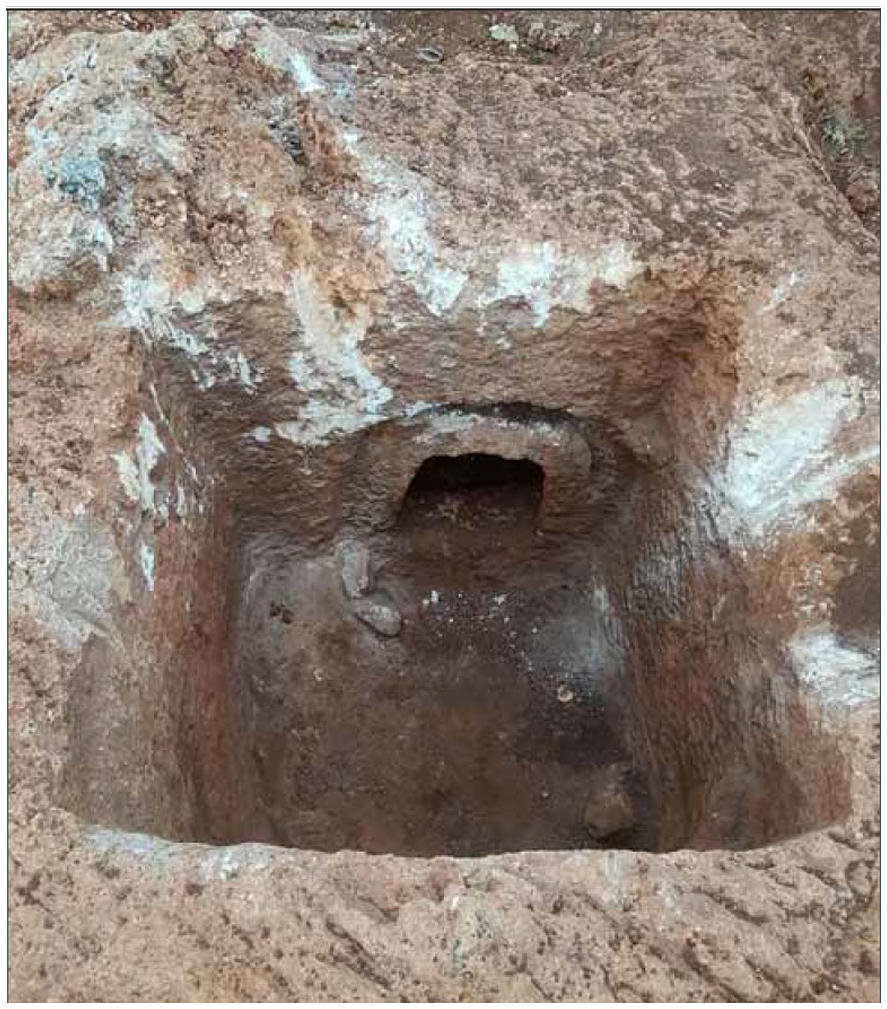
Salvage excavation of burial ground containing at least 20 shaft tombs was conducted in 2016–2018 by Edwin C.M. van den Brink at Kefar Veradim on behalf of the IAA (Van Den Brink Reference Van Den Brink2020). This burial site is about 1.5 km west of the Kfar-Vradim IBA rural settlement (Covello-Paran Reference Covello-Paran and Richard2020). In shaft tomb chamber L142 (Figure 6), disturbed human bones were located alongside an IBA jar fragment and a few copper/bronze elements. A human long-bone fragment from this chamber (labeled L142-a) was radiocarbon dated.
Kefar Veradim. Shaft 125 and the entrance to Burial Chamber 142, looking east. (Photo source: Van Den Brink Reference Van Den Brink2020: Fig. 2.)
Hazorea
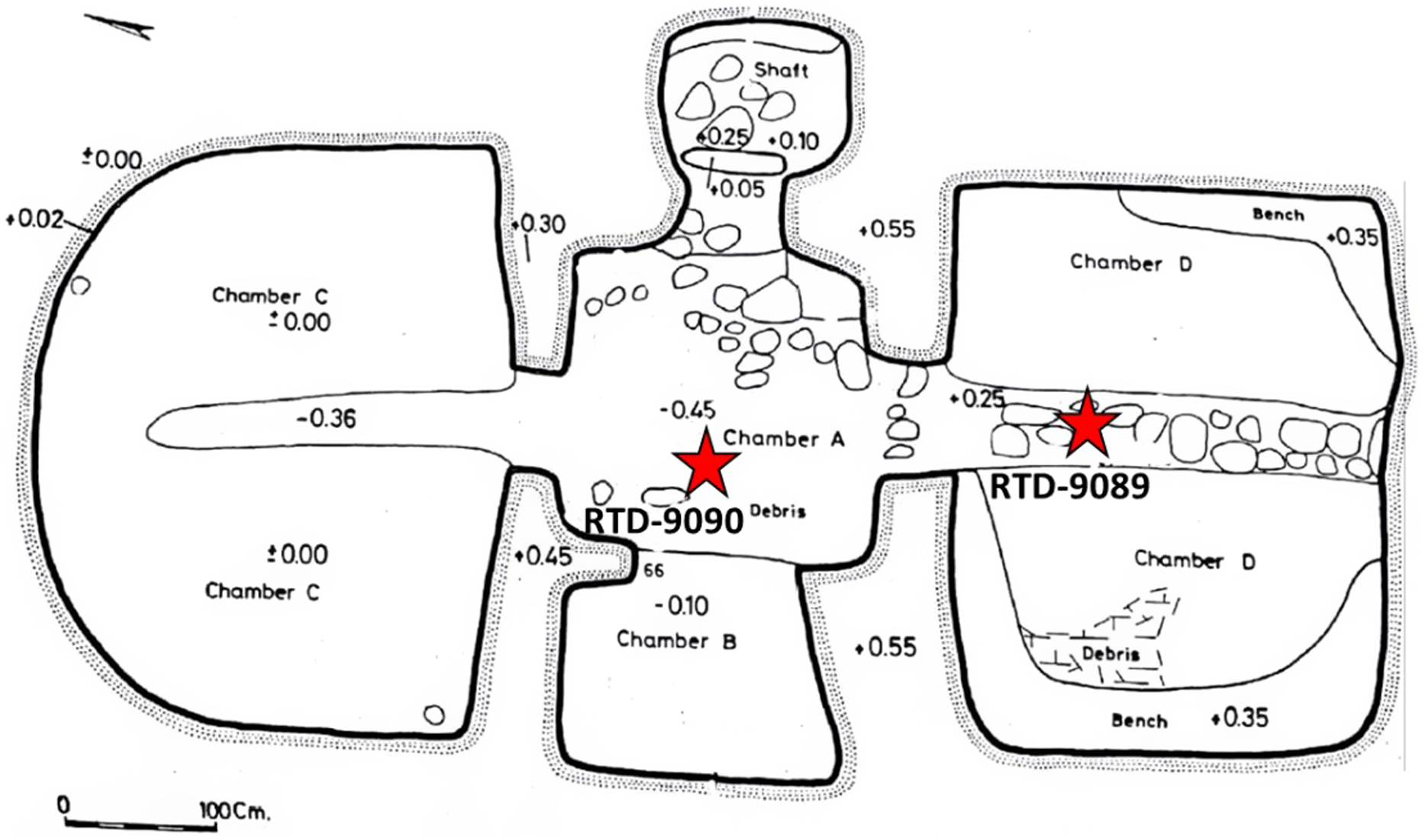
The IBA cemetery discovered in the southern part of Kibbutz Hazorea in the Jezreel Valley was excavated periodically between the 1950s and the 1980s by E. Anati and E. Meyerhof (Meyerhof Reference Meyerhof1989; see also Covello-Paran Reference Covello-Paran2015:226–241). Human bones from tomb-3 at Hazorea (Figure 7) were located at the IAA storage facility. Two bones were tested positive for suitable collagen and were radiocarbon dated (Lev et al. Reference Lev, Bechar, Covello-Paran and Boaretto2021). The two dated bone fragments were found in separate bone accumulations within separate rooms and most probably belonged to different individuals.
Plan of tomb-3 at Hazorea, where the dated bones documented find locations are marked by stars. (Plan based on Meyerhof Reference Meyerhof1989: Figure 7.)
Preparation of Bone Samples
Potential bones/teeth material for dating found within excavation was collected in aluminum foil envelopes. Bones from IBA tombs located in excavation storages were verified to be with no treatment, gluing, or preservation activities following their excavation. Sufficient collagen preservation is required in the bone (or the tooth dentine) to be a candidate for radiocarbon dating. The verification involved “prescreening” of the bone to assess the probability of collagen preservation by FTIR (Fourier transformed infrared spectroscopy) SF (splitting factor) indication (Weiner et al. Reference Weiner and Bar-Yosef1990), followed by another prescreening test for collagen existence on 200 mg of powdered bone which is pretreated with 1N HCl acid to dissolve the bone apatite. If the FTIR spectrum of the bone/tooth insoluble fraction indicates a good collagen signal, then the bone is a probable candidate for radiocarbon dating. Chosen bones for dating went through a collagen extraction and purification procedure (Yan et al. Reference Yan, Tepper, Bar-oz and Boaretto2021). In the hot and humid Mediterranean regions, bone preservation is usually low after being buried in sediment for thousands of years. Screening techniques were enhanced to validate the dating suitability of bones with collagen W% < 1%, including 35 wt% as the minimal accepted presence of carbon in the extracted collagen and careful comparison of the extracted collagen FTIR spectrum with that of collagen standard.
Combustion and Graphitization
Combustion and graphitization of bone samples up to RTD-9292 were done at the Kimmel Center for Archaeological Science lab, Weizmann Institute of Science. The pretreated samples were combusted to CO2 in vacuumed quartz tubes with 200 mg of copper oxide by heating to 900°C for 200 min. The CO2 was reduced to graphite using 2 mg Fe powder as a catalyst and hydrogen and heated to 600°C for 20 hr.
Pretreated samples after RTD-9292 were combusted and graphitized by the new Vario Isotope Select Elemental Analyzer (EA), coupled with AGE-3 graphitization system (Wacker et al. Reference Wacker, Němec and Bourquin2010), at D-REAMS, Weizmann Institute of Science. Pretreated samples weighed in tin cups were dropped into the EA combustion tube wherein the presence of external oxygen flash combustion occurred at a temperature of 950°C. CO2 was separated from the rest of the gaseous combustion products and transferred by Helium carrier gas into the AGE-3 graphitization unit, where carbon was converted to graphite through reduction by hydrogen over iron as catalyst. Carbon and nitrogen concentrations are measured to determine C/N atomic ratio and carbon weight percentage in the collagen (Van Klinken Reference Van Klinken1999).
14C Measurement
The graphite 14C content was measured by the D-REAMS accelerator at the Weizmann Institute of Science (Regev et al. Reference Regev, Steier, Shachar, Mintz, Wild, Kutschera and Boaretto2017). Radiocarbon ages were reported in conventional radiocarbon years BP (Before Present, where “present” is defined as the year 1950) following international conventions (Stuiver et al. Reference Stuiver and Polach1977). All calculated 14C ages have been corrected for the isotopic fractionation to be equivalent to the standard of δ13C value of –25‰. The radiocarbon ages were calibrated using the OxCal 4.4 online version (https://c14.arch.ox.ac.uk/oxcal/OxCal.html) and the IntCal 20 calibration curve (Reimer et al. Reference Reimer, Austin, Bard, Bayliss, Blackwell, Ramsey, Butzin, Cheng, Edwards, Friedrich, Grootes, Guilderson, Hajdas, Heaton, Hogg, Hughen, Kromer, Manning, Muscheler, Palmer, Pearson, van der Plicht, Reimer, Richards, Scott, Southon, Turney, Wacker, Adolphi, Büntgen, Capano, Fahrni, Fogtmann-Schulz, Friedrich, Köhler, Kudsk, Miyake, Olsen, Reinig, Sakamoto, Sookdeo and Talamo2020).
RESULTS
Preservation of Bones
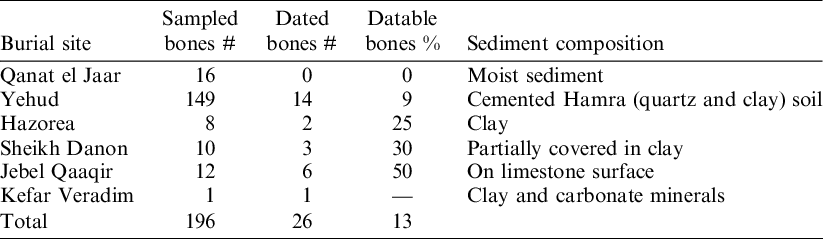
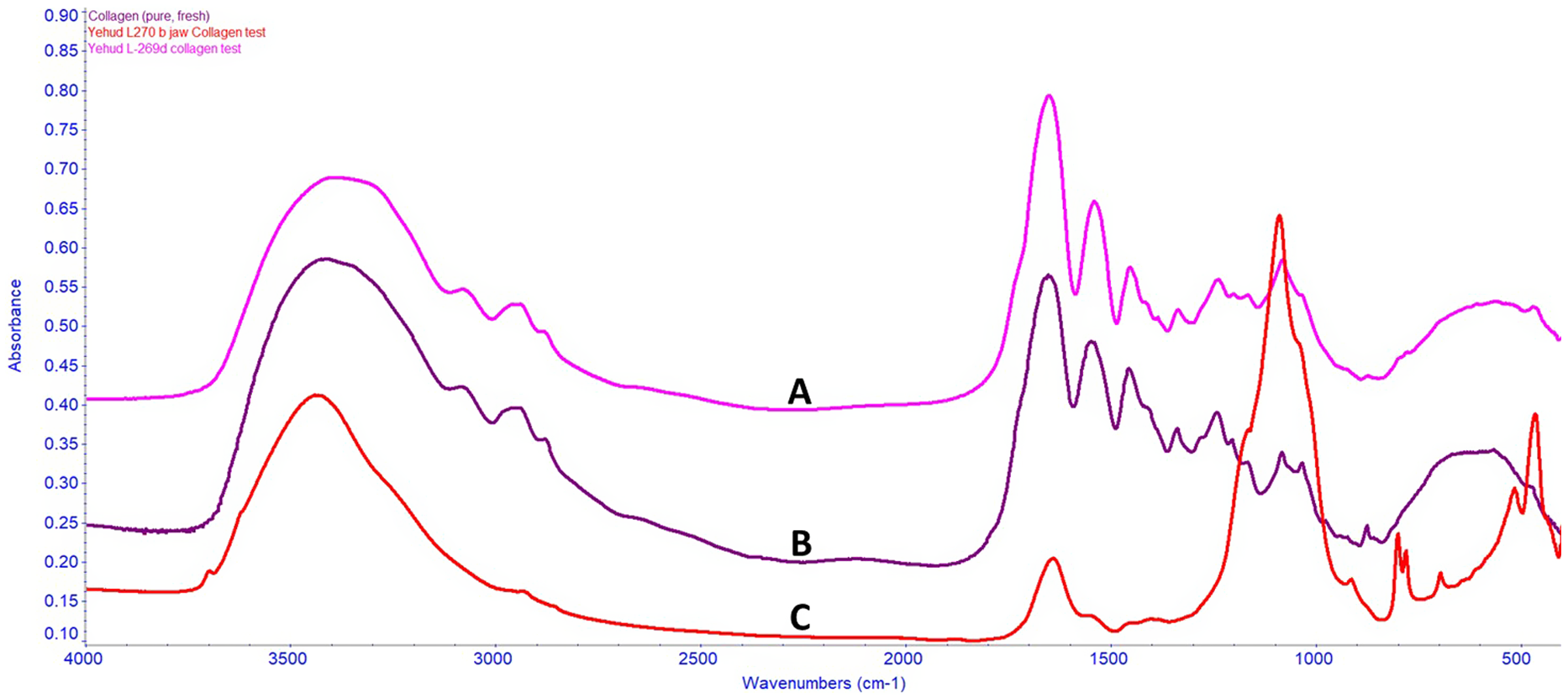
The percentage of dated bones in each site is presented in Table 1. The chemical parameters of the dated bones are shown in Table 2. The extent of collagen preservation within ancient bones (verified by SF, FTIR, and element ratios) appears to depend on the local environment of the bones resting place. Moist sediments, as in Qanat el Jaar and Yehud, seem to be a non-favorable environment for collagen preservation. The collagen better preserves in dry, arid environments, as in Jebel Qaaqir or Sheikh Danon. We also found that some bones sampled from the same tomb or adjacent tombs only one meter apart proved to have different collagen preservation. For example, in Yehud burial ground, tomb L269 bone insoluble fraction presented a good FTIR collagen signal, while adjacent tomb L270 did not (Figure 8).
Total number of sampled bones from each burial site and the number of bones with sufficient amount and quality of collagen that were dated.
Details and preservation parameters of the dated IBA bones.
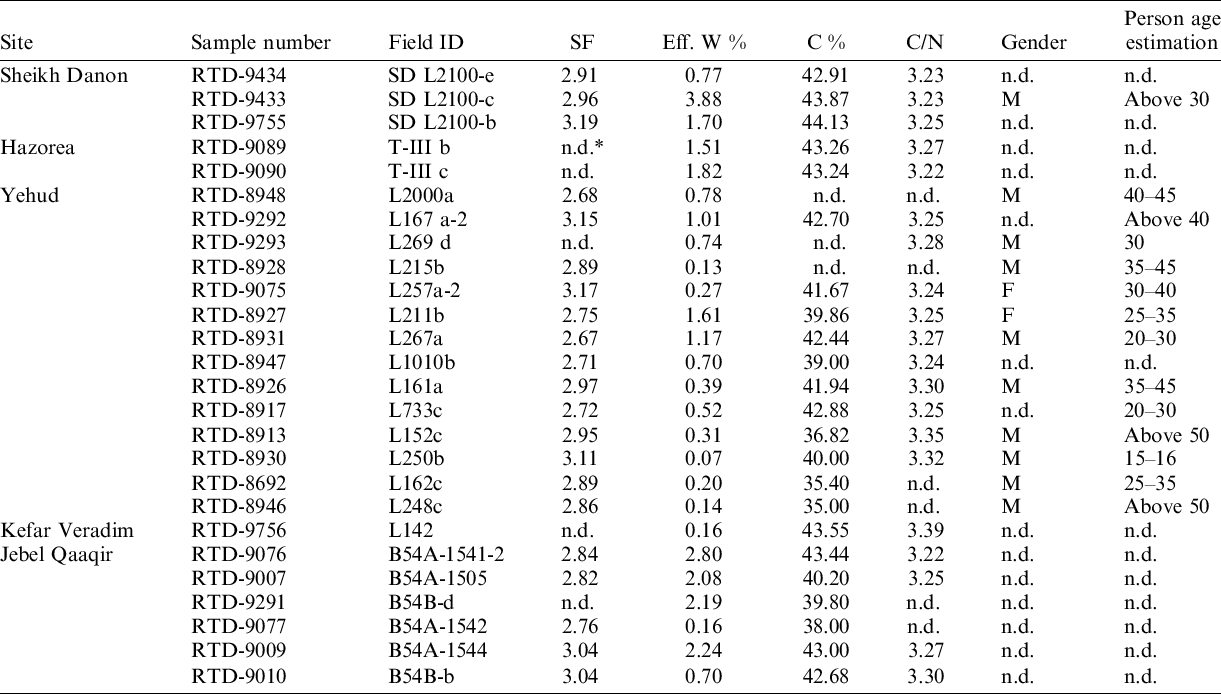
* n.d. stands for “no data.”
Comparative FTIR spectra of the following samples: (A) Typical bone insoluble fraction showing good collagen preservation (dated bone L269d RTD-9293) for the samples in this study. (B) Standard sample of fresh collagen. (C) Bone insoluble fraction showing poor collagen preservation (bone L270b, not dated). Note the typical collagen FTIR peaks at 1640, 1550, and 1450 cm–1 in both spectra A and B (See also Weiner Reference Weiner2010: Fig. 12.19), and the different spectrum C that is dominated by characteristic quartz absorbance peaks (prominent peak at 1084 cm–1), with only a low signal of organic compounds.
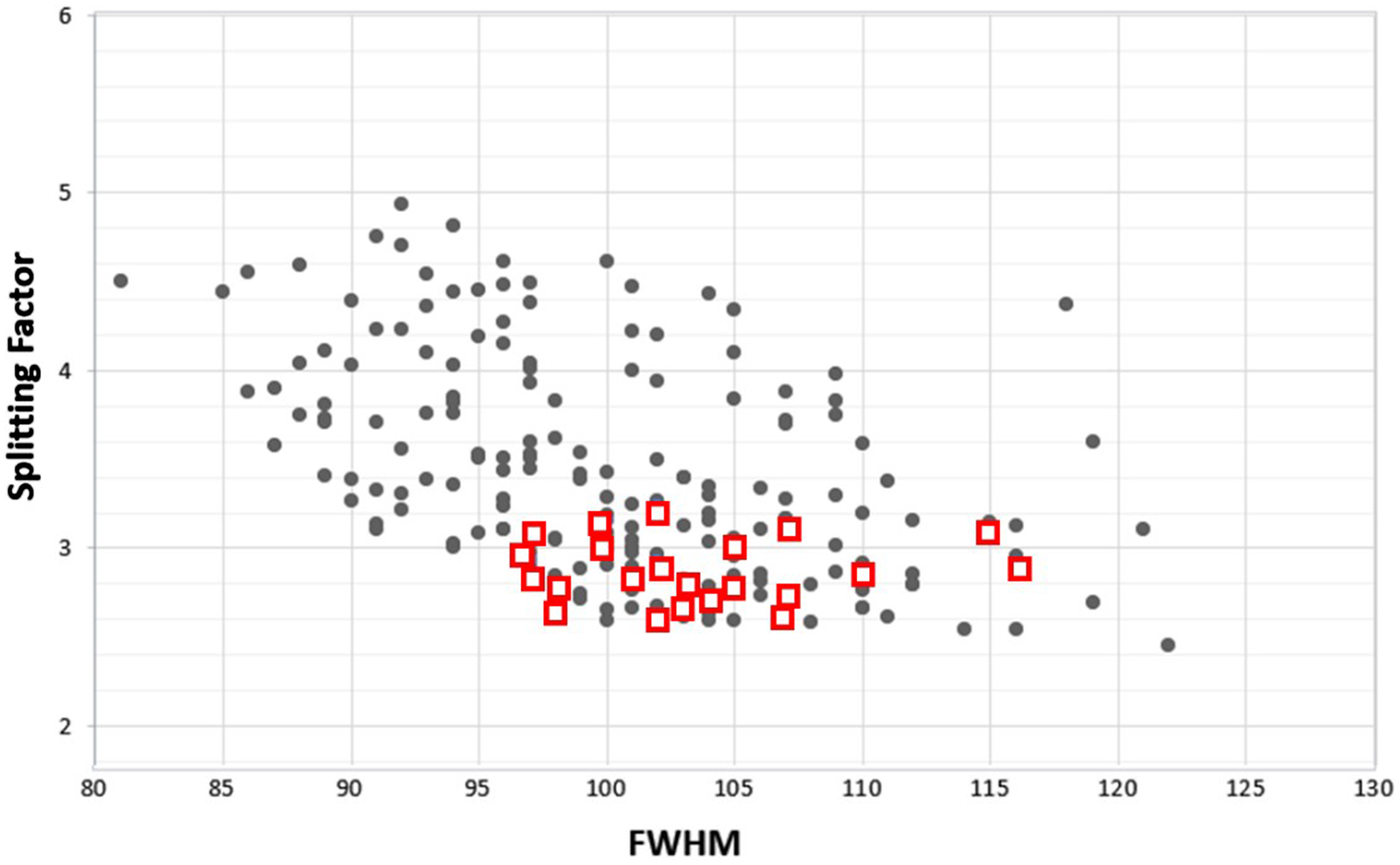
SF was shown to be an effective indicator for insufficient (low amount) collagen in the bones sampled in this research. Of the bones, 50% had SF > 3.3. None of the bones with SF > 3.3 had sufficient collagen for dating (Figure 9). On the other hand, SF below the value of 3.3 by itself could not predict sufficient collagen as only 26 bones out of 96 tested bones that showed SF < 3.3 proved to have sufficient collagen and were dated (27% of the bones with SF < 3.3). Thus, only if the FTIR spectrum of the insoluble fraction of the bone/tooth sample after HCl treatment presented clear collagen absorbance peaks, then the sample was considered a candidate for further processing towards radiocarbon dating. The SF ratio tests on bones from different IBA burial sites show a similar bone diagenesis pattern. The bones with sufficient collagen for dating present 2.6 < SF < 3.3, regardless of the FWHM (Asscher et al. Reference Asscher, Weiner and Boaretto2011).
FTIR “Splitting Factor” test results on bones from four different IBA burial sites (Yehud, Jebel-Qaaqir, Sheikh-Danon, Qanat-el-Jaar). Squares mark bones that later proved to have sufficient collagen and were dated. Dots are bones that did not have adequate collagen for dating. FWHM stands for the FTIR Full Width at Half Maximum height of the 1035 cm–1 peak of carbonated hydroxyapatite (Asscher et al. Reference Asscher, Weiner and Boaretto2011).
Bone-Dating Results
The dates presented here (Table 3, Figure 10) are the first radiocarbon dates of human bones published from IBA burial sites in the southern Levant. The two Hazorea tomb-3 dates above were also presented recently elsewhere (Lev et al. Reference Lev, Bechar, Covello-Paran and Boaretto2021). The dated bones were all found within well verified IBA burial contexts, accompanied by typical IBA burial goods.
Radiocarbon date ranges of human bones from IBA burial grounds across Israel. Within each site, samples are ordered by their radiocarbon date.
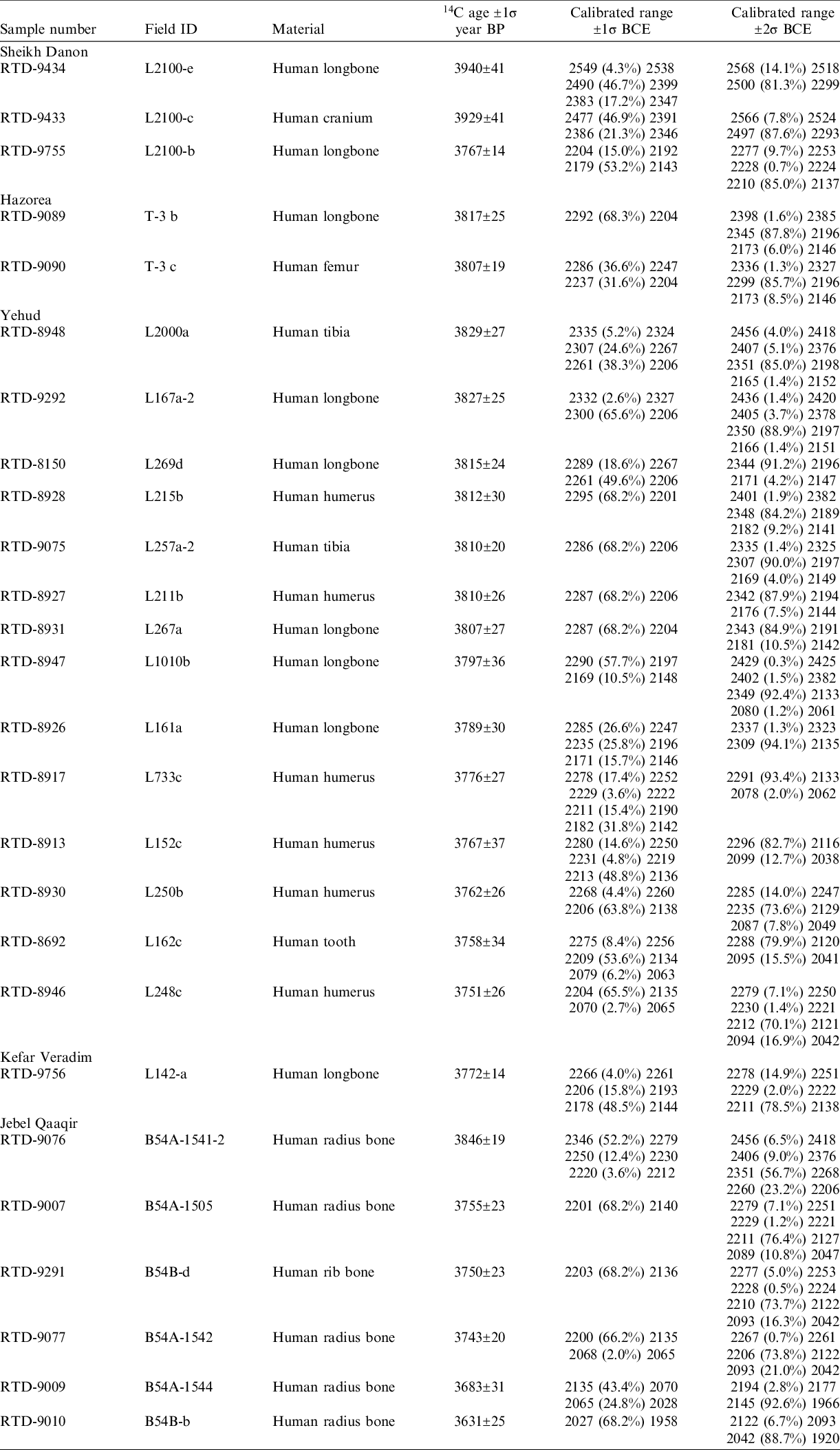
Calibrated range probability distributions of bone samples from IBA burial grounds in Israel. Sample field identification is listed on the left, followed by their lab number. Within each site, samples are ordered according to their radiocarbon date.

DISCUSSION
IBA Shaft Burials Dating
The dated human bones in this research originated in shaft tombs of five different sites from various regions in Israel: from Jebel Qaaqir in the southern Judean hill region and up to Kefar Veradim in upper Galilee (Figure 1). The measured date ranges cover most of the IBA timeframe: bones’ date-range medians span from the 25th century BCE, through IBA central dates and up to the beginning of the 20th century BCE. This sample of burials follows the same chronological pattern presented by the absolute dating of IBA settlements in the southern Levant (Regev et al. Reference Regev, de Miroschedji, Greenberg, Braun, Greenhut and Boaretto2012; D’Andrea Reference D’Andrea2014: Chapter 2; Lev Reference Lev2020: Chapter 8). Thus, the current research shows evidence for a parallel chronological range of IBA settlements and IBA burials, supporting an observation that the IBA signature shaft tomb burials are a fundamental part of the IBA culture from start to end, alongside its other characteristic material culture.
IBA Collective Burials
The dates from bones belonging to five out of at least nine individuals counted in one shaft tomb labeled B54 at Jebel Qaaqir (Dever Reference Dever2014:32–33) were presented above (Table 3). The dated bones produced a sufficient amount of good quality collagen, as validated by the FTIR spectra and the chemical analysis (see Table 2). The calibrated date range medians of Tomb B54 bones span from around 2300 BCE to 2000 BCE, presenting for the first time a single IBA shaft tomb that contains human remains accumulated through generations and spanning over a few hundred years. The Jebel Qaaqir dates indicate a tribal, lineage, or family-oriented community with long-lasting tradition reflected in ongoing collective burial practice, as seen in tomb B54. The phenomenon of a few generations gap between individuals buried in the same tomb was also observed at Seikh Danon (Table 3). Another common feature in these collective burials is scattered and disarticulated partial skeletons, including mainly larger bones, thus suggesting secondary burials or moving aside old bones when adding remains of new people to the chamber.
Yehud Burial Ground Observations
The dating results from the Yehud IBA burial site show that it was active during IBA for over a century, keeping the same burial tradition and style. In the burials, the dead were laid in similar positions in the same type of shaft tombs dug until the boundary between the Hamra soil and the yellow sand layer below it. Similar burial goods were found in the tombs, including (mainly) jars, cups, and open bowls. Tombs with earlier calibrated date range medians (before 2230 BCE) were sampled from the eastern part of the field (except for RTD-9292), and those with later calibrated date range medians (after 2230 BCE) were sampled from the western part (except for RTD-8930), suggesting an expansion of the burial field from east to west through time (Figure 11). Many shafts were dug into the local Hamra soil, some are very close, yet the tombs did not cut each other. The above observations suggest that the IBA people knew the location of the tombs at the Yehud burial ground, including those from past generations. They kept the burial traditions very similar for over a century, and as the burial area became crowded, they extended the burial field to the west. Such behavior suggests a long-standing social organization that keeps standard and orderly burial practices for several generations.
Partial schematic plan of Yehud main area tombs spatial distribution. Triangles mark tombs that produced earlier calibrated distribution ranges (mean before 2230 BCE). Squares mark tombs that produced later calibrated distribution ranges (mean after 2230 BCE). The related sample number is displayed by each dated tomb. Black marked tombs were sampled but had insufficient collagen for dating. Non-colored tombs were not sampled.

CONCLUSION
This research performed the first absolute dating measurements on Intermediate Bronze Age human remains from southern Levant burial sites. The measured date ranges cover most of the IBA timeframe, demonstrating that the signature shaft tomb burials were integrated into the IBA culture throughout its entire lifespan. Collective burial in the same shaft tomb supplied dates centuries apart between the humans buried in that tomb. This phenomenon suggests a traditional tribal or familial community with long-term cultural memory as reflected in their burial traditions. The conservative nature of the IBA culture is also apparent in tombs quarried for over a century at Yehud with identical structures and the same burial arrangement. The above findings complement previous observations that the same pottery types and metal tools are found in contexts dated throughout half a millennium of the IBA. The overall emerging picture is of a very conservative rural community, keeping its rigid way of life and its traditions for many centuries.
Further radiocarbon dating of IBA burials with their rich pottery assemblages also holds promising potential for improving the IBA pottery chronology precision.
ACKNOWLEDGMENTS
We wish to thank Patricia Smith (Faculty of Dental Medicine, Hebrew University of Jerusalem) for helping us identify relevant bone samples for radiocarbon dating from Jebel Qaaqir burial cave B54. We also thank Edwin van den Brink (Israel Antiquities Authority) for a bone sample for radiocarbon dating from the Kefar Veradim IBA burial tomb L142.
The Exilarch Foundation supported the Radiocarbon research for the Dangoor Research Accelerator Mass Spectrometer (D-REAMS) Laboratory. We wish to thank the Kimmel Center for Archaeological Science and George Schwartzman Fund for funding support to R.L., laboratory, and material analysis. E.B. is the incumbent of the Dangoor Professorial Chair of Archaeological Sciences at the Weizmann Institute of Science.


 Open access

