

Introduction
The 2024 US presidential election has refocused global attention on the divisive discourse surrounding leadership and gender. We address this phenomenon in the healthcare context. Women face numerous barriers to leadership positions in health, social, and community care settings globally (Pérez-Sánchez, Madueño & Montaner, Reference Pérez-Sánchez, Madueño and Montaner2021) and are underrepresented in male-dominated leadership roles, despite comprising the majority of the workforce (World Health Organization, 2019). Underrepresentation limits women’s access to resources, support, and opportunities for advancement, thereby reducing their influence within organisations, communities, and broader society (Tremmel & Wahl, Reference Tremmel and Wahl2023). Such barriers are often compounded by workplace dynamics like mansplaining and gendered incivility, which negatively impact women’s job satisfaction and psychological well-being (Smith, Schweitzer, Lauch & Bird, Reference Smith, Schweitzer, Lauch and Bird2022). The systemic imbalance perpetuates gender stereotypes and biases, leading to ongoing discrimination and marginalisation. Addressing this disparity is essential for promoting gender equality and empowering women, aligning with the United Nations Sustainable Development Goal 5 to ‘achieve gender equality and empower all women and girls’ (United Nations, 2023). Healthcare organisations often fall short in recognising and nurturing women’s leadership potential, thereby perpetuating gender discrimination (Gauci, Peters, O’Reilly & Elmir, Reference Gauci, Peters, O’Reilly and Elmir2022).
Globally, women hold only about 25% of the leadership positions in healthcare organisations (World Health Organization, 2019). This imbalance is exacerbated by gendered biases, discrimination, and the burden of unpaid work (Women in Global Health, 2023; World Economic Forum, 2022). Excluding women from leadership results in talent loss, decreased innovation, and a shortage of healthcare workers (Duncan, Mavisakalyan & Salazar, Reference Duncan, Mavisakalyan and Salazar2022). Moreover, gender diversity in leadership teams can enhance creativity and decision-making, leading to better organisational outcomes (Ayoko, Reference Ayoko2020). Conversely, enhancing equitable opportunities for women’s leadership in health can address labour shortages, stimulate innovation and collaboration, drive economic growth, and improve health policies and practices (Mousa et al., Reference Mousa, Boyle, Skouteris, Mullins, Currie, Riach and Teede2021). However, further research is needed to understand how women’s career progression is enabled and inhibited across different ecological levels (Luc, Stamp & Antonoff, Reference Luc, Stamp and Antonoff2018).
This article outlines how we can better empower women leaders and dismantle pervasive gender stereotypes by integrating ecological systems theory (EST, Bronfenbrenner, Reference Bronfenbrenner1979) with role congruity theory (Eagly & Karau, Reference Eagly and Karau2002), supported by qualitative interview data from 17 senior women healthcare leaders. It addresses the intricate interplay between individual, organisational, community, and societal levels that influence women’s leadership trajectories in healthcare. By enriching the theoretical landscape of EST with the dynamics of gender relations and leadership emergence, we offer a comprehensive understanding of the barriers and facilitators to women’s leadership.
The major contributions of this article include a nuanced exploration of the role men play in supporting women’s advancement into leadership roles, challenging the traditional narrative that views men predominantly as obstacles. This finding aligns with Elvira, Quintana-García and Villamor (Reference Elvira, Quintana-García and Villamor2023), who highlight that support and recognition can mitigate biases and reduce gender disparities at higher management levels. It uncovers the complex dynamics of women impeding other women, shedding light on internal barriers within the professional milieu. Similarly, Parola, Ellis & Golden (Reference Parola, Ellis and Golden2024) discuss how gender diversity and power dynamics within top management teams can influence organisational performance, suggesting that relational conflicts may arise in diverse teams. Our research highlights the positive perception of vulnerability in leadership, advocating for a shift in leadership paradigms that value emotional intelligence and authenticity. By examining the targeting of ambitious women by co-workers and the passive career development experienced by some female leaders, the study reveals systemic issues that perpetuate gender biases. These insights lead to a series of practical implications and recommendations across individual, organisational, community, and societal levels aimed at fostering environments conducive to women’s leadership.
In advocating for systemic change through an EST approach, we contribute to the discourse on gender equality in leadership by calling for collaborative efforts to dismantle gender stereotypes and create inclusive spaces that encourage and support women in assuming leadership roles. This approach echoes the call from Ayoko (Reference Ayoko2020) for inclusive environments that value diversity in leadership contexts. We seek to start answering this call and thereby help to enable improved organisational performance and better societal well-being.
Literature review
Gender stereotypes and leadership emergence
Gender stereotypes present significant challenges to women’s progression into leadership roles (Brescoll, Reference Brescoll2016). This consensus emerges from both empirical research within social and organisational psychology and the lived experiences of women holding leadership positions (Koenig, Eagly, Mitchell & Ristikari, Reference Koenig, Eagly, Mitchell and Ristikari2011). For example, a survey of female executives in Fortune 1000 corporations revealed that a majority perceive stereotypes about women’s roles and abilities as a substantial impediment to reaching the apex of their careers (Wellington, Kropf & Gerkovich, Reference Wellington, Kropf and Gerkovich2003). Role congruity theory provides the dominant explanation for gendered experiences of leadership emergence.
Role congruity theory
Role congruity theory (Eagly & Karau, Reference Eagly and Karau2002) explains how gender stereotypes affect leadership emergence by highlighting the mismatch between societal expectations of women and the attributes linked to leadership roles. In many cultures, people associate women with communal traits like warmth and co-operation, while they link leadership positions with agentic traits such as assertiveness and dominance. This mismatch creates barriers for women aspiring to leadership roles, as they are perceived as less suitable due to conflicting expectations (Eagly & Heilman, Reference Eagly and Heilman2016).
Badura, Grijalva, Newman, Yan and Jeon (Reference Badura, Grijalva, Newman, Yan and Jeon2018) find that agentic traits significantly influence leader emergence through active participation in group discussions. Women, often associated with communal traits, may participate less in settings that value agentic behaviour, affecting their visibility as potential leaders. Heilman, Caleo and Manzi (Reference Heilman, Caleo and Manzi2024) examined how descriptive and prescriptive stereotypes lead to bias in performance evaluations. Women displaying agentic behaviours may face penalties for violating gender norms, which further hinders their leadership prospects. Brescoll (Reference Brescoll2016) observed that female leaders expressing emotions like anger are perceived negatively, reducing their influence compared to male leaders. This reaction stems from stereotypes that expect women to be more emotional yet penalise them when they display certain emotions. Koenig et al. (Reference Koenig, Eagly, Mitchell and Ristikari2011) conducted a meta-analysis revealing that leadership is culturally associated with masculine traits. This perception reinforces the idea that men are more suited for leadership roles, creating additional hurdles for women.
Fitzsimmons and Callan (Reference Fitzsimmons and Callan2016) discuss how women face limitations in accessing roles that build leadership capital due to gendered organisational practices. These limitations hinder their ability to gain experiences that are valued in leadership selection processes. Hoyt and Murphy (Reference Hoyt and Murphy2016) explored stereotype threat, where women fear being judged based on negative stereotypes, affecting their performance and leadership aspirations. Such threats lead to psychological barriers that discourage women from pursuing leadership roles. Ellemers (Reference Ellemers2018) highlighted that gender stereotypes not only influence others’ perceptions but also affect women’s self-perception, reinforcing behaviours that align with stereotypes. Guillén, Mayo and Karelaia (Reference Guillén, Mayo and Karelaia2018) found that self-confidence alone is insufficient for women to gain influence in male-dominated professions. Women must also exhibit prosocial behaviour to be perceived as effective leaders. This requirement adds an extra layer of expectations not typically placed on men.
Role congruity theory thereby explains how gender stereotypes create significant obstacles for women in leadership emergence. The mismatch between societal expectations of femininity and the attributes associated with leadership roles leads to bias and prejudice. Addressing these challenges requires organisational changes that recognise and mitigate the impact of gender stereotypes on leadership selection and evaluation.
Role seniority
Gender stereotypes significantly influence the attainment of senior leadership roles. As individuals ascend to higher positions, societal expectations and biases become more pronounced. Eagly and Heilman (Reference Eagly and Heilman2016) observe that stereotypes portraying women as less agentic and more emotional undermine their potential in male-dominated environments. These stereotypes persist despite shifts in societal norms, making it difficult for women to accumulate the necessary career capital for senior roles. Fitzsimmons and Callan (Reference Fitzsimmons and Callan2016) noted that women face limitations in accessing experiences that build leadership capital due to gendered organisational practices. The ‘glass cliff’ phenomenon further illustrates how role seniority intersects with gender stereotypes. Ryan et al. (Reference Ryan, Haslam, Morgenroth, Rink, Stoker and Peters2016) reviewed research showing that women are more likely to be appointed to precarious leadership positions during times of crisis. This trend reflects stereotypical beliefs that women are suited for challenging, high-risk situations, which often lack support and stability. Such appointments can negatively impact women’s career trajectories, as failures in these roles reinforce biases about women’s suitability for senior leadership (Ryan et al., Reference Ryan, Haslam, Morgenroth, Rink, Stoker and Peters2016).
Stereotypes not only affect perceptions from others but also influence women’s self-perception in pursuing senior roles. Hoyt and Murphy (Reference Hoyt and Murphy2016) discussed stereotype threat, where women fear being judged based on negative stereotypes, which creates psychological barriers to leadership aspirations. This threat intensifies in the context of senior positions, where masculine traits are highly valued. Ellemers (Reference Ellemers2018) highlighted that these stereotypes reinforce behaviours aligning with societal expectations, further limiting women’s progression into senior leadership. Heilman et al. (Reference Heilman, Caleo and Manzi2024) examined how descriptive and prescriptive stereotypes lead to bias in performance evaluations, particularly in male-dominated fields valuing agentic traits. Women displaying assertiveness may face penalties for violating gender norms, hindering their advancement into senior roles. Koenig et al. (Reference Koenig, Eagly, Mitchell and Ristikari2011) found that leadership is culturally associated with masculine traits, especially in high-status positions. This association creates additional hurdles for women aiming for senior leadership, as they are perceived as less fitting for these roles.
Organisational practices also play a role in perpetuating gender disparities in senior positions. Adams (Reference Adams2016) critiques the ‘business case’ for gender diversity on boards, noting that the presence of female directors does not uniformly lead to improved financial performance. The selection processes for board positions may involve biases that favour men, further limiting women’s access to senior roles. Gould, Kulik and Sardeshmukh (Reference Gould, Kulik and Sardeshmukh2018) suggest that increasing female representation on boards can have a ‘trickle-down effect’ on executive gender diversity, although external diversity recommendations may not accelerate this effect. Work–life balance issues disproportionately affect women’s aspirations for senior leadership. Fritz and Van Knippenberg (Reference Fritz and Van Knippenberg2018) found that work–life initiatives positively impact women’s leadership aspirations more than men’s. Yet, in male-dominated contexts, these initiatives may not sufficiently mitigate the barriers women face in advancing to senior roles (Kalysh, Kulik & Perera, Reference Kalysh, Kulik and Perera2016). Organisational cultures that undervalue flexible practices contribute to the underrepresentation of women in senior positions.
Stereotypes also intersect with race in affecting women’s progression to senior leadership. Rosette, Koval, Ma and Livingston (Reference Rosette, Koval, Ma and Livingston2016) explored how racial stereotypes influence the challenges women face in leadership contexts. For instance, Black women may face fewer penalties for assertive behaviour but encounter biases regarding competence, affecting their advancement to senior roles. Intersectional approaches are essential in understanding the complex ways stereotypes hinder women’s attainment of senior leadership positions. Role seniority is therefore closely associated with gender stereotypes in leadership. As individuals move into higher positions, the impact of societal expectations and biases intensifies, creating significant obstacles for women. Addressing these challenges requires organisational changes that recognise and mitigate the influence of gender stereotypes on the selection and evaluation processes for senior roles.
Observer gender
Gender stereotypes in leadership are influenced by the gender of the observer, affecting perceptions and evaluations of leadership qualities. Hentschel, Heilman and Peus (Reference Hentschel, Heilman and Peus2019) found that male and female observers rate agency and communality differently in themselves and others. Men view women as less agentic and more communal, while women perceive agency among women as more nuanced. This difference suggests that observer gender plays a role in reinforcing or challenging traditional gender stereotypes in leadership contexts. Koenig et al. (Reference Koenig, Eagly, Mitchell and Ristikari2011) conducted a meta-analysis revealing that leadership is culturally associated with masculine traits like assertiveness and dominance. This association is stronger among male observers and in male-dominated sectors. Female observers showed a diminishing perception of leadership as masculine over time. This shift indicates that female observers may recognise communal and androgynous qualities in leaders, influencing evaluations of female leadership.
Observer gender affects evaluations of emotional expressions in leaders. Brescoll (Reference Brescoll2016) examine how female leaders expressing emotions like anger are perceived negatively, especially by male observers who hold stereotypes about women being more emotional. This perception reduces the influence of female leaders compared to male leaders displaying similar emotions. The observer’s gender influences these evaluations, reinforcing biases that disadvantage women in leadership roles when they exhibit behaviours associated with authority. Heilman et al. (Reference Heilman, Caleo and Manzi2024) discuss how descriptive and prescriptive stereotypes lead to bias in performance evaluations, particularly in male-dominated fields. Male observers may penalise women for displaying agentic behaviours like assertiveness, which are expected and accepted in men but viewed negatively in women. This bias affects women’s career advancement and leadership opportunities. Female observers may also internalise these stereotypes, impacting their evaluations of other women in leadership positions.
Guillén et al. (Reference Guillén, Mayo and Karelaia2018) found that self-confidence enhances influence at work for both men and women, but observer gender moderates this effect. Men gain influence when appearing self-confident, as male observers align confidence with leadership potential. Women must also demonstrate prosocial behaviour to achieve similar influence, reflecting observers’ expectations regarding appropriate female behaviour. This disparity highlights how observer gender shapes the criteria used to evaluate leadership potential in women. Lemoine, Aggarwal and Steed (Reference Lemoine, Aggarwal and Steed2016) explored leadership emergence in group settings, finding that women are more likely to emerge as leaders in groups high in extraversion and predominantly male. This suggests that male observers in such groups may recognise and accept women’s leadership when group dynamics encourage open communication. Observer gender influences the acceptance of female leaders, depending on social context and group characteristics.
Rosette et al. (Reference Rosette, Koval, Ma and Livingston2016) examined how racial and gender stereotypes intersect in leadership perceptions. Observer gender can influence the application of stereotypes, with male observers enforcing stricter penalties for women who violate expected behaviours. Female observers may offer more nuanced evaluations, considering both competence and dominance. This dynamic underscores the role of observer gender in perpetuating or challenging stereotypes that affect women’s leadership experiences. Observer gender thus plays a significant role in how gender stereotypes influence leadership perceptions and evaluations. Male and female observers differ in their perceptions of agency, communality, and appropriate leadership behaviours. These differences impact the opportunities and challenges women face in leadership roles. Addressing the influence of observer gender requires organisations to implement training and policies that raise awareness of unconscious biases, promoting equitable evaluations of leadership potential regardless of gender.
Changes over time
Gender stereotypes in leadership have evolved significantly over time, reflecting changes in societal norms and increased female participation in leadership roles. Historically, leadership has been culturally associated with masculine traits such as assertiveness and dominance. Koenig et al. (Reference Koenig, Eagly, Mitchell and Ristikari2011) conducted a meta-analysis demonstrating that leadership roles were predominantly viewed as masculine across various paradigms. This association was particularly strong in high-status roles and male-dominated sectors, reinforcing the perception that men are more suited for leadership positions. As more women have entered leadership roles, perceptions have begun to shift. Koenig et al. (Reference Koenig, Eagly, Mitchell and Ristikari2011) found that the perceived masculinity of leadership diminished over time, especially among female participants and in educational leadership contexts. This change suggests that increased visibility of female leaders can alter stereotypes, allowing for the inclusion of more androgynous or communal qualities in leadership perceptions. Eagly and Heilman (Reference Eagly and Heilman2016) noted that despite these shifts, stereotypes portraying women as less agentic and more emotional continue to undermine their leadership potential, particularly in male-dominated environments.
The ‘glass cliff’ phenomenon reflects how gender stereotypes in leadership have changed. Ryan et al. (Reference Ryan, Haslam, Morgenroth, Rink, Stoker and Peters2016) reviewed research showing that women are more likely to be appointed to precarious leadership positions during times of crisis. This trend indicates a shift in stereotypes, associating women with communal qualities deemed suitable for handling challenging situations. While this provides leadership opportunities, it often places women in roles with heightened risk and limited support, potentially reinforcing negative stereotypes if they fail to improve organisational performance (Ryan et al., Reference Ryan, Haslam, Morgenroth, Rink, Stoker and Peters2016). Feminist theories have influenced the evolution of leadership research. Kark and Buengeler (Reference Kark and Buengeler2024) explored how different waves of feminist thought have shaped understandings of gender and leadership. Early theories emphasised male-centric qualities, but later waves incorporated communal and relational styles associated with femininity. This progression highlights a growing recognition of diverse leadership styles and challenges traditional gendered perceptions.
Intersectionality has become increasingly important in understanding gender stereotypes in leadership. Rosette et al. (Reference Rosette, Koval, Ma and Livingston2016) examined how race and gender intersect to influence perceptions of female leaders. They found that stereotypes are not uniformly applied to all women, and race significantly moderates how agency is perceived. This insight underscores the complexity of stereotypes and the need to consider multiple identities in leadership evaluations. Recent studies have revealed more nuanced understandings of gender stereotypes. Hentschel et al. (Reference Hentschel, Heilman and Peus2019) investigated the dimensions of agency and communality, finding that stereotypes are complex and can reinforce self-limiting behaviours among women. They suggest that focusing on nuanced aspects of these traits can aid in designing interventions to address workplace gender biases. This approach reflects a shift from broad generalisations to more detailed analyses of how stereotypes function.
Despite changes over time, persistent challenges remain. Eagly and Heilman (Reference Eagly and Heilman2016) argued that stereotypes of women as less agentic are difficult to eliminate due to ongoing societal role divisions. Heilman et al. (Reference Heilman, Caleo and Manzi2024) discussed how descriptive and prescriptive stereotypes continue to lead to bias in performance evaluations, particularly in male-dominated fields. These enduring stereotypes hinder women’s career advancement and highlight the need for ongoing efforts to address gender bias in leadership. Gender stereotypes in leadership have clearly changed over time, moving from rigid associations with masculine traits to more nuanced and inclusive perceptions. Increased female participation in leadership roles and the influence of feminist theories have contributed to this evolution. However, persistent stereotypes and biases continue to pose challenges. Understanding the complex and changing nature of these stereotypes is essential for developing strategies to promote gender equity in leadership positions.
Extant discourse on gender stereotypes and leadership emergence thereby includes various contextual factors – such as role seniority, observer gender, and changes over time, among others – and yet no overarching theoretical framework has yet been applied to bring these disparate themes together into a logical and coherent structure. We therefore propose that EST might serve as a helpful perspective to organise the discourse and analyse the lived experiences of gender-based stereotyping in leadership emergence.
Ecological systems theory
Bronfenbrenner (Reference Bronfenbrenner1979) introduced EST to elucidate the impact of contextual factors on human development. The theory progressed through three primary phases: (a) scrutinizing direct context effects on development; (b) concentrating on context–individual interactions; and (c) comprehending proximal processes, which denote interactions among contextual systems (Tudge, Mokrova, Hatfield & Karnik, Reference Tudge, Mokrova, Hatfield and Karnik2009). In the second phase of EST, positive development emerges from personal characteristics and environmental influences (Bronfenbrenner, Reference Bronfenbrenner and Vasta1989). For instance, individuals possessing desirable traits, assets, and capabilities tend to attain greater success. When these individuals operate within a supportive and encouraging context, they are more likely to succeed compared to those facing a deficient and obstructive environment.
EST positions individuals within five nested systems: (1) the microsystem, encompassing institutions or groups with which individuals have direct and regular contact; (2) the mesosystem, constituted by connections between distinct microsystems; (3) the exosystem, comprising broader social structures with which the focal individual has no direct interaction; (4) the macrosystem, the highest contextual level encompassing the economy, government, and culture; and (5) the chronosystem, addressing the changing pattern of effects over time (Neal & Neal, Reference Neal and Neal2013). A fundamental tenet of EST underscores that understanding development requires a broader context rather than solely focusing on the individual. EST posits that development emerges from the interplay between individuals and their environment, as individuals both influence and are influenced by their surroundings (Rosa & Tudge, Reference Rosa and Tudge2013).
EST’s applicability extends across diverse research domains, including family studies (Liu, Reference Liu2015), disaster recovery (Boon, Cottrell, King, Stevenson & Millar, Reference Boon, Cottrell, King, Stevenson and Millar2012), economic development (Pocock, Williams & Skinner, Reference Pocock, Williams and Skinner2012), and entrepreneurship (Lux, Macau & Brown, Reference Lux, Macau and Brown2020). Beyond human development, EST can be transposed to analogous entities, such as individual female leaders’ professional development and performance.
Empowering systems for women leaders
Bronfenbrenner’s (Reference Bronfenbrenner1979) EST offers a valuable framework for understanding and addressing the gender disparity in leadership within the global healthcare industry, particularly in healthcare and community health contexts. Applying EST to empower women leaders in these fields involves examining the various systems and their interconnectedness. Lau, Scott, Warren and Bligh (Reference Lau, Scott, Warren and Bligh2023) argue for a holistic approach that considers interactions at various system levels, aligning with EST’s emphasis on nested systems influencing individual development.
At the microsystem level, which includes institutions and groups with which individuals have direct and regular contact, such as hospitals, clinics, and community health organisations, empowering women leaders involves addressing gender bias and promoting equal opportunities (Fitzsimmons & Callan, Reference Fitzsimmons and Callan2016; Heilman et al., Reference Heilman, Caleo and Manzi2024). Addressing these biases can foster mentorship programmes and support women in accumulating the necessary career capital to excel in leadership roles (Fitzsimmons & Callan, Reference Fitzsimmons and Callan2016).
The mesosystem represents the connections between distinct microsystems. Empowering women leaders involves strengthening networks and partnerships between healthcare facilities and community health programmes (Kark & Buengeler, Reference Kark and Buengeler2024). By fostering collaborative relationships and communal leadership styles, organisations can support women’s leadership development and the exchange of best practices (Kark & Buengeler, Reference Kark and Buengeler2024; Lyness & Grotto, Reference Lyness and Grotto2018).
At the exosystem level, broader social structures like healthcare policies, funding mechanisms, and regulatory frameworks indirectly impact individuals. Advocating for policies that promote gender equity, fair compensation, and work–life balance is essential to empower women leaders in healthcare (Kalysh et al., Reference Kalysh, Kulik and Perera2016; Kossek & Buzzanell, Reference Kossek and Buzzanell2018). Implementing inclusive policies and work–life initiatives can create a supportive exosystem that enables women to excel in leadership roles (Kossek & Buzzanell, Reference Kossek and Buzzanell2018). Additionally, demand-side strategies like quotas with enforcement can increase female representation in leadership positions (Sojo, Wood, Wood & Wheeler, Reference Sojo, Wood, Wood and Wheeler2016).
At the macrosystem level, broader societal factors such as cultural norms, the economy, and government policies influence healthcare. Empowering women leaders requires challenging deeply ingrained cultural norms and gender stereotypes within the industry (Eagly & Heilman, Reference Eagly and Heilman2016; Ellemers, Reference Ellemers2018). Addressing stereotypes that associate leadership with masculine traits can promote diversity and inclusivity, creating an environment that recognises and values women’s leadership contributions (Eagly & Heilman, Reference Eagly and Heilman2016; Koenig et al., Reference Koenig, Eagly, Mitchell and Ristikari2011).
The chronosystem addresses how the pattern of effects changes over time. Recognising the evolving nature of gender dynamics in leadership is crucial for empowering women leaders in healthcare (Kark & Buengeler, Reference Kark and Buengeler2024; Koenig et al., Reference Koenig, Eagly, Mitchell and Ristikari2011). As perceptions of leadership become less associated with masculine traits over time, strategies must adapt to address shifting challenges and opportunities (Koenig et al., Reference Koenig, Eagly, Mitchell and Ristikari2011). Long-term initiatives should consider these changes to effectively support women in leadership roles.
A core tenet of EST is that development cannot be fully understood by examining the individual alone but must be framed within the wider context in which they operate (Lau et al., Reference Lau, Scott, Warren and Bligh2023). This principle applies to empowering women leaders in healthcare and community health, as gender disparities cannot be addressed solely by focusing on individual women; the entire ecological system must be considered (Lau et al., Reference Lau, Scott, Warren and Bligh2023; Zaccaro, Green, Dubrow & Kolze, Reference Zaccaro, Green, Dubrow and Kolze2018). Applying EST to empower women leaders in healthcare aligns with its broader use in various research fields, including entrepreneurship, where it helps explain how individuals interact with their business environment (Fitzsimmons & Callan, Reference Fitzsimmons and Callan2016). Similarly, EST can be applied to understand how women leaders in healthcare are influenced by the larger systems and structures that surround them (Lau et al., Reference Lau, Scott, Warren and Bligh2023).
EST provides a comprehensive framework for addressing the gender disparity in leadership within the healthcare industry (Lau et al., Reference Lau, Scott, Warren and Bligh2023). By considering the interplay between women leaders and their environments at multiple levels, including the microsystem, mesosystem, exosystem, macrosystem, and chronosystem, we can develop strategies and initiatives that empower women to reach their fullest potential in healthcare and community health contexts (Lau et al., Reference Lau, Scott, Warren and Bligh2023). This approach goes beyond individual-focused efforts and can create a more inclusive and equitable landscape for women leaders (Kark & Buengeler, Reference Kark and Buengeler2024).
Our investigation was thus guided by the following research question: how can the EST framework help us to better understand women leadership emergence and make sense of women leaders’ lived experiences? We wanted to investigate the broader context within which women become leaders in healthcare settings, and how aspects of that context can both enable, and inhibit, their leadership emergence. The following sections outline our research methods, report the findings, and discuss the theoretical and practical implications.
Method
Research design
We used a social constructivist framework to explore our research questions (Berger & Luckmann, Reference Berger, Luckmann, Longhofer and Winchester2023), drawing on thematic analysis of qualitative interviews to gain insights into the lived experiences of individuals (Braun & Clarke, Reference Braun and Clarke2006). In line with other scholars investigating gender issues in leadership (e.g., Byrne & Chadwick, Reference Byrne and Chadwick2024), we chose our participants deliberately, focusing on those who could provide deep internal perspectives and first-hand experiences relevant to our study (Patton, Reference Patton2014). Our research focused on seasoned female leaders in healthcare settings, who are well-placed to shed light about their paths to leadership and their encounters with gender-related stereotypes.
Sample
Our research sample included 17 experienced female leaders from healthcare organisations across Australia. To recruit our participants, we first contacted experienced female executives via email to outline our research aims and request interviews, which led to several agreeing to participate. We then used snowball sampling by inviting our interviewees to recommend other potential participants in similar leadership positions within the healthcare sector, who might be willing to engage with the research.
Participants in the final sample ranged in age from 24 to 64 and were all based in Australia. To ensure their anonymity, we assigned numbers to participants and omitted any identifiable details in the data collection and transcription. Participants held leadership roles with titles such as Executive Director, Board of Directors Chair, Head of Nursing, Chief Education Officer, Specialist Surgeon, and Ambassador (organisation-specific details omitted to ensure participants’ anonymity).
Data collection
We conducted in-depth semi-structured interviews with the participants. All the interviews were conducted by one author to ensure a consistency in the approach. The authorship team met to discuss emerging themes and other issues throughout the research process. We obtained permission from participants to audio-record and then transcribe the interviews, and all participants agreed. The interviews ranged from 28 to 116 mins and the average interview length was 56 mins.
The interview guide included questions around major themes such as how gender related perceptions affected their leadership emergence, the barriers, limitations, and challenges to their leadership career development, as well as the enablers, supporters, and champions with whom they interacted along the way. The interview guide is available from the corresponding author upon request. All data were subsequently imported into NVivo, a software programme for qualitative analysis.
Data analysis
In the initial phase of analysis, one author identified concepts and generated codes directly from the participant transcripts (Corbin & Strauss, Reference Corbin and Strauss2015). One team member was the sole coder, and worked systematically through the transcripts, noting down observations, and applied open coding to the data. They started by ‘open coding’ three transcripts, focusing on extracting initial codes and potential themes. This process was then repeated throughout the analysis to continually refined and narrowed down the codes, ensuring consistency and accuracy in interpreting the data.
Next, the author team sought out similarities and differences among our first-order codes to develop second-order themes. Specifically, we identified themes that most related to gender-based beliefs and perceptions in relation to leadership emergence, and the reasoning that our participants used to explain these narratives, narrowing down our original codes to five overarching themes. We achieved theoretical saturation after 12 interviews at which point the codes and themes that emerged from additional interviews did not generate any new information (Glaser & Strauss, Reference Glaser and Strauss1967). To confirm this saturation and to add further contextual nuance to our data, we conducted five more interviews with women leaders. We then applied EST as a way to organise our discussion and provide plausible explanations for our findings in relation to our research questions.
We followed the criteria set out by Guba (Reference Guba1981) to ensure the trustworthiness of our findings. For example, by documenting the data collection and analysis processes, triangulating perspectives among a team of expert researchers, including numerous direct quotations and data-rich explanations, and maintaining researchers’ impartiality by reviewing the extracted codes and themes as a team to reach consensus. We are therefore confident that our analysis is credible, transferrable, dependable, and confirmable (Shenton, Reference Shenton2004).
Findings
Five themes emerged from our research: men helped women to step up, while women kept women down; vulnerability was a strength, whereas ambition a liability; and successful women reflected on the opportunities that they were ‘given’. The following sections explore these themes in greater depth. See Table 1 for an overview of the data structure including a selection of quotes, the codes, and emerging themes.
Data structure – quotes, codes, and themes

Men help women to step up
Traditional gender leadership stereotypes position men as natural leaders and gatekeepers of the status quo (Koenig et al., Reference Koenig, Eagly, Mitchell and Ristikari2011). Our research findings present a compelling challenge to these stereotypes. They reveal that female leaders often credit men as pivotal in their advancement into leadership roles and in championing their career progression within organisations. This insight diverges from the conventional narrative, highlighting that men can be allies and advocates for women’s leadership. The data collected from female leader respondents illuminate a nuanced dynamic where male colleagues not only recognise the potential in their female counterparts but also take active steps to support their ascent into leadership positions. Such support aligns with calls for multi-level approaches to gender equality that involve both men and women (Lau et al., Reference Lau, Scott, Warren and Bligh2023). Men, in these instances, serve as mentors, sponsors, and advocates, providing the necessary support and opportunities for women to navigate the complexities of career advancement in environments traditionally dominated by male leadership.
Many participants reflected on senior male leaders specifically selecting them for leadership career development. For example, P2 shared that ‘this one manager, who was a male, really supported me. [He’d] been around for a while and he really inspired me’. P8 was first invited to cover a senior male leader while he was on leave, and then he asked ‘if you want to step into the position?’. P7 was encouraged to consider further career opportunities by a male mentor who explained that the ‘training and skills that you’ve gained, they are transferable’ and can take you ‘everywhere you want’. P1 shared that she ‘always felt that I was mentored and told to go for promotion’ by her male leaders. This support ranges from endorsing women’s ideas in high-stakes meetings to advocating for their promotions and inclusion in pivotal projects. Such actions by men directly contribute to breaking down the barriers that women face in achieving leadership positions, addressing structural factors that hinder women’s advancement (Eagly & Heilman, Reference Eagly and Heilman2016). They also signify a shift in organisational cultures towards more inclusive practices that recognise talent and leadership potential beyond gender stereotypes (Kark & Buengeler, Reference Kark and Buengeler2024).
The implications of these findings are significant. They suggest that overcoming gender biases in leadership is not solely the responsibility of women or the implementation of organisational policies aimed at promoting diversity and inclusion (Kossek & Buzzanell, Reference Kossek and Buzzanell2018). Instead, they highlight the critical role that male leaders play in actively challenging and changing the gender dynamics within leadership structures. Engaging men as allies can help address the complex factors influencing gender diversity in leadership (Lyness & Grotto, Reference Lyness and Grotto2018). By demonstrating that men can and do act as essential allies in promoting women’s leadership, our research calls for a revaluation of strategies aimed at achieving gender equality in leadership. It underscores the importance of fostering a culture of mentorship and support that transcends gender lines and actively involves men in the process of promoting diversity and inclusion (Lau et al., Reference Lau, Scott, Warren and Bligh2023). Such collaborative efforts align with the shift towards inclusive leadership approaches advocated by later waves of feminist theory (Kark & Buengeler, Reference Kark and Buengeler2024).
Our research challenges the traditional view of gender leadership stereotypes by showcasing the positive role men play in supporting women’s leadership journeys. This finding urges a broader perspective on gender equality initiatives, advocating for collaborative efforts that leverage the influence of both men and women to dismantle barriers to leadership diversity (Lau et al., Reference Lau, Scott, Warren and Bligh2023). It invites organisations to consider how they can cultivate an environment where such supportive dynamics flourish, contributing to the advancement of women into leadership roles and the overall enhancement of organisational performance and innovation (Eagly & Heilman, Reference Eagly and Heilman2016).
Women keep women down
Our research findings introduce a critical perspective that challenges traditional gender leadership stereotypes in the workplace, particularly the notion that barriers to women’s advancement are predominantly erected by men. Contrary to this widely held belief, our data from female leader respondents indicate that it is often other women who impede their career progress into leadership roles and exhibit scepticism towards ambitious women within organisations.
Many participants shared experiences of other women bullying them, discouraging their career progress, and actively disrupting their leadership emergence. For example, P4 confessed that she felt that she and other women ‘had to really fight for their space and voice’, which meant that they were ‘often quite nasty to each other’. P5 reflected that ‘the last two female bosses I’ve had have been terrible’ and disclosed the out-group ostracism perpetrated by one female supervisor who ‘was very insecure and so developed a very close group around that person, and all those people were thriving, but anybody who sat outside of that space didn’t get the opportunities’. P4 explained that her ‘manager was a woman, and it was the first time I felt bullied in the workplace and threatened; it was a very toxic environment’. P2 confided that her female colleagues ‘told me ever since I’ve gotten to the role that you can’t stay in that role for more than three years, […] they said you’ll just get burnt out’. P5 ‘found that females have been the hardest people to empower other females’ and shared experiences in being nominated for a regional award, noting that ‘it wasn’t my boss’s idea to put me forward’, and ‘by the time I went to go for a national award, she shut it down’. P4 reflected on the following intentional instance of sabotage and ridicule by her female superior:
There would be things that were withheld from me. Information that was withheld and then I’d be asked to provide a report without information with, you know, two hours’ notice. And I remember providing a report and sitting with her. And she had a red pen, and she went through the report with a red pen, and ask me if I knew how to write.
This revelation underscores a complex dynamic where female leaders encounter resistance not from the opposite gender but from within their own. Women reported instances where their female colleagues and superiors were less supportive of their career aspirations, sometimes even obstructing their paths to leadership positions. This phenomenon, known as the ‘queen bee syndrome’, involves senior women in leadership roles who do not support other women’s advancement within the organisation (Derks, Van Laar & Ellemers, Reference Derks, Van Laar and Ellemers2016; Eagly & Heilman, Reference Eagly and Heilman2016). The findings shed light on an intricate layer of workplace dynamics where gender stereotypes are perpetuated not only by societal norms but also through interactions among women. This internalised gender bias among women highlights a significant challenge in the quest for gender equality in leadership (Derks et al., Reference Derks, Van Laar and Ellemers2016). It points to the need for a deeper understanding of the factors that contribute to such attitudes and behaviours among women in the workplace.
Addressing this issue requires organisations to foster a culture of mutual support and solidarity among women, encouraging mentorship and collaboration rather than competition (Kark & Buengeler, Reference Kark and Buengeler2024; Kossek & Buzzanell, Reference Kossek and Buzzanell2018). Initiatives that promote women’s networks and support groups within organisations can play a crucial role in building a more inclusive environment where women feel empowered to pursue leadership roles without facing opposition from their peers (Fritz & Van Knippenberg, Reference Fritz and Van Knippenberg2018; Ladge, Humberd & Eddleston, Reference Ladge, Humberd and Eddleston2018). Leadership development programmes need to be mindful of these dynamics, ensuring that they equip women with the skills to navigate and dismantle these internal barriers (Fitzsimmons & Callan, Reference Fitzsimmons and Callan2016; Kossek & Buzzanell, Reference Kossek and Buzzanell2018). Such programmes should focus on building confidence, negotiation skills, and strategies for effective mentorship and support among women (Guillén et al., Reference Guillén, Mayo and Karelaia2018; Hentschel et al., Reference Hentschel, Heilman and Peus2019).
Our research thereby calls for a reconceptualisation of the narratives surrounding gender and leadership in the workplace. It highlights the importance of addressing the nuanced challenges that women face from within their gender group in addition to combating systemic biases (Lau et al., Reference Lau, Scott, Warren and Bligh2023; Rosette et al., Reference Rosette, Koval, Ma and Livingston2016). By acknowledging and tackling these internal barriers, organisations can make significant strides towards achieving true gender equality in leadership, fostering an environment where all employees, regardless of gender, have the opportunity to thrive and advance (Eagly & Heilman, Reference Eagly and Heilman2016; Kossek & Buzzanell, Reference Kossek and Buzzanell2018).
Vulnerability as a strength
Our research directly confronts traditional gender leadership stereotypes in the workplace, particularly the perception that leadership necessitates unwavering confidence without any display of vulnerability. Traditional stereotypes often associate effective leadership with masculine traits such as assertiveness, decisiveness, and dominance (Eagly & Heilman, Reference Eagly and Heilman2016; Koenig et al., Reference Koenig, Eagly, Mitchell and Ristikari2011). These stereotypes suggest that any deviation, such as showing vulnerability, may undermine a leader’s effectiveness, especially for women who are already battling gender biases in leadership roles (Heilman et al., Reference Heilman, Caleo and Manzi2024; Hentschel et al., Reference Hentschel, Heilman and Peus2019). Through in-depth interviews with female leaders across the healthcare sector, we uncovered a more nuanced reality: revealing vulnerability often emerges as a strength, rather than a weakness, in the journey to leadership roles. This finding challenges the conventional wisdom that leaders must mask vulnerabilities to maintain authority and respect (Eagly & Heilman, Reference Eagly and Heilman2016; Kark & Buengeler, Reference Kark and Buengeler2024).
Many participants reflected on being open with their own limitations and focusing on more supportive behaviour as advantages for leadership emergence and success. For example, P5 explained that ‘I think when leaders actually are very comfortable with themselves and comfortable with their positions and comfortable with themselves – they will grow people because we’re not in an egoic fight to try and see who’s better because it’s ultimately not what it’s about’. P4 likewise highlighted how important it is ‘if you’re a leader to be self-aware and to recognize your areas or your limitations.’ P3 readily admits that as women leaders ‘we recognize that we’re not perfect’, and P2 explains ‘that’s what attracts people to me as being a leader is that I’ve got that caring nature’. P1 echoed the sentiment when asked about what enabled her success, saying that ‘you’ve got to be very nurturing and understanding and supportive of staff’. P6 noted perceptual differences in leadership behaviour because ‘the structures and the systems don’t enable or support women to communicate their confidence, and when there’s confidence communicated, it’s perceived as cockiness or assertiveness’.
These reflections align with the shift towards recognising the value of communal and relational leadership styles, which are often associated with feminine qualities (Gipson, Pfaff, Mendelsohn, Catenacci & Burke, Reference Gipson, Pfaff, Mendelsohn, Catenacci and Burke2017; Kark & Buengeler, Reference Kark and Buengeler2024). Women leaders embracing vulnerability can enhance their authenticity and foster trust among team members, facilitating more inclusive and supportive work environments (Fritz & Van Knippenberg, Reference Fritz and Van Knippenberg2018; Ladge et al., Reference Ladge, Humberd and Eddleston2018). The feedback from our female leader respondents indicates that vulnerability, when shared appropriately, allows teams to see their leaders as more relatable and human. This connection fosters a culture of openness and encourages others to share their thoughts and concerns without fear of retribution. Significantly, the reception of vulnerability versus confidence does not follow the expected patterns dictated by gender stereotypes (Guillén et al., Reference Guillén, Mayo and Karelaia2018). Instead, respondents report that showing vulnerability often leads to positive outcomes, including improved team dynamics, enhanced problem-solving capabilities, and increased overall performance (Heilman et al., Reference Heilman, Caleo and Manzi2024; Hentschel et al., Reference Hentschel, Heilman and Peus2019).
Our findings suggest a paradigm shift in the understanding of leadership qualities, challenging the binary association of leadership traits with gender (Eagly & Heilman, Reference Eagly and Heilman2016; Koenig et al., Reference Koenig, Eagly, Mitchell and Ristikari2011). The positive reception of vulnerability as a leadership trait, as reported by female leaders, underscores the need for a broader revaluation of what effective leadership looks like (Kark & Buengeler, Reference Kark and Buengeler2024). This shift has implications for leadership development programmes, which may need to incorporate training on emotional intelligence and vulnerability as critical leadership skills (Kossek & Buzzanell, Reference Kossek and Buzzanell2018; Zaccaro et al., Reference Zaccaro, Green, Dubrow and Kolze2018). Our study provides empirical evidence that challenges the entrenched stereotypes of gender and leadership in the workplace. By highlighting the strength of vulnerability in leadership, particularly among female leaders, we call for a redefinition of leadership traits that values authenticity and emotional intelligence alongside traditional metrics of confidence and decisiveness (Kark & Buengeler, Reference Kark and Buengeler2024; Lau et al., Reference Lau, Scott, Warren and Bligh2023). This redefinition not only challenges gender stereotypes but also opens the door for more inclusive and effective leadership practices (Eagly & Heilman, Reference Eagly and Heilman2016; Kossek & Buzzanell, Reference Kossek and Buzzanell2018).
Targeting ambitious women
Our research sheds light on a significant issue that challenges traditional gender leadership stereotypes in the workplace: the ostracisation of women due to their leadership ambition. Through interviews with female leaders across different industries, we discovered that these ambitious women often face workplace incivility and bullying as a direct consequence of their aspirations to leadership roles. This finding disrupts the conventional narrative that the workplace is a meritocratic environment where leadership qualities and ambitions are universally welcomed and supported (Eagly & Heilman, Reference Eagly and Heilman2016; Fitzsimmons & Callan, Reference Fitzsimmons and Callan2016).
Many participants felt that they were specifically targeted and ostracised for their leadership career ambition. For example, P2 reflected on another female executive manager, noting that ‘people judge her in regards to being so powerful’. Both P4 and P5 felt that other females were threatened by their ambition: P4 stated, ‘when I reflect back now, I think she was threatened by me’, and P5 shared, ‘something about me made her feel quite unsafe’. Such experiences resonate with the ‘queen bee phenomenon’, where senior women in male-dominated environments may distance themselves from other women due to social identity threats (Derks et al., Reference Derks, Van Laar and Ellemers2016; Eagly & Heilman, Reference Eagly and Heilman2016). When confronted with bullying, colleagues would agree that the perpetrators’ conduct was inappropriate, but none would intervene or support the victims. For example, P4 was told that ‘you’re the highest performing service director we’ve got, and I can’t believe she did that’, but then reflected that still ‘nobody stuck up for me’. Likewise, P5 was told that ‘whilst it’s unprofessional, yeah, we can’t help you’. P6 shared the following realisation while discussing the challenges of being an ambitious woman:
I totally get why there is no women in leadership in healthcare and community. So yeah, I mean, I’ve gotten to the point where I’m just, you know, so burned out. So I can, you know, understand when five years ago I was like, there’s no one here like, that’s why.
The feedback from our female leader respondents indicates a troubling trend where women expressing leadership ambition experience exclusion and hostility from co-workers. This reaction starkly contrasts with the expectations placed upon men, who are typically encouraged and praised for similar ambitions (Heilman et al., Reference Heilman, Caleo and Manzi2024; Koenig et al., Reference Koenig, Eagly, Mitchell and Ristikari2011). Such differential treatment underscores the persistence of gender biases in the workplace, suggesting that ambitious women are penalised for deviating from traditional gender roles that prescribe passivity and compliance rather than assertiveness and ambition (Heilman et al., Reference Heilman, Caleo and Manzi2024; Hentschel et al., Reference Hentschel, Heilman and Peus2019). Our study highlights the impact of this ostracisation on women’s career progression and well-being. The targeted incivility and bullying not only create a hostile work environment but also pose significant barriers to women’s advancement into leadership positions (Hoyt & Murphy, Reference Hoyt and Murphy2016; Vial, Napier & Brescoll, Reference Vial, Napier and Brescoll2016). The experience of social penalties for displaying ambition discourages women from pursuing leadership roles, contributing to the gender leadership gap (Eagly & Heilman, Reference Eagly and Heilman2016; Kossek & Buzzanell, Reference Kossek and Buzzanell2018).
The implications of our findings extend to organisational culture and policies. Organisations must acknowledge and address the gendered barriers to leadership that exist within their structures and practices (Kossek & Buzzanell, Reference Kossek and Buzzanell2018; Lau et al., Reference Lau, Scott, Warren and Bligh2023). Creating a supportive environment for all employees, regardless of gender, to express and pursue leadership ambitions is crucial. This involves implementing policies that actively combat workplace incivility and bullying, promoting diversity and inclusion training, and fostering a culture that values and rewards leadership potential equally in men and women (Fritz & Van Knippenberg, Reference Fritz and Van Knippenberg2018; Kark & Buengeler, Reference Kark and Buengeler2024). Our research contributes to the discourse on gender and leadership by revealing how ambitious women are ostracised in the workplace, challenging the notion that the path to leadership is equally accessible to all. By uncovering the social penalties ambitious women face, we call for a critical examination of workplace cultures and the implementation of strategies to support women in their pursuit of leadership roles (Derks et al., Reference Derks, Van Laar and Ellemers2016; Eagly & Heilman, Reference Eagly and Heilman2016). This approach not only promotes gender equality but also enhances organisational effectiveness by ensuring a diverse and inclusive leadership team (Glass & Cook, Reference Glass and Cook2018; Kossek & Buzzanell, Reference Kossek and Buzzanell2018).
Women ‘given’ opportunities
Our research presents a critical examination of the pathways through which female leaders ascend to their roles, challenging traditional gender leadership stereotypes in the workplace. A significant finding from our study reveals that female leaders often report their opportunities for advancement as ‘given’ rather than actively sought or created. This distinction signals a nuanced lack of agency in their approach to leadership emergence and career development, diverging from the conventional narrative that leadership roles are the result of proactive ambition and strategic career planning. This phenomenon aligns with Hentschel et al. (Reference Hentschel, Heilman and Peus2019), who found that women often self-characterise in line with stereotypes, rating themselves lower in assertiveness and leadership than men, which can impact their pursuit of leadership positions.
Many participants’ narratives contained inflection points of leadership emergence where they were ‘lucky’ to be ‘given’ opportunities or invited to consider leadership roles. For example, P2 said that ‘I’ve been very lucky and fortunate in regards to progression’, and ‘I’ve been given a lot of opportunities’, and even though ‘I didn’t see those qualities, but it was good that they took the time to actually say you do have those qualities’. This reflects the findings of Fitzsimmons and Callan (Reference Fitzsimmons and Callan2016), who argue that women often have limited access to valuable career capital due to societal and organisational biases, which can lead to fewer self-initiated advancement opportunities.
P8 was similarly hesitant, saying that ‘I wasn’t sure if I was ready to make such a commitment […] but then with the encouragement […] I thought, “Okay, probably I should give it a go.”’ P1 reflected in contrast, ‘men would probably more likely do that, they might not need to be told’. This sentiment echoes the research by Guillén et al. (Reference Guillén, Mayo and Karelaia2018), which suggests that self-confidence alone is often insufficient for women to gain influence, and that women may require additional encouragement to pursue leadership roles. P3 recalled only considering a leadership role after being invited ‘to take charge of the operating theatres’ by a senior leader. P6 felt in hindsight that she and other women leaders ‘need to be more proactive’. These experiences highlight the impact of internalised gender stereotypes on women’s self-perception and agency, as discussed by Eagly and Heilman (Reference Eagly and Heilman2016), who notes that stereotypes of women as less agentic persistently undermine female leaders, especially in male-dominated environments.
This insight into the experiences of female leaders prompts a revaluation of the dynamics at play in leadership development and succession planning within organisations. Traditionally, leadership theory and practice have emphasised the importance of individual agency, meritocracy, and the active pursuit of leadership positions as key factors in career advancement (Kark & Buengeler, Reference Kark and Buengeler2024). The narratives shared by our respondents, however, paint a different picture – one where opportunities are presented to them, suggesting an external selection process rather than an internal drive or ambition. This phenomenon raises questions about the underlying mechanisms that contribute to the emergence of female leadership within organisations. It suggests that female leaders may be navigating a complex landscape where their advancement is less about seizing opportunities and more about being recognised or chosen for their potential. This mode of career development contradicts the dominant discourse on leadership, which typically valorises self-made success stories and the assertive claiming of opportunities (Eagly & Heilman, Reference Eagly and Heilman2016; Fitzsimmons & Callan, Reference Fitzsimmons and Callan2016).
The implications of these findings extend beyond individual career trajectories. They challenge organisational practices and cultural norms that may inadvertently perpetuate gender stereotypes by framing leadership emergence as a passive process for women (Heilman et al., Reference Heilman, Caleo and Manzi2024). Such perceptions could reinforce biases that women are less assertive or inherently less suited to leadership roles, undermining efforts to achieve gender equality in leadership (Gipson et al., Reference Gipson, Pfaff, Mendelsohn, Catenacci and Burke2017; Hentschel et al., Reference Hentschel, Heilman and Peus2019). In response, organisations may need to reconsider how leadership potential is identified and nurtured, ensuring that processes are in place to actively support and encourage all employees, regardless of gender, to pursue leadership roles (Kossek & Buzzanell, Reference Kossek and Buzzanell2018; Lau et al., Reference Lau, Scott, Warren and Bligh2023). This includes creating environments that value diverse leadership journeys and recognising the strength that different pathways to leadership can bring to an organisaation (Fitzsimmons & Callan, Reference Fitzsimmons and Callan2016; Kark & Buengeler, Reference Kark and Buengeler2024).
Our study contributes to the ongoing discourse on gender and leadership in the workplace by highlighting the complex interplay of agency, opportunity, and gender. By uncovering the subtle ways in which traditional gender stereotypes continue to influence career development and leadership emergence, we advocate for a more nuanced understanding of what effective leadership looks like and how it can be fostered in today’s diverse work environments (Eagly & Heilman, Reference Eagly and Heilman2016; Fitzsimmons & Callan, Reference Fitzsimmons and Callan2016; Kark & Buengeler, Reference Kark and Buengeler2024). The following sections first discuss these five themes against the backdrop of theoretical implications for EST, to then propose a series of practical implications across the various ecosystem levels.
Discussion
The present work advances academic knowledge of gender stereotypes in leadership by applying EST to unify disparate themes into a coherent framework (Lau et al., Reference Lau, Scott, Warren and Bligh2023; Zaccaro et al., Reference Zaccaro, Green, Dubrow and Kolze2018). This approach offers a novel perspective by examining how multiple environmental levels influence women’s emergence as leaders. By situating individual experiences within broader social systems, the research moves beyond isolated factors and highlights the complex interplay between personal attributes and contextual influences (Kark & Buengeler, Reference Kark and Buengeler2024; Lau et al., Reference Lau, Scott, Warren and Bligh2023). The findings challenge traditional stereotypes by revealing that men often play supportive roles in women’s leadership advancement. This insight contradicts the common perception that men primarily act as barriers to women’s progress (Eagly & Heilman, Reference Eagly and Heilman2016; Lyness & Grotto, Reference Lyness and Grotto2018). By highlighting men’s involvement as allies and advocates, the research provides a more nuanced understanding of gender dynamics in leadership. This contributes to academic discourse by suggesting that engaging men is essential in efforts to promote gender equality within organisations (Fitzsimmons & Callan, Reference Fitzsimmons and Callan2016; Kossek & Buzzanell, Reference Kossek and Buzzanell2018).
The work uncovers that women sometimes impede other women’s advancement, introducing the ‘queen bee syndrome’ as a significant factor affecting leadership dynamics (Derks et al., Reference Derks, Van Laar and Ellemers2016; Eagly & Heilman, Reference Eagly and Heilman2016; Ellemers, Reference Ellemers2018). This challenges assumptions that women naturally support each other’s career progression and adds complexity to the understanding of internalised gender biases. Recognising this phenomenon enriches academic knowledge by emphasising the need to address not only systemic barriers but also interpersonal dynamics that hinder women’s leadership opportunities (Derks et al., Reference Derks, Van Laar and Ellemers2016; Hentschel et al., Reference Hentschel, Heilman and Peus2019). By identifying vulnerability as a strength in leadership, the research contests traditional views that associate effective leadership exclusively with masculine traits like assertiveness and dominance (Kark & Buengeler, Reference Kark and Buengeler2024; Koenig et al., Reference Koenig, Eagly, Mitchell and Ristikari2011). This finding suggests a shift towards valuing emotional intelligence and authenticity in leadership roles (Gipson et al., Reference Gipson, Pfaff, Mendelsohn, Catenacci and Burke2017; Kark & Buengeler, Reference Kark and Buengeler2024). The work contributes to academic discussions by expanding the traits considered valuable in leaders, thus challenging gendered perceptions and encouraging a more inclusive understanding of leadership effectiveness (Eagly & Heilman, Reference Eagly and Heilman2016; Hentschel et al., Reference Hentschel, Heilman and Peus2019).
The study highlights that ambitious women often face ostracisation, underscoring persistent barriers despite societal advancements (Heilman et al., Reference Heilman, Caleo and Manzi2024; Vial et al., Reference Vial, Napier and Brescoll2016). This finding emphasises the impact of deep-rooted biases that penalise women for exhibiting ambition, which is typically encouraged in men (Heilman et al., Reference Heilman, Caleo and Manzi2024; Hoyt & Murphy, Reference Hoyt and Murphy2016). By bringing attention to this issue, the research adds depth to the academic exploration of how gender stereotypes continue to shape women’s experiences in leadership contexts (Eagly & Heilman, Reference Eagly and Heilman2016; Hentschel et al., Reference Hentschel, Heilman and Peus2019). Finally, the research reveals that women frequently perceive leadership opportunities as being ‘given’ rather than actively pursued. This suggests a lack of agency and challenges traditional narratives that emphasise proactive ambition in career advancement (Badura et al., Reference Badura, Grijalva, Newman, Yan and Jeon2018; Fitzsimmons & Callan, Reference Fitzsimmons and Callan2016; Hentschel et al., Reference Hentschel, Heilman and Peus2019). By exploring this perception, the work contributes to understanding the nuances of self-perception and agency among women in leadership roles (Guillén et al., Reference Guillén, Mayo and Karelaia2018; Hentschel et al., Reference Hentschel, Heilman and Peus2019). It prompts a revaluation of how leadership potential is recognised and nurtured within organisations (Kark & Buengeler, Reference Kark and Buengeler2024; Kossek & Buzzanell, Reference Kossek and Buzzanell2018).
The present work thus enriches academic knowledge by integrating EST into the study of gender stereotypes in leadership (Lau et al., Reference Lau, Scott, Warren and Bligh2023; Zaccaro et al., Reference Zaccaro, Green, Dubrow and Kolze2018). It offers fresh insights that challenge existing stereotypes, introduces new dynamics into the discourse, and underscores the importance of considering multiple systemic levels when analysing women’s leadership emergence. This comprehensive approach provides valuable implications for organisational policies and practices aimed at fostering gender equality in leadership positions (Fitzsimmons & Callan, Reference Fitzsimmons and Callan2016; Kossek & Buzzanell, Reference Kossek and Buzzanell2018; Sojo et al., Reference Sojo, Wood, Wood and Wheeler2016). The following sections discuss more specifically how the present work contributes to role congruity theory and EST.
Theoretical contributions
Role congruity theory
The present work contributes to role congruity theory by providing empirical evidence that deepens our understanding of how gender stereotypes influence leadership emergence. By applying EST, the study situates individual experiences within broader social contexts, highlighting how multiple environmental levels interact with gender stereotypes to affect women’s leadership trajectories (Kark & Buengeler, Reference Kark and Buengeler2024; Lau et al., Reference Lau, Scott, Warren and Bligh2023). First, the research challenges the traditional perception that men primarily act as barriers to women’s leadership advancement (Eagly & Heilman, Reference Eagly and Heilman2016; Koenig et al., Reference Koenig, Eagly, Mitchell and Ristikari2011). The findings reveal that men often play supportive roles, acting as mentors and advocates for female colleagues. This observation suggests that men can contribute positively to reducing the incongruity between the female gender role and leadership roles, which role congruity theory identifies as a significant barrier (Eagly & Heilman, Reference Eagly and Heilman2016). By demonstrating that male leaders can recognise and nurture leadership potential in women, the study provides a more nuanced understanding of how gender dynamics operate within organisations (Fitzsimmons & Callan, Reference Fitzsimmons and Callan2016; Lyness & Grotto, Reference Lyness and Grotto2018).
Second, the work uncovers the ‘queen bee syndrome’, where women sometimes impede other women’s advancement (Derks et al., Reference Derks, Van Laar and Ellemers2016; Ellemers, Reference Ellemers2018). This phenomenon adds complexity to role congruity theory by illustrating that internalised gender biases among women themselves can reinforce the mismatch between societal expectations and leadership roles. The findings highlight that not only external perceptions but also intra-gender dynamics contribute to the challenges women face in leadership emergence (Hentschel et al., Reference Hentschel, Heilman and Peus2019). Third, by identifying vulnerability as a strength in leadership, the research expands the attributes associated with effective leadership beyond traditional masculine traits like assertiveness and dominance (Kark & Buengeler, Reference Kark and Buengeler2024; Koenig et al., Reference Koenig, Eagly, Mitchell and Ristikari2011). This challenges the central premise of role congruity theory regarding the mismatch of communal traits with leadership roles. By showing that traits such as emotional intelligence and authenticity are valued in leadership, the study suggests that the leadership role itself may be evolving to become more congruent with feminine stereotypes (Gipson et al., Reference Gipson, Pfaff, Mendelsohn, Catenacci and Burke2017; Hentschel et al., Reference Hentschel, Heilman and Peus2019).
Furthermore, the study highlights that ambitious women often face ostracism, reinforcing the penalties associated with violating prescriptive gender norms (Heilman et al., Reference Heilman, Caleo and Manzi2024; Vial et al., Reference Vial, Napier and Brescoll2016). This finding aligns with role congruity theory’s assertion that women face prejudice when they exhibit agentic behaviours incongruent with feminine stereotypes (Eagly & Heilman, Reference Eagly and Heilman2016; Hoyt & Murphy, Reference Hoyt and Murphy2016). By bringing attention to this issue, the research underscores the persistent impact of gender stereotypes on women’s leadership experiences. Finally, the research reveals that women frequently perceive leadership opportunities as being ‘given’ rather than actively pursued. This suggests a lack of agency and supports role congruity theory’s notion that societal expectations can influence women’s self-perceptions and behaviours (Ellemers, Reference Ellemers2018; Fitzsimmons & Callan, Reference Fitzsimmons and Callan2016). By exploring this perception, the work contributes to understanding how internalised stereotypes affect women’s proactive pursuit of leadership roles (Guillén et al., Reference Guillén, Mayo and Karelaia2018; Hentschel et al., Reference Hentschel, Heilman and Peus2019).
The present work thus contributes to role congruity theory by integrating it with EST to provide a comprehensive analysis of the multifaceted factors influencing women’s leadership emergence. It extends the theory by incorporating environmental contexts and interpersonal dynamics, offering insights into how to address and mitigate the effects of gender stereotypes on leadership selection and evaluation processes (Kark & Buengeler, Reference Kark and Buengeler2024; Lau et al., Reference Lau, Scott, Warren and Bligh2023). By doing so, the study provides valuable implications for developing organisational strategies that recognise and challenge the biases inherent in role congruity perceptions.
Ecological systems theory
Our research findings offer a nuanced perspective on EST by examining the role of men in facilitating women’s leadership advancement. This insight significantly expands the theoretical framework of EST by illustrating the dynamics of support and mentorship within the microsystems of organisations. Specifically, it underscores the interaction between individual actors across gender lines and their collective impact on career progression and leadership emergence. This case study exemplifies how personal characteristics and the immediate social environment interact to foster positive development. The following sections examine specific implications from our research at each ecosystem layer.
Microsystem – individuals/groups
Our research findings offer insights for the microsystem level of EST within the context of organisational leadership and gender dynamics. By examining the interactions and relationships that female leaders experience within their immediate professional environments, we unearth significant theoretical implications that extend EST’s application in understanding workplace gender dynamics.
First, the insight that men play a pivotal role in supporting women’s ascent into leadership positions underscores a transformative dynamic within the microsystem. This challenges traditional views that frame men solely as gatekeepers of the status quo, highlighting instead their capacity as allies and advocates for gender diversity. This revelation enriches EST by demonstrating how positive developmental outcomes, such as breaking through gender barriers in leadership, can arise from supportive cross-gender interactions within the microsystem. This aligns with Fitzsimmons and Callan (Reference Fitzsimmons and Callan2016), who argue that organisational and societal biases limit women’s access to valuable career capital necessary for executive progression, suggesting that support from existing leaders, including men, can play a crucial role in women’s advancement.
Second, the phenomenon where women encounter resistance from other women, often termed the ‘queen bee syndrome’, introduces a layer of complexity to the microsystem. Derks et al. (Reference Derks, Van Laar and Ellemers2016) investigate this ‘queen bee phenomenon’, where senior women in male-dominated work environments may distance themselves from other women as a response to perceived social identity threats. This indicates that the microsystem’s influence on development and career progression is not uniformly positive or supportive. Such internal gender dynamics complicate the narrative around gender equality in leadership, suggesting that interventions aimed at promoting diversity must consider the nuanced interactions among women themselves (Derks et al., Reference Derks, Van Laar and Ellemers2016; Eagly & Heilman, Reference Eagly and Heilman2016).
The third finding, which identifies vulnerability as a strength in leadership, further expands EST by illustrating how personal attributes and microsystem interactions coalesce to influence leadership trajectories. This challenges the binary association of leadership traits with gender and underscores the importance of authentic, relatable leadership qualities. Kark and Buengeler (Reference Kark and Buengeler2024) advocate for incorporating communal and relational styles in leadership – traditionally seen as feminine traits – into leadership theories. This perspective is supported by Hentschel et al. (Reference Hentschel, Heilman and Peus2019), who emphasise the complex dimensions of gender stereotypes, suggesting that embracing nuanced aspects of agency and communality can aid in designing more effective interventions to address workplace gender biases.
Our fourth insight, concerning the ostracisation of women with leadership ambitions, highlights a critical barrier within the microsystem. This finding reveals how gender biases manifest in day-to-day interactions, impacting women’s career progression and well-being. Heilman et al. (Reference Heilman, Caleo and Manzi2024) discuss how gender stereotypes perpetuate workplace discrimination and hinder women’s career advancement, particularly when women display agentic behaviours that violate prescriptive stereotypes. Similarly, Vial et al. (Reference Vial, Napier and Brescoll2016) analyse the ‘self-reinforcing cycle of illegitimacy’ facing women in leadership roles, where biases around authority and competence create challenges for women in obtaining respect and compliance from subordinates. This underscores the need for organisational cultures that actively combat incivility and promote an inclusive environment where leadership ambitions are nurtured regardless of gender (Heilman et al., Reference Heilman, Caleo and Manzi2024; Vial et al., Reference Vial, Napier and Brescoll2016).
Finally, the observation that leadership opportunities for women are often ‘given’ rather than actively pursued by the individuals themselves signals a nuanced lack of agency that challenges traditional narratives of leadership emergence. This aspect of our findings suggests that the microsystem’s role in leadership development is complex, involving both the provision of opportunities and the recognition of potential by others within the system. Hentschel et al. (Reference Hentschel, Heilman and Peus2019) notes that women often self-characterise in line with stereotypes, rating themselves lower in assertiveness and leadership than men, which can impact their pursuit of leadership positions. Furthermore, Badura et al. (Reference Badura, Grijalva, Newman, Yan and Jeon2018) explore how agentic traits positively correlate with leader emergence through greater group participation, indicating that women’s lesser self-promotion may hinder their leadership opportunities.
Collectively, these findings deepen the theoretical application of EST by illustrating how gender dynamics within the microsystem influence leadership development and career progression. They underscore the importance of examining the intricate interplay of individual characteristics and environmental factors in fostering or hindering leadership emergence (Zaccaro et al., Reference Zaccaro, Green, Dubrow and Kolze2018). Furthermore, these insights prompt a reconsideration of strategies aimed at promoting gender equality in leadership, highlighting the role of the microsystem in shaping the conditions that enable or constrain individual development (Eagly & Heilman, Reference Eagly and Heilman2016; Lau et al., Reference Lau, Scott, Warren and Bligh2023).
Mesosystem – connections between individuals
Our findings highlight the critical role of the mesosystem in EST within the context of organisational leadership and gender dynamics. The mesosystem, defined as the interconnections between an individual’s immediate environments or microsystems, emerges as a pivotal arena for understanding how gender dynamics in leadership unfold (Lau et al., Reference Lau, Scott, Warren and Bligh2023). Our study’s findings reveal nuanced interactions that significantly impact the development and career progression of female leaders, offering profound insights into the mesosystem’s influence within organisations.
The first finding, that men help women to step up into leadership roles, enriches our understanding of the mesosystem by highlighting the positive interplay between different microsystems, such as personal relationships and professional networks. This dynamic underscores the potential of cross-gender support within immediate work environments to catalyse changes in organisational cultures towards greater inclusivity and diversity in leadership (Fitzsimmons & Callan, Reference Fitzsimmons and Callan2016; Kark & Buengeler, Reference Kark and Buengeler2024). Such cross-gender alliances can help mitigate the limitations women face in accumulating valuable career capital due to gendered constraints (Fitzsimmons & Callan, Reference Fitzsimmons and Callan2016).
The revelation that women often face resistance from other women, illuminating the complexities within female networks, further delineates the mesosystem’s contours. This insight into the mesosystem exposes how internal gender dynamics, influenced by societal norms, can manifest within organisations, affecting women’s advancement. The ‘queen bee phenomenon’, where senior women in male-dominated environments may distance themselves from other women due to social identity threats, exemplifies this complexity (Derks et al., Reference Derks, Van Laar and Ellemers2016; Eagly & Heilman, Reference Eagly and Heilman2016). It suggests that for effective change towards gender equality, interventions must address the interconnectedness of workplace relationships and the broader organisational culture (Derks et al., Reference Derks, Van Laar and Ellemers2016).
Our third finding, identifying vulnerability as a leadership strength, showcases the mesosystem as a space where norms around leadership and gender intersect and evolve. The acceptance of vulnerability within professional settings signifies a shift in the mesosystem towards valuing emotional intelligence and authenticity – traits traditionally marginalised in leadership discourses (Hentschel et al., Reference Hentschel, Heilman and Peus2019; Kark & Buengeler, Reference Kark and Buengeler2024). This challenges the traditional association of leadership with masculine traits, as highlighted by Koenig et al. (Reference Koenig, Eagly, Mitchell and Ristikari2011), and supports the integration of communal and relational styles into effective leadership models (Kark & Buengeler, Reference Kark and Buengeler2024).
The issue of targeting ambitious women points to the mesosystem’s role in reinforcing or challenging gender biases. The interactions that lead to the ostracisation of women with leadership ambition reveal a critical mesosystemic barrier to gender equality in leadership. Such biases are rooted in gender stereotypes that penalise women for exhibiting agentic behaviours traditionally associated with men (Heilman et al., Reference Heilman, Caleo and Manzi2024; Vial et al., Reference Vial, Napier and Brescoll2016). This underscores the need for organisations to cultivate mesosystems that support ambition across genders, promoting an inclusive environment where leadership qualities are nurtured without bias (Hentschel et al., Reference Hentschel, Heilman and Peus2019; Hoyt & Murphy, Reference Hoyt and Murphy2016).
Finally, the finding that women are ‘given’ opportunities rather than seizing them implicates the mesosystem in the passive career development of female leaders. This challenges organisations to rethink how leadership potential is recognised and developed, advocating for a mesosystem that actively engages with and supports women’s leadership aspirations (Badura et al., Reference Badura, Grijalva, Newman, Yan and Jeon2018; Fitzsimmons & Callan, Reference Fitzsimmons and Callan2016). The tendency for women to self-characterise in line with stereotypes, rating themselves lower in assertiveness and leadership than men, can impact their pursuit of leadership positions (Hentschel et al., Reference Hentschel, Heilman and Peus2019). Addressing this requires creating supportive networks within the mesosystem that encourage women to proactively seek and attain leadership roles.
Our study extends EST by delving into the mesosystem’s role in shaping leadership trajectories through the lens of gender dynamics. It calls for a holistic approach to fostering gender equality in leadership, emphasising the need to understand and transform the interconnections between microsystems within organisations (Lau et al., Reference Lau, Scott, Warren and Bligh2023). By highlighting the mesosystem’s influence, we advocate for creating environments that support diverse leadership paths and challenge traditional gender norms, contributing to more equitable and effective organisational cultures (Eagly & Heilman, Reference Eagly and Heilman2016; Kark & Buengeler, Reference Kark and Buengeler2024).
Exosystem – broader social structures
Our research findings offer significant insights into the exosystem level of EST in better understanding how broader social structures and contexts influence gender dynamics in leadership within organisations. The exosystem, which encompasses the external environments that indirectly affect an individual’s development, plays a pivotal role in shaping the conditions under which female leadership either flourishes or faces challenges (Lau et al., Reference Lau, Scott, Warren and Bligh2023). Through our study’s lens, we unpack the intricate ways in which societal norms, policies, and institutional practices beyond the immediate organisational context impact women’s leadership trajectories.
First, the finding that men help women to step up into leadership roles reveals the potential of positive external influences, such as societal shifts towards gender equality, to permeate organisational cultures. It suggests that broader societal advocacy for gender equality and the promotion of male allyship in leadership can indirectly shape organisational practices and attitudes towards female leadership (Fitzsimmons & Callan, Reference Fitzsimmons and Callan2016; Kark & Buengeler, Reference Kark and Buengeler2024). This underscores the exosystem’s capacity to foster environments conducive to breaking down traditional gender barriers in leadership through the diffusion of progressive norms from the broader social context into the microsystems of organisations (Kossek & Buzzanell, Reference Kossek and Buzzanell2018).
The phenomenon of women keeping women down points to the influence of societal gender norms and stereotypes that are entrenched in the exosystem. These norms can infiltrate organisations, affecting interactions among female colleagues and hindering women’s leadership advancement. This finding emphasises the need for broader societal changes to challenge and reshape these norms, highlighting the exosystem’s role in perpetuating or mitigating internal organisational dynamics that affect female leadership (Derks et al., Reference Derks, Van Laar and Ellemers2016; Eagly & Heilman, Reference Eagly and Heilman2016). Derks et al. (Reference Derks, Van Laar and Ellemers2016) investigate the ‘queen bee phenomenon’, where senior women may distance themselves from other women due to social identity threats rooted in societal stereotypes.
The recognition of vulnerability as a strength in leadership challenges traditional leadership stereotypes rooted in the exosystem. Societal perceptions of leadership qualities are reflected in organisational cultures, influencing how leadership traits are valued and perceived Koenig et al. (Reference Koenig, Eagly, Mitchell and Ristikari2011). The shift towards valuing vulnerability indicates a transformation in societal norms around leadership and gender, showcasing the exosystem’s influence in redefining effective leadership qualities beyond traditional masculine paradigms (Hentschel et al., Reference Hentschel, Heilman and Peus2019; Kark & Buengeler, Reference Kark and Buengeler2024). Hentschel et al. (Reference Hentschel, Heilman and Peus2019) emphasise the complex dimensions of gender stereotypes, suggesting that focusing on nuanced aspects of agency and communality can aid in designing more effective interventions to address workplace gender biases.
Targeting ambitious women highlights the negative aspects of societal gender biases present in the exosystem that manifest within organisational settings, discouraging women from pursuing leadership roles. This aspect underscores the critical need for societal interventions, such as policy reforms and educational programmes aimed at combating gender stereotypes and promoting leadership equality (Heilman et al., Reference Heilman, Caleo and Manzi2024; Hoyt & Murphy, Reference Hoyt and Murphy2016). Hoyt and Murphy (Reference Hoyt and Murphy2016) discuss how stereotype threat can hinder women’s leadership aspirations and performance due to societal expectations. It points to the importance of addressing gender biases not only within organisations but also at the societal level, reflecting the exosystem’s role in shaping organisational cultures and practices (Kossek & Buzzanell, Reference Kossek and Buzzanell2018; Sojo et al., Reference Sojo, Wood, Wood and Wheeler2016).
Finally, the notion that women are ‘given’ opportunities rather than actively pursuing them suggests the impact of societal expectations and norms on women’s agency and leadership emergence. This finding calls for a reconsideration of how leadership potential is recognised and nurtured, advocating for systemic changes in the broader business environment and societal attitudes towards women in leadership (Badura et al., Reference Badura, Grijalva, Newman, Yan and Jeon2018; Hentschel et al., Reference Hentschel, Heilman and Peus2019). Badura et al. (Reference Badura, Grijalva, Newman, Yan and Jeon2018) explore the persistent gender gap in leadership emergence, rooted in agentic traits typically associated with men, highlighting the need to challenge societal norms that limit women’s self-advocacy.
Our study expands the theoretical understanding of EST by highlighting the exosystem’s critical role in influencing gender dynamics in leadership. It demonstrates how broader social structures, norms, and policies extend their reach into organisational contexts, shaping the conditions under which female leadership can thrive (Lau et al., Reference Lau, Scott, Warren and Bligh2023). Addressing the challenges and opportunities identified requires concerted efforts that span beyond organisational boundaries, implicating the need for systemic changes in societal attitudes and practices towards gender and leadership (Eagly & Heilman, Reference Eagly and Heilman2016; Kossek & Buzzanell, Reference Kossek and Buzzanell2018; Sojo et al., Reference Sojo, Wood, Wood and Wheeler2016). Sojo et al. (Reference Sojo, Wood, Wood and Wheeler2016) argue that demand-side policies with strong accountability measures can play a critical role in reducing gender disparities at the top levels of decision-making.
Macrosystem – economy, government, culture
Our study significantly enriches the understanding of EST at the macrosystem level, particularly concerning gender dynamics in organisational leadership. The macrosystem, which encapsulates the overarching societal, cultural, and economic contexts, profoundly influences the development and career trajectories of individuals (Lau et al., Reference Lau, Scott, Warren and Bligh2023). Our findings present a nuanced examination of how broader societal norms and gender ideologies permeate organisational cultures and practices, affecting the advancement of female leaders (Eagly & Heilman, Reference Eagly and Heilman2016; Fitzsimmons & Callan, Reference Fitzsimmons and Callan2016).
The insight that men play a crucial role in supporting women’s leadership ambitions challenges prevailing societal norms that often position men solely as competitors or barriers to women’s progress. This finding suggests a shift in cultural attitudes towards more collaborative and supportive gender relations within professional settings (Fitzsimmons & Callan, Reference Fitzsimmons and Callan2016; Kark & Buengeler, Reference Kark and Buengeler2024). It implies that changes in the macrosystem, such as evolving gender norms and increasing advocacy for gender equality, are crucial for fostering environments where male allies can positively impact women’s leadership journeys (Kossek & Buzzanell, Reference Kossek and Buzzanell2018; Lau et al., Reference Lau, Scott, Warren and Bligh2023).
The revelation of women impeding other women’s advancement, commonly referred to as the ‘queen bee syndrome’, highlights the internalisation of societal gender norms within organisational microsystems (Derks et al., Reference Derks, Van Laar and Ellemers2016; Eagly & Heilman, Reference Eagly and Heilman2016). This phenomenon indicates that macrosystem influences, such as competition instigated by systemic gender inequalities, can manifest in counterproductive dynamics among women. Addressing this requires a critical examination of societal narratives around female competition and the development of organisational cultures that actively counteract these ingrained stereotypes (Derks et al., Reference Derks, Van Laar and Ellemers2016; Hentschel et al., Reference Hentschel, Heilman and Peus2019).
Our finding regarding the strength of vulnerability in leadership underscores a significant shift in leadership paradigms at the macrosystem level. Moving away from traditional, gendered perceptions of leadership that valorise assertiveness and confidence, predominantly associated with masculinity (Koenig et al., Reference Koenig, Eagly, Mitchell and Ristikari2011), this insight advocates for a broader, more inclusive understanding of leadership qualities (Hentschel et al., Reference Hentschel, Heilman and Peus2019; Kark & Buengeler, Reference Kark and Buengeler2024). It reflects societal progress towards recognising emotional intelligence and authenticity as valuable leadership traits, challenging long-standing gender stereotypes (Eagly & Heilman, Reference Eagly and Heilman2016; Kark & Buengeler, Reference Kark and Buengeler2024).
The ostracism of ambitious women exposes a persistent societal bias that penalises women for displaying traits traditionally associated with male leadership (Heilman et al., Reference Heilman, Caleo and Manzi2024; Vial et al., Reference Vial, Napier and Brescoll2016). This finding reveals the macrosystem’s role in perpetuating gender biases that influence organisational and interpersonal dynamics, suggesting that societal attitudes towards female ambition and leadership remain a significant barrier to gender equality in the workplace (Hentschel et al., Reference Hentschel, Heilman and Peus2019; Hoyt & Murphy, Reference Hoyt and Murphy2016).
Finally, the notion that leadership opportunities for women are often ‘given’ rather than actively pursued highlights a societal tendency to view women’s success as contingent upon external validation rather than individual merit or ambition (Badura et al., Reference Badura, Grijalva, Newman, Yan and Jeon2018; Hentschel et al., Reference Hentschel, Heilman and Peus2019). This challenges the meritocratic ideal at the macrosystem level, calling for a revaluation of societal and organisational structures that impact the recognition and development of female leadership (Fitzsimmons & Callan, Reference Fitzsimmons and Callan2016; Kossek & Buzzanell, Reference Kossek and Buzzanell2018).
Our research emphasises the interconnectedness of societal norms, cultural attitudes, and organisational practices in shaping gender dynamics within leadership (Eagly & Heilman, Reference Eagly and Heilman2016; Lau et al., Reference Lau, Scott, Warren and Bligh2023). By exploring these dynamics through the lens of EST, particularly at the macrosystem level, we advocate for a holistic approach to addressing gender inequalities in leadership (Kossek & Buzzanell, Reference Kossek and Buzzanell2018; Sojo et al., Reference Sojo, Wood, Wood and Wheeler2016). This involves not only changing organisational cultures and practices but also challenging societal norms and stereotypes that underpin gender biases in professional settings (Eagly & Heilman, Reference Eagly and Heilman2016; Kark & Buengeler, Reference Kark and Buengeler2024; Koenig et al., Reference Koenig, Eagly, Mitchell and Ristikari2011). Our findings contribute to a growing body of literature that calls for comprehensive strategies to foster gender equality in leadership, underscoring the importance of systemic change at all levels of the ecosystem (Fitzsimmons & Callan, Reference Fitzsimmons and Callan2016; Kossek & Buzzanell, Reference Kossek and Buzzanell2018; Lau et al., Reference Lau, Scott, Warren and Bligh2023).
Chronosystem – changes over time
Our study’s findings significantly advance the understanding of the chronosystem within EST regarding the evolution of gender dynamics in organisational leadership over time. The chronosystem encompasses the dimension of time, capturing how personal and environmental characteristics change and affect each other across different periods (Lau et al., Reference Lau, Scott, Warren and Bligh2023). This layer of EST offers a lens through which to examine the temporal shifts in societal attitudes towards gender and leadership, as well as the longitudinal impact of these shifts on individual development and organisational cultures (Kark & Buengeler, Reference Kark and Buengeler2024).
The observation that men increasingly act as allies and advocates for women’s leadership progression highlights a transformative shift in gender relations within professional contexts (Fitzsimmons & Callan, Reference Fitzsimmons and Callan2016). This change reflects broader societal movements towards gender equality, demonstrating the chronosystem’s role in facilitating evolving norms around masculinity, mentorship, and cross-gender collaboration (Kossek & Buzzanell, Reference Kossek and Buzzanell2018). It suggests a temporal progression towards more inclusive leadership practices, where support transcends gender lines, and the traditional barriers to women’s advancement are progressively dismantled (Lyness & Grotto, Reference Lyness and Grotto2018).
Furthermore, the phenomenon of women impeding other women’s advancement – often labelled the ‘queen bee syndrome’ – illuminates the persisting influence of historical gender norms on contemporary workplace dynamics (Derks et al., Reference Derks, Van Laar and Ellemers2016). Over time, these internalised attitudes have sustained a competitive environment among women, indicating how past societal norms continue to shape present interactions and hinder collective progress towards gender equality in leadership (Eagly & Heilman, Reference Eagly and Heilman2016). This aspect of our findings underscores the importance of addressing and transforming these enduring norms to foster a culture of mutual support and solidarity among women (Derks et al., Reference Derks, Van Laar and Ellemers2016; Hentschel et al., Reference Hentschel, Heilman and Peus2019).
The revaluation of vulnerability as a leadership strength captures a significant shift in leadership paradigms, moving away from traditionally masculine-coded traits towards a more inclusive appreciation of emotional intelligence and authenticity (Kark & Buengeler, Reference Kark and Buengeler2024). This shift, observed through our research, evidences the chronosystem’s impact on evolving leadership qualities over time, challenging long-standing gender stereotypes and promoting a broader, more nuanced understanding of effective leadership (Hentschel et al., Reference Hentschel, Heilman and Peus2019; Koenig et al., Reference Koenig, Eagly, Mitchell and Ristikari2011).
The issue of women being ostracised for displaying ambition reflects a slower change in societal and organisational attitudes towards ambitious women, suggesting that certain aspects of gender bias are more resistant to change over time (Heilman et al., Reference Heilman, Caleo and Manzi2024; Vial et al., Reference Vial, Napier and Brescoll2016). This persistence highlights the need for continuous, concerted efforts to challenge and change societal norms and organisational practices that penalise women for ambition, emphasising the chronosystem’s role in identifying areas where progress towards gender equality may be stagnating (Hentschel et al., Reference Hentschel, Heilman and Peus2019; Hoyt & Murphy, Reference Hoyt and Murphy2016).
Lastly, the finding that leadership opportunities for women are often ‘given’ rather than actively sought challenges traditional narratives around leadership emergence and career development, reflecting a gradual shift in how leadership potential is recognised and nurtured (Badura et al., Reference Badura, Grijalva, Newman, Yan and Jeon2018; Fitzsimmons & Callan, Reference Fitzsimmons and Callan2016). This shift signals changing perceptions of meritocracy and agency within organisational contexts, suggesting a need for ongoing adjustments to leadership development practices that accommodate and encourage diverse pathways to leadership (Gipson et al., Reference Gipson, Pfaff, Mendelsohn, Catenacci and Burke2017; Kark & Buengeler, Reference Kark and Buengeler2024).
Our study’s insights into the chronosystem level of EST reveal the complex, evolving nature of gender dynamics in organisational leadership. By tracing the temporal changes in societal norms, attitudes, and organisational cultures, we highlight the importance of understanding leadership development and gender equality initiatives as processes that unfold over time (Lau et al., Reference Lau, Scott, Warren and Bligh2023; Sojo et al., Reference Sojo, Wood, Wood and Wheeler2016). Our findings call for sustained efforts to address and adapt to these temporal shifts, advocating for policies and practices that respond to the changing landscape of gender and leadership in organisations (Eagly & Heilman, Reference Eagly and Heilman2016; Kossek & Buzzanell, Reference Kossek and Buzzanell2018).
The following sections next present a host of practical implications and recommendations for addressing the barriers to women leaders that persist.
Practical implications – awareness with action
In this section, we turn our attention to the practical implications of our findings. Translating theoretical advances into practical actions is essential for achieving real progress, particularly in addressing gender inequality in the workplace (Eagly & Heilman, Reference Eagly and Heilman2016; Kossek & Buzzanell, Reference Kossek and Buzzanell2018). Despite the substantial growth in research on this issue, recent reviews indicate a noticeable disconnect between scholarly inquiry and tangible improvements in organisational practices (Hoobler, Masterson, Nkomo & Michel, Reference Hoobler, Masterson, Nkomo and Michel2018; Lau et al., Reference Lau, Scott, Warren and Bligh2023). This stagnation in progress towards gender parity underscores the urgent need for a new direction in research focus that prioritises actionable solutions (Kark & Buengeler, Reference Kark and Buengeler2024; Sojo et al., Reference Sojo, Wood, Wood and Wheeler2016).
Lau et al. (Reference Lau, Scott, Warren and Bligh2023) found that less than 5% of studies published in leading journals across management, psychology, and diversity disciplines since the beginning of the 21st century offer practical interventions to combat gender inequality within organisations. This shortfall highlights a critical gap in the academic literature that, if addressed, could significantly advance gender equality and improve women’s experiences at work (Fitzsimmons & Callan, Reference Fitzsimmons and Callan2016; Kalysh et al., Reference Kalysh, Kulik and Perera2016; Kossek & Buzzanell, Reference Kossek and Buzzanell2018). The predominance of research dedicated to understanding the causes and manifestations of gender inequality, without equal emphasis on solutions, suggests a missed opportunity for academia to contribute meaningfully to societal change (Eagly & Heilman, Reference Eagly and Heilman2016; Kark & Buengeler, Reference Kark and Buengeler2024; Sojo et al., Reference Sojo, Wood, Wood and Wheeler2016). Scholars have emphasised the importance of implementing evidence-based policies and organisational strategies, such as diversity quotas (Sojo et al., Reference Sojo, Wood, Wood and Wheeler2016), inclusive work–life practices (Fritz & Van Knippenberg, Reference Fritz and Van Knippenberg2018; Kalysh et al., Reference Kalysh, Kulik and Perera2016), and objective performance evaluations (Heilman et al., Reference Heilman, Caleo and Manzi2024), to address structural inequalities and promote inclusive practices.
Therefore, we now explore practical methods and interventions, across various ecosystem levels that can aid women in asserting their agency and power in the healthcare system and society (Fitzsimmons & Callan, Reference Fitzsimmons and Callan2016; Lau et al., Reference Lau, Scott, Warren and Bligh2023). These interventions aim to actualise our framework and produce significant change by addressing factors at the individual, organisational, and societal levels (Kark & Buengeler, Reference Kark and Buengeler2024; Kossek & Buzzanell, Reference Kossek and Buzzanell2018). By moving beyond diagnosing the issue of gender inequality to actively solving it, we seek to make a substantial contribution to the field of management and the broader societal quest for gender parity (Eagly & Heilman, Reference Eagly and Heilman2016; Lyness & Grotto, Reference Lyness and Grotto2018; Sojo et al., Reference Sojo, Wood, Wood and Wheeler2016). This approach aligns with calls for holistic strategies that integrate policy initiatives, organisational reforms, and cultural shifts to create sustainable progress towards gender equality (Kalysh et al., Reference Kalysh, Kulik and Perera2016; Kark & Buengeler, Reference Kark and Buengeler2024; Kossek & Buzzanell, Reference Kossek and Buzzanell2018). By implementing practical interventions such as mentorship programmes (Fitzsimmons & Callan, Reference Fitzsimmons and Callan2016), promoting inclusive leadership styles (Gipson et al., Reference Gipson, Pfaff, Mendelsohn, Catenacci and Burke2017), and addressing unconscious biases (Heilman et al., Reference Heilman, Caleo and Manzi2024), we aim to facilitate women’s leadership emergence and advancement within the healthcare sector.
Individual level – claiming agency
Drawing on EST and the findings from our study, we propose six practical recommendations aimed at empowering women at the individual level, enabling them to claim agency and progress into leadership positions in healthcare.
First, create personalised leadership development programmes that recognise and build upon the unique strengths, experiences, and challenges of women in healthcare (Kark & Buengeler, Reference Kark and Buengeler2024; Kossek & Buzzanell, Reference Kossek and Buzzanell2018). These programmes should include modules on self-awareness, communication, negotiation, and strategic networking, tailored to address the specific barriers women face (Fitzsimmons & Callan, Reference Fitzsimmons and Callan2016; Zaccaro et al., Reference Zaccaro, Green, Dubrow and Kolze2018). By focusing on individual circumstances, these initiatives can foster a sense of empowerment and preparedness among women for leadership roles (Gipson et al., Reference Gipson, Pfaff, Mendelsohn, Catenacci and Burke2017; Kossek & Buzzanell, Reference Kossek and Buzzanell2018).
Second, promote mentorship and sponsorship opportunities that connect women with both male and female leaders who can act as allies, mentors, and advocates (Fitzsimmons & Callan, Reference Fitzsimmons and Callan2016; Lyness & Grotto, Reference Lyness and Grotto2018). The active involvement of men in supporting women’s leadership journeys is crucial, as highlighted by our findings (Eagly & Heilman, Reference Eagly and Heilman2016; Kossek & Buzzanell, Reference Kossek and Buzzanell2018). These relationships can provide women with valuable insights, exposure to leadership opportunities, and the advocacy needed to advance in their careers (Fitzsimmons & Callan, Reference Fitzsimmons and Callan2016; Kark & Buengeler, Reference Kark and Buengeler2024).
Third, encourage women to embrace vulnerability as a strength in leadership (Gipson et al., Reference Gipson, Pfaff, Mendelsohn, Catenacci and Burke2017; Kark & Buengeler, Reference Kark and Buengeler2024). Training and development programmes should include components on emotional intelligence and the power of vulnerability to build trust, encourage teamwork, and foster inclusive work environments (Hentschel et al., Reference Hentschel, Heilman and Peus2019; Kark & Buengeler, Reference Kark and Buengeler2024). This approach challenges traditional gender leadership stereotypes and redefines effective leadership to include authenticity and emotional connectedness (Eagly & Heilman, Reference Eagly and Heilman2016; Koenig et al., Reference Koenig, Eagly, Mitchell and Ristikari2011).
Fourth, actively address and mitigate the culture of targeting ambitious women through organisational policies and practices, as well as individual values-based action (Heilman et al., Reference Heilman, Caleo and Manzi2024; Vial et al., Reference Vial, Napier and Brescoll2016). Implementing zero-tolerance policies against workplace incivility, bullying, and gender discrimination is essential (Derks et al., Reference Derks, Van Laar and Ellemers2016; Kossek & Buzzanell, Reference Kossek and Buzzanell2018). Organisations must create a supportive environment that celebrates ambition in women and recognises it as a valuable trait for leadership success – but it is also incumbent on each individual to celebrate and support their colleagues’ successes (Eagly & Heilman, Reference Eagly and Heilman2016; Kark & Buengeler, Reference Kark and Buengeler2024).
Fifth, empower women to claim agency in their career development by providing tools and resources for self-advocacy, goal setting, and strategic career planning (Fitzsimmons & Callan, Reference Fitzsimmons and Callan2016; Kossek & Buzzanell, Reference Kossek and Buzzanell2018). Workshops and coaching sessions can equip women with the skills needed to navigate their career paths proactively, seize opportunities, and effectively articulate their leadership aspirations and potential (Kossek & Buzzanell, Reference Kossek and Buzzanell2018; Lyness & Grotto, Reference Lyness and Grotto2018).
Finally, challenge the notion of leadership opportunities being ‘given’ rather than actively pursued by fostering beliefs that encourage women to take initiative and seek out leadership roles (Fitzsimmons & Callan, Reference Fitzsimmons and Callan2016; Hentschel et al., Reference Hentschel, Heilman and Peus2019). Research suggests that reframing self-perceptions and challenging internalised stereotypes can enhance control and shift perspectives about leadership (Ellemers, Reference Ellemers2018; Hoyt & Murphy, Reference Hoyt and Murphy2016). This involves re-evaluating practices and norms that may inadvertently perpetuate passive career advancement for women (Eagly & Heilman, Reference Eagly and Heilman2016; Kossek & Buzzanell, Reference Kossek and Buzzanell2018).
These recommendations highlight the need for a holistic approach to empowering women in healthcare organisations (Kossek & Buzzanell, Reference Kossek and Buzzanell2018; Lau et al., Reference Lau, Scott, Warren and Bligh2023). By addressing individual-level barriers and fostering an environment that supports women’s leadership development, healthcare organisations can make significant strides towards achieving gender equality in leadership (Eagly & Heilman, Reference Eagly and Heilman2016; Kark & Buengeler, Reference Kark and Buengeler2024).
Organisational level – breaking barriers
EST acknowledges the critical role that the immediate environment plays in shaping individual development and success (Lau et al., Reference Lau, Scott, Warren and Bligh2023). Based on the findings from our study, we propose six practical recommendations for healthcare organisations aiming to break down barriers and empower women to ascend to leadership positions.
First, healthcare organisations must actively work to shift cultural norms that perpetuate gender biases. This involves conducting comprehensive bias-awareness training for all staff members, fostering an understanding of how unconscious biases affect decision-making and interactions (Ellemers, Reference Ellemers2018; Heilman et al., Reference Heilman, Caleo and Manzi2024). Training should not only aim to increase awareness but also equip staff with practical tools to challenge and change these biases in their day-to-day work (Hoyt & Murphy, Reference Hoyt and Murphy2016; Kossek & Buzzanell, Reference Kossek and Buzzanell2018). By addressing implicit stereotypes and promoting inclusive evaluation practices, organisations can create a more equitable work environment (Ellemers, Reference Ellemers2018; Heilman et al., Reference Heilman, Caleo and Manzi2024).
Second, organisations should implement transparent criteria for promotion and leadership selection processes. By clearly defining the competencies, experiences, and achievements that qualify individuals for leadership roles, organisations can reduce the subjectivity that often influences these decisions (Heilman et al., Reference Heilman, Caleo and Manzi2024; Kossek & Buzzanell, Reference Kossek and Buzzanell2018). This transparency helps to ensure that women are evaluated based on their merits and contributions, rather than being overshadowed by gender stereotypes or biases (Eagly & Heilman, Reference Eagly and Heilman2016; Kalysh et al., Reference Kalysh, Kulik and Perera2016). Objective performance evaluations can support women’s career advancement and mitigate discrimination (Heilman et al., Reference Heilman, Caleo and Manzi2024; Kossek & Buzzanell, Reference Kossek and Buzzanell2018).
Third, healthcare organisations need to establish formal mentorship and sponsorship programmes that specifically target women (Fitzsimmons & Callan, Reference Fitzsimmons and Callan2016; Lyness & Grotto, Reference Lyness and Grotto2018). These programmes should not only pair emerging female leaders with seasoned executives but also ensure that sponsors are committed to advocating for their mentees’ advancement (Kark & Buengeler, Reference Kark and Buengeler2024; Kossek & Buzzanell, Reference Kossek and Buzzanell2018). Sponsors can play a pivotal role in opening doors for women by endorsing them for leadership opportunities and ensuring their achievements are recognised at the highest levels of the organisation (Fitzsimmons & Callan, Reference Fitzsimmons and Callan2016; Kark & Buengeler, Reference Kark and Buengeler2024). Such mentorship can help women accumulate valuable career capital essential for executive roles (Fitzsimmons & Callan, Reference Fitzsimmons and Callan2016).
Fourth, healthcare organisations must create and enforce policies that address workplace incivility and bullying, particularly those behaviours that target ambitious women (Derks et al., Reference Derks, Van Laar and Ellemers2016; Vial et al., Reference Vial, Napier and Brescoll2016). A zero-tolerance approach to such behaviour, coupled with clear reporting mechanisms and consequences, is essential for creating a safe and supportive environment where women feel empowered to pursue leadership roles (Eagly & Heilman, Reference Eagly and Heilman2016; Kossek & Buzzanell, Reference Kossek and Buzzanell2018). By addressing the ‘queen bee’ phenomenon and fostering a culture of solidarity, organisations can mitigate internalised gender biases (Derks et al., Reference Derks, Van Laar and Ellemers2016; Ellemers, Reference Ellemers2018).
Fifth, organisations should facilitate flexible working arrangements and support for work–life balance (Fritz & Van Knippenberg, Reference Fritz and Van Knippenberg2018; Kalysh et al., Reference Kalysh, Kulik and Perera2016). Recognising that leadership does not necessitate sacrificing personal or family time is crucial. Flexible work policies enable women to pursue leadership roles without compromising other areas of their lives, challenging the notion that leadership and personal life are mutually exclusive (Kossek & Buzzanell, Reference Kossek and Buzzanell2018; Singh, Zhang, Wan & Fouad, Reference Singh, Zhang, Wan and Fouad2018). Such initiatives have been shown to support women’s leadership aspirations and reduce turnover intentions (Fritz & Van Knippenberg, Reference Fritz and Van Knippenberg2018; Singh et al., Reference Singh, Zhang, Wan and Fouad2018).
Finally, healthcare organisations should encourage and support women in seeking leadership training and development opportunities, both within and outside the organisation (Fitzsimmons & Callan, Reference Fitzsimmons and Callan2016; Kark & Buengeler, Reference Kark and Buengeler2024). This includes providing access to leadership courses, conferences, and seminars that can enhance their skills and prepare them for leadership roles (Gipson et al., Reference Gipson, Pfaff, Mendelsohn, Catenacci and Burke2017; Zaccaro et al., Reference Zaccaro, Green, Dubrow and Kolze2018). Additionally, organisations can create internal leadership development programmes tailored to the unique challenges and opportunities that women face in healthcare leadership (Kossek & Buzzanell, Reference Kossek and Buzzanell2018; Lyness & Grotto, Reference Lyness and Grotto2018). Such development is essential for accumulating leadership capacities and expertise (Fitzsimmons & Callan, Reference Fitzsimmons and Callan2016; Zaccaro et al., Reference Zaccaro, Green, Dubrow and Kolze2018).
By employing these recommendations, healthcare organisations can create an ecosystem that nurtures and promotes female leadership (Kossek & Buzzanell, Reference Kossek and Buzzanell2018; Lau et al., Reference Lau, Scott, Warren and Bligh2023). EST emphasises the importance of the environment in individual development, suggesting that organisational changes can have a profound impact on enabling women to overcome barriers and succeed in leadership roles (Kark & Buengeler, Reference Kark and Buengeler2024; Lau et al., Reference Lau, Scott, Warren and Bligh2023). Through concerted effort and commitment to these strategies, healthcare organisations can not only advance gender equality but also benefit from the diverse perspectives and leadership styles that women bring to the table (Glass & Cook, Reference Glass and Cook2018; Kirsch, Reference Kirsch2018). Diverse leadership teams have been associated with improved organisational outcomes and innovative practices (Glass & Cook, Reference Glass and Cook2018; Kirsch, Reference Kirsch2018).
Community level – supportive communities
Broader environmental systems likewise shape individuals’ development and opportunities, and community-level interventions can therefore play a key role in promoting women leaders within healthcare organisations (Lau et al., Reference Lau, Scott, Warren and Bligh2023). We propose the following six practical recommendations to empower women leaders in healthcare at the community level. These interventions aim to foster supportive communities that not only recognise but actively promote gender diversity and equality in leadership.
First, establish community networks for female healthcare professionals that connect women across different healthcare organisations within the community (Fitzsimmons & Callan, Reference Fitzsimmons and Callan2016; Lyness & Grotto, Reference Lyness and Grotto2018). These networks can serve as platforms for sharing experiences, strategies for overcoming barriers, and opportunities for mentorship (Kark & Buengeler, Reference Kark and Buengeler2024; Kossek & Buzzanell, Reference Kossek and Buzzanell2018). They enable women to support one another in their professional development and leadership journeys, reinforcing the notion that challenges faced are not isolated incidents but part of a broader systemic issue that requires collective action (Derks et al., Reference Derks, Van Laar and Ellemers2016; Ellemers, Reference Ellemers2018).
Second, organise community-wide leadership workshops and seminars focusing on leadership development, negotiation skills, and career planning specifically tailored for women in healthcare (Fritz & Van Knippenberg, Reference Fritz and Van Knippenberg2018; Gipson et al., Reference Gipson, Pfaff, Mendelsohn, Catenacci and Burke2017). These events should not only aim to develop individual competencies but also address the unique challenges women face in ascending to leadership roles (Heilman et al., Reference Heilman, Caleo and Manzi2024; Hoyt & Murphy, Reference Hoyt and Murphy2016). Involving successful female leaders from the community as speakers and mentors can provide valuable role models and inspiration (Kark & Buengeler, Reference Kark and Buengeler2024; Lyness & Grotto, Reference Lyness and Grotto2018).
Third, promote public awareness campaigns within the community to raise awareness about the importance of gender diversity in healthcare leadership and the benefits it brings to organisational performance and patient care (Adams, Reference Adams2016; Glass & Cook, Reference Glass and Cook2018). These campaigns can help challenge and change prevailing gender stereotypes and biases, creating a more supportive environment for women’s advancement in leadership (Ellemers, Reference Ellemers2018; Koenig et al., Reference Koenig, Eagly, Mitchell and Ristikari2011). By highlighting the positive impact of female leadership on organisational outcomes, such initiatives can encourage broader acceptance and support for gender diversity (Hoobler et al., Reference Hoobler, Masterson, Nkomo and Michel2018; Kirsch, Reference Kirsch2018).
Fourth, foster partnerships between healthcare organisations and educational institutions that encourage collaborations and facilitate leadership development programmes for women, starting from their education through to their professional careers (Fitzsimmons & Callan, Reference Fitzsimmons and Callan2016; Kalysh et al., Reference Kalysh, Kulik and Perera2016). These partnerships can offer internships, scholarships, and mentorship programmes designed to prepare and propel women into leadership positions within healthcare, addressing the pipeline issue from an early stage (Kossek & Buzzanell, Reference Kossek and Buzzanell2018; Zaccaro et al., Reference Zaccaro, Green, Dubrow and Kolze2018).
Fifth, support research and advocacy on gender equality in leadership (Eagly & Heilman, Reference Eagly and Heilman2016; Lau et al., Reference Lau, Scott, Warren and Bligh2023). Community-level organisations should support research that explores barriers to women’s leadership in healthcare and effective strategies for overcoming these obstacles (Heilman et al., Reference Heilman, Caleo and Manzi2024; Kark & Buengeler, Reference Kark and Buengeler2024). The findings can inform advocacy efforts aimed at policy changes and the implementation of best practices across healthcare organisations within the community (Kossek & Buzzanell, Reference Kossek and Buzzanell2018; Sojo et al., Reference Sojo, Wood, Wood and Wheeler2016).
Finally, create recognition and award schemes to recognise and celebrate healthcare organisations and individuals within the community that demonstrate a commitment to promoting gender diversity and supporting women’s advancement in leadership (Glass & Cook, Reference Glass and Cook2018; Ryan et al., Reference Ryan, Haslam, Morgenroth, Rink, Stoker and Peters2016). Such recognition can motivate other organisations and leaders to adopt similar practices (Fitzsimmons & Callan, Reference Fitzsimmons and Callan2016; Gould et al., Reference Gould, Kulik and Sardeshmukh2018). Highlighting exemplary efforts in gender equality can serve as a catalyst for widespread organisational change (Kirsch, Reference Kirsch2018).
By implementing these community-level recommendations, healthcare organisations can tap into a wider support system that reinforces the importance of gender diversity in leadership (Lau et al., Reference Lau, Scott, Warren and Bligh2023). These interventions, grounded in the principles of EST, recognise the interconnectedness of individual, organisational, and community systems in fostering an environment where women are empowered to achieve their leadership potential (Kark & Buengeler, Reference Kark and Buengeler2024; Lau et al., Reference Lau, Scott, Warren and Bligh2023).
Societal level – sustainable movements
Concurrent global societal level interventions are also needed to empower women to progress into leadership roles within healthcare organisations. By considering the macrosystem, which includes overarching societal attitudes, laws, and cultural norms, we identify strategies that can help to foster an environment conducive to gender equality in leadership across the globe (Kark & Buengeler, Reference Kark and Buengeler2024; Lau et al., Reference Lau, Scott, Warren and Bligh2023). Here are six practical recommendations for enabling sustainable progress in this area.
First, develop and promote global standards for gender equality in leadership. International organisations should collaborate to establish comprehensive standards that outline the essential policies, practices, and benchmarks for achieving gender equality in leadership within healthcare sectors worldwide (Kossek & Buzzanell, Reference Kossek and Buzzanell2018; Sojo et al., Reference Sojo, Wood, Wood and Wheeler2016). These standards would serve not only as guidelines for healthcare organisations but also as tools for advocacy, encouraging nations to commit to creating equitable opportunities for women. By providing a clear framework, these standards can help harmonise efforts across countries, ensuring that initiatives are both ambitious and achievable, focusing on actionable metrics such as representation quotas, diversity training programmes, and transparent promotion criteria (Adams, Reference Adams2016; Eagly & Heilman, Reference Eagly and Heilman2016).
Second, enact and advocate for supportive international legislation. To create a foundational support system for gender equality, it’s crucial to advocate for and implement legislation at the international level that mandates equal pay, prohibits discrimination, and potentially introduces quotas for women in leadership roles (Kirsch, Reference Kirsch2018; Sojo et al., Reference Sojo, Wood, Wood and Wheeler2016). This legislative framework should also encourage member states to adapt these guidelines to their local contexts, providing a legal backbone that supports women’s advancement. Additionally, international bodies can offer technical assistance and resources to countries developing and implementing such laws, ensuring that the legislation is both effective and culturally sensitive (Kossek & Buzzanell, Reference Kossek and Buzzanell2018; Lau et al., Reference Lau, Scott, Warren and Bligh2023).
Third, establish global partnerships for knowledge and resource exchange. Creating a global ecosystem that supports women’s leadership involves establishing partnerships across healthcare organisations, academic institutions, and NGOs (Fitzsimmons & Callan, Reference Fitzsimmons and Callan2016; Lyness & Grotto, Reference Lyness and Grotto2018). These partnerships should focus on sharing innovative strategies, research, and resources that have been effective in promoting gender diversity in leadership (Kark & Buengeler, Reference Kark and Buengeler2024; Kossek & Buzzanell, Reference Kossek and Buzzanell2018). By fostering a collaborative environment, organisations can learn from diverse experiences and cultural approaches, adapting successful strategies to their unique contexts. Such exchanges could include joint research projects, global leadership forums, and shared training resources, all aimed at accelerating progress towards gender equality (Eagly & Heilman, Reference Eagly and Heilman2016; Kossek & Buzzanell, Reference Kossek and Buzzanell2018).
Fourth, launch global campaigns to shift societal attitudes. Global campaigns play a pivotal role in changing public perceptions and societal attitudes towards women in leadership (Ellemers, Reference Ellemers2018; Hoyt & Murphy, Reference Hoyt and Murphy2016). These initiatives should highlight the positive impact of gender diversity in decision-making roles, challenge existing stereotypes, and celebrate the achievements of female leaders in healthcare (Glass & Cook, Reference Glass and Cook2018; Koenig et al., Reference Koenig, Eagly, Mitchell and Ristikari2011). By engaging a wide audience through social media, public events, and educational programmes, these campaigns can build a groundswell of support for gender equality, creating a cultural shift that lays the groundwork for policy and organisational changes (Heilman et al., Reference Heilman, Caleo and Manzi2024; Kark & Buengeler, Reference Kark and Buengeler2024).
Fifth, support leadership development programmes specifically for women. International bodies should sponsor and support leadership development programmes tailored for women in the healthcare sector (Fitzsimmons & Callan, Reference Fitzsimmons and Callan2016; Gipson et al., Reference Gipson, Pfaff, Mendelsohn, Catenacci and Burke2017). These programmes would go beyond generic leadership training to address the unique challenges faced by women, offering mentorship, skill development, and networking opportunities on a global scale (Kark & Buengeler, Reference Kark and Buengeler2024; Lyness & Grotto, Reference Lyness and Grotto2018). Such programmes could leverage technology to provide access to a broad audience, incorporating virtual mentorship and online learning modules that cover topics from effective leadership styles to navigating career advancement in traditionally male-dominated environments (Kalysh et al., Reference Kalysh, Kulik and Perera2016; Zaccaro et al., Reference Zaccaro, Green, Dubrow and Kolze2018).
And finally, advocate for global adoption of work–life balance policies. Promoting work-life balance policies worldwide is essential for removing structural barriers to women’s leadership (Fritz & Van Knippenberg, Reference Fritz and Van Knippenberg2018; Kossek & Buzzanell, Reference Kossek and Buzzanell2018). These policies, including flexible working arrangements, parental leave, and support for childcare, help ensure that women do not have to choose between professional advancement and personal or family commitments (Kalysh et al., Reference Kalysh, Kulik and Perera2016; Singh et al., Reference Singh, Zhang, Wan and Fouad2018). By setting a global expectation for such policies, organisations can be encouraged to adopt practices that support all employees, particularly women, in achieving their leadership potential (Kossek & Buzzanell, Reference Kossek and Buzzanell2018; Lyness & Grotto, Reference Lyness and Grotto2018). International forums and agreements could serve as platforms for countries and organisations to pledge their commitment to these principles, sharing best practices and innovations that support work–life integration (Kossek & Buzzanell, Reference Kossek and Buzzanell2018; Lau et al., Reference Lau, Scott, Warren and Bligh2023).
By implementing these recommendations at the global societal level, it is possible to create a supportive environment that empowers women to progress into leadership roles within healthcare organisations (Eagly & Heilman, Reference Eagly and Heilman2016; Lau et al., Reference Lau, Scott, Warren and Bligh2023). EST underscores the importance of the broader context in shaping individual opportunities and outcomes, suggesting that concerted global action is essential for achieving sustainable progress in gender equality in leadership (Kark & Buengeler, Reference Kark and Buengeler2024; Lau et al., Reference Lau, Scott, Warren and Bligh2023).
Limitations and future research
The nature and scope of our qualitative study introduce certain limitations which present valuable avenues for further investigation. The study’s geographical limitation to Australia and its focus solely on the healthcare sector represent a major constraint. By concentrating on a single country and industry, the research findings may not extend to different cultural or organisational contexts (Gipson et al., Reference Gipson, Pfaff, Mendelsohn, Catenacci and Burke2017; Lyness & Grotto, Reference Lyness and Grotto2018). Leadership dynamics and the impact of gender stereotypes vary widely across cultures and sectors (Eagly & Heilman, Reference Eagly and Heilman2016; Kark & Buengeler, Reference Kark and Buengeler2024). Thus, the unique social, economic, and legislative environment of Australia and the specific challenges of the healthcare sector might not mirror those in other countries or industries (Lyness & Grotto, Reference Lyness and Grotto2018). This specificity limits the broader applicability of the study’s conclusions, suggesting that findings should be interpreted with caution when considering their relevance to other settings (Adams, Reference Adams2016). It also underscores the need for comparative studies across different geographical regions and sectors to enhance the generalisability and applicability of the research findings (Gipson et al., Reference Gipson, Pfaff, Mendelsohn, Catenacci and Burke2017; Lyness & Grotto, Reference Lyness and Grotto2018).
Another limitation may arise from the study’s sample composition and the potential for selection bias. The research relies on a purposeful sample of 17 experienced female leaders in healthcare, which, while offering depth, may not reflect the diversity of experiences and perspectives within the broader population of female leaders (Adams, Reference Adams2016; Fitzsimmons & Callan, Reference Fitzsimmons and Callan2016). The use of snowball sampling, where participants recommend other potential interviewees, can exacerbate this bias, as it may lead to a network of individuals with similar views or experiences (Adams, Reference Adams2016). This methodological choice may overlook the voices of those outside these networks, including women who have faced different barriers or those who may have divergent views on gender stereotypes in leadership (Eagly & Heilman, Reference Eagly and Heilman2016; Hentschel et al., Reference Hentschel, Heilman and Peus2019). Consequently, the study may not capture the full spectrum of challenges and enablers related to gender and leadership emergence, limiting the richness and diversity of the insights gained (Eagly & Heilman, Reference Eagly and Heilman2016; Fitzsimmons & Callan, Reference Fitzsimmons and Callan2016).
Applying EST as the framework for organising the discussion and explaining findings is certainly helpful but also introduces limitations. While this theory provides a useful lens for examining the multiple levels of influence on women’s leadership emergence in healthcare settings (Lau et al., Reference Lau, Scott, Warren and Bligh2023), it may not capture all the relevant factors at play. Specifically, the focus on ecological systems might overlook the intricate interpersonal dynamics and individual personality traits that significantly impact leadership development (Hentschel et al., Reference Hentschel, Heilman and Peus2019; Zaccaro et al., Reference Zaccaro, Green, Dubrow and Kolze2018). This theoretical perspective may oversimplify complex phenomena, such as the nuanced ways gender stereotypes are perpetuated and challenged within organisations (Heilman et al., Reference Heilman, Caleo and Manzi2024; Vial et al., Reference Vial, Napier and Brescoll2016). This could result in a less detailed understanding of the direct mechanisms through which gender stereotypes affect women’s leadership emergence and the specific actions that might effectively counteract these influences (Derks et al., Reference Derks, Van Laar and Ellemers2016; Hoyt & Murphy, Reference Hoyt and Murphy2016).
Together, these limitations suggest a need for further research involving larger, more diverse samples across different sectors and regions, employing a variety of research methodologies, and exploring additional theoretical frameworks (Kark & Buengeler, Reference Kark and Buengeler2024; Lyness & Grotto, Reference Lyness and Grotto2018). This would enhance the understanding of gender stereotypes in leadership emergence and provide a more comprehensive and nuanced view of the challenges and opportunities facing women leaders (Eagly & Heilman, Reference Eagly and Heilman2016; Gipson et al., Reference Gipson, Pfaff, Mendelsohn, Catenacci and Burke2017; Hentschel et al., Reference Hentschel, Heilman and Peus2019).
Conclusion
This study advances our understanding of gender stereotypes in leadership emergence, particularly within healthcare organisations, through an EST lens. By uncovering the roles of male support, the challenges posed by women to other women, the value of vulnerability in leadership, and the systemic barriers faced by ambitious women, our research provides a holistic view of the complex factors influencing women’s leadership trajectories. These findings not only challenge traditional narratives but also offer actionable insights for creating more inclusive and supportive environments for women leaders at all levels. As we move forward, it is crucial that organisations and societies embrace these recommendations, fostering a culture that actively supports and empowers women in leadership roles. This study lays the groundwork for future research to explore and address gender disparities in leadership, with the hopeful prospect of achieving greater equality and enhancing the effectiveness of organisations and the well-being of communities worldwide.
Declaration
This study was funded in part by the School of Business and Law, Edith Cowan University. The study was approved by the Edith Cowan University Human Research Ethics Committee, approval number: 2023-04837-SALEHI. The authors declare no competing interests.
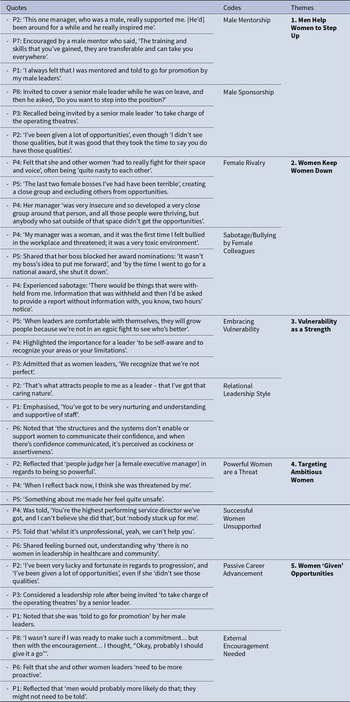

 Open access

