





1. Background
Range of motion (RoM) describes the extent of movement achievable around a joint or at a specific point of the body. Measuring RoM is essential in clinical assessments, such as in evaluating shoulder joint mobility for the diagnosis and staging of frozen shoulder (Ješić et al., Reference Ješić, Grabljevec and Kuret2022). Accurate and reliable RoM measurements are critical for clinicians in guiding their diagnostic and treatment strategies. In clinical settings, goniometers have become a popular choice for RoM measurement due to their affordability, portability, and user-friendly nature. Nonetheless, they have notable limitations. First, goniometers can only measure joint angles in a single plane and static positions, which restricts their ability to assess dynamic joint movements. Second, the reliability and accuracy of measurements taken with goniometers can vary widely. The intraclass correlation coefficients (ICCs) for RoM measurements in shoulder and elbow joints range from 0.76 to 0.94 and 0.36 to 0.91 (Muir et al., Reference Muir, Corea and Beaupre2010; Walmsley et al., Reference Walmsley, Williams, Grisbrook, Elliott, Imms and Campbell2018), respectively. Such variability in measurement reliability may stem from the anatomical specificity of the joints being measured and the different levels of experience among evaluators. Consequently, goniometers should be considered as a basic tool for RoM measurement. Their substantial measurement errors limit their utility in more precise clinical research and kinematic studies.
Commercial marker-based motion capture systems, also known as optical motion capture systems (OMCs), such as Vicon (Vicon Motion Systems Ltd., Oxford, UK), are widely regarded as the “gold standard” in clinical human motion analysis and biomechanics research (Nagymáté and Kiss, Reference Nagymáté and Kiss2018; Valevicius et al., Reference Valevicius, Jun, Hebert and Vette2018), with a systematic review noting within-assessor errors less than 4.0° in the sagittal plane and below 2.0° in the frontal plane for gait measurements (McGinley et al., Reference McGinley, Baker, Wolfe and Morris2009). For such systems, passive reflective markers are strategically placed on specific bony landmarks of the body, corresponding to the segments to be analyzed. These markers reflect light back to cameras, enabling the associated biomechanics model to reconstruct three-dimensional human motion in space (Colyer et al., Reference Colyer, Evans, Cosker and Salo2018). However, these systems come with considerable limitations: costly, lack portability, necessitate a dedicated laboratory setting, and involve lengthy setup and calibration procedures (Sessa et al., Reference Sessa, Zecca, Lin, Bartolomeo, Ishii and Takanishi2013; Wu et al., Reference Wu, Tao, Chen, Tian and Sun2022), making these systems impractical for routine clinical use. Furthermore, the occlusion of markers by clothing can significantly affect the reliability of results, limiting the marker-based system’s application in real-world scenarios (van der Kruk and Reijne, Reference van der Kruk and Reijne2018).
Inertial measurement units (IMUs), or wearable sensors, have emerged as an alternative method that can overcome these limitations. IMUs are widely used in human kinematics analysis research and clinical gait assessments due to their portability and affordability. Typically, IMUs consist of three-axis accelerometers, three-axis gyroscopes, with or without three-axis magnetometers (Seel et al., Reference Seel, Raisch and Schauer2014). Users can estimate the kinematic parameters of body segments in three-dimensional space through data fusion algorithms and biomechanics models (Poitras et al., Reference Poitras, Bielmann, Campeau-Lecours, Mercier, Bouyer and Roy2019). Therefore, the use of multiple IMUs can provide the possibility of collecting upper limb motion parameters in daily life. While IMUs show promise as tools for motion tracking, it is essential to conduct thorough metrological validation to ensure their validity and reliability before they can be adopted for widespread use. Many studies have examined their validity and reliability in measuring human kinematic parameters during various movements. Several systematic reviews and meta-analyses on the validity and reliability of IMU measurement of lower limb kinematics exist (Kobsar et al., Reference Kobsar, Charlton, Tse, Esculier, Graffos, Krowchuk and Hunt2020; Zeng et al., Reference Zeng, Liu, Hu, Tang and Wang2022), the results demonstrated that IMUs are reliable tools for measuring the RoM in the lower limbs. In the context of upper extremities, a systematic review by Walmsley et al. (Reference Walmsley, Williams, Grisbrook, Elliott, Imms and Campbell2018) analyzed 22 studies conducted before 2018, found that while IMUs exhibited higher error margins in vivo compared to OMC systems, achieving errors less than 5° was possible with significant customization. Furthermore, another systematic review highlighted the broad error margins of IMUs in measuring upper limb joint motions: for shoulder joints (root mean square error [RMSE] 0.2°–64.5°), elbow joints (RMSE 0.2°–30.6°), and wrists (RMSE 2.2°–30°) (Poitras et al., Reference Poitras, Bielmann, Campeau-Lecours, Mercier, Bouyer and Roy2019), when compared to OMC systems. However, there is a notable gap in the literature regarding meta-analysis on the validity of IMU measurements in upper extremity motion analysis. While some articles have systematically reviewed the measurement validity of IMUs for upper limb joint motion, they predominantly provide qualitative summaries. There is a lack of high-quality meta-analysis that quantitatively assesses the measurement validity of IMUs and examines the statistical significance of the measurement errors. Therefore, it is necessary to quantitatively validate IMU systems before using them routinely in assessments. The main objectives of this review study were: (1) to provide a summary of the characteristics of commercially available wearable sensors, (2) to quantitatively summarize the existing psychometric properties by comparing IMUs with OMCs, and (3) to establish evidence supporting the use of IMUs for measuring RoM in the upper limb.
2. Methods
2.1. Protocol and registration
This systematic review and meta-analysis adhered to the Preferred Reporting Items for Systematic Reviews and Meta-Analyses (PRISMA) guidelines (Page et al., Reference Page, Moher, Bossuyt, Boutron, Hoffmann, Mulrow and McKenzie2021), and the protocol was registered on the International Prospective Register of Systematic Review on December 28, 2022 (PROSPERO number: CRD42022384738).
2.2. Searching strategy
We selected relevant studies published between January 1, 2016 and December 19, 2022, by searching PubMed, Web of Science, Scopus, IEEE Xplore electronic databases, and ClinicalTrials register system. The search terms included wearable sensor, motion analysis, range of motion, upper limbs, and optical motion capture system. The specific search strategies in PubMed included: (wearable sens*[Title/Abstract] OR inertial motion unit*[Title/Abstract] OR inertial movement unit*[Title/Abstract] OR inertial sens*[Title/Abstract] OR sensor[Title/Abstract] OR accelerometer*[Title/Abstract] OR gyroscope*[Title/Abstract]) AND (movement*analysis[Title/Abstract] OR motion analysis*[Title/Abstract] OR motion track*[Title/Abstract] OR track* motion*[Title/Abstract] OR measurement system*[Title/Abstract] OR movement[Title/Abstract]) AND (joint angle*[Title/Abstract] OR angle*[Title/Abstract] OR kinematic*[Title/Abstract] OR range of motion*[Title/Abstract]) AND (upper limb*[Title/Abstract] OR upper extremit*[Title/Abstract] OR arm*[Title/Abstract] OR elbow*[Title/Abstract] OR wrist*[Title/Abstract] OR shoulder*[Title/Abstract] OR humerus*[Title/Abstract]) AND (motion capture system[Title/Abstract] OR 3D motion capture[Title/Abstract] OR marker*[Title/Abstract] OR optical[Title/Abstract] OR camera*[Title/Abstract] OR optoelectronic[Title/Abstract]) NOT (review[Title/Abstract]) AND (Filter: 2016–2022). The basic search terms are similar for different databases with very minor adjustments. In addition, we performed a manual search using the references of previous review articles. Complete search strategy for all databases can be seen in Table 1.
Complete search strategy

* (Asterisk) is to replace any number of character, for example, extremit* finds “extremity” and “extremities.”
2.3. Inclusion and exclusion criteria
Articles that met the following criteria were included in this systematic review: (1) evaluated the validity of IMUs, (2) measured and reported specific upper extremity RoM results, (3) compared the measurements captured by IMUs to the marker-based motion capture systems, (4) assessed human beings, (5) published in English. The exclusion criteria were as follows: (1) no relevant outcomes, (2) no comparison with standard marker-based motion capture systems, (3) only assessed lower limb motion, (4) only assessed unnatural human motion, (5) animal model studies, (6) only assessed children and infants, (7) no research studies or no full text, (8) published in other languages. Additional details on inclusion and exclusion criteria can be seen in Supplementary file 1.
2.4. Study selection
All the results were entered into the bibliographic management tool (Endnote X9, Thomson Reuters, New York, USA), and duplicates were removed by Endnote automatically. Two authors (Li and Qiu) independently screened the titles and abstracts retrieved to include the articles that satisfied the criteria, and then read the full texts for final eligibility. Any disagreements were resolved by consensus with the third reviewer (Gan).
2.5. Assessment of risk of bias and level of evidence
The included studies were assessed according to the Critical Appraisal of Study Design for Psychometric Articles. To make it more appropriate for assessing the psychometrics of IMUs, Kobsar et al. (Reference Kobsar, Charlton, Tse, Esculier, Graffos, Krowchuk and Hunt2020) modified the checklist. This modified evaluation checklist contains 12 items in five different domains: (1) study question, (2) study design, (3) measurements, (4) analyses, and (5) recommendations. Each item is rated as 0, 1, or 2, with a maximum total score of 24. The specific scoring criteria and descriptors for each item can be found in Supplementary file 2. It should be noted that the question #6 pertains solely to literature that covers reliability testing in methodology (i.e., patient reevaluation), but not all the literature included in the review needs to be assessed for this specific question. Therefore, total score for literature that is not relevant to this question item is 22 points. Initially, two reviewers (Li and Qiu) evaluated three articles simultaneously, discussing and reaching consensus on each item, and then two reviewers used the same criteria to evaluate the remaining literature separately. The agreement between the two raters was assessed using Cohen’s kappa coefficient. An acceptable level of agreement is typically indicated by a Cohen’s kappa coefficient greater than 0.60 (Henry et al., Reference Henry, Herwindiati, Mulyono and Hendryli2016). Two raters discussed and resolved most disagreements, and if consensus could not be reached, a third rater (Gan) was invited to adjudicate.
According to the score percentage, the quality of the included literature can be divided into four categories (Kobsar et al., Reference Kobsar, Charlton, Tse, Esculier, Graffos, Krowchuk and Hunt2020): (1) score percentage greater than 85% were classified as high quality (HQ), (2) between 70 and 85% were classified as moderate quality (MQ), (3) between 50 and 70% were classified as low quality (LQ), (4) below 50% were considered very low quality (VLQ). The results of quality assessment were then used in determining the level of evidence (van Tulder et al., Reference van Tulder, Furlan, Bombardier and Bouter2003):
-
(1) Strong: Consistent results among multiple HQ studies.
-
(2) Moderate: Consistent results among multiple MQ studies and/or only one HQ study.
-
(3) Limited: Consistent results among multiple LQ studies and/or only one MQ study.
-
(4) Very limited: Consistent results among multiple VLQ studies and/or only one LQ study.
-
(5) Conflicting: Inconsistent results among multiple trials, regardless of study quality.
2.6. Data extraction
Data extraction and results compilation were performed by two independent reviewers (Li and Qiu) and data were extracted into Microsoft Excel. In case of disagreement, a third researcher (Gan) intervened. Data extracted from the studies included the following information: (1) study information (author and publication year), (2) sample size, (3) wearable sensor information (sensor brand, sampling rate, data fusion algorithm/filter, calibration methods, and placement), (4) reference system, (5) measured joints and/or movements (shoulder, elbow, and wrist, or specific complex movement), and (6) results and statistical parameters.
Since this meta-analysis only considers the validity of the IMU for measuring the RoM of the upper extremity compared with the marker-based motion capture system, the extracted statistics include: mean ± standard deviation (SD), ICC, Pearson’s r, RMSE, bias (mean difference), limits of agreement (LoA), and other statistics (i.e., coefficient of determination [r 2] and coefficient of multiple correlation [CMC]). Then, according to different upper limb joints and joint motion planes, the extracted data were divided into the following groups: shoulders (flexion/extension, abduction/adduction, and internal/external rotation), elbows/forearms (flexion/extension and pronation/supination), and wrists (flexion/extension and ulnar/radial deviation).
2.7. Statistical analysis
The meta-analysis was performed using the Review Manager version 5.4.1 (The Cochrane Collaboration, Copenhagen, Denmark). Data for validity outcomes were meta-analyzed based on the mean ± SD, ICC, and Pearson’s r. The agreement metrics of ICCs were interpreted as (Han, Reference Han2020): (1) poor (< 0.500), (2) moderate (0.500–0.749), (3) good (0.750–0.899), and (4) excellent (≥ 0.900), and r was interpreted as (Wahyuni and Purwanto, Reference Wahyuni and Purwanto2020): (1) very weak relationship (< 0.2), (2) weak relationship (0.2–0.4), (3) moderate relationship (0.4–0.6), (4) strong relationship (0.6–0.8), and (5) very strong relationship (>0.8). Point estimates were weighted based on the sample size of the included studies and considering the non-normality of the two parameters (ICC and r). It was necessary to perform Fisher’s Z-transformation (Cozzolino, Reference Cozzolino2009; Kobsar et al., Reference Kobsar, Charlton, Tse, Esculier, Graffos, Krowchuk and Hunt2020) and then transformed back to ICC/r for reporting, the formula are as follows (Kobsar et al., Reference Kobsar, Charlton, Tse, Esculier, Graffos, Krowchuk and Hunt2020; Zeng et al., Reference Zeng, Liu, Hu, Tang and Wang2022):
 $$ Fishe{r}^{\prime }s\;{Z}_{ICC/r}=0.5\ast \frac{1+ ICC/r}{1- ICC/r}, $$
 $$ {SE}_r=\sqrt{\frac{1}{n-3},} $$
 $$ {SE}_{ICC}=\sqrt{\frac{1}{\left(n-3/2\right)},} $$
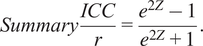 $$ Summary\frac{ICC}{r}=\frac{e^{2Z}-1}{e^{2Z}+1}. $$
Sensitivity analysis was considered when there was heterogeneity among the studies and the number of studies was greater than or equal to three. Heterogeneity in the data was assessed using Tau2 and I 2 statistics. A Tau2 value of 0 indicates an absence of heterogeneity. I 2 values are interpreted as follows: less than 25% indicates low heterogeneity, 26–50% suggests moderate heterogeneity, and over 75% points to high heterogeneity (Higgins et al., Reference Higgins, Thompson, Deeks and Altman2003; Walmsley et al., Reference Walmsley, Williams, Grisbrook, Elliott, Imms and Campbell2018; Zeng et al., Reference Zeng, Liu, Hu, Tang and Wang2022). When the I 2 value exceeded 50%, a sensitivity analysis was conducted. This involves sequentially excluding each included study and then performing a meta-analysis on the remaining studies. If, after exclusion, the I 2 decreases to below 50% and the meta-analysis results remain unchanged, it indicates robustness in the original meta-analysis findings. Conversely, if the I 2 decreases below 50% but the results of the meta-analysis change, it suggests non-robustness in the original meta-analysis outcomes. The level of significance was p < 0.05. Given the heterogeneity of the trial conditions of the included studies, a random effects model was used with 95% CI (Huedo-Medina et al., Reference Huedo-Medina, Sánchez-Meca, Marín-Martínez and Botella2006). When the number of studies was sufficient (n ≥ 3) (Zeng et al., Reference Zeng, Liu, Hu, Tang and Wang2022), subgroup analyses were conducted to explore possible associations between the study characteristics and the validity of the IMUs measurements.
3. Results
3.1. Characteristics of the included studies
Our search strategy identified a total of 1,081 articles through databases and cross-referencing. Following the removal of duplicates, 639 articles remained. After screening titles, abstracts and full-text, 51 articles were included in this systematic review. A PRISMA flow chart showing the screening process is presented in Figure 1. Data from 491 adults were included across these studies (sample size: 9.6 (5.8); median sample size: 10; range: 1–24). The most common sampling frequency for wearable sensors was 100 Hz (n = 15, range: 20–1,000 Hz). All the characteristics of the included articles are shown in Table 2.
Study selection according to PRISMA flow diagram 2020.

Basic information of included studies

Abbreviations: Abd., abduction; Add., adduction; ER, external rotation; Ext., extension; Flex., flexion; IR, internal rotation; Pron., pronation; Supi., supination; N/A, not applicable.
3.2. Risk of bias of the included studies
Seven articles were rated as HQ, 14 as MQ, 23 as LQ, and 7 as VLQ (Table 3). Agreement between both assessors was acceptable (Cohen’s kappa = 0.65; 95% CI = 0.59–0.71). More than half of the included articles received the highest scores in Q1 (Background & Research Question), Q8 (Protocol), and Q12 (Conclusion/Recommendations), but only three articles (5.7%) reported the complete sample size calculation process (Q5: Sample).
Risk of bias assessment for included studies according to the Critical Appraisal of Study Design for Psychometric Articles

HQ, high quality; LQ, low quality; MQ, moderate quality; N/A, not applicable; VLQ, very low quality.
3.3. Characteristics of the wearable sensor
The common commercial IMU systems used were Xsens (n = 13), APDM/Opal (n = 4). and Perception Neuron (n = 4); it is worth noting that seven studies used customized IMU systems. A total of 32 papers reported the calibration process before data collection. Static anatomical calibration was performed often (n = 24), with dynamic anatomical calibration performed (n = 5).
3.4. Validity of the wearable sensors
Validity was assessed using Vicon system (n = 22), OptiTrack (n = 12), Qualisys (n = 6), Smart DX (n = 4), and other systems (n = 7) as reference systems. Although many statistical parameters related to the validity of IMUs were included in data extraction, we found through analysis that, due to the limitation of the number of studies and the inconsistency of the results reported, such as RMSE and LoA, there are only three statistics of mean ± SD, ICC, and Pearson’s r could be included in the meta-analysis. For studies not included in the meta-analysis, we also quantitatively summarized the extracted data in Supplementary file 3, and these data were used as supplements and references when discussing the results of the meta-analysis.
3.4.1. Shoulder flexion/extension
Data from seven studies (three HQ, two MQ to LQ, and two VLQ; Poitras et al., Reference Poitras, Bielmann, Campeau-Lecours, Mercier, Bouyer and Roy2019; Ligorio et al., Reference Ligorio, Bergamini, Truppa, Guaitolini, Raggi, Mannini and Garofalo2020; Truppa et al., Reference Truppa, Bergamini, Garofalo, Costantini, Fiorentino, Vannozzi and Mannini2021a,Reference Truppa, Garofalo, Raggi, Bergamini, Vannozzi and Sabatinib; Choo et al., Reference Choo, Chow and Komar2022; Slade et al., Reference Slade, Habib, Hicks and Delp2022; Wu et al., Reference Wu, Tao, Chen, Tian and Sun2022) suggest that very strong relationship between IMU and OMC for shoulder flexion/extension measurements (total n = 60; r = 0.969, 95% CI [0.935, 0.986]; Tau2 = 0.51; I 2 = 73%) (Figure 2a). Sensitivity analysis showed that the results were robust even after excluding the study of Poitras et al. (Reference Poitras, Bielmann, Campeau-Lecours, Mercier, Bouyer and Roy2019) (I 2 = 43% and r = 0.954 [0.914, 0.976]). Based on the quality of the included studies, the level of evidence for this result is strong.
Shoulder flexion/extension. Forest plots showing the validity of shoulder flexion/extension measured using IMU. Red squares represent Fisher’s Z; green squares represent mean difference; bars indicate 95% CI and black diamonds as total data. Panel (a) describing the results of Pearson’s r: Choo et al. A (stationary walk), B (distance walk), C (stationary jog), D (distance jog), E (stationary wrist shot), F (distance wrist shot); Poitras et al. A (60° RoM), B (90° RoM), C (120° RoM); Wu et al. A (fast sample task (flexion)), B (slow simple task (flexion)), C (fast simple task (extension)), D (slow simple task (extension)), E (fast complex task), F (slow complex task). Panel (b) describing the results of ICC: Ertzgaard et al. A (cone task), B (throw task), C (coordination task one), D (coordination task two). Panel (c) describing the results of mean difference: Chan et al. A (flexion), B (extension). CI, confidence interval; IV, inverse variance; SE, standard error.

Data from three studies (one HQ and two MQ; Ertzgaard et al., Reference Ertzgaard, Ohberg, Gerdle and Grip2016; Fantozzi et al., Reference Fantozzi, Giovanardi, Magalhaes, Di Michele, Cortesi and Gatta2016; Henschke et al., Reference Henschke, Kaplick, Wochatz and Engel2022) suggested that excellent consistency between IMU and OMC for shoulder flexion/extension measurements (total n = 42; ICC = 0.935, 95% CI [0.749, 0.984]; Tau2 = 0.71; I 2 = 88%) (Figure 2b). Sensitivity analysis showed that, after excluding the study of Henschke et al. (Reference Henschke, Kaplick, Wochatz and Engel2022), the I 2 decreased to 32% and ICC was changed to 0.961 [0.920, 0.982]. Sensitivity analysis showed that the results were robust. Based on the quality of the included studies, the level of evidence for this result is moderate.
Data from three studies (two HQ and one MQ; Bessone et al., Reference Bessone, Hoschele, Schwirtz and Seiberl2022; Chan et al., Reference Chan, Chua, Chou, Seah, Huang, Luo and Bin Abd Razak2022; Henschke et al., Reference Henschke, Kaplick, Wochatz and Engel2022) suggest that no significant measurement difference between IMU and OMC for shoulder flexion/extension measurements (total n = 57; mean difference = −3.19, 95% CI [−13.57, 7.18]; Tau2 = 91.55; I 2 = 88%; Z = 0.60 (p = 0.55)) (Figure 2c). A sensitivity analysis was conducted, which revealed that when the study of Henschke et al. (Reference Henschke, Kaplick, Wochatz and Engel2022) was excluded, the I 2 reduced to 67% and the mean difference was 2.39 [−4.04, 8.82], with a Z-score of 0.73 (p = 0.47). This analysis demonstrated that the results were robust. Based on the quality of the included studies, the level of evidence for this result is strong.
3.4.2. Shoulder abduction/adduction
Data from seven studies (two HQ, three MQ to LQ, and two VLQ; Fantozzi et al., Reference Fantozzi, Giovanardi, Magalhaes, Di Michele, Cortesi and Gatta2016; Ligorio et al., Reference Ligorio, Bergamini, Truppa, Guaitolini, Raggi, Mannini and Garofalo2020; Truppa et al., Reference Truppa, Bergamini, Garofalo, Costantini, Fiorentino, Vannozzi and Mannini2021a,Reference Truppa, Garofalo, Raggi, Bergamini, Vannozzi and Sabatinib; Choo et al., Reference Choo, Chow and Komar2022; Slade et al., Reference Slade, Habib, Hicks and Delp2022; Wu et al., Reference Wu, Tao, Chen, Tian and Sun2022) suggest that very strong relationship between IMU and OMC for shoulder abduction/adduction measurements (total n = 52; r = 0.919, 95% CI [0.848, 0.957]; Tau2 = 0.29; I 2 = 52%) (Figure 3a). Upon conducting a sensitivity analysis and excluding the study of Truppa et al. (Reference Truppa, Bergamini, Garofalo, Costantini, Fiorentino, Vannozzi and Mannini2021a), the I 2 decreased to 41%, while the Pearson’s r remained high at 0.905 with a confidence interval of [0.831, 0.948]. Sensitivity analysis showed that the results were robust. Based on the quality of the included studies, the level of evidence for this result is strong.
Shoulder abduction/adduction. Forest plots showing the validity of shoulder abduction/adduction measured using IMU. Red squares represent Fisher’s Z; green squares represent mean difference; bars indicate 95% CI and black diamonds as total data. Panel (a) describing the results of Pearson’s r: Choo et al. A (stationary walk), B (distance walk), C (stationary jog), D (distance jog), E (stationary wrist shot), F (distance wrist shot); Fantozzi et al. A (front-crawl task), B (breaststroke task); Wu et al. A (fast sample task (flexion)), B (slow simple task (flexion)), C (fast simple task (extension)), D (slow simple task (extension)), E (fast complex task), F (slow complex task). Panel (b) describing the results of ICC: Ertzgaard et al. A (cone task), B (throw task), C (coordination task one), D (coordination task two). Panel (c) describing the results of mean difference. CI, confidence interval; IV, inverse variance; SD, standard deviation; SE, standard error.

Data from two studies (one HQ and one MQ; Ertzgaard et al., Reference Ertzgaard, Ohberg, Gerdle and Grip2016; Henschke et al., Reference Henschke, Kaplick, Wochatz and Engel2022) suggest that good consistency between IMU and OMC for shoulder abduction/adduction measurements (total n = 34; ICC = 0.840, 95% CI [0.430, 0.963]; Tau2 = 0.65; I 2 = 87%) (Figure 3b). Sensitivity analyses could not be performed due to the insufficient number of studies. Based on the quality of the included studies, the level of evidence for this result is moderate.
Data from three studies (two HQ and one MQ; Bessone et al., Reference Bessone, Hoschele, Schwirtz and Seiberl2022; Chan et al., Reference Chan, Chua, Chou, Seah, Huang, Luo and Bin Abd Razak2022; Henschke et al., Reference Henschke, Kaplick, Wochatz and Engel2022) suggest that no significant measurement difference between IMU and OMC for shoulder abduction/adduction measurements (total n = 57; mean difference = −7.10, 95% CI [−27.56, 13.35]; Tau2 = 307.30; I 2 = 96%; Z = 0.68 (p = 0.50)) (Figure 3c). After excluding the study of Henschke et al. (Reference Henschke, Kaplick, Wochatz and Engel2022), sensitivity analysis revealed that the I 2 reduced to 0% and the mean difference was 7.44 [4.31, 10.57], with Z-score of 4.66 (p < 0.00001). Sensitivity analysis showed that the results were not robust. Based on the quality of the included studies, the level of evidence for this result is strong.
3.4.3. Shoulder internal/external rotation
Data from seven studies (one HQ, four MQ to LQ, and two VLQ; Ertzgaard et al., Reference Ertzgaard, Ohberg, Gerdle and Grip2016; Fantozzi et al., Reference Fantozzi, Giovanardi, Magalhaes, Di Michele, Cortesi and Gatta2016; Boddy et al., Reference Boddy, Marsh, Caravan, Lindley, Scheffey and O’Connell2019; Ligorio et al., Reference Ligorio, Bergamini, Truppa, Guaitolini, Raggi, Mannini and Garofalo2020; Truppa et al., Reference Truppa, Bergamini, Garofalo, Costantini, Fiorentino, Vannozzi and Mannini2021a,Reference Truppa, Garofalo, Raggi, Bergamini, Vannozzi and Sabatinib; Slade et al., Reference Slade, Habib, Hicks and Delp2022; Wu et al., Reference Wu, Tao, Chen, Tian and Sun2022) suggest that very strong relationship between IMU and OMC for shoulder internal/external rotation measurements (total n = 64; r = 0.939, 95% CI [0.894, 0.965]; Tau2 = 0.18; I 2 = 48%) (Figure 4a). Based on the quality of the included studies, the level of evidence for this result is moderate.
Shoulder internal/external rotation. Forest plots showing the validity of shoulder rotation measured using IMU. Red squares represent Fisher’s Z; green squares represent mean difference; bars indicate 95% CI and black diamonds as total data. Panel (a) describing the results of Pearson’s r: Boddy et al. (Reference Boddy, Marsh, Caravan, Lindley, Scheffey and O’Connell2019) A (fastball), B (off-speed); Ertzgaard et al. A (cone task), B (throw task), C (coordination task one), D (coordination task two); Fantozzi et al. A (front-crawl task), B (breaststroke task); Wu et al. A (fast sample task (flexion)), B (slow simple task (flexion)), C (fast simple task (extension)), D (slow simple task (extension)), E (fast complex task), F (slow complex task). Panel (b) describing the results of mean difference: Boddy et al. A (fastball), B (off-speed). CI, confidence interval; IV, inverse variance; SD, standard deviation; SE, standard error.

Data from four studies (two HQ and two LQ; Boddy et al., Reference Boddy, Marsh, Caravan, Lindley, Scheffey and O’Connell2019; Picerno et al., Reference Picerno, Caliandro, Iacovelli, Simbolotti, Crabolu, Pani and Cereatti2019; Chan et al., Reference Chan, Chua, Chou, Seah, Huang, Luo and Bin Abd Razak2022; Henschke et al., Reference Henschke, Kaplick, Wochatz and Engel2022) suggest that significant measurement difference between IMU and OMC for shoulder internal/external rotation measurements (total n = 67; mean difference = −11.03, 95% CI [−18.76, −3.31]; Tau2 = 60.98; I 2 = 90%; Z = 2.80 (p = 0.005)) (Figure 4b). Sensitivity analysis showed that after excluding the study of Chan et al. (Reference Chan, Chua, Chou, Seah, Huang, Luo and Bin Abd Razak2022) and Henschke et al. (Reference Henschke, Kaplick, Wochatz and Engel2022), the I 2 value decreased to 67% and the mean difference was −9.13 [−13.09, −5.17], with Z-score of 4.52 (p < 0.00001). Sensitivity analysis showed that the results were robust. Based on the quality of the included studies, the level of evidence for this result is strong.
3.4.4. Elbow flexion/extension
Data from seven studies (two HQ, three MQ to LQ, and two VLQ; Fantozzi et al., Reference Fantozzi, Giovanardi, Magalhaes, Di Michele, Cortesi and Gatta2016; Ligorio et al., Reference Ligorio, Bergamini, Truppa, Guaitolini, Raggi, Mannini and Garofalo2020; Truppa et al., Reference Truppa, Bergamini, Garofalo, Costantini, Fiorentino, Vannozzi and Mannini2021a,Reference Truppa, Garofalo, Raggi, Bergamini, Vannozzi and Sabatinib; Choo et al., Reference Choo, Chow and Komar2022; Slade et al., Reference Slade, Habib, Hicks and Delp2022; Wu et al., Reference Wu, Tao, Chen, Tian and Sun2022) suggest that very strong relationship between IMU and OMC for elbow flexion/extension measurements (total n = 52; r = 0.954, 95% CI [0.929, 0.970]; Tau2 = 0.00; I 2 = 0%) (Figure 5a). Based on the quality of the included studies, the level of evidence for this result is strong.
Elbow flexion/extension.
Forest plots showing the validity of elbow flexion/extension measured using IMU. Red squares represent Fisher’s Z; green squares represent mean difference; bars indicate 95% CI and black diamonds as total data. Panel (a) describing the results of Pearson’s r: Choo et al. A (stationary walk), B (distance walk), C (stationary jog), D (distance jog), E (stationary wrist shot), F (distance wrist shot); Fantozzi et al. A (front-crawl task), B (breaststroke task); Wu et al. A (fast sample task (flexion)), B (slow simple task (flexion)), C (fast simple task (extension)), D (slow simple task (extension)), E (fast complex task), F (slow complex task). Panel (b) describing the results of ICC: Ertzgaard et al. A (cone task), B (throw task), C (coordination task one), D (coordination task two). Panel (c) describing the results of mean difference. CI, confidence interval; IV, inverse variance; SD, standard deviation; SE, standard error.

Data from one MQ study (Ertzgaard et al., Reference Ertzgaard, Ohberg, Gerdle and Grip2016) suggest that excellent consistency between IMU and OMC for elbow flex./ext. measurements (total n = 10; ICC = 0.929, 95% CI [0.814, 0.974]; Tau2 = 0.15; I 2 = 57%). Based on the quality of the included studies, the level of evidence for this result is limited. Data from two studies (one HQ and one MQ; Bessone et al., Reference Bessone, Hoschele, Schwirtz and Seiberl2022; Henschke et al., Reference Henschke, Kaplick, Wochatz and Engel2022) suggest that no significant measurement difference between IMU and OMC for shoulder flexion/extension measurements (total n = 38; mean difference = 10.61, 95% CI [−12.32, 33.54]; Tau2 = 243.84; I 2 = 89%; Z = 0.91 (p = 0.36)) (Figure 5b). Sensitivity analyses could not be performed due to the insufficient number of studies. Based on the quality of the included studies, the level of evidence for this result is moderate.
3.4.5. Elbow pronation/supination
Data from four studies (one HQ, two MQ to LQ, and one VLQ; Fantozzi et al., Reference Fantozzi, Giovanardi, Magalhaes, Di Michele, Cortesi and Gatta2016; Truppa et al., Reference Truppa, Bergamini, Garofalo, Costantini, Fiorentino, Vannozzi and Mannini2021a,Reference Truppa, Garofalo, Raggi, Bergamini, Vannozzi and Sabatinib; Wu et al., Reference Wu, Tao, Chen, Tian and Sun2022) suggest that very strong relationship between IMU and OMC for elbow pronation/supination measurements (total n = 30; r = 0.966, 95% CI [0.939, 0.981]; Tau2 = 0.00; I 2 = 0%) (Figure 6a). Based on the quality of the included studies, the level of evidence for this result is moderate. Data from two studies (Ertzgaard et al., Reference Ertzgaard, Ohberg, Gerdle and Grip2016; Ligorio et al., Reference Ligorio, Bergamini, Truppa, Guaitolini, Raggi, Mannini and Garofalo2020) suggest that good consistency between IMU and OMC for elbow pronation/supination measurements (total n = 20; ICC = 0.821, 95% CI [0.696, 0.900]; Tau2 = 0.00; I 2 = 0%) (Figure 6b). Based on the quality of the included studies, the level of evidence for this result is limited.
Elbow pronation/supination. Forest plots showing the validity of elbow pronation/supination measured using IMU. Red squares represent Fisher’s Z; green squares represent mean difference; bars indicate 95% CI and black diamonds as total data. Panel (a) describing the results of Pearson’s r: Fantozzi et al. A (front-crawl task), B (breaststroke task); Wu et al. A (fast sample task (flexion)), B (slow simple task (flexion)), C (fast simple task (extension)), D (slow simple task (extension)), E (fast complex task), F (slow complex task). Panel (b) describing the results of ICC: Ertzgaard et al. A (cone task), B (throw task), C (coordination task one), D (coordination task two). CI, confidence interval; IV, inverse variance; SE, standard error.

3.4.6. Wrist flexion/extension
Data from four studies (two MQ to LQ and two VLQ; Fantozzi et al., Reference Fantozzi, Giovanardi, Magalhaes, Di Michele, Cortesi and Gatta2016; Ligorio et al., Reference Ligorio, Bergamini, Truppa, Guaitolini, Raggi, Mannini and Garofalo2020; Truppa et al., Reference Truppa, Bergamini, Garofalo, Costantini, Fiorentino, Vannozzi and Mannini2021a,Reference Truppa, Garofalo, Raggi, Bergamini, Vannozzi and Sabatinib) suggest that very strong relationship between IMU and OMC for wrist flex./ext. measurements (total n = 33; r = 0.974, 95% CI [0.945, 0.988]; Tau2 = 0.00; I 2 = 0%) (Figure 7a). Based on the quality of the included studies, the level of evidence for this result is moderate. Data from three studies (two MQ and one LQ; Wirth et al., Reference Wirth, Fischer, Verdú, Reissner, Balocco and Calcagni2019; Fischer et al., Reference Fischer, Wirth, Balocco and Calcagni2021; Bessone et al., Reference Bessone, Hoschele, Schwirtz and Seiberl2022) suggest that no significant measurement difference between IMU and OMC for wrist flex./ext. measurements (total n = 34; mean difference = −4.20, 95% CI [−18.96, 10.57]; Tau2 = 194.87; I 2 = 70%; Z = 0.56 (p = 0.58)) (Figure 7b). Sensitivity analysis showed that after excluding the study of Bessone et al. (Reference Bessone, Hoschele, Schwirtz and Seiberl2022), the I 2 value decreased to 0%. Furthermore, the mean difference was −10.64 with a 95% confidence interval of [−20.05, −1.23], Z-score of 2.22 (p = 0.03). Sensitivity analysis showed that the results were not robust. Based on the quality of the included studies, the level of evidence for this result is moderate.
Wrist flexion/extension. Forest plots showing the validity of wrist flexion/extension measured using IMU. Red squares represent Fisher’s Z; green squares represent mean difference; bars indicate 95% CI and black diamonds as total data. Panel (a) describing the results of Pearson’s r: Fantozzi et al. A (front-crawl task), B (breaststroke task). Panel (b) describing the results of mean difference: Wirth et al. A (marker on the skin), B (marker on the sensor); Fischer et al. A (marker on the skin), B (marker on the sensor). CI, confidence interval; IV, inverse variance; SD, standard deviation; SE, standard error.

3.4.7. Wrist ulnar/radial deviation
Data from three studies (two MQ and one LQ; Wirth et al., Reference Wirth, Fischer, Verdú, Reissner, Balocco and Calcagni2019; Fischer et al., Reference Fischer, Wirth, Balocco and Calcagni2021; Bessone et al., Reference Bessone, Hoschele, Schwirtz and Seiberl2022) suggest that the validity for wrist ulnar/radial deviation measured with IMUs (total n = 34; mean difference = 4.98, 95% CI [−0.64, 10.59]; Tau2 = 22.64; I 2 = 55%; Z = 1.74 (p = 0.08)) (Figure 8). Sensitivity analysis showed that after excluding the study of Wirth et al. (Reference Wirth, Fischer, Verdú, Reissner, Balocco and Calcagni2019), the I 2 reduced to 38%, and the mean difference was 8.85 [2.27, 15.42], with Z-score of 2.64 (p = 0.008). Sensitivity analysis showed that the results were not robust. Based on the quality of the included studies, the level of evidence for this result is moderate.
Wrist ulnar/radial deviation. Forest plot showing the validity of wrist ulnar/radial deviation measured using IMU. Green squares represent mean difference; bars indicate 95% CI and black diamonds as total data. Figure describing the results of mean difference: Wirth et al. A (marker on the skin), B (marker on the sensor); Fischer et al. A (marker on the skin), B (marker on the sensor). CI, confidence interval; IV, inverse variance; SD, standard deviation.

3.5. Subgroup analysis
The selection of subgroup analysis is mainly based on two key considerations. First, the subgroup classification needs to have practical significance and may affect the validity of IMU measurement, such as different fusion algorithms, the complexity of measured motion, and so forth. Second, there needs to be sufficient sample size for the corresponding subgroup (at least three studies and no less than 20 subjects). By reading the included literature and comparing the characteristics of different studies, this study mainly conducts subgroup analysis based on two different classifications: complexity of task and placements of markers. However, it is important to note a limitation regarding the fusion algorithms, which are crucial for the data processing of IMUs. We observed that most studies did not provide detailed reports on the algorithm parameters used. This lack of detailed reporting hindered our ability to effectively generalize and categorize the algorithms for subgroup analysis. As a result, the fusion algorithms could not be classified as a separate subgroup in this study.
3.5.1. Complexity of motion task
Based on the complexity of upper limb motor tasks, the included motor tasks in this study were categorized as either complex tasks (CTs) or simple tasks (STs). The CTs were defined as upper limb movements that involved multiple planes of motion, such as baseball pitching or moving objects. The STs referred to upper limb movements that occurred in only one plane of motion, such as simple flexion and extension of the shoulder joint. Furthermore, the arm swing motion of the upper limb during walking, which is periodic and mostly occurs in the sagittal plane, was also classified as a simple motion task.
The results of subgroup analysis showed that the validity of IMU in measuring shoulder flexion/extension under complex motor tasks is the same as that of simple motor tasks (CT: Pearson’s r = 0.903 [0.762, 0.963], ST: Pearson’s r = 0.961 [0.887, 0.987]) (Figure 9a). The IMU has less validity in measuring shoulder abduction/adduction in complex motion tasks than simple motion tasks (CT: Pearson’s r = 0.774 [0.558, 0.892], ST: Pearson’s r = 0.920 [0.770, 0.973]) (Figure 9b). The IMU has less validity in measuring shoulder internal/external rotation in complex motion tasks than simple motion tasks (CT: Pearson’s r = 0.797 [0.647, 0.890], ST: Pearson’s r = 0.966 [0.933, 0.983]) (Figure 9c). The validity of IMU in measuring elbow flexion/extension under complex motor tasks is the same as that of simple motor tasks (CT: Pearson’s r = 0.910 [0.811, 0.959], ST: Pearson’s r = 0.963 [0.920, 0.983]) (Figure 9d). The results of subgroup analysis showed that for shoulder internal/external rotation, both CTs and STs shown significant mean difference between IMU and OMC measurements (p < 0.00001 and 0.005, respectively) (Figure 9e).
Complexity of motion task. Subgroup analysis showing the validity of the IMU for measuring joint range of motion at different motion task complexities. Red squares represent Fisher’s Z; green squares represent mean difference; bars indicate 95% CI and black diamonds as total data. Panel (a) describing the results of Pearson’s r for measuring shoulder flexion/extension. Panel (b) describing the results of Pearson’s r for measuring shoulder abduction/adduction. Panel (c) describing the results of Pearson’s r for measuring shoulder internal/external rotation. Panel (d) describing the results of Pearson’s r for measuring elbow flexion/extension. Panel (e) describing the results of mean difference for measuring shoulder internal/external rotation.

3.5.2. Placements of markers
The vast majority of included studies used standard marker placement, but two studies (Wirth et al., Reference Wirth, Fischer, Verdú, Reissner, Balocco and Calcagni2019; Fischer et al., Reference Fischer, Wirth, Balocco and Calcagni2021) compared joint RoM measurements when markers were placed on the skin and on the sensors. The results of subgroup analysis showed that for wrist flexion/extension, when the marker was placed on the sensor, there was a statistically significant difference in the joint RoM measurements between the IMU and the OMC (mean difference = −17.25 [−31.41, −3.08], Z = 2.39 (p = 0.02)), whereas when the marker was placed on the skin, there was no statistically significant difference between the two measurements (mean difference = −5.42 [−18.01, 7.17], Z = 0.84 (p = 0.40)) (Figure 10a). For wrist ulnar/radial deviation, neither marker on skin nor on sensors shown significant difference (p = 0.40 and 0.73, respectively) (Figure 10b).
Placement of markers. Subgroup analysis showing the validity of the IMU for measuring joint range of motion at different placement of markers. Green squares represent mean difference; bars indicate 95% CI and black diamonds as total data. Panel (a) describing the results of mean difference for measuring wrist flexion/extension. Panel (b) describing the results of mean difference for measuring wrist ulnar/radial deviation.

4. Discussions
4.1. Principal findings
This systematic review provided an overview of the characteristics of IMUs used to measure upper extremity motion, and evaluates their concurrent validity compared to marker-based motion capture systems in measuring RoM of upper extremity joints. A total of 51 articles were included in this review, and the data in the literature were quantitatively integrated and meta-analyzed. To the best of our knowledge, this is the first meta-analysis study on the validity of IMU measurements of upper extremity RoM, and as such, there is a scarcity of relevant references pertaining to methodology and data extraction. The research methodology employed in this article was primarily based on the meta-analysis process recommended by PRISMA, as well as previous systematic review and/or meta-analysis studies (Walmsley et al., Reference Walmsley, Williams, Grisbrook, Elliott, Imms and Campbell2018; Kobsar et al., Reference Kobsar, Charlton, Tse, Esculier, Graffos, Krowchuk and Hunt2020; Zeng et al., Reference Zeng, Liu, Hu, Tang and Wang2022) focused on IMUs measuring kinematic parameters of the lower and upper extremities.
Unlike marker-based motion capture systems, there is no consensus on where to place IMUs when measuring human kinematic parameters. The previous studies had the same findings. The systematic reviews of Kobsar et al. (Reference Kobsar, Charlton, Tse, Esculier, Graffos, Krowchuk and Hunt2020) and Zeng et al. (Reference Zeng, Liu, Hu, Tang and Wang2022) both pointed out that, when measuring the kinematic parameters of the lower limbs, the IMU placements reported in the relevant literature were varied, and similar conclusions also appeared in the kinematic measurements of the upper limbs. In this review, the placement of IMUs was described differently across studies, even for the same brand of IMU. Indeed, we found that some commercial IMUs only provide limited or vague descriptions of anatomical positions, such as upper arm or forearm, to guide placements. Without a relatively uniform IMU placements specification, measurement inconsistency will inevitably be introduced.
Calibration methods for IMU systems are also inconsistent. Most studies use static calibration, also called anatomical calibration, as recommended by manufacturers, the main purpose of which is to establish an anatomical reference system for joints, such as T-pose (participants to have shoulders abducted by 90° with the palms facing the floor) and S-pose (participants to bend knees approximately 45° and place arms in front and position them parallel to the floor). Dynamic calibration, also known as functional calibration, is a customized calibration method based on the joint motion pattern to be measured and can be used to estimate the joint rotation axis; for example, when measuring the movement of the elbow joint, it is necessary to calibrate the flexion–extension and pronation–supination axes in advance. Most of the literature claiming to use dynamic calibration did not describe the specific calibration method, making the methodological lack of reproducibility. In addition, a study (Ligorio et al., Reference Ligorio, Zanotto, Sabatini and Agrawal2017) compared the impact of anatomical calibration and dynamic calibration on the accuracy of IMU measurement of elbow joint angles, and found that dynamic calibration is more targeted, which indicated that functional calibration methods are more accurate than anatomical methods when estimating the elbow joint angle.
Additionally, three main types of data fusion algorithms are used for IMU data processing: Kalman, complementary and customized algorithms. Classical Kalman algorithm is one of the most common models to reduce noise from sensor signals, and it is based on recursive Bayesian filtering, while the noise is assumed Gaussian (Marta et al., Reference Marta, Alessandra, Simona, Andrea, Dario, Stefano and Stefano2020). Some other filters based on the Kaman algorithms, such as extended Kalman algorithm (EKF; Truppa et al., Reference Truppa, Bergamini, Garofalo, Costantini, Fiorentino, Vannozzi and Mannini2021), are also used to process IMU signals. However, Kalman filter has a complex mathematical model, which is not friendly to non-professionals, so the simpler complementary filters appeared. Complementary filters include both low-pass and high-pass filters. The low-pass filter removes high-frequency noise like the accelerometer in the case of vibration, and high-pass filter removes low-frequency noise such as the drift of the gyroscope. Chen et al. (Reference Chen, Schall and Fethke2020) compared the validity of four data fusion algorithms in the IMU measurement of upper limb kinematics, including Kalman and complementary filters. The results showed that compared with the reference system (OMC), the measurement errors of the peak joint angles of the four algorithms were all less than 4.5°, and the authors believed that the complementary filters were comparable to the more complex Kalman filters. However, data fusion algorithms were not reported in nearly half of the included literature (43%), and the reason may be that most commercial wearable sensors use built-in signal processing software with embedded algorithms, so the user does not know the type of algorithm used. In addition, many literatures used various custom algorithms (Truppa et al., Reference Truppa, Bergamini, Garofalo, Costantini, Fiorentino, Vannozzi and Mannini2021, Reference Truppa, Bergamini, Garofalo, Vannozzi, Sabatini and Mannini2022; Yang et al., Reference Yang, Wang, Wang, Shi, Zhu, Kuang and Yang2022), and this inconsistence is similar to previous review article (Zeng et al., Reference Zeng, Liu, Hu, Tang and Wang2022) and makes it difficult to quantitatively compare the impact of different algorithms on the measurement validity of IMUs.
This review focuses on the validity of IMUs in measuring RoM in the three major joints and seven degrees of freedom (shoulder: 3DOF, elbow: 2DOF, and wrist: 2DOF) of the upper extremity in adults. Similar to previous reviews (Walmsley et al., Reference Walmsley, Williams, Grisbrook, Elliott, Imms and Campbell2018; Poitras et al., Reference Poitras, Bielmann, Campeau-Lecours, Mercier, Bouyer and Roy2019), this review found that IMUs have high validity in measuring sagittal motion (flexion and extension) of the upper extremity joints. However, IMUs showed less validity in measuring shoulder adduction–abduction and elbow pronation–supination, albeit within an acceptable range. The level of evidence for the above results is moderate and/or strong. Notably, the results for the shoulder rotation were conflicting. Pearson’s r showed excellent agreement between IMU and OMC, but there was a statistically significant difference in the mean difference between the two measurement systems. In addition, although the meta-analysis result showed that there was no significant difference between the IMU and OMC systems in measuring the ulnar-radial deviation of the wrist joint, the p-value was 0.08, so we could not draw a firm conclusion, and more high-quality studies are needed in the future. As mentioned above, many included literatures only reported statistical parameters such as RMSE and LoA. Due to the lack of homogeneity of these results, meta-analysis could not be performed. In this review, the RMSE for 3DOF of shoulder were all of 16° or less (Callejas-Cuervo et al., Reference Callejas-Cuervo, Gutierrez and Hernandez2017; Mavor et al., Reference Mavor, Ross, Clouthier, Karakolis and Graham2020; Lin et al., Reference Lin, Tsai, Hsu, Yen and Wang2021; Bessone et al., Reference Bessone, Hoschele, Schwirtz and Seiberl2022; Choo et al., Reference Choo, Chow and Komar2022), the RMSE for flexion–extension of elbow was from 1.9° to 27.1° and for pronation–supination of elbow was from 6° to 16.7° (Fantozzi et al., Reference Fantozzi, Giovanardi, Magalhaes, Di Michele, Cortesi and Gatta2016; Mavor et al., Reference Mavor, Ross, Clouthier, Karakolis and Graham2020; Bessone et al., Reference Bessone, Hoschele, Schwirtz and Seiberl2022). These findings are basically consistent with those reported by Poitras et al. (Reference Poitras, Bielmann, Campeau-Lecours, Mercier, Bouyer and Roy2019).
Although this review did not discuss the reliability of IMUs for measuring upper extremity RoM, this has been reported in previous systematic reviews (Walmsley et al., Reference Walmsley, Williams, Grisbrook, Elliott, Imms and Campbell2018; Poitras et al., Reference Poitras, Bielmann, Campeau-Lecours, Mercier, Bouyer and Roy2019). Walmsley et al. (Reference Walmsley, Williams, Grisbrook, Elliott, Imms and Campbell2018) reported that adequate to excellent agreement for 2DOF at the shoulder (ICC 0.68–0.81), poor to moderate agreement for the 2DOF at the elbow (ICC 0.16–0.83), and the highest overall agreement with ICC values ranging from 0.65 to 0.89 for 2DOF at wrist. Similar conclusions can be found in the article by Poitras et al. (Reference Poitras, Bielmann, Campeau-Lecours, Mercier, Bouyer and Roy2019), the results show poor to good reliability (ICC = 0.2 to 0.77) at elbow and good to excellent intra-rater reliability for all joint movements (CMC and ICC between 0.79 and 0.96). However, compared with validity, there are fewer literatures on the reliability of IMU measurement results, and only a few references are included in the above-mentioned review articles, so the level of evidence for these conclusions is insufficient.
The complexity of motion may impact the validity of IMU measurements. Subgroup analysis revealed that the validity of IMU measurements in complex movements was lower than in simple movements, particularly in adduction–abduction and internal–external rotation of the shoulder joint, with moderate agreements between IMU and OMC measurements. This conclusion is supported by the findings of Walmsley et al. (Reference Walmsley, Williams, Grisbrook, Elliott, Imms and Campbell2018). Future research is needed to explore factors that influence the validity of IMU measurements in complex movements, and to develop appropriate strategies for enhancing the accuracy of IMU-based measurements in these scenarios.
We employed sensitivity analysis to mitigate heterogeneity in our meta-analysis. The major source of heterogeneity stems from three specific literature sources (Wirth et al., Reference Wirth, Fischer, Verdú, Reissner, Balocco and Calcagni2019; Bessone et al., Reference Bessone, Hoschele, Schwirtz and Seiberl2022; Henschke et al., Reference Henschke, Kaplick, Wochatz and Engel2022). Upon further examination of the full text, it was revealed that these three studies utilized IMUs from less well-known brands that lack sufficient reliability and validity testing on large samples. Consequently, the research conducted in these sources is considered exploratory psychometrics, and the findings can serve to enhance the performance of IMU products. Some wearable sensors are primarily designed for use by clinicians and physical therapists, and their measurement accuracy may not satisfy laboratory requirements. Therefore, it is advisable for laboratory users to assess whether there are any psychometric research reports available on the IMU system currently in use. In the sensitivity analysis focusing on the mean difference of shoulder flexion/extension and rotation, the value of I 2 decreased but did not fall below 50% after certain studies were excluded. This suggests persistent moderate heterogeneity among the remaining studies. Consequently, the findings in these two parts should be approached with caution, acknowledging the continued presence of variability across the studies.
The RoM calculation is predicated on the disparity between peak joint angles. However, a potential issue is that it is still possible to obtain the same RoM when the peak joint angles measured by the IMU differ greatly from the reference system. While few of the studies we evaluated provided peak joint angle data, some sources furnished absolute joint angle curves for both IMU and OMC systems, with most curves indicating that the measurement curves for the two systems were relatively comparable. Nevertheless, Bessone et al. (Reference Bessone, Hoschele, Schwirtz and Seiberl2022) conducted a comparison of two systems, Vicon (OMC) and aktos-t (IMU), and discovered that while moderate to good agreements were noted for measuring the total RoM of the shoulder and elbow joints, there was a significant disparity in the measurement of peak angle of motion for both joints. Although our systematic review’s findings offer supportive evidence for the validity of IMU-based measurement of upper extremity RoM, further research is required to ascertain the accuracy of IMU-based peak joint angle measurement.
In practical applications, the inherent limitations and drawbacks of IMUs cannot be overlooked. A notable issue with IMUs is drift, which is a gradual deviation in the sensor’s measurements over time, especially evident during the process of integrating acceleration data to calculate velocity and position, leading to cumulative errors. Additionally, IMUs are sensitive to environmental influences such as temperature changes, electromagnetic fields, and vibrations, all of which can significantly compromise sensor accuracy. Another challenge with IMUs, particularly in wearable applications, is their limited operational duration due to reliance on battery power. This constraint becomes a significant issue in long-term monitoring or tracking tasks. Moreover, the size and design of the IMU device could impact user comfort and acceptance, especially in scenarios requiring extended wearing. Finally, while IMUs are adept at measuring acceleration and rotational changes, they do not directly provide spatial information. Obtaining positional data requires additional processing and integration, potentially introducing further errors.
4.2. Recommendations for future studies
Finally, it is worth noting that over half of the studies we included were deemed to have low or very low methodological quality, a finding that aligns with the results of certain prior systematic reviews (Walmsley et al., Reference Walmsley, Williams, Grisbrook, Elliott, Imms and Campbell2018; Poitras et al., Reference Poitras, Bielmann, Campeau-Lecours, Mercier, Bouyer and Roy2019; Kobsar et al., Reference Kobsar, Charlton, Tse, Esculier, Graffos, Krowchuk and Hunt2020; Zeng et al., Reference Zeng, Liu, Hu, Tang and Wang2022). Furthermore, most of the literature we reviewed did not furnish information on the sample size estimation method, and over half of the research samples comprised 10 participants or fewer, further compromising the robustness of the conclusions drawn from this study. Of equal importance, the lack of standardized reporting guidelines for validity outcomes has led to substantial differences in statistical parameters among the included literature, thereby limiting the number of sources that can be leveraged for data integration and meta-analysis. As such, future research must seek to enhance the methodological quality of their investigations by considering the aforementioned findings.
4.3. Review limitations
This systematic review solely examined the validity of IMU technology in the measurement of upper extremity joint RoM and did not address reliability. Additionally, since all the literature we reviewed comprised comparative studies of IMU and marker-based motion capture systems, the applicability of IMUs is confined to laboratory settings. Consequently, the conclusions of our study cannot be readily extrapolated to assess the measurement performance of IMUs in real-world working environments. Future reviews should instead aim to evaluate the measurement performance of IMUs in non-laboratory settings.
Given the rapid pace of updates and iterations in commercial IMU systems, coupled with the existence of a prior systematic review summarizing relevant research prior to 2016 (Walmsley et al., Reference Walmsley, Williams, Grisbrook, Elliott, Imms and Campbell2018), our systematic review exclusively incorporates literature published after 2016, a factor that may introduce potential bias and compromise the accuracy of our conclusions. Although the number of studies we included is substantial (51 studies), most of the literature is of low to moderate quality, with only 13.4% comprising high-quality studies. This increased likelihood of bias could impact the validity of our findings. Furthermore, the sample size of the studies included in our review ranges from 1 to 24 participants. Generally, for psychometric research, an ideal sample size should exceed 50 (Mokkink et al., Reference Mokkink, Terwee, Patrick, Alonso, Stratford, Knol and De Vet2010). This relatively small sample size may also contribute to additional bias in our conclusions and subsequent misinterpretation.
Moreover, the heterogeneity of included studies represents another potential source of bias. Currently, there is no standardized IMU measurement process. Out of the 51 studies included in this review, there is no consensus on the standard system calibration methods, data fusion algorithms, and biomechanical models utilized. In addition, different studies use a variety of result parameters (ICC, r, RMSE, LoA, etc.), making it challenging to extract high-quality data and conduct accurate meta-analysis.
In this study, the meta-analysis employed a methodology similar to that used by Zeng et al. (Reference Zeng, Liu, Hu, Tang and Wang2022) for data inclusion. This approach entailed performing meta-analysis on the results of IMU measurement validity across different tasks within the same study. The primary benefit of this method is its ability to incorporate a larger sample size, thereby enhancing the efficiency of statistical test. However, this method is with potential drawbacks. The repeated inclusion of results from a single study could obscure the heterogeneity that exists between different studies. Furthermore, if a particular study utilizes a more reliable fusion algorithm or IMUs with lower measurement error, the repeated inclusion of data under the same experimental conditions might lead to an overestimation of the IMU’s measurement validity. Conversely, studies with less reliable algorithms or higher measurement errors could lead to an underestimation of validity. Therefore, while this approach allows for a broader inclusion of data, it also introduces the risk of bias in the overall assessment of IMU measurement validity.
5. Conclusions
The findings of this systematic review suggested that IMUs are a promising tool for measuring the RoM of the upper extremity, with good to excellent agreement and very strong correlation compared to OMC. However, caution is advised when using IMUs to measure certain joint movements, such as shoulder internal–external rotation and wrist ulnar-radial deviation. Subgroup analysis revealed that IMUs were less valid than OMC in measuring complex upper-limb movements across multiple planes of motion. To facilitate practical application, further research and standardization are needed to establish guidelines for sensor placement, calibration methods, and data fusion algorithms.
Abbreviations
- Abd
-
abduction
- Add
-
adduction
- CMC
-
coefficient of multiple correlation
- ER
-
external rotation
- Ext
-
extension
- Flex
-
flexion
- HQ
-
high quality
- ICC
-
intraclass correlation coefficient
- IMUs
-
inertial measurement units
- IR
-
internal rotation
- LoA
-
limit of agreement
- LQ
-
low quality
- MQ
-
moderate quality
- OMC
-
marker-based motion capture system
- PRISMA
-
Preferred Reporting Items for Systematic Reviews and Meta-Analyses
- Pron
-
pronation
- RMSE
-
root mean square error
- SD
-
standard deviation
- Supi
-
supination
- VLQ
-
very low quality.
Supplementary material
The supplementary material for this article can be found at https://doi.org/10.1017/wtc.2024.6.
Data availability statement
All data and material reported in this systematic review are from peer-reviewed publications.
Authorship contributions
J.L. and L.-S.C. had the idea for the study conception and design. J.L., F.Q., and L.G. selected studies for inclusion and abstracted data. J.L., F.Q., and L.G. evaluated the quality of literatures and extracted data from included articles. J.L. did the statistical analyses and wrote the first draft. L.-S.C. critically revised the paper for important intellectual content. The corresponding author had full access to all the data in the study and had final responsibility for the decision to submit for publication. All authors approved the final draft.
Funding statement
The study received no funding, with no commercial entity involved.
Competing interest
The authors declare no competing interests exist.
Ethical standards
Not applicable.


 Open access

