




Impact statement
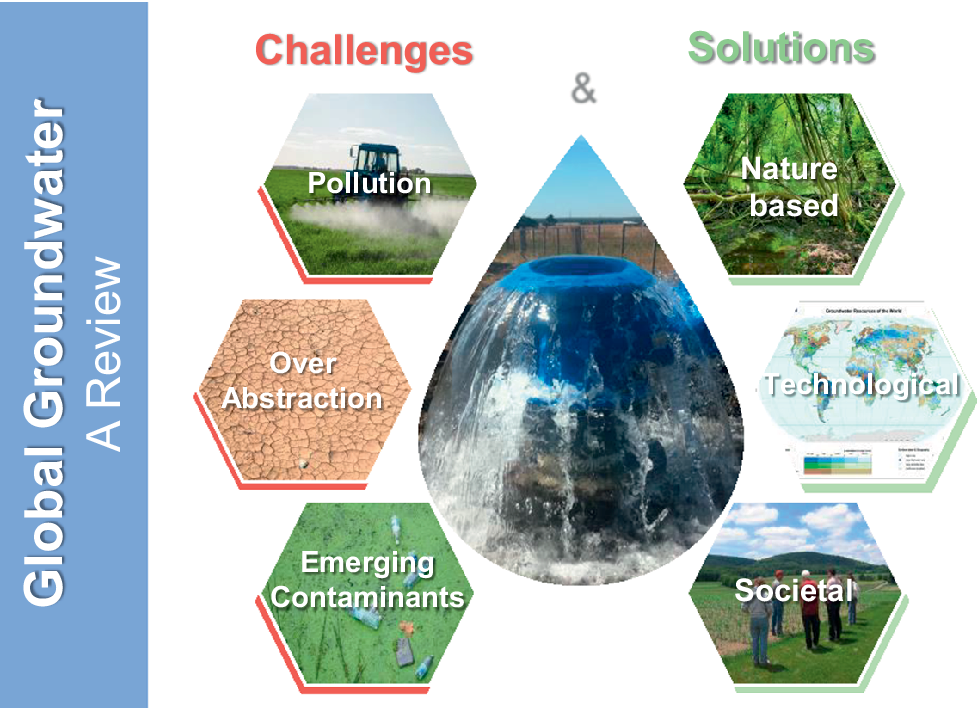
This broad review paper seeks to provide the wider scientific and practitioner communities with a succinct synthesis of some of the key threats to global groundwater resources, highlighting a selection of emerging challenges. Following this synthesis, we then seek to demonstrate how a range of technological, engineering, societal, and nature-based solutions can be utilised in groundwater resource management to address some of the complex challenges. We conclude by looking ahead to encourage the groundwater science community and stakeholders to conduct further research into the application of emerging technologies and innovative mitigation solutions to develop the knowledge base and help safeguard potable groundwater supplies for future generations.
Introduction
Globally, groundwater represents the largest available freshwater resource, with an estimated 10.6–22.6 million km3 stored within the porous and permeable geology beneath the Earth’s surface (Gleeson et al., Reference Gleeson, Befus, Jasechko, Luijendijk and Cardenas2016; UN, 2022). Existing as both modern (shallow) and ancient (deep) reserves, major groundwater basins are present across every continent outside of Antarctica (Figure 1; Richts et al., Reference Richts, Struckmeier, Zaepke and Jones2011) and are fundamental in supporting groundwater-dependent surface water resources, including rivers, lakes, and wetlands (Klǿve et al., Reference Klǿve, Ala-aho, Bertrand, Boukalova, Ertürk, Goldscheider, Ilmonen, Karakaya, Kupfersberger, Kvœrner, Lundberg, Mileusnić, Moszczynska, Muotka, Preda, Rossi, Siergieiev, Šimek, Wachniew, Angheluta and Widerlund2011; Erostate et al., Reference Erostate, Huneau, Garel, Ghiotti, Vystavna, Garrido and Pasqualini2020). These groundwater resources provide ~50% of the world’s drinking water (Lall et al., Reference Lall, Josset and Russ2020), underpin ~25% of global irrigated crop production (UN, 2022), and often serve as the only viable option for meeting rural water supply needs. Groundwater brings major economic benefits because of local availability, demand scalability, high drought reliability and generally good quality that requires minimal treatment (IAH, 2017). Groundwater is therefore essential in sustaining modern human society.
The WHYMAP global distribution of groundwater resources map highlights the existence of major aquifers across every continent excluding Antarctica, which in turn support a myriad of groundwater-dependent surface water environments and underpin major centres of human population and agricultural production. Map produced by the Federal Institute for Geosciences and Natural Resources (BGR) and the United Nations Educational, Scientific and Cultural Organisation (UNESCO) (Richts et al., Reference Richts, Struckmeier, Zaepke and Jones2011).

Unfortunately, both groundwater and groundwater-dependent surface water resources are being heavily exploited for the ecosystem services they provide to the domestic, agricultural and industrial sectors of the global economy (Burri et al., Reference Burri, Weatherl, Moeck and Schirmer2019; Herbert and Döll, Reference Herbert and Döll2019; Gleeson et al., Reference Gleeson, Cuthbert, Ferguson and Perrone2020; Lall et al., Reference Lall, Josset and Russ2020). Rapid declines in groundwater levels of >0.5 m per year are widespread, especially in dry regions with extensive croplands, with the declines having accelerated over the last four decades in 30% of the world’s aquifers (Jasechko et al., Reference Jasechko, Seybold, Perrone, Fan, Shamsudduha, Taylor, Fallatah and Kirchner2024). This exploitation, coupled with pervasive climate change-induced pressures (Kuang et al., Reference Kuang, Liu, Scanlon, Jioa, Jasechko, Lanica, Biskaborn, Wada, Li, Zeng, Guo, Yao, Gleeson, Nicot, Luo, Zou and Zheng2024), has led in many places to severe degradation of both water quality and quantity, which is threatening the long-term sustainability of both human water supplies and freshwater-dependent ecosystems (Jasechko and Perrone, Reference Jasechko and Perrone2021; Lapworth et al., Reference Lapworth, Boving, Kreamer, Kebede and Smedley2022; Rohde et al., Reference Rohde, Albano, Huggins, Klausmeyer, Morton, Sharman, Zaveri, Saito, Freed, Howard, Job, Richter, Toderich, Rodella, Gleeson, Huntington, Chandanpurkar, Purdy, Famiglietti, Bliss Singer, Roberts, Caylor and Stella2024).
Through an extensive review of the latest peer-reviewed literature, the aim of this paper is to provide a high-level overview of both current and future global groundwater resource challenges and explore a range of solutions available to address them. This is achieved through the following objectives:
-
i. To summarise for non-specialists some of the fundamental pressures facing groundwater resources at a global scale arising from unsustainable human exploitation (Section 2).
-
ii. To present a range of innovative examples of how these challenges can be addressed through technological and engineering (Section 3), nature-based (Section 4) and societal (Section 5) solutions.
-
iii. To look forward at emerging groundwater contaminants and discuss potential opportunities arising from new technological advancements in data science (Section 6).
-
iv. To conclude by offering recommendations to the wider groundwater science community on future research priorities (Section 7).
Groundwater resource challenges
Over-abstraction
Global annual freshwater withdrawals increased from ~600 km3 per year in 1900 to ~4,000 km3 per year by 2020, with India (~650 km3), China (~590 km3) and the United States (~450 km3) accounting for nearly half of all global abstraction (UN, 2022). Agricultural irrigation demand is responsible for the vast majority (~70%) of this water withdrawal, with large proportions of arable land across the Mediterranean, Middle East, and South and East Asia relying on irrigation to support food production (Nagaraj et al., Reference Nagaraj, Proust, Todeschini, Rulli and D’Odorico2021). Industry (~17%) is the second largest consumer of water for manufacturing, cooling and washing, whilst the domestic sector (~12%) accounts for the remaining water withdrawal through drinking water provision (Ritchie and Roser, Reference Ritchie and Roser2017).
Whilst the overall global abstraction volume accounts for <0.1% of the total available groundwater resource, locally, aquifer exploitation can occur at rates greater than the renewable yield, resulting in large groundwater footprints (the aquifer area required to sustain groundwater use and groundwater-dependent ecosystems) and the unsustainable depletion of regional water supplies (Gleeson et al., Reference Gleeson, Wada, Bierkens and van Beek2012a; Grogan et al., Reference Grogan, Wisser, Prusevich, Lammers and Frolking2017). For example, 20% of global irrigation demand is met through non-sustainable groundwater abstraction across major crop-producing regions in India, Pakistan, the United States, and China (Wada et al., Reference Wada, van Beek and Bierkens2012). This over-abstraction of groundwater resources can result in groundwater drawdown and surface water levels dropping below environmental limits required to maintain the healthy functioning of aquatic ecosystems (Figure 2) (Döll et al., Reference Döll, Fiedler and Zhang2009; Hannaford and Buys, Reference Hannaford and Buys2012; Wu et al., Reference Wu, Gomez-Velez, Krause, Wörman, Singh, Nützmann and Lewandowski2021). It can also trigger land subsidence (Bagheri-Gavkosh et al., Reference Bagheri-Gavkosh, Hosseini, Ataie-Ashtiani, Sohani, Ebrahimian, Morovat and Ashrafi2021) and disrupt biogeochemical cycling in wetland environments, such as altering methane and carbon dioxide emission balances from peatlands with significant implications for Earth’s radiative forcing (Huang et al., Reference Huang, Ciais, Luo, Zhu, Wang, Qiu, Goll, Guenet, Makowski, DeGraaf, Leifeld, Kwon, Hu and Qu2021). In coastal areas, particularly around the Mediterranean where effective precipitation is low and water demand is high, over-abstraction of groundwater leads to saline intrusion which renders aquifer resources unsuitable for domestic consumption and crop irrigation (Mastrocicco and Colombani, Reference Mastrocicco and Colombani2021).
Trends in global freshwater availability (cm per year) from the Gravity Recovery and Climate Experiment (GRACE), 2002–2016 (Rodell et al., Reference Rodell, Famiglietti, Wiese, Reager, Beaudoing, Landerer and Lo2019). Terrestrial water availability is the sum of groundwater, soil moisture, snow and ice, surface waters and wet biomass, expressed as an equivalent height of water. Pronounced declines in groundwater storage are evident in aquifers in regions with major irrigated agriculture, including the North China Plain, the Upper Ganges basin in northern India, the Central Valley of California and the High Plains of the United States. Significant drawdown is also evident across the heavily groundwater-dependent Middle East (Arabian Peninsula and Persian aquifers).

Globally, 25% of the world’s population is exposed to ‘extremely high’ annual water stress, defined as a region that consumes >80% of its renewable freshwater resource (WRI, 2023). This is projected to increase to ~30% of the world’s population by 2050 due to increasing human population and climate change-induced shifts in the world’s hydroclimate (WRI, 2023). As pressure on groundwater resources intensifies, water has increasingly become a strategic tool and object of local and regional conflicts, with transboundary aquifers particularly susceptible to dangerous escalations in regional tensions (Kreamer, Reference Kreamer2013). The Middle East and North Africa (MENA) countries are notably vulnerable in this regard, with this region experiencing a challenging combination of increasing population, sub-optimal groundwater governance, and widespread groundwater mining where rates of aquifer abstraction (often of non-renewable (fossil) groundwater reserves recharged under past climate regimes; Jasechko et al., Reference Jasechko, Perrone, Befus, Cardenas, Ferguson, Gleeson, Luijendijk, McDonnell, Taylor, Wada and Kircher2017) far exceed rates of recharge and jeopardise their sustainability (Lezzaik et al., Reference Lezzaik, Milewski and Mullen2018; Buscarlet et al., Reference Buscarlet, Desprats, Ouerghi and Séraphin2024; Salameh and Al-Alami, Reference Salameh and Al-Alami2024). In the future, close cooperation is needed to ensure that transboundary aquifers are properly managed, although only a few cases of groundwater cooperation currently exist in the MENA region (UNESCWA, 2022).
In contrast, whilst these over-abstraction pressures are particularly acute across the MENA region and South Asia, in some regions of the world groundwater resources remain underutilised. For example, in sub-Saharan Africa, low abstraction pressures driven by a paucity of crop irrigation and limited provision of basic drinking water and sanitation needs mean that <25% of renewable groundwater resources are currently being used and there remains great potential to increase groundwater exploitation to enhance human living standards and increase agricultural output (Ford et al., Reference Ford, Casy, Goverde, Newton-Lewis, MacDonald, Upton, Ritchie and Pole2022).
Agricultural pollution
Agricultural land covers 46% of Earth’s habitable surface (48 million km2) and the widespread application of agrochemicals renders the agricultural sector the greatest global-scale driver of groundwater contamination (Moss, Reference Moss2008). Across the EU, for example, 25% of groundwater bodies are classified as having ‘poor’ chemical status, with nitrates and pesticides the primary reason for failure to achieve ‘good’ chemical status (Frollini et al., Reference Frollini, Preziosi, Calace, Guerra, Guyennon, Marcaccio, Menichetti, Romano and Ghergo2021).
Groundwater nitrate enrichment arises from the annual global application of ~110 million metric tonnes of nitrogen-based fertilisers to agricultural land (Singh and Craswell, Reference Singh and Craswell2021; Statista, 2023). Nitrate is highly soluble and will readily leach through the soil matrix during precipitation events, entering groundwater before emerging into surface waterbodies at springs (Burow et al., Reference Burow, Nolan, Rupert and Dubrovsky2010; Wick et al., Reference Wick, Heumesser and Schmid2012). Elevated nitrate concentrations in aquifers (>50 mg NO3/L) can render the water unsuitable for human consumption due to the risk of inducing methemoglobinemia, especially in infants (so-called ‘blue-baby syndrome’) (Knobeloch et al., Reference Knobeloch, Salna, Hogan, Postle and Anderson2000). Once contaminated, there are limited opportunities to remediate high nitrate concentrations in aquifers, a challenge made harder by the long lag times (decades to centuries) that can exist for contaminated water to travel from the soil surface, through the groundwater zone, before discharging once again at the surface (Wang et al., Reference Wang, Stuart, Lewis, Ward, Skirvin, Naden, Collins and Ascott2016).
Alongside fertilisers, groundwater contamination by pesticides is common in agricultural and urban areas (Kolpin et al., Reference Kolpin, Barbash and Gilliom2000). The widespread application of agricultural pesticides has been instrumental in accelerating the extent of groundwater contamination since the mid-20th century (Schwarzenbach et al., Reference Schwarzenbach, Egli, Hofstetter, von Gunten and Wehrli2010) and is responsible for ~7% of groundwater bodies across the EU achieving ‘poor’ chemical status (Mohaupt et al., Reference Mohaupt, Völker, Altenburger, Birk, Kirst, Kühnel, Küster, Semeradova, Šubelj and Whalley2020). Global agricultural pesticide consumption equalled 3.54 million metric tonnes in 2021, with herbicides (49%), fungicides (22%) and insecticides (22%) accounting for the majority of applications (FAO, 2023a). The specific chemical composition of the pesticide determines its mobility and persistence within the environment, as well as its toxicity to both target and non-target species. Because many pesticides are water soluble, they can readily enter groundwater through both soil leaching post-application (diffuse source) and via leaks and spillages (point source) (Arias-Estévez et al., Reference Arias-Estévez, López-Periago, Martínez-Carballo, Simal-Gándara, Mejuto and García-Río2008). Once lost to the water environment, drinking water and aquatic habitats are threatened, resulting in significant economic costs associated with removing these chemicals to make water potable (Schipper et al., Reference Schipper, Vissers and van der Linden2008; Srivastav, Reference Srivastav2020).
Other sources of agricultural contamination arise from livestock farming through the intensive management of grazing pasture and the operation of concentrated animal feeding operations (CAFOs) (Mallin and Cahoon, Reference Mallin and Cahoon2003). Livestock farming produces waste containing many pathogenic micro-organisms associated with gastrointestinal diseases, including bacteria such as E.coli and Streptococcus, viruses such as enterovirus, and protozoa such as Cryptosporidium and Giardia. A stark reminder of the risk of pathogen occurrence is the case of Walkerton, Ontario, when in , E. coli O157:H7 and Campylobacter jejuni contaminated the drinking water supply leading to the deaths of seven individuals and illness in over 2000 others. E. coli bacteria were found to have entered the Walkerton drinking water supply through a well in a shallow fractured aquifer that had been contaminated by cattle manure spread on a nearby farm, with surface runoff to the well exacerbated by heavy rainfall .
Industrial and wastewater pollution
Groundwater bodies underlying areas of heavy industry, manufacturing and large municipal centres can become contaminated by a diverse range of hazardous and toxic substances, many of which are non-biodegradable and therefore have high persistence in the environment (Duruibe et al., 2007). These include heavy metals, such as lead, mercury and cadmium released from metal workings, scrap yards and mining operations (Stamatis et al., Reference Stamatis, Voudouris and Karefilakis2001), with the latter on the increase due to an acceleration in rare earth metal mining to supply raw materials for battery manufacturing (Kaunda, Reference Kaunda2020). Chlorinated solvents, such as trichloroethylene, can enter groundwater via soil leaching following incorrect storage and disposal from facilities handling paints, resins, and cleaning solutions, with widespread solvent contamination reported across borehole monitoring sites in the United States (Moran et al., Reference Moran, Zogorski and Squillace2007). Landfill sites, gasoline stations and asphalt manufacturing plants are point sources of aromatic hydrocarbon pollution (Logeshwaran et al., Reference Logeshwaran, Megharaj, Chadalavada, Bowman and Naidu2018), and in recent years, the increased practice of hydraulic fracturing of shale formations to release natural gas, particularly in North America, has seen groundwater contamination by hydrocarbons and chemical additives within fracking fluids (Jackson et al., Reference Jackson, Vengosh, Carey, Davies, Darrah, O’Sullivan and Pétron2014; Soeder, Reference Soeder2021). Finally, although primarily a pollutant of surface water resources, microbial-rich sewage effluent has been found to contaminate groundwater beneath major cities in Asia (Kuroda et al., Reference Kuroda, Murakami, Oguma, Muramatsu, Takada and Takizawa2012) and in rural areas where irrigated sewage effluent is applied to agricultural land (Rattan et al., Reference Rattan, Datta, Chhonkar, Suribabu and Singh2005).
Anthropogenic activities are not solely responsible for groundwater contamination. Geogenic contamination arising from groundwater contact with naturally occurring elements present in soils and bedrock is a major cause for concern across large regions of the world, with Asian countries particularly affected by naturally occurring arsenic and fluoride contamination which render groundwater unsafe for human consumption (Coomar and Mukherjee, Reference Coomar and Mukherjee2021; Li et al., Reference Li, Karunanidhi, Subramani and Srinivasamoorthy2021; Mukherjee et al., Reference Mukherjee, Coomar, Sarkar, Johannesson, Fryar, Schreiber, Matin Ahmed, Ayaz Alam, Bhattacharya, Bundschuh, Burgess, Chakraborty, Coyte, Farooqi, Guo, Ijumulana, Jeelani, Mondal, Scanlon, Shamsudduha, Nordstrom, Podgorski, Polya, Tapia and Vengosh2024).
Technological & engineering solutions
Groundwater data, availability, and accessibility
There currently exist major uncertainties in the extent, condition, and exploitation of groundwater resources at a global scale, making it extremely challenging to accurately quantify the volume and quality of the available sustainable resource (Lall et al., Reference Lall, Josset and Russ2020). This uncertainty is largely driven by a paucity of monitoring networks capable of delivering high spatial and temporal resolution data in an accessible form directly to groundwater users, particularly in regions outside of Europe and North America . Global-scale repositories and spatial analysis portals for groundwater resource data can help in overcoming some of these challenges, with two of the most widely utilised being AQUASTAT (www.fao.org/aquastat/en) and WHYMAP (www.whymap.org).
AQUASTAT is an online statistical database produced by the UN Food and Agriculture Organisation (FAO) which provides country-specific information on 180 water-related variables dating back to the 1960s and can be interfaced through the complementary online AQUAMAPS geospatial database to produce maps of hydrological basins, hydrographic networks, irrigation infrastructure, and climatological variables (Figure 3).
Example AQUAMAPS portal output displaying the percentage of irrigated land surface area serviced by groundwater (AQUASTAT, 2023).

WHYMAP was established in 2002 by UNESCO in collaboration with a team of international partner organisations with the primary aim of developing a geo-information system for comprehensively mapping groundwater resources at the global scale (Richts et al., Reference Richts, Struckmeier, Zaepke and Jones2011). The most important contribution to date has been the production of a 1:25,000,000 scale map of global hydrogeological structures and associated aquifer recharge rates (Figure 1). The WHYMAP developers also collaborate with the International Groundwater Resources Assessment Centre (IGRAC) (www.un-igrac.org) which was established in 2003 by the United Nations to enhance collaboration on groundwater evidence gathering and dissemination. Alongside detailed reports on national groundwater monitoring programmes (IGRAC, 2020), IGRAC has also developed the open-access Global Groundwater Monitoring Network, a web-based portal providing information on the availability of groundwater monitoring data (https://ggis.un-igrac.org/view/ggmn).
These global groundwater databases are supported by global-scale assessments of the lithology, specifically spatial visualisations of porosity, permeability, transmissivity and storage coefficients (Gleeson et al., Reference Gleeson, Moosdorf, Hartmann and van Beek2014; Huscroft et al., Reference Huscroft, Gleeson, Hartmann and Börker2018). Whilst there remains considerable scope to continue improving data availability and end-user accessibility, these recent advancements have been instrumental in enabling global-scale assessments of groundwater resources that highlight not only the most over-exploited aquifers but also those that are now in recovery in response to improved resource management (Jasechko et al., Reference Jasechko, Seybold, Perrone, Fan, Shamsudduha, Taylor, Fallatah and Kirchner2024).
Remote sensing
Whilst global-scale groundwater data repositories are beneficial, traditionally, they include regional resource assessments derived from point-based observation borehole measurements which are then extrapolated across the aquifer area to provide increased spatial extent (Hiscock and Bense, Reference Hiscock and Bense2021). Although highly accurate for an individual location, such an approach is logistically difficult and financially challenging at scale and can be susceptible to systematic bias when the spatial distribution of boreholes is low or where there are inconsistent monitoring techniques applied between boreholes (Hora et al., Reference Hora, Srinivasan and Basu2019). Remote sensing, however, has the potential to significantly improve understanding of groundwater resources at regional-to-global scales without the logistical and financial complications of deploying in-situ ground-based monitoring platforms (Li et al., Reference Li, Rodell, Kumar, Beaudoing, Getirana, Zaitchik, Goncalves, Cossetin, Bhanja, Mukherjee, Tian, Tangdamrongsub, Long, Nanteza, Lee, Policelli, Goni, Daira, Bila, Lannoy, Mocko, Steele-Dunne, Save and Bettadpur2019).
The most important remote sensing system to date has been the Gravity Recovery and Climate Experiment (GRACE) satellites launched in 2002 and relaunched in 2018 (GRACE-FO), which are able to assess the distribution and temporal variability of water across the Earth based on gravitational anomalies (Frappart and Ramillien, Reference Frappart and Ramillien2018; Scanlon et al., Reference Scanlon, Fakhreddine, Rateb, de Graaf, Famiglietti, Gleeson, Grafton, Jobbagy, Kebede, Kolusu, Konikow, Long, Mekonnen, Schmied, Mukherjee, MacDonald, Reedy, Shamsudduha, Simmons, Sun, Taylor, Villholth, Vörösmarty and Zheng2023) (Figure 2). Compared to in-situ data collected from 4,000 boreholes across 11 countries, Li et al. (Reference Li, Rodell, Kumar, Beaudoing, Getirana, Zaitchik, Goncalves, Cossetin, Bhanja, Mukherjee, Tian, Tangdamrongsub, Long, Nanteza, Lee, Policelli, Goni, Daira, Bila, Lannoy, Mocko, Steele-Dunne, Save and Bettadpur2019) demonstrated that estimation errors for groundwater storage were reduced by up to 36% when using GRACE satellite data. Similarly, Richey et al. (Reference Richey, Thomas, Lo, Reager and Famiglietti2015) successfully used GRACE satellite data to reveal that 21 out of 37 major global aquifers were being over-exploited. However, one notable downside is that GRACE has a spatial resolution of >100,000 km2 making it of limited utility for individual catchment-scale management decisions (Lall et al., Reference Lall, Josset and Russ2020).
Other valuable remote sensing systems include Moderate Resolution Imaging Spectroradiometer (MODIS), Landsat, and the Advanced Very High Resolution Radiometer (AVRR) through which it is also possible to ascertain the extent of, and track changes in the distribution of, groundwater-dependent ecosystems based on vegetation indices (Tangdamrongsub et al., Reference Tangdamrongsub, Ditmar, Steele-Dunne, Gunter and Sutanudjaja2016; Hiscock and Bense, Reference Hiscock and Bense2021; De Felipe M et al., Reference De Felipe, Aragonés and Díaz-Paniagua2023). These systems can also be used to define depth-to-groundwater thresholds required to maintain groundwater-dependent vegetation health (Irvine and Crabbe, Reference Irvine and Crabbe2024) and to support the estimation of evapotranspiration (FAO, 2023a). Similarly, the Interferometric Synthetic Aperture Radar (InSAR) which maps ground deformation has been effectively used to monitor land subsidence induced by groundwater withdrawal and climate change (Ghorbani et al., Reference Ghorbani, Khosravi, Maghsoudi, Mojtahedi, Javadnia and Nazari2022; Haghshenas Haghighi & Motagh, Reference Haghshenas Haghighi and Motagh2024).
Groundwater modelling
The data generated via both remote sensing and borehole observations can be fed into groundwater models to provide simplified mathematical representations of groundwater volume, distribution, and flow through an aquifer, as well as simulate groundwater-surface water interactions and predict aquifer responses to climate change (Hutchins et al., Reference Hutchins, Abesser, Prudhomme, Elliott, Bloomfield, Mansour and Hitt2018). First developed by the US Geological Survey in the 1980s, MODFLOW, a finite difference model for application in two- and three-dimensions, remains one of the most widely used models for groundwater flow simulation and is currently in its sixth major iteration (Langevin et al., Reference Langevin, Hughes, Banta, Niswonger, Panday and Provost2017). MODFLOW has been used for applications including modelling groundwater flow dynamics, quantifying the safe yield for groundwater withdrawal, and producing a high-resolution global-scale groundwater model (Zhou and Li, Reference Zhou and Li2011; de Graaf IEM et al., Reference de Graaf, Sutanudjaja, van Beek and Bierkens2015; Bailey et al., Reference Bailey, Wible, Arabi, Records and Ditty2016; Hariharan and Shankar, Reference Hariharan and Shankar2017). Other available groundwater models include the US Geological Survey’s density-coupled model SUTRA (Voss, Reference Voss1984) for simulating saline intrusion (Narayan et al., Reference Narayan, Schleeberger and Bristow2007; Chun et al., Reference Chun, Lim, Kim and Kim2018); HydroGeoSphere, a model able to provide realistic simulations of groundwater dynamics and the physical coupling between groundwater and surface water resources (Brunner et al., Reference Brunner, Simmons, Cook and Therrien2010; Brunner and Simmons, Reference Brunner and Simmons2012); and MT3D, a solute mass transport model first developed by the US Environmental Protection Agency in the 1990s (Zheng, Reference Zheng1990) which has, for example, been used in the modelling of groundwater nitrate pollution by Bastani and Harter (Reference Bastani and Harter2020) and the simulation of groundwater Cr(VI) contamination by Stefania et al. (Reference Stefania, Rotiroti, Fumagalli, Zanotti and Bonomi2018).
Whilst such groundwater models have been widely utilised for several decades, significant challenges remain in overcoming the inherent uncertainties in model output (Wu and Zeng, Reference Wu and Zeng2013). These uncertainties can arise as a consequence of observational errors and biases in input data; scenario uncertainty from poorly defined boundary conditions; suboptimal spatial and temporal resolution of the model; and model structural errors arising from the difficulty in quantifying complex hydrological processes (e.g., evapotranspiration, aquifer hydraulic properties, groundwater-surface water interactions and fluxes) at regional to continental scales (Condon et al., Reference Condon, Kollet, Bierkens, Fogg, Maxwell, Hill, Fransen, Verhoef, van Loon, Sulis and Abesser2021). To overcome these issues, sensitivity analysis can be used to identify the most important sources of uncertainty, whilst ensemble and Bayesian modelling approaches can be adapted to provide a range of possible outcomes and improve uncertainty quantification, respectively (Yin et al., Reference Yin, Medellin-Azuara, Escriva-Bou and Liu2021).
Managed aquifer recharge
An important engineering solution to groundwater supply pressures is managed aquifer recharge (MAR). MAR is a sustainable technique for enhancing groundwater resources through the purposeful recharge and storage of surface water into aquifers to enable later re-abstraction to meet demand and/or to provide environmental benefit through maintaining river baseflows (Ross and Hasnain, Reference Ross and Hasnain2018). In Europe, most MAR sites (67% of active sites) are situated in unconsolidated geological formations such as fluviatile and glacial sediments, as well as aeolian deposits, while MAR sites situated in consolidated geological strata are comparatively rare (Sprenger et al., Reference Sprenger, Hartog, Hernández, Vilanova, Grützmacher, Scheibler and Hannappel2017). The three main types of MAR in operation across Europe are bank filtration (57% of active sites), surface water spreading (34%) and well injection (5%) (Sprenger et al., Reference Sprenger, Hartog, Hernández, Vilanova, Grützmacher, Scheibler and Hannappel2017; Dillon et al., Reference Dillon, Stuyfzand, Grischek, Lluria, Pyne, Jain, Bear, Schwarz, Wang, Fernandez, Stefan, Pettenati, van der Gun, Sprenger, Massmann, Scanlon, Xanke, Jokela, Zheng, Rossetto, Shamrukh, Pavelic, Murray, Ross, Bonilla Valverde, Palma Nava, Ansems, Posavec, Ha, Martin and Sapiano2019). MAR can be used to restore depleted or brackish aquifers, enhance water quality, protect groundwater-dependent ecosystems and improve water security (Dillon et al., Reference Dillon, Stuyfzand, Grischek, Lluria, Pyne, Jain, Bear, Schwarz, Wang, Fernandez, Stefan, Pettenati, van der Gun, Sprenger, Massmann, Scanlon, Xanke, Jokela, Zheng, Rossetto, Shamrukh, Pavelic, Murray, Ross, Bonilla Valverde, Palma Nava, Ansems, Posavec, Ha, Martin and Sapiano2019;). In particular, by augmenting groundwater reserves during wet seasons when surface water resources are more abundant, MAR provides environmentally sustainable groundwater storage that can be drawn upon during drier periods, thereby enhancing drought resilience. Such conjunctive water resources management to expand local storage options supports climate change adaptation strategies, whereby abstractors utilise both surface water and groundwater depending on the instantaneous level of abundance and cost (Evans and Dillon, Reference Evans, Dillon, Villholth, Lopez-Gunn, Conti, Garrido and van der Gun2017; Scanlon et al., Reference Scanlon, Fakhreddine, Rateb, de Graaf, Famiglietti, Gleeson, Grafton, Jobbagy, Kebede, Kolusu, Konikow, Long, Mekonnen, Schmied, Mukherjee, MacDonald, Reedy, Shamsudduha, Simmons, Sun, Taylor, Villholth, Vörösmarty and Zheng2023; Hiscock et al., Reference Hiscock, Balashova, Cooper, Bradford, Patrick and Hullis2024).
Sustainable aquifer recharge and recovery rates and periods are likely to depend on multiple variables that should be established during a trial period. The aquifer hydraulic conductivity is an important factor for MAR in terms of infiltration (and avoidance of clogging) and later abstraction. Generally, high hydraulic conductivity and low specific yield of the aquifer, natural boundaries to stop groundwater escaping horizontally and vertically, and low salinity of existing groundwater are favourable characteristics (Knapton et al., Reference Knapton, Page, Vanderzalm, Gonzalez, Barry, Taylor, Horner, Chilcott and Petheram2019). A further important consideration is the risk of aquifer contamination, especially where reclaimed water is used for recharge, with pre-treatment potentially needed (Kruisdijk et al., Reference Kruisdijk, Ros, Ghosh, Brehme, Stuyfzand and van Breukelen2023). However, although natural filtration removes many contaminants, pathogens and trace chemicals can remain (Yuan et al., Reference Yuan, Van Dyke and Huck2019).
Groundwater pollution remediation and protection
Successful remediation of groundwater pollution must address both the pollution source and the contaminant plume and will typically involve either an attempt at the total clean-up of the contaminated aquifer or the containment of the groundwater pollution source.
Conventional remediation techniques employ pump-and-treat methods, but these have been shown to be less successful, particularly with respect to the clean-up of pools of trapped organic pollutants (e.g., crude oil and chlorinated solvents) that act as long-term sources of groundwater contamination (Mackay and Cherry, Reference Mackay and Cherry1989). Newer technologies include soil vapour extraction, air sparging and bioremediation for the enhanced removal of organic pollutants (Fetter et al., Reference Fetter, Boving and Kreamer2018). Passive techniques such as permeable reactive barriers provide an innovative, cost-effective, and low-maintenance solution (Bayer and Finkel, Reference Bayer and Finkel2006). Ultimately, the choice of remediation technique is based on a thorough site investigation considering the type of pollution source, the hydrogeological characteristics and natural attenuation capacity of the affected aquifer, and a cost–benefit analysis and life cycle assessment (LCA) to achieve an acceptable reduction in the environmental risks (Lemming et al., Reference Lemming, Friis-Hansen and Bjerg2010).
As an alternative to conventional methods, and where there is a low risk of human or environmental exposure, a contaminated aquifer can be monitored and left to recover through natural attenuation processes (Bekins et al., Reference Bekins, Cozzarelli, Godsy, Warren, Essaid and Tuccillo2001). An example of this approach, Natural Source Zone Depletion (NSZD) relies on a combination of physical, chemical and biological processes (e.g., dissolution, volatilisation, aerobic degradation, fermentation and methanogenesis) to reduce the mass of hydrocarbon products (i.e., light non-aqueous phase liquids (LNAPLs) such as gasoline, diesel and jet fuel) in the sub-surface, and can be more effective than engineered recovery techniques, particularly for mature LNAPL bodies (Smith et al., Reference Smith, Davis, DeVaull, Garg, Newell and Rivett2022; Statham et al., Reference Statham, Sumner, Hill and Smith2023). As a remediation technique, NSZD can result in risk reduction and ultimately contaminant source depletion.
The protection of groundwater from surface-derived contaminants is preferable to having to deal with the consequences of groundwater pollution. Many countries adopt source protection zones utilising a system of land-use controls in the recharge area of a well or borehole (van Waegeningh, Reference van Waegeningh, Matthess, Foster and Skinner1985; Bussard et al., Reference Bussard, Tacher, Parriaux and Maître2006; WWAP, 2009). The zoning system typically includes a first zone based on a delay time of 50–60 days from any point below the water table to protect against pathogenic bacteria and viruses and rapidly degrading chemicals. This zone typically extends 30–150 m from an individual source depending on the aquifer lithology. Outer protection zones with delay times of several hundred days or several years, depending on the required extent of the protection zone, are defined to provide for the continuity of water supplies in the event of a severe pollution incident requiring remedial action and to exclude public health risks. For the wider protection of groundwater resources from diffuse pollution, the adoption of aquifer vulnerability mapping, for example using the DRASTIC index (Aller et al., Reference Aller, Bennett, Lehr, Petty and Hackett1987), enables the systematic evaluation of the groundwater pollution potential at any given location and can be usefully integrated into local and regional spatial planning (Hiscock et al., Reference Hiscock, Lovett, Saich, Dockerty, Johnson, Sandhu, Sünnenberg, Appleton, Harris and Greaves2007; Gyanendra and Alam, Reference Gyanendra and Alam2023).
Carbonate (karstic) aquifers are highly vulnerable to surface contamination because water can move rapidly through solutionally-widened fissures, sinking streams and sink holes that can provide direct entry points to groundwater with little or no attention to contaminants, and where the soil cover is often thin or absent. Therefore, special approaches are required to protect karst aquifers, an example being the concentration-overburden-precipitation (COP) method (Daly et al., Reference Daly, Dassargues, Drew, Dunne, Goldscheider, Neale, Popescu and Zwahlen2002). The COP method evaluates intrinsic vulnerability using a semi-quantitative approach where the properties and location of an individual contaminant are not considered, instead relying on factors relating to the concentration of flow, overlying layers and precipitation (Jones et al., Reference Jones, Hansen, Springer, Valle and Tobin2019).
Nature-based solutions
Whilst technical and engineering solutions to address groundwater pressures have been the default option for water resource managers for many decades, increasing awareness of the economic and environmental costs associated with often carbon-intensive and financially burdensome practices has increased attention on nature-based solutions (NbS) (Thorslund et al., Reference Thorslund, Jarsjo, Jaramillo, Jawitz, Manzoni, Basu, Chalov, Cohen, Creed, Goldenberg, Hylin, Kalantari, Koussis, Lyon, Mazi, Mard, Persson, Pietro, Prieto, Quin, Meter and Destouni2017). NbS involves adopting sustainable management practices that work with, rather than against, natural processes to address socio-economic and environmental challenges (Cohen-Shacham et al., Reference Cohen-Shacham, Walters, Janzen and Maginnis2016). There are numerous examples of how NbS can address groundwater resource pressures, particularly with regard to improving water quality, and a selection of these is discussed below.
Reintroduction of keystone species
The natural hydrological functioning of many of the world’s catchments has been detrimentally impacted by the loss of keystone species. This is especially true with the systematic removal of both the Eurasian (Castor fiber) and North American (Castor canadensis) beaver throughout the Middle Ages up until the 20th century (Halley et al., Reference Halley, Savelijev and Rosell2020). Beavers are ecosystem engineers that significantly impact catchment hydrological and geomorphological functioning through the creation of semi-permeable woody dams in lotic systems, impounding significant volumes of water and thereby creating new lentic environments within the river corridor (Brazier et al., Reference Brazier, Puttock, Graham, Auster, Davies and Brown2020; Larsen et al., Reference Larsen, Larsen and Lane2021). These wetlands slow water flow through the catchment, providing opportunities for both enhanced surface water storage and shallow groundwater recharge that can reduce downstream flood risk, improve localised drought resilience and mitigate water scarcity at the sub-catchment scale (Westbrook et al., Reference Westbrook, Cooper and Baker2006; Majerova et al., Reference Majerova, Neilson, Schmadel, Wheaton and Snow2015; Neumayer et al., Reference Neumayer, Teschemacher, Schloemer, Zahner and Rieger2020; Smith et al., Reference Smith, Tetzlaff, Gelbrecht, Kleine and Soulsby2020). Beaver wetlands have been shown to impact pollutant mobilisation and lead to improved downstream water quality through processes including enhanced nutrient assimilation by more abundant aquatic plant communities and increased denitrification by anaerobic bacteria within anoxic wetland sediments (Lazar et al., Reference Lazar, Addy, Gold, Groffman, McKinney and Kellogg2015; Puttock et al., Reference Puttock, Graham, Cunliffe, Elliot and Brazier2017; Wegener et al., Reference Wegener, Covino and Wohl2017). Similarly, by helping to sustain baseflows on groundwater-dominated streams during the drier summer months, beaver wetlands support the dilution of groundwater pollutants (e.g., nitrate) during ecologically sensitive summer low flows (Larsen et al., Reference Larsen, Larsen and Lane2021), whilst also helping to mitigate forest fire risk by attenuating flows and keeping the water table elevated for longer during the wildfire season (Fairfax and Whittle, Reference Fairfax and Whittle2020). It is for these reasons that widespread beaver reintroduction programmes are currently underway across Europe and North America as catchment managers seek to restore these lost ecosystem services (Halley et al., 2021) (Figure 4).
Eurasian beaver reintroduction site on the River Glaven, a groundwater-fed chalk stream in Norfolk, UK. The increase in water level (head) above the beaver dam can lead to the development of hydraulic gradients that support localised groundwater recharge and enhance downstream baseflows on groundwater-dependent streams.

Floodplain reconnection
Historic land drainage throughout the 17th–20th centuries, primarily for the purpose of bringing land into agricultural production, has resulted in many rivers being deepened, straightened, and disconnected from their floodplain. This loss of hydrological connectivity within the river corridor has resulted in the more rapid transfer of water from land to sea, with reduced opportunities for water attenuation and storage within catchments (Palmer and Ruhi, Reference Palmer and Ruhi2019). Re-establishing this lost connectivity through the lowering of riverbanks and the raising of water levels can once again facilitate floodplain reconnection and yield multiple ecosystem service benefits for groundwater resources (Johnson et al., Reference Johnson, Thorne, Castro, Kondolf, Mazzacano, Rood and Westbrook2019). Floodwater storage on the floodplain slows the flow of surface runoff and provides increased opportunity for soil infiltration and groundwater recharge (Doble et al., Reference Doble, Crossbie, Smerdon, Peeters and Cook2012; MacDonald et al., Reference MacDonald, Lapworth, Hughes, Auton, Maurice, Finlayson and Gooddy2014), whilst saturated floodplain soils create hypoxic conditions conducive to denitrification, thus reducing nitrate leaching rates into groundwater (Forshay and Stanley, Reference Forshay and Stanley2005; Mayer et al., Reference Mayer, Pennino, Newcomer-Johnson and Kaushal2022).
Conservation agriculture
In many conventional northern hemisphere farming systems, arable fields are deeply cultivated post-harvest to incorporate crop residues and to prepare the soil for the sowing of the subsequent crop. However, this practice results in fields being devoid of vegetation during the winter and highly vulnerable to the leaching of soluble agrochemicals through the soil matrix and into the underlying groundwater (Di & Di and Cameron, Reference Di and Cameron2002). An established solution to address this issue is conservation agriculture, a farming technique involving reduced soil disturbance and maintenance of permanent soil vegetation cover to increase water and nutrient use efficiency, whilst delivering improved and sustainable crop production (FAO, 2023a).
Two of the most common conservation agriculture practices are cover cropping and reduced/zero tillage. A cover crop is a non-cash crop grown over winter to enhance soil protection. A range of species can be grown, including nitrogen-fixing leguminous and non-leguminous varieties. Cover crops have primarily been used to minimise nitrate fertiliser leaching by scavenging soluble residual soil nitrate and converting it into relatively immobile organic nitrogen (Thapa et al., Reference Thapa, Mirsky and Tully2018). Reductions in nitrate leaching under cover crops of up to 97% have previously been reported (Hooker et al., Reference Hooker, Coxon, Hackett, Kirwan, O’Keeffe and Richards2008; Valkama et al., Reference Valkama, Lemola, Känkänen and Turtola2015; Cooper et al., Reference Cooper, Hama-Aziz, Hiscock, Lovett, Dugdale, Sünnenberg, Noble, Beamish and Hovesen2017), whilst also providing a range of other hydrological benefits, including reducing erosive surface runoff, increasing infiltration and improving the soil moisture balance (Dabney et al., Reference Dabney, Delgado and Reeves2001; Stevens and Quinton, Reference Stevens and Quinton2009).
The purpose of reduced/zero tillage systems is to improve soil structure and stability by either disturbing the soil to a lesser degree or not disturbing the soil at all, with sowing occurring directly into the residue of the previous crop (Morris et al., Reference Morris, Miller, Orson and Froud-Williams2010; Cooper et al., Reference Cooper, Hama-Aziz, Hiscock, Lovett, Vrain, Dugdale, Sünnenberg, Dockerty, Hovesen and Noble2020). By improving soil structure, reduced tillage methods have broadly been shown to improve vertically oriented soil macroporosity which can enhance soil drainage, reduce surface runoff, and increase infiltration to groundwater (Holland, Reference Holland2004; Soane et al., Reference Soane, Ball, Arvidsson, Basch, Moreno and Roger-Estrade2012). However, such impacts are not universal and are strongly site-specific, with other studies reporting increased soil crusting, compaction, and formation of pans within low tillage systems leading to reduced infiltration capacity (Lipiec et al., Reference Lipiec, Kuś, Słowińska-Jurkiewicz and Nosalewicz2006).
Societal-based solutions
The Sustainable Development Goals (SDGs; UN, 2015) consider the sustainability of water resources to underpin secure and safe access to water for human populations. Although implicitly included, groundwater as a key resource to achieve SDG6 (Clean Water and Sanitation) does not receive specific attention in terms of an assessment of its sustainable use. Given this challenge, Villholth and Conti (Reference Villholth, Conti, Villholth, López-Gunn, Conti, Garrido and van der Gun2018) argued that good groundwater governance is required as a prerequisite to providing a comprehensive overarching framework to accommodate and support the management of groundwater resources globally.
As a societal-based solution, groundwater governance has emerged as a relatively new concept and can be difficult to distinguish from groundwater management. Groundwater governance is defined as comprising the promotion of responsible collective action to ensure control, protection and socially sustainable utilisation of groundwater resources and aquifer systems for the benefit of humankind and dependent ecosystems (FAO, 2016; WWDR, 2022). Groundwater governance is enabled by a framework encompassing the processes, interactions and institutions in which stakeholders (e.g., governmental, public sector, private sector, civil society) participate and decide on the management of groundwater within and across multiple geographic (sub-national, national, transboundary) and institutional/sectoral levels, as applicable (Villholth and Conti, Reference Villholth, Conti, Villholth, López-Gunn, Conti, Garrido and van der Gun2018). In comparison, groundwater management comprises the activities undertaken by mandated actors to sustainably develop, use and protect groundwater resources (FAO, 2016; WWDR, 2022). In practice, the range of stakeholders that participate in groundwater management and the scope of activities involved are often far narrower than those involved in governance (Villholth and Conti, Reference Villholth, Conti, Villholth, López-Gunn, Conti, Garrido and van der Gun2018).
Ideally, to achieve a sustainable groundwater system in which abstraction can continue, water resource managers traditionally adopt the definition of safe yield as the maximum prolonged pumping that meets all logistic, environmental, legal, socio-economic and physical constraints (Gorelick and Zheng, Reference Gorelick and Zheng2015). However, Gleeson et al. (Reference Gleeson, Cuthbert, Ferguson and Perrone2020) considered that purely physically-based definitions of groundwater sustainability founded on the concept of safe yield or physical sustainability are too narrow in that they do not include diverse social and environmental aspects. Also, problems arise in specifying over what period and in which area the groundwater balance should be evaluated, especially in more arid climates where major recharge is a decadal episode and pumping effects may also be unevenly distributed . In this case, and in over-exploited aquifers, managed depletion of groundwater is a possible trajectory. For example, the southern Ogallala-High Plains Aquifer and the California Central Valley Aquifer in the United States cannot sustain economic pumping rates to support irrigated agriculture (Scanlon et al., Reference Scanlon, Faunt, Longuevergne, Reedy, Alley, McGuire and McMahon2012) given the long-term lowering of groundwater levels and will require a transition plan to accommodate future water scarcity through reductions in irrigated land area (Schipanski et al., Reference Schipanski, Sanderson, Estelí Méndez-Barrientos, Kremen, Gowda, Porter, Wagner, West, Rice, Marsalis, Guerrero, Haacker, Dobrowolski, Ray and Auvermann2023; Mieno et al., Reference Mieno, Foster, Kakimoto and Brozović2024). In practice, the discussion of aquifer exploitation is largely concerned with the consequences of intensive groundwater abstraction rather than its absolute level. Thus, a definition of aquifer over-exploitation is likely a socio-economic one in which the overall negative impacts of groundwater exploitation exceed the net benefits of groundwater use (Foster & MacDonald, 2021).
In furthering the concept of sustainable groundwater use, Cuthbert et al. (Reference Cuthbert, Gleeson, Bierkens, Ferguson and Taylor2023) recognised that while some degree of storage depletion is always required for any groundwater development, for example, historically in the Chalk aquifer of the London Basin (Downing, Reference Downing1993) and presently in the Quaternary aquifer of the North China Plain (Foster et al., Reference Foster, Garduno, Evans, Olson, Tian, Zhang and Han2004), there are two major controls on the extent and timescales for aquifer depletion and recovery. First, the rate of pumping relative to the maximum rate of capture (i.e., how recharge and discharge change due to pumping) and, second, the time to full capture or recovery of pumping at the rate of capture, relative to a given human timescale of interest. Given these controls, Cuthbert et al. (Reference Cuthbert, Gleeson, Bierkens, Ferguson and Taylor2023) proposed more hydraulically informed definitions of groundwater use as flux-renewable (the rate of pumping being less than the maximum rate of capture) and storage-renewable (the potential full recovery of groundwater levels, flows and quality within human timescales). From this approach, Cuthbert et al. (Reference Cuthbert, Gleeson, Bierkens, Ferguson and Taylor2023) provided a combined definition of renewable groundwater use that allows for dynamically stable re-equilibrium of groundwater levels and quality on human timescales.
Notwithstanding the definition of sustainable groundwater use, it is essential that there are sufficient data and information to understand the hydrogeologic system so that adaptive policies are set now that determine abstraction rates that can achieve the goal of groundwater sustainability (Gleeson et al., Reference Gleeson, Alley, Allen, Sophocleous, Zhou, Taniguchi and VanderSteen2012b; Rohde et al., Reference Rohde, Froend and Howard2017). All stakeholders should have easy access to reliable data on abstractions, water quality and groundwater levels in supporting such an adaptive management approach (Figure 5). Advances in technology as well as increased monitoring can help improve understanding of hydrogeologic systems, yet for that knowledge to be used in policy, Milman and MacDonald (Reference Milman and MacDonald2020) recommended understanding the dynamics at the science-policy interface, including learning what makes groundwater science useable, useful and accepted for guiding policy and practice.
Integrated adaptive management scheme for the protection of groundwater resources. Based on IAH (2006).

The benefits of sharing data and information among those involved in groundwater development and use cannot be overemphasised. The range of communities, organisations and policymakers with an interest in groundwater is broad, each having different information needs, at different scales, for example, ranging from local aquifers to whole aquifer systems (UN, 2022). Accordingly, groundwater information (e.g., scientific reports, information systems, social media postings, brochures and conference presentations) needs to be adequately tailored for specific audiences to educate and develop capacity for groundwater resources management (Re and Misstear, Reference Re, Misstear, Villholth, Lopez-Gunn, Conti, Garrido and van der Gun2018). Nevertheless, the sharing of data and information is often deficient, especially in low-income countries. Data might be difficult to access and not freely available due to technical challenges (gaps in data collection, outdated databases and limited information technology capacities), but occasionally there is a reluctance to share data or to share it for free (UN, 2022). The situation is improving with the development of online infrastructure and the sharing of groundwater data and information through an increasing number of national and international portals, for example, the Africa Groundwater Atlas and Literature Archive developed by the British Geological Survey (https://www2.bgs.ac.uk/africagroundwateratlas/index.html).
Future outlook
Emerging challenge 1: Forever chemicals
One of the most important contemporary water resource challenges is tackling ubiquitous, persistent, bioaccumulative and toxic substances (uPBTs). Derived from products including plastics, paints, flame retardants, and waterproof coatings, of greatest concern are the ‘forever chemicals’, in particular, a group of >4,700 organic chemicals called per- and polyfluoroalkyl substances (PFAS), which are used to manufacture a vast array of household items (Environment Agency, 2021). Many of these chemicals are established carcinogens and endocrine disruptors which find their way into waterbodies through various sources and pathways, including landfill leachate, biosolid applications to land, urban runoff, industrial wastes and discharge from wastewater treatment systems (Evich et al., Reference Evich, Davis, McCord, Acrey, Awkerman, Knappe, Lindstorm, Speth, Tebes-Stevens, Strynar, Wang, Weber, Henderson and Washington2022). Whilst PFAS manufacturing has increasingly become regulated, many of the substitute products (e.g., PFBA) have also been found to exhibit similar deleterious properties (Xu et al., Reference Xu, Liu, Zhou, Zheng, Jin, Chen, Zhang and Qiu2021).
In a comprehensive five-year (2016–2021) study of human PFAS exposure from drinking water in the United States, analysis of tap water from 716 locations (447 from public supply and 269 from private groundwater wells) revealed cumulative PFAS concentrations ranging from 0.348 to 346 ng/L, with at least one PFAS present in 45% of all drinking water samples (Figure 6; Smalling et al., Reference Smalling, Romanok, Bradley, Morriss, Gray, Kanagy, Gordon, Williams, Breitmeyer, Jones, DeCicco, Eagles-Smith and Wagner2023). Similar groundwater monitoring studies have reported widespread PFAS occurrence in 60% of public supply boreholes in the eastern US (McMahon et al., Reference McMahon, Tokranov, Bexfield, Lindsey, Johnson, Lombard and Watson2022) and at >70% of groundwater monitoring locations across the EU (EEA, 2023). At the extreme end, concentrations of PFAS and their substitutes of up to 21,200 ng/L have been reported in groundwater beneath fluorochemical industrial manufacturing facilities in China (Xu et al., Reference Xu, Liu, Zhou, Zheng, Jin, Chen, Zhang and Qiu2021).
Number of per- and polyfluoroalkyl substances (PFAS) detected in tap water samples from 716 locations across the United States between 2016 and 2021 (Smalling et al., Reference Smalling, Romanok, Bradley, Morriss, Gray, Kanagy, Gordon, Williams, Breitmeyer, Jones, DeCicco, Eagles-Smith and Wagner2023).

Whilst there is currently no legal drinking water standard for PFAS in most countries, the US Environmental Protection Agency has proposed a concentration limit for each individual PFAS of 4 ng/L for public health protection (Smalling et al., Reference Smalling, Romanok, Bradley, Morriss, Gray, Kanagy, Gordon, Williams, Breitmeyer, Jones, DeCicco, Eagles-Smith and Wagner2023), whilst the European Commission has proposed a limit of 100 ng/L for all PFAS present (EEA, 2023). Reducing PFAS production and the application of advanced groundwater treatment at drinking water facilities, such as nanofiltration, electrocoagulation, photocatalysis and nanomaterial-based sorption, will be required to meet future regulatory safety limits (Xu et al., Reference Xu, Liu, Zhou, Zheng, Jin, Chen, Zhang and Qiu2021).
Emerging challenge 2: micro- and nano-plastics
Another important contemporary global water resource challenge is plastic pollution. Over recent years, substantial research efforts have focused on assessing the extent and impacts associated with macro- and micro-plastic pollution in both riverine and oceanic environments (MacLeod et al., Reference MacLeod, Arp, Tekman and Jahnke2021; Woodward et al., Reference Woodward, Li, Rothwell and Hurley2021), yet groundwater contamination has to date remained largely unexplored. Some early studies have indicated that micro- (0.1 μm – 5 mm) and nano- (<0.1 μm) plastics (MNP) can enter groundwater via percolation and macropore transport through soils contaminated with plastic waste (Wanner, Reference Wanner2021). In particular, permeable aquifers under soils which have received plastic-contaminated biosolid applications from wastewater treatment works are believed to be especially vulnerable (Wanner, Reference Wanner2021).
The degree of groundwater microplastic contamination is still poorly constrained, with a study from a karst aquifer system in the United States indicating relatively high contamination (up to 15.2 microplastic particles/L; Panno et al., Reference Panno, Kelly, Scott, Zheng, McNeish, Holm, Hoellein and Baranski2019), whereas a study of groundwater-derived drinking water in Germany revealed low levels of contamination (<0.001 microplastic particles/L; Mintenig et al., Reference Mintenig, Löder, Primpke and Gerdts2019). A study of microplastic contamination in an alluvial sedimentary aquifer in Victoria, Australia, identified microplastics with an average size of 89 ± 55 μm, with the average number of microplastics detected across all sites equal to 38 ± 8 microplastics/L. Polyethylene and polyvinyl chloride contributed 59% of the total sum of microplastics detected. Groundwater samples were collected from capped boreholes and so the presumed avenue for microplastics was permeation through soil (Samandra et al., Reference Samandra, Johnston, Jaeger, Symons, Xie, Currell, Ellis and Clarke2022).
Meanwhile, contamination by even smaller nanoplastic fractions has not yet been systematically assessed and remains a significant source of uncertainty warranting further research. This is particularly pressing in urbanised regions where groundwater aquifers dominate the drinking water supply and thereby pose the greatest potential health risk to human populations (Gündoğdu et al., Reference Gündoğdu, Mihai, Fischer, Blettler, Turgay, Akça, Aydoğan and Ayat2023).
Emerging solutions: Global data platforms and machine learning
Whilst groundwater models have been around for decades, a physically robust global groundwater modelling framework has yet to be derived and groundwater models remain largely disconnected from wider Earth system modelling efforts and lack relevance to catchment managers at local scales (Condon et al., Reference Condon, Kollet, Bierkens, Fogg, Maxwell, Hill, Fransen, Verhoef, van Loon, Sulis and Abesser2021). In this regard, Condon et al. (Reference Condon, Kollet, Bierkens, Fogg, Maxwell, Hill, Fransen, Verhoef, van Loon, Sulis and Abesser2021) presented a pathway for developing a unified Global Groundwater Platform that covers not just aspects of monitoring, data assimilation and modelling, but also provides a means for engaging with, and providing advice to, the wider hydrogeologic and Earth system modelling communities. Central to this would be coupled observation networks gathering data from in-situ sensor networks and remote sensing satellites, improved data assimilation and ensemble-based uncertainty analysis tools, and high-performance groundwater databases interfaced through dedicated super-computer driven cyberinfrastructure allowing for enhanced user access to data analysis and spatial visualisation (Condon et al., Reference Condon, Kollet, Bierkens, Fogg, Maxwell, Hill, Fransen, Verhoef, van Loon, Sulis and Abesser2021). In future years, such approaches will increasingly need to utilise the opportunities arising from machine learning algorithms in the analysis of large complex datasets arising from multiple data streams, including through the application of artificial neural networks, decision trees, fuzzy logic methods, and genetic programming (Osman et al., Reference Osman, Ahmed, Huang, Kumar, Birima, Sherif, Sefelnasr, Ebraheemand and El-Shafie2022). Machine learning has already been used to accurately model groundwater level fluctuations in the High Plains aquifer and Mississippi River valley of the United States (Sahoo et al., Reference Sahoo, Russo, Elliot and Foster2017), to risk assess nitrate groundwater contamination across Iran (Sajedi-Hosseini et al., Reference Sajedi-Hosseini, Malekian, Choubin, Rahmati, Cipullo, Coulson and Pradhan2018), for geospatial modelling of groundwater arsenic distribution in India (Podgorski et al., Reference Podgorski, Wu, Chakravorty and Polya2020) and the quantification of groundwater storage change in Brazilian aquifers (Renna Camacho et al., Reference Renna Camacho, Getirana, Rotunno Filho and Mourão2023).
Conclusions
In this contribution, we have provided an overview of some of the major anthropogenic pressures facing groundwater resources globally which are threatening the long-term sustainability of both human water supplies and freshwater-dependent ecosystems. In this final section, we seek to provide some recommendations on how technological, engineering, societal and nature-based solutions can be supported to address these complex challenges and highlight areas requiring further scientific research to assist in the delivery of sustainable management solutions.
Recommendation 1: nature-based solutions
Groundwater-dependent ecosystems support the ecology of rivers, lakes and wetlands, and as such their healthy ecosystem functioning is critical in helping to address the current biodiversity crisis. In return, by working with rather than against natural processes, human society can utilise nature-based solutions to provide economically and environmentally sustainable groundwater pollution mitigation and thereby reduce water security pressures with minimal financial investment. Unfortunately, these groundwater-dependent ecosystems and the potential ecosystem services they offer are under threat globally due to over-exploitation and so greater legal protections and enhanced governance are required to ensure the natural functioning of wetland environments can be preserved and their ecosystem services maintained. Further research is also required to understand how small-scale nature-based solutions (<1 km2) can be deployed to deliver larger catchment-scale (>100 km2) impacts upon groundwater resources, particularly in relation to enhancing groundwater recharge.
Recommendation 2: engineering solutions
Groundwater plays an important role in climate change adaptation and mitigation and contributes significantly to meeting the targets of SDG6 and other water-related SDGs. During times of water scarcity, aquifers can serve as vital buffers to enable people to survive periods of severe meteorological drought. However, without further intervention, significant climate change-induced shifts in regional hydroclimates will heighten severe water stress in major human population centres. Engineering solutions such as managed aquifer recharge can make water supplies more resilient to climate change through more efficient and conjunctive use of groundwater and surface water resources but will need to be embedded within wider environmental and planning policies to ensure successful delivery. For example, MAR projects can be included as part of urban water supply plans or agricultural irrigation schemes to increase water security and flexibility under seasonal resource variation. Future research should seek to develop frameworks in support of larger-scale MAR deployment in countries where it is not currently common practice.
Recommendation 3: technological solutions
With the exception of North America, Europe and some large Asian countries, the lack of detailed information about local groundwater resources and insufficient monitoring initiatives are major challenges undermining groundwater resources management. Continuing the development of higher spatial and temporal monitoring tools for groundwater quantity and quality, assisted by remotely sensed data, open-access databases, comprehensive spatial analysis platforms, and machine learning algorithms, should be a priority area of research over the coming years to support a new frontier in technologically advanced groundwater resource management.
Recommendation 4: societal solutions
Good groundwater governance and management are crucial to the protection of groundwater resources. Effective groundwater governance requires a framework that maintains the knowledge base and provides the necessary institutional capacity, laws, regulations, stakeholder participation and appropriate financing. To ensure that policies and plans are fully implemented, groundwater governance and management must include public and private stakeholder interests, as well as local communities involved in the processes of monitoring, assessment and decision-making, to enable the benefits of groundwater to be distributed equitably and for the resource to remain available for future generations. Transboundary aquifers that extend across international borders require special consideration in this time of heightened regional tensions, with challenging governance and management issues needing robust and equitable solutions to be developed. Increased pollution control in both urban and rural areas with effective regulation and strict enforcement is also required in all sectors to reduce the environmental impacts and health risks associated with groundwater pollution. However, regulatory enforcement efforts and the prosecution of polluters can be challenging due to the invisible nature of groundwater. Over the coming years, particular attention should be paid to the development of robust monitoring standards and safety limits for emerging contaminants, such as uPBTs and micro- and nanoplastics.
In conclusion, despite its abundance, groundwater is often unacknowledged and undervalued making it vulnerable to over-exploitation and pollution. Therefore, it is all our responsibility to manage groundwater resources sustainably to balance environmental, economic and social requirements to realise the full potential of groundwater.
Open peer review
To view the open peer review materials for this article, please visit http://doi.org/10.1017/wat.2024.15.
Data availability statement
Data sharing not applicable - no new data generated.
Acknowledgements
We are grateful to the anonymous reviewers whose constructive comments helped improve an earlier version of the manuscript.
Author contribution
The study conceptualization, methodology, investigation, writing (original draft), and writing (review & editing) were carried out equally by Richard Cooper and Kevin Hiscock. Both authors read and approved the final manuscript.
Financial support
This research received no specific grant from any funding agency, commercial or not-for-profit sectors.
Competing interest
The authors do not have any conflicts of interest to declare.


 Open access


Comments
Dear Deborah Oluwasanya,
As per our discussions during the summer, we hereby submit our invited manuscript for publication in Cambridge Prisms Water titled: “Groundwater Resources: Challenges & Solutions”, by Dr Richard Cooper and Prof. Kevin Hiscock.
In this review article, we begin by highlighting the major global groundwater resource pressures before exploring a range of technological, engineering, societal and nature-based solutions to address these challenges. We look at examples of emerging groundwater resource threats and potential innovative solutions to tackle them, before concluding with a forward look at future research opportunities which can ultimately enhance groundwater management.
Set as an ‘overview review’ paper, this manuscript is likely to appeal to the wider hydrological science community and we consider it a contribution that corresponds well with the remit of this first volume of Cambridge Prisms: Water.
Many thanks for your consideration of this contribution.
Yours sincerely,
Richard Cooper