

Introduction
With the rapid rise of emerging market economies, a growing number of incumbent firmsFootnote 1, even though they originated from a follower position, are striving to challenge established industry leaders in pursuit of competitive dominance and leadership status (Kenney & Lewin, Reference Kenney and Lewin2022; Zhou & Park, Reference Zhou and Park2024). Driven by aspirations for national rejuvenation and cultural pride, these firms march forward even while facing structural constraints such as resource duality and institutional bricolage (Hoskisson, Wright, Filatotchev, & Peng, Reference Hoskisson, Wright, Filatotchev and Peng2013; Khanna & Palepu, Reference Khanna and Palepu2010). Achieving leadership status requires not only overcoming capability-based barriers but, more fundamentally, navigating identity transition challenges tied to organizational identity (OI). Specifically, these firms must construct a leading organizational identity (LOI), a distinctive form of OI that embodies a dynamic process of identity construction and is oriented toward industry leadership (Albert & Whetten, Reference Albert and Whetten1985; Gioia, Schultz, & Corley, Reference Gioia, Schultz and Corley2000). Only through this process can they fully break away from the long-standing follower logic that has shaped their market presence – one that often results in identity ambiguity or even crisis – and cultivate sustained leadership by fostering identity commitment from key stakeholders (Kouamé, Hafsi, Oliver, & Langley, Reference Kouamé, Hafsi, Oliver and Langley2022).
Within this framework, differences in the temporality of OI evolution uncover a deeper logic underpinning the construction of LOI (Kouamé et al., Reference Kouamé, Hafsi, Oliver and Langley2022; Schultz & Hernes, Reference Schultz and Hernes2020). Consider the case of TsingShan, a Chinese stainless-steel company. Over nearly three decades, it navigated layers of uncertainty through a gradual process of OI evolution, ultimately articulating its LOI via sustained iterative development. In stark contrast, Feihe – a Chinese infant formula company – saw its existing OI collapse entirely after a crisis. Yet, this very breakdown triggered the reconstruction of a strong LOI in just over three years. These divergent trajectories raise a critical research question: What role does temporality play in the construction of LOI? Here, temporality may function not merely as an external contextual condition, but as an embedded internal force that shapes, structures, and sustains the (re)construction of LOI.
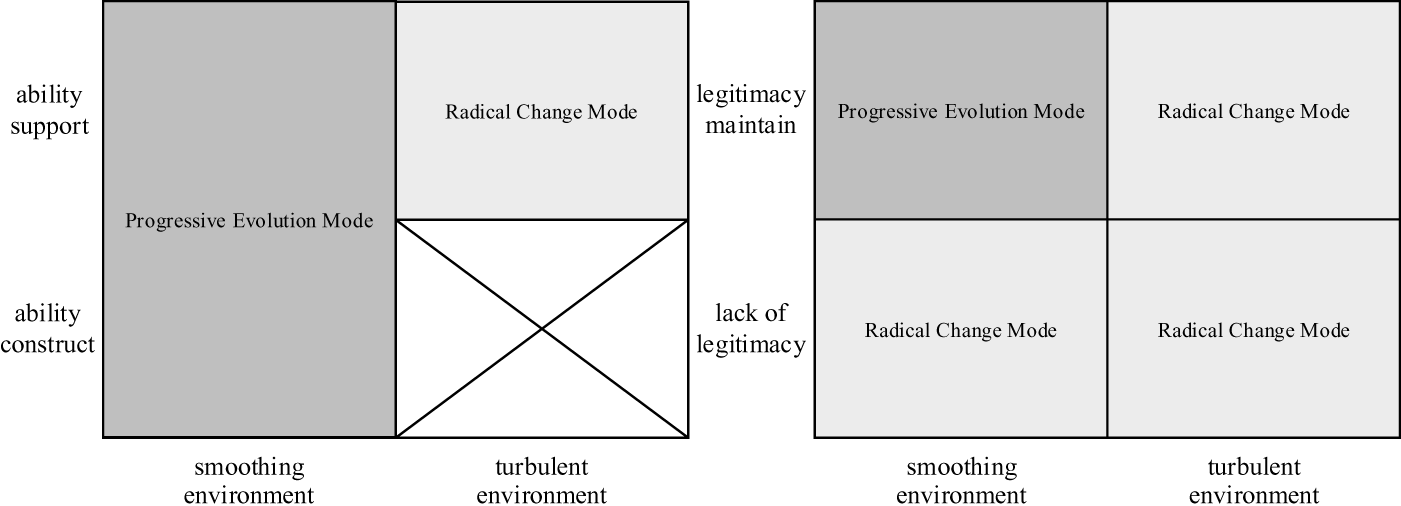
A closer examination of successful Chinese firms as typical representatives of emerging markets reveals that the LOI construction practices can be broadly categorized into two types: firms that have undergone significant OI change, such as Feihe, and those that have not, such as TsingShan. This classification reflects the complex interaction between the temporality embedded in external environmental shifts and internally configured temporal dynamics. Firms operating in turbulent, discontinuously evolving environment often adopt a transformative approach to construct LOI, driven by sudden shocks or disruptions (Ernst & Schleiter, Reference Ernst and Schleiter2021; Piening, Oliver, Antons, & Kreiner, Reference Piening, Oliver, Antons and Kreiner2020). We refer to this as the radical change mode, which aligns with prior research on OI change emphasizing rapid shifts over short timeframes, often involving conflict and intensity (Hampel & Dalpiaz, Reference Hampel and Dalpiaz2023; Kjærgaard, Morsing, & Ravasi, Reference Kjærgaard, Morsing and Ravasi2011). However, unlike the reactive and piecemeal identity restructuring often discussed in existing literature, the OI change in high-position leap cases is marked by system-wide and comprehensive transformation (Hampel & Dalpiaz, Reference Hampel and Dalpiaz2023). These efforts are not merely responses to external triggers but represent deliberate overhaul aimed at aligning the organization with its aspirational leadership goals.
Conversely, firms that operate in relatively stable and continuously evolving industry environments are more likely to adopt a non-transformative approach to constructing LOI (Oertel & Thommes, Reference Oertel and Thommes2018; Song, Reference Song2023). We refer to this approach as the progressive evolution mode in this research. It is rooted in the literature on identity formation and evolution, which emphasizes how organizations gradually cultivate a desired identity over time (Cornelissen, Akemu, Jeroen, & Werner, Reference Cornelissen, Akemu, Jeroen and Werner2021; Kroezen & Heugens, Reference Kroezen, Heugens, Schultz and Maguire2012). However, in contrast to prior findings, constructing an LOI through the long-term, multistage process of high position leap involves not simply an identity transition from ‘nothing to something’, but rather a more nuanced and dynamic trajectory of iterative identity development. This process potentially reveals deeper identity progression patterns than those proposed by linear modes in existing research (Drori, Wrzesniewski, & Ellis, Reference Drori, Wrzesniewski and Ellis2013).
While the relationship between temporality – as an external contextual variable – and LOI development is relatively well recognized, the role of temporality as an internal force shaping the dynamics of LOI construction remain underexplored. In particular, how external temporal conditions interact with internal temporal perspectives continues to elude our understanding. To more clearly illuminate the distinctions and similarities between these two LOI construction modes, and to unpack the multifaced role of temporality within them, we adopt temporal horizon and temporal orientation as our analytical dimensions. Temporal horizon examines how organizations interpret and engage with time spans (Schultz & Hernes, Reference Schultz and Hernes2020), directly influencing how they understand and justify the construction of an LOI by shaping the characteristics of the corresponding strategic plan (Schultz & Hernes, Reference Schultz and Hernes2020; Shipp, Edwards, & Lambert, Reference Shipp, Edwards and Lambert2009). Temporal orientation examines how organizations construct a value-laden temporal framework (Blagoev, Hernes, Kunisch, & Schultz, Reference Blagoev, Hernes, Kunisch and Schultz2024; Shipp et al. Reference Shipp, Edwards and Lambert2009), providing the motivational foundation and a resource base for OI evolution. The integration of these two dimensions sheds light on how organizations connect their past, present, and future (Schultz & Hernes, Reference Schultz and Hernes2013). This process aligns with continuity, a foundational attribute of OI (Gioia et al., Reference Gioia, Schultz and Corley2000), and helps anchor the temporal boundaries and orientations that organizations prioritize (Blagoev et al., Reference Blagoev, Hernes, Kunisch and Schultz2024), offering a compelling and systematic lens to understand how an organization defines itself through time and explore the evolutionary progression from an original OI (past) to an LOI (present and future). On this basis, we conduct a dual-case comparative study to examine the process logic and temporal patterns underlying LOI construction across the two identified approaches.
In doing so, we derive key insights and contribute to the existing research in the following ways. First, our findings redirect the focus of existing research on the ascent of emerging market firms to industry leadership from visible mechanisms of capability or resource upgrading (Kenney & Lewin, Reference Kenney and Lewin2022; Zhou & Park, Reference Zhou and Park2024) to the more fundamental yet overlooked integration of both explicit and implicit dimensions of OI. Second, we identify the radical change mode and the progressive evolution mode of LOI construction and explore the distinct process logics that characterize the two modes, while also uncovering shared underlying principles that support LOI construction across both approaches. By incorporating identification alignment into our analytical framework, we extend existing research on OI construction and enhance the explanatory power of its underlying process logic. Finally, we synthesize the temporal patterns underlying each mode and integrate both the objective availability of time resource and the subjective constructability of temporal meaning. By combining temporal horizon and temporal orientation, we establish a meaningful link between the temporal characteristics of external environments and the internal dynamics of OI construction, offering a more holistic understanding of how temporal factors shape identity construction.
Theoretical Background
Industry-Leading Firms and LOI
Industry-leading firms often occupy the highest positions in the value chain, serving as benchmarks and directional guides for their industries. Consequently, they are capable of pulling other firm, value chain participants, and consumers in specific strategic directions (Lundvall & Rikap, Reference Lundvall and Rikap2022). The previous research focusing on how incumbents in emerging markets ascend to industry leadership primarily examines two main aspects. First, some scholars have delved into the leaps in technological capability and innovations in market demand to understand how followers manage to transition from catching up to surpassing established competitors (Kenney & Lewin, Reference Kenney and Lewin2022; Lundvall & Rikap, Reference Lundvall and Rikap2022). Second, viewing through a value chain lens, others highlight digital transformation (Ma, Mao, & An, Reference Ma, Mao and An2022), ambidextrous innovation (Song, Reference Song2023), and the emergence and evolution of ecosystems (Daymond, Knight, Rumyantseva, & Maguire, Reference Daymond, Knight, Rumyantseva and Maguire2023) as important means of escaping the low-end lock-in within global value chains.
While existing research offers important insights into leapfrogging mechanisms, it predominantly focuses on explicit strategies, often neglecting integrated perspectives – particularly the role of OI, which captures both explicit and implicit dimensions of an organization’s core attributes (Gioia, Patvardhan, Hamilton, & Corley, Reference Gioia, Patvardhan, Hamilton and Corley2013). OI represents a deep understanding of the collective self among organizational members, encompassing beliefs about ‘who we are and why we exist’ that are central, distinctive, and continuous (Albert & Whetten, Reference Albert and Whetten1985; Cloutier & Ravasi, Reference Cloutier and Ravasi2020). Understanding how OI evolves is crucial in emerging markets. OI not only serves as a foundational basis for key stakeholders to interpret organizational activities (Gioia, Price, Hamilton, & Thomas, Reference Gioia, Price, Hamilton and Thomas2010; Chreim, Langley, Reay, Comeau-Vallée & Huq, Reference Chreim, Langley, Reay, Comeau-Vallée and Huq2020), but also plays a pivotal role in shaping and positioning an organization over time (Gioia et al., Reference Gioia, Schultz and Corley2000). Accordingly, understanding how followers ascend to industry leadership requires deeper inquiry into the construction of LOI, which represents the ultimate goal of high-position leap (Chreim, Langley, Reay, Comeau-Vallée, & Huq, Reference Chreim, Langley, Reay, Comeau-Vallée and Huq2020).
LOI, akin to constructs such as anti-institutional OI (Chreim et al., Reference Chreim, Langley, Reay, Comeau-Vallée and Huq2020), represents a distinct, context-embedded form of OI. While retaining the foundational attributes of OI, such identity forms exhibit unique features – for instance, social mission-driven OI is often characterized by hybridity and internal contradictions (Cornelissen, Akemu, Jeroen, & Werner, Reference Cornelissen, Akemu, Jeroen and Werner2021). LOI reflects a specific form of identity rooted in incumbent firms from emerging markets that aspire to attain high-level industry leadership. It showcases a dynamic process of identity construction that aligns with these firms’ trajectories as they surpass established industry leaders in the domestic market and emerge as new leaders. Furthermore, LOI construction can take different forms: under a radical change approach, it involves replacing the original OI with a new LOI (Ernst & Schleiter, Reference Ernst and Schleiter2021; Piening et al., Reference Piening, Oliver, Antons and Kreiner2020), whereas under a progressive evolution approach, LOI is built from the ground up (Gioia et al., Reference Gioia, Price, Hamilton and Thomas2010). Building on existing research on specifical forms of OI (Chreim et al., Reference Chreim, Langley, Reay, Comeau-Vallée and Huq2020), a deeper understanding of LOI and its distinctive attributes calls for integrating the core structural dimensions of OI with the defining characteristics of industry-leading firms.
Research on the structure of OI often conceptualizes it as comprising both intangible and tangible components (Gustafson & Reger, Reference Gustafson and Reger1995). The intangible aspects consist of core ideas that transcend temporal constraints. These include a survival idea, which explains why the organization exists and reflects its DNA, and a development idea, which guides how the organization operates and grows (Chreim et al., Reference Chreim, Langley, Reay, Comeau-Vallée and Huq2020; Gioia et al., Reference Gioia, Price, Hamilton and Thomas2010). Organizational culture serves as a key expression of these core ideas. It emerges as a distinctive feature when OI reaches a certain stage of development (Gioia et al., Reference Gioia, Patvardhan, Hamilton and Corley2013). In contrast, the tangible aspects of OI relate to specific times and environmental conditions and involve what the organization has done and accomplished (Gustafson & Reger, Reference Gustafson and Reger1995). This includes physical identity-embedded elements, such as products, resources, and capabilities, which are essential components of the tangible dimension of OI. In social-mission-driven organizations, for example, product uniqueness often serves as a key marker to differentiate them from economic organizations (Cornelissen et al., Reference Cornelissen, Akemu, Jeroen and Werner2021).
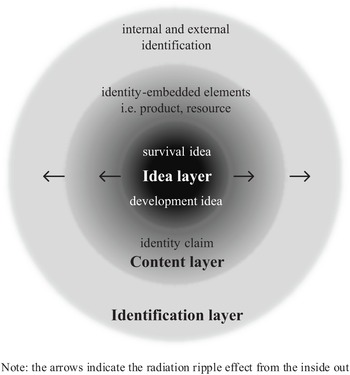
Furthermore, identification, as a key derivative outcome of organizational audiences negotiating and participating in the construction of OI (Ashforth & Mael, Reference Ashforth and Mael1989), is an essential component of the OI structure. Identification defines individuals’ sense of belonging to the collective and the degree or process by which OI is internalized as an individual identity (Weisman, Wu, Yoshikawa, & Lee, Reference Weisman, Wu, Yoshikawa and Lee2023). Organizations must foster both internal collective identification and external recognition from key audiences (Gioia et al., Reference Gioia, Price, Hamilton and Thomas2010). Therefore, to provide a more comprehensive and holistic view, we expand upon the dual-layer structure conceptualization of identity and propose that OI consists of three interconnected layers: an intangible layer of the idea (survival and development idea), a tangible layer of content (such as behaviors and products), and a perception layer of identification (encompassing both internal identification and external recognition). Together, these three dimensions collectively shape and inform OI, providing a richer framework for examining identity construction within and outside the organization.
While clarifying the structure of OI, synthesizing existing research, we find that industry-leading firms exhibit the following characteristics. First, they possess a solid internal foundation. The transition from followers to leaders often implies that these firms have developed advanced capabilities, allowing them to position themselves at the high end of both industry and global value chains (Hu, Wang, Liu, & Song, Reference Hu, Wang, Liu and Song2023; Ma et al., Reference Ma, Mao and An2022). Second, they are capable of pioneering actions, such as successfully breaking through industry technological blockades and achieving critical technological breakthroughs from ‘zero to one,’ which usually positions them ahead in industry development (Kenney & Lewin, Reference Kenney and Lewin2022). Third, they generate positive external reactions by attracting and driving other industry players to respond to their pioneering actions and follow their direction, thereby playing a vital role in industry upgrading (Hu et al., Reference Hu, Wang, Liu and Song2023; Kenney & Lewin, Reference Kenney and Lewin2022). Finally, they exhibit sustained leadership over time, suggesting that the outcomes of their high-position leap are enduring rather than short-lived (Daymond et al., Reference Daymond, Knight, Rumyantseva and Maguire2023).
Combining the four characteristics of industry-leading firms, we further delineate the distinctive structure of LOI that sets it apart from general OI. First, at the core idea layer, corresponding to the pioneering actions that industry-leading firms can take (Daymond et al., Reference Daymond, Knight, Rumyantseva and Maguire2023) and their sustained leadership in industry development (Lundvall & Rikap, Reference Lundvall and Rikap2022), LOI exhibits distinct and profound leadership features. These features represent the firm’s unwavering commitment to continuous industry leadership and innovation (Oertel & Thommes, Reference Oertel and Thommes2018; Ravasi, Rindova, & Stigliani, Reference Ravasi, Rindova and Stigliani2019). Second, at the content layer – which correspond to the robust internal foundations of these firms (Ma et al., Reference Ma, Mao and An2022) – the tangible elements of LOI, such as products, resources, and capabilities, exhibit distinctiveness and inimitability (Cornelissen et al., Reference Cornelissen, Akemu, Jeroen and Werner2021). Finally, at the identification layer, corresponding to the positive external reactions that industry-leading firms inspire (Kenney & Lewin, Reference Kenney and Lewin2022) and their continuous guidance in industry progression (Lundvall & Rikap, Reference Lundvall and Rikap2022), LOI secures a deeper and more enduring identification compared to general OIs (Kouamé et al., Reference Kouamé, Hafsi, Oliver and Langley2022; Weisman et al., Reference Weisman, Wu, Yoshikawa and Lee2023). This structural layer offers competitive advantages that are distinct from those of industry peers. Together, these three layers – the leading idea layer, the distinctive and inimitable content layer, and the deep and enduring identification layer – form the unique, multidimensional structure of LOI.
Research on the Construction of OI
Research on the construction of OI centers around two major themes: (1) identity formation and evolution and (2) identity change and reconstruction. These themes focus on antecedents, evolutionary means, and processes. From an antecedent perspective, perceived identity gaps (Gioia et al., Reference Gioia, Schultz and Corley2000) and identity threats (Ernst & Schleiter, Reference Ernst and Schleiter2021; Piening et al., Reference Piening, Oliver, Antons and Kreiner2020) can drive firms to construct or modify their OI in response to perceived misalignments or challenges. In terms of evolutionary mechanisms, cognitive-level strategies like sense-making (Hampel & Dalpiaz, Reference Hampel and Dalpiaz2023) and narrative strategies like rhetoric (Ernst & Schleiter, Reference Ernst and Schleiter2021) are effective means for identity construction. These strategies emphasize the cognitive and narrative approaches firms employ to (re)construct their identity through shared understanding and storytelling. Regarding the evolutionary processes, research on identity formation typically presents a linear pattern (Cornelissen et al., Reference Cornelissen, Akemu, Jeroen and Werner2021; Ungureanu, Bertolotti, Mattarelli, & Bellesia, Reference Ungureanu, Bertolotti, Mattarelli and Bellesia2020) due to the focus on identity consensus or identity claims as primary analytical objects (Ravasi & Schultz, Reference Ravasi and Schultz2006). In contrast, research on identity change largely centers on responses to stimuli or crises (Hampel & Dalpiaz, Reference Hampel and Dalpiaz2023; Kjærgaard et al., Reference Kjærgaard, Morsing and Ravasi2011), highlighting partial identity restructuring to address emerging challenges. These studies underscore a reactive, problem-driven logic whereby organizations reshape specific aspects of their identities in response to identity crises, external pressures, or situations that render existing identity structures ineffective (Ernst & Schleiter, Reference Ernst and Schleiter2021).
However, the context of emerging markets opens up new avenues for researching the construction of OI, suggesting that the two approaches adopted by firms striving for industry leadership may embody deeper and more complex mechanisms or logic than those found in conventional identity formation or change. First, firms that adopt the radical change mode to construct LOIs usually face more severe identity crises and greater risks of change (Gioia et al., Reference Gioia, Schultz and Corley2000; Piening et al., Reference Piening, Oliver, Antons and Kreiner2020). If the reconstruction of OI fails, it could lead to a disruptive identity crisis that may cause the organizations to disintegrate or dissolve (Hampel & Dalpiaz, Reference Hampel and Dalpiaz2023). Yet, this type of OI change also provides these firms with an opportunity to reconfigure OI more broadly or deeply in a shorter time frame (Cloutier & Ravasi, Reference Cloutier and Ravasi2020). Thus, it involves a more systematic and comprehensive process of OI reconstruction, potentially embodying change norms that diverge from the typical (partial) change logic (Hampel & Dalpiaz, Reference Hampel and Dalpiaz2023).
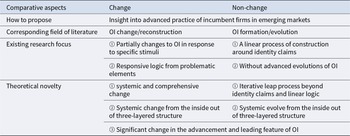
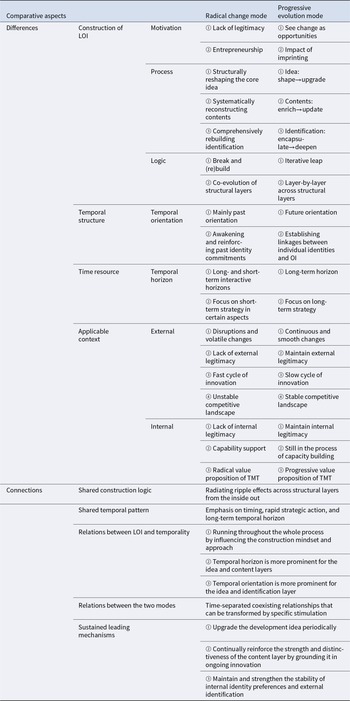
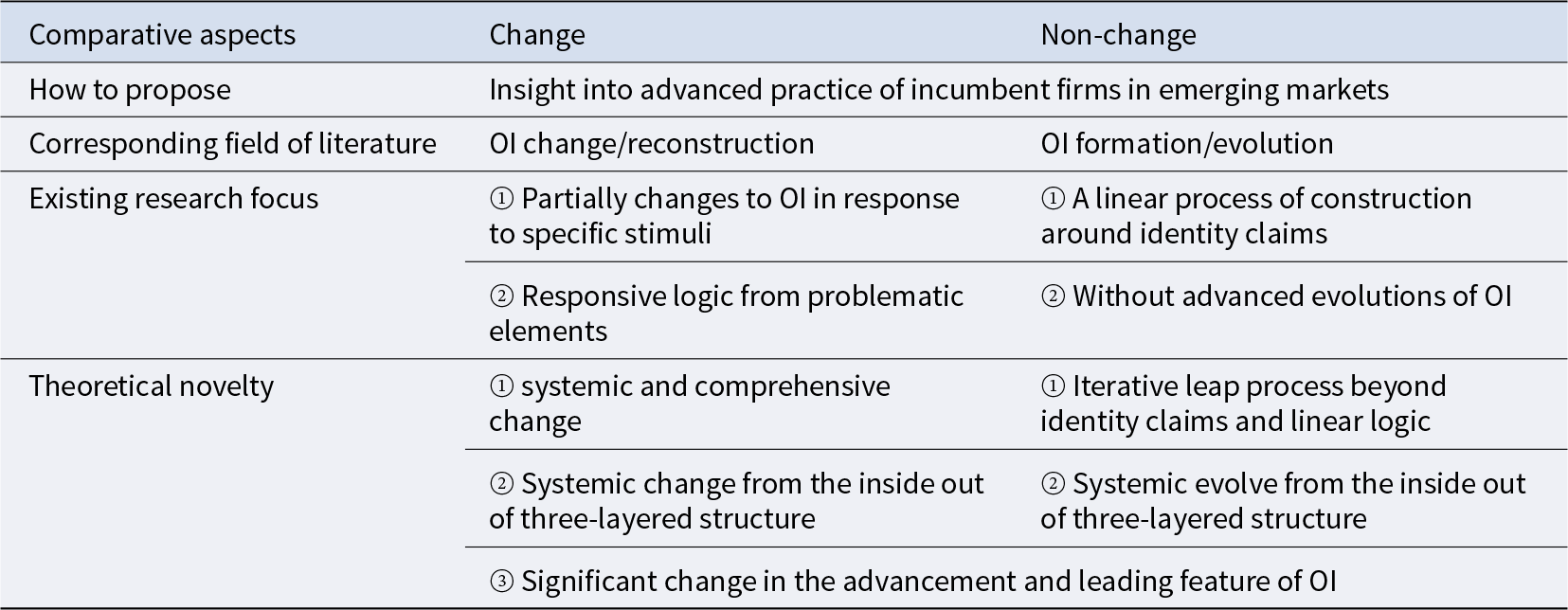
Second, constructing an LOI through the progressive evolution mode is more complex compared to general identity evolution processes. It not only includes the initial identity formation phase (Gioia et al., Reference Gioia, Price, Hamilton and Thomas2010) but also involves multiple identity iterative transitions. The type of OI construction and evolution process is characterized by a balance between maintaining structural stability (Gustafson & Reger, Reference Gustafson and Reger1995) and allowing each structural layer to continue evolving. In other words, it requires both the stability of identity structures and continuous evolution toward advancement and leadership. Such progression builds upon and surpasses prior identity states, emphasizing advancement over time. Understanding this complex and distinctive identity evolution issue necessitates moving beyond prior research, which has focused on identity claims (Cornelissen et al., Reference Cornelissen, Akemu, Jeroen and Werner2021) and examining the hierarchical evolution process of OI structures as systematic, multi-layered processes. We summarize the uniqueness of the issues in comparison with existing studies in Table 1.
Theoretical traceability and comparison of the two approaches
Temporality in OI Research
Research on the temporality of OI initially discussed whether OI can change and the speed of its changes, ultimately concluding that OI embodies both continuity and dynamism (Cloutier & Ravasi, Reference Cloutier and Ravasi2020; Gioia et al., Reference Gioia, Schultz and Corley2000). Scholars have since focused on examining the role of past temporal elements, such as history and memory, in the identity formation or change process. Research finds that organizational members often refer to historical frameworks when deciding appropriate actions based on identity (Whetten, Reference Whetten2006). Furthermore, when members question existing identity and seek a new ideal identity, reinterpreting the past history becomes particularly important (Ravasi et al., Reference Ravasi, Rindova and Stigliani2019; Schultz & Hernes, Reference Schultz and Hernes2013). In addition, a few scholars focus on the future, suggesting that depicting the organization’s vision (Venus, Stam, & Knippenberg, Reference Venus, Stam and Knippenberg2019) or pursuing an ideal organizational image (Gioia et al., Reference Gioia, Schultz and Corley2000) may shake the current OI and trigger deliberate identity construction actions. Some scholars have also explored the influence of temporal horizon in OI research. Temporal horizon refers to the span of past and future time individuals or organizations take into account when considering events (Schultz & Hernes, Reference Schultz and Hernes2020). It determines which temporal spans are incorporated into their decision-making frame (Bluedorn, Reference Bluedorn2002; Schultz & Hernes, Reference Schultz and Hernes2020). The different spans of temporal horizon can affect the scope and degree of identity reconstruction and when an organization considers a long temporal horizon, its identity can be reconstructed in a more thorough manner (Schultz & Hernes, Reference Schultz and Hernes2013).
Although existing research has generated valuable insights into the temporality of OI, this field remains relatively nascent and requires more detailed and nuanced exploration (Gioia et al., Reference Gioia, Patvardhan, Hamilton and Corley2013). In particular, two major limitations persist. First, existing research tends to focus on the internal perspective, paying limited attention to the temporal patterns of the external environment without establishing an effective link between the two. The construction of OI is not only the result of collective negotiations among internal members but also subject to constraints and influences from the external environment (Gioia et al., Reference Gioia, Price, Hamilton and Thomas2010; Kroezen & Heugens, Reference Kroezen, Heugens, Schultz and Maguire2012). In the context of our research, where incumbent firms in emerging markets strive to become industry leaders, the changing characteristics of the industry environment are likely key factors influencing these firms’ choices of different LOI construction approaches (Gioia et al., Reference Gioia, Schultz and Corley2000; Zhou & Park, Reference Zhou and Park2024). Therefore, incorporating external temporal dynamics into the analytical framework not only deepens our understanding of the LOI construction processes and the temporal patterns behind them but also helps overcome the current research limitation of being overly confined to internal perspectives.
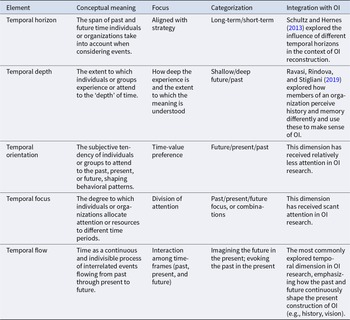
Second, existing research on the temporality of OI often adopts a narrow, single-dimensional perspective. For example, some studies have examined the influence of isolated temporal elements, such as history or future, on the OI construction process (Ravasi et al., Reference Ravasi, Rindova and Stigliani2019; Venus et al., Reference Venus, Stam and Knippenberg2019), while others have focused solely on a single dimension of temporal horizon to explore temporal issues in OI reconstruction (Schultz & Hernes, Reference Schultz and Hernes2013). However, temporality is a complex and multidimensional construct that can manifest in various forms throughout the OI construction process. The interactions among different temporal elements provide a temporal framework and a driving force for identity evolution (Blagoev et al., Reference Blagoev, Hernes, Kunisch and Schultz2024; Bluedorn, Reference Bluedorn2002; Gioia et al. Reference Gioia, Price, Hamilton and Thomas2010). Therefore, it is essential to incorporate more multidimensional temporal elements into research. We have summarized key temporal elements related to OI construction in Table 2.
Comparing key temporal elements in temporal perspectives
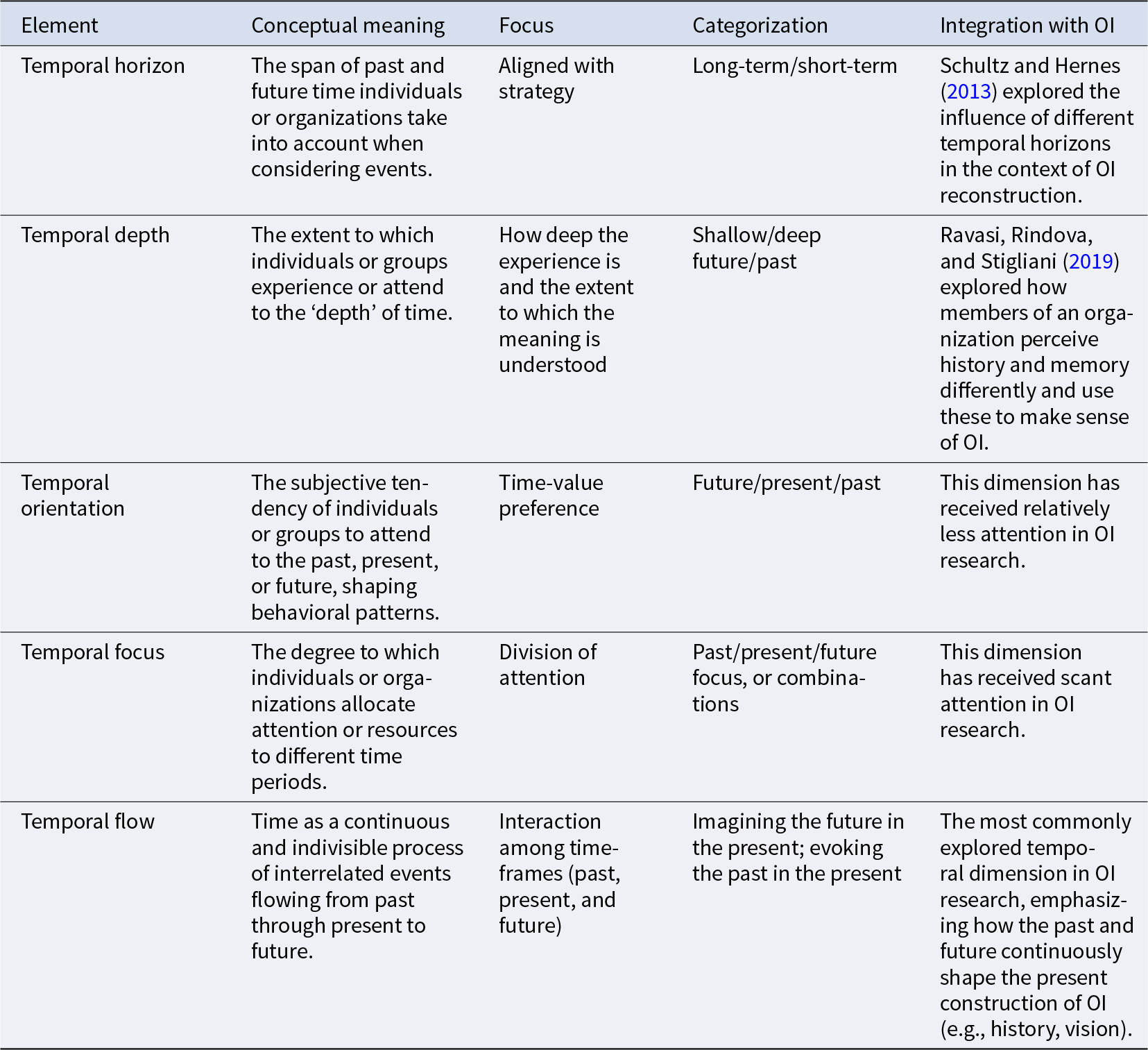
Following Schultz and Hernes (Reference Schultz and Hernes2013), we select temporal horizon from the broader conceptual pair of temporal horizon and temporal depth – which refers to the perceived distance to a particular point in time and the richness of its experience – as our focal element and analytical lens. Temporal horizon captures how organizations interpret time spans (Schultz & Hernes, Reference Schultz and Hernes2020), directly shaping how they understand and justify the construction of an LOI by influencing the nature of associated strategic plan and actions (Schultz & Hernes, Reference Schultz and Hernes2020; Shipp et al., Reference Shipp, Edwards and Lambert2009). While prior research has primary focused on how individuals or organizations interpret and assign meaning to specific temporal elements such as history, we shift the focus to how long-term and short-term temporal horizons influence organizational responses to environmental change and the construction of LOIs. A long-term horizon is growth-oriented and embraces uncertainty and ambiguity, whereas a short-term horizon is geared toward survival (Blagoev et al., Reference Blagoev, Hernes, Kunisch and Schultz2024; Schultz & Hernes, Reference Schultz and Hernes2013).
We also introduce the concept of temporal orientation into the study of OI construction to examine how organization’s preferences for specific temporal focus shape the transition from OI to LOI. Unlike temporal focus, which concerns the distribution of attention across the past, present, and future, temporal orientation reflects the value-laden preference organizations assign to particular temporal domains (Hernes, Reference Hernes2017; Shipp et al., Reference Shipp, Edwards and Lambert2009). This orientation directly influences which temporal aspects are emphasized in constructing LOI and provides distinct motivational energies and resources such as a shared vision of the future or emotional memories of the past for identity evolution. Temporal orientation can be categorized into past, present, and future orientations: the past orientation emphasizes memory, history, and experience; the present orientation focuses on immediate experience; and the future orientation is goal-oriented, emphasizing future outcomes (Shipp et al., Reference Shipp, Edwards and Lambert2009).
Combined, temporal horizon and temporal orientation integrate the objective availability of temporal resources with the subjective construction of temporal order (Blagoev et al., Reference Blagoev, Hernes, Kunisch and Schultz2024). By shaping temporal boundaries and providing directional momentum, these two elements jointly embed OI within a dynamic temporal framework, thereby facilitating its evolution toward an LOI (Bluedorn, Reference Bluedorn2002; Schultz & Hernes, Reference Schultz and Hernes2013). Their integration reveals how organizations connect the past, present, and future – a process that reflects the foundational attribute of continuity in OI (Gioia et al., Reference Gioia, Schultz and Corley2000) and offers valuable insights into the temporal dynamics of OI evolution (Schultz & Hernes, Reference Schultz and Hernes2013). At the same time, this interplay anchors the temporal boundaries and orientations that organizations prioritize (Blagoev et al.. Reference Blagoev, Hernes, Kunisch and Schultz2024; Schultz & Hernes, Reference Schultz and Hernes2020), highlighting the motivational forces and resource bases that shape LOI construction. Taken together, these elements provide a compelling and systematic lens for understanding how organizations define themselves through time and navigate the transformation from an original, past-rooted OI to a future-oriented LOI.
Methods
Method Selection
This research examines how firms in emerging markets construct LOIs through two distinct approaches from a temporal perspective, emphasizing their context-specific, multidimensional, and dynamic characteristics. To gain a comprehensive understanding and uncover the theoretical mechanisms within this process, we adopt a dual-case comparative study approach as our research method. From a broad methodological standpoint, the case study format aligns with our research needs. Case studies are suitable for exploring context-specific questions, enabling an in-depth analysis of complex interactions among multiple factors. They are particularly effective for answering process-related and ‘how’ questions (Eisenhardt, Reference Eisenhardt1989). Our research aims to understand ‘how’ incumbent firms construct LOIs through different approaches. This process seeks to uncover the interplay between OI structural layers and multidimensional temporal elements, aligning well with the case study method for theoretical construction. Second, in terms of the specific approaches for case study, the dual-case comparative study involves both intra-case analysis and cross-case comparative analysis. Intra-case analysis is the process of conducting single-case studies for each sample, allowing for effective exploration of emerging issues in managerial practice and uncovering the meaning embedded in data. It is conducive to systematically building theoretical models under each mode (Yin, Reference Yin2014). The cross-case comparative analysis facilitates a multidimensional thorough comparison of the radical change and progressive evolution modes, understanding the differences in applicable contexts, construction mechanisms, and other key dimensions. It also helps uncover common theoretical patterns across them, providing a comprehensive insight into our research question.
Sample Selection
Sampling and screening
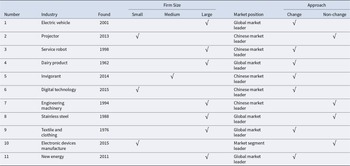
The case study method follows the theoretical sampling principle to select sample firms (Eisenhardt, Reference Eisenhardt1989). Our sampling process involves three main steps. First, we construct a sample pool. China is a typical representative of emerging markets. Chinese firms have become increasingly active as China’s economic scale and development quality have been steadily improving (Huo & Wei, Reference Huo and Wei2023; Lundvall & Rikap, Reference Lundvall and Rikap2022). In fact, a small group of Chinese firms have successfully overcome low-end lock-in and made historic leaps from low-position catch-up to high-position leadership, securing competitive dominance in the Chinese markets. Based on whether firms had attained industry leadership and successfully constructed LOIs, we tracked the OI (re)construction practices of 11 Chinese firms and conducted in-depth interviews, forming our initial sample pool (see Table 3 for basic information). Through this process, we found that some of these firms reconstructed their OIs through a rapid-change approach, while others advanced toward an LOI via a more gradual, non-radical change path.
Sample pool information
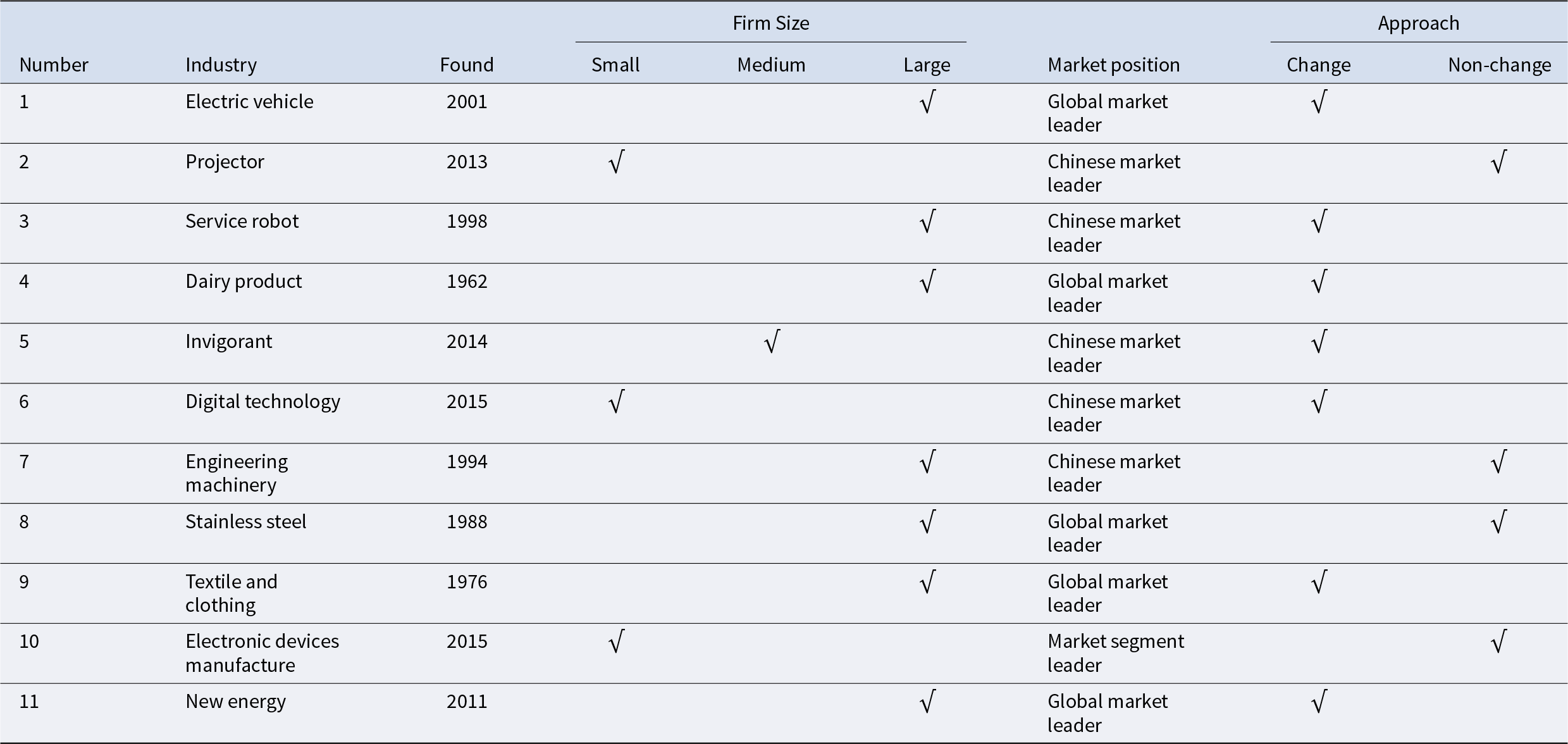
Next, we narrowed down the sample firms from the initial sample pool based on the research requirements. To this end, we established the following two criteria from the temporal perspective: on the one hand, select firms within a relatively mature institutional environment and a long history of development. Compared to startups, firms with a longer history of development are more suitable for exploring the temporal characteristics of the LOI construction process. On the other hand, choose firms with significant differences in OI forms before and after the construction of LOIs. These differences suggest that substantial changes may have occurred across all layers of OI, which is more conducive to identifying dynamic changes within each structure layer, supporting the development of theoretical insights from these observations. Based on these criteria, we identified five firms from the sample pool that met the standards: firms numbered 3, 4, 7, 8, and 9 in Table 3. Among them, two adopted the progressive evolution approach, while three followed the OI change approach.
From these two groups, we selected the most representative and theoretically informative cases for our comparative analysis. Among the three firms that pursued the OI change approach, Firm 4 demonstrated broader transcendence and stronger industry leadership than Firm 3. This indicates a more challenging high-position leap and a more complex OI construction process. Furthermore, compared to Firm 9, Firm 4 experienced more pronounced external environmental changes, as its industry faced a major crisis following the 2008 melamine scandal in China’s dairy industry, highlighting the temporal aspects of its challenges. Therefore, Firm 4, Heilongjiang Feihe Dairy Co., Ltd. (Feihe hereafter), was chosen as one of our research samples. Similarly, in the samples adopting the non-change approach, Firm 8 achieved a stronger industry leadership while having a longer development history than Firm 7. Thus, Firm 8, TsingShan Holding Group Co., Ltd. (TsingShan hereafter), was chosen as the other case for our comparative analysis.
Sample firms and comparison
TsingShan was established in the 1980s in Zhejiang Province, China. Over the years, it has evolved into a dominant player across the entire industrial chain. From a humble beginning as a small stainless-steel workshop, TsingShan has grown into one of the largest global owners of nickel–iron resources and producers of stainless-steel products. TsingShan leads the industry in numerous aspects, having pioneered the first duplex production process, achieved breakthroughs in nib steel production technology, and secured the largest market share of nickel resources worldwide, alongside significant pricing power. The firm is renowned for its distinctive image and has consistently led the industry with its efficient and visionary strategies, establishing itself as a benchmark within the sector.
Feihe, founded in 1962 in China, began as a regional firm based in small towns. It faced a major crisis during the 2008 melamine scandal. In response, Feihe launched a strategy to create products more suitable for Chinese babies in 2015 and shifted toward high-end market positioning to challenge foreign competitors. This strategic pivot successfully transformed Feihe into the first national brand to secure and maintain a high-end status in this market. Feihe restored social trust through these efforts and spearheaded an industry-wide value chain upgrade. Today, Feihe maintains a dominant position in China’s infant formula market, consistently leading in both market share and industry reputation.
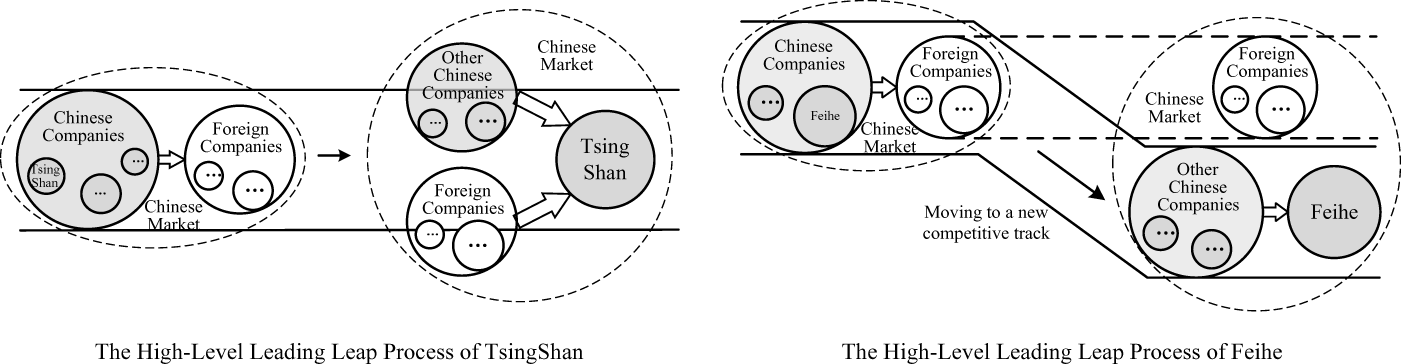
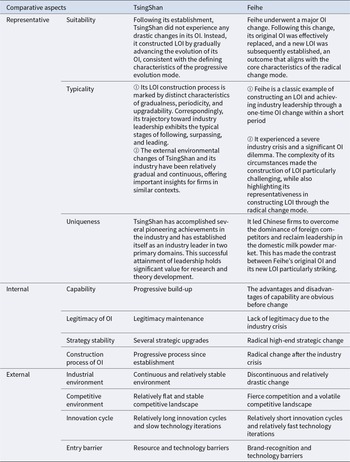
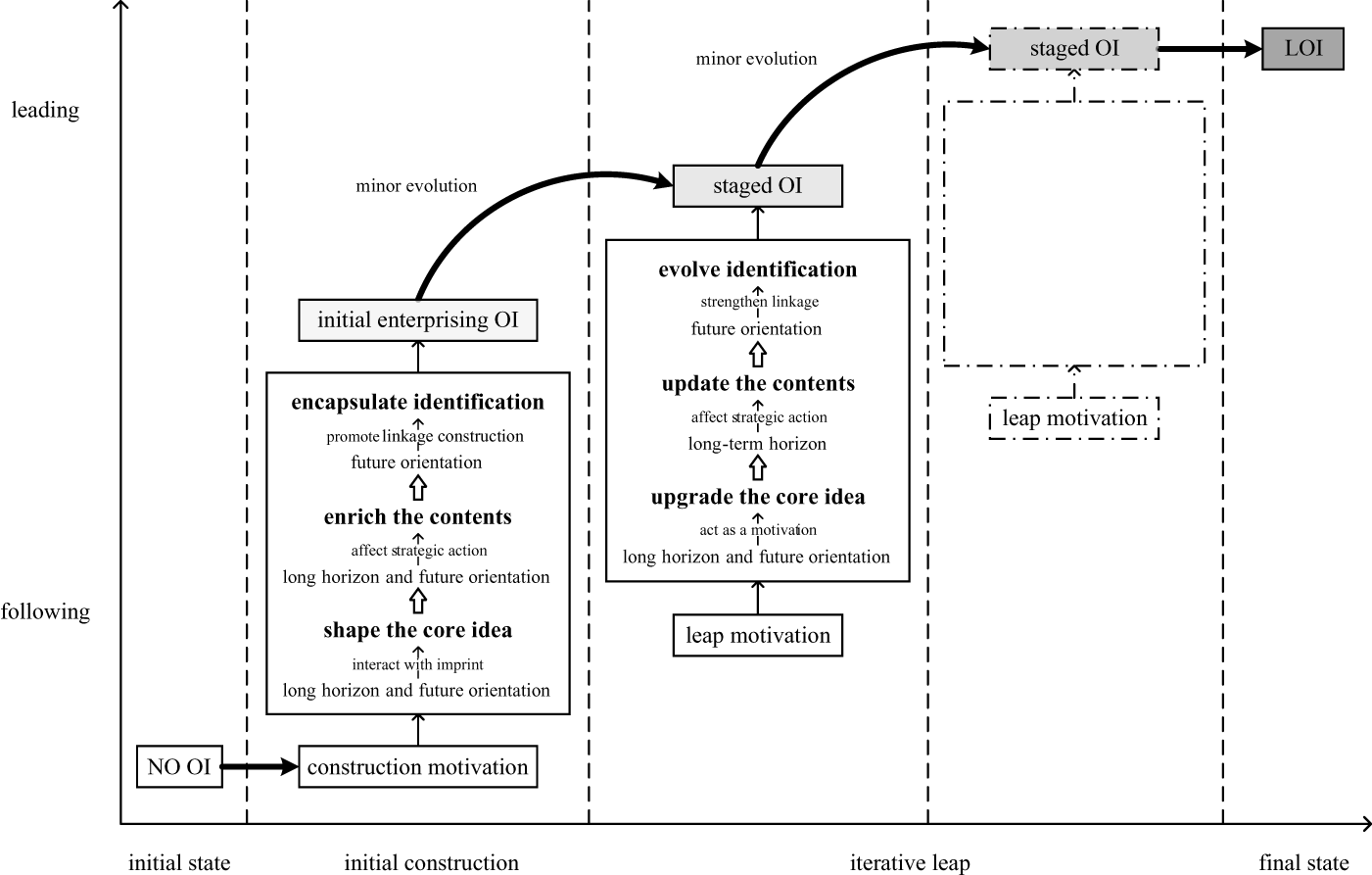
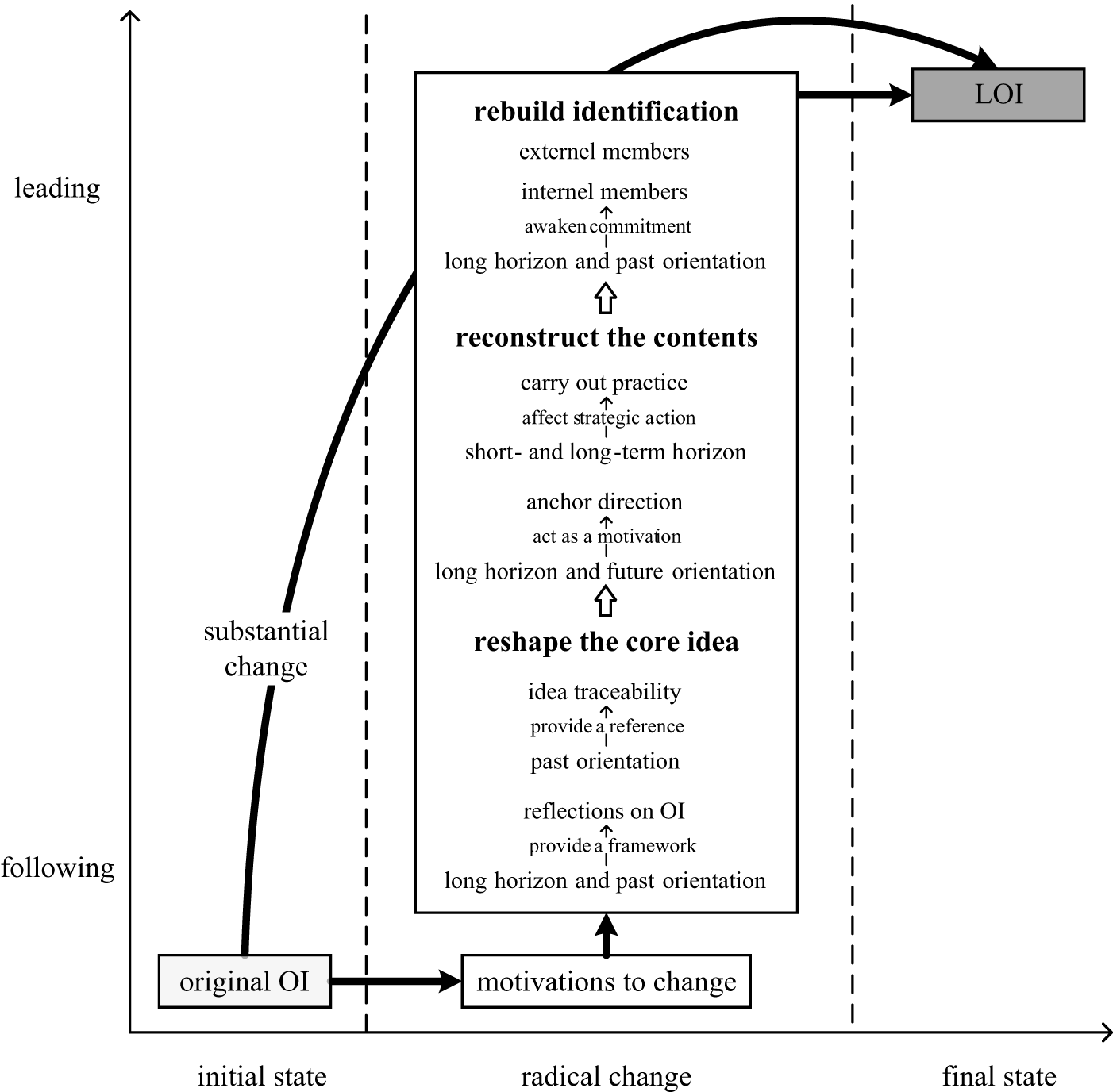
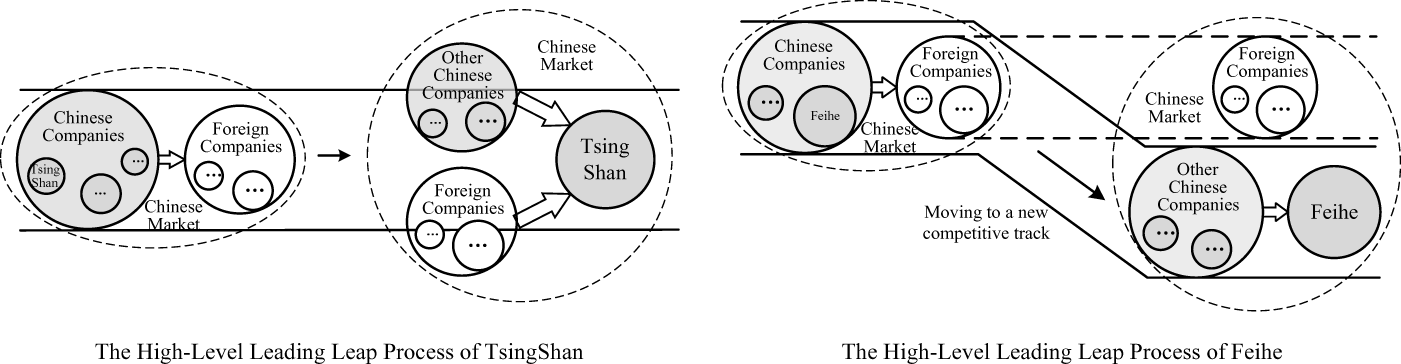
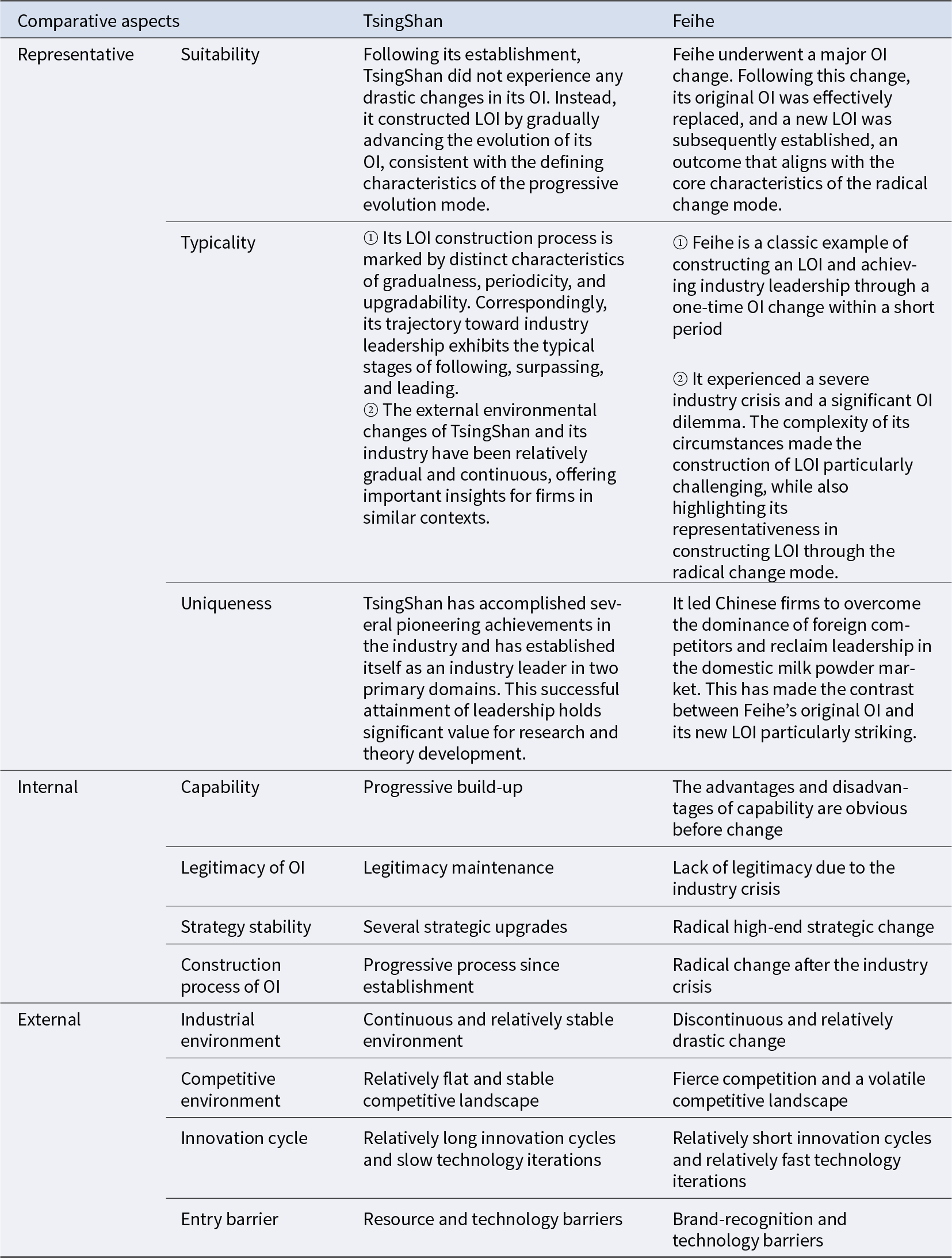
Through an analysis of TsingShan and Feihe’s development trajectories, we find that both companies originated in China’s reform and opening-up period under similar late-following development conditions. At present, they have both become industry leaders in their respective markets, having constructed widely recognized and relatively stable LOIs. However, they adopted entirely different high-position leap strategies and distinctly different OI construction modes, with clear temporal differences. Specifically, these two Chinese firms originated during the same period while became new industry leaders within a comparable time frame (around 2015–2018). Nevertheless, their processes of constructing LOIs diverged significantly. Thus, these two cases are comparable. Further, we demonstrate the representativeness of TsingShan and Feihe for the two modes respectively from three aspects: suitability, typicality, uniqueness, and compare their similarities and differences from both internal and external perspectives, as shown in Table 4. The processes of their transcendence and leadership transitions are illustrated in Figure 1.
The high-level leading leap processes of samples
Sample comparison
Data Collection
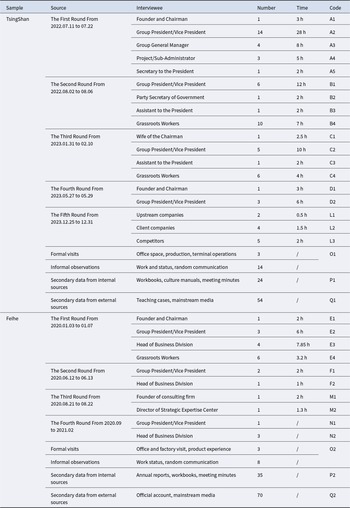
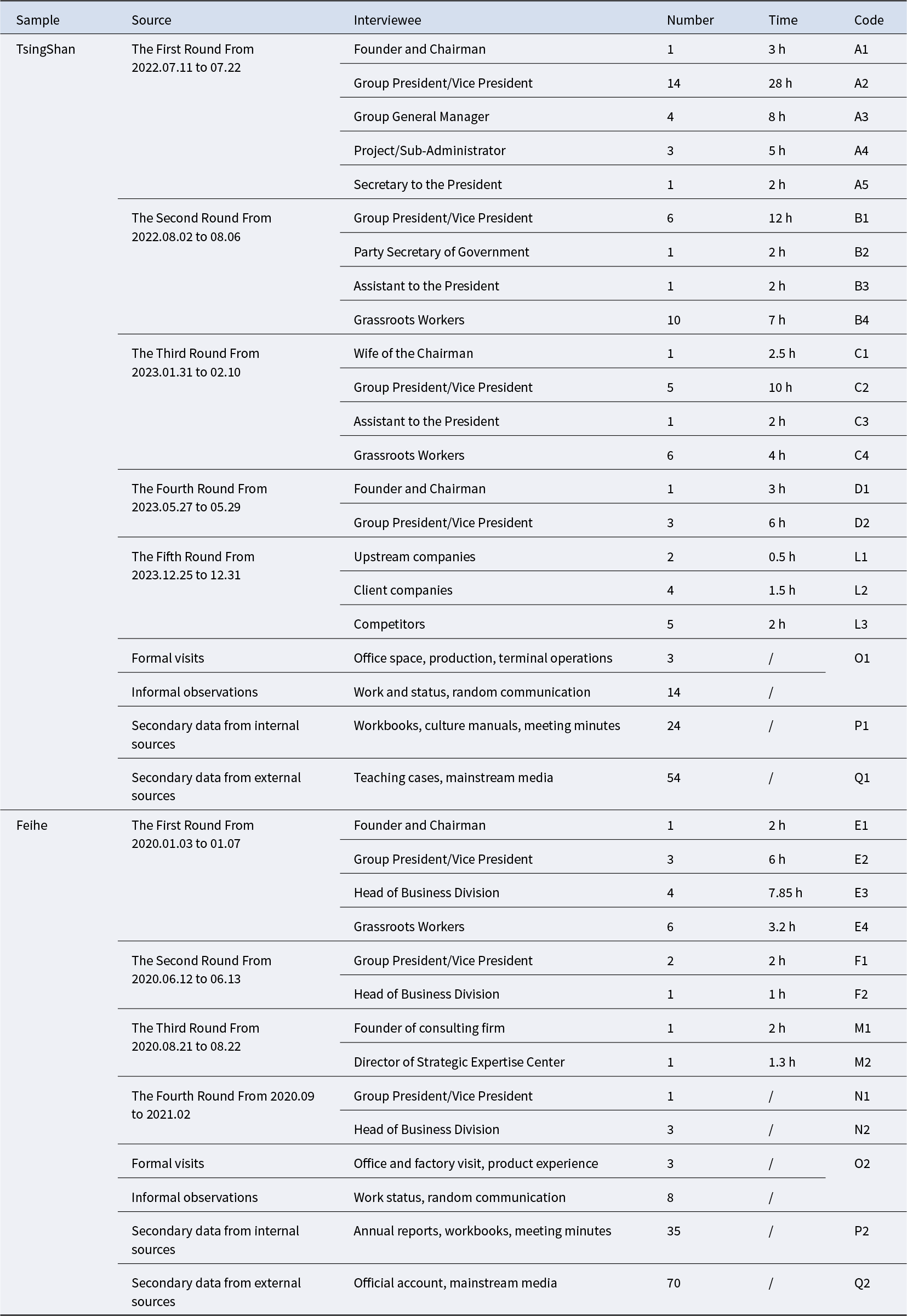
The case study requires in-depth research and comprehensive field investigation. Therefore, semi-structured interviews serve as our primary data collection method. To enhance the effectiveness and comprehensiveness of data collection, we followed the principles outlined below during the interviews. First, OI is shared among internal members and external stakeholders, and its construction is a collective and negotiated process (Gioia et al., Reference Gioia, Price, Hamilton and Thomas2010). To establish a systematic understanding of the LOI construction process, interviews covered participants from different management levels and functional departments, as well as external stakeholders. Factors such as firm size, organizational complexity, and the number of subsidiaries jointly determined the final number of interviewees. As a large steel enterprise, TsingShan exceeds Feihe in terms of business scope, corporate scale, organizational complexity, and number of branches and factories. At the same time, the process of constructing LOI for TsingShan spanned the entire journey from its initial establishment to becoming an industry leader, taking longer than the time Feihe spent reconstructing its LOI. As a result, a significant larger number of interviews were conducted to build a multidimensional and multi-stakeholder understanding of TsingShan. While Feihe involved relatively fewer interviewees, the sample sufficiently covered its managerial hierarchy – including strategy, R&D, marketing, and other functions critical to OI research – ensuring the adequacy of interview data. Second, apart from randomly selected frontline employees, interview outlines were provided in advance to each participant, specifying the purpose of the interview, the types of data sought, and the scope of inquiry to improve efficiency. Third, interviews were conducted individually, ensuring that each interviewee was interviewed alone at a specific time to avoid interference from other interviewees. Fourth, to ensure coherence during interviews, 80% of each session was conducted by the lead interviewer, with the remaining time for supplementary questions from the remaining authors. Fifth, all interviews were recorded in full, and transcripts were converted and checked immediately after each interview by the first author. Data were then processed and coded, and decisions were made regarding the need for additional interview rounds based on the coding results. This involved identifying target participants and topics for subsequent interviews. Data saturation was deemed achieved when subsequent interviews ceased to yield novel insights or contribute additional depth to the theoretical concepts established in prior interviews. Accordingly, the number of interview’s rounds for each firm was determined primarily by the coding results and the point at which data saturation was reached, alongside logistical and coordination considerations.
Based on the above principles, we conducted five rounds of interviews at TsingShan, totaling 69 interviews. The first round focused on understanding the history and development of TsingShan while exploring its members’ temporal perceptions and psychological states. The second round took a deeper dive, aiming to gather detailed insights into the perceptions of government administrators and frontline workers regarding the LOI construction process. The third round assessed the temporal dynamics through the lens of corporate culture, entrepreneurship, and management systems. The fourth round investigated time management issues as perceived by the managers and lower-level employees. In addition, we conducted a final round of interviews with industry stakeholders to learn about their cooperation with TsingShan and gather their candid evaluations of the company.
At Feihe, four rounds of interviews were conducted, totaling 23 interviews. The first round was designed to explore the origins and processes of Feihe’s shift toward high-end strategies, including the temporal perception and cognitive evolution among members at various levels, as well as examining the similarities and differences in OI before and after the change. The second round documented the progression of Feihe’s high-end strategic change and further collected detailed information. In the third round, the focus shifted from internal to an external consulting firm that advised Feihe on its high-position leap, offering an external perspective to assess and validate the relevant content. The fourth round consisted of supplementary interviews that addressed specific, detailed questions.
In addition to the semi-structured interviews, direct observation of operations and casual conversations with members provide genuine insights into their actual experiences and perceptions. Observational and secondary data were employed for triangulation and verification. Observational data include both structured visits organized by the company and informal observations. Secondary data served a supportive role, supplementing the primary data collected. Details of data collection are provided in Table 5.
Data collection information
Data Analysis
Intra-case analysis
Case studies require a structured coding of management phenomena, with coding functioning as technique of ‘meaning condensation’ that extracts the most relevant themes from raw data and organize them into a cohesive hierarchical structure (Kreiner, Hollensbe, Sheep, Smith, & Kataria, Reference Kreiner, Hollensbe, Sheep, Smith and Kataria2015). In this study, we applied a three-stage data structure model to process the sample data (Gioia et al., Reference Gioia, Corley and Hamilton2013). During the intra-case analysis phase, the coding process for each of the two cases was conducted independently in five steps. First, the first author performed data cleaning and preprocessing. During interviews, we aimed to develop a comprehensive understanding of specific issues by asking the same questions to multiple respondents for cross-validation and supplementation. However, this approach sometimes led to data redundancy, and some secondary data (such as financial data and firm survival status) were not directly relevant to our research focus. As a result, data cleaning was essential before formal coding. After reviewing the sample data, we removed irrelevant content (e.g., introductions to the interview team) and eliminated repeated information. The data for TsingShan and Feihe were then separated into individual Excel spreadsheets, with each data segment processed sequentially. Following this process, we obtained 627 raw data entries for TsingShan and 539 for Feihe.
Second, we, the three authors, conducted the first round of initial coding independently. Starting from the first raw data entry, we aimed to understand, summarize, and extract the core thoughts into first-order codes. If a new thought or content emerged in the next data point, a new first-order code was introduced. If no new substantive thoughts were identified, the data point was assigned to an existing first-order code. In this process, we remained true and faithful to the original data and preserved its original expression as much as possible. After completing the initial coding, we engaged in a group discussion to compare our coding results. In cases of disagreement, we resolved differences by tracing back to the original data and discussing until a consensus was reached. The initial coding phase produced 14 first-order codes for TsingShan and 9 for Feihe.
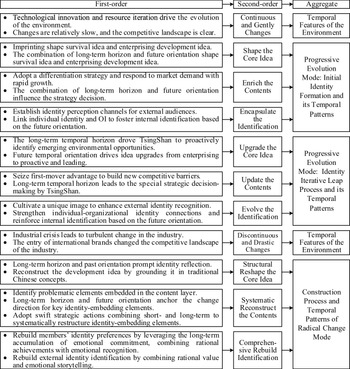
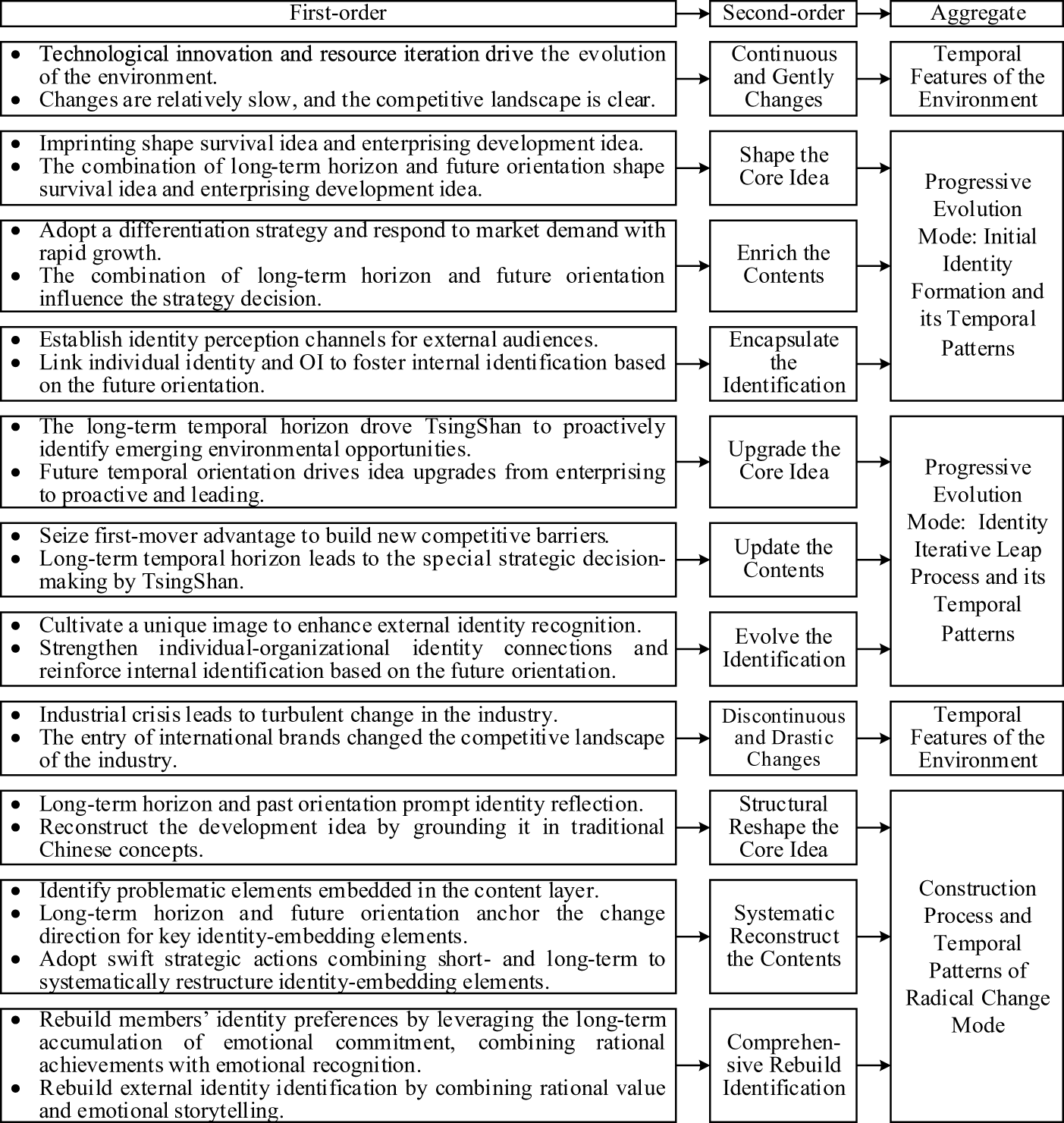
Next, based on the first-order codes, we independently conducted the second round of coding. Throughout this process, theoretical insights were applied to interpret the first-order codes, transforming the observed managerial phenomena into research constructs with theoretical significance. Using this approach, first-order codes with similar theoretical meanings were integrated and refined into second-order codes. For instance, the concept ‘industry crises lead to volatile changes in the industry’ describes changes in the external environment, while ‘the entry of international brands changed the competitive landscape of the industry’ addresses the shifts in the competitive landscape. Both of these related to the external environment, which was consolidated into the second-order code ‘discontinuous and dramatic changes’. Similarly, after completing the second round of coding, we held a group discussion to review and refine the results, continuing the process until all authors reached a consensus, agreeing that no further revisions were necessary. The second round of coding produced seven second-order codes for TsingShan and four for Feihe.
Subsequently, the first author conducted the third round of coding, focusing on the iterative comparison and analysis of the second-order codes with existing literature. The goal of this round was to aggregate the second-order codes into higher-level theoretical dimensions. Based on this, the core process logic underlying the different patterns of constructing LOIs was summarized, with particular attention to the evolution and interaction of key factors at different stages of the process. Through this, core patterns were identified, leading to the initial formation of the two theoretical models: one for the radical change mode and one for the progressive evolution mode. These preliminary theoretical models were then subjected to multiple rounds of in-depth discussions and comparisons with existing literature. Through iterative refinement and continuous feedback, the final theoretical models and main findings were developed.
Finally, we randomly selected one firm from the remaining three sample firms (numbered 3, 7, and 9 in Table 3) to conduct a theoretical saturation test. This method involved performing three-tier data structure coding on these firms to determine whether any new theoretical codes or insights emerged from this analysis. The results showed that while new first-order codes were generated, no new second-order codes emerged. Given that first-order codes are influenced by the specific context of the sample, we concluded that theoretical saturation had been achieved.
Cross-case comparative analysis
Building on the intra-case analysis, we conducted cross-case comparative analysis through a discussion-based approach, comparing the two samples along four key dimensions. First, we defined the applicable boundaries of LOI, and examined the logic of identity construction in each mode, aiming to identify their distinct characteristics while summarizing common patterns shared by both modes. Second, we explored the temporal features and patterns inherent in each mode, analyzing the interaction between temporal factors and the various structural layers of identity to derive findings from a temporal perspective. Third, we compared and summarized the temporal characteristics of the corresponding external environments of the two firms, establishing connections between the temporal patterns of internal LOI construction and the evolution of external environmental changes. This allowed us to refine our theoretical findings. Fourth, we further explored the sustained leading mechanism of LOI. Data from TsingShan and Feihe were presented accordingly in Figure 2.
Data structure models
The Progressive Evolution Mode of TsingShan
TsingShan exemplifies a progressive construction process of its LOI through sustained efforts and multiple iterative advances. This process aligns with the phases of following, surpassing, and ultimately leading that the company experiences as it transitions from a low-position follower to a high-position leader. We define this as the progressive evolution mode of LOI construction and identify two key processes along this path: initial identity formation and iterative leaps of identity.
Initial Identity Formation
Shaping the core idea
Imprinting and the combination of long-term horizon and future orientation shape survival idea and enterprising development idea. TsingShan’s identity idea was shaped by the imprint of regional traditional culture and the founder’s identity characteristics. This imprinting, combined with TsingShan’s long-term temporal horizon and future orientation, led the company to focus on long-term goals from its inception, rather than merely pursuing a universally recognized OI to gain legitimacy at the time of founding. As a result, an enterprising philosophy became embedded within its survival and development ideas. This is reflected in two key aspects. First, setting long-term identity-constructing goals in the distant future, such as being firmly rooted in the stainless-steel industry and becoming a pillar of the sector (enterprising survival idea). Second, it benchmarked against leading firms in the industry by adopting an enterprising development idea to guide strategic actions. TsingShan did not limit its goal of catching up to private companies but instead targeted industry leaders that were difficult to surpass in the short term, thinking about the company’s long-term value and prospects. TsingShan sought to learn from the most successful companies in the industry and recognized that while imitating these leaders in the short term was challenging, the effort would yield long-term value. As reflected in the following words:
When the company was first founded, we knew we had to learn from others. Which firms did we choose to learn from? We set our sights on the industry’s best … with a long-term vision … and the challenges we faced at the time ended up proving valuable in the long run. (A1)
Demonstrating the courage to enter an uncharted territory (the stainless-steel industry), TsingShan committed to an all-or-nothing approach: either not enter at all or, once committed, strive to become the best. This conviction enabled the company to articulate a clear vision of its desired future in its early years and to pursue it with unwavering focus ever since. (B2)
Enriching the contents
Adopt a differentiation strategy and respond to market demand with rapid growth based on the long-term horizon and future orientation. In the 1990s, the global stainless-steel market faced a supply–demand imbalance driven primarily by market supply. At that time, most private Chinese firms participated in market competition through recycling and reprocessing scrap materials, while only a few state-owned enterprises produced stainless steel via smelting. TsingShan’s long-term horizon and future orientation led the company to adopt a more sustainable smelting approach. This strategic choice defined its legal OI as a stainless-steel smelting and manufacturing company rather than a sales-focused business. This made TsingShan the first private firm in China to attempt independent stainless-steel smelting. Guided by its enterprising idea, TsingShan embraced the most advanced smelting techniques of the time and tackled technological challenges on its own. In response to supply-demand gaps, TsingShan implemented a rapid growth strategy, capitalizing on the development of industrial parks to scale up quickly. By 2004, TsingShan had become the largest private stainless-steel producer in China. The following year, it expanded into import and export trade, signifying its change from a small-scale workshop into a large-scale, systematic stainless-steel producer. During this stage, TsingShan positioned itself as a key contributor to the industry. As noted by the managers:
At that time, the industry primarily relied on traditional processing methods. Smelting capacity was virtually nonexistent, with only a few Sate-Owed Enterprises engaged in the process. Chairman Xiang declared: “Why shouldn’t we smelt ourselves? If we’re committed to building a lifelong career in stainless-steel and becoming a leading force in the industry, we must master smelting ourselves, no matter how difficult it may be.” (A3)
It can be said that after the year 2000, we have actually been constantly innovating and making strategic arrangements. As we gradually built our scale advantages, the cost effectiveness of our products began to stand out. In the market at that time, we were able to seize the development of the era. In just a few years, we grew and emerged rapidly. Coupled with the courage and adventurous spirit of our leader, many of our current strategic arrangements can be traced back to ten years ago. And now we are already making preparations for the next ten years. Therefore, as long as there is an opportunity, we will be faster than others. (A2)
Encapsulating the identification
Establish identity perception channels for external audiences. With its rapid growth, TsingShan established a trading subsidiary in Shanghai, which served as a window for external communication and showcased its offerings. It reshaped how external audiences perceive its legal identity, including its business scope and product details. Additionally, TsingShan partnered with the most widely circulated magazines, boosting its visibility within the industry. These two initiatives have effectively opened channels for external audiences to perceive and identify TsingShan, enhancing its reputation. As one of TsingShan’s clients and a manager responsible for the subsidiary at the time told us:
At that time, we were already aware of this company. Its products were priced competitively, and the quality was commendable. By then, we had formed a positive impression of TsingShan, and we were impressed by its rapid growth. It is truly a remarkable private company that has developed in such a short period. (A4)
During that period, we had frequent interactions with foreign clients. When they saw our office location, it created a strong first impression and conveyed a sense of corporate strength, which helped build their trust in the company. (A2)
Link individual identity and OI to foster internal identification based on the future orientation. First, the founding team members shaped TsingShan’s enterprising identity and long-term identity construction goals in the future through collective discussions and shared visions. This naturally led to their identification with the company’s OI. Second, for later employees joining the organization, TsingShan implemented strategies to strengthen their bond with the company and the connection between individual identities and OI, fostering a sense of internal belonging. Examples of these strategies included empowering employees with greater decision-making autonomy and creating opportunities for them to achieve personal value, thereby aligning their personal aspirations with the company’s enterprising identity. This approach – emphasizing employees’ future development and aligning it with TsingShan’s long-term goals – demonstrates the positive role of a shared future orientation in fostering organizational identification. For example, two senior leaders (C2) shared:
In 2004, I found the work deeply meaningful and often felt a sense of achievement. Everyone could feel the joy of this work, merging personal development with our collective business goals. The company offers us a remarkable platform, motivating us to achieve self-realization on it. Through this process, we gradually developed a stronger bond with the company’s values.
I was among the first group to move to Qingtian Industrial Park, so I worked my way up from the grassroots level. I feel that I’ve grown together with the company. As the company continues to thrive, my career and the values I pursue are increasingly recognized. When our goals align, I’m filled with motivation. TsingShan is pursuing its future achievements, and in the process, I’m being recognized for my value.
Based on the processes of idea shaping, content enriching, and identification encapsulating, TsingShan successfully established its initial enterprising OI. At the core idea level, the foundation of this OI revolves around an enterprising philosophy. The content level consists of two key elements: foundational technological innovation capabilities and strong production capabilities. The identity claims position the company as an important industry contributor. Finally, the identification level reflects characteristics of both internal identification and external recognition, highlighting the sense of identity among employees and the awareness of the company by external stakeholders.
Iterative Leap Processes
Upgrading the core idea
The long-term temporal horizon drove TsingShan to proactively identify emerging environmental opportunities. Nickel–iron, a core raw material in stainless-steel smelting, represents a significant component of production costs. However, with global stainless-steel production increasing, traditional sulfide nickel ore faced severe depletion. By 2006, lateritic nickel ore began to emerge as an alternative source of nickel–iron, distinct from sulfide nickel ore. While China has limited access to nickel ore resources, global reserves of lateritic nickel ore are largely concentrated in equatorial countries, with Indonesia dominating extraction. However, the Indonesian government, aiming to stimulate domestic investment, planned to ban the export of raw nickel ore starting in 2009. Although most global stainless-steel companies took a wait-and-see approach in response to this policy shift, TsingShan recognized it as a valuable opportunity to address upstream resource constraints in a more comprehensive and fundamental way.
Entering the 21st century, the imbalance between supply and demand in the stainless-steel market began to ease, prompting many stainless-steel companies to seek effective strategies for reducing production costs. TsingShan identified a technological gap between the current nonferrous metal smelting technologies in China and the advanced international standards. The RKEF (rotary kiln electric furnace) process, the mainstream technique for smelting nickel-iron in international markets, had already matured and set the global standard. However, in the Chinese market, this technology remained underdeveloped and faced challenges like resource inefficiencies and integration difficulties with the stainless-steel smelting process. TsingShan viewed this as a strategic opportunity to advance its technology to achieve breakthroughs, aiming to surpass leading competitors in the domestic market, and even in the global market. As noted by the founder and another manager:
Everyone in the stainless-steel industry knows how crucial nickel resources are for stainless steel. However, no one was willing to take the initiative (to build factories abroad for nickel mining). So, when we embarked on this venture, there were indeed numerous difficulties and it was really tough. But we will reap the benefits in a long run. Through about ten years of hard work, we have rewritten the history where no Chinese firms were ranked among the international players in the nickel industry, and we are no longer at the mercy of others. (A2)
At that time, RKEF was already relatively mature abroad, but it couldn’t be successfully implemented in China. No one was willing to invest such a large amount of money in the short term, or even risk everything they had to develop this technology. However, we had to do it, not only for the long-term development of our company, but also to ensure that the domestic stainless-steel industry would no longer lag behind in terms of technology. (A1)
Future temporal orientation drives idea upgrades from enterprising to proactive and leading. The smelting process of refined nickel-iron and the resource bottlenecks associated with it are common development obstacles faced by all stainless-steel companies. While resource and technological hurdles present long-term difficulties, they do not typically impede short-term business development. Addressing these two major issues often requires substantial investment in a short time frame, with the return on investment not materializing immediately. As a result, most firms adopt a wait-and-see approach or employ conservative strategies. However, TsingShan maintains an active future orientation rather than a present-oriented one. This orientation emphasizes the company’s long-term, sustainable competitiveness. TsingShan believes that merely holding an enterprising identity is insufficient to achieve desirable identity goals. As a result, its survival idea evolved from becoming a pillar of the industry to continuously driving the healthy development of the stainless-steel sector. In parallel, its development idea came to embody a proactive and pioneering orientation, emphasizing leadership by setting industry benchmarks. As the founder and one of the Chairpersons explained:
We cannot afford to follow others; instead, we must continuously strive to stay at the forefront of the industry. This requires taking initiatives ahead of others.… Every move we take is guided by a future-oriented vision. Our focus is not on past accomplishments or present financial performance, but on sustaining leadership for decades to come and continuously advancing the global stainless-steel sector. (A1)
We don’t act blindly; we are guided by a core idea, which must evolve in response to changes in various aspects.… Since 2000, TsingShan has continuously innovated and strategically expanded. Why? Because we realized that the pioneering and enterprising mindset, we emphasized in the early years was not enough. To achieve leadership, we must take the initiative and act fast.… Our focus is not on what we have accomplished today but on what we aim to achieve in the future. (B1)
Updating contents
Seize first-mover advantage with the long-term temporal horizon to build new competitive barriers. After identifying development opportunities overlooked by industry competitors, TsingShan launched a series of pioneering strategies aimed at securing a first-mover advantage and establishing long-term competitive barriers. These strategies were designed to surpass international industry leaders in both resource acquisition and technological innovation, positioning TsingShan as a driving force in the development of the stainless-steel industry. From a resource perspective, TsingShan was the first to invest in building an industrial park in Indonesia. By continuously deepening its international full-industry chain strategy, TsingShan effectively overcame resource constraints. By 2018, TsingShan had become the global leader in nickel–iron resources, gaining market power and control over resource pricing. From a technological perspective, TsingShan pioneered the introduction of the RKEF smelting technology, improved upon it, and innovatively developed the dual-link method (RKEF-AOD) smelting process. This innovation addressed the issue of resource wastage caused by disconnection between nonferrous metal smelting and stainless-steel smelting processes, resulting in a 40% reduction in production costs. TsingShan has also focused on technological advancements in the development of high-end stainless steel. These efforts have enabled TsingShan to establish new technological competitive barriers. Although these investments in resources and technology did not yield immediate returns and even exposed the company to financial risks, they have become the solid foundation of capabilities and resource security that enable TsingShan to lead the industry. These early commitments have helped it build and continuously strengthen its capacity for sustainable leadership. For example, the Chief Technology Officer and other manager (A2) shared:
Expanding into Indonesia was something most companies were unwilling to pursue. In the aftermath of the 2008 financial crisis, we entered Indonesia in 2009, but it wasn’t until 2017 that profits began to appear on our financial statements. The returns came only after years of sustained investment, which most companies were unwilling to commit to.… We focus on what needs to be done over the next five to ten years, rather than being preoccupied with short-term outcomes.
Although difficult, it was the path we had to take. In the years ahead, we are confident that our decisions will prove beneficial. Looking back, most people would agree it was the right decision. However, at the time, making that decision and fully committing to it was extremely challenging. Given the circumstances, then, the risks appeared to outweigh the potential benefits.
Evolving identification
Cultivate a unique image to enhance external identity recognition. As TsingShan gradually became an industry leader, it began to embed its unique identity into its corporate image through cooperation and inter-organization exchanges, thereby establishing a relatively distinctive presence in the market. For instance, TsingShan places great emphasis on operational efficiency, credibility, and commitment in its partnerships, fostering the perception among clients that TsingShan is ‘Quick to act and true to its words (A4)’. As one General Manager (A3) stated:
A single word from TsingShan can serve as a contract—no exaggeration.… TsingShan is a very reliable company, and we are genuinely trustworthy. Working with us ensures clear advantages, and many clients have benefited from this collaboration over the years.
Strengthen individual—OI connections and reinforce internal identification based on the future orientation. First, TsingShan fosters positive emotional experiences among its members through award ceremonies and recognition events, such as certificates presented by the highest-ranking chairman. These activities not only motivate members but also encourage them to confront challenges in the process of identity construction. Second, as TsingShan grew in scale and its workforce became increasingly complex, managers recognized that embedding identity ideas into its corporate culture was an effective way to sustain internal identification. TsingShan defines its corporate culture as ‘daring to lead, integrity, and professionalism’ and has created material representations of LOI and its derived corporate culture through initiatives like establishing corporate museums and cultural corridors. Additionally, the management team shares stories of overcoming challenges and celebrates heroic figures, consistently reinforcing the identity idea within the organization. Through these efforts, TsingShan continuously emphasizes the ‘ideal identity’ driven by its future temporal orientation, strengthening the bond with its members at both financial and emotional levels. Moreover, by expanding and deepening the scope of authority granted to its members, TsingShan ensures that employees feel a sense of ownership, encapsulated in the following belief: ‘TsingShan belongs to all of us, and its growth is closely linked to every one of us (B4)’. This cultivates a sense of mission among members, who begin to view the shaping of their ideal identity as their personal responsibility. For example, a Group Chairman and mid-level R&D manager explained:
As we all know, starting in a new industrial park is extremely challenging, but many on our team are courageous and eager to take on the most challenging tasks. On the one hand, we provide them with faster promotion channels. On the other hand, as the company continues to develop and thrive, their self-display platform is also becoming increasingly sophisticated, allowing everyone to realize their own values and goals while achieving the company’s goals.… Giving equity is a financial guarantee, but offering someone the role of chairman or manager is a much greater act of trust and respect. (A2)
Without constraints, I feel truly free. This freedom is not about time; it is intellectual. My thinking is completely unconstrained, which has brought a profound sense of release. Combined with my recognition of the company’s current direction, I feel that my value is acknowledged, and the goals I pursue are gradually being realized as the company continues to grow and improve. (A4)
Based on the processes of idea upgrading, content updating, and identification development, TsingShan’s initial enterprising OI has gradually undergone iterative leaps, evolving into an LOI. The core idea layer of its LOI is centered on the concept of leadership, while the content layer is built on two key pillars: advanced technological innovation and resource control. And its identification layer reflects a strong sense of both internal and external identifications of its LOI.
The Radical Change Mode of Feihe
Unlike the case of TsingShan, Feihe’s case demonstrates a radical change process of OI driven by various complex factors over a short period of time. We define it as a radical change mode. Faced with a severe threat to its OI, temporal perspective proved to be a key factor in helping Feihe overcome its identity crisis. The OI reconstruction process of Feihe consists of three key stages: structurally reshaping core idea, systematically reconstructing content, and comprehensively rebuilding identification.
Structurally Reshaping the Core Idea
Industry crisis triggers OI crisis
In 2008, a major food safety scandal – the melamine incident – sent shockwaves through China’s infant formula (milk powder) industry and completely changed its competitive landscape. Chinese consumers lost trust in domestic milk powder brands, with the belief that ‘domestic milk powder products are all toxic’. International brands seized the opportunity to enter the Chinese market and dominate with high-priced, premium segments, relegating Chinese brands to the low- and mid-tier markets. This wave of industry disruption triggered a deep OI crisis for Feihe. Externally, consumers did not trust Feihe, despite its actual high-quality products, and viewed them as unsafe. Feihe’s brand positioning as ‘consistently good milk powder’ failed to alter these misconceptions. At the same time, internal members began to lose confidence as well and felt increasingly insecure. The growing consumer resistance, negative media coverage, and stagnant market share eroded Feihe’s internal confidence, leaving the company feeling lost. As one executive and a front-line sales team member told us:
In 2008, the melamine (scandal) broke out, devastating all major domestic brands. Although Feihe was not found to use melamine, we still suffered from the fallout. We thought the market would recognize and reward our years of hard work, but the reality of the situation quenched those aspirations. (E2)
Every day, people came and asked: “Are you really safe? Why do other brands have issues, but yours don’t?” We always carried government inspection reports with us, yet some still caused disturbances on site. Repeating the same explanation hundreds of times a day left us mentally confused. It was psychologically overwhelming. We had no quality issues—so why was this happening? (E4)
Long-term horizon and past orientation prompt identity reflection
The negative feedback from external audiences pushed Feihe to revisit its OI over the long period since its founding and to reconstruct its self-perception. The combination of a long-term temporal horizon and a past temporal orientation provided Feihe with a structural framework for identity reflection. It enabled the firm to delineate the scope of its introspection and guided its search for effective strategies to resolve the identity crisis. First, Feihe reflected on its original identity gene – the survival idea at the heart of its original identity – the commitment to producing higher-quality milk powder, and its identity as ‘the business of being a mother’. Therefore, the survival idea of the original identity was not necessarily flawed. Instead, under new industry conditions, it required renewal by taking a new approach to support the company’s continued growth. Second, Feihe reconsidered its past strategic actions, recognizing that the foundational investments in its vertically integrated supply chain, creating a breast milk database, and conducting R&D had created core competencies that would play a pivotal role in overcoming the crisis and restructuring its OI. As the chairman and a senior executive explained:
After receiving a harsh wake-up call from the market, we began to reflect on our past. Who are we? Since the founding of Feihe, we have never prioritized profit. Our sole focus has always been producing better, higher-quality milk powder—formulas closer to Chinese break milk. Was that original intention wrong? Did all the efforts we made over so many years lack meaning? This identity reflection on our long-standing past helped us gain clarity about who we truly are. (E2)
Looking back on the past helps us better understand who we are in times of crisis. Our industrial chain model was built on large-scale cattle farming and agricultural planting operations. This model was created by Feihe to address the primary challenge of ensuring the quality of milk sources.… Although external audiences may not know this or may not recognize it, this industrial chain model is the foundation of our confidence. (E1)
Reconstruct the development idea by grounding it in traditional Chinese concepts
Through identity reflection, Feihe recognized that foreign milk powders had inherent shortcomings, such as difficulties in preserving freshness during transportation. Therefore, if Feihe could help consumers recognize these disadvantages in a reasonable manner, it could shift the misguided, blind admiration for foreign brands prevailed at the time. This required leveraging traditional Chinese concepts, which differed from Western perceptions of milk powder as merely providing essential nutrients. Feihe’s reflective emphasis on traditional concepts underscores its past-oriented temporal orientation. In Chinese culture, the concept of ‘hoping for the best for one’s child’ is deeply rooted, leading consumers to expect that milk powder will contribute not only to nutrition but also to cognitive development. Building upon this belief, Feihe embraced the traditional Chinese concept of ‘the soil and water of one region nurture its people’ as a key to unlocking consumer perceptions. Based on this, Feihe refined its development idea to focus on being ‘more suitable for Chinese babies.’ As some of the managers (E3) told us:
At this stage, we need to identify the point of integration. History is a valuable asset that must never be discarded. From our historical and cultural traditions, we can draw a strong foundation. Traditional Chinese values emphasize that “a region’s environment nurtures its people,” implying that Chinese children are best nourished by Chinese breast milk. Accordingly, infant formula should closely resemble the composition of Chinese breast milk.
The core issue lies in consumer understanding. To effectively address this, we must look to the past. As a Chinese firm, what differentiates us from foreign competitors is our distinct perspective—one deeply rooted in China’s long and rich cultural heritage. Many traditional values remain deeply embedded in Chinese society, and these enduring values can serve as effective levers to resonate with consumers.
Systematically Reconstructing Contents
Identify problematic elements embedded in the content layer
Feihe realized that its earlier substantial investments in foundational infrastructure and breast milk research had indeed established a core competitive advantage. However, the root cause of the identity threat lay in the significant gap between Feihe’s actual capabilities and how consumers perceive its value. This gap stemmed from Feihe’s earlier neglect of brand building. In its previous identity structure, the brand element was underdeveloped and poorly integrated with other key components. As several respondents mentioned:
At that time, consumers believed that foreign brands were the only ones that were safe, trustworthy, and of guaranteed quality. They thought Chinese products couldn’t compare. Consumers didn’t know about changes in Chinese milk powder. When I talked about our industry chain, they didn’t believe it. You say your industry chain is good, but how does it compare to foreign ones? (E1/E2) The entire industry was on the verge of collapse, and when one suffers, everyone suffers. You tell people your milk powder is good, but consumers won’t believe it. (F1)
Long-term horizon and future orientation anchor the change direction for key identity-embedding elements
The long-term horizon and future orientation led Feihe to focus not only on overcoming its short-term identity crisis but, more importantly, on reclaiming market leadership for Chinese firms and driving the long-term development of the high-end segment of the industry. Externally, Feihe needed to correct consumers’ misperceptions of its identity and demonstrate indispensable and irreplaceable value. Internally, implementing the new ‘more suitable’ idea required strong R&D capabilities and resource integration. Building on this foundation, Feihe aimed to create a unique competitive advantage through R&D and branding, distinguishing itself from competitors and driving a radical change in its OI. As several respondents explained:
Since neither our formula nor ingredients are inferior to those of foreign brands, why should they have occupied the high-end while we settled for the low-end? (E1)
Feihe has ambitious goals and was committed to addressing the challenges we face. We’re the first among domestic brands to go high-end because we believe that Chinese babies’ milk bottles should be in the hands of our own people. (F1)
The goal is to support Feihe’s long-term development, not merely to address the aftermath of the melamine incident. To that end, we have reconstructed personnel and organizational systems, brought in a new Chief Information Offer, and adopted a systematic approach to formulate a mid- to long-term strategy.… As Chairman Leng repeatedly emphasized, ‘Feihe is a company with ambition and long-term vision. We aim to thrive, not merely survive’, positioning ourselves as a leader in the industry. (E2)
Adopt swift strategic actions combining short- and long-term to systematically restructure identity-embedding elements
First, Feihe reconfigured its capabilities with a long-term temporal horizon, placing a strategic emphasis on R&D. Core resources were redeployed and reallocated to support the new strategy of being ‘more suitable for Chinese babies’. Feihe committed itself to breast milk research and high-end milk powder development, integrating global resources such as establishing global R&D platforms and collaborating with the Chinese Academy of Agricultural Sciences. This approach enhanced Feihe’s R&D capabilities and fueled innovation in high-end products. Leveraging an annually updated Chinese breast milk database, Feihe deepened its research into the microscopic composition and functions of breast milk to ensure that it always upholds the highest standard of being ‘more suitable for Chinese babies’. Additionally, Feihe introduced the ‘freshness’ concept to the industry, leveraging its agile supply chain capabilities and implementing a product traceability system to track every can of milk powder.
Second, the focus shifted to rebranding, placing consumer education at its core, employing the short-term temporal horizon. Branding had long been a weakness for Feihe, so a key part of high-end transformation involved enhancing brand presence and sophistication. The leading idea of ‘more suitable’ embodied higher technological content, superior product quality, and a stronger premium brand perception. To achieve this, Feihe removed its well-performing low-end products from the market and introduced the first domestic high-end product in the industry. Feihe also reshaped its high-end brand image by upgrading its visual identity and enhancing brand materialization. Feihe’s rebranding strategy centered on consumer education, supported by an extensive annual campaign of 500,000 seminars and interactive events. These initiatives involved bringing in experts to educate consumers in ways that were both ‘understandable and engaging’, showcasing Feihe’s quality advantages and organizational strength, such as activities themed around ‘A mother’s love helps you make better choices.’ For instance, as several respondents stated:
From a short-term perspective, investing in R&D represents our highest cost and yields no immediate benefits. In fact, it may even reduce short-term profitability. However, such investment is crucial for the long-term improvement in product quality, as innovation requires sustained efforts with benefits that unfold gradually over time. Rather than pursuing immediate gains, we prioritize long-term returns. Once consumers recognize the value of our products, they will gradually become loyal customers, bringing even greater benefits in the future. (E1)
Our strategic direction is really clear. In the short term, we must win the immediate battle, which means prioritizing brand building and consumer education. At the same time, ongoing investment in long-term R&D remains essential. We will be positioned to lead the industry only by maintaining our leadership in innovation over the next decade. (E2)
Based on the transformation of core identity-embedded elements, Feihe articulated a new OI claim centered on the guiding idea of ‘more suitable for Chinese babies’. This claim emphasized that Feihe’s original survival idea, grounded in ‘the business of being a mother’, remained intact and it would continue to offer products more closely aligned with breast milk formulas, with the goal of becoming the most trusted and respected nutrition expert.
Comprehensively Rebuilding Identification
Rebuild members’ identity preferences by leveraging the long-term accumulation of emotional commitment, combining rational achievements with emotional recognition
First, emotional commitment to identity was reinvigorated by involving middle and senior managers in the strategic decision-making process. For Feihe, this phase of identity change was broad in scope and profound in impact, and the trajectory of this change – from initial reflection to the establishment of a high-end direction – was not solely driven by the founder. Instead, it emerged through comprehensive top-down consultation and bottom-up feedback among the management teams. Building on this, they reached an internal consensus among the managers by reaffirming their shared foundational purpose and collective ideals. Feihe then reinforced emotional commitment to OI by fostering interaction among members through mobilization meetings and related initiatives, which revived personal memories associated with the company and facilitated the diffusion of emotional resonance.
Second, objective market data served as the most direct and persuasive evidence of Feihe’s leadership in the industry. In 2015, Feihe officially launched its high-end strategy, and by 2017, it successfully expanded beyond its northern roots to achieve over 7 billion RMB in market sales. Feihe’s contributions to China’s dairy industry provided a solid foundation for organizational members to strongly identify with the company and feel a sense of external pride. In the wake of the melamine scandal, Feihe’s ‘more suitable’ leading idea also offered a breakthrough direction for other domestic companies. The company’s innovative full industrial chain model was widely adopted by the industry, addressing the quality issues of infant formula by solving supply chain challenges and creating differentiation from foreign brands. Moreover, Feihe’s efforts to correct consumer misperceptions benefited the entire dairy industry. As reflected:
I grew up with Feihe, and I couldn’t bear to see it collapse like that. At that time, we often had private conversations among colleagues, and the leadership organized numerous mobilization meetings. They revisited Feihe’s history, emphasizing how difficult the journal had been to reach where we are today. Over the years, the emotional bonds I’ve built here have made this more than just a job. It became a commitment, a willingness to stand by the company through its most difficult moments. History has shown that during the darkest periods of the domestic milk powder industry, Feihe forged a path forward. For me, it felt not just like winning a battle, but like doing something truly meaningful. (E2)
Having worked at a company for so long, the emotional bond is not something one can easily let go of—there are so many precious memories and wonderful experiences. Should I really walk away when Feihe faces difficulties? Thinking of my colleagues who have fought side by side with me, we’ve overcome countless challenges together in the past. I was certain we could do it again this time—and as it turns out, we did. (E3)
Rebuild external identity identification by combining rational value and emotional storytelling
For consumers, Feihe establishes a perception of high-end value through product value and tangible benefits. Feihe’s ability to reverse consumers’ blind loyalty to foreign brands and build trust in domestic brands lies in the fact that Feihe’s products truly provide consumers with essential and irreplaceable value. Through extensive consumer communication and education efforts, consumers gradually developed a more accurate perception and began identifying with Feihe’s products. As a board member (E2) told us:
Product design is not something we come up with on a whim; it’s a process of scientific judgment. We design our products according to future development trends, technical standards, and consumer demands. Starting with the Star Feifan formula, each generation of our products has effectively fulfilled the essential needs of consumers. The strong market feedback we have received demonstrates that our products have earned a high level of recognition from consumers.
On the emotional recognition level, Feihe stimulates emotional perceptions by showing consumers promotional videos and sharing the brand story of how China’s domestic dairy industry overcame crises to achieve breakthroughs. This approach fosters emotional resonance with Feihe’s mission of ‘providing Chinese babies with high-quality formula,’ further reinforcing consumers’ recognition of Feihe’s ‘more suitable’ idea and its position as an industry leader. In addition, Feihe promotes positive identification with its LOI by continuously empowering suppliers and providing them with tangible economic value. By focusing on both rational value and emotional connection, Feihe has managed to reconstruct external identity recognition and solidify its position as the industry leader. As one manager responsible for dealer relations (E3) mentioned:
You have great products that meet consumer needs.… Now, our distributors have a 30% annual return on investment from gross profits, which is excellent. Working with Feihe is very profitable. As a result, very few companies in the industry have the full support and recognition of all their dealers, but Feihe has achieved this. We’ve successfully maintained the interests of our distributors.
Combined, Feihe introduced the new leading development idea of ‘more suitable’ while preserving the core of its original survival idea. Guided by this core idea, the company has systematically restructured key identity-embedding elements, such as its brand image and R&D capabilities. This transformation has elevated its previously weak and unclear identity, characterized by distinct weaknesses and indistinct strengths, into one of excellence and uniqueness that is difficult to imitate, reshaping the positive identification of its core audience with Feihe’s OI.
Cross-Case Comparative Analysis
We found that, in the process of transitioning from followers to new industry leaders, incumbents in emerging markets exhibit two distinctly different modes: the radical change mode and the progressive evolution mode. To systematically examine these two modes, this section compares them across four dimensions: the logic of LOI construction, the temporal patterns, the applicability of each mode and the relationships between the two modes, and the mechanisms for sustaining leadership.
Logic of Constructing an LOI
The application boundary of LOI
In this study, we examine two distinct modes of LOI construction, and the temporal patterns embedded within them, situated in the context of incumbent firms from emerging markets striving to become industry leaders. The contextual characteristics underpinning this inquiry help delineate the theoretical boundary of the LOI framework as developed here. Conceptually, the LOI represents a more dynamic form of OI. Its structural elements and characteristics may evolve over time and actively contribute to a firm’s effort to attain industry leadership. This distinguishes LOI from the relatively static notion of the OI of already-established industry leaders, which emphasizes identity attributes associated with a firm’s existing leadership status and is more concerned with identity outcomes or states (Albert & Whetten, Reference Albert and Whetten1985). In contrast, our conceptualization of LOI foregrounds process (Cloutier & Ravasi, Reference Cloutier and Ravasi2020; Gioia et al., Reference Gioia, Schultz and Corley2000), framing the pursuit of high-level leadership by incumbent firms in emerging markets as a continuous process of identity construction. In this view, attaining leadership is not a precondition but rather an outcome of successfully constructing an LOI (Chreim et al., Reference Chreim, Langley, Reay, Comeau-Vallée and Huq2020).
Second, in terms of firm type, our study focuses on incumbent firms that once occupied follower positions within a particular industry and are now seeking to ascend to high-level leadership positions (Kenney & Lewin, Reference Kenney and Lewin2022; Lundvall & Rikap, Reference Lundvall and Rikap2022). This stands in contrast to firms that enter a new industry from an unrelated domain – often as part of a broad strategic initiative – with the goal of challenging established leaders. These two types of firms correspond to distinct pathways of OI evolution. The firms we examine tend to develop an LOI characterized by a layered structure comprising a leadership-oriented idea layer, a core content layer marked by distinctiveness and excellence, and a stakeholder-oriented identification layer grounded in sustained recognition. In contrast, firms that enter a new industry and succeed in becoming leaders often face more complex identity dynamics. For such firms, the structural composition of their OI, along with the evolution of each layer, may follow different trajectories. For instance, these firms often confront the question of whether their preexisting identity idea permits or supports their new market entries (Gioia et al., Reference Gioia, Patvardhan, Hamilton and Corley2013; Oertel & Thommes, Reference Oertel and Thommes2018; Ravasi et al., Reference Ravasi, Rindova and Stigliani2019). In doing so, they may also encounter legitimacy challenges from core identity audiences who question the appropriateness of their strategic moves (Piening et al., Reference Piening, Oliver, Antons and Kreiner2020).
Finally, in terms of market scope, our analysis centers on the construction of LOI and pursuit of leadership within domestic markets. Leading firms from developed countries often enjoy first-mover advantages in key areas such as technological innovation and access to high-caliber talent (Kenney & Lewin, Reference Kenney and Lewin2022). As a result, in several industries within emerging economies, these firms tend to dominate market share and serve as established industry leaders. Consequently, incumbent firms that once occupied follower positions from emerging markets frequently find themselves competing against these well-established global players (Daymond et al., Reference Daymond, Knight, Rumyantseva and Maguire2023; Lundvall & Rikap, Reference Lundvall and Rikap2022). To become new industry leaders, such firms typically need to first establish high-level leadership within their domestic markets, which may serve as a foundation for subsequent expansion into the international market. Accordingly, our study focuses on the structural characteristics of LOI as they emerge within the domestic market context – viewed as the basis for high-position leadership. However, when the analytical scope extends from the domestic market to international markets, the structural components and characteristics of the LOI may change. For instance, the transition from domestic to global leadership not only requires incorporating cross-cultural dimensions into the LOI framework to accommodate more complex and multidimensional identity-embedded environments (Colman, Grøgaard, & Stensaker, Reference Colman, Grøgaard and Stensaker2022), but also entails significant variation in how identity claims are articulated and perceived across diverse stakeholder groups in global market, compared to domestic settings (Gioia et al., Reference Gioia, Schultz and Corley2000).
The progressive evolution mode: The iterative transition logic unfolding layer by layer
The progressive evolution mode describes a gradual and sustained process through which a firm actively constructs its OI toward a leading form, typically unfolding over an extended period following its establishment. This process involves initial identity formation and multiple iterative identity transitions. First, the initial identity formation phase involves the evolution of OI ‘from nothing to something’ (Gioia et al., Reference Gioia, Price, Hamilton and Thomas2010; Kroezen & Heugens, Reference Kroezen, Heugens, Schultz and Maguire2012), where OI emerges from a state of nonexistence or scattered concepts in the founder’s mind to an initial identity characterized by enterprising traits (Chreim et al., Reference Chreim, Langley, Reay, Comeau-Vallée and Huq2020; Cornelissen et al., Reference Cornelissen, Akemu, Jeroen and Werner2021). This process begins with the imprinting effect on the core idea. In the case of TsingShan, regional traditional culture and the founder’s personal characteristics serve as the primary sources of imprinting (Simsek, Fox, & Heavey, Reference Simsek, Fox and Heavey2015), prompting the survival idea and development idea to gradually reflect enterprising, proactive, and leading qualities. During this process, the company rapidly develops by narrowing the capability gap with industry leaders and gaining strong market recognition (Kenney & Lewin, Reference Kenney and Lewin2022). Second, through multiple iterations of identity transitions – driven by idea upgrading, content iteration, and identification evolution – the firm advances its OI from existence to prominence, and from prominence to leading. In this process, it builds new capability barriers in critical areas such as technology, which serve as implicit safeguards for sustained market recognition. This evolution gradually empowers the company to demonstrate characteristics of an industry leader, as reflected in its growing influence, market share, and other key metrics.
Through a systematic analysis of the progressive evolution mode, we found that the identity construction process follows an iterative transition logic, with OI evolving across three hierarchical layers, unfolding layer by layer. First, both the initial identity formation and the iterative transition process begin with the shaping and upgrading the core idea (Oertel & Thommes, Reference Oertel and Thommes2018; Ravasi et al., Reference Ravasi, Rindova and Stigliani2019), which then drive the construction and evolution of the identity’s content layer (Ernst & Schleiter, Reference Ernst and Schleiter2021). The identification layer, in turn, gradually shifts from weak to strong identification as the idea and content layers are upgraded (Weisman et al., Reference Weisman, Wu, Yoshikawa and Lee2023). Second, in constructing an LOI, the emergent phase-specific identities retain similar structural characteristics. However, the core elements within the structural layer undergo substantial evolution, reflecting an identity evolution logic that balances both iteration and transition. This differs from the linear logic discussed in existing studies, which focus primarily on identity claims without consideration of substantive changes in the identity’s advanced nature before and after the evolution (Chreim et al. Reference Chreim, Langley, Reay, Comeau-Vallée and Huq2020).
The radical change mode: Concurrent evolution across structural layers in the break and (re)build logic
The radical change mode illustrates the process in which a firm responds to external environmental shocks by actively changing its existing OI (Ernst & Schleiter, Reference Ernst and Schleiter2021; Hampel & Dalpiaz, Reference Hampel and Dalpiaz2023). This process involves a radical reflection and reconstruction of the various structural layers of OI within a relatively short timeframe. The radical change mode begins with the firm’s response to an OI crisis. In Feihe’s case, the OI crisis arose from an unforeseen adverse event in the external industry environment. The company first clarified the root causes and the severity of the identity crisis through systematic reflection (Oertel & Thommes, Reference Oertel and Thommes2018; Ravasi & Schultz, Reference Ravasi and Schultz2006). Drawing on traditional Chinese concepts, Feihe identified a new development idea that supported the reconstruction of its identity and enabled a structural reshaping of the idea layer, while preserving its core survival idea. The company then diagnosed problematic elements within the content layer and, guided by the newly defined leading development idea, set a clear direction for change and initiated the transformation process. This practice is typically seen in a firm’s combining short- and long-term strategic actions (Ernst & Schleiter, Reference Ernst and Schleiter2021). Once the idea and content layers were restructured, the company moved to the identification layer, focusing on rebuilding both rational and emotional perceptions to foster strong identification with the new LOI among its core audience (Kouamé, et al., Reference Kouamé, Hafsi, Oliver and Langley2022; Kreiner et al., Reference Kreiner, Hollensbe, Sheep, Smith and Kataria2015). The strong identification from key stakeholders ultimately crystalized the LOI.
A systematic analysis of the radical change mode reveals that the identity change process follows a ‘break and (re)build’ logic, with the three-layered structure of OI evolving concurrently. First, in reflecting on OI, a firm typically begins by addressing the identification layer, where issues are most intuitively recognized (Ernst & Schleiter, Reference Ernst and Schleiter2021; Hampel & Dalpiaz, Reference Hampel and Dalpiaz2023). From there, the firm gradually assesses whether problems exist at each structural layer of the OI and identifies their nature. The process of responding to an identity crisis and engaging in reflection marks the firm’s effort to break through its current impasse (Kreiner et al., Reference Kreiner, Hollensbe, Sheep, Smith and Kataria2015). Next, after clarifying the underlying causes of the identity crisis, the firm shifts its focus toward reshaping the idea layer (Schultz & Hernes, Reference Schultz and Hernes2013), moving from the inside out. Guided by a new leading idea, the firm reconstructs the content layer and then undertakes the practical reshaping of the identification layer. This marks the process of establishing an LOI. Thus, unlike prior studies that focus solely on partially identity reconstruction processes as a response to an identity crisis (Ernst & Schleiter, Reference Ernst and Schleiter2021; Piening et al., Reference Piening, Oliver, Antons and Kreiner2020), we propose a more comprehensive OI change process. In this process, firms not only passively respond to the crisis but also proactively undertake a systematic reconstruction of identity, enhancing its advanced and leading characteristics.
Shared logic of the two modes: A ripple effect radiating from the inside out
A deeper comparison of identity construction logic in these two modes reveals that both demonstrate the three-layered structure of OI having a ripple effect that radiates from the inside out. First, the core idea lies at the center of the OI structure, and its formation and evolution drive the (re)construction of the OI. This is because the core idea and its manifestations determine the organization’s character and its approach to action (Cornelissen et al., Reference Cornelissen, Akemu, Jeroen and Werner2021; Gioia et al., Reference Gioia, Price, Hamilton and Thomas2010; Oertel & Thommes, Reference Oertel and Thommes2018). It not only answers the question ‘Who are we,’ which reflects the survival idea, but also provides direction for ‘How we do,’ as articulated through the development idea (Cloutier & Ravasi, Reference Cloutier and Ravasi2020; Cornelissen et al., Reference Cornelissen, Akemu, Jeroen and Werner2021; Kreiner et al., Reference Kreiner, Hollensbe, Sheep, Smith and Kataria2015). Second, the core idea shapes the characteristics and methods by which an organization carries out its tasks, thus determining the strategic actions it adopts (Ernst & Schleiter, Reference Ernst and Schleiter2021; Gustafson & Reger, Reference Gustafson and Reger1995). This, in turn, impacts the presentation of identity-embedding elements and drives the construction and evolution of the content layer. Finally, the core idea and content layers provide an essential foundation for the construction of the identification layer. Unlike prior research that emphasizes mapping identity claims (Ravasi & Schultz, Reference Ravasi and Schultz2006), the core idea and content layers offer a more systematic reference for organizational audiences in examining the OI. By transforming OI from a superficial language layer into a ‘full’ state, these layers foster strong identity preferences and identification with an LOI among the target audience (Ashforth, Rogers, & Corley, Reference Ashforth, Rogers and Corley2011; Kouamé et al., Reference Kouamé, Hafsi, Oliver and Langley2022). The radiation ripple effect is visually illustrated as shown in Figure 3.
The radiation ripple effect
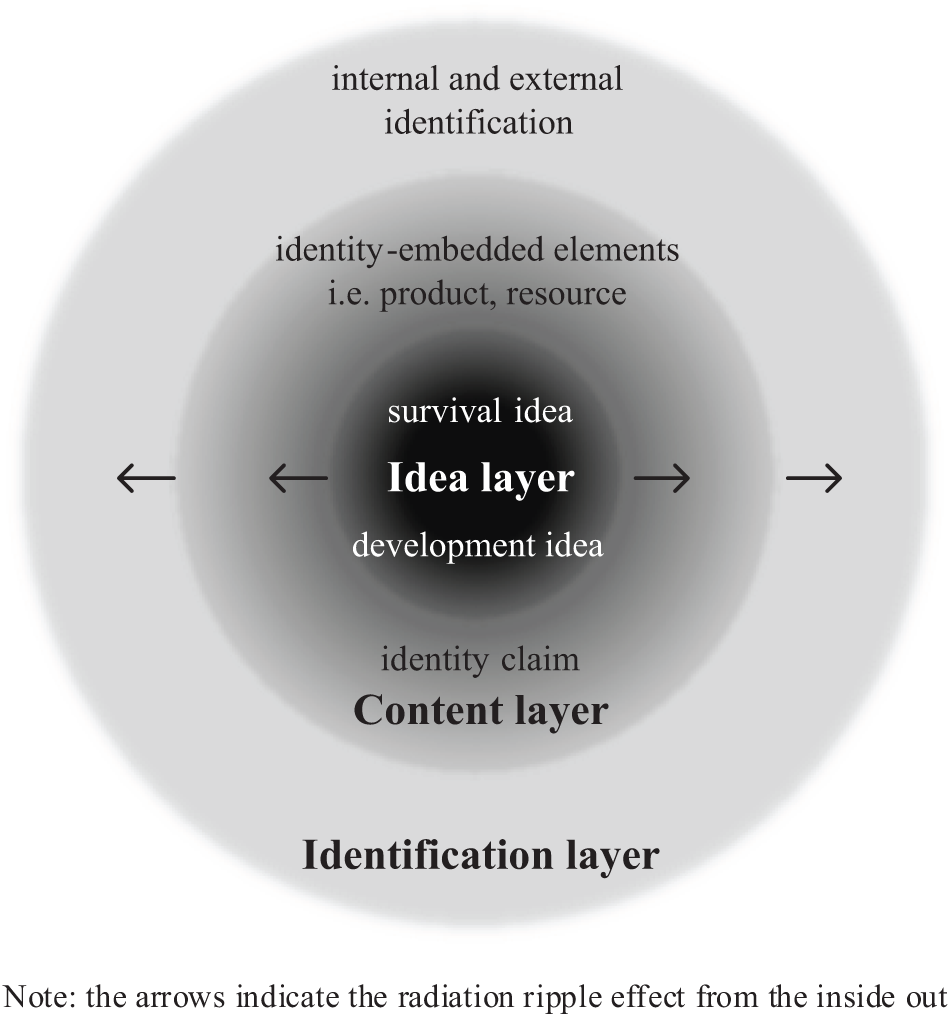
Given the ripple effect, the extent of change in the idea layer may be a key factor influencing the magnitude of OI construction. In other words, the choice between the radical change mode and the progressive evolution mode is partly shaped by how frequently and extensively the core idea is upgraded. In the radical change mode, although the core survival idea is retained, the broader core identity idea undergoes substantial transformation (Oertel & Thommes, Reference Oertel and Thommes2018). This process generates a stronger ripple effect, driving significant changes in both the content and identification layers. In contrast, in the progressive evolution mode, the upgrade of the core idea retains the fundamental characteristic of the OI – enterprising characteristics – while adding new elements, such as leadership traits. As a result, this upgrade is a small-scale, incremental change, causing only modest adjustments in both the content and identification layers.
Temporality in Constructing An LOI
The progressive evolution mode: Unidimensional temporal patterns
From the perspective of temporal horizon, the progressive evolution mode adopts a long-term horizon (Blagoev et al., Reference Blagoev, Hernes, Kunisch and Schultz2024; Schultz & Hernes, Reference Schultz and Hernes2013). This encourages firms to assess the long-term validity of their OIs and set more distant identity construction goals (Schultz & Hernes, Reference Schultz and Hernes2013). As a result, to achieve their ideal identity, firms are more likely to proactively identify hidden opportunities in the environment and take swift actions, driving the gradual evolution of OIs. Proactively identifying opportunities means that, through keen insight, a firm perceives external environmental changes that other industry players have overlooked or not considered as potential development opportunities and leverages these changes to initiate phased identity-constructing actions (Blagoev et al., Reference Blagoev, Hernes, Kunisch and Schultz2024). We found that the impact of a long-term horizon is most apparent during the construction of the core idea and content layers. On the one hand, the long-term horizon acts as a key driver for constructing and upgrading the idea layer. On the other hand, it encourages the firm to undertake long-term strategic actions that shape a unique content layer (Ernst & Schleiter, Reference Ernst and Schleiter2021; Gustafson & Reger, Reference Gustafson and Reger1995), with a focus on establishing a sustainable competitive advantage for the key elements within the content layer.
From the perspective of temporal orientation, firms adopting the progressive evolution mode exhibit a future orientation (Bluedorn, Reference Bluedorn2002; Hernes, Reference Hernes2017; Shipp et al., Reference Shipp, Edwards and Lambert2009). This drives firms to focus on the temporal frame of the future while emphasizing the guiding role of the ideal future identity in the process of constructing an LOI. We found that the influence of future orientation is most evident during the construction of the idea and identification layers. On the one hand, the combination of future orientation and long-term horizon motivates firms to focus on the more distant future, promoting upgrades of core idea as they proactively identify opportunities. On the other hand, future-oriented thinking shifts members’ attention beyond the present, creating an atmosphere where ‘overcoming present challenges is for the realization of our shared ideal’ (Gioia et al., Reference Gioia, Patvardhan, Hamilton and Corley2013; Venus et al., Reference Venus, Stam and Knippenberg2019). At the same time, it highlights the gap between ideal and reality, using members’ longing for the ideal identity to motivate their efforts in constructing the LOI (Hampel & Dalpiaz, Reference Hampel and Dalpiaz2023; Venus et al., Reference Venus, Stam and Knippenberg2019). In this process, the firm’s primary approach is to establish a strong connection between individual members’ ideal identities and the firm’s ideal identity. For example, by offering a platform for personal growth and implementing a comprehensive empowerment system for like-minded partners, the firm fosters a strong connection between its members and the organization’s development. This approach cultivates a sense of responsibility and belonging, while deepening members’ understanding of and identification with the LOI, encouraging them to internalize the LOI as a meaningful component of their own personal identity (Ashforth & Mael, Reference Ashforth and Mael1989; Weisman et al., Reference Weisman, Wu, Yoshikawa and Lee2023).
The radical change mode: Multidimensional temporal patterns
From the perspective of temporal horizon, the radical change mode is characterized by the interaction between long-term and short-term horizons (Blagoev et al., Reference Blagoev, Hernes, Kunisch and Schultz2024; Schultz & Hernes, Reference Schultz and Hernes2013). On the one hand, when formulating strategic actions responding to the identity crisis, a firm primarily focuses on achieving short-term strategic outcomes. This short-term horizon enables the firm to respond swiftly and navigate out of a crisis (Gioia et al., Reference Gioia, Patvardhan, Hamilton and Corley2013). On the other hand, the firm also maintains a long-term focus when engaging in identity reflection, anchoring change directions, and building sustainable competitive advantage by reconstructing certain identity-embedding element, such as R&D capability. This long-term focus helps the firm reflect on a more distant temporal scope, fostering a deeper understanding of OI change (Ravasi et al., Reference Ravasi, Rindova and Stigliani2019) while looking ahead to the future, which strengthens its commitment to a more thorough identity reconstruction (Venus et al., Reference Venus, Stam and Knippenberg2019). Based on these reflections, the firm extends and reinforces the inherent identity commitment of organizational members. This more complex use of temporal horizons aligns with the context in which firms proactively drive a thorough identity change while passively responding to identity crises (Ernst & Schleiter, Reference Ernst and Schleiter2021; Piening et al., Reference Piening, Oliver, Antons and Kreiner2020).
From the perspective of temporal orientation, firms adopting the radical change mode primarily exhibit a past orientation while also considering future temporal frames (Bluedorn, Reference Bluedorn2002; Hernes, Reference Hernes2017; Shipp et al., Reference Shipp, Edwards and Lambert2009). This past orientation drives organizations to look back at previous temporal frames to find support for identity change and evidence that such change is necessary during the identity evolution process (Bluedorn, Reference Bluedorn2002; Hernes, Reference Hernes2017). A severe identity crisis compels the firm to reflect on its identity, with the past OI serving as a reference framework for these reflective actions (Cloutier & Ravasi, Reference Cloutier and Ravasi2020; Schultz & Hernes, Reference Schultz and Hernes2013). We found that combining a long-term horizon with a past orientation encourages organizations not only to focus on the linear temporal frame of the past during identity reflection but also to examine key past events in order to assess the validity of their identity. In this process, a firm draws on its historical development and the identity-embedding elements it has maintained in the past to clarify the root causes of the crisis and reinforce internal confidence in its identity (Bluedorn, Reference Bluedorn2002; Hernes, Reference Hernes2017; Schultz & Hernes, Reference Schultz and Hernes2020). Furthermore, traditional Chinese concepts and key milestones in the firm’s development, embedded in the past, provide essential foundations for the firm to reconstruct a new LOI and rebuild positive identification. In this process, the firm’s primary strategy is to revive and strengthen stakeholders’ commitment to the identity accumulated in the past. Systemic identity change is indeed a challenging process (Gioia et al., Reference Gioia, Patvardhan, Hamilton and Corley2013; Kouamé et al., Reference Kouamé, Hafsi, Oliver and Langley2022; Kreiner et al., Reference Kreiner, Hollensbe, Sheep, Smith and Kataria2015), and awakening and reinforcing identity commitment helps members overcome the psychological challenges encountered during the reconstruction process of LOI.
Shared temporality patterns
Comparing the two modes, we identified several shared temporal patterns. First, both temporal horizon and temporal orientation have a pervasive effect on the process of constructing an LOI. Specifically, both of them shape the evolution of the idea layer; the temporal horizon is more closely related to the changes in the content layer, as it influences strategic actions (Ernst & Schleiter, Reference Ernst and Schleiter2021), while temporal orientation is more directly related to the construction of the identification layer, as it affects how audiences perceive (Ashforth & Mael, Reference Ashforth and Mael1989; Kouamé et al. Reference Kouamé, Hafsi, Oliver and Langley2022). Second, both modes highlight the importance of the long-term horizon, urging firms to consider a longer temporal frame in the specific processes of constructing the LOI (Bluedorn, Reference Bluedorn2002; Schultz & Hernes, Reference Schultz and Hernes2013). This long-term focus enables firms to effectively identify opportunities and respond to them with swift strategic actions (Blagoev et al., Reference Blagoev, Hernes, Kunisch and Schultz2024).
Applicable Contexts and Relationships of the Two Modes
Applicable contexts of the two modes
Influence of external factors. First, we examine the characteristics of changes in the external environment. The progressive evolution mode is generally suited to contexts where the external environment is stable, the industry develops steadily without major disruptions, and the competitive landscape remains relatively unchanged (Song, Reference Song2023). In such contexts, firms are not pressured to rapidly reconstruct their OIs within a short time frame (Cloutier & Ravasi, Reference Cloutier and Ravasi2020; Gioia et al., Reference Gioia, Schultz and Corley2000), allowing them to gradually construct and evolve their identities over time (Ashforth et al., Reference Ashforth, Rogers and Corley2011). For example, traditional sectors characterized by relatively mature technological standards, long innovation cycles, and a focus on technology application, where the competitive landscape is relatively stagnant (e.g., steel industry, machinery manufacturing), are more conducive to this progressive evolution approach. In contrast, industries marked by rapid external change, high volatility, or unstable competitive landscapes are more suited to the radical change mode (Schultz & Hernes, Reference Schultz and Hernes2013). For example, emerging industries with evolving technological standards, short innovation cycles, and intense competition (e.g., renewable energy, digital technology, service robotics) or firms, like the one labeled as Sample 1 in Table 2, that have endured severe price wars and struggled for survival, are more likely to adopt a radical change approach. Next, we examine the issue of external legitimacy (Gioia et al., Reference Gioia, Schultz and Corley2000). In cases where industry development is discontinuous and undergoes drastic upheavals, leading to a loss of external legitimacy, firms are forced to rapidly reconstruct their OI and rebuild legitimacy. Such situations are more suited for the radical change mode (Ernst & Schleiter, Reference Ernst and Schleiter2021; Piening et al., Reference Piening, Oliver, Antons and Kreiner2020).
Influence of internal factors. First, we assess the firm’s capability level. For incumbent firms in emerging markets, achieving a leading position is no easy task, requiring a strong set of capabilities and the ability to build new barriers within the industry (Kenney & Lewin, Reference Kenney and Lewin2022; Lundvall & Rikap, Reference Lundvall and Rikap2022; Zhou & Park, Reference Zhou and Park2024). Therefore, whether the firm has already accumulated sufficient capabilities may be a critical factor in determining the mode it chooses. For firms still in the process of building capabilities, the progressive evolution mode is more suitable, as it aligns with a gradual development path toward market leadership. In contrast, firms that have already accumulated capabilities and possess core competencies can choose either the radical change mode or the progressive evolution mode. Given that the progressive evolution mode carries fewer risks, we observe that most of these firms tend to opt for it. Next, we examine the firm’s internal legitimacy. For firms facing a loss of internal legitimacy for various reasons, the radical change mode can help them quickly repair damaged internal identity perceptions and rebuild legitimacy (Ernst & Schleiter, Reference Ernst and Schleiter2021; Piening et al., Reference Piening, Oliver, Antons and Kreiner2020). Furthermore, the values of OI spokespersons, typically the founder or top managers of a company (Ashforth et al., Reference Ashforth, Rogers and Corley2011), can influence the choice of mode. The applicable contexts for both modes are shown in Figure 4.
Applicable context of two modes
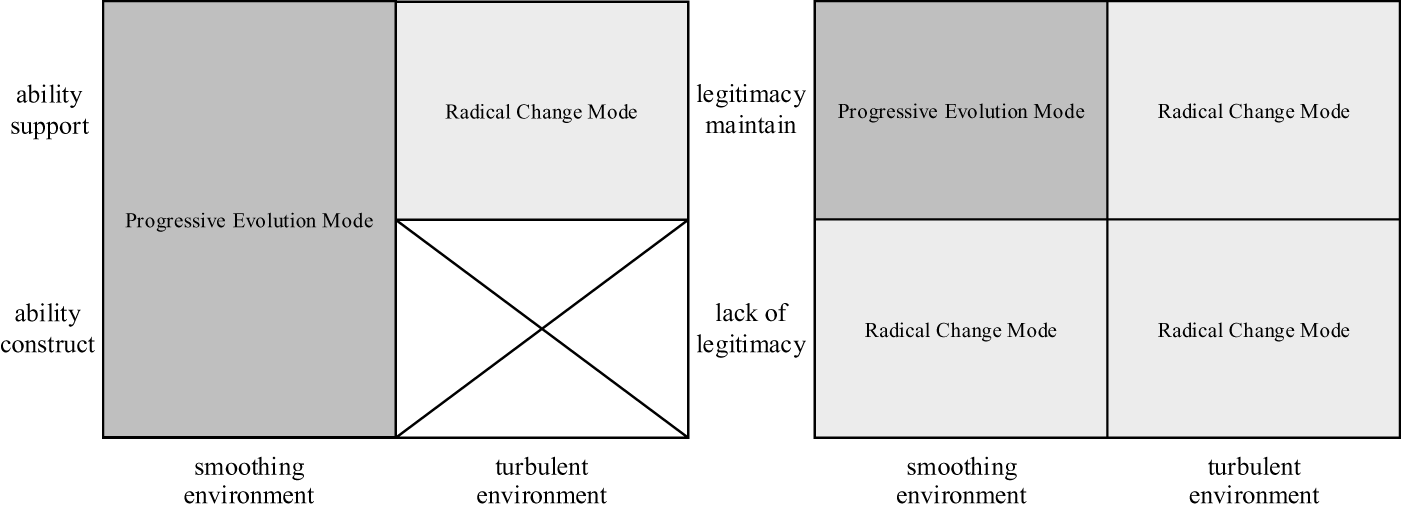
Time-separated coexistence between modes
Given the uncertainty of the external environment in which firms operate (Song, Reference Song2023) and the unpredictability of events that can lead to a loss of legitimacy (Ernst & Schleiter, Reference Ernst and Schleiter2021; Piening et al., Reference Piening, Oliver, Antons and Kreiner2020), we argue that the radical change mode and the progressive evolution mode are not entirely independent. Instead, they coexist in a temporally separated manner. While a radical change of OI can lead to the systematic reconstruction of the original identity within a short time frame (Ernst & Schleiter, Reference Ernst and Schleiter2021; Hampel & Dalpiaz, Reference Hampel and Dalpiaz2023; Kjærgaard et al., Reference Kjærgaard, Morsing and Ravasi2011), it carries greater risks and higher uncertainty. If the transformation fails, it can cause identity confusion among internal and external audiences, potentially triggering or exacerbating a disruptive identity crisis (Gioia et al., Reference Gioia, Patvardhan, Hamilton and Corley2013; Piening et al., Reference Piening, Oliver, Antons and Kreiner2020). Therefore, firms may choose the more gradual, milder progressive evolution mode under certain temporal or situational conditions. However, when circumstances change or internal dynamics shift, they may be apt for the more radical change mode, which balances efficiency with risk. In other words, these two LOI construction modes may coexist at different times. Furthermore, the personal values of the OI spokesperson (Ashforth et al., Reference Ashforth, Rogers and Corley2011) may influence the firm’s choice of LOI construction mode. For example, when the founder leaves (Albert & Whetten, Reference Albert and Whetten1985) or there are changes in the top management team, the firm may shift from one LOI construction mode to another.
Sustained Leading Mechanism
Becoming an industry leader is not a once-and-for-all achievement; rather, it marks a beginning rather an end. After establishing the LOI, firms must continuously maintain and renew it (Chreim et al., Reference Chreim, Langley, Reay, Comeau-Vallée and Huq2020; Colman et al. Reference Colman, Grøgaard and Stensaker2022; Cornelissen et al. Reference Cornelissen, Akemu, Jeroen and Werner2021). This is especially critical in emerging markets, which are defined by ongoing transformation, and in today’s era of profound and unprecedented global change (Kenney & Lewin, Reference Kenney and Lewin2022; Lundvall & Rikap, Reference Lundvall and Rikap2022). Sustaining the long-term effectiveness of an LOI forms the foundation for achieving enduring industry leadership (Gioia et al., Reference Gioia, Patvardhan, Hamilton and Corley2013). Through our case studies, we identified the sustained efforts made by the two focal firms to uphold their leadership positions. Based on these observations, we explore the mechanisms of sustained leading, namely how industry leaders preserve the relevance and effectiveness of their LOIs over time.
First, the leading idea, particularly the development idea, should be upgraded periodically (Oertel & Thommes, Reference Oertel and Thommes2018; Schultz & Hernes, Reference Schultz and Hernes2013). This involves continuously introducing innovative development or product concepts that guide industry competition and proactively shape the competitive landscape. In so doing, firms update the idea layer and drive iterative improvements in the content and identification layers. The pace and frequency of such updates may depend on the external environment. Firms operating under conditions aligned with the radical change mode may upgrade more frequently due to stronger competitive pressures or environmental turbulence (Ernst & Schleiter, Reference Ernst and Schleiter2021; Piening et al., Reference Piening, Oliver, Antons and Kreiner2020). For instance, after completing the construction of the LOI centered around the development idea of ‘more suited to Chinese babies’ physique’, Feihe launched a new campaign in 2023 titled ‘Smart Babies, Drink Feihe.’ This initiative opened a new competitive track in the industry focused on the concept of ‘freshly extracted active nutrition’. Similarly, in 2020, TsingShan expanded its development idea from ‘offering affordable, high-quality stainless-steel products’ to include specialized and advanced high-precision stainless-steel solutions tailored to specific application scenarios, aiming to meet and shape demand in the high-end market.
Second, firms must continually reinforce the strength and distinctiveness of the content layer by grounding it in ongoing innovation. This involves promoting the iterative upgrading of core identity-embedded elements (Colman et al., Reference Colman, Grøgaard and Stensaker2022; Cornelissen et al., Reference Cornelissen, Akemu, Jeroen and Werner2021), such as control over critical resources, technological innovation capabilities, and product development capabilities. These efforts enhance both the distinctiveness and inimitability of the content layer (Ernst & Schleiter, Reference Ernst and Schleiter2021; Gioia et al. Reference Gioia, Patvardhan, Hamilton and Corley2013). In TsingShan’s case, we identified three key strategic actions. First, the company collaborates with other leading industry players to build ecosystem-based competitive advantages. Second, it strengthens control along the upstream and downstream segments of the industrial chain to promote greener and higher-quality development. Third, TsingShan consolidates its technological innovation capabilities by establishing a foundation in mass-market products while continuously developing high-end solutions tailored to specific use scenarios. Through these initiatives, TsingShan is driving iterative advancement at its core across resources, technology, and products. In comparison, Feihe has elevated R&D from a foundational support role to a primary driver of growth, steadily increasing investment in three critical areas: breast milk formula development, nutritional extraction technologies, and freshness preservation processes. This strategic emphasis ensures that Feihe maintains its leadership in technological and product innovation within the industry.
Finally, maintaining and strengthening the stability of internal identity preferences and external identification is critical for sustaining LOIs over time (Ashforth & Mael, Reference Ashforth and Mael1989; Ashforth et al., Reference Ashforth, Rogers and Corley2011; Weisman et al., Reference Weisman, Wu, Yoshikawa and Lee2023). While all industry-leading firms should strive to uphold the coherence and strength of both internal and external perceptions (Kouamé et al., Reference Kouamé, Hafsi, Oliver and Langley2022), those operating in more volatile and rapidly evolving environments – with shorter product life cycles and more intense competition – may face greater pressure and complexity in preserving the resilience of the identification layer (Hampel & Dalpiaz, Reference Hampel and Dalpiaz2023). For instance, TsingShan has progressively enhanced its internal entrepreneurship platform, reinforcing the alignment between individual and OIs by linking personal growth with corporate goals, thereby nurturing and consolidating internal identity preferences. In contrast, Feihe continues to invest in consumer outreach and education initiatives, promoting its new ‘Freshly Extracted Active Nutrition’ concept to strengthen consumer recognition and external identification.
The differences and similarities between the radical change mode and the progressive evolution mode are summarized in Table 6. The theoretical models for both modes are illustrated in Figures 5 and 6.
Construction model of the progressive evolution mode
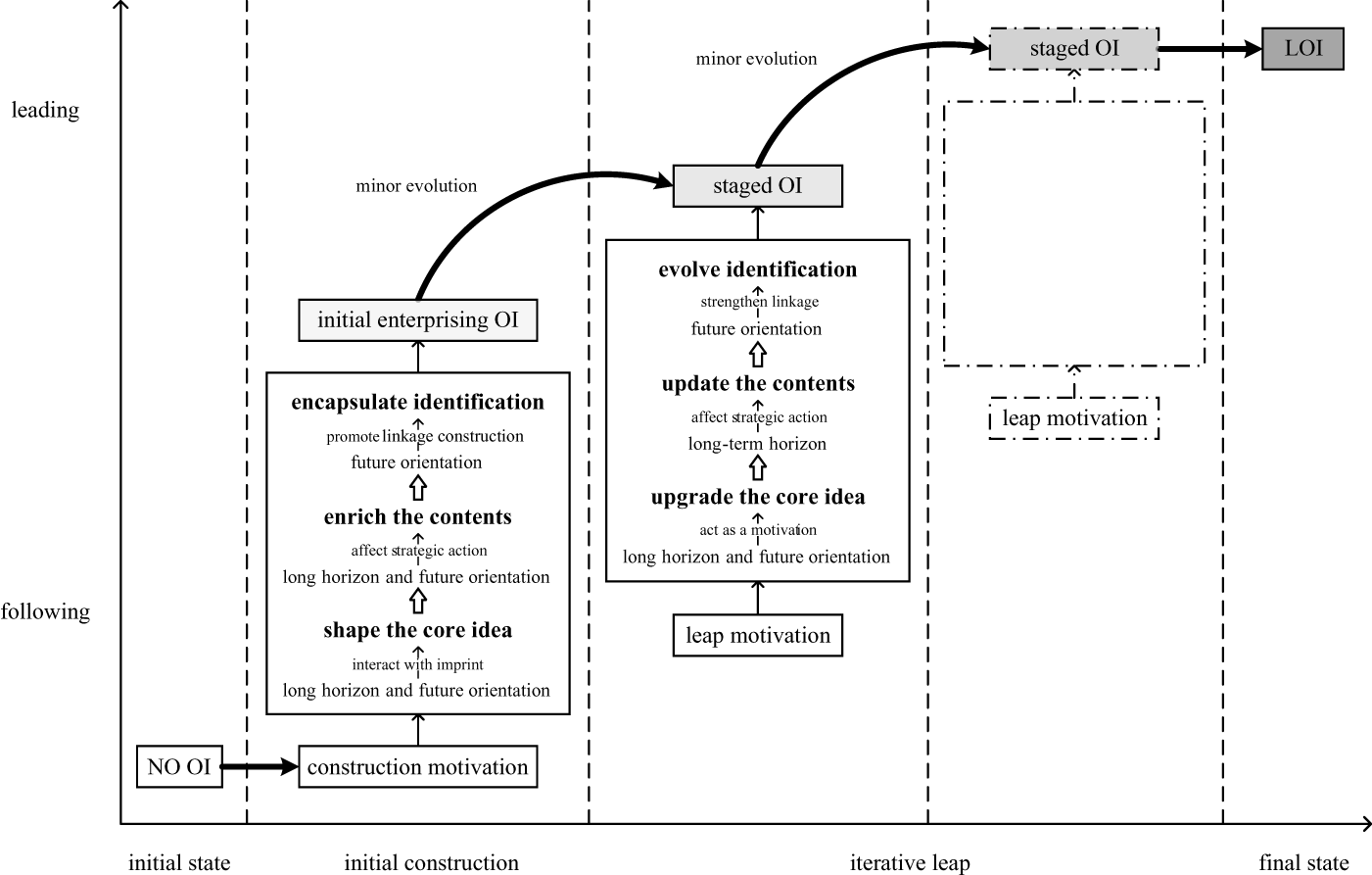
Comparison between two modes
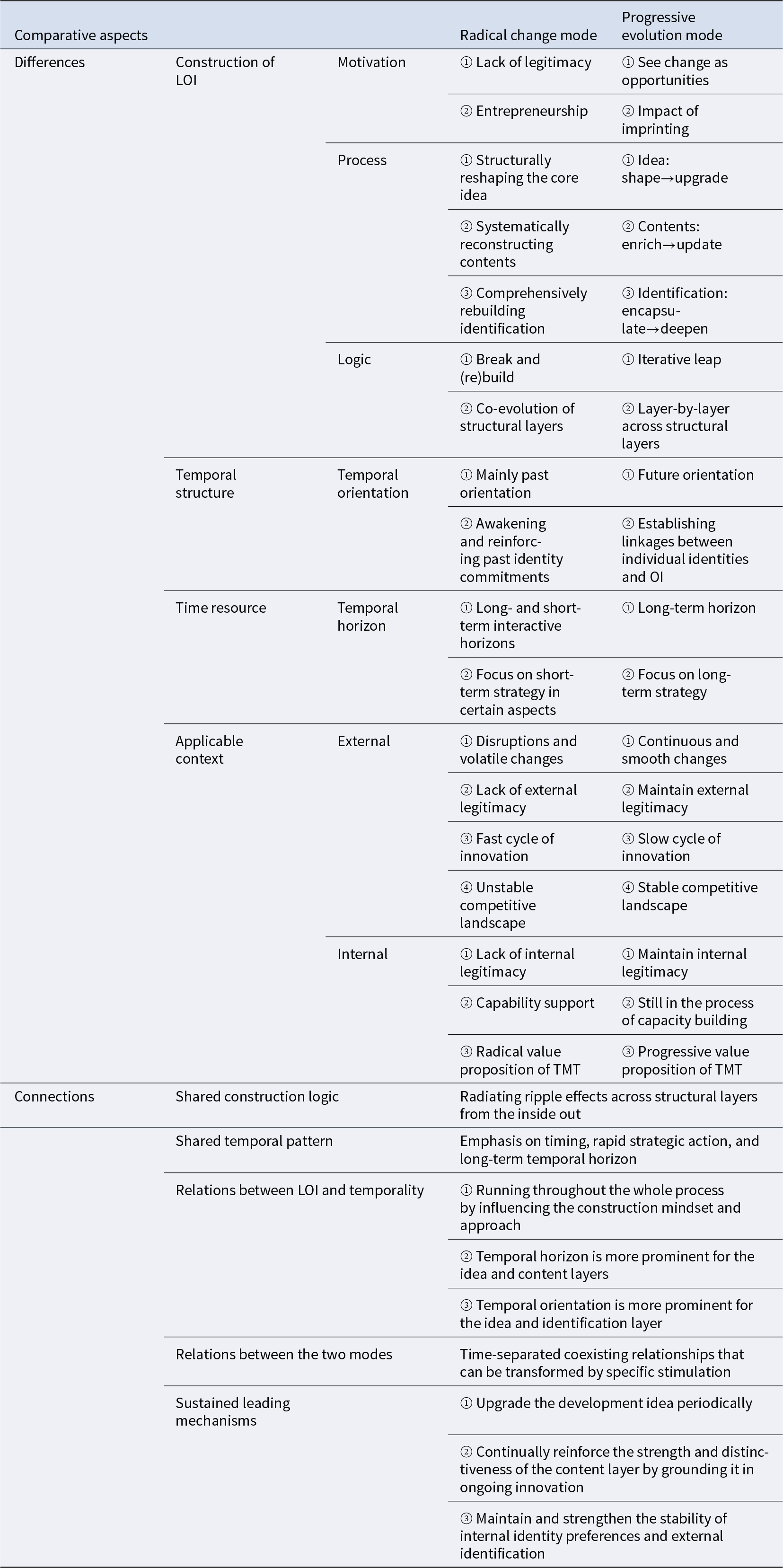
Based on the discussions above, we defined three distinctive structural layers of LOI and its theoretical boundary, and identified two different LOI construction modes. We found that, first, the radical change mode follows a ‘break and (re)build’ logic with concurrent evolution across layers, while the progressive evolution mode presents an iterative transition logic, with each layer unfolding step by step. Both modes reflect a ripple effect radiating from the inside out within the three-layered structure of OI, where the extent of change in the idea layer determines the magnitude of the ripple effect. Second, the radical change mode is linked to the temporal characteristics of a more rapid and unstable external environment. It shows a multidimensional temporal pattern characterized by an interaction between long-term and short-term horizons, with a dominant past orientation throughout the LOI construction process. In contrast, the progressive evolution mode is associated with a stable and continuous external environment, presenting a unidimensional temporal pattern centered around a long-term horizon and future orientation in its LOI construction process. Finally, both temporal horizon and temporal orientation exert a pervasive influence on the entire process of constructing an LOI. Temporal orientation and temporal horizon drive the upgrades and evolution of identity idea by shaping how a firm approaches issues. Temporal horizon facilitates the construction of the content layer by shaping the characteristics of strategic actions. Temporal orientation has a more prominent effect on the identification layer, with past temporal orientation focused on extending and reinforcing past identity commitments, while future temporal orientation aims to build and strengthen the connection between individual identity and OI.
Reconstruction model of the radical change mode
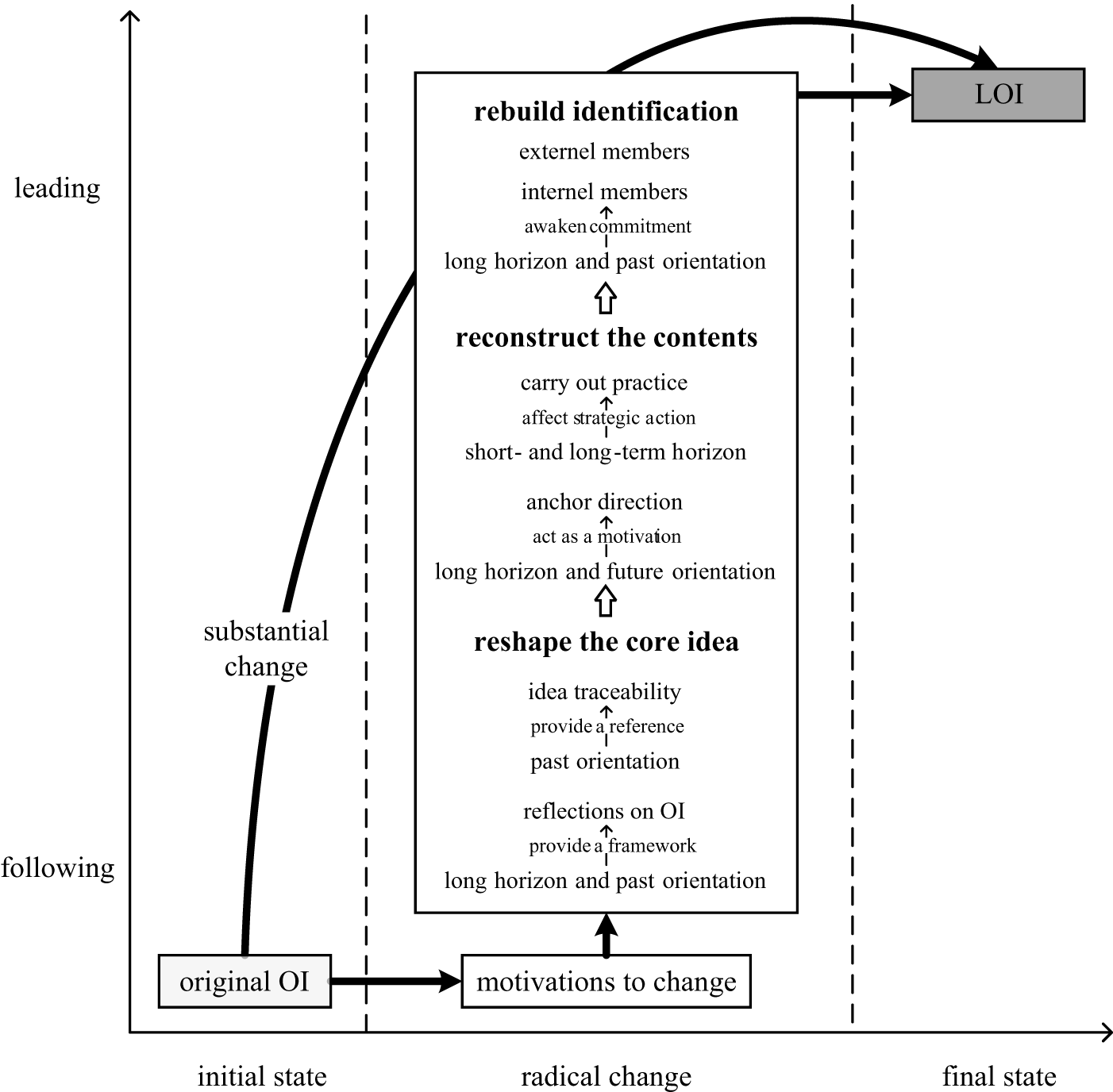
Discussion
Theoretical Contributions
Our study unveils the internal mechanisms through which incumbent firms, positioned in lower tiers, can rise to become industry leaders through the lens of OI construction – key aspects that embody the organization’s fundamental characteristics and core values. This research enriches the existing literature on how latecomer firms ascend to leadership positions, which has predominantly focused on the evolution of explicit elements. By adopting a more nuanced, balanced, and integrative perspective that bridges both explicit and implicit dimensions, our research advances the boundaries of this field. As emerging markets increasingly become a critical driver of global economic growth, more latecomer firms are moving beyond follower status, challenging established leaders, and striving to claim the top position in their industries (Daymond et al., Reference Daymond, Knight, Rumyantseva and Maguire2023). However, much of the current research primarily addresses this transition from the perspective of latecomer firms’ catch-up and leapfrogging strategies (Kenney & Lewin, Reference Kenney and Lewin2022; Zhou & Park, Reference Zhou and Park2024), often focusing on specific aspects such as digital transformation (Ma, Mao & An, Reference Ma, Mao and An2022) and ambidextrous innovation (Hu et al., Reference Hu, Wang, Liu and Song2023). These studies typically emphasize the explicit driving mechanisms while paying limited attention to the (re)construction of OI, which entails the integration of both explicit and implicit dimensions, particularly those reflecting the organization’s core values (Albert & Whetten, Reference Albert and Whetten1985; Gioia et al., Reference Gioia, Price, Hamilton and Thomas2010). To achieve a high-level transition into industry leadership, firms must overcome not only the visible competitive barriers but also the complex and implicit identity barriers. Our detailed exploration of the OI construction processes in these firms offers new insights into how organizations ascend to leadership positions. Moreover, it effectively complements existing research on the explicit mechanisms involved in achieving leadership, highlighting the need for greater attention to the integrated role of both explicit and implicit elements in driving organizational transformation.
Our research further reveals the distinct OI construction logic followed by the radical change and the progressive evolution modes, as well as the shared ripple effect they both adhere to, making significant contributions and advancing research on OI construction in three key ways. First, we uncover the ‘break and (re)build’ logic, characterized by concurrent evolution across structural layers in the radical change mode, and the iterative transition logic, marked by the layer-by-layer unfolding in the progressive evolution mode. Unlike prior research on OI construction, which focuses on a linear construction logic around identity claims (Ungureanu et al., Reference Ungureanu, Bertolotti, Mattarelli and Bellesia2020) or the passive response logic of structural changes to specific identity elements (Drori et al. Reference Drori, Wrzesniewski and Ellis2013; Ernst & Schleiter, Reference Ernst and Schleiter2021; Song, Reference Song2023), we explore a systemic (re)construction process that unfolds from the idea layer to the content layer and ultimately to the identification layer. By moving beyond a narrow focus on identity claims, we offer a more comprehensive view of identity structure and strengthen the logic of OI construction by positioning identification as a critical final stage in the evaluation process.
Second, we introduce the shared ripple effect that radiates outward across layers in both modes, addressing the gap in previous research, which often focused on the causes and mechanisms of OI construction without paying much-needed attention to the underlying mechanisms (Gioia et al. Reference Gioia, Schultz and Corley2000; Oertel & Thommes, Reference Oertel and Thommes2018; Venus et al., Reference Venus, Stam and Knippenberg2019). By focusing on the interactions among the three structural layers of OI, our study deepens the understanding of OI’s internal evolutionary mechanisms. It addresses a key gap in prior research, which has primarily emphasized external mechanisms of evolution, driven by the interplay between OI and other organizational elements (Ernst & Schleiter, Reference Ernst and Schleiter2021; Gioia et al., Reference Gioia, Schultz and Corley2000; Hampel & Dalpiaz, Reference Hampel and Dalpiaz2023).
Third, by comparing the radical change and progressive evolution modes, we challenge the prevailing assumption in OI construction research that treats identity formation and change as separate processes (Ernst & Schleiter, Reference Ernst and Schleiter2021; Hampel & Dalpiaz, Reference Hampel and Dalpiaz2023). Our study clearly delineates the similarities and differences between these two modes, offering a more nuanced understanding of OI construction. In this way, our comparative analysis provides new insights into the multifaceted nature of OI development. By examining their potential for mutual transformation, we bridge identity evolution research with identity change research. Situated within a unified research context, this integration brings together the two central themes of evolution and change (Gioia et al., Reference Gioia, Patvardhan, Hamilton and Corley2013), laying a foundation for future integrative research across both domains.
Finally, by integrating the perspectives of temporal horizon and temporal orientation, we challenge the conventional approach in identity temporality research, which typically focuses on a single dimension. We combine the temporal characteristics of external environmental changes with temporal patterns of LOI construction, providing a more holistic understanding of LOI construction from the temporal perspective. On the one hand, prior research on OI temporality has predominantly focused on how a single temporal dimension influences the OI construction process, particularly how firms reinterpret and reconstruct past time frames to ascribe meaning to the present and future (Hernes, Reference Hernes2017; Ravasi et al., Reference Ravasi, Rindova and Stigliani2019; Schultz & Hernes, Reference Schultz and Hernes2013). In contrast, we introduce the concept of temporal orientation into the field of OI construction and examine how a firm’s temporal orientation and temporal horizon jointly shape the construction of LOI. By drawing on both subjective and objective temporal perspectives, we uncover the temporal patterns underlying different construction modes. In doing so, our study enriches temporality research within the OI domain by proposing an integrated temporal framework that combines temporal horizon and temporal orientation. Moreover, we reveal how distinct temporal elements and their combinations interact with the three-layered structure of OI, thereby advancing the integration of the temporality perspective into OI research (Cloutier & Ravasi, Reference Cloutier and Ravasi2020; Schultz & Hernes, Reference Schultz and Hernes2013). On the other hand, by incorporating the temporal characteristics of external environmental changes into our research framework, we extend prior studies that primarily focused on internal perspectives (Ravasi et al., Reference Ravasi, Rindova and Stigliani2019). In so doing, we underscore the important influence of external temporal changes on a firm’s choice of LOI construction mode and the construction process of LOI (Gioia et al., Reference Gioia, Price, Hamilton and Thomas2010; Kroezen & Heugens, Reference Kroezen, Heugens, Schultz and Maguire2012).
Practical Implications
First, we highlight the importance of constructing an LOI as a foundation for driving market competition and industry development. Our study urges firms in emerging markets to move beyond a traditional emphasis on explicit and surface-level elements when pursuing leadership transitions. Instead, it emphasizes the need to engage with the deeper and more comprehensive layer of OI. Taking consumer goods as an example, whether or not consumers resonate with a company through its offerings increasingly shapes purchasing decisions. This resonance reflects the alignment between the consumer’s individual identity and the company’s OI (Weisman et al. Reference Weisman, Wu, Yoshikawa and Lee2023). Therefore, cultivating an LOI is key to ensuring the long-term effectiveness of a latecomer firm’s leadership transitions, preventing the leadership outcomes from being fleeting.
Second, firms should select the appropriate LOI construction mode. The radical change mode enables firms to rapidly and systemically reshape their OI in a short period, offering greater efficiency but also posing higher risks and challenges. In contrast, the progressive evolution mode facilitates a more gradual identity evolution, with lower risks, but requires ongoing, sustained effort in LOI construction. These two modes differ significantly in their construction processes and the contexts in which they are most effective. Therefore, we recommend that latecomer firms align their choice of mode with their specific industry context and developmental stage. The discussions of the applicable contexts for both modes offer valuable guidance to help firms make an informed decision.
Third, firms should adhere to the foundational construction logic and temporal patterns of each mode. The radical change mode follows a ‘break and (re)build’ logic, with simultaneous evolution across layers. This mode requires firms to adopt a past orientation to systematically reflect on their existing OI. Starting with the reconstruction of core idea, the transformation unfolds outward, reshaping the identity from the inside. Throughout this process, firms navigate between long-term and short-term horizons, proactively identifying opportunities and taking swift actions to gain market recognition. In contrast, the progressive evolution mode follows an iterative transition logic. This mode requires firms to adopt a future orientation inspired by the ideal OI. The focus here is on the gradual construction and iterative evolution of the identity layers, actively identifying growth opportunities in the changing environment through a long-term horizon and prioritizing strategic actions.
Finally, attention must be given to upgrading the core idea of OI. Our findings suggest that shaping or reshaping the idea layer serves as the foundation for driving changes across other structural layers of the identity. We thus highlight a critical step for constructing an LOI is to develop a core idea that embodies leadership-oriented characteristics. For firms adopting the progressive evolution mode, the core idea of an LOI evolves at different stages, whether during the following, surpassing, or leading stages. Therefore, these firms must dynamically adapt and upgrade their core idea in response to both industry and organizational contexts. For firms adopting the radical change mode, it is essential to identify and shape a new leading idea. This requires firms to preserve their original survival idea while reshaping a new leading development idea, one that can help resolve identity crises in the short term and support sustained industry leadership over the long run.
Limitations and Future Research Directions
First, we advocate for more research that adopts multidimensional temporal perspectives. In this research, we focused on temporal horizon and temporal orientation. By integrating these perspectives, we have demonstrated how firms’ proactive responses to external changes can reshape or even redefine the trajectory of industry development. Unlike previous research in the OI field that predominantly focused on temporal trajectory (Cloutier & Ravasi, Reference Cloutier and Ravasi2020), our research introduces a novel lens by combining temporal horizon and temporal orientation. However, temporality, as a metatheoretical construct, is inherently complex, encompassing diverse manifestations (Blagoev et al., Reference Blagoev, Hernes, Kunisch and Schultz2024). We encourage future research to explore additional temporal dimensions and perspectives to provide new insights into both OI research and studies on temporality. Among the various temporal elements, we particularly call for research focusing on the impact of temporal depth in the LOI construction process and its dynamic interaction with the three structural layers, which has great potential to provide new and unique theoretical insights into our understanding of the LOI construction issue from a temporal perspective.
Second, future research could further investigate the process by which firms sustain their LOIs over time, extending our discussion of sustained leading mechanisms. While much of the OI literature has focused on the formation or change of specific OIs (Cornelissen et al. Reference Cornelissen, Akemu, Jeroen and Werner2021; Ungureanu et al. Reference Ungureanu, Bertolotti, Mattarelli and Bellesia2020), relatively limited attention has been paid to the long-term stability of particular OI forms. For latecomer firms, maintaining their LOIs is crucial for sustaining competitive advantage. However, how can this be achieved? We believe this is a crucial yet underexplored question that warrants further investigation. Future studies could build on our findings to explore the evolving pattern of leadership-driven core idea, exceptional content layers, and advantageous identification layers over time. We also suggest that further research further investigate the sustained leadership mechanisms discussed in this study through more rigorous approaches, with the aim of uncovering the underlying mechanisms and evolutionary models that support the long-term preservation of LOI.
Third, we encourage future research to broaden the application scope of LOI by building on the structural framework proposed in this study. One promising direction is to examine the structural components and characteristics of LOI in firms that transition from one industry to another as new entrants seeking to establish leadership. Another important avenue involves investigating LOI-related issues within the context of global markets. Our research provides a foundation for both directions in two key respects. First, while the three-layered structure of LOI may have broad applicability (Gustafson & Reger, Reference Gustafson and Reger1995; Weisman et al. Reference Weisman, Wu, Yoshikawa and Lee2023), its specific elements and characteristics are likely to vary across contexts and warrant case-specific analysis. Second, the ripple effect associated with this layered structure is expected to remain relevant in new settings, although it may involve more complex or nuanced meanings that merit further exploration.
Fourth, we encourage future research to explore the coexistence and conversion of the radical change mode and the progressive evolution mode through single-case studies. In this study, we employed a dual-case comparative approach to analyze the construction logic and temporal patterns of each mode, which underscored their differences. However, these two modes are not completely distinct or independent. In certain contexts, firms that initially adopt one mode may transition to the other. To better understand how this transition occurs and how the two modes can coexist over time, single-case studies can provide a more systematic investigation, offering deeper insights into the dynamics of these modes.
Finally, we also encourage further exploration of cultural factors in the process of constructing an LOI. On the one hand, microlevel organizational culture may be another lens for understanding the development of LOI. Although prior research has explored the relationship between organizational culture and OI (Hatch & Schultz, Reference Hatch and Schultz2002; Ravasi & Schultz, Reference Ravasi and Schultz2006), the dynamic role of culture in the OI construction process remains underexplored. Our findings reveal subtle cultural influences, suggesting that future research should adopt a cultural perspective to systematically examine how organizational culture emerges, evolves, and impacts LOI construction. On the other hand, macro-level industry culture and values may significantly influence a firm’s choice of LOI construction mode. For example, certain cultural value orientations within an industry – such as a focus on individualism – may uniquely shape the process of integrating consensus understanding from the individual level to the group level and ultimately to the organizational level.
Additionally, due to the inherent limitations of the case study method in terms of sample size, the generalizability and objectivity of our findings are constrained. We encourage future research to draw on larger samples to validate and refine our theoretical findings, thereby enhancing the robustness and applicability.
Conclusion
Identity is a fundamental concept for individuals, firms, groups, and even nations, as it is essential for their survival and development (Albert & Whetten, Reference Albert and Whetten1985; Gioia et al. Reference Gioia, Patvardhan, Hamilton and Corley2013). In an era of rapid and unprecedented change, competition for industry leadership is increasingly intertwined with the development of LOI. Our dual-case comparative study explores the characteristics and construction modes of LOI while substantiating its temporal patterns. This research enhances the understanding of OI by advancing its theoretical development and aims to provide guidance to firms in emerging markets as they aspire to attain leadership positions through effective LOI construction.
Data availability statement
Data subject to third party restrictions
Acknowledgements
We would like to thank the support of the grants from the National Social Science Foundation of China (21AZD119), the Basic Scientific Research Funds for Universities (DUT25RW310), and the Graduate Student Research Fund Project of School of Economics and Management, Dalian University of Technology (DUTSEMDRFK04). We are deeply grateful to the initiators, key organizers, and others of this Special Issue for providing us with such excellent opportunities and research directions. We extend our sincere thanks to the experts of the workshop for their insightful guidance on the conception of this paper. And we sincerely express our deep gratitude to the three reviewers, the guest editor, and all other editorial team members for devoting valuable time and effort to this paper. Their insightful comments and guidance have greatly benefited us in its refinement. We are also grateful to TsingShan and Feihe for providing us with such detailed research data.
Xiangtong Liu (liu_9802@mail.dlut.edu.cn) is a PhD candidate at the School of Economics and Management, Dalian University of Technology, and focuses on organizational identity and leading organization research. She has published multiple articles in Management and Organization Review and Management World, authored several teaching cases for Ivey Publishing, published one academic monograph, and presided over one graduate research project.
Haifen Lin (linhaifen@dlut.edu.cn) is a professor and PhD supervisor at the School of Economics and Management, Dalian University of Technology, and focuses on organizational innovation and strategic change research. She has presided over 4 nationally funded research projects, published over 80 articles in journals including Management and Organization Review and Journal of Business Research, authored 7 academic monographs, and compiled over 70 teaching cases.
Da Huo (huoda@dlu.edu.cn) is currently an assistant professor of management at the School of Economics and Management (School of Tourism), Dalian University. He holds a doctoral degree in management from Eli Broad College of Business, Michigan State University. His research interests include social evaluation, stakeholder management, business ethics, and cultural differences.